
Most-appropriate topic codes (Edexcel IGCSE Biology):
- 3(h): Transport — part (a)
- 6(a): Food production — parts (b)(i), (b)(ii)
- 5(d): Human influences on the environment — parts (b)(i), (b)(ii)
- 5(b): Feeding relationships — part (b)(i)
- 2(e): Nutrition — part (a)(ii)
▶️ Answer/Explanation
(a)(i) Two substances carried in the phloem:
1. Sucrose/sugars (1)
2. Amino acids (1)
Marking guidance: ignore glucose; allow water/plant hormones/named plant hormone
(a)(ii) Explanation why insects feeding from phloem reduce crop yield:
An explanation that makes reference to three of the following:
- No/less respiration/no/less energy (1)
- No/less protein (1)
- No/less growth/new cells (1)
- Less fruit production/fewer oranges/smaller fruit (1)
Marking guidance: No credit for less sugar amino acid or glucose; Ignore less crops/less yield
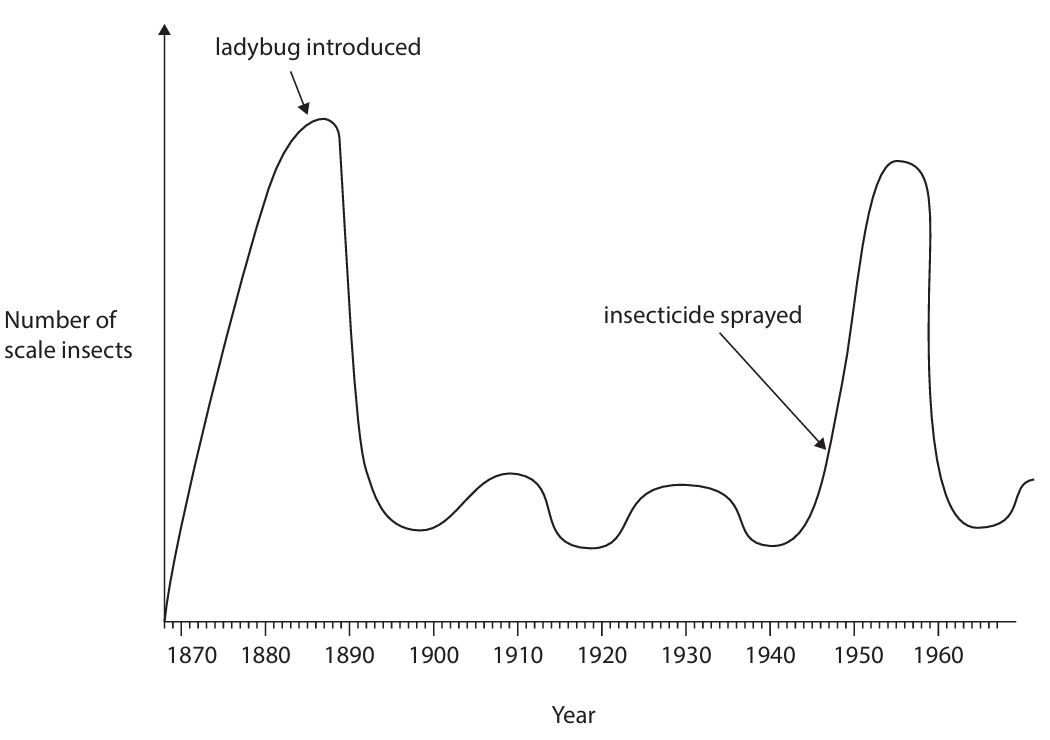
(b)(i) Discussion of effects on scale insect numbers:
An answer that makes reference to five of the following:
- Reduce (quickly/steeply) after ladybug introduced (1)
- As the ladybugs feed on scale/pests (1)
- Scale insects numbers go up and down/fluctuate/oscillate (1)
- Some pests required for ladybugs to feed on/scale insects never completely wiped out (1)
- Insecticide release causes (rapid) increase in scale insects/pests (1)
- As (more) ladybugs killed (than scales/pests) (1)
- Fewer scale insects are eaten/less predation (1)
- Insecticide becomes less effective/disperses/ladybugs recover/ladybugs develop resistance (1)
- Scale insects/pest numbers drop (1)
- Ladybugs/biological control more effective than insecticide/kill more pests (1)
(b)(ii) Three advantages of biological control instead of pesticides:
An explanation that makes reference to four of the following points:
- Lasts longer/does not need reapplication (1)
- Specific/does not affect food chain/other organisms (1)
- No residue on crop/not eaten by humans/does not affect humans (1)
- No bioaccumulation/biomagnification (1)
- Pest does not become resistant (1)
Marking guidance: allow converse; ignore cheaper alone; ignore pollution alone; allow contaminate crops; ignore immune

▶️ Answer/Explanation
(a)(i) • water / protein (1)
Accept amino acids
(a)(ii) 26 (2)
Example calculation: \( 9.2 \div 35 \times 100 = 26.28571 \)
One mark for correct answer to any number of decimal places e.g. 26.28571…
OR
One mark for \( 9.2 \div 35 \)
OR
One mark for \( 0.26(28571) \)
Correct answer gains both marks
(a)(iii) An answer that makes reference to one of the following: (1)
• helps peristalsis / eq (1)
• prevents constipation / eq (1)
• helps intestines push food / eq (1)
• helps release faeces / eq (1)
• helps egestion / eq (1)
• helps in movement of food / eq (1)
Reject excrete faeces
(b) An answer that makes reference to three of the following: (3)
• amylase (1)
• from salivary glands / from pancreas / eq (1)
Accept (released into / digested in) mouth
Accept (released into / digested in) small intestine / duodenum / ileum
• starch / it, is digested into maltose (1)
Accept broken down / hydrolysed / turned into for digested
• maltase digests maltose (into glucose) (1)
(c)(i) An answer that makes reference to the following: (1)
• 38 (mg per cm³) (1)
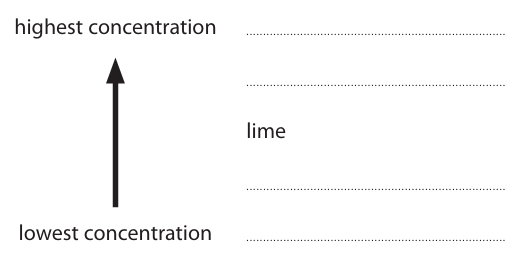
(c)(ii) An answer that makes reference to the following order: (1)
• orange lemon (lime) apple grape (1)
Accept numbers from table i.e. 3 4 (lime = 7) 18 22
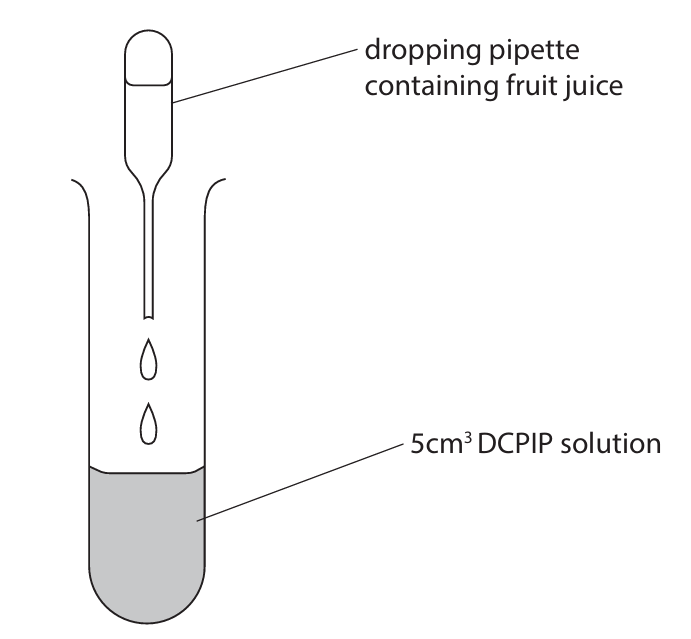
(c)(iii) An answer that makes reference to two of the following: (2)
• use a syringe / graduated pipette / measuring cylinder / burette / eq (1)
• to measure volume / ml / cm³ / dm³ / mm³ / eq (1)
• as drop sizes vary / masses of drops vary / volumes of drops vary / eq (1)
• mix / swirl / stir (solution after adding drops) / eq (1)
Ignore pipette alone
Accept Automatic pipette
Accept volumetric pipette
Accept balance / scale
Accept use titration
Accept mass / weight (of juice)
Accept idea that method does not control drop size
Ignore references to repeats / replicates
(Total for Question 4 = 11 marks)

▶️ Answer/Explanation
(a)(i) • transgenic (1)
(a)(ii) A description that makes reference to three of the following:
- plasmid (is used) (1)
- restriction enzyme cuts gene / DNA / plasmid / eq (1)
- ligase joins plasmid and gene / joins DNA / eq (1)
- forming a recombinant plasmid / forming recombinant DNA / eq (1)
(b)(i) An answer that makes reference to two of the following:
- less night blindness / fewer eye problems / better vision / eq (1)
- rice is a common food / part of many diets / common crop / cheap (for consumers) to buy / eq (1)
- cheap to grow / easy to grow / easy to get large yields / eq (1)
- less health care needed / less damage to economy / eq (1)
(b)(ii) An answer that makes reference to two of the following:
- (may grow in wild and) affect food chains / food webs / ecosystems / eq (1)
- may compete with other species (in wild) / eq (1)
- may interbreed with wild plants / genes may transfer into wild plants / eq (1)
- people may think they are a risk to health / eq (1)
- may be better to give people a more balanced diet / should use natural sources of carotene / eq (1)
(c)(i) An explanation that makes reference to four of the following:
- all species decrease / eq (1)
- insects increase after 3 months / from 6 months / eq (1)
- beetles increase after 9 months / from 12 months / eq (1)
- lizard numbers do not recover / stay low / do not increase / level off after 9 months / eq (1)
- pesticide washes away / breaks down / eq (1)
- pesticide passes along food chain to beetles / to lizards / eq (1)
- insects become resistant / eq (1)
- insects increase as there are fewer beetles eating them / beetles decrease as few insects to eat / lizards decrease as few beetles to eat / eq (1)
- insects have short life cycles / lizards have long life cycle / eq (1)
(c)(ii) An answer that makes reference to two of the following:
- (biological is) more specific / does not kill other species / eq (1)
- (biological is) not toxic to humans / no residue left on plants / crops / eq (1)
- (biological is) no development of resistance / eq (1)
- (biological) lasts longer / no need to keep reapplying / eq (1)
- no bioaccumulation / no biomagnification / does not pass along food chains / eq (1)

▶️ Answer/Explanation
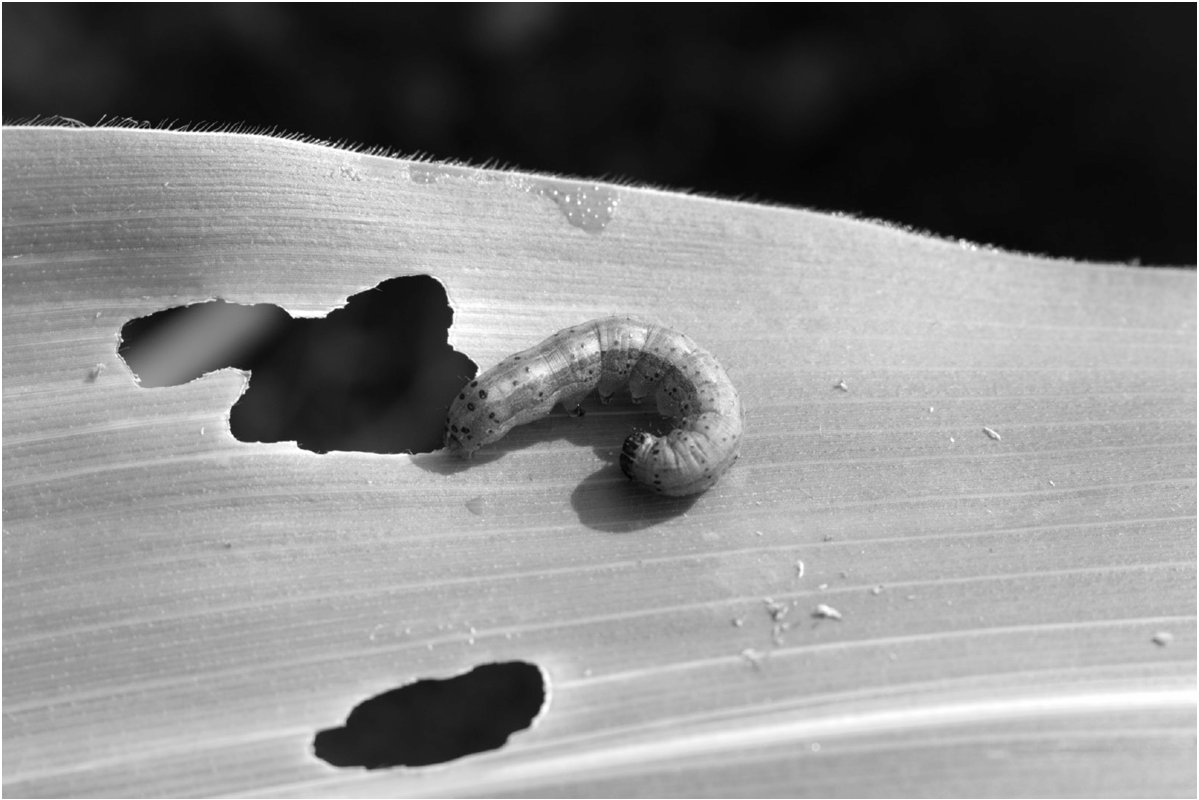
(a) An explanation that makes reference to two of the following points:
- less (leaf) area / surface / fewer leaves
- fewer chloroplasts / less chlorophyll
- (less) photosynthesis
- less carbohydrate / glucose / sugar produced
(b) An explanation that makes reference to four of the following points (advantages of biological control):
- lasts longer / does not need reapplication
- specific / does not affect food chain / other organisms
- no residue on crop / not eaten by humans / does not affect humans
- no bioaccumulation / biomagnification
- pest does not become resistant
(c)(i) An explanation that makes reference to three of the following points:
- moth population rises (up to 6 months)
- wasp population also rises as more moths / food is available
- (from 6 months) moth population falls as eaten by wasp
- wasp population falls as fewer moths to feed on / less food available
- moth population recovers / repeats pattern
(c)(ii)
Maximum moth number \( \approx 2150 \) (at ~7 months).
Minimum moth number \( \approx 850 \) (at ~11 months).
Maximum range \( = 2150 – 850 = 1300 \).
(c)(iii) An explanation that makes reference to two of the following points:
- some moths remain / doesn’t kill all moths
- delay to act / kill moths / slower (than chemical)
- numbers vary with time of year / seasons
- wasps are expensive
- wasps may become pest / may kill other organisms / may affect food chain / farmers may not want to leave wasps in their fields / may sting farmers

▶️ Answer/Explanation
(a)(i)
An answer that makes reference to the following points:
- Correct genotypes of parents (Dd, dd) (1)
- Correct gametes (D or d, d) (1)
- Correct genotypes of offspring (Dd, dd) (1)
- Correct probability of \( 0.5 \) / 50% / \( \frac{1}{2} \) (1)
Example genetic diagram:
Parents: Dd (Individual 4) × dd (Individual 5)
Gametes: D, d from parent 4; d, d from parent 5
Offspring genotypes: Dd, Dd, dd, dd
Probability of lactose intolerant child (dd) = \( \frac{2}{4} = \frac{1}{2} \) (50%)
(a)(ii)
An answer that makes reference to two of the following:
- Less water absorbed (into blood) (1)
- By colon / intestine (1)
- As sugar / lactose is not absorbed (1)
- (As lactose) affects osmosis / lowers water potential (1)
- (Lactose could cause) bacteria to grow / bacteria break down lactose (1)
(a)(iii)
An explanation that makes reference to four of the following points:
- Mutation (occurred) (1)
- Creating (genetic) variation (1)
- People with lactose tolerance (DD or Dd) can drink milk / did not get diarrhoea / can gain extra nutrients / were able to compete better / survived / had a selective advantage (1)
- Reproduced (more) / produced offspring (1)
- Pass on allele / gene / mutation (1)
(b)(i)
An explanation that makes reference to the following points:
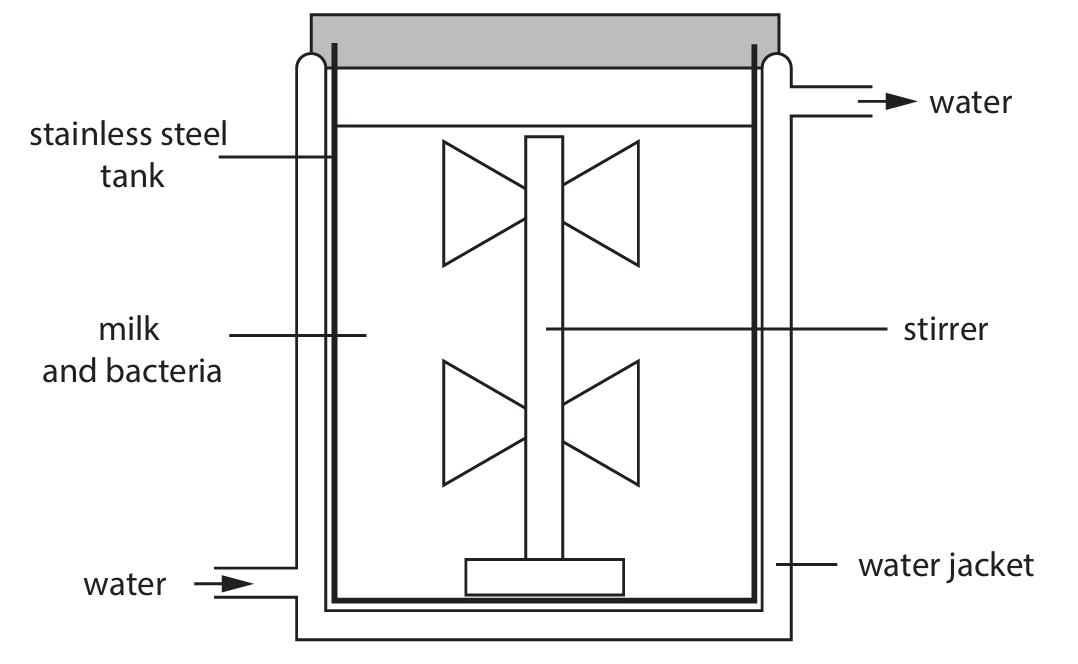
- Mixes the contents / spreads nutrients / maintains even consistency / prevents settling (1)
- Maintains even temperature / prevents hot spots / maintains an even pH (1)
(b)(ii)
An explanation that makes reference to two of the following:
- Removes heat / cools the fermenter (1)
- To maintain optimal temperature (1)
- Prevents enzymes denaturing / prevents death of bacteria (1)
▶️ Answer/Explanation
(a) A description that makes reference to the following points:
- Plasmid (used) as vector (1).
- Restriction enzyme used to cut out gene / cut plasmid / cut DNA (1).
- Ligase used to insert gene into plasmid / stick DNA / glue DNA / stick gene with DNA (1).
(b) An explanation that makes reference to three of the following points:
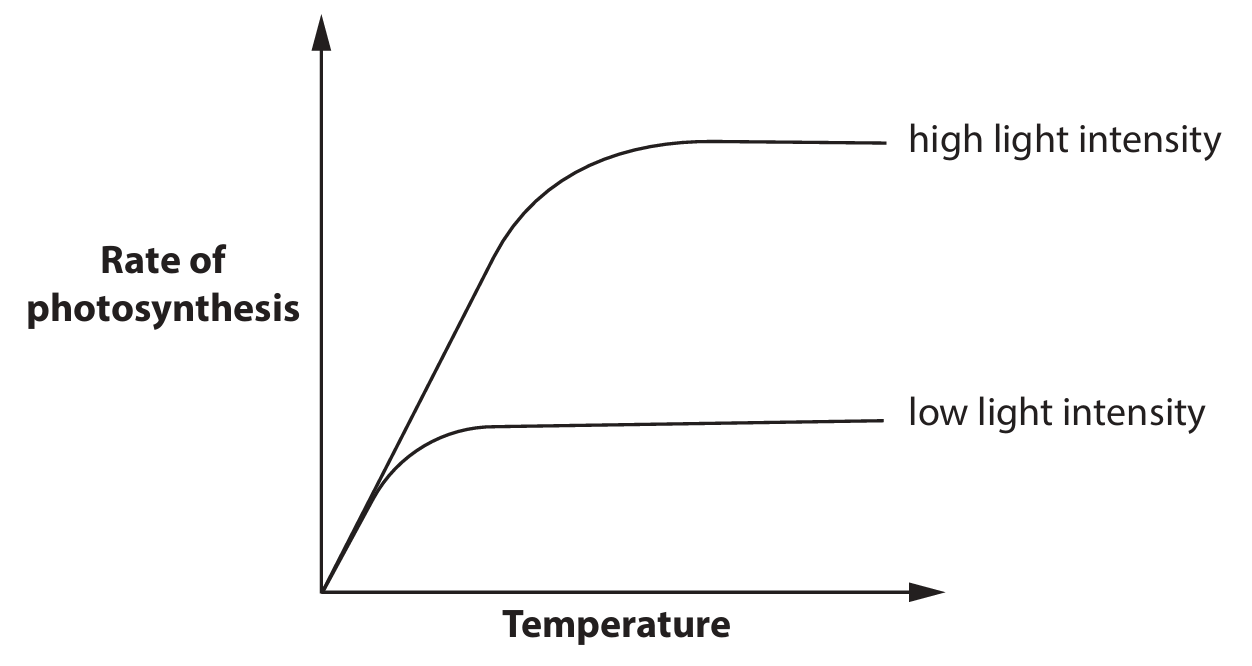
- Increasing temperature increases the rate of photosynthesis (1).
- Because particles have more (kinetic) energy / more frequent collisions / there is more enzyme activity (1).
- (At low light intensity rate levels off) so light is limiting (1).
- (At high light intensity) carbon dioxide limits rate / not enough carbon dioxide (1).
- (At high light intensity) rate levels off because temperature is no longer limiting / other factors become limiting (1).
(c) An answer that makes reference to five of the following points:
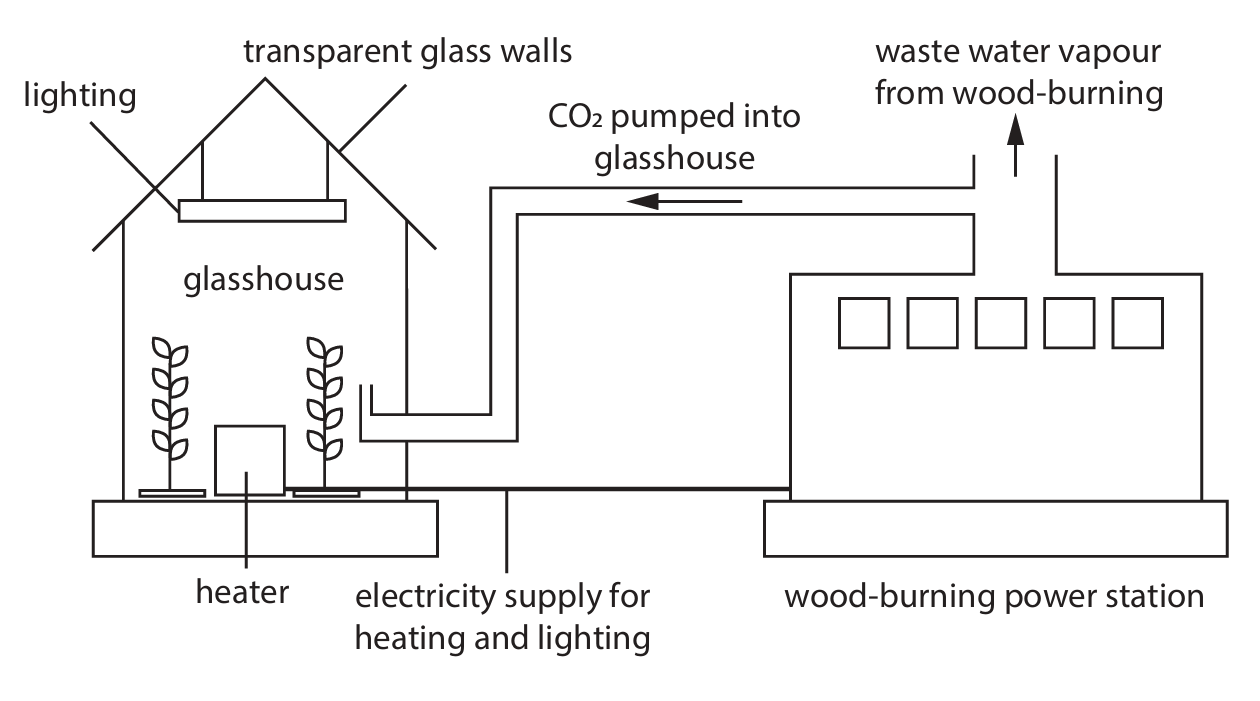
- Light, carbon dioxide and (warm) temperature are supplied / provided (1).
- Therefore no factors for photosynthesis are limiting / all factors present for photosynthesis / there is more photosynthesis (1).
- So high yield / fast production / (to give high profit) / more tomatoes (1).
- No need to buy carbon dioxide / no need to buy electricity / wood is cheaper than fossil fuel / wood cheaper than buying electricity (1).
- Tomatoes protected from pests / disease / frost / cold / bad weather (1).
- Wood is renewable (energy) (1).
- Less use of fossil fuel (1).
- Carbon dioxide not released into atmosphere / is reused (1).
- Less greenhouse effect / less climate change / less ice cap melting (1).
- Less release of sulfur dioxide / less acid rain (1).
▶️ Answer/Explanation
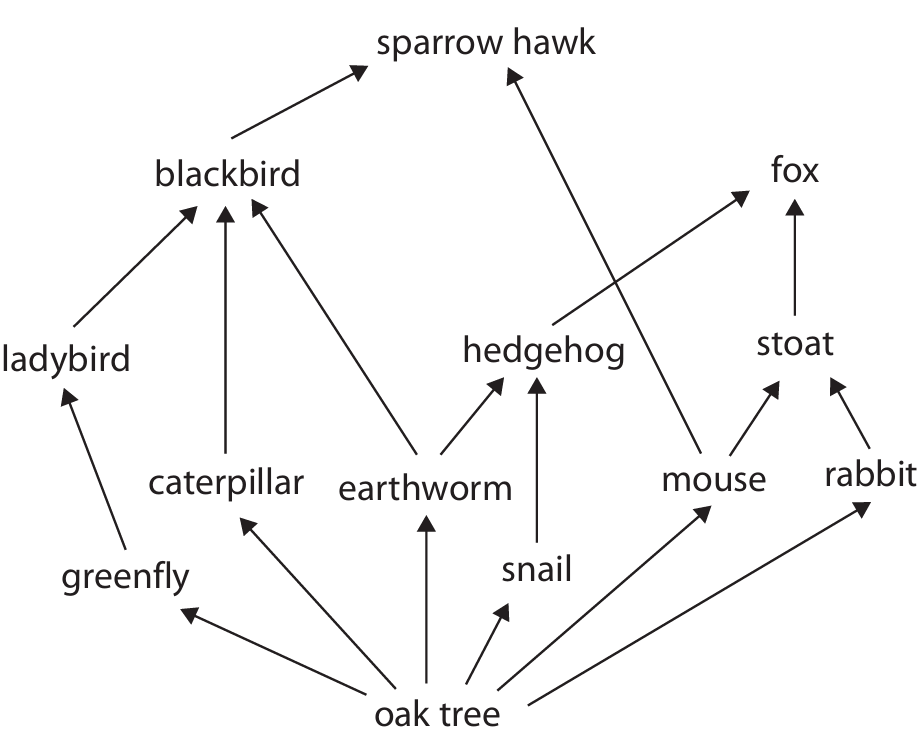
(a)(i) C (oak tree)
The oak tree is the producer because it can produce its own food via photosynthesis. It forms the base of the food web.
A is not correct because a caterpillar is a consumer (primary).
B is not correct because an earthworm is a decomposer/consumer.
D is not correct because a stoat is a tertiary consumer.
(a)(ii) D (ladybird)
A secondary consumer is an organism that feeds on primary consumers. In this web, the ladybird eats greenfly (a primary consumer).
A is not correct because a caterpillar is a primary consumer (eats producer).
B is not correct because an earthworm is a decomposer/primary consumer.
C is not correct because a fox can be a secondary or tertiary consumer, but is not exclusively a secondary consumer in this context.
(a)(iii) A (blackbird)
The blackbird is both a secondary and tertiary consumer because its diet includes both primary consumers (like caterpillars, snails) and secondary consumers (like ladybirds).
B is not correct because an earthworm is not a secondary/tertiary consumer.
C is not correct because a fox is primarily a tertiary consumer.
D is not correct because a stoat is a tertiary consumer.
(b)(i)
An explanation that makes reference to three of the following points:
• The number of blackbirds may decrease / population falls / some may die or migrate. (1 mark)
• There is less food available for blackbirds, as they eat caterpillars and ladybirds. (1 mark)
• Ladybirds also have less food (greenfly), reducing their numbers, which further reduces the blackbird’s food source. (1 mark)
• Blackbirds may switch to eating more earthworms, but this may not fully compensate. (1 mark)
• Blackbirds could consume pesticide directly or via bioaccumulation, which may poison them. (1 mark)
(Maximum 3 marks)
(b)(ii)
A description that makes reference to the following:
• Use biological control. (1 mark)
• Introduce a natural predator of greenfly, such as more ladybirds or lacewings. (1 mark)
• The predator will eat / consume / prey on the greenfly, reducing their population. (1 mark)
This method avoids the harmful side-effects of chemical pesticides on non-target species and the environment.



▶️ Answer/Explanation
(a)(i) B (chitin)
Explanation: The cell walls of fungal cells, including yeast, are primarily composed of chitin, a strong and flexible polysaccharide. Cellulose is found in plant cell walls, while glycogen and starch are storage polysaccharides and are not structural components of cell walls.
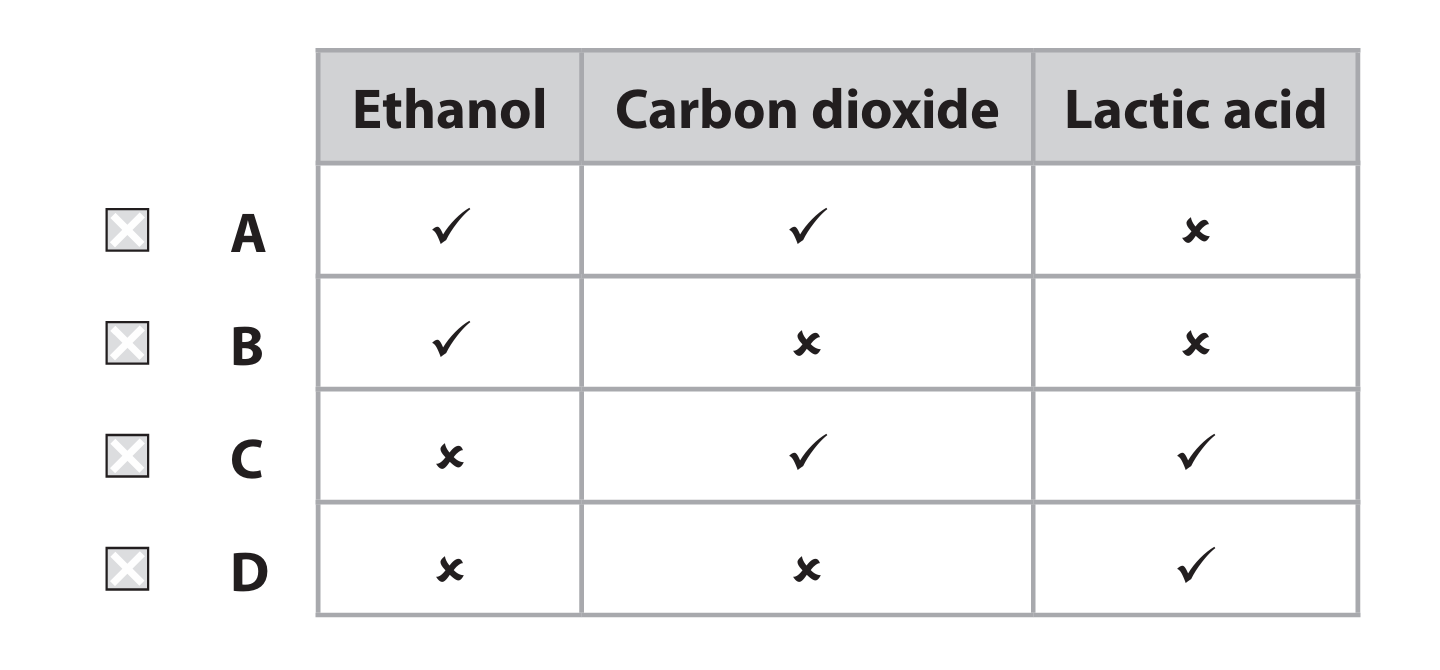
(a)(ii) A
Explanation: Yeast undergoes alcoholic fermentation during anaerobic respiration. The products of this process are ethanol and carbon dioxide. Lactic acid is not produced; it is a product of anaerobic respiration (lactic acid fermentation) in certain bacteria and animal muscle cells.
(b)(i) To stop oxygen getting in / to prevent aerobic respiration.
Explanation: The layer of paraffin oil acts as a barrier, sealing the yeast and glucose mixture from the air. This prevents oxygen from dissolving into the solution, ensuring that the yeast is forced to respire anaerobically (ferment) rather than aerobically, which would produce different products and potentially a different rate of gas production.
(b)(ii) Use a water bath. Monitor the temperature with a thermometer.
Explanation: To maintain a constant temperature, the test tube containing the yeast mixture should be placed in a water bath set to the desired temperature (e.g., 25°C or 37°C). The large volume of water helps to buffer against rapid temperature changes. The student should then use a thermometer to regularly check the temperature of the water bath (or the mixture itself) and make minor adjustments if necessary to keep it constant throughout the experiment.
(b)(iii) 4 bubbles per minute
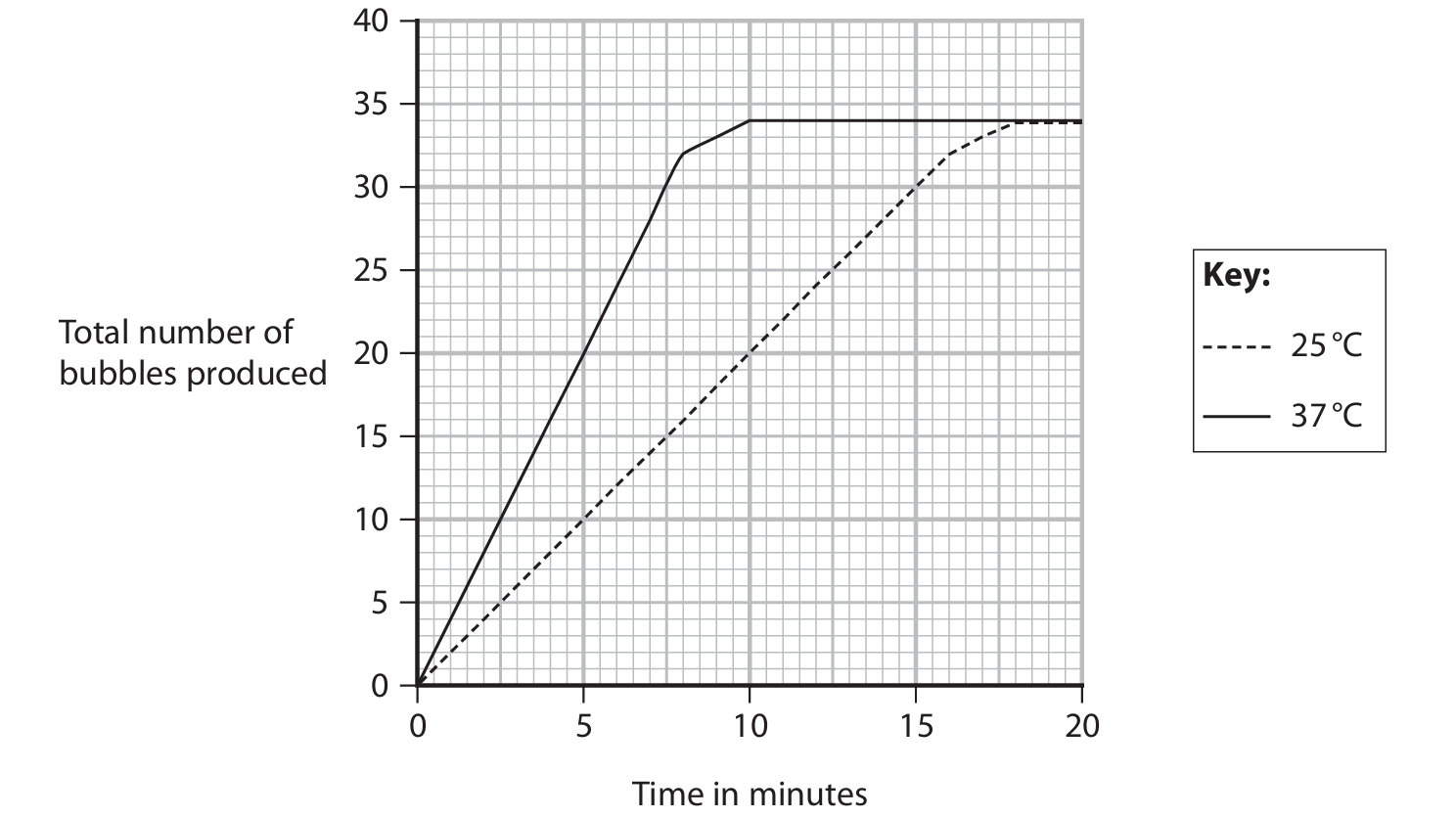
Explanation: The calculation for rate is: Rate = Total number of bubbles / Time. According to the graph, at 37°C, the total number of bubbles produced by 8 minutes is 32. Therefore, the rate is 32 bubbles / 8 minutes = 4 bubbles per minute.
(b)(iv) The total number increases up to around 16–18 minutes and then levels off. This is because initially glucose is not limiting, but later it runs out or the yeast is poisoned by ethanol.
Explanation: The graph line for 25°C shows a steady increase in the cumulative number of bubbles up to a certain point (around 16–18 minutes), after which the line becomes horizontal. The initial increase indicates that anaerobic respiration is occurring at a constant rate, as there is plenty of glucose substrate available. The leveling off occurs because the glucose supply eventually becomes depleted. Additionally, the ethanol produced as a waste product can reach a concentration that becomes toxic to the yeast cells, inhibiting further respiration and stopping bubble production.
(b)(v) The rate is faster at 37°C. This is because 37°C is closer to the optimum temperature for enzymes involved in respiration.
Explanation: The graph shows a steeper gradient (more bubbles produced in the same time) for the 37°C line compared to the 25°C line between 0 and 10 minutes. Enzyme‑controlled reactions, like those in respiration, have an optimum temperature. 37°C is closer to this optimum than 25°C. The increased thermal energy at 37°C causes enzymes and substrate molecules to move faster and collide more frequently and with more energy. This increases the rate of successful collisions and the formation of enzyme‑substrate complexes, thus speeding up the reaction. The faster rate also means the glucose substrate is used up more quickly at 37°C, which is why the curve begins to level off earlier.
(b)(vi) Collect and measure the volume of gas produced instead of counting bubbles. Use a gas syringe or a measuring cylinder in a water trough.
Explanation: Counting bubbles is an inaccurate method because bubbles can vary significantly in size. A small bubble and a large bubble would each count as one, giving a misleading measure of the actual quantity of gas produced. A more accurate method would be to replace the delivery tube in the diagram with one that leads into an inverted measuring cylinder (or burette) filled with water, or to use a gas syringe. This apparatus would collect the gas and allow the student to measure its volume directly, which is a more reliable and quantitative measure of the rate of respiration.
▶️ Answer/Explanation
(a) (i) The term transgenic refers to an organism that contains genetic material (genes or alleles or DNA) that has been transferred from a different species.
Explanation: Transgenic organisms are created through genetic engineering techniques. This involves isolating a specific gene from one species (e.g., a gene for herbicide resistance from a bacterium) and inserting it into the genome of a different species (e.g., a crop plant like soybean). The resulting plant is not just genetically modified; it contains functional DNA from another species.
(a) (ii) Growing herbicide-resistant crops is beneficial because it allows farmers to spray herbicides to kill weeds without harming the crop plants. This reduces competition for resources like water, light, and minerals, leading to increased crop growth and higher yields. It also reduces the need for manual weeding, saving time and labor costs.
Explanation: Weeds compete fiercely with crops. Herbicides are effective weed killers, but they would normally kill the crop as well. By making the crop resistant, the herbicide selectively removes only the unwanted plants (weeds). With less competition, the crop plants can grow more efficiently and produce a larger harvest, which is economically advantageous for the farmer.
(b) (i) The possible genotypes for plants that are not resistant are RR (homozygous dominant) and Rr (heterozygous).
Explanation: The dominant allele (R) confers non-resistance. For a dominant trait to be expressed, an organism only needs at least one copy of the dominant allele. Therefore, both the homozygous dominant (RR) and heterozygous (Rr) genotypes will result in a plant that is not resistant to the herbicide.
(b) (ii)
Parental Phenotypes: Resistant × Heterozygous (Not Resistant)
Parental Genotypes: rr × Rr
Gametes: r R or r
Offspring:
| R | r | |
| r | Rr (Not Resistant) | rr (Resistant) |
| r | Rr (Not Resistant) | rr (Resistant) |
Explanation: The resistant parent must be homozygous recessive (rr) and can therefore only produce gametes carrying the ‘r’ allele. The heterozygous parent (Rr) can produce two types of gametes: 50% carrying the ‘R’ allele and 50% carrying the ‘r’ allele. The Punnett square shows the possible combinations of these gametes. The expected offspring are 50% Rr (not resistant) and 50% rr (resistant).
(b) (iii) The probability is 0.5 (or ½ or 50% or 2/4).
Explanation: As shown in the genetic diagram above, half of the possible offspring genotypes are ‘rr’, which is the genotype for herbicide resistance.
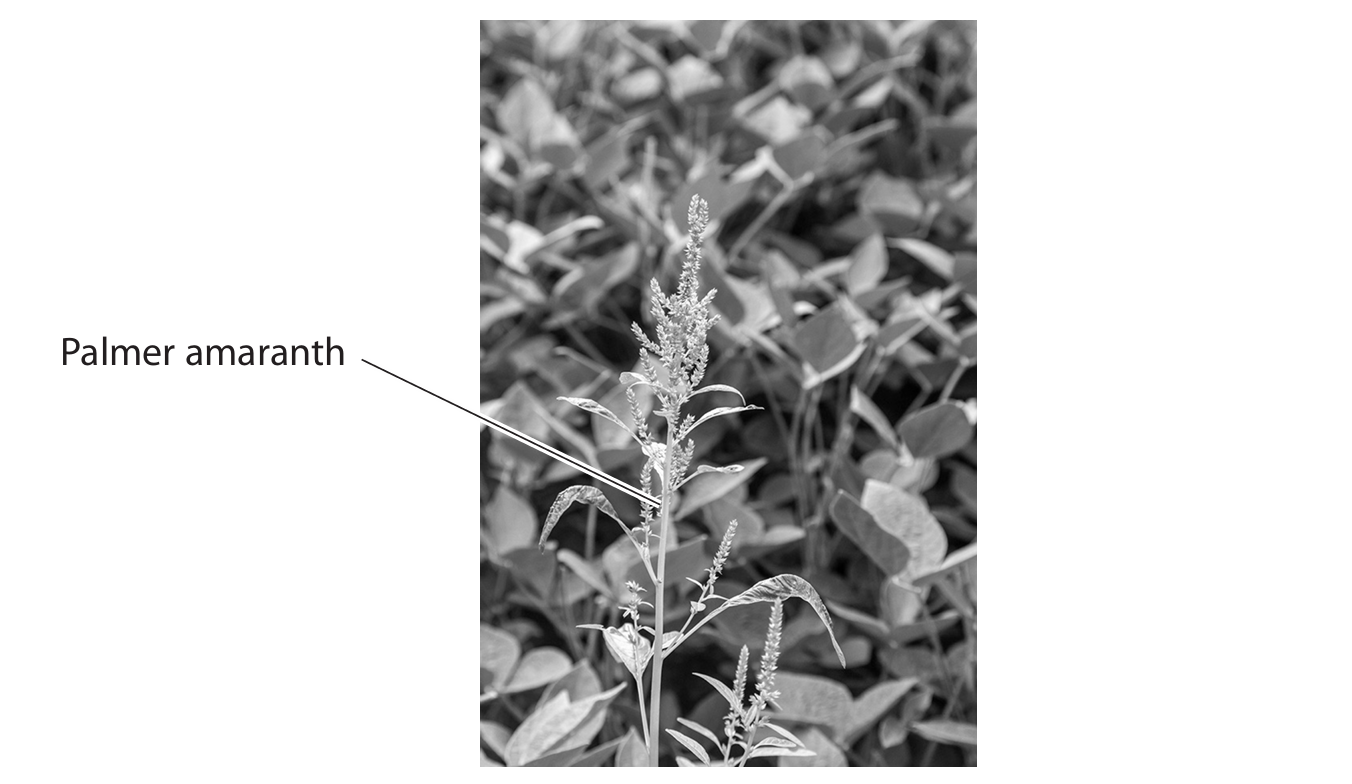
(b) (iv) Palmer amaranth evolved resistance through natural selection. Initially, within a large population of weeds, a random mutation created the recessive ‘r’ allele for resistance, introducing variation. When herbicides are used frequently, they act as a strong selection pressure. Plants without the resistance allele (RR and Rr) are killed. Only the resistant plants (rr) survive. These surviving resistant plants reproduce, passing the ‘r’ allele on to their offspring. Over many generations, the frequency of the ‘r’ allele in the population increases significantly, leading to a population that is largely resistant to the herbicide.
Explanation: This process is a classic example of evolution by natural selection. The herbicide does not create the resistance mutation; it merely selects for individuals that already possess it, allowing them to survive and become the predominant type in the environment.
(b) (v) The difference arises because dominant and recessive alleles are expressed differently. For a recessive resistance allele (r), only homozygous (rr) plants are resistant. When herbicides are used, all non-resistant plants (RR and Rr) are killed. No plants carrying the dominant ‘R’ allele survive, so it is eliminated from the population. After five years, only resistant (rr) plants remain.
For a dominant resistance allele (let’s call it D), both homozygous (DD) and heterozygous (Dd) plants are resistant and survive the herbicide. The non-resistant plants (dd) are killed. However, if two heterozygous (Dd) resistant plants reproduce, they can produce offspring with the genotype dd, which are non-resistant. These non-resistant weeds will appear in the population as long as the heterozygous genotype exists and reproduces.
Explanation: With recessive resistance, the herbicide eliminates all carriers of the non-resistant trait. With dominant resistance, the non-resistant allele (d) can “hide” undetected in the heterozygous (Dd) plants, which survive the herbicide spray. This hidden allele can then be passed on and expressed in future generations when two heterozygotes cross.

▶️ Answer/Explanation
(a) To keep the temperature constant / maintain a constant temperature / control the temperature.
Explanation: The water bath is used to ensure the yeast suspension remains at a stable, optimal temperature for the duration of the experiment. This is crucial because the rate of enzyme-controlled reactions, like those in anaerobic respiration, is highly sensitive to temperature changes. A constant temperature ensures that any changes in the rate of gas production are due to the changing glucose concentration and not fluctuating temperature.
(b) Lime water OR Hydrogen carbonate indicator.
Explanation with Lime water: Lime water (a solution of calcium hydroxide) can be used. The gas produced by yeast during anaerobic respiration is carbon dioxide (CO₂). When carbon dioxide is bubbled through lime water, it reacts to form insoluble calcium carbonate, which turns the clear lime water cloudy or milky. This visible change confirms the presence of CO₂.
Explanation with Hydrogen carbonate indicator: Hydrogen carbonate indicator (a pH indicator) can also be used. Carbon dioxide dissolves in water to form carbonic acid, which lowers the pH. The hydrogen carbonate indicator solution changes colour based on pH: it is red at neutral pH, yellow/orange in acidic conditions (high CO₂), and purple in alkaline conditions (low CO₂). The production of CO₂ would therefore cause the indicator to turn from red to yellow/orange.
(c) A stopwatch / stopclock / timer OR A syringe / measuring cylinder / burette.
Explanation: To accurately measure the rate of respiration, one needs to measure the time taken to produce a certain volume of gas or the volume of gas produced in a certain time. A stopwatch is needed to measure the time accurately. Alternatively, if the apparatus is modified to collect the gas (e.g., in an inverted measuring cylinder or syringe), that measuring apparatus (syringe, measuring cylinder, burette) would be needed to measure the volume of gas produced.
(d)(i) An explanation including four named conditions and how they are controlled is required. For example:
- Temperature: Temperature is controlled using a water jacket surrounding the fermenter. Cold water is circulated through the jacket to remove excess heat generated by the respiring microorganisms and maintain the optimum temperature for their growth and penicillin production.
- pH: pH is monitored using pH probes and maintained at the optimum level by the automatic addition of acids or alkalis through inlet pipes to ensure enzyme activity is not inhibited.
- Oxygen (aeration): Oxygen concentration is controlled for aerobic respiration using an aerator or sparger, which pumps sterile air into the fermenter. This provides the oxygen needed for the microorganisms to respire and grow efficiently.
- Nutrients: Nutrients are provided in a nutrient medium and are often added continuously or in batches (fed-batch culture) to ensure microorganisms never run out of food for growth and product synthesis.
- Agitation (Mixing): The contents are mixed using motor-driven impellers (paddles/stirrers). This ensures even distribution of nutrients, oxygen, and heat throughout the vessel, preventing the formation of gradients and ensuring all microorganisms have equal access to resources.
- Aseptic Conditions (Preventing Contamination): Conditions are kept sterile to prevent competition from unwanted microbes. Air entering the fermenter is filtered to remove contaminants, and the vessel is sterilized with steam before use.
(Any four valid points, each consisting of a named condition and its control method, would score the marks.)
(d)(ii) Bacteria have evolved resistance to antibiotics through natural selection.
- Within a bacterial population, there is genetic variation due to random mutations.
- Some of these mutations may happen to confer resistance to a particular antibiotic. For example, a mutation might change the shape of the protein that the antibiotic usually targets, so the antibiotic can no longer bind effectively.
- When the antibiotic is used, it acts as an environmental selection pressure. Non-resistant bacteria are killed by the antibiotic.
- The resistant bacteria survive because the antibiotic is ineffective against them.
- These surviving resistant bacteria then reproduce (multiply by binary fission).
- They pass the allele(s) for resistance on to their offspring.
- Over time and with repeated use of the antibiotic, the proportion of resistant bacteria in the population increases, making the antibiotic less effective at controlling infections caused by that bacterial species.
This process is a classic example of natural selection and is a major challenge in modern medicine.
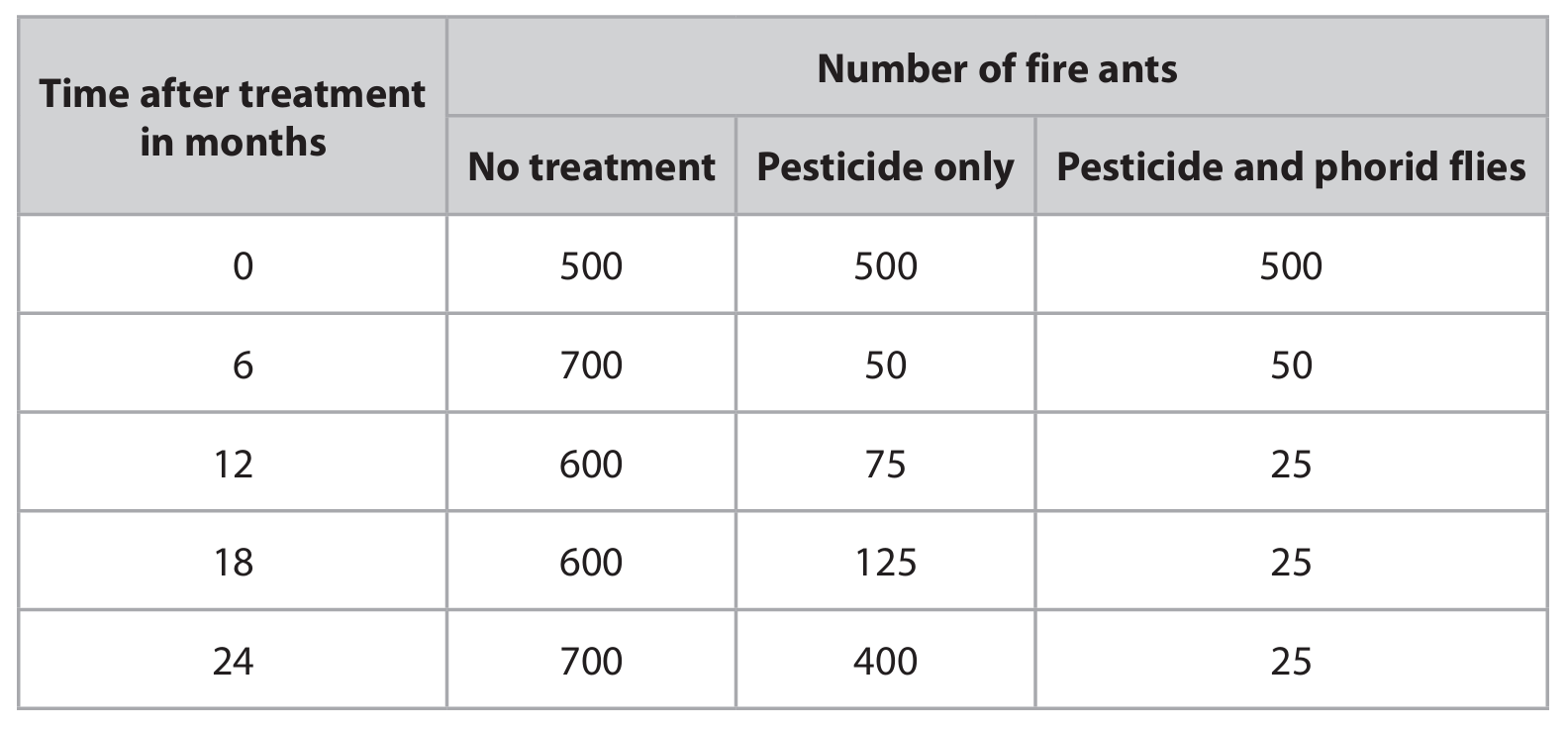

▶️ Answer/Explanation
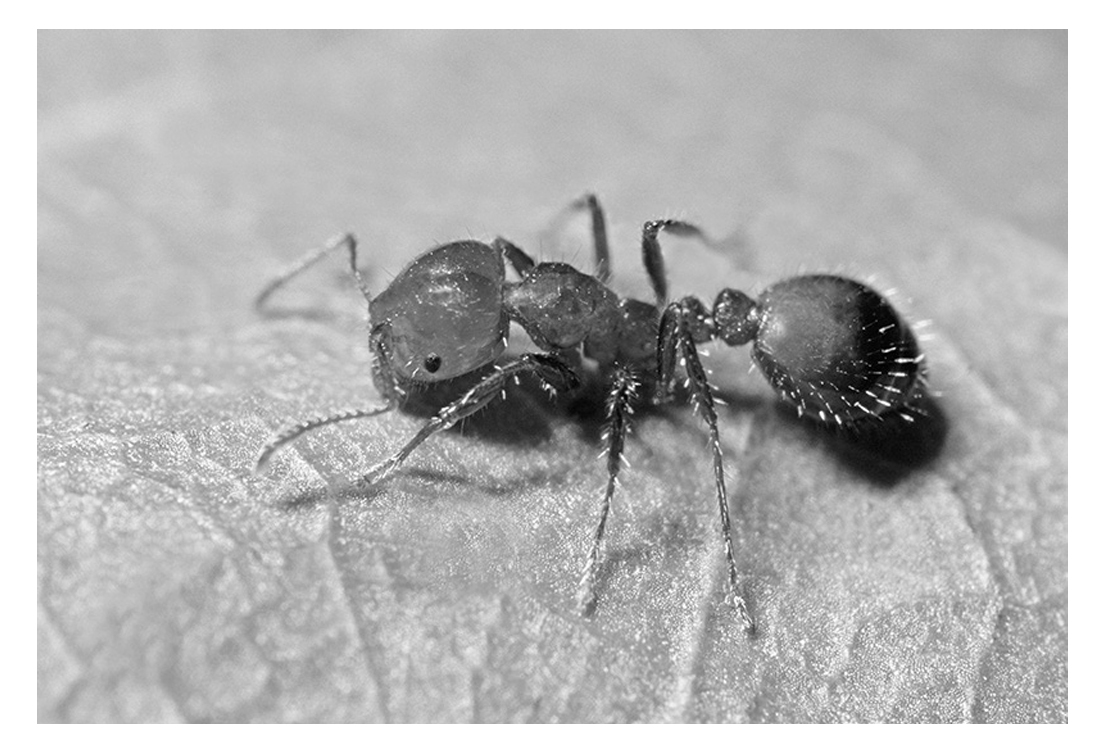
(a) It is a control (experiment) / to compare the results / check that change is due to the treatments.
Explanation: The glasshouse with no treatment serves as a control. This is a fundamental part of a scientific investigation. The control provides a baseline for comparison. It allows the scientists to see what happens to the fire ant population when no treatment is applied. By comparing the results from the treated glasshouses to this control, they can be confident that any changes observed (like a decrease in ant numbers) are actually due to the pesticide or the combination of pesticide and flies, and not just due to other factors that might affect the population over time.
(b)
Graph Description: A line graph should be drawn with the following features to score full marks:
- Axes: The x-axis should be labelled “Time after treatment (months)” and the y-axis should be labelled “Number of fire ants”. Both axes must have a linear scale that uses at least half of the grid provided.
- Data Points: Points should be plotted accurately for both data sets (Pesticide only and Pesticide + phorid flies) at the correct time intervals (0, 6, 12, 18, 24 months).
- Lines: The plotted points for each data set should be joined with straight lines.
- Key: The graph must include a key or the lines must be clearly labelled to identify which line represents “Pesticide only” and which represents “Pesticide and phorid flies”.
Explanation: The graph for “Pesticide only” would start at 500 ants at 0 months, drop sharply to 50 at 6 months, rise slightly to 75 at 12 months, continue rising to 125 at 18 months, and then rise sharply again to 400 at 24 months. The graph for “Pesticide and phorid flies” would also start at 500, drop to 50 at 6 months, but then drop further to 25 at 12 months and remain steady at 25 for both 18 and 24 months. This visual representation clearly shows the initial effectiveness of both treatments and the crucial long-term difference the biological control agent makes.
(c) The number of fire ants decreases (sharply at first) and then increases (again).
Explanation: Looking at the data for “Pesticide only”, we see a very effective initial result. The number of ants plummets from 500 to just 50 within the first 6 months. This shows the pesticide is highly effective at killing the ants upon application. However, after this initial success, the population begins to recover. It increases to 75 at 12 months, 125 at 18 months, and is nearly back to its original size at 400 by 24 months. This indicates that the effect of the pesticide is not lasting.
(d) Discussion points should include:
- Both treatments (pesticide alone and pesticide + flies) are initially very effective, drastically reducing the ant population within 6 months.
- The population recovers over time when only pesticide is used, reaching 400 ants by 24 months. This suggests the pesticide’s effect is temporary; it may wear off, wash away, or the ants may develop resistance to it through natural selection. Resistant ants survive and reproduce, passing on the resistance allele to their offspring.
- In contrast, when phorid flies (a biological control agent) are introduced alongside the pesticide, the ant population is not only reduced but is also maintained at a very low level (25 ants) from 12 months onwards.
- The phorid flies provide a sustainable, long-term control method. Unlike the chemical pesticide, the flies can reproduce and continue to prey on the fire ants, keeping their population in check. The population stabilizes at a low level where the death rate (due to predation by flies) equals the birth rate.
- This shows that integrating biological control (phorid flies) with chemical control (pesticide) is a much more effective long-term strategy for managing fire ant populations than using pesticides alone. The pesticide provides a quick “knock-down” of the population, and the biological control agent prevents it from recovering.
Explanation: The data clearly shows that while pesticides offer a powerful short-term solution, they often fail as a long-term strategy on their own due to factors like resistance development. Biological control, though it may work more slowly, acts as a persistent regulating force. The combination of both methods leverages the immediate impact of the pesticide with the sustained, self-replicating pressure of the biological control agent, resulting in a much more effective and durable pest management outcome. This is a key principle in integrated pest management (IPM).
▶️ Answer/Explanation
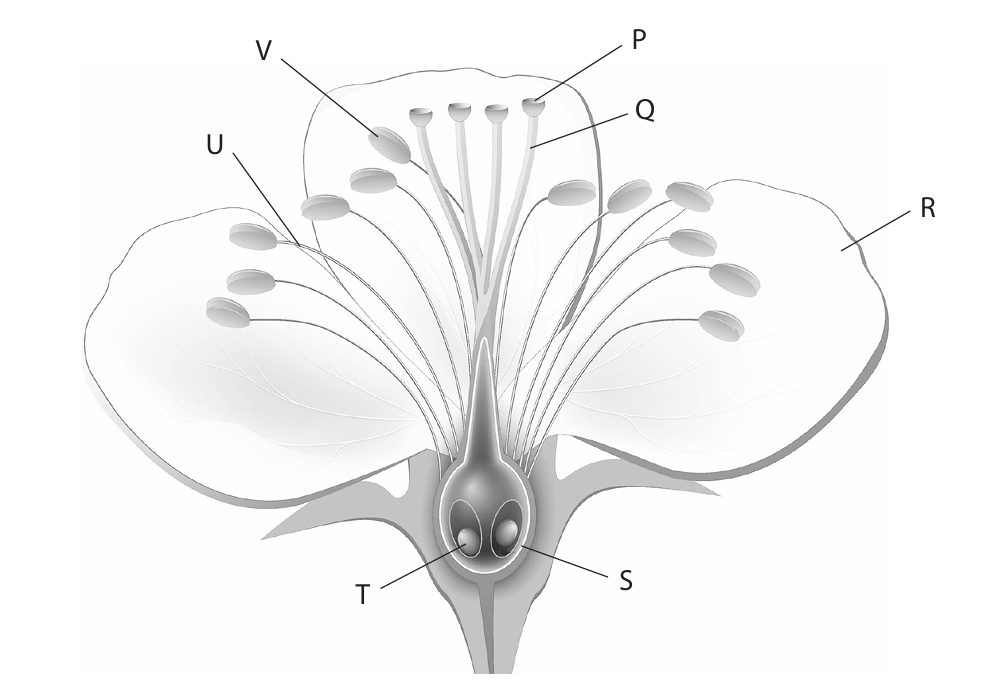
(a)(i) C (V to P)
Explanation: Pollen is produced in the anther (V) and must be transferred to the stigma (P) during pollination. Self-pollination occurs when this transfer happens within the same flower or between flowers of the same plant.
(a)(ii) A (Q)
Explanation: The pollen tube grows down through the style (Q) to reach the ovary, allowing the male gamete to travel to the ovule for fertilization.
(a)(iii) C (T)
Explanation: After fertilization, the ovule (T) develops into the seed. The ovary (S) develops into the fruit that surrounds the seed.
(b) Three differences between insect-pollinated and wind-pollinated flowers:
- Insect-pollinated flowers have large, brightly coloured petals to attract insects, while wind-pollinated flowers have small, often dull or green petals (or none).
- Insect-pollinated flowers produce nectar and scent to attract pollinators; wind-pollinated flowers do not produce nectar or scent.
- Insect-pollinated flowers have a sticky stigma located inside the flower to catch pollen from insects; wind-pollinated flowers have a feathery, exposed stigma hanging outside the flower to catch airborne pollen.
(c) Sweet-tasting fruit attracts animals to eat it. The seeds inside have a tough coat that resists digestion. Animals carry the seeds away and egest them in their waste, which can act as fertilizer. This disperses seeds away from the parent plant, reducing competition and helping colonize new areas.

▶️ Answer/Explanation
(a)(i) B (fungi)
Explanation: Yeast is a single-celled organism that belongs to the kingdom Fungi. Unlike bacteria (prokaryotes), yeast are eukaryotic cells. They are not plants as they do not perform photosynthesis and lack chloroplasts, and they are not protoctists, which is a kingdom typically containing diverse, often unicellular, eukaryotes that don’t fit into the other kingdoms.
(a)(ii) B (chitin)
Explanation: The cell wall of a yeast cell is primarily made of a complex carbohydrate called chitin, which is also found in the exoskeletons of insects and the cell walls of other fungi. This is different from plant cell walls, which are made of cellulose (A). Sucrose (C) is a sugar and starch (D) is a storage polysaccharide; neither are structural components of cell walls.
(b)(i) The teacher would need additional apparatus to control and measure temperature. This includes a water bath (or a beaker of water heated by a Bunsen burner) to contain the test tube and allow for precise temperature variation. A thermometer is essential to accurately measure the temperature of the yeast and glucose solution. A stopwatch or timer is also needed to measure the rate of the reaction, for example, by timing how long it takes for a colour change to occur or measuring the rate of gas production if that was being monitored.
(b)(ii) The layer of liquid paraffin acts as a seal on the surface of the glucose solution. Its purpose is to prevent oxygen from the air dissolving into the solution. This creates anaerobic conditions, ensuring that any respiration detected is anaerobic respiration (fermentation) rather than aerobic respiration. This is crucial for investigating this specific type of respiratory pathway.
(b)(iii) A suitable chemical indicator would be limewater (calcium hydroxide solution). Alternatively, hydrogencarbonate indicator could be used.
Explanation: Limewater is used to test for the product carbon dioxide (CO₂) of respiration. CO₂ turns limewater cloudy. Hydrogencarbonate indicator changes colour (from red to yellow) in the presence of increased carbon dioxide levels.
(b)(iv) Diazine green is an indicator that is blue when oxygen is present and pink when it is absent (reduced). The initial blue colour indicates there is oxygen dissolved in the solution, and the yeast is likely respiring aerobically. As the yeast cells respire, they use up the oxygen in the solution for aerobic respiration. The change in colour from blue to pink indicates that the oxygen concentration is decreasing. Once the oxygen is depleted and the solution turns pink, it shows that the yeast has switched to anaerobic respiration (fermentation) to continue producing energy.
(c) The rate of respiration in yeast changes with temperature due to the effect on enzymes, which control the metabolic reactions of respiration.
As temperature increases from a low value, the kinetic energy of the enzyme and substrate molecules increases. This causes them to move faster and collide more frequently. More collisions lead to the formation of more enzyme-substrate complexes, which increases the rate of respiration.
This increase continues up to an optimum temperature, where the respiration rate is at its maximum because enzymes are working most efficiently.
Beyond this optimum temperature, the high energy causes the hydrogen and ionic bonds that hold the enzyme’s shape to break. This alters the specific 3D shape of the enzyme’s active site. The substrate can no longer fit into the denatured active site, meaning fewer enzyme-substrate complexes can form. This causes the rate of respiration to decrease rapidly and eventually stop.

▶️ Answer/Explanation
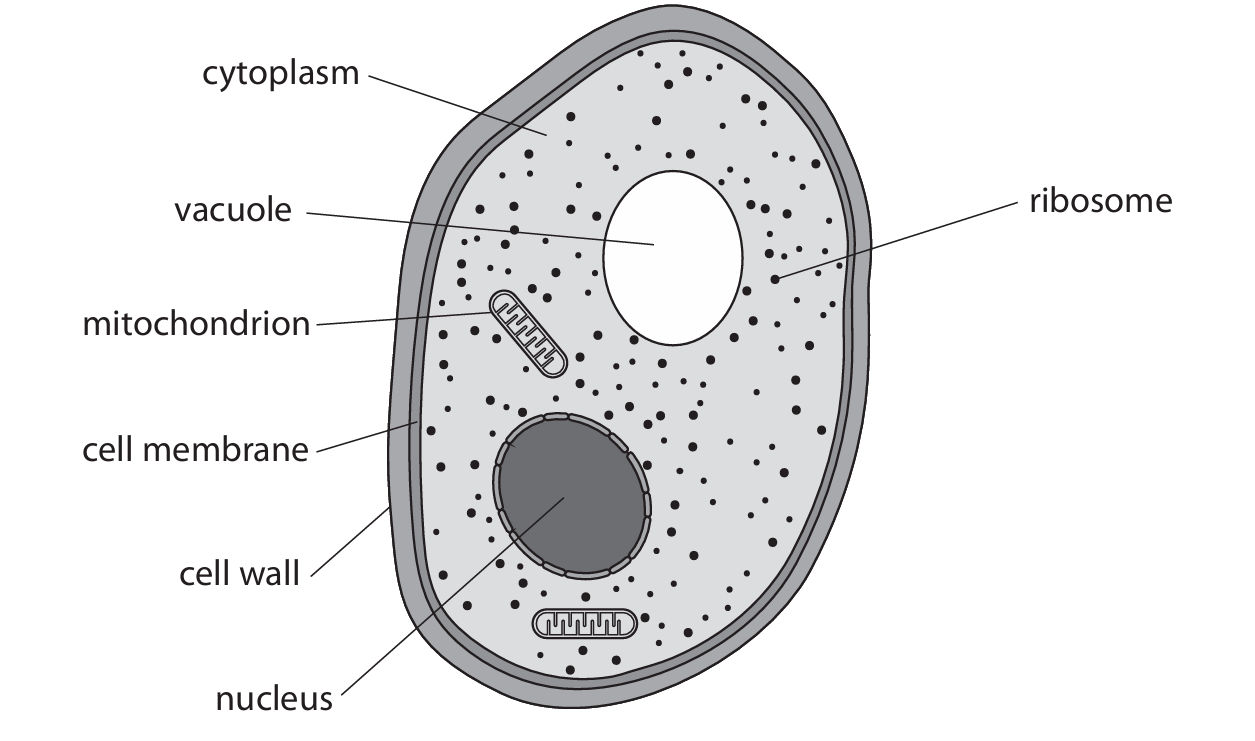
(a)(i) A mitochondrion
Explanation: Aerobic respiration is the process that releases energy from glucose in the presence of oxygen. In eukaryotic cells, like yeast cells, this process occurs specifically in the mitochondria. The mitochondria are often called the “powerhouses” of the cell because they generate most of the cell’s supply of ATP, the energy currency. The nucleus (B) contains genetic material, the ribosome (C) is the site of protein synthesis, and the vacuole (D) is used for storage; none of these are the primary site for aerobic respiration.
(a)(ii) B chitin
Explanation: The cell wall of fungi, which includes yeast, is primarily made of a complex carbohydrate called chitin. Chitin is a strong and flexible polysaccharide that also forms the exoskeletons of insects. Cellulose (A) is the material that makes up plant cell walls. Glycogen (C) is a polysaccharide used for energy storage in animals and fungi, and starch (D) is used for energy storage in plants.
(a)(iii) A cell membrane
Explanation: Prokaryotic cells, such as bacteria, lack membrane-bound organelles. Therefore, they do not have a true nucleus (C), mitochondria (B), or vacuoles (D) like eukaryotic cells do. However, all cells, both prokaryotic and eukaryotic, are surrounded by a cell membrane (also called the plasma membrane). This phospholipid bilayer controls the movement of substances in and out of the cell and is a fundamental structure for life.
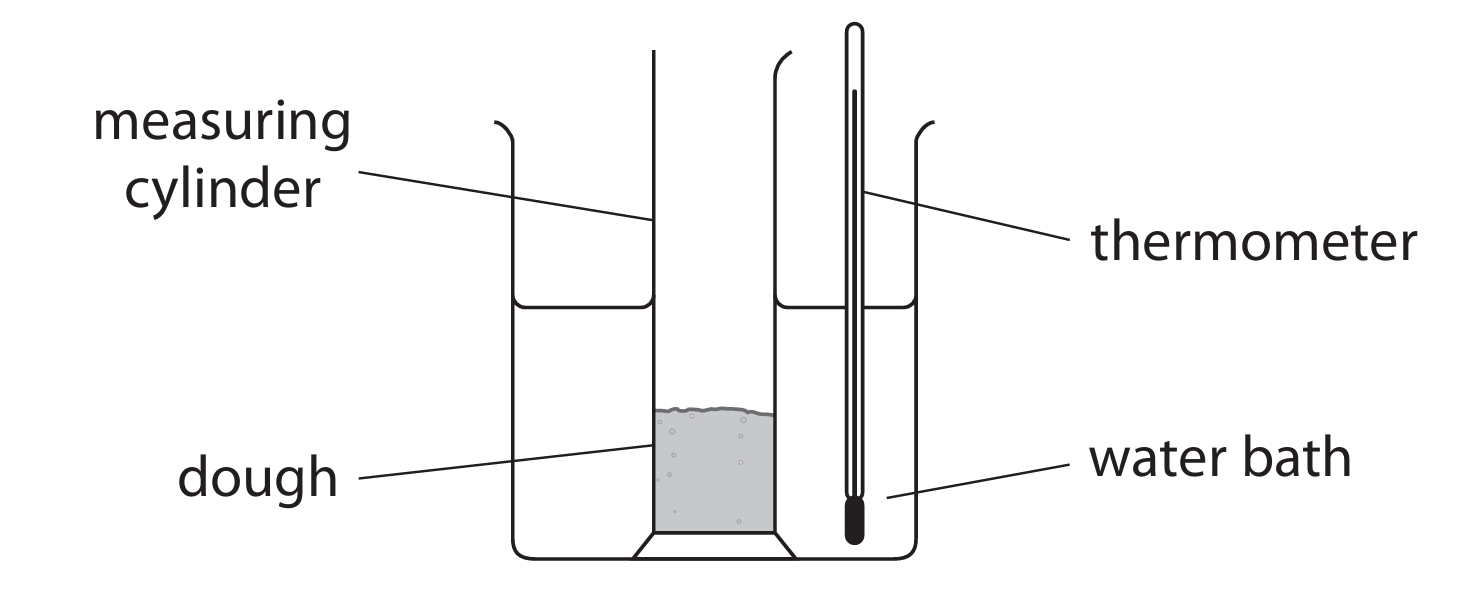
(b)(i) 80%
Explanation: The percentage increase is calculated using the formula:
\[ \text{Percentage Increase} = \left( \frac{\text{Final Value} – \text{Initial Value}}{\text{Initial Value}} \right) \times 100\]
Plugging in the values from the experiment at 35°C:
\[ \left( \frac{45 – 25}{25} \right) \times 100 = \left( \frac{20}{25} \right) \times 100 = 0.8 \times 100 = 80\%\]
So, the dough increased in height by 80% after two hours at 35°C.
(b)(ii) Yeast respires anaerobically (a process called fermentation) using the sugar in the dough as a substrate. This respiration produces carbon dioxide (\(CO_2\)) gas. The gas bubbles become trapped within the stretchy, elastic network of gluten proteins in the dough. As more and more gas is produced, these bubbles expand, causing the entire dough mixture to inflate and rise in height.
(b)(iii) Temperature affects the rate of enzyme-controlled reactions, such as respiration in yeast. At 25°C, the temperature is further from the optimum temperature for the yeast’s enzymes. The yeast cells and their enzymes have less kinetic energy, leading to fewer successful collisions between enzymes and substrates. This results in a slower rate of respiration, less carbon dioxide gas being produced, and consequently, a smaller rise in the dough (40% increase) compared to the rise at 35°C (80% increase).
(b)(iv) At 65°C, the temperature is likely too high and has denatured the enzymes in the yeast. Denaturation is a process where the enzyme’s active site changes shape permanently, and it can no longer bind to its substrate. With the enzymes denatured, respiration stops entirely or occurs at a very minimal rate. Very little carbon dioxide is produced, so the dough rises very little (only 8%). In contrast, at 35°C, the temperature is likely close to the optimum for the yeast’s enzymes, allowing for a high rate of respiration and gas production, leading to the greatest rise.


▶️ Answer/Explanation
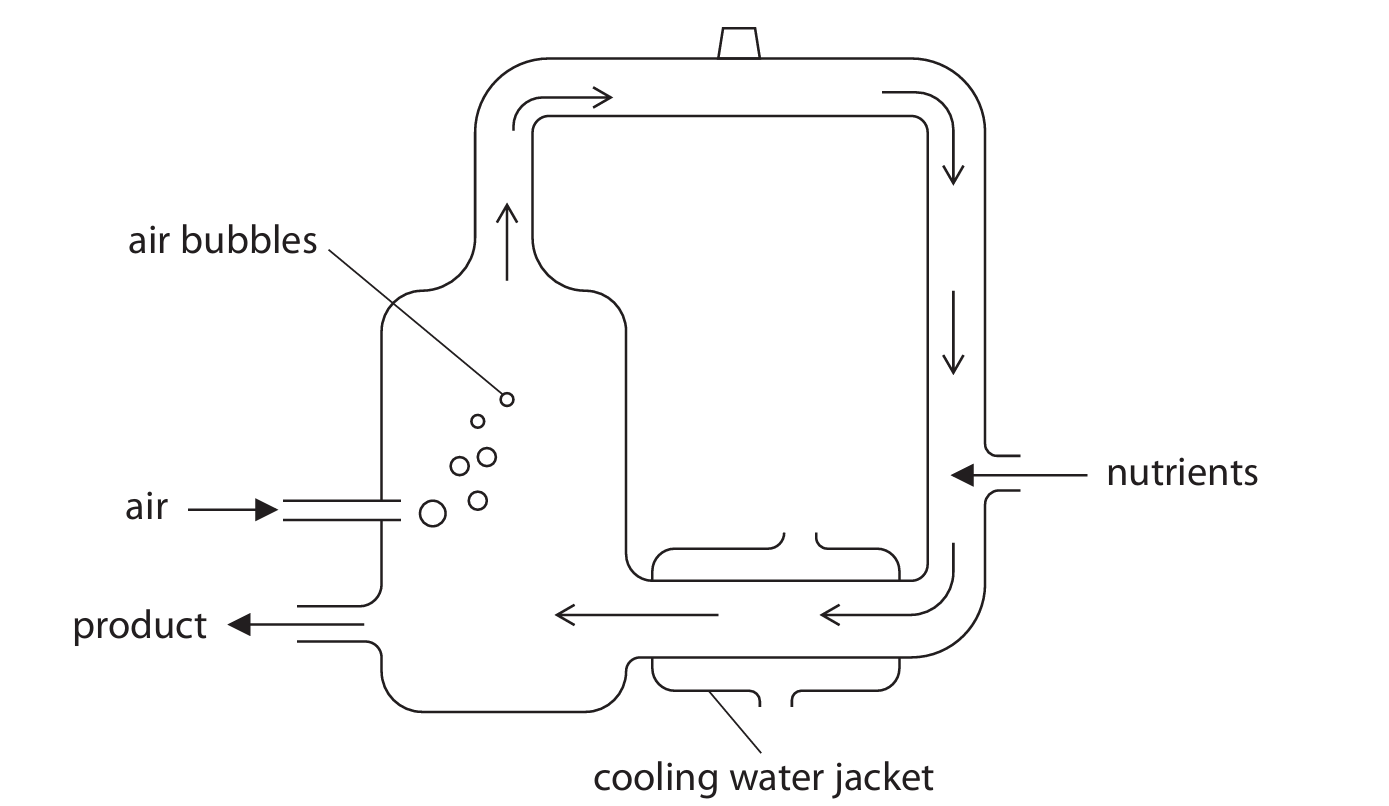
(a)(i) Air is bubbled into the fermenter to provide oxygen. The oxygen is required by the fungus for aerobic respiration. Aerobic respiration is the process that breaks down glucose to release energy, which the fungus needs for growth and to produce mycoprotein. Without a sufficient oxygen supply, the fungus might resort to less efficient anaerobic respiration, which would slow down its growth and reduce the yield of mycoprotein.
(a)(ii) The fermenter is cleaned with steam to sterilize it. Steam cleaning kills any pathogens or other unwanted microorganisms that might be present. This is crucial to prevent contamination of the culture. If other microorganisms were present, they could compete with the fungus for nutrients, potentially produce harmful toxins, or spoil the mycoprotein product, affecting its safety and quality. Steam is used because it is an effective sterilizing agent that, after condensing to water, does not leave behind chemical residues that could affect the product.
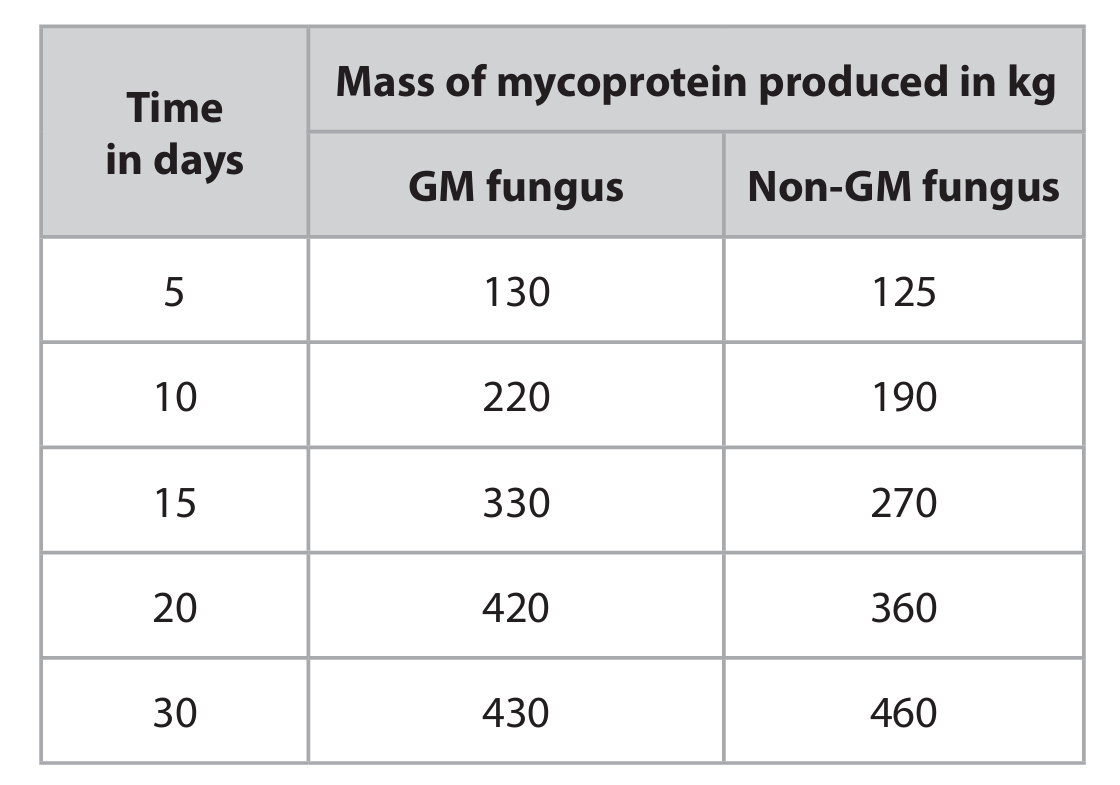
(b)(i) A line graph should be plotted with ‘Time (days)’ on the x-axis and ‘Mass of mycoprotein produced (kg)’ on the y-axis. Two lines should be drawn: one for the GM fungus and one for the non-GM fungus. The points for the GM fungus are (5,130), (10,220), (15,330), (20,420), (30,430). The points for the non-GM fungus are (5,125), (10,190), (15,270), (20,360), (30,460). These points should be joined with straight lines. A key must be included to distinguish between the two lines.
(b)(ii) The scientist’s claim is only partially supported by the data. The GM fungus does grow faster and produce more mycoprotein in the first 20 days (420 kg vs 360 kg), which could be advantageous for large-scale production if a quick yield is desired. However, by day 30, the non-GM fungus has produced a higher final yield (460 kg vs 430 kg). Furthermore, the GM fungus’s production appears to be leveling off or slowing down significantly after day 20, while the non-GM fungus is still increasing. Therefore, whether the GM fungus is “better” depends on the specific production goals: it is better for a shorter, faster production cycle, but the non-GM fungus is better for maximizing the total yield over a longer period.
(b)(iii) Whether mycoprotein is healthier than lamb for a growing human involves a trade-off between different nutritional components.
Arguments for mycoprotein being healthier:
- Mycoprotein contains significantly less fat (3.0g vs 25.5g per 100g) and no cholesterol (0.0g vs 0.1g). A diet lower in saturated fats and cholesterol is associated with a reduced risk of obesity and heart disease.
- Mycoprotein contains much more fibre (6.0g vs 0.7g). Fibre is essential for healthy digestion, preventing constipation, and may help reduce the risk of bowel cancer.
- Mycoprotein contains more calcium (0.048g vs 0.010g). Calcium is vital for the development of strong bones and teeth in a growing human.
Arguments against mycoprotein being healthier:
- Lamb contains almost twice as much protein (20.2g vs 10.5g). Protein is crucial for growth, muscle development, and repair of tissues, which are all very important for a growing individual.
- Lamb contains significantly more iron (0.0025g vs 0.00039g). Iron is essential for producing haemoglobin and preventing anaemia, which can cause fatigue and impair development.
Conclusion: Mycoprotein offers advantages for long-term cardiovascular and digestive health due to its low fat and high fibre content. However, for a growing human who has high requirements for protein and iron to support rapid growth and development, lamb provides these key nutrients in much greater quantities. Therefore, a balanced diet incorporating both sources might be most beneficial, or mycoprotein would need to be consumed in much larger quantities or fortified to meet the protein and iron needs of a growing human.

▶️ Answer/Explanation
(a) Increasing acidity can be used as a measure of yoghurt production because yoghurt is produced through the process of anaerobic respiration by bacteria (such as Lactobacillus). During this process, the bacteria ferment lactose (milk sugar) and produce lactic acid as a waste product. The more lactic acid produced, the more acidic the mixture becomes, indicating greater yoghurt production.
(b) One abiotic variable that the scientists should control is temperature. Maintaining a constant temperature ensures that any differences in acidity between the two cultures are due to the oxygen levels being tested rather than temperature fluctuations that could affect bacterial activity.
(c) (i) The line graph should show:
- Time (minutes) on the x-axis with a linear scale from 0 to 210
- Acidity (%) on the y-axis with a linear scale from 0.20 to at least 0.70
- Two clearly labeled lines: one for reduced oxygen level and one for normal oxygen level
- All data points correctly plotted
- Straight lines connecting the points

(c) (ii) The changes in percentage acidity are different because the reduced oxygen environment promotes more anaerobic respiration by the bacteria. In the reduced oxygen culture, bacteria primarily perform anaerobic respiration, which produces lactic acid more efficiently and rapidly. In the normal oxygen culture, bacteria may perform more aerobic respiration, which produces less lactic acid and results in a slower increase in acidity. This explains why the reduced oxygen culture shows a faster increase in acidity throughout most of the experiment, though both cultures eventually reach the same maximum acidity at 210 minutes.

▶️ Answer/Explanation
(a)
A: Oesophagus (or Gullet)
B: Stomach
C: Small intestine (or Ileum or Duodenum or Jejunum)
D: Large intestine (or Colon)
Explanation: The labels A-D are identified based on their location and function in the mammalian digestive system. A is the oesophagus, which carries food from the mouth to the stomach (B). C is the small intestine, where most digestion and absorption occurs. D is the large intestine, which absorbs water and forms faeces.
(b) The bacteria in the caecum and appendix produce the enzyme cellulase. Cellulase digests cellulose, a major component of plant cell walls, into glucose. The rabbit can then absorb this glucose and use it for energy through respiration.
Detailed Explanation: Rabbits are herbivores whose diet consists largely of cellulose from grass and plants. Mammals, including rabbits, cannot produce the enzyme cellulase themselves. However, symbiotic bacteria living in the enlarged caecum and appendix can. These bacteria break down the tough cellulose fibers into simpler sugar molecules, like glucose. This process, called fermentation, allows the rabbit to access the energy stored in plant material that would otherwise be indigestible and lost in faeces. The glucose is then absorbed into the rabbit’s bloodstream and used in cellular respiration to release energy.
(c)(i) Humans are omnivores and do not have a diet consisting mainly of cellulose, so a large fermentation chamber is not necessary.
Detailed Explanation: Unlike rabbits, which are specialized herbivores, humans have a more varied omnivorous diet that includes easier-to-digest foods like meats, fruits, and processed grains. While we do eat some plant material, we do not rely on breaking down large quantities of tough cellulose for energy. Therefore, there has been no evolutionary pressure for humans to develop a large caecum and appendix for housing cellulose-digesting bacteria.
(c)(ii) Removing the appendix removes a reservoir of useful gut bacteria. This reduces competition for resources and space, allowing harmful (pathogenic) bacteria to multiply more easily and cause infections.
Detailed Explanation: The appendix acts as a safe haven or “store” for beneficial gut flora. After an event like a diarrheal illness that flushes out bacteria from the main part of the gut, the appendix can help repopulate the intestine with these good bacteria. These beneficial bacteria compete with harmful bacteria for space and nutrients, keeping the population of pathogens in check. If the appendix is removed, this reservoir is lost. This means that after the gut flora is disturbed, it may be slower to recover or may not be repopulated with the same diversity of good bacteria. With reduced competition from beneficial bacteria, pathogenic bacteria can multiply to larger numbers, increasing the likelihood of them causing an infection in the colon.


▶️ Answer/Explanation
(a) C it is specific
Explanation: Biological control uses natural predators or parasites to target specific pests, unlike broad-spectrum chemical pesticides that can harm beneficial insects and other non-target organisms. This specificity reduces environmental impact and helps maintain ecological balance in the farming ecosystem.
(b)(i)
1. Sucrose/sugars
2. Amino acids
Explanation: Aphids feed directly on the phloem sap, which is rich in sugars (like sucrose) produced during photosynthesis, and amino acids, which are the building blocks of proteins. These compounds are transported throughout the plant via the phloem to support growth and storage.
(b)(ii)
Explanation: When aphids feed on phloem sap, they directly remove vital nutrients—sugars and amino acids—that the plant needs for energy and growth. This loss reduces the plant’s ability to perform essential functions. With less sugar available, respiration (the process of releasing energy) is compromised, leading to reduced ATP production. This energy deficit hinders active transport, limiting the plant’s uptake of minerals from the soil. Consequently, the plant experiences stunted growth, produces smaller leaves, tubers, fruits, or grains, and may store less starch and protein. In severe cases, the loss of nutrients can even reduce the rate of photosynthesis itself. Additionally, aphid feeding can weaken the plant and make it more susceptible to diseases, further reducing crop yield.
(c)
Explanation: The scientists’ conclusion that hoverflies are the most effective biological control agent is supported by the graph data, which shows that hoverfly larvae consume more aphids per day than silverfly larvae at all three temperatures tested (12°C, 15°C, and 18°C). This higher consumption rate means fewer hoverflies would be needed to control an aphid population, making them a potentially more efficient option. The difference in consumption is most pronounced at the lowest temperature (12°C), where hoverflies eat roughly three times more aphids, suggesting they might be particularly useful in cooler conditions.
However, the conclusion may not be entirely conclusive due to limitations in the method. The experiment used only a single larva per container, which is a very small sample size. To improve reliability, the experiment should be repeated with many more larvae to calculate a more robust average and account for individual variation. Furthermore, the controlled laboratory environment does not fully replicate field conditions, where factors like wind, rain, predators of the control agents themselves, and the spatial distribution of aphids could significantly influence feeding behavior. The study also only compared two species; other effective natural predators of aphids, like ladybugs or lacewings, were not included in the comparison. Therefore, while the data suggests hoverflies are promising, more extensive field trials and comparisons with other agents are needed to firmly establish them as the most effective option.
▶️ Answer/Explanation
(a)(i) B (fungi)
Explanation: Yeast is classified as a fungus because it is a single-celled organism with a nucleus (making it eukaryotic) and a cell wall made of chitin. Animals do not have cell walls, plants have cell walls made of cellulose, and protoctists do not typically have chitin in their cell walls.
(a)(ii) Viruses do not carry out all seven life processes independently / They cannot reproduce without a host cell.
Explanation: Living organisms are typically defined by characteristics such as growth, respiration, sensitivity, movement, excretion, nutrition, and reproduction. Viruses lack many of these; most notably, they cannot reproduce on their own and require a host cell to replicate. They also do not carry out metabolic processes like respiration.
(b) Restriction enzymes and Ligase.
Explanation: In genetic engineering, specific enzymes are used to insert a gene into a plasmid. Restriction enzymes are used to cut the DNA at specific sequences, both to remove the desired gene (e.g., for the hepatitis B protein) and to open up the plasmid. Ligase is then used to join the pieces of DNA together, effectively inserting the new gene into the plasmid by forming bonds between the sugar-phosphate backbones of the DNA strands.
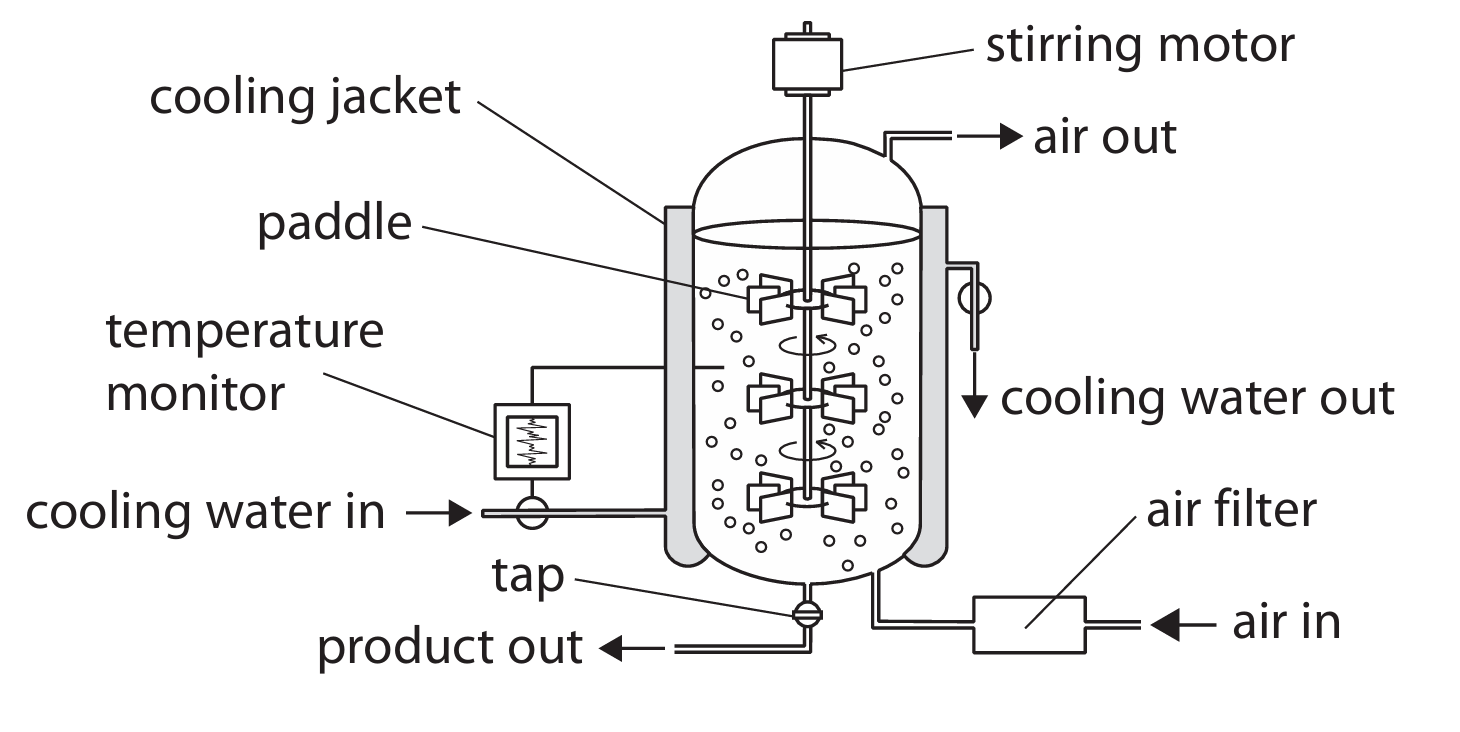
(c)(i) The temperature monitor and cooling jacket work together to maintain an optimal temperature.
Explanation: The fermentation process, which involves yeast respiration and other chemical reactions, releases heat. If the temperature rises too high, it can denature the enzymes inside the yeast cells, slowing down or stopping the production of the desired protein. The temperature monitor detects the temperature inside the fermenter. If it gets too high, the cooling system is activated, and cool water is circulated through the cooling jacket, which absorbs the excess heat and carries it away, thus maintaining a constant, ideal temperature for the yeast to thrive.
(c)(ii) Air is needed to provide oxygen for aerobic respiration.
Explanation: Yeast, like many organisms, can respire aerobically (with oxygen) to produce energy. Aerobic respiration is much more efficient than anaerobic respiration, yielding more energy (ATP) per glucose molecule. This abundant energy allows the genetically modified yeast cells to grow rapidly and produce large quantities of the viral protein. Without oxygen, the yeast would switch to less efficient anaerobic respiration, resulting in slower growth and lower product yield.
(c)(iii) The air is filtered to prevent contamination.
Explanation: Unfiltered air contains bacteria, fungi (other than the desired yeast), and other microorganisms. If these contaminants entered the fermenter, they would compete with the genetically modified yeast for nutrients and space. Furthermore, they could potentially produce unwanted waste products or even consume the desired protein, drastically reducing the yield and purity of the vaccine product. The filter acts as a physical barrier, ensuring that only sterile air enters the fermenter, which is crucial for maintaining a pure and efficient culture.


▶️ Answer/Explanation
(a) (i)
1 light (intensity)
2 water volume
Explanation: The student controls several abiotic (non-living) factors to ensure a fair test. The lamp provides a controlled light intensity, which is crucial for photosynthesis. The student also controls the volume of water added each day, ensuring that water availability, another key factor for plant growth, is consistent and not a variable affecting the results.
(a) (ii)
Explanation: Using dry mass is important because the water content in living seedlings can vary significantly. If fresh (wet) mass were measured, some seedlings might be heavier simply because they absorbed more water, not because they have more actual plant biomass (the organic matter like cellulose, proteins, and starch). Drying the seedlings in an oven removes all the water, leaving only the dry biomass. This allows for a valid and fair comparison of the true growth (increase in organic material) between the seedlings grown with and without fertiliser.
(b) (i)
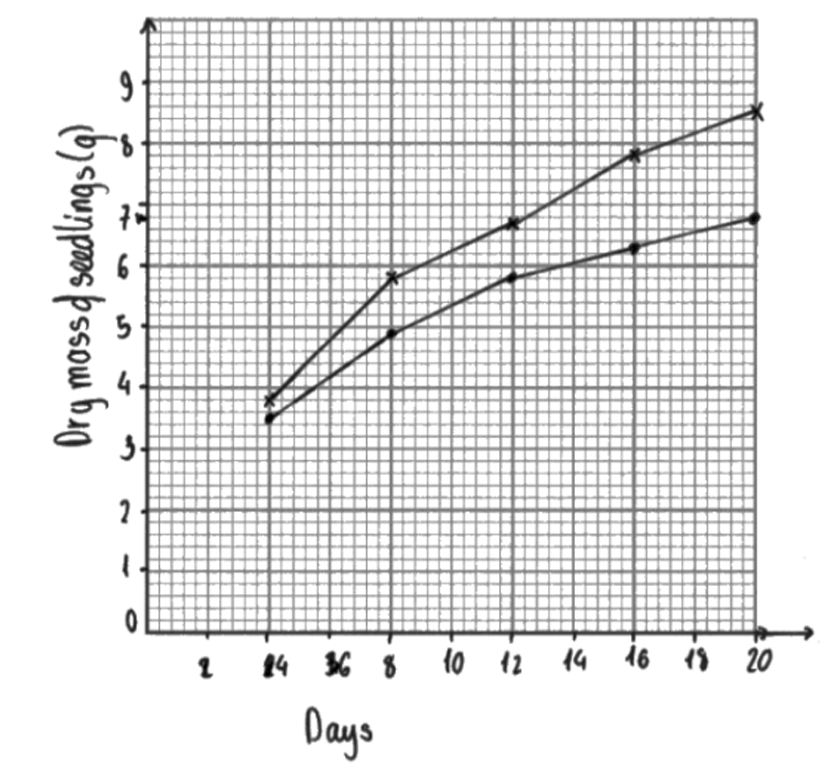
- Axes: The x-axis should be labelled “Day” and the y-axis “Dry mass (g)”.
- Scales: The scales should be linear and use at least half the grid provided.
- Points: Two sets of points should be plotted accurately using the data from the table.
- Lines: Straight lines should be drawn with a ruler to connect the points for each data set (with fertiliser and without fertiliser).
- Key: A key should be included to identify which line represents “With fertiliser” and which represents “Without fertiliser”.
Explanation: The graph would visually demonstrate that the dry mass increases over time for both sets of seedlings, but the increase is consistently greater for the seedlings that received fertiliser. The lines would show a positive correlation between time and dry mass, with the line for ‘with fertiliser’ having a steeper gradient, indicating a faster growth rate.
(b) (ii)
Explanation: The magnesium ions (\( \text{Mg}^{2+} \)) and nitrate ions (\( \text{NO}_3^{-} \)) in the fertiliser are essential mineral ions that significantly promote plant growth.
Magnesium ions are a key component of the chlorophyll molecule. Chlorophyll is the green pigment found in chloroplasts that absorbs light energy. By providing more magnesium, the plant can produce more chlorophyll. This leads to a higher rate of photosynthesis, the process where plants use light energy to make carbohydrates (like glucose) from carbon dioxide and water. These carbohydrates provide the energy and building materials for growth.
Nitrate ions are absorbed by the plant roots and are used to synthesise amino acids. Amino acids are the building blocks of proteins. Proteins are vital for growth as they are used to make new cytoplasm and enzymes. Enzymes control all the metabolic reactions in the plant, including the reactions of photosynthesis and respiration, further fuelling growth. Therefore, the presence of nitrates directly supports the production of new plant tissue.
In summary, magnesium boosts the energy-capturing process (photosynthesis), while nitrates provide the raw materials for building new structures (proteins), together resulting in the increased dry mass observed in the seedlings treated with fertiliser.
▶️ Answer/Explanation
(a) Fungi do not carry out photosynthesis. Their body is usually organised into a mycelium made from thread-like structures called hyphae.
Fungal cell walls are made of chitin.
Fungi feed by extracellular secretion of enzymes onto food material and absorption of the organic products. This is known as saprotrophic nutrition.
Explanation: Fungi are heterotrophic organisms that decompose organic matter. Their body structure consists of a network of hyphae that form a mycelium. The cell walls contain chitin, a strong polysaccharide also found in insect exoskeletons. Fungi digest food externally by secreting enzymes that break down complex molecules into simpler ones, which are then absorbed. This feeding method is called saprotrophic nutrition.
(b)(i) Carbon dioxide / CO2
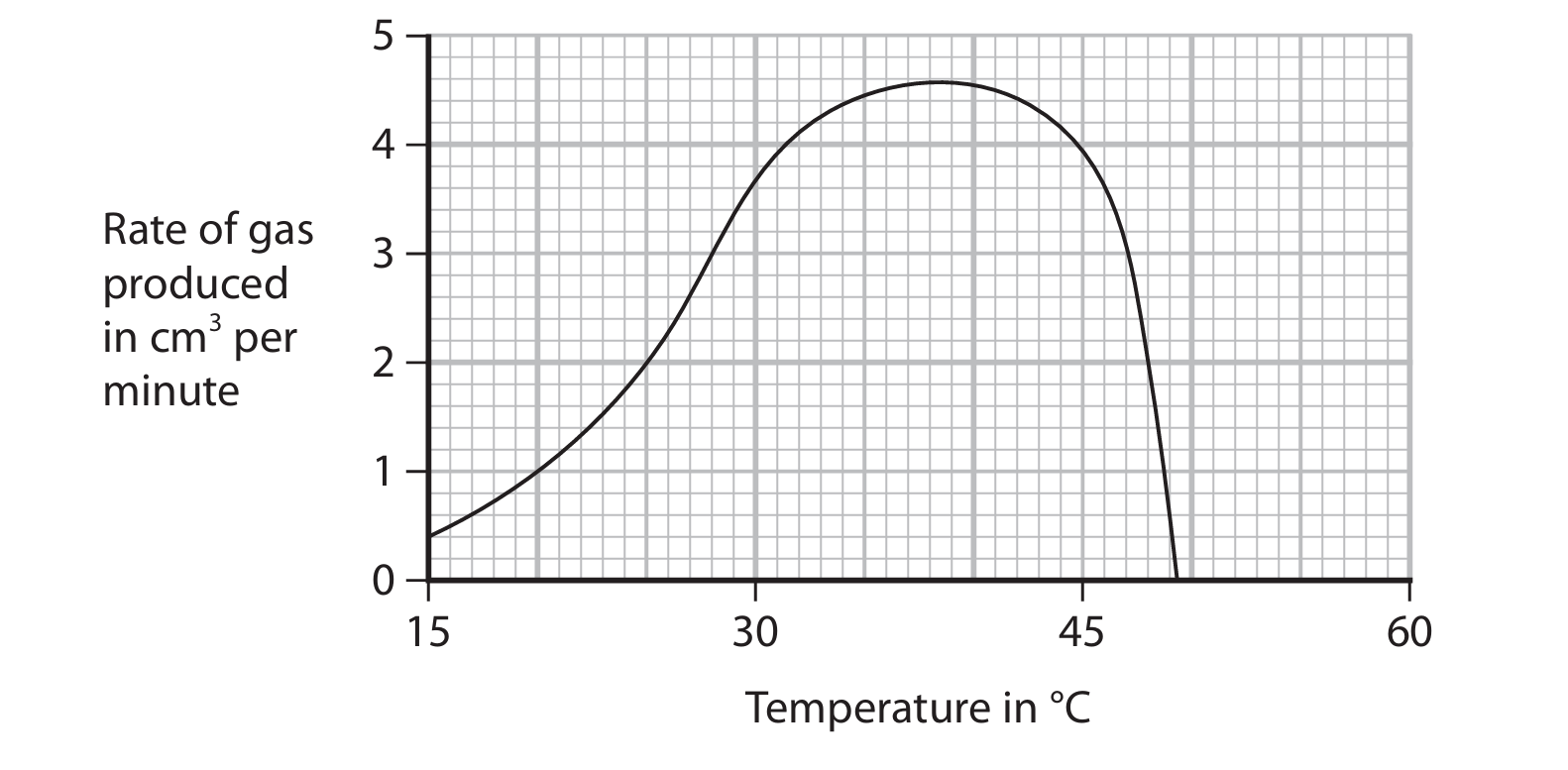
Explanation: During anaerobic respiration (fermentation), yeast converts glucose into ethanol and carbon dioxide. The gas bubbles produced are CO2, which is what the student measures in this experiment.
(b)(ii) An explanation that makes reference to the following:
- Increasing (kinetic) energy / molecules move more
- More collisions / more enzyme-substrate complexes formed
- Above 37/40°C / optimum / eventually / at higher temperature enzyme denatures / change in active site / substrate and enzyme can no longer bind
Explanation: As temperature increases from low to moderate levels, the rate of gas production increases because the reactant molecules (enzymes and substrates) have more kinetic energy. This causes them to move faster and collide more frequently, leading to more enzyme-substrate complexes and a higher reaction rate. However, beyond the optimum temperature (around 37-40°C for many enzymes), the enzyme structure begins to denature. The hydrogen bonds holding the enzyme’s shape break, causing the active site to change shape. When this happens, substrates can no longer fit into the active site, and the reaction rate decreases dramatically.
(b)(iii) A description that makes reference to two of the following:
- Use (collect gas in) measuring cylinder / (gas) syringe
- Measure volume / cm3 in time / or time to produce volume
Explanation: To measure the rate of gas production, the student should collect the gas produced in a gas syringe or by displacing water in an inverted measuring cylinder. The volume of gas collected should be measured at regular time intervals (e.g., every minute). The rate can then be calculated as volume of gas produced per unit time (e.g., cm3/min). This method allows for quantitative measurement of the respiration rate at different temperatures.

▶️ Answer/Explanation
(a)
Answer: A description that makes reference to three of the following points:
- cross / breed / mate / allow to self-pollinate parent plant(s) with (grains) with highest mass / yield / desired characteristics (1)
- select offspring plants with (grains) with highest mass / yield / desired characteristics (1)
- repeat for more / many generations (1)
Detailed Explanation:
Selective breeding is a process used by scientists to develop plants or animals with desirable traits. To increase wheat yield, scientists would first identify parent plants that already show high yield characteristics, such as producing heavy grains or a large number of grains per plant. These selected parent plants are then cross-bred, either by allowing them to mate naturally or through controlled pollination. From the resulting offspring, the scientists would again select those individual plants that exhibit the highest yield. This cycle of selection and breeding is repeated over many generations. Over time, this reinforces the genes responsible for high yield, leading to a new variety of wheat that consistently produces a greater harvest.
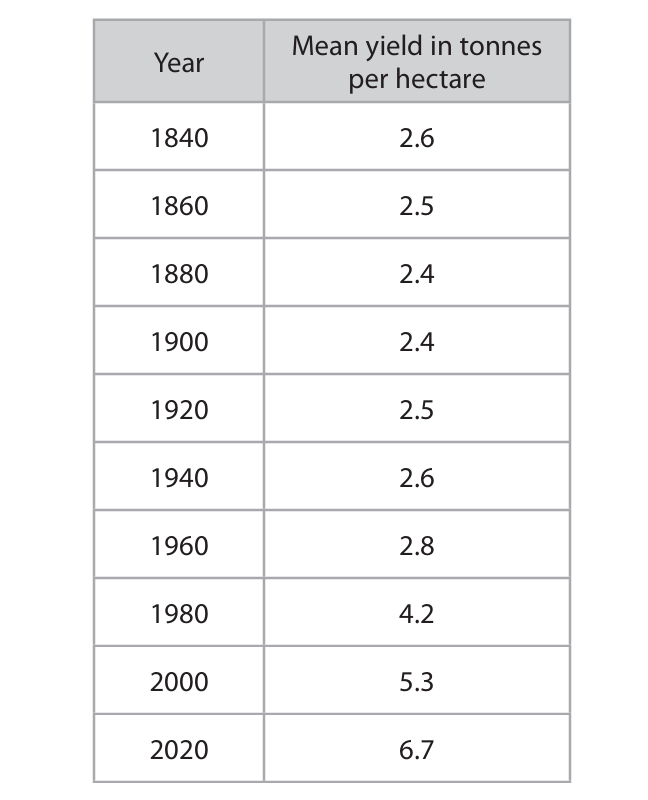
(b)(i)
Answer: The graph should have:
- Scale half grid and linear (1)
- Lines straight and through all points (1)
- Axes correct way round (Year on x-axis, Yield on y-axis) (1)
- Points correctly plotted within half a small square (1)
Detailed Explanation:
To plot this graph, you would first draw two perpendicular axes. The horizontal x-axis should be labeled “Year” and span from 1840 to 2020. The vertical y-axis should be labeled “Mean yield (tonnes per hectare)” and have a suitable scale, for example, from 0 to 8 tonnes. Each data point from the table is then plotted accurately at the intersection of its year and yield value. For instance, the point for 1840 would be at (1840, 2.6). Once all points are plotted, you use a ruler to draw straight lines connecting them sequentially from 1840 to 2020. This line graph will visually show the trend in wheat yield over this 180-year period.
(b)(ii)
Answer: 2.3% (allow 2.32, 2.321, etc.)
Calculation Steps:
1. Find the total increase in yield from 1960 to 2020: \( 6.7 – 2.8 = 3.9 \) tonnes/hectare.
2. Calculate the percentage increase over this period: \( \frac{3.9}{2.8} \times 100 = 139.29\% \).
3. Find the number of years between 1960 and 2020: \( 2020 – 1960 = 60 \) years.
4. Calculate the average percentage change per year: \( \frac{139.29}{60} = 2.3215\% \) per year.
Rounded to a sensible figure, this is 2.3% per year.
Detailed Explanation:
This calculation shows the dramatic improvement after the introduction of the dwarf variety. The yield didn’t just increase; it increased at an average rate of about 2.3% every single year for 60 years. This is a much faster rate of improvement compared to the 0.06% per year seen with the old variety before 1960, highlighting the significant impact of the new dwarf wheat.
(b)(iii)
Answer: An explanation that makes reference to three of the following points:
- less energy used to grow tall (1)
- more energy available for grain (1)
- higher yield / harvest / more grain(s) / grains heavier (1)
- less likely to fall over / less likely to be damaged by wind and rain (1)
- easier to harvest (1)
Detailed Explanation:
The shorter, thicker stem of dwarf wheat offers several key advantages. Firstly, because the plant doesn’t need to invest as much energy and resources into growing a tall stem, it can redirect that energy into producing more and heavier grains, directly increasing the yield. Secondly, the shorter and sturdier stem makes the plant much less likely to fall over, a problem known as “lodging.” Taller plants can be knocked over by wind and rain, which damages the crop and makes harvesting difficult or impossible. The dwarf wheat stands firm, protecting the valuable grain. Finally, the uniform, shorter height makes the plants easier and more efficient for machinery to harvest, reducing waste and saving time and money for the farmer.



▶️ Answer/Explanation
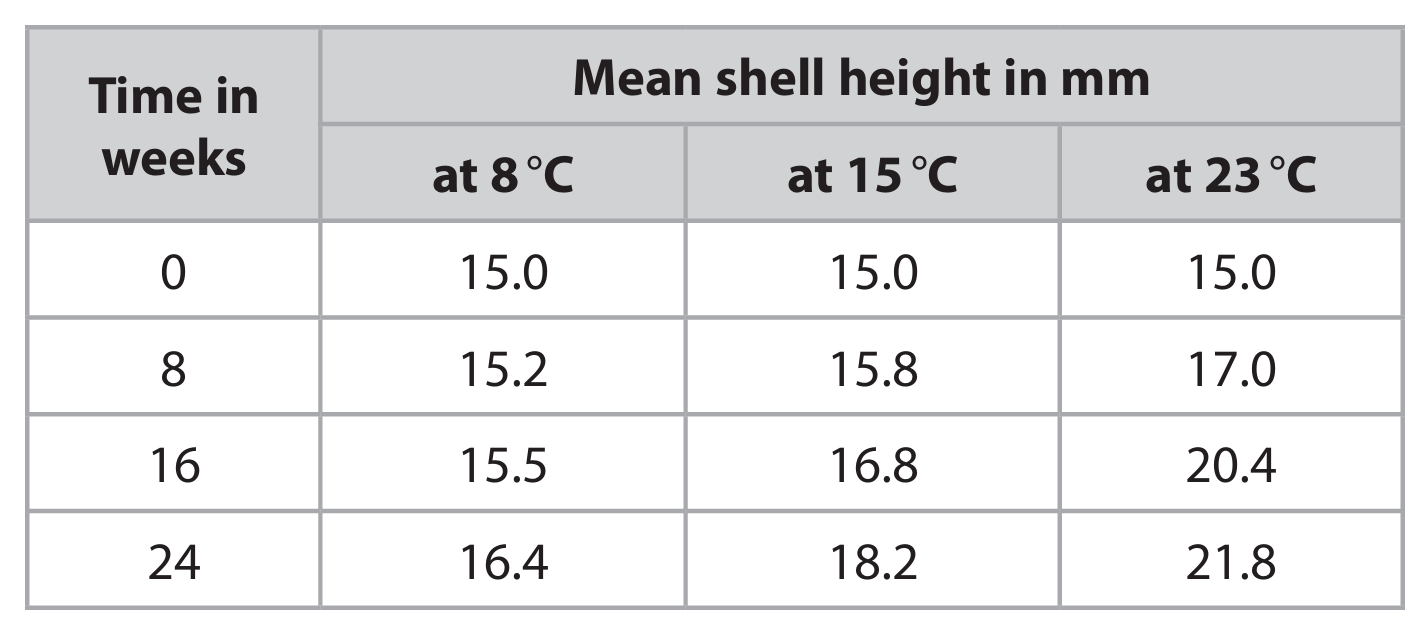
(a)(i)
Graph plotting: A line graph should be drawn with Time (weeks) on the x-axis and Mean shell height (mm) on the y-axis. Three separate lines should be plotted for the three temperatures (8°C, 15°C, 23°C) using the data from the table. The points should be joined with straight lines using a ruler.
Explanation: The graph would show that the line for 23°C is the steepest, indicating the fastest growth rate. The line for 15°C would be less steep, and the line for 8°C would be the least steep, showing the slowest growth. This visually demonstrates that higher temperatures lead to increased snail growth over the 24-week period.
(a)(ii)
Explanation: The investigation shows that higher temperatures result in greater snail growth. This is because temperature affects enzyme activity within the snails. Enzymes are biological catalysts that control metabolic processes like digestion and respiration, which provide energy and materials for growth. At higher temperatures, enzymes and substrate molecules have more kinetic energy, leading to more frequent and successful collisions. This increases the rate of enzyme-substrate complex formation and accelerates metabolic reactions. Consequently, processes like respiration occur faster, providing more ATP (energy) for growth activities, resulting in the observed increase in shell height at 23°C compared to lower temperatures.
(a)(iii)
Dependent variable: Mean shell height / growth of shell.
Explanation: The dependent variable is what is being measured in the experiment. In this case, the scientist is measuring how the shell height changes in response to different temperatures, so the mean shell height is the dependent variable.
(a)(iv)
Method for reliability: The scientist used groups of snails / used many snails / calculated the mean / repeated the measurements.
Explanation: To ensure reliability, the scientist didn’t just use one snail per temperature. By using groups of snails and calculating the average (mean) shell height for each group at each time interval, the scientist reduces the effect of individual variation among the snails. This makes the results more representative and reliable, as any anomalous measurements from individual snails are less likely to skew the overall data trend.
(b)(i)
Calculation:
Mass of food assimilated = Mass of food eaten – Mass of faeces egested = 1.2 g – 0.30 g = 0.9 g
Assimilation efficiency = \(\frac{0.9}{1.2} \times 100 = 75\%\)
Answer: 75%
Explanation: The calculation shows that 75% of the food eaten by the snail was actually absorbed and used by its body, while 25% was egested as waste (faeces).
(b)(ii)
Explanation: Primary consumers (herbivores) eat plant material, which often contains a high proportion of indigestible substances like cellulose. Cellulose is a tough carbohydrate that forms plant cell walls, and many animals lack the specific enzymes needed to break it down completely. Therefore, a significant portion of the plant material eaten by primary consumers passes through their digestive system undigested and is egested as faeces. In contrast, secondary consumers (carnivores) eat animal tissue, which is generally more easily and completely digested. Animal cells do not have rigid cell walls made of cellulose, and the proteins and lipids in animal tissue are more readily broken down by digestive enzymes. This results in less waste and a higher proportion of the consumed food being assimilated, leading to a greater assimilation efficiency in secondary consumers compared to primary consumers.
(c)
Explanation: Mammals are endotherms (warm-blooded), meaning they use a significant amount of the energy they assimilate from food to maintain a constant internal body temperature through metabolic processes. This requires a lot of energy, especially when the external environment is cold. A large portion of the assimilated energy is used for heat production rather than being converted into new body mass (growth). In contrast, snails are ectotherms (cold-blooded). They do not use metabolic energy to regulate their body temperature; their body temperature fluctuates with the environment. Therefore, a much larger proportion of the energy they assimilate can be directed towards growth and producing new biomass, resulting in a much higher production efficiency (35%) compared to the mammal (2%). Additionally, mammals are generally more active than snails, and this activity also consumes energy that could otherwise be used for growth.

▶️ Answer/Explanation
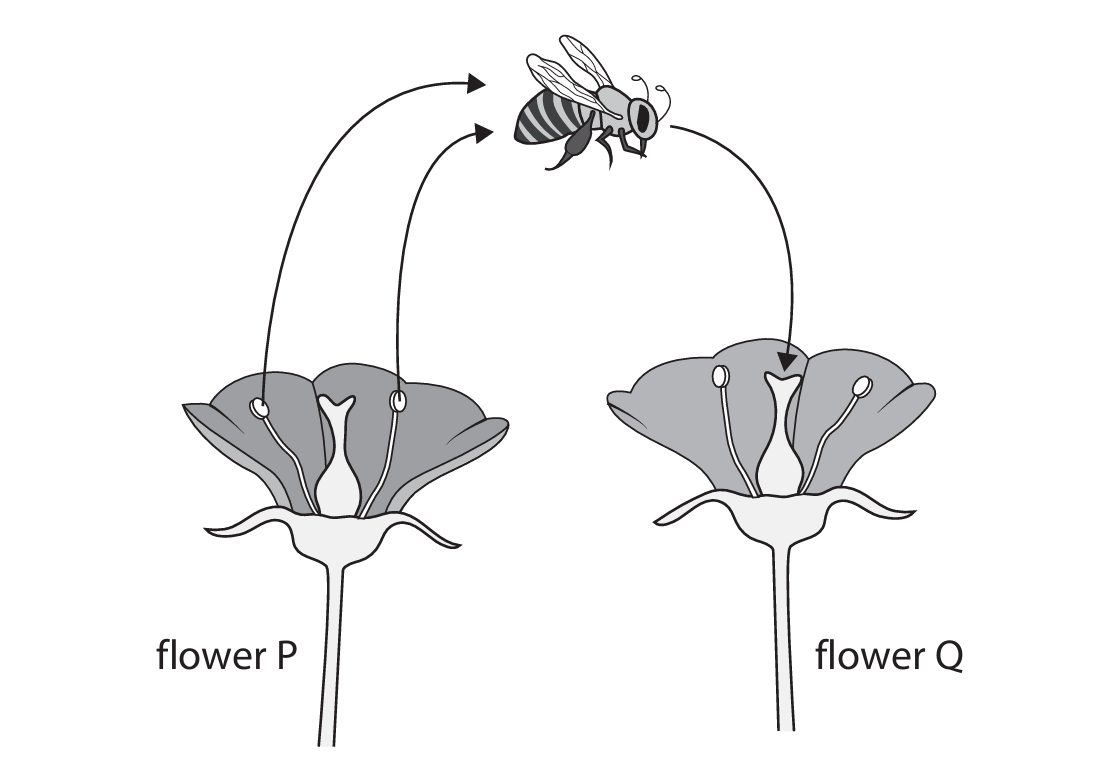
(a) A anther
Explanation: The anther is the male reproductive part of the flower where pollen grains are produced and stored. The ovary contains ovules, petals attract pollinators, and sepals protect the flower bud, but none of these structures contain pollen grains.
(b)(i)
Explanation: The style tissue provides essential nutrients and support for the growing pollen tube. It supplies glucose or sucrose through its tissues, which the pollen tube uses for respiration to produce ATP and energy needed for growth. Additionally, the style may provide amino acids for protein synthesis and water to maintain turgor pressure and enable cell elongation as the tube grows toward the ovary.
(b)(ii) 0.055 mm per minute
Explanation: To calculate the fastest rate of growth, we need to find the steepest slope on the graph. Looking at the time intervals:
From 0-60 minutes: (1.4 – 0)/60 = 0.023 mm/min
From 60-120 minutes: (4.7 – 1.4)/60 = 3.3/60 = 0.055 mm/min
From 120-180 minutes: (5.8 – 4.7)/60 = 1.1/60 = 0.018 mm/min
The fastest growth occurs between 60-120 minutes with a rate of 0.055 mm per minute.
(c)
Explanation: To design a proper investigation:
First, I would select two groups of apple trees of the same variety, age, and size to ensure fair comparison. One group would be treated with pesticide (experimental group) while the other would not receive any pesticide treatment (control group).
I would use multiple trees in each group (at least 5-10) to ensure reliable results and repeat the experiment over multiple growing seasons. All trees should be grown in the same soil type with identical fertilization, watering schedules, and exposure to sunlight and temperature conditions.
The independent variable would be the application of pesticide, while the dependent variables would be the yield measurements – specifically the number of apples produced and the total mass of apples harvested from each tree.
The investigation should run for the entire flowering and fruiting period. I would carefully count and weigh the apples from each tree at harvest time and compare the average yield between the pesticide-treated and untreated groups using statistical analysis to determine if there’s a significant difference.
This experimental design controls for other variables that might affect yield while specifically testing the effect of pesticides on apple production through insect pollination.

▶️ Answer/Explanation
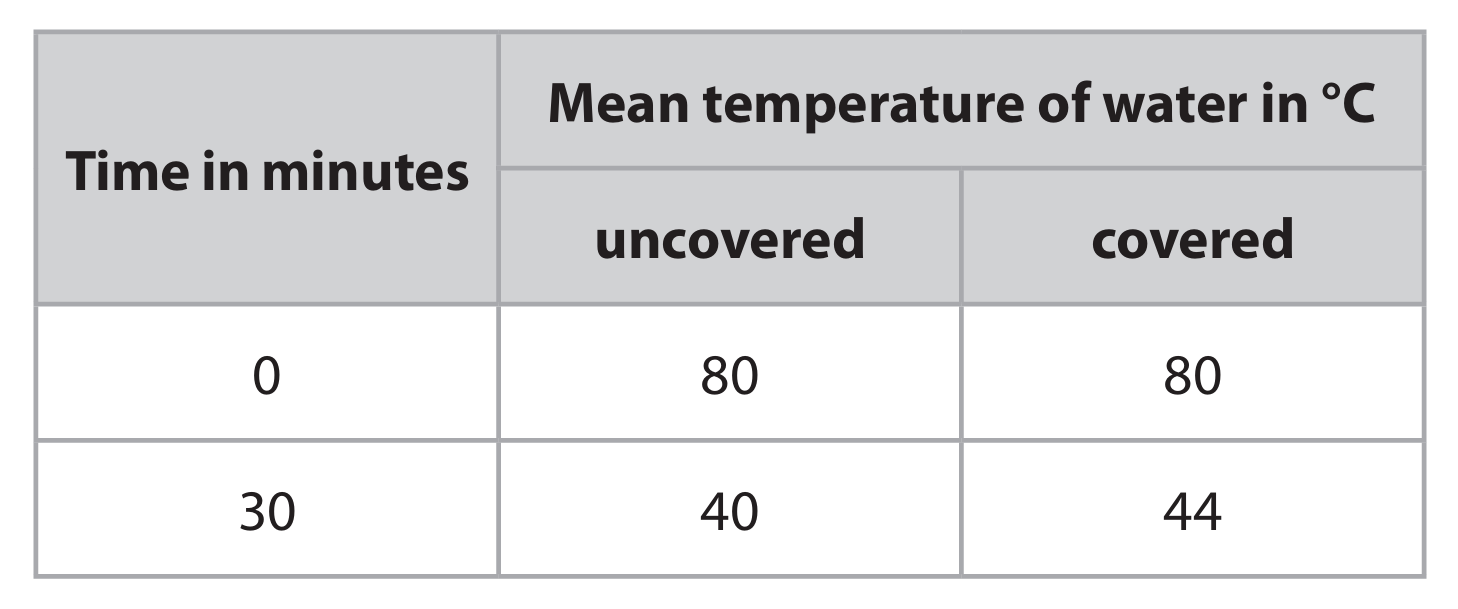
(a) Temperature
Explanation: The dependent variable is what is being measured in the experiment. In this case, the student is measuring how the temperature changes over time in both the covered and uncovered beakers. The temperature depends on whether the beaker is covered or not, making it the dependent variable in this investigation.
(b) To ensure a fair test by keeping the surface area and volume constant.
Explanation: Using the same volume of water (200 cm³) in each beaker ensures that the surface area to volume ratio remains constant. This is important because heat loss is affected by both volume and surface area. If different volumes were used, it wouldn’t be a fair comparison as the rate of heat loss would be influenced by the different volumes rather than just the covering condition.
(c) 5%
Explanation: Let’s calculate this step by step:
For the uncovered beaker:
Temperature decrease = 80°C – 40°C = 40°C
Percentage decrease = (40 ÷ 80) × 100 = 50%
For the covered beaker:
Temperature decrease = 80°C – 44°C = 36°C
Percentage decrease = (36 ÷ 80) × 100 = 45%
Difference = 50% – 45% = 5%
The uncovered beaker lost 5% more heat than the covered beaker over the 30-minute period.
(d) The conclusion has both supporting and limiting factors.
Explanation: While the results show that covering reduces heat loss (with the covered beaker maintaining 4°C higher temperature), suggesting animals might lose less heat indoors, there are several limitations to this conclusion:
- The difference is relatively small (only 5%), which may not be significant in real farming conditions
- This model oversimplifies real animals – animals can move, generate their own heat, and have fur or feathers for insulation
- Climate factors matter – in hot countries, keeping animals outdoors might actually be better to prevent overheating
- Other factors like disease spread (higher indoors), animal welfare, and feeding costs aren’t considered
- Animals kept indoors may use less energy maintaining body temperature, potentially allowing more energy for growth and production
(e) Use beakers/containers of different sizes with the same covering conditions.
Explanation: To investigate how body size affects heat loss, the student could modify the experiment by using beakers of different volumes (representing different body sizes) while keeping all other variables constant. For example, they could use 100 cm³, 200 cm³, and 300 cm³ beakers, all either covered or all uncovered, and measure the temperature decrease over the same time period. This would show how the surface area to volume ratio (which changes with size) affects the rate of heat loss, with smaller volumes (representing smaller animals) having a larger surface area to volume ratio and thus losing heat faster.
▶️ Answer/Explanation
(a) A chemical/substance that kills/destroys pests (such as animals/plants/insects).
Explanation: A pesticide is a broad term for any chemical agent used to eliminate or control organisms considered pests. This includes herbicides for weeds, fungicides for fungi, and insecticides for insects. They work through various mechanisms to disrupt the pest’s life processes.
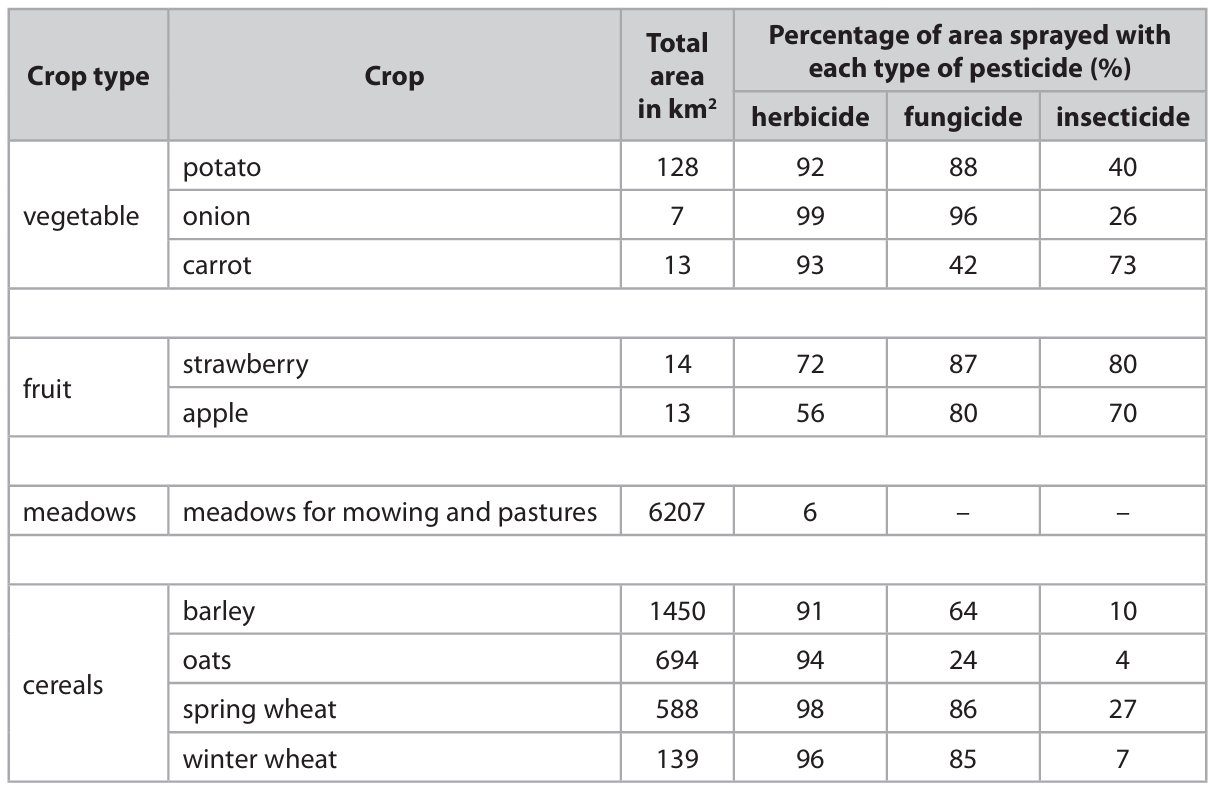
(b) Largest area = 1319.5 km² (accept 1320 or 1300), Crop = Barley
Explanation: To find the largest area sprayed with herbicide, we need to calculate the actual area sprayed for each crop by multiplying the total area by the percentage sprayed with herbicide (converted to a decimal).
Working for key crops:
- Barley: 1450 km² × 0.91 = 1319.5 km²
- Oats: 694 km² × 0.94 = 652.36 km²
- Spring Wheat: 588 km² × 0.98 = 576.24 km²
- Winter Wheat: 139 km² × 0.96 = 133.44 km²
- Potato: 128 km² × 0.92 = 117.76 km²
Barley has the largest calculated area sprayed with herbicide at 1319.5 km².
(c) In winter, colder temperatures mean fewer insects are active, so less insecticide is needed compared to spring when warmer weather leads to more insect activity.
Explanation: The different growing seasons directly impact pest populations. Winter wheat is cultivated during colder months when insect activity is minimal due to low temperatures and reduced food availability. Consequently, the need for insecticide application is lower (7% for winter wheat). In contrast, spring wheat grows during warmer periods, which favor insect reproduction and activity, necessitating a higher use of insecticides (27% for spring wheat) to protect the crop from potential damage.
(d) Fruit crops show a more balanced use of all three pesticide types (around 56-87%), while cereal crops use herbicides most heavily (91-98%) with more variable fungicide use and generally lower insecticide use.
Explanation: The pesticide application patterns reflect the different vulnerabilities of these crop types. Fruit crops (strawberry, apple) have relatively high and even usage across herbicide, fungicide, and insecticide. This is because fruits are often susceptible to insect damage, fungal rots (especially due to their high sugar content and moisture), and weed competition. Cereal crops (barley, oats, wheat), on the other hand, demonstrate a very high reliance on herbicides (91-98%). This is crucial during their early growth stages to eliminate weed competition for resources like light, water, and nutrients. Fungicide use in cereals is more variable (24-86%), possibly depending on specific disease risks for each cereal type. Insecticide use is generally lower in cereals (4-27%) compared to fruits, suggesting insects may be a lesser threat to these crops in this context, or that other control methods are prioritized.
(e) An alternative is biological control, which involves introducing a natural predator of the pest insect.
Explanation: Instead of using chemical insecticides, farmers can employ biological control. This method uses living organisms to manage pest populations. For example, ladybirds can be introduced to control aphids, or the parasitic wasp Encarsia formosa can be used against whitefly. This approach is often more targeted and can be more environmentally sustainable, reducing chemical residues and the risk of pests developing resistance. Other non-chemical alternatives include using physical barriers like nets to exclude insects from the plants.

▶️ Answer/Explanation
(a) An explanation that makes reference to four of the following points:
- nitrates (for growth)
- for amino acids
- for protein
- magnesium for chlorophyll / chloroplasts
- so more photosynthesis
- more glucose
- phosphates used for ATP / DNA / eq
- potassium for control of water movement / eq
(b) An answer that makes reference to four of the following points:
- fertiliser leaches into river / washed into river / eq
- fertiliser would cause algal / plant growth / algal bloom / eutrophication
- dead algae are decomposed / broken down by bacteria / decomposers
- (bacterial) respiration would reduce oxygen
- means were calculated / readings repeated so experiment is reliable / valid
- measurements taken at same time of year / in April (so are valid)
- direction of river is past farm
- reduced oxygen could be due to other factors / sources of fertiliser from other fields
(c) • manure / faeces / dung / compost / seaweed / bone / blood / animal wastes / eq
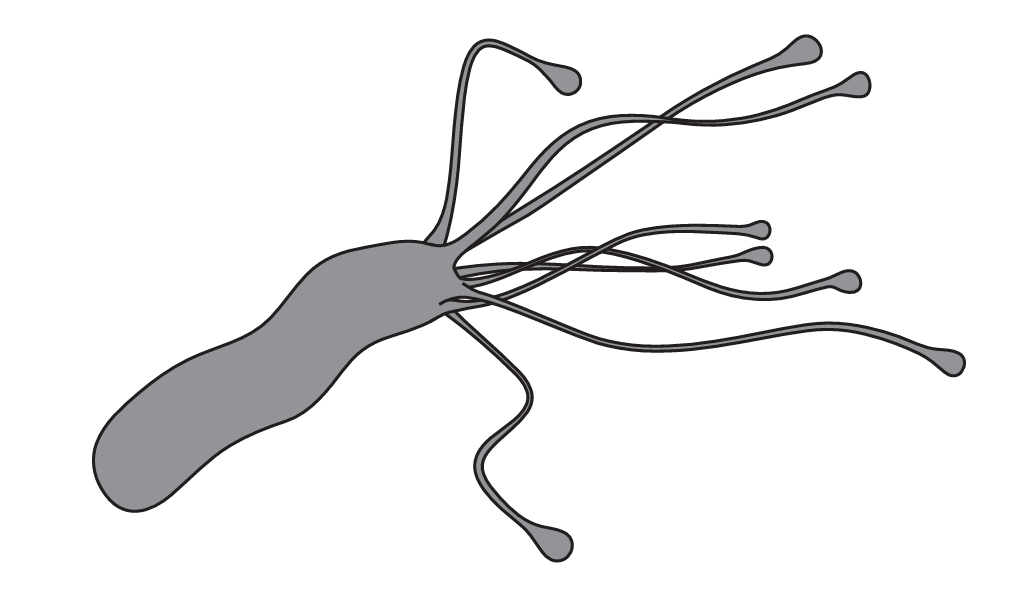
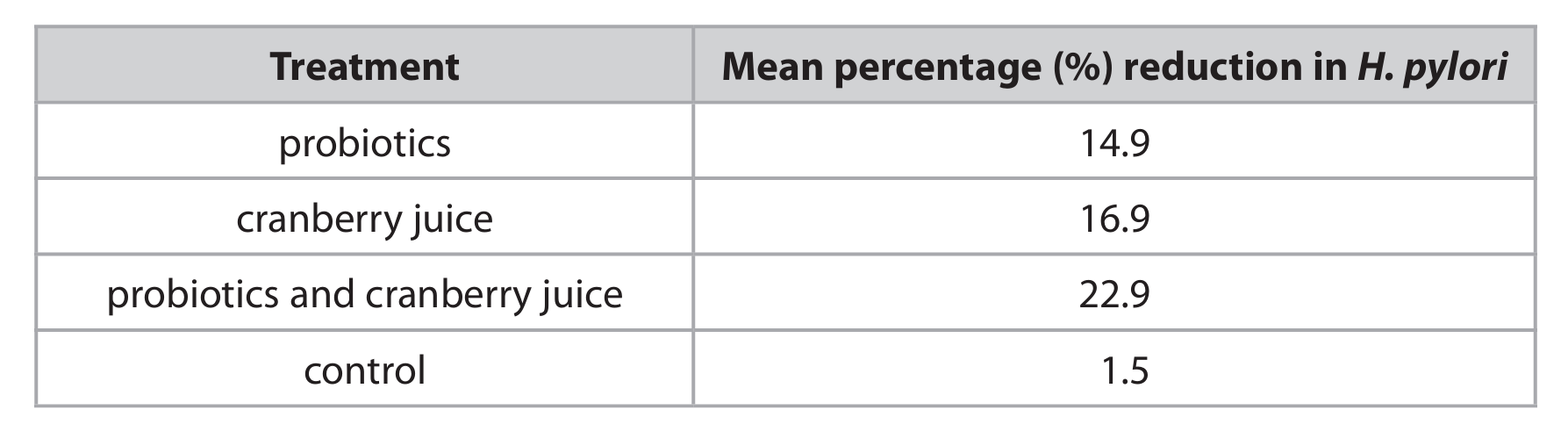
▶️ Answer/Explanation
(a)(i) C cytoplasm
Explanation: Bacteria are prokaryotic cells, which means they lack a true nucleus (option D) and membrane-bound organelles. Their genetic material is found in the cytoplasm. Cellulose (option A) is a structural component of plant cell walls, and chitin (option B) is found in the cell walls of fungi and the exoskeletons of arthropods. Bacterial cell walls are typically made of peptidoglycan, not cellulose or chitin. Therefore, the only component from the list that is definitively found in a bacterial cell is the cytoplasm.
(a)(ii) C 7
Explanation: The stomach is highly acidic, with a pH typically around 1.5 to 3.5 due to hydrochloric acid. Neutralization means bringing the pH to a neutral level. On the pH scale, 7 is neutral. Urease produced by H. pylori breaks down urea to produce ammonia, which is alkaline, thereby neutralizing the stomach acid in its immediate vicinity and raising the pH towards 7. Options A (1) and B (2) are acidic, and option D (12) is strongly alkaline, none of which represent a neutral pH.
(a)(iii)
Explanation: According to the theory of evolution by natural selection, the evolution of urease production in H. pylori can be explained step-by-step. Initially, within a population of ancestral H. pylori bacteria, there would have been genetic variation. Some of this variation arose from random mutations in the bacterial DNA. One such mutation might have resulted in a bacterium that could produce the enzyme urease. This urease enzyme conferred a significant advantage in the harsh, acidic environment of the stomach. By neutralizing the acid around it, this bacterium was more likely to survive and live longer than its peers that lacked the mutation. With increased survival, this bacterium had a greater chance to reproduce asexually (through binary fission) and pass on the gene for urease production to its offspring. Over many generations, the allele for urease production became more and more common in the population because individuals possessing it were consistently selected for by the environmental pressure of stomach acidity. Eventually, the entire population of H. pylori evolved to produce urease.
(b)
Two conclusions:
- All three treatments (probiotics, cranberry juice, and their combination) cause a greater reduction in H. pylori compared to the control, meaning they are all more effective than no treatment.
- The combination of probiotics and cranberry juice results in a greater reduction of H. pylori than either treatment used alone, suggesting a synergistic effect where the two work better together.
Explanation: By analyzing the data in the table, we can draw clear comparisons. The control group, which likely received a placebo or no treatment, showed only a 1.5% reduction, establishing a baseline. The probiotics alone led to a 14.9% reduction, and cranberry juice alone led to a 16.9% reduction. Both are substantially higher than the control, indicating they are effective treatments. However, when used together, the reduction jumps to 22.9%, which is higher than the sum of their individual effects if they were simply additive. This indicates that the two treatments may work well in combination, potentially enhancing each other’s effectiveness against H. pylori.

Most-appropriate topic codes (Edexcel IGCSE Biology):
• 6(a): Use of biological resources – Food production (Micro-organisms) — parts (d)(i), (d)(ii), (d)(iii)
• 3(h): Transport in humans – role of plasma/antibodies — part (b)
• Appendix 5: Suggested practical investigations — part (a)
▶️ Answer/Explanation
(a) Use the biuret test. Add equal volumes of biuret reagent to equal volumes of cow’s milk and human milk. The sample that develops a deeper/darker purple color contains more protein.
Explanation: The biuret test is a chemical test used to detect the presence of proteins. When biuret reagent (which contains copper sulfate in an alkaline solution) is added to a sample containing protein, it reacts with peptide bonds to produce a violet-purple color. The intensity of this color is proportional to the protein concentration. Since cow’s milk has a higher protein content (3.3 g) than human milk (1.3 g) for the same volume, the cow’s milk sample will show a more intense purple color when the same volume of biuret reagent is added to the same volume of each milk sample.
(b) Antibodies in milk help protect babies from infections by destroying pathogens like viruses and bacteria, providing passive immunity.
Explanation: Antibodies are specialized proteins that identify and neutralize foreign invaders like bacteria and viruses. When a baby consumes milk containing antibodies (especially colostrum, the first milk), these antibodies are absorbed in the baby’s gut and enter the bloodstream. They provide “passive immunity,” meaning the baby gains immediate, short-term protection against diseases that the mother has immunity to, before the baby’s own immune system is fully developed.
(c) Two ways are:
- As a source of energy for respiration.
- As an energy store.
Explanation: Lipids (fats) are a concentrated energy source. Babies have high energy demands for rapid growth and development. The lipids in milk are broken down to release energy through metabolic processes like respiration. Additionally, any excess energy from lipids can be stored in the body’s adipose tissue as a reserve for future use. Lipids are also important for insulating the body and for the development of the nervous system, including the myelin sheath that insulates nerve cells.
(d)(i) Lactose.
Explanation: Lactose is the main carbohydrate (a disaccharide sugar) found in milk. It is the primary food source for the bacteria used in yoghurt production.
(d)(ii) Lactobacillus or Streptococcus.
Explanation: These are the genera of bacteria commonly used in yoghurt production. They are lactic acid bacteria that ferment the lactose in milk.
(d)(iii) The milk is heated to a high temperature to kill any harmful bacteria (pathogens) present and to sterilize/pasteurize the milk, preventing competition for the added bacteria.
Explanation: The initial heating step serves two main purposes. Firstly, it acts as a pasteurization or sterilization process, eliminating potentially harmful microorganisms (pathogens) that could cause spoilage or disease. Secondly, by removing these competing microorganisms, it ensures that the specific yoghurt-making bacteria (Lactobacillus or Streptococcus) added later can grow without competition, fermenting the lactose efficiently to produce lactic acid, which gives yoghurt its characteristic tangy flavor and thick texture.


Most-appropriate topic codes (Edexcel IGCSE Biology):
• Appendix 3: Mathematical skills — parts (a)(i), (a)(iii), (b)
• Appendix 4: Command word taxonomy — parts (a)(i) [Plot], (a)(ii) [Describe], (a)(iii) [Determine], (b) [Calculate]
▶️ Answer/Explanation
(a)(i)
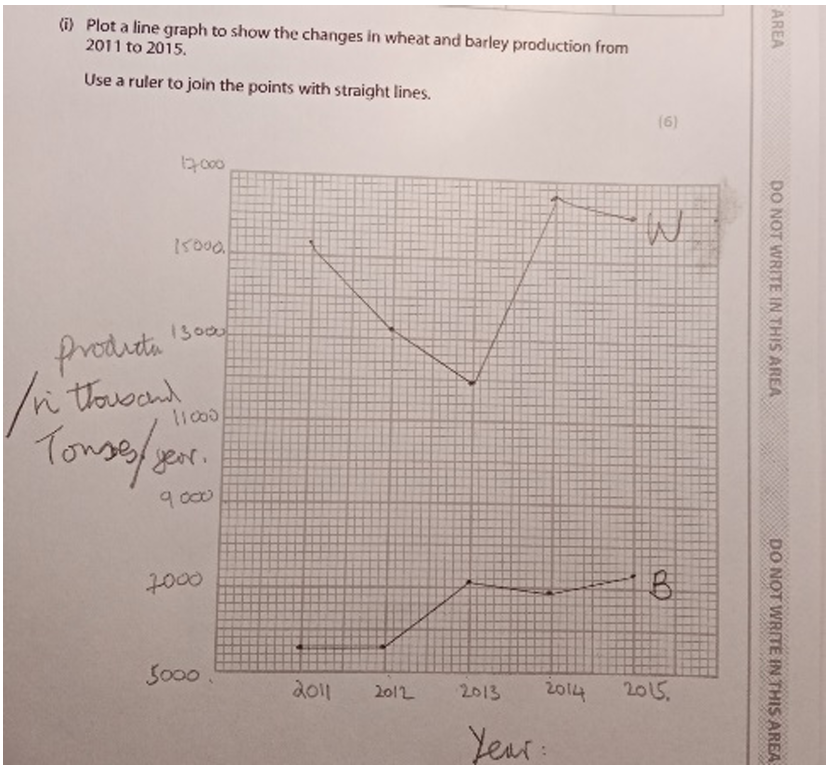
A line graph should be plotted with the following features:
- Scale: Linear scale using at least half of each axis
- Lines: Straight lines drawn through all plotted points
- Axes: Correctly labeled with “Crop production” and “Year” in the proper orientation
- Points: Accurately plotted within one small square of their true position
- Units: “Thousand tonnes” clearly indicated for crop production
- Key: Clear labeling or a key to distinguish between wheat and barley lines
(a)(ii)
Wheat: Production decreased from 2011 to 2013, reaching its lowest point in 2013, then increased significantly in 2014 and remained relatively high in 2015.
Barley: Production remained constant between 2011 and 2012, then increased to peak in 2013, followed by fluctuations in 2014 and 2015.
(a)(iii)
Calculation for Wheat:
Percentage change = \(\frac{\text{Final value} – \text{Initial value}}{\text{Initial value}} \times 100\)
Percentage change for wheat = \(\frac{16,100 – 15,300}{15,300} \times 100 = \frac{800}{15,300} \times 100 = 5.23\%\)
Calculation for Barley:
Percentage change for barley = \(\frac{7,300 – 5,500}{5,500} \times 100 = \frac{1,800}{5,500} \times 100 = 32.73\%\)
Conclusion: Barley had the greatest percentage change in production with an increase of approximately 32.73%, compared to wheat’s increase of only 5.23%.
(b)
Step 1: Calculate the area of the field
Area = 100 m × 100 m = 10,000 m²
Step 2: Calculate carbohydrate production per square meter per year
Production per m² per year = \(\frac{25,000 \text{ kg}}{10,000 \text{ m²}} = 2.5 \text{ kg/m²/year}\)
Step 3: Convert kilograms to grams
2.5 kg = 2,500 grams
Step 4: Calculate daily production per square meter
Daily production = \(\frac{2,500 \text{ g}}{365 \text{ days}} = 6.85 \text{ g/day/m²}\)
Final Answer: The mean mass of carbohydrate produced each day by a square metre of the wheat field is approximately 6.85 grams.
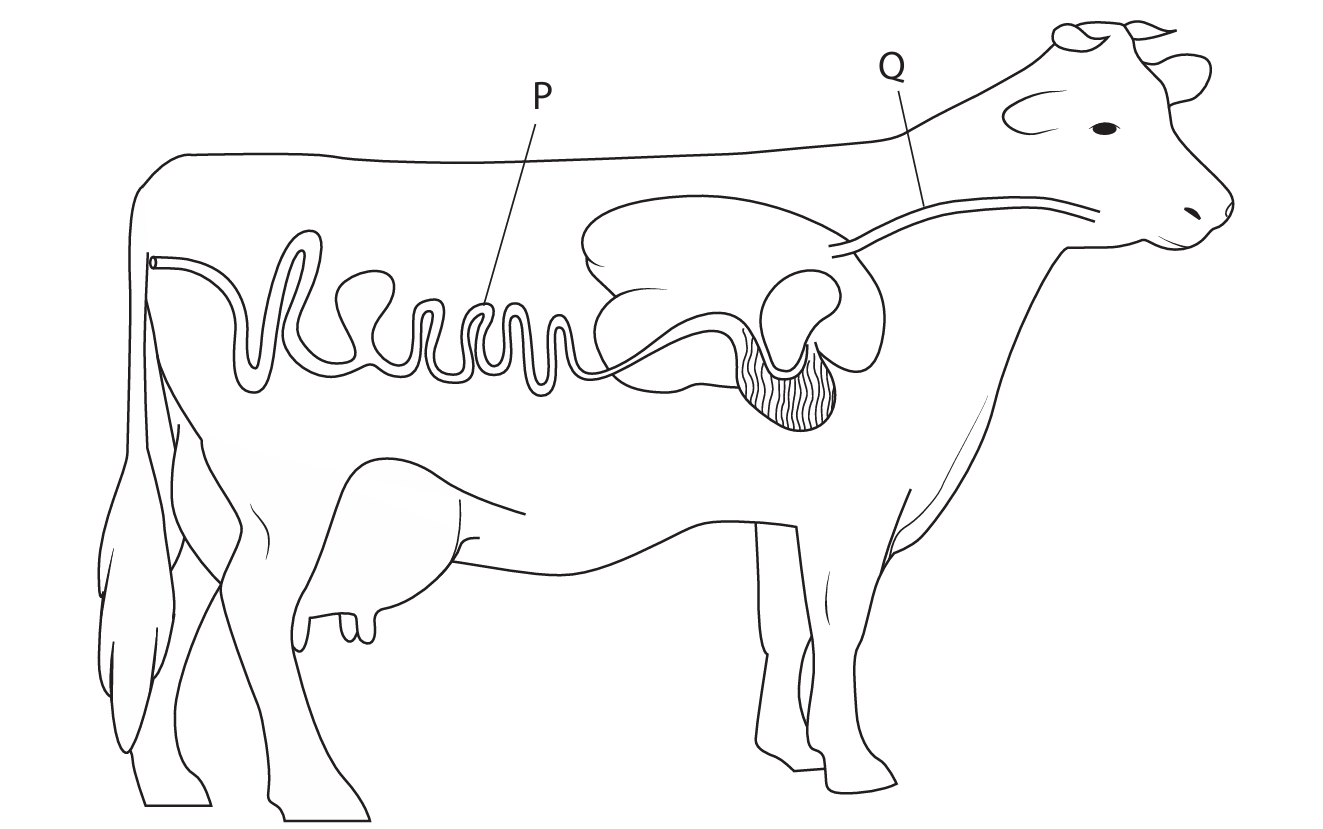
▶️ Answer/Explanation
(a)
P: Ileum / Small Intestine
Q: Rumen
Explanation: In the digestive system of a cow, which is a ruminant, part P is the ileum, which is the final section of the small intestine where further digestion and absorption of nutrients occur. Part Q is the rumen, the first and largest chamber of the stomach, where microbial fermentation of plant material takes place.
(b)
Explanation: The microorganisms in the cow’s stomach, particularly in the rumen, are essential because they produce enzymes like cellulase that break down cellulose, a major component of plant cell walls. Cows, like other mammals, cannot produce cellulase on their own. By digesting cellulose, these microbes release glucose and other simpler sugars that the cow can then absorb and use for energy through respiration. This symbiotic relationship allows the cow to efficiently utilize grass and other fibrous plant materials as its primary food source.
(c)
Explanation: The scientist’s claim has both supporting and opposing points. On one hand, using GH to increase milk yield per cow could mean that farmers need to keep fewer cows to produce the same amount of milk. Since cows are a significant source of methane (a potent greenhouse gas) released during digestion, having fewer cows could lead to less methane being released into the atmosphere. This could potentially reduce the greenhouse effect and slow down global warming.
However, there are limitations to this claim. Farmers might choose to keep the same number of cows to produce even more milk, negating any potential environmental benefit. Furthermore, cows are also kept for beef production, not just milk, so the overall number of cows might not decrease significantly. Finally, climate change is driven by many factors, including other greenhouse gases from sources like fossil fuels, so the impact of reducing methane from cows alone might be limited without addressing other major contributors.
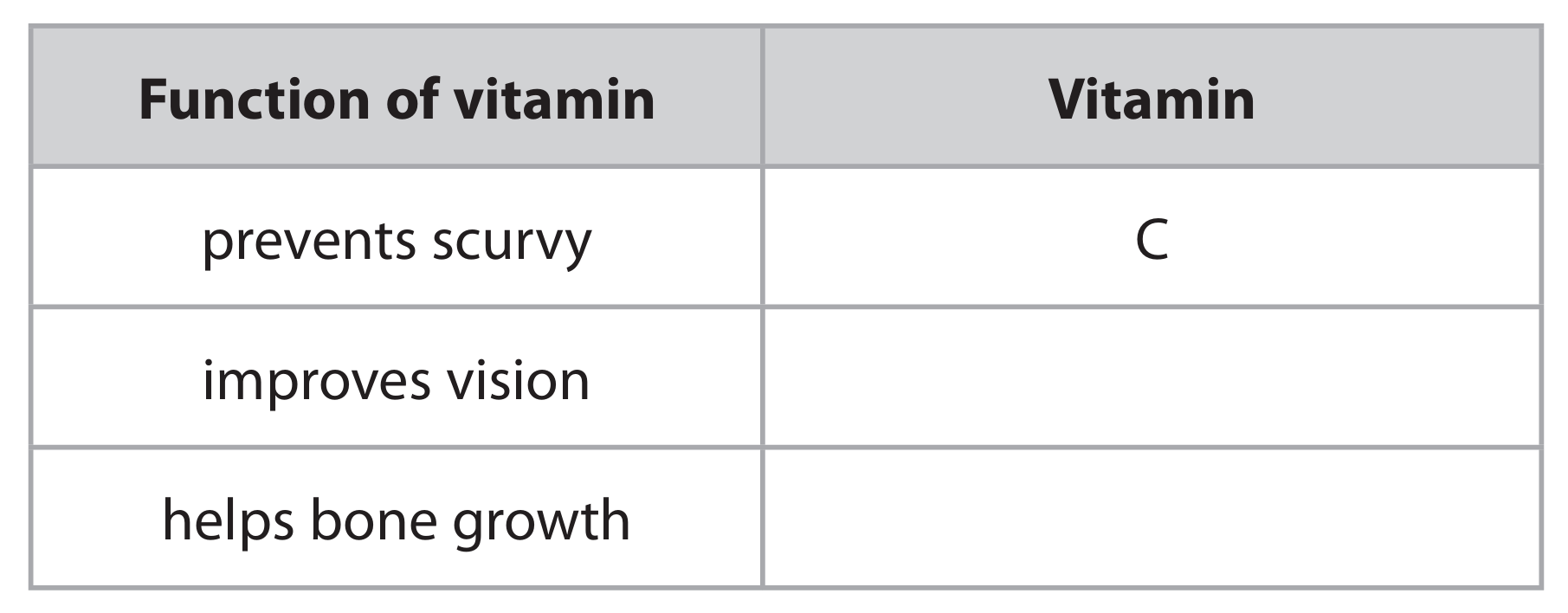
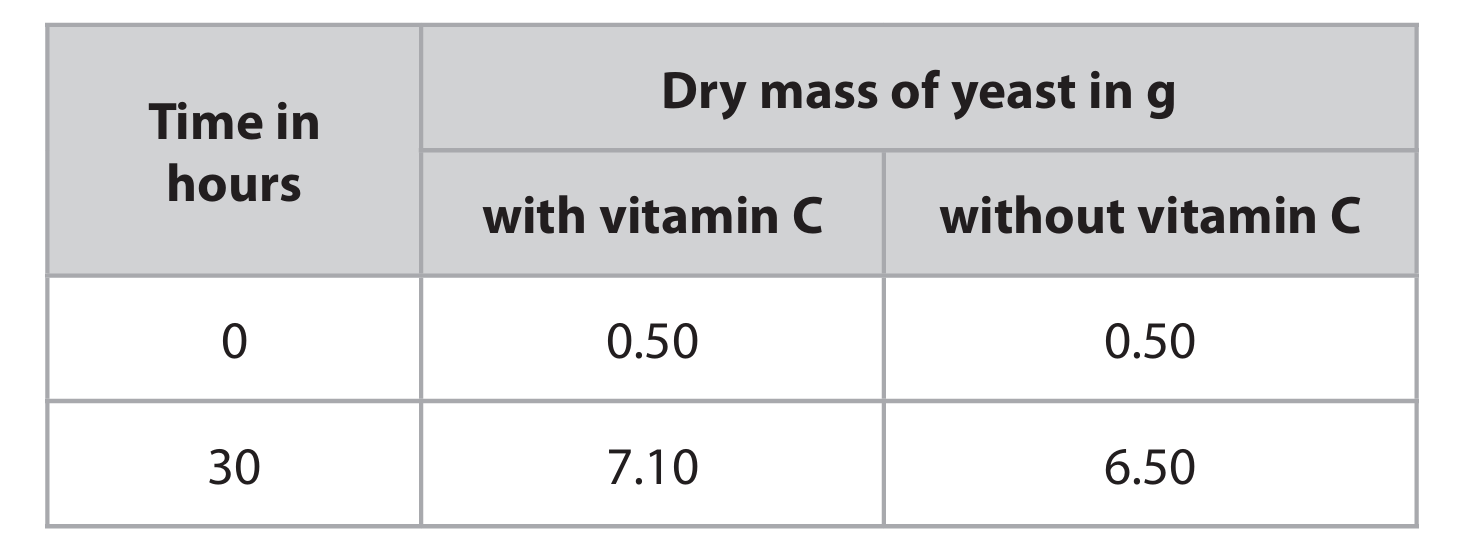
▶️ Answer/Explanation
(a)

Explanation: Vitamin A is essential for good vision, particularly in dim light, and helps maintain the health of the cornea. Vitamin D is crucial for bone growth and development as it helps the body absorb calcium and phosphorus from the diet, which are vital minerals for building strong bones.
(b)(i) Mean rate = 0.20 g per hour
Explanation: To calculate the mean rate of growth, we first determine the total mass increase and then divide by the time period. For the flask without vitamin C, the initial mass was 0.50 g and the final mass after 30 hours was 6.50 g. The total mass increase is 6.50 g – 0.50 g = 6.00 g. The mean rate of growth is then calculated by dividing the mass increase by the time: 6.00 g ÷ 30 hours = 0.20 g per hour.
(b)(ii) To find the dry mass, the contents of each flask should be poured through filter paper in a funnel to separate the yeast from the liquid. The yeast collected on the filter paper should then be placed in an oven to heat and dry it completely. Once fully dried, the residue (the dry yeast) should be weighed using a balance.
Explanation: This process removes all water content from the yeast, giving an accurate measurement of the actual biomass growth, excluding the weight of water. Heating in an oven ensures complete drying, and weighing the residue provides the dry mass.
(b)(iii) The dependent variable is the dry mass of yeast.
Explanation: The dry mass of yeast is what is being measured as the outcome of the experiment. It depends on the presence or absence of vitamin C, which is the independent variable being tested.
(b)(iv) Two other variables the student should control are:
- Temperature: This should be controlled because temperature affects enzyme activity. Yeast cells contain enzymes that catalyze respiration, and these enzymes have an optimum temperature. If temperature varies, it could change the rate of respiration and growth, confounding the results.
- pH: This should be controlled because pH can denature enzymes or alter their activity. Yeast enzymes work best within a specific pH range. An uncontrolled pH could lead to different growth rates not due to vitamin C but due to changes in enzyme efficiency.
Explanation: Controlling these variables ensures that any observed difference in yeast growth can be confidently attributed to the presence or absence of vitamin C, rather than other environmental factors. Temperature and pH are critical because they directly influence the metabolic processes within the yeast cells.
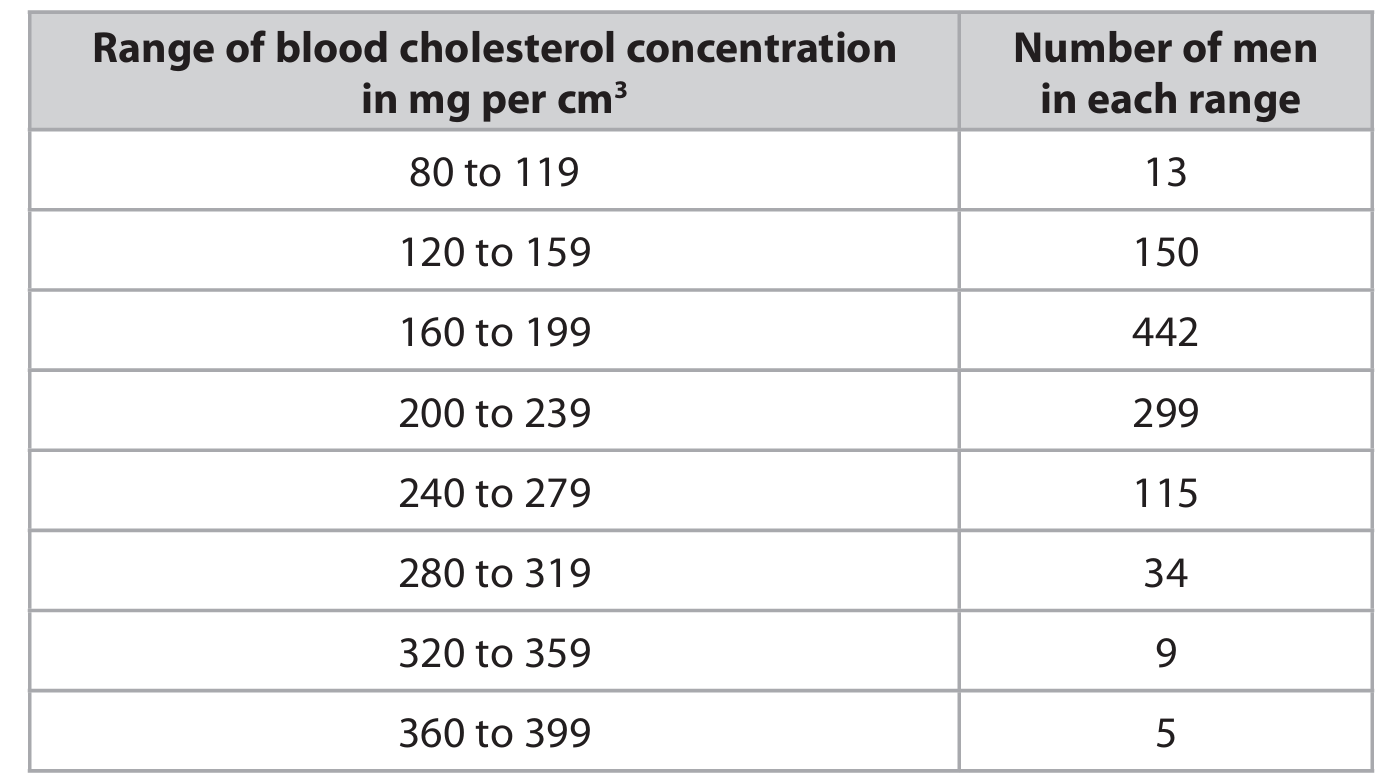


▶️ Answer/Explanation
(a) Control the movement (of substances) in/out of the cell.
Explanation: The cell membrane, also known as the plasma membrane, acts as a selective barrier. It regulates the passage of substances such as nutrients, ions, and waste products, allowing essential molecules to enter the cell while keeping harmful ones out. This maintains the internal environment necessary for the cell’s survival and function.
(b) 6.9 / 6.91 / 6.908 mm²
Explanation: First, we calculate the original area of the lumen. The diameter is 4.0 mm, so the radius \( r \) is half of that, which is 2.0 mm. Using the formula for the area of a circle, \( \pi r^2 \), and given \( \pi = 3.14 \), the original area is \( 3.14 \times (2.0)^2 = 3.14 \times 4 = 12.56 \, \text{mm}^2 \).
The fatty deposit covers 45% of this area, meaning the area available for blood flow is the remaining 55%. So, we calculate 55% of the original area: \( 0.55 \times 12.56 = 6.908 \, \text{mm}^2 \). Rounded appropriately, this gives an area of approximately 6.9 mm².
(c)(i) A bar chart with the following features:
- S: y-axis linear and uses at least half the grid.
- L: labelled bars drawn for each cholesterol concentration range.
- A1: y-axis labelled “Number of men”.
- A2: x-axis labelled “Cholesterol concentration in mg/cm³” or similar.
- P: bar heights correct (within half a small square of the correct value).
Explanation: A bar chart is the most suitable way to represent this categorical data. The x-axis should show the different ranges of cholesterol concentration, and the y-axis should show the number of men in each range. Each bar’s height corresponds to the frequency (number of men) for that specific cholesterol range. The axes must be clearly labelled, and the scale should be chosen to make good use of the graph paper.
(c)(ii) C 160 to 199
Explanation: The mode is the value that appears most frequently in a data set. In this context, it’s the cholesterol range with the highest number of men. Looking at the table, the range 160 to 199 mg per cm³ has 442 men, which is the highest frequency among all the groups.
(c)(iii) 15.3% (accept 15.28%, 15.276%, or 15%)
Explanation: First, identify the men at higher risk. These are the men in the ranges greater than 239 mg per 100 cm³, which correspond to the ranges 240-279, 280-319, 320-359, and 360-399. Adding these up: 115 + 34 + 9 + 5 = 163 men.
Next, find the total number of men in the sample: 13 + 150 + 442 + 299 + 115 + 34 + 9 + 5 = 1067 men.
Finally, calculate the percentage: \( \frac{163}{1067} \times 100 \approx 15.28\% \).
(d) Discussion points include:
- The statin group shows a lower percentage of heart attacks (2.2%) than the control group (3.8%), which supports the claim.
- However, the conclusion might be limited because only one type of statin was tested.
- The study lasted only four years; long-term effects are unknown.
- The difference could be due to chance, and we don’t know the sample size to assess significance.
- The groups might not have been matched for other factors affecting heart disease risk (e.g., diet, exercise, age, genetics, pre-existing conditions).
Explanation: While the data suggests a benefit from statins, a critical evaluation is needed. The observed reduction in heart attacks is promising, but the study’s design limits the strength of the conclusion. Without knowing if the groups were identical in all other relevant aspects (like lifestyle and genetics), we cannot be sure the result is solely due to the statin. Furthermore, the duration of the study and the testing of only one specific statin mean the findings cannot be broadly generalized without further research.
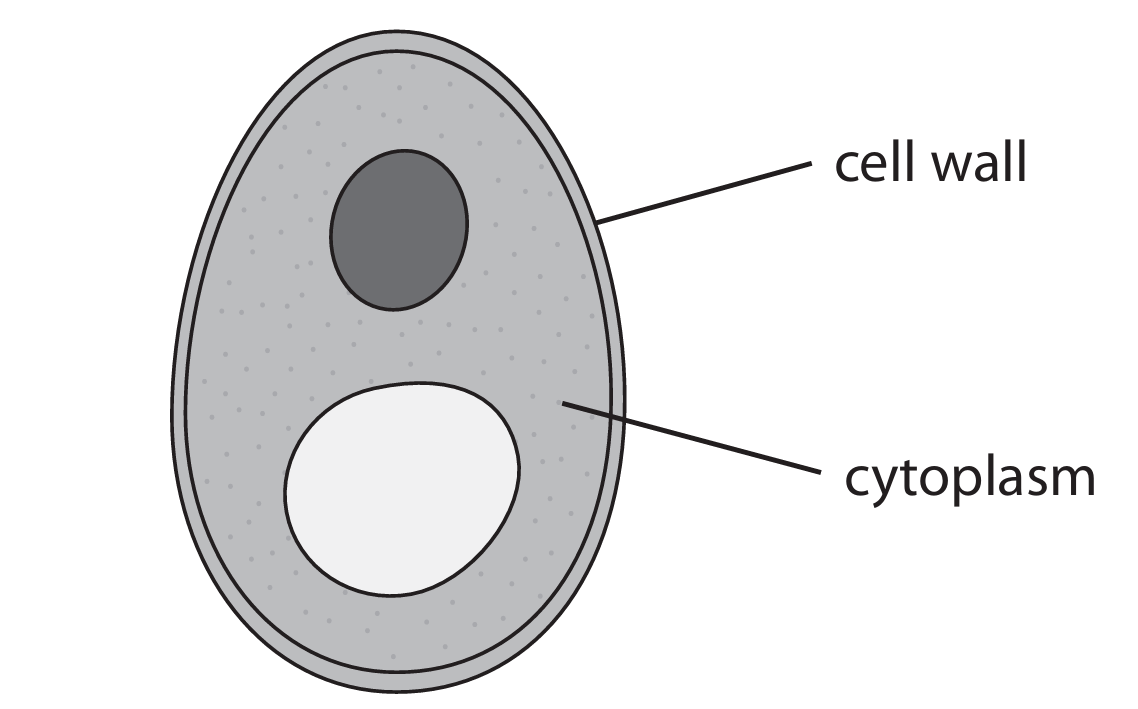
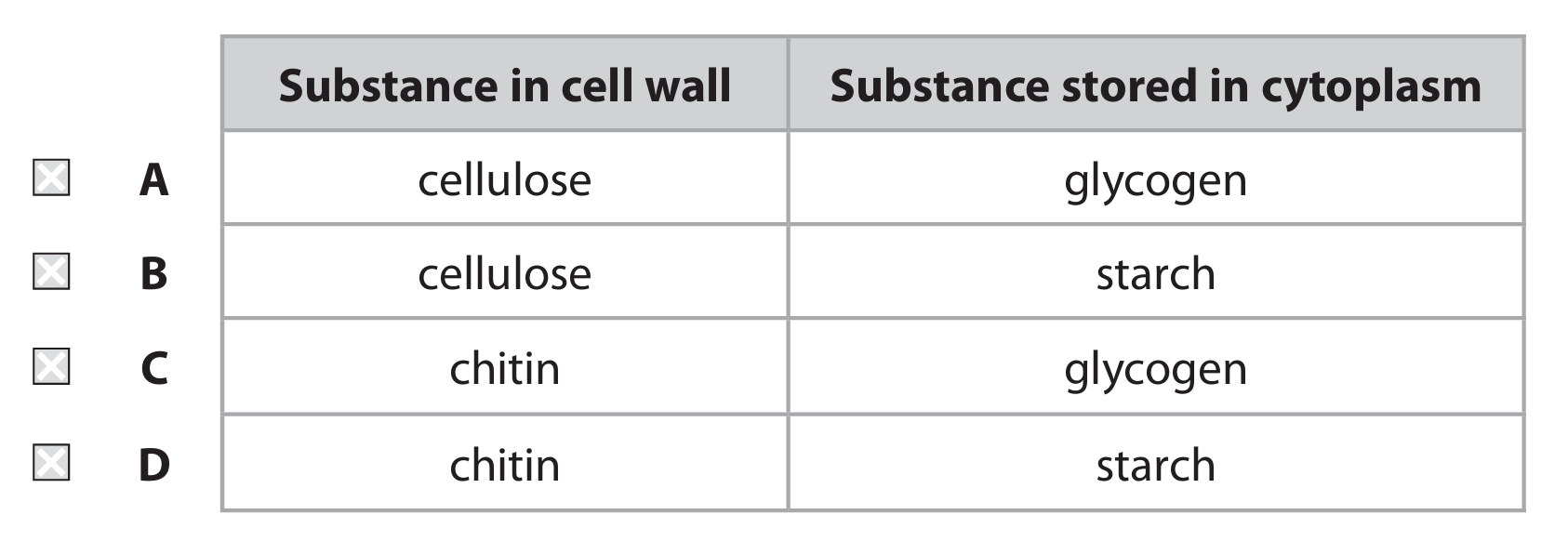

▶️ Answer/Explanation
(a)(i) C (chitin and glycogen)
Explanation: Yeast is a fungus, and fungal cell walls are primarily composed of chitin, not cellulose which is found in plants. For energy storage, fungi like yeast store glycogen in their cytoplasm, similar to animals, rather than starch which is typical of plants.
(a)(ii) B (a fungus)
Explanation: Yeast is classified as a unicellular fungus. It is not a bacterium (which are prokaryotic), a plant (which are multicellular and photosynthetic), or a protoctist (which is a diverse group including algae and protozoa).
(b)(i) B (glucose → ethanol + carbon dioxide)
Explanation: The respiration described is anaerobic respiration (fermentation) in yeast. The correct chemical equation for this process is glucose being broken down into ethanol and carbon dioxide, without the use of oxygen. Option A is incomplete, and options C and D involve oxygen, which characterizes aerobic respiration.
(b)(ii) Restriction enzyme / endonuclease / ligase
Explanation: To genetically modify the yeast, scientists use enzymes like restriction endonucleases (which cut DNA at specific sequences) and DNA ligase (which joins DNA fragments together). These enzymes are essential tools in genetic engineering for inserting new genes into an organism’s genome.
(b)(iii) Contains new / foreign DNA / gene from another organism.
Explanation: A recombinant organism is one that has had its genetic material altered by the insertion of DNA from a different source. In this case, the GM yeast has been modified to contain a gene from another organism that codes for an enzyme capable of digesting plant cell walls.
(b)(iv)
Explanation: Biofuel from plants can help reduce global warming primarily because it is part of a carbon-neutral cycle. The carbon dioxide released when the biofuel is burned is approximately equal to the carbon dioxide that the plants absorbed from the atmosphere during photosynthesis. This contrasts with burning fossil fuels, which releases carbon that has been locked away for millions of years, thereby increasing the net concentration of CO₂ in the atmosphere. Additionally, using biofuels can reduce our dependence on fossil fuels, leading to lower overall emissions of greenhouse gases.
(c)(i) 76% (accept range 69-80%)
Explanation: To calculate the percentage increase, we use the formula: \[ \text{Percentage Increase} = \frac{\text{Mass from GM yeast} – \text{Mass from normal yeast}}{\text{Mass from normal yeast}} \times 100\% \] From the graph, after 1 day, the mass from GM yeast is approximately 2.2 g and from normal yeast is approximately 1.25 g. \[ \text{Increase} = 2.2 – 1.25 = 0.95 \text{ g} \] \[ \text{Percentage Increase} = \frac{0.95}{1.25} \times 100\% = 76\% \] Slight variations in reading the graph values can lead to answers between 69% and 80% being accepted.
(c)(ii)
Explanation: The rate of ethanol production decreases after 1 day likely due to two main factors. First, the glucose (substrate) that the yeast uses for respiration begins to run out or become depleted, slowing down the metabolic process. Second, the ethanol produced is actually toxic to the yeast in high concentrations. As ethanol builds up in the surrounding environment, it can inhibit the yeast’s enzymes and eventually kill the cells, leading to a decline in the production rate.

▶️ Answer/Explanation
(a)
Answer: A suitable method involves using quadrats, repeating measurements, and ensuring random sampling.
Detailed Explanation:
To measure the mean number of weeds per square meter, the scientist should follow a systematic sampling approach. First, she should use a quadrat, which is a square frame of a known area (typically 1 m²), to define the sampling area. She should place the quadrat randomly at multiple locations within each field to avoid bias. For example, she could use a random number generator to select coordinates for quadrat placement.
At each location, she should count the number of individual weeds present within the quadrat boundaries. This process should be repeated many times (e.g., 10-20 times per field) to obtain a representative sample of the weed population. The counts from all quadrat placements are then added together to get a total weed count. Finally, to calculate the mean number of weeds per m², she divides the total weed count by the total number of quadrats used. This gives an average value that represents the weed density in the field for that particular month.
(b)
Answer: The conclusion can be discussed by analyzing the data and considering the pros and cons of each method.
Detailed Explanation:
The scientist’s conclusion that biological control is better can be evaluated using the data provided and broader biological principles.
Looking at the data, biological control (BC) shows a more consistent and generally lower mean number of weeds from April onwards (ranging from 3-4 weeds/m²) compared to chemical control (CC), which shows significant fluctuations (e.g., peaks of 20 in May and 18 in July). This suggests that BC provides more stable, long-term suppression. In February, BC started higher (12 vs. 2), but it rapidly decreased and maintained low levels, whereas CC numbers were unpredictable.
Beyond the immediate data, biological control offers several advantages. It is often more sustainable as the introduced insects can reproduce and maintain their population, providing ongoing control without the need for repeated applications. This can be more cost-effective in the long run. Furthermore, biological control is typically more specific, targeting only the weed species and reducing the risk of harming non-target plants, insects, and the wider food web. It also avoids the environmental pollution associated with herbicides, such as chemical runoff into water systems, and reduces the risk of weeds developing herbicide resistance.
However, there are also potential drawbacks to biological control. The introduced insects could potentially become pests themselves if they lack natural predators or start feeding on non-target plant species. The initial establishment of the control agent can also be slower than the immediate action of a herbicide.
In contrast, chemical control, while often acting faster, requires repeated applications, which increases cost and labor. It carries risks of environmental damage, bioaccumulation of toxic chemicals in the food chain, and can lead to the evolution of resistant weed strains.
Therefore, based on the data showing BC’s consistent low weed counts after an initial period and the long-term ecological benefits, the scientist’s conclusion that biological control is a better method is well-supported, particularly for sustainable agriculture.