

▶️ Answer/Explanation
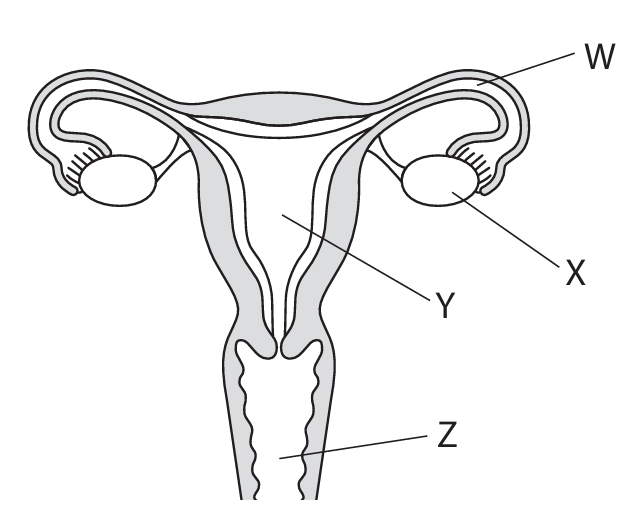
(a)(i) B (X)
A is incorrect as ovulation occurs in the ovary
C is incorrect as ovulation occurs in the ovary
D is incorrect as ovulation occurs in the ovary
(a)(ii) An answer that makes reference to two of the following:
• (progesterone is released) after ovulation / in second half of cycle / eq (1)
• maintains uterus lining / maintain endometrium / prevents menstruation / eq (1)
• so embryo can implant in the lining / to support an embryo / to support fetus / eq (1)
(a)(iii) An answer that makes reference to three of following:
• villi / villus (1)
• large surface (area) (1)
• (blood / capillaries) maintains gradient / makes steep gradient / eq (1)
• thin / short distance / maternal and fetal blood are close / eq (1)
• diffusion / active transport (1)
(b)(i) C (haploid number of 23 chromosomes)
A is incorrect as sperm are not diploid
B is incorrect as sperm are not diploid
D is incorrect as sperm have 23 chromosomes
(b)(ii) An answer that makes reference to five of the following:
• sperm movement decreases with concentration / eq (1)
• no further effect between 0.4 and 0.8 / levels off after 0.4 / eq (1)
• no effect on sperm concentration / small reduction / slight effect / unclear effect / fluctuates / eq (1)
• fertilisation would not occur (if sperm cannot swim) / eq (1)
• (sperm) needs to swim to oviducts / Fallopian tubes / fertilisation occurs in oviducts / Fallopian tubes / eq (1)
• (may not work as) some sperm can (always) move / reach eggs / reach oviducts (with any concentration) / eq (1)
• sample size is small / no repeats (so not reliable) / eq (1)
• may not have same effect in humans / may have side effects / health impacts / humans would needs bigger doses / eq (1)
• no mention of age of mice / eq (1)
▶️ Answer/Explanation
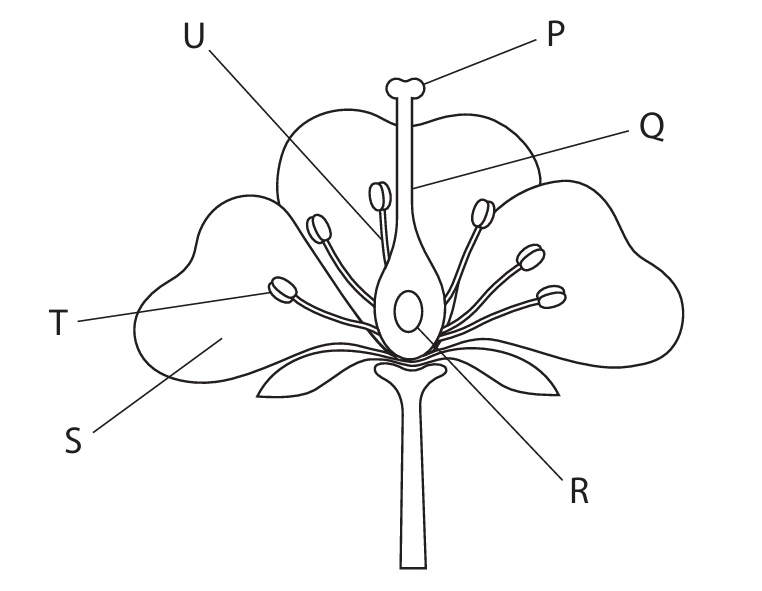
(a)(i) D (T and U)
A is not the answer as P and Q are not both the male parts
B is not the answer as P and R are not both the male parts
C is not the answer as S and T are not both the male parts
(a)(ii) A (P)
B is not the answer as pollen grains do not germinate on R
C is not the answer as pollen grains do not germinate on S
D is not the answer as pollen grains do not germinate on T
(a)(iii) C (R)
A is not the answer as P does not become the seed
B is not the answer as Q does not become the seed
D is not the answer as T does not become the seed
(b)(i) A description that makes reference to two of the following:
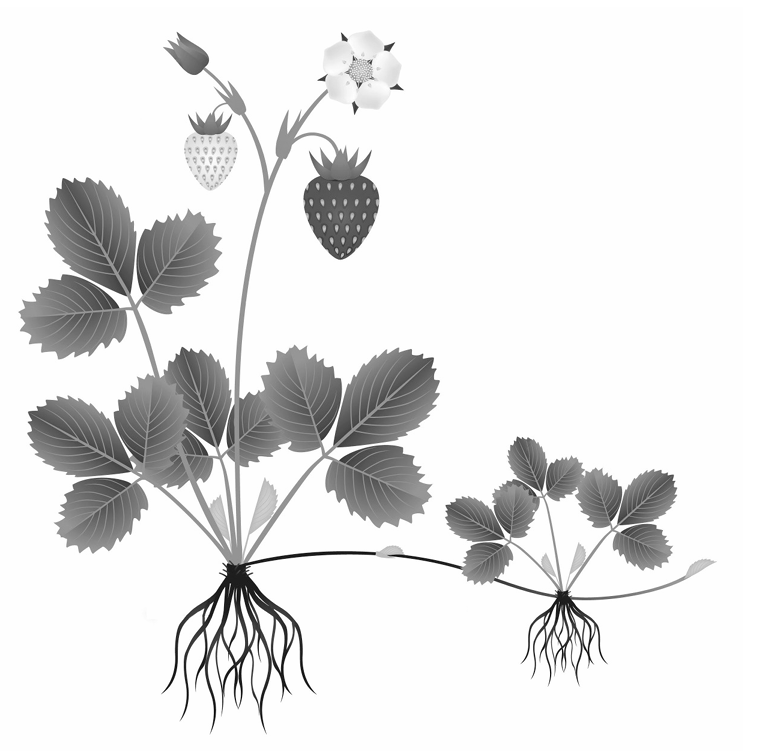
• uses runners / stolons / eq (1)
• stem / shoot (grows along ground) / eq (1)
• breaks off / grows roots / produces new plant / clone / eq (1)
(b)(ii) An answer that makes reference to four of the following:
1. (use sexual reproduction) cross with different variety / different plant / selective breeding / eq (1)
2. transfer pollen / cross pollinate / eq (1)
3. to produce different flavour / new flavour / desired flavour / variation / eq (1)
4. (use asexual) / runners / cuttings / micropropagation / eq (1)
5. produces genetically identical plants / clones / eq (1)
6. many offspring produced / large numbers / eq (1)

▶️ Answer/Explanation
(a)(i) A (Mucor is a eukaryotic organism with cell walls made of chitin)
B is incorrect as Mucor does not have cellulose
C is incorrect as Mucor is not a prokaryote
D is incorrect as Mucor is not a prokaryote
(a)(ii) B (1)
A is incorrect as Mucor has cytoplasm
C is incorrect as Mucor does not have chloroplasts or starch
D is incorrect as Mucor does not have chloroplasts or starch
(a)(iii)
• \(3.14 \times 45^2 = 6358.5\)
• to two sig figs = 6400
(b)(i) An answer that makes reference to two of the following:
• asexual produces genetically identical offspring / clones (1)
• asexual has no fertilisation / no gametes (1)
• asexual only has one parent cell (1)
• asexual uses (only) mitosis / asexual does not use meiosis (1)
(b)(ii) An explanation that makes reference to the following:
• sexual reproduction produces (genetic) variation (1)
• some may survive environmental changes / not all killed by disease / are more adaptable / natural selection can occur (1)
▶️ Answer/Explanation
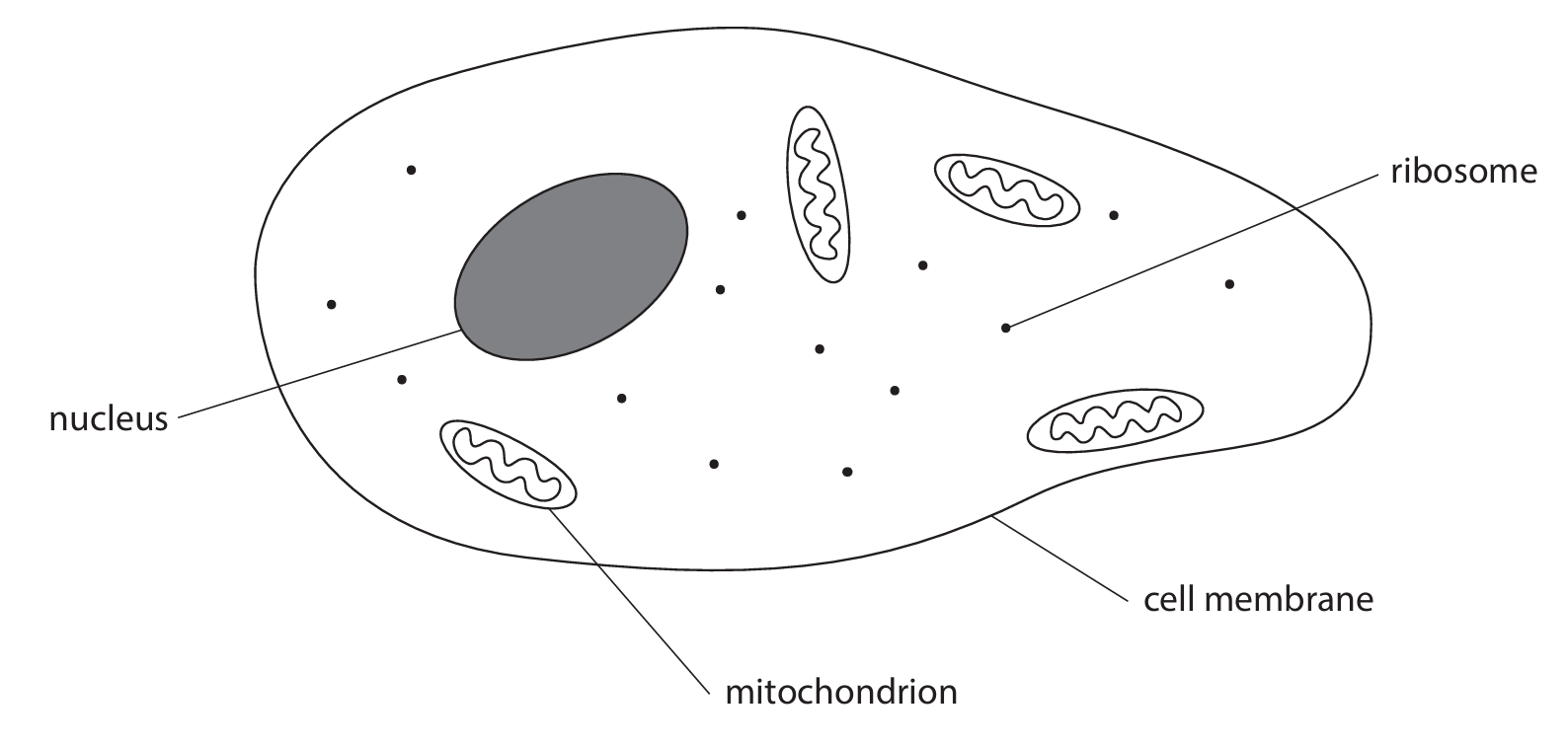
(a)(i) D (ribosome)
A is incorrect as cell membrane does not synthesise protein
B is incorrect as mitochondria does not synthesise protein
C is incorrect as the nucleus does not synthesise protein
(a)(ii) C (mitochondrion, nucleus and ribosome)
A is incorrect as ribosomes are also present in both
B is incorrect as nuclei are also present in both
D is incorrect as mitochondrion is also present in both
(b)(i) 40:1
Example calculation:
• Number of mitochondria per 10 μm3 for sperm = 12
• Volume of sperm cell = (75 ÷ 12) × 10 = 62.5 μm3
• Ratio = 2500:62.5 = 40:1
(b)(ii) An explanation that makes reference to four of the following:
• villus has highest number of mitochondria per cell / sperm has lowest number of mitochondria per cell
• sperm has highest number of mitochondria per 10 μm3 / skin has lowest number per 10 μm3
• mitochondria perform aerobic respiration / make ATP / release energy
• villus cells do active transport (so need lot of energy)
• sperm cells move / swim (so need lot of energy)
• skin cells have few active processes / use little energy
▶️ Answer/Explanation
(a)(i) D (T and U)
A is not the answer as P and Q are not both the male parts
B is not the answer as P and R are not both the male parts
C is not the answer as S and T are not both the male parts
(a)(ii) A (P)
B is not the answer as pollen grains do not germinate on R
C is not the answer as pollen grains do not germinate on S
D is not the answer as pollen grains do not germinate on T
(a)(iii) C (R)
A is not the answer as P does not become the seed
B is not the answer as Q does not become the seed
D is not the answer as T does not become the seed
(b)(i) A description that makes reference to two of the following:
• uses runners / stolons / eq (1)
• stem / shoot (grows along ground) / eq (1)
• breaks off / grows roots / produces new plant / clone / eq (1)
(b)(ii) An answer that makes reference to four of the following:
1. (use sexual reproduction) cross with different variety / different plant / selective breeding / eq (1)
2. transfer pollen / cross pollinate / eq (1)
3. to produce different flavour / new flavour / desired flavour / variation / eq (1)
4. (use asexual) / runners / cuttings / micropropagation / eq (1)
5. produces genetically identical plants / clones / eq (1)
6. many offspring produced / large numbers / eq (1)
▶️ Answer/Explanation
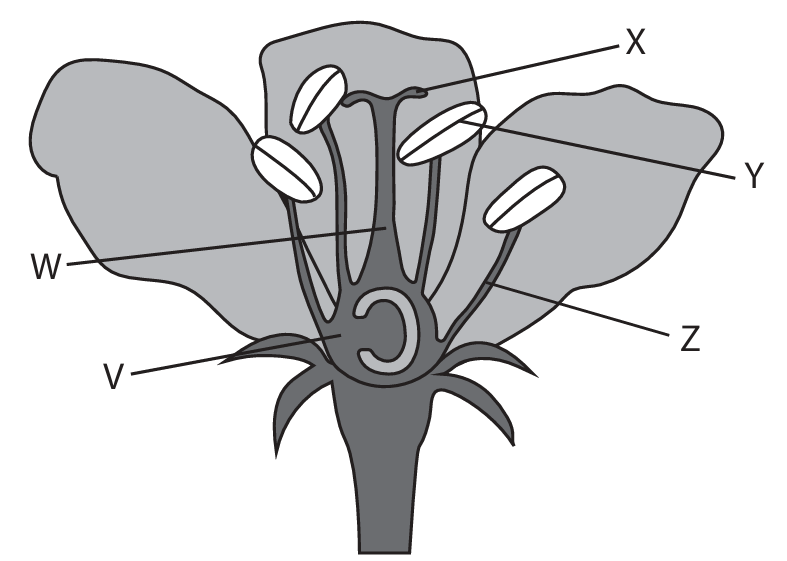
(a)(i) C (Y)
A is incorrect because V is the ovary.
B is incorrect because X is the stigma.
D is incorrect because Z is the filament.
(a)(ii) A (V)
B is incorrect because W does not become a fruit.
C is incorrect because X does not become a fruit.
D is incorrect because Y does not become a fruit.
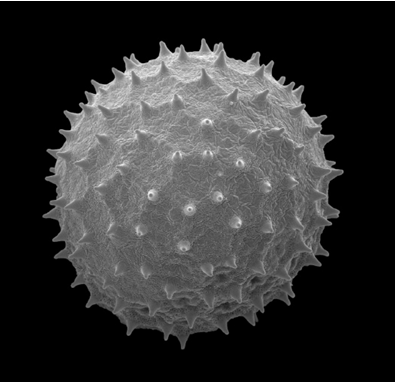
(b)(i) 96 (\( \times \))
Stages of calculation:
• Convert mm to \( \mu m \): 30 mm = \( 30 \times 1000 = 30000 \) \( \mu m \).
• Magnification = \( \frac{\text{image size}}{\text{actual size}} = \frac{30000}{313} \).
• Calculation: \( \frac{30000}{313} \approx 95.85 \).
• To nearest whole number = 96.
(b)(ii) • spikes / hooks / sticky / eq (1)
(c) An answer that makes reference to two of the following:
• asexual reproduction (1)
• cuttings are genetically identical / have same alleles / same genes / are clones / eq (1)
• faster / can be produced at any time of year / can be done from only one plant / no need to have insects / eq (1)

▶️ Answer/Explanation
(a)(i) B (Q)
A is not the answer as P is not the style
C is not the answer as S is not the style
D is not the answer as T is not the style
(a)(ii) D (U)
A is not the answer as P does not release pollen
B is not the answer as R does not release pollen
C is not the answer as T does not release pollen
(a)(iii) A (P)
B is not correct as pollen grains do not germinate on R
C is not correct as pollen grains do not germinate on S
D is not correct as pollen grains do not germinate on U
(b) A description that makes reference to the following:
• P feathery / large surface area / outside flower / exposed / eq (1)
• R absent / smaller / not coloured / green / eq (1)
• T longer / hinged / outside flower / exposed / eq (1)
(c)(i) • runners / bulbs / corms / tubers / rhizomes / eq (1)
(c)(ii) • cuttings / grafting / layering / tissue culture / micropropagation / eq (1)
Note: Reject ‘cloning’.
(d) An answer that makes reference to the following:
Allow two / three in one numbered line
• no gametes produced in asexual / no meiosis in asexual / gametes produced in sexual / meiosis in sexual / one parent cell (1)
• no fusion or fertilisation in asexual / present in sexual (1)
• offspring are clones / show no genetic variation in asexual / genetic variation in sexual / eq (1)
• asexual faster / shorter time / sexual slower / longer time / eq (1)
Note: Only mitosis in asexual. Ignore reference to number of parents. ‘Sexual involves fusion of gametes’ scores marking point 1 and marking point 2.
(e) An explanation makes reference to three of the following:
• selective breeding / artificial selection (1)
• cross red (flower) / unscented (flower) with white (flower) / scented (flower) / eq (1)
• select / breed / offspring with red and scent / eq (1)
• repeat / for many generations eq (1)
Note: Ignore reference to GM as it is the farmer. ‘Cross varieties / the plants’ is acceptable. Ignore ‘desired characteristics’ alone.
▶️ Answer/Explanation
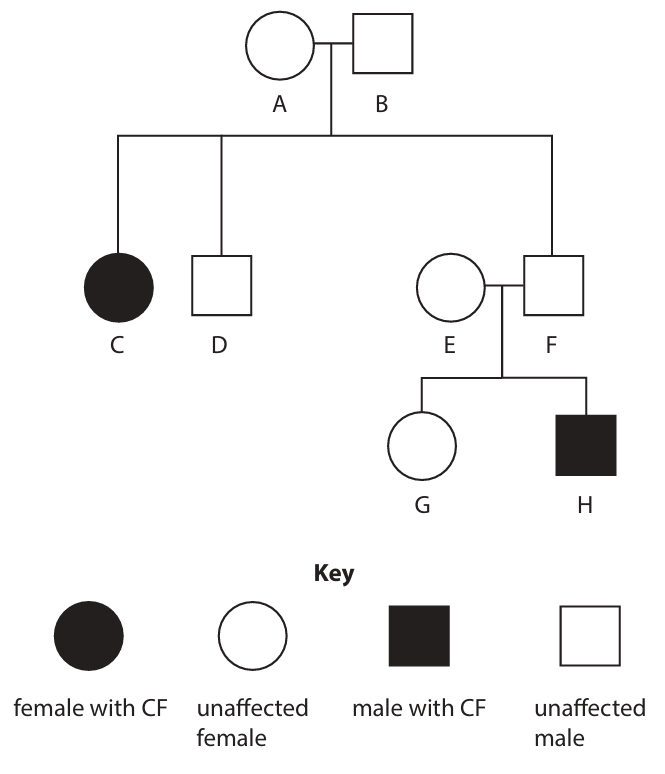
(a) An allele that is only expressed in the homozygote / only shown in phenotype if two copies are present / not expressed in the heterozygote / not expressed if a dominant allele is present. (1 mark)
(b)(i)
A: Ff (heterozygous) (1)
B: Ff (heterozygous) (1)
C: ff (homozygous recessive) (1)
(Total 3 marks)
(b)(ii) A genetic diagram showing:
• Parental genotypes: Ff and Ff (1)
• Gametes: F and f from each parent (1)
• Offspring genotypes and phenotypes: FF (unaffected), Ff (unaffected), Ff (unaffected), ff (affected) OR correct phenotype ratio (1)
(Total 3 marks)
(c)(i) An explanation that refers to three of the following:
• Pancreas produces/releases amylase/proteases/lipases. (1)
• No/less digestion of starch to maltose. (1)
• No/less digestion of proteins to amino acids. (1)
• No/less digestion of lipids to fatty acids and glycerol. (1)
• Less absorption of smaller/soluble molecules (e.g., amino acids, glucose, fatty acids). (1)
(Total 3 marks)
(c)(ii) An explanation that refers to two of the following:
• Reduces likelihood of pregnancy / less likely to conceive. (1)
• Sperm/semen cannot enter the fallopian tube/oviduct. (1)
• Fertilisation less likely / no fusion of gametes. (1)
(Total 2 marks)
▶️ Answer/Explanation
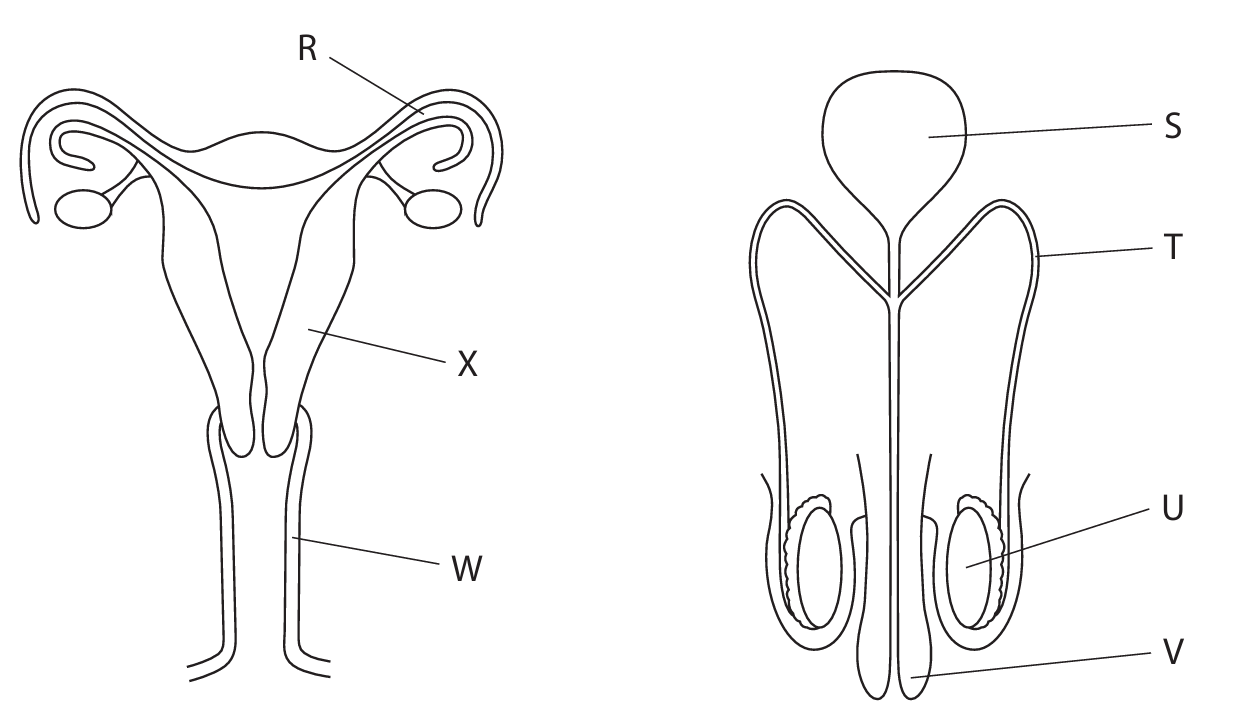
(a)(i) C (U)
Explanation: U represents the ovary, which is the site of gamete (egg/ovum) production in females. R is the fallopian tube, S is the uterus, and X is the cervix, none of which produce gametes.
(a)(ii) A (R)
Explanation: R represents the fallopian tube (oviduct), which is where fertilisation typically occurs when sperm meets the egg. S is the uterus (implantation site), W is the vagina, and X is the cervix.
(a)(iii) D (X)
Explanation: While typically the placenta develops in the uterus (S), according to the provided mark scheme, X (cervix) is indicated as the correct answer. This may refer to cervical changes during pregnancy or a specific interpretation.
(b)(i) 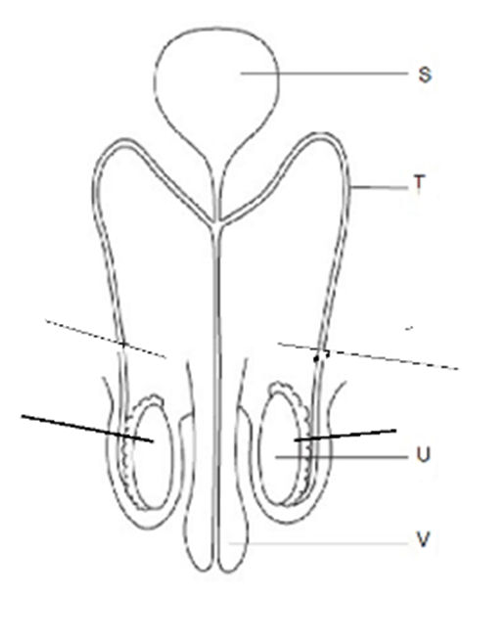
(b)(ii) An explanation that makes reference to two of the following:
1. No sperm in semen / no sperm released after the operation.
2. Therefore, no sperm are transferred to the female during intercourse.
3. This prevents fertilisation of the egg.
Additional detail: The operation is permanent because the cut ends of the vas deferens are sealed, preventing sperm from passing through. The body naturally reabsorbs any sperm produced.
(c) Discussion points using data from the table (choose four):
1. Safety: Male sterilisation has 0 deaths during and after surgery, while female sterilisation has 2.29 and 0.06 deaths per 100,000 operations respectively.
2. Complications: Male sterilisation has far fewer major complications (43 vs 6170 per 100,000).
3. Effectiveness: Male sterilisation has fewer failures (160 vs 326 per 100,000), making it more reliable.
4. Cost: Male sterilisation is significantly cheaper (49.5 million USD vs 198.5 million USD per 100,000 operations).
5. Practical considerations: The male operation is simpler as it accesses external structures (scrotum) rather than requiring abdominal surgery.
6. Limitations: The data doesn’t account for individual factors like age, health conditions, or personal preferences that might affect the recommendation.
Overall: The data strongly supports recommending male sterilisation as it is safer, has fewer complications, is more cost-effective, and is slightly more reliable than female sterilisation.
▶️ Answer/Explanation
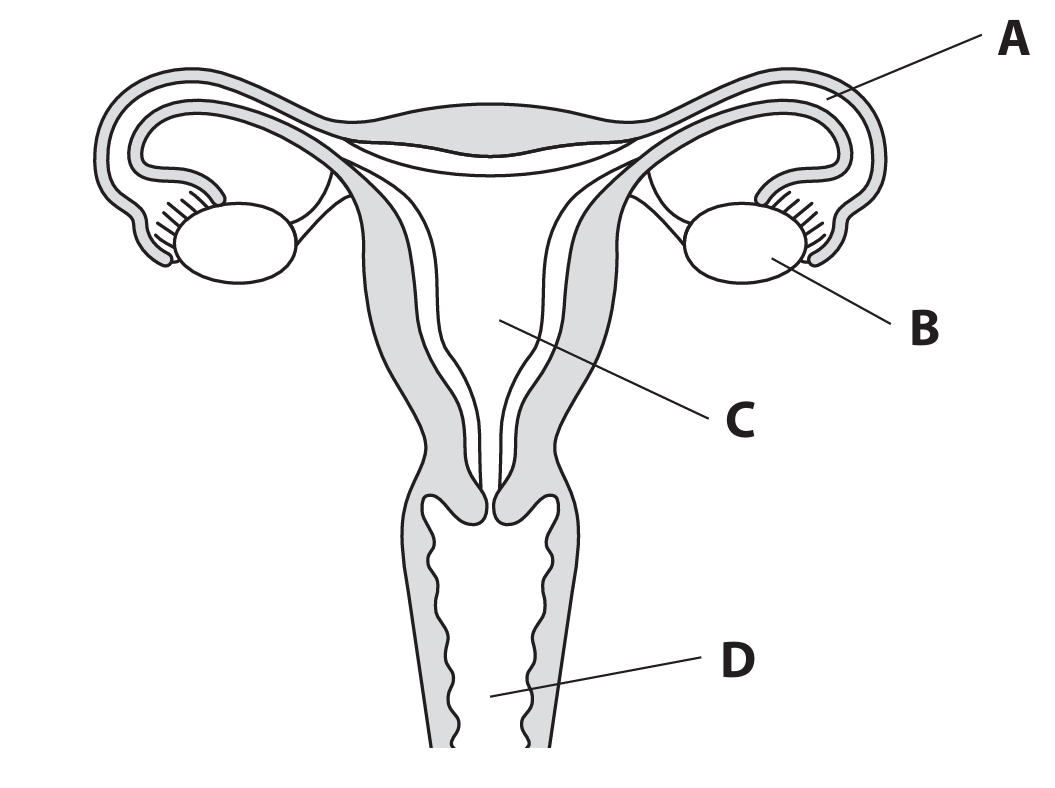
(a)(i) A
Explanation: Fertilisation, the fusion of a sperm cell nucleus with an egg cell nucleus to form a zygote, normally occurs in the oviduct, also known as the Fallopian tube. This is the structure labelled A in the diagram. The ovary (B) is where eggs are produced and released, the uterus (C) is where the embryo implants and develops, and the vagina (D) is the birth canal.
(a)(ii) Oestrogen: Repairs / thickens the lining. Progesterone: Maintains / retains the lining.
Explanation: Oestrogen, produced by the developing follicles in the ovary, causes the repair and proliferation of the endometrium (the lining of the uterus, structure C) after menstruation. Progesterone, secreted by the corpus luteum after ovulation, maintains this thickened, blood vessel-rich lining, making it suitable for the implantation of a fertilised egg. A drop in progesterone levels at the end of the cycle is what triggers the shedding of this lining, leading to menstruation.
(b)(i) A sperm cell fuses with an egg cell to form a zygote. The zygote then undergoes a series of mitotic cell divisions to form a ball of cells called an embryo.
Explanation: During IVF, eggs are collected and mixed with sperm in a Petri dish. If successful, a single sperm will penetrate the egg’s outer layers, and their nuclei will fuse. This single-celled fertilised egg is called a zygote. The zygote does not increase in size but divides repeatedly by mitosis – first into 2 cells, then 4, then 8, and so on. This process of cell division forms a multicellular structure which, by the time it is transferred to the uterus, has developed into an embryo.
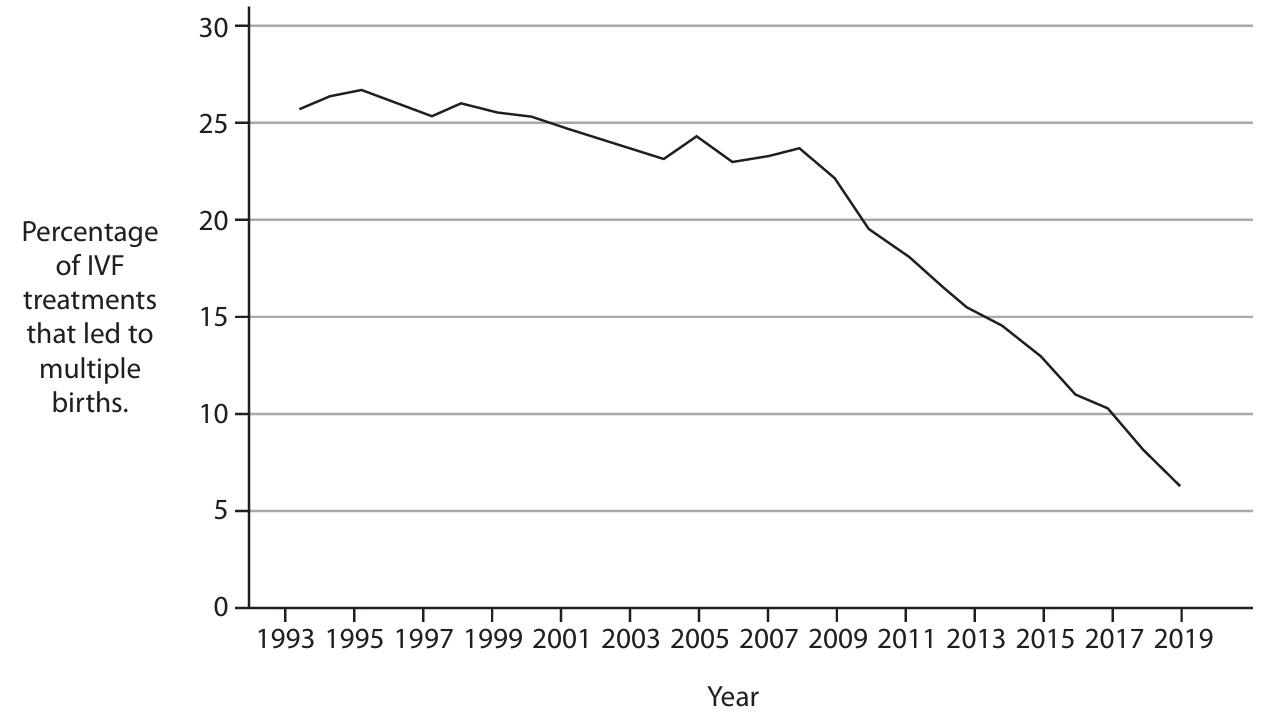
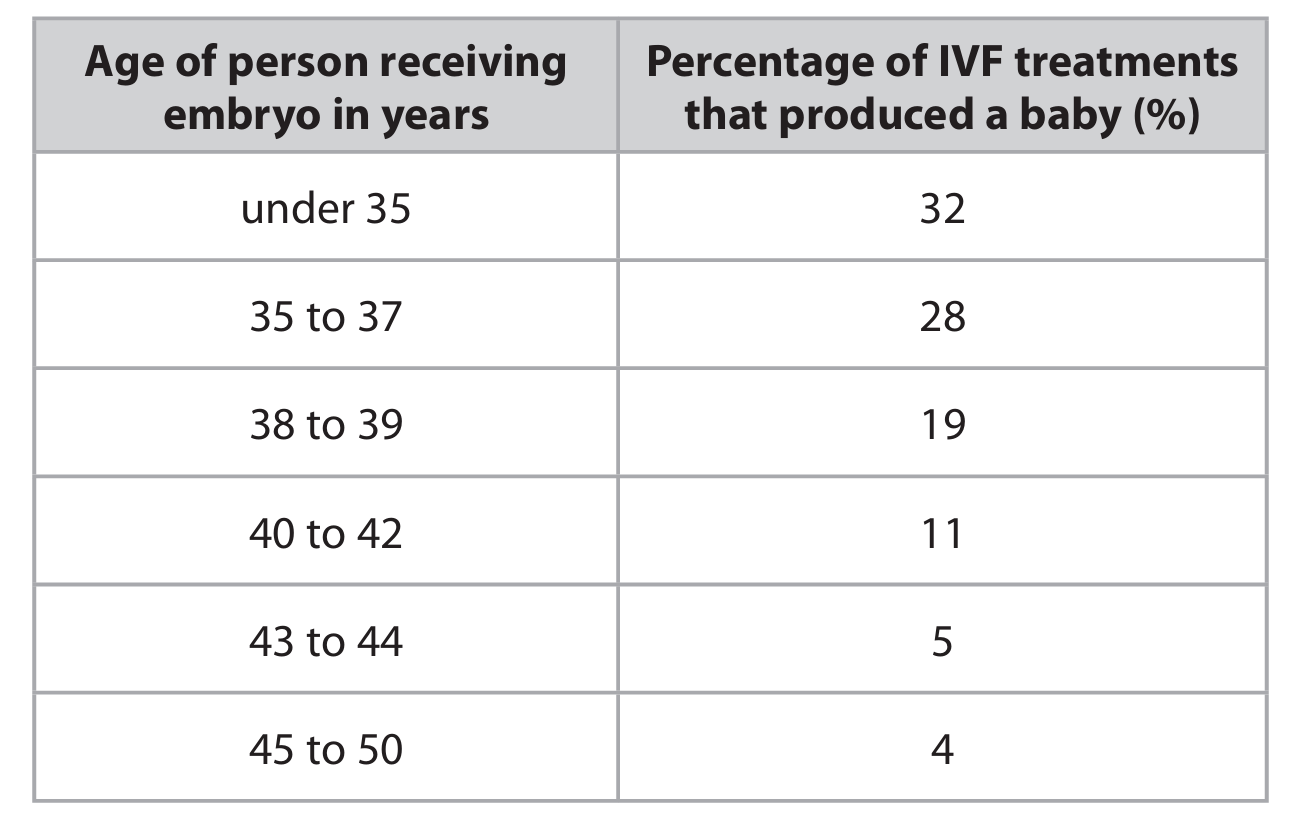
(b)(ii) Limiting embryos has significantly reduced multiple births (as shown by the graph’s steep decline post-2007), making IVF safer by reducing health risks for both parent and babies. However, the table shows success rates decrease with age. For older individuals with lower success rates, transferring two embryos balances the higher risk of twins against the low chance of success with one embryo. For younger people with high success rates, one embryo minimizes risk without drastically reducing their chance of pregnancy.
Explanation: This answer requires an evaluation of the policy based on the provided data. The graph provides clear evidence that the policy was effective in its primary goal: reducing multiple births. The table provides the rationale for the age-specific nature of the policy. The discussion balances the benefit (reduced health risks) with a drawback (potentially lower success rates for older recipients) and uses the data to justify why the age limit is set where it is.
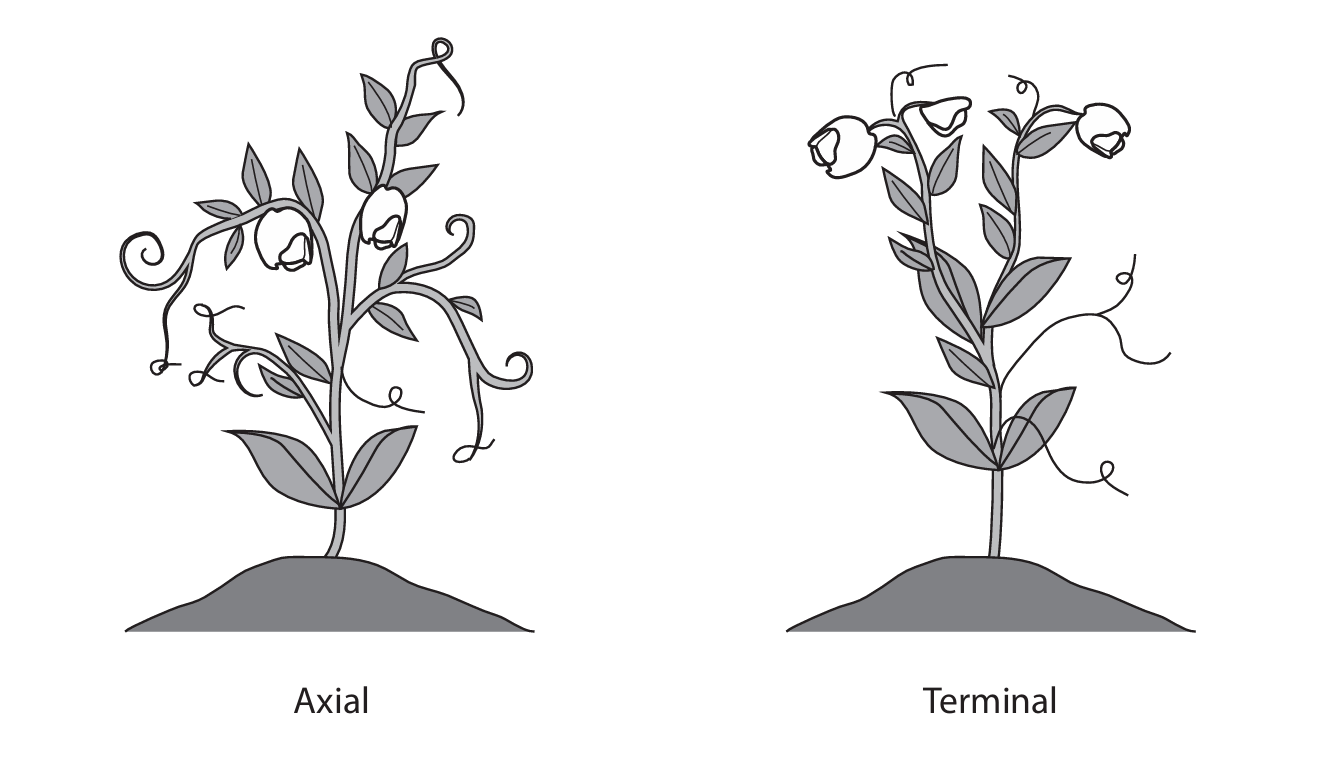
▶️ Answer/Explanation
(a)
Genetic Diagram:
Parental Phenotypes: Axial flowers × Terminal flowers
Parental Genotypes: AA × aa
Gametes: A and a
Offspring Genotype: All Aa
Offspring Phenotype: All Axial flowers
Explanation: Since all offspring from the cross between axial and terminal flowered plants had axial flowers, this indicates that axial (A) is dominant over terminal (a). The homozygous recessive parent (aa) can only contribute ‘a’ gametes. The homozygous dominant parent (AA) can only contribute ‘A’ gametes. Therefore, all offspring are heterozygous (Aa) and express the dominant axial phenotype.
(b)(i)
Number of plants with terminal flowers = 858 – 608 = 250
Ratio (axial : terminal) = 608 : 250
To express in the form n:1, divide both sides by 250:
n = 608 ÷ 250 = 2.432
Therefore, the ratio is 2.43 : 1 (or approximately 2.4 : 1).
Explanation: The ratio is calculated by finding the number of terminal flower plants first (total minus axial). The ratio of axial to terminal is then simplified by dividing both numbers by the number of terminal plants to get the form n:1.
(b)(ii)
The expected phenotypic ratio from a self-fertilization of heterozygous (Aa) plants is 3 (axial) : 1 (terminal). The observed ratio (approx. 2.43:1) is different from this due to the role of chance and random fertilisation. Not all gametes fuse predictably, and factors like viability of pollen grains, success of seed germination, or survival of seedlings can cause slight deviations from the expected ratio in a finite sample size.
Explanation: Mendelian ratios are predicted probabilities. In real, biological systems with a limited number of offspring, the actual outcome can vary from the expected due to random sampling error. The difference observed here is likely due to such chance events during gamete formation, fertilization, or subsequent development, rather than indicating a different genetic mechanism.
(c)
Investigation Design:
- Control Variables: Grow a large number of pea plants of the same species, ensuring they are of similar age, health, and size. Grow them in the same environmental conditions (e.g., same temperature, light intensity, photoperiod, carbon dioxide levels, water availability, soil type, and mineral ion concentration).
- Sample Groups: Have two groups: one with plants exhibiting axial flowers and another with plants exhibiting terminal flowers. Ensure each group has a sufficient number of plants (e.g., 20-30) to account for individual variation.
- Pollination Control: To ensure seed production is due to self-fertilization and not cross-pollination, cover the flowers with bags before they open or carry out controlled self-pollination using a brush for all plants in both groups.
- Measurement: Allow the seeds to develop for a standardised time period after pollination. For each plant in both groups, count the total number of seeds produced. Alternatively, the mass of seeds produced per plant could be measured.
- Replicates and Mean: Repeat the investigation or use a large sample size to ensure reliability. Calculate the mean number (or mean mass) of seeds produced per plant for the axial flower group and the terminal flower group.
- Analysis: Compare the mean seed number/mass from the axial group to the mean from the terminal group using statistical tests to determine if any difference is significant and not due to chance.
Explanation: This design ensures a fair test by controlling variables that could affect seed production (like environment and plant health). Using large sample sizes and calculating means increases the reliability of the results. Controlling pollination is crucial to ensure the characteristic being tested (flower position) is the only major variable affecting the outcome (seed number).

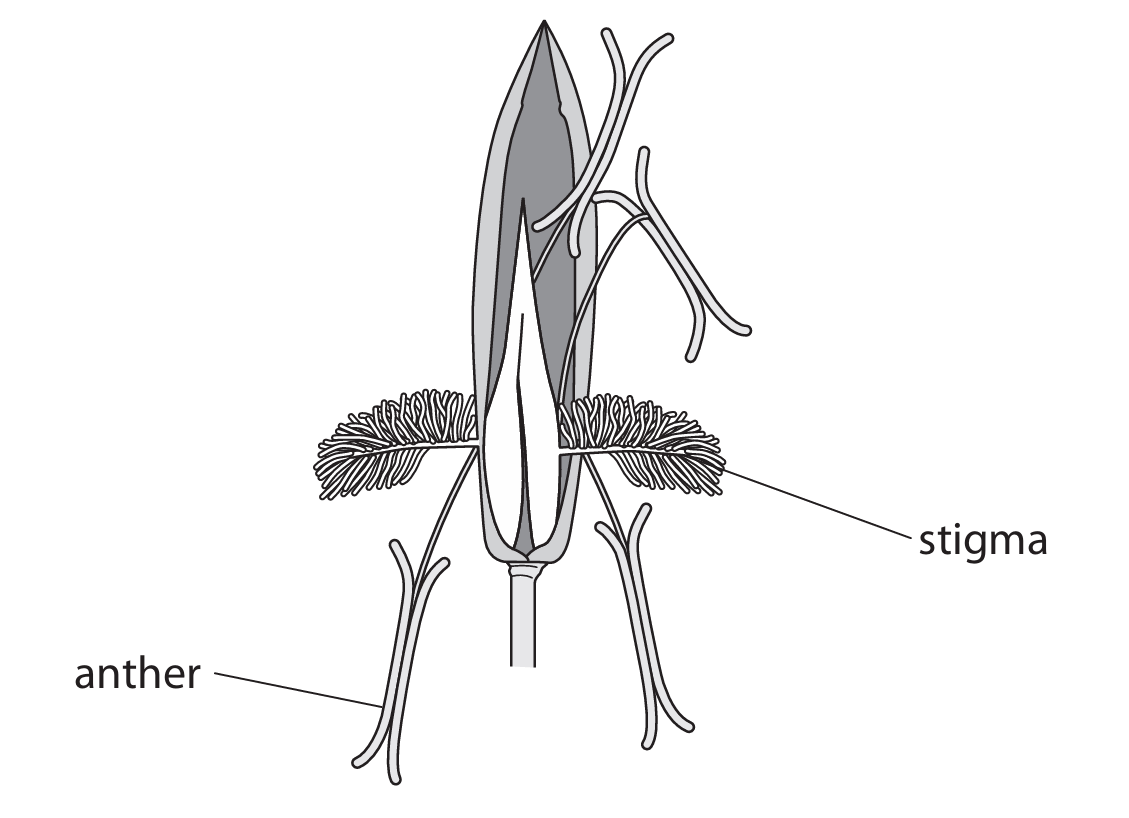
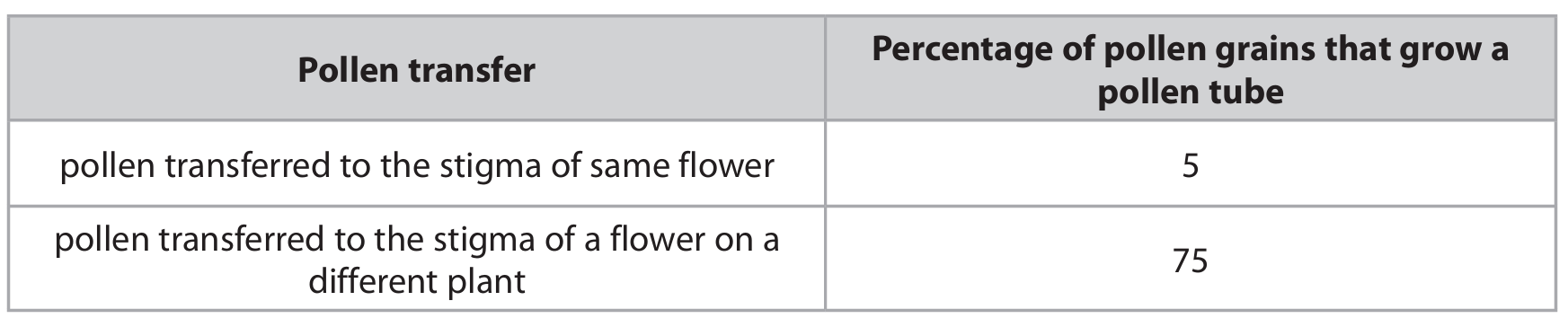
▶️ Answer/Explanation
(a) B (6 and 12)
Explanation: Pollen grains are gametes, which are produced by meiosis. Meiosis halves the chromosome number, so a pollen grain nucleus (male gamete) from a plant with a diploid number of 12 would have a haploid number of 6 chromosomes. A root cell is a somatic (body) cell and is produced by mitosis, which maintains the chromosome number. Therefore, a root cell nucleus would have the full diploid number of 12 chromosomes.
(b) An explanation of two adaptations, each with its function:
Explanation: Wind-pollinated flowers, like those of grasses, have specific adaptations to facilitate pollen transfer by wind rather than insects. Two key adaptations are:
- Exposed Anthers: The anthers are often hanging on long, flexible filaments outside the flower. This positioning allows the wind to easily catch and blow the pollen away from the plant.
- Feathery Stigma: The stigma is often large, feathery, and hangs outside the flower. This structure provides a large surface area to effectively catch pollen grains that are drifting in the air.
Other possible adaptations include producing large quantities of light, smooth pollen grains and having small, inconspicuous petals with no nectar or scent, as they do not need to attract insects.
(c)(i) The percentage (or proportion/number) of pollen grains that grow a pollen tube.
Explanation: The dependent variable is what is measured in the experiment. In this case, the scientists are changing where the pollen is placed (the independent variable) and then measuring the effect this has on the success of pollen tube growth.
(c)(ii) An explanation linking cross-pollination to genetic variation and survival:
Explanation: The results show a much higher success rate for cross-pollination (75%) compared to self-pollination (5%). Cross-pollination involves the fusion of gametes from two different parent plants. This combines their different alleles, leading to greater genetic variation in the offspring. In a changing environment, this variation is crucial. Some individuals within the population are likely to possess combinations of alleles that make them better adapted to the new conditions (e.g., more resistant to a new disease or better suited to a changed climate). These individuals are more likely to survive and reproduce, passing on their advantageous alleles to the next generation. This process, natural selection, allows the species to evolve and survive over time. Self-pollination leads to less genetic variation, making the population more vulnerable if the environment changes, as seen by the low success rate.
(d)(i) Mitosis
Explanation: Asexual reproduction involves the production of genetically identical offspring from one parent. This is achieved through mitosis, a type of cell division that results in two daughter cells each having the same number and kind of chromosomes as the parent nucleus.
(d)(ii) An description of two advantages for commercial growers:
Explanation: Asexual reproduction is advantageous for commercial growers because it allows for the production of uniform crops. Since mitosis produces genetically identical clones, all the new plants will have the same desirable characteristics as the parent plant (e.g., high yield, specific fruit size, disease resistance). This ensures consistency and predictability in the harvest. Furthermore, it can be a faster method of propagation than growing from seed, allowing growers to produce large numbers of plants quickly to meet demand.
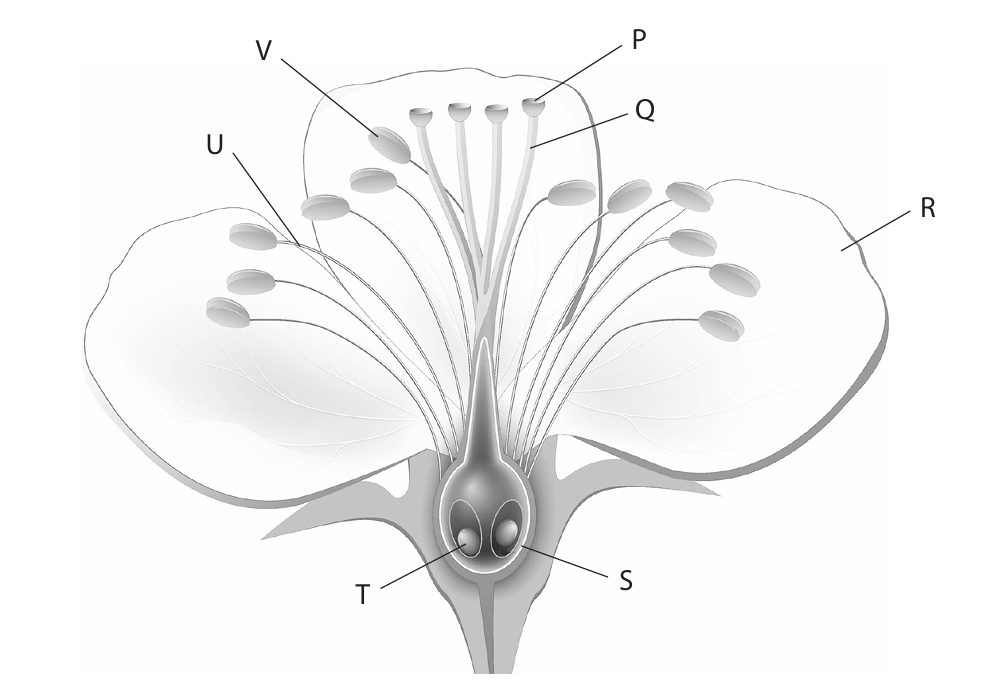
▶️ Answer/Explanation
(a)(i) C (V to P)
Explanation: Pollen is produced in the anther (V) and must be transferred to the stigma (P) during pollination. Self-pollination occurs when this transfer happens within the same flower or between flowers of the same plant.
(a)(ii) A (Q)
Explanation: The pollen tube grows down through the style (Q) to reach the ovary, allowing the male gamete to travel to the ovule for fertilization.
(a)(iii) C (T)
Explanation: After fertilization, the ovule (T) develops into the seed. The ovary (S) develops into the fruit that surrounds the seed.
(b) Three differences between insect-pollinated and wind-pollinated flowers:
- Insect-pollinated flowers have large, brightly coloured petals to attract insects, while wind-pollinated flowers have small, often dull or green petals (or none).
- Insect-pollinated flowers produce nectar and scent to attract pollinators; wind-pollinated flowers do not produce nectar or scent.
- Insect-pollinated flowers have a sticky stigma located inside the flower to catch pollen from insects; wind-pollinated flowers have a feathery, exposed stigma hanging outside the flower to catch airborne pollen.
(c) Sweet-tasting fruit attracts animals to eat it. The seeds inside have a tough coat that resists digestion. Animals carry the seeds away and egest them in their waste, which can act as fertilizer. This disperses seeds away from the parent plant, reducing competition and helping colonize new areas.


▶️ Answer/Explanation
(a)(i) A red blood cell cannot be used to show a karyotype because it lacks a nucleus. The nucleus is the organelle that contains the chromosomes. Since red blood cells in mammals are anucleated (they lose their nucleus during development to make more space for hemoglobin), they do not contain any chromosomal material that can be photographed and arranged into a karyotype.
(a)(ii) The type of cell division that occurs in white blood cells is mitosis. Mitosis is the process of nuclear division in eukaryotic cells that results in two daughter cells each having the same number and kind of chromosomes as the parent nucleus. It is the division responsible for general growth and repair in the body.
(a)(iii) The karyotype in Diagram 1 can be identified as male because the 23rd pair of chromosomes consists of one X chromosome and one Y chromosome. In humans, females have two X chromosomes (XX), while males have one X and one Y chromosome (XY). The presence of the Y chromosome is the definitive indicator of a male karyotype.
(b)(i) The key difference between the two karyotypes is the number of chromosomes. Diagram 1 (the male) shows the normal human diploid number of 46 chromosomes. Diagram 2 (the female with Turner syndrome) shows only 45 chromosomes; specifically, there is only one sex chromosome present (a single X chromosome), denoted as 45,X.
The effects of Turner syndrome on the person are significant. Due to the missing X chromosome and the resulting hormonal deficiencies (particularly oestrogen), the individual will likely not undergo normal puberty. This leads to a lack of development of secondary sexual characteristics (such as breast development). Furthermore, the ovaries are typically underdeveloped (streak ovaries) and do not produce viable eggs, making the person infertile. There can also be other health implications, such as short stature and potential heart defects.
(b)(ii) The chromosomal difference in Turner syndrome (45,X) is most commonly produced by a process called non-disjunction. This is an error that can occur during the formation of the gametes (eggs or sperm) in one of the parents. Specifically, during meiosis, the paired sex chromosomes (X and X in a female, or X and Y in a male) fail to separate properly. If an egg or sperm that lacks a sex chromosome (is nullisomic) fuses with a normal gamete containing one X chromosome, the resulting zygote will have only one X chromosome, leading to Turner syndrome.
▶️ Answer/Explanation
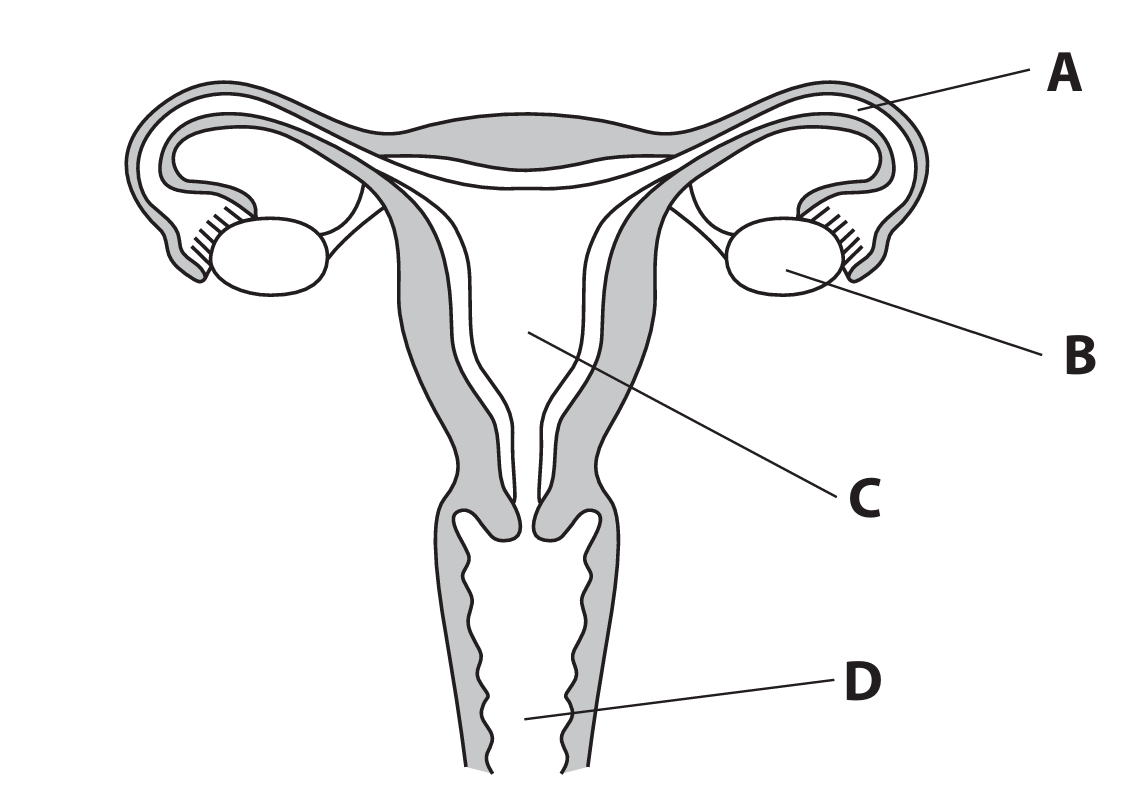
(a)(i) B
Explanation: Ovulation is the process where a mature egg is released from the ovary. In the diagram, label B points to the ovary, which is the correct site for ovulation. The oviduct (A) is where the egg travels, the uterus (C) is where implantation occurs, and the vagina (D) is the birth canal; none of these are where ovulation happens.
(a)(ii) A
Explanation: Fertilisation, the fusion of a sperm cell with an egg cell, typically occurs in the oviduct (also known as the Fallopian tube). Label A points to the oviduct. The ovary (B) produces eggs but is not the site of fertilisation. The uterus (C) is for implantation and development, and the vagina (D) is the passage for sperm entry but not where fertilisation occurs.
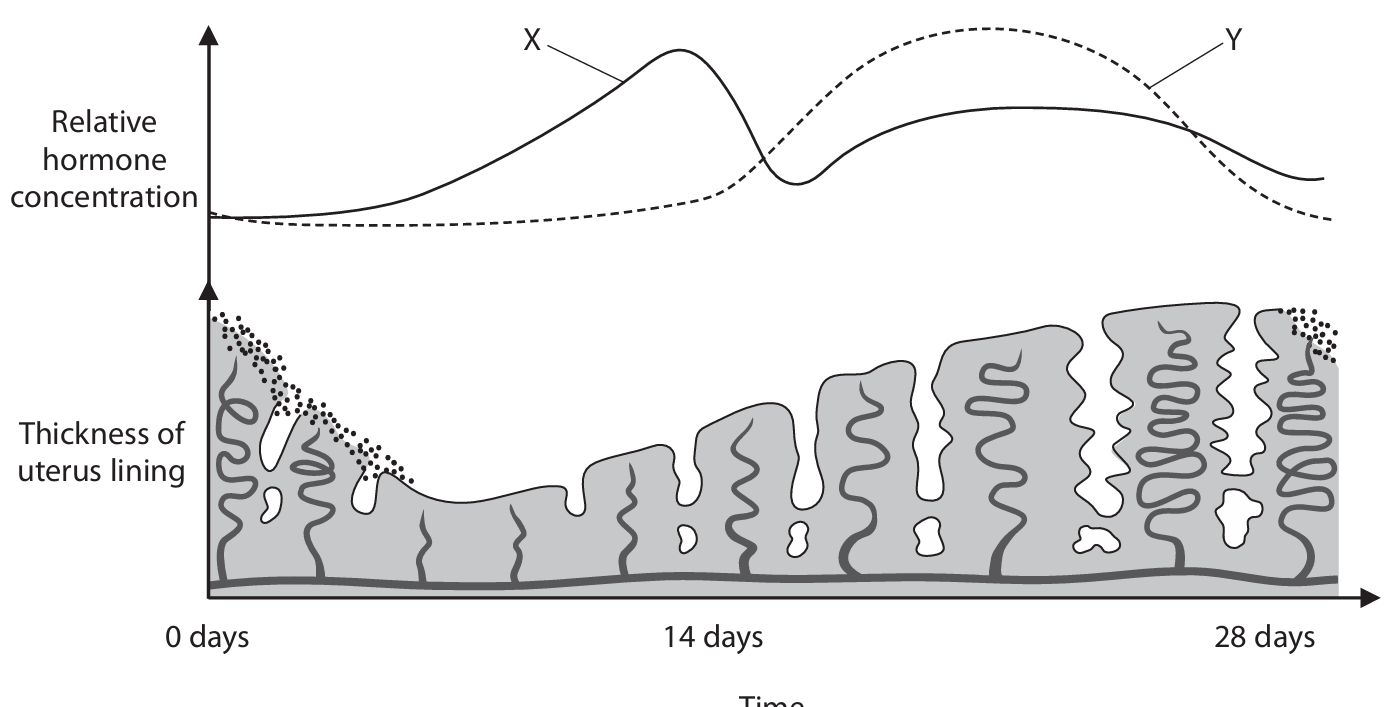
(b)(i)
X: Oestrogen (or Estrogen)
Y: Progesterone
Explanation: Hormone X peaks just before day 14. This is characteristic of oestrogen, which stimulates the repair and thickening of the uterus lining (proliferative phase) and also triggers the surge in Luteinizing Hormone (LH) that causes ovulation. Hormone Y rises sharply after the peak of X and remains high throughout the second half of the cycle. This is characteristic of progesterone, which maintains the thickened uterus lining (secretory phase) in preparation for a potential pregnancy.
(b)(ii)
Explanation: Hormone X is oestrogen. Its primary function during the menstrual cycle is to stimulate the repair and proliferation (thickening) of the endometrium, the lining of the uterus, after menstruation. This creates a nutrient-rich environment suitable for the implantation of a fertilised egg. Additionally, oestrogen plays a key role in stimulating the pituitary gland to release a surge of Luteinizing Hormone (LH), which directly triggers ovulation.
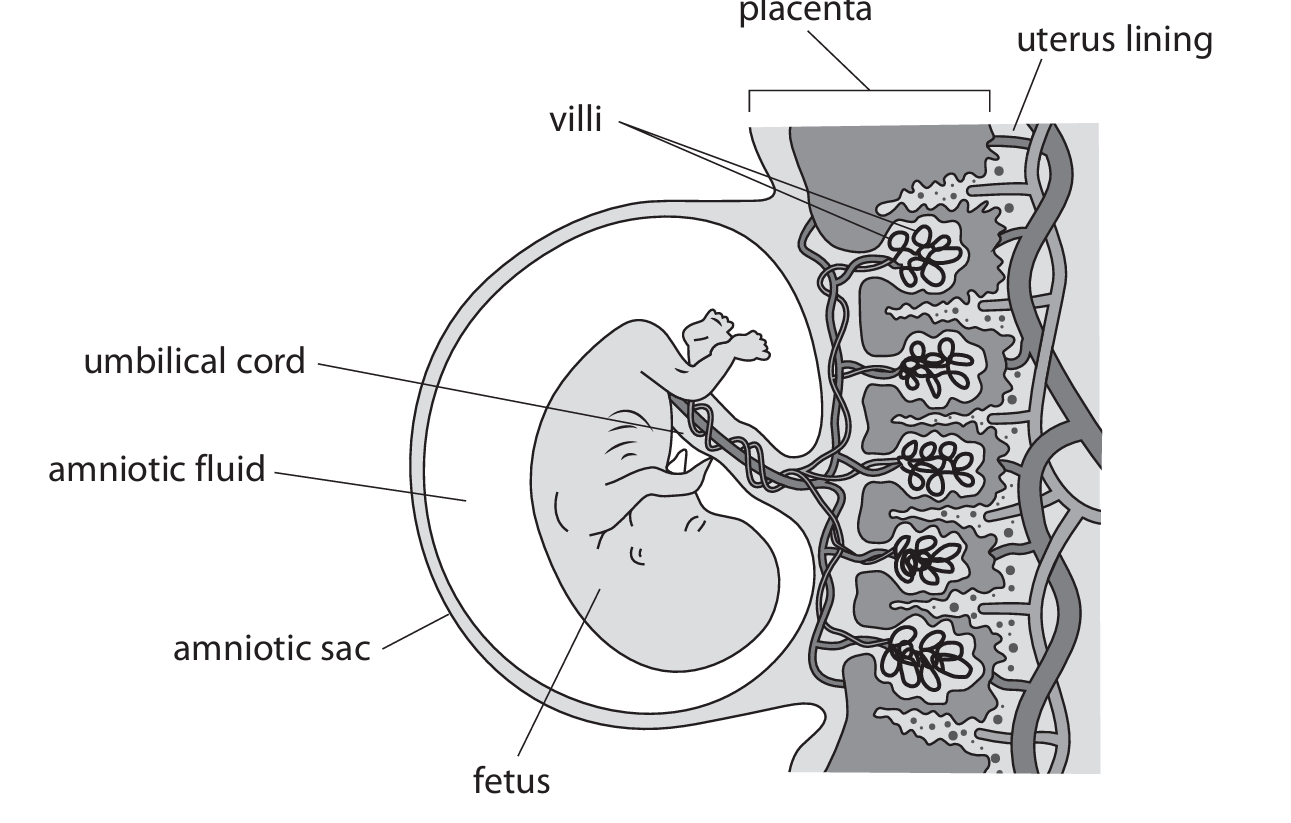
(c)
Explanation: The placenta is a highly specialised organ that facilitates efficient exchange through several structural adaptations:
- Large Surface Area: The placenta contains numerous finger-like projections called villi. This vastly increases the surface area available for the diffusion of substances like oxygen, nutrients (glucose, amino acids), and waste (carbon dioxide, urea) between the maternal and fetal bloodstreams.
- Thin Membrane / Short Diffusion Pathway: The walls of the fetal capillaries within the villi are extremely thin. Furthermore, these capillaries are in very close proximity to the maternal blood spaces. This minimizes the distance substances must diffuse across, making the process rapid and efficient.
- Maintained Concentration Gradient: The fetal blood and maternal blood flow in close proximity but do not mix directly. The constant flow of fetal blood removes absorbed oxygen and nutrients, keeping their concentration low. Conversely, the constant flow of maternal blood brings a fresh supply of oxygen and nutrients, keeping their concentration high. This counter-current flow system helps maintain steep concentration gradients for diffusion across the entire length of the placenta.
These three features – large surface area, short diffusion distance, and maintained concentration gradient – are the fundamental principles of an efficient exchange surface, all of which are exemplified by the structure of the placenta.
▶️ Answer/Explanation
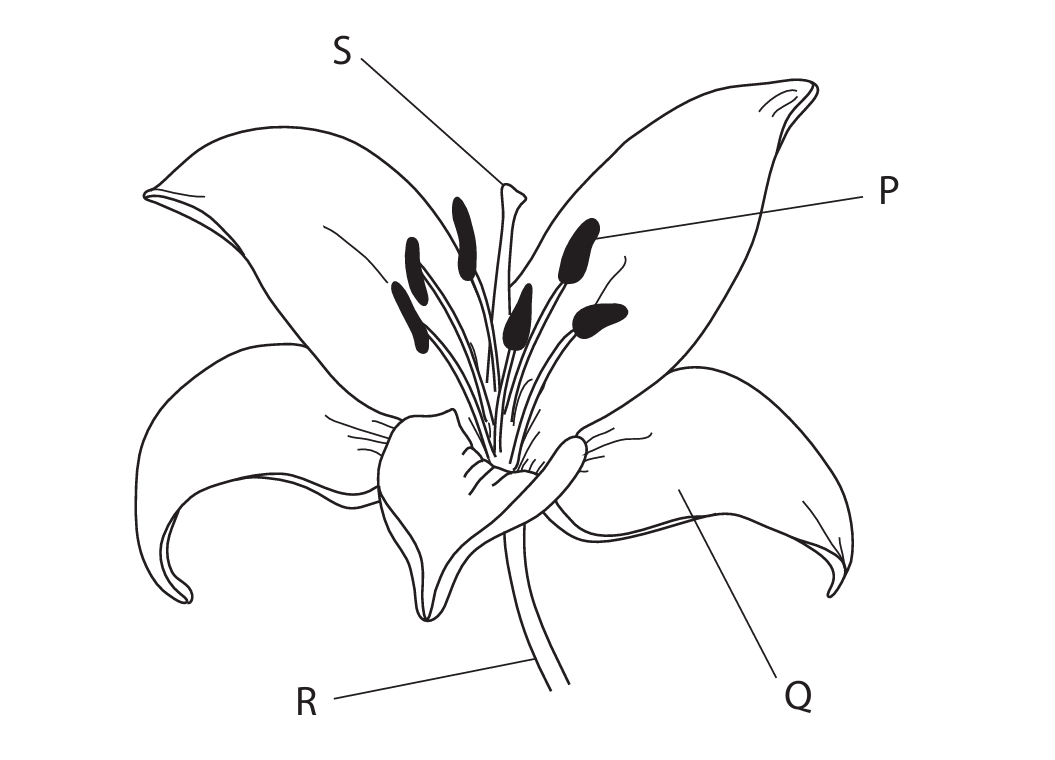
(a)(i) A anther
Explanation: Structure P is the anther, which is the part of the stamen that produces and releases pollen grains. It is typically located at the top of the filament in a flower.
(a)(ii) B petal
Explanation: Structure Q is a petal. Petals are often brightly colored and scented in insect-pollinated flowers like lilies to attract pollinators such as bees and butterflies.
(a)(iii) D S
Explanation: Pollen grains germinate on the stigma, which is structure S. The stigma is the receptive tip of the carpel that receives pollen during pollination and provides a site for pollen germination and tube growth.
(b) In wind-pollinated flowers, structures P, Q, and S differ significantly from insect-pollinated flowers:
- P (anthers): In wind-pollinated flowers, anthers are exposed and hang outside the flower to allow wind to easily disperse pollen grains.
- Q (petals): Petals are typically smaller, less colorful (often green or dull), and may be absent altogether since they don’t need to attract insects.
- S (stigma): The stigma is feathery, exposed, and often larger to effectively catch pollen grains carried by the wind.
(c)(i) One natural method of asexual reproduction in plants is through runners (stolons).
Explanation: Runners are horizontal stems that grow above ground and develop new plantlets at their nodes. These plantlets can take root and grow into independent plants genetically identical to the parent.
(c)(ii) One artificial method is cuttings.
Explanation: Plant growers take cuttings from a parent plant (stem, leaf, or root) and place them in conditions that encourage rooting, resulting in new plants that are clones of the original.
(c)(iii) A plant grower might choose asexual reproduction because:
- It produces genetically identical offspring (clones), ensuring desirable characteristics like flavor, color, or disease resistance are maintained.
- It is often faster than growing plants from seeds, allowing for quicker propagation and harvest.
Explanation: Sexual reproduction introduces genetic variation through meiosis and fertilization, which might result in offspring without the desired traits. Asexual reproduction guarantees consistency and predictability in crop quality, which is commercially advantageous.
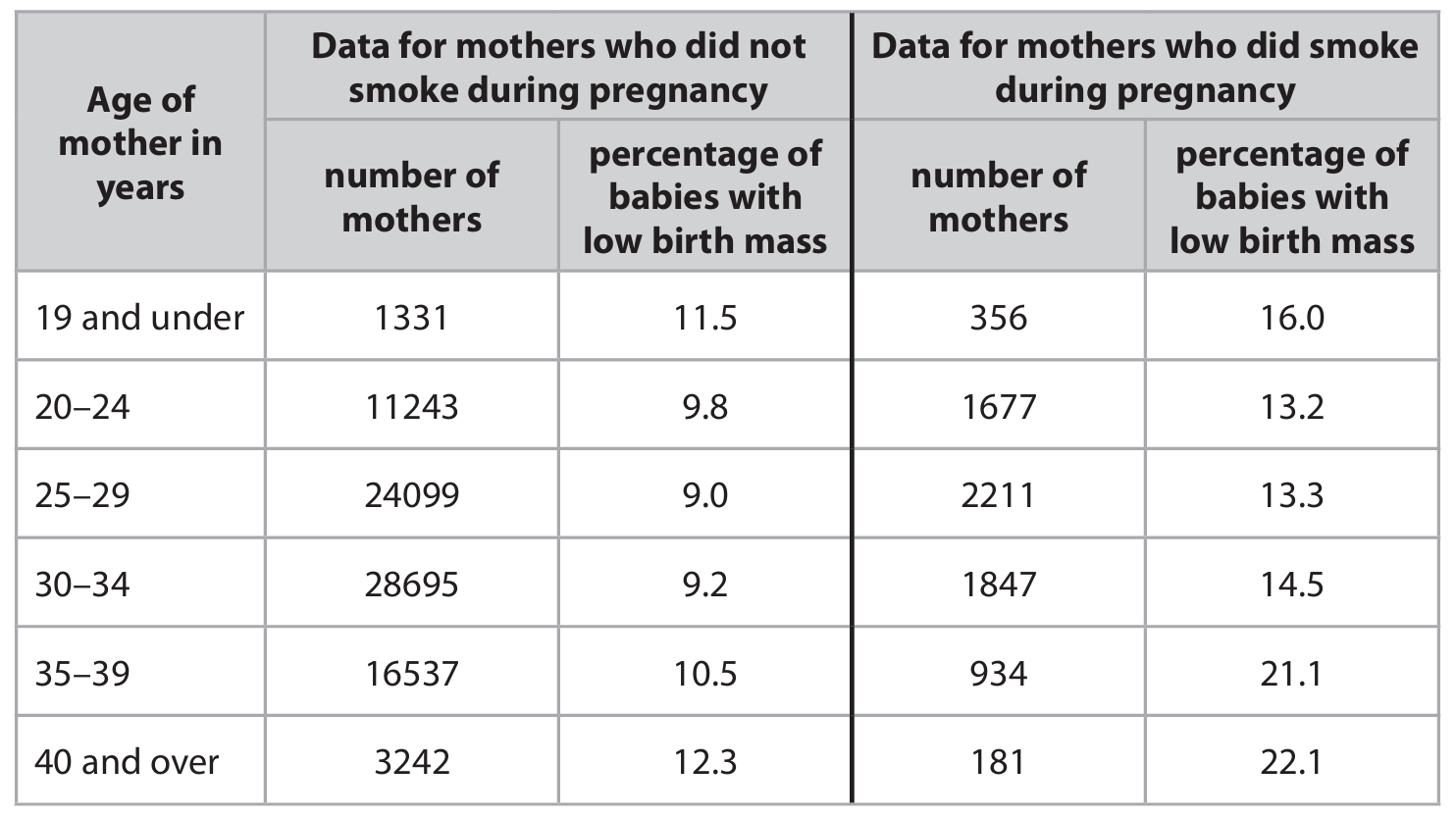
▶️ Answer/Explanation
(a)(i) 21.1%
Explanation: To calculate the percentage of mothers aged 19 and under who smoked during pregnancy, we need to find the proportion of smokers in that age group. The number of smokers is 356, and the total number of mothers (smokers + non-smokers) is 1331 + 356 = 1687. The percentage is calculated as (356 ÷ 1687) × 100 = 21.1% (rounded to one decimal place).
(a)(ii) 12:1
Explanation: To determine the ratio of non-smokers to smokers, we first need to calculate the total number of non-smokers and smokers across all age groups. Total non-smokers = 1331 + 11243 + 24099 + 28695 + 16537 + 3242 = 85147. Total smokers = 356 + 1677 + 2211 + 1847 + 934 + 181 = 7206. The ratio of non-smokers to smokers is 85147:7206. To express this as n:1, we divide both sides by 7206: 85147 ÷ 7206 ≈ 11.82, which rounds to the nearest whole number as 12. So the ratio is 12:1.
(b)
Explanation: While the data shows a correlation between smoking and low birth mass, it would be premature to conclude that smoking is the main factor based solely on this data. Here’s a balanced analysis:
Evidence supporting the student’s conclusion:
- At every age group, the percentage of babies with low birth mass is higher for mothers who smoked compared to those who didn’t. For example, in the 35-39 age group, smokers had 21.1% low birth mass babies compared to 10.5% for non-smokers.
- The study involves a large sample size (over 92,000 mothers total), which adds credibility to the findings.
- Biologically, smoking reduces oxygen supply to the fetus due to carbon monoxide binding to hemoglobin more strongly than oxygen. This can impair fetal development and lead to lower birth weight.
Evidence challenging the student’s conclusion:
- The data shows that age is also a significant factor. For non-smokers, the percentage of low birth mass babies is higher at both extremes of age (11.5% for ≤19 and 12.3% for ≥40) compared to the middle age groups (9.0-10.5%).
- The effect of smoking appears to be more pronounced in older mothers. For mothers ≥40, smokers have 22.1% low birth mass compared to 12.3% for non-smokers – a difference of 9.8 percentage points, while for mothers 25-29, the difference is only 4.3 percentage points (13.3% vs 9.0%).
- The study doesn’t account for other potential factors that could influence birth mass, such as:
- Maternal nutrition and diet
- Maternal weight and overall health
- Alcohol consumption
- Quality of prenatal care
- Genetic factors
- Number of years the mother has been smoking
- The data is correlational, not experimental, so we cannot establish causation definitively.
In conclusion, while smoking appears to be a significant factor associated with low birth mass, the data suggests that it is not necessarily the main factor, as maternal age and other unmeasured variables also play important roles. A more comprehensive study controlling for these other factors would be needed to determine the primary cause of low birth mass.

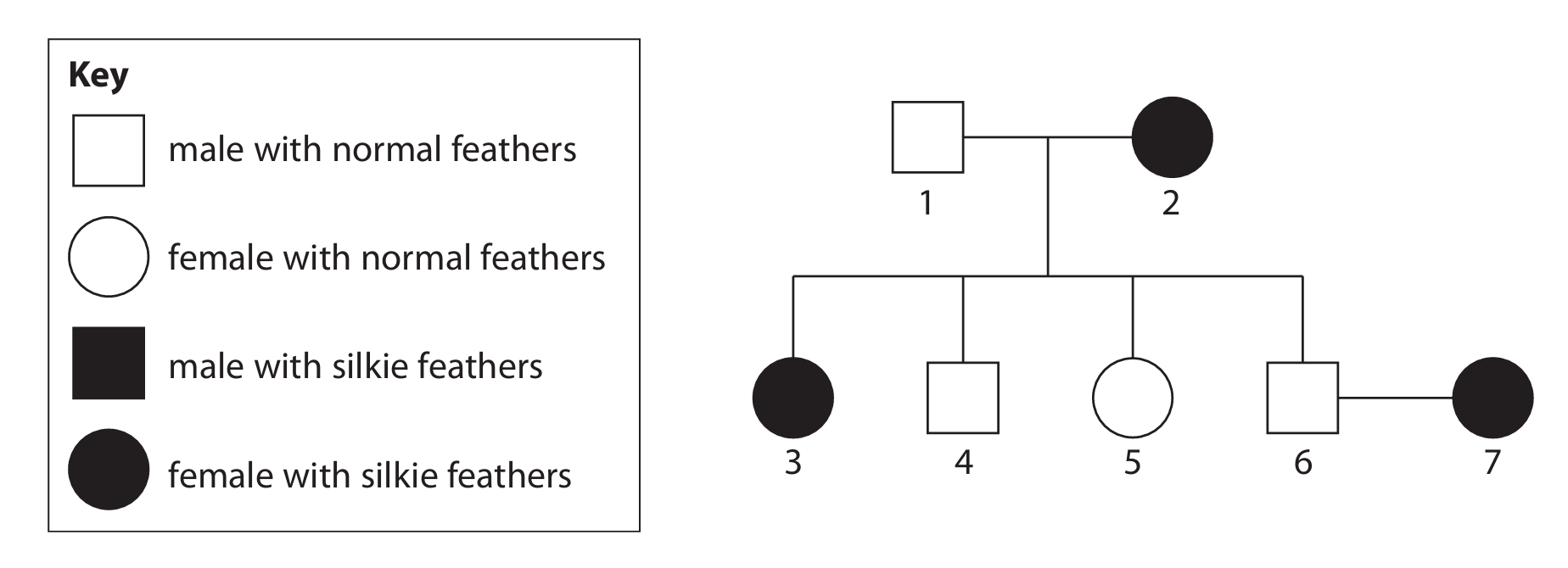
▶️ Answer/Explanation
(a)(i) A gene is a section of DNA that codes for a specific protein or polypeptide.
Explanation: Genes are the basic units of heredity. They are located on chromosomes and contain the instructions needed to build and maintain an organism’s cells and pass genetic traits to offspring. Each gene provides the code for a specific protein, which in turn determines a particular characteristic.
(a)(ii) FF and Ff.
Explanation: Since the allele for normal feathers (F) is dominant, a chicken with normal feathers can have two possible genotypes. It can be homozygous dominant (FF) or heterozygous (Ff). In both cases, the dominant F allele will mask the effect of the recessive f allele, resulting in the normal feather phenotype.
(b)(i) C (4)
Explanation: To be heterozygous means to have two different alleles for a gene (Ff). Looking at the pedigree:
- Individuals with silkie feathers must be homozygous recessive (ff). So individuals 2, 3, and 7 are ff and therefore not heterozygous.
- Individuals with normal feathers can be FF or Ff. To determine which are heterozygous, we look at their offspring. If two normal-feathered parents produce a silkie-feathered offspring (ff), both parents must be carriers of the recessive allele, meaning they are heterozygous (Ff).
- Individuals 1 and 4 are normal and produced silkie offspring (individual 3), so they must be Ff.
- Individual 5 is normal and produced a silkie offspring (individual 7), so it must be Ff.
- Individual 6 is normal and its mate (individual 7) is silkie (ff). All their offspring are normal, which means individual 6 must be homozygous dominant (FF) to always pass on a dominant F allele. Wait, let’s check the question for part (b)(ii): It asks for the probability of silkie offspring from individuals 6 and 7. If individual 6 were FF, the probability would be 0%. The mark scheme says the parental genotypes are Ff and ff, so individual 6 must be Ff. Therefore, the heterozygous individuals are 1, 4, 5, and 6. That makes 4 heterozygous chickens.
(b)(ii)
Genetic Diagram:
Parental Phenotypes: Normal Feathers x Silkie Feathers
Parental Genotypes: Ff x ff
Gametes: F, f and f, f
| F | f | |
| f | Ff | ff |
| f | Ff | ff |
Offspring Genotypes: 50% Ff, 50% ff
Offspring Phenotypes: 50% Normal feathers, 50% Silkie feathers
Probability of silkie feathers = ½ or 50%.
Explanation: The cross is between a heterozygous normal-feathered chicken (Ff) and a homozygous recessive silkie-feathered chicken (ff). The Punnett square shows that half of the possible offspring genotypes are Ff (normal feathers) and half are ff (silkie feathers). Therefore, the probability of an offspring having silkie feathers is 1 out of 2, or 50%.
(b)(iii) Feather type is controlled by a single gene (monogenic inheritance), resulting in discrete categories (normal or silkie). Height, however, is a continuous variation influenced by multiple genes (polygenic inheritance) and can also be affected by environmental factors like nutrition.
Explanation: Feather type is an example of discontinuous variation. It’s controlled by one gene with two clear-cut alleles, leading to distinct phenotypes with no intermediates. Height, on the other hand, is an example of continuous variation. It is a quantitative trait influenced by the combined effects of many different genes (polygenic), where each gene adds a small amount to the phenotype. Additionally, environmental factors such as diet, overall health, and access to food during development can significantly impact a chicken’s final height. The interaction of numerous genes and environmental influences creates a wide spectrum of possible heights, unlike the simple either/or outcome for feather type.
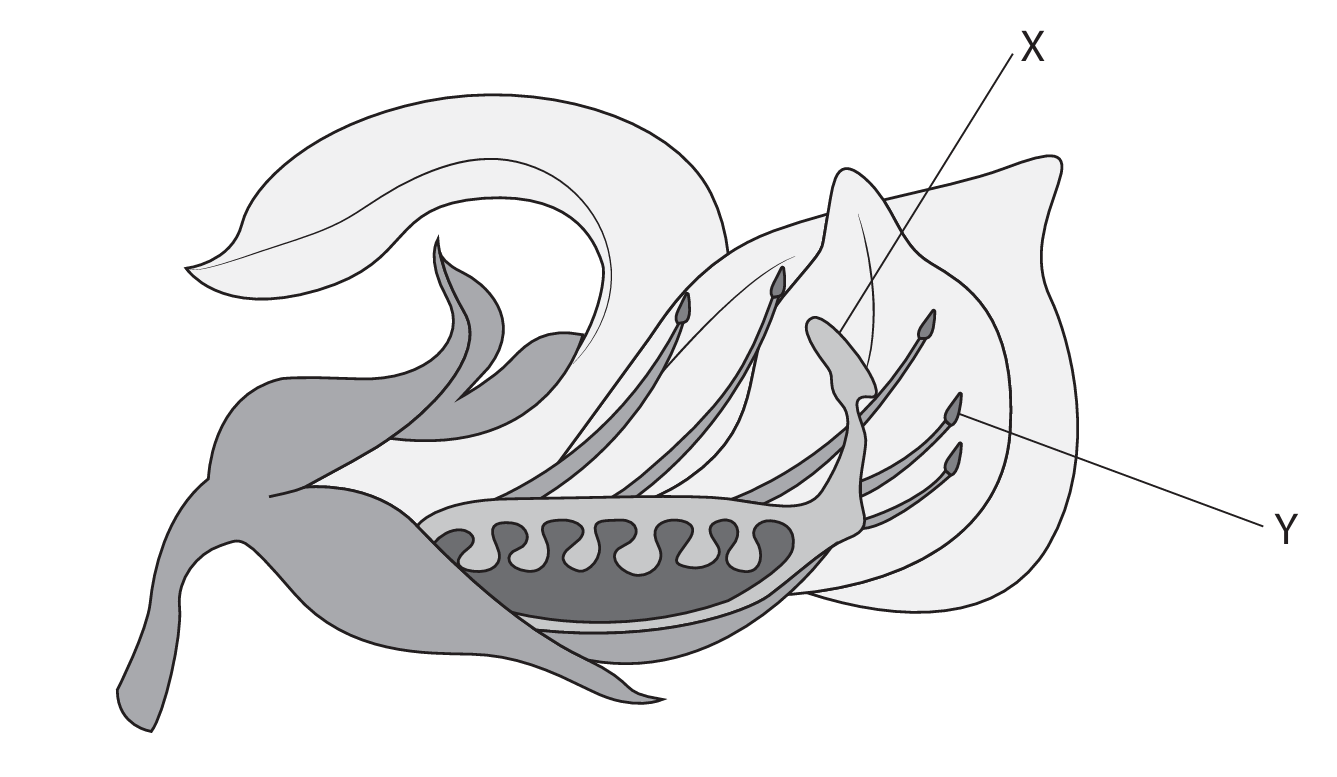
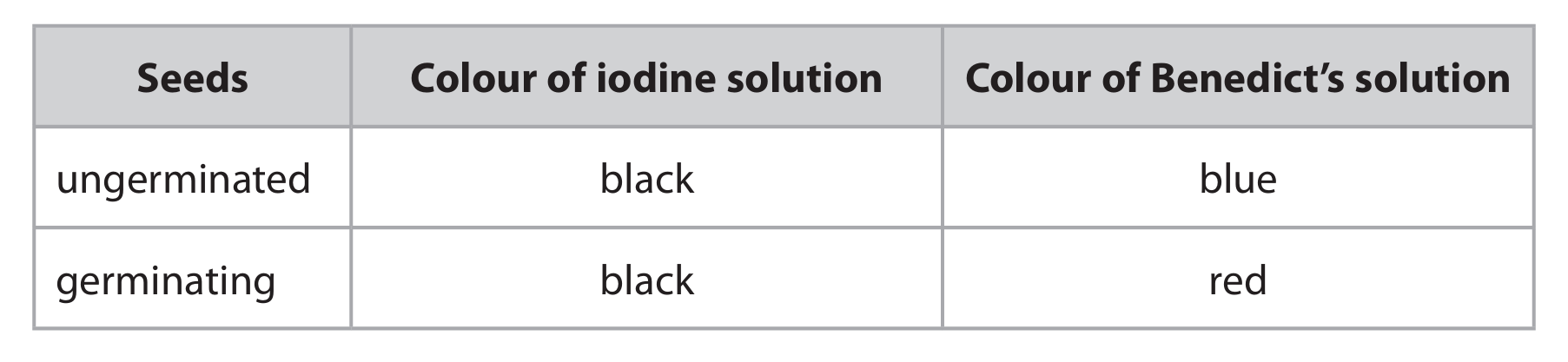
▶️ Answer/Explanation
(a)(i)
X: stigma
Y: anther
Explanation: In a typical pea flower, structure X is the stigma, which is the receptive tip of the carpel (female part) where pollen lands during pollination. Structure Y is the anther, which is the part of the stamen (male part) that produces and releases pollen grains.
(a)(ii)
Explanation: The flower is adapted for insect pollination. Two structures that indicate this are the large, brightly coloured petals and the positioning of the anthers and stigma within the flower. The large petals serve to attract insect pollinators like bees by being visually conspicuous. The anthers (structure Y) are positioned inside the flower, and the stigma (structure X) is also located within the flower and is not feathery. This internal positioning means that when an insect enters the flower to reach nectar, it will brush against both the anthers, picking up pollen, and the stigma, depositing pollen from previous flowers, thereby facilitating cross-pollination.
(b)(i)
Ungerminated seeds: starch
Germinating seeds: starch and glucose/sugar/maltose
Explanation: The scientist identified starch in both seed types because the iodine test turned black, which is a positive result for starch. In the ungerminated seeds, Benedict’s test remained blue, indicating no reducing sugars were present. However, in the germinating seeds, Benedict’s test turned red, which is a positive result for reducing sugars like glucose, maltose, or other simple sugars.
(b)(ii)
Explanation: The difference arises because germination triggers metabolic activity. In ungerminated seeds, starch is the main storage carbohydrate; it’s insoluble and doesn’t affect the seed’s water potential, making it ideal for long-term storage. During germination, the seed takes up water, activating enzymes like amylase. These enzymes catalyze the breakdown (hydrolysis) of starch into smaller, soluble molecules like maltose and glucose. These sugars are then used as a respiratory substrate to produce energy (ATP) required for the growth of the embryonic plant until it can photosynthesize. Therefore, germinating seeds contain both the remaining starch and the newly produced sugars.
(b)(iii)
Explanation: The jars are left unsealed to allow for gas exchange. Germination is an active metabolic process that requires aerobic respiration to release energy for growth. Aerobic respiration consumes oxygen and produces carbon dioxide. An unsealed jar allows oxygen from the atmosphere to diffuse into the jar, ensuring the seeds have a constant supply for respiration. Simultaneously, it allows the waste product, carbon dioxide, to diffuse out, preventing its buildup, which could potentially be harmful or alter the pH. Sealing the jars would create anaerobic conditions, likely halting germination or forcing the seeds into less efficient anaerobic respiration, which would invalidate the investigation into the normal carbohydrate changes during germination.

▶️ Answer/Explanation
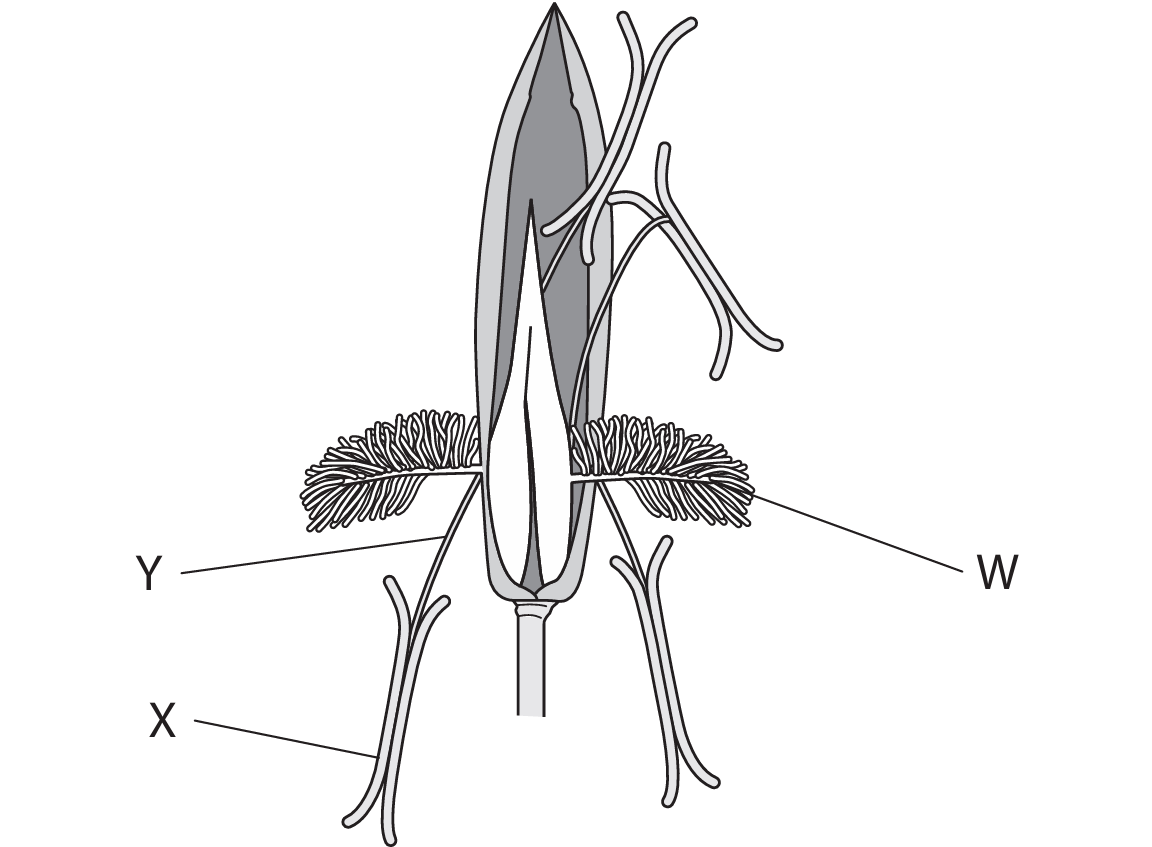
(a)(i)
Answer:
- W or stigma / feathery / large surface area / W stigma outside flower / exposed (to catch pollen)
- X or anther outside flower / exposed (to disperse pollen)
- Y or filament long / hinged / not rigid / can move (to disperse pollen)
Explanation: Wind-pollinated flowers have specific adaptations to ensure successful pollination without relying on insects. Structure W is the stigma, which is feathery and has a large surface area to effectively catch pollen grains floating in the air. It is positioned outside the flower to maximize exposure to wind-borne pollen. Structure X is the anther, which is also exposed outside the flower to allow pollen to be easily released and carried away by the wind. Structure Y is the filament, which is long and often hinged or flexible, allowing the anther to move freely in the wind, thereby enhancing pollen dispersal.
(a)(ii)
Answer: Two differences could be:
- Wind-pollinated flowers have smaller / dull / green flowers / petals / no petals
- Wind-pollinated flowers have no nectar / nectary
- Wind-pollinated flowers have no scent
- Wind-pollinated flowers have smaller / lighter / smooth pollen grains / more pollen produced
Explanation: Wind-pollinated flowers and insect-pollinated flowers have evolved different strategies. Wind-pollinated flowers typically have smaller, duller, often green petals, or may even lack petals altogether since they don’t need to attract insects visually. They do not produce nectar because there are no insects to reward, and they lack scent as aroma is unnecessary for attracting pollinators. Their pollen grains are smaller, lighter, and smooth to be easily carried by wind currents, and they produce pollen in much larger quantities to increase the chance of some grains reaching another flower.
(b)
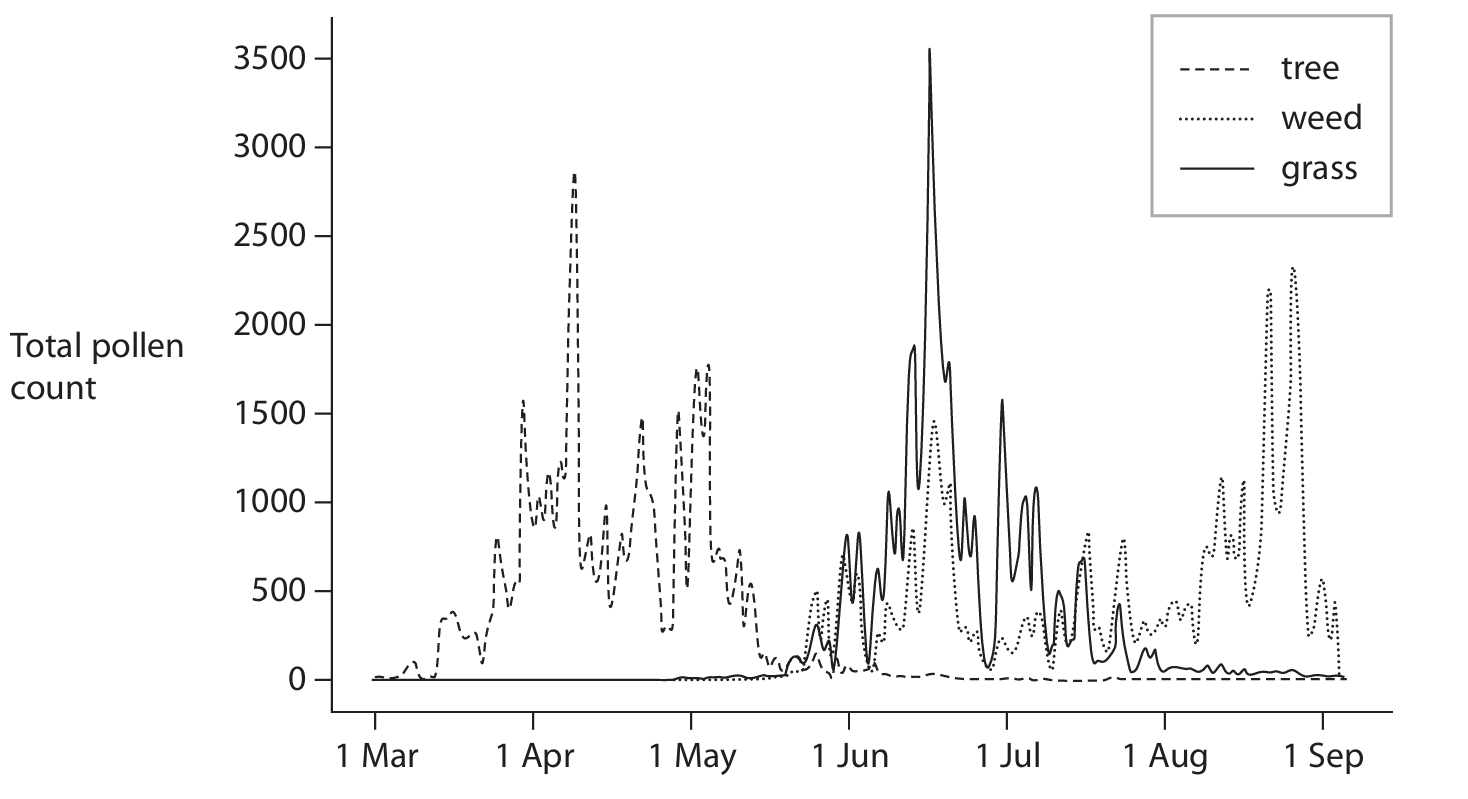
Answer: The discussion should include references such as:
- Link between pollen number and symptoms
- Person A allergic to tree pollen (only)
- Person B allergic to (mainly) grass pollen
- Person B some / mild allergy to tree and weed
- Person C allergic to all pollen / tree and grass and weed
- Person D no pollen allergy
- Person E allergic to (mainly) grass and weed
- Person E some / mild allergy to tree
- No species level data
- Only one year of data
Explanation: By correlating the pollen count graph with the symptom diaries, we can identify likely pollen allergies for each person. Person A experiences severe symptoms in April and May, which coincides with high tree pollen counts, suggesting a specific allergy to tree pollen. Person B has severe symptoms in June and July when grass pollen is highest, indicating a primary allergy to grass pollen, with mild symptoms in other months possibly due to lower levels of tree and weed pollen. Person C suffers from April to September, covering the peaks of all three pollen types, suggesting allergies to tree, grass, and weed pollen. Person D reports no symptoms, indicating no pollen allergies. Person E has severe symptoms from June to September, aligning with high grass and weed pollen, and mild symptoms earlier in the year possibly due to tree pollen. It’s important to note that this data is from only one year and doesn’t identify specific plant species, so conclusions should be considered preliminary.
(c)
Answer: An explanation that includes:
- Response to antigens / pathogen / allergen / bacteria / virus
- By white blood cells / phagocytes / lymphocytes
- Antibodies produced / phagocytosis / engulf
Explanation: An immune response is the body’s sophisticated defense mechanism against foreign substances called antigens, which can include pathogens like bacteria and viruses, or allergens like pollen. This process is primarily carried out by specialized white blood cells. Phagocytes are cells that engulf and destroy foreign particles through a process called phagocytosis. Lymphocytes are another type of white blood cell that produces antibodies – specific proteins that recognize and bind to particular antigens, marking them for destruction. In the case of hay fever, the immune system mistakenly identifies harmless pollen as a threat, triggering this response and causing the uncomfortable symptoms associated with allergies.

▶️ Answer/Explanation
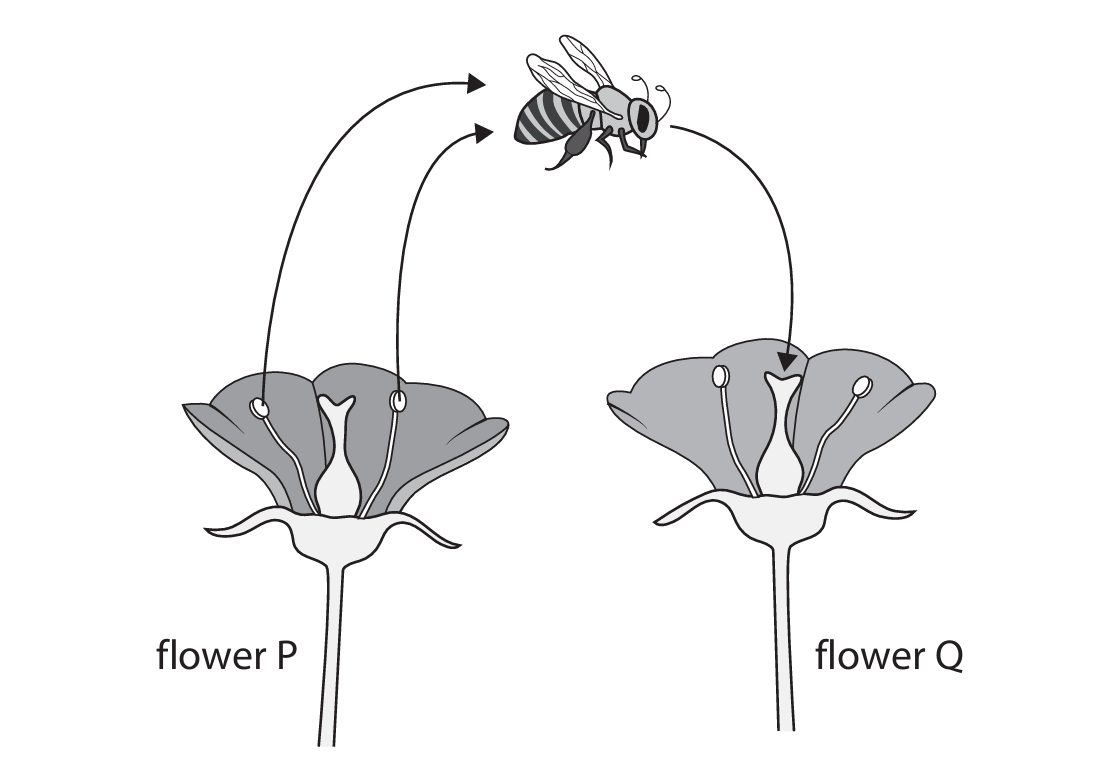
(a) A anther
Explanation: The anther is the male reproductive part of the flower where pollen grains are produced and stored. The ovary contains ovules, petals attract pollinators, and sepals protect the flower bud, but none of these structures contain pollen grains.
(b)(i)
Explanation: The style tissue provides essential nutrients and support for the growing pollen tube. It supplies glucose or sucrose through its tissues, which the pollen tube uses for respiration to produce ATP and energy needed for growth. Additionally, the style may provide amino acids for protein synthesis and water to maintain turgor pressure and enable cell elongation as the tube grows toward the ovary.
(b)(ii) 0.055 mm per minute
Explanation: To calculate the fastest rate of growth, we need to find the steepest slope on the graph. Looking at the time intervals:
From 0-60 minutes: (1.4 – 0)/60 = 0.023 mm/min
From 60-120 minutes: (4.7 – 1.4)/60 = 3.3/60 = 0.055 mm/min
From 120-180 minutes: (5.8 – 4.7)/60 = 1.1/60 = 0.018 mm/min
The fastest growth occurs between 60-120 minutes with a rate of 0.055 mm per minute.
(c)
Explanation: To design a proper investigation:
First, I would select two groups of apple trees of the same variety, age, and size to ensure fair comparison. One group would be treated with pesticide (experimental group) while the other would not receive any pesticide treatment (control group).
I would use multiple trees in each group (at least 5-10) to ensure reliable results and repeat the experiment over multiple growing seasons. All trees should be grown in the same soil type with identical fertilization, watering schedules, and exposure to sunlight and temperature conditions.
The independent variable would be the application of pesticide, while the dependent variables would be the yield measurements – specifically the number of apples produced and the total mass of apples harvested from each tree.
The investigation should run for the entire flowering and fruiting period. I would carefully count and weigh the apples from each tree at harvest time and compare the average yield between the pesticide-treated and untreated groups using statistical analysis to determine if there’s a significant difference.
This experimental design controls for other variables that might affect yield while specifically testing the effect of pesticides on apple production through insect pollination.
▶️ Answer/Explanation
(a) B 1
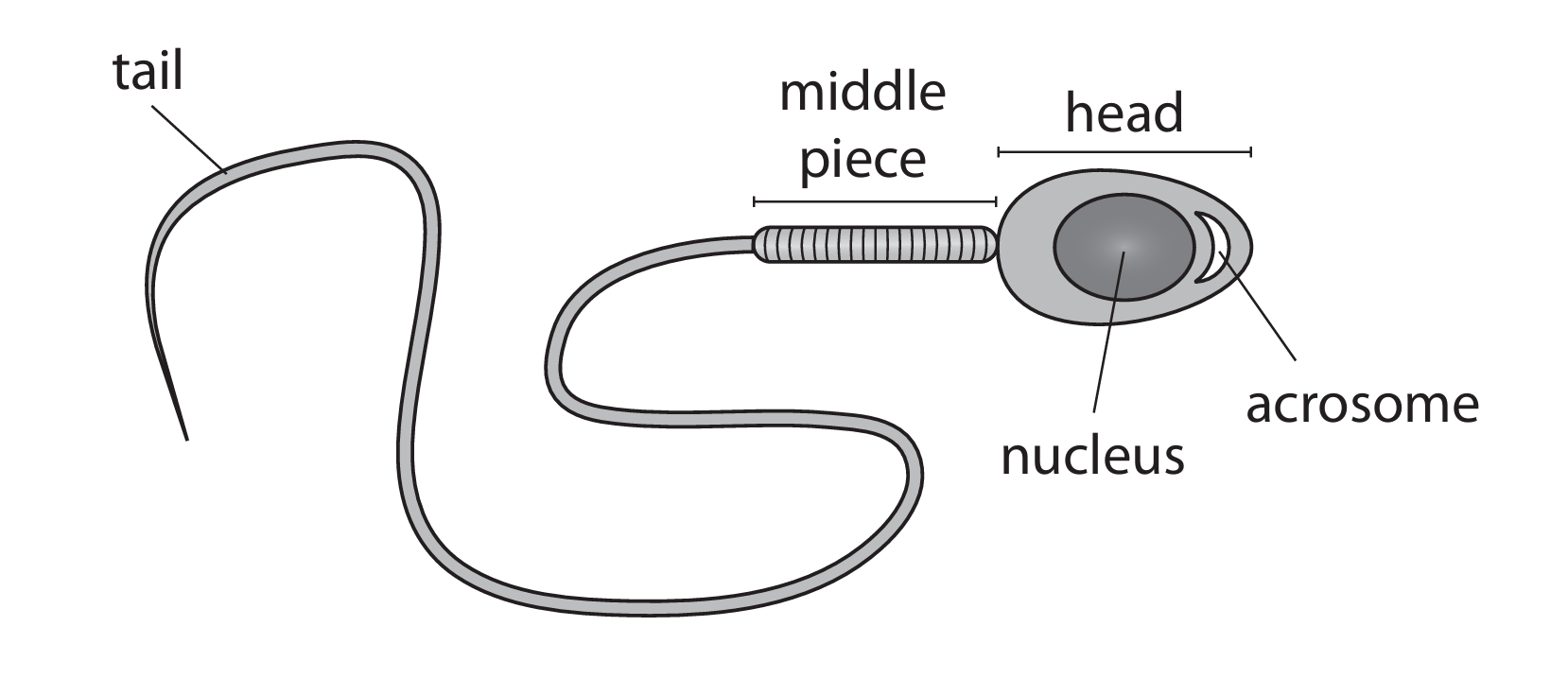
Explanation: Human sperm cells are gametes produced by meiosis. They contain half the number of chromosomes (23) compared to body cells. Sex chromosomes in sperm can be either X or Y. The maximum number of X chromosomes a sperm can carry is therefore 1. If a sperm carries an X chromosome, the resulting offspring will be female (XX); if it carries a Y chromosome, the offspring will be male (XY). A sperm cannot have 0, 2, or 23 X chromosomes.
(b) The mitochondria in the middle piece provide the energy (in the form of ATP) required for the movement of the tail, enabling the sperm to swim towards the egg.
Explanation: The tail of the sperm is a flagellum whose movement is essential for propulsion through the female reproductive tract. This movement is an active process that requires a significant amount of energy. Mitochondria are the organelles responsible for aerobic respiration, where they break down energy-rich molecules to produce ATP (adenosine triphosphate). The ATP generated then fuels the motor proteins in the tail, allowing it to beat and propel the sperm forward in its journey to reach and fertilize the egg.
(c) The acrosome digests or breaks down the outer layers of the egg cell (the zona pellucida), allowing the sperm nucleus to penetrate and fuse with the egg nucleus for fertilization.
Explanation: The egg is surrounded by protective layers, including a thick glycoprotein layer called the zona pellucida. The acrosome, located at the tip of the sperm head, is a specialized cap-like structure filled with powerful digestive enzymes (e.g., hyaluronidase and acrosin). When the sperm reaches the egg, the acrosome releases these enzymes in a process known as the acrosome reaction. These enzymes chemically break down and dissolve a path through the zona pellucida, enabling the sperm to reach and fuse with the egg’s cell membrane, leading to fertilization.
(d) The sperm enters through the vagina, travels through the cervix into the uterus, and then moves into the oviduct (Fallopian tube) where fertilization occurs.
Explanation: The journey of the sperm is a long and challenging one. It begins when sperm are deposited in the vagina during sexual intercourse. From there, they must swim through the cervix (the opening to the uterus) and into the womb or uterus. The final and most specific part of the journey involves entering the correct oviduct (Fallopian tube). Fertilization typically takes place in the upper third of the oviduct. Only a tiny fraction of the millions of sperm released actually complete this entire route to reach the egg.
▶️ Answer/Explanation
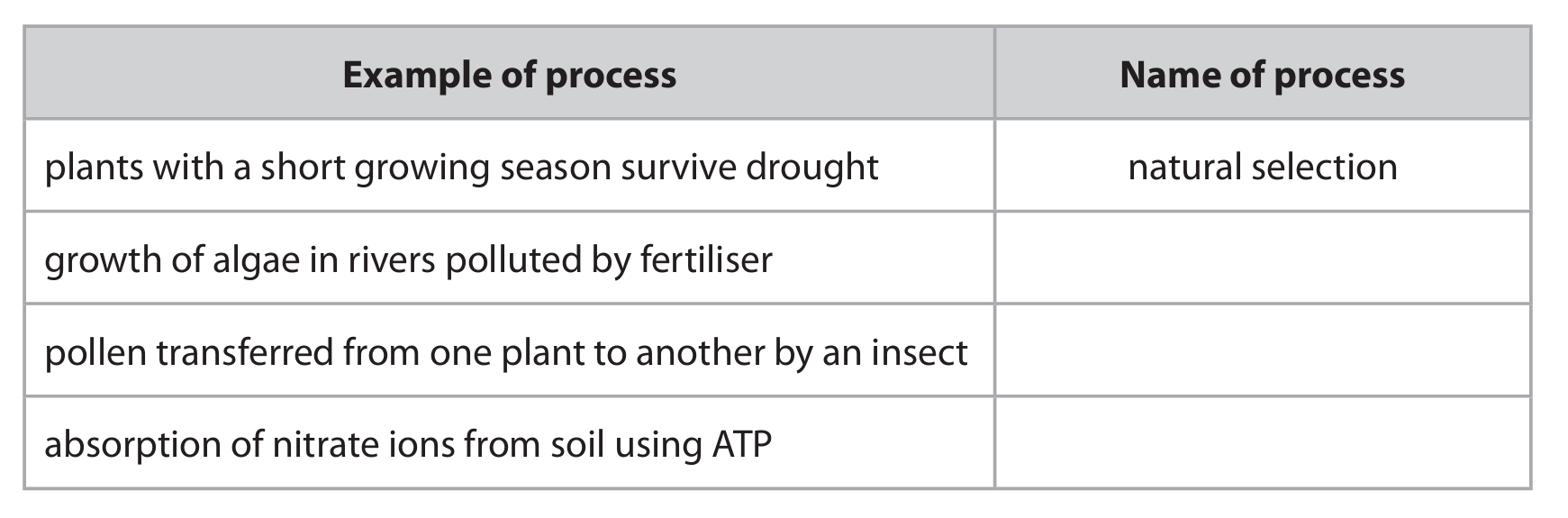
(a)

Explanation:
Eutrophication is the process where water bodies become enriched with nutrients (like fertilisers), leading to excessive growth of algae and other aquatic plants. This depletes oxygen in the water, harming other aquatic life.
Insect pollination occurs when insects transfer pollen from the anther of one flower to the stigma of another, facilitating fertilization in plants.
Active transport is the movement of ions or molecules across a cell membrane from a region of lower concentration to a region of higher concentration, requiring energy in the form of ATP.
(b)(i)
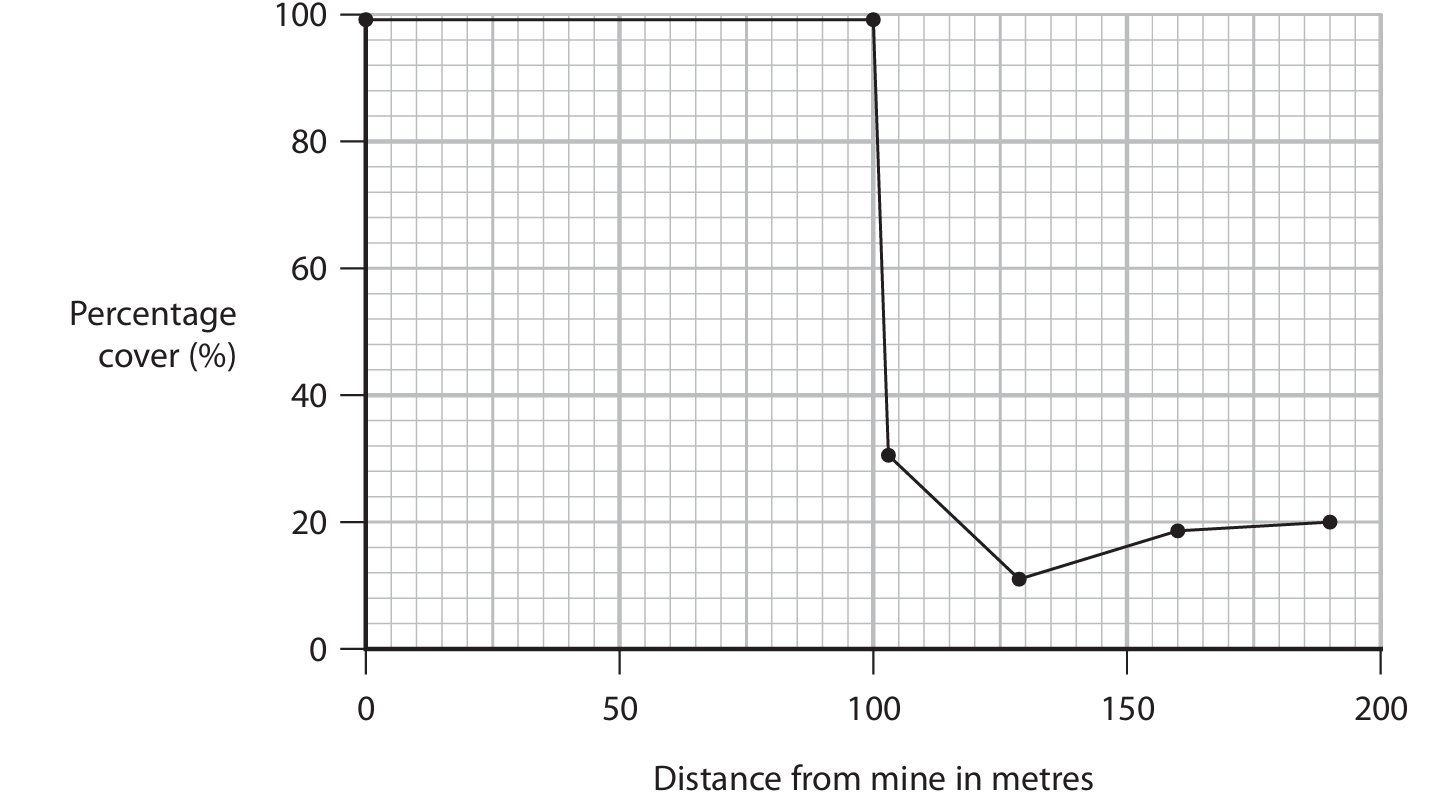
Explanation: Natural selection could explain the pattern seen in the graph between 0-100 meters from the mine through the following mechanism:
Initially, the high zinc concentration near the mine would be toxic to most individual grass plants. However, within the population, there might be genetic variation due to random mutations. A few individual grass plants might possess alleles that make them resistant to zinc toxicity. These resistant individuals would be more likely to survive and reproduce in the zinc-contaminated soil near the mine. They would pass these advantageous resistant alleles to their offspring. Over generations, the proportion of zinc-resistant grass plants in the population near the mine would increase. This results in a population that is better adapted to the high zinc levels, allowing the grass species to have a higher percentage cover closer to the mine (0-100m) than might be initially expected, as seen in the graph. The process involves variation, selection pressure (zinc), survival of the fittest (resistant plants), and inheritance of the resistant trait.
(b)(ii)
Explanation: To compare the population size of the grass species at 50m and 100m from the mine, the scientist could use a systematic sampling method like a belt transect or random quadrat sampling along a line.
First, a measuring tape would be laid out running perpendicular from the mine edge, passing through both the 50m and 100m points. For a belt transect, quadrats (e.g., 1m x 1m squares) would be placed contiguously along the tape between, for example, 45m-55m and 95m-105m to cover each area. Alternatively, for random sampling, multiple random coordinates within a 10m band centered on 50m and another band centered on 100m could be generated, and a quadrat placed at each coordinate.
Within each quadrat, the scientist would estimate the percentage cover of the specific grass species. This is a measure of how much of the ground within the quadrat is occupied by the vertical projection of its leaves and stems. This process would be repeated multiple times (e.g., 10-20 quadrats) at each distance to obtain a representative sample and calculate a mean percentage cover. The mean percentage cover at 50m can then be statistically compared to the mean percentage cover at 100m to determine if there is a significant difference in the population size of the grass species between the two distances.


▶️ Answer/Explanation
(a)(i) The scientists could tell a maize seed had germinated by observing the emergence and growth of the radicle (the first root) or the plumule (the first shoot) from the seed. The seed coat may also split open as these structures begin to grow outwards.
(a)(ii) Two other abiotic variables that need to be controlled are:
- Temperature: Germination rates are highly dependent on temperature. All batches of seeds should be kept at the same, constant temperature throughout the investigation to ensure that any differences in germination are due to the salt concentration and not temperature fluctuations.
- Light: While some seeds require light to germinate and others don’t, consistency is key. The light intensity, duration (photoperiod), and quality should be the same for all seed batches to prevent light from being a confounding variable.
Other acceptable answers include: volume of solution, humidity, oxygen concentration, pH, or carbon dioxide levels.
(b)(i) To plot the line graph:
- The independent variable (salt concentration in mmol) should be plotted on the x-axis.
- The dependent variable (percentage germination) should be plotted on the y-axis.
- The scale should be linear and appropriate for the data range (0-320 mmol for x-axis, 0-100% for y-axis).
- Axes must be clearly labelled with the variable and its units (“Concentration of salt solution (mmol)” and “Percentage germination (%)”).
- Each data point from the table should be accurately plotted.
- Straight lines should be drawn with a ruler to connect each point sequentially.
(b)(ii) Increasing the concentration of the salt solution decreases the percentage germination of maize seeds. This happens because the salt solution creates a lower (more negative) water potential in the soil surrounding the seed compared to the water potential inside the seed. Water moves by osmosis from an area of higher water potential (inside the seed) to an area of lower water potential (the salty soil). As the salt concentration increases, this outward osmotic gradient strengthens, or the inward gradient weakens, resulting in less water being absorbed by the seed. Water is essential for germination as it rehydrates the seed tissues, activates enzymes that break down stored food reserves (like starch), and allows for the growth of the embryo. With insufficient water uptake, these metabolic processes are inhibited, leading to reduced or prevented germination.
(c)(i) Roots and stems respond differently to gravity. Roots are positively gravitropic (or positively geotropic), meaning they grow in the direction of the gravitational pull, downwards into the soil. Stems, on the other hand, are negatively gravitropic, meaning they grow against the direction of gravity, upwards away from the soil.
(c)(ii) Roots and stems also respond differently to light. Roots are negatively phototropic, meaning they grow away from a light source, which helps them remain buried in the soil. Stems are positively phototropic, meaning they grow towards a light source, which enables the leaves to maximize their exposure to sunlight for photosynthesis.
▶️ Answer/Explanation
(a)(i) An explanation that makes reference to three of the following points:
• oxygen
• glucose
• respiration
• energy / ATP
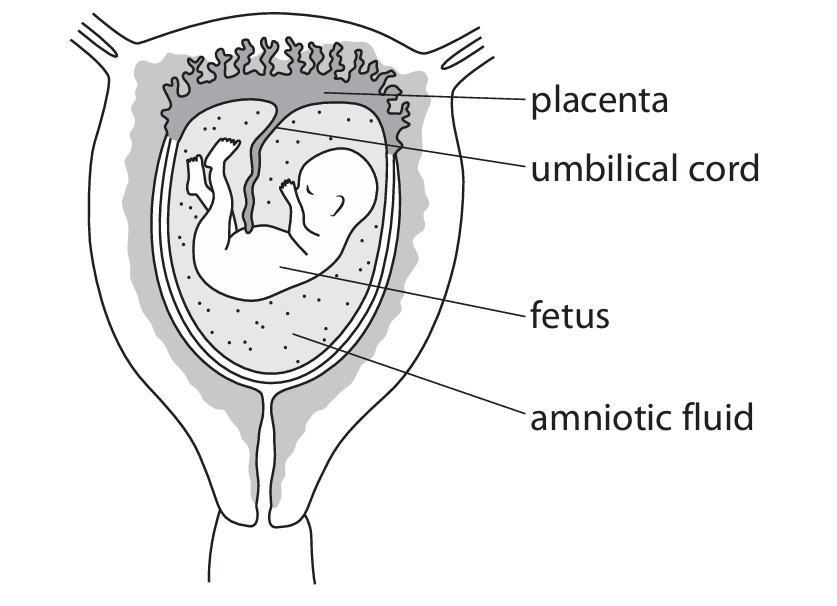
Example answer: The blood contains glucose and oxygen. These are used by the fetus’s cells in respiration to release energy in the form of ATP. This ATP provides the energy required for active transport processes to occur.
(a)(ii) An explanation that makes reference to two of the following points:
• antibodies (from mother)
• (bind to) antigens
• to kill bacteria / pathogen / virus eq
Example answer: Antibodies from the mother’s blood cross the placenta. These antibodies bind to antigens on pathogens, marking them for destruction or neutralizing them, which helps protect the fetus from infection.
(b) An answer that makes reference to two of the following points:
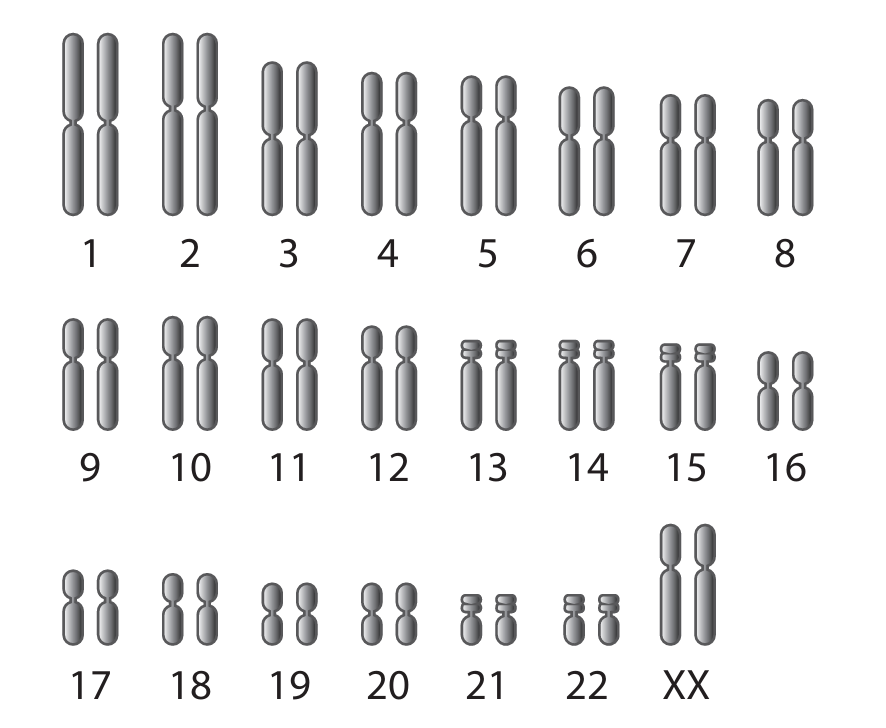
• fetus is female / a girl
• cells contain 46 chromosomes / 23 pairs / has a diploid number / has two sets of chromosomes / normal number of chromosomes / eq
• chromosomes have different lengths / sizes / shapes
Example answer: 1. The fetus is female because the sex chromosomes are XX. 2. The cell has the normal diploid number of 46 chromosomes (23 pairs).
(c)(i) An answer that makes reference to four of the following points:
• calcium for bone / teeth growth / bone / teeth development / prevent rickets
• protein to grow / for enzymes / antibodies / eq
• iron for haemoglobin / red blood cells / prevent anaemia
• vitamin D for bone growth / bone development / calcium absorption / strong bones
• more energy as baby is heavy / mother becomes heavy / more energy for fetal development / to carry baby / eq
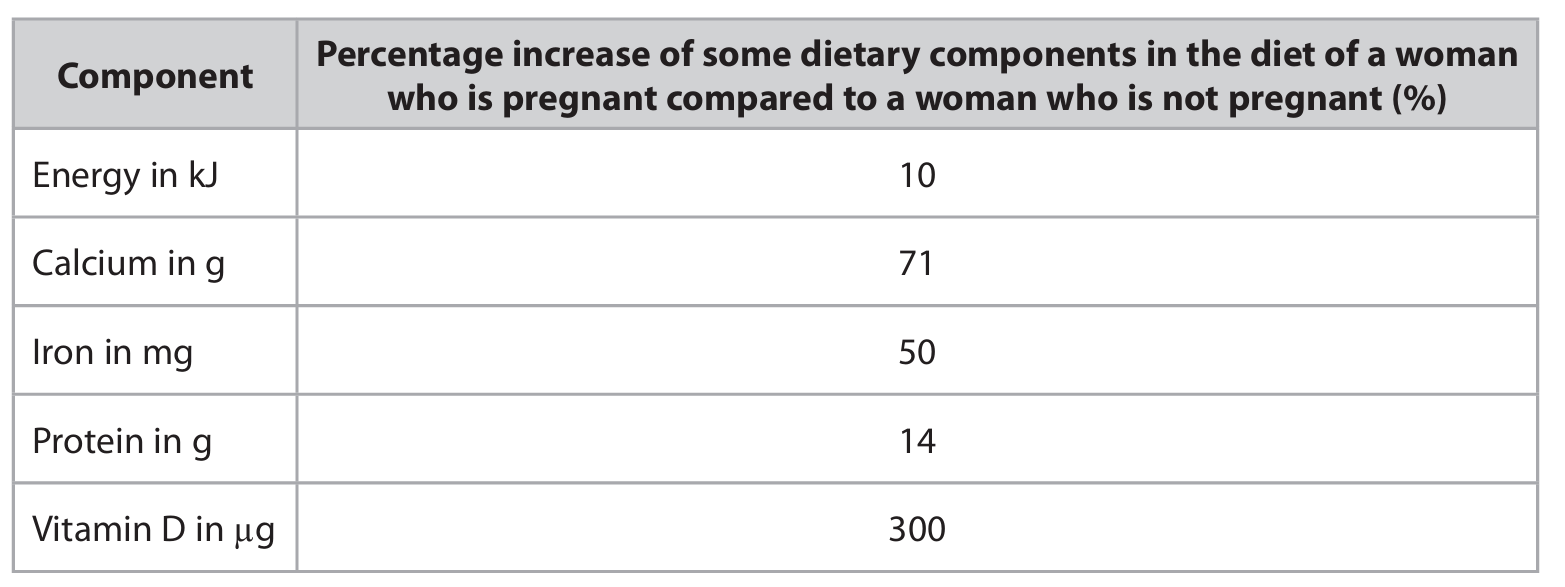
Example answer: Extra calcium and vitamin D are required for the development of the fetus’s bones and teeth. Additional iron is needed to make haemoglobin for the increased blood volume and to prevent anaemia. More protein is required for the growth of fetal tissues and the production of enzymes and antibodies. Increased energy is needed as the mother’s body works harder and carries extra weight.
(c)(ii)
• \(9.0 \text{ mg} = 50\%\) more
• \(100\% = 9.0 \times 2 = 18 \text{ mg}\)
• Total needed \(= 18 + 9 = 27 \text{ mg}\)
Award full marks for correct numerical answer without working.
Final Answer: \(27 \text{ mg}\)


▶️ Answer/Explanation
(a) Nucleus
Explanation: The drawing of the human cheek cell shows a large, prominent central organelle which is the nucleus. The nucleus is the control center of the cell, containing the cell’s genetic material (DNA). It is the most visible organelle in a typical animal cell when viewed under a light microscope.
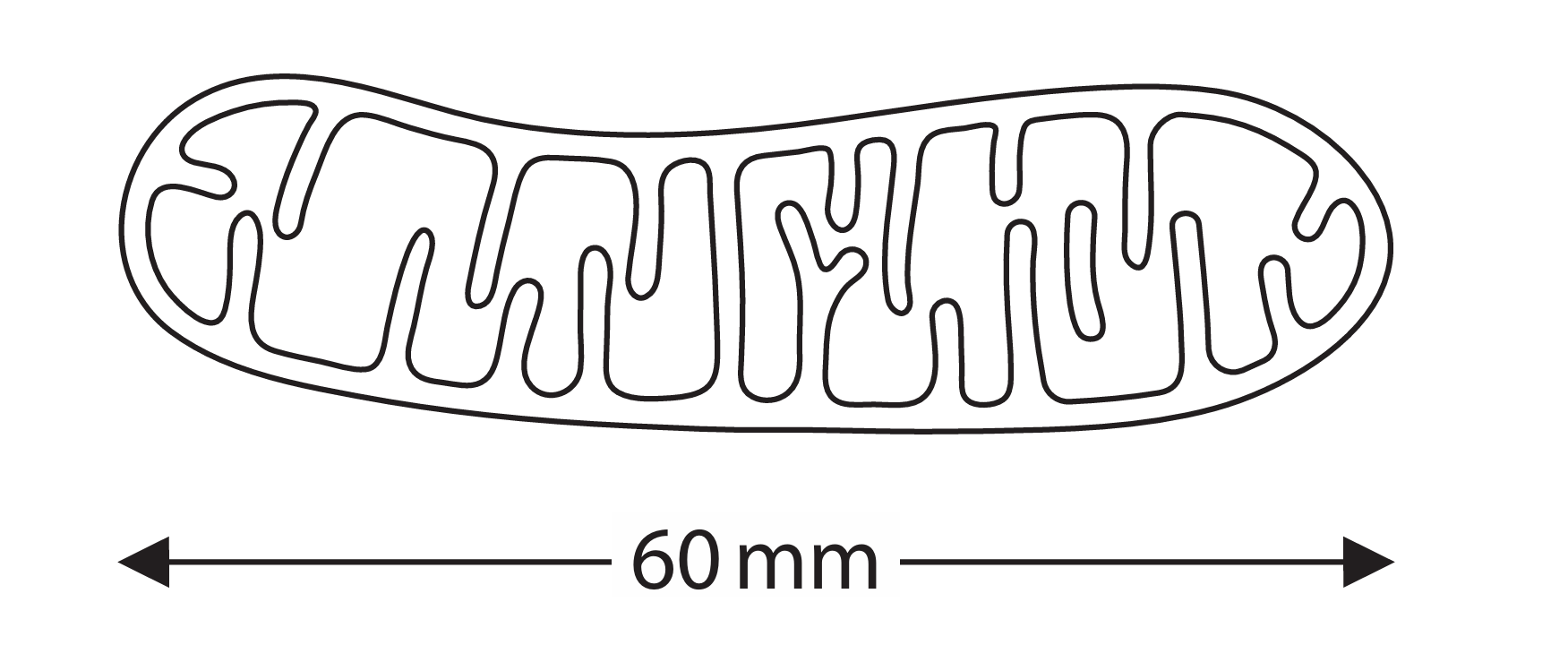
(b) Magnification = ×10 000
Explanation: To calculate the magnification, we use the formula:
\[ \text{Magnification} = \frac{\text{Size of Image}}{\text{Actual Size}} \]
First, ensure both measurements are in the same units. The actual size is 6 µm. Since 1 µm = 0.001 mm, the actual size in mm is \(6 \times 0.001 = 0.006\) mm. The image size is given as 60 mm.
\[ \text{Magnification} = \frac{60 \text{ mm}}{0.006 \text{ mm}} = 10 000 \]
Alternatively, you can convert the image size to µm: 60 mm = 60 000 µm.
\[ \text{Magnification} = \frac{60 000 \ \mu m}{6 \ \mu m} = 10 000 \]
So, the drawing of the mitochondrion has been magnified 10,000 times.
(c)(i) A 0.33
Explanation: To find the mean number of mitochondria per µm³ for the heart muscle cell, we divide the mean number of mitochondria by the mean cell volume:
\[ \frac{5000}{15000} = \frac{1}{3} \approx 0.33 \]
Therefore, there are approximately 0.33 mitochondria per cubic micrometre in a heart muscle cell.
(c)(ii)
Explanation: The data shows significant differences between sperm and egg cells regarding their mitochondria:
- Total Number: The egg cell has a vastly greater total number of mitochondria (600,000) compared to the sperm cell (only 75). This is because the egg provides the cytoplasm and organelles for the developing zygote after fertilization and needs a large energy reserve.
- Cell Volume: The egg cell is much larger in volume (4,000,000 µm³) than the sperm cell (30 µm³). The sperm cell is small and streamlined for motility.
- Density (Mitochondria per µm³): Despite having far fewer total mitochondria, the sperm cell has a much higher density of mitochondria per unit volume (2.50 per µm³) compared to the egg cell (0.15 per µm³). This high density is crucial for the sperm cell because it requires a lot of energy (ATP) to power the movement of its tail (flagellum) as it swims towards the egg for fertilization. The egg cell, being non-motile, does not require such a high density of mitochondria for immediate movement.
In summary, the sperm is a small, motile cell packed with mitochondria for energy, while the egg is a large, static cell with a massive total number of mitochondria to support early embryonic development, but they are less densely packed due to the cell’s enormous volume.

▶️ Answer/Explanation
(a)(i) D testis
Explanation: Meiosis is the type of cell division that produces gametes (sex cells). In human males, meiosis occurs specifically in the testes to produce sperm cells. The kidney, penis, and skin do not undergo meiosis – kidney and skin cells undergo mitosis for growth and repair, while the penis contains various tissues but not sites of gamete production.
(a)(ii) C root tip
Explanation: Root tips are commonly used to demonstrate mitosis in flowering plants because they contain meristematic tissue where active cell division occurs for root growth. The anther is where meiosis occurs to produce pollen grains, the cotyledon is a seed leaf that stores food, and xylem is vascular tissue for water transport that doesn’t undergo active division.
(b) Completed Table:
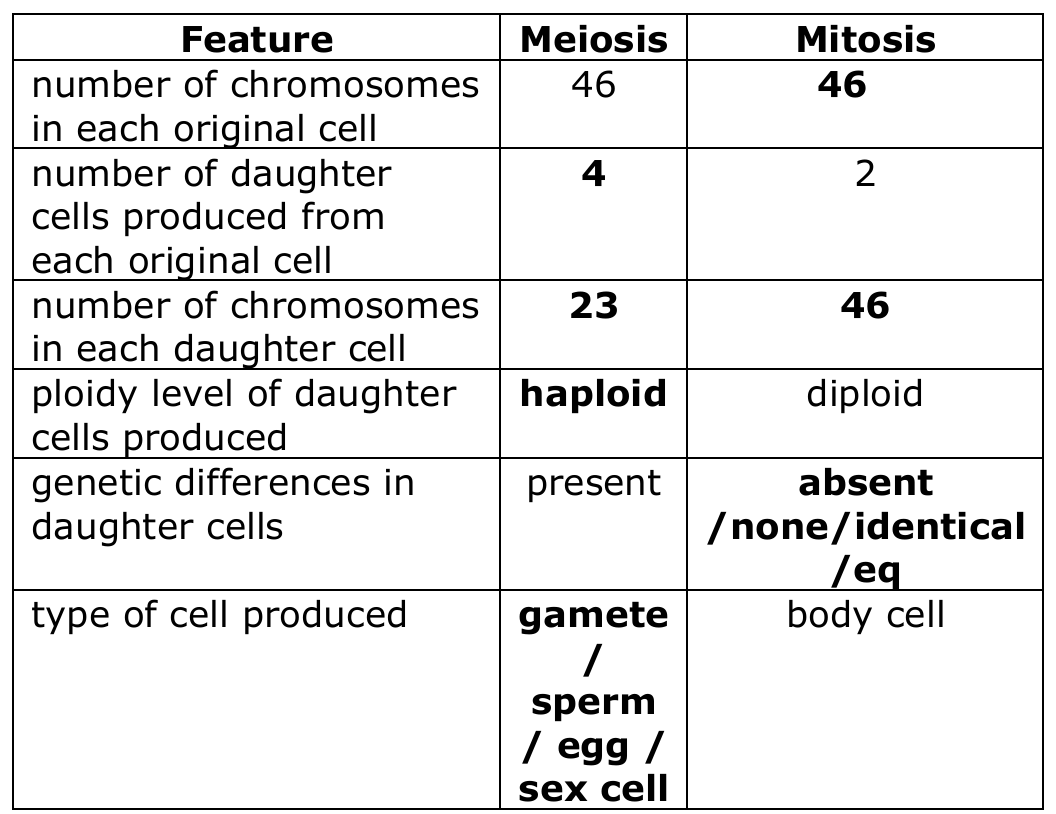
Explanation: Meiosis reduces the chromosome number by half (from diploid 46 to haploid 23) and produces four genetically unique daughter cells (gametes) due to crossing over and independent assortment. Mitosis maintains the chromosome number (diploid 46) and produces two genetically identical daughter cells for growth and repair.
(c)(i) Other causes of variation in offspring include:
Explanation: Beyond cell division mechanisms, variation arises from random mating where individuals choose partners without specific genetic preferences, creating new allele combinations. Random fertilization means any sperm can fertilize any egg, further mixing genetic material. Environmental factors like nutrition, temperature, and exposure to chemicals can cause phenotypic variation even with identical genotypes. Additionally, mutations – spontaneous changes in DNA sequence – introduce entirely new genetic variations that can be passed to offspring.
(c)(ii) Advantages of using homozygous rats:
Explanation: Using rats that are homozygous for many genes provides little to no genetic variation within the test population, meaning all individuals have the same genotype and alleles. This eliminates genotype-environment interactions and ensures that all rats respond to drugs in the same way, making experimental results more consistent and reliable. This genetic uniformity helps scientists isolate the specific effects of the drug treatment without confounding variables from genetic differences.


▶️ Answer/Explanation
(a) Control the movement (of substances) in/out of the cell.
Explanation: The cell membrane, also known as the plasma membrane, acts as a selective barrier. It regulates the passage of substances such as nutrients, ions, and waste products, allowing essential molecules to enter the cell while keeping harmful ones out. This maintains the internal environment necessary for the cell’s survival and function.
(b) 6.9 / 6.91 / 6.908 mm²
Explanation: First, we calculate the original area of the lumen. The diameter is 4.0 mm, so the radius \( r \) is half of that, which is 2.0 mm. Using the formula for the area of a circle, \( \pi r^2 \), and given \( \pi = 3.14 \), the original area is \( 3.14 \times (2.0)^2 = 3.14 \times 4 = 12.56 \, \text{mm}^2 \).
The fatty deposit covers 45% of this area, meaning the area available for blood flow is the remaining 55%. So, we calculate 55% of the original area: \( 0.55 \times 12.56 = 6.908 \, \text{mm}^2 \). Rounded appropriately, this gives an area of approximately 6.9 mm².
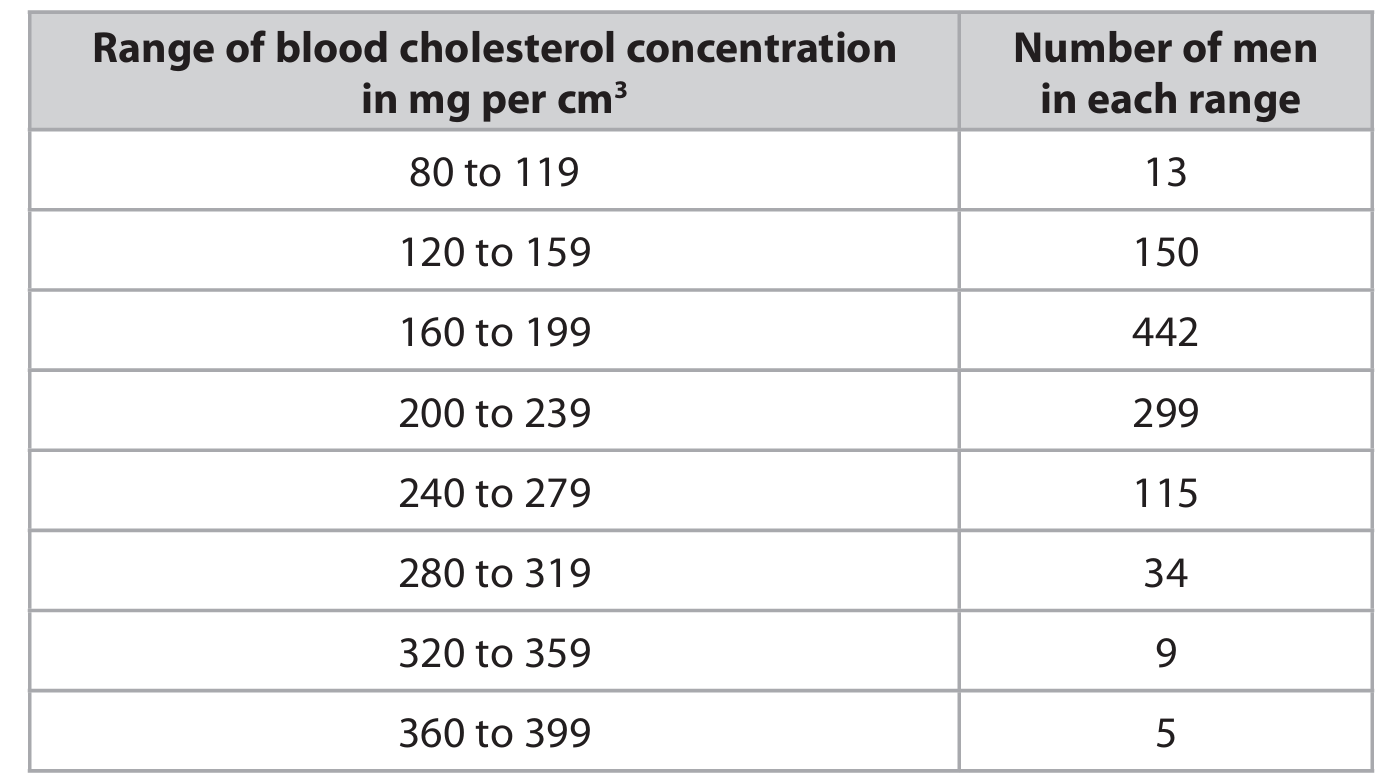
(c)(i) A bar chart with the following features:
- S: y-axis linear and uses at least half the grid.
- L: labelled bars drawn for each cholesterol concentration range.
- A1: y-axis labelled “Number of men”.
- A2: x-axis labelled “Cholesterol concentration in mg/cm³” or similar.
- P: bar heights correct (within half a small square of the correct value).
Explanation: A bar chart is the most suitable way to represent this categorical data. The x-axis should show the different ranges of cholesterol concentration, and the y-axis should show the number of men in each range. Each bar’s height corresponds to the frequency (number of men) for that specific cholesterol range. The axes must be clearly labelled, and the scale should be chosen to make good use of the graph paper.
(c)(ii) C 160 to 199
Explanation: The mode is the value that appears most frequently in a data set. In this context, it’s the cholesterol range with the highest number of men. Looking at the table, the range 160 to 199 mg per cm³ has 442 men, which is the highest frequency among all the groups.
(c)(iii) 15.3% (accept 15.28%, 15.276%, or 15%)
Explanation: First, identify the men at higher risk. These are the men in the ranges greater than 239 mg per 100 cm³, which correspond to the ranges 240-279, 280-319, 320-359, and 360-399. Adding these up: 115 + 34 + 9 + 5 = 163 men.
Next, find the total number of men in the sample: 13 + 150 + 442 + 299 + 115 + 34 + 9 + 5 = 1067 men.
Finally, calculate the percentage: \( \frac{163}{1067} \times 100 \approx 15.28\% \).
(d) Discussion points include:
- The statin group shows a lower percentage of heart attacks (2.2%) than the control group (3.8%), which supports the claim.
- However, the conclusion might be limited because only one type of statin was tested.
- The study lasted only four years; long-term effects are unknown.
- The difference could be due to chance, and we don’t know the sample size to assess significance.
- The groups might not have been matched for other factors affecting heart disease risk (e.g., diet, exercise, age, genetics, pre-existing conditions).
Explanation: While the data suggests a benefit from statins, a critical evaluation is needed. The observed reduction in heart attacks is promising, but the study’s design limits the strength of the conclusion. Without knowing if the groups were identical in all other relevant aspects (like lifestyle and genetics), we cannot be sure the result is solely due to the statin. Furthermore, the duration of the study and the testing of only one specific statin mean the findings cannot be broadly generalized without further research.
▶️ Answer/Explanation
(a) Asexual reproduction differs from sexual reproduction in several key ways. In asexual reproduction, there is no formation of gametes and no meiosis occurs. This means there is no fusion of gametes or formation of a zygote. As a result, the offspring produced are genetically identical to the parent and to each other; they are clones with no genetic variation. Only one parent is involved in asexual reproduction.
Explanation: The main differences lie in the processes involved and the genetic outcome. Asexual reproduction is simpler and faster, producing identical offspring, while sexual reproduction involves the combination of genetic material from two parents, leading to genetic diversity.
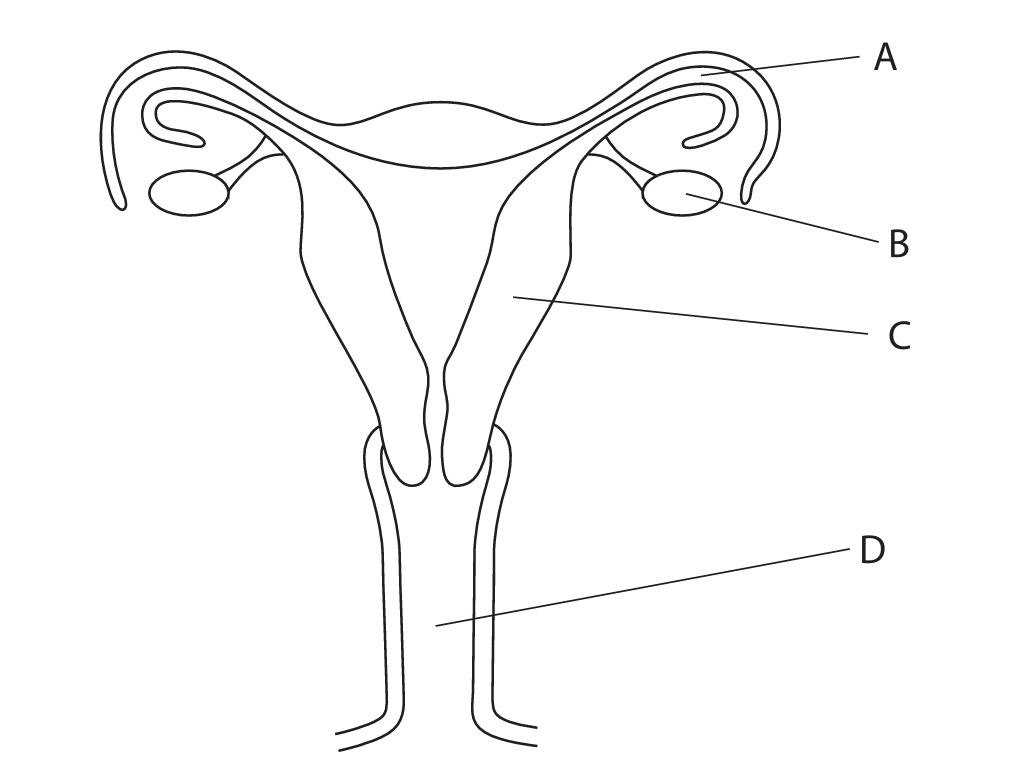
(b)(i) A (the oviduct)
Explanation: Fertilisation, the fusion of sperm and egg, typically occurs in the oviduct (Fallopian tube). The other structures are not the site of this process.
(b)(ii) C (uterus / womb)
Explanation: After fertilisation, the embryo implants in the lining of the uterus, where it develops into a fetus. The other structures do not serve as the primary site for fetal development.
(b)(iii) Structure B is the ovary, which produces the hormones oestrogen and progesterone. Oestrogen is involved in the development and regulation of the female reproductive system. It thickens the lining of the uterus (endometrium) during the menstrual cycle and is also responsible for the development of secondary sexual characteristics, such as breast development. Progesterone’s main role is to maintain the thickened lining of the uterus, making it suitable for the implantation of a fertilised egg and for supporting a pregnancy. It also inhibits further ovulation during pregnancy.
Explanation: These hormones work together in a complex feedback system to regulate the menstrual cycle, prepare the body for pregnancy, and develop female physical characteristics.
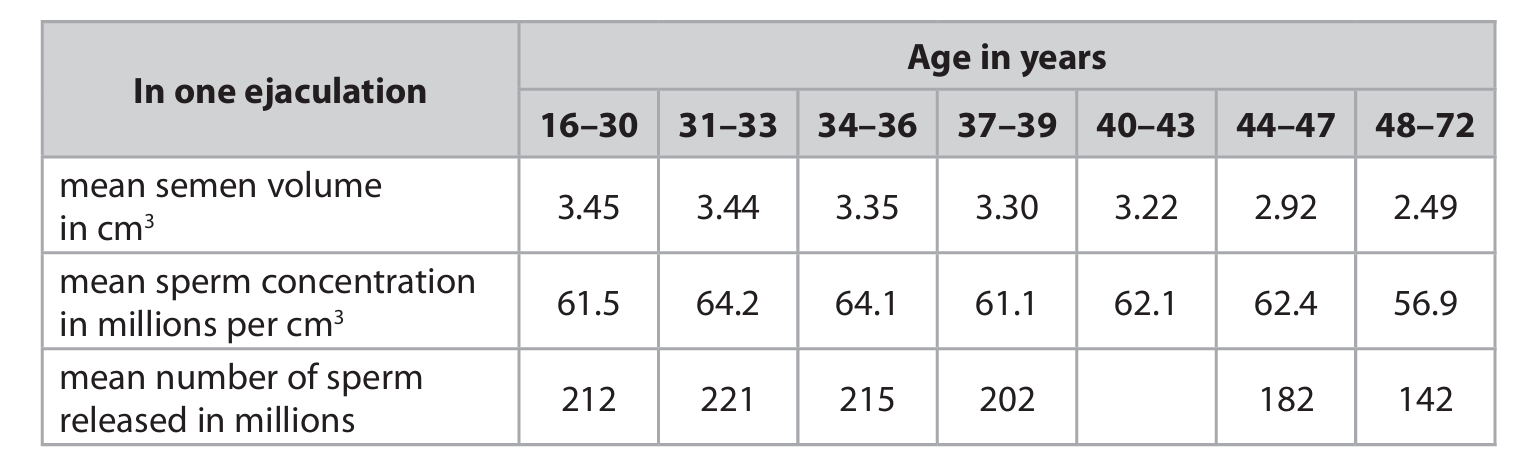
(c)(i) Mean number of sperm = 200 million
Explanation: This is calculated by multiplying the mean semen volume by the mean sperm concentration for the 40-43 age group: \( 3.22 \, \text{cm}^3 \times 62.1 \, \text{million/cm}^3 = 199.962 \, \text{million} \), which rounds to 200 million.
(c)(ii) The mean number of sperm released is a better measure of fertility because it takes both semen volume and sperm concentration into account. A high semen volume with a very low sperm concentration could still result in a low total sperm count. Conversely, a high sperm concentration in a very small volume of semen would also lead to a low total count. Therefore, the total number of sperm released gives a more complete picture of the potential for fertilisation than either factor alone.
Explanation: Fertility is directly related to the total number of functional sperm available. Relying only on concentration or volume could be misleading, as both are needed to calculate the actual quantity of sperm ejaculated.
(c)(iii) Percentage decrease = 29.7%
Explanation: The calculation is done as follows: First, find the difference in mean sperm number between the two age groups: \( 202 – 142 = 60 \) million. Then, divide this difference by the original value (for the 37-39 age group): \( \frac{60}{202} = 0.297 \). Finally, multiply by 100 to get the percentage: \( 0.297 \times 100 = 29.7\% \). This shows a significant decrease in the average number of sperm released as men get older.