
▶️ Answer/Explanation
(a)(i)
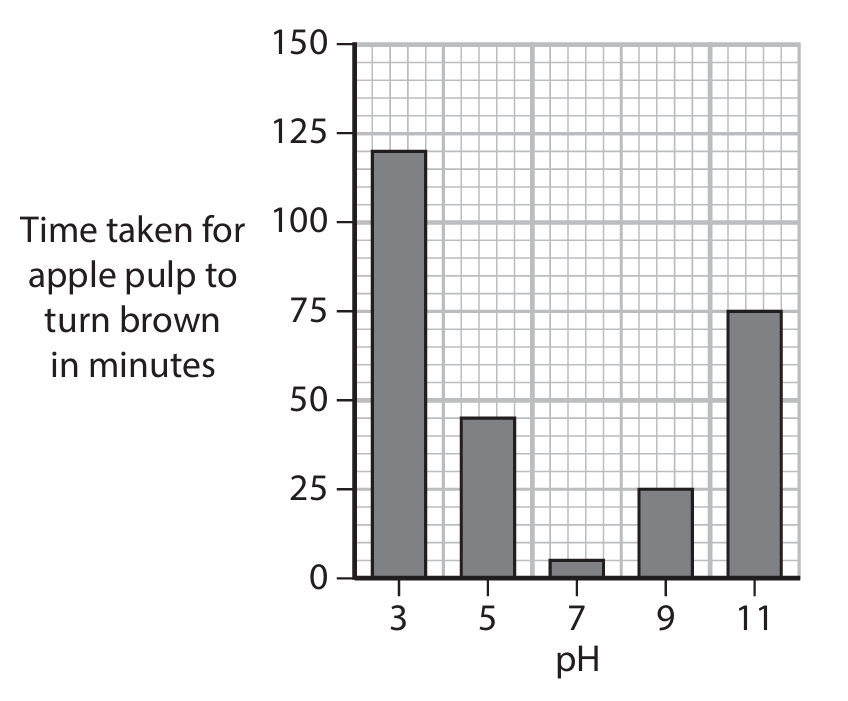
• 1400 (%) (2)
One mark for 75 ÷ 5 = 15 OR 70 ÷ 5 = 14
Calculation: Time at pH 11 = 75 minutes, Time at pH 7 = 5 minutes
Percentage increase = \(\frac{75 – 5}{5} \times 100 = \frac{70}{5} \times 100 = 14 \times 100 = 1400\%\)
(a)(ii)
An explanation that makes reference to three of the following points:
1. optimum pH is 7 (1)
2. (pH causes) enzyme to denature (1)
3. shape of enzyme changes / shape of active site changes (1)
4. substrate does not fit active site / enzyme no longer complementary / cannot form enzyme-substrate complexes (1)
(a)(iii)
An explanation that makes reference to two of the following points:
1. use a colour matching chart / light sensor / colorimeter (1)
2. (because) colour change is subjective / to standardise the end colour / so colour is always same (1)
3. use intervals of shorter than 5 minutes / shorter intervals / check more often / check colour constantly (1)
(b)(i)
An answer that makes reference to two of the following points:
1. DNA is double stranded / RNA is single stranded (1)
2. DNA has T (thymine) / RNA has U (uracil) (1)
3. DNA is a helix / RNA is not a helix (1)
4. DNA has deoxyribose / RNA has ribose (1)
(b)(ii)
An explanation that makes reference to four of the following points:
1. (complementary) RNA binds to the phenol oxidase RNA (1)
2. translation cannot occur (1)
3. so enzyme / phenol oxidase not made (1)
AND
Maximum three from:
4. transcription makes mRNA (1)
5. RNA leaves nucleus and enters cytoplasm / RNA moves to ribosome (1)
6. tRNA brings / carries / transports amino acids (1)
7. (during translation) tRNA binds mRNA / anticodons bind codons (1)
8. amino acids join / amino acid chain / makes polypeptide / peptide bonds form (1)
▶️ Answer/Explanation
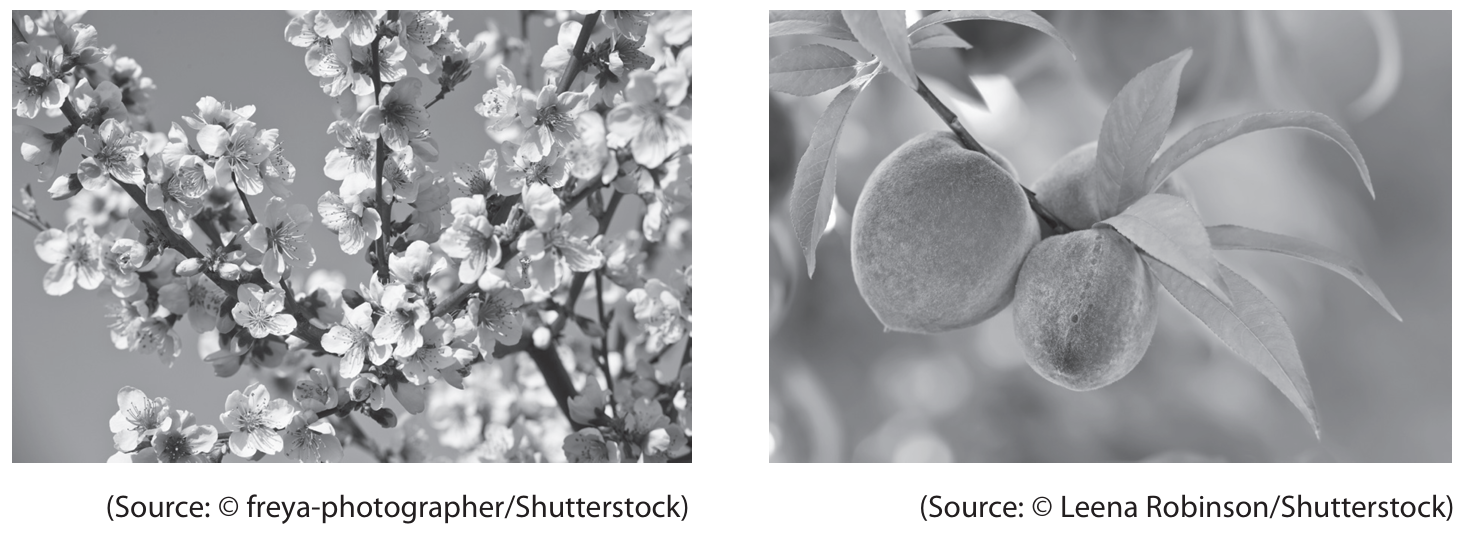
(a) An explanation that makes reference to two of the following:
- self-pollination within same plant / flower / cultivar / tree / uses one parent / eq (1)
- cross-pollination from different plant / flower / cultivar / tree / uses two parents / eq (1)
(b) A description that makes reference to four of the following:
- germinates / eq (1)
- pollen tube grows down style / goes down style / eq (1)
- enters ovule (via micropyle) / eq (1)
- male nucleus / gamete travels down pollen tube / eq (1)
- fuses with ovum / fuses with female gamete / fertilises ovum / fertilises female gamete / eq (1)
- ovule becomes seed / eq (1)
- ovary becomes fruit / eq (1)
(c)(i) carbon hydrogen oxygen / C H O (1)
(c)(ii) An answer that makes reference to two of the following:
- fruit eaten by animals / insects / birds / eq (1)
- egested / lost in faeces / eq (1)
- seeds dispersed / taken to new areas / eq (1)
(d) An explanation that makes reference to two of the following:
- pollen from same plant / flower / cultivar eq (1)
- cannot germinate / no pollen tube growth / eq (1)
- no fusion / fertilisation / eq (1)
(e) A description that makes reference to the following:
- flowers are large / petals are large (so seen by insects) / eq (1)
- flowers / petals are coloured (so seen by insects) / eq (1)
- flowers are scented / have scented petals / eq (1)
- have nectary / produce nectar / eq (1)
- anthers within flower / stigma within flower so insect brushes pollen / transfers pollen to stigma / eq (1)
(f) An answer that includes:
- wind pollinated / no insects to carry pollen long distance / eq (1)
(g) An explanation that makes reference to two of the following:
- triploid cells cannot divide by meiosis / cannot be divided by two / equally / eq (1)
- cannot produce haploid (gametes) / produce one set / n chromosomes / eq (1)
- fertilisation / fusion not possible / eq (1)
▶️ Answer/Explanation
(a)(i) \(1 : 2.4 : 1\)
Accept \(1: 2.375: 1\)
(a)(ii) A description that makes reference to the following points:
• ethanol / alcohol and add water (1)
• goes white / cloudy / white emulsion forms / milky / eq (1)
OR
• add Sudan III (1)
• red colour (in top layer) (1)
Accept alternative method: rub on paper / eq (1); paper goes transparent / clear / eq (1)
(a)(iii) • growth / repair / enzymes / build muscle / antibodies / eq (1)
(b)(i) • \(357 \, \text{g per month}\) (2)
Correct answer gains both marks.
Accept one mark for:
\(2500\) (increase) or division by \(7\) or \((3750-1250)\) or \(357.14…\)
(b)(ii) • \(3002 / 3000 \, \text{g}\) (1)
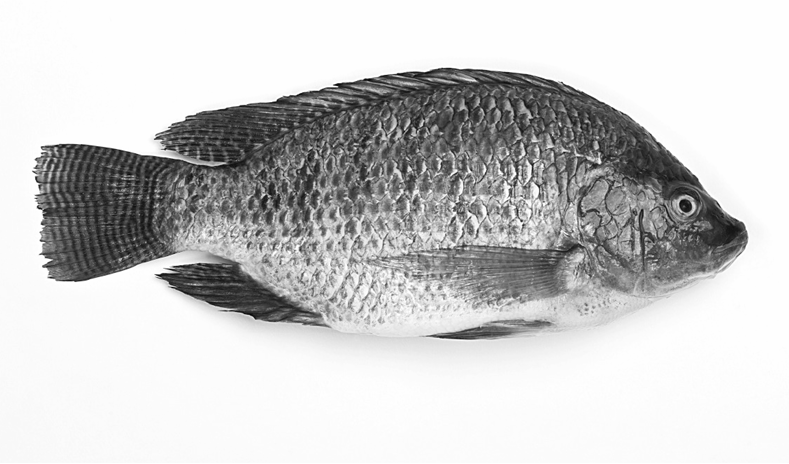
(b)(iii) An answer that makes reference to two of the following points (1 mark each):
• (GM fish) grow more / bigger / faster / eq
• produce less faeces / can digest more efficiently / absorb more / eq
• less respiration / lower metabolic rate / eq
• move less / slower swimming / eq
• eat more food / less food wasted / eq
(b)(iv) • temperature / light (intensity) / oxygen / salinity / pH / eq (1)
(b)(v) An evaluation that makes reference to the following points (up to 5 marks):
1. GM fish grow bigger/faster/harvest sooner / eq (1)
2. less food wasted / more food eaten / eq (1)
3. less faeces / urea / excretion / ammonia / eq (1)
4. less decomposition / fewer decomposers / eq (1)
5. less nitrification / fewer nitrifying bacteria / eq (1)
6. less eutrophication / algal growth / plant growth / eq (1)
7. less oxygen loss / more oxygen in water / eq (1)
8. due to less (bacterial) respiration / (more oxygen for) respiration of animals / eq (1)
9. no information about disease spread / pathogen spread / eq (1)
10. GM fish are (genetically) similar so may be more likely to catch/spread disease / eq (1)
11. not repeated / need more experiments / no idea of sample size / eq (1)
12. (GM) fish that escape may harm food chains / outcompete wild fish / may breed with wild fish / eq (1)
13. did not measure nitrates / eq (1)
▶️ Answer/Explanation
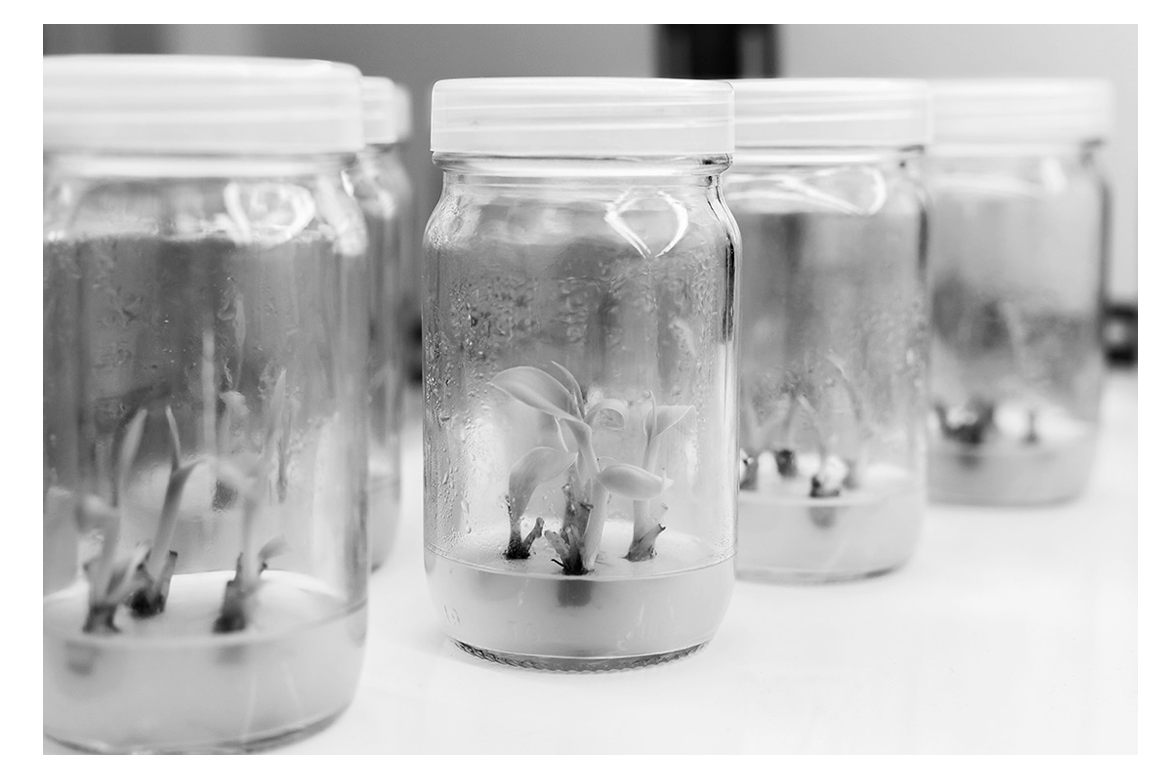
(a) In a test tube / culture dish / jar / glass / petri dish / container / in culture solution / in a lab / outside a living organism.
Explanation: The term “in vitro” literally means “in glass” in Latin, referring to biological processes that are conducted outside of a living organism in an artificial laboratory environment, such as in test tubes or petri dishes. This contrasts with “in vivo” experiments which are conducted within living organisms.
(b) Plant cells can differentiate into all/different types of tissues or specialized cells throughout the plant’s life and can form/regenerate a whole new plant.
Explanation: Plant cells exhibit totipotency, meaning that even mature, differentiated plant cells retain the ability to dedifferentiate and then redifferentiate into any cell type needed to regenerate an entire plant. This is why you can grow a new plant from a cutting. In contrast, human cells have much more limited differentiation capabilities. While stem cells can differentiate into various cell types, most human cells become permanently specialized during development and cannot revert back or form entirely new organisms.
(c)
1. Nitrate – for making amino acids/proteins/DNA/nucleic acids
2. Magnesium – for making chlorophyll/chloroplasts/photosynthesis
Explanation: Plant tissue culture media must contain essential minerals that support plant growth and development. Nitrate is crucial as it provides nitrogen, which is a fundamental component of amino acids, proteins, and nucleic acids (DNA and RNA). Without adequate nitrogen, plants cannot synthesize these essential biomolecules. Magnesium is a central component of the chlorophyll molecule, which is vital for photosynthesis as it captures light energy. Without magnesium, plants cannot produce chlorophyll effectively, leading to chlorosis (yellowing of leaves) and impaired photosynthesis.
(d) Enzymes are affected by pH/ work best at optimum pH. If pH changes, the shape of the active site can change/be denatured so substrates can no longer bind.
Explanation: Maintaining a constant pH is critical because enzymes, which catalyze all biochemical reactions in plant cells, are highly sensitive to pH changes. Each enzyme has an optimal pH range where it functions most efficiently. If the pH deviates from this range, the enzyme’s three-dimensional structure can be altered, changing the shape of its active site. This prevents substrates from binding properly, effectively denaturing the enzyme and halting the metabolic reactions it catalyzes. This would severely disrupt plant growth and development in the culture media.
(e) Place a shoot in light from one side/unidirectional light and another shoot in darkness/light all around. Leave both for a stated time/use shoots of same type/same temperature/other control variable. Observe/measure bending or growing towards light.
Explanation: To demonstrate phototropism (growth response to light), you would set up two identical young plant shoots. One would be placed in a location with light coming from only one direction (e.g., near a window), while the control would be placed in either complete darkness or with light evenly distributed from all sides. Both plants should be kept under the same temperature and watering conditions to ensure any differences are due to light direction only. After a few days, you would observe that the shoot exposed to unilateral light has bent toward the light source. This bending occurs because auxin hormone accumulates on the shaded side of the stem, promoting more cell elongation on that side and causing the stem to curve toward the light.
(f) To maintain biodiversity/reduce damage to ecosystems and to prevent extinction/keep species for future generations/for medicinal properties.
Explanation: Conserving endangered plant species is crucial for several reasons. Firstly, it maintains biodiversity, which ensures ecosystem stability and resilience. Each plant species plays a unique role in its ecosystem, and losing one can disrupt food webs and ecological balance. Secondly, it prevents extinction, preserving genetic diversity that might be valuable for future breeding programs, especially as climate changes. Many plants contain compounds with medicinal properties; for example, aspirin originated from willow bark. By conserving endangered species, we preserve potential future medicines and genetic resources that could be vital for human well-being.
(g) Agitation mixes contents/mixes oxygen/with plant cells. Light is for photosynthesis. Suitable temperature is for enzyme action.
Explanation: Suspension cultures require specific conditions to mimic optimal natural environments. Agitation (shaking or stirring) ensures that cells and nutrients are evenly distributed throughout the liquid media, preventing sedimentation. It also promotes gas exchange, ensuring oxygen (needed for respiration) is available and carbon dioxide (a product of respiration) is removed. Light is essential for photosynthetic plant cells to produce their own energy through photosynthesis. Maintaining a suitable temperature is critical because temperature affects enzyme activity; most plant enzymes function optimally around 25-30°C. Temperatures that are too high can denature enzymes, while temperatures that are too low can slow down metabolic processes to inadequate levels.
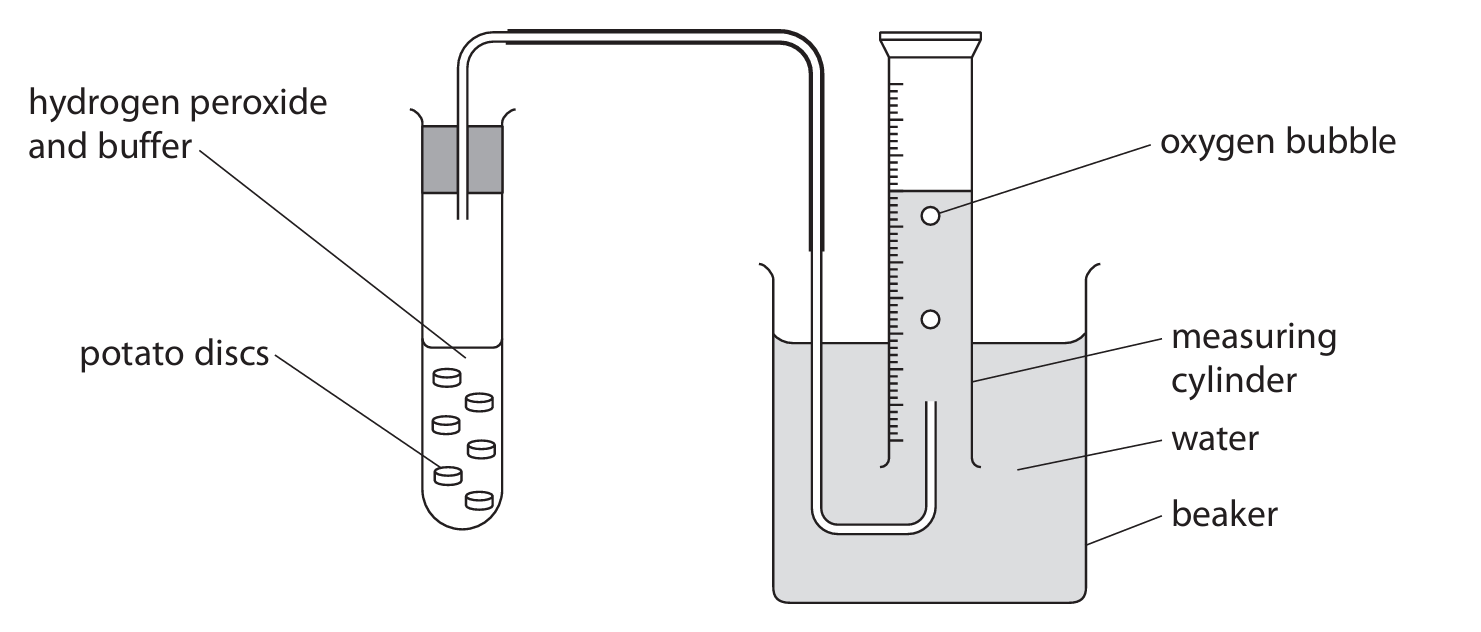
▶️ Answer/Explanation
(a) A biological catalyst / a protein that speeds up (chemical) reactions without being used up.
Explanation: Enzymes are proteins that lower the activation energy for metabolic reactions, increasing the rate of reaction.
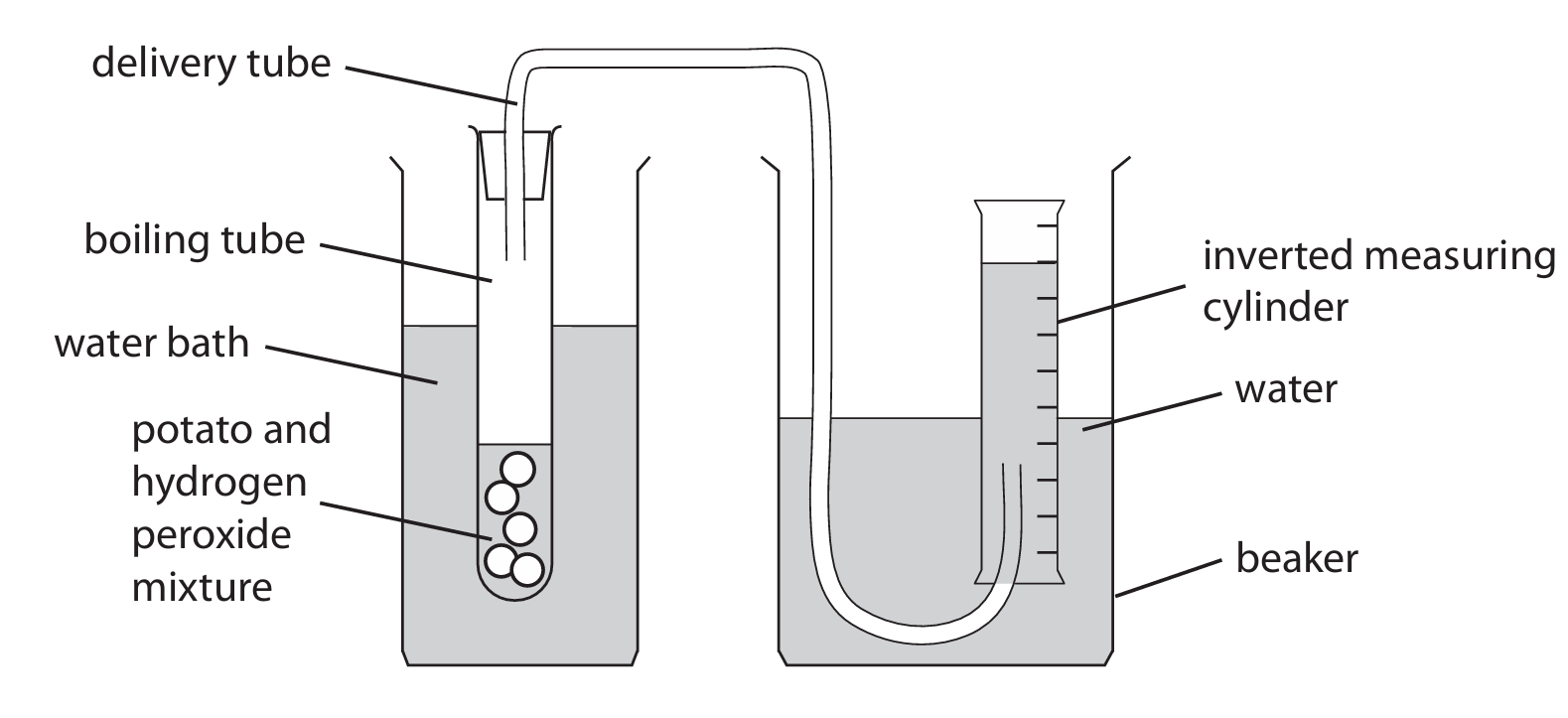
(b) To increase the surface area of the potato tissue / so more catalase enzyme is exposed to the hydrogen peroxide.
Explanation: Cutting the cylinder into discs increases the surface area-to-volume ratio. This allows more catalase molecules inside the potato cells to come into contact with the substrate \( (H_2O_2) \), speeding up the reaction and making results easier to measure.
(c)(i) Volume of oxygen gas collected (after 5 minutes) / mean rate of reaction.
Explanation: The dependent variable is what is measured as the outcome of changing the independent variable (pH).
(c)(ii) Two from:
1. Temperature (of the solution / room)
2. Concentration of hydrogen peroxide solution
3. Volume / concentration of the pH buffer added
4. Size / mass / surface area of potato discs
Explanation: These are abiotic (non-living) factors that, if not controlled, could affect the rate of the enzyme reaction and make the results invalid.
(d)(i) \(200\%\)
Working:
Change in rate = \(2.4 – 0.8 = 1.6 \text{ cm}^3/\text{min}\)
Percentage change = \(\frac{1.6}{0.8} \times 100 = 200\%\)
The rate increases by 200% from pH 4 to pH 7.
(d)(ii) An explanation that makes reference to two of:
• The substrate \( (H_2O_2) \) is being used up / its concentration decreases.
• Therefore, there are fewer collisions between enzyme and substrate molecules / fewer enzyme-substrate complexes form.
• The water produced dilutes the hydrogen peroxide.
Explanation: The reaction rate is highest at the start when substrate concentration is highest. As the substrate is converted to products, the rate slows down because there are fewer substrate molecules available to bind with the enzyme’s active sites.
(d)(iii) An explanation that makes reference to:
1. Enzymes have an optimum pH (e.g., pH 7 for catalase). (1)
2. Changing pH away from the optimum denatures the enzyme / alters the bonds in the enzyme’s structure. (1)
3. This changes the shape of the active site, so the substrate no longer fits / enzyme-substrate complexes cannot form. (1)
Explanation: Enzymes are sensitive to pH because hydrogen ions affect the ionic bonds that hold the enzyme’s tertiary structure. At the wrong pH, the active site’s shape is altered (denaturation), reducing or stopping catalytic activity.
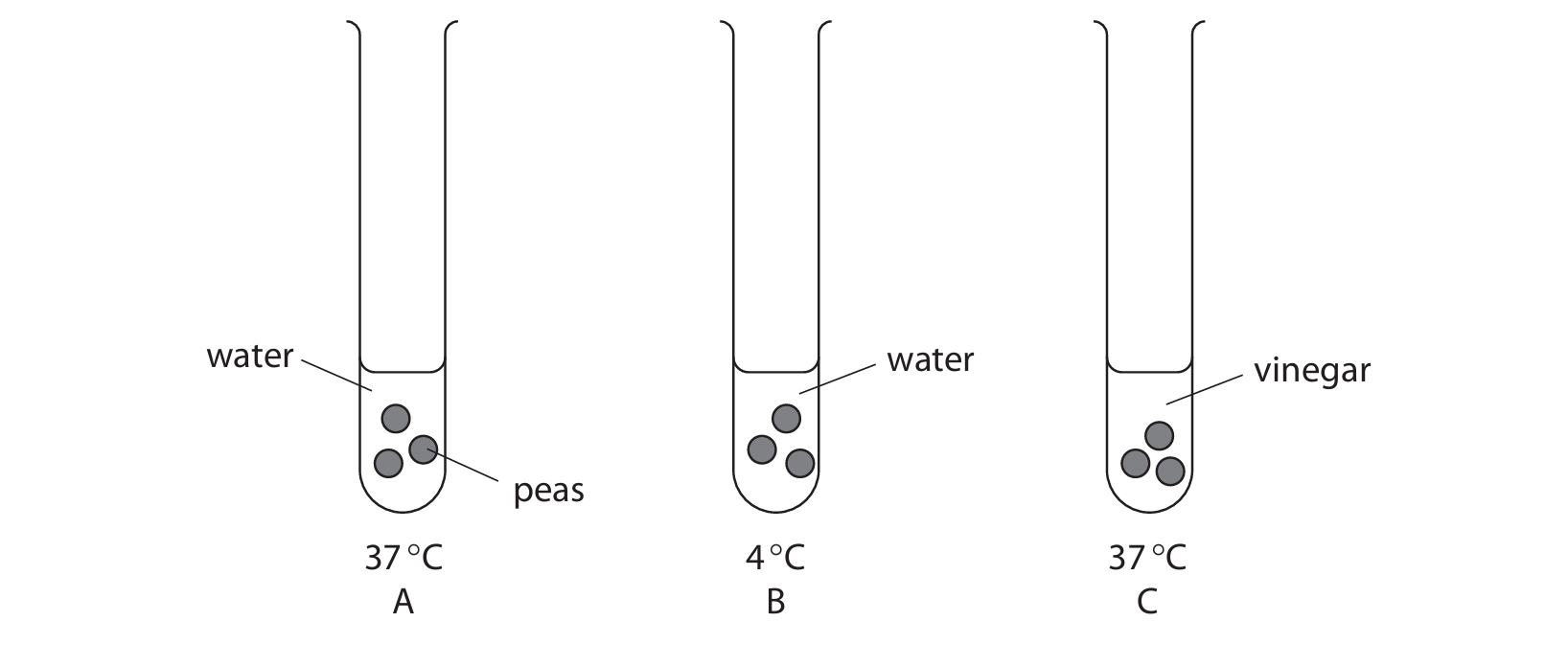
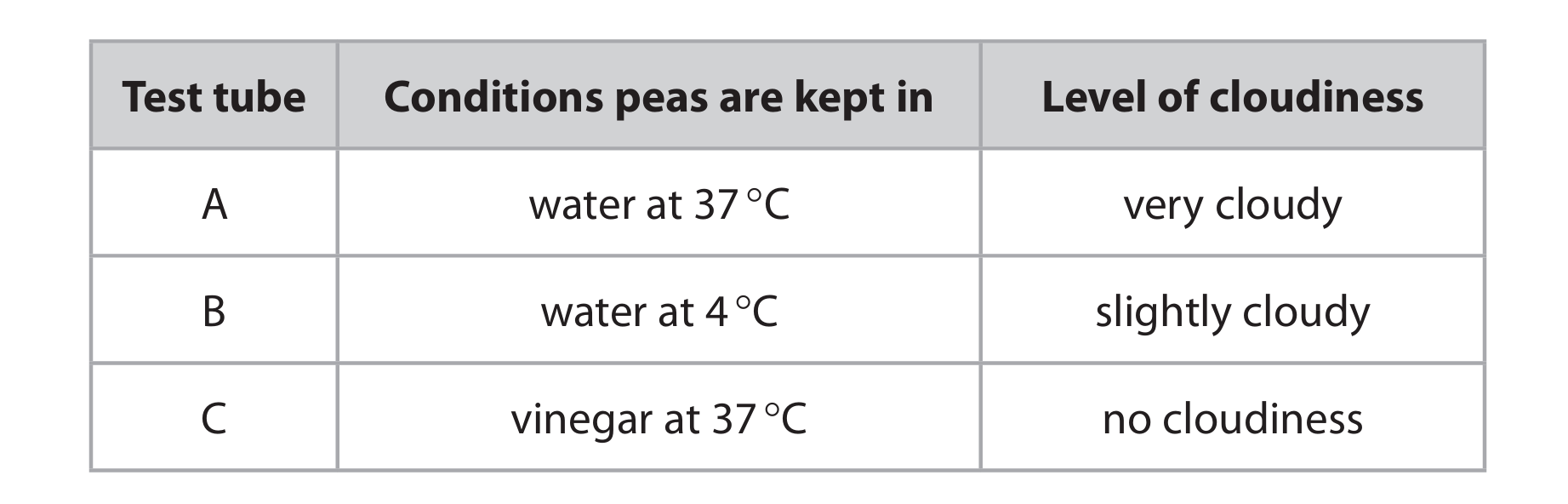
▶️ Answer/Explanation
(a) Saprotrophic fungi like mould obtain their food through extracellular digestion. They secrete enzymes onto the dead or decaying organic matter. These enzymes break down complex molecules like carbohydrates and proteins into simpler, soluble substances. The fungus then absorbs these digested nutrients through its hyphae.
(b)(i) The main problem is that judging cloudiness is subjective and qualitative rather than quantitative. Different people might interpret “very cloudy,” “slightly cloudy,” and “no cloudiness” differently. There’s no precise, numerical measurement, which makes it difficult to compare results accurately or for other scientists to repeat the experiment exactly.
(b)(ii) The peas in water at 4°C showed only slight cloudiness because the low temperature significantly slowed down fungal growth. At 4°C, the enzymes in the saprotrophic fungi work much more slowly due to reduced kinetic energy, leading to fewer enzyme-substrate collisions. This results in less digestion of the peas, less fungal respiration, and therefore less spoilage and cloudiness.
(b)(iii) The peas in vinegar at 37°C showed no cloudiness because the acidic conditions denatured the enzymes of the saprotrophic fungi. Vinegar, being a weak acid, lowers the pH. This change in pH alters the shape of the enzymes’ active sites, preventing them from binding to their substrates and catalyzing the digestive reactions. Consequently, fungal growth is inhibited or the fungi are killed, preventing spoilage and resulting in clear solution.
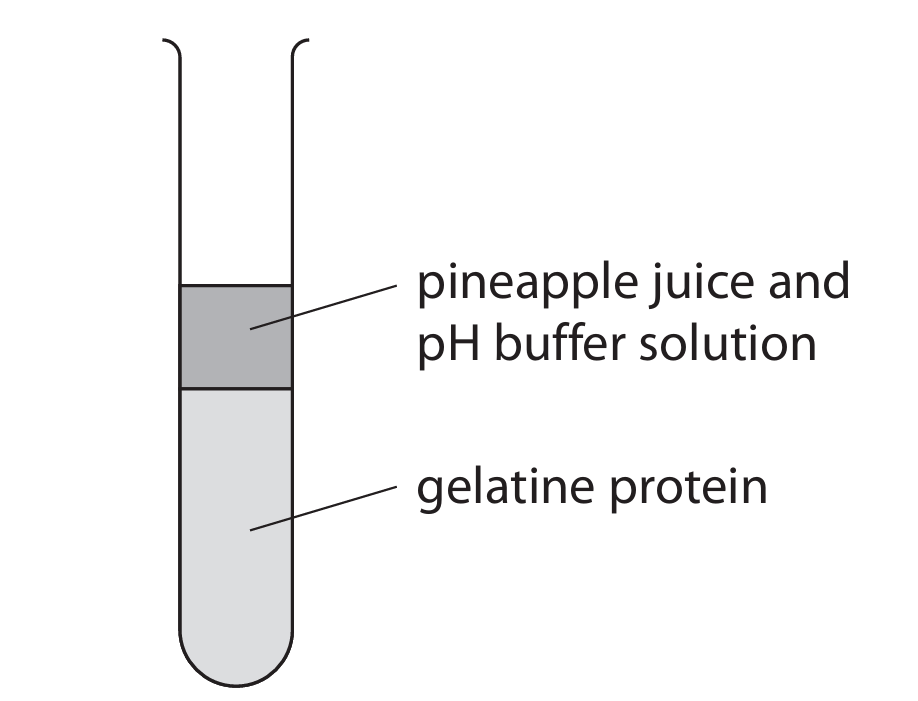
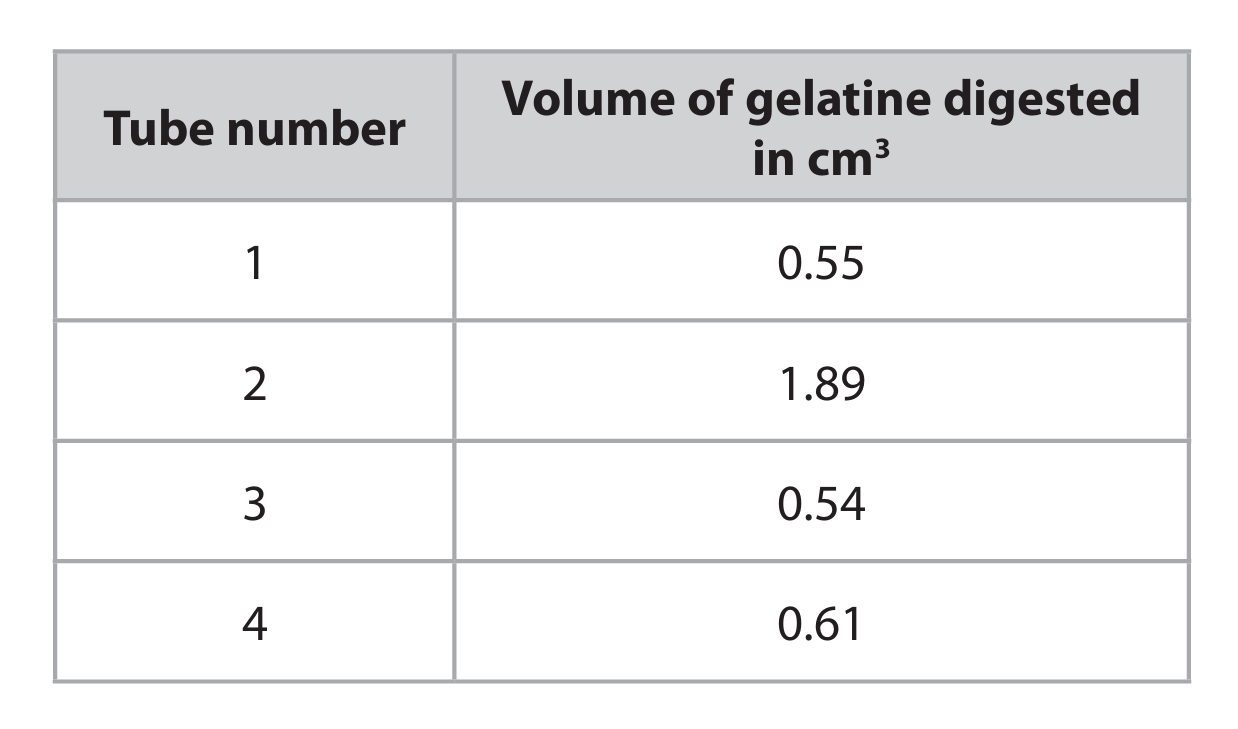
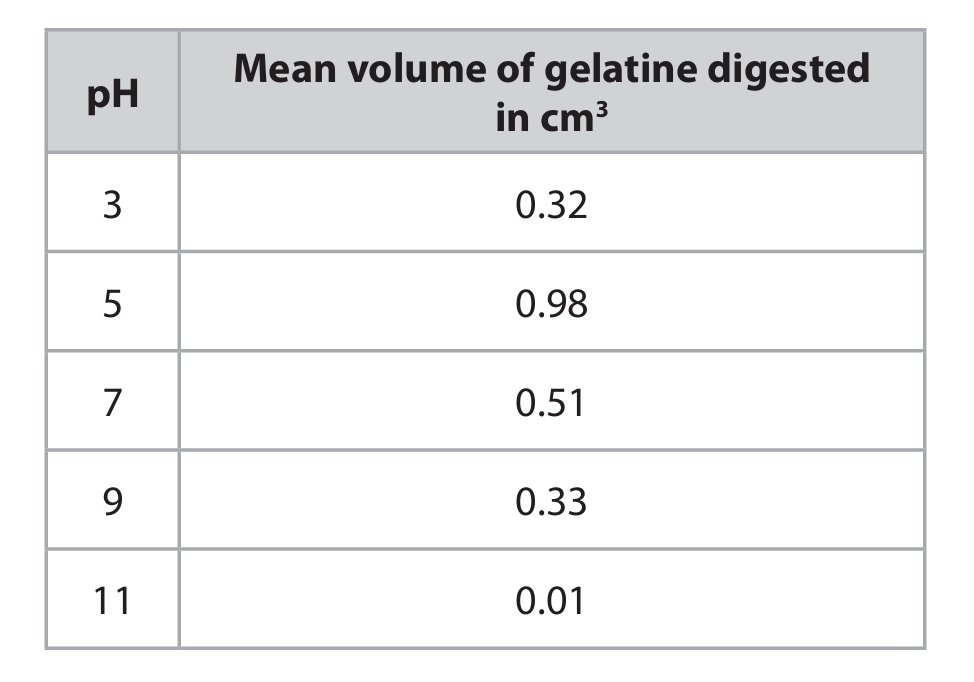
▶️ Answer/Explanation
(a)(i) Mean volume = 0.57 cm³
Explanation: To calculate the mean volume of gelatine digested, we first need to identify and exclude any anomalous results. Looking at the data, tube 2 shows a value of 1.89 cm³, which is significantly higher than the other three values (0.55, 0.54, 0.61). This suggests it might be an anomaly, possibly due to experimental error. Therefore, we calculate the mean using the three consistent results:
Sum of volumes = 0.55 + 0.54 + 0.61 = 1.70 cm³
Number of tubes = 3
Mean volume = 1.70 ÷ 3 = 0.5666… cm³
Rounded to two decimal places, this gives us 0.57 cm³.
(a)(ii) Amino acids and peptides
Explanation: Gelatine is a protein. During digestion, proteases like bromelain break down proteins through hydrolysis. The initial breakdown produces smaller polypeptide chains called peptides. Further digestion breaks these peptides down into their monomer units, which are amino acids. Therefore, the end products of protein digestion are primarily amino acids, though some intermediate peptides may also be present.
(b)(i) Two controlled variables:
1. Temperature – The investigation should be conducted at a constant temperature, ideally 37°C as used initially, because enzyme activity is highly dependent on temperature.
2. Volume/Concentration of enzyme (bromelain/pineapple juice) – The same volume and concentration of pineapple juice should be used in each test to ensure the same amount of enzyme is present, making the comparison of pH effects valid.
Other acceptable answers include: volume/mass/concentration of gelatine, volume of buffer, time left in the water bath, or surface area of gelatine.
(b)(ii) Effect of pH:
Explanation: The data shows that the mean volume of gelatine digested increases as the pH moves from 3 to 5, reaching a maximum at pH 5 (0.98 cm³). Beyond pH 5, the volume digested decreases sharply, with very little digestion occurring at pH 11 (0.01 cm³). This pattern is characteristic of enzyme activity. Enzymes have an optimal pH at which they function most efficiently. For bromelain, this appears to be around pH 5. At pH values significantly above or below this optimum, the enzyme’s active site becomes denatured. Denaturation means the shape of the active site changes, so the substrate (gelatine protein) can no longer bind effectively. Consequently, the rate of reaction (digestion) decreases, leading to a smaller volume of gelatine being digested.
(c) Testing for Protein:
Explanation: The standard test for proteins is the Biuret test. Here is a step-by-step description of how to perform it:
- Place the sample to be tested in a test tube. If the sample is solid, it should first be crushed and mixed with water to create a liquid suspension.
- Add an equal volume of sodium hydroxide solution (Biuret reagent A) to the test tube. Shake gently to mix.
- Then, add a few drops of very dilute copper(II) sulfate solution (Biuret reagent B). Do not shake the tube vigorously.
- Observe the colour change. A positive result for protein is indicated by a colour change from blue to lilac, purple, or violet. If the solution remains blue, no protein is present.
The principle behind this test is that the copper ions in the reagent form a complex with the peptide bonds in the proteins, producing the characteristic purple colour.
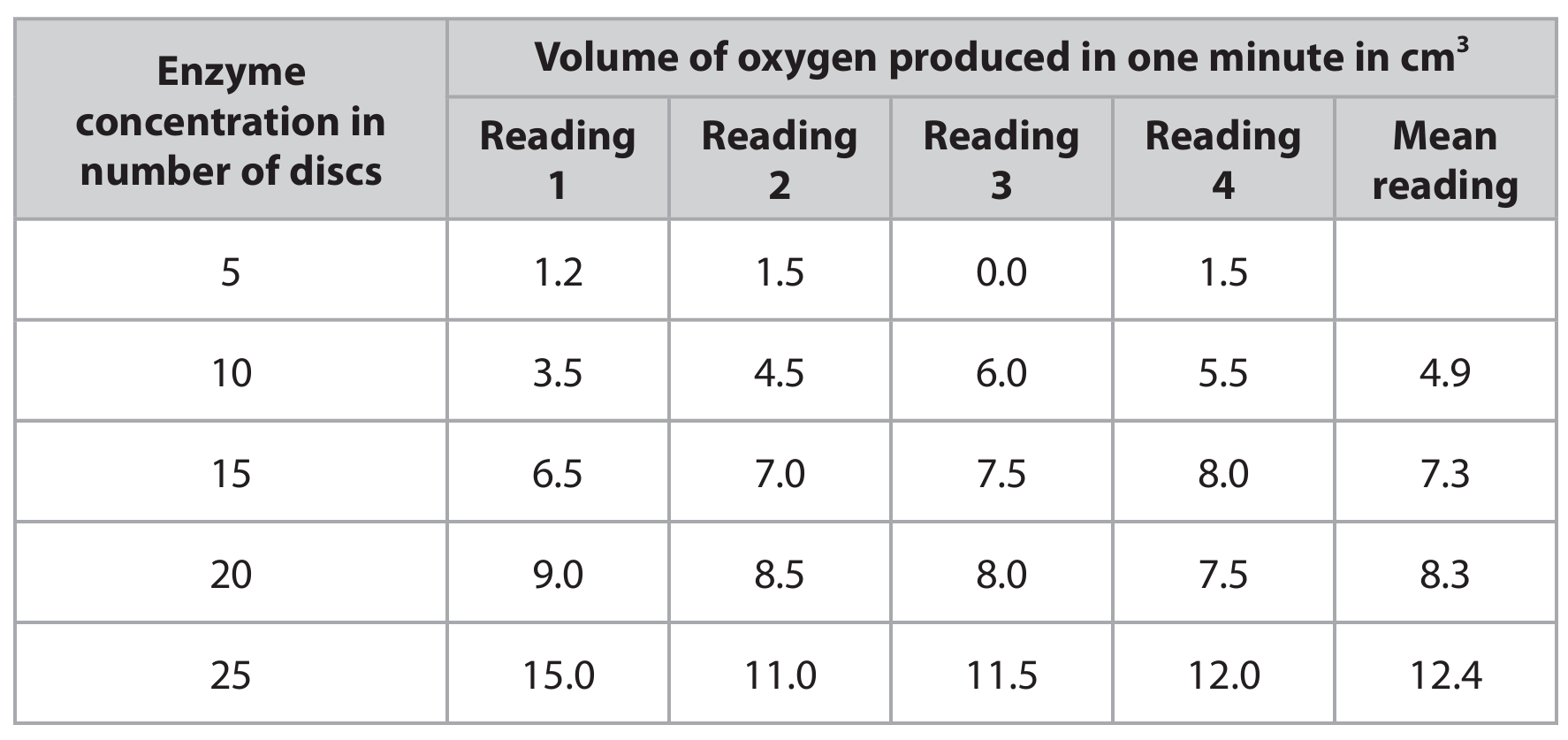
▶️ Answer/Explanation
(a) As the enzyme concentration (number of potato discs) increases, the initial rate of reaction (volume of oxygen produced in one minute) increases.
Explanation: The independent variable is the enzyme concentration, which is represented by the number of potato discs used. The dependent variable is the rate of reaction, measured by the volume of oxygen gas produced in the first minute. According to enzyme kinetics, increasing the enzyme concentration provides more active sites for the substrate molecules to bind to, which leads to more enzyme-substrate complexes forming per unit time. This results in a higher rate of reaction and therefore more oxygen produced in the same time period.
(b) Any two from: pH, volume of hydrogen peroxide, temperature, time, size/mass of potato discs.
Explanation: In a scientific investigation, it’s crucial to control variables that could affect the results. The teacher keeps these factors constant to ensure that any changes in the volume of oxygen produced are due only to changes in the enzyme concentration (number of potato discs) and not other factors. For example:
- pH: Maintained using a buffer solution to keep the enzyme at its optimal pH.
- Volume of hydrogen peroxide: Kept constant at 5 cm³ to ensure the same amount of substrate is available.
- Temperature: Controlled using a water bath as enzyme activity is temperature-sensitive.
- Size of potato discs: Kept equal to ensure the same surface area and enzyme quantity per disc.
(c)(i) Mean = 1.4 cm³
Explanation: To calculate the mean volume for 5 discs, we add the four readings: 1.2 + 1.5 + 0.0 + 1.5 = 4.2 cm³. However, the reading of 0.0 cm³ is likely an outlier (possibly an experimental error). Following the mark scheme guidance, we should use only the three valid readings: 1.2, 1.5, and 1.5. Adding these gives 4.2 cm³, and dividing by 3 gives a mean of 1.4 cm³.
(c)(ii) Percentage increase = 13.7%
Explanation: The percentage increase is calculated using the formula: \[ \frac{\text{New Value} – \text{Original Value}}{\text{Original Value}} \times 100\% \] For enzyme concentration increasing from 15 to 20 discs: \[ \frac{8.3 – 7.3}{7.3} \times 100\% = \frac{1.0}{7.3} \times 100\% = 13.7\% \] This shows that increasing the enzyme concentration by 5 discs resulted in a 13.7% increase in oxygen production.
(c)(iii) As enzyme concentration increases, the volume of oxygen produced increases because there are more active sites available, leading to more frequent collisions and more enzyme-substrate complexes forming.
Explanation: The relationship is directly proportional up to a point. With more potato discs, there’s more catalase enzyme present. Each enzyme molecule has active sites where hydrogen peroxide molecules can bind. When there are more enzymes, there are more active sites available for substrates to bind to, which increases the frequency of successful collisions. This results in more enzyme-substrate complexes forming per unit time, leading to a higher rate of reaction and therefore more oxygen gas being produced in the first minute. However, this relationship may eventually plateau when substrate concentration becomes the limiting factor.
(d) The teacher measures oxygen after one minute to determine the initial rate of reaction when the reaction is fastest, before the substrate concentration decreases significantly.
Explanation: There are two main reasons for measuring oxygen production in the first minute rather than after 10 minutes:
- The initial rate is the fastest and most reliable for comparison because at the start of the reaction, the substrate concentration is at its highest. As the reaction proceeds, hydrogen peroxide gets used up, becoming the limiting factor, which slows down the reaction rate.
- Measuring after 10 minutes would give the total oxygen produced but not the rate. The reaction might have completed or slowed significantly by 10 minutes, making comparisons between different enzyme concentrations less meaningful.
By measuring in the first minute, the teacher ensures they’re comparing the maximum reaction rates under different enzyme concentrations, which provides valid data for analyzing the effect of enzyme concentration on reaction rate.
▶️ Answer/Explanation
(a) in glass / in test tube / in (Petri) dish
Explanation: The term “in vitro” is a Latin phrase that literally means “in glass.” In biology, it refers to experiments or processes that are conducted outside of a living organism, in an artificial environment controlled by a scientist, such as a test tube, Petri dish, or flask. This is the opposite of “in vivo,” which means experiments conducted within a living organism.
(b)(i)
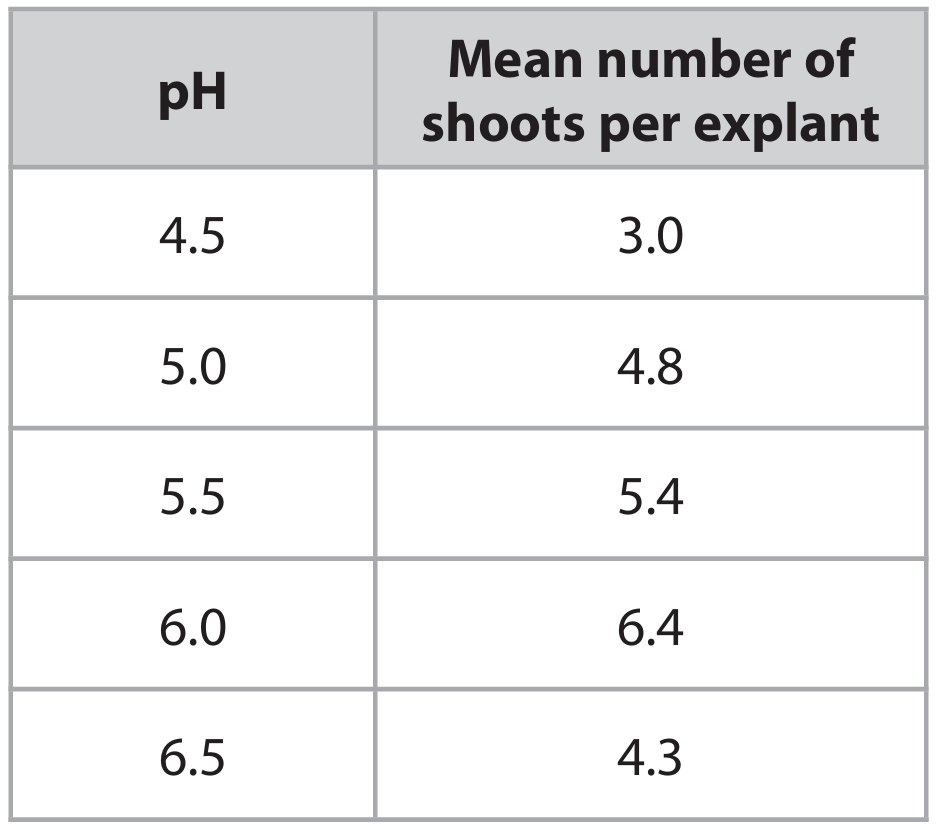
Answer: The mean number of shoots increases as the pH increases from 4.5 to 6.0, and then it decreases at pH 6.5. This pattern occurs due to the effect of pH on enzyme activity, with an optimum pH around 6.0 for the enzymes involved in shoot growth.
Explanation: When we look at the data, we can see a clear trend. At a very acidic pH of 4.5, the mean number of shoots is low (3.0). As the pH becomes less acidic and moves towards neutral, the number of shoots increases, reaching a maximum of 6.4 at pH 6.0. However, when the pH is increased further to 6.5, the number of shoots drops to 4.3. This pattern is classic for enzyme-controlled processes. The enzymes responsible for cell division and growth in the plant tissues have an optimal pH at which they work most efficiently, which appears to be pH 6.0 in this case. At pH values above and below this optimum, the enzymes become less active (they may denature at extremes), leading to reduced shoot formation.
(b)(ii)
Answer: The student should use sterile techniques to obtain and prepare the explants. Small pieces of plant tissue (explants) are cut from a parent plant using a sterilized scalpel. These explants are then surface-sterilized by washing them in a disinfectant like bleach or ethanol to kill any microorganisms. The sterile explants are placed on a nutrient agar gel in Petri dishes or test tubes. The agar contains essential nutrients, minerals, and plant hormones to support growth. The student would prepare several identical agar plates, each buffered to a specific pH (4.5, 5.0, 5.5, 6.0, 6.5). Multiple explants are placed in each pH condition to ensure the results are reliable. All plates are kept in a controlled environment (e.g., constant temperature and light) for a set period. After this time, the number of new shoots on each explant is counted, and a mean is calculated for each pH level.
Explanation: To get valid and reliable results, the procedure must be very careful and controlled. The key steps involve:
- Obtaining Explants: Using a sterile tool like a scalpel or forceps to take small tissue samples from the same part of the same plant species to keep the starting material consistent.
- Sterilization: Washing the explants in a disinfectant is crucial. Any bacteria or fungi present would contaminate the nutrient agar and compete with the plant tissue, ruining the experiment.
- Growing Medium: The explants are placed on a solid agar medium. This agar is not just a solidifier; it’s a “growth cocktail” containing sugars for energy, mineral ions, vitamins, and plant growth regulators (hormones) like auxins and cytokinins that stimulate shoot and root development.
- Controlling Variables: The pH is the independent variable, so it is deliberately changed for each set of plates. All other factors that could affect growth, such as temperature, light intensity, and the composition of the agar (except for pH), must be kept the same for all explants. Using multiple explants (repeats) at each pH allows the student to calculate a mean, making the results more trustworthy and accounting for natural variation between individual explants.
- Data Collection: After a predetermined growth period, the student counts the number of shoots that have developed from each explant and calculates the average for each pH group.
(c)
Answer:
- It produces genetically identical plants (clones), ensuring desirable characteristics from the parent plant are preserved.
- It allows for the rapid production of a large number of plants in a relatively short time, independent of seasonal constraints.
Explanation:
Benefit 1: Genetic Uniformity When you grow plants from seeds, the offspring show genetic variation due to sexual reproduction (cross-pollination). This means the new plants might not have the exact same desirable traits as the parent plant, such as specific flower color, fruit taste, or disease resistance. Micropropagation, however, is an asexual process. All the new plants are clones, meaning they are genetically identical to the original parent plant. This is extremely valuable for farmers and horticulturists who want to propagate a specific cultivar with known, superior qualities reliably.
Benefit 2: Speed and Season Independence Micropropagation can produce a vast number of plants from a single piece of tissue much faster than waiting for seeds to germinate and grow. A single explant can be induced to produce multiple shoots, and each of those shoots can then be divided and cultured again, leading to an exponential increase in plant numbers. Furthermore, this process is carried out in a lab under controlled conditions, meaning it is not dependent on seasons or weather. Plants can be produced all year round, which is not always possible with seeds that may have specific germination requirements.
Other potential benefits include: producing plants that are difficult to grow from seed, and conserving rare or endangered plant species.
▶️ Answer/Explanation
(a)
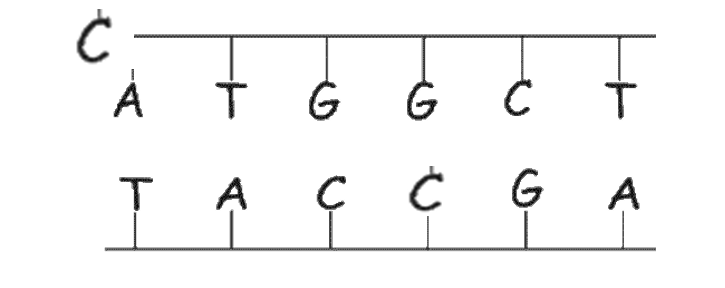
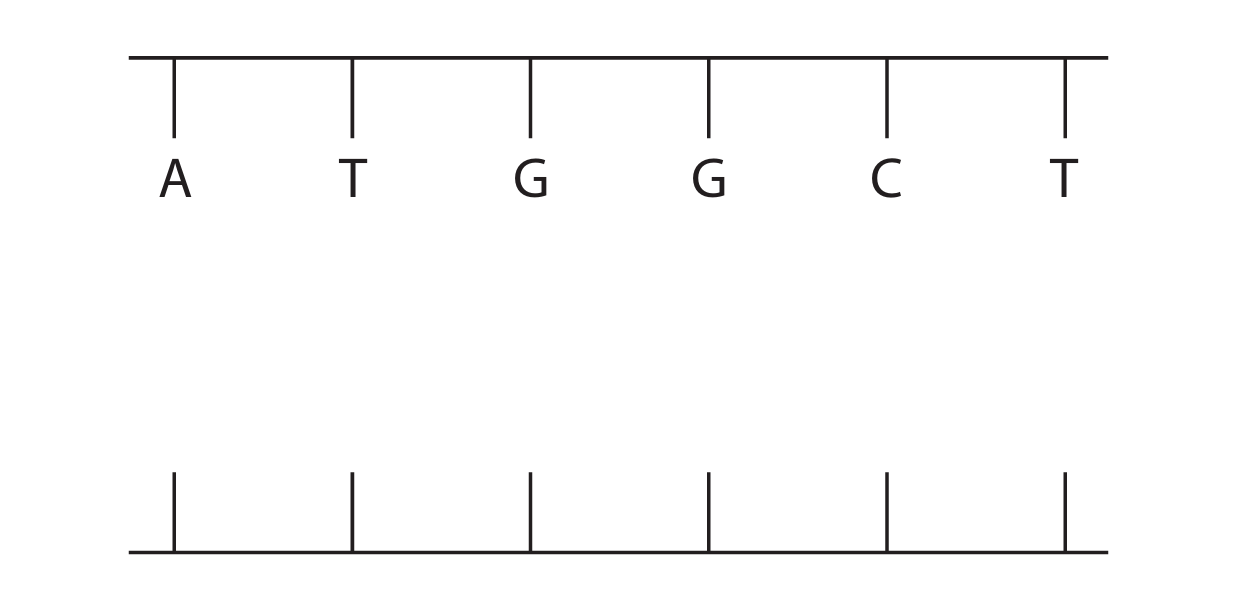
Explanation: DNA strands are complementary. Adenine (A) always pairs with Thymine (T), and Guanine (G) always pairs with Cytosine (C). Therefore, to complete the complementary strand, we match A with T, T with A, G with C, G with C, C with G, and T with A.
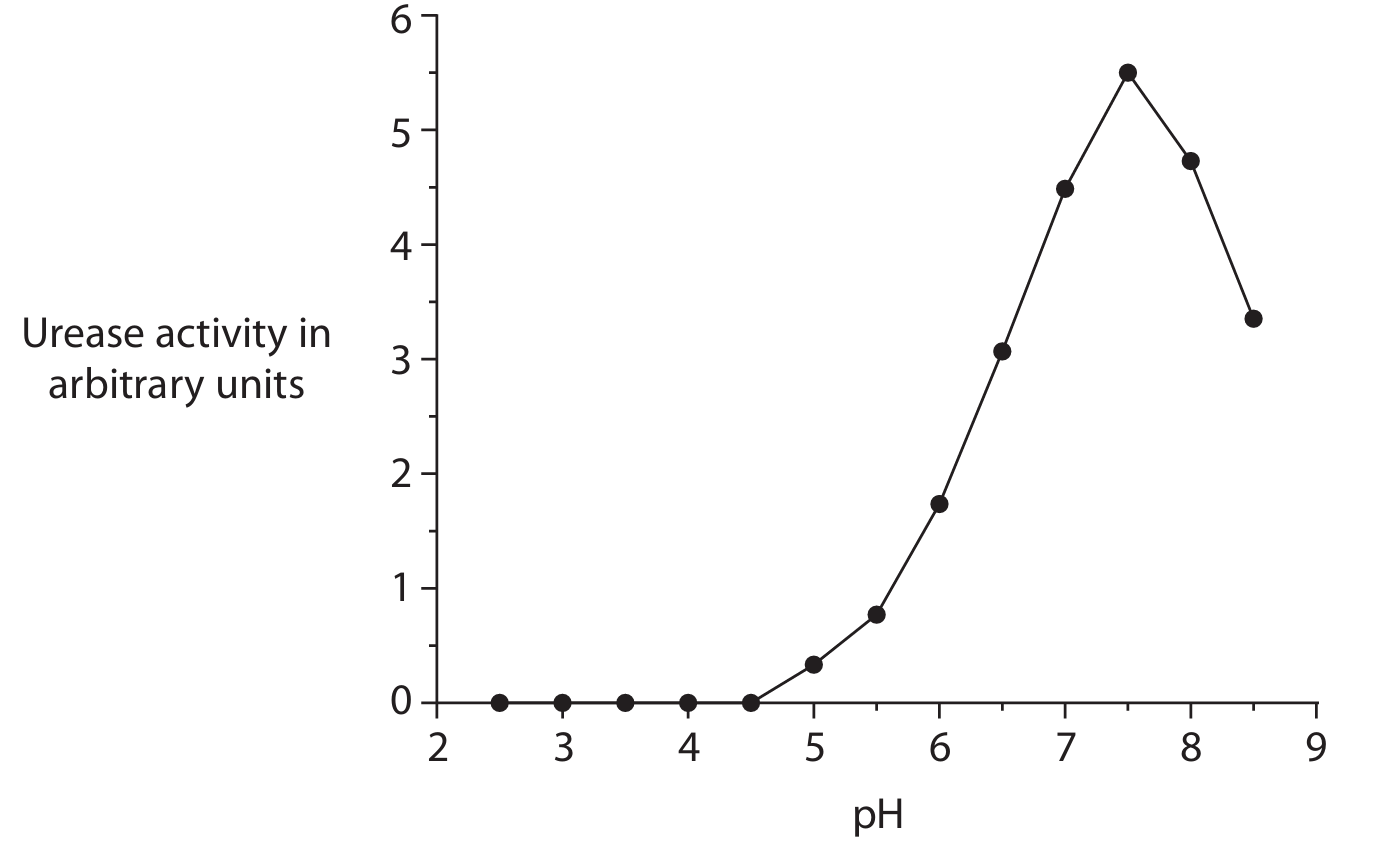
(b)(i) C 7.5
Explanation: The optimum pH is the point at which the enzyme shows its highest activity. From the graph (which would show this visually), urease activity peaks at around pH 7.5, making it the optimum pH for this enzyme’s function.
(b)(ii) At pH 8.5, the activity of urease is lower than its optimum. This happens because the higher pH (alkaline conditions) can cause the enzyme to denature. Denaturation means the enzyme’s active site changes shape, so it can no longer bind effectively to its substrate (urea in this case), resulting in fewer enzyme-substrate complexes and reduced activity.
Explanation: Enzymes are proteins that are sensitive to pH changes. Each enzyme has an optimum pH where its structure is ideal for catalysis. When the pH moves away from this optimum, particularly to extremes like pH 8.5 for urease, the ionic bonds and hydrogen bonds that maintain the enzyme’s specific three-dimensional shape can be disrupted. This alteration in shape, especially of the active site, prevents the substrate from fitting properly, drastically reducing the rate of reaction.
(c) Other bacteria in the nitrogen cycle have crucial roles:
- Nitrogen-fixing bacteria: These convert atmospheric nitrogen gas (\(N_2\)) into ammonia (\(NH_3\)), making nitrogen available to plants in a usable form.
- Nitrifying bacteria: This is a two-step process. First, some bacteria convert ammonia (\(NH_3\)) into nitrites (\(NO_2^-\)). Then, other bacteria convert these nitrites (\(NO_2^-\)) into nitrates (\(NO_3^-\)), which is the form most easily absorbed by plant roots.
- Denitrifying bacteria: These bacteria perform denitrification, which is the conversion of nitrates (\(NO_3^-\)) back into nitrogen gas (\(N_2\)). This process releases nitrogen back into the atmosphere, completing the cycle.
Explanation: The nitrogen cycle is essential for life, as nitrogen is a key component of amino acids and nucleic acids. Different groups of bacteria drive this cycle. Nitrogen-fixing bacteria, often found in root nodules of legumes, “fix” inert atmospheric nitrogen into reactive ammonia. Nitrifying bacteria in the soil then oxidize ammonia to nitrites and then to nitrates, which are soluble and can be taken up by plants. Finally, denitrifying bacteria, typically active in waterlogged, anaerobic soils, reduce nitrates back to nitrogen gas, returning it to the atmosphere and balancing the cycle. Without these bacterial processes, the vast reservoir of nitrogen in the air would be largely inaccessible to living organisms.
▶️ Answer/Explanation
(a)(i) The root hair cell has a long, thin extension (root hair) that increases its surface area, allowing for more efficient absorption of water from the soil.
Explanation: Root hair cells are specialized for absorption. Their elongated, hair-like projections significantly increase the surface area in contact with the soil water. This larger surface area maximizes the rate at which water can be absorbed via osmosis.
(a)(ii) Osmosis specifically involves the movement of water molecules, while diffusion can involve the movement of any type of molecule or ion.
Explanation: The key distinction is the substance being moved. Osmosis is a special case of diffusion that is exclusively concerned with the passive movement of water molecules across a partially permeable membrane from a region of higher water potential to a region of lower water potential. Diffusion, on the other hand, refers to the net movement of any particles (like oxygen, carbon dioxide, or ions) from a region of higher concentration to a region of lower concentration, and it may or may not involve a membrane.
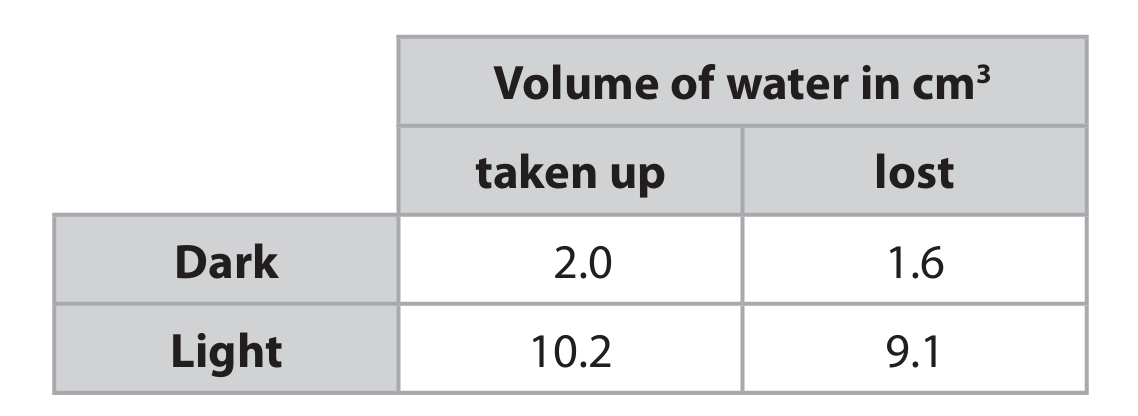
(b)(i) In the light, both water uptake and water loss are much greater than in the dark. More water is taken up than is lost in both conditions.
Explanation: In the light, the plant’s stomata are open to allow gas exchange for photosynthesis. This opening also increases the rate of transpiration (water loss) from the leaves. The loss of water by transpiration creates a transpiration pull, which draws more water up through the xylem from the roots, leading to the higher uptake. The small difference between uptake and loss (e.g., 10.2 – 9.1 = 1.1 cm³ in light) represents water used for processes like photosynthesis and maintaining cell turgor. In the dark, stomata are mostly closed, drastically reducing both transpiration and, consequently, water uptake.
(b)(ii) 1. Temperature
2. Humidity
Explanation: To ensure a fair test and that the results are solely due to the change in light intensity, other abiotic (non-living) factors that affect transpiration and water uptake must be kept constant. Temperature influences the rate of evaporation. Humidity affects the concentration gradient for water vapor loss; lower humidity increases transpiration. Other valid answers include air movement (wind) and the time allowed for the experiment.
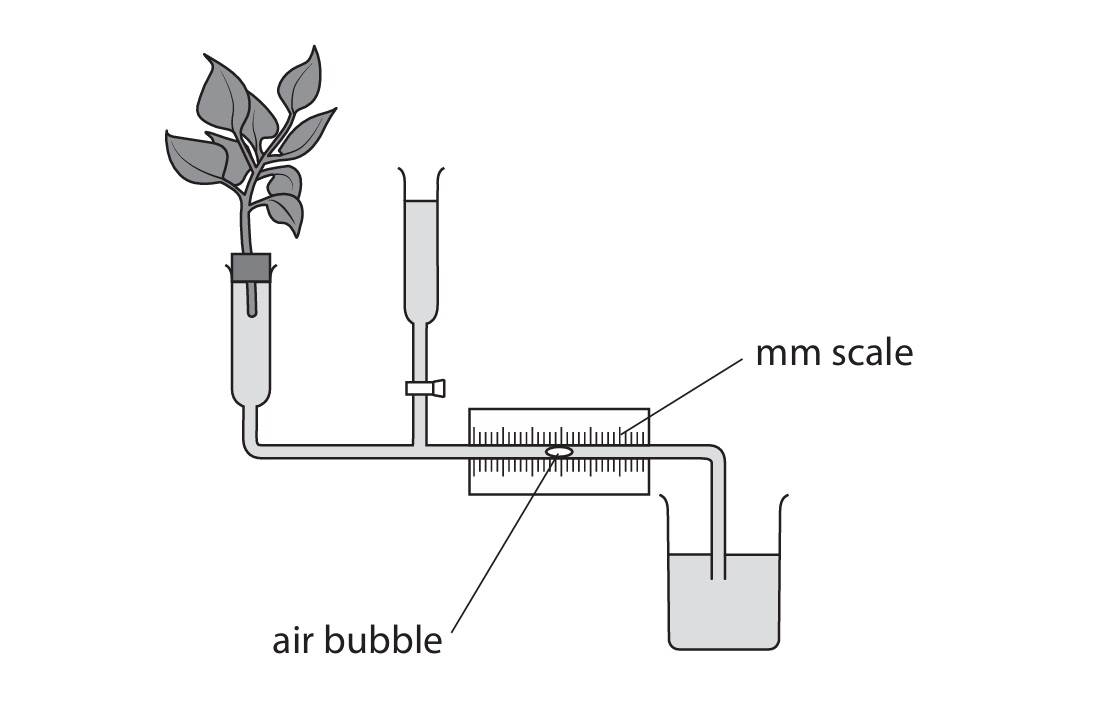
(c)(i) Potometer
Explanation: The apparatus shown in the diagram, designed to measure the rate of water uptake by a plant shoot, is called a potometer. It is important to note that it actually measures the rate of water uptake, which is assumed to be closely related to the rate of transpiration.
(c)(ii) The student should introduce an air bubble into the capillary tube and use the stop clock to measure the time taken for the bubble to move a certain distance along the scale. The distance moved is converted to a volume using the known cross-sectional area of the tube. The rate is calculated as volume divided by time, and the experiment is repeated to find a mean rate.
Detailed Description:
1. Set up the potometer with the plant shoot underwater to ensure no air enters the system.
2. Introduce a single air bubble into the capillary tube.
3. Start the stop clock as the bubble passes a starting point on the scale.
4. Stop the stop clock when the bubble passes a finishing point, and record the time taken.
5. Measure the distance the bubble traveled along the scale.
6. Since the capillary tube has a uniform diameter, the volume of water taken up is equal to the distance moved multiplied by the cross-sectional area of the tube (volume = πr² × distance, where r is the radius).
7. Calculate the rate of water uptake for that single run using: Rate = Volume / Time.
8. Reset the bubble using the reservoir (if available) and repeat the process several times.
9. Calculate the mean (average) rate of water uptake from all the repeat readings to improve reliability.
▶️ Answer/Explanation
(a)(i) Two reasons from:
- Prevent loss of blood / stops bleeding (1)
- Prevent entry of pathogens / microbes / bacteria / viruses / fungi / prevent infections (1)
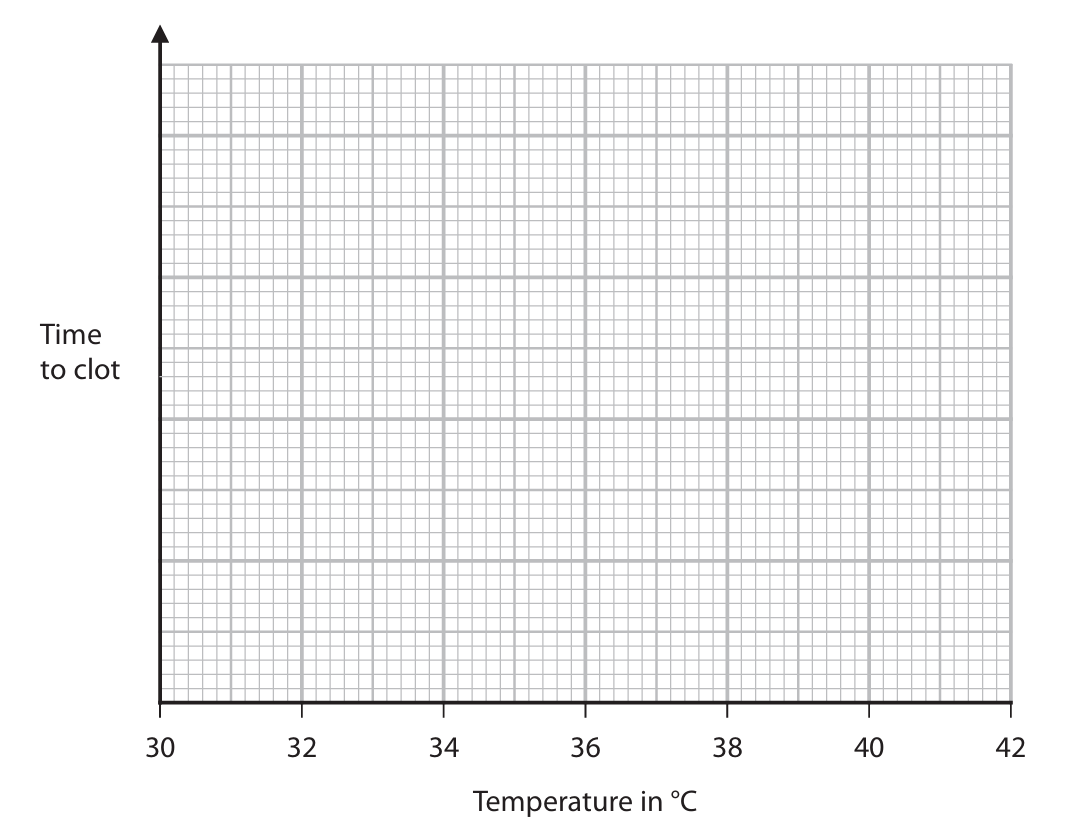
(a)(ii) Sketch graph showing a clear minimum (fastest clotting time) at \(37^\circ C\). The line should drop to a low point at \(37^\circ C\) and then rise on both sides.
(b)(i) An explanation that makes reference to:
- (They have been given) genetic material / gene / allele / DNA / are genetically altered (1)
- From human / a different species (1)
(b)(ii) An answer that makes reference to six of the following points:
- Use enucleated egg / empty egg / remove nucleus from egg / eq (1)
- Nucleus from body cell / diploid nucleus (placed into empty egg) / fuse adult cell with empty egg (1) (Ignore DNA)
- Use of electricity / shock (to fuse cells) (1)
- Cell division / mitosis (stimulated) (1)
- Embryo forms / develops (1)
- Embryo placed into uterus / womb (1)
- Surrogate mother (carries embryo to term) (1)
Award marks for any correct and relevant points describing the process of somatic cell nuclear transfer as used in cloning mammals (e.g., Dolly the sheep).
▶️ Answer/Explanation
(a) An explanation that makes reference to four of the following points:
- more (decomposition) / faster with warmer temperatures / eq (1)
(allow mass remains high in low temp) - enzymes (1)
- more (decomposition) / faster with cut material / eq (1)
(allow mass remains high in uncut) - more surface area (1)
- fungi / bacteria (1)
(allow converse)
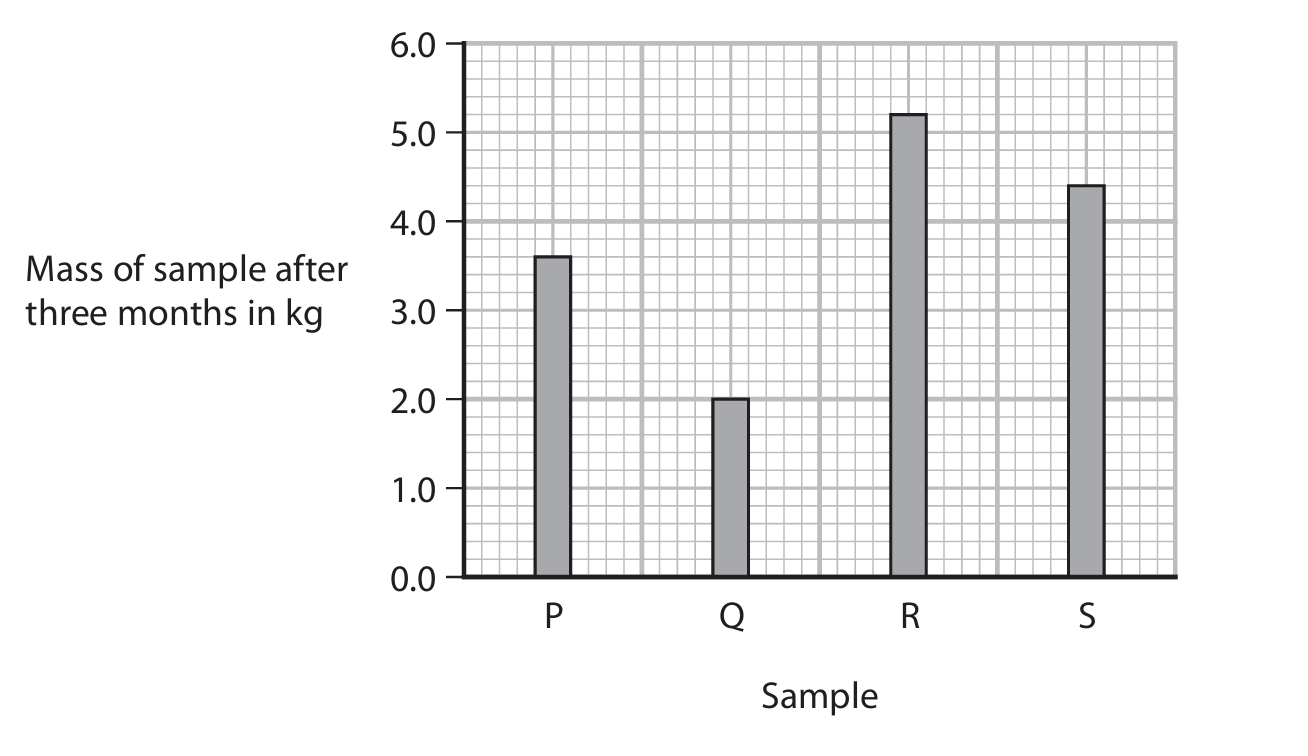
Example answer: Decomposition is faster at \(20^\circ C\) (samples Q and S) than at \(10^\circ C\) (samples P and R) because enzymes in decomposers like fungi and bacteria work more efficiently at higher temperatures. Cutting the leaves into small pieces (samples P and Q) increases the surface area available for decomposers and their enzymes to act on, leading to faster decomposition compared to uncut leaves (samples R and S) at the same temperature.
(b) Calculation:
- Mass loss for P: \(6.0 – 3.6 = 2.4 \text{ kg}\)
- Rate for P: \(2.4 \div 3 = 0.8 \text{ kg per month}\)
- Mass loss for Q: \(6.0 – 2.0 = 4.0 \text{ kg}\)
- Rate for Q: \(4.0 \div 3 = 1.333… \text{ kg per month}\)
- Difference: \(1.333… – 0.8 = 0.533… \text{ kg per month}\)
Answer: \(0.53\) (allow \(0.5\), \(0.53\), \(0.533\), etc.) kg per month
Award full marks for correct numerical answer without working.
(c) An answer that makes reference to two of the following points:
- species / type of leaves / plant (1)
- age of plant / leaves (1)
(ignore volume of leaves) - same (number of) / type of decomposers / eq (1)
- insects or organisms that might consume leaf / eq (1)
Example answer: 1. The species/type of leaf used. 2. The presence/absence of specific decomposers (e.g., fungi, bacteria).