Home / Edexcel iGCSE / Edexcel iGCSE Biology / Exam Style Questions

Edexcel iGCSE Biology 4BI1 - Paper 2B -Cloning- Exam Style Questions- New Syllabus

Question

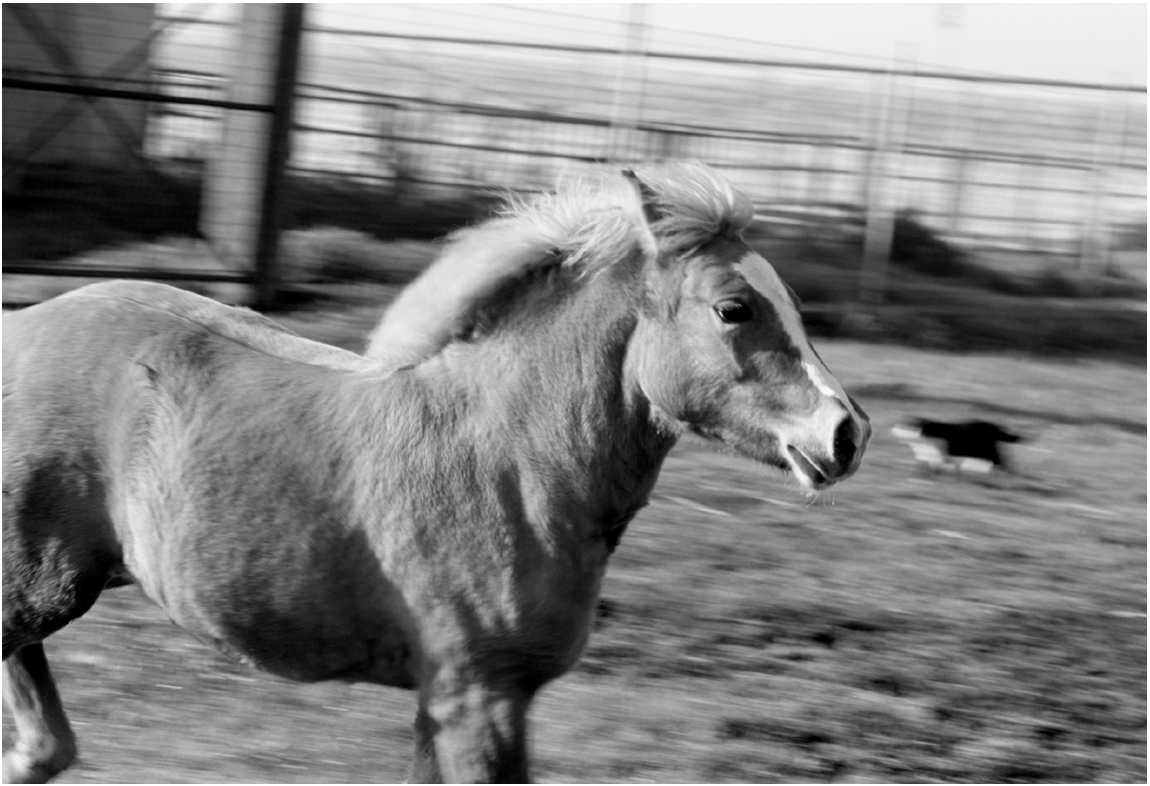
The photograph shows Prometea, the first cloned horse.

Prometea was produced by cloning, using the nucleus of a skin cell from a horse called Stella Cometa.

(a) Complete the passage about cloning by writing a suitable word or words in each blank space.

A ______ nucleus was taken from a skin cell from Stella Cometa.

This nucleus was inserted into an enucleated ______ that had been taken from a donor horse. An ______ was used to start the type of cell division called ______, eventually producing an embryo. The embryo was then placed into the ______ of the mother.

(b) Until recently, most cloning has been attempted with farm animals.

The table shows some information about the success rates of cloning different farm animals during a four-year period.

AnimalNumber in four-year period
 embryos madelive birthssurviving at least two years
cattle75007555
sheep35005015
goat500255

Some people now want to use cloning to replace their pets. The cost of cloning a pet cat can be as much as 50 000 United States dollars.

Comment on the use of cloning to replace pets.

Use the information in the table and your own knowledge about variation to support your answer.

Most-appropriate topic codes (Edexcel IGCSE Biology):

5(d): Cloning — part (a)
5(d): Cloning — part (b)
3(b): Inheritance — part (b) – variation aspects
▶️ Answer/Explanation
Solution

(a)

A diploid nucleus was taken from a skin cell from Stella Cometa.

This nucleus was inserted into an enucleated egg (cell) / ovum that had been taken from a donor horse. An (electric) shock / shock was used to start the type of cell division called mitosis, eventually producing an embryo. The embryo was then placed into the uterus / womb of the mother.

(b)

An answer that makes reference to five of the following points:

  1. most embryos made with cattle / fewest embryos made with goats / eq (1)
  2. low success rate / few live births / few survive / pets usually live longer than two years / low life expectancy / eq (1)
  3. cattle have highest survival rate (from live births) / goats have lowest survival rates (from live births) / eq (1)
  4. goats have highest live birth rate / cattle have lowest live birth rate (1)
  5. credit manipulated data (1)
  6. cloning is expensive / not cost effective / more cost than buying a new pet / eq (1)
  7. cloned pets are genetically identical / little genetic variation / could pass on harmful alleles / eq (1)
  8. some variation is environmental / not all variation is genetic / some features of pets will not be same / eq (1)
  9. no data for pets / pets may be different to farm animals / needs to be repeated for pets / eq (1)
  10. raises ethical issues / may not be ethical / eq (1)
  11. pet cloning could provide emotional benefits for people / eq (1)
Question

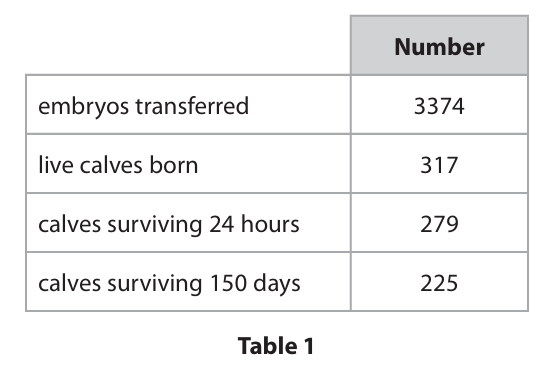
Scientists collect data to measure how successful cloning is in cattle.

Table 1 shows the scientists’ data.

(a) Calculate the percentage of embryos transferred that result in live calves being born.

(b) Describe the stages in the production of a cloned mammal from an adult mammal.

(c) There is some evidence that cloned cattle may have weakened immune systems. Explain why a weakened immune system can affect the health of cloned cattle.

(d) Scientists also collected data comparing cloned cattle and a control group.

Table 2 shows their results.

 Group
 clonescontrols
number of cows1011
mean birth mass in kg45.839.6
mean age at puberty in days419.3356.5
mean body mass at puberty in kg359303
daily mass increase in kg per day0.750.78

Comment on the effects of cloning on the growth and development of these cattle.

Most-appropriate topic codes (Edexcel IGCSE Biology):

5(d): Cloning — parts (a), (b), (d)
2(h): Transport — part (c)
Appendix 3: Mathematical skills — part (a)
▶️ Answer/Explanation
Solution

(a)

Calculation: \( \frac{317}{3374} \times 100 = 9.40\% \)

Percentage = 9.40%

(b)

A description that makes reference to four of the following points:

  • use enucleated egg / empty egg / remove nucleus from egg
  • nucleus from body cell / diploid nucleus placed into empty egg
  • use of electricity / shock
  • cell division / mitosis
  • embryo into uterus / womb
  • surrogate mother

(c)

An explanation that makes reference to two of the following points:

  • fewer white blood cells / phagocytes / lymphocytes / memory cells
  • fewer antibodies produced / antibodies produced slower / less phagocytosis / less engulfing
  • less resistance / more susceptible to infection / disease / pathogen not killed / pathogen remains

(d)

An answer description that makes reference to four of the following:

  • small study few cows involved
  • not repeated / not reliable / no information on strain / breed / type only females / only cows
  • higher birth mass in clones
  • older at puberty in clones / puberty later in clones
  • higher mass at puberty in clones
  • small difference / slight difference in growth rate / no significant difference in growth rate / slightly lower daily mass increase
  • no reference to diet / hormones / supplements
Question

Read the passage below. Use the information in the passage and your own knowledge to answer the questions that follow.

Extinctions

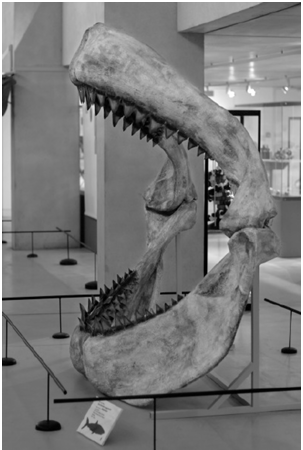
During the evolution of living organisms, most species have become extinct. Evolution by natural selection means that species constantly replace each other. The photograph shows the fossilised jaws of a shark called megalodon. Megalodon was a giant, predatory shark that became extinct 2.6 million years ago.

Some scientists think megalodon was replaced by giant, predatory toothed whales. These whales were the ancestors of modern orcas. Any sharks that remained evolved to become smaller. As well as the steady loss of species over time, there have been mass extinction events. Approximately 250 million years ago 90% of all animals and plants became extinct. The cause of this mass extinction is not known, but one theory is that it was due to the eruptions of volcanoes. The volcanoes released sulfur dioxide, carbon dioxide and dust into the atmosphere. This caused populations of producer species to fall, atmospheric carbon dioxide levels to rise, and oxygen levels to fall.

Human activity is now causing another mass extinction. Some scientists estimate that approximately one million animal and plant species are at risk. To prevent species loss, cryozoos are being developed. Cryozoos are storage tanks containing samples of body cells from animals and are kept at a temperature of -170 oC. The cells are put in a salt and sugar solution and then frozen. If a species becomes extinct, the frozen cells can be used to clone new animals. The banteng is an endangered breed of cattle. Banteng body cells have been stored in a cryozoo. These cells have been used with eggs from another species to successfully produce a living banteng.

In the future we may be able to bring back extinct species such as mammoths by making clones using the remains of frozen mammoths. Scientists need to consider the advantages and disadvantages of bringing back extinct animals. Currently, the biodiversity of the world is different from the time when mammoths were alive. Many natural predators of mammoths are now extinct. Mammoths may have helped to keep methane-releasing soil frozen, reducing the release of the methane. Mammoths were also an important part of the nitrogen cycle and increased the nutrient content of low-nutrient Arctic soil.

(a) Megalodon was an animal.

Which of these features does megalodon share with the fungus yeast?

  1. nuclei present in cells
  2. nervous coordination
  3. stores carbohydrate as glycogen

A) 1 and 2 only
B) 1 and 3 only
C) 2 and 3 only
D) 1, 2 and 3

(b) Scientists think that the giant, predatory toothed whales that replaced the extinct megalodon consumed the same sources of food. Explain how the evolution of giant, predatory toothed whales may have caused the extinction of megalodon. (lines 5 to 7)

(c) (i) Volcanoes release sulfur dioxide into the atmosphere. Describe the biological consequences of sulfur dioxide release. (lines 10 to 12)
(ii) The release of large amounts of dust into the atmosphere reduced light intensity. Explain why this would cause a loss of food chains. (lines 9 to 11)

(d) (i) Explain why the cells in cryozoos are put in salt and sugar solution rather than pure water. (lines 16 to 18)
(ii) Describe how scientists could clone a bantering. (lines 18 to 20)

(e) Explain why releasing cloned mammoths could have negative and positive effects on Arctic biodiversity. (lines 22 to 28)

Most-appropriate topic codes (Edexcel IGCSE Biology):

1(b): Variety of living organisms — part (a)
4(d): Human influences on the environment — part (c)(i)
4(a), 4(b): The organism in the environment, Feeding relationships — part (c)(ii)
2(d): Movement of substances into and out of cells — part (d)(i)
5(d): Cloning — part (d)(ii)
4(d), 5(d): Human influences on the environment, Cloning — part (e)
▶️ Answer/Explanation
Solution

(a) B (1 and 3 only)
A is incorrect as yeast has no nervous system
C is incorrect as yeast has no nervous system
D is incorrect as yeast has no nervous system

(b) An explanation that makes reference to three of the following:
• competition (between megalodon and whales) (1)
• whales ate more food / eq (1)
• whales better adapted / swam faster / better at feeding / better at hunting / eq (1)
• whales survived / eq (1)
• whales reproduced more / had more offspring / eq (1)
Accept less food left for megalodon / no food / megalodon starve. Accept megalodon less well adapted. Accept megalodon did not survive/died (out). Ignore extinct.

(c) (i) A description that makes reference to two of the following:
• acid rain (1)
• deforestation / death of trees / death of plants / eq (1)
• death of fish / death of animals in lakes / loss of species in lakes or rivers / eq (1)
Accept sulphuric acid. Accept damages plants/trees. Accept loss of food chains/biodiversity.

(ii) An explanation that makes reference to three of the following:
• (less) photosynthesis (1)
• so less glucose / sugar / starch / eq (1)
• fewer producers / fewer plants / less mass of producers / producers die / plants do not grow as much / eq (1)
• less food for consumers / less energy for consumers / eq (1)
Ignore ‘cannot produce food’ for mp2. Accept fewer consumers/herbivores/carnivores.

(d) (i) An answer that makes reference to two of the following:
• prevents osmosis / less osmosis (1)
• so water will not enter cells / eq (1)
• so cells do not burst / eq (1)
Accept osmosis would occur if in water. Accept cells burst if in water.

(ii) A description that makes reference to four of the following:
• place diploid nucleus into enucleated egg cell / place body cell nucleus into enucleated egg cell / eq (1)
• electric shock / eq (1)
• mitosis / cell division / eq (1)
• place embryo into uterus / womb (1)
• of surrogate (mother) (1)
Accept fuse body cell with enucleated egg. Accept empty egg cell for enucleated egg cell.

(e) A description that makes reference to three of the following:
Negative:
• mammoth population increases / over-population occurs / eq (1)
• mammoth eats too much food / less food for other species / eq (1)
Positive:
• less global warming / less greenhouse effect / eq (1)
• decomposition of faeces / decay of dead mammoths (1)
• more amino acid / protein / DNA / chlorophyll synthesis in plants / eq (1)
• (soil nutrients means) more plants / increased plant growth / eq (1)
Accept high mammoth reproduction rate. Accept overeats prey / prey could go extinct. Accept less greenhouse gas. Accept better plant growth.
Question

The passage gives information about cloning.

Complete the passage by writing a suitable word in each blank space.

Animals such as sheep have been cloned.

Cloning involves taking the ______ out of a diploid body cell from the sheep that is to be cloned. This structure is then placed into an ______ cell that has had its ______ removed.

Electricity is used to help the cell to ______ by mitosis.

This then develops into an ______ which is then placed into the ______ of an unrelated female.

This female is known as the ______ mother.

Most-appropriate topic codes (Edexcel IGCSE Biology):

5(d): Cloning — full question
3(a): Reproduction — reference to embryo development and implantation
2(b): Cell structure — reference to nucleus and cell division (mitosis)
▶️ Answer/Explanation
Solution

Completed Passage:

Animals such as sheep have been cloned.

Cloning involves taking the nucleus out of a diploid body cell from the sheep that is to be cloned. This structure is then placed into an egg cell that has had its nucleus removed.

Electricity is used to help the cell to divide by mitosis.

This then develops into an embryo which is then placed into the uterus of an unrelated female.

This female is known as the surrogate mother.

Detailed Explanation:

The process described is somatic cell nuclear transfer (SCNT), a common method used in animal cloning, famously used to create Dolly the sheep.

  1. Nucleus: The nucleus is removed from a regular body (somatic) cell of the animal to be cloned. This nucleus contains the full set of genetic information (DNA).
  2. Egg: An unfertilized egg cell (oocyte) is taken from a female donor.
  3. Nucleus: The nucleus of this egg cell is carefully removed, effectively enucleating it. This empties the cell of its genetic material.
  4. Divide: The enucleated egg cell and the nucleus from the body cell are fused together, often using a small electric shock. This shock also stimulates the new cell to begin dividing by mitosis, the process of cell division.
  5. Embryo: After a few divisions, the dividing cell mass forms an early-stage embryo.
  6. Uterus: This developing embryo is then implanted into the uterus (womb) of a female animal.
  7. Surrogate: This female, who will carry the pregnancy to term and give birth, is called the surrogate mother. The resulting offspring will be a genetic copy (clone) of the animal that donated the original body cell nucleus, not the surrogate.
Question

Scientists have genetically modified soya plants so that the soya beans they produce contain less saturated fat.

The scientists produced one transgenic soya plant. Micropropagation was then used to make multiple copies of this transgenic soya plant.

(a) Explain why micropropagation was used to produce copies of the transgenic soya plant.

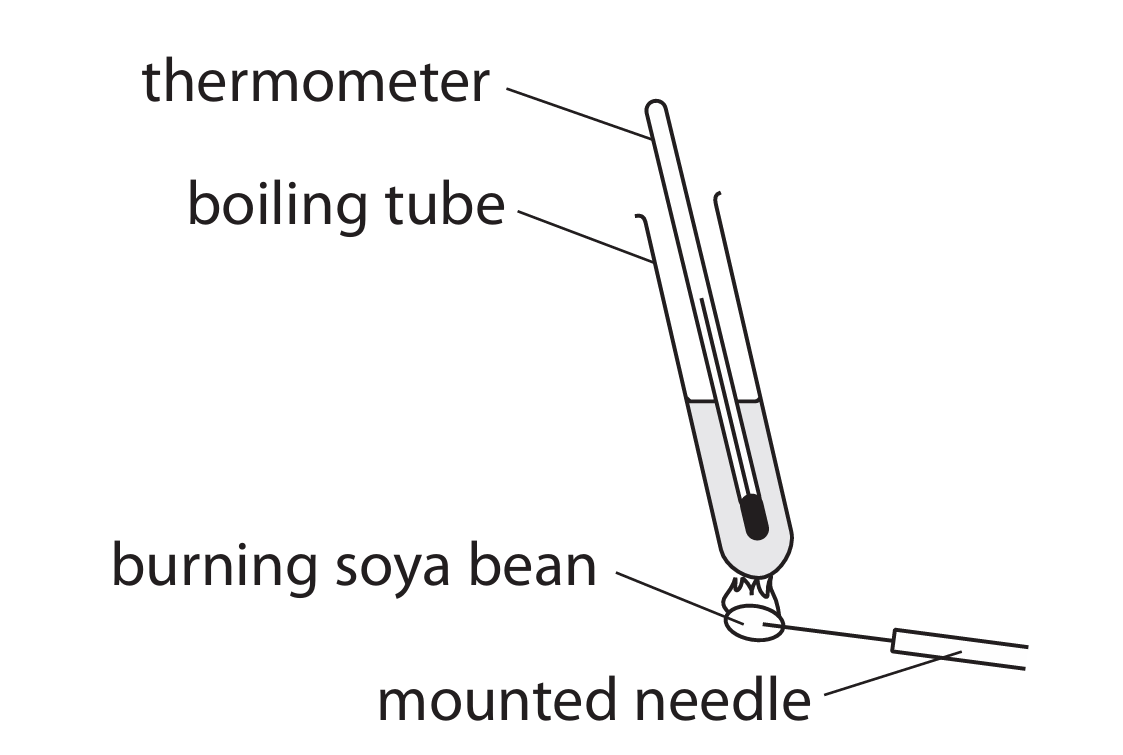
(b) A student uses this equipment to compare the energy content of transgenic soya beans with the energy content of non-transgenic soya beans.

(i) Describe how the student could use the equipment to make a valid comparison of the energy content of the two types of soya bean.

(ii) Give one safety precaution that the student should take when using the apparatus.

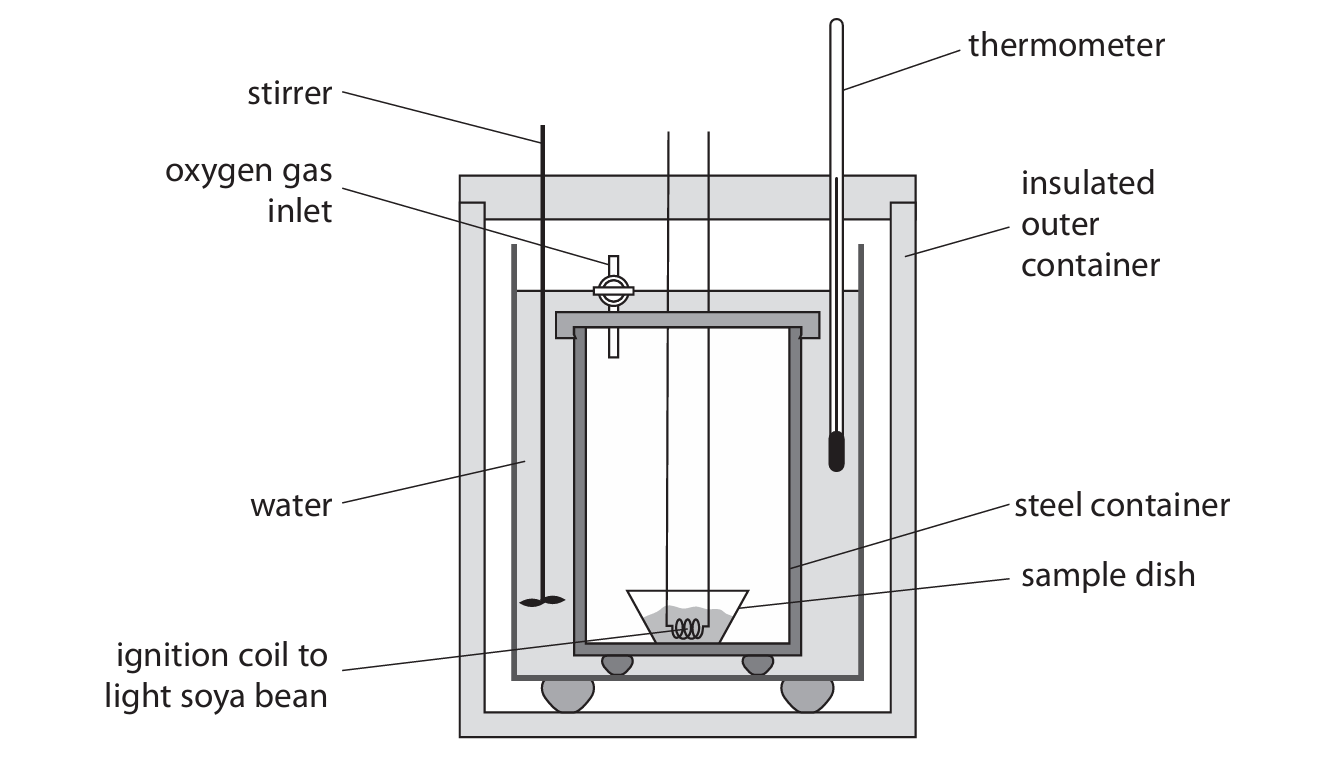
(iii) The diagram shows a different type of apparatus that can be used for the investigation.

Explain two reasons why this apparatus will give a more accurate energy value than the apparatus used by the student.

Most-appropriate topic codes (Edexcel IGCSE Biology):

5(c): Genetic modification (genetic engineering) — part (a)
5(d): Cloning — part (a)
2(e): Nutrition — part (b)(i), (b)(iii)
Appendix 6: Suggested practical investigations — part (b)(i), (b)(iii)
2.33B practical: investigate the energy content in a food sample — part (b)
▶️ Answer/Explanation
Solution

(a) Micropropagation was used because it produces genetically identical plants (clones) that all contain the modified gene for reduced saturated fat. This ensures consistency in the desired trait without the need to repeat the complex genetic modification process. Additionally, since only one transgenic plant was initially created, micropropagation provides a rapid method to produce many copies regardless of season, avoiding the limitations of traditional breeding.

(b)(i) To make a valid comparison, the student should:

  1. Use the same mass of each type of soya bean (or calculate energy per gram)
  2. Use the same volume (or mass) of water in the boiling tube
  3. Ignite each bean completely and hold it at a consistent distance under the boiling tube to heat the water
  4. Measure the temperature change of the water (initial and highest temperature)
  5. Repeat the experiment multiple times to calculate average values and ensure reliability

(b)(ii) One important safety precaution is to wear eye protection to prevent injury from potential splashes or flying fragments when heating the beans.

(b)(iii) This advanced apparatus provides more accurate results because:

  1. Oxygen supply: The oxygen gas inlet ensures complete combustion of the soya bean, preventing incomplete burning that would yield inaccurate energy measurements.
  2. Insulation: The insulated outer container minimizes heat loss to the surroundings, ensuring that more of the generated heat is transferred to the water and measured.
  3. Stirring mechanism: The stirrer distributes heat evenly throughout the water, preventing hot spots and ensuring a more accurate temperature measurement.
  4. Contained ignition: The internal ignition coil allows the bean to burn completely within the apparatus without needing to be moved, reducing heat loss during transfer.
Question

Read the passage below. Use the information in the passage and your own knowledge to answer the questions that follow.

Treating Kidney Disease

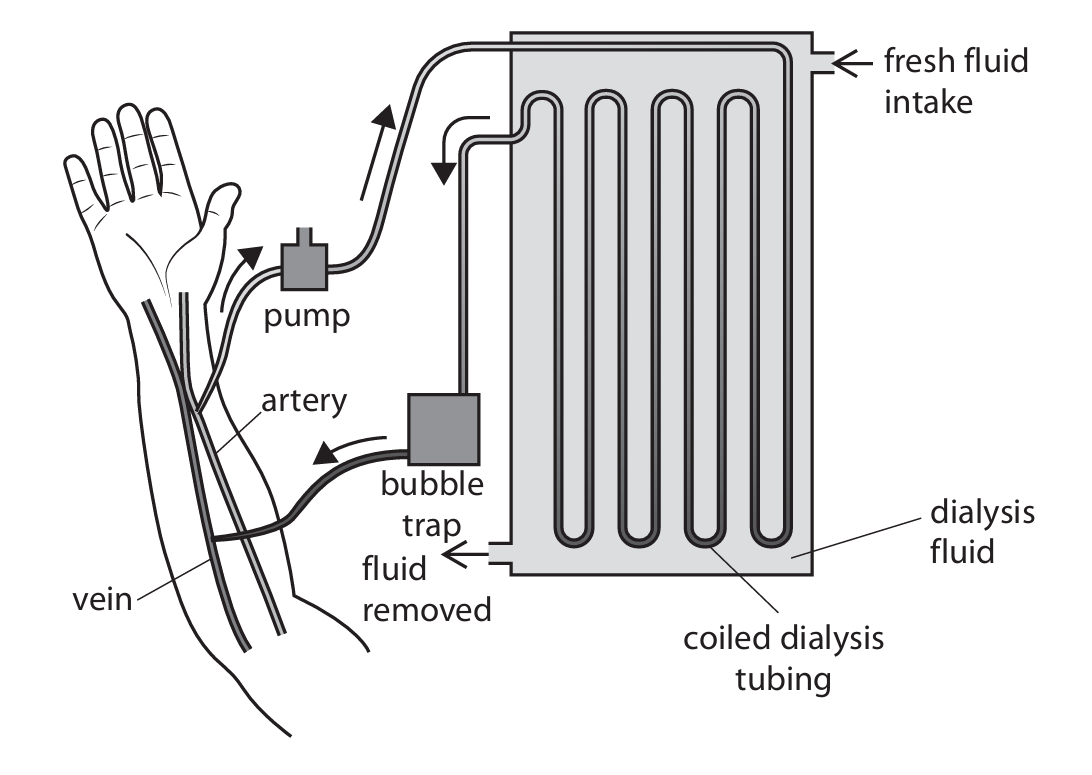
Chronic kidney disease affects approximately 12% of the world’s population and many people are unable to obtain treatment. One method of treating chronic kidney disease is by dialysis. The diagram shows how kidney dialysis is done.

During dialysis, blood is taken from an artery in the arm and is pumped through a dialyser. In the dialyser, the blood passes through a long, coiled dialysis tube made of a thin partially permeable membrane. The tube is surrounded by dialysis fluid. The dialysis fluid contains glucose and ions at concentrations normally found in blood plasma, but does not contain urea. The urea passes from the blood into the dialysis fluid. The temperature in the dialyser is kept at 40°C. After passing through the dialyser, the blood is returned to a vein in the arm. Kidney dialysis can take up to three hours and must be done three times a week.

Scientists have now designed a new bioartificial kidney. This artificial kidney is a combination of engineering and living cells. This artificial kidney has a haemofilter made from artificial membranes that filter the blood. The substances filtered out of the blood then pass through a device called a bioreactor. This bioreactor absorbs useful substances back into the blood. The bioreactor is made of living nephron cells that are grown from stem cells. These cells are separated from the patient’s blood by a silicon membrane to prevent the immune system rejecting them. Bioartificial kidneys are the same size as a human kidney and will be fitted inside the body to replace a kidney. The bioartificial kidney can react to changes in the body in the same way as a normal kidney.

(a) In 2021, the world’s population was 7 900 000 000.

Calculate the number of people in the world who have chronic kidney disease.

Give your answer in standard form.

(b) Urea is an excretory product that is released by the kidneys.

Give the name of an excretory product that is released by the lungs.

(c) Explain two ways that the dialyser is designed to increase the rate of removal of urea from the blood.

(d) (i) The haemofilter in the bioartificial kidney filters the blood.

Where does ultrafiltration occur in a nephron?

  • A. Bowman’s capsule
  • B. collecting duct
  • C. distal convoluted tubule
  • D. loop of Henle

(d) (ii) The cells in the bioreactor absorb glucose from the filtrate in a way that is similar to the cells in a nephron.

Describe how the nephron absorbs glucose back into the blood from the filtrate.

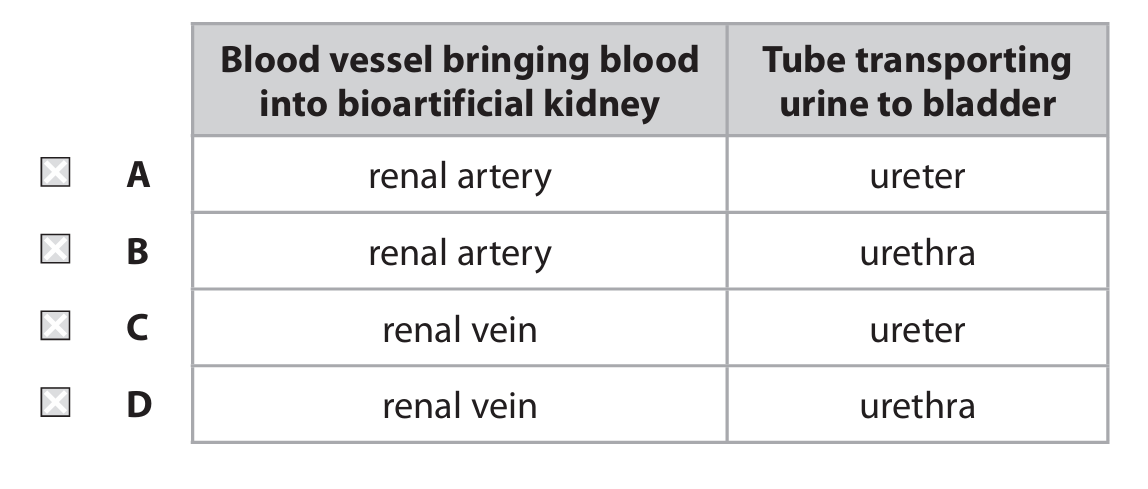
(d) (iii) The bioartificial kidney is connected to blood vessels and to the tube that transports urine to the bladder in the same way as the human kidney.

Which row of the table is correct?

(e) Explain how the pituitary gland and the nephron cells in the bioreactor will respond in a patient who is dehydrated.

Most-appropriate topic codes (Edexcel IGCSE Biology):

2(i): Excretion — parts (b), (c), (d)(i), (d)(ii), (d)(iii), (e)
4: Mathematical skillspart (a)
2(h): Transport — part (d)(ii)
5(d): Cloning — related context in passage
▶️ Answer/Explanation
Solution

(a) Answer: 9.5 × 10⁸

Explanation: To calculate the number of people with chronic kidney disease, we multiply the world population by 12% (or 0.12).

Calculation: 7,900,000,000 × 0.12 = 948,000,000

In standard form, this is 9.48 × 10⁸, which rounds to 9.5 × 10⁸ when expressed to two significant figures as appropriate for the percentage given (12%).


(b) Answer: Carbon dioxide / CO2 or Water (vapour) / H2O

Explanation: The lungs are responsible for excreting carbon dioxide, which is a waste product of cellular respiration. Water vapor is also excreted through the lungs during exhalation, especially in humid environments.


(c) Answer: The dialyser is designed in two key ways to increase urea removal:

1. The temperature is maintained at 40°C, which is slightly higher than normal body temperature. This increases the kinetic energy of urea molecules, making them move faster and diffuse more rapidly across the partially permeable membrane.

2. The dialysis fluid contains no urea, creating a steep concentration gradient between the blood and the dialysis fluid. This maximizes the rate of diffusion of urea from the blood into the dialysis fluid, following the principle of moving from an area of high concentration to an area of low concentration.

Additional design features include the long, coiled tubing which provides a large surface area for diffusion, and the thin partially permeable membrane which shortens the diffusion pathway.


(d)(i) Answer: A. Bowman’s capsule

Explanation: Ultrafiltration occurs in the Bowman’s capsule of the nephron, where high pressure forces small molecules like water, glucose, urea, and salts out of the blood and into the nephron tubule, while larger molecules like proteins and blood cells remain in the blood.


(d)(ii) Answer: Glucose is reabsorbed from the filtrate in the nephron through selective reabsorption in the proximal convoluted tubule. This process involves active transport, which requires energy (ATP) to move glucose molecules against their concentration gradient from the tubule back into the blood capillaries. Specialized carrier proteins in the cells lining the tubule facilitate this transport.


(d)(iii) Answer: A (renal artery / ureter)

Explanation: The renal artery brings oxygenated blood into the kidney for filtration, while the ureter is the tube that transports urine from the kidney to the bladder. The urethra is not correct as it transports urine from the bladder out of the body, not from the kidney to the bladder.


(e) Answer: In a dehydrated patient:

1. Osmoreceptors in the hypothalamus detect the increased solute concentration (decreased water potential) in the blood.

2. The hypothalamus stimulates the pituitary gland to release more antidiuretic hormone (ADH).

3. ADH travels through the bloodstream to the kidneys (or bioreactor nephron cells).

4. ADH makes the walls of the collecting duct (or bioreactor membrane) more permeable to water.

5. More water is reabsorbed from the filtrate back into the blood, resulting in a smaller volume of more concentrated urine.

This negative feedback mechanism helps conserve water in the body and restore normal blood concentration.
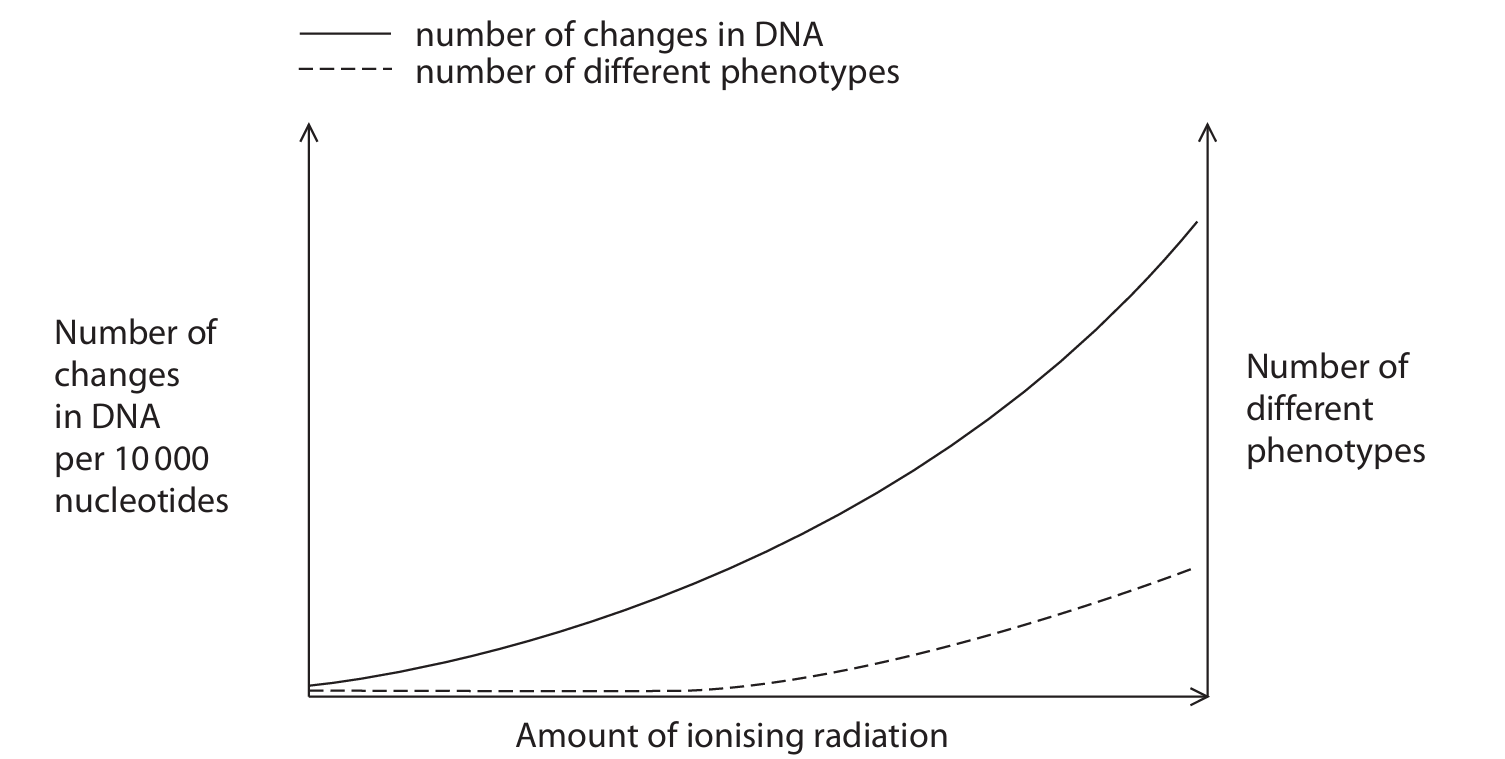
Question

The following passage contains information about using micropropagation to produce plants.

Complete the passage by writing a suitable word in each blank space. (6)

Micropropagation uses small fragments of plants which are regrown into whole plants. These fragments of plants are known as __.

The surface of each fragment is sterilised to prevent growth of __. The fragments are placed in a growth medium. The growth medium contains agar and a source of energy such as __.

This method is able to produce large quantities of genetically identical plants called __.

One advantage is that micropropagation is quicker than __ reproduction, which involves flower and seed production. Another advantage of micropropagation is that plants can be produced __ the year.

Most-appropriate topic codes (Edexcel IGCSE Biology):

5(d): Cloning — micropropagation, explants, cloning
3(a): Reproduction — sexual vs asexual reproduction
5(a): Food production — growth media, sterilisation
▶️ Answer/Explanation
Solution

Completed passage:

Micropropagation uses small fragments of plants which are regrown into whole plants. These fragments of plants are known as explants.

The surface of each fragment is sterilised to prevent growth of microorganisms. The fragments are placed in a growth medium. The growth medium contains agar and a source of energy such as sugar.

This method is able to produce large quantities of genetically identical plants called clones.

One advantage is that micropropagation is quicker than sexual reproduction, which involves flower and seed production. Another advantage of micropropagation is that plants can be produced throughout the year.

Detailed Explanation:

Explants are small pieces of plant tissue (such as shoot tips, leaves, or stem segments) that are used in micropropagation. These explants are sterilized to eliminate any microorganisms (like bacteria or fungi) that could contaminate the culture and hinder plant growth. The growth medium contains agar to provide a solid surface and sugar (usually sucrose) as an energy source since the explants may not be able to photosynthesize effectively initially.

Micropropagation produces clones, which are genetically identical plants. This ensures uniformity in characteristics like growth rate, flower color, or fruit quality. Compared to sexual reproduction (which involves pollination, seed formation, and germination), micropropagation is faster because it bypasses these stages and allows for rapid multiplication. Additionally, micropropagation can be done throughout the year under controlled laboratory conditions, independent of seasonal changes that affect traditional planting.

Question

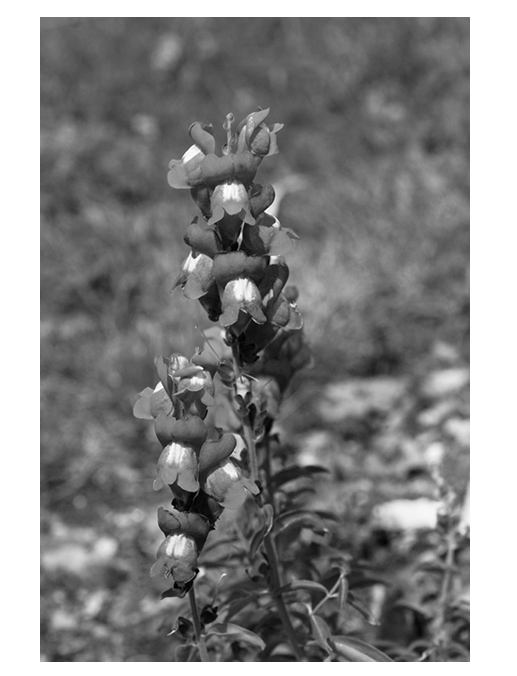
The photograph shows a plant called a snapdragon.

Selective breeding has been used to produce snapdragons with brightly coloured flowers.

(a) (i) Describe how selective breeding can produce snapdragon plants with brightly coloured flowers.

(ii) Micropropagation is often used to make copies of a snapdragon plant. Describe the process of micropropagation.

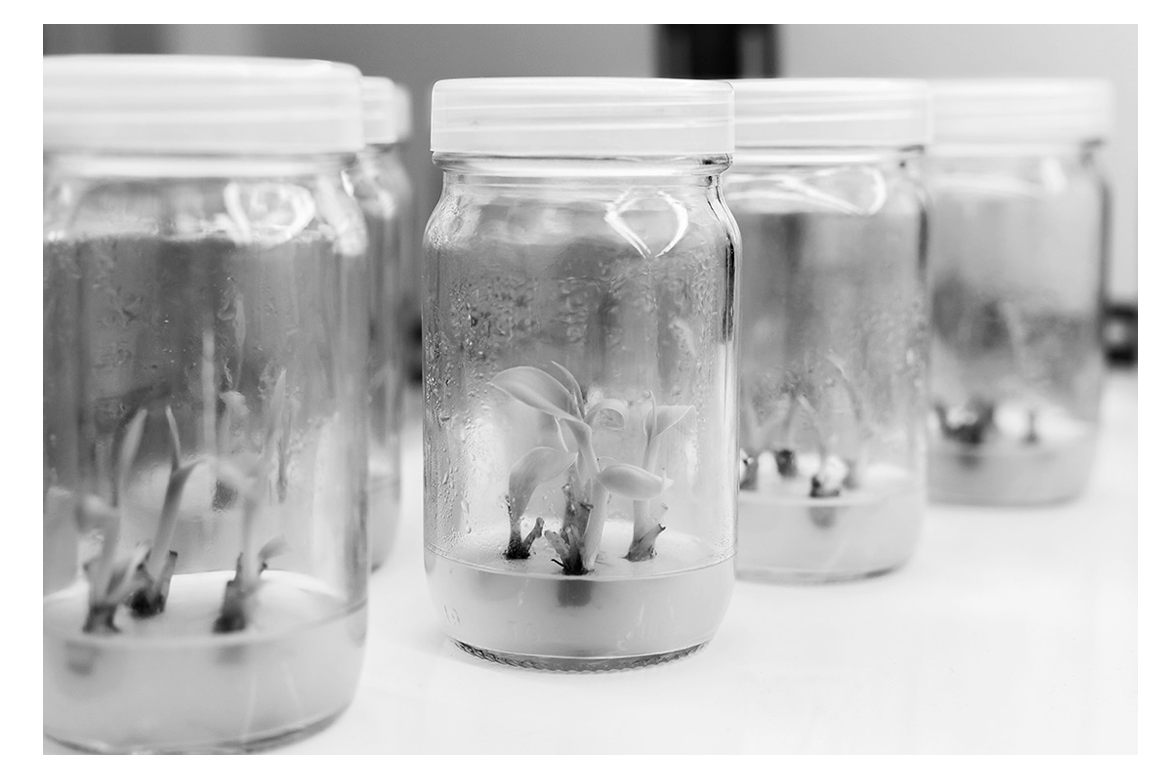
(b) Scientists investigate the effect of exposing snapdragon explants to increasing amounts of ionising radiation.

This is the scientists’ method:

  • take a snapdragon plant and use micropropagation to produce many explants
  • expose groups of explants to different amounts of ionising radiation
  • grow the explants into plants and record the number of differences in their phenotypes compared with the original plant
  • take samples of each of the plants and measure the number of differences in DNA nucleotides of each plant compared with the original plant

(i) Give the reason why micropropagation is used to produce the plants to be tested.

(ii) What term is given to all the DNA in an organism?

  • A. gene
  • B. genome
  • C. genotype
  • D. nucleoid

(iii) The graph shows the scientists’ results.

Discuss the effects that increasing the amount of ionising radiation has on the snapdragons.

Most-appropriate topic codes (Edexcel IGCSE Biology):

5(b): Selective breeding — part (a)(i)
5(d): Cloning — parts (a)(ii), (b)(i)
3(b): Inheritance — parts (b)(ii), (b)(iii)
3(b): Mutation — part (b)(iii)
▶️ Answer/Explanation
Solution

(a)(i) Selective breeding for brightly colored snapdragons involves first selecting parent plants that exhibit the desired bright flower coloration. These selected plants are then cross-pollinated to produce offspring. From these offspring, those that display the brightest flowers are selected again. This process of selection and breeding is repeated over several generations, gradually increasing the frequency of alleles responsible for bright flower coloration in the population, eventually producing a true-breeding variety with consistently bright flowers.

(a)(ii) Micropropagation is a tissue culture technique used to rapidly produce large numbers of genetically identical plants (clones). The process begins with taking small tissue samples (explants) from the parent plant, often from meristematic tissue. These explants are sterilized using ethanol or other disinfectants to remove any microorganisms. The sterile explants are then placed on a nutrient-rich agar medium containing essential minerals, sugars, amino acids, and plant growth regulators (such as auxins and cytokinins). Under controlled environmental conditions, the explants develop into small plantlets. These plantlets are eventually transferred to soil where they grow into mature plants genetically identical to the original parent plant.

(b)(i) Micropropagation is used to produce the plants for testing because it generates genetically identical clones. This ensures that any differences observed in phenotypes or DNA after radiation exposure are due to the radiation treatment itself rather than genetic variation between individual plants. Using clones controls for genetic variables, making the experiment more reliable and the results more valid.

(b)(ii) Answer: B (genome)
Explanation: The genome refers to the complete set of DNA in an organism, including all of its genes. A gene is a specific segment of DNA that codes for a particular protein or functional RNA. Genotype refers to the genetic makeup of an individual organism for specific traits. Nucleoid is the region in prokaryotic cells where DNA is located, but not the term for all DNA in an organism.

(b)(iii) Increasing ionising radiation has several effects on snapdragons. Firstly, it causes an increase in DNA mutations, as shown by the rising number of changes in DNA nucleotides. This occurs because radiation damages DNA by breaking strands or altering bases. Secondly, it increases phenotypic variation, as more different phenotypes appear with higher radiation doses. However, the relationship isn’t perfectly proportional – DNA changes increase more rapidly than phenotypic variations. This is because many mutations are silent (don’t change amino acid sequences), occur in non-coding regions, or are recessive and don’t affect the phenotype when heterozygous. Additionally, some mutations may be lethal and not represented in the phenotypic data. At very high radiation levels, the mutation rate may become detrimental to plant survival and reproduction.
Question

Read the passage below. Use the information in the passage and your own knowledge to answer the questions that follow.

Tissue culture and plants

In micropropagation, plant tissues are grown in vitro on plant tissue culture media, under aseptic conditions in a controlled environment. This technique is possible because plant cells can differentiate and become specialised cells. This allows them to change their metabolism, growth and development to form a whole plant.

Plant tissue culture media contain substances to support the normal growth and development of plants. The media are mainly composed of minerals, vitamins, and plant hormones. The pH of the media is kept constant.

Plant hormones play an essential role in determining how cells and tissues develop in culture media. Plant cells can differentiate into different tissues and cell types. The concentration of hormones can determine the tissue that develops. Auxins and cytokinins are the most widely used. A balance of both auxin and cytokinin leads to the development of a mass of undifferentiated cells known as a callus.

In vitro cell culture offers an alternative method for conserving endangered species and varieties. Tissue culture can be used when the plant species produce seeds that do not germinate or have seeds that cannot be stored for a long period of time. These can be successfully preserved using in vitro techniques for the maintenance of gene banks.

Embryo culture is a type of plant tissue culture that is used to grow embryos from seeds in nutrient media. In embryo culture, the plant develops directly from the embryo or indirectly through the formation of a callus and then subsequent formation of shoots and roots. The technique has been developed to break dormancy in seeds, and to reproduce rare species and haploid plants.

Scientists are also using cell suspension culture systems from which products can be extracted. A suspension culture is developed by transferring a portion of the callus into liquid media. The media are maintained under suitable conditions of agitation, light and temperature. This system can provide a continuous, reliable source of natural products independent of climate and soil conditions. The first commercial application of large-scale suspension cultivation of plant cells was carried out to produce shikonin. Shikonin is used in traditional Chinese medicine and is a potential anti-cancer treatment.

(a) State what is meant by the term in vitro. (line 1)

(b) Explain how plant cells differ from human cells in their ability to differentiate and specialise. (lines 2 and 3)

(c) Give the function of two named minerals included in the culture media. (line 6)

(d) Explain why the pH of the media needs to be kept constant. (line 7)

(e) Auxin also controls the response of plants to light. Describe a simple experiment you could do to show the phototropic response of plant stems to light.

(f) Explain why scientists want to conserve endangered plant species and varieties. (lines 13 and 14)

(g) Explain why plant cell suspension culture media are maintained under suitable conditions of agitation, light and temperature. (lines 24 and 25)

Most-appropriate topic codes (Edexcel IGCSE Biology):

5(d): Cloning — parts (a), (b), (g)
2(b): Cell structure — part (b)
2(e): Nutrition — part (c)
2(c): Biological molecules — part (d)
2(j): Co-ordination and response — part (e)
4(a): The organism in the environment — part (f)
▶️ Answer/Explanation
Solution

(a) In a test tube / culture dish / jar / glass / petri dish / container / in culture solution / in a lab / outside a living organism.

Explanation: The term “in vitro” literally means “in glass” in Latin, referring to biological processes that are conducted outside of a living organism in an artificial laboratory environment, such as in test tubes or petri dishes. This contrasts with “in vivo” experiments which are conducted within living organisms.

(b) Plant cells can differentiate into all/different types of tissues or specialized cells throughout the plant’s life and can form/regenerate a whole new plant.

Explanation: Plant cells exhibit totipotency, meaning that even mature, differentiated plant cells retain the ability to dedifferentiate and then redifferentiate into any cell type needed to regenerate an entire plant. This is why you can grow a new plant from a cutting. In contrast, human cells have much more limited differentiation capabilities. While stem cells can differentiate into various cell types, most human cells become permanently specialized during development and cannot revert back or form entirely new organisms.

(c)
1. Nitrate – for making amino acids/proteins/DNA/nucleic acids
2. Magnesium – for making chlorophyll/chloroplasts/photosynthesis

Explanation: Plant tissue culture media must contain essential minerals that support plant growth and development. Nitrate is crucial as it provides nitrogen, which is a fundamental component of amino acids, proteins, and nucleic acids (DNA and RNA). Without adequate nitrogen, plants cannot synthesize these essential biomolecules. Magnesium is a central component of the chlorophyll molecule, which is vital for photosynthesis as it captures light energy. Without magnesium, plants cannot produce chlorophyll effectively, leading to chlorosis (yellowing of leaves) and impaired photosynthesis.

(d) Enzymes are affected by pH/ work best at optimum pH. If pH changes, the shape of the active site can change/be denatured so substrates can no longer bind.

Explanation: Maintaining a constant pH is critical because enzymes, which catalyze all biochemical reactions in plant cells, are highly sensitive to pH changes. Each enzyme has an optimal pH range where it functions most efficiently. If the pH deviates from this range, the enzyme’s three-dimensional structure can be altered, changing the shape of its active site. This prevents substrates from binding properly, effectively denaturing the enzyme and halting the metabolic reactions it catalyzes. This would severely disrupt plant growth and development in the culture media.

(e) Place a shoot in light from one side/unidirectional light and another shoot in darkness/light all around. Leave both for a stated time/use shoots of same type/same temperature/other control variable. Observe/measure bending or growing towards light.

Explanation: To demonstrate phototropism (growth response to light), you would set up two identical young plant shoots. One would be placed in a location with light coming from only one direction (e.g., near a window), while the control would be placed in either complete darkness or with light evenly distributed from all sides. Both plants should be kept under the same temperature and watering conditions to ensure any differences are due to light direction only. After a few days, you would observe that the shoot exposed to unilateral light has bent toward the light source. This bending occurs because auxin hormone accumulates on the shaded side of the stem, promoting more cell elongation on that side and causing the stem to curve toward the light.

(f) To maintain biodiversity/reduce damage to ecosystems and to prevent extinction/keep species for future generations/for medicinal properties.

Explanation: Conserving endangered plant species is crucial for several reasons. Firstly, it maintains biodiversity, which ensures ecosystem stability and resilience. Each plant species plays a unique role in its ecosystem, and losing one can disrupt food webs and ecological balance. Secondly, it prevents extinction, preserving genetic diversity that might be valuable for future breeding programs, especially as climate changes. Many plants contain compounds with medicinal properties; for example, aspirin originated from willow bark. By conserving endangered species, we preserve potential future medicines and genetic resources that could be vital for human well-being.

(g) Agitation mixes contents/mixes oxygen/with plant cells. Light is for photosynthesis. Suitable temperature is for enzyme action.

Explanation: Suspension cultures require specific conditions to mimic optimal natural environments. Agitation (shaking or stirring) ensures that cells and nutrients are evenly distributed throughout the liquid media, preventing sedimentation. It also promotes gas exchange, ensuring oxygen (needed for respiration) is available and carbon dioxide (a product of respiration) is removed. Light is essential for photosynthetic plant cells to produce their own energy through photosynthesis. Maintaining a suitable temperature is critical because temperature affects enzyme activity; most plant enzymes function optimally around 25-30°C. Temperatures that are too high can denature enzymes, while temperatures that are too low can slow down metabolic processes to inadequate levels.

Question

Beta thalassaemia is a genetic condition caused by a mutation in a gene for haemoglobin. People with beta thalassaemia produce less haemoglobin and fewer red blood cells than people without the condition.

(a) Explain why people with beta thalassaemia may experience severe tiredness.

(b) A new treatment for beta thalassaemia has been developed that edits the haemoglobin gene. These are the steps in the treatment.

  • remove blood stem cells from a patient’s bone marrow
  • put a strand of RNA and an enzyme into the blood stem cells to correct the haemoglobin gene
  • use drugs to destroy the patient’s remaining bone marrow cells
  • replace the patient’s bone marrow cells with the modified stem cells

The modified stem cells that are in the bone marrow now produce red blood cells containing sufficient haemoglobin.

(i) The strand of RNA used in this treatment is complementary to one strand of the DNA in the haemoglobin gene.

Give the base sequence of RNA that is complementary to this sequence of DNA.

(ii) Protein synthesis of the modified gene will produce haemoglobin.

Describe the stages of this protein synthesis.

(iii) The standard treatment for beta thalassaemia is a weekly blood transfusion.

The new treatment has so far been tested on two patients, with these results.

  • both patients started making large numbers of red blood cells with sufficient haemoglobin
  • both patients experienced serious side effects from the drugs used, needing to spend several months in isolation in hospital before recovering
  • 15 months after the treatment, neither patient required further blood transfusions
  • both patients were able to exercise normally without feeling tired

Evaluate the use of the new treatment compared to weekly blood transfusions.

Most-appropriate topic codes (Edexcel IGCSE Biology):

2(h): Transport — part (a)
3(b): Inheritance — parts (b)(i), (b)(ii)
5(c): Genetic modification (genetic engineering) — part (b)(i), (b)(ii)
5(d): Cloning — part (b) context
3(b): Inheritance — part (b)(iii) (evaluation of treatment)
▶️ Answer/Explanation
Solution

(a)

Answer: An explanation that makes reference to two of the following:

  • less oxygen (transported) (1)
  • to muscles (1)
  • less respiration / less ATP production / less energy release / more lactic acid / more anaerobic respiration (1)

Detailed Explanation:

People with beta thalassaemia produce less haemoglobin, which is the protein in red blood cells responsible for carrying oxygen. Since there are fewer red blood cells and less haemoglobin, the blood’s overall oxygen-carrying capacity is significantly reduced. This means that less oxygen is delivered to the body’s tissues, particularly to active muscles.

Oxygen is essential for aerobic respiration, the process that efficiently releases energy (in the form of ATP) from glucose. When oxygen is limited, cells are forced to rely more on anaerobic respiration. Anaerobic respiration releases much less energy per glucose molecule and also produces lactic acid as a waste product, which can lead to muscle fatigue and pain. The combination of reduced ATP (energy) production and the buildup of lactic acid results in the severe tiredness and weakness experienced by individuals with this condition.

(b)(i)

Answer: UUACCGCCGAGU (2)

Detailed Explanation:

To find the complementary RNA sequence, you need to remember the base pairing rules. In RNA, adenine (A) pairs with uracil (U) (instead of thymine, as in DNA), and guanine (G) pairs with cytosine (C).

Let’s go through the DNA strand base by base:

  • DNA A → RNA U
  • DNA A → RNA U
  • DNA T → RNA A
  • DNA G → RNA C
  • DNA G → RNA C
  • DNA C → RNA G
  • DNA G → RNA C
  • DNA G → RNA C
  • DNA C → RNA G
  • DNA T → RNA A
  • DNA C → RNA G
  • DNA A → RNA U

Putting it all together, the complementary RNA strand is U U A C C G C C G A G U.

(b)(ii)

Answer: A description that makes reference to four of the following:

  • transcription occurs in nucleus (1)
  • production of messenger RNA / mRNA (from DNA) (1)
  • translation occurs on ribosome / mRNA binds to ribosome / mRNA goes to ribosome (1)
  • tRNA brings / has amino acids (1)
  • codon binds to anticodon / codons are complementary to anticodons / (complementary) triplets on tRNA and mRNA bind / eq (1)
  • polypeptide produced / amino acids joined together / amino acid chain produced / eq (1)

Detailed Explanation:

Protein synthesis occurs in two main stages: transcription and translation.

1. Transcription: This first stage takes place inside the nucleus. The DNA double helix unwinds at the specific gene that codes for haemoglobin. The enzyme RNA polymerase uses one strand of the DNA as a template to build a complementary strand of messenger RNA (mRNA). This process follows base-pairing rules (A with U, T with A, G with C, C with G). Once the mRNA strand is complete, it detaches from the DNA, which rewinds, and the mRNA molecule leaves the nucleus through a nuclear pore and enters the cytoplasm.

2. Translation: This second stage occurs on ribosomes in the cytoplasm. The mRNA molecule binds to a ribosome. The ribosome reads the mRNA sequence in groups of three bases called codons. Transfer RNA (tRNA) molecules, each carrying a specific amino acid, have a three-base anticodon that is complementary to the mRNA codon. The tRNA molecules bring the correct amino acids to the ribosome in the order specified by the mRNA sequence. As the ribosome moves along the mRNA, it links the amino acids together with peptide bonds, forming a growing polypeptide chain. This chain continues to grow until a stop codon is reached on the mRNA, at which point the completed haemoglobin polypeptide is released.

(b)(iii)

Answer: An answer that makes reference to four of the following:

Pros (max 3):

  • patients produce red blood cells / can exercise / are not breathless / have more energy / eq (1)
  • independent life / transfusions not needed / better quality of life / no need to keep visiting hospitals / eq (1)
  • no rejection (1)
  • less risk of infectious disease (from blood) (1)
  • permanent treatment / long lasting / lasts a lifetime / cure / works for at least 15 months (1)

Cons (max 3):

  • need to spend long time in isolation (for treatment) / eq (1)
  • side effects (1)
  • small sample size / only tested on two people / needs further testing / more repeats / eq (1)
  • could cause mutations in DNA / cause cancers (1)
  • need to be tested for more than 15 months / for longer / eq (1)

Detailed Explanation:

Advantages of the New Treatment:

The new gene therapy treatment offers significant potential benefits. It appears to be a long-term or even permanent solution, as evidenced by patients not needing transfusions for 15 months post-treatment. This eliminates the lifelong dependency on weekly blood transfusions, freeing patients from frequent hospital visits and the associated disruptions to their daily lives. Using the patient’s own modified cells eliminates the risk of immune rejection, a common problem with organ or tissue transplants. Furthermore, it removes the risk of contracting infectious diseases from donated blood. The results showing patients could exercise normally indicate a vastly improved quality of life and physical capability.

Disadvantages and Risks of the New Treatment:

However, the treatment carries serious risks and limitations. The drugs used to destroy the existing bone marrow caused severe side effects, requiring a long and isolating hospital stay, which is physically and emotionally taxing. The sample size of only two patients is very small, making it difficult to be certain about the treatment’s effectiveness and safety for the wider population. There is a potential risk that the gene editing process could cause unintended mutations in the DNA, which might lead to other health issues, including cancer. The 15-month success period, while promising, is not long enough to confirm it is a true lifelong cure, and longer-term monitoring is essential. In contrast, while weekly transfusions are inconvenient and carry their own risks (like infection or iron overload), they are a well-established and predictable treatment.

In conclusion, the new treatment is a promising potential cure that could greatly improve quality of life, but it is currently associated with significant short-term risks and its long-term safety and efficacy are still unknown due to limited testing.
Question

Read the passage below. Use the information in the passage and your own knowledge to answer the questions that follow.

Supercharging plants to reduce global warming

The proportion of carbon dioxide in the atmosphere has increased in the last 100 years. In 2020, a mass of 727 gigatonnes of carbon dioxide was released into the atmosphere from natural processes, along with a mass of 37 gigatonnes from human activities. Scientists have estimated that plants naturally remove a mass of 746 gigatonnes of carbon dioxide from the atmosphere every year. The difference between what is removed and what is released causes atmospheric carbon dioxide to rise every year. Carbon dioxide is a greenhouse gas, and a significant rise will cause global warming.

To help solve the problem of rising concentrations of atmospheric carbon dioxide, scientists are planning to produce transgenic, supercharged plants that can remove atmospheric carbon dioxide and store it in their roots. The scientists estimate that if these plants can be developed, the plants could remove a mass of carbon dioxide equivalent to 50% of the emissions from human activities.

Coastal plants that have their roots in seawater contain a substance called suberin in the cell walls of the outer layer of the roots. Suberin is a waterproof substance that contains a high proportion of carbon atoms. Suberin is decomposed very slowly so remains in the soil for a long time.

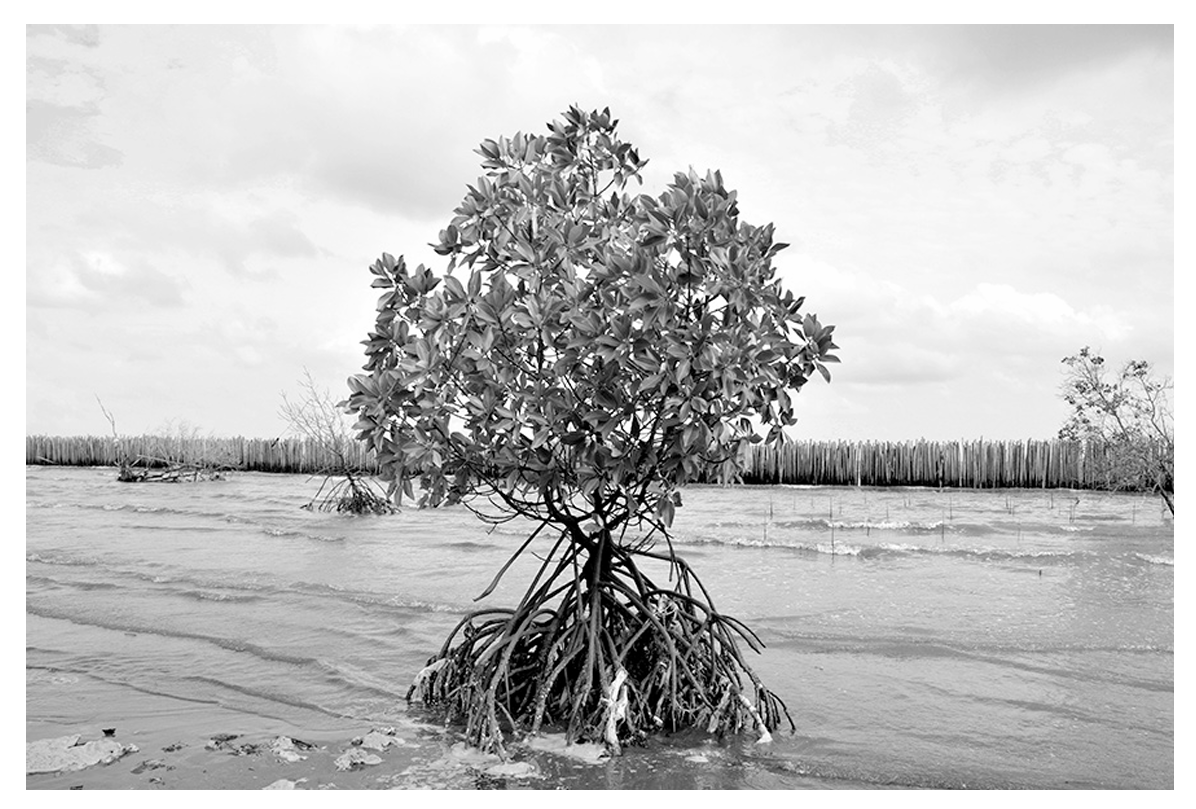
The photograph shows a coastal plant called a mangrove.

To produce the supercharged plants, scientists intend to take the gene that codes for high suberin production from a coastal plant and insert it into crop plants. The crop plants used are perennial plants. Perennial plants live for many years rather than dying each winter. The transgenic crops would take in large amounts of carbon dioxide and use the carbon atoms to make suberin. The carbon would then be locked up and stored as suberin in the roots. After successfully producing one plant, they will use micropropagation rather than pollination to produce others.

These supercharged crop plants may have other uses. Suberin in roots helps to make them tolerant to soil with a high salt concentration, helping to produce higher crop yields in areas that have difficult growing conditions.

(a) (i) Carbon dioxide is a greenhouse gas. State the name of another greenhouse gas (line 7).

(ii) Calculate the increase in mass, in kg, of atmospheric carbon dioxide in 2020 (lines 2 to 7).
Give your answer in standard form.
[1 gigatonne = 1 000 000 000 000 kg]

(iii) State two consequences of global warming for the environment.

(b) Explain why producing genetically engineered plants with additional suberin in their roots could reduce atmospheric carbon dioxide (lines 14 to 17 and lines 19 to 24).

(c) Which enzyme is used to remove a gene from a section of DNA?

  • A. amylase
  • B. ligase
  • C. lipase
  • D. restriction

(d) Explain why the additional suberin in the cell walls of the roots will make the transgenic plants tolerant to soil with a high salt concentration (lines 26 to 28).

(e) Give three reasons why the scientists use micropropagation to reproduce the transgenic crop plants (lines 24 to 25).

Most-appropriate topic codes (Edexcel IGCSE Biology):

4(d): Human influences on the environment — part (a)(i), (a)(iii)
4(c): Cycles within ecosystems — part (a)(ii), (b)
5(c): Genetic modification (genetic engineering) — part (c)
2(d): Movement of substances into and out of cells — part (d)
5(d): Cloning — part (e)
Appendix 4: Mathematical skills — part (a)(ii)
▶️ Answer/Explanation
Solution

(a)(i) Methane / nitrous oxides / CFCs / water vapour

Explanation: Greenhouse gases are those that trap heat in the Earth’s atmosphere, contributing to the greenhouse effect. While carbon dioxide is the most commonly discussed, other significant greenhouse gases include methane (released from livestock and landfills), nitrous oxides (from agriculture and industrial processes), chlorofluorocarbons or CFCs (from refrigerants and aerosols, though now largely phased out), and water vapour. Carbon monoxide is not a significant greenhouse gas and is therefore rejected.

(a)(ii) \( 1.8 \times 10^{13} \) kg

Explanation: To find the net increase in atmospheric carbon dioxide, we calculate the total released minus the total removed. The total released is 727 (natural) + 37 (human) = 764 gigatonnes. The amount removed by plants is 746 gigatonnes. The net increase is therefore 764 – 746 = 18 gigatonnes. Since 1 gigatonne = \( 1 \times 10^{12} \) kg, we convert 18 gigatonnes to kg: 18 × \( 10^{12} \) kg = \( 1.8 \times 10^{1} \) × \( 10^{12} \) kg = \( 1.8 \times 10^{13} \) kg.

(a)(iii) Any two from: ice caps/glaciers melt, sea level rise/flooding, loss of habitat/desertification/droughts, extinctions/disrupted food chains, destruction of coral reefs/coral bleaching, spread of disease/pests, extreme weather/changes in weather patterns.

Explanation: Global warming, driven by an enhanced greenhouse effect, has wide-ranging environmental consequences. Two major effects are the melting of polar ice caps and glaciers, which contributes to rising sea levels and subsequent coastal flooding. Another significant impact is the disruption of ecosystems, leading to habitat loss, species extinction as animals and plants cannot adapt quickly enough, and phenomena like coral bleaching where warmer ocean temperatures cause corals to expel the algae living in their tissues, turning them white and threatening the entire reef ecosystem.

(b) An explanation that makes reference to four of the following points:

  • Plants take in/absorb carbon dioxide.
  • This is for the process of photosynthesis.
  • The carbon (from CO₂) is converted into/stored as suberin/locked up in suberin.
  • Suberin does not decay for long periods/decomposes slowly/remains for a long time.
  • Perennial plants remain for long periods/don’t die off each year.
  • Slower/less carbon dioxide is released from decomposition/decay.

Explanation: Genetically engineered plants with high suberin content act as enhanced carbon sinks. They absorb carbon dioxide from the atmosphere during photosynthesis. Instead of this carbon being used solely for immediate growth or being released back quickly, a significant portion is incorporated into suberin in their root cell walls. Suberin is a very stable, waterproof compound that decomposes extremely slowly, meaning the carbon is effectively “locked away” in the soil for a very long time. Furthermore, because these are perennial plants, they live for many years, continuously performing this carbon sequestration without the need for annual replanting, which could disturb the soil and release stored carbon. This long-term storage reduces the net amount of carbon dioxide in the atmosphere.

(c) D (restriction enzyme)

Explanation: In genetic engineering, specific enzymes are used to cut DNA at precise locations. Restriction enzymes (also called restriction endonucleases) are the enzymes responsible for cutting a gene out of a section of DNA. Amylase digests starch, ligase joins DNA fragments together, and lipase digests lipids (fats).

(d) An explanation that makes reference to two of the following points:

  • Prevents water loss from the plant roots.
  • Due to osmosis.
  • Prevents plant cells from becoming flaccid/wilting; helps them stay turgid by preventing water from moving out to the higher salt concentration in the soil.

Explanation: Soil with a high salt concentration has a low water potential (a high solute concentration). Water naturally moves by osmosis from areas of high water potential (inside the root cells) to areas of low water potential (the salty soil). This can cause the plant to lose water and wilt. Suberin, being a waterproof substance in the cell walls of the roots, acts as a barrier. It reduces the movement of water out of the root cells into the salty soil, thereby helping the plant to retain water and maintain turgor pressure, which is essential for support and function.

(e) Any three from: produces large numbers/large scale, fast/quick process, all crops produce suberin/are genetically identical/clones, less risk of cross-pollinating with wild plants/spreading the transgene, can be done at any time of year/all year.

Explanation: Micropropagation (tissue culture) is used for several advantages over traditional pollination. Firstly, it allows for the rapid production of a very large number of plants from a single, successfully modified individual. Secondly, the process is much faster than waiting for seeds to develop and grow. Thirdly, all the plants produced are genetically identical clones, guaranteeing that every single plant will have the desired high-suberin trait. Fourthly, since micropropagation is asexual and doesn’t involve pollen, there is no risk of the transgene escaping via cross-pollination and spreading into wild plant populations. Finally, it is not season-dependent and can be carried out in a lab throughout the year.
Question

Scientists can now produce farm animals by cloning. Since Dolly the sheep was born in 1996 many different species have been cloned.

The form of cloning used is called somatic cell cloning.

The first ever clone of a champion racehorse was announced in 2005 in Italy.

The foal was cloned from Pieraz, a world champion in long-distance horse races.

(a) Describe the stages scientists could use to clone a male horse.

(b) Pieraz was castrated (had his testicles removed) at a young age.

Explain why this stopped him reproducing normally but did not stop him being used to produce a foal by cloning.

(c) Suggest why horseracing does not allow the use of non-natural methods of breeding, including cloning.

(d) State one difference between cloning an organism and genetically modifying an organism.

Most-appropriate topic codes (Edexcel IGCSE Biology):

5(d): Cloning — parts (a), (b), (c), (d)
5(c): Genetic modification (genetic engineering) — part (d)
3(a): Reproduction — part (b)
▶️ Answer/Explanation
Solution

(a)

Answer: The stages for cloning a male horse involve:

  1. Taking a nucleus from a body (somatic) cell of the male horse.
  2. Inserting this nucleus into an enucleated egg cell (an egg cell that has had its nucleus removed).
  3. Applying an electric shock to stimulate the egg to start dividing.
  4. Allowing the cell to undergo mitosis (cell division) to form an embryo.
  5. Implanting the developing embryo into the uterus (womb) of a surrogate mother horse.

Explanation: This process is known as somatic cell nuclear transfer (SCNT). The key idea is that the genetic material comes entirely from the body cell of the male horse to be cloned, not from the fusion of sperm and egg. The electric shock mimics the natural stimulus of fertilization, triggering the egg to begin development. The surrogate mother provides the environment for the embryo to grow into a foal, which will be a genetic clone of the original male horse.

(b)

Answer: Castration stopped normal reproduction because:

  • It prevented the production of sperm (gametes).
  • Therefore, natural fertilization and impregnation of a female horse could not occur.

However, cloning was still possible because:

  • Cloning uses a body (somatic) cell, which contains the full set of chromosomes (DNA). Since Pieraz’s body cells still contained all his genetic information, a nucleus from one of these cells could be used to create a clone.

Explanation: Normal sexual reproduction requires gametes (sperm and egg). Castration removes the testes, the organs that produce sperm, thus halting this process. Cloning, on the other hand, bypasses the need for gametes altogether. It relies on taking the nucleus from any diploid body cell (like a skin cell), which holds the complete genetic blueprint of the individual. This nucleus is then placed into an empty egg cell to create an embryo that is genetically identical to the original animal.

(c)

Answer: Possible reasons include:

  • To maintain the value and uniqueness of naturally bred stallions (sires).
  • To prevent inbreeding and maintain genetic diversity within the horse population, which helps prevent genetic diseases.
  • To ensure fair competition and prevent cheating.
  • Due to ethical concerns about the use of cloning technology.

Explanation: Horseracing authorities often have strict rules to preserve the integrity of the sport and the breed. If champion horses could be easily cloned, it could devalue the achievements of individual, naturally bred horses. Furthermore, a population with low genetic diversity is more vulnerable to diseases. Allowing cloning could lead to a situation where many racehorses are genetically identical, which is undesirable for the long-term health of the breed. There are also fairness concerns, as cloning could be seen as an unnatural advantage.

(d)

Answer: Cloning produces organisms that are genetically identical to the original, whereas genetic modification produces organisms with altered DNA (new genes are introduced).

Explanation: The fundamental difference lies in the genetic outcome. Cloning is a form of asexual reproduction that results in an exact genetic copy (a clone) of the parent organism. No new genetic material is added. In contrast, genetic modification (GM) involves deliberately altering the organism’s genome, often by inserting genes from another species, to give the organism a new trait (like disease resistance or faster growth). A clone has the same genotype as its parent, while a genetically modified organism (GMO) has a new, different genotype.

Question

Micropropagation is used to produce plant clones.

The process involves growing explants in vitro.

(a) State what is meant by the term in vitro.

(b) The explants grow new roots and shoots.

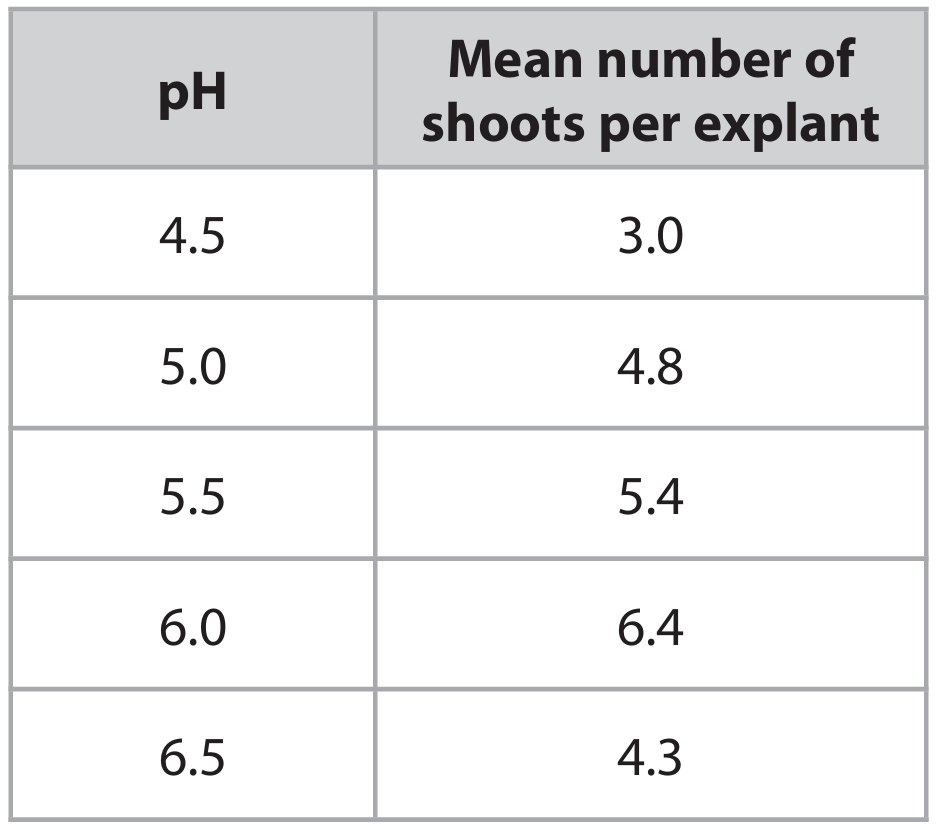
A student investigates the effect of pH on the growth of new shoots.

The table shows the student’s results.

(i) Explain the relationship between pH and the mean number of shoots per explant.

(ii) Describe a procedure the student could use to obtain explants and produce these results.

(c) Give two benefits of using micropropagation to produce new plants rather than using seeds.

Most-appropriate topic codes (Edexcel IGCSE Biology):

5(d): Cloning — parts (a), (c)
2(b): Cell structure — part (a) in vitro context
2(c): Biological molecules (enzymes) — part (b)(i) enzyme activity & pH
Appendix 6: Suggested practical investigations — part (b)(ii) experimental design
▶️ Answer/Explanation
Solution

(a) in glass / in test tube / in (Petri) dish

Explanation: The term “in vitro” is a Latin phrase that literally means “in glass.” In biology, it refers to experiments or processes that are conducted outside of a living organism, in an artificial environment controlled by a scientist, such as a test tube, Petri dish, or flask. This is the opposite of “in vivo,” which means experiments conducted within a living organism.

(b)(i)

Answer: The mean number of shoots increases as the pH increases from 4.5 to 6.0, and then it decreases at pH 6.5. This pattern occurs due to the effect of pH on enzyme activity, with an optimum pH around 6.0 for the enzymes involved in shoot growth.

Explanation: When we look at the data, we can see a clear trend. At a very acidic pH of 4.5, the mean number of shoots is low (3.0). As the pH becomes less acidic and moves towards neutral, the number of shoots increases, reaching a maximum of 6.4 at pH 6.0. However, when the pH is increased further to 6.5, the number of shoots drops to 4.3. This pattern is classic for enzyme-controlled processes. The enzymes responsible for cell division and growth in the plant tissues have an optimal pH at which they work most efficiently, which appears to be pH 6.0 in this case. At pH values above and below this optimum, the enzymes become less active (they may denature at extremes), leading to reduced shoot formation.

(b)(ii)

Answer: The student should use sterile techniques to obtain and prepare the explants. Small pieces of plant tissue (explants) are cut from a parent plant using a sterilized scalpel. These explants are then surface-sterilized by washing them in a disinfectant like bleach or ethanol to kill any microorganisms. The sterile explants are placed on a nutrient agar gel in Petri dishes or test tubes. The agar contains essential nutrients, minerals, and plant hormones to support growth. The student would prepare several identical agar plates, each buffered to a specific pH (4.5, 5.0, 5.5, 6.0, 6.5). Multiple explants are placed in each pH condition to ensure the results are reliable. All plates are kept in a controlled environment (e.g., constant temperature and light) for a set period. After this time, the number of new shoots on each explant is counted, and a mean is calculated for each pH level.

Explanation: To get valid and reliable results, the procedure must be very careful and controlled. The key steps involve:

  • Obtaining Explants: Using a sterile tool like a scalpel or forceps to take small tissue samples from the same part of the same plant species to keep the starting material consistent.
  • Sterilization: Washing the explants in a disinfectant is crucial. Any bacteria or fungi present would contaminate the nutrient agar and compete with the plant tissue, ruining the experiment.
  • Growing Medium: The explants are placed on a solid agar medium. This agar is not just a solidifier; it’s a “growth cocktail” containing sugars for energy, mineral ions, vitamins, and plant growth regulators (hormones) like auxins and cytokinins that stimulate shoot and root development.
  • Controlling Variables: The pH is the independent variable, so it is deliberately changed for each set of plates. All other factors that could affect growth, such as temperature, light intensity, and the composition of the agar (except for pH), must be kept the same for all explants. Using multiple explants (repeats) at each pH allows the student to calculate a mean, making the results more trustworthy and accounting for natural variation between individual explants.
  • Data Collection: After a predetermined growth period, the student counts the number of shoots that have developed from each explant and calculates the average for each pH group.

(c)

Answer:

  1. It produces genetically identical plants (clones), ensuring desirable characteristics from the parent plant are preserved.
  2. It allows for the rapid production of a large number of plants in a relatively short time, independent of seasonal constraints.

Explanation:

Benefit 1: Genetic Uniformity When you grow plants from seeds, the offspring show genetic variation due to sexual reproduction (cross-pollination). This means the new plants might not have the exact same desirable traits as the parent plant, such as specific flower color, fruit taste, or disease resistance. Micropropagation, however, is an asexual process. All the new plants are clones, meaning they are genetically identical to the original parent plant. This is extremely valuable for farmers and horticulturists who want to propagate a specific cultivar with known, superior qualities reliably.

Benefit 2: Speed and Season Independence Micropropagation can produce a vast number of plants from a single piece of tissue much faster than waiting for seeds to germinate and grow. A single explant can be induced to produce multiple shoots, and each of those shoots can then be divided and cultured again, leading to an exponential increase in plant numbers. Furthermore, this process is carried out in a lab under controlled conditions, meaning it is not dependent on seasons or weather. Plants can be produced all year round, which is not always possible with seeds that may have specific germination requirements.

Other potential benefits include: producing plants that are difficult to grow from seed, and conserving rare or endangered plant species.
Question

Many mammals have been cloned since Dolly the sheep was produced by cloning in 1996.

(a) It took 277 attempts at cloning to produce one sheep.

Calculate how many attempts would have been needed to produce 50 cloned sheep in 1996.

Assume the same number of attempts are needed to produce each sheep as were needed to produce Dolly.

(b) Describe the stages used to clone a male dog.

(c) Pet owners can now pay scientists to use cells from their pet to produce a clone.

The process costs $50 000 for a dog and $25 000 for a cat.

Cloning is not always successful and as with Dolly, many attempts may need to be made to produce one clone.

Many scientists disagree with this use of cloning.

Comment on whether cloning of pets is a good idea.

Use the information in this question and your own knowledge to support your answer.

Most-appropriate topic codes (Edexcel IGCSE Biology):

5(d): Cloning — parts (a), (b), (c)
Appendix 4: Mathematical skills — part (a)
2(b): Cell structure — part (b)
3(a): Reproduction — part (b)
▶️ Answer/Explanation
Solution

(a) 13 850

Explanation: The problem states that it took 277 attempts to produce one successful clone (Dolly the sheep). To calculate the number of attempts needed for 50 cloned sheep, we simply multiply the number of attempts per sheep by the total number of sheep desired. Therefore, the calculation is 277 attempts/sheep × 50 sheep = 13,850 total attempts. This assumes the same low success rate per clone as experienced with Dolly.

(b)

Explanation: The process of cloning a male dog, which is a mammal, follows the same somatic cell nuclear transfer (SCNT) technique used for Dolly the sheep. The stages are:

  1. A somatic (body) cell, which is a diploid cell, is taken from the male dog that is to be cloned. This cell contains the full set of genetic information from the donor.
  2. An egg cell (oocyte) is taken from a female dog. The nucleus of this egg cell is carefully removed, creating an “enucleated” egg cell, which is now empty of its own genetic material.
  3. The nucleus from the male dog’s somatic cell is inserted into the enucleated egg cell.
  4. An electric shock is applied to the combined cell. This shock serves two purposes: it fuses the donor nucleus with the empty egg cell, and it stimulates the cell to start dividing as if it were a fertilized egg, triggering mitosis.
  5. The newly formed embryo, which is a clone of the original male dog, is then implanted into the uterus (womb) of a surrogate mother dog.
  6. The surrogate mother carries the pregnancy to term, and if successful, gives birth to a puppy that is a genetic clone of the original male donor dog.

(c)

Explanation: The issue of pet cloning is complex, with both potential benefits and significant drawbacks.

Arguments in favor of pet cloning:

  • It can produce a genetically identical pet. For an owner grieving the loss of a beloved animal, the prospect of having a new pet with the same genetic makeup can be very appealing. The clone may share a very similar physical appearance and some behavioral traits with the original pet.
  • Cells can be collected and stored from a pet while it is still alive or shortly after its death, allowing for the possibility of cloning even after the original pet is gone, which might provide emotional comfort to the owner.

Arguments against pet cloning:

  • It is extremely expensive, as indicated by the costs of $50,000 for a dog and $25,000 for a cat, making it inaccessible to most people.
  • The process is very inefficient and raises ethical concerns about animal welfare. As seen with Dolly, hundreds of attempts may be needed to produce one live clone. This involves using many egg donor and surrogate mother animals, and many embryos may fail to develop or result in stillbirths or animals with health problems.
  • A clone is not an exact replica of the original pet in terms of personality or behavior. Personality is shaped significantly by environment, experiences, and training. The cloned pet will likely behave differently.
  • Cloned animals have sometimes been observed to have shorter lifespans or health issues later in life, as was the case with Dolly who developed arthritis and died relatively young.
  • From a broader genetic perspective, cloning reduces genetic variation within a breed. Inbreeding and a lack of genetic diversity can make populations more susceptible to diseases and inherited disorders, which is detrimental to the overall health of the breed.

In conclusion, while the desire to recreate a beloved pet is understandable, the high cost, low success rate, animal welfare concerns, and the fact that personality cannot be cloned make it a controversial practice that many scientists and ethicists view as not being a good idea.

Question

Scientists have produced cloned monkeys.

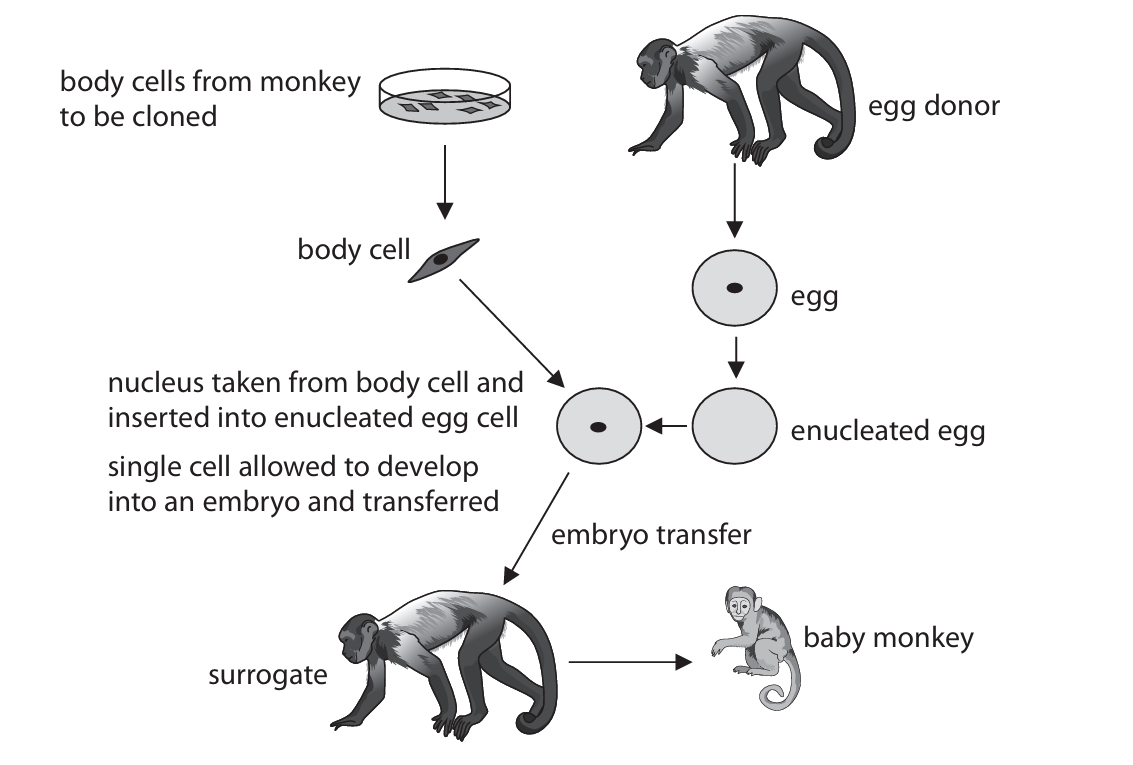
The diagram shows the procedure used to produce cloned monkeys.

(a) (i) State the meaning of the term enucleated.

(a) (ii) Describe how the single cell develops into an embryo.

(b) Scientists can use adult body cells or fetal body cells to clone monkeys.

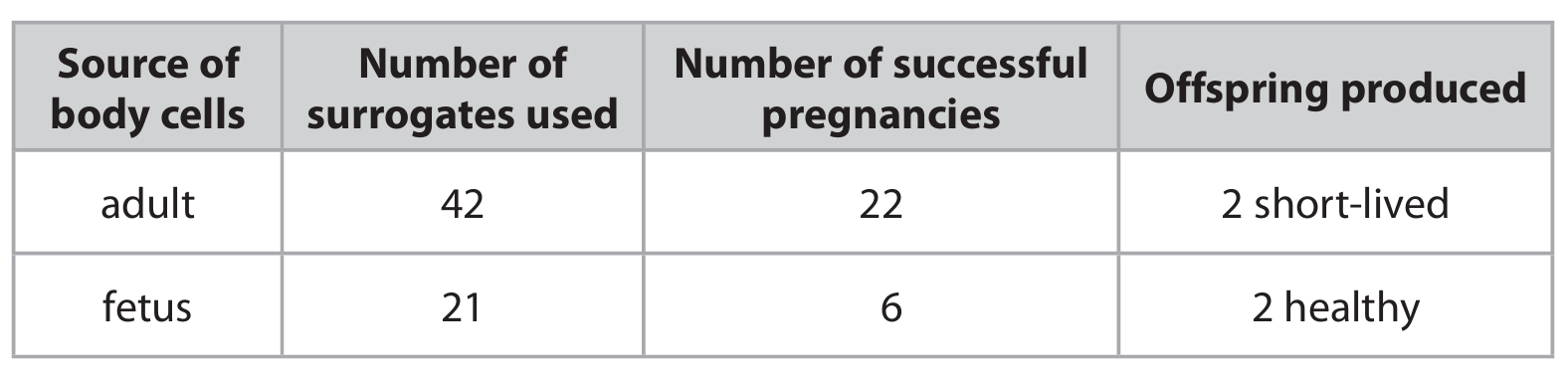
The table gives information about cloning using body cells from different sources.

Evaluate this data to decide which source of body cells is more successful in cloning monkeys.

Most-appropriate topic codes (Edexcel IGCSE Biology):

5(d): Cloning — all parts
3(a): Reproduction — part (a)(ii)
2(b): Cell structure — part (a)(i)
5(c): Genetic modification (genetic engineering) — context of cloning technology
▶️ Answer/Explanation
Solution

(a) (i) The nucleus is removed.

Explanation: In the context of cloning, “enucleated” specifically refers to an egg cell that has had its nucleus carefully removed. This is a crucial first step in the somatic cell nuclear transfer (SCNT) process, as it creates a vacant cellular environment ready to receive the nucleus from the donor body cell.

(a) (ii) The single cell divides many times by mitosis, producing a ball of cells, and then the cells differentiate.

Explanation: After the donor nucleus is inserted into the enucleated egg cell and stimulated, the newly formed single cell begins a process of rapid, successive divisions. This type of cell division is called mitosis, which produces genetically identical daughter cells. These divisions lead to the formation of a solid ball of cells. Following this, the process of differentiation begins, where the initially identical cells start to specialize, taking on different structures and functions to form the various tissues that will make up the embryo.

(b) Fetal body cells are more successful.

Explanation: When evaluating the data, we need to look at both the efficiency of the process and the health of the resulting offspring.

Looking at the success rates: For adult cells, 22 out of 42 surrogates resulted in a pregnancy, which is a success rate of approximately 52%. For fetal cells, 6 out of 21 surrogates resulted in a pregnancy, which is a lower success rate of about 29%. Based purely on the number of successful pregnancies, adult cells seem more efficient.

However, the critical factor is the outcome for the offspring. The two offspring produced from adult body cells were “short-lived,” indicating significant health problems. In contrast, the two offspring produced from fetal body cells were “healthy.”

Therefore, while using fetal cells led to fewer successful pregnancies, it resulted in viable, healthy clones. The ultimate goal of cloning is to produce a healthy organism, which makes fetal cells the more successful source in this investigation, despite the lower pregnancy rate.
Question

Blood clotting is an important process in humans. The process is controlled by enzymes.

(a) (i) Give two reasons why blood clotting is important. 

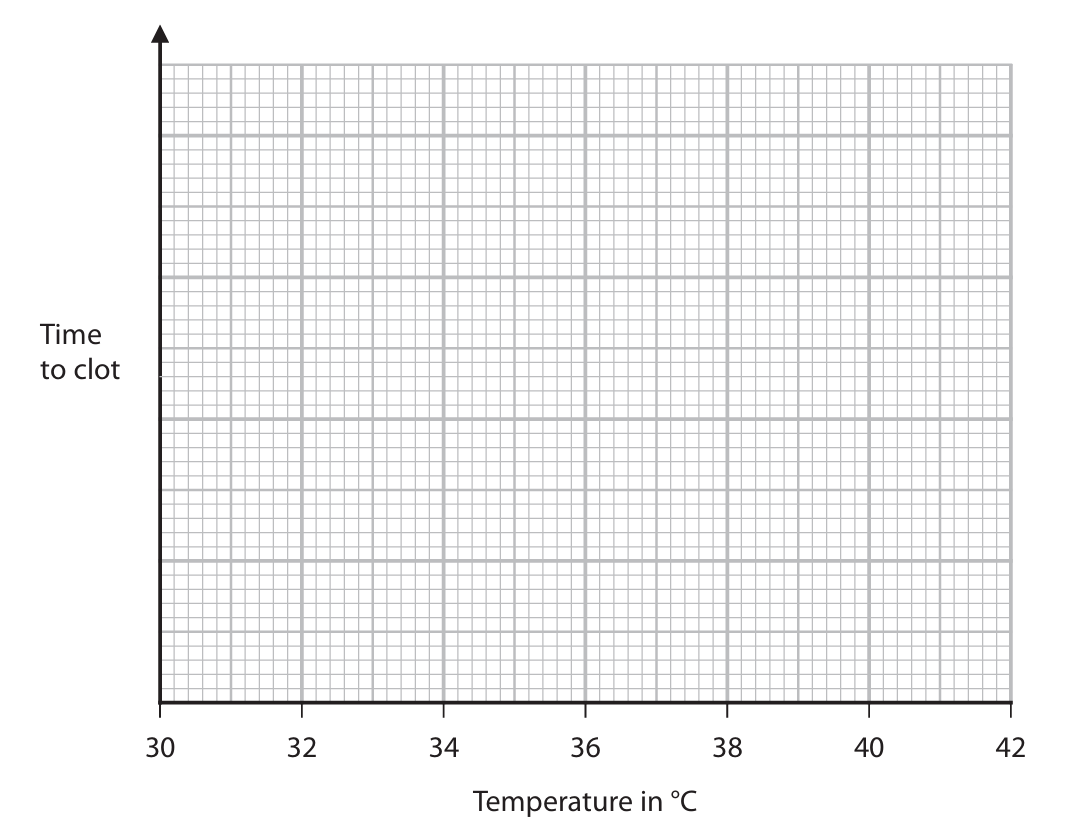
(ii) The optimum temperature for the enzymes involved in blood clotting is \(37^\circ C\). Sketch a graph to show how temperature affects the time taken for blood to clot.

(b) Some people cannot make the proteins needed for blood clotting. Cloning is used to produce large numbers of transgenic mammals. These transgenic mammals can make the human blood-clotting proteins. The human blood-clotting proteins can then be removed from the mammals’ milk and injected into people who cannot make the proteins.

(i) Explain why these mammals are described as transgenic. 
(ii) Describe how a mammal is cloned.

Most-appropriate topic codes (Edexcel IGCSE Biology):

2(h): Transport — Blood clotting (part a(i), a(ii))
2(c): Biological molecules — Enzymes (part a(ii))
5(c): Genetic modification (genetic engineering) — Transgenic organisms (part b(i))
5(d): Cloning — Cloning mammals (part b(ii))
▶️ Answer/Explanation
Solution

(a)(i) Two reasons from:

  • Prevent loss of blood / stops bleeding (1)
  • Prevent entry of pathogens / microbes / bacteria / viruses / fungi / prevent infections (1)

(a)(ii) Sketch graph showing a clear minimum (fastest clotting time) at \(37^\circ C\). The line should drop to a low point at \(37^\circ C\) and then rise on both sides.

(b)(i) An explanation that makes reference to:

  • (They have been given) genetic material / gene / allele / DNA / are genetically altered (1)
  • From human / a different species (1)

(b)(ii) An answer that makes reference to six of the following points:

  1. Use enucleated egg / empty egg / remove nucleus from egg / eq (1)
  2. Nucleus from body cell / diploid nucleus (placed into empty egg) / fuse adult cell with empty egg (1) (Ignore DNA)
  3. Use of electricity / shock (to fuse cells) (1)
  4. Cell division / mitosis (stimulated) (1)
  5. Embryo forms / develops (1)
  6. Embryo placed into uterus / womb (1)
  7. Surrogate mother (carries embryo to term) (1)

Award marks for any correct and relevant points describing the process of somatic cell nuclear transfer as used in cloning mammals (e.g., Dolly the sheep).
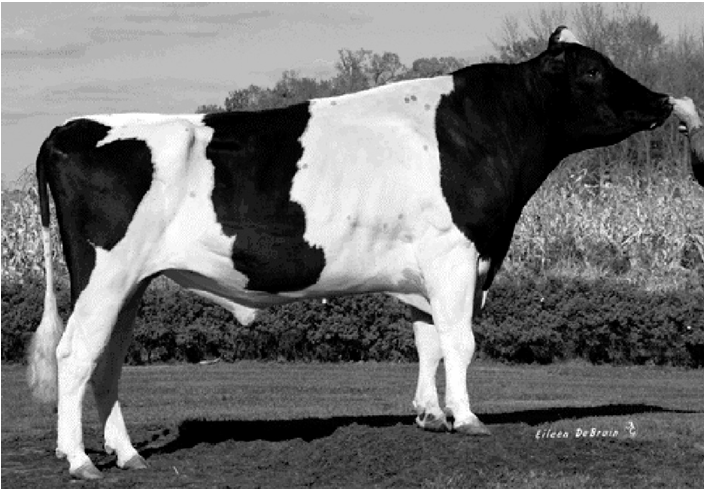
Question

Read the passage below. Use the information in the passage and your own knowledge to answer the questions that follow.

Toystory

Toystory is a bull who was born in 2001. The photograph shows Toystory.

In the world of dairy farming Toystory is a famous bull. He fathered 500 000 offspring but did not mate with any cows. He was able to father so many offspring because his semen was collected and then used to fertilise cows using artificial insemination.

Toystory’s mother was a high milk producer and his father was a popular bull. He was sold for $4 000 by his owner to a specialist breeding company called Genex.

Genex started to collect semen from Toystory when he was four years old. The semen is carefully collected, using a teaser animal and an artificial rubber vagina.

The semen is divided into many separate samples. These samples are put in small straws and frozen in liquid nitrogen. The straws can then be sold and sent to dairy farmers around the world to inseminate their cows. A total of 2.4 million samples of semen from Toystory was sold in more than 50 countries around the world.

Toystory’s reputation grew as the offspring he fathered went on to be high milk producers. His semen straws sold for over $60 each. Bull semen can now be sold as sexed or unsexed samples, with sexed samples being more expensive to purchase.

Toystory was highly valued because his offspring produced large quantities of milk of a desired composition. His semen was effective at getting cows pregnant, his daughters gave birth easily and were strong. He had a rare mix of fertility, genetics and appearance.

One of his daughters sold for $300 000 in 2009. His record number of offspring is unlikely to be beaten. This is because bulls are often retired earlier as new genetic advances are discovered.

(a) Suggest why Genex waited until Toystory was four years old before beginning to collect his semen (line 9).

(b) Explain how the semen from the bull is used to fertilise cows using artificial insemination.

(c) (i) Suggest why the semen is stored in liquid nitrogen (line 13).
(ii) Sexed semen is guaranteed to produce offspring of one sex. Suggest why dairy farmers would prefer to used sexed semen (line 19).

(d) Determine the percentage success of Toystory’s semen samples in producing offspring (line 2 and line 15).

(e) Describe how scientists could investigate which of two bulls is the best to use as a father in dairy farming.

(f) Explain why the composition of milk is important to consumers (line 22).

(g) (i) Scientists are now using cloning to produce animals. Describe the stages that are required to clone a bull.
(ii) Give two advantages of using cloning rather than selective breeding to produce offspring.

Most-appropriate topic codes (Edexcel IGCSE Biology (Modular)):

3(a): Reproduction — parts (a), (b), (c)(ii)
5(a): Food production — parts (e), (f)
5(b): Selective breeding — part (e)
5(d): Cloning — parts (g)(i), (g)(ii)
2(d): Movement of substances into and out of cells / Practical application — part (c)(i)
Appendix 3: Mathematical skills — part (d)
▶️ Answer/Explanation
Solution

(a)
• so semen contained sperm / (bull is) (sexually) mature / sperm in semen / gone through puberty / fully developed.

(b)
An explanation that includes two of the following points:
• collect semen / sperm from penis of bull (1)
• insert straw into / inject semen (into cow) (1)
• put (it / semen / sperm) in vagina / uterus / womb / cervix (1)

(c)(i)
• preserve (sperm) / keep (sperm) alive / viable / prevent growth of microorganisms / slow down metabolism.

(c)(ii)
• provide females (produce milk) / will produce cows.

(d)
\( 500\,000 \div 2.4 \text{ million} = 0.2083 \)
Percentage = \( 0.2083 \times 100 = 20.83\% \) (allow 1 mark for ÷ 2.4 million).

(e)
A description that makes reference to three of the following points:
• use semen (from each bull) to fertilise (many / similar) cows (1)
• collect / measure milk yields (1)
• from each daughter / offspring of these cows / mother of bull (1)
• select bull with highest (average) milk yield (across all daughters) (1)

(f)
An explanation that makes reference to two of the following points:
• (milk that contains) (most) fat (1)
• (most) protein (1)
• (most) vitamins (1)
• (milk that contains) (most) calcium (1)

(g)(i)
A description that makes reference to four of the following points:
• nucleus from (body) cell of bull (1)
• insert this nucleus into enucleated egg cell (1)
• electric shock (1)
• mitosis / cell division (1)
• embryo into uterus / womb (1)
• surrogate mother (1)

(g)(ii)
An explanation that makes reference to two of the following points:
genetically identical / no genetic variation / same (combination of) alleles (1)
• quicker process (1)

Scroll to Top