Edexcel iGCSE Biology 4BI1 - Paper 2B -Co-ordination and response- Exam Style Questions- New Syllabus
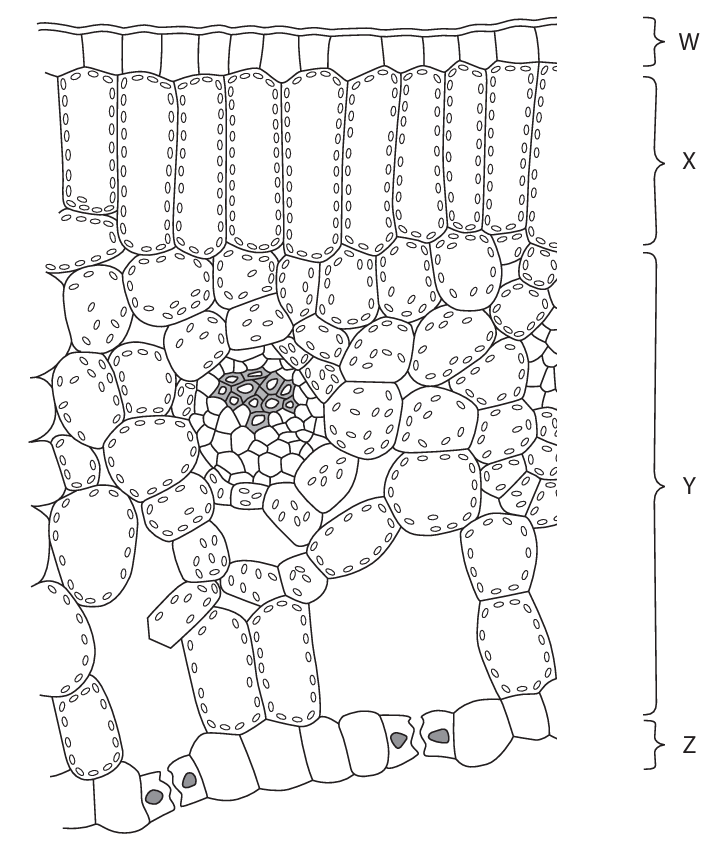
The diagram shows a cross section through a plant leaf.

(a) Which area of the leaf contains xylem vessels?
A) W
B) X
C) Y
D) Z
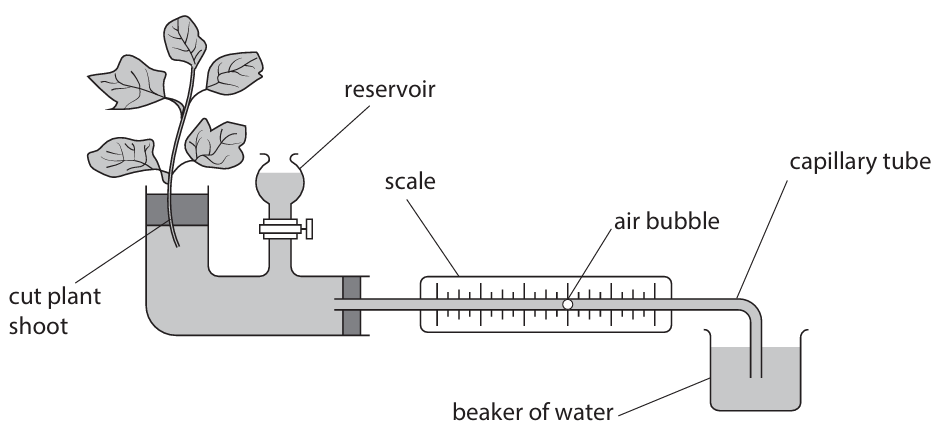
(b) A student uses this apparatus to measure the water uptake by a cut plant shoot.

(i) The inside of the capillary tube is a cylinder shape. The air bubble moves a length, \( l \), of 5.2 cm in 5 minutes. The inside of the capillary tube has a radius, \( r \), of 0.50 mm. Calculate the rate of water uptake, in \( \text{mm}^3 \) per minute, by the cut plant shoot.
[volume of cylinder = \( \pi r^2 l \)]
[\( \pi = 3.14 \)]
(ii) Describe how the student can use the apparatus to investigate the effect of changing wind speed on water uptake by the cut plant shoot.
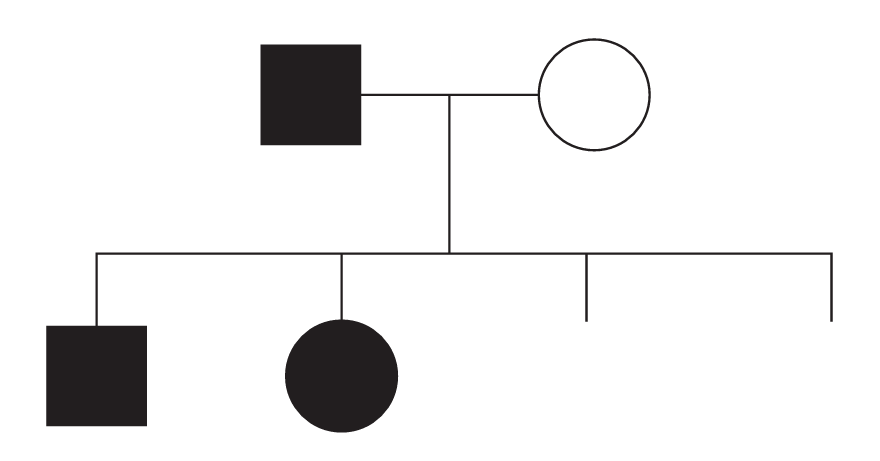
(c) A scientist investigates how ABA, an auxin-like substance, affects plant growth. The scientist does not water a plant for 4 days. They then water the plant on day 5.
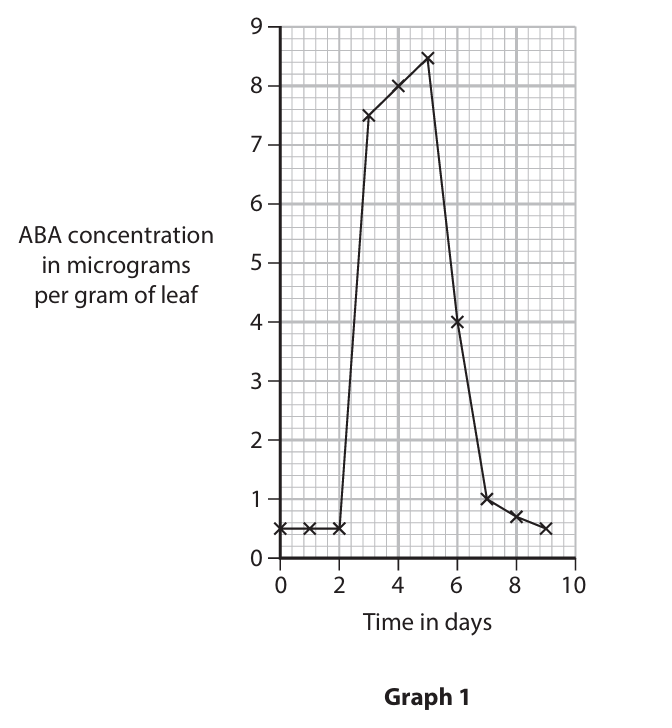
Graph 1 shows the changes in the ABA concentration in the leaves of the plant.

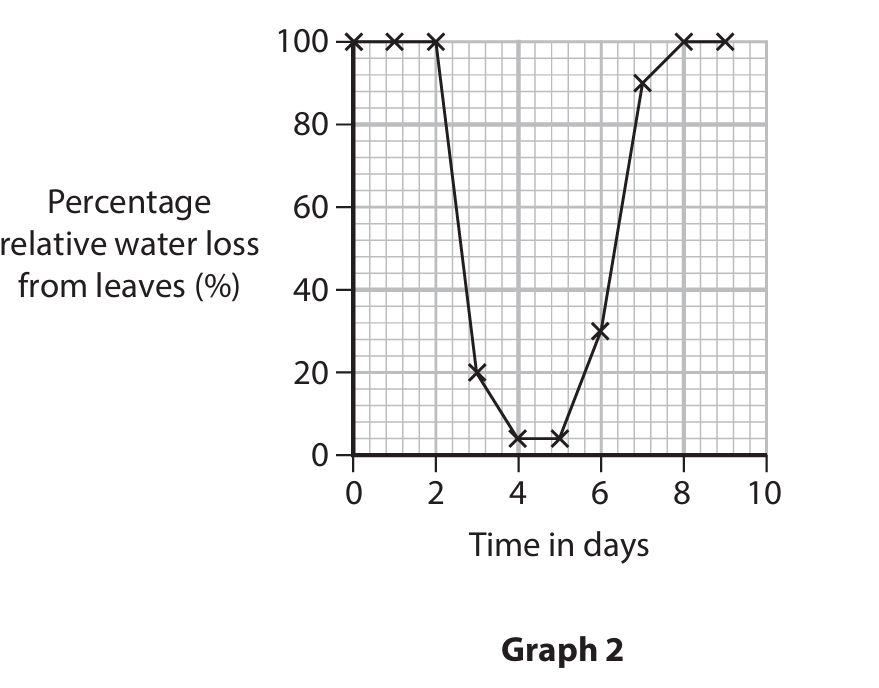
Graph 2 shows the changes in percentage relative water loss from the leaves of the plant.

Comment on the changes in ABA concentration and water loss in the scientist’s investigation. Use information from both graphs in your answer.
Most-appropriate topic codes (Edexcel IGCSE Biology):
• 2(j): Co-ordination and response — part (c)
• 2(b): Cell structure — part (a)
• Appendix 3: Mathematical skills — part (b)(i)
▶️ Answer/Explanation
(a) C (Y)
A is not the answer as W does not contain xylem
B is not the answer as X does not contain xylem
D is not the answer as Z does not contain xylem
(b)(i) • 8.16(4) (2)
One mark for:
÷ by 5
OR
× 52
OR
× 0.25
OR
0.8(164)
OR
40.82 (allow between 40.82 and 40.85)
Working:
Convert length to mm: \( l = 5.2 \text{ cm} = 52 \text{ mm} \)
Volume = \( \pi r^2 l = 3.14 \times (0.50)^2 \times 52 = 3.14 \times 0.25 \times 52 = 40.82 \text{ mm}^3 \)
Rate = \( 40.82 \div 5 = 8.164 \text{ mm}^3/\text{min} \)
(b)(ii) A description that makes reference to four of the following points:
1. set up potometer underwater / cut stem underwater / dry leaves / eq (1)
2. use a fan at different distances / with and without fans / different fan speeds / eq (1)
3. leave for set time / stated time (1)
4. measure distance bubble moves / distance water moves (on scale) / eq (1)
5. keep other factors constant (1)
6. repeat / reset bubble with reservoir / eq (1)
(c) An answer that makes reference to four of the following points:
1. at start / for first two days, ABA is low / is 0.5 OR at start / for first two days water loss is high / is 100 (1)
2. after two days / from three days ABA increases OR after two days / from three days percentage water loss decreases / eq (1)
3. after five days / after watering / ABA decreases OR after five days / after watering water loss increases / eq (1)
4. as ABA increases water loss decreases / inverse relationship / negative correlation / eq (1)
5. ABA closes stomata / stomata open when ABA low / eq (1)
6. stomata close from two days / stomata close from three days / eq (1)
7. stomata closing reduces transpiration / water loss / evaporation / stomata closing prevents wilting / stomata closing prevents loss of turgidity / ABA reduces transpiration / eq (1)
8. light intensity may change / humidity may change / wind may change / eq (1)
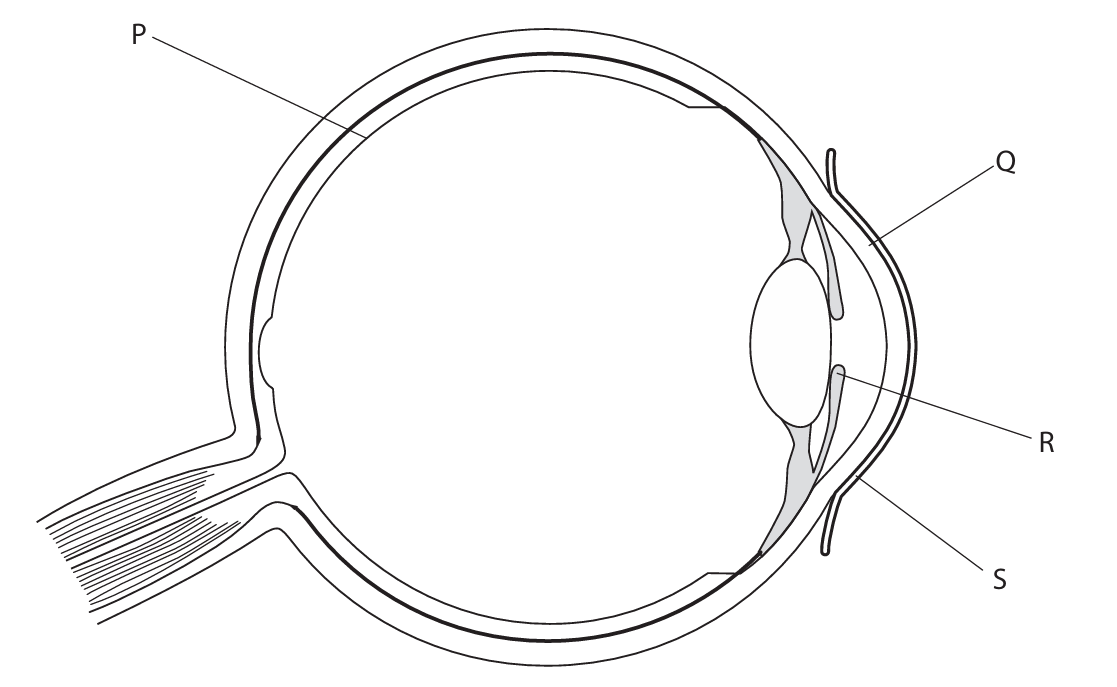
The diagram shows a human eye with some structures labelled.

(a) Which structure is the retina?
A) P
B) Q
C) R
D) S
(b) A teacher investigates the effect of light intensity on pupil diameter.
This is the teacher’s method:
- cover a student’s eyes with a mask
- set the light intensity in the room to a low level
- remove the mask and wait 20 seconds
- record an image of the student’s pupil and iris with a camera
- measure the diameter of the pupil on the image using a ruler
- repeat two more times at the same light intensity
The teacher repeats the experiment at different light intensities.
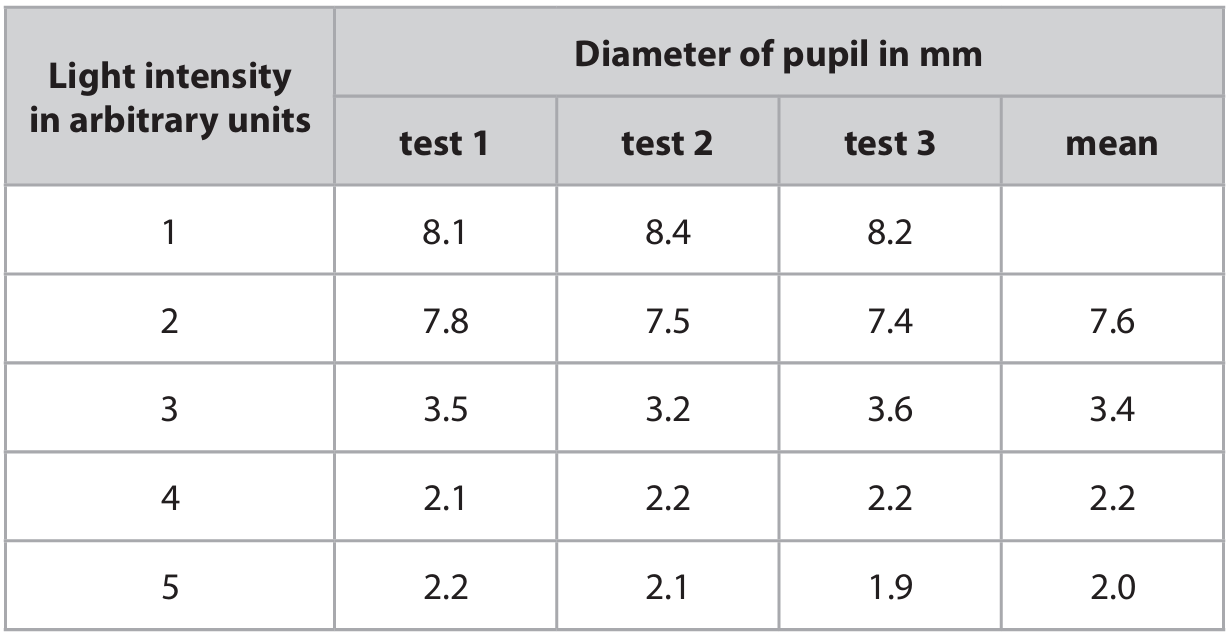
The table shows the teacher’s results:

(b)(i) Calculate the mean pupil diameter for the light intensity of 1 arbitrary unit. Give your answer to two significant figures.
(ii) With reference to data in the table, describe the effect of increasing light intensity on the diameter of the pupil.
(iii) Explain the effect of increasing light intensity on the diameter of the pupil.
(iv) State one variable that the teacher should control.
(v) Explain how the teacher’s method ensures that the measurement of the pupil diameters are accurate.
Most-appropriate topic codes (Edexcel IGCSE Biology):
• 2(b): Cell structure — part (a)
• 4: Assessment information: Experimental skills — parts (b)(i), (b)(iv), (b)(v)
• Appendix 3: Mathematical skills — part (b)(i)
▶️ Answer/Explanation
(a) A (P)
B is not the answer as Q is the cornea
C is not the answer as R is the iris
D is not the answer as S is the conjunctiva
(b)(i) 8.2 (2)
Only one mark for: 24.7 OR division by 3 OR 8.23…
(b)(ii) A description that makes reference to two of the following points:
• (diameter) decreases / pupil smaller / eq (1)
• small decrease between 4(au) and 5(au) / starts to level off after 3(au) / starts to level off from 4(au) / large decrease between 2 and 3 (au) / calculated fall / eq (1)
(b)(iii) An explanation that makes reference to three of the following points:
• less light enters (eye) / passes through pupil / eq (1)
• to prevent damage to retina / eq (1)
• (as pupil narrows) circular muscles (of iris) contract (1)
• (as pupil narrows) radial muscles (of iris) relax (1)
(b)(iv) An explanation that makes reference to one of the following points:
• distance from camera (1)
• same student / person / same eye / left or right eye (1)
• food / drinks / caffeine consumed / eq (1)
• recovery time / time spent with mask on (1)
• noise in room (1)
• other light sources / distance from light (1)
• (type of) mask (1)
• colour of light / wavelength of light (1)
(b)(v) An explanation that makes reference to two of the following points:
1. using a camera (to record) / takes a photograph / uses an image / eq (1)
2. waiting 20 s (each time) / waiting same time / eq (1)
3. pupil is not changing size / is stationary / eye has adjusted / eq (1)
Read the passage below. Use the information in the passage and your own knowledge to answer the questions that follow.
Rivers – the arteries of the world
Rivers are important supplies of water for drinking, farming, industry, and leisure activities. Like our circulatory system, rivers are essential for transport, and have a homeostatic effect on nature. The biodiversity in rivers is high as they are the habitat for many different species. In many countries rivers are under threat from human impact, particularly the release of untreated sewage.
Flooding can cause untreated sewage to run into rivers from pipelines. Scientists estimated that in England and Wales during 2022, sewage was released into rivers for a total time of 300 000 hours. This sewage came from 1200 different pipelines. Untreated sewage may contain fertilisers, pesticides, pathogenic bacteria, and pharmaceutical drugs.

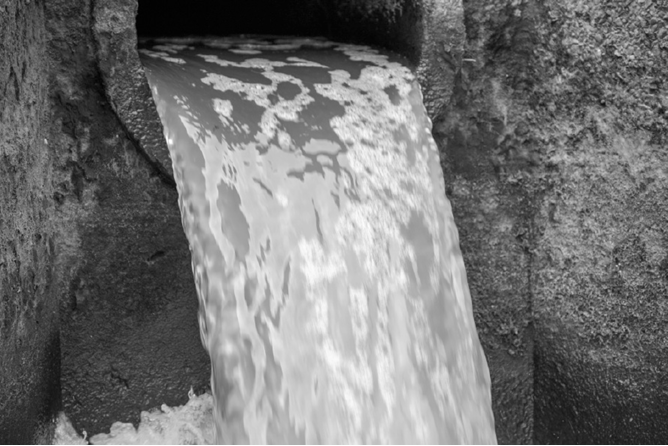
The photograph shows sewage being released into a river. The sewage causes the growth of something called ‘sewage fungus’. Sewage fungus looks like fungus but is a solid collection of several types of anaerobic bacteria. Sewage fungus is common in rivers that are polluted with untreated sewage or are near to cattle and intensive crop farms. If sewage fungus is found in a river it often indicates that the biodiversity of the river will be low.
Pesticides from agriculture are also released into rivers, and these are frequently transferred through natural food chains. Even pharmaceutical drugs, such as those containing the hormones oestrogen and progesterone, have been found in polluted rivers. These drugs must have been consumed by humans, excreted and then released into the sewage flowing into rivers.
Untreated sewage can also contain pathogenic species of bacteria that then enter rivers. If humans are infected with these bacteria, the large intestine absorbs less water, causing diarrhoea. Some of the bacteria found in sewage are resistant to antibiotics.
Scientists are looking for ways to prevent river pollution. One way is to reduce the risk of pollution from fertilisers and from cattle urine and faeces. Woodchip bioreactors are being trialled in agricultural fields that are near to rivers. These bioreactors are pits filled with woodchips and denitrifying bacteria. Water drains through these bioreactors, which helps to remove nitrates before they reach the rivers. In some countries, efforts are being made to replant forests in areas upstream of rivers to reduce river flooding and the risk of untreated sewage release.
(a) Rivers have a homeostatic effect on nature. This is similar to the role of homeostasis in humans.
State what is meant by the term homeostasis (lines 2 and 3).
(b) Calculate the mean number of hours that each pipeline released sewage into rivers in 2022 (lines 7 and 8).
(c)(i) Sewage fungus is not a fungus but is made from several different species of bacteria.
Which of these structures are present both in fungi and in bacteria?
A) cell wall and cytoplasm only
B) cell wall and nucleus only
C) cell wall, cytoplasm and nucleus
D) cytoplasm and nucleus only
(ii) Explain why rivers near to farms may have low biodiversity (lines 13 to 16).
(d) Oestrogen and progesterone in polluted water lower the levels of FSH and LH in mammals.
(i)State why lower levels of FSH can reduce fertility in mammals.
(ii) State why lower levels of LH can reduce fertility in mammals.
(e)(i) Pathogenic bacteria produce poisons that prevent the active transport of salt into the blood vessels surrounding the intestines.
Explain why preventing the transport of salt into the blood vessels will cause more water to be present in faeces (lines 22 to 24).
(ii) Explain why overuse of antibiotics has led to an increase in antibiotic-resistant bacteria (lines 24 and 25).
(f)(i) Explain how woodchip bioreactors reduce pollution in rivers (lines 27 to 31).
(ii) Explain why replanting forests in areas upstream of rivers will reduce flooding (lines 31 to 33).
Most-appropriate topic codes (Edexcel IGCSE Biology):
• 4(d): Human influences on the environment — parts (c)(ii), (e)(ii), (f)(i), (f)(ii)
• 1(b): Variety of living organisms — part (c)(i)
• 3(a): Reproduction — parts (d)(i), (d)(ii)
• 2(d): Movement of substances into and out of cells — part (e)(i)
• 3(b): Inheritance — part (e)(ii)
▶️ Answer/Explanation
(a) An answer that makes reference to one of the following points:
• maintenance of constant (internal) conditions in body / eq (1)
• control / regulating / maintaining internal conditions / eq (1)
• control / regulating / maintaining internal environment / eq (1)
• keeping conditions in body the same / within a (narrow) range / eq (1)
(b) • 250 (1)
Calculation: \( \frac{300000}{1200} = 250 \)
(c)(i) A (cell wall and cytoplasm only)
B is not the answer as bacteria do not have nuclei
C is not the answer as bacteria do not have nuclei
D is not the answer as bacteria do not have nuclei
(c)(ii) An explanation that makes reference to the following points:
1. fertilisers / animal waste / minerals / nitrates / phosphates (run off / leach) / eq (1)
2. algal growth / eutrophication / eq (1)
3. less light (penetrates) / competition for light / less photosynthesis / eq (1)
4. decomposition / decay (of dead algae / plants / organisms / organic waste / manure / faeces / sewage) eq (1)
5. less oxygen / only anaerobic species grow / eq (1)
6. bacteria respire / other species cannot respire / reduced respiration / eq (1)
7. pesticides kill organisms / eq (1)
(d)(i) An answer that makes reference to one of the following points:
• eggs / ova / follicles, do not mature / do not grow / eq (1)
• (FSH is required to) mature eggs / ova / follicles (1)
• (low FSH leads to) less oestrogen / (FSH) stimulates oestrogen release (1)
(d)(ii) An answer that makes reference to one of the following points:
• no ovulation occurs / egg not released / ova not released / eq (1)
• LH / it stimulates ovulation / LH / it stimulates egg release / eq (1)
• (lower LH leads to) less progesterone / LH / it stimulates progesterone (1)
(e)(i) An explanation that makes reference to two of the following points:
• less water absorbed / less water enters blood / less water enters capillaries / eq (1)
• (water moves by) osmosis (1)
• water potential in blood is high(er) / water potential in gut / faeces / lumen is low(er) / eq (1)
(e)(ii) An explanation that makes reference to three of the following points:
1. mutation (1)
2. (only resistant bacteria) survive / are not killed / non-resistant bacteria die / eq (1)
3. bacteria reproduce / multiply / eq (1)
4. pass on allele / gene / mutation / eq (1)
(f)(i) An explanation that makes reference to two of the following points:
• (denitrifying bacteria convert) nitrate into nitrogen (1)
• so less eutrophication / less algal growth / more oxygen in river / lower BOD / eq (1)
• wood chips have large surface area (for bacteria) / wood chips are biodegradable (so do not pollute) / eq (1)
(f)(ii) An explanation that makes reference to two of the following points:
1. trees / roots absorb water / trees intercept water / eq (1)
2. (more) transpiration (1)
3. less runoff / slows down water flow / more soil permeability / more infiltration / eq (1)
4. less soil erosion / roots hold onto soil / roots stabilise soil / eq (1)
5. rivers do not get blocked (with soil) / eq (1)
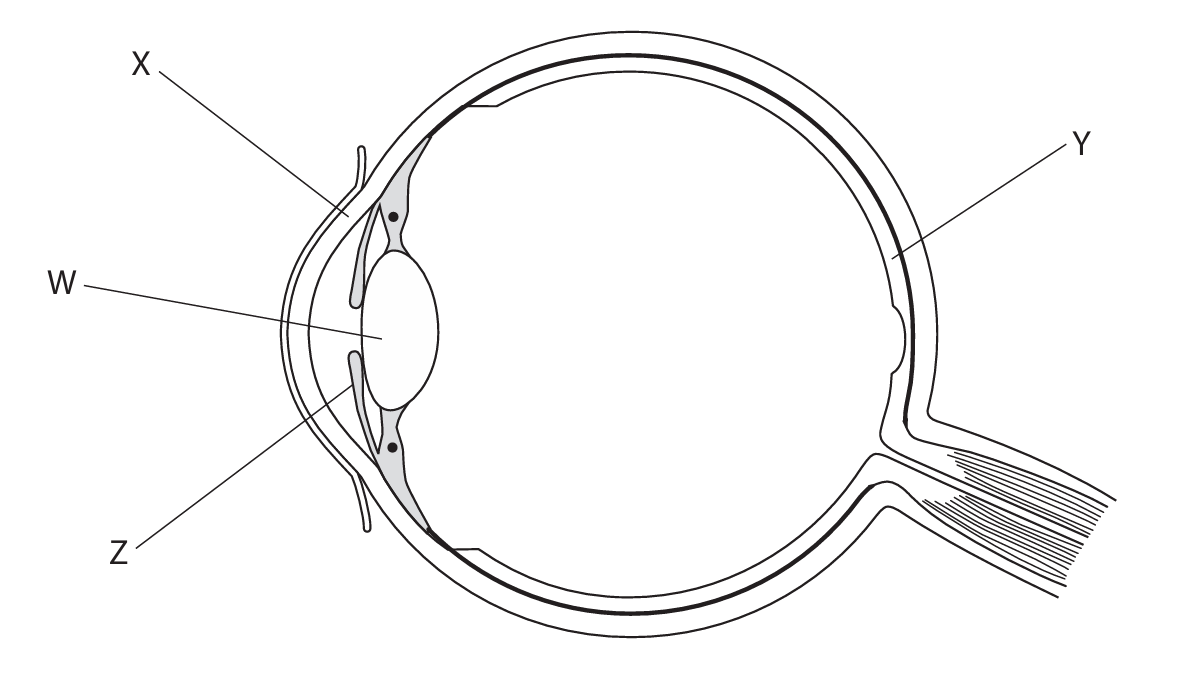
The diagram shows a section through an eye with some parts labelled.

(a) Name parts W, X and Y.
(b) Describe how structure Z changes when a person moves into a dark room.
Most-appropriate topic codes (Edexcel IGCSE Biology):
• 3.41: Describe the structure and function of the eye as a receptor — part (a)
• 3.42: Understand the function of the eye in focusing on near and distant objects, and in responding to changes in light intensity — part (b)
▶️ Answer/Explanation
(a)
• W = lens (1)
• X = cornea (1)
• Y = retina (1)
(b) A description that makes reference to the following:
• circular muscles relax (1)
• radial muscles contract (1)
• pupil dilates / gets wider (1)
Isotonic drinks are often used to rehydrate athletes after exercise.
(a) Explain why athletes lose water during exercise.
(b) Isotonic drinks contain salt and sugar solutions that are the same concentration as normal blood plasma.
A scientist uses this method to investigate how well an isotonic drink rehydrates athletes.
- three athletes exercise for one hour
- one athlete has no drink
- the second athlete drinks \(1000\ \text{cm}^3\) of pure water
- the third athlete drinks \(1000\ \text{cm}^3\) of isotonic drink
- the volume and colour of urine produced by each athlete are measured one hour later
The table shows the scientist’s results.
| Drink consumed by athlete | Volume of urine produced in \(\text{cm}^3\) | Colour of urine |
|---|---|---|
| no drink | 100 | very dark yellow |
| pure water | 750 | very light yellow |
| isotonic drink | 500 | yellow |
(i) Explain the results shown in the table for the athlete who consumed no drink.
(ii) Explain the differences in urine volume and urine colour produced by the athlete who consumed the isotonic drink and the athlete who consumed pure water.
Most-appropriate topic codes (Edexcel IGCSE Biology):
• 2(h): Transport (Humans) — part (a, b)
• 2(i): Excretion (Humans) — parts (b)(i), (b)(ii)
• 2(j): Co-ordination and response (Homeostasis) — parts (b)(i), (b)(ii)
▶️ Answer/Explanation
(a) An explanation that makes reference to two of the following:
- Exercise increases body temperature / eq (1)
- (More) sweat / eq (1)
- To cool down / lose heat / eq (1)
- By evaporation (of sweat) (1)
(b)(i) An explanation that makes reference to three of the following:
- Blood concentration increases / less water in blood / eq (1)
- (Detected by) hypothalamus / osmoreceptors / pituitary gland (1)
- Releases ADH (1)
- Collecting duct becomes more permeable / eq (1)
- Increased water reabsorption (so less urine produced) (1)
(b)(ii) An explanation that makes reference to two of the following:
- With (pure water) blood becomes more dilute / less concentrated / has high water concentration / eq (1)
- Less / no ADH released when drinking water / eq (1)
- Less water reabsorbed (by kidney) when water drunk / eq (1)
- Salt / sugar absorbed into blood (in intestine) (from isotonic drink) / eq (1)
Accept converse arguments for the isotonic drink (e.g., more ADH released, more water reabsorbed).
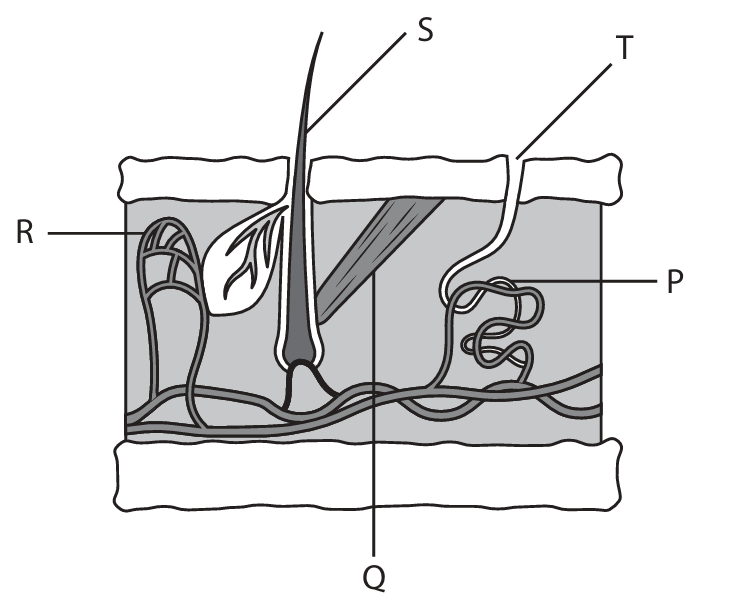
The diagram shows a section of human skin with some structures labelled.

(a) (i) Which structure is a pore of a sweat gland?
A) Q
B) R
C) S
D) T
(ii) Which structure carries blood?
A) P
B) R
C) S
D) T
(iii) The skin responds to changes in temperature.
Describe how the skin responds when a person enters a cold environment.
(b) Scientists investigate the effect of heat strain on two groups of men. Heat strain is caused by increasing the external temperature. The scientists measure the skin temperature with no heat strain, low heat strain and moderate heat strain. They also measure the rate of sweating with low and moderate heat strain.
The table shows the scientists’ results.
| Group | Number in group | Mean age in years | Mean skin temperature in °C | Mean sweating rate per cm² of skin in mg per min | |||
|---|---|---|---|---|---|---|---|
| no heat strain | low heat strain | moderate heat strain | low heat strain | moderate heat strain | |||
| young | 14 | 24 | 34.9 | 37.6 | 38.1 | 1.0 | 1.2 |
| old | 16 | 69 | 34.0 | 37.3 | 37.7 | 0.2 | 0.8 |
Discuss the relationship between age and the effect of heat strain on the mean skin temperature and the mean rate of sweating. Use information from the table and your own knowledge in your answer. (5)
Most-appropriate topic codes (Edexcel IGCSE Biology):
• 2(j): Homeostasis — parts (a)(iii), (b)
• 2(b): Cell structure and function — parts (a)(i), (a)(ii)
• 2(h): Transport in humans — part (a)(ii)
▶️ Answer/Explanation
(a)(i) D (T)
A is not correct as Q is not the pore of a sweat gland
B is not correct as R is not the pore of a sweat gland
C is not correct as S is not the pore of a sweat gland
(a)(ii) B (R)
A is not correct as P is not the structure that carries blood
C is not correct as S is not the structure that carries blood
D is not correct as T is not the structure that carries blood
(a)(iii) A description that makes reference to four of the following points:
1. vasoconstriction (1)
2. arterioles supplying capillaries near skin surface constrict / blood vessels supplying skin narrow (1)
3. less blood flows to skin surface (1)
4. hair erector muscle contracts / hair stands up (1)
5. traps air / insulates (1)
6. less heat loss by radiation / convection / evaporation (of sweat) (1)
7. less sweating (1)
(b) An answer that makes reference to five of the following points:
1. (mean) skin temperature is higher in young (1)
2. (mean) skin temperature is higher with heat strain (1)
3. mean sweating rate higher in young (1)
4. mean sweating rate higher in moderate/higher heat strain (1)
5. smaller difference in sweating rate between low and moderate strain in young (1)
6. no information on sweat rate with no heat strain / at rest (1)
7. more sweat glands in young / each gland produces more sweat in young (1)
8. young can reduce (core) body temperature faster / young less likely to overheat (1)
9. numbers very small / not repeated / unreliable / no information on age (1)
10. no information on BMI / fat layers / health / diet (1)
Mammals, such as humans, need to regulate their internal environment.
(a) What is the process that maintains a constant internal environment?
A) absorption
B) diffusion
C) egestion
D) homeostasis
(b) Table 1 shows the water input and output per day for a person in normal temperature conditions.
| Water input (intake) | Water output (losses) | ||
|---|---|---|---|
| source | volume in litres | source | volume in litres |
| drinking | 1.5 | urine | 1.5 |
| food | 0.5 | gas exchange | 0.4 |
| metabolism | 0.5 | sweating | 0.5 |
| faeces | 0.1 | ||
The water loss from gas exchange plus the loss from sweating are referred to as the insensible water loss. This water loss is called insensible because it cannot be measured directly.
(i) Calculate the percentage of the water loss that is classified as insensible.
(ii) This data comes from a person who has a mass of 70 kg. Assuming the same proportions, calculate the water input from food for a person who has a mass of 110 kg.
(iii) Water loss in faeces is usually relatively low. Illness such as food poisoning can produce symptoms including vomiting, diarrhoea and a high temperature. These symptoms can change water balance in the body. Explain how the symptoms of food poisoning can change water balance in the body.
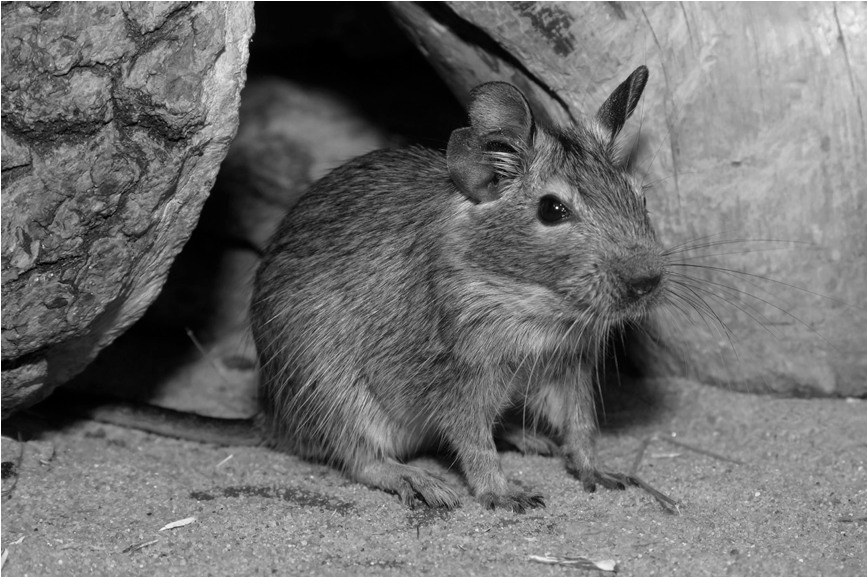
(c) The photograph shows a mammal called a degu.

A degu is a rodent that lives in a very dry environment in South America. The degu gets its water input by feeding on plants. The water intake of the degu changes during the winter and summer months.
Table 2 shows the body mass, water intake and urine concentration of the degu in the winter and in the summer. It also shows the total rainfall in winter and in summer.
| Measurement | Winter | Summer |
|---|---|---|
| total rainfall in mm | 245 | 12 |
| body mass in g | 119.7 | 124.8 |
| water intake in one day in cm\(^3\) | 40.4 | 10.3 |
| urine concentration in arbitrary units | 1123 | 3137 |
Comment on the differences in body mass, water intake and urine concentration in winter and summer. Use the data in the table and your own knowledge in your answer.
Most-appropriate topic codes (Edexcel IGCSE Biology):
• Appendix 3: Mathematical skills — parts (b)(i), (b)(ii)
• 2(i): Excretion, osmoregulation, ADH — parts (b)(iii), (c)
• 2(i): Kidney function and water balance — part (b)(iii)
• 4(a): Abiotic factors and organisms — part (c)
▶️ Answer/Explanation
(a) D (homeostasis)
A is not correct as it is not absorption
B is not correct as it is not diffusion
C is not correct as it is not egestion
(b)(i) Calculation method:
Insensible loss = gas exchange + sweating = \(0.4 + 0.5 = 0.9\) litres
Total water loss = urine + gas exchange + sweating + faeces = \(1.5 + 0.4 + 0.5 + 0.1 = 2.5\) litres
Percentage insensible loss = \(\frac{0.9}{2.5} \times 100 = 36\%\)
(b)(ii) Calculation method:
Water input from food for 70 kg person = 0.5 litres
Water input per kg = \(\frac{0.5}{70} = 0.007142857\) litres/kg
For 110 kg person: \(0.007142857 \times 110 = 0.7857\) litres ≈ \(0.79\) litres (accept \(0.77–0.80\))
(b)(iii) An explanation that makes reference to four of the following points:
1. more water lost / less water in body /eq (1)
2. water / liquid lost in vomiting / faeces / diarrhoea / eq (1)
3. (more) sweating / eq (1)
4. concentration of blood increases / water potential lowered / eq (1)
5. (more) ADH produced / secreted / eq (1)
6. by hypothalamus / pituitary (1)
7. permeability of collecting duct increases / eq (1)
8. more water reabsorbed / less water lost in urine / more concentrated urine / less urine / eq (1)
(c) An answer that makes reference to four of the following points:
In winter:
1. body mass lower / eq (1)
2. as fewer plants available / less food / hibernating / eq (1)
3. less sunlight / lower temp / less photosynthesis / eq (1)
4. (much) more water intake / eq (1)
5. as more rainfall/ eq (1)
6. less concentrated urine in winter / more urine / eq (1)
7. (so) more water lost in urine / eq (1)
8. Ref to data for urine 3× less concentrated in winter / water input 4 × higher in winter / eq (1)
In summer: converse of above points applies.
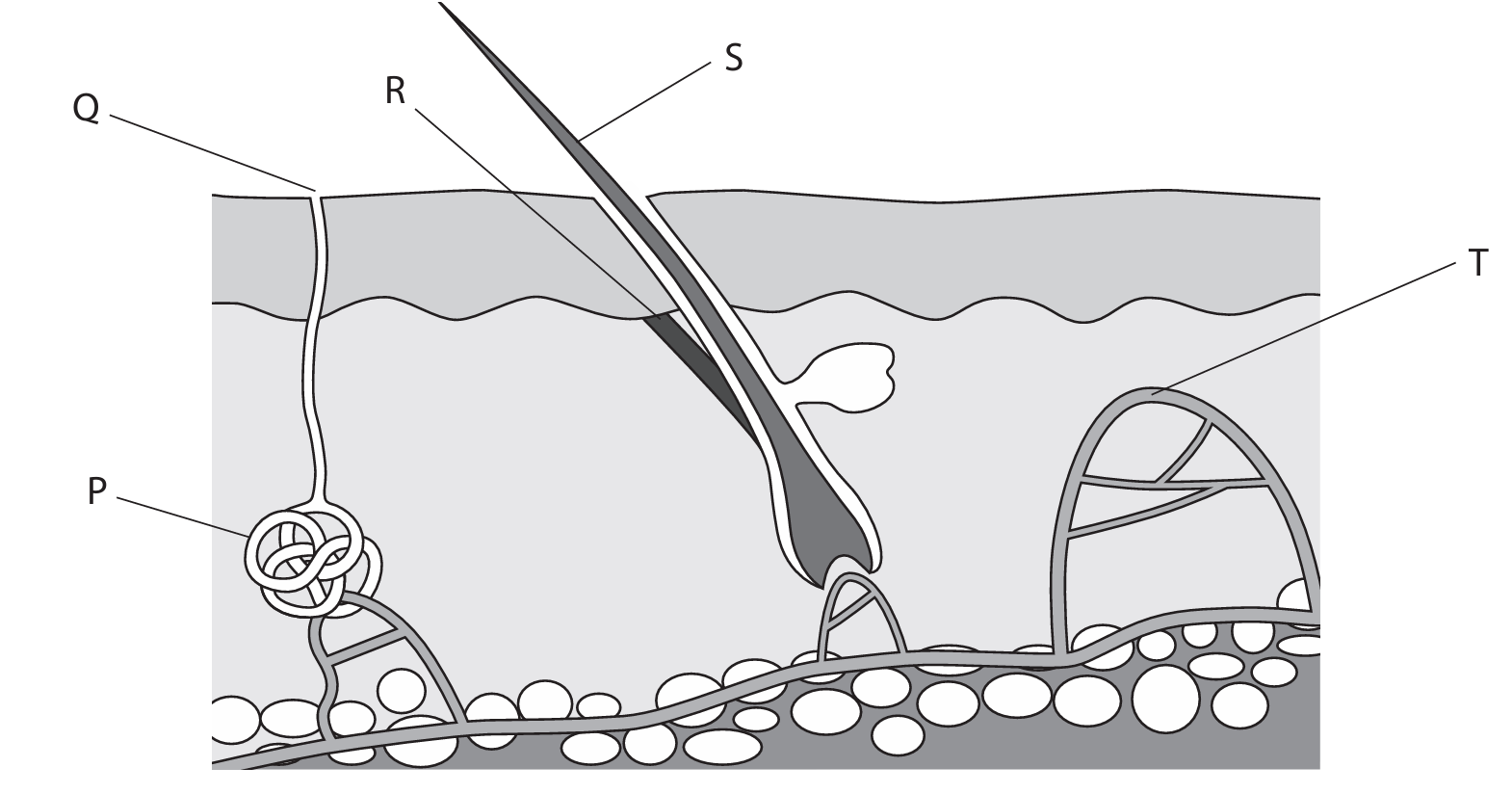
(a) The diagram shows a section through the skin with some structures labelled.

(i) Which structure is the sweat gland?
- A. P
- B. Q
- C. S
- D. T
(ii) Which structure is a capillary?
- A. Q
- B. R
- C. S
- D. T
(iii) Describe the changes that take place in the blood vessels in the skin if a person moves to a hot environment.
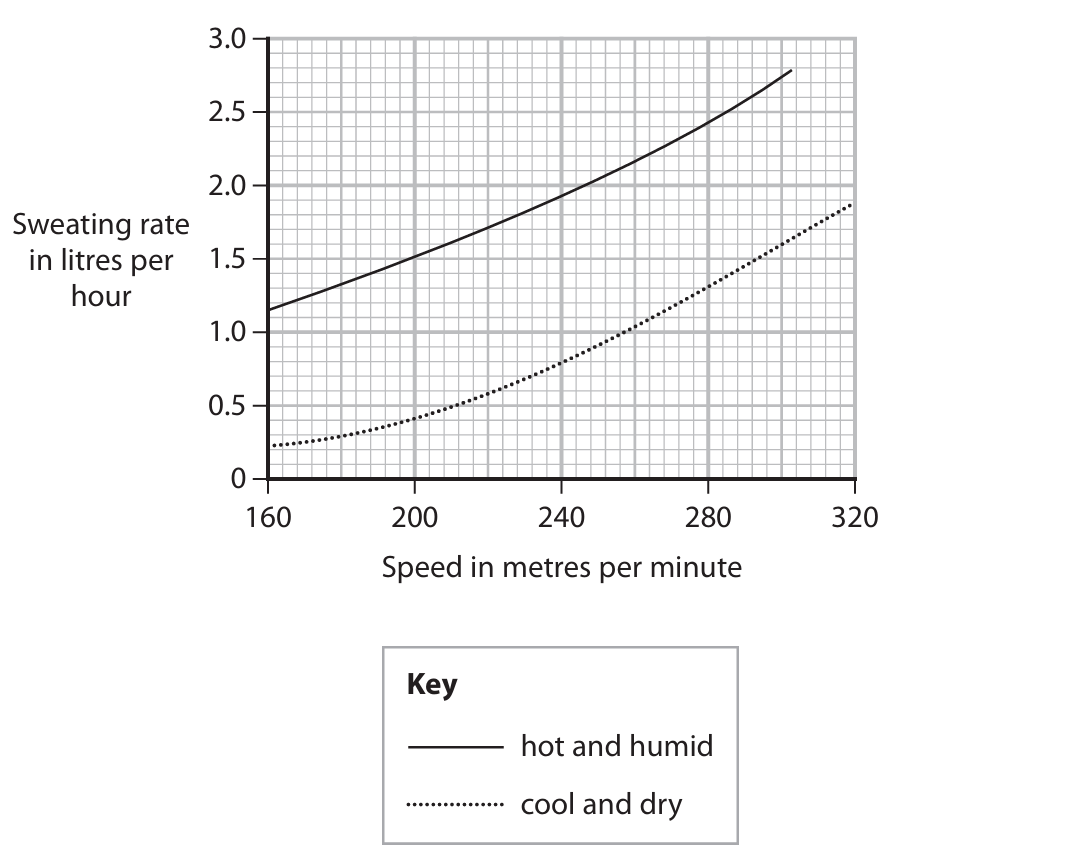
(b) Scientists investigate the release of sweat from human skin when a person runs at different speeds. They measure the rate of sweating in litres per hour. They take measurements in two environments. The first environment is hot and humid, and the second environment is cool and dry. The graph shows the scientists’ results.

(i) Give the dependent variable in this investigation.
(ii) A person runs at a speed of 220 metres per minute in hot and humid conditions. Calculate the volume of sweat the person releases in 15 minutes.
(iii) Using information from the graph, discuss the effect of increased running speed on sweating in the two environments.
Most-appropriate topic codes (Edexcel IGCSE Biology):
• 2(h): Transport — part (a)(ii)
• 2(j): Homeostasis and skin function — parts (a)(i), (a)(iii), (b)
• Appendix 4: Mathematical skills — part (b)(ii)
• Appendix 5: Command word taxonomy — parts (b)(i), (b)(iii)
▶️ Answer/Explanation
(a)(i) A (P)
Explanation: The sweat gland is correctly identified as structure P. Sweat glands are coiled tubular structures found in the dermis layer of the skin that produce sweat, which helps regulate body temperature through evaporation.
(a)(ii) D (T)
Explanation: Capillaries are the smallest blood vessels where exchange of gases, nutrients, and waste products occurs between blood and tissues. In skin diagrams, capillaries are typically shown as tiny vessels near the skin surface, which matches structure T.
(a)(iii) Vasodilation occurs, increasing blood flow to the skin surface for heat loss.
Explanation: When a person moves to a hot environment, several changes occur in the blood vessels of the skin to facilitate heat loss. Vasodilation occurs, where the arterioles and small arteries supplying the skin widen. This allows more blood to flow through the capillaries near the skin surface. The increased blood flow brings more heat to the skin surface where it can be radiated away. This process helps cool the blood and ultimately reduces core body temperature. These changes are part of the body’s thermoregulatory response to prevent overheating in hot conditions.
(b)(i) Sweating rate (in litres per hour)
Explanation: The dependent variable is the factor being measured in response to changes in the independent variable. In this investigation, scientists are measuring how sweating rate changes with running speed and environmental conditions, making sweating rate the dependent variable.
(b)(ii) 0.425 litres
Explanation: From the graph, at 220 m/min in hot/humid conditions, the sweating rate is approximately 1.7 L/hour. To find the volume in 15 minutes (which is 0.25 hours): Volume = Rate × Time = 1.7 L/hour × 0.25 hour = 0.425 L. This calculation shows that the person would release 0.425 litres of sweat in 15 minutes under these conditions.
(b)(iii) Sweating rate increases with running speed in both environments, but is consistently higher in hot/humid conditions.
Explanation: The graph shows several important relationships: In both environments, sweating rate increases with running speed, indicating that higher exercise intensity generates more body heat that needs to be dissipated. The hot and humid environment consistently results in higher sweating rates across all running speeds compared to the cool and dry environment. This occurs because in humid conditions, sweat evaporates less efficiently, so the body produces more sweat to achieve the same cooling effect. The similar slope of both lines suggests that the relationship between running speed and sweating rate is consistent regardless of environmental conditions, though the baseline sweating rate is higher in hot/humid conditions. These findings demonstrate how both internal factors (exercise intensity) and external factors (environmental conditions) influence the body’s thermoregulatory response through sweating.
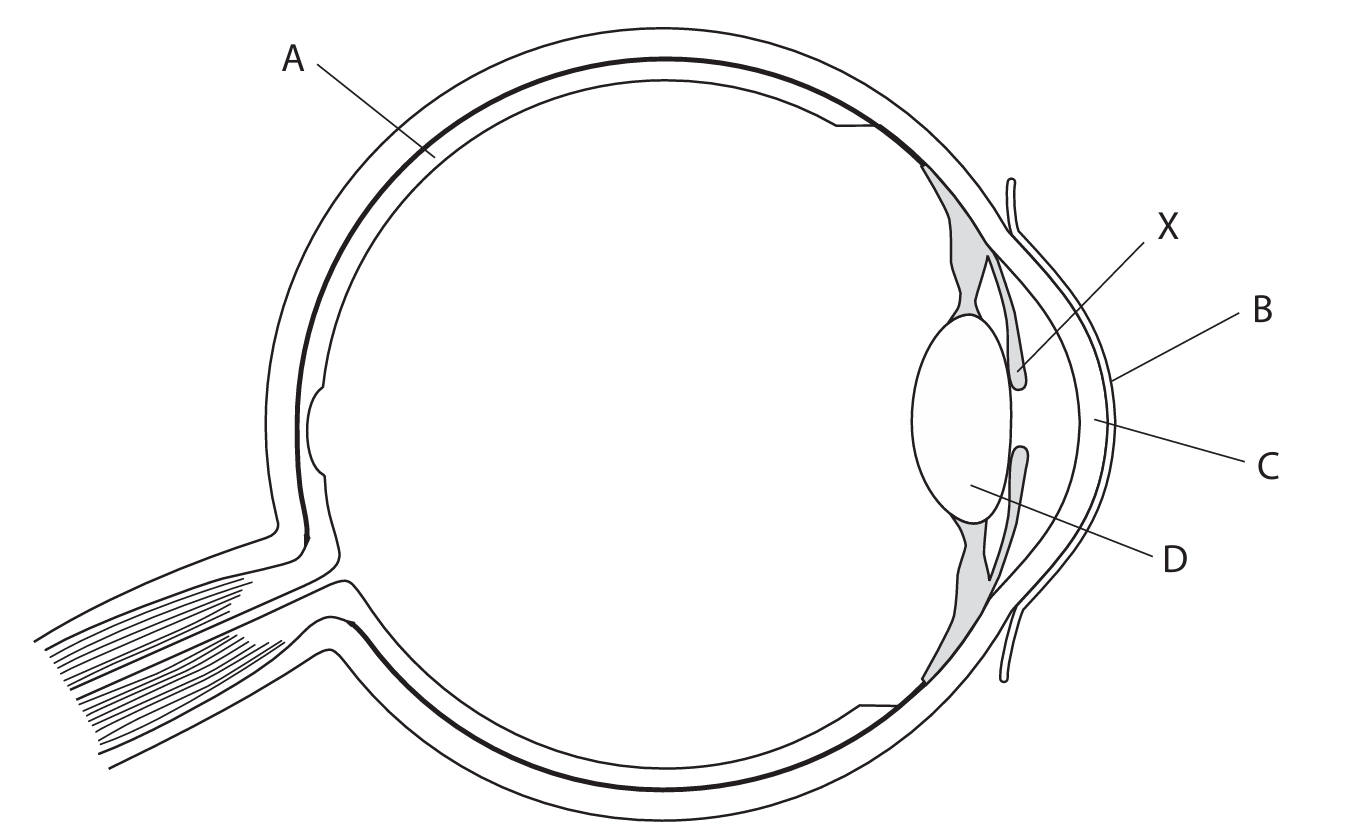
(a) The diagram shows a human eye.

(i) Which labelled structure is the cornea?
- A
- B
- C
- D
(ii) Explain the changes in structure X as a person moves from a room where the light is dim to a room where the light is bright.
(b) A student investigates if using one eye or using two eyes is better for judging the distance of objects.
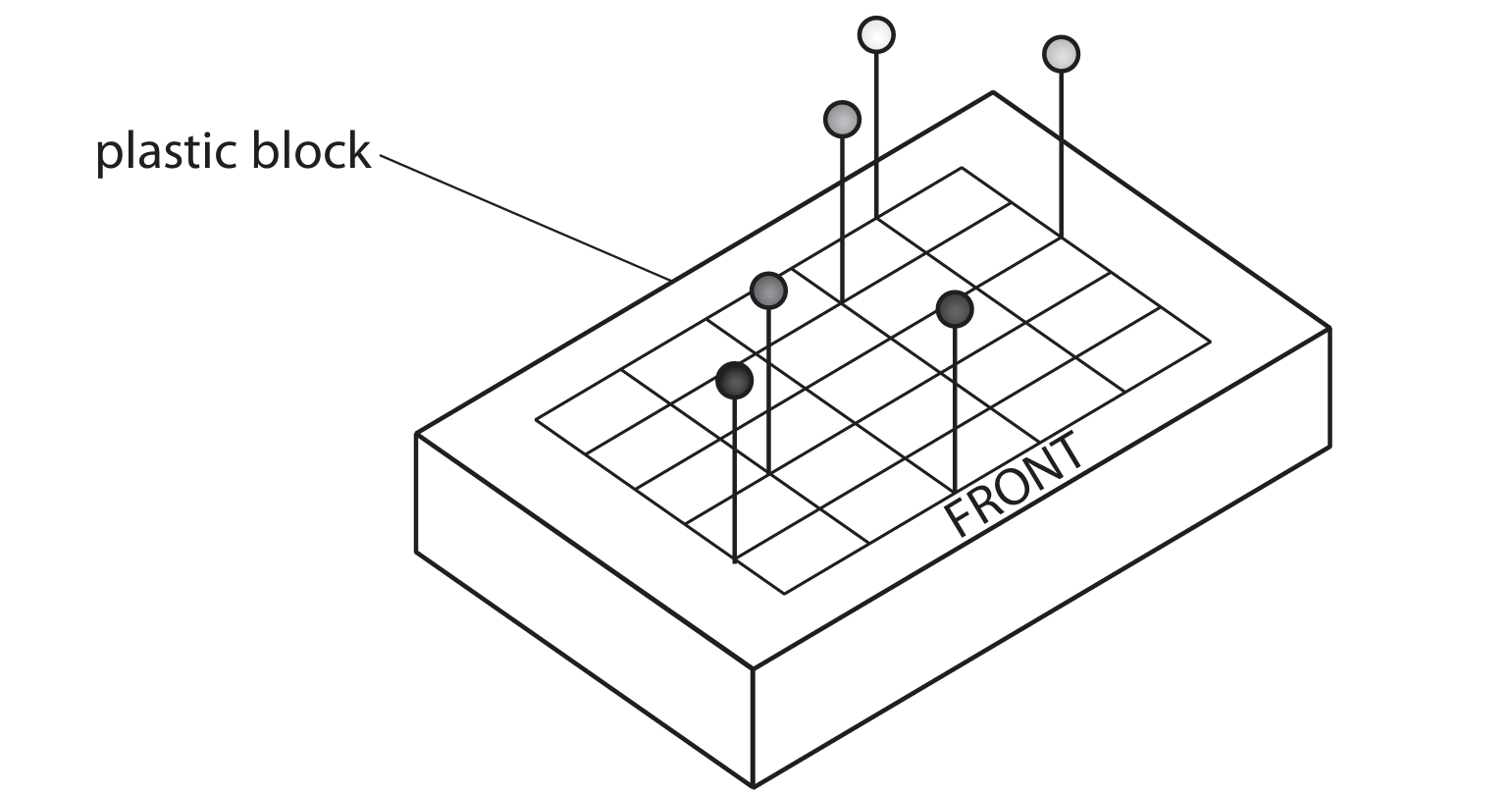
The student uses the plastic block shown in the diagram. The block has a grid where six different coloured pins can be placed as shown in the diagram.

This is the student’s method.
- place one pin into the lines of each column and row so that each pin is a different distance from the front of the grid
- ask a volunteer to close one eye
- hold the grid in front of the volunteer so they can see the coloured pins but not the grid
- ask the volunteer to call out the colour of the pins in order of distance, from nearest to furthest
- record the number of pins that the volunteer identifies correctly
- repeat eight more times, each time moving the pins to different positions in the grid
The student does the experiment again with both eyes open.
(i) Give the independent variable for the student’s investigation.
(ii) Give one variable that the student should control.
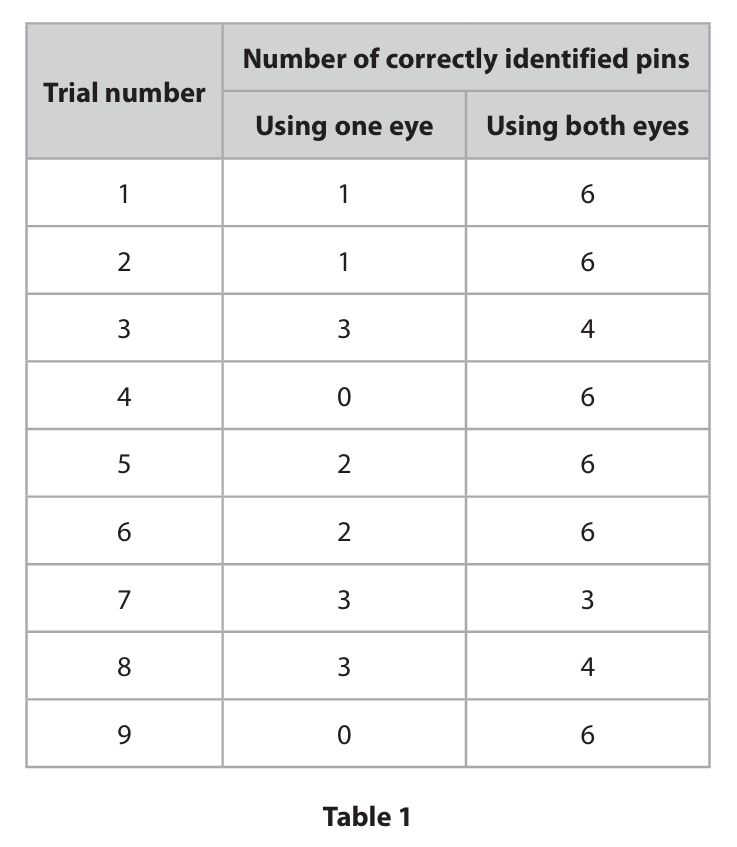
(iii) Table 1 shows the student’s results.
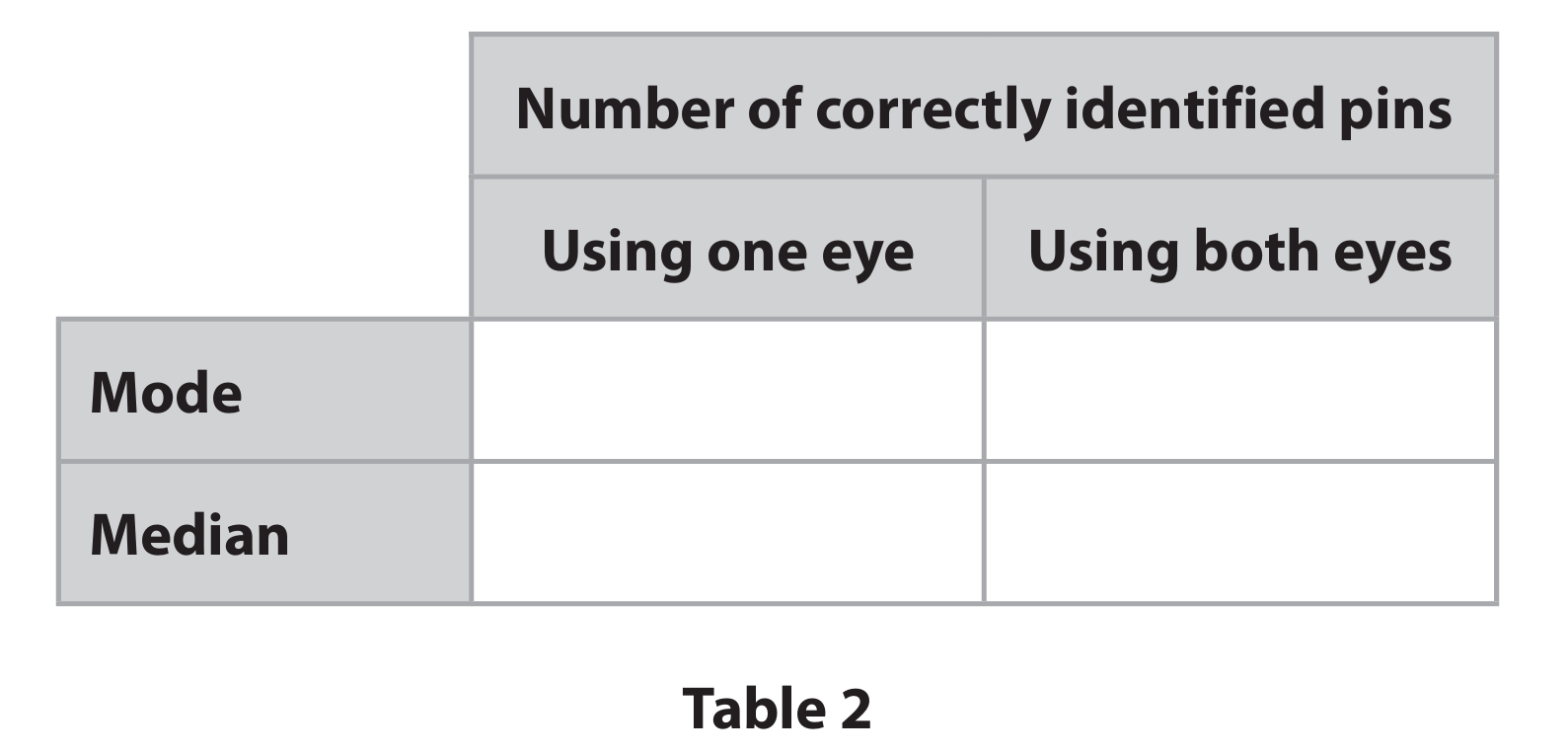
Complete Table 2 by determining the mode and the median for the data shown in Table 1.


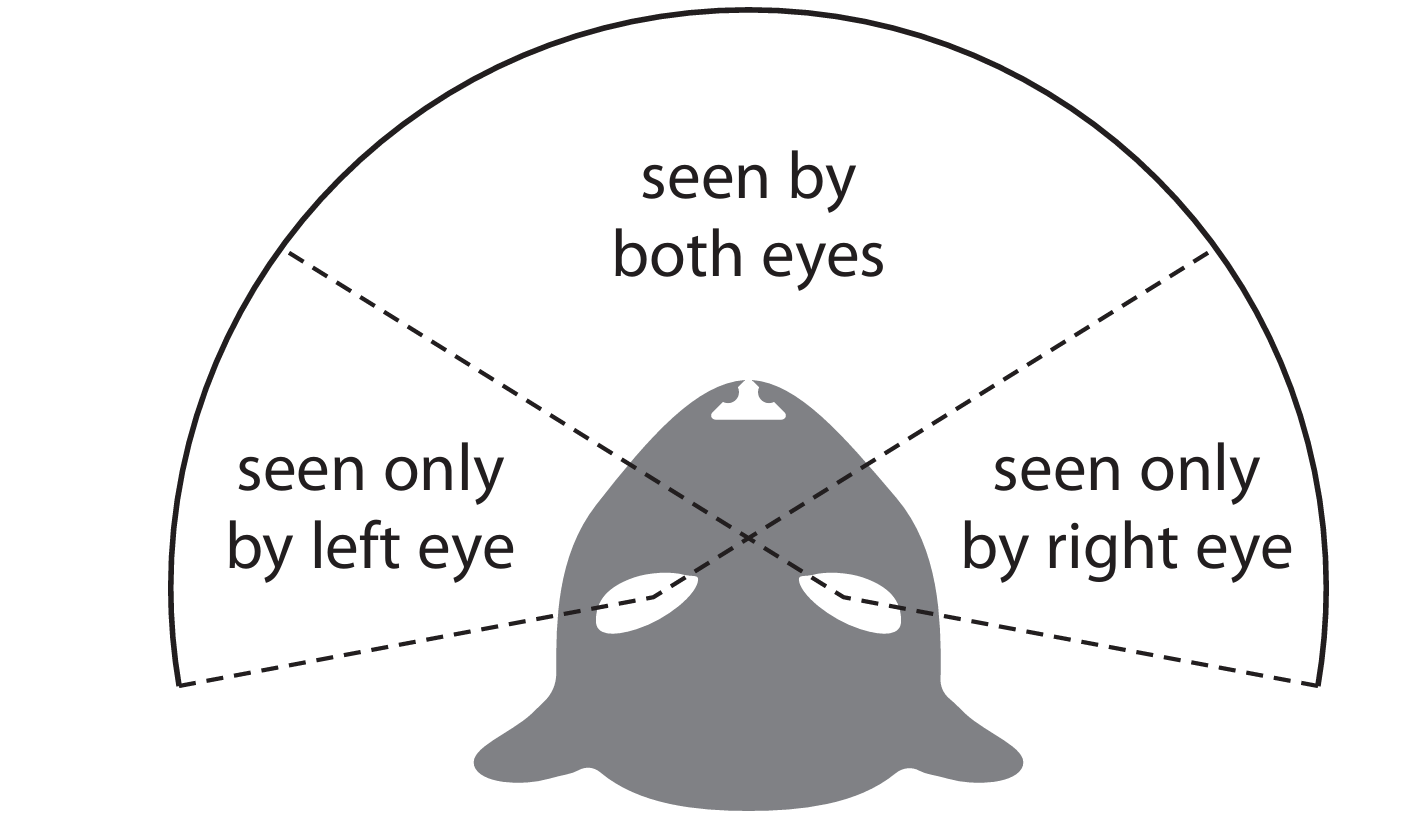
(iv) The field of view is the area that an animal can see with their eyes.
The diagram shows the field of view for a cat.

Explain why predators, such as cats, have two forward facing eyes.
Use the information in the diagram and Table 2 to support your answer.
Most-appropriate topic codes (Edexcel IGCSE Biology):
• Experimental Skills: Investigation design & data handling — parts (b)(i), (b)(ii), (b)(iii)
• 3(b): Inheritance & Natural Selection — part (b)(iv)
▶️ Answer/Explanation
2 (a)(i) C
Explanation: The cornea is the transparent front part of the eye that covers the iris and pupil. In the diagram, label C points to this structure. Label A is the retina (incorrect), B is the conjunctiva (incorrect), and D is the lens (incorrect).
2 (a)(ii) An explanation that makes reference to two of the following:
- Circular muscles contract (1)
- Radial muscles relax (1)
- (So) pupil narrows / gets smaller / constricts / iris widens (1)
Detailed Explanation: Structure X is the iris. In bright light, the circular muscles of the iris contract. Simultaneously, the radial muscles of the iris relax. This coordinated action causes the pupil (the hole in the center of the iris) to constrict or become smaller. This reduces the amount of light entering the eye, protecting the retina from potential damage caused by excessive light intensity.
2 (b)(i) Using one eye or both eyes / number of eyes used.
Explanation: The independent variable is the factor that the investigator deliberately changes. In this experiment, the student is comparing the results when the volunteer uses one eye versus when they use both eyes. Therefore, the number of eyes used (one or two) is the independent variable.
2 (b)(ii) Any one from: light intensity, distance from the block, size/shape/colour of pins, size/shape/angle of the block or grid.
Explanation: A controlled variable is a factor that must be kept constant to ensure a fair test. For this investigation, many variables could affect the volunteer’s ability to judge distance. For example, the light intensity must be the same in all trials, as poor lighting would make it harder to see the pins regardless of how many eyes are used. Similarly, the distance between the volunteer and the block must be kept constant.
2 (b)(iii)
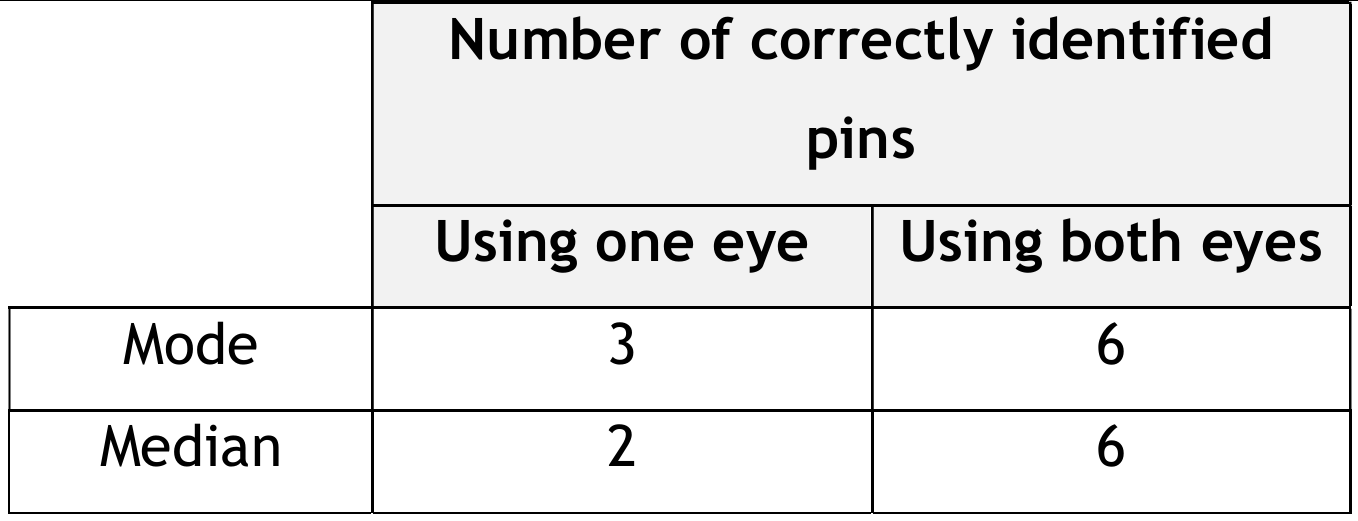
Explanation:
Mode is the value that appears most frequently.
- One eye: The scores are: 0, 0, 1, 1, 2, 2, 3, 3, 3. The number 3 appears most often (three times), so the mode is 3.
- Both eyes: The scores are: 3, 4, 4, 6, 6, 6, 6, 6, 6. The number 6 appears most often (six times), so the mode is 6.
Median is the middle value when all values are arranged in order.
- One eye (ordered): 0, 0, 1, 1, 2, 2, 3, 3, 3. The fifth value (out of nine) is the median, which is 2.
- Both eyes (ordered): 3, 4, 4, 6, 6, 6, 6, 6, 6. The fifth value is the median, which is 6.
2 (b)(iv) An explanation that makes reference to three of the following:
- Better distance judgement (with two eyes) / better depth perception (1)
- Large area seen by both eyes / large overlapping visual field (1)
- To locate prey / catch prey (1)
- Do not need wide field of view as not preyed upon (1)
Detailed Explanation: The results in Table 2 show a higher mode and median (both 6) when using both eyes compared to using one eye (mode=3, median=2). This means the volunteer was significantly better at correctly judging the distance of the pins with two eyes. This is due to binocular vision. The diagram shows that predators like cats have a large area of overlap (seen by both eyes) in front of them. This overlapping field of view allows the brain to compare the slightly different images from each eye (a process called stereopsis) to calculate precise depth and distance. This accurate depth perception is crucial for predators to successfully judge the distance to their prey before pouncing or chasing. They sacrifice a wide total field of view (which is more important for prey animals to spot predators) for this superior forward-facing depth perception, which is a key adaptive feature for a hunting lifestyle.
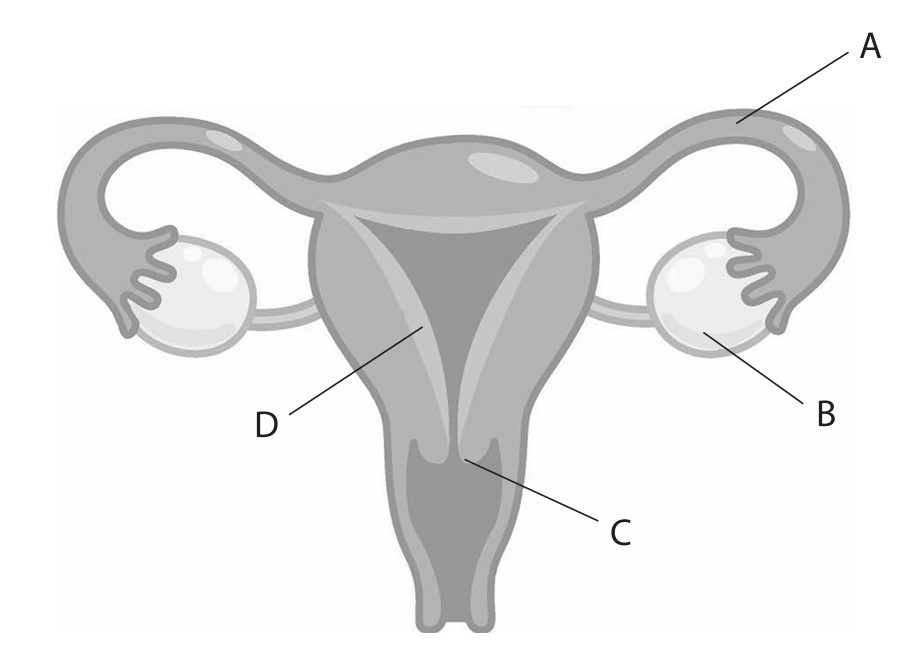
The diagram shows part of the female reproductive system with some structures labelled.

(a) Name the structures labelled A, B and C.
(b) Describe the role of structure D in reproduction.
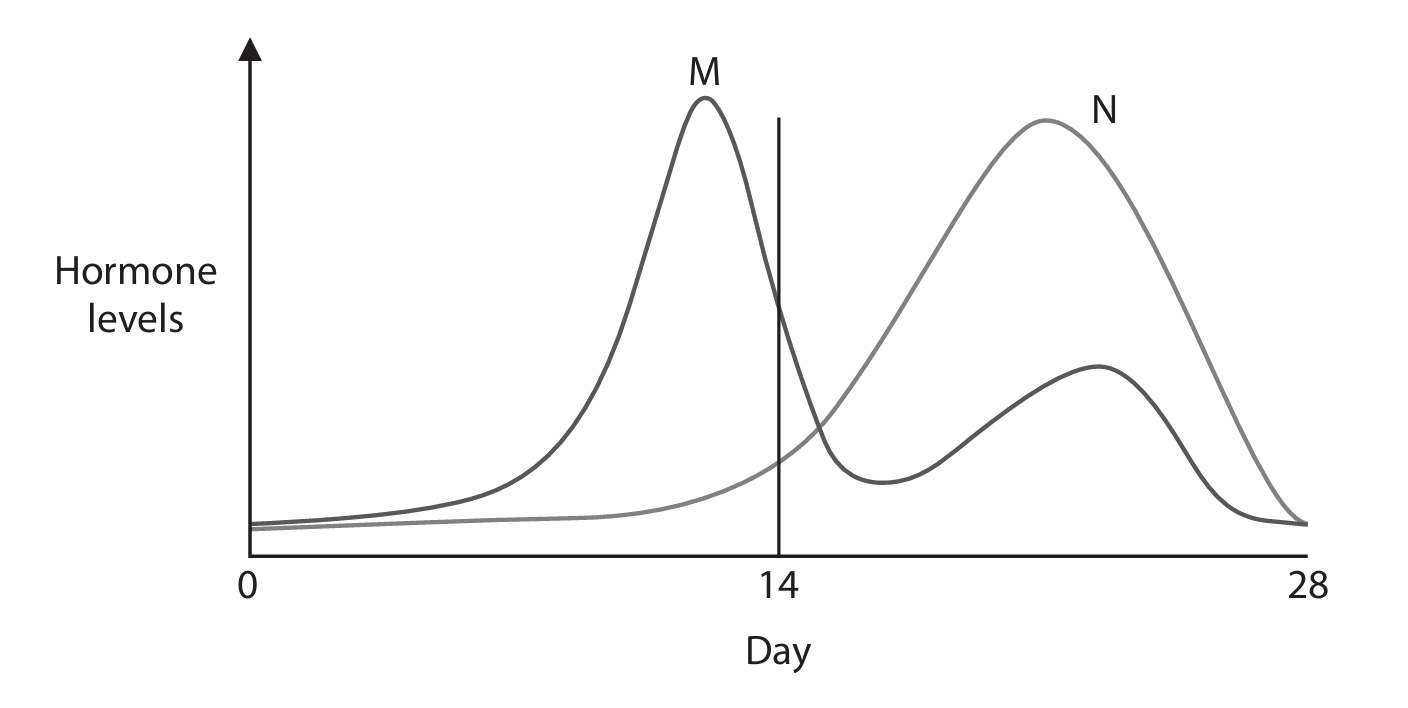
(c) The graph shows the changes in the levels of hormones released from structure B during one menstrual cycle.

(i) Explain the importance of the changes in hormone M and hormone N during the menstrual cycle.
(ii) Other hormones are involved in the menstrual cycle. Describe the role of one other named hormone in the menstrual cycle.
Most-appropriate topic codes (Edexcel IGCSE Biology):
• 3(a): Human reproduction — parts (a), (b)
• 3(a): Menstrual cycle and hormones — parts (c)(i), (c)(ii)
• 2(j): Co-ordination and response — Hormonal control — part (c)(ii)
▶️ Answer/Explanation
(a)
A. Oviduct (or Fallopian tube) (1)
B. Ovary (1)
C. Cervix (1)
Explanation: The diagram shows key parts of the female reproductive system. Label A points to the tube connecting the ovary to the uterus, which is the oviduct (or Fallopian tube). Label B points to the organ that produces eggs, which is the ovary. Label C points to the narrow opening at the base of the uterus, which is the cervix.
(b) Structure D is the uterus (womb). Its roles include:
- It is the site of implantation of the embryo. (1)
- The placenta grows in the uterus, which provides nutrition to and removes waste from the developing embryo/foetus. (1)
Explanation: The uterus is a muscular organ. After an egg is fertilised, the resulting embryo travels to the uterus and implants into its thickened lining (endometrium). The uterus then supports the developing baby throughout pregnancy. The placenta, which forms on the uterine wall, is crucial for exchanging oxygen, nutrients, and waste between the mother’s blood and the baby’s blood.
(c)(i) From the typical patterns on the graph:
- Hormone M is oestrogen. (1)
- Hormone N is progesterone. (1)
The importance of their changes is:
- Oestrogen (M) increases in the first half of the cycle (before day 14). It repairs and builds up the uterine lining (endometrium) after menstruation, preparing it for a potential pregnancy. It also stimulates the release of LH which triggers ovulation. (1)
- Progesterone (N) increases significantly after ovulation (after day 14). Its main role is to maintain the thickened uterine lining, making it suitable for the implantation of a fertilised egg. It also inhibits further ovulation. If pregnancy does not occur, its level falls, leading to the breakdown of the lining and menstruation. (1)
Explanation: The menstrual cycle is precisely controlled by hormones. Oestrogen dominates the follicular phase (first half), preparing the body for ovulation and pregnancy. Progesterone dominates the luteal phase (second half), maintaining the conditions needed for a potential pregnancy. The drop in progesterone is the direct signal for the period to start if no embryo implants.
(c)(ii) Another hormone is FSH (Follicle-Stimulating Hormone). (1)
- FSH is released by the pituitary gland. It stimulates the development of follicles (which contain eggs) in the ovary. It also stimulates the ovaries to produce oestrogen. (1)
OR Another hormone is LH (Luteinizing Hormone). (1)
- LH is also released by the pituitary gland. A surge in LH around the middle of the cycle triggers ovulation – the release of a mature egg from the ovary. After ovulation, LH stimulates the remains of the follicle to develop into the corpus luteum, which produces progesterone. (1)
Explanation: FSH and LH are gonadotropins released from the brain that directly act on the ovaries. FSH kickstarts the cycle each month by causing a follicle to mature. The LH surge is the essential trigger for ovulation. These hormones work in concert with oestrogen and progesterone in a complex feedback system to regulate the cycle.
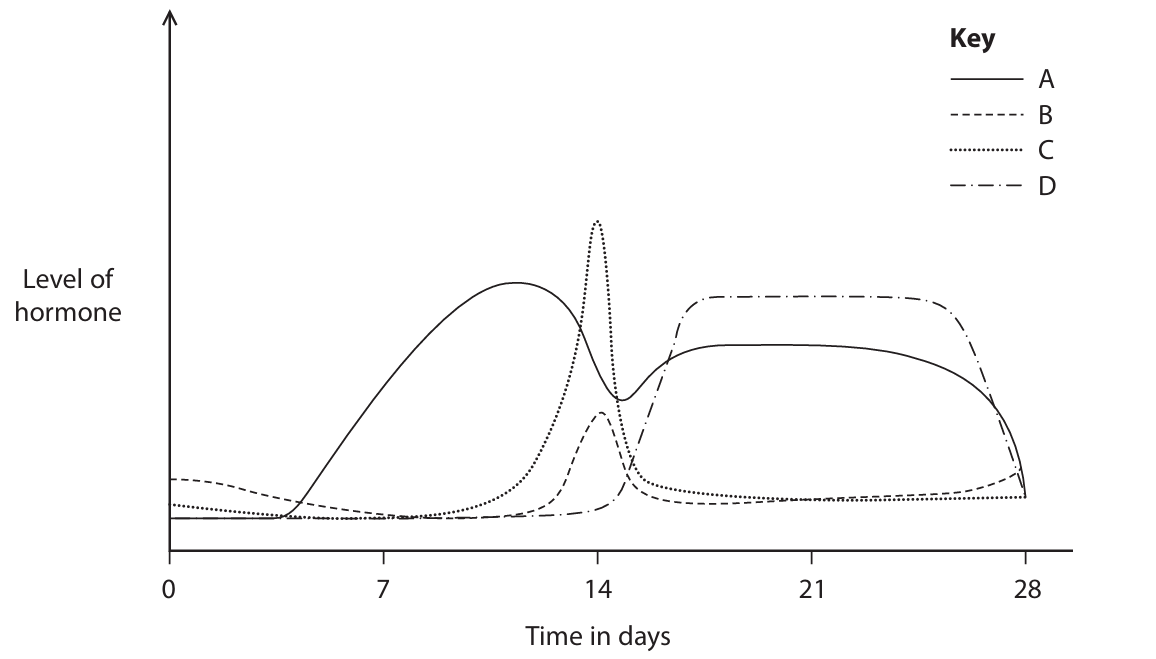
Hormones control the menstrual cycle.
(a) (i) Name the gland that produces FSH.
(a) (ii) The diagram shows the changes in four hormones during the human menstrual cycle.

Which line represents the hormone progesterone?
- A
- B
- C
- D
(a) (iii) Describe the roles of FSH and LH in the menstrual cycle.
(b) Reproductive hormones can be used as contraceptives to prevent pregnancy.
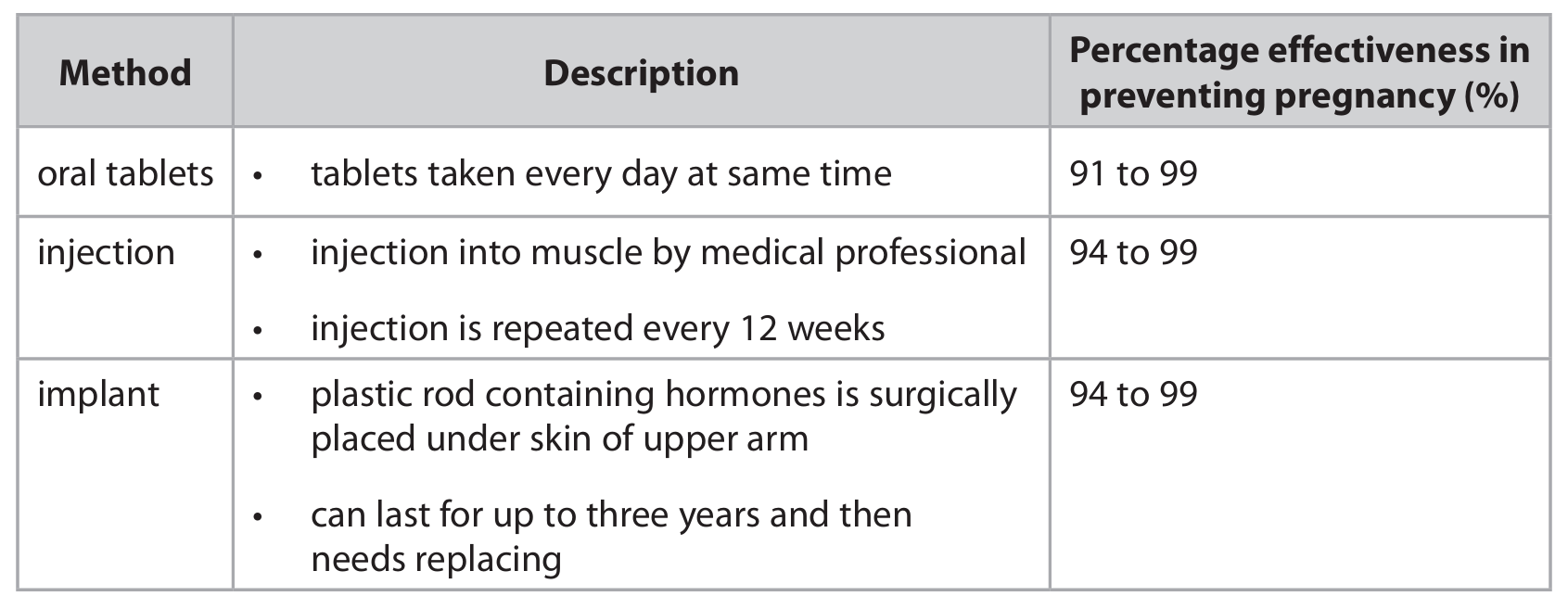
The table gives information about three different methods of hormonal contraception.

Discuss the advantages and disadvantages of the three methods of contraception shown in the table.
Most-appropriate topic codes (Edexcel IGCSE Biology):
• 2(j): Co-ordination and response (hormonal control) — parts (a)(i), (a)(ii), (a)(iii), (b)
▶️ Answer/Explanation
Solution
(a)(i) Pituitary (gland)
Explanation: Follicle-Stimulating Hormone (FSH) is produced and secreted by the pituitary gland, a small gland located at the base of the brain. The pituitary gland is often called the ‘master gland’ because it controls many other hormone glands in the body.
(a)(ii) D
Explanation: Progesterone is a hormone that is crucial in the second half of the menstrual cycle, after ovulation. Its main role is to prepare the lining of the uterus (endometrium) to receive and support a fertilized egg. If pregnancy does not occur, progesterone levels fall, leading to menstruation. On the graph, line D shows a hormone that peaks in the middle of the cycle and remains high for the second half before dropping sharply, which matches the pattern of progesterone. Line A represents oestrogen (peaks just before ovulation), line B represents LH (sharp mid-cycle peak triggering ovulation), and line C represents FSH (rises in the first half to stimulate follicle development).
(a)(iii)
FSH:
- Stimulates the growth and development of egg-containing follicles in the ovaries.
- Triggers the ovaries to produce and release the hormone oestrogen.
LH:
- Triggers ovulation – the release of a mature egg from the ovary around the middle of the menstrual cycle.
- Stimulates the remains of the follicle in the ovary (after the egg is released) to develop into the corpus luteum, which then produces progesterone.
Explanation: FSH (Follicle-Stimulating Hormone) and LH (Luteinizing Hormone) work in a coordinated way to regulate the menstrual cycle. FSH kickstarts the cycle by promoting the growth of follicles. As these follicles mature under the influence of FSH, they secrete increasing amounts of oestrogen. This rising oestrogen level eventually triggers a surge in LH. This LH surge is the direct cause of ovulation. After ovulation, LH stimulates the transformation of the ruptured follicle into the corpus luteum, which secretes progesterone to maintain the uterine lining.
(b)
Overall Comparison:
- Oral tablets have a slightly wider range of effectiveness (91-99%) compared to injections and implants (94-99%), suggesting they might be slightly less reliable on average or more dependent on correct use.
- A significant disadvantage common to all these hormonal methods is that they offer no protection against sexually transmitted infections (STIs), including HIV.
- All methods can also potentially cause side effects, which vary from person to person.
Oral Tablets:
Advantages:
- They are easy to use and do not require a medical procedure for each dose.
- They are a good option for people who are afraid of needles.
- It is relatively easy to stop taking them if someone changes their mind and wants to try to conceive, allowing the menstrual cycle to return to normal quickly.
Disadvantages:
- They must be taken at the same time every day without fail; forgetting a pill can reduce its effectiveness significantly.
- Their effectiveness can be reduced by vomiting, diarrhoea, or by taking certain other medications.
Injection:
Advantages:
- It is long-lasting (effective for 12 weeks per dose), so you don’t need to remember to take a pill daily.
- You cannot forget to take it once it has been administered.
Disadvantages:
- It must be administered by a healthcare professional, requiring regular clinic visits.
- The injection itself can be painful, and some people have a fear of needles.
- After stopping the injections, it can take a longer time for fertility to return to normal compared to stopping the pill.
Implant:
Advantages:
- It is the longest-lasting method (up to 3 years), requiring very little ongoing effort after insertion.
- Like the injection, you cannot forget to use it.
- It is highly effective and can be ideal for people who have limited access to healthcare facilities, as it only needs attention every three years.
Disadvantages:
- Insertion and removal are minor surgical procedures that must be performed by a trained healthcare professional.
- The procedure involves minor risks like infection, pain, or scarring at the implant site.
- It can be less easy to reverse quickly if someone changes their mind about wanting to conceive, as it requires a removal procedure.
Explanation: The choice of contraceptive method is highly personal and depends on an individual’s lifestyle, ability to adhere to a schedule, access to healthcare, fear of medical procedures, and future family planning goals. Each method has a trade-off between convenience, duration of action, and the level of medical intervention required.
Read the passage below. Use the information in the passage and your own knowledge to answer the questions that follow.
Tissue culture and plants
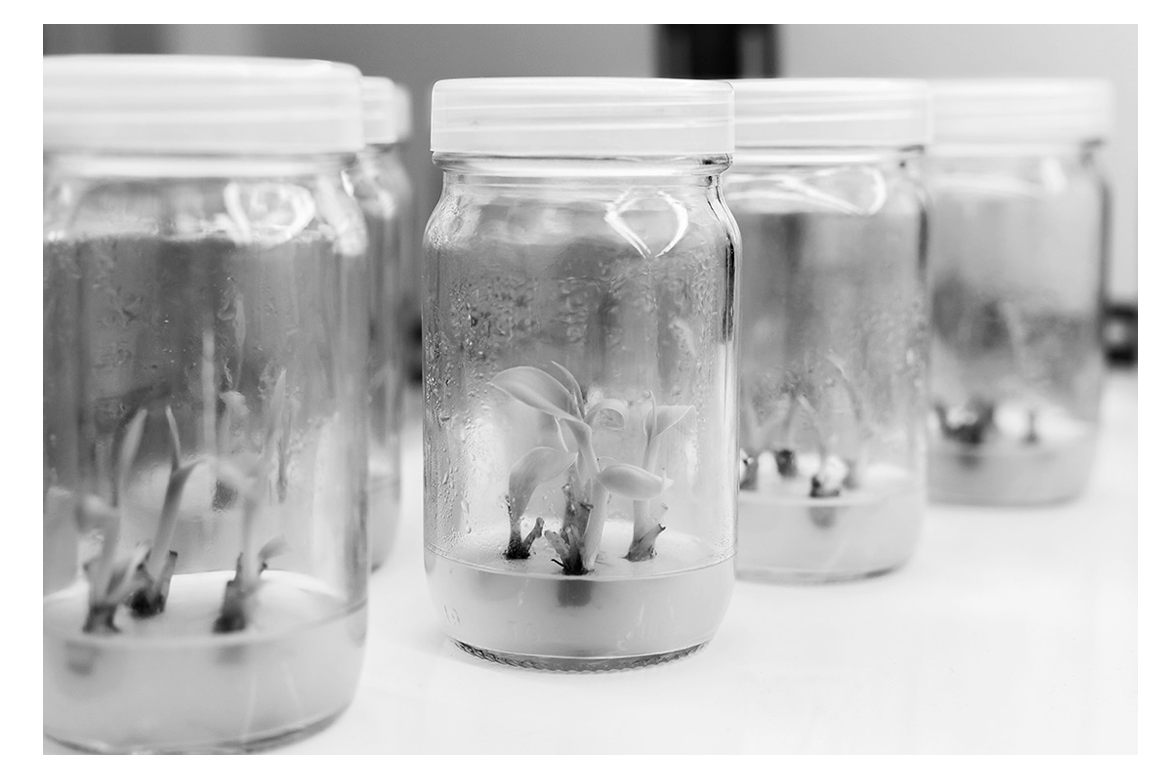
In micropropagation, plant tissues are grown in vitro on plant tissue culture media, under aseptic conditions in a controlled environment. This technique is possible because plant cells can differentiate and become specialised cells. This allows them to change their metabolism, growth and development to form a whole plant.

Plant tissue culture media contain substances to support the normal growth and development of plants. The media are mainly composed of minerals, vitamins, and plant hormones. The pH of the media is kept constant.
Plant hormones play an essential role in determining how cells and tissues develop in culture media. Plant cells can differentiate into different tissues and cell types. The concentration of hormones can determine the tissue that develops. Auxins and cytokinins are the most widely used. A balance of both auxin and cytokinin leads to the development of a mass of undifferentiated cells known as a callus.
In vitro cell culture offers an alternative method for conserving endangered species and varieties. Tissue culture can be used when the plant species produce seeds that do not germinate or have seeds that cannot be stored for a long period of time. These can be successfully preserved using in vitro techniques for the maintenance of gene banks.
Embryo culture is a type of plant tissue culture that is used to grow embryos from seeds in nutrient media. In embryo culture, the plant develops directly from the embryo or indirectly through the formation of a callus and then subsequent formation of shoots and roots. The technique has been developed to break dormancy in seeds, and to reproduce rare species and haploid plants.
Scientists are also using cell suspension culture systems from which products can be extracted. A suspension culture is developed by transferring a portion of the callus into liquid media. The media are maintained under suitable conditions of agitation, light and temperature. This system can provide a continuous, reliable source of natural products independent of climate and soil conditions. The first commercial application of large-scale suspension cultivation of plant cells was carried out to produce shikonin. Shikonin is used in traditional Chinese medicine and is a potential anti-cancer treatment.
(a) State what is meant by the term in vitro. (line 1)
(b) Explain how plant cells differ from human cells in their ability to differentiate and specialise. (lines 2 and 3)
(c) Give the function of two named minerals included in the culture media. (line 6)
(d) Explain why the pH of the media needs to be kept constant. (line 7)
(e) Auxin also controls the response of plants to light. Describe a simple experiment you could do to show the phototropic response of plant stems to light.
(f) Explain why scientists want to conserve endangered plant species and varieties. (lines 13 and 14)
(g) Explain why plant cell suspension culture media are maintained under suitable conditions of agitation, light and temperature. (lines 24 and 25)
Most-appropriate topic codes (Edexcel IGCSE Biology):
• 2(b): Cell structure — part (b)
• 2(e): Nutrition — part (c)
• 2(c): Biological molecules — part (d)
• 2(j): Co-ordination and response — part (e)
• 4(a): The organism in the environment — part (f)
▶️ Answer/Explanation
(a) In a test tube / culture dish / jar / glass / petri dish / container / in culture solution / in a lab / outside a living organism.
Explanation: The term “in vitro” literally means “in glass” in Latin, referring to biological processes that are conducted outside of a living organism in an artificial laboratory environment, such as in test tubes or petri dishes. This contrasts with “in vivo” experiments which are conducted within living organisms.
(b) Plant cells can differentiate into all/different types of tissues or specialized cells throughout the plant’s life and can form/regenerate a whole new plant.
Explanation: Plant cells exhibit totipotency, meaning that even mature, differentiated plant cells retain the ability to dedifferentiate and then redifferentiate into any cell type needed to regenerate an entire plant. This is why you can grow a new plant from a cutting. In contrast, human cells have much more limited differentiation capabilities. While stem cells can differentiate into various cell types, most human cells become permanently specialized during development and cannot revert back or form entirely new organisms.
(c)
1. Nitrate – for making amino acids/proteins/DNA/nucleic acids
2. Magnesium – for making chlorophyll/chloroplasts/photosynthesis
Explanation: Plant tissue culture media must contain essential minerals that support plant growth and development. Nitrate is crucial as it provides nitrogen, which is a fundamental component of amino acids, proteins, and nucleic acids (DNA and RNA). Without adequate nitrogen, plants cannot synthesize these essential biomolecules. Magnesium is a central component of the chlorophyll molecule, which is vital for photosynthesis as it captures light energy. Without magnesium, plants cannot produce chlorophyll effectively, leading to chlorosis (yellowing of leaves) and impaired photosynthesis.
(d) Enzymes are affected by pH/ work best at optimum pH. If pH changes, the shape of the active site can change/be denatured so substrates can no longer bind.
Explanation: Maintaining a constant pH is critical because enzymes, which catalyze all biochemical reactions in plant cells, are highly sensitive to pH changes. Each enzyme has an optimal pH range where it functions most efficiently. If the pH deviates from this range, the enzyme’s three-dimensional structure can be altered, changing the shape of its active site. This prevents substrates from binding properly, effectively denaturing the enzyme and halting the metabolic reactions it catalyzes. This would severely disrupt plant growth and development in the culture media.
(e) Place a shoot in light from one side/unidirectional light and another shoot in darkness/light all around. Leave both for a stated time/use shoots of same type/same temperature/other control variable. Observe/measure bending or growing towards light.
Explanation: To demonstrate phototropism (growth response to light), you would set up two identical young plant shoots. One would be placed in a location with light coming from only one direction (e.g., near a window), while the control would be placed in either complete darkness or with light evenly distributed from all sides. Both plants should be kept under the same temperature and watering conditions to ensure any differences are due to light direction only. After a few days, you would observe that the shoot exposed to unilateral light has bent toward the light source. This bending occurs because auxin hormone accumulates on the shaded side of the stem, promoting more cell elongation on that side and causing the stem to curve toward the light.
(f) To maintain biodiversity/reduce damage to ecosystems and to prevent extinction/keep species for future generations/for medicinal properties.
Explanation: Conserving endangered plant species is crucial for several reasons. Firstly, it maintains biodiversity, which ensures ecosystem stability and resilience. Each plant species plays a unique role in its ecosystem, and losing one can disrupt food webs and ecological balance. Secondly, it prevents extinction, preserving genetic diversity that might be valuable for future breeding programs, especially as climate changes. Many plants contain compounds with medicinal properties; for example, aspirin originated from willow bark. By conserving endangered species, we preserve potential future medicines and genetic resources that could be vital for human well-being.
(g) Agitation mixes contents/mixes oxygen/with plant cells. Light is for photosynthesis. Suitable temperature is for enzyme action.
Explanation: Suspension cultures require specific conditions to mimic optimal natural environments. Agitation (shaking or stirring) ensures that cells and nutrients are evenly distributed throughout the liquid media, preventing sedimentation. It also promotes gas exchange, ensuring oxygen (needed for respiration) is available and carbon dioxide (a product of respiration) is removed. Light is essential for photosynthetic plant cells to produce their own energy through photosynthesis. Maintaining a suitable temperature is critical because temperature affects enzyme activity; most plant enzymes function optimally around 25-30°C. Temperatures that are too high can denature enzymes, while temperatures that are too low can slow down metabolic processes to inadequate levels.
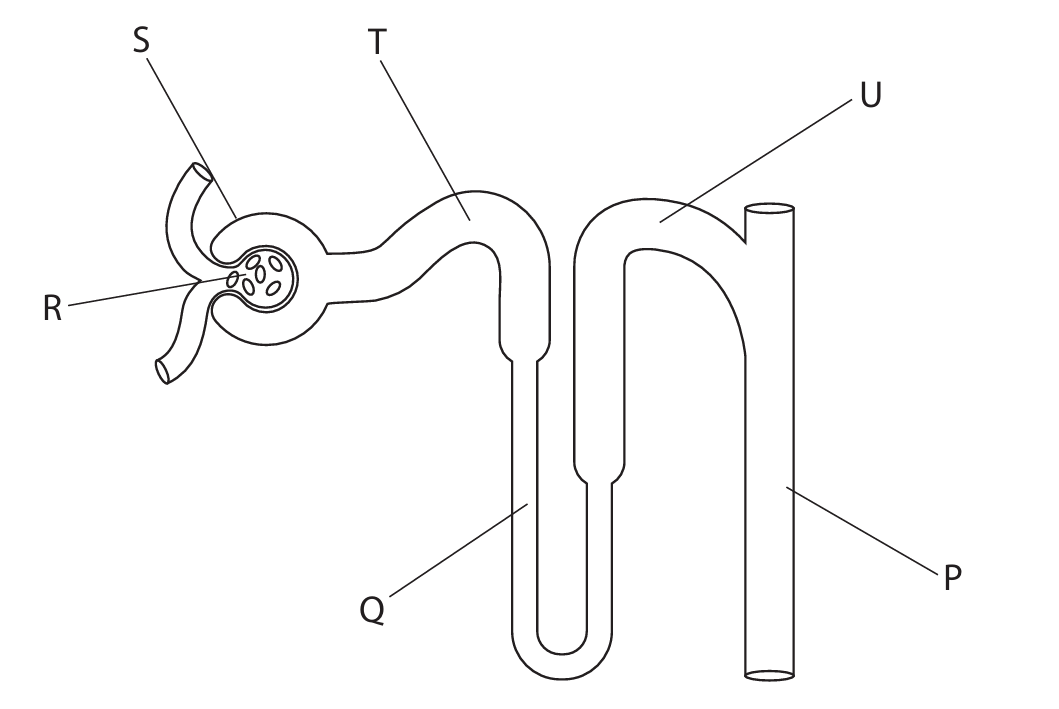
(a) The diagram shows a nephron from a human kidney with some structures labelled.

(a) (i) Which structure is the Bowman’s capsule?
A) P
B) R
C) S
D) T
(ii) Which structure is the loop of Henle?
A) P
B) Q
C) S
D) U
(iii) Which structure is affected by ADH?
A) P
B) Q
C) S
D) T
(b) (i) Blood plasma contains much glucose, but urine normally does not. Explain what happens to glucose in the kidney.
(ii) Describe how a sample of urine could be tested for glucose.
(c) As a person sweats, they may become dehydrated.
Describe the changes in a person’s urine if they become dehydrated.
Most-appropriate topic codes (Edexcel IGCSE Biology):
• 2(b): Cell structure / Biological molecules — part (b)(ii) link to food tests
• 2(j): Co-ordination and response (Homeostasis) — part (a)(iii), (c) link
▶️ Answer/Explanation
(a)(i) C (S)
Explanation: The Bowman’s capsule (S) is the cup-like sac at the beginning of the nephron that surrounds the glomerulus and receives the filtrate.
(a)(ii) B (Q)
Explanation: The loop of Henle (Q) is a U-shaped tubule that descends into and ascends from the medulla of the kidney. It is crucial for creating a concentration gradient for water reabsorption.
(a)(iii) A (P)
Explanation: ADH (Antidiuretic Hormone) affects the collecting duct (P). ADH increases the permeability of the collecting duct walls to water, allowing more water to be reabsorbed back into the blood, producing more concentrated urine.
(b)(i) An explanation that makes reference to three of the following points:
• Glucose passes from the blood in the glomerulus (R) into the Bowman’s capsule / renal capsule (S) during ultrafiltration. (1)
• (All) glucose is (then) reabsorbed / absorbed back into the blood / eq. (1)
• This reabsorption occurs in the proximal convoluted tubule / PCT (T). (1)
• It is reabsorbed by active transport (which requires energy). (1)
Explanation: During ultrafiltration, small molecules like glucose enter the nephron. The body cannot afford to lose this valuable energy source, so 100% of filtered glucose is normally reclaimed from the filtrate in the proximal convoluted tubule via active transport against its concentration gradient.
(b)(ii) A description that makes reference to two of the following points:
• Add Benedict’s solution to the urine sample (and heat). (1)
• A positive result is indicated by a colour change to green / yellow / orange / brick-red. (1)
Alternative: Use a test strip (e.g., Clinistix) which changes colour (e.g., to brown) in the presence of glucose. (1 each)
Explanation: Benedict’s test is a standard biochemical test for reducing sugars like glucose. Heating with Benedict’s reagent causes a reduction reaction, producing a coloured precipitate of copper(I) oxide.
(c) A description that makes reference to two of the following points:
• Less urine is produced / lower volume. (1)
• The urine becomes more concentrated / contains less water / appears darker in colour. (1)
• (It may contain) a higher concentration of urea / other solutes. (1)
Explanation: Dehydration lowers the water potential of the blood. This is detected by osmoreceptors, leading to increased secretion of ADH. ADH causes more water to be reabsorbed from the collecting duct back into the blood, conserving water. This results in a smaller volume of more concentrated, darker yellow urine.
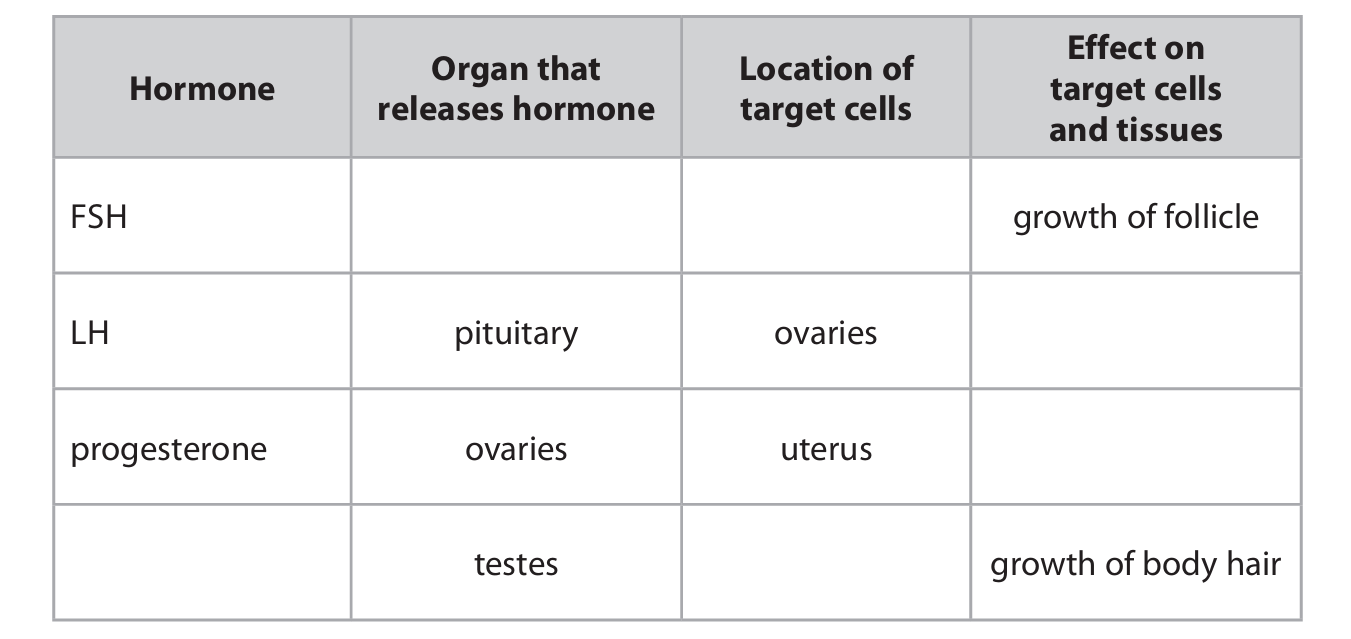
(a) The table gives some information about different hormones.

Complete the table by giving the missing information.
(b) Give three differences between hormones and neurotransmitters.
Most-appropriate topic codes (Edexcel IGCSE Biology):
• 3(a): Reproduction — part (a) – hormones in reproduction
• 2.94 & 2.95B: Hormone sources, roles and effects — part (a) – FSH, LH, progesterone, testosterone
• 2.86: Nervous and hormonal communication — part (b) – differences between hormones and neurotransmitters
• 2.89: Role of neurotransmitters — part (b) – neurotransmitter function
▶️ Answer/Explanation
(a)
The completed table is as follows:
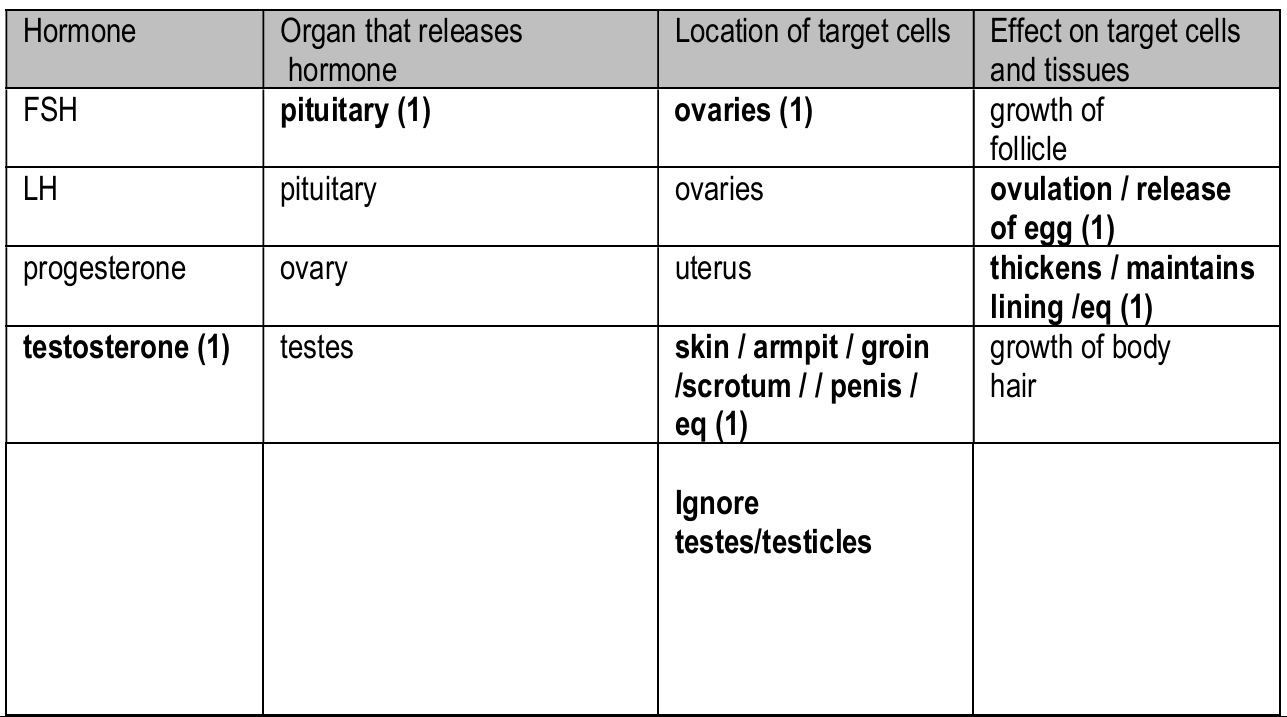
Explanation:
To complete the table, we need to recall the key hormones involved in human reproductive systems and their functions.
- FSH (Follicle-Stimulating Hormone): This hormone is released by the pituitary gland and its target cells are in the ovaries. Its primary effect is the growth of the follicle which contains the developing egg cell.
- LH (Luteinizing Hormone): Also released by the pituitary gland and targeting the ovaries, LH’s crucial role is to trigger ovulation, which is the release of a mature egg from the ovary.
- Progesterone: This hormone is produced by the ovaries (specifically by the corpus luteum after ovulation). It travels to the uterus where its main effect is to thicken and maintain the lining of the uterus, preparing it for a potential pregnancy.
- Testosterone: The missing hormone for the final row is testosterone. It is released by the testes. Its target cells are in various body locations like the skin (e.g., armpit, groin), and one of its many effects is the growth of body hair, which is a secondary sexual characteristic.
(b)
Three differences between hormones and neurotransmitters are:
1. Site of Production and Release: Hormones are produced by endocrine glands (e.g., pituitary, thyroid, adrenal) and released directly into the bloodstream. Neurotransmitters are produced in and released from the endings of nerve cells (neurons) into the synaptic cleft.
2. Mode of Transport: Hormones are transported throughout the body via the blood plasma. Neurotransmitters diffuse across the narrow synaptic gap between two neurons.
3. Scope and Speed of Effect: Hormones generally have a widespread effect, influencing many target cells in different parts of the body, and often produce slower, longer-term responses (e.g., growth, menstrual cycle). Neurotransmitters have a very localized effect, typically acting on the adjacent neuron or muscle cell, and produce very rapid, short-term responses (e.g., muscle contraction, nerve impulse transmission).
Explanation:
Hormones and neurotransmitters are both chemical messengers, but they operate in fundamentally different ways. Hormones are part of the endocrine system, which is slow-acting but has long-lasting and widespread effects. Think of it like a broadcast – the hormone is released into the blood and can reach almost any cell in the body, but only target cells with the correct receptors will respond.
Neurotransmitters are part of the nervous system, which is fast-acting and precise. It’s like a direct, private phone line between two specific cells. The message is delivered quickly and locally across the tiny synapse, leading to an immediate but short-lived effect. This difference in transport and scope directly leads to their different roles in coordinating body functions.
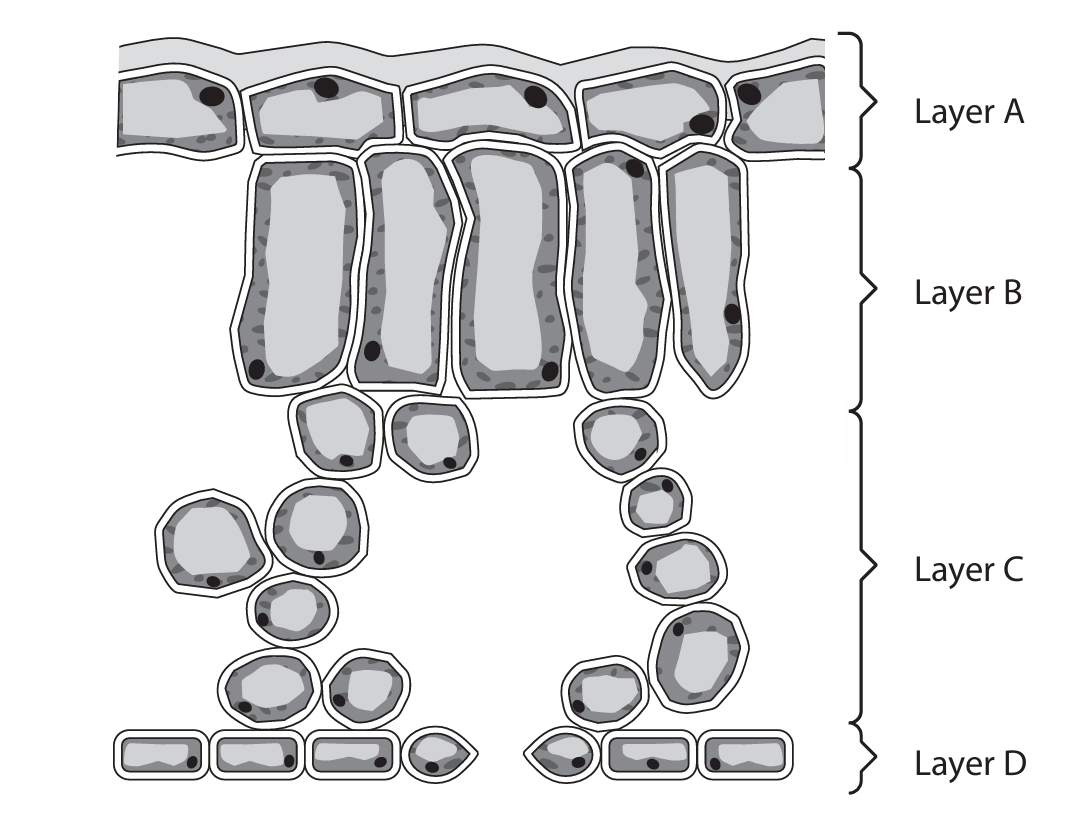
The diagram shows a transverse section through a leaf.

(a) Explain how layer A is adapted for its role.
(b) Explain how layers B and C are adapted for photosynthesis and gas exchange.
(c) State the role of guard cells.
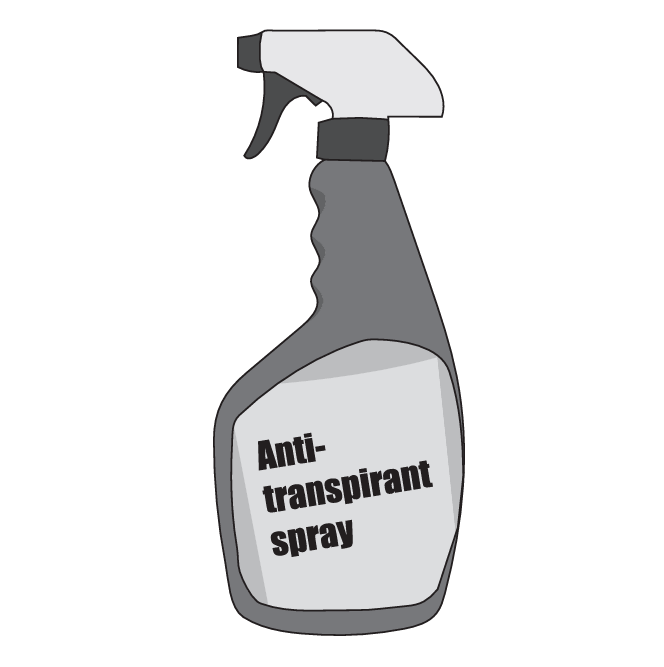
(d) Gardeners sometimes apply a spray called an anti-transpirant to plant leaves.

The spray is impermeable to water vapour but allows other gases to pass through. Discuss whether an anti-transpirant spray will promote plant growth.
Most-appropriate topic codes (Edexcel IGCSE Biology):
• 2(g): Gas exchange in flowering plants — parts (b), (c)
• 2(h): Transport in flowering plants — part (d)
• 2(j): Co-ordination and response in flowering plants — part (c)
▶️ Answer/Explanation
(a) Explain how layer A is adapted for its role.
Answer: Layer A (the waxy cuticle/epidermis) is adapted by being transparent to allow light through, having a waxy coating to reduce water loss, and having few chloroplasts as it is not photosynthetic.
Detailed Explanation:
Layer A represents the upper epidermis and its waxy cuticle. This layer has several key adaptations for its protective role. First, it is transparent, allowing sunlight to pass through to the underlying palisade mesophyll cells where most photosynthesis occurs. Second, it secretes a waxy, waterproof substance called the cuticle that forms a protective barrier. This cuticle significantly reduces water loss through evaporation from the leaf surface, which is crucial for preventing the plant from wilting, especially in dry conditions. Additionally, the cells of the epidermis typically contain few or no chloroplasts since their primary function is protection rather than photosynthesis. This combination of transparency and waterproofing makes the epidermis highly efficient at protecting inner tissues while still enabling the essential process of photosynthesis to occur.
(b) Explain how layers B and C are adapted for photosynthesis and gas exchange.
Answer: Layer B (palisade mesophyll) is adapted with many chloroplasts and tightly packed cells for efficient light absorption. Layer C (spongy mesophyll) has air spaces and loosely packed cells to facilitate gas exchange.
Detailed Explanation:
Layer B is the palisade mesophyll layer, which is perfectly adapted for its role as the main photosynthetic tissue. The cells are elongated and arranged vertically in a tightly packed formation, positioned close to the upper epidermis where light intensity is highest. This arrangement maximizes light capture. Furthermore, these cells contain a high density of chloroplasts – the organelles where photosynthesis actually occurs – making them extremely efficient at converting light energy into chemical energy.
Layer C is the spongy mesophyll layer, which is specialized for gas exchange. Unlike the tightly packed palisade cells, the spongy mesophyll cells are irregularly shaped and loosely arranged, creating numerous interconnected air spaces between them. These air spaces create a large surface area for the diffusion of gases. Carbon dioxide (\(CO_2\)), which is needed for photosynthesis, can diffuse freely from the stomata through these air spaces to reach the photosynthetic cells. Simultaneously, oxygen (\(O_2\)), produced as a byproduct of photosynthesis, can diffuse out of the cells into these air spaces and eventually exit the leaf. The loose arrangement and abundant air spaces thus create an optimal environment for the efficient exchange of these vital gases.
(c) State the role of guard cells.
Answer: Guard cells control the opening and closing of stomata to regulate gas exchange and water loss.
Detailed Explanation:
Guard cells are highly specialized cells that surround each stoma (plural: stomata), which are tiny pores on the leaf surface. Their primary role is to regulate the opening and closing of these stomatal pores. When guard cells are turgid (swollen with water), they bend and create an opening between them, allowing the stoma to open. This opening enables carbon dioxide (\(CO_2\)) to enter the leaf for photosynthesis during daylight hours. Conversely, when guard cells lose water and become flaccid, they relax and close the stoma. This closure helps to conserve water by reducing transpiration (water vapor loss), particularly during hot, dry conditions or at night when photosynthesis isn’t occurring. Therefore, guard cells perform the crucial balancing act of allowing sufficient \(CO_2\) intake for photosynthesis while minimizing excessive water loss.
(d) Discuss whether an anti-transpirant spray will promote plant growth.
Answer: Anti-transpirant sprays may not consistently promote plant growth because while they reduce water loss, they may also limit carbon dioxide intake and mineral transport.
Detailed Explanation:
The effect of anti-transpirant sprays on plant growth involves a complex trade-off. On one hand, these sprays can be beneficial because they form a waterproof coating that reduces transpiration (water loss from the leaves). By conserving water, they help prevent wilting and water stress, especially during drought conditions or in windy environments. This water conservation could potentially support growth by maintaining turgor pressure and physiological processes.
However, there are significant drawbacks that may hinder growth. Although the spray allows other gases like carbon dioxide (\(CO_2\)) to pass through, it might still create an additional barrier that slightly reduces the rate of \(CO_2\) diffusion into the leaf. Since \(CO_2\) is essential for photosynthesis, any reduction in its uptake could limit the plant’s ability to produce glucose and other carbohydrates, ultimately slowing growth. Additionally, the transpiration stream plays a vital role in transporting mineral ions from the roots to the shoots. By reducing transpiration, the spray might also reduce the upward movement of these essential nutrients, potentially causing nutrient deficiencies that impair growth. Furthermore, transpiration provides a cooling effect for leaves; reducing it might lead to overheating in bright sunlight, damaging plant tissues. Therefore, whether an anti-transpirant promotes growth depends on the specific environmental conditions – it might be helpful in water-scarce situations but detrimental when water is plentiful and maximum photosynthetic rate is desired.
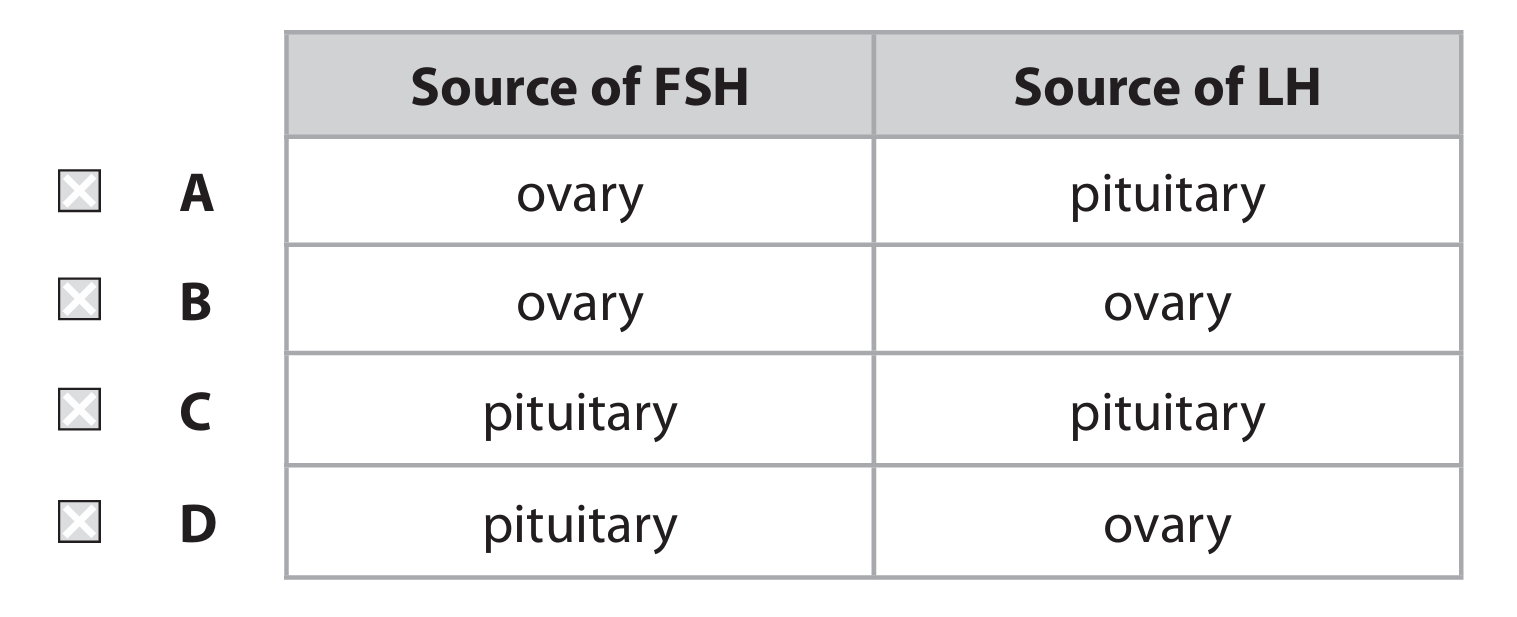
The hormones FSH and LH are involved in the regulation of the menstrual cycle.
(a) Which row gives the correct source for each hormone?

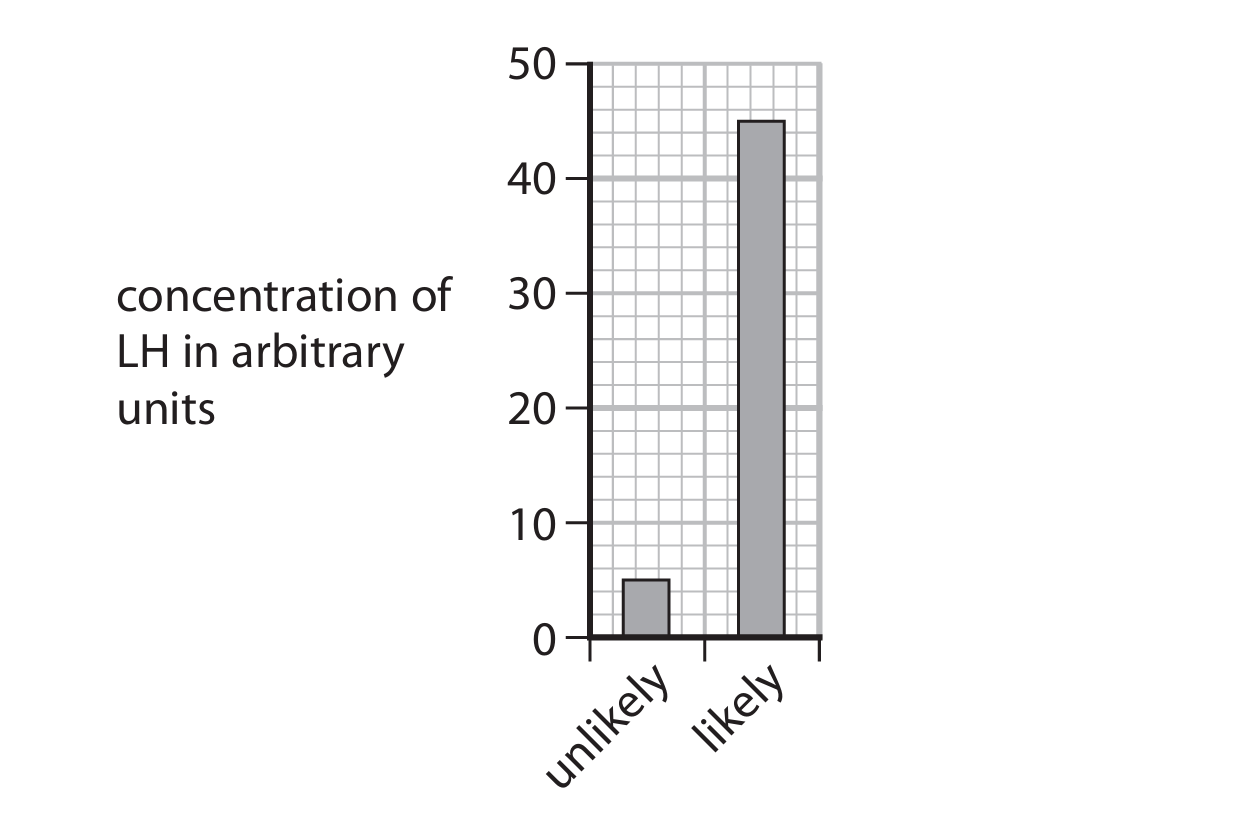
(b) The graph shows the concentration of LH in the blood of a woman when she is unlikely to become pregnant and when she is likely to become pregnant.

Calculate the percentage increase in concentration of LH in the blood from when the woman is unlikely to become pregnant to when the woman is likely to become pregnant.
(c) Describe the roles of the hormones FSH and LH.
Most-appropriate topic codes (Edexcel IGCSE Biology):
• 2(j): Co-ordination and response — part (a), (c)
• Appendix 4: Mathematical skills — part (b)
• 2.94 / 2.95B: Hormone sources and roles — part (a), (c)
▶️ Answer/Explanation
(a) C
Explanation: Both Follicle-Stimulating Hormone (FSH) and Luteinizing Hormone (LH) are gonadotropins. They are not produced in the ovaries. Instead, they are both synthesized and released by the anterior pituitary gland in the brain. The pituitary gland acts as the control center, sending these hormones via the bloodstream to act on the ovaries. Therefore, the correct row is C, where both sources are listed as the pituitary.
(b) 800%
Explanation: To calculate the percentage increase, we first find the actual increase in concentration. The concentration increases from 5 arbitrary units (unlikely) to 45 arbitrary units (likely). The increase is therefore 45 – 5 = 40 units. The percentage increase is calculated by taking this increase, dividing it by the original value (when unlikely), and then multiplying by 100. So, the calculation is (40 / 5) × 100 = 8 × 100 = 800%.
(c)
FSH (Follicle-Stimulating Hormone):
- Stimulates the growth and development of follicles in the ovary. Each follicle contains an immature egg cell (oocyte).
- Stimulates the ovaries to produce and release the hormone oestrogen. As the follicles grow under the influence of FSH, the cells surrounding them produce increasing amounts of oestrogen.
LH (Luteinizing Hormone):
- Triggers ovulation, which is the release of a mature egg from the ovary. There is a sharp surge in LH levels around the middle of the menstrual cycle, which causes the dominant follicle to rupture and release the egg.
- Stimulates the remains of the follicle (after the egg has been released) to develop into a structure called the corpus luteum.
- Stimulates the corpus luteum to produce and release the hormone progesterone, which is vital for preparing and maintaining the uterine lining for a potential pregnancy.
Explanation: FSH and LH work in a tightly coordinated cycle. FSH initiates the process by starting follicle development, which then leads to oestrogen production. The rising oestrogen levels eventually trigger the LH surge. This LH surge is the direct cause of ovulation. After ovulation, LH’s role shifts to maintaining the corpus luteum, which produces progesterone. In summary, FSH is primarily responsible for the first half of the cycle (follicular phase), while LH’s key actions are triggering ovulation and supporting the second half of the cycle (luteal phase).
Read the passage below. Use the information in the passage and your own knowledge to answer the questions that follow.
Haemolytic disease
Haemolysis is the term used to describe the bursting of red blood cells. Haemolytic disease occurs when the red blood cells burst in the body of a foetus in a pregnant woman. The bursting of the red blood cells affects the development of the foetus into a baby.
The red blood cells burst when certain antibodies from the mother pass across the placenta. The antibodies attach to protein molecules called antigens. These antigens are on the surface of the foetal red blood cells. The protein antigen is called the rhesus factor and is made using the genetic code found on the dominant allele, D, during the production of red blood cells in bone marrow.
Homozygous dominant and heterozygous individuals have cells with the antigen. These individuals have the rhesus positive blood group. Homozygous recessive individuals have cells that do not have the antigen. These individuals have the rhesus negative blood group.
During the birth of a rhesus positive baby, some red blood cells may leak into the circulatory system of the mother. This happens as the placenta pulls away from the wall of the uterus. A rhesus negative mother will make antibodies that destroy rhesus positive red blood cells. This is not a problem for the child that has just been born. However, if the mother becomes pregnant again with another rhesus positive foetus, the antibodies will harm the foetus.
Haemolytic disease can be avoided by treating a rhesus negative woman at risk of having a second rhesus positive child. This treatment involves the mother having an injection during and after pregnancy. The injection destroys rhesus positive cells in the mother’s blood before the cells can cause an immune response.
If the foetus is rhesus positive, the pregnancy is carefully monitored for signs of haemolytic disease. Monitoring includes regular ultrasound scans of the foetus and measuring the amount of antibody in the mother’s blood. A change in the concentration of the antibody in the mother’s blood, due to her secondary immune response, can lead to dangerous haemolysis. If a foetal blood test confirms a low number of red blood cells, a blood transfusion can be done in utero to replace the burst foetal red blood cells.
(a) Explain why bursting of red blood cells affects the development of a foetus.
(b) The dominant allele codes for the production of the protein that will act as an antigen.
Describe how the dominant allele leads to the production of RNA during protein synthesis.
(c) Give the reason why proteins cannot be made by red blood cells.
(d) Give one piece of evidence from the passage that shows that antibodies are smaller than red blood cells.
(e) (i) A mother who is homozygous recessive for the rhesus factor has a child with a father who is heterozygous.
Give the genotypes of the mother, the father, their gametes and the possible genotypes of the child.
(ii) Give the probability that the child will be rhesus positive.
(f) Explain why the concentration of the rhesus antibody in the mother’s blood rises quickly to harmful levels if she has a second child who is Rhesus positive.
(g) Suggest what is meant by the term in utero.
(h) A foetus with haemolytic disease can be given a blood transfusion.
Suggest the blood group of the source of the cells used for this transfusion.
Most-appropriate topic codes (Edexcel IGCSE Biology):
• 3(b): Inheritance — parts (b), (e)(i), (e)(ii)
• 2(b): Cell structure — part (c)
• 2(i): Excretion and osmoregulation — part (d)
• 2(j): Co-ordination and response — part (f)
• 3(a): Reproduction — part (g)
▶️ Answer/Explanation
(a) An explanation that makes reference to two of the following points:
- less oxygen (1)
- (less) respiration (1)
- (less) energy / ATP (1)
Detailed Explanation: When red blood cells burst (haemolysis), they can no longer carry oxygen effectively. Oxygen is essential for cellular respiration, which releases energy in the form of ATP. Reduced oxygen leads to less respiration and less ATP. Since foetal development requires energy for growth and cell division, a lack of ATP directly hinders development.
(b) An explanation that makes reference to three of the following points:
- DNA unzips / separates / one strand copied (1)
- complementary / base pairing (1)
- template (1)
- mRNA produced (1)
- transcription (1)
Detailed Explanation: Transcription occurs: the DNA double helix unwinds, one strand acts as a template, RNA nucleotides pair complementarily (A-U, C-G), and mRNA is formed by RNA polymerase, carrying the code from the gene to the ribosome.
(c) no nucleus / DNA / no ribosomes / mitochondria (1)
Detailed Explanation: Mature red blood cells lack a nucleus (and therefore DNA) and ribosomes. Protein synthesis requires DNA for instructions and ribosomes for assembly, so they cannot make proteins.
(d) can pass across placenta (1)
Detailed Explanation: The passage states antibodies pass across the placenta, a selective barrier. Red blood cells cannot cross normally, indicating antibodies are smaller.
(e)(i) An answer that makes reference to the following points:
- parent genotype dd x Dd (1)
- gamete d (and d) and D or d (1)
- offspring genotype Dd and dd (1)
Detailed Explanation: Mother: dd, Father: Dd. Gametes: mother → d only; father → D or d. Possible offspring: Dd (Rhesus positive) or dd (Rhesus negative).
(e)(ii) 50% / 0.5 / half / 50:50 (1)
Detailed Explanation: From a Punnett square, 2 out of 4 possibilities are Dd (Rhesus positive), so probability = ½ or 50%.
(f) An explanation that makes reference to three of the following points:
- memory cells (1)
- remain in mother’s blood (1)
- recognise / identify antigen / binds with antigen (1)
- more antibodies produced / produced faster / sooner (1)
- secondary immune response (1)
Detailed Explanation: During the first pregnancy, memory cells are made. In a second pregnancy, these memory cells quickly recognise the Rhesus antigen and trigger a rapid, strong secondary immune response, producing large amounts of antibody quickly.
(g) in the uterus / womb (1)
Detailed Explanation: “In utero” means inside the uterus (womb), referring to procedures performed on the foetus before birth.
(h) (adult) (rhesus) negative / negative (1)
Detailed Explanation: The foetus is being attacked by anti-Rhesus antibodies. Transfusing Rhesus negative blood (lacking the antigen) ensures the new cells are not attacked, allowing them to survive and carry oxygen.
Read the passage below. Use the information in the passage and your own knowledge to answer the questions that follow.
Male contraception
Hormonal contraception has been used by women for many years to control their fertility. A recent study investigated a new contraceptive injection to be used by men.
The study was done in seven different countries: the United Kingdom, Australia, Germany, Italy, India, Indonesia and Chile. The researchers investigated a total of 320 healthy men aged between 18 and 45, all with female partners aged between 18 and 38.
All the men had normal sperm counts and produced sperm with no abnormalities in shape or movement. They had no sexually transmitted infections and no medical or mental health illnesses. Their female partners were healthy and did not intend to become pregnant within the next two years. They were willing to accept a low, but unknown, chance of becoming pregnant.
The study had two phases. These were the initial suppression phase lasting 26 weeks, followed by a contraceptive effectiveness testing phase lasting just over one year. In the suppression phase, the men were given injections of a drug called progestin and the hormone testosterone. This was repeated at 8, 16 and 24 weeks. Progestin inhibits sperm production and reduces the release of testosterone. Semen samples were collected every two weeks to monitor the sperm count. During this phase, couples had to use alternative barrier methods of contraception, such as condoms.
When a man had produced two consecutive semen samples with a sperm count of less than one million per cm3, they began the contraceptive effectiveness testing phase. During this phase, the men continued to receive regular injections every eight weeks for just over one year. Semen samples were taken at the same time as each injection to monitor the sperm count. If the sperm count went above one million per cm3, the injections were stopped. At this point the men left the trial and other methods of contraception were resumed.
The contraceptive injections prevented pregnancies in the partners of 98.4% of the men. However, a number of men reported side effects. For example, just under half of the men developed acne (skin infections and irritation) and one in five reported mood disorders. In approximately 5% of the men, their sperm count had not returned to normal one year after stopping the injections. Despite the side effects, more than three-quarters of the men, and their partners, said they would be happy to continue to use this new method of contraception.
The scientists concluded that this was a valuable early-stage trial that gave a good indication of the potential safety and effectiveness of the progestin and testosterone injections for male contraception.
(a) Suggest why the men in the study had to be able to produce sperm with no abnormalities in shape or movement (lines 8 and 9).
(b) (i) The contraceptive injection contained the drug progestin (lines 15 and 16). Progestin is similar in structure and function to progesterone. Describe the roles of progesterone in the human female body.
(ii) Suggest why the injections also contain the hormone testosterone (lines 15 and 16).
(iii) State where in the male body testosterone is produced.
(c) (i) Give the purpose of the initial suppression phase of the study (line 13).
(ii) State why the sperm count is monitored during the suppression phase (lines 18 and 19).
(iii) State why alternative contraception was used during the suppression phase (lines 19 and 20).
(d) Suggest why sperm count continues to be monitored during the testing phase (lines 25 and 26).
(e) Calculate the number of men whose partners became pregnant during the study (lines 6 and 28).
(f) Evaluate the use of progestin and testosterone injections as a method of contraception.
Most-appropriate topic codes (Edexcel IGCSE Biology):
• 2(j): Co-ordination and response — hormones — parts (b)(i), (b)(ii), (b)(iii), (f)
• 3(a): Menstrual cycle — part (b)(i) – progesterone role
• 4: Mathematical skills (Appendix 4) — part (e) – calculation
• 5: Use of biological resources — biotechnology in medicine — part (f) – evaluation of medical application
▶️ Answer/Explanation
(a) So that the sperm can swim effectively to reach the egg and so that they are capable of fertilizing the egg. This ensured that all men in the study were initially fertile, so any failure to conceive later could be attributed to the contraceptive treatment rather than pre-existing fertility issues.
(b)(i) Progesterone plays two key roles: it thickens and maintains the uterine lining (endometrium) to prepare it for a potential pregnancy, and it inhibits the production of FSH and LH, which prevents further eggs from maturing and prevents ovulation.
(b)(ii) The injections contain testosterone because the progestin in the injection reduces the body’s natural production of testosterone. The added testosterone helps to maintain normal male hormone levels and prevent side effects associated with low testosterone.
(b)(iii) Testosterone is produced in the testes, specifically in the Leydig cells located in the interstitial tissue between the seminiferous tubules.
(c)(i) The purpose of the initial suppression phase was to reduce sperm production to a very low level (below 1 million per cm³) before testing the contraceptive’s effectiveness.
(c)(ii) The sperm count is monitored during the suppression phase to measure if and when the sperm count falls below the required threshold (1 million per cm³), indicating that the treatment is successfully suppressing fertility.
(c)(iii) Alternative contraception was used during the suppression phase to prevent pregnancy because sperm production might not yet be fully suppressed, meaning the men could still be fertile during this initial period.
(d) Sperm count continues to be monitored during the testing phase to ensure that it remains below the effective threshold (1 million per cm³) and to confirm that the treatment continues to work reliably throughout the study.
(e) The number of men whose partners became pregnant is 5.
Calculation: The injection was 98.4% effective, meaning 1.6% of the men’s partners became pregnant. With 320 men in the study, the calculation is 1.6% of 320 = (1.6 / 100) × 320 = 5.12. Since we are counting men, we round to the nearest whole number, which is 5.
(f) Evaluation:
Advantages: The injections are highly effective (98.4% success rate), are reversible for most men, do not require daily remembering like a pill, and shift some of the responsibility for contraception to men.
Disadvantages: There are significant side effects like acne and mood disorders. It does not protect against sexually transmitted infections. The suppression phase is long (26 weeks), and for a small percentage of men (5%), fertility did not return to normal within a year after stopping, raising concerns about long-term reversibility.
Overall, while the method shows promise, the side effects and potential irreversibility for some are important considerations.
The kidney contains nephrons involved in osmoregulation and excretion.
The diagram shows a nephron.

(a) Which part is the Bowman’s capsule?
- A
- B
- C
- D
(b) The table gives the mass of three substances transported in part A and in part D for all kidney nephrons during one day.

(i) Explain the change in the mass of glucose from part A to part D.
(ii) Calculate the percentage reabsorption of water by kidney nephrons.
(iii) A substance containing nitrogen is broken down in the liver to produce urea.
Which substance is broken down to produce urea?
- A. fat
- B. glucose
- C. protein
- D. water
(c) A drug called MDMA increases the secretion of ADH.
Explain how this increase affects urine production.
Most-appropriate topic codes (Edexcel IGCSE Biology):
• 2(h): Transport — part (b)(i), (b)(ii)
• 2(b): Cell structure — part (a)
• 2(j): Co-ordination and response — part (c)
Read the passage below. Use the information in the passage and your own knowledge to answer the questions that follow.
Heart transplant
A heart transplant is an operation to replace a damaged or failing heart with a healthy heart from a donor who has recently died. In the United Kingdom, 200 heart transplants are carried out each year.
A heart transplant may be considered if you have severe heart failure and medical treatments are not helping. Conditions that may eventually require a heart transplant include coronary heart disease and cardiomyopathy, where the walls of the heart have become stretched, thickened or stiff. Some people born with an abnormal heart may also benefit from a heart transplant.
A heart transplant needs to be carried out as soon as possible after a donor heart becomes available. The procedure is performed under general anaesthetic where the patient is unconscious. During the operation, a heart-lung bypass machine is used to keep the patient alive.
A cut is made in the middle of the patient’s chest. The patient’s heart is removed, leaving behind a section of the right and left atria, the two upper chambers of the heart. The new heart is connected to the aorta, the pulmonary artery, and the remaining part of the atria. The new heart is stimulated to start beating and the patient is taken off the bypass machine.
The patient will need to stay in hospital for around two or three weeks after a heart transplant. The patient will also need to take medicines called immunosuppressants for the rest of their life. Without these medicines, the transplant will not be successful.
After going home, the patient is encouraged to take part in a cardiac rehabilitation programme. This involves following an exercise plan to help regain strength and mobility. They should avoid strenuous activities such as pushing, pulling or lifting anything heavy for 6 to 12 weeks. Most people can start returning to many of their normal activities within a few months.
The patient does not usually need to have a special diet after a heart transplant. A balanced diet can ensure they stay as healthy as possible. They should not smoke and should avoid drinking alcohol.
A balanced diet may also help reduce the risk of some of the side effects of the immunosuppressant drugs including weight gain, osteoporosis and diabetes. Immunosuppressants also make the patient more vulnerable to infections, including food poisoning.
Most people can return to their normal activities after a heart transplant and experience a significant improvement in their symptoms for many years. After a heart transplant, 75% of people will live at least five years.
(a) Suggest why cardiomyopathy can cause heart failure (lines 6 to 7).
(b) During the transplant procedure the patient’s heart is removed, leaving behind a section of the right and left atria. Describe the functions of the atria in the body.
(c) Describe how the blood in the pulmonary artery differs from the blood in the aorta.
(d) Explain the function of the heart-lung bypass machine (lines 11 to 12).
(e) Explain why the patient needs to be given immunosuppressants (lines 19 to 20).
(f) Explain why patients should not smoke after their heart transplant (lines 28 to 29).
(g) State what is meant by the term balanced diet.
(h) Calculate the number of patients in the United Kingdom who have a heart transplant in one year that are still alive five years later (lines 2 to 3 and lines 35 to 36).
(i) Suggest why patients are advised to avoid strenuous activities after their heart transplant (line 24).
(j) Suggest why patients are more likely to be at risk of food poisoning after their heart transplant (lines 32 to 33).
Most-appropriate topic codes (Edexcel IGCSE Biology):
• 2(j): Co-ordination and response — part (e)
• 2(e): Nutrition — part (g)
• 2(j): Homeostasis and hormones — part (e) – immune response
• Appendix 4: Mathematical skills — part (h)
• 4(d): Human influences on the environment — part (f) – smoking effects
• 2(e): Human nutrition — part (j) – infection risk
▶️ Answer/Explanation
(a) The walls of the heart are less able to contract/pump effectively.
Explanation: Cardiomyopathy causes the heart muscle to become abnormal – either stretched, thickened, or stiff. This structural change directly impairs the heart’s ability to contract forcefully and pump blood efficiently around the body. When the heart cannot pump enough blood to meet the body’s demands, it leads to heart failure.
(b) The atria receive blood and pump/push it into the ventricles. The right atrium receives deoxygenated blood from the body (via the vena cava), and the left atrium receives oxygenated blood from the lungs (via the pulmonary veins).
Explanation: The atria act as the receiving chambers and priming pumps for the heart. Their main function is to collect blood returning to the heart and then contract to push this blood into the more powerful ventricles below. This ensures the ventricles are adequately filled before they perform the major work of pumping blood out of the heart to the lungs and the rest of the body.
(c) The pulmonary artery carries deoxygenated blood, while the aorta carries oxygenated blood. The pulmonary artery carries blood away from the heart to the lungs, whereas the aorta carries blood away from the heart to the rest of the body.
Explanation: These two major arteries have completely different roles. The pulmonary artery is the only artery in the body that carries deoxygenated blood. It transports this blood from the right ventricle to the lungs to pick up oxygen. In contrast, the aorta is the body’s main artery, carrying freshly oxygenated blood from the left ventricle to supply all tissues and organs.
(d) The heart-lung bypass machine oxygenates the blood and removes carbon dioxide (acting like artificial lungs), and it pumps this oxygenated blood around the body (acting like an artificial heart). This allows the patient’s tissues and cells to continue respiring and provides the surgeon with a still, blood-free heart to operate on.
Explanation: During a heart transplant, the patient’s own heart and lungs are temporarily bypassed. This machine is crucial for life support. It takes over the function of the heart by pumping blood and the function of the lungs by adding oxygen to the blood and removing carbon dioxide. This maintains circulation and gas exchange, keeping the patient’s organs alive while the surgeon removes the old heart and attaches the new one.
(e) Immunosuppressants prevent rejection of the transplanted heart. They do this by reducing the immune response, stopping the immune system from recognizing the new heart as foreign and attacking it.
Explanation: The immune system is designed to identify and destroy foreign cells, like those from a donor organ, based on their different antigens. Immunosuppressant drugs are essential to dampen this immune response. Without them, the patient’s white blood cells would recognize the new heart as “non-self” and mount an attack, leading to transplant rejection and failure.
(f) Smoking reduces oxygen in the blood and damages artery walls. It can lead to narrowed arteries, increased risk of blood clots, and higher blood pressure, all of which are dangerous for a transplanted heart.
Explanation: Smoking is particularly harmful after a transplant. The carbon monoxide in smoke binds to haemoglobin, reducing the blood’s oxygen-carrying capacity. Chemicals in tobacco also damage the lining of arteries, promoting atherosclerosis (fatty deposits), which can narrow the coronary arteries supplying the new heart muscle. This increases the risk of heart attacks, strokes, and failure of the transplant.
(g) A diet that contains all the required nutrients/food groups in the correct proportions.
Explanation: A balanced diet isn’t about eating specific “health foods” but about consuming the right amounts and varieties from all the major food groups: carbohydrates, proteins, fats, vitamins, minerals, fibre, and water. This ensures the body gets all the essential nutrients it needs to function optimally, support the immune system, and maintain a healthy weight.
(h) number of patients = 150
Explanation: The passage states that 200 transplants are done each year and that 75% of patients live at least five years. To find the number, we calculate 75% of 200. This can be done as (75/100) × 200 = 0.75 × 200 = 150. Therefore, we can expect 150 of the 200 patients to be alive after five years.
(i) Strenuous activities put extra pressure on the heart, increasing heart rate and blood pressure, which could strain the new heart during the recovery period.
Explanation: After major surgery like a transplant, the body, and especially the new heart, needs time to heal and adapt. Strenuous activities like heavy lifting cause a sudden, significant increase in the heart’s workload. This could be too stressful for the recovering heart muscle and the surgical connections (sutures), potentially leading to complications like a heart attack or damage to the surgical site.
(j) Because their immune system is weakened by the immunosuppressant drugs, making them less able to fight off infections from pathogens in food.
Explanation: Immunosuppressants, while vital for preventing rejection, have the side effect of reducing the overall activity of the immune system. This means the body’s defences against bacteria, viruses, and other pathogens are lowered. Harmful bacteria like Salmonella or E. coli, which might be fought off by a healthy person, can more easily cause food poisoning in a transplant patient because their white blood cells are less effective at destroying the invaders.
The brain is part of the central nervous system.
(a) Name the other part of the central nervous system.
(b) Huntington’s disease (HD) is caused by a mutation in the gene for making a protein called huntingtin. This protein damages nerve cells in the brain. HD is caused by a dominant allele. A heterozygous parent and a homozygous recessive parent have a child.
(i) What is the probability of this child having HD?
A) 0.0
B) 0.25
C) 0.5
D) 1.0
(ii) These parents have three more children. The key shows the possible sex and phenotype of the individuals with or without HD.

The family pedigree gives the predicted sex ratio and the predicted phenotype ratio for two of the children.
Complete the family pedigree by giving the predicted sex ratio and predicted phenotype ratio for the other two children.

(c) A drug can reduce the damage to nerve cells in the brains of people with HD. The drug binds to messenger RNA produced by the mutated gene for huntingtin protein. Suggest ways that this drug reduces damage to nerve cells in people with HD.
Most-appropriate topic codes (Edexcel IGCSE Biology):
• 3(b): Inheritance — parts (b)(i), (b)(ii), (c)
• 3(b): Protein synthesis — part (c)
• 2(j): Central nervous system — part (a)
▶️ Answer/Explanation
(a) spinal cord
(b)(i) C (0.5)
A is incorrect because 0.5 is the answer
B is incorrect because 0.5 is the answer
D is incorrect because 0.5 is the answer
Cross: Hh (heterozygous, HD) × hh (homozygous recessive, no HD). Probability of child inheriting H (HD) allele from heterozygous parent is \( \frac{1}{2} = 0.5 \).
(b)(ii) A diagram that makes reference to the following points:
• one circle and one square shown (1)
• two shapes unshaded (1)
For each of the two additional children, the predicted sex ratio is 1:1 (one male, one female). The predicted phenotype ratio for children from this cross is 1 with HD : 1 without HD. Therefore, for two more children, one is predicted to have HD and one without, with sexes not specified by probability.
(c) An explanation that makes reference to three of the following points:
• prevents translation / no translation (1)
• prevents ribosomes attaching (to mRNA) (1)
• prevents / no, codon binding to anticodon (1) Allow tRNA does not bind to mRNA
• prevents amino acids joining / amino acid chain not made (1)
• huntingtin / protein / polypeptide not made (1) Allow less huntingtin / protein made
The drug binds to the mutated mRNA, blocking the process of protein synthesis (translation). This prevents the formation of the harmful huntingtin protein, thereby reducing damage to nerve cells.