
▶️ Answer/Explanation
(a) An explanation that makes reference to two of the following:
- (number / amount / how many / range) the different species / eq (1)
- number / abundance / how many of each species / eq (1)
- variation / variety (of organisms) (in an ecosystem) / eq (1)
(b)(i) A description that makes reference to the following:
- place at random / eq (1)
- (place quadrats at) co-ordinates / eq (1)
Use random coordinates = 2 marks
(b)(ii) Calculation:
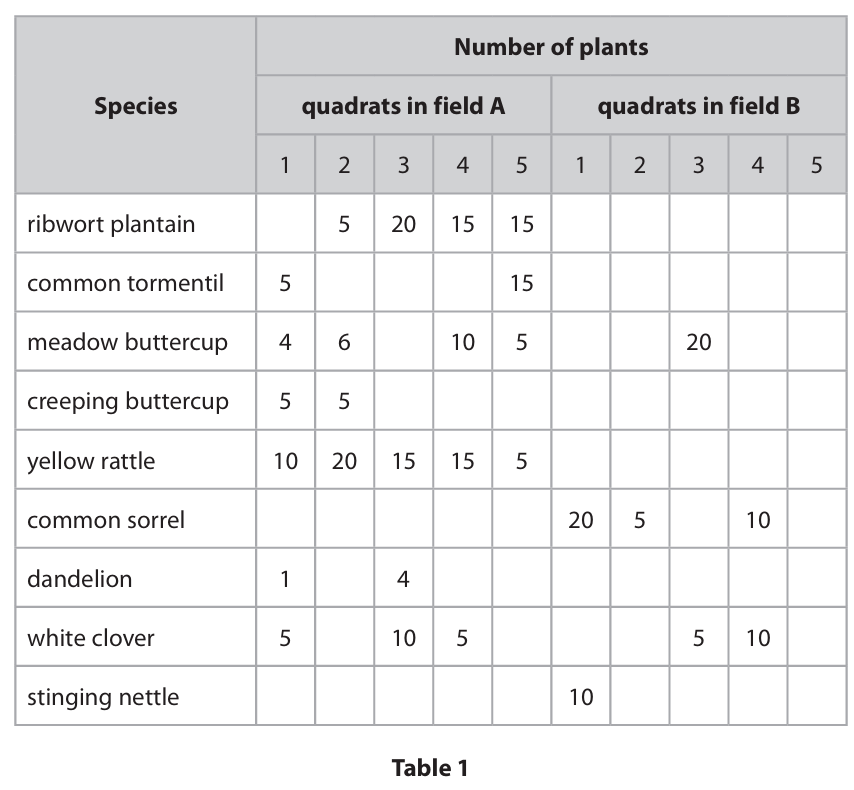
Most frequently occurring species in field B: common sorrel
Total plants counted: \(20 + 5 + 10 = 35\)
Total area sampled: \(5 \times (0.5 \times 0.5) = 5 \times 0.25 = 1.25 \text{ m}^2\)
Number per square metre: \(35 \div 1.25 = 28 \text{ per m}^2\)
Answer: 28
(b)(iii) meadow buttercup (1)
(b)(iv) An answer description that makes reference to five of the following:
- more species present / eq (1)
- more even distribution / similar numbers of each / eq (1)
- common sorrel / stinging nettles absent / eq (1)
- more biodiversity / grazing increases biodiversity / eq (1)
- reliable / repeated / more than one quadrat done in each field / eq (1)
- no information on water / sunlight / temperature / fertilisers / minerals / seasons / eq (1)
- only done on one field / repeat in other fields / eq (1)
- no information about amount of animals / age of animals / duration / eq (1)
- grazing reduces competition allows different species to grow / prevents succession / eq (1)
- grazing provides increased nitrates / minerals / manure / eq (1)
▶️ Answer/Explanation
5 (a)(i)
Answer: 48 km² per year
Detailed Explanation:
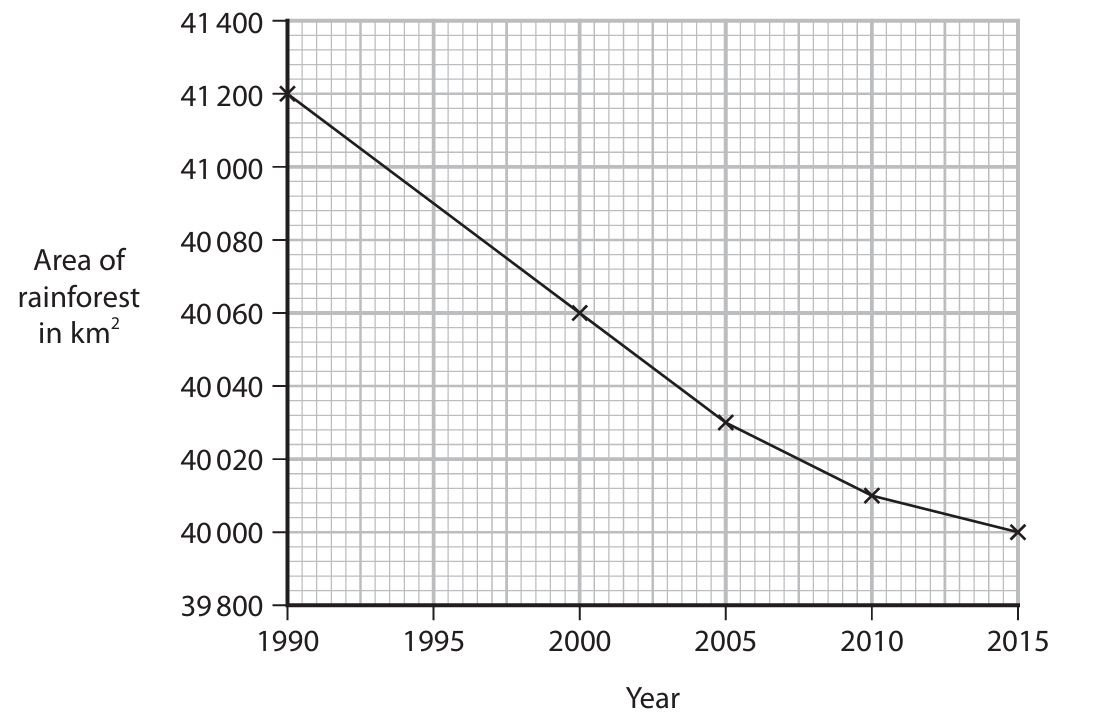
To calculate the mean rate of decrease, we need to find the total decrease in rainforest area over the 25-year period (1990 to 2015) and then divide by the number of years.
From the graph, we can see that in 1990 the rainforest area was approximately 41,200 km², and by 2015 it had decreased to approximately 40,000 km².
The total decrease is: 41,200 km² – 40,000 km² = 1,200 km²
The time period is: 2015 – 1990 = 25 years
Therefore, the mean rate of decrease per year is: 1,200 km² ÷ 25 years = 48 km² per year
This means that on average, the Earth lost 48 square kilometers of rainforest each year during this period.
5 (a)(ii)
Detailed Explanation:
An increase in atmospheric carbon dioxide gas has several negative effects on the environment:
First, carbon dioxide is a greenhouse gas that contributes significantly to the greenhouse effect. This means it traps heat in the Earth’s atmosphere, leading to global warming and an overall increase in Earth’s temperature.
This temperature rise causes polar ice caps and glaciers to melt, which in turn leads to rising sea levels. Higher sea levels can cause flooding in coastal areas, resulting in habitat loss for both human and animal populations.
Additionally, increased CO₂ levels contribute to climate change, which alters weather patterns worldwide. This can result in more frequent and severe extreme weather events such as storms, droughts, and desertification, making some regions less habitable and disrupting agricultural systems.
The changing climate also affects ecosystems, leading to extinctions as species struggle to adapt to new conditions. It can change the distribution of organisms, force migrations, spread pests, and disrupt food chains.
Another significant effect is ocean acidification. When CO₂ dissolves in seawater, it forms carbonic acid, lowering the ocean’s pH. This acidification harms marine life, particularly organisms with calcium carbonate shells or skeletons, and can lead to coral reef bleaching.
5 (b)(i)
Detailed Explanation:
Microorganisms play essential roles in converting organic waste into nitrate ions through the process of decomposition and the nitrogen cycle.
Decomposers, primarily bacteria and fungi, break down organic waste material containing nitrogen compounds like proteins. Through the process of ammonification, these decomposers convert the nitrogen in organic matter into ammonia (NH₃) or ammonium ions (NH₄⁺).
Next, specific nitrifying bacteria convert ammonium into nitrite ions (NO₂⁻). Another group of nitrifying bacteria then oxidize these nitrite ions into nitrate ions (NO₃⁻), which is the form most readily absorbed by plants.
This entire process, known as nitrification, is crucial for making nitrogen available to plants and maintaining the nutrient cycle in aquatic ecosystems like rivers.
5 (b)(ii)
Detailed Explanation:
Recording only the number of different animal species does not provide a complete measure of biodiversity because it ignores several important factors:
This measure doesn’t account for the population sizes or abundance of each species. An ecosystem might have many species but be dominated by just one or two of them, which isn’t reflected in a simple species count.
It also fails to consider other kingdoms of organisms such as plants, bacteria, fungi, and protoctists, which are all important components of ecosystem biodiversity.
Additionally, some species may be seasonal or migratory, meaning they’re only present at certain times of year. A survey conducted at one time might miss these species, giving an incomplete picture of the true biodiversity.
5 (b)(iii)
Detailed Explanation:
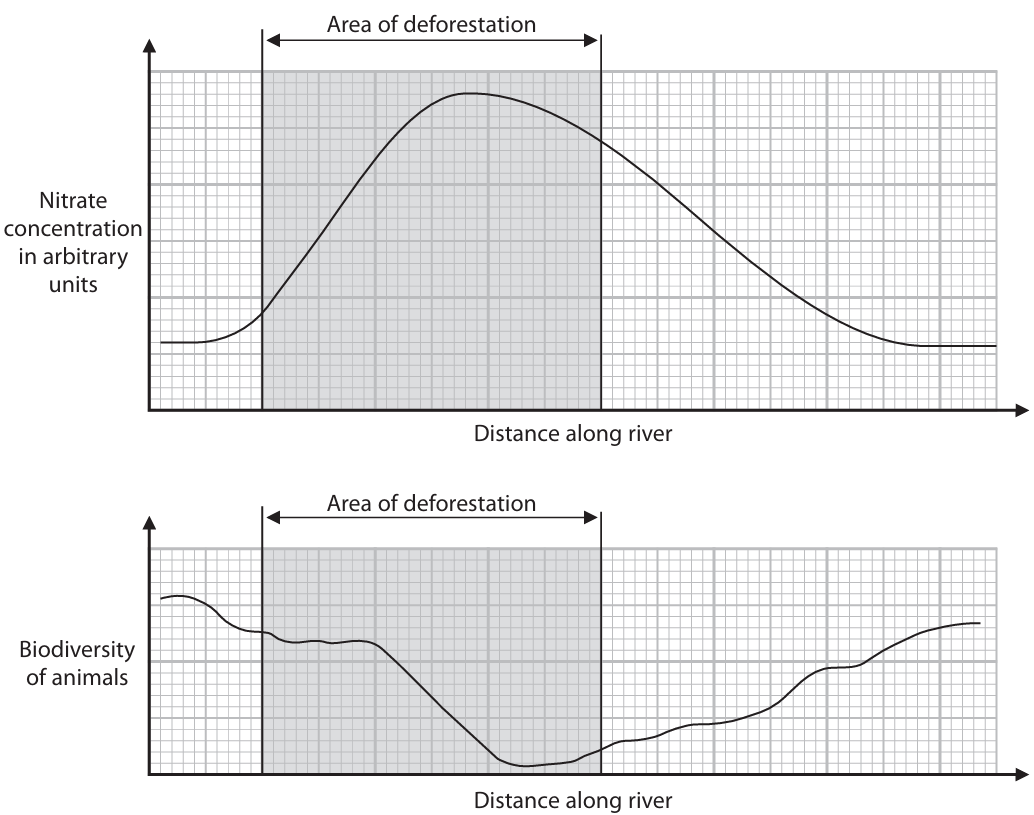
The graphs show that as nitrate concentration increases (particularly after the deforested area), biodiversity of animals in the river decreases. This relationship can be explained through a process called eutrophication.
Deforestation leads to soil erosion and runoff, which carries minerals and organic waste into the river. This includes nitrates from decomposed organic matter and possibly fertilizers from agricultural activities following deforestation.
The increased nitrate levels act as nutrients, causing excessive growth of algae and aquatic plants in a process called eutrophication. The algal growth forms blooms on the water surface that block light penetration to deeper water.
With reduced light, submerged plants cannot photosynthesize effectively and eventually die. The dead plant material, along with the algae (which also eventually die), provides more organic matter for decomposers.
As bacteria decompose this increased organic matter, they respire, consuming oxygen from the water. This leads to oxygen depletion in the river.
The low oxygen levels cause fish and other animal species to die because they cannot respire adequately. This results in decreased biodiversity as more sensitive species disappear from the ecosystem.
Additionally, deforestation may directly cause habitat loss and disruption of food chains, further contributing to the decline in biodiversity observed in the graph.
▶️ Answer/Explanation
(a) Plants that have been dug up and transported are at most risk of drying out because their roots (and root hair cells) are damaged or not in soil/exposed. This means water cannot be absorbed or taken up effectively. Additionally, water continues to be lost through transpiration or evaporation from the leaves, creating a water deficit that the damaged root system cannot replenish.
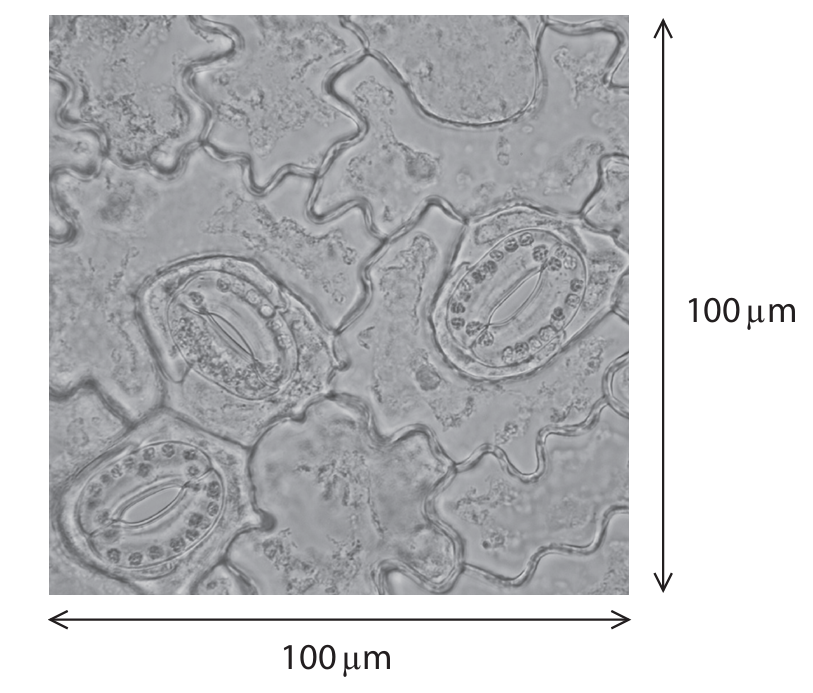
(b) number of stomata per mm² = 300
Explanation: The photograph shows an area of 100 μm × 100 μm, which contains 3 stomata. To find the number per mm²:
1 mm = 1000 μm, so 1 mm² = 1000 μm × 1000 μm = 1,000,000 μm².
The area of the photograph is 100 μm × 100 μm = 10,000 μm².
So, the number of stomata per mm² = (number in photo ÷ area of photo) × area of 1 mm² = (3 ÷ 10,000) × 1,000,000 = 300.
(c) Stomatal regulators reduce photosynthesis because they cause the stomatal pores to close or become smaller. This reduces the amount of carbon dioxide that can diffuse into the leaf. Since carbon dioxide is a key reactant in photosynthesis, a reduced supply limits the rate at which photosynthesis can occur.
(d)(i) Reflective compounds should only be applied to the upper surface of a leaf because the stomata are mainly or only located on the lower surface in most plants. Applying the coating only to the upper surface ensures the stomatal pores are not blocked, allowing gas exchange (carbon dioxide absorption and oxygen release) to continue uninterrupted. Additionally, the upper surface receives the most direct sunlight, so applying the reflective coating there is most effective at reducing heat absorption.
(d)(ii) Reducing leaf temperature reduces the transpiration rate because lower temperatures decrease the kinetic energy of water molecules. With less energy, water molecules move more slowly and are less likely to evaporate from the leaf surface (especially from the stomata). This reduces the rate of diffusion of water vapor out of the leaf, thereby lowering the transpiration rate.
(e) Nitrate ions (NO₃⁻) play a crucial role in plant growth. They are absorbed from the soil and are used by the plant to synthesize amino acids. These amino acids are then built up into proteins, which are essential for growth (e.g., enzymes for metabolic reactions, structural proteins for cell walls) and development.
Alternatively, magnesium ions (Mg²⁺) are a key component of chlorophyll, the pigment that absorbs light energy for photosynthesis. Without sufficient magnesium, chlorophyll production is impaired, leading to reduced photosynthesis and stunted growth.
(f) Water is transported from the soil to the leaves through the following process:
1. Water is absorbed from the soil by root hair cells through osmosis. Root hairs increase the surface area for absorption.
2. Osmosis occurs because the soil water is a dilute solution (higher water potential) compared to the concentrated cell sap inside the root hair cells (lower water potential).
3. Once inside the root, water moves across the cortex and into the xylem vessels.
4. Water is then transported upwards through the xylem to the leaves due to transpiration pull. This is a suction force created by the evaporation of water from the surfaces of mesophyll cells in the leaves and its subsequent diffusion out of the stomata.
5. The cohesion (water molecules sticking together) and adhesion (water molecules sticking to the xylem walls) properties of water help maintain a continuous column of water from the roots to the leaves.
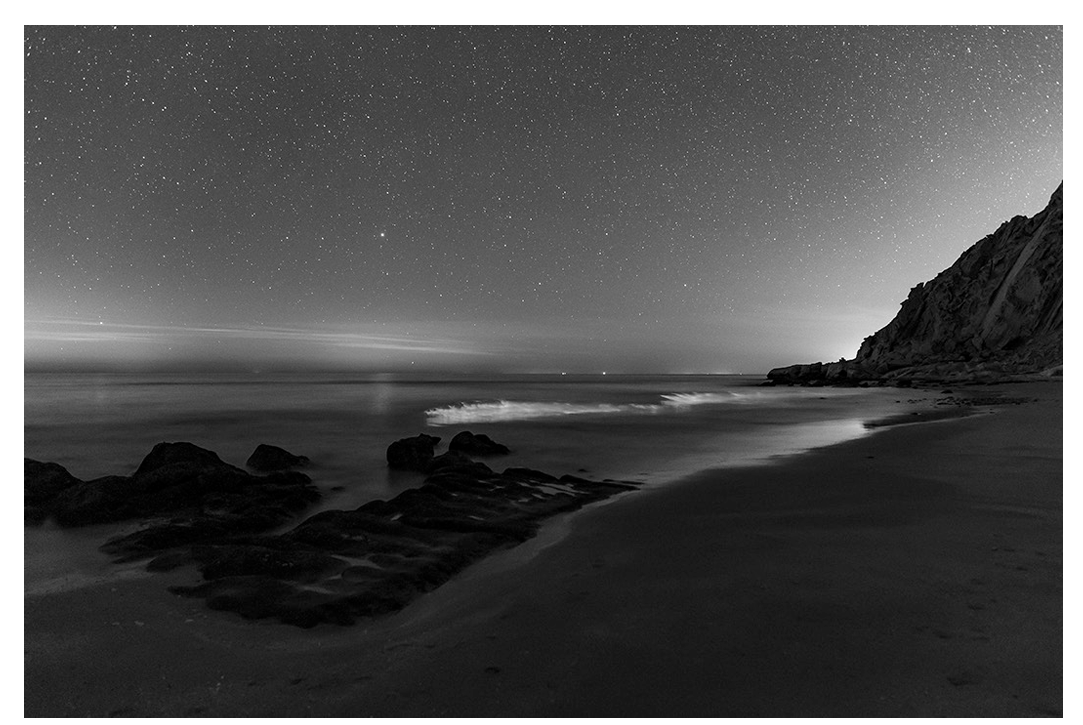
▶️ Answer/Explanation
(a) C (respiration)
Explanation: Respiration is the metabolic process that breaks down glucose to release energy, which is stored in ATP molecules. Active transport uses ATP but does not produce it. Diffusion is a passive process and does not require or produce ATP. Transpiration is the loss of water vapor from plants and is not directly involved in ATP production.
(b)(i)
Explanation: Intensive farming often involves the heavy use of fertilizers. Deforestation removes trees whose roots help bind the soil. The combination of these factors leads to soil erosion. When it rains, eroded soil and excess fertilizers (rich in minerals like nitrates and phosphates) are washed into rivers and eventually into estuaries and the sea. These minerals act as nutrients for dinoflagellates, allowing their populations to grow rapidly, a process known as eutrophication.
(b)(ii)
Explanation: After the glowing events, large numbers of dinoflagellates die. Their bodies are decomposed by bacteria and other microorganisms. These decomposers respire as they break down the organic matter, a process that consumes oxygen. The large algal bloom may also block light, reducing photosynthesis and oxygen production by other organisms. The high rate of oxygen consumption by decomposers leads to a decrease in dissolved oxygen levels.
(c) C (nitrifying)
Explanation: Nitrifying bacteria are specifically responsible for converting ammonia into nitrites and then into nitrates in the nitrogen cycle. Decomposer bacteria break down organic matter into ammonia. Denitrifying bacteria convert nitrates back into nitrogen gas. Nitrogen-fixing bacteria convert atmospheric nitrogen gas into ammonia.
(d)(i) 70 dinoflagellates per hour
Explanation: The total number of non-glowing dinoflagellates eaten in 2 hours was 2100. The total eaten per hour is \( 2100 \div 2 = 1050 \) dinoflagellates per hour. This is the rate for all 15 copepods. The mean rate per copepod is \( 1050 \div 15 = 70 \) dinoflagellates per hour per copepod.
(d)(ii)
Explanation: A random mutation gave some dinoflagellates the allele to glow. This created variation. When predators were present, dinoflagellates that glowed were less likely to be eaten (as the glow attracted the predators’ own predators). These dinoflagellates had a higher survival rate and were more likely to reproduce, passing the advantageous allele for glowing to their offspring. Over many generations, the frequency of the glowing allele increased in the population, leading to the evolution of this trait.
(e)
Explanation: It would reduce reliance on electricity generated from burning fossil fuels. The dinoflagellates photosynthesize during the day, taking in carbon dioxide (\(CO_2\)) from the atmosphere. At night, they produce light through bioluminescence without burning fuels. Therefore, this method produces no direct air pollutants and contributes less to the greenhouse effect, making it a more sustainable and carbon-neutral alternative.
▶️ Answer/Explanation
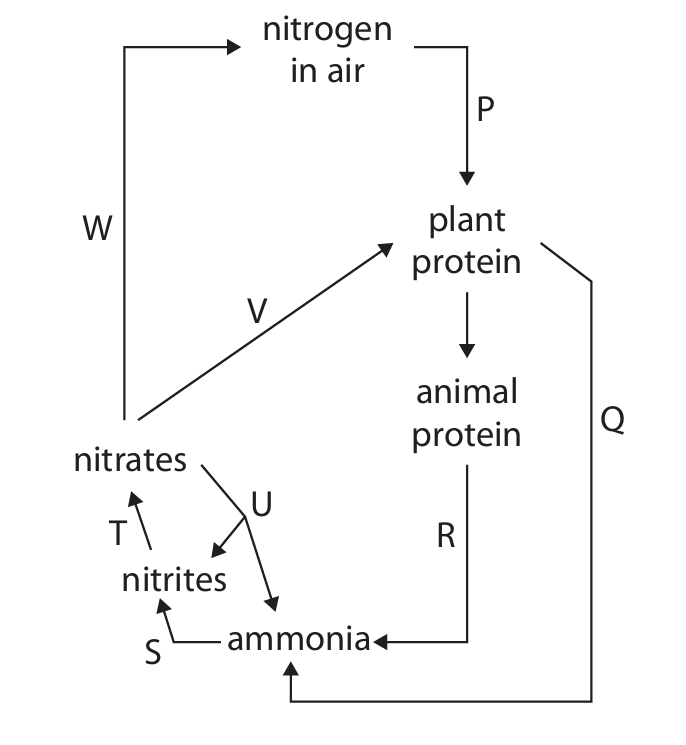
(a)(i) Answer: A (P)
Explanation: Nitrogen fixation is the process where atmospheric nitrogen (N₂) is converted into ammonia (NH₃) or related compounds by nitrogen-fixing bacteria. In the diagram, this process is represented by stage P, where nitrogen from the air enters the soil ecosystem.
(a)(ii) Answer: C (T)
Explanation: Nitrification is the biological oxidation of ammonia to nitrite (NO₂⁻) followed by the oxidation of nitrite to nitrate (NO₃⁻). This process is carried out by specific nitrifying bacteria. In the diagram, stage T represents this conversion process within the nitrogen cycle.
(a)(iii) Answer: D (W)
Explanation: Denitrification is the microbial process where nitrate (NO₃⁻) is reduced to nitrogen gases (N₂ or N₂O), which are then released back into the atmosphere. This completes the nitrogen cycle. In the diagram, stage W shows this return of nitrogen to the atmosphere.
(b)(i) Answer: Fertilizer pollution can severely impact aquatic ecosystems through a process called eutrophication.
Explanation: When excess fertilizer containing nitrates and phosphates is washed into water bodies from agricultural fields, it acts as a nutrient source for algae and aquatic plants. This leads to rapid algal growth known as an algal bloom. The dense algal growth covers the water surface, blocking sunlight from reaching deeper aquatic plants. Without sufficient light, these plants cannot photosynthesize effectively and eventually die. As the algae and plants die, they sink to the bottom where they are decomposed by bacteria. These decomposing bacteria respire, consuming large amounts of oxygen in the process. This leads to oxygen depletion in the water, creating hypoxic (low oxygen) conditions. The lack of oxygen causes fish and other aquatic organisms to suffocate and die, disrupting the entire aquatic ecosystem.
(b)(ii) Answer: Animal manure / dung / faeces / animal waste
Explanation: Instead of chemical fertilizers, farmers could use organic alternatives like animal manure. Animal waste contains essential nutrients like nitrogen, phosphorus, and potassium that plants need for growth. When properly composted and applied, manure slowly releases these nutrients into the soil, improving soil structure and fertility while reducing the risk of water pollution compared to synthetic fertilizers. Other alternatives include compost, green manure (growing and plowing under plants specifically for soil improvement), and bone meal.
▶️ Answer/Explanation
(a)(i)
Explanation: Plants need nitrate ions (\( NO_3^- \)) because:
1. Nitrates are a source of nitrogen, which is a key element needed to synthesize amino acids.
2. Amino acids are the building blocks for proteins, which are essential for plant growth, enzyme function, and cell structure.
Additional detail: Nitrogen is also required for making other important compounds like chlorophyll, DNA, and RNA.
(a)(ii)
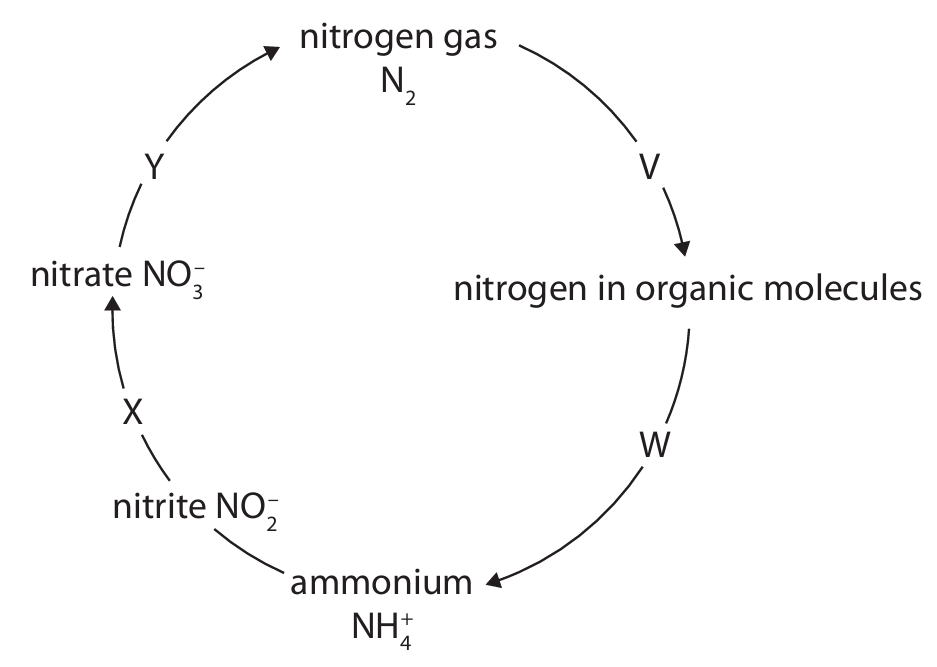
Process Names:
• \( V \): Nitrogen fixation (carried out by nitrogen-fixing bacteria).
• \( X \): Nitrification (carried out by nitrifying bacteria, converting ammonium to nitrite then nitrate).
• \( Y \): Denitrification (carried out by denitrifying bacteria, converting nitrates back to nitrogen gas).
(b)(i)
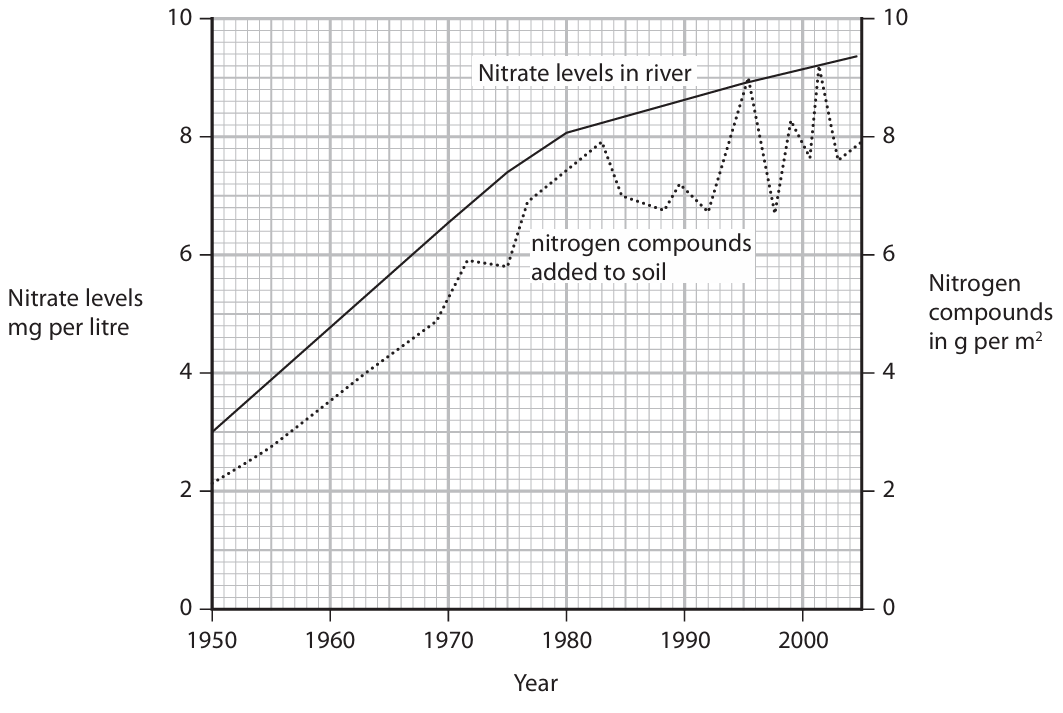
Comment on the relationship:
1. There is a general positive correlation between the two variables from 1950 to 1970; as nitrogen application increased, river nitrate levels also increased.
2. From 1980 onwards, the relationship becomes less clear/more variable.
3. The amount of nitrogen applied to fields fluctuates more (shows greater variability) than the nitrate levels in the river, which remain relatively more stable.
4. This can be explained by factors such as:
– Leaching of excess nitrate from fields into the river.
– Variations in fertilizer application rates by farmers.
– The river receiving nitrates from other sources (e.g., sewage, natural decay).
(b)(ii)
Describe changes in the river (eutrophication process):
1. Increased nitrate levels led to excessive algal growth / algal blooms (eutrophication).
2. The increase in algae and later their death led to a rise in decomposer bacteria that break down the organic matter.
3. These decomposers respire, using up oxygen, leading to reduced oxygen levels (anoxia) in the water.
4. This resulted in increased turbidity (cloudiness) and reduced light penetration, harming aquatic plants.
5. Ultimately, there was a loss of biodiversity, including death of fish and other oxygen-dependent organisms.
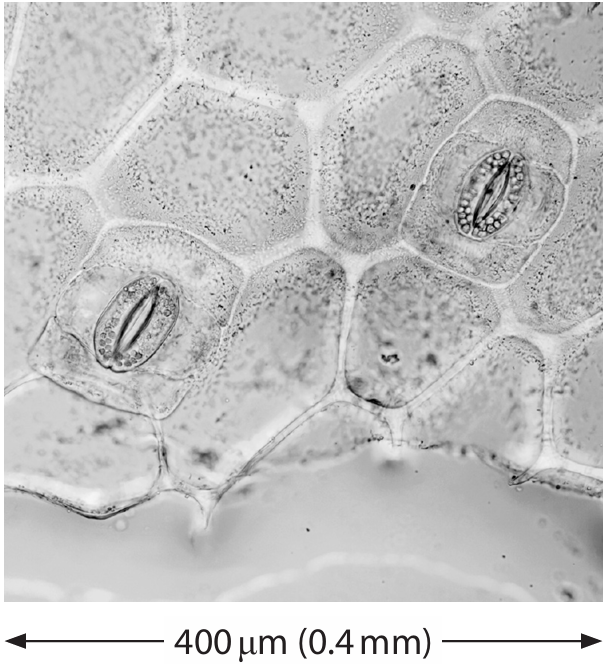
▶️ Answer/Explanation
(a)
An explanation that makes reference to:
• Burning / combustion of petrol / diesel / fuel in car engines. (1 mark)
• This combustion reaction releases carbon dioxide (\( \text{C} + \text{O}_2 \rightarrow \text{CO}_2 \)). (1 mark)
More cars mean more fuel burned, directly increasing \( \text{CO}_2 \) emissions.
(b)
An explanation that makes reference to two of the following:
• Carbon dioxide is a greenhouse gas. (1 mark)
• It traps / absorbs infrared (IR) radiation (heat) from the Earth, preventing its escape into space. (1 mark)
• This leads to an enhanced greenhouse effect, causing global warming / climate change. (1 mark)
(Maximum 2 marks)
(c)
An explanation that makes reference to:
• Carbon dioxide is a reactant / raw material needed for photosynthesis. (1 mark)
• At lower concentrations, \( \text{CO}_2 \) can be a limiting factor for photosynthesis; increasing its concentration can increase the rate up to a point. (1 mark)
The photosynthesis equation is: \( 6\text{CO}_2 + 6\text{H}_2\text{O} \xrightarrow{\text{light}} \text{C}_6\text{H}_{12}\text{O}_6 + 6\text{O}_2 \).
(d)
An explanation that makes reference to two of the following:
• A carbon sink absorbs more \( \text{CO}_2 \) than it releases. (1 mark)
• Respiration (by plants, animals, decomposers) releases \( \text{CO}_2 \) back into the atmosphere, reducing net absorption. (1 mark)
• Deforestation (cutting down trees) reduces the number of plants for photosynthesis and often involves burning/decay, releasing stored carbon as \( \text{CO}_2 \). (1 mark)
(Maximum 2 marks)
(e)
A description that makes reference to three of the following:
• Place leaves (or aquatic plants like pondweed) in test tubes containing hydrogen-carbonate indicator. (1 mark)
• Expose one setup to bright light and another to darkness (or vary light intensity using a lamp at different distances). (1 mark)
• In bright light, the indicator turns purple/dark red (due to net \( \text{CO}_2 \) uptake in photosynthesis). In darkness, it turns yellow (due to net \( \text{CO}_2 \) release from respiration). (1 mark)
• Control other variables: use leaves of the same species, size, age; same volume and concentration of indicator; same temperature; same time period. (1 mark)
(Maximum 3 marks)
(f)
Step-by-step calculation:
1. Area in photograph: side = \( 400 \mu\text{m} = 0.4 \text{ mm} = 0.04 \text{ cm} \).
2. Area of square = \( (0.04 \text{ cm})^2 = 0.0016 \text{ cm}^2 \).
3. Number of stomata in this area = 2.
4. Stomatal density = \( \frac{2}{0.0016} = 1250 \) stomata per \( \text{cm}^2 \).
5. Total number on leaf = \( 1250 \times 150 = 187500 \).
Answer: \( \mathbf{187500} \) stomata. (3 marks)
(g)
An explanation that makes reference to:
• Stomata allow water vapour to evaporate / be lost from the leaf in a process called transpiration. (1 mark)
• This transpiration pull creates a tension / negative pressure in the xylem, drawing a continuous column of water up from the roots, through the stem, and into the leaves. (1 mark)
This is known as the transpiration stream, and it relies on stomatal opening for water movement against gravity.
▶️ Answer/Explanation
(a)
Explanation: Selective breeding involves a deliberate process to enhance desirable traits. To produce fish that grow rapidly, fish farmers would first identify and select parent fish that already exhibit fast growth rates. These selected fish are then bred together. From their offspring, the fastest-growing individuals are again selected to be the parents for the next generation. By repeating this process over many generations, the alleles (gene variants) responsible for rapid growth become more common in the population, leading to a stock of fish that consistently grows quickly.
(b)
Explanation: The conversion of ammonia to nitrates is a natural biological process called nitrification. This process is carried out by specific types of bacteria known as nitrifying bacteria. These bacteria are autotrophs that obtain energy by oxidizing nitrogen compounds. The process occurs in two main stages. First, bacteria such as Nitrosomonas convert ammonia (NH₃) into nitrites (NO₂⁻). Then, other bacteria, like Nitrobacter, convert these nitrites into nitrates (NO₃⁻). Nitrates are a form of nitrogen that can be more easily utilized by plants and algae.
(c)
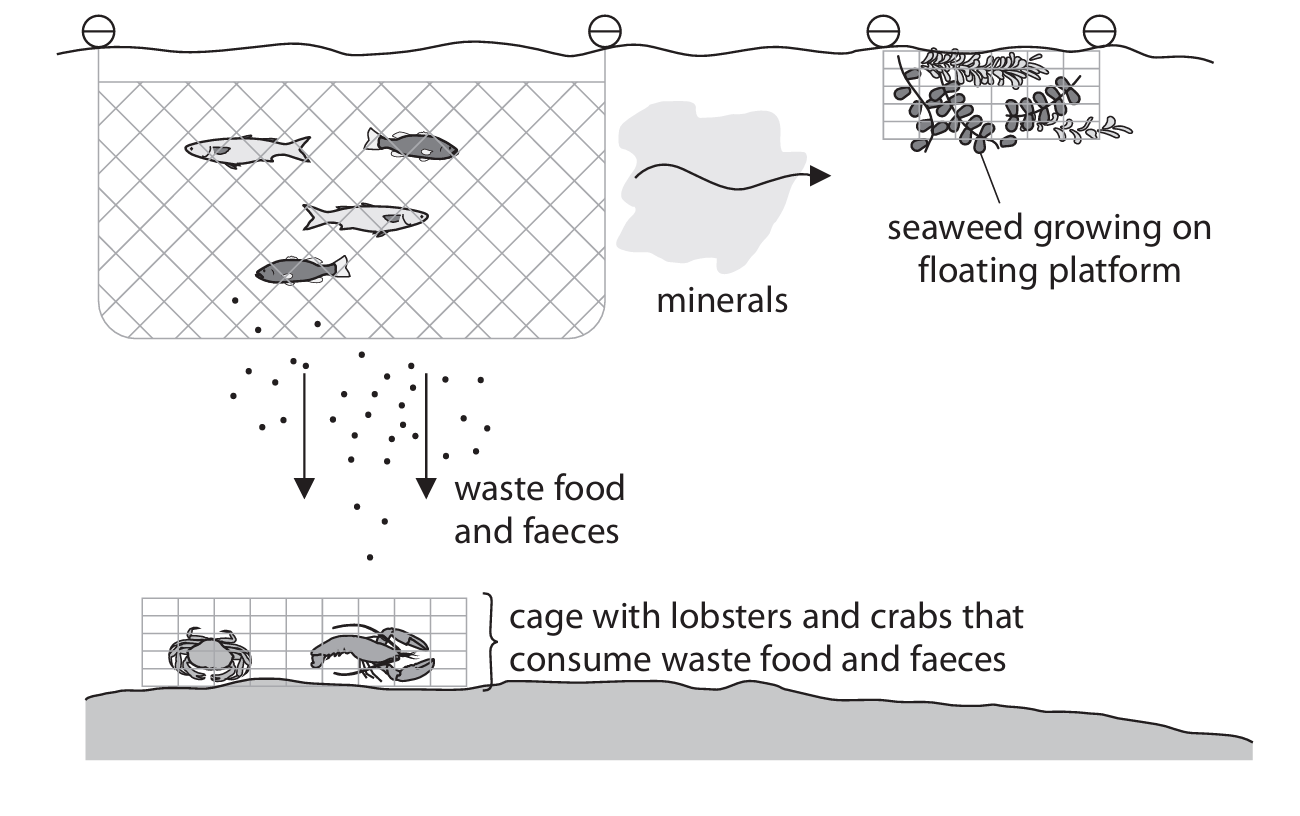
Explanation: The multi-trophic level aquaculture system is designed to create a more balanced and efficient ecosystem, which directly addresses pollution and profitability.
Reducing Pollution:
- The system significantly reduces solid waste pollution because lobsters and crabs consume the waste food and faeces produced by the main fish stock. This means less organic matter accumulates on the seabed.
- With less waste material available, there is a reduction in the population of decomposing bacteria. This is beneficial because these bacteria consume large amounts of oxygen during respiration; therefore, lower bacterial numbers help to maintain higher oxygen levels in the water, preventing oxygen depletion that can kill aquatic life.
- Furthermore, the seaweed plays a crucial role in reducing dissolved nutrient pollution. It absorbs nitrates, phosphates, and other minerals from the water that would otherwise act as fertilizers, potentially causing excessive algal growth (algal blooms) and eutrophication. The seaweed also releases oxygen through photosynthesis, further improving water quality.
Increasing Profits:
- This system creates additional saleable products. The farmer can now harvest and sell not only the main fish but also the lobsters, crabs, and seaweed, diversifying their income streams.
- It also reduces costs. There is no need to purchase extra feed for the lobsters and crabs, as they consume the waste from the fish. Similarly, the seaweed obtains its minerals naturally from the water, eliminating the need for artificial fertilizers.
- Healthier fish, resulting from the improved water quality (higher oxygen, lower disease risk), are likely to grow better and have lower mortality rates, leading to higher yields and reduced losses.
▶️ Answer/Explanation
(a)
A: Denitrification
B: Nitrification
C: Nitrogen Fixation
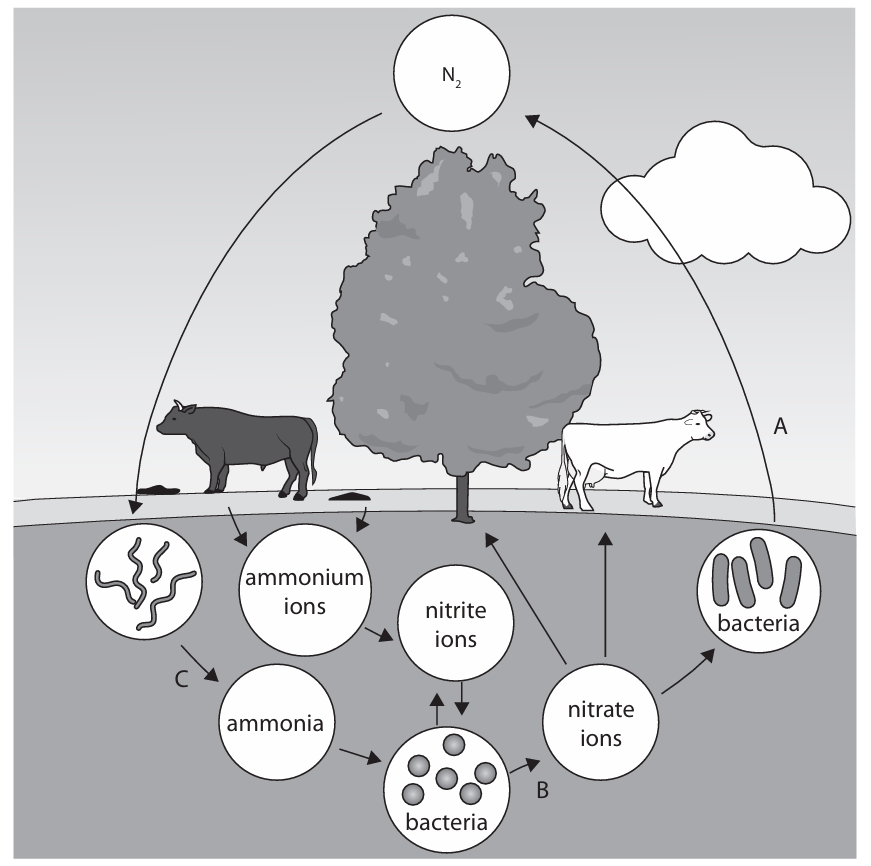
Explanation: In the nitrogen cycle, process A shows nitrogen gas returning to the atmosphere from nitrates, which is denitrification carried out by denitrifying bacteria. Process B shows the conversion of ammonium ions to nitrites and then to nitrates, which is nitrification performed by nitrifying bacteria. Process C shows atmospheric nitrogen being converted to ammonia/ammonium ions, which is nitrogen fixation by nitrogen-fixing bacteria.
(b)(i)
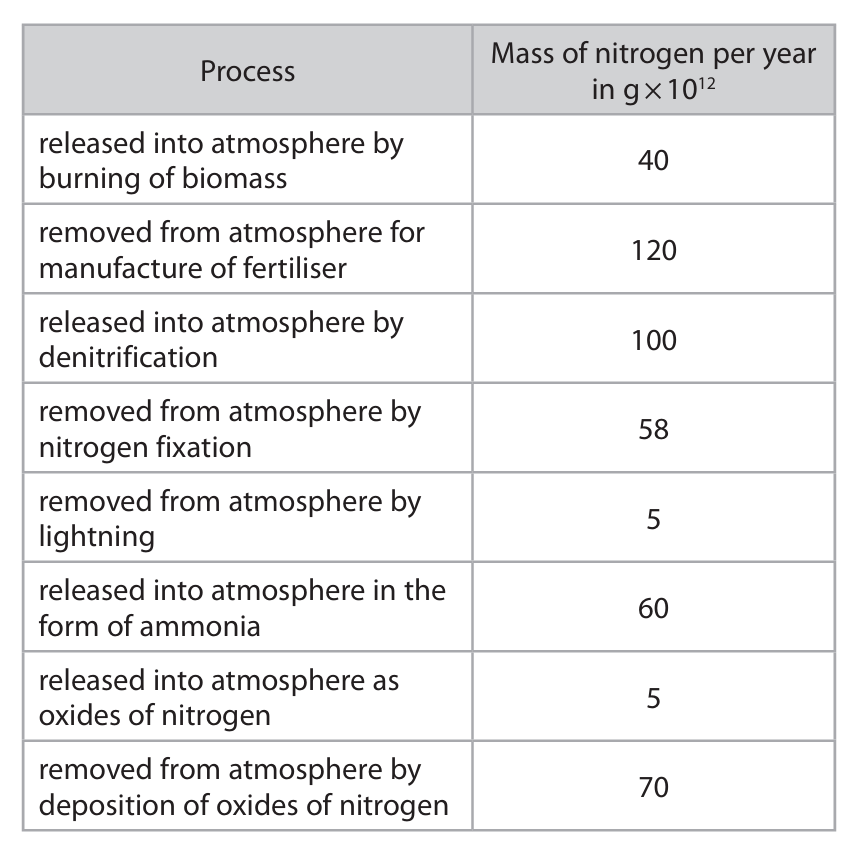
Mass = \(2.53 \times 10^{14}\) g
Explanation: To calculate the total nitrogen removed from the atmosphere, we add all the processes that remove nitrogen: fertilizer manufacture (120), nitrogen fixation (58), lightning (5), and deposition of nitrogen oxides (70). Adding these gives 120 + 58 + 5 + 70 = 253. Since the units are \(g \times 10^{12}\), we convert to standard form: \(253 \times 10^{12} = 2.53 \times 10^{14}\) g.
(b)(ii)
Percentage = 20% (or 19.5%)
Explanation: First, calculate the total nitrogen released into the atmosphere: burning biomass (40) + denitrification (100) + ammonia release (60) + nitrogen oxides release (5) = 205. The percentage from burning biomass is (40 ÷ 205) × 100 = 19.51%, which rounds to 20%.
(b)(iii)
Explanation: Burning biomass returns nitrogen to the atmosphere because biomass contains nitrogen compounds such as proteins, amino acids, and nucleic acids. When biomass burns, these nitrogen-containing compounds break down and release nitrogen in the form of nitrogen oxides (NOₓ) and other gases into the atmosphere.
(c)
Explanation: Nitrous oxide (N₂O) is a potent greenhouse gas that contributes significantly to global warming. It absorbs infrared radiation (heat) emitted by the Earth’s surface and prevents it from escaping into space, effectively trapping heat in the atmosphere. This enhanced greenhouse effect leads to an increase in global temperatures and climate change. Nitrous oxide is particularly concerning because it has a much greater warming potential per molecule than carbon dioxide.

▶️ Answer/Explanation
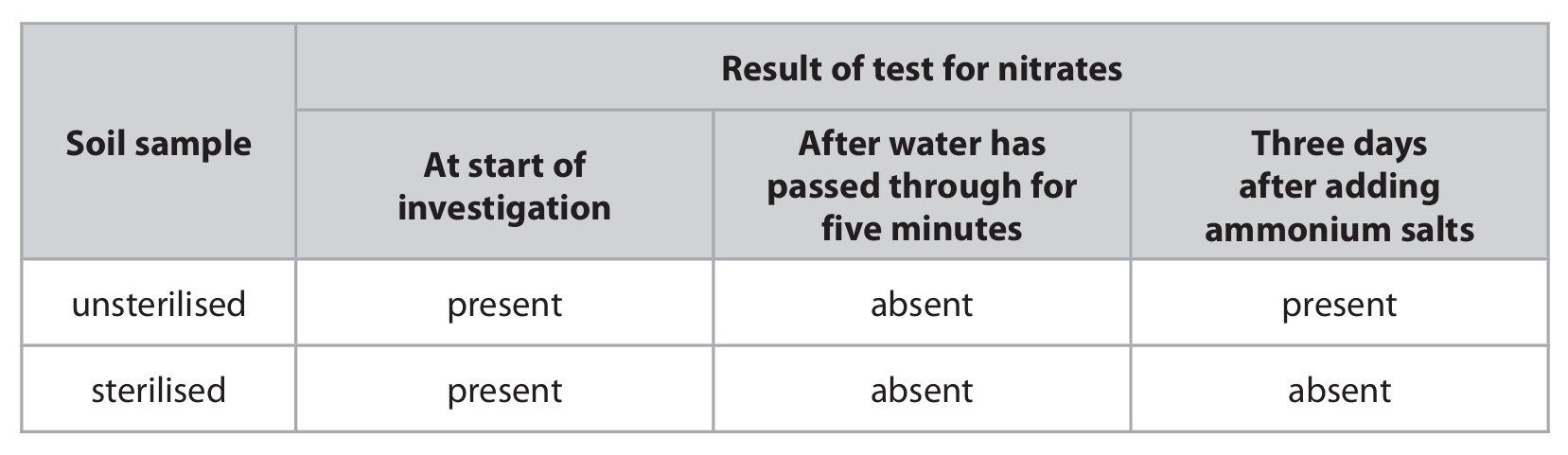
(a) Whether the soil sample was sterilised or unsterilised / The presence or absence of bacteria.
Explanation: The independent variable is the factor that the investigator deliberately changes. In this experiment, the student intentionally sterilized one soil sample (by heating it) while leaving the other unsterilized. This manipulation directly alters the presence of living microorganisms, particularly bacteria, in the soil, which is the key factor being tested for its effect on the nitrogen cycle (specifically, the conversion of ammonium to nitrate).
(b)(i) To remove or wash away any nitrates that were initially present in the soil. This ensures that any nitrate detected after adding the ammonium salts must have been produced from the ammonium during the investigation, making the test fair and valid.
Explanation: The initial tests showed that nitrate was present in both soil samples at the start. By thoroughly rinsing the soil with water for five minutes, the student aimed to leach out these pre-existing nitrates. This step is crucial for the validity of the experiment. If nitrates were not removed, it would be impossible to tell if nitrates found later came from the original soil or were newly produced from the added ammonium salts. This washing step creates a “clean slate,” ensuring that any nitrate detected after the ammonium addition is indeed a product of the processes being studied.
(b)(ii)
- Nitrates are present in the unsterilised soil but absent in the sterilised soil three days after adding ammonium salts.
- This shows that nitrates were produced in the unsterilised soil from the added ammonium salts.
- The conversion of ammonium to nitrate is called nitrification and is carried out by nitrifying bacteria.
- The sterilised soil, which was heated, had its bacteria killed, so no nitrification could occur, and thus no nitrates were produced.
Explanation: The contrasting results for the two soil samples three days after adding ammonium salts are very revealing. The unsterilised soil tested positive for nitrates, indicating that the ammonium ions \( (NH_4^+) \) were converted into nitrate ions \( (NO_3^-) \). This biological process, known as nitrification, is performed by specific types of bacteria called nitrifying bacteria (e.g., Nitrosomonas and Nitrobacter). In contrast, the sterilised soil, which was heated to 100°C, tested negative for nitrates. The heating process killed all living bacteria. The absence of nitrate production in this sample provides strong evidence that living bacteria are essential for the nitrification process to occur. The experiment effectively demonstrates the role of microorganisms in this crucial stage of the nitrogen cycle.
▶️ Answer/Explanation
(a)(i) Methane / nitrous oxides / CFCs / water vapour
Explanation: Greenhouse gases are those that trap heat in the Earth’s atmosphere, contributing to the greenhouse effect. While carbon dioxide is the most commonly discussed, other significant greenhouse gases include methane (released from livestock and landfills), nitrous oxides (from agriculture and industrial processes), chlorofluorocarbons or CFCs (from refrigerants and aerosols, though now largely phased out), and water vapour. Carbon monoxide is not a significant greenhouse gas and is therefore rejected.
(a)(ii) \( 1.8 \times 10^{13} \) kg
Explanation: To find the net increase in atmospheric carbon dioxide, we calculate the total released minus the total removed. The total released is 727 (natural) + 37 (human) = 764 gigatonnes. The amount removed by plants is 746 gigatonnes. The net increase is therefore 764 – 746 = 18 gigatonnes. Since 1 gigatonne = \( 1 \times 10^{12} \) kg, we convert 18 gigatonnes to kg: 18 × \( 10^{12} \) kg = \( 1.8 \times 10^{1} \) × \( 10^{12} \) kg = \( 1.8 \times 10^{13} \) kg.
(a)(iii) Any two from: ice caps/glaciers melt, sea level rise/flooding, loss of habitat/desertification/droughts, extinctions/disrupted food chains, destruction of coral reefs/coral bleaching, spread of disease/pests, extreme weather/changes in weather patterns.
Explanation: Global warming, driven by an enhanced greenhouse effect, has wide-ranging environmental consequences. Two major effects are the melting of polar ice caps and glaciers, which contributes to rising sea levels and subsequent coastal flooding. Another significant impact is the disruption of ecosystems, leading to habitat loss, species extinction as animals and plants cannot adapt quickly enough, and phenomena like coral bleaching where warmer ocean temperatures cause corals to expel the algae living in their tissues, turning them white and threatening the entire reef ecosystem.
(b) An explanation that makes reference to four of the following points:
- Plants take in/absorb carbon dioxide.
- This is for the process of photosynthesis.
- The carbon (from CO₂) is converted into/stored as suberin/locked up in suberin.
- Suberin does not decay for long periods/decomposes slowly/remains for a long time.
- Perennial plants remain for long periods/don’t die off each year.
- Slower/less carbon dioxide is released from decomposition/decay.
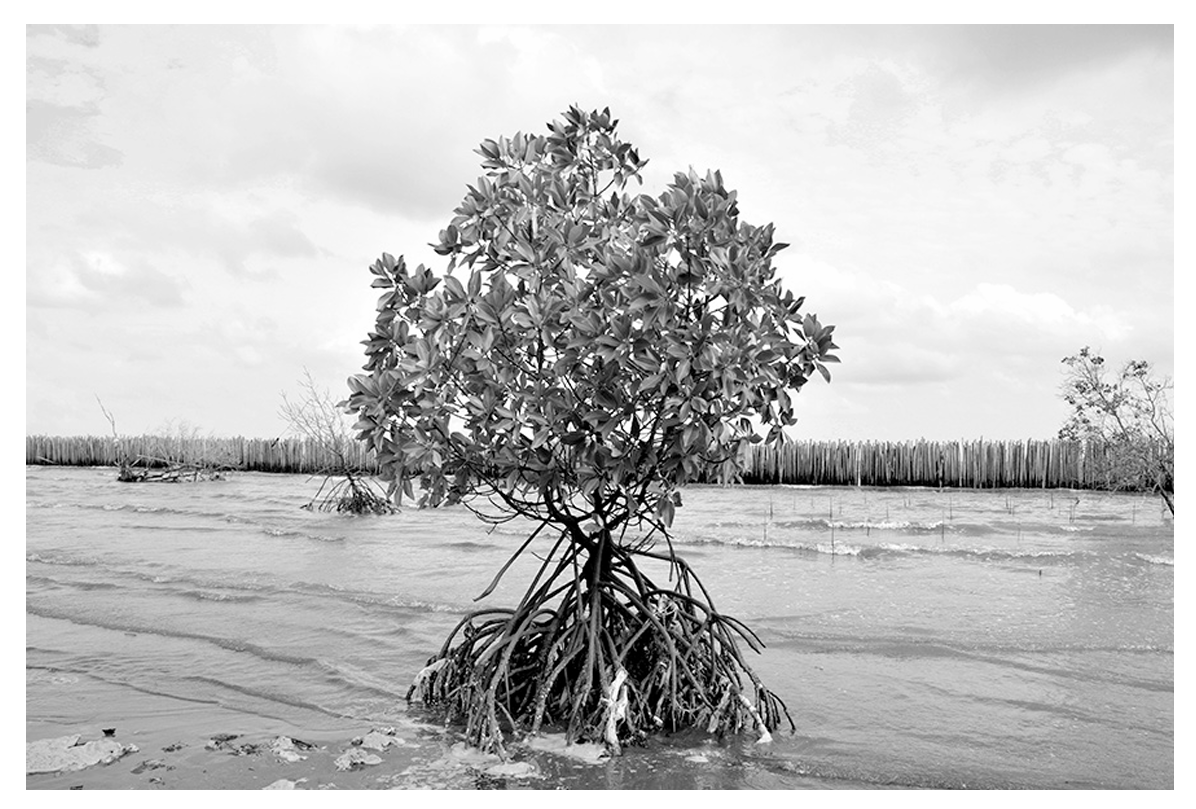
Explanation: Genetically engineered plants with high suberin content act as enhanced carbon sinks. They absorb carbon dioxide from the atmosphere during photosynthesis. Instead of this carbon being used solely for immediate growth or being released back quickly, a significant portion is incorporated into suberin in their root cell walls. Suberin is a very stable, waterproof compound that decomposes extremely slowly, meaning the carbon is effectively “locked away” in the soil for a very long time. Furthermore, because these are perennial plants, they live for many years, continuously performing this carbon sequestration without the need for annual replanting, which could disturb the soil and release stored carbon. This long-term storage reduces the net amount of carbon dioxide in the atmosphere.
(c) D (restriction enzyme)
Explanation: In genetic engineering, specific enzymes are used to cut DNA at precise locations. Restriction enzymes (also called restriction endonucleases) are the enzymes responsible for cutting a gene out of a section of DNA. Amylase digests starch, ligase joins DNA fragments together, and lipase digests lipids (fats).
(d) An explanation that makes reference to two of the following points:
- Prevents water loss from the plant roots.
- Due to osmosis.
- Prevents plant cells from becoming flaccid/wilting; helps them stay turgid by preventing water from moving out to the higher salt concentration in the soil.
Explanation: Soil with a high salt concentration has a low water potential (a high solute concentration). Water naturally moves by osmosis from areas of high water potential (inside the root cells) to areas of low water potential (the salty soil). This can cause the plant to lose water and wilt. Suberin, being a waterproof substance in the cell walls of the roots, acts as a barrier. It reduces the movement of water out of the root cells into the salty soil, thereby helping the plant to retain water and maintain turgor pressure, which is essential for support and function.
(e) Any three from: produces large numbers/large scale, fast/quick process, all crops produce suberin/are genetically identical/clones, less risk of cross-pollinating with wild plants/spreading the transgene, can be done at any time of year/all year.
Explanation: Micropropagation (tissue culture) is used for several advantages over traditional pollination. Firstly, it allows for the rapid production of a very large number of plants from a single, successfully modified individual. Secondly, the process is much faster than waiting for seeds to develop and grow. Thirdly, all the plants produced are genetically identical clones, guaranteeing that every single plant will have the desired high-suberin trait. Fourthly, since micropropagation is asexual and doesn’t involve pollen, there is no risk of the transgene escaping via cross-pollination and spreading into wild plant populations. Finally, it is not season-dependent and can be carried out in a lab throughout the year.
▶️ Answer/Explanation
(a)(i) A
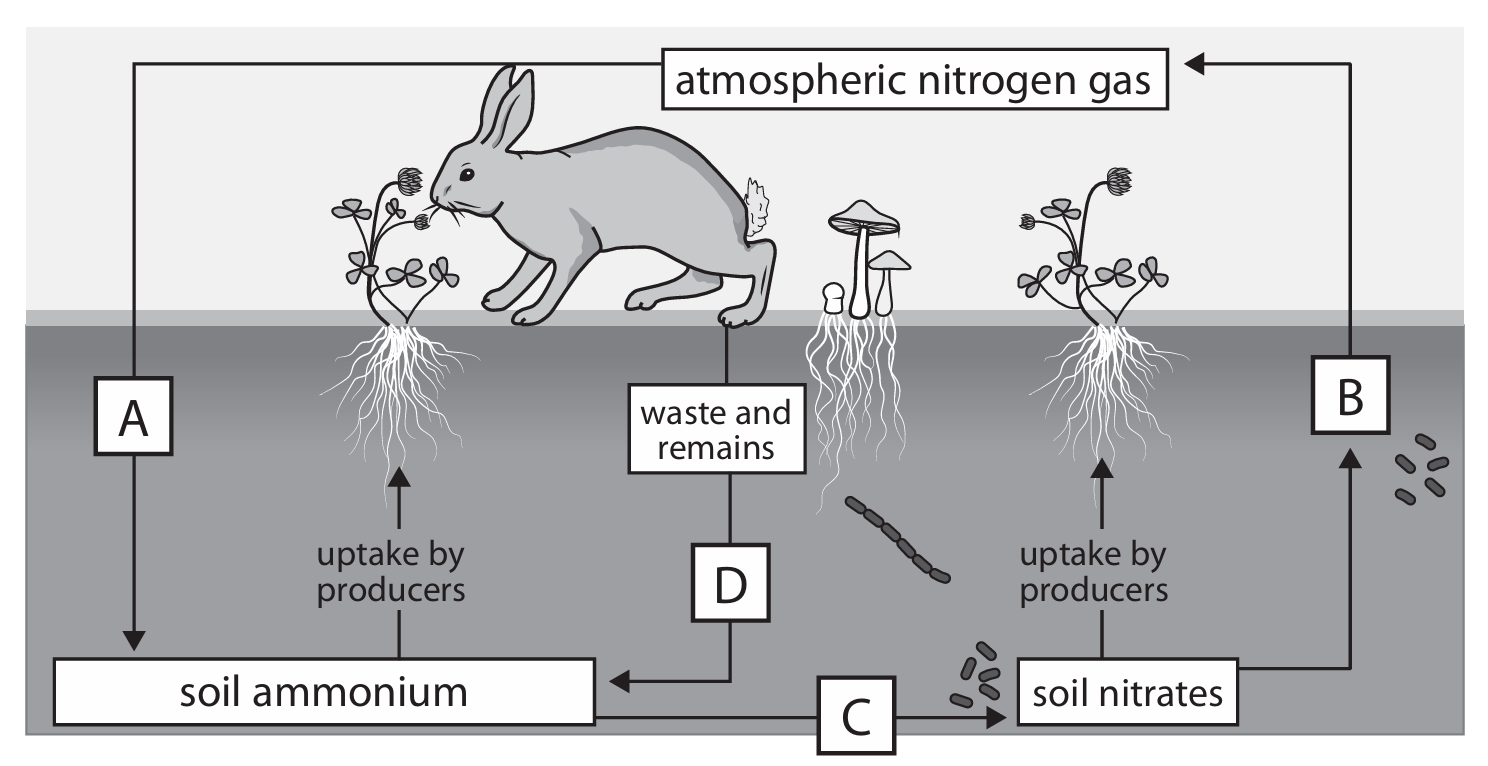
Explanation: Nitrogen fixation is the process where atmospheric nitrogen (\(N_2\)) is converted into ammonia (\(NH_3\)) or related compounds by certain bacteria. In the diagram, process A shows atmospheric nitrogen being converted into a form that can be used by plants, which matches the definition of nitrogen fixation.
(a)(ii) D
Explanation: Decomposition is the breakdown of organic matter, such as waste and dead organisms, into simpler substances like ammonium. Process D in the diagram shows the conversion of waste and remains into soil ammonium, which is the result of decomposition carried out by decomposers like bacteria and fungi.
(a)(iii) C
Explanation: Nitrification is the biological oxidation of ammonia (\(NH_3\)) or ammonium (\(NH_4^+\)) to nitrite (\(NO_2^-\)) and then to nitrate (\(NO_3^-\)). Process C shows the conversion of soil ammonium into soil nitrates, which is precisely what happens during nitrification, performed by nitrifying bacteria.
(a)(iv) (Nitrifying) bacteria
Explanation: Process C is nitrification, which is specifically carried out by nitrifying bacteria. These bacteria, such as those from the genera Nitrosomonas and Nitrobacter, convert ammonium into nitrites and then into nitrates, making nitrogen available in a form that plants can absorb and use.
(b)(i) The control solution shows normal growth with all minerals present, allowing comparison with the test solution (without nitrate) to see if nitrate is essential. If the control lacked other minerals, it wouldn’t show normal growth, making it impossible to isolate the effect of nitrate absence.
Explanation: In a scientific experiment, a control is used as a benchmark to compare the results of the test. The control solution contains all necessary minerals, including nitrate, so the plant in it should grow normally. The test solution is identical except it lacks nitrate. By comparing the growth in both solutions, any difference (like stunted growth in the test) can be attributed to the missing nitrate ions. If the control also missed other minerals, we wouldn’t know which missing mineral caused poor growth.
(b)(ii) To remove any residue of nitrate ions or other minerals from the measuring cylinder, preventing contamination of the test solution.
Explanation: Step 5 ensures that the measuring cylinder is clean and free from any traces of the control solution before it is used to measure the test solution. If nitrate ions from the control were left in the cylinder, they could contaminate the test solution, making it no longer “nitrate-free.” This would ruin the experiment because the test plant might get some nitrate, making the results unreliable.
(b)(iii) To block light from reaching the roots and the solution, preventing photosynthesis and algal growth.
Explanation: Wrapping the tubes in black paper (Step 7) serves two main purposes. First, it stops light from reaching the roots. Plant roots don’t perform photosynthesis, and exposure to light could be unnatural or stressful. More importantly, it prevents algae from growing in the nutrient solution. Algae need light for photosynthesis, and if they grow, they would compete with the bean seedling for minerals and carbon dioxide, confusing the results of the experiment.
(b)(iv) The student could measure the height/length, leaf area, or mass of the plants from both solutions using a ruler or balance, and compare the growth.
Explanation: To determine if nitrate is required, the student needs quantitative data on plant growth. After a set period, they could carefully remove the seedlings and measure their height or stem length with a ruler. They could also count the number of leaves and measure leaf area, or even better, find the dry mass by drying the plants in an oven and weighing them. By comparing these measurements between the plant grown in the complete control solution and the one grown in the nitrate-deficient test solution, a significant difference (e.g., the test plant being smaller and lighter) would indicate that nitrate ions are essential for healthy plant growth.
▶️ Answer/Explanation
(a)
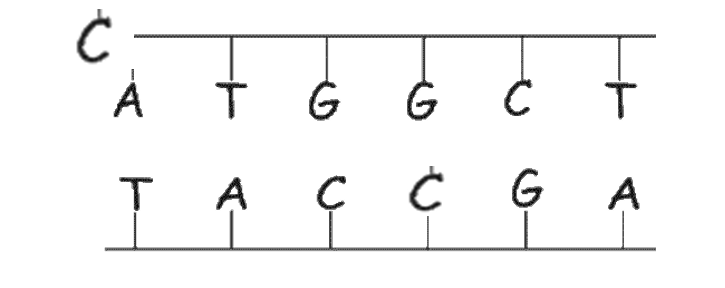
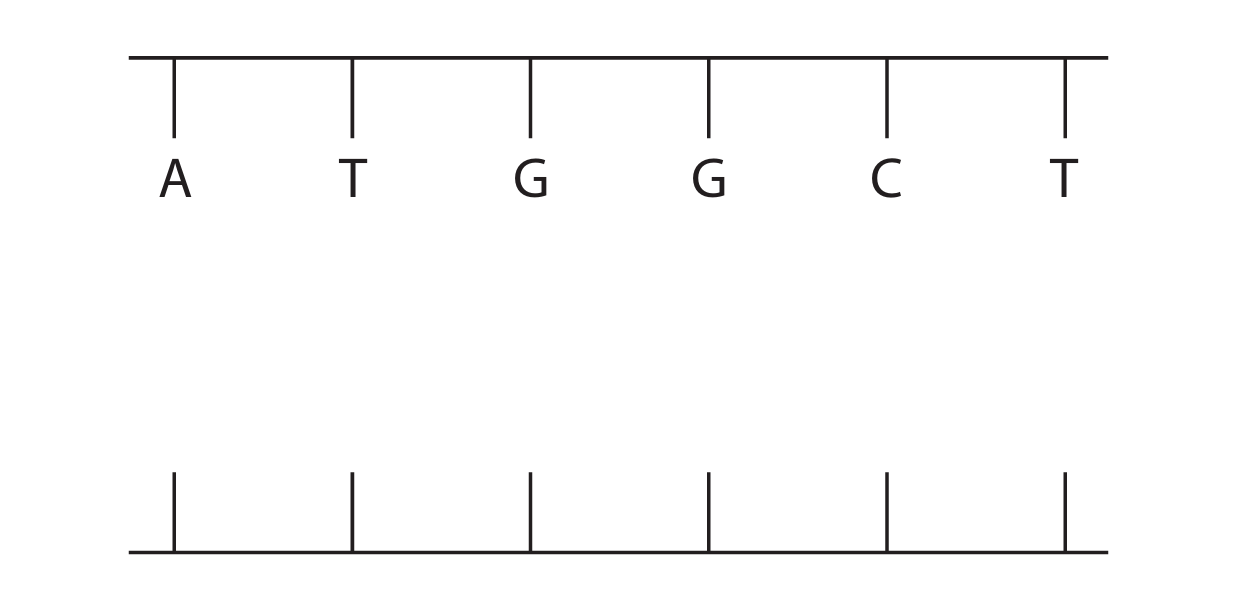
Explanation: DNA strands are complementary. Adenine (A) always pairs with Thymine (T), and Guanine (G) always pairs with Cytosine (C). Therefore, to complete the complementary strand, we match A with T, T with A, G with C, G with C, C with G, and T with A.
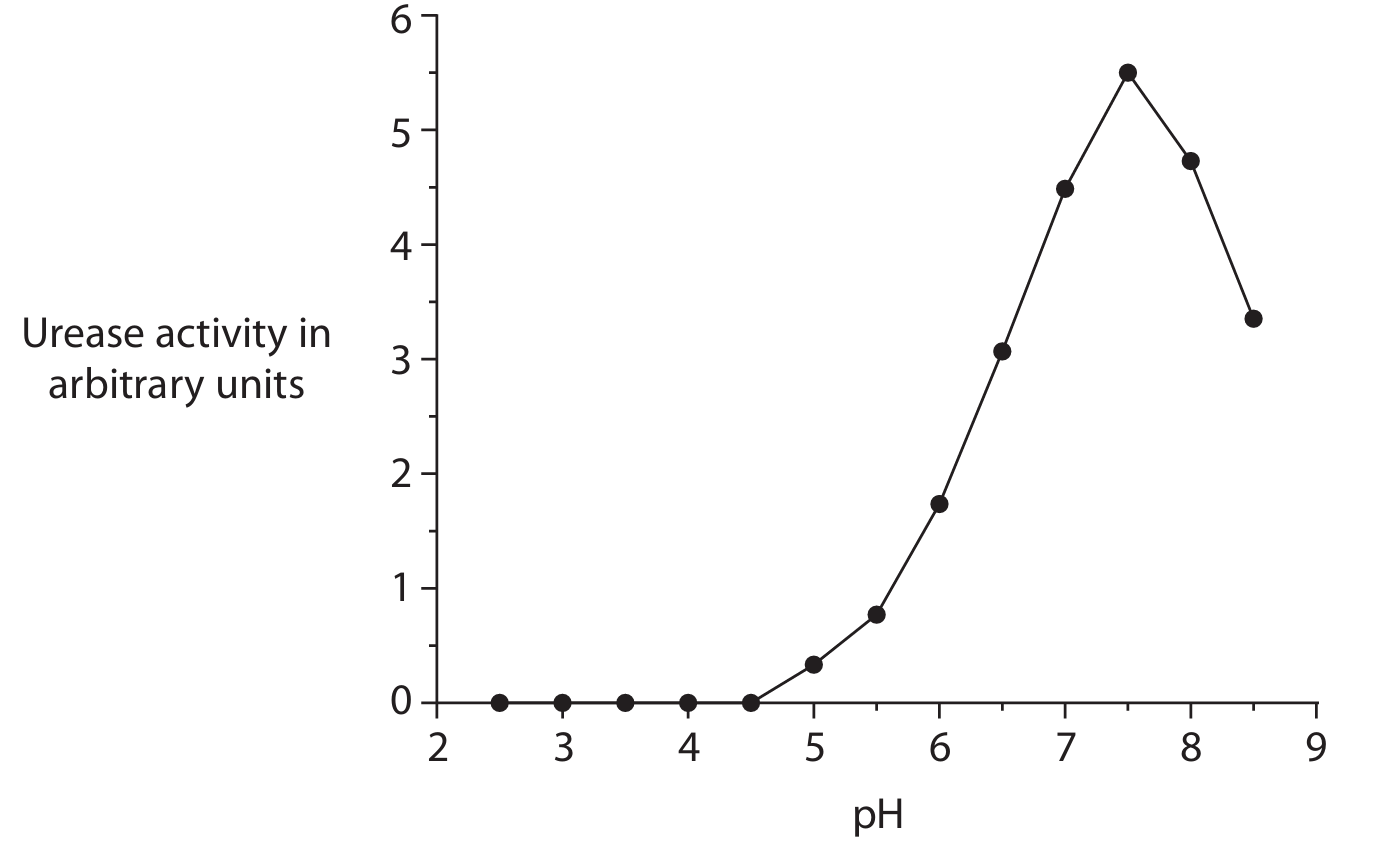
(b)(i) C 7.5
Explanation: The optimum pH is the point at which the enzyme shows its highest activity. From the graph (which would show this visually), urease activity peaks at around pH 7.5, making it the optimum pH for this enzyme’s function.
(b)(ii) At pH 8.5, the activity of urease is lower than its optimum. This happens because the higher pH (alkaline conditions) can cause the enzyme to denature. Denaturation means the enzyme’s active site changes shape, so it can no longer bind effectively to its substrate (urea in this case), resulting in fewer enzyme-substrate complexes and reduced activity.
Explanation: Enzymes are proteins that are sensitive to pH changes. Each enzyme has an optimum pH where its structure is ideal for catalysis. When the pH moves away from this optimum, particularly to extremes like pH 8.5 for urease, the ionic bonds and hydrogen bonds that maintain the enzyme’s specific three-dimensional shape can be disrupted. This alteration in shape, especially of the active site, prevents the substrate from fitting properly, drastically reducing the rate of reaction.
(c) Other bacteria in the nitrogen cycle have crucial roles:
- Nitrogen-fixing bacteria: These convert atmospheric nitrogen gas (\(N_2\)) into ammonia (\(NH_3\)), making nitrogen available to plants in a usable form.
- Nitrifying bacteria: This is a two-step process. First, some bacteria convert ammonia (\(NH_3\)) into nitrites (\(NO_2^-\)). Then, other bacteria convert these nitrites (\(NO_2^-\)) into nitrates (\(NO_3^-\)), which is the form most easily absorbed by plant roots.
- Denitrifying bacteria: These bacteria perform denitrification, which is the conversion of nitrates (\(NO_3^-\)) back into nitrogen gas (\(N_2\)). This process releases nitrogen back into the atmosphere, completing the cycle.
Explanation: The nitrogen cycle is essential for life, as nitrogen is a key component of amino acids and nucleic acids. Different groups of bacteria drive this cycle. Nitrogen-fixing bacteria, often found in root nodules of legumes, “fix” inert atmospheric nitrogen into reactive ammonia. Nitrifying bacteria in the soil then oxidize ammonia to nitrites and then to nitrates, which are soluble and can be taken up by plants. Finally, denitrifying bacteria, typically active in waterlogged, anaerobic soils, reduce nitrates back to nitrogen gas, returning it to the atmosphere and balancing the cycle. Without these bacterial processes, the vast reservoir of nitrogen in the air would be largely inaccessible to living organisms.
▶️ Answer/Explanation
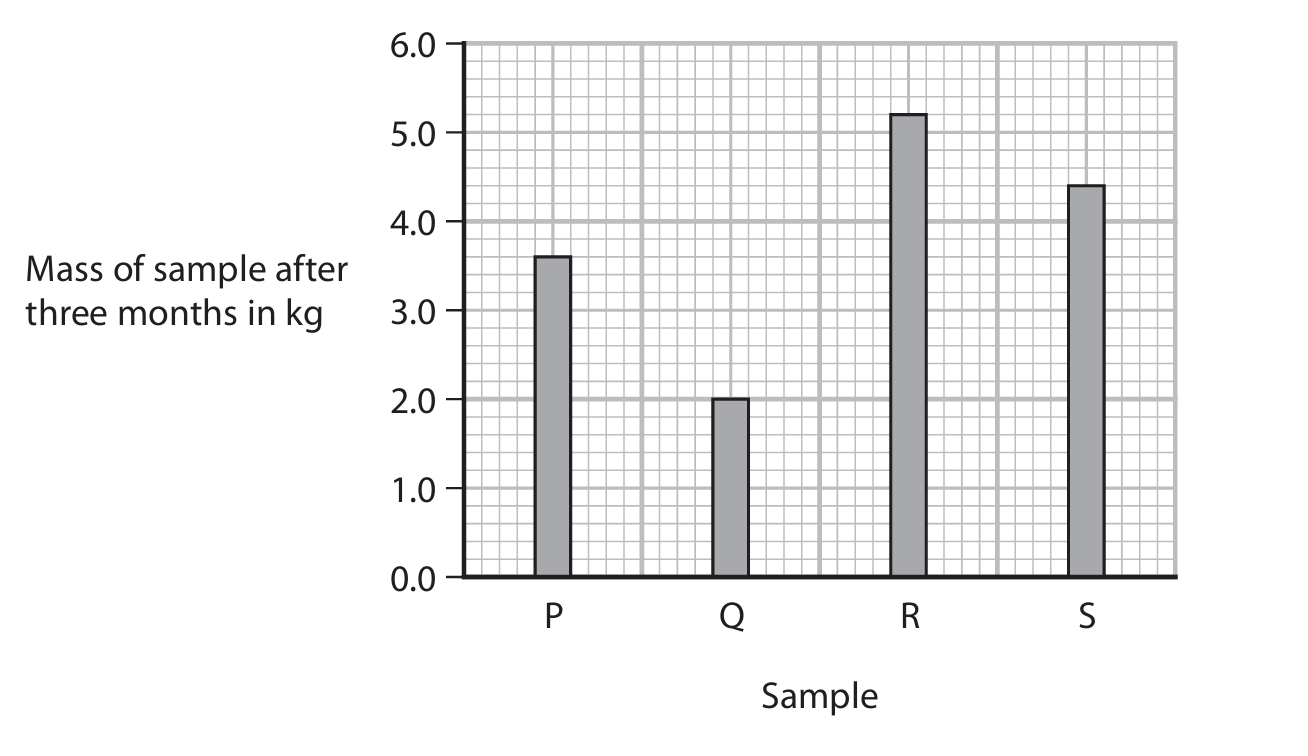
(a) An explanation that makes reference to four of the following points:
- more (decomposition) / faster with warmer temperatures / eq (1)
(allow mass remains high in low temp) - enzymes (1)
- more (decomposition) / faster with cut material / eq (1)
(allow mass remains high in uncut) - more surface area (1)
- fungi / bacteria (1)
(allow converse)
Example answer: Decomposition is faster at \(20^\circ C\) (samples Q and S) than at \(10^\circ C\) (samples P and R) because enzymes in decomposers like fungi and bacteria work more efficiently at higher temperatures. Cutting the leaves into small pieces (samples P and Q) increases the surface area available for decomposers and their enzymes to act on, leading to faster decomposition compared to uncut leaves (samples R and S) at the same temperature.
(b) Calculation:
- Mass loss for P: \(6.0 – 3.6 = 2.4 \text{ kg}\)
- Rate for P: \(2.4 \div 3 = 0.8 \text{ kg per month}\)
- Mass loss for Q: \(6.0 – 2.0 = 4.0 \text{ kg}\)
- Rate for Q: \(4.0 \div 3 = 1.333… \text{ kg per month}\)
- Difference: \(1.333… – 0.8 = 0.533… \text{ kg per month}\)
Answer: \(0.53\) (allow \(0.5\), \(0.53\), \(0.533\), etc.) kg per month
Award full marks for correct numerical answer without working.
(c) An answer that makes reference to two of the following points:
- species / type of leaves / plant (1)
- age of plant / leaves (1)
(ignore volume of leaves) - same (number of) / type of decomposers / eq (1)
- insects or organisms that might consume leaf / eq (1)
Example answer: 1. The species/type of leaf used. 2. The presence/absence of specific decomposers (e.g., fungi, bacteria).