Edexcel iGCSE Biology 4BI1 - Paper 2B -Excretion- Exam Style Questions- New Syllabus
The lungs and the kidneys are excretory organs.
(a) (i) Which substances are excreted by the lungs?
A) carbon dioxide and urea
B) carbon dioxide and water
C) carbon dioxide, urea, and water
D) urea and water
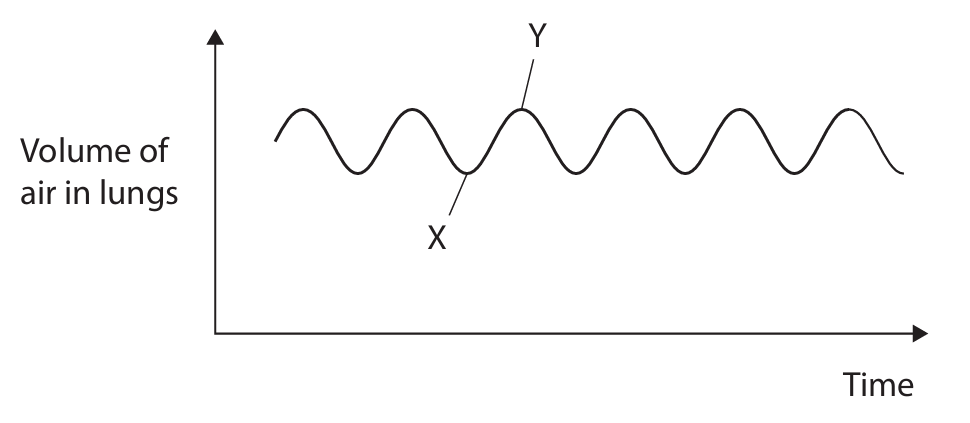
(ii) The graph shows how the volume of air in the lungs changes over time.

Explain the change in volume of air in the lungs from point X to point Y.
(b) People with a condition called diabetes often have very high blood sugar.
Urine from people with diabetes attracts ants but urine from people without diabetes does not attract ants.
Ants are insects that are attracted to glucose.
Explain why people with diabetes produce urine that can attract ants.
Most-appropriate topic codes (Edexcel IGCSE Biology):
• 2(g): Gas exchange — part (a)(ii)
• 2(i): Excretion — part (b)
• 2(h): Transport — part (b)
▶️ Answer/Explanation
(a)(i) B (carbon dioxide and water)
A is not the answer as lungs do not excrete urea
C is not the answer as lungs do not excrete urea
D is not the answer as lungs do not excrete urea
(a)(ii) An explanation that makes reference to three of the following points:
- volume increases / inhalation occurs / air drawn in (1)
- diaphragm / intercostal muscles contract (1)
- diaphragm moves down / flattens (1)
- ribcage expands (1)
- pressure decreases (inside thorax / lungs) (1)
Accept: internal intercostal muscles relax; ribs move up / move out; thorax / chest expands; pressure higher outside
(b) An explanation that makes reference to three of the following points:
- glucose in urine (1)
- glucose released by ultrafiltration (into filtrate) (1)
- glucose not reabsorbed / too much glucose (in filtrate) to reabsorb (1)
- in the proximal convoluted tubule / PCT / first convoluted tubule (1)
- by active transport (1)
Accept: glucose not absorbed into blood; some glucose not reabsorbed
Reject: if active transport pumping glucose into filtrate
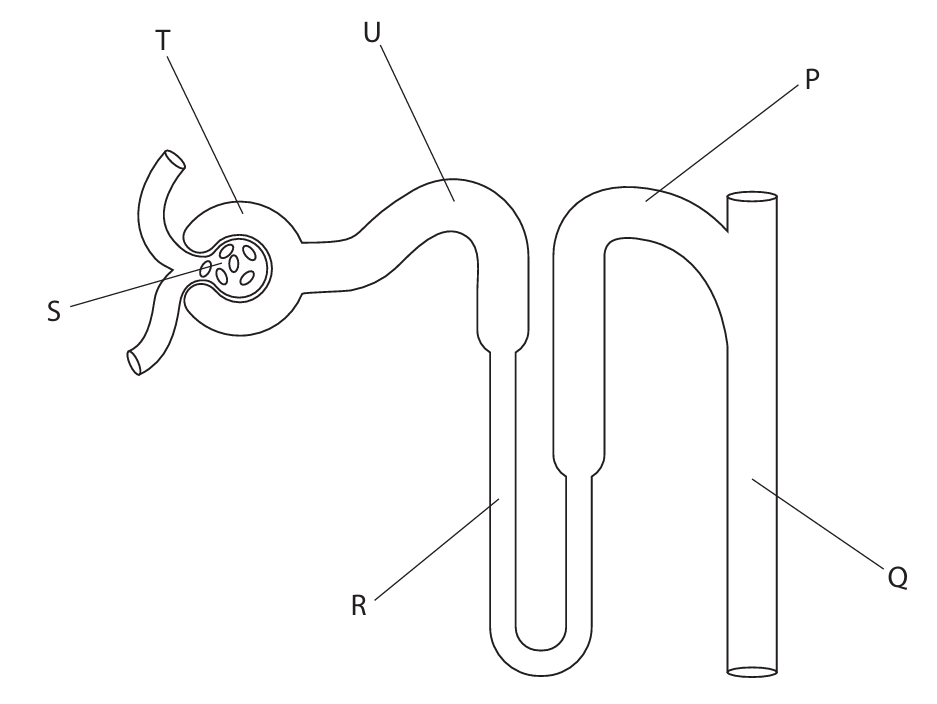
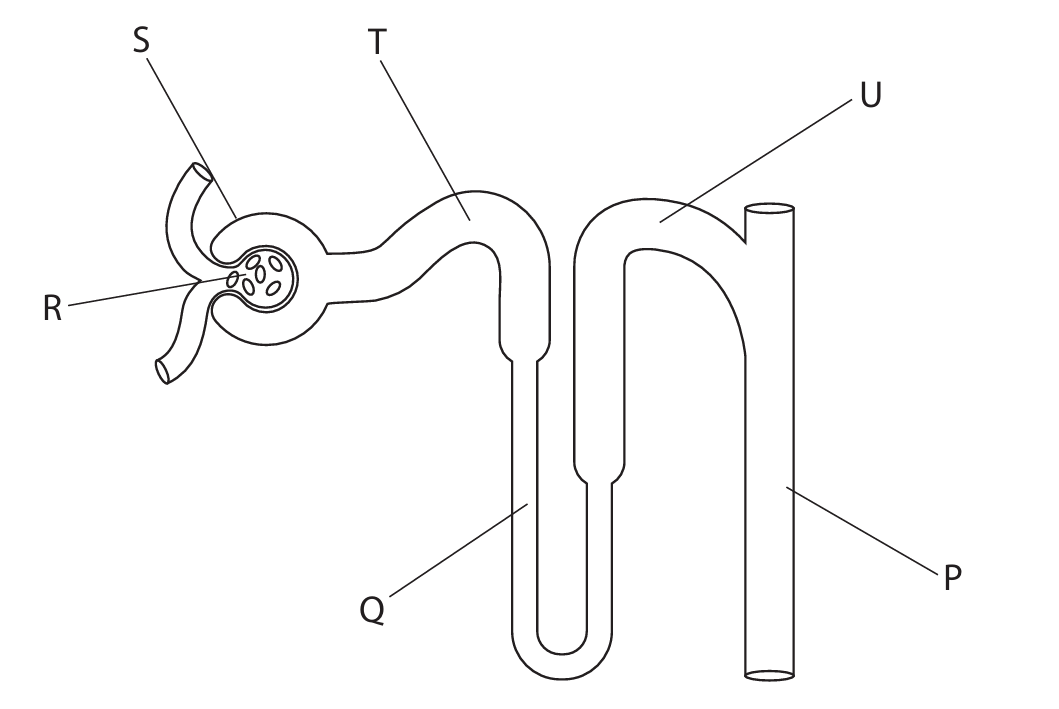
The diagram shows a nephron from a human kidney with some structures labelled.

(a) (i) Which of these is structure U?
A) Bowman’s capsule
B) collecting duct
C) loop of Henle
D) proximal convoluted tubule
(ii) Which process occurs between structure S and structure T?
A) ADH production
B) selective reabsorption
C) transpiration
D) ultrafiltration
(iii) Which structure is the collecting duct?
A) P
B) Q
C) S
D) T
(b) The table shows the concentrations of protein and glucose in blood plasma, in glomerular filtrate and in urine.
| Substance | Concentration in blood plasma (g/100 cm³) | Concentration in glomerular filtrate (g/100 cm³) | Concentration in urine (g/100 cm³) |
|---|---|---|---|
| protein | 8.0 | 0.0 | 0.0 |
| glucose | 0.1 | 0.1 | 0.0 |
(i) Calculate the mass of glucose in 5 dm³ of blood plasma.
\[\text{mass} = \text{…… grams}\]
(ii) Explain why there is no protein in the urine.
(iii) Explain why there is glucose in the glomerular filtrate but no glucose in the urine.
Most-appropriate topic codes (Edexcel IGCSE Biology):
• 3.24B: Structure of nephron — part (a)
• 3.25B: Ultrafiltration — part (a)(ii)
• 3.26B-3.28B: Selective reabsorption and osmoregulation — parts (b)(ii), (b)(iii)
• Appendix 3: Mathematical skills — part (b)(i)
▶️ Answer/Explanation
(a)(i) D (proximal convoluted tubule)
A is not correct as U is not the Bowman’s capsule
B is not correct as U is not the collecting duct
C is not correct as U is not the loop of Henle
(a)(ii) D (ultrafiltration)
A is not correct as it is not ADH production
B is not correct as it is not selective reabsorption
C is not correct as it is not transpiration
(a)(iii) B (Q)
A is not correct as P is the distal convoluted tubule
C is not correct as S is the glomerulus
D is not correct as T is the Bowman’s capsule
(b)(i) Calculation:
Concentration of glucose in blood plasma = 0.1 g/100 cm³
5 dm³ = 5000 cm³
Mass of glucose = (0.1 g/100 cm³) × 5000 cm³ = 5 grams
(b)(ii) An explanation that makes reference to two of the following:
• protein molecules too large / large mass / too heavy (1)
• cannot pass out of glomerulus / into Bowman’s capsule / into nephron / into tubules / through basement membrane (1)
• so stay in blood / not in filtrate (1)
(b)(iii) An explanation that makes reference to two of the following:
• glucose passes out of glomerulus / into Bowman’s capsule / into nephron / into tubules / through basement membrane (1)
• (then) reabsorbed / back into blood (1)
• by active transport (1)
• in proximal convoluted tubule / PCT (1)
Isotonic drinks are often used to rehydrate athletes after exercise.
(a) Explain why athletes lose water during exercise.
(b) Isotonic drinks contain salt and sugar solutions that are the same concentration as normal blood plasma.
A scientist uses this method to investigate how well an isotonic drink rehydrates athletes.
- three athletes exercise for one hour
- one athlete has no drink
- the second athlete drinks \(1000\ \text{cm}^3\) of pure water
- the third athlete drinks \(1000\ \text{cm}^3\) of isotonic drink
- the volume and colour of urine produced by each athlete are measured one hour later
The table shows the scientist’s results.
| Drink consumed by athlete | Volume of urine produced in \(\text{cm}^3\) | Colour of urine |
|---|---|---|
| no drink | 100 | very dark yellow |
| pure water | 750 | very light yellow |
| isotonic drink | 500 | yellow |
(i) Explain the results shown in the table for the athlete who consumed no drink.
(ii) Explain the differences in urine volume and urine colour produced by the athlete who consumed the isotonic drink and the athlete who consumed pure water.
Most-appropriate topic codes (Edexcel IGCSE Biology):
• 2(h): Transport (Humans) — part (a, b)
• 2(i): Excretion (Humans) — parts (b)(i), (b)(ii)
• 2(j): Co-ordination and response (Homeostasis) — parts (b)(i), (b)(ii)
▶️ Answer/Explanation
(a) An explanation that makes reference to two of the following:
- Exercise increases body temperature / eq (1)
- (More) sweat / eq (1)
- To cool down / lose heat / eq (1)
- By evaporation (of sweat) (1)
(b)(i) An explanation that makes reference to three of the following:
- Blood concentration increases / less water in blood / eq (1)
- (Detected by) hypothalamus / osmoreceptors / pituitary gland (1)
- Releases ADH (1)
- Collecting duct becomes more permeable / eq (1)
- Increased water reabsorption (so less urine produced) (1)
(b)(ii) An explanation that makes reference to two of the following:
- With (pure water) blood becomes more dilute / less concentrated / has high water concentration / eq (1)
- Less / no ADH released when drinking water / eq (1)
- Less water reabsorbed (by kidney) when water drunk / eq (1)
- Salt / sugar absorbed into blood (in intestine) (from isotonic drink) / eq (1)
Accept converse arguments for the isotonic drink (e.g., more ADH released, more water reabsorbed).
Mammals, such as humans, need to regulate their internal environment.
(a) What is the process that maintains a constant internal environment?
A) absorption
B) diffusion
C) egestion
D) homeostasis
(b) Table 1 shows the water input and output per day for a person in normal temperature conditions.
| Water input (intake) | Water output (losses) | ||
|---|---|---|---|
| source | volume in litres | source | volume in litres |
| drinking | 1.5 | urine | 1.5 |
| food | 0.5 | gas exchange | 0.4 |
| metabolism | 0.5 | sweating | 0.5 |
| faeces | 0.1 | ||
The water loss from gas exchange plus the loss from sweating are referred to as the insensible water loss. This water loss is called insensible because it cannot be measured directly.
(i) Calculate the percentage of the water loss that is classified as insensible.
(ii) This data comes from a person who has a mass of 70 kg. Assuming the same proportions, calculate the water input from food for a person who has a mass of 110 kg.
(iii) Water loss in faeces is usually relatively low. Illness such as food poisoning can produce symptoms including vomiting, diarrhoea and a high temperature. These symptoms can change water balance in the body. Explain how the symptoms of food poisoning can change water balance in the body.
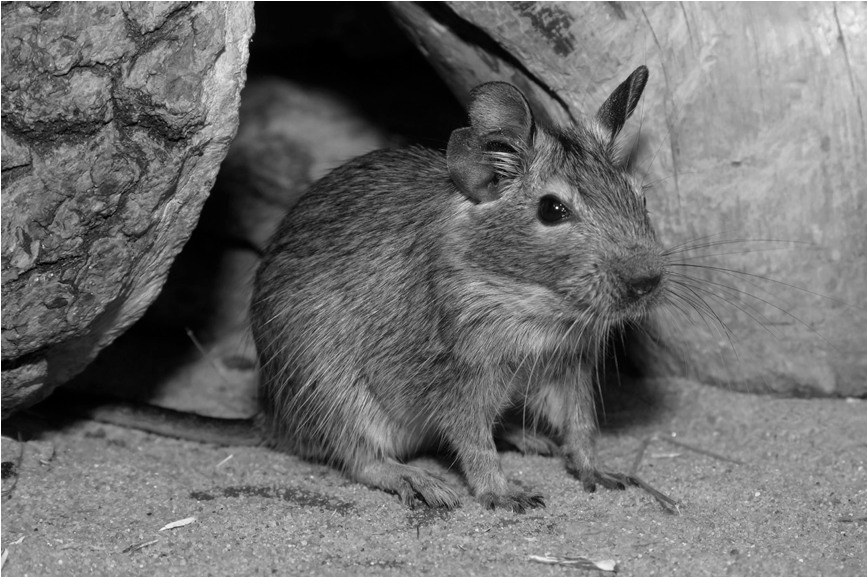
(c) The photograph shows a mammal called a degu.

A degu is a rodent that lives in a very dry environment in South America. The degu gets its water input by feeding on plants. The water intake of the degu changes during the winter and summer months.
Table 2 shows the body mass, water intake and urine concentration of the degu in the winter and in the summer. It also shows the total rainfall in winter and in summer.
| Measurement | Winter | Summer |
|---|---|---|
| total rainfall in mm | 245 | 12 |
| body mass in g | 119.7 | 124.8 |
| water intake in one day in cm\(^3\) | 40.4 | 10.3 |
| urine concentration in arbitrary units | 1123 | 3137 |
Comment on the differences in body mass, water intake and urine concentration in winter and summer. Use the data in the table and your own knowledge in your answer.
Most-appropriate topic codes (Edexcel IGCSE Biology):
• Appendix 3: Mathematical skills — parts (b)(i), (b)(ii)
• 2(i): Excretion, osmoregulation, ADH — parts (b)(iii), (c)
• 2(i): Kidney function and water balance — part (b)(iii)
• 4(a): Abiotic factors and organisms — part (c)
▶️ Answer/Explanation
(a) D (homeostasis)
A is not correct as it is not absorption
B is not correct as it is not diffusion
C is not correct as it is not egestion
(b)(i) Calculation method:
Insensible loss = gas exchange + sweating = \(0.4 + 0.5 = 0.9\) litres
Total water loss = urine + gas exchange + sweating + faeces = \(1.5 + 0.4 + 0.5 + 0.1 = 2.5\) litres
Percentage insensible loss = \(\frac{0.9}{2.5} \times 100 = 36\%\)
(b)(ii) Calculation method:
Water input from food for 70 kg person = 0.5 litres
Water input per kg = \(\frac{0.5}{70} = 0.007142857\) litres/kg
For 110 kg person: \(0.007142857 \times 110 = 0.7857\) litres ≈ \(0.79\) litres (accept \(0.77–0.80\))
(b)(iii) An explanation that makes reference to four of the following points:
1. more water lost / less water in body /eq (1)
2. water / liquid lost in vomiting / faeces / diarrhoea / eq (1)
3. (more) sweating / eq (1)
4. concentration of blood increases / water potential lowered / eq (1)
5. (more) ADH produced / secreted / eq (1)
6. by hypothalamus / pituitary (1)
7. permeability of collecting duct increases / eq (1)
8. more water reabsorbed / less water lost in urine / more concentrated urine / less urine / eq (1)
(c) An answer that makes reference to four of the following points:
In winter:
1. body mass lower / eq (1)
2. as fewer plants available / less food / hibernating / eq (1)
3. less sunlight / lower temp / less photosynthesis / eq (1)
4. (much) more water intake / eq (1)
5. as more rainfall/ eq (1)
6. less concentrated urine in winter / more urine / eq (1)
7. (so) more water lost in urine / eq (1)
8. Ref to data for urine 3× less concentrated in winter / water input 4 × higher in winter / eq (1)
In summer: converse of above points applies.
Read the passage below. Use the information in the passage and your own knowledge to answer the questions that follow.
Kidney transplants
The main role of the kidneys is to filter waste products from the blood. If the kidneys lose this ability, waste products can build up, which could lead to death. This loss of kidney function, known as kidney failure, is the most common reason for needing a kidney transplant.
It is possible to use a kidney machine to partially perform the functions of the kidney, using a blood filtering procedure known as dialysis. However, this can be inconvenient and it takes a long time. A kidney transplant is a better solution for kidney failure whenever possible.
A kidney transplant is suitable for people of all ages who need to have one, if they are fit enough for surgery. If a patient has an infection this will need to be cured before the transplant. The person who receives the transplant must agree to continue with the recommended treatments after the transplant. These treatments include taking medication known as immunosuppressant drugs.
People have two kidneys, but they can survive well with only one kidney. This means it is possible for a person to donate a kidney while they are alive. This is known as a living donation. People who want to be considered as a living donor are carefully tested to make sure they are a suitable donor and are fit for the operation needed to remove a kidney. Living donations are best from a close relative as this reduces the risk of the body rejecting the kidney. In the United Kingdom, the number of living donations in 2020 was 1040. In 2021 the number of living donations was 429.
Kidney donations are also possible from people who have recently died. This is known as deceased kidney donation. However, this type of kidney donation has a slightly lower chance of long-term success. In the United Kingdom, the number of deceased donations in 2020 was 2283. In 2021 the number of deceased donations was 1836.
People who need a kidney transplant, but do not have a suitable living donor, will have to wait until a suitable deceased donor kidney becomes available. In the United Kingdom, the average waiting time for a deceased donor kidney transplant is between 30 months and 36 months.
Kidney donors are particularly required from people of non-white ethnic origin, as kidney disease is more common in people of South Asian, African and Afro-Caribbean ethnic origin. However, there are not many donors from these communities.
When a person receives a kidney from a living donor, this is a carefully planned operation. If they are waiting for a deceased donor kidney, they will be contacted when a suitable kidney becomes available. The patient then has surgery to insert the new kidney and connect it to their blood vessels and bladder. The new kidney will be placed in the lower part of the abdomen. The patient’s own failed kidneys will usually be left in place.
(a) State two waste products that kidneys remove from the blood. (Line 1)
(b) Dialysis can be inconvenient and takes a long time. (Lines 6 and 7)
Suggest two other reasons why a kidney transplant is a better solution for kidney failure than dialysis.
(c) The patient receiving the transplant must take immunosuppressive drugs after the operation. These drugs reduce the action of the immune system. (Lines 12 and 13)
Describe how the immune system responds to disease.
(d) Explain why the chances of rejection are lower if the kidney comes from a close relative. (Lines 18 and 19)
(e) The number of donations changed between 2020 and 2021. (Lines 20 and 21 and lines 25 and 26)
(i) Calculate the difference between the percentage change in living donations from 2020 to 2021 and the percentage change in deceased donations from 2020 to 2021.
(ii) Suggest a reason why there are fewer transplant operations from living donors than from deceased donors.
(f) Suggest what is meant by a suitable kidney. (Line 37)
(g) Explain why kidney donors are particularly required from people of South Asian, African and Afro-Caribbean ethnic origin. (Lines 32 to 34)
Most-appropriate topic codes (Edexcel IGCSE Biology):
• 2(i): Excretion (specifically kidney function and transplants) — parts (b), (d), (f), (g)
• 2(h): Transport (specifically immune response) — part (c)
• Appendix 4: Mathematical skills — part (e)(i)
▶️ Answer/Explanation
(a)
1. Urea
2. Water (or Salts/Ions, e.g., Sodium, Potassium)
Explanation: The kidneys are vital excretory organs. They filter the blood to remove toxic nitrogenous waste, primarily urea, which is produced from the breakdown of excess proteins in the liver. They also play a crucial role in osmoregulation by removing excess water and mineral ions (like sodium and potassium) to maintain the water and salt balance in the body. Other waste products include creatinine and uric acid.
(b)
1. It is a permanent/long-term solution.
2. It allows for a better quality of life/normal diet/more independence.
Explanation: Unlike dialysis, which is a temporary and ongoing treatment requiring frequent sessions (often 3 times a week for several hours), a successful kidney transplant is a permanent fix. It restores near-normal kidney function, freeing the patient from the grueling schedule of dialysis appointments. Furthermore, transplant recipients have far fewer dietary restrictions (e.g., on fluid, potassium, and phosphate intake) compared to those on dialysis, leading to a significantly better and more independent quality of life.
(c)
The immune system responds to disease through a coordinated attack involving white blood cells. Phagocytes (a type of white blood cell) engulf and digest pathogens in a process called phagocytosis. Lymphocytes (another type of white blood cell) respond to specific antigens on pathogens by producing antibodies. These antibodies help to destroy the pathogens. Furthermore, memory cells are created, which provide long-term immunity by allowing a faster and stronger response if the same pathogen is encountered again.
Explanation: The immune system’s primary function is to defend the body against foreign invaders (pathogens). This defense is multi-layered. First, phagocytes act as the general infantry, patrolling the body and engulfing any foreign cells they find. Simultaneously, lymphocytes act as the special forces; they are highly specific. Each lymphocyte recognizes one unique antigen. When they find their match, they multiply and produce vast numbers of antibodies tailored to neutralize that specific pathogen. After the infection is cleared, some of these lymphocytes remain as “memory cells,” ensuring the body is prepared for a future attack by the same pathogen, which is the basis of vaccination.
(d)
Close relatives are genetically similar. This means they have similar proteins and antigens on their cells. Therefore, the recipient’s immune system is more likely to recognize the donated kidney as “self” rather than as foreign tissue, resulting in a lower immune response and a reduced chance of rejection.
Explanation: The immune system identifies cells based on their surface antigens. If these antigens are too different from the recipient’s own, the immune system will launch an attack, leading to organ rejection. Since close relatives share a significant amount of their genetic material, the antigens on the cells of a kidney from a close relative will be very similar to the recipient’s own antigens. This similarity tricks the immune system into accepting the new kidney, minimizing the aggressive immune response that requires heavy suppression by drugs.
(e)(i)
Difference = 39.17% (or a value between 39.15% and 39.2%)
Explanation and Calculation:
First, calculate the percentage change for living donations:
- Change = 1040 – 429 = 611
- Percentage Change = (611 / 1040) × 100 = 58.75% decrease
Next, calculate the percentage change for deceased donations:
- Change = 2283 – 1836 = 447
- Percentage Change = (447 / 2283) × 100 = 19.58% decrease
Finally, find the difference between these two percentage decreases:
- Difference = |58.75% – 19.58%| = 39.17%
This means the decrease in living donations was 39.17 percentage points greater than the decrease in deceased donations from 2020 to 2021.
(e)(ii)
There are more deceased donors available because two kidneys can be taken from each deceased person, and they do not need their kidneys anymore. In contrast, a living person can only donate one kidney and may be reluctant to undergo major surgery.
Explanation: The pool of potential deceased donors is inherently larger. When a person dies, both of their healthy kidneys can be donated. Furthermore, since the donor has passed away, there is no physical risk or long-term health consideration for them. Conversely, a living donor must undergo a significant surgical procedure, which carries inherent risks and a recovery period. The donor must also be healthy enough to live a full life with only one kidney. This combination of medical suitability and personal willingness significantly limits the number of living donors compared to the potential number of organs available from deceased donors.
(f)
A suitable kidney is one that is a close tissue match (and blood type match) to the recipient, is healthy, and is functioning properly, which reduces the risk of rejection.
Explanation: “Suitable” refers to compatibility. The most important factor is a match in tissue type (HLA antigens), which is more likely found in relatives or individuals of the same ethnic background. A matching blood type (e.g., A, B, O) is also essential. Beyond compatibility, the kidney itself must be healthy and free from disease to ensure it will function correctly once transplanted into the recipient.
(g)
People of South Asian, African, and Afro-Caribbean origin are more susceptible to kidney disease, so they more frequently need transplants. However, there are fewer donors from these communities. Furthermore, a better genetic match (and therefore less chance of rejection) is often found within the same ethnic group.
Explanation: There is a higher prevalence of conditions like hypertension and diabetes in these communities, which are leading causes of kidney failure. This creates a higher demand for transplants within these groups. Due to genetic similarities, the best tissue matches for a patient are most likely to come from a donor of the same ethnic background. Therefore, to meet the specific and high demand within these communities and to ensure the best possible outcomes (i.e., lower rejection rates), there is a particular need for donors from South Asian, African, and Afro-Caribbean ethnic origins.
Rabies is a dangerous disease caused by a virus.
(a) The rabies virus is a pathogen.
Which other groups of microorganisms include pathogens?
- A. bacteria and fungi only
- B. bacteria, fungi, and protoctists
- C. bacteria and protoctists only
- D. fungi and protoctists only
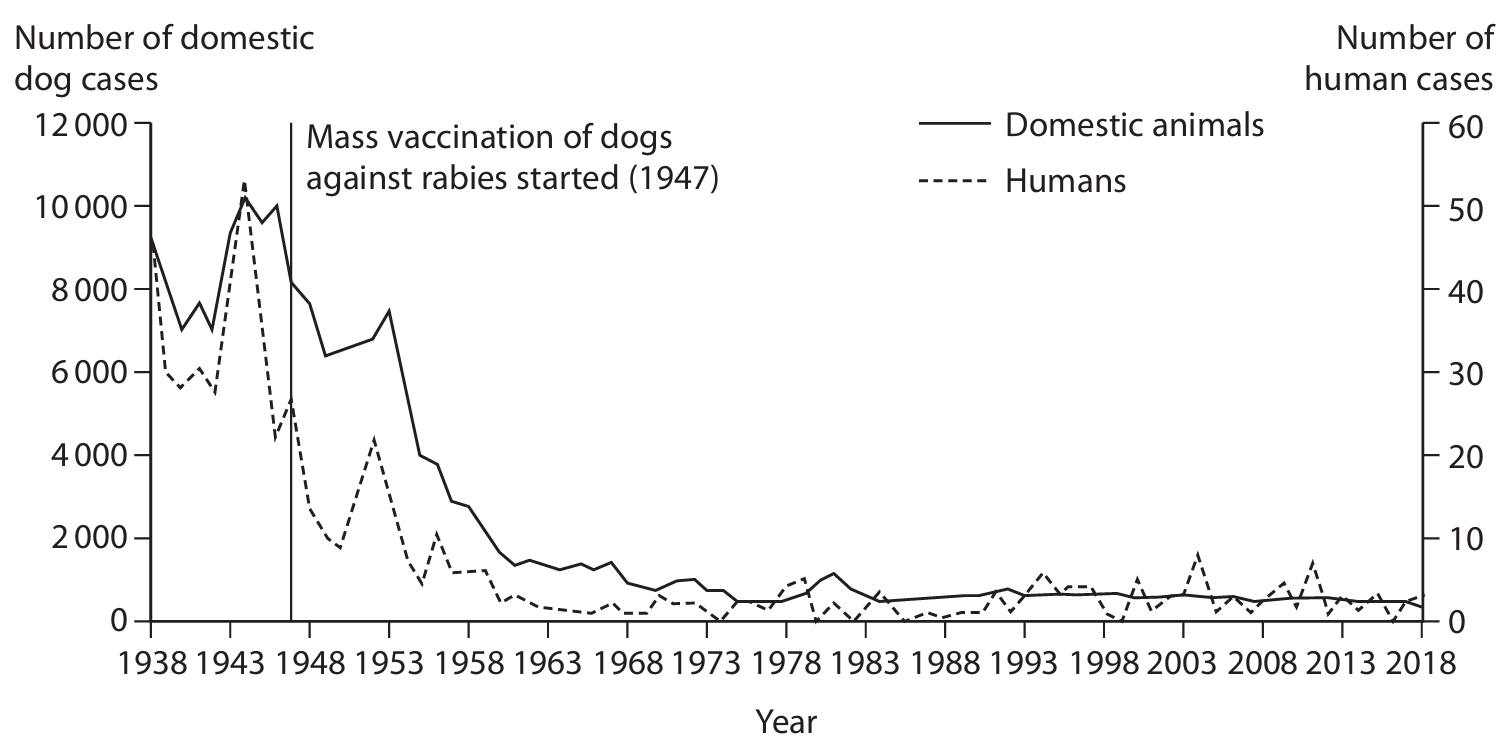
(b) Rabies is transmitted to humans when they are bitten by an infected animal. Domestic dogs are dogs kept by people as pets or as working animals. Dogs and some wild animals are known to transfer rabies to humans.
In the 1940s, a rabies vaccine for animals was introduced in the United States and most domestic dogs were vaccinated.
The graph shows the number of cases of human rabies and domestic dog rabies in the United States from 1938 to 2018.

(i) The immune system of dogs works in a similar way to the immune system of humans.
Explain how the rabies vaccine prevents dogs from developing rabies.
(ii) Discuss the effects of the use of the rabies vaccine to immunise domestic dogs on the number of cases of rabies in humans.
Use information from the graph to support your answer.
(iii) A new RNA vaccine is being developed to treat rabies.
RNA that codes for parts of the rabies virus protein coat are injected into the body. Cells then take up the RNA and produce the viral proteins.
Describe how the cells use the RNA to produce the viral proteins.
Most-appropriate topic codes (Edexcel IGCSE Biology):
• 2(h): Transport — part (b)(i)
• 2(i): Excretion — part (b)(ii)
• 3(b): Inheritance — part (b)(iii)
▶️ Answer/Explanation
(a) B (bacteria, fungi, and protoctists)
Explanation: Pathogens are disease-causing microorganisms. While viruses like rabies are one type, other major groups also contain pathogenic species. Bacteria include pathogens like those causing tuberculosis and cholera. Fungi include pathogens responsible for athlete’s foot and ringworm. Protoctists (protists) include pathogenic organisms like Plasmodium which causes malaria and Entamoeba which causes dysentery. Therefore, all three groups – bacteria, fungi, and protoctists – include pathogens.
(b)(i)
Explanation: The rabies vaccine contains weakened or inactivated forms of the rabies virus or its antigens. When this vaccine is administered to dogs, it stimulates their immune system without causing the actual disease. The immune system recognizes these viral antigens as foreign invaders and produces specific antibodies against them. Specialized white blood cells called lymphocytes are activated during this process. Some of these lymphocytes develop into memory cells that remain in the body long-term. If the vaccinated dog is later exposed to the actual rabies virus, these memory cells recognize the pathogen immediately and trigger a rapid, strong immune response. This secondary response produces antibodies much faster and in greater quantities, effectively neutralizing the virus before it can establish an infection and cause disease.
(b)(ii)
Explanation: The graph shows a clear correlation between the vaccination of domestic dogs and the decline in human rabies cases. Before mass vaccination began in 1947, both dog and human rabies cases were relatively high. After vaccination programs were implemented, we observe a continuous and dramatic decline in rabies cases in both dogs and humans throughout the 1950s and beyond. This strong correlation suggests that most human rabies cases were originating from infected domestic dogs rather than wild animals. The data shows that as dog vaccination reduced the reservoir of infection in the canine population, human cases consequently decreased. However, the graph also indicates that human rabies cases didn’t disappear completely but plateaued at low levels, suggesting that some transmission still occurs from wild animals or unvaccinated dogs. This demonstrates that while vaccinating domestic dogs significantly reduces human rabies risk, it doesn’t completely eliminate it due to other potential sources of infection.
(b)(iii)
Explanation: When the RNA vaccine is injected, cells take up the RNA molecules that code for parts of the rabies virus protein coat. Inside the cell, these RNA molecules move to the ribosomes, which are the cellular structures responsible for protein synthesis. The process of translation then occurs, where the genetic code on the RNA is read and converted into a sequence of amino acids. Transfer RNA (tRNA) molecules with specific anticodons bind to complementary codons on the mRNA, each bringing with it a specific amino acid. As the ribosome moves along the mRNA strand, it facilitates the formation of peptide bonds between adjacent amino acids, creating a growing polypeptide chain. This chain folds into the three-dimensional structure of the viral protein. These viral proteins then act as antigens, stimulating the immune system to produce antibodies against rabies without exposure to the actual virus, thus providing protection against future infection.
Read the passage below. Use the information in the passage and your own knowledge to answer the questions that follow.
Treating Kidney Disease
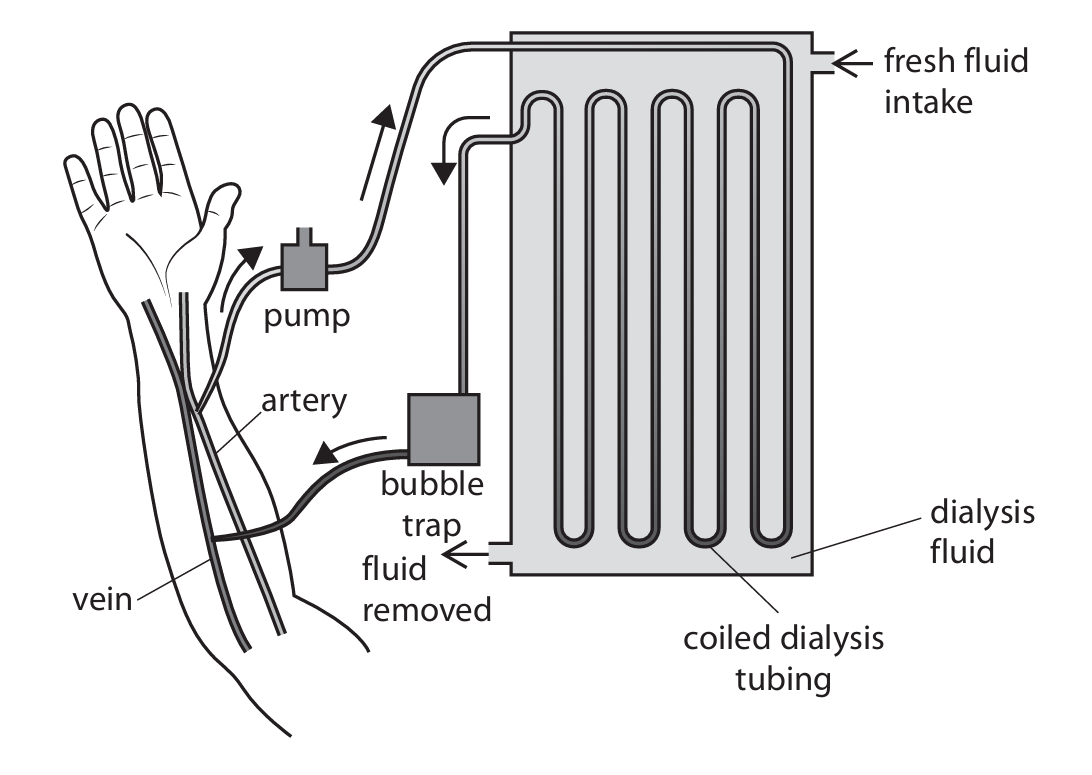
Chronic kidney disease affects approximately 12% of the world’s population and many people are unable to obtain treatment. One method of treating chronic kidney disease is by dialysis. The diagram shows how kidney dialysis is done.

During dialysis, blood is taken from an artery in the arm and is pumped through a dialyser. In the dialyser, the blood passes through a long, coiled dialysis tube made of a thin partially permeable membrane. The tube is surrounded by dialysis fluid. The dialysis fluid contains glucose and ions at concentrations normally found in blood plasma, but does not contain urea. The urea passes from the blood into the dialysis fluid. The temperature in the dialyser is kept at 40°C. After passing through the dialyser, the blood is returned to a vein in the arm. Kidney dialysis can take up to three hours and must be done three times a week.
Scientists have now designed a new bioartificial kidney. This artificial kidney is a combination of engineering and living cells. This artificial kidney has a haemofilter made from artificial membranes that filter the blood. The substances filtered out of the blood then pass through a device called a bioreactor. This bioreactor absorbs useful substances back into the blood. The bioreactor is made of living nephron cells that are grown from stem cells. These cells are separated from the patient’s blood by a silicon membrane to prevent the immune system rejecting them. Bioartificial kidneys are the same size as a human kidney and will be fitted inside the body to replace a kidney. The bioartificial kidney can react to changes in the body in the same way as a normal kidney.
(a) In 2021, the world’s population was 7 900 000 000.
Calculate the number of people in the world who have chronic kidney disease.
Give your answer in standard form.
(b) Urea is an excretory product that is released by the kidneys.
Give the name of an excretory product that is released by the lungs.
(c) Explain two ways that the dialyser is designed to increase the rate of removal of urea from the blood.
(d) (i) The haemofilter in the bioartificial kidney filters the blood.
Where does ultrafiltration occur in a nephron?
- A. Bowman’s capsule
- B. collecting duct
- C. distal convoluted tubule
- D. loop of Henle
(d) (ii) The cells in the bioreactor absorb glucose from the filtrate in a way that is similar to the cells in a nephron.
Describe how the nephron absorbs glucose back into the blood from the filtrate.
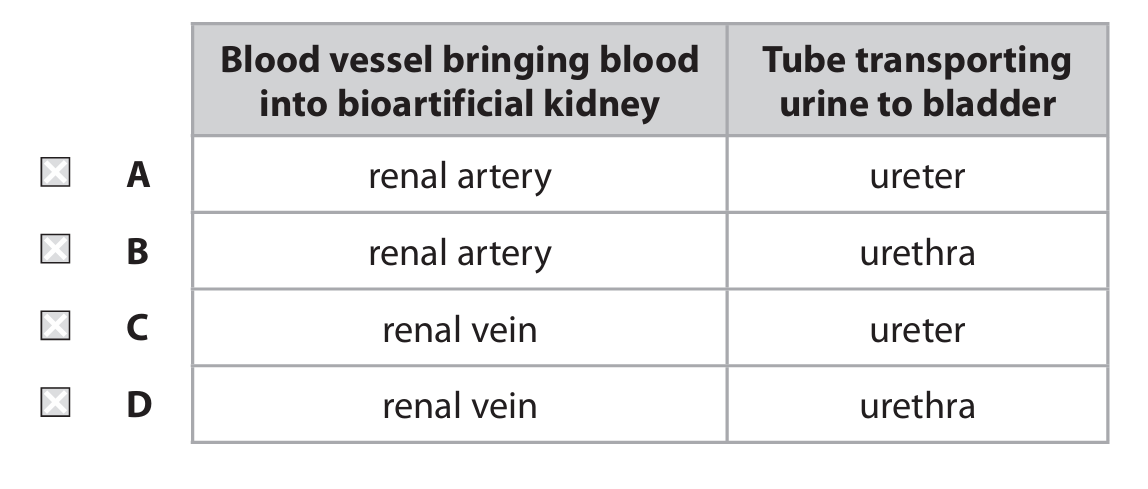
(d) (iii) The bioartificial kidney is connected to blood vessels and to the tube that transports urine to the bladder in the same way as the human kidney.
Which row of the table is correct?

(e) Explain how the pituitary gland and the nephron cells in the bioreactor will respond in a patient who is dehydrated.
Most-appropriate topic codes (Edexcel IGCSE Biology):
• 4: Mathematical skills — part (a)
• 2(h): Transport — part (d)(ii)
• 5(d): Cloning — related context in passage
▶️ Answer/Explanation
(a) Answer: 9.5 × 10⁸
Explanation: To calculate the number of people with chronic kidney disease, we multiply the world population by 12% (or 0.12).
Calculation: 7,900,000,000 × 0.12 = 948,000,000
In standard form, this is 9.48 × 10⁸, which rounds to 9.5 × 10⁸ when expressed to two significant figures as appropriate for the percentage given (12%).
(b) Answer: Carbon dioxide / CO2 or Water (vapour) / H2O
Explanation: The lungs are responsible for excreting carbon dioxide, which is a waste product of cellular respiration. Water vapor is also excreted through the lungs during exhalation, especially in humid environments.
(c) Answer: The dialyser is designed in two key ways to increase urea removal:
1. The temperature is maintained at 40°C, which is slightly higher than normal body temperature. This increases the kinetic energy of urea molecules, making them move faster and diffuse more rapidly across the partially permeable membrane.
2. The dialysis fluid contains no urea, creating a steep concentration gradient between the blood and the dialysis fluid. This maximizes the rate of diffusion of urea from the blood into the dialysis fluid, following the principle of moving from an area of high concentration to an area of low concentration.
Additional design features include the long, coiled tubing which provides a large surface area for diffusion, and the thin partially permeable membrane which shortens the diffusion pathway.
(d)(i) Answer: A. Bowman’s capsule
Explanation: Ultrafiltration occurs in the Bowman’s capsule of the nephron, where high pressure forces small molecules like water, glucose, urea, and salts out of the blood and into the nephron tubule, while larger molecules like proteins and blood cells remain in the blood.
(d)(ii) Answer: Glucose is reabsorbed from the filtrate in the nephron through selective reabsorption in the proximal convoluted tubule. This process involves active transport, which requires energy (ATP) to move glucose molecules against their concentration gradient from the tubule back into the blood capillaries. Specialized carrier proteins in the cells lining the tubule facilitate this transport.
(d)(iii) Answer: A (renal artery / ureter)
Explanation: The renal artery brings oxygenated blood into the kidney for filtration, while the ureter is the tube that transports urine from the kidney to the bladder. The urethra is not correct as it transports urine from the bladder out of the body, not from the kidney to the bladder.
(e) Answer: In a dehydrated patient:
1. Osmoreceptors in the hypothalamus detect the increased solute concentration (decreased water potential) in the blood.
2. The hypothalamus stimulates the pituitary gland to release more antidiuretic hormone (ADH).
3. ADH travels through the bloodstream to the kidneys (or bioreactor nephron cells).
4. ADH makes the walls of the collecting duct (or bioreactor membrane) more permeable to water.
5. More water is reabsorbed from the filtrate back into the blood, resulting in a smaller volume of more concentrated urine.
This negative feedback mechanism helps conserve water in the body and restore normal blood concentration.
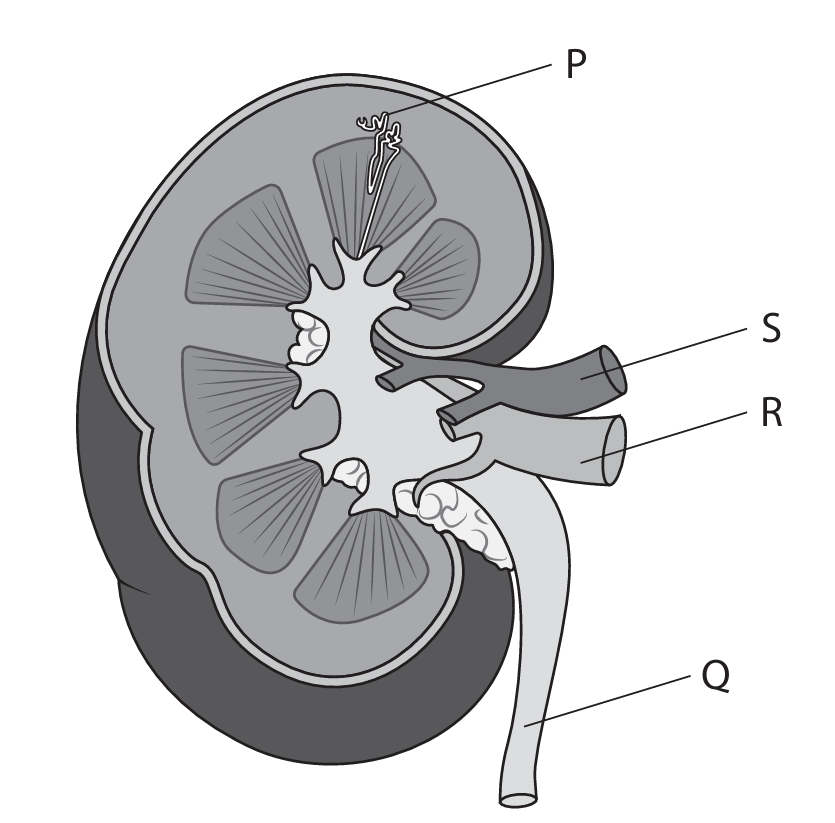
The diagram shows a section through a human kidney with some structures labelled.

(a) (i) Which structure is labelled P in the diagram?
A. bladder
B. nephron
C. ureter
D. urethra
(a) (ii) Which fluid is carried in tube S?
A. bile
B. blood
C. filtrate
D. urine
(a) (iii) Which tube is labelled Q in the diagram?
A. renal artery
B. renal vein
C. ureter
D. urethra
(b) Analysis of the composition of urine can be used in the diagnosis of problems with kidney function.
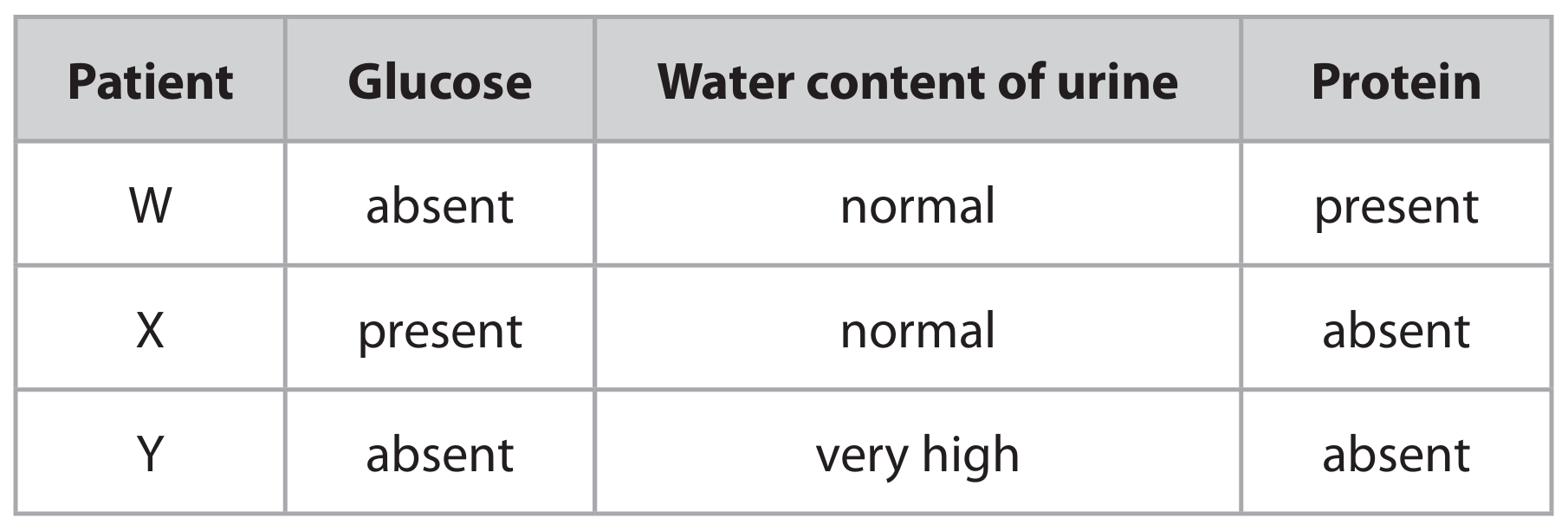
Urine samples are taken from three patients and the results are shown in the table.

(b) (i) Discuss which processes in the kidney may be affected to produce the results shown.
Include in your answer where in the nephron the processes occur.
(b) (ii) Describe how to test for glucose in a sample of urine.
Most-appropriate topic codes (Edexcel IGCSE Biology):
• 2(b): Cell structure — part (a)(i) (nephron as functional unit)
• 2(h): Transport — part (a)(ii) (blood vessels)
• 2(e): Nutrition — part (b)(ii) (testing for glucose)
• Appendix 6: Suggested practical investigations — part (b)(ii) (practical testing method)
▶️ Answer/Explanation
(a)(i) B (nephron)
Explanation: Structure P represents the functional unit of the kidney, which is the nephron.
(a)(ii) B (blood)
Explanation: Tube S carries blood to or from the kidney, specifically it is likely the renal artery or vein.
(a)(iii) C (ureter)
Explanation: Tube Q is the ureter, which transports urine from the kidney to the bladder.
(b)(i) An explanation that makes reference to:
• Patient W: Presence of protein indicates failure of ultrafiltration in the glomerulus/Bowman’s capsule.
• Patient X: Presence of glucose indicates failure of selective reabsorption in the proximal convoluted tubule.
• Patient Y: High water content indicates reduced water reabsorption in the collecting duct, possibly due to low ADH.
(b)(ii) A description that includes:
• Use Benedict’s reagent
• Heat in a water bath
• Observe colour change (green → red indicates glucose)
• Alternatively, use a glucose test strip and compare colour to a chart.
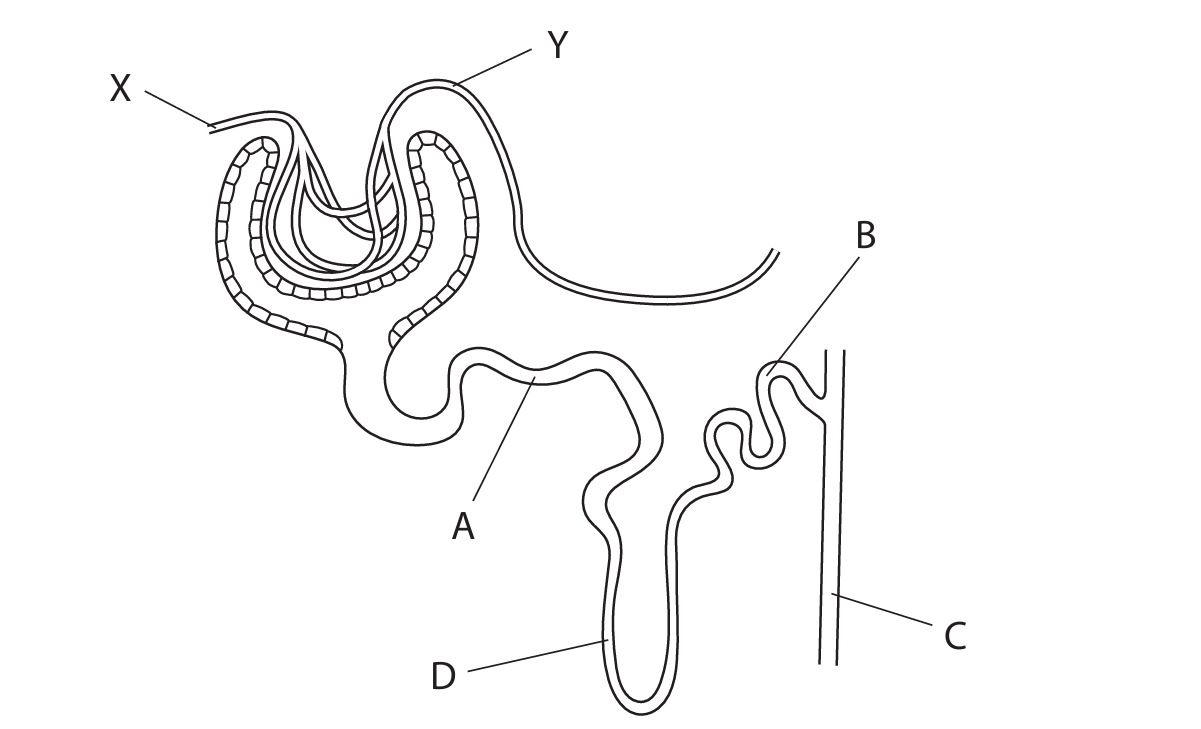
The diagram shows part of a human nephron.

(a) Which structure is the proximal convoluted tubule?
- A
- B
- C
- D
(b) The hollow space inside a blood vessel is called the lumen.
(i) The blood vessel labelled X has a lumen with a radius of 100 μm.
Use this formula to calculate the cross-sectional area, in mm², of the lumen of this blood vessel.
area of circle = π × (radius)²
π = 3.14
[1 mm = 1000 μm]
(ii) The lumen of blood vessel X is wider than the lumen of blood vessel Y.
Explain why this difference in the width of the lumen of the two blood vessels is important for kidney function.
(c) Protein is often found in the urine of people who have high blood pressure.
Describe how urine could be tested for protein.
Most-appropriate topic codes (Edexcel IGCSE Biology):
• 2(i): Urinary system and nephron structure — part (a), (b)(ii)
• Appendix 4: Mathematical skills — part (b)(i)
• 2.9 Practical: Investigate food samples for the presence of glucose, starch, protein and fat — part (c)
▶️ Answer/Explanation
(a) A
Explanation: The proximal convoluted tubule is the first part of the tubule system in the nephron, located right after the Bowman’s capsule. In a standard nephron diagram, it’s often the first coiled section labelled. Option B is the distal convoluted tubule (later section), C is the collecting duct (where urine is collected), and D is the loop of Henle (the U-shaped part that dips into the medulla).
(b)(i) 0.0314 mm²
Explanation: The radius is 100 μm. First, convert this to millimetres: 100 μm = 100/1000 mm = 0.1 mm. Now, use the area formula: Area = π × (radius)² = 3.14 × (0.1 mm)² = 3.14 × 0.01 mm² = 0.0314 mm².
(b)(ii)
Explanation: Blood vessel X is the afferent arteriole (wider lumen), and blood vessel Y is the efferent arteriole (narrower lumen). This size difference is crucial for creating high hydrostatic pressure within the glomerulus. The wider afferent arteriole allows a large volume of blood to flow into the glomerulus. The narrower efferent arteriole restricts the outflow of this blood. This “bottleneck” effect significantly increases the blood pressure inside the glomerular capillaries. This high pressure is the driving force for ultrafiltration, where water, ions, glucose, and urea are forced out of the blood and into the Bowman’s capsule to form the glomerular filtrate.
(c)
Explanation: The standard test for protein in urine is the Biuret test. Pour a small sample of urine into a test tube. Add an equal volume of sodium hydroxide (NaOH) solution and mix. Then, add a few drops of very dilute copper(II) sulfate (CuSO₄) solution. Do not shake. If protein is present, the solution will turn a lilac or purple colour. Alternatively, a urine test strip (dipstick) can be used. The strip is dipped into the urine sample, and after the specified time, the colour change on the protein pad is compared to a chart on the bottle.
(a) The diagram shows a nephron from a human kidney with some structures labelled.

(a) (i) Which structure is the Bowman’s capsule?
A) P
B) R
C) S
D) T
(ii) Which structure is the loop of Henle?
A) P
B) Q
C) S
D) U
(iii) Which structure is affected by ADH?
A) P
B) Q
C) S
D) T
(b) (i) Blood plasma contains much glucose, but urine normally does not. Explain what happens to glucose in the kidney.
(ii) Describe how a sample of urine could be tested for glucose.
(c) As a person sweats, they may become dehydrated.
Describe the changes in a person’s urine if they become dehydrated.
Most-appropriate topic codes (Edexcel IGCSE Biology):
• 2(b): Cell structure / Biological molecules — part (b)(ii) link to food tests
• 2(j): Co-ordination and response (Homeostasis) — part (a)(iii), (c) link
▶️ Answer/Explanation
(a)(i) C (S)
Explanation: The Bowman’s capsule (S) is the cup-like sac at the beginning of the nephron that surrounds the glomerulus and receives the filtrate.
(a)(ii) B (Q)
Explanation: The loop of Henle (Q) is a U-shaped tubule that descends into and ascends from the medulla of the kidney. It is crucial for creating a concentration gradient for water reabsorption.
(a)(iii) A (P)
Explanation: ADH (Antidiuretic Hormone) affects the collecting duct (P). ADH increases the permeability of the collecting duct walls to water, allowing more water to be reabsorbed back into the blood, producing more concentrated urine.
(b)(i) An explanation that makes reference to three of the following points:
• Glucose passes from the blood in the glomerulus (R) into the Bowman’s capsule / renal capsule (S) during ultrafiltration. (1)
• (All) glucose is (then) reabsorbed / absorbed back into the blood / eq. (1)
• This reabsorption occurs in the proximal convoluted tubule / PCT (T). (1)
• It is reabsorbed by active transport (which requires energy). (1)
Explanation: During ultrafiltration, small molecules like glucose enter the nephron. The body cannot afford to lose this valuable energy source, so 100% of filtered glucose is normally reclaimed from the filtrate in the proximal convoluted tubule via active transport against its concentration gradient.
(b)(ii) A description that makes reference to two of the following points:
• Add Benedict’s solution to the urine sample (and heat). (1)
• A positive result is indicated by a colour change to green / yellow / orange / brick-red. (1)
Alternative: Use a test strip (e.g., Clinistix) which changes colour (e.g., to brown) in the presence of glucose. (1 each)
Explanation: Benedict’s test is a standard biochemical test for reducing sugars like glucose. Heating with Benedict’s reagent causes a reduction reaction, producing a coloured precipitate of copper(I) oxide.
(c) A description that makes reference to two of the following points:
• Less urine is produced / lower volume. (1)
• The urine becomes more concentrated / contains less water / appears darker in colour. (1)
• (It may contain) a higher concentration of urea / other solutes. (1)
Explanation: Dehydration lowers the water potential of the blood. This is detected by osmoreceptors, leading to increased secretion of ADH. ADH causes more water to be reabsorbed from the collecting duct back into the blood, conserving water. This results in a smaller volume of more concentrated, darker yellow urine.
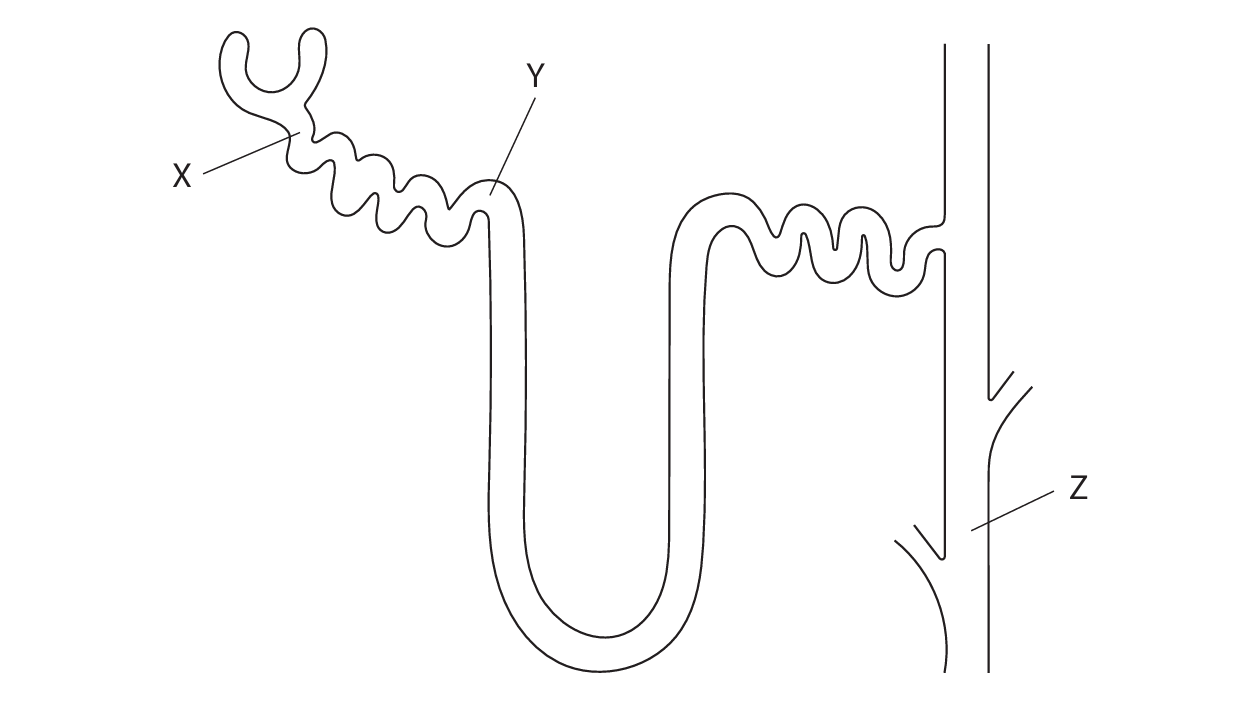
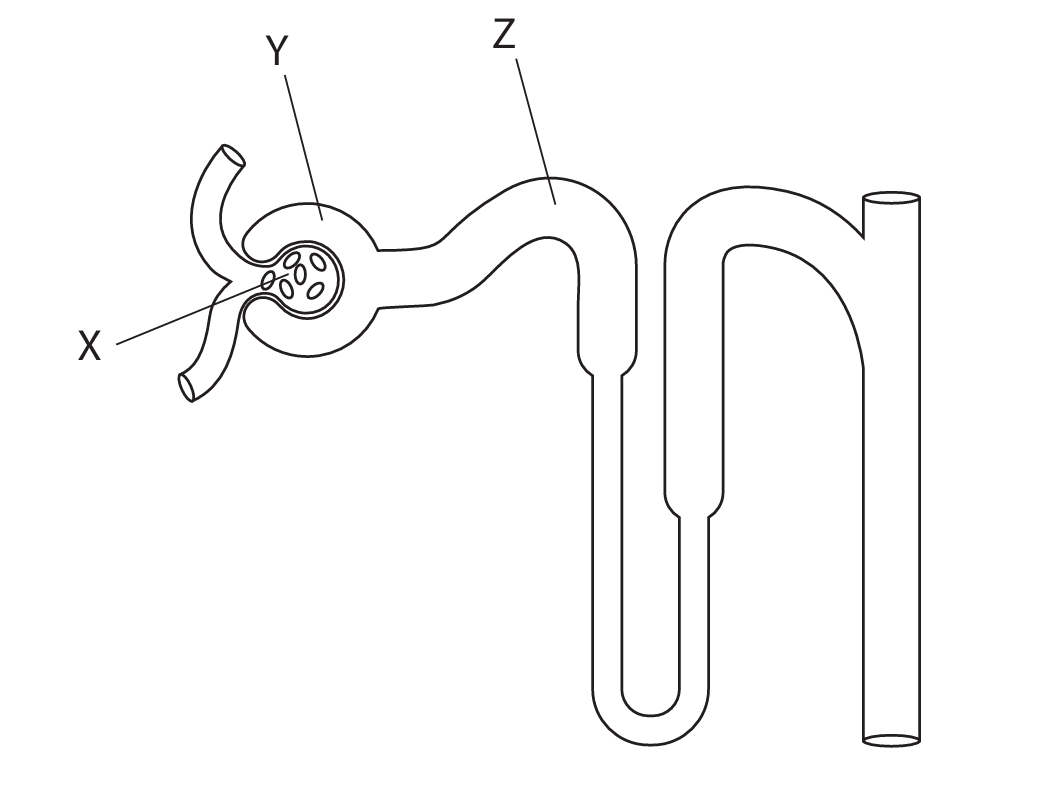
The diagram shows a nephron from a kidney with three different areas, X, Y and Z.

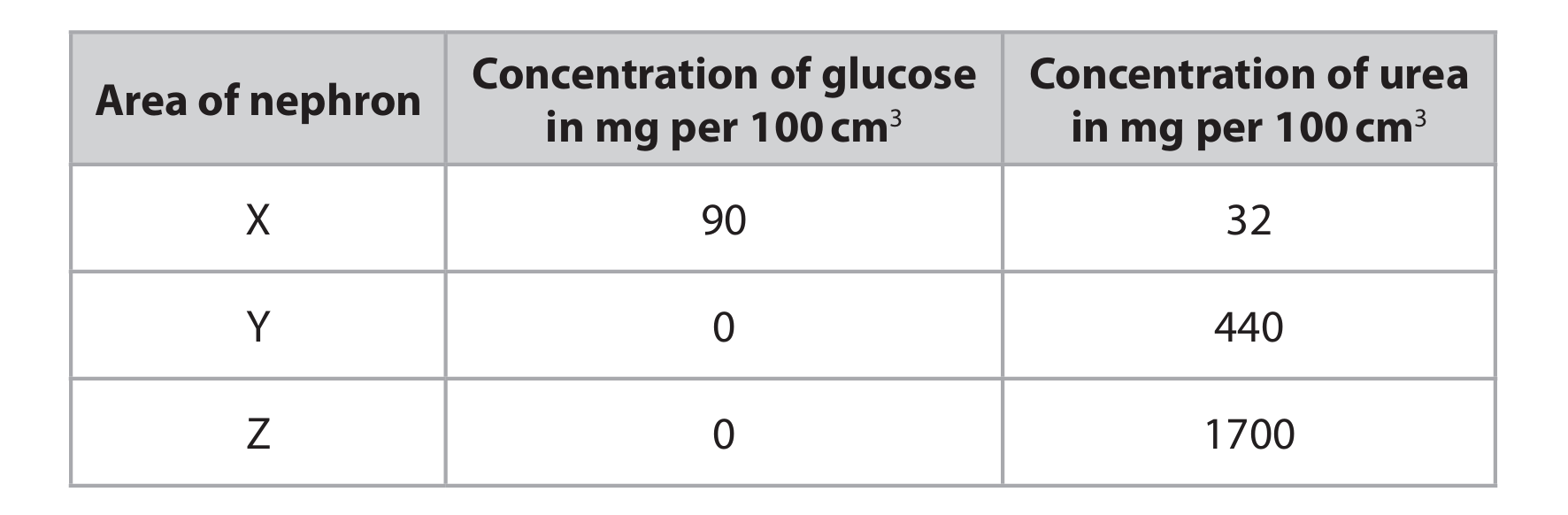
The table gives the concentration of glucose and urea at X, Y and Z.

(a) Explain the difference in concentration of glucose between X and Y.
(b) (i) Calculate how many times more concentrated the urea is in area Z compared to area Y.
Give your answer to two significant figures.
(ii) Explain the difference in urea concentration in the filtrate found in Y and Z.
(c) High blood pressure during pregnancy can result in the production of urine that contains protein.
(i) Describe how a sample of urine could be tested to see if it contains protein.
(ii) Protein is not normally found in urine. Suggest why high blood pressure could cause protein to be present in urine.
Most-appropriate topic codes (Edexcel IGCSE Biology):
• 2(i): Kidney function and osmoregulation — parts (a), (b)(ii), (c)(ii)
• Appendix 4: Mathematical skills — part (b)(i)
• 2(e): Nutrition (human diet and digestion) — part (c)(i)
▶️ Answer/Explanation
(a)
Explanation: The difference in glucose concentration between area X and area Y occurs due to selective reabsorption in the nephron. Area X represents the filtrate in the Bowman’s capsule, which contains glucose at the same concentration as blood plasma. As the filtrate moves through the proximal convoluted tubule (area Y), all glucose is actively reabsorbed back into the blood. This process requires energy (ATP) and specific carrier proteins to transport glucose against its concentration gradient. Since glucose is a valuable nutrient that the body needs to conserve, it is completely removed from the filtrate in the proximal convoluted tubule, resulting in zero glucose concentration in area Y.
(b)(i) 3.9
Explanation: To calculate how many times more concentrated urea is in area Z compared to area Y, we divide the concentration in Z by the concentration in Y: 1700 ÷ 440 = 3.8636… Rounded to two significant figures, this gives 3.9. This means urea is approximately 3.9 times more concentrated in area Z than in area Y.
(b)(ii)
Explanation: The difference in urea concentration between area Y and area Z occurs primarily due to water reabsorption. As the filtrate moves through the distal convoluted tubule and collecting duct (area Z), water is reabsorbed back into the blood by osmosis. This process is regulated by the hormone ADH (antidiuretic hormone). While urea itself is not actively reabsorbed in significant amounts, the removal of water from the filtrate causes the remaining substances, including urea, to become more concentrated. Therefore, the urea concentration increases significantly from area Y to area Z as water is removed from the filtrate.
(c)(i)
Explanation: To test for protein in urine, a common method is to use urine test strips (dipsticks) that contain a chemical indicator. The strip is dipped into the urine sample for a specified time, then removed. The test pad on the strip will change color if protein is present – typically turning green or blue depending on the concentration. Alternatively, a chemical test can be performed using reagents like Biuret solution, which would change from blue to purple in the presence of protein. The intensity of the color change corresponds to the amount of protein present in the sample.
(c)(ii)
Explanation: High blood pressure during pregnancy can cause protein to appear in urine because the increased pressure can damage the filtration barrier in the glomerulus. Normally, the glomerular filter prevents large molecules like proteins from passing through into the filtrate. However, when blood pressure is excessively high, it creates increased mechanical stress on the glomerular capillaries and basement membrane. This can cause the filtration pores to enlarge or the membrane to become more permeable, allowing proteins (which are large molecules) to be forced through into the filtrate. Once in the filtrate, proteins are too large to be reabsorbed effectively by the nephron, so they remain and are excreted in the urine.
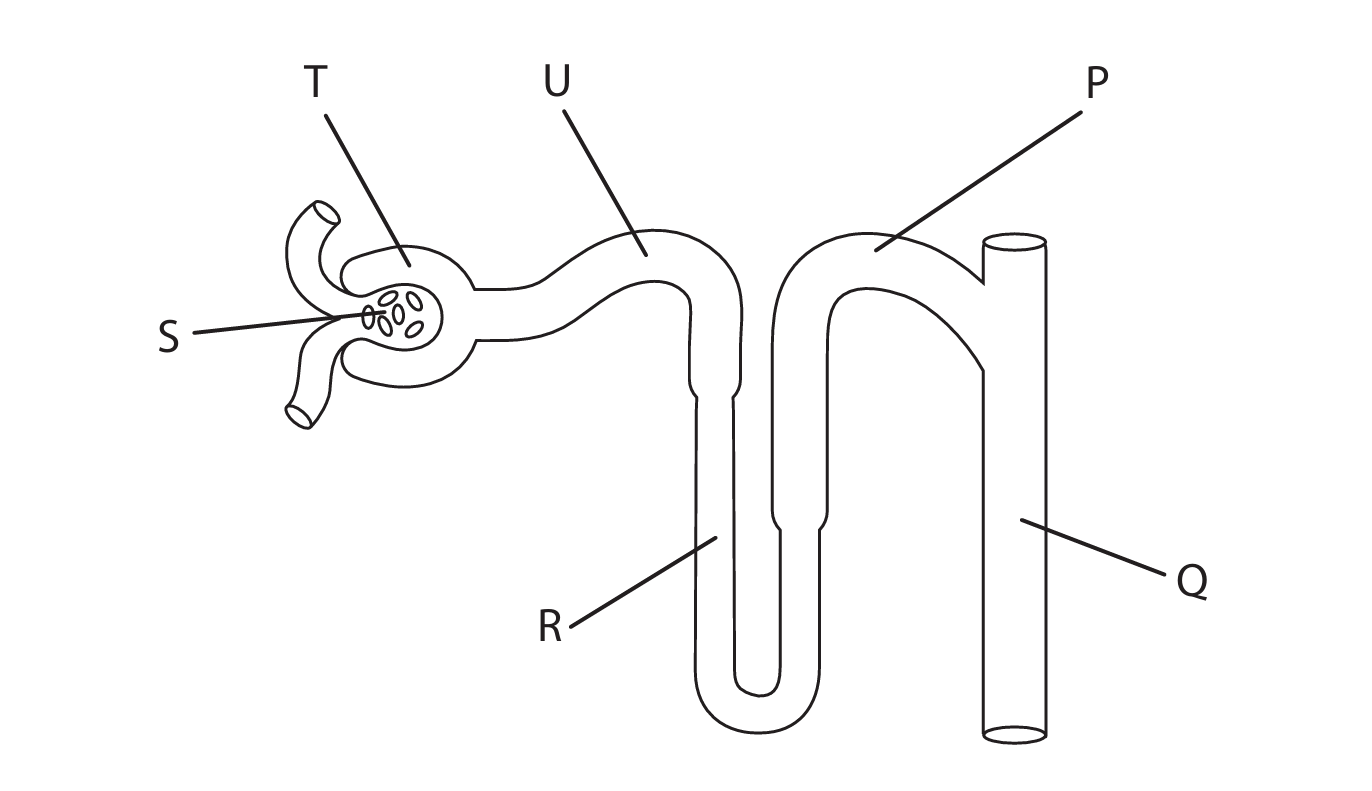
The diagram shows a nephron from a human kidney.

(a) (i) From which structure does ultrafiltration take place?
- A. P
- B. Q
- C. R
- D. S
(ii) From which structure is glucose reabsorbed?
- A. Q
- B. R
- C. S
- D. U
(iii) Which structure is the loop of Henle?
- A. P
- B. R
- C. S
- D. U
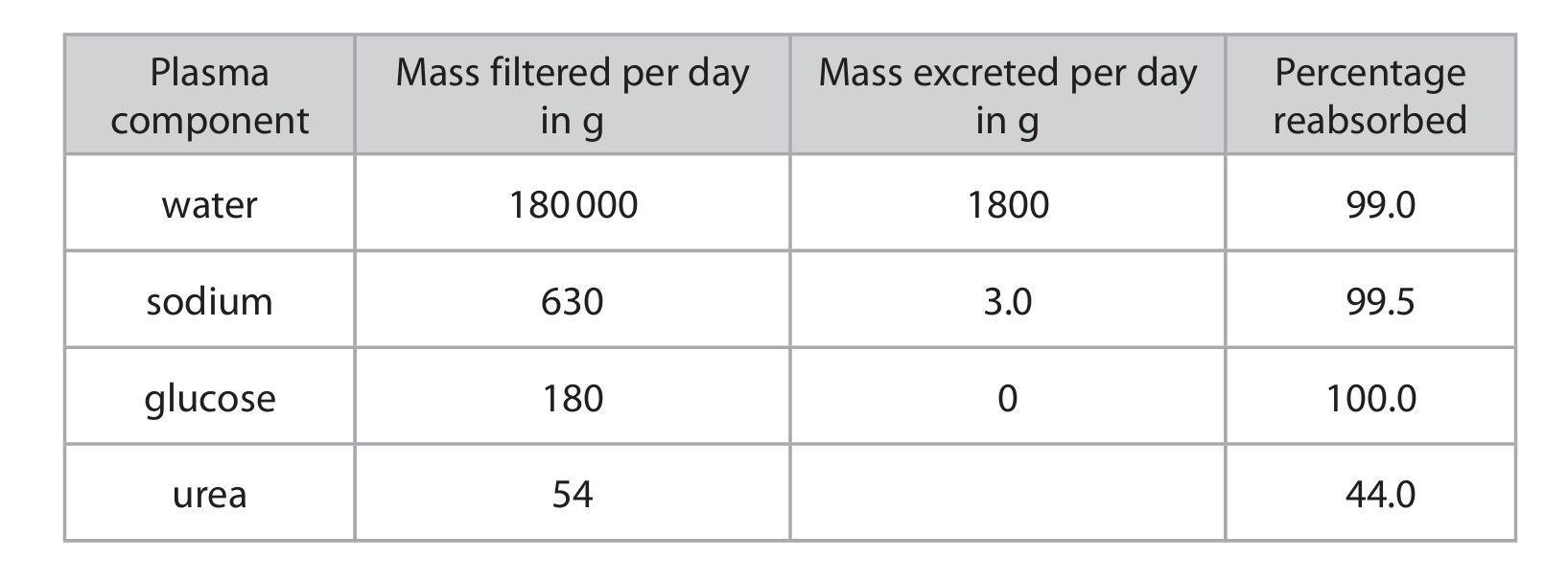
(b) The table gives the mean values of mass filtered per day and excreted per day for different plasma components that are filtered and reabsorbed in the nephron.

(i) State what is meant by plasma components.
(ii) Calculate the mean mass of urea excreted per day.
(iii) Explain why glucose is reabsorbed in the nephron.
(iv) The concentration of urine is determined by the volume of water present and the mass of dissolved substances.
A person eats a meal with a high protein and salt content and drinks a small volume of water.
Comment on how this may change the values in the table and the effect it will have on urine production.
Most-appropriate topic codes (Edexcel IGCSE Biology):
• 2(h): Transport — part (b)(iv) — linked to water balance and ADH
• 4(a): The organism in the environment — part (b)(iv) — linked to homeostasis and response to internal environment
▶️ Answer/Explanation
(a)(i) D S
Explanation: The structure labelled S is the glomerulus, which is a network of capillaries where ultrafiltration occurs. Blood pressure forces water, ions, and small molecules out of the blood and into the Bowman’s capsule, forming the filtrate.
(a)(ii) D U
Explanation: The structure labelled U is the proximal convoluted tubule (PCT). This is where the majority of glucose reabsorption takes place through active transport, returning this valuable nutrient to the bloodstream.
(a)(iii) B R
Explanation: The structure labelled R is the loop of Henle. This hairpin-shaped section of the nephron creates a concentration gradient in the kidney medulla, which is essential for water reabsorption and urine concentration.
(b)(i) Substances/chemicals present in solution/dissolved/carried in the liquid part of the blood/plasma.
Explanation: Plasma components refer to the various dissolved substances found in blood plasma, which is the liquid matrix of blood. These include water, electrolytes (like sodium), nutrients (like glucose), waste products (like urea), hormones, and proteins.
(b)(ii) 30.24 g
Explanation: The calculation is based on the percentage reabsorbed. If 44% of urea is reabsorbed, then 56% is excreted. The mass excreted per day is therefore 56% of the mass filtered: \( \frac{56}{100} \times 54 = 30.24 \) g.
(b)(iii) To prevent glucose from being excreted/lost from the body and to maintain blood glucose levels for respiration/energy release.
Explanation: Glucose is a vital energy source for cells. The body carefully regulates blood glucose levels. Reabsorbing glucose in the nephron ensures that this important fuel is not wasted in urine and is kept in the bloodstream to be used for cellular respiration, which releases the energy needed for all bodily functions.
(b)(iv)
Explanation: A high-protein, high-salt meal with low water intake would have several effects. The breakdown of excess protein increases urea production, leading to a higher concentration of urea in the plasma and subsequently more urea being filtered and excreted. The high salt intake increases the sodium concentration in the blood, lowering its water potential. This is detected by osmoreceptors, which signal the pituitary gland to release more Anti-Diuretic Hormone (ADH). ADH makes the walls of the collecting duct more permeable to water. As a result, more water is reabsorbed back into the blood from the filtrate, producing a smaller volume of more concentrated urine to conserve water and excrete the excess salts and urea.
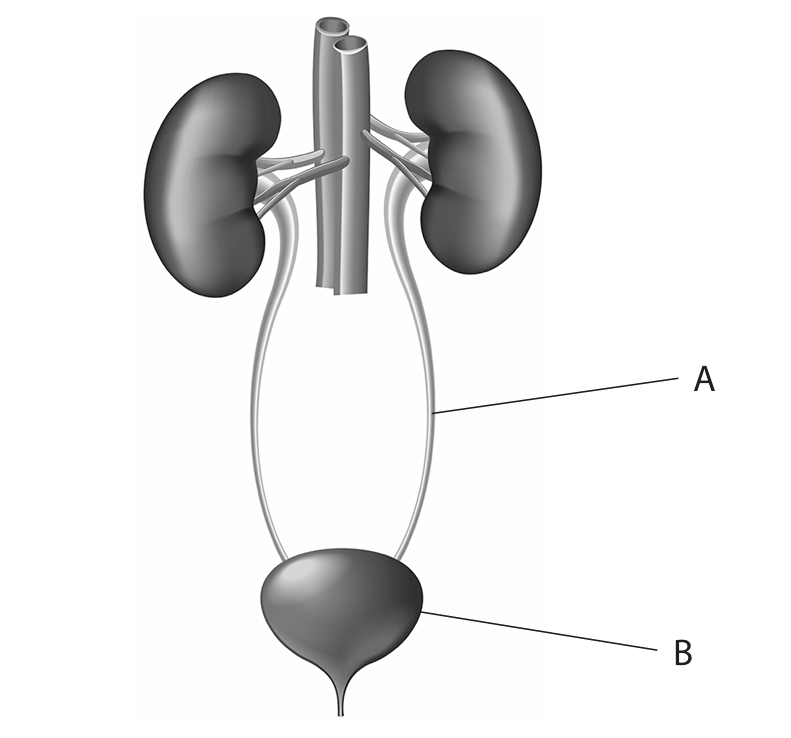
The diagram shows part of the human urinary system.

(a) Name the structures labelled A and B.
(b) The diagram shows a kidney nephron.

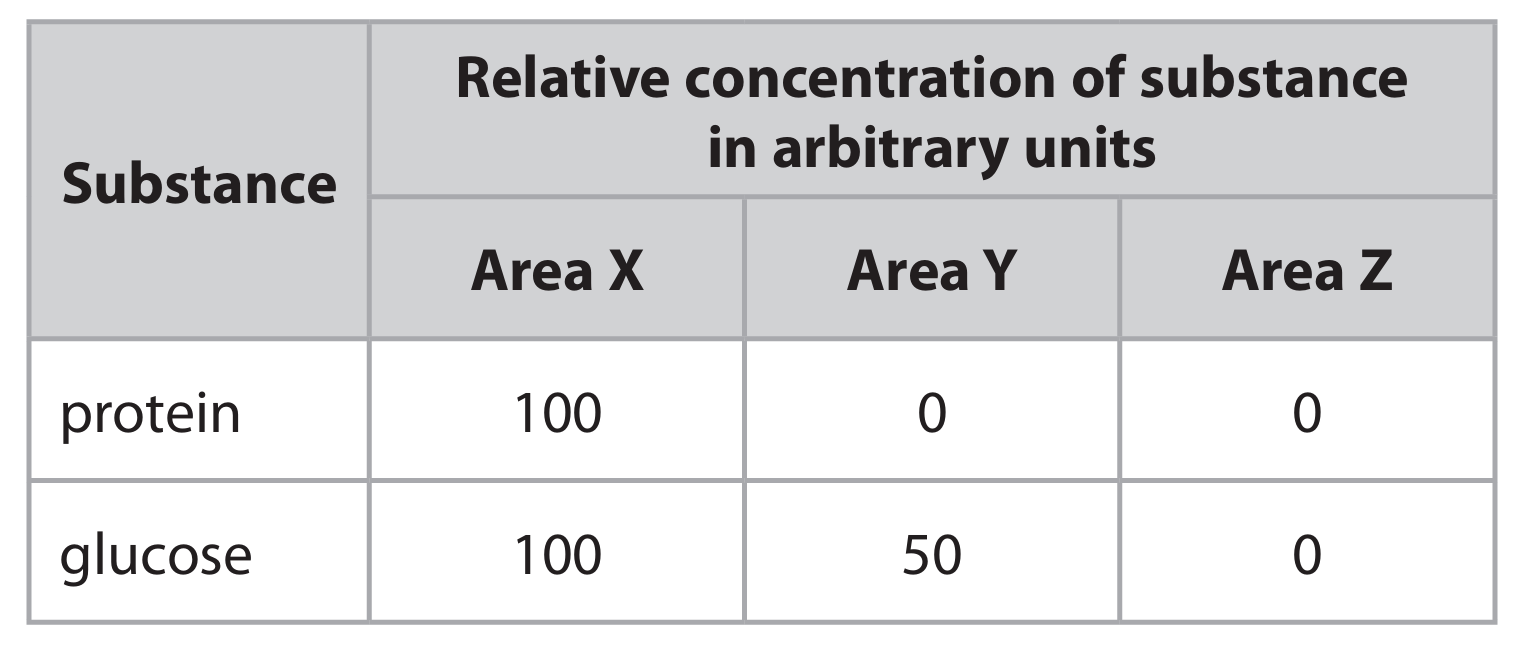
The table shows the relative concentrations of glucose and protein in the areas labelled X, Y and Z on the diagram.

(i) Explain the difference between the concentration of protein in area X and the concentration of protein in area Y.
(ii) Explain the difference between the concentration of glucose in area Y and the concentration of glucose in area Z.
(c) When the body becomes dehydrated, the concentration of urine increases.
Explain the changes that occur in the body that lead to the production of concentrated urine.
Most-appropriate topic codes (Edexcel IGCSE Biology):
• 2(i): Excretion (kidney structure) — part (b)
• 2(i): Ultrafiltration in the Bowman’s capsule — part (b)(i)
• 2(i): Selective reabsorption of glucose — part (b)(ii)
• 2(i): Role of ADH in osmoregulation — part (c)
▶️ Answer/Explanation
(a)
A: Ureter
B: Bladder
Explanation: The ureter is the tube that carries urine from the kidney to the bladder. The bladder is the muscular sac that stores urine until it is expelled from the body. These are two key components of the urinary system’s transport and storage pathway.
(b)(i)
Explanation: The concentration of protein drops from 100 arbitrary units in area X to 0 in area Y because proteins are too large to pass through the filtering system of the glomerulus. The glomerulus acts like a sieve, allowing small molecules like water, salts, glucose, and urea to pass into the Bowman’s capsule (area Y), while large protein molecules remain in the blood (area X). This is a crucial filtration mechanism that prevents essential proteins from being lost in urine.
(b)(ii)
Explanation: The concentration of glucose decreases from 50 arbitrary units in area Y to 0 in area Z because glucose is actively reabsorbed back into the blood from the filtrate. This process occurs primarily in the proximal convoluted tubule. The body recognizes glucose as a valuable energy source and uses active transport, which requires energy, to reclaim it from the filtrate and return it to the bloodstream, ensuring no glucose is wasted in the urine under normal conditions.
(c)
Explanation: When the body is dehydrated, the blood becomes more concentrated (has a lower water potential). This is detected by osmoreceptors in the hypothalamus of the brain. In response, the pituitary gland releases more Antidiuretic Hormone (ADH) into the bloodstream. ADH travels to the kidneys and makes the walls of the collecting ducts more permeable to water. As a result, more water is reabsorbed from the filtrate back into the blood by osmosis. This process conserves water for the body, produces a smaller volume of more concentrated urine, and helps to raise the blood water potential back towards normal levels.
Read the passage below. Use the information in the passage and your own knowledge to answer the questions that follow.
Human kidney disease
Human kidney disease can be caused by infection, high blood pressure, high blood cholesterol levels or diabetes. There is no cure for kidney disease, but suitable treatment can reduce the symptoms and stop the disease getting worse.
The treatments include lifestyle and dietary changes to help you remain as healthy as possible. Medicine is also used to control associated problems such as high blood pressure and high cholesterol levels. Other treatments need to be used for severe kidney disease when the kidneys stop working. These are dialysis and kidney transplants.
Dialysis carries out the excretory function of the kidney. There are two types of dialysis that are commonly used, haemodialysis and peritoneal dialysis. Haemodialysis involves diverting blood into an external machine, where it is filtered before being returned to the body. Peritoneal dialysis (PD) involves pumping dialysis fluid into a space inside your abdomen. Haemodialysis is usually done about three times a week, either at hospital or at home. PD is normally done at home, several times a day or overnight. If the patient does not have a kidney transplant, treatment with dialysis will usually need to continue for life.
PD became an alternative to haemodialysis a few years ago. Many patients prefer the independence PD lets them have. In PD, a soft tube called a catheter is used to fill the abdomen with a dialysis solution. The composition of the dialysis solution is water, glucose, and mineral ions at the same concentration that occurs naturally in the blood. The dialysis solution is prepared according to the individual patient’s needs to help regulate their ion balance and remove metabolic waste products.
Inside the abdominal cavity is a natural membrane lining called the peritoneum. This membrane is partially permeable. The waste products and extra fluid and salts pass from the blood through the peritoneum into the dialysis solution. They then leave the body when the dialysis solution is drained. This used solution is thrown away. The process of draining and filling is called an exchange and takes about 30 to 40 minutes. The period that the dialysis solution is in your abdomen is called the dwell time. A typical schedule is four exchanges a day, each separated by a dwell time of four hours.
One form of PD, continuous ambulatory peritoneal dialysis (CAPD), does not require a machine and it is possible to walk around with the dialysis solution in your abdomen. Another form of PD, automated peritoneal dialysis (APD), requires a machine to fill and drain your abdomen. Three to five exchanges are performed during the night while you sleep. The whole process lasts a total of nine hours each night.
(a) Give one way that a person can change their diet to lower their risk of developing high cholesterol (lines 4 to 6).
(b) One function of the kidney is excretion (line 9). Another function is osmoregulation. Explain what is meant by the term osmoregulation.
(c) Explain why a person with severe kidney disease will need dialysis to continue for life (lines 15 to 16).
(d) The peritoneum acts as a partially permeable membrane.
(i) Explain what is meant by a partially permeable membrane (lines 23 to 24).
(ii) Explain why the dialysis solution must contain purified water, glucose and mineral ions (lines 19 to 21).
(e) Explain how the composition of the dialysis solution results in the waste products being removed from the blood (lines 21 to 22).
(f) (i) A person is using APD. Calculate the percentage of their time used for treatment in a week (lines 33 to 35).
(ii) Suggest why people may prefer to use CAPD instead of haemodialysis (lines 31 to 32).
(g) Describe how the structures in a human kidney result in the correct substances being retained in the blood.
Most-appropriate topic codes (Edexcel IGCSE Biology):
• 2(i): Excretion — parts (b), (c), (g)
• 2(d): Movement of substances into and out of cells — part (d)(i)
• 2(i): Kidney structure and function — parts (d)(ii), (e), (g)
• Appendix 4: Mathematical skills — part (f)(i)
• 5(a): Use of biological resources / medical applications — part (f)(ii)
▶️ Answer/Explanation
(a) Eat a balanced diet / less lipid / fat / oil / eat fewer foods that contain cholesterol (e.g., eat fewer eggs).
Explanation: To lower the risk of high cholesterol, one should reduce the intake of foods high in saturated fats and cholesterol. This means eating less fatty or oily food and consuming fewer items like eggs, which are known to contain cholesterol. A balanced diet ensures that the body gets necessary nutrients without excess harmful fats.
(b) Osmoregulation is the control of water and salt levels (or water potential) in the body / body fluids / blood / plasma / cells.
Explanation: Osmoregulation is a vital process where the kidney maintains the balance of water and dissolved salts (like sodium and potassium) in the blood and body fluids. This ensures that cells function properly by preventing them from losing too much water (dehydration) or taking in too much water (swelling), thus maintaining a stable internal environment.
(c) The body produces urea / salt / toxins / water / metabolic waste that need to be excreted to prevent build-up / poisoning, and kidney disease is incurable / has no cure until a transplant.
Explanation: In severe kidney disease, the kidneys fail to remove waste products like urea and excess salts from the blood. These substances accumulate and can become toxic, leading to poisoning or other complications. Since the disease is chronic and incurable (unless a transplant is performed), dialysis must be continued for life to artificially perform the kidney’s excretory function and keep the patient alive.
(d)(i) A partially permeable membrane allows some molecules / substances / water to pass through but stops others / does not let large or charged molecules pass through.
Explanation: A partially permeable membrane, like the peritoneum, acts as a selective barrier. It lets small molecules such as water, ions, and waste products diffuse across it but blocks larger molecules like proteins and blood cells. This selective nature is crucial for processes like dialysis, where only specific substances need to be removed from the blood.
(d)(ii) The dialysis solution contains purified water, glucose, and mineral ions so that these substances do not leave the blood / can return to the blood by diffusion / down a concentration gradient, as cells require water for water balance, ions for water balance / metabolic reactions, and glucose for respiration / energy.
Explanation: The dialysis fluid is carefully formulated to match the natural concentration of useful substances in the blood. This prevents the loss of essential molecules like glucose and mineral ions from the blood into the dialysis fluid by diffusion. If the fluid lacked these, the body would lose vital nutrients. The presence of glucose provides energy, and the ions help maintain osmotic balance, ensuring that necessary substances are retained in the bloodstream.
(e) The dialysis fluid has a lower concentration of / no urea / salts / waste products compared to the blood, so these wastes diffuse from the blood (where they are in high concentration) into the dialysis solution (where they are in low concentration).
Explanation: Waste removal relies on the principle of diffusion. The dialysis fluid is designed with a low (or zero) concentration of waste products like urea and excess salts. Since blood from the patient has a high concentration of these wastes, they naturally move down their concentration gradient from the blood, across the partially permeable peritoneum, and into the dialysis fluid. This cleanses the blood of toxins.
(f)(i) \( 9 \div 24 = 0.375 \); \( 0.375 \times 100 = 37.5\% \) or \( 38\% \).
Explanation: For APD, the total treatment time per night is 9 hours. There are 24 hours in a day, so the fraction of a day used is \( \frac{9}{24} = 0.375 \). To find the percentage of time in a week, we multiply by 100: \( 0.375 \times 100 = 37.5\% \). This means roughly 37.5% of the patient’s week is dedicated to this treatment.
(f)(ii) You can walk around / can be done at home / when travelling / does not require a machine.
Explanation: CAPD offers greater independence and flexibility compared to haemodialysis. Patients are not tied to a machine for hours at a time and can perform exchanges themselves at home or even while traveling. This allows them to maintain a more normal daily routine and lifestyle.
(g)
- Proteins / large molecules cannot leave the glomerulus / cannot go into Bowman’s capsule.
- Reabsorption of glucose / amino acids into the blood by the proximal convoluted tubule.
- Water is reabsorbed from the collecting duct.
Explanation: The kidney has specialized structures to retain essential substances. In the glomerulus, the filter is fine enough to prevent large proteins from leaving the blood and entering the filtrate. In the proximal convoluted tubule, useful substances like glucose and amino acids are actively reabsorbed back into the blood. Finally, in the collecting duct, water is reabsorbed depending on the body’s hydration needs, concentrating the urine and conserving water. This coordinated process ensures that vital nutrients and water are kept in the bloodstream while wastes are excreted.
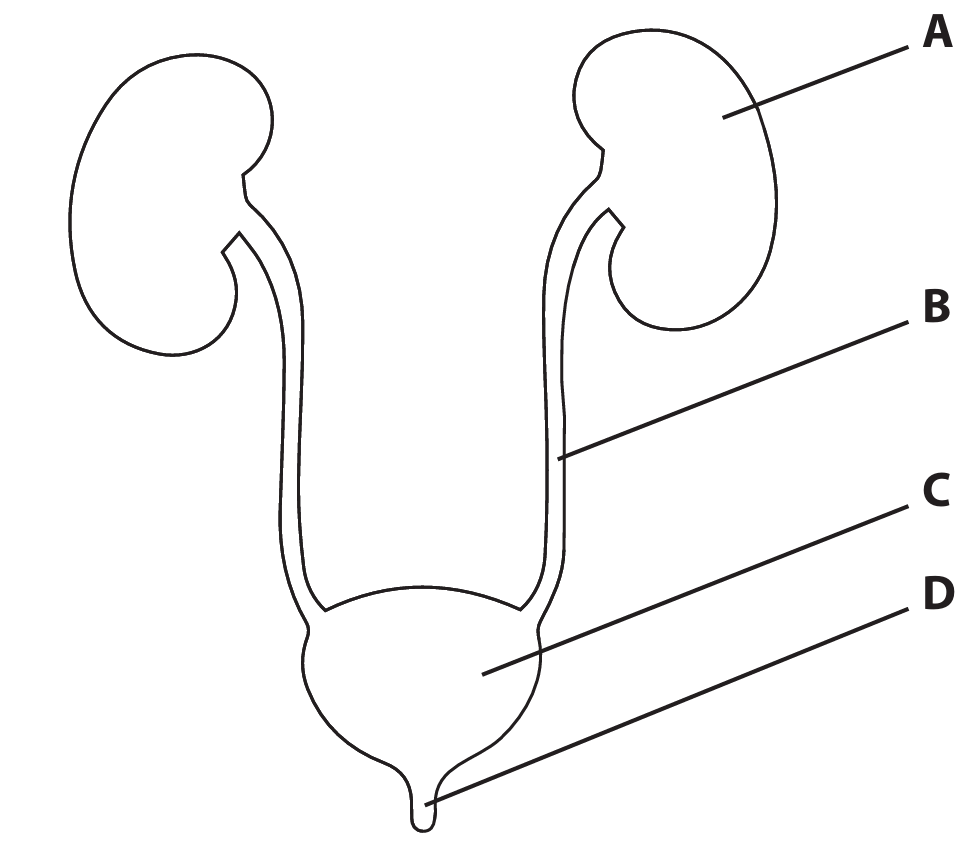
The urinary system is used in excretion.
The diagram shows the urinary system with parts labelled A, B, C and D.

(a) Which part of the urinary system contains nephrons?
- A
- B
- C
- D
(b) The urinary system produces urine.
Name a substance found in urine.
(c) A scientist uses this method to investigate the effect of drinking different liquids on urine production.
- drink 600 cm3 of water in the morning
- measure the volume of urine produced during the next two hours
- drink 600 cm3 of 0.8 % salt (NaCl) solution at the same time the following morning
- measure the volume of urine produced during the next two hours
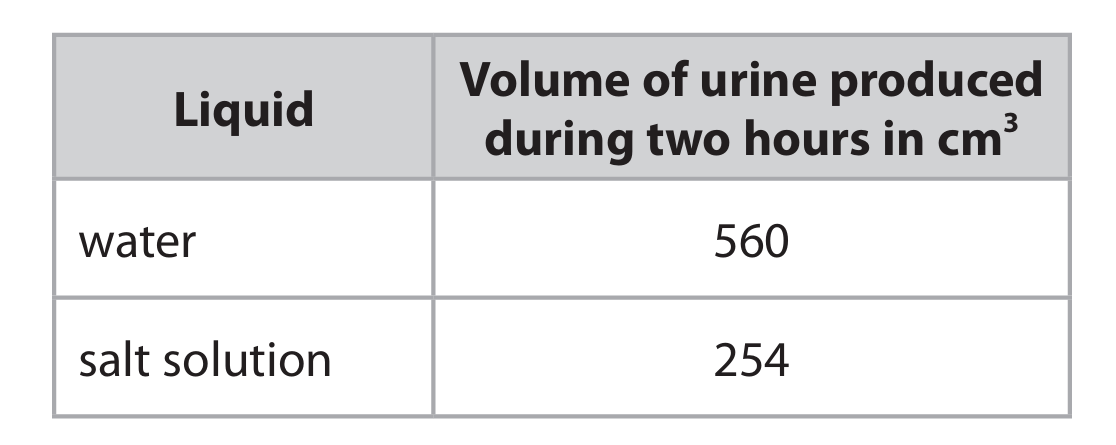
The table shows the scientist’s results.

(i) Explain the scientist’s results.
(ii) Give two other factors that affect the volume of urine produced.
Most-appropriate topic codes (Edexcel IGCSE Biology):
• 2(i)B: Kidney structure and function, osmoregulation — part (c)(i), (c)(ii)
▶️ Answer/Explanation
(a) A
Explanation: The nephrons are the functional units of the kidney responsible for filtration, reabsorption, and secretion. In the urinary system diagram, part A represents the kidney, which is where the nephrons are located. The other parts (B, C, D) represent other structures like the ureter, bladder, and urethra, which do not contain nephrons.
(b) Water / Urea / Ions (e.g., sodium, chloride) / Salts
Explanation: Urine is composed of water and various waste products that the body needs to excrete. The primary component is water, which acts as a solvent. Urea is a major nitrogenous waste product from the breakdown of proteins. Ions such as sodium, potassium, chloride, and other salts are also found in urine, their concentrations varying based on the body’s needs to maintain homeostasis.
(c)(i)
Explanation: The scientist’s results show that drinking water leads to a much higher volume of urine produced (560 cm³) compared to drinking a salt solution (254 cm³). This happens due to the body’s osmoregulatory mechanisms. When pure water is consumed, the blood becomes more dilute (its water potential increases). This change is detected by osmoreceptors in the hypothalamus. In response, the pituitary gland releases less Antidiuretic Hormone (ADH). With less ADH, the walls of the kidney’s collecting ducts become less permeable to water. This means less water is reabsorbed back into the blood, resulting in a larger volume of dilute urine being produced. Conversely, when a salt solution is consumed, the blood becomes more concentrated (its water potential decreases). This stimulates the release of more ADH. More ADH makes the collecting ducts more permeable, allowing more water to be reabsorbed into the blood to correct the concentration. Consequently, a smaller volume of more concentrated urine is produced.
(c)(ii)
1. Exercise / Physical activity
2. Temperature / Environmental temperature
Explanation: Several other factors can influence urine volume. Exercise or physical activity causes sweating, which loses water from the body. To conserve fluid, the body produces less urine. The temperature of the environment also plays a role; in hot conditions, the body sweats more to cool down, leading to reduced urine production. In cooler temperatures, less sweating occurs, potentially resulting in higher urine output. Other factors not listed here could include the volume of other fluids consumed before the test, certain foods in the diet (like those with high water or salt content), and the intake of diuretics such as caffeine.
The human kidney is an organ that is able to process excretory products from human metabolism.
(a) Concentration of urine is calculated using this formula.
concentration in milliseconds per dm\(^3\) = \(\frac{\text{amount of waste in milliseconds}}{\text{volume in dm}^3}\)
The amount of waste the kidneys produce per day is 600 milliseconds.
The maximum concentration that the human kidneys can produce is 1400 milliseconds per dm\(^3\).
Calculate the minimum volume of urine that must be produced each day.
Give your answer in cm\(^3\).
(b) Name another organ that carries out excretion in the human body.
(c) Explain the role of the nephron in osmoregulation.
Most-appropriate topic codes (Edexcel IGCSE Biology):
• 2(i)B: Kidney function and osmoregulation — parts (a), (c)
• Appendix 4: Mathematical skills — part (a)
• 2(g): Gas exchange (human lungs) — part (b)
▶️ Answer/Explanation
(a)
Answer: 430 cm³
Explanation:
To find the minimum volume of urine, we use the formula for concentration:
concentration = \(\frac{\text{amount of waste}}{\text{volume}}\)
We rearrange this formula to solve for volume:
volume = \(\frac{\text{amount of waste}}{\text{concentration}}\)
Substituting the given values:
volume = \(\frac{600 \text{ milliseconds}}{1400 \text{ milliseconds per dm}^3} = 0.42857 \text{ dm}^3\)
Now we convert from dm³ to cm³. Since 1 dm³ = 1000 cm³:
0.42857 dm³ × 1000 = 428.57 cm³
Rounding to a sensible figure gives us 430 cm³. This is the minimum volume of urine that must be produced each day to excrete all the waste without exceeding the kidney’s maximum concentrating ability.
(b)
Answer: Lungs
Explanation:
The lungs are another major excretory organ in the human body. While their primary function is gas exchange, they also excrete waste products. Specifically, they remove carbon dioxide (CO₂) from the bloodstream. Carbon dioxide is a waste product of cellular respiration. When we breathe out, we are excreting this CO₂ from our bodies. Water vapor is also excreted through the lungs during exhalation.
(c)
Explanation:
Osmoregulation is the process of maintaining the correct water and salt balance in the blood and body fluids. The nephron, the functional unit of the kidney, plays a central role in this process through a series of coordinated steps:
- Detection: Specialized cells called osmoreceptors, located in the hypothalamus of the brain, continuously monitor the water potential (concentration) of the blood. If the blood becomes too concentrated (for example, due to dehydration or eating salty food), the osmoreceptors detect this change.
- Hormonal Response: The hypothalamus stimulates the pituitary gland to release more Antidiuretic Hormone (ADH) into the bloodstream.
- Action on the Nephron: ADH travels in the blood to the kidneys. Its main target is the collecting duct of the nephron. ADH makes the walls of the collecting duct more permeable to water.
- Water Reabsorption: As the filtrate flows down the collecting duct, which passes through the hypertonic renal medulla, water moves out of the duct by osmosis, down its concentration gradient. This water is reabsorbed back into the surrounding blood capillaries.
- Result: Because more water is reabsorbed, a smaller volume of more concentrated urine is produced. This helps to conserve water in the body and increases the water content of the blood, diluting it back to its normal concentration.
- Negative Feedback: Once the blood concentration returns to normal, the osmoreceptors are no longer stimulated. This leads to a reduction in ADH secretion from the pituitary gland. The collecting ducts become less permeable again, and urine output returns to normal. This is an example of a negative feedback loop, which is crucial for maintaining homeostasis.
Conversely, if the blood is too dilute, less ADH is released, the collecting ducts remain impermeable, less water is reabsorbed, and a large volume of dilute urine is produced to remove excess water from the body.
Read the passage below. Use the information in the passage and your own knowledge to answer the questions that follow.
Haemolytic disease
Haemolysis is the term used to describe the bursting of red blood cells. Haemolytic disease occurs when the red blood cells burst in the body of a foetus in a pregnant woman. The bursting of the red blood cells affects the development of the foetus into a baby.
The red blood cells burst when certain antibodies from the mother pass across the placenta. The antibodies attach to protein molecules called antigens. These antigens are on the surface of the foetal red blood cells. The protein antigen is called the rhesus factor and is made using the genetic code found on the dominant allele, D, during the production of red blood cells in bone marrow.
Homozygous dominant and heterozygous individuals have cells with the antigen. These individuals have the rhesus positive blood group. Homozygous recessive individuals have cells that do not have the antigen. These individuals have the rhesus negative blood group.
During the birth of a rhesus positive baby, some red blood cells may leak into the circulatory system of the mother. This happens as the placenta pulls away from the wall of the uterus. A rhesus negative mother will make antibodies that destroy rhesus positive red blood cells. This is not a problem for the child that has just been born. However, if the mother becomes pregnant again with another rhesus positive foetus, the antibodies will harm the foetus.
Haemolytic disease can be avoided by treating a rhesus negative woman at risk of having a second rhesus positive child. This treatment involves the mother having an injection during and after pregnancy. The injection destroys rhesus positive cells in the mother’s blood before the cells can cause an immune response.
If the foetus is rhesus positive, the pregnancy is carefully monitored for signs of haemolytic disease. Monitoring includes regular ultrasound scans of the foetus and measuring the amount of antibody in the mother’s blood. A change in the concentration of the antibody in the mother’s blood, due to her secondary immune response, can lead to dangerous haemolysis. If a foetal blood test confirms a low number of red blood cells, a blood transfusion can be done in utero to replace the burst foetal red blood cells.
(a) Explain why bursting of red blood cells affects the development of a foetus.
(b) The dominant allele codes for the production of the protein that will act as an antigen.
Describe how the dominant allele leads to the production of RNA during protein synthesis.
(c) Give the reason why proteins cannot be made by red blood cells.
(d) Give one piece of evidence from the passage that shows that antibodies are smaller than red blood cells.
(e) (i) A mother who is homozygous recessive for the rhesus factor has a child with a father who is heterozygous.
Give the genotypes of the mother, the father, their gametes and the possible genotypes of the child.
(ii) Give the probability that the child will be rhesus positive.
(f) Explain why the concentration of the rhesus antibody in the mother’s blood rises quickly to harmful levels if she has a second child who is Rhesus positive.
(g) Suggest what is meant by the term in utero.
(h) A foetus with haemolytic disease can be given a blood transfusion.
Suggest the blood group of the source of the cells used for this transfusion.
Most-appropriate topic codes (Edexcel IGCSE Biology):
• 3(b): Inheritance — parts (b), (e)(i), (e)(ii)
• 2(b): Cell structure — part (c)
• 2(i): Excretion and osmoregulation — part (d)
• 2(j): Co-ordination and response — part (f)
• 3(a): Reproduction — part (g)
▶️ Answer/Explanation
(a) An explanation that makes reference to two of the following points:
- less oxygen (1)
- (less) respiration (1)
- (less) energy / ATP (1)
Detailed Explanation: When red blood cells burst (haemolysis), they can no longer carry oxygen effectively. Oxygen is essential for cellular respiration, which releases energy in the form of ATP. Reduced oxygen leads to less respiration and less ATP. Since foetal development requires energy for growth and cell division, a lack of ATP directly hinders development.
(b) An explanation that makes reference to three of the following points:
- DNA unzips / separates / one strand copied (1)
- complementary / base pairing (1)
- template (1)
- mRNA produced (1)
- transcription (1)
Detailed Explanation: Transcription occurs: the DNA double helix unwinds, one strand acts as a template, RNA nucleotides pair complementarily (A-U, C-G), and mRNA is formed by RNA polymerase, carrying the code from the gene to the ribosome.
(c) no nucleus / DNA / no ribosomes / mitochondria (1)
Detailed Explanation: Mature red blood cells lack a nucleus (and therefore DNA) and ribosomes. Protein synthesis requires DNA for instructions and ribosomes for assembly, so they cannot make proteins.
(d) can pass across placenta (1)
Detailed Explanation: The passage states antibodies pass across the placenta, a selective barrier. Red blood cells cannot cross normally, indicating antibodies are smaller.
(e)(i) An answer that makes reference to the following points:
- parent genotype dd x Dd (1)
- gamete d (and d) and D or d (1)
- offspring genotype Dd and dd (1)
Detailed Explanation: Mother: dd, Father: Dd. Gametes: mother → d only; father → D or d. Possible offspring: Dd (Rhesus positive) or dd (Rhesus negative).
(e)(ii) 50% / 0.5 / half / 50:50 (1)
Detailed Explanation: From a Punnett square, 2 out of 4 possibilities are Dd (Rhesus positive), so probability = ½ or 50%.
(f) An explanation that makes reference to three of the following points:
- memory cells (1)
- remain in mother’s blood (1)
- recognise / identify antigen / binds with antigen (1)
- more antibodies produced / produced faster / sooner (1)
- secondary immune response (1)
Detailed Explanation: During the first pregnancy, memory cells are made. In a second pregnancy, these memory cells quickly recognise the Rhesus antigen and trigger a rapid, strong secondary immune response, producing large amounts of antibody quickly.
(g) in the uterus / womb (1)
Detailed Explanation: “In utero” means inside the uterus (womb), referring to procedures performed on the foetus before birth.
(h) (adult) (rhesus) negative / negative (1)
Detailed Explanation: The foetus is being attacked by anti-Rhesus antibodies. Transfusing Rhesus negative blood (lacking the antigen) ensures the new cells are not attacked, allowing them to survive and carry oxygen.
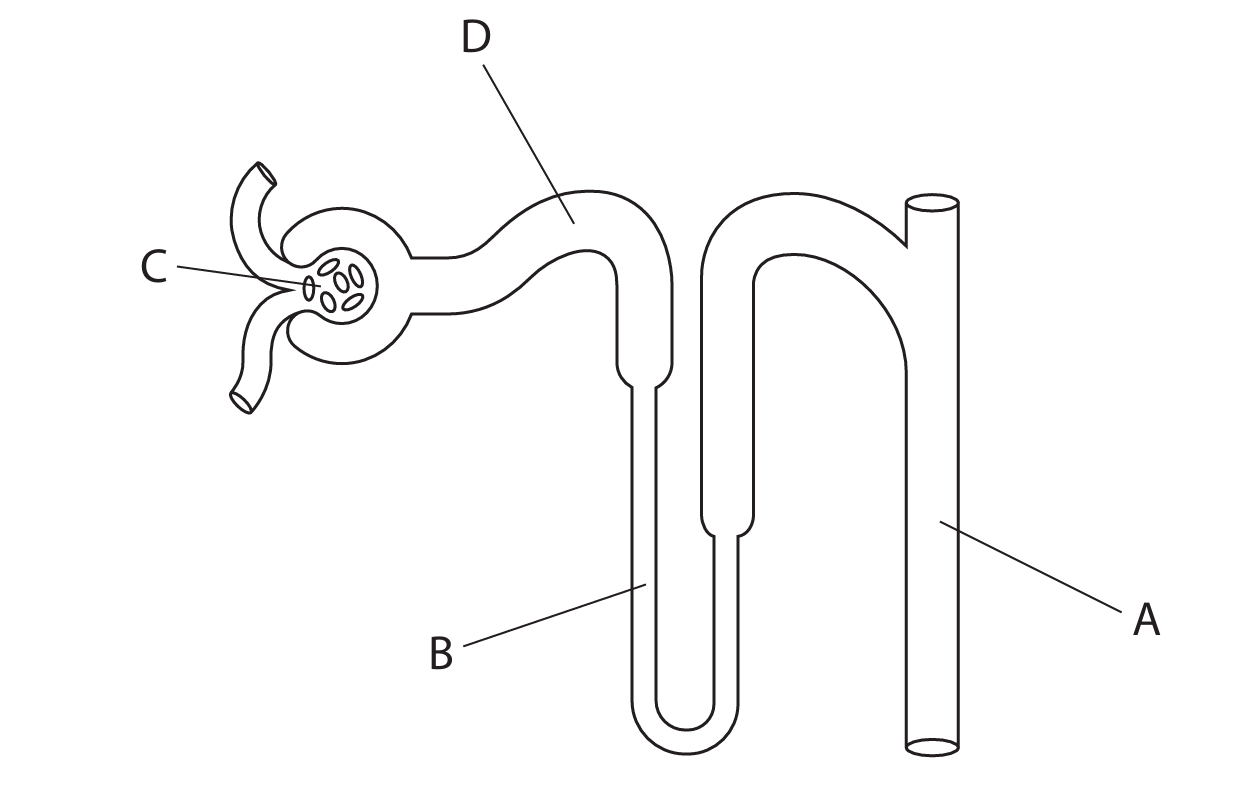
The diagram shows a nephron of a kidney, with some of the structures labelled.

(a) (i) From which structure are substances forced out of the blood by ultrafiltration?
- A
- B
- C
- D
(a) (ii) From which structure is glucose reabsorbed into the blood by selective reabsorption?
- A
- B
- C
- D
(b) (i) State the name for the control of blood concentration.
(b) (ii) Another function carried out by the kidney is excretion.
State what is meant by the term excretion.
(c) Diabetes insipidus is a medical condition in which the body is unable to produce ADH.
Explain how diabetes insipidus affects the control of blood concentration.
(d) Desmopressin is a drug used to reduce the symptoms of diabetes insipidus.
(d) (i) Suggest what effect the drug would have on the nephron.
(d) (ii) Describe the effects the drug would have on urine production.
Most-appropriate topic codes (Edexcel IGCSE Biology):
• 2(i) B: Kidney structure and function — parts (a)(i), (a)(ii), (b)(i), (c), (d)
• 2(i) B: Osmoregulation and ADH — parts (b)(i), (c), (d)
▶️ Answer/Explanation
(a)
(i) C
Explanation: Ultrafiltration occurs in the Bowman’s capsule, which is labelled as structure C in the diagram. This is where high pressure forces small molecules like water, glucose, and urea out of the blood and into the nephron, forming the filtrate.
(ii) D
Explanation: Glucose is reabsorbed back into the blood in the proximal convoluted tubule, labelled as structure D. This process, called selective reabsorption, uses active transport to move useful substances like glucose from the filtrate back into the bloodstream.
(b)
(i) Osmoregulation
Explanation: The control of blood concentration, specifically water and salt balance, is known as osmoregulation. The kidneys play a vital role in this by adjusting the amount of water reabsorbed or excreted.
(ii) The removal of metabolic waste / waste from chemical reactions (from cells).
Explanation: Excretion is the biological process of removing waste products generated by metabolic activities within cells. In the context of the kidney, this primarily involves removing urea, a toxic substance produced from the breakdown of excess proteins in the liver.
(c)
Explanation: ADH (Antidiuretic Hormone) makes the walls of the collecting duct more permeable to water. In diabetes insipidus, no ADH is produced. This means the collecting duct walls remain impermeable to water. As a result, very little water is reabsorbed from the filtrate back into the blood in this final part of the nephron. This leads to the production of a large volume of very dilute urine. Consequently, the body loses excessive amounts of water, which can lead to dehydration and an increase in blood concentration (it becomes more concentrated).
(d)
(i) It increases the permeability of the collecting duct (wall).
Explanation: Desmopressin acts as a substitute for ADH. Its primary effect on the nephron is to bind to the cells of the collecting duct and cause the insertion of aquaporins (water channels) into their walls. This makes the walls permeable to water, allowing water to be reabsorbed.
(ii) The drug would decrease the volume of urine produced and increase the concentration of the urine.
Explanation: By making the collecting duct permeable, Desmopressin allows more water to be reabsorbed from the filtrate back into the blood. This means less water remains in the tubule to be excreted, so the volume of urine decreases. As more water leaves the filtrate, the remaining substances (like urea) become more concentrated, resulting in the production of more concentrated urine.
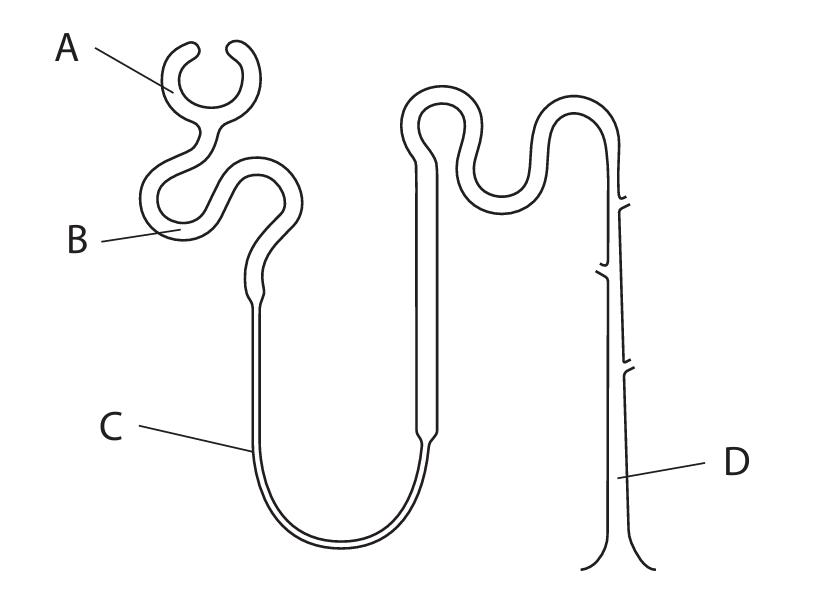
The kidney contains nephrons involved in osmoregulation and excretion.
The diagram shows a nephron.

(a) Which part is the Bowman’s capsule?
- A
- B
- C
- D
(b) The table gives the mass of three substances transported in part A and in part D for all kidney nephrons during one day.

(i) Explain the change in the mass of glucose from part A to part D.
(ii) Calculate the percentage reabsorption of water by kidney nephrons.
(iii) A substance containing nitrogen is broken down in the liver to produce urea.
Which substance is broken down to produce urea?
- A. fat
- B. glucose
- C. protein
- D. water
(c) A drug called MDMA increases the secretion of ADH.
Explain how this increase affects urine production.
Most-appropriate topic codes (Edexcel IGCSE Biology):
• 2(h): Transport — part (b)(i), (b)(ii)
• 2(b): Cell structure — part (a)
• 2(j): Co-ordination and response — part (c)
Read the passage below. Use the information in the passage and your own knowledge to answer the questions that follow.
Schistosomiasis
Schistosomiasis is an infection caused by a parasitic worm called a schistosome. The immature or larvae of the worm live in rivers and lakes in tropical parts of the world. The diagram shows the life cycle of the schistosome worm.

Some people in tropical parts of the world use water from these rivers and lakes for their daily lives. These people risk infection because the larvae burrow into their skin. The larvae are then transported to other parts of the body where they damage organs such as the kidneys, intestines, lungs and brain. The larvae develop into adult worms.
The adult worms lay eggs in the human body. Some of these eggs are destroyed by the immune system, but most eggs survive. These eggs can get into water if faeces or urine from infected people pass into rivers or lakes. In the water, the eggs develop into small larvae which grow inside freshwater snails. Larvae are released from the snails and infect any person they contact. These larvae develop into adult worms inside the human body.
Doctors diagnose schistosomiasis when they find eggs in the faeces or urine of infected people. Infected people also have blood cells in their urine and antibodies for the pathogen in their blood.
At present, the drug praziquantel is used to kill the worms. A dose of \(0.040\ \text{g}\) per kg of body mass is usually effective. With no treatment, affected organs can be permanently damaged, leading to death. It is estimated that 240 million people (in the world) have schistosomiasis. Every year \(8 \times 10^{-4}\) per cent of infected people die from the disease.
A vaccine is being developed using a plasmid. The plasmid has DNA inserted that makes a protein found on the body surface of the adult schistosome worm.
In one investigation, a vaccine made using the DNA plasmid was given to a group of infected people. The results showed a mean number of 21.53 worms per person in this group. In the control group, a mean number of 40.53 worms per person was found.
(a) Which process is affected if kidneys are damaged (line 8)?
A) digestion
B) mutation
C) ultrafiltration
D) vaccination
(b) Suggest three ways to reduce the risk of being infected by schistosomes.
(c) Name two different blood cells that would be found in the urine of infected people (line 17).
(d) An infected person has a body mass of \(120\ \text{kg}\). What dose of drugs would be effective for this person (lines 19 to 20)?
A) \(0.04\ \text{mg}\)
B) \(4.8\ \text{mg}\)
C) \(40\ \text{mg}\)
D) \(4800\ \text{mg}\)
(e) Using the estimated number of people in the world who have schistosomiasis (lines 21 to 22), calculate the number of people who die each year from schistosomiasis.
(f) Which of these is the correct description of a plasmid?
A) a circle of DNA
B) a circle of mRNA
C) a circle of protein
D) a circle of tRNA
(g) Explain how a vaccine could protect people from schistosomiasis (lines 24 to 25).
(h)(i) Suggest what is given to the control group (lines 27 to 29).
(ii) A scientist claims that the investigation proves the vaccine is effective against schistosomiasis (lines 27 to 29). Comment on this claim.
Most-appropriate topic codes (Edexcel IGCSE Biology):
• 2(i): Excretion — part (a) [Kidney function]
• 1(b): Variety of living organisms / Pathogens — context of parasitic infection
• 5(c): Genetic modification — part (f) [Plasmids as vectors]
• Mathematical Skills (Appendix 3): — parts (d), (e) [Calculations]
• Experimental Skills & Evaluation (Section 4): — part (h)(ii) [Evaluating an investigation]
▶️ Answer/Explanation
(a) C (ultrafiltration)
A is incorrect because digestion is not a process in the kidneys.
B is incorrect because mutation is not a process in the kidneys.
D is incorrect because vaccination is not a process in the kidneys.
(b) An answer that makes reference to three of the following points:
• treat drinking water / boil water (before drinking) / do not drink water / drink bottled water / eq (1)
• sanitation / no faeces in water / no urine in water / eq (1)
• remove snails / eq (1)
• vaccination (1)
Additional guidance: Allow “do not go in infected rivers or lakes / cover skin when in water / avoid contact with affected water / only wash in clean water”.
(c) An answer that makes reference to two of the following points:
• red blood cells / rbc (1)
• white blood cells / wbc (1)
• lymphocytes (1)
• phagocytes / macrophages (1)
(d) D (4800 mg)
Calculation: \(120\ \text{kg} \times 0.040\ \text{g/kg} = 4.8\ \text{g} = 4800\ \text{mg}\)
A is incorrect because it is the wrong value.
B is incorrect because it is the wrong value.
C is incorrect because it is the wrong value.
(e) \(1920\) people
Working:
• \(8 \times 10^{-4}\% = 0.0008\%\)
• \(0.0008\% \text{ of } 240,000,000 = 0.000008 \times 240,000,000 = 1920\)
Allow 1 mark for: \(19200000 / 1920000 / 192000 / 192200 / 192 / 19.2 / 1.92 / 0.192 / 0.0192\)
Award full marks for correct numerical answer without working.
(f) A (a circle of DNA)
B is incorrect because it is not RNA.
C is incorrect because it is not a protein.
D is incorrect because it is not RNA.
(g) An explanation that makes reference to three of the following points:
• antigen (1)
• memory cells / lymphocytes (1)
• (secondary) immune response (1)
• more antibodies / antibodies made sooner / faster / faster immune response / eq (1)
(h)(i) • (a treatment with) no plasmid / no protein / only water / saline / eq (1)
Allow placebo vaccine / a placebo / plasmid with no gene / plasmid with no DNA / different DNA.
(h)(ii) An answer that makes reference to three of the following points:
• reduced numbers / eq (1)
• by 19 or by 47% / about 50% (1)
• schistosomes / worms, still present in body (1)
• no idea of group size / needs to be repeated (1)
• no idea of age / sex / health (1)
Additional Guidance:
Allow “reduces numbers of worms / worms decrease / lower number of worms after vaccine”.
Allow “more worms in control group”.
Allow “does not completely get rid of them”.
Allow “more testing / more people tested”.