Edexcel iGCSE Biology 4BI1 - Paper 2B -Human influences on the environment- Exam Style Questions- New Syllabus
Read the passage below. Use the information in the passage and your own knowledge to answer the questions that follow.
Rivers – the arteries of the world
Rivers are important supplies of water for drinking, farming, industry, and leisure activities. Like our circulatory system, rivers are essential for transport, and have a homeostatic effect on nature. The biodiversity in rivers is high as they are the habitat for many different species. In many countries rivers are under threat from human impact, particularly the release of untreated sewage.
Flooding can cause untreated sewage to run into rivers from pipelines. Scientists estimated that in England and Wales during 2022, sewage was released into rivers for a total time of 300 000 hours. This sewage came from 1200 different pipelines. Untreated sewage may contain fertilisers, pesticides, pathogenic bacteria, and pharmaceutical drugs.

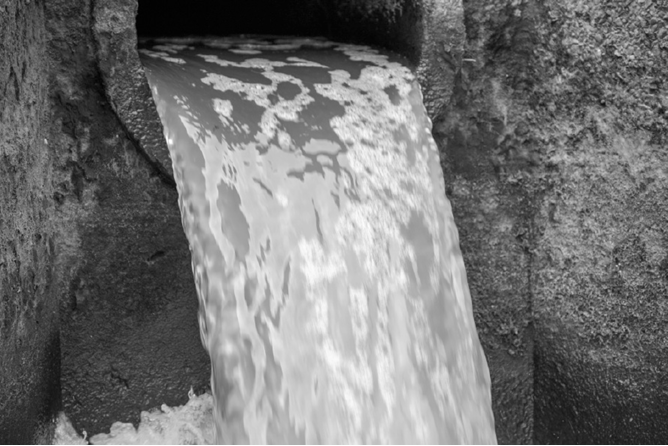
The photograph shows sewage being released into a river. The sewage causes the growth of something called ‘sewage fungus’. Sewage fungus looks like fungus but is a solid collection of several types of anaerobic bacteria. Sewage fungus is common in rivers that are polluted with untreated sewage or are near to cattle and intensive crop farms. If sewage fungus is found in a river it often indicates that the biodiversity of the river will be low.
Pesticides from agriculture are also released into rivers, and these are frequently transferred through natural food chains. Even pharmaceutical drugs, such as those containing the hormones oestrogen and progesterone, have been found in polluted rivers. These drugs must have been consumed by humans, excreted and then released into the sewage flowing into rivers.
Untreated sewage can also contain pathogenic species of bacteria that then enter rivers. If humans are infected with these bacteria, the large intestine absorbs less water, causing diarrhoea. Some of the bacteria found in sewage are resistant to antibiotics.
Scientists are looking for ways to prevent river pollution. One way is to reduce the risk of pollution from fertilisers and from cattle urine and faeces. Woodchip bioreactors are being trialled in agricultural fields that are near to rivers. These bioreactors are pits filled with woodchips and denitrifying bacteria. Water drains through these bioreactors, which helps to remove nitrates before they reach the rivers. In some countries, efforts are being made to replant forests in areas upstream of rivers to reduce river flooding and the risk of untreated sewage release.
(a) Rivers have a homeostatic effect on nature. This is similar to the role of homeostasis in humans.
State what is meant by the term homeostasis (lines 2 and 3).
(b) Calculate the mean number of hours that each pipeline released sewage into rivers in 2022 (lines 7 and 8).
(c)(i) Sewage fungus is not a fungus but is made from several different species of bacteria.
Which of these structures are present both in fungi and in bacteria?
A) cell wall and cytoplasm only
B) cell wall and nucleus only
C) cell wall, cytoplasm and nucleus
D) cytoplasm and nucleus only
(ii) Explain why rivers near to farms may have low biodiversity (lines 13 to 16).
(d) Oestrogen and progesterone in polluted water lower the levels of FSH and LH in mammals.
(i)State why lower levels of FSH can reduce fertility in mammals.
(ii) State why lower levels of LH can reduce fertility in mammals.
(e)(i) Pathogenic bacteria produce poisons that prevent the active transport of salt into the blood vessels surrounding the intestines.
Explain why preventing the transport of salt into the blood vessels will cause more water to be present in faeces (lines 22 to 24).
(ii) Explain why overuse of antibiotics has led to an increase in antibiotic-resistant bacteria (lines 24 and 25).
(f)(i) Explain how woodchip bioreactors reduce pollution in rivers (lines 27 to 31).
(ii) Explain why replanting forests in areas upstream of rivers will reduce flooding (lines 31 to 33).
Most-appropriate topic codes (Edexcel IGCSE Biology):
• 4(d): Human influences on the environment — parts (c)(ii), (e)(ii), (f)(i), (f)(ii)
• 1(b): Variety of living organisms — part (c)(i)
• 3(a): Reproduction — parts (d)(i), (d)(ii)
• 2(d): Movement of substances into and out of cells — part (e)(i)
• 3(b): Inheritance — part (e)(ii)
▶️ Answer/Explanation
(a) An answer that makes reference to one of the following points:
• maintenance of constant (internal) conditions in body / eq (1)
• control / regulating / maintaining internal conditions / eq (1)
• control / regulating / maintaining internal environment / eq (1)
• keeping conditions in body the same / within a (narrow) range / eq (1)
(b) • 250 (1)
Calculation: \( \frac{300000}{1200} = 250 \)
(c)(i) A (cell wall and cytoplasm only)
B is not the answer as bacteria do not have nuclei
C is not the answer as bacteria do not have nuclei
D is not the answer as bacteria do not have nuclei
(c)(ii) An explanation that makes reference to the following points:
1. fertilisers / animal waste / minerals / nitrates / phosphates (run off / leach) / eq (1)
2. algal growth / eutrophication / eq (1)
3. less light (penetrates) / competition for light / less photosynthesis / eq (1)
4. decomposition / decay (of dead algae / plants / organisms / organic waste / manure / faeces / sewage) eq (1)
5. less oxygen / only anaerobic species grow / eq (1)
6. bacteria respire / other species cannot respire / reduced respiration / eq (1)
7. pesticides kill organisms / eq (1)
(d)(i) An answer that makes reference to one of the following points:
• eggs / ova / follicles, do not mature / do not grow / eq (1)
• (FSH is required to) mature eggs / ova / follicles (1)
• (low FSH leads to) less oestrogen / (FSH) stimulates oestrogen release (1)
(d)(ii) An answer that makes reference to one of the following points:
• no ovulation occurs / egg not released / ova not released / eq (1)
• LH / it stimulates ovulation / LH / it stimulates egg release / eq (1)
• (lower LH leads to) less progesterone / LH / it stimulates progesterone (1)
(e)(i) An explanation that makes reference to two of the following points:
• less water absorbed / less water enters blood / less water enters capillaries / eq (1)
• (water moves by) osmosis (1)
• water potential in blood is high(er) / water potential in gut / faeces / lumen is low(er) / eq (1)
(e)(ii) An explanation that makes reference to three of the following points:
1. mutation (1)
2. (only resistant bacteria) survive / are not killed / non-resistant bacteria die / eq (1)
3. bacteria reproduce / multiply / eq (1)
4. pass on allele / gene / mutation / eq (1)
(f)(i) An explanation that makes reference to two of the following points:
• (denitrifying bacteria convert) nitrate into nitrogen (1)
• so less eutrophication / less algal growth / more oxygen in river / lower BOD / eq (1)
• wood chips have large surface area (for bacteria) / wood chips are biodegradable (so do not pollute) / eq (1)
(f)(ii) An explanation that makes reference to two of the following points:
1. trees / roots absorb water / trees intercept water / eq (1)
2. (more) transpiration (1)
3. less runoff / slows down water flow / more soil permeability / more infiltration / eq (1)
4. less soil erosion / roots hold onto soil / roots stabilise soil / eq (1)
5. rivers do not get blocked (with soil) / eq (1)
A group of students investigate the biodiversity in two fields, A and B. Field A is grazed by cattle and field B has no cattle.
(a) Explain what is meant by the term biodiversity.
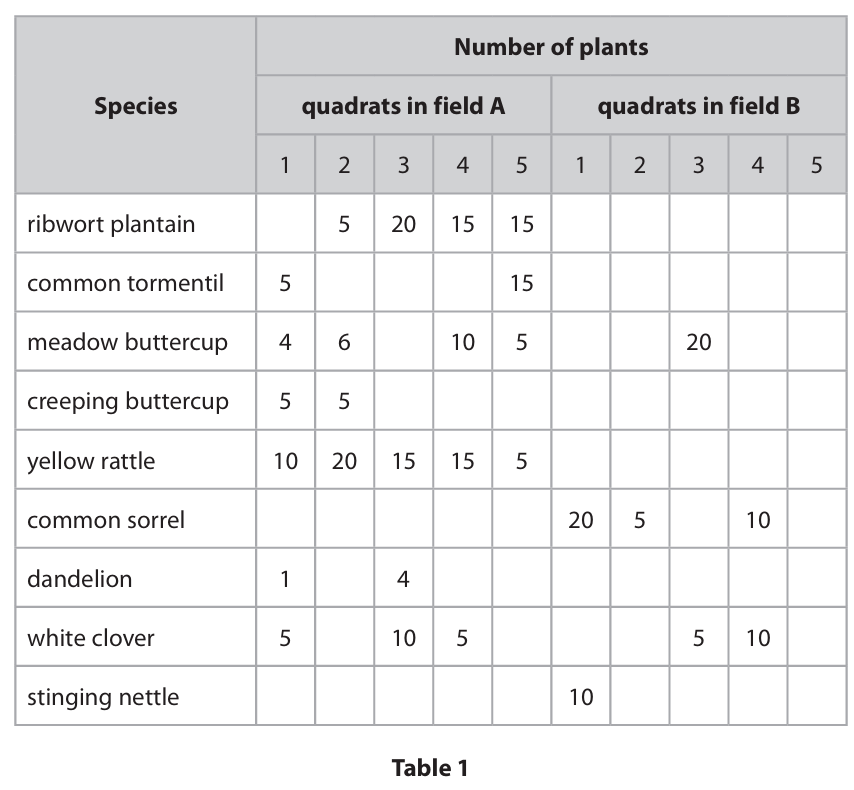
(b) The students investigate the plant species in each field. They counted the number of each species in five 0.5 m × 0.5 m quadrats. They repeated this for each field.
Table 1 shows their results.

(i) Describe how the quadrats should be placed to obtain unbiased species numbers for each field.
(ii) For the most frequently occurring plant species in field B, calculate the number of plants in one square metre.
(iii) Name the species with the greatest variation in number of plants recorded in quadrats for field B.
(iv) The students conclude that grazing affects the species in field A. Using information in Table 1 and your own knowledge, discuss the students’ conclusion.
Most-appropriate topic codes (Edexcel IGCSE Biology):
• 4(b): Feeding relationships — part (b)(iv)
• 4(c): Cycles within ecosystems — part (b)(iv)
• 4(d): Human influences on the environment — part (b)(iv)
• 5.3B: Biodiversity — part (a)
• 5.4B: Practical: investigate distribution and measure biodiversity — parts (b)(i), (b)(ii), (b)(iii)
▶️ Answer/Explanation
(a) An explanation that makes reference to two of the following:
- (number / amount / how many / range) the different species / eq (1)
- number / abundance / how many of each species / eq (1)
- variation / variety (of organisms) (in an ecosystem) / eq (1)
(b)(i) A description that makes reference to the following:
- place at random / eq (1)
- (place quadrats at) co-ordinates / eq (1)
Use random coordinates = 2 marks
(b)(ii) Calculation:
Most frequently occurring species in field B: common sorrel
Total plants counted: \(20 + 5 + 10 = 35\)
Total area sampled: \(5 \times (0.5 \times 0.5) = 5 \times 0.25 = 1.25 \text{ m}^2\)
Number per square metre: \(35 \div 1.25 = 28 \text{ per m}^2\)
Answer: 28
(b)(iii) meadow buttercup (1)
(b)(iv) An answer description that makes reference to five of the following:
- more species present / eq (1)
- more even distribution / similar numbers of each / eq (1)
- common sorrel / stinging nettles absent / eq (1)
- more biodiversity / grazing increases biodiversity / eq (1)
- reliable / repeated / more than one quadrat done in each field / eq (1)
- no information on water / sunlight / temperature / fertilisers / minerals / seasons / eq (1)
- only done on one field / repeat in other fields / eq (1)
- no information about amount of animals / age of animals / duration / eq (1)
- grazing reduces competition allows different species to grow / prevents succession / eq (1)
- grazing provides increased nitrates / minerals / manure / eq (1)
Read the passage below. Use the information in the passage and your own knowledge to answer the questions that follow.
Extinctions
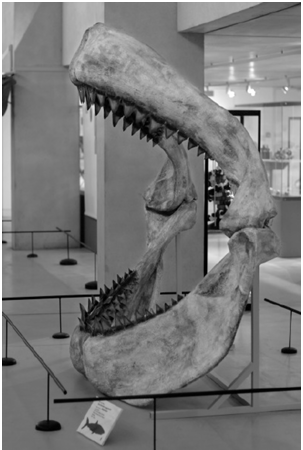
During the evolution of living organisms, most species have become extinct. Evolution by natural selection means that species constantly replace each other. The photograph shows the fossilised jaws of a shark called megalodon. Megalodon was a giant, predatory shark that became extinct 2.6 million years ago.

Some scientists think megalodon was replaced by giant, predatory toothed whales. These whales were the ancestors of modern orcas. Any sharks that remained evolved to become smaller. As well as the steady loss of species over time, there have been mass extinction events. Approximately 250 million years ago 90% of all animals and plants became extinct. The cause of this mass extinction is not known, but one theory is that it was due to the eruptions of volcanoes. The volcanoes released sulfur dioxide, carbon dioxide and dust into the atmosphere. This caused populations of producer species to fall, atmospheric carbon dioxide levels to rise, and oxygen levels to fall.
Human activity is now causing another mass extinction. Some scientists estimate that approximately one million animal and plant species are at risk. To prevent species loss, cryozoos are being developed. Cryozoos are storage tanks containing samples of body cells from animals and are kept at a temperature of -170 oC. The cells are put in a salt and sugar solution and then frozen. If a species becomes extinct, the frozen cells can be used to clone new animals. The banteng is an endangered breed of cattle. Banteng body cells have been stored in a cryozoo. These cells have been used with eggs from another species to successfully produce a living banteng.
In the future we may be able to bring back extinct species such as mammoths by making clones using the remains of frozen mammoths. Scientists need to consider the advantages and disadvantages of bringing back extinct animals. Currently, the biodiversity of the world is different from the time when mammoths were alive. Many natural predators of mammoths are now extinct. Mammoths may have helped to keep methane-releasing soil frozen, reducing the release of the methane. Mammoths were also an important part of the nitrogen cycle and increased the nutrient content of low-nutrient Arctic soil.
(a) Megalodon was an animal.
Which of these features does megalodon share with the fungus yeast?
- nuclei present in cells
- nervous coordination
- stores carbohydrate as glycogen
A) 1 and 2 only
B) 1 and 3 only
C) 2 and 3 only
D) 1, 2 and 3
(b) Scientists think that the giant, predatory toothed whales that replaced the extinct megalodon consumed the same sources of food. Explain how the evolution of giant, predatory toothed whales may have caused the extinction of megalodon. (lines 5 to 7)
(c) (i) Volcanoes release sulfur dioxide into the atmosphere. Describe the biological consequences of sulfur dioxide release. (lines 10 to 12)
(ii) The release of large amounts of dust into the atmosphere reduced light intensity. Explain why this would cause a loss of food chains. (lines 9 to 11)
(d) (i) Explain why the cells in cryozoos are put in salt and sugar solution rather than pure water. (lines 16 to 18)
(ii) Describe how scientists could clone a bantering. (lines 18 to 20)
(e) Explain why releasing cloned mammoths could have negative and positive effects on Arctic biodiversity. (lines 22 to 28)
Most-appropriate topic codes (Edexcel IGCSE Biology):
• 4(d): Human influences on the environment — part (c)(i)
• 4(a), 4(b): The organism in the environment, Feeding relationships — part (c)(ii)
• 2(d): Movement of substances into and out of cells — part (d)(i)
• 5(d): Cloning — part (d)(ii)
• 4(d), 5(d): Human influences on the environment, Cloning — part (e)
▶️ Answer/Explanation
(a) B (1 and 3 only)
A is incorrect as yeast has no nervous system
C is incorrect as yeast has no nervous system
D is incorrect as yeast has no nervous system
(b) An explanation that makes reference to three of the following:
• competition (between megalodon and whales) (1)
• whales ate more food / eq (1)
• whales better adapted / swam faster / better at feeding / better at hunting / eq (1)
• whales survived / eq (1)
• whales reproduced more / had more offspring / eq (1)
Accept less food left for megalodon / no food / megalodon starve. Accept megalodon less well adapted. Accept megalodon did not survive/died (out). Ignore extinct.
(c) (i) A description that makes reference to two of the following:
• acid rain (1)
• deforestation / death of trees / death of plants / eq (1)
• death of fish / death of animals in lakes / loss of species in lakes or rivers / eq (1)
Accept sulphuric acid. Accept damages plants/trees. Accept loss of food chains/biodiversity.
(ii) An explanation that makes reference to three of the following:
• (less) photosynthesis (1)
• so less glucose / sugar / starch / eq (1)
• fewer producers / fewer plants / less mass of producers / producers die / plants do not grow as much / eq (1)
• less food for consumers / less energy for consumers / eq (1)
Ignore ‘cannot produce food’ for mp2. Accept fewer consumers/herbivores/carnivores.
(d) (i) An answer that makes reference to two of the following:
• prevents osmosis / less osmosis (1)
• so water will not enter cells / eq (1)
• so cells do not burst / eq (1)
Accept osmosis would occur if in water. Accept cells burst if in water.
(ii) A description that makes reference to four of the following:
• place diploid nucleus into enucleated egg cell / place body cell nucleus into enucleated egg cell / eq (1)
• electric shock / eq (1)
• mitosis / cell division / eq (1)
• place embryo into uterus / womb (1)
• of surrogate (mother) (1)
Accept fuse body cell with enucleated egg. Accept empty egg cell for enucleated egg cell.
(e) A description that makes reference to three of the following:
Negative:
• mammoth population increases / over-population occurs / eq (1)
• mammoth eats too much food / less food for other species / eq (1)
Positive:
• less global warming / less greenhouse effect / eq (1)
• decomposition of faeces / decay of dead mammoths (1)
• more amino acid / protein / DNA / chlorophyll synthesis in plants / eq (1)
• (soil nutrients means) more plants / increased plant growth / eq (1)
Accept high mammoth reproduction rate. Accept overeats prey / prey could go extinct. Accept less greenhouse gas. Accept better plant growth.
Read the passage below. Use the information in the passage and your own knowledge to answer the questions that follow.
Extinctions
During the evolution of living organisms, most species have become extinct. Evolution by natural selection means that species constantly replace each other. The photograph shows the fossilised jaws of a shark called megalodon. Megalodon was a giant, predatory shark that became extinct 2.6 million years ago.

Some scientists think megalodon was replaced by giant, predatory toothed whales. These whales were the ancestors of modern orcas. Any sharks that remained evolved to become smaller. As well as the steady loss of species over time, there have been mass extinction events. Approximately 250 million years ago 90% of all animals and plants became extinct. The cause of this mass extinction is not known, but one theory is that it was due to the eruptions of volcanoes. The volcanoes released sulfur dioxide, carbon dioxide and dust into the atmosphere. This caused populations of producer species to fall, atmospheric carbon dioxide levels to rise, and oxygen levels to fall.
Human activity is now causing another mass extinction. Some scientists estimate that approximately one million animal and plant species are at risk. To prevent species loss, cryozoos are being developed. Cryozoos are storage tanks containing samples of body cells from animals and are kept at a temperature of -170 oC. The cells are put in a salt and sugar solution and then frozen. If a species becomes extinct, the frozen cells can be used to clone new animals. The banteng is an endangered breed of cattle. Banteng body cells have been stored in a cryozoo. These cells have been used with eggs from another species to successfully produce a living banteng.
In the future we may be able to bring back extinct species such as mammoths by making clones using the remains of frozen mammoths. Scientists need to consider the advantages and disadvantages of bringing back extinct animals. Currently, the biodiversity of the world is different from the time when mammoths were alive. Many natural predators of mammoths are now extinct. Mammoths may have helped to keep methane-releasing soil frozen, reducing the release of the methane. Mammoths were also an important part of the nitrogen cycle and increased the nutrient content of low-nutrient Arctic soil.
(a) Megalodon was an animal.
Which of these features does megalodon share with the fungus yeast?
- nuclei present in cells
- nervous coordination
- stores carbohydrate as glycogen
A) 1 and 2 only
B) 1 and 3 only
C) 2 and 3 only
D) 1, 2 and 3
(b) Scientists think that the giant, predatory toothed whales that replaced the extinct megalodon consumed the same sources of food. Explain how the evolution of giant, predatory toothed whales may have caused the extinction of megalodon. (lines 5 to 7)
(c) (i) Volcanoes release sulfur dioxide into the atmosphere. Describe the biological consequences of sulfur dioxide release. (lines 10 to 12)
(ii) The release of large amounts of dust into the atmosphere reduced light intensity. Explain why this would cause a loss of food chains. (lines 9 to 11)
(d) (i) Explain why the cells in cryozoos are put in salt and sugar solution rather than pure water. (lines 16 to 18)
(ii) Describe how scientists could clone a bantering. (lines 18 to 20)
(e) Explain why releasing cloned mammoths could have negative and positive effects on Arctic biodiversity. (lines 22 to 28)
Most-appropriate topic codes (Edexcel IGCSE Biology):
• 4(d): Human influences on the environment — part (c)(i)
• 4(a), 4(b): The organism in the environment, Feeding relationships — part (c)(ii)
• 2(d): Movement of substances into and out of cells — part (d)(i)
• 5(d): Cloning — part (d)(ii)
• 4(d), 5(d): Human influences on the environment, Cloning — part (e)
▶️ Answer/Explanation
(a) B (1 and 3 only)
A is incorrect as yeast has no nervous system
C is incorrect as yeast has no nervous system
D is incorrect as yeast has no nervous system
(b) An explanation that makes reference to three of the following:
• competition (between megalodon and whales) (1)
• whales ate more food / eq (1)
• whales better adapted / swam faster / better at feeding / better at hunting / eq (1)
• whales survived / eq (1)
• whales reproduced more / had more offspring / eq (1)
Accept less food left for megalodon / no food / megalodon starve. Accept megalodon less well adapted. Accept megalodon did not survive/died (out). Ignore extinct.
(c) (i) A description that makes reference to two of the following:
• acid rain (1)
• deforestation / death of trees / death of plants / eq (1)
• death of fish / death of animals in lakes / loss of species in lakes or rivers / eq (1)
Accept sulphuric acid. Accept damages plants/trees. Accept loss of food chains/biodiversity.
(ii) An explanation that makes reference to three of the following:
• (less) photosynthesis (1)
• so less glucose / sugar / starch / eq (1)
• fewer producers / fewer plants / less mass of producers / producers die / plants do not grow as much / eq (1)
• less food for consumers / less energy for consumers / eq (1)
Ignore ‘cannot produce food’ for mp2. Accept fewer consumers/herbivores/carnivores.
(d) (i) An answer that makes reference to two of the following:
• prevents osmosis / less osmosis (1)
• so water will not enter cells / eq (1)
• so cells do not burst / eq (1)
Accept osmosis would occur if in water. Accept cells burst if in water.
(ii) A description that makes reference to four of the following:
• place diploid nucleus into enucleated egg cell / place body cell nucleus into enucleated egg cell / eq (1)
• electric shock / eq (1)
• mitosis / cell division / eq (1)
• place embryo into uterus / womb (1)
• of surrogate (mother) (1)
Accept fuse body cell with enucleated egg. Accept empty egg cell for enucleated egg cell.
(e) A description that makes reference to three of the following:
Negative:
• mammoth population increases / over-population occurs / eq (1)
• mammoth eats too much food / less food for other species / eq (1)
Positive:
• less global warming / less greenhouse effect / eq (1)
• decomposition of faeces / decay of dead mammoths (1)
• more amino acid / protein / DNA / chlorophyll synthesis in plants / eq (1)
• (soil nutrients means) more plants / increased plant growth / eq (1)
Accept high mammoth reproduction rate. Accept overeats prey / prey could go extinct. Accept less greenhouse gas. Accept better plant growth.
Loss of trees is known as deforestation.
From 2001 to 2021, Russia, Brazil and Canada had the most deforestation.
- Russia lost 76.0 Mha of tree cover. This loss was 10% of forests in Russia. The loss accounted for 17% of the total tree cover lost in the entire world.
- Brazil lost 62.8 Mha of tree cover. This loss was 12% of forests in Brazil. The loss accounted for 14% of the total tree cover loss in the entire world.
- Canada lost 49.3 Mha of tree cover. This loss was 11% of forests in Canada. This loss accounted for 11% of the total tree cover loss in the entire world.
(a) (i) Use this data to determine the total tree cover loss by countries other than Russia, Brazil and Canada from 2001 to 2021.
(ii) Calculate the loss of tree cover in Brazil per month from 2001 to 2021. Give your answer in standard form.
(iii) Explain why Russia contributed 17% of the total tree cover loss in the entire world even though the loss of tree cover in Russia was only 10%.
(b) Describe the effects of deforestation on an ecosystem.
Most-appropriate topic codes (Edexcel IGCSE Biology):
• 4(d): Human influences on the environment — part (a)(iii), (b)
• 4(b): Feeding relationships — part (b)
• 4(c): Cycles within ecosystems — part (b)
▶️ Answer/Explanation
(a) (i)
Global loss from Russia, Brazil and Canada = \(76.0 + 62.8 + 49.3 = 188.1\) Mha.
Their combined percentage of global loss = \(17\% + 14\% + 11\% = 42\%\).
Therefore, \(42\% = 188.1\) Mha.
\(1\% = \frac{188.1}{42} \approx 4.4786\) Mha.
Total global loss (\(100\%\)) = \(4.4786 \times 100 \approx 447.86\) Mha.
Loss by other countries = Total global loss − Loss by Russia, Brazil, Canada = \(447.86 – 188.1 \approx 259.8\) Mha.
Allow answer in range 258 to 260 Mha.
(a) (ii)
Loss in Brazil from 2001 to 2021 = 62.8 Mha.
Number of months = \(20 \text{ years} \times 12 = 240\) months.
Loss per month = \(\frac{62.8}{240} \approx 0.2617\) Mha.
In standard form = \(2.617 \times 10^{-1}\) Mha per month.
Allow \(2.6 \times 10^{-1}\) or \(2.62 \times 10^{-1}\).
(a) (iii)
An explanation that makes reference to two of the following:
• Russia has the most forest / larger area / bigger country / most tree cover / eq (1)
• Russia makes up a large % of the world’s total tree cover / has a high proportion of the world’s trees / eq (1)
• so even a low percentage change (10%) represents a large absolute amount / eq (1)
(b)
A description that makes reference to four of the following points:
1. reduces biodiversity / loss of species / habitat loss / eq (1)
2. increases CO\(_2\) (in atmosphere) / less CO\(_2\) absorbed / eq (1)
3. less photosynthesis / eq (1)
4. reduced soil quality / less minerals returned to soil / less fertile / leaching / eq (1)
5. soil erosion / soil washed away / eq (1)
6. flooding / eq (1)
7. disturbs water cycle / less transpiration / less rainfall / eq (1)
Read the passage below. Use the information in the passage and your own knowledge to answer the questions that follow.
Offshore or freshwater fish farming
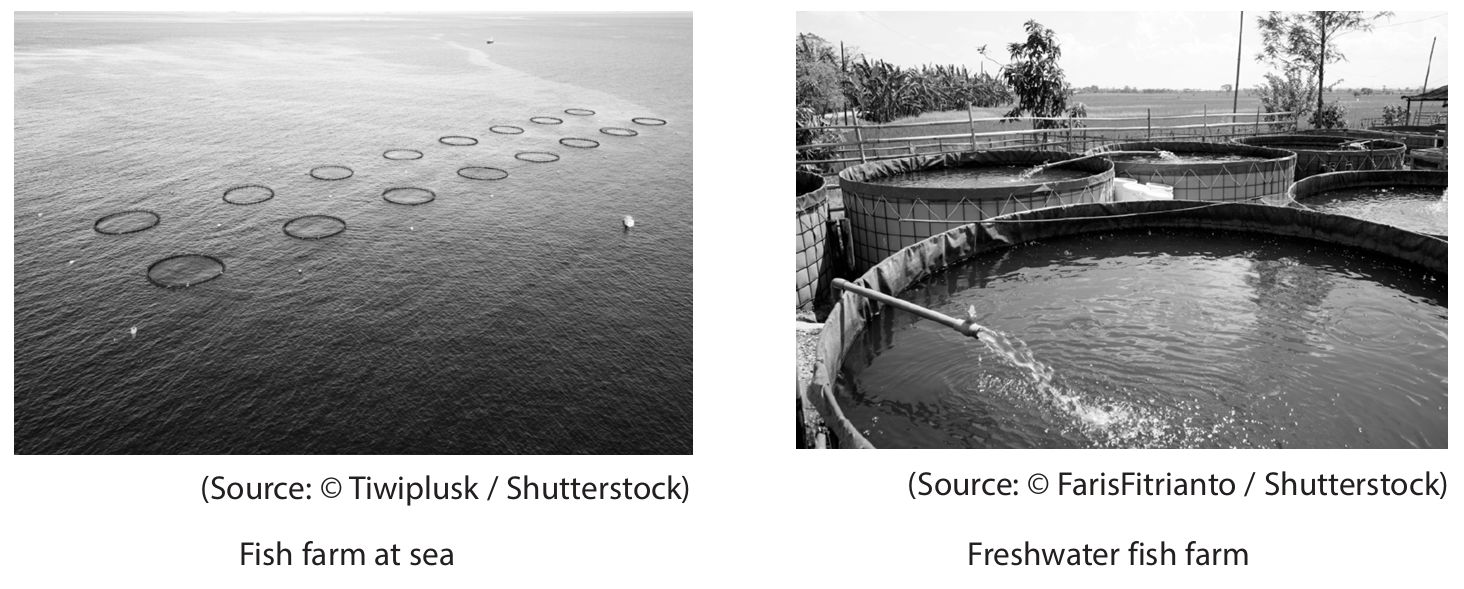
Fish farming in fresh water and in the sea offers the potential to increase the amount of fish harvested whilst protecting wild fish stocks. Offshore or fish farming at sea has less risk of serious injury or death to people than catching fish by deep sea fishing.
Some scientists predict that smart fish farming at sea could increase ocean fish production by an estimated 21 million tonnes from the 2020 value to 44 million tonnes by 2050. Other estimates suggest that fish farming at sea, using an area the size of Lake Michigan, might produce the same amount of seafood as all of the world’s wild-caught fisheries.
Fish farming at sea is done anywhere from three to 200 miles away from the coast. The fish produced are often Atlantic salmon, seabass and cobia. The aim is to reduce the environmental impact of fish farming near the coast by moving them further away from sensitive shorelines. This limits the impact of disease, pollution and pests such as sea lice. Further out to sea, and at deeper depths, the water movement is often faster.

Critics of fish farming at sea claim that it will be more difficult to monitor and regulate any environmental impact and that pollution, disease and pests would still impact the surrounding waters. A major risk of farming at sea is the exposure to high winds and water speeds, increasing the risk of all the fish escaping. In 1997, 300 000 farmed Atlantic salmon escaped into the Pacific Ocean. Wild fish are attracted to the farms by the scent of fish food. These wild fish are at risk of being hit by ships travelling to and from the large fish farms.
In contrast, other scientists support the development of fish farming in fresh water. Freshwater fish farms have increased in numbers steadily in the past 30 years. Asia is the main part of the world where this has happened. It is relatively cheap and easy to grow freshwater fish in small ponds. Fish farming provides incomes for many family farms, workers and small businesses, as well as jobs.
The main species produced by freshwater farming are carp, tilapia and catfish. These fish are herbivores or omnivores. In the farms they are fed small amounts of fish to speed up growth, but their main diet is the by-products of crops like rice, groundnut and soy. Farmed freshwater fish are an affordable food for millions of low- and middle-income consumers.
(a) Suggest why deep sea fishing has a risk of serious injury or death to people. (lines 2 to 3)
(b) Give three reasons why the scientists’ prediction of an increase in ocean fish production to 44 million tonnes by 2050 is only an estimate. (lines 4 to 6)
(c) Explain how fish farms cause pollution. (lines 12 to 16)
(d) Fish farmers use methods to control disease in their fish farms.
(i) Describe the methods a fish farmer could use to reduce the incidence of disease in a fish farm.
(ii) Explain how these methods may affect the local ecosystem.
(e) Explain why locating the fish farms further out to sea may help reduce the effects on the local ecosystem. (lines 12 to 16)
(f) Suggest why fish farming further out at sea will be more difficult to monitor and regulate. (lines 14 to 16)
(g) Give a reason why farming fish that are herbivores is an advantage for the fish farmer. (lines 27 and 28)
(h) Explain why small, local freshwater fish farms would have less impact on global warming than large fish farms at sea.
Most-appropriate topic codes (Edexcel IGCSE Biology):
• 5(a): Food production (Fish farming) — parts (a), (b), (d)(i), (d)(ii), (f), (g), (h)
• 5(b): Selective breeding — part (d)(i)
• 5(c): Genetic modification — part (d)(i)
▶️ Answer/Explanation
(a) • drowning / being washed overboard / sinking / storms / (bad) weather / attacked / killed by sharks by predators / eq (1)
(b) An explanation that makes reference to three of the following points: (3)
1. only based on forecasts / model / not happened yet / can’t predict future / 30 years is a long way off / not guaranteed / eq (1)
2. other (scientists) have different view / only an opinion / government policy may change / eq (1)
3. amount of sea farms may change / may not work / unproven / untested / eq (1)
4. peoples’ tastes may changes / diet / choices / demand for fish may change / eq (1)
5. effect of climate change / sea temperature rising / levels rising / global warming /eq (1)
6. effect of pollution / eq (1)
(c) An explanation that makes reference to three of the following points: (3)
1. (fish) faeces / waste / uneaten food /eq (1)
2. nitrate / phosphate levels increase / eq (1)
3. leads to algal growth / eutrophication / (eq)
4. less oxygen (for respiration)/ oxygen used (by bacteria) / eq (1)
5. chemicals / hormones /eq (1)
6. bacteria / decomposers / eq (1)
(d)(i) A description that makes reference to two of the following points: (2)
1. pesticide / insecticide / fungicide / eq (1)
2. antibiotics / vaccinate fish / eq (1)
3. selective breeding / GM fish / eq (1)
4. separating / isolating diseased fish / removing sick / dead fish / eq (1)
5. low stocking density /eq (1)
(d)(ii) An explanation that makes reference to two of the following points: (2)
1. pesticide / insecticide / fungicide/ antibiotic / kill other organisms / disrupt food chain /eq (1)
2. (pesticide / insecticide / fungicide / antibiotics ) can (bio)accumulate / eq (1)
3. (antibiotics) lead to antibiotic resistance / eq (1)
4. selective bred / GM organisms may escape and interbreed / eq (1)
(e) An explanation that makes reference to two of the following points: (2)
1. deep water / greater volume / eq (1)
2. (so) dilution / reduces concentration / eq (1)
3. fast water flowing / eq (1)
4. (so) dispersed / carried away / eq (1)
(f) An answer that includes: (1)
• further from shore / further from land / isolated / longer distance to travel / no population nearby / need to use boat to reach / take a long time to get there / eq (1)
(g) An answer that includes one of: (1)
• is cheaper / use cheaper food (readily available) / surplus food / crop waste /eq (1)
• more efficient energy transfer / eq (1)
• will not eat each other / other fish / eq(1)
(h) An explanation that makes reference to two of the following points: (2)
• less fuel / less transport of equipment /supplies / workers / less food miles / eq (1)
• less energy used / less electricity / less machinery (in running / building) / eq (1)
• less carbon dioxide released (from burning the fossil fuel) / eq (1)
Total = 17 marks
(a) Using the recommended amount of fertiliser on a crop increases crop yield. Some farmers think that adding extra fertiliser will give an even greater crop yield.
(i) Give a reason why adding extra fertiliser does not result in an even greater crop yield.
(ii) Some farmers apply more nitrogen fertiliser and more water to their fields than are needed.
Explain the biological consequences of applying more nitrogen fertiliser and more water than needed.
(b) The atmosphere can be polluted by gases such as carbon monoxide released from industry.
Describe the effects of carbon monoxide on the human body.
(c) Which of these is not a greenhouse gas?
- A. carbon dioxide
- B. methane
- C. nitrogen
- D. nitrous oxide
Most-appropriate topic codes (Edexcel IGCSE Biology):
• 4(d): Human influences on the environment – eutrophication (part a(ii))
• 4(d): Human influences on the environment – air pollution (part b)
• 2(g): Gas exchange – effects of carbon monoxide on gas transport (part b)
• 4(d): Human influences on the environment – greenhouse gases (part c)
▶️ Answer/Explanation
(a)(i) Excess fertiliser is not absorbed by the plants / some is washed away.
Explanation: Plants can only absorb a certain amount of nutrients from the soil. When fertiliser is applied beyond the recommended amount, the plant roots become saturated and cannot take up any more minerals. The excess fertiliser remains in the soil where it can be easily washed away by rainwater through a process called leaching. This means the extra fertiliser doesn’t contribute to plant growth and is essentially wasted.
(a)(ii) Applying excess nitrogen fertiliser and water leads to waterlogging of soil, leaching, eutrophication, oxygen depletion in water bodies, and death of aquatic organisms.
Explanation: When farmers apply more water than needed, the soil becomes waterlogged. Water fills the air spaces in the soil, creating anaerobic conditions where oxygen is lacking. Plant root cells need oxygen to perform active transport for mineral uptake, so they cannot absorb nutrients effectively in waterlogged conditions.
Excess nitrogen fertiliser gets washed away (leached) into nearby rivers and lakes through runoff. This extra nitrogen acts as a nutrient source for algae, causing rapid algal growth known as algal bloom. The algae form a thick layer on the water surface, blocking sunlight from reaching underwater plants. Without sunlight, these plants cannot photosynthesize and eventually die.
The dead plants and algae are decomposed by bacteria, which respire and consume large amounts of oxygen in the water. This leads to oxygen depletion (anoxic conditions), causing fish and other aquatic organisms to suffocate and die. This entire process of nutrient overload leading to ecosystem collapse is called eutrophication.
(b) Carbon monoxide combines with haemoglobin to form carboxyhaemoglobin, preventing oxygen transport in the blood.
Explanation: When inhaled, carbon monoxide binds to haemoglobin in red blood cells with a much greater affinity than oxygen, forming carboxyhaemoglobin. This prevents haemoglobin from carrying oxygen to body tissues. As a result, cells throughout the body receive less oxygen, leading to reduced respiration and energy production. In severe cases, this oxygen deprivation can cause headaches, dizziness, unconsciousness, and even death. The body may also resort to anaerobic respiration, producing lactic acid which can lead to muscle fatigue and pain.
(c) C (nitrogen)
Explanation: While nitrogen (N₂) makes up about 78% of the atmosphere, it is not considered a greenhouse gas because it is largely transparent to infrared radiation and does not significantly contribute to the greenhouse effect. In contrast, carbon dioxide (A), methane (B), and nitrous oxide (D) are all potent greenhouse gases that trap heat in the atmosphere and contribute to global warming.
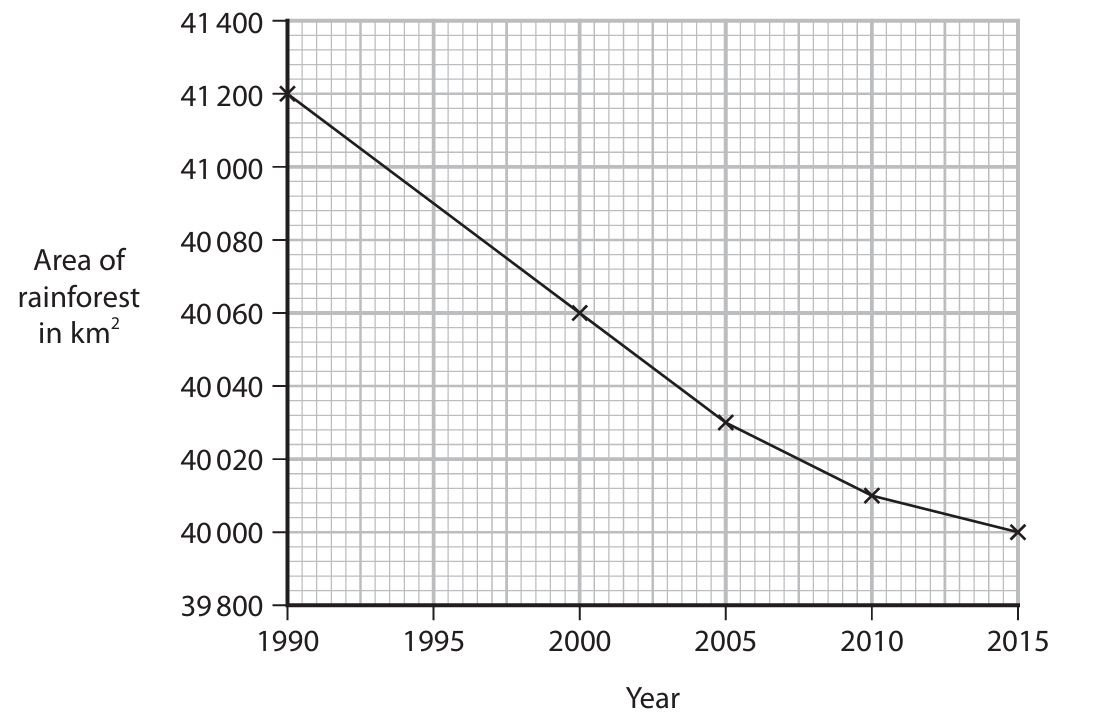
(a) The graph shows the change in area of rainforest on the Earth from 1990 to 2015.

(i) Determine the mean rate of decrease of rainforest area, in km² per year, from 1990 to 2015.
(ii) Loss of rainforests causes an increase in atmospheric carbon dioxide gas. Explain the negative effects of an increase in atmospheric carbon dioxide gas.
(b) Scientists investigated the effect of deforestation on a river. The river flows through a forest, part of which has been deforested.
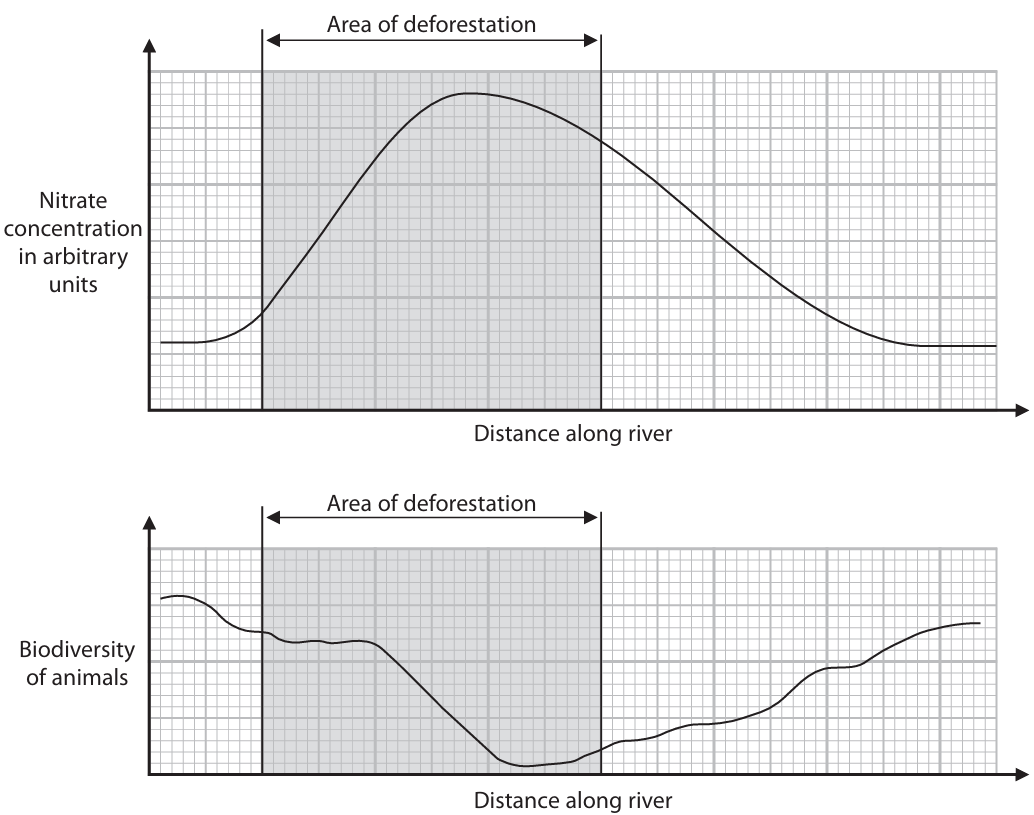
The graphs show the changes in nitrate concentration and the biodiversity of animals in the river as it flows through the forest.

(i) Describe the role of microorganisms in the conversion of organic waste into nitrate ions in the river.
(ii) The number of different animal species living in the river was recorded as a measure of the biodiversity of animals. Give a reason why this may not be a complete measure of biodiversity.
(iii) Explain the change in the biodiversity of animals along the river. Use information from the graphs in your answer.
Most-appropriate topic codes (Edexcel IGCSE Biology):
• 4(a): The organism in the environment — part (b)(ii)
• 4(c): Cycles within ecosystems — part (b)(i)
• 4(b): Feeding relationships — part (b)(iii)
• Appendix 4: Mathematical skills — part (a)(i)
▶️ Answer/Explanation
5 (a)(i)
Answer: 48 km² per year
Detailed Explanation:
To calculate the mean rate of decrease, we need to find the total decrease in rainforest area over the 25-year period (1990 to 2015) and then divide by the number of years.
From the graph, we can see that in 1990 the rainforest area was approximately 41,200 km², and by 2015 it had decreased to approximately 40,000 km².
The total decrease is: 41,200 km² – 40,000 km² = 1,200 km²
The time period is: 2015 – 1990 = 25 years
Therefore, the mean rate of decrease per year is: 1,200 km² ÷ 25 years = 48 km² per year
This means that on average, the Earth lost 48 square kilometers of rainforest each year during this period.
5 (a)(ii)
Detailed Explanation:
An increase in atmospheric carbon dioxide gas has several negative effects on the environment:
First, carbon dioxide is a greenhouse gas that contributes significantly to the greenhouse effect. This means it traps heat in the Earth’s atmosphere, leading to global warming and an overall increase in Earth’s temperature.
This temperature rise causes polar ice caps and glaciers to melt, which in turn leads to rising sea levels. Higher sea levels can cause flooding in coastal areas, resulting in habitat loss for both human and animal populations.
Additionally, increased CO₂ levels contribute to climate change, which alters weather patterns worldwide. This can result in more frequent and severe extreme weather events such as storms, droughts, and desertification, making some regions less habitable and disrupting agricultural systems.
The changing climate also affects ecosystems, leading to extinctions as species struggle to adapt to new conditions. It can change the distribution of organisms, force migrations, spread pests, and disrupt food chains.
Another significant effect is ocean acidification. When CO₂ dissolves in seawater, it forms carbonic acid, lowering the ocean’s pH. This acidification harms marine life, particularly organisms with calcium carbonate shells or skeletons, and can lead to coral reef bleaching.
5 (b)(i)
Detailed Explanation:
Microorganisms play essential roles in converting organic waste into nitrate ions through the process of decomposition and the nitrogen cycle.
Decomposers, primarily bacteria and fungi, break down organic waste material containing nitrogen compounds like proteins. Through the process of ammonification, these decomposers convert the nitrogen in organic matter into ammonia (NH₃) or ammonium ions (NH₄⁺).
Next, specific nitrifying bacteria convert ammonium into nitrite ions (NO₂⁻). Another group of nitrifying bacteria then oxidize these nitrite ions into nitrate ions (NO₃⁻), which is the form most readily absorbed by plants.
This entire process, known as nitrification, is crucial for making nitrogen available to plants and maintaining the nutrient cycle in aquatic ecosystems like rivers.
5 (b)(ii)
Detailed Explanation:
Recording only the number of different animal species does not provide a complete measure of biodiversity because it ignores several important factors:
This measure doesn’t account for the population sizes or abundance of each species. An ecosystem might have many species but be dominated by just one or two of them, which isn’t reflected in a simple species count.
It also fails to consider other kingdoms of organisms such as plants, bacteria, fungi, and protoctists, which are all important components of ecosystem biodiversity.
Additionally, some species may be seasonal or migratory, meaning they’re only present at certain times of year. A survey conducted at one time might miss these species, giving an incomplete picture of the true biodiversity.
5 (b)(iii)
Detailed Explanation:
The graphs show that as nitrate concentration increases (particularly after the deforested area), biodiversity of animals in the river decreases. This relationship can be explained through a process called eutrophication.
Deforestation leads to soil erosion and runoff, which carries minerals and organic waste into the river. This includes nitrates from decomposed organic matter and possibly fertilizers from agricultural activities following deforestation.
The increased nitrate levels act as nutrients, causing excessive growth of algae and aquatic plants in a process called eutrophication. The algal growth forms blooms on the water surface that block light penetration to deeper water.
With reduced light, submerged plants cannot photosynthesize effectively and eventually die. The dead plant material, along with the algae (which also eventually die), provides more organic matter for decomposers.
As bacteria decompose this increased organic matter, they respire, consuming oxygen from the water. This leads to oxygen depletion in the river.
The low oxygen levels cause fish and other animal species to die because they cannot respire adequately. This results in decreased biodiversity as more sensitive species disappear from the ecosystem.
Additionally, deforestation may directly cause habitat loss and disruption of food chains, further contributing to the decline in biodiversity observed in the graph.
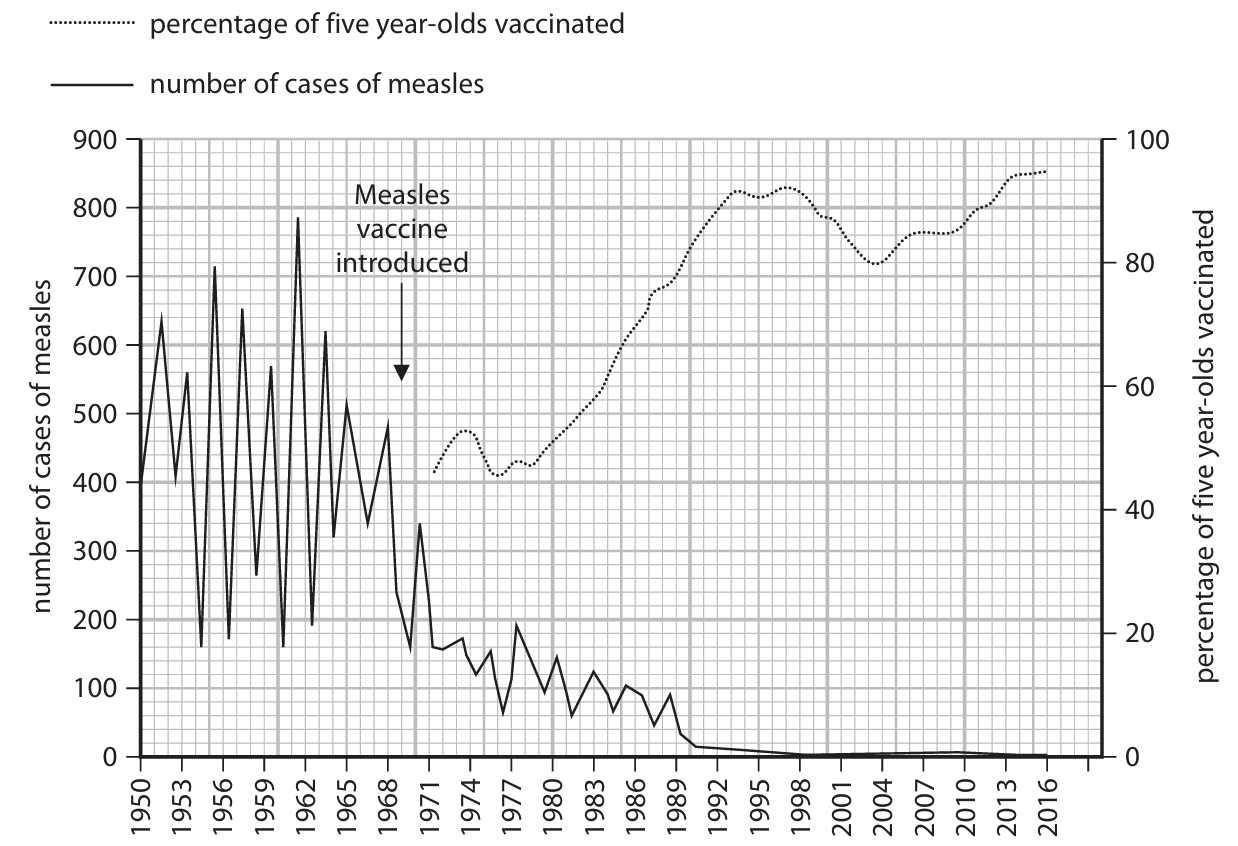
Measles is a disease caused by a virus. The graph shows the number of cases of measles each year and the percentage of five year-olds vaccinated between 1950 and 2016 in the United Kingdom.

(a) Determine the difference in the percentage change in the number of cases of measles between 1950 and 1965 and the percentage change in the number of cases of measles between 1968 and 1983.
(b) Explain the relationship between the number of cases of measles and the percentage of five year-olds vaccinated. Use information from the graph in your answer.
(c) Some children are receiving treatments that reduce the activity of their immune system. Explain why vaccinations are not used on these children.
Most-appropriate topic codes (Edexcel IGCSE Biology):
• 2(h): Transport — part (c) (immune response, antibodies)
• 5(a): Use of biological resources — part (b) (vaccination as a biological control method)
• 4(d): Human influences on the environment — part (b) (public health, vaccination programmes)
▶️ Answer/Explanation
(a) Difference = approximately 105% (range: 94-106%)
Explanation: To calculate this difference, we need to find the percentage change for each time period separately and then find the difference between them.
For 1950-1965: Cases increased from approximately 400-420 to 510-520. Using the midpoint values (410 to 515):
Percentage change = \(\frac{515 – 410}{410} \times 100 = \frac{105}{410} \times 100 ≈ 25.6\%\)
For 1968-1983: Cases decreased from approximately 480-490 to 120-130. Using the midpoint values (485 to 125):
Percentage change = \(\frac{125 – 485}{485} \times 100 = \frac{-360}{485} \times 100 ≈ -74.2\%\)
Difference = |25.6 – (-74.2)| = 99.8% (approximately 100%)
The exact answer may vary slightly depending on the precise values read from the graph, but should fall within the range of 94-106%.
(b) The relationship shows that as vaccination rates increase, measles cases decrease significantly.
Explanation: The graph demonstrates an inverse relationship between vaccination rates and measles cases. Before widespread vaccination (pre-1968), cases were high and fluctuated significantly. After the introduction of vaccination, cases began to decline steadily as vaccination rates increased.
For example, in the early 1970s when vaccination rates were around 50-60%, cases dropped to about 100-200 thousand. By the 1990s, when vaccination rates reached 80-90%, cases fell dramatically to very low levels (less than 20 thousand). This shows that vaccination provides herd immunity, reducing the virus’s ability to spread through the population.
The relationship is not perfectly linear because other factors like vaccination campaigns, public awareness, and natural immunity from previous infections also play a role. However, the overall trend clearly shows that higher vaccination coverage leads to fewer measles cases.
(c) Vaccinations are not used on immunocompromised children because they may not develop proper immunity and could develop the disease.
Explanation: Children with compromised immune systems (due to treatments like chemotherapy or immunosuppressive drugs) have reduced ability to produce antibodies and memory cells in response to vaccines. Vaccines contain weakened or inactivated pathogens that stimulate the immune system to create protection.
In immunocompromised children, their weakened immune systems may not be able to mount an effective response to the vaccine, leaving them unprotected. Even more concerning, there’s a risk that the weakened pathogen in the vaccine could cause the actual disease in these vulnerable children.
Instead of vaccination, these children rely on herd immunity – the protection provided when enough people in the community are vaccinated to prevent the disease from spreading. This is why high vaccination rates in the general population are so important, as they protect those who cannot be vaccinated themselves.

Read the passage below. Use the information in the passage and your own knowledge to answer the questions that follow.
When the Oceans Glow
In some areas of the world the oceans around the coast sometimes glow with a blue light. The photograph shows an area of coast that is glowing. This blue light is produced by the presence of thousands of microscopic, living organisms called dinoflagellates. These dinoflagellates are protocysts. The production of light by living organisms is called bioluminescence, a process that has evolved many times in different species of organism.

To generate light, dinoflagellates use special proteins and the ATP produced within their cells. Many species of dinoflagellate contain chlorophyll and are able to photosynthesize. The appearance of glowing dinoflagellates in the sea used to be a rare event but this now occurs much more frequently. Many of the events occur in the sea around river estuaries and scientists think that intensive farming and deforestation could be to blame. Due to overpopulation of dinoflagellates in these areas, other species of animal are often harmed. After a series of glowing events, large numbers of dinoflagellates die causing oxygen levels in the water to decrease.
People have often wondered why dinoflagellates glow. They only glow in areas where the water moves around, such as when waves hit a beach. Scientists now think that the production of light is a type of warning to stop predators eating the dinoflagellates. If an animal eats dinoflagellates, the dinoflagellates in the area glow making the animal obvious to its own predators. To test this, scientists placed dinoflagellates into a tank along with 15 copepods, which are predators of dinoflagellates. When the dinoflagellates glowed, the copepods ate 1200 dinoflagellates in two hours. When the dinoflagellates did not glow, the copepods ate 2100 dinoflagellates in two hours.
Some scientists think that we could make use of the dinoflagellates to provide sustainable street lighting. Tanks of dinoflagellates could be placed on top of lamp posts. The dinoflagellates would photosynthesize during the day when it is light. A stirrer powered by a small battery would then move them at night so that they would glow. These sustainable lamps could be carbon neutral and help to reduce pollution.
(a) Which of these processes produces ATP? (line 6)
- A. active transport
- B. diffusion
- C. respiration
- D. transpiration
(b) (i) Explain why intensive farming and deforestation would cause an increase in populations of dinoflagellates. (lines 9 to 11)
(ii) Explain why oxygen levels decrease after a series of glowing events. (lines 10 to 13)
(c) Which type of bacteria converts ammonia into nitrates?
- A. decomposer
- B. denitrifying
- C. nitrifying
- D. nitrogen fixing
(d) (i) Each of the 15 copepods ate glowing dinoflagellates at a mean rate of 40 dinoflagellates per hour. Calculate the mean rate at which each copepod ate dinoflagellates that were not glowing. (lines 18 to 21)
(ii) Explain how natural selection could have resulted in the evolution of dinoflagellates that glow. (lines 15 to 18)
(e) Explain why using dinoflagellates for street lighting would help to reduce pollution. (lines 22 to 26)
Most-appropriate topic codes (Edexcel IGCSE Biology):
• 2(f): Respiration — part (a) ATP production
• 2(e): Nutrition (Photosynthesis) — reference to chlorophyll and photosynthesis in dinoflagellates
• 4(d): Human influences on the environment — parts (b)(i), (e) pollution, eutrophication, deforestation
• 4(c): Cycles within ecosystems (Nitrogen cycle) — part (c) role of bacteria
• 3(b): Inheritance and evolution — part (d)(ii) natural selection
• 2(e): Nutrition (Diet and energy) — part (d)(i) calculation of feeding rate
• 5(a): Use of biological resources (Food production) — part (e) sustainable use of organisms
▶️ Answer/Explanation
(a) C (respiration)
Explanation: Respiration is the metabolic process that breaks down glucose to release energy, which is stored in ATP molecules. Active transport uses ATP but does not produce it. Diffusion is a passive process and does not require or produce ATP. Transpiration is the loss of water vapor from plants and is not directly involved in ATP production.
(b)(i)
Explanation: Intensive farming often involves the heavy use of fertilizers. Deforestation removes trees whose roots help bind the soil. The combination of these factors leads to soil erosion. When it rains, eroded soil and excess fertilizers (rich in minerals like nitrates and phosphates) are washed into rivers and eventually into estuaries and the sea. These minerals act as nutrients for dinoflagellates, allowing their populations to grow rapidly, a process known as eutrophication.
(b)(ii)
Explanation: After the glowing events, large numbers of dinoflagellates die. Their bodies are decomposed by bacteria and other microorganisms. These decomposers respire as they break down the organic matter, a process that consumes oxygen. The large algal bloom may also block light, reducing photosynthesis and oxygen production by other organisms. The high rate of oxygen consumption by decomposers leads to a decrease in dissolved oxygen levels.
(c) C (nitrifying)
Explanation: Nitrifying bacteria are specifically responsible for converting ammonia into nitrites and then into nitrates in the nitrogen cycle. Decomposer bacteria break down organic matter into ammonia. Denitrifying bacteria convert nitrates back into nitrogen gas. Nitrogen-fixing bacteria convert atmospheric nitrogen gas into ammonia.
(d)(i) 70 dinoflagellates per hour
Explanation: The total number of non-glowing dinoflagellates eaten in 2 hours was 2100. The total eaten per hour is \( 2100 \div 2 = 1050 \) dinoflagellates per hour. This is the rate for all 15 copepods. The mean rate per copepod is \( 1050 \div 15 = 70 \) dinoflagellates per hour per copepod.
(d)(ii)
Explanation: A random mutation gave some dinoflagellates the allele to glow. This created variation. When predators were present, dinoflagellates that glowed were less likely to be eaten (as the glow attracted the predators’ own predators). These dinoflagellates had a higher survival rate and were more likely to reproduce, passing the advantageous allele for glowing to their offspring. Over many generations, the frequency of the glowing allele increased in the population, leading to the evolution of this trait.
(e)
Explanation: It would reduce reliance on electricity generated from burning fossil fuels. The dinoflagellates photosynthesize during the day, taking in carbon dioxide (\(CO_2\)) from the atmosphere. At night, they produce light through bioluminescence without burning fuels. Therefore, this method produces no direct air pollutants and contributes less to the greenhouse effect, making it a more sustainable and carbon-neutral alternative.
Smoking cigarettes has harmful effects on the body.
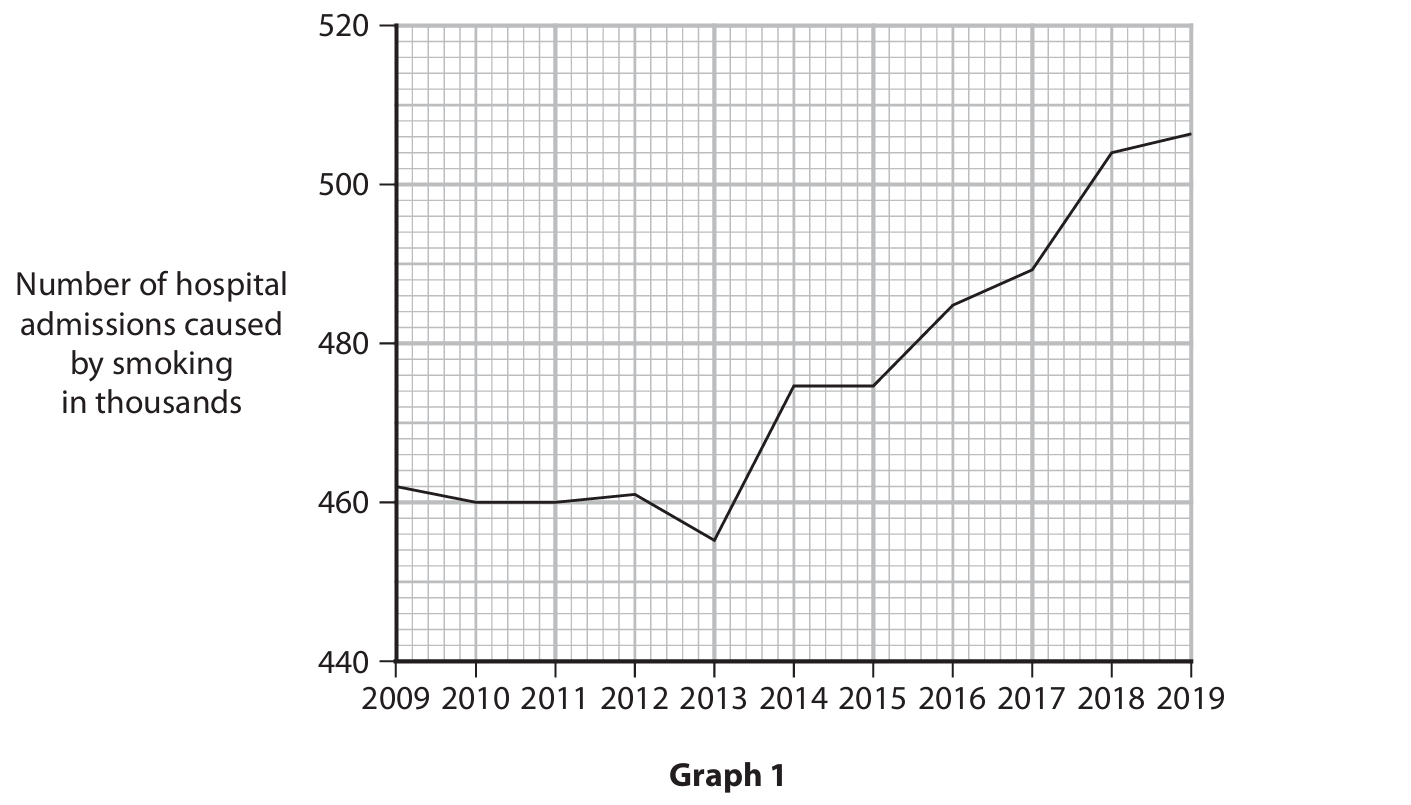
Graph 1 shows the number of hospital admissions in thousands due to conditions caused by smoking each year from 2009 to 2019.

(a) Using information from Graph 1, calculate the percentage increase in the number of hospital admissions caused by smoking in 2019 compared with 2009.
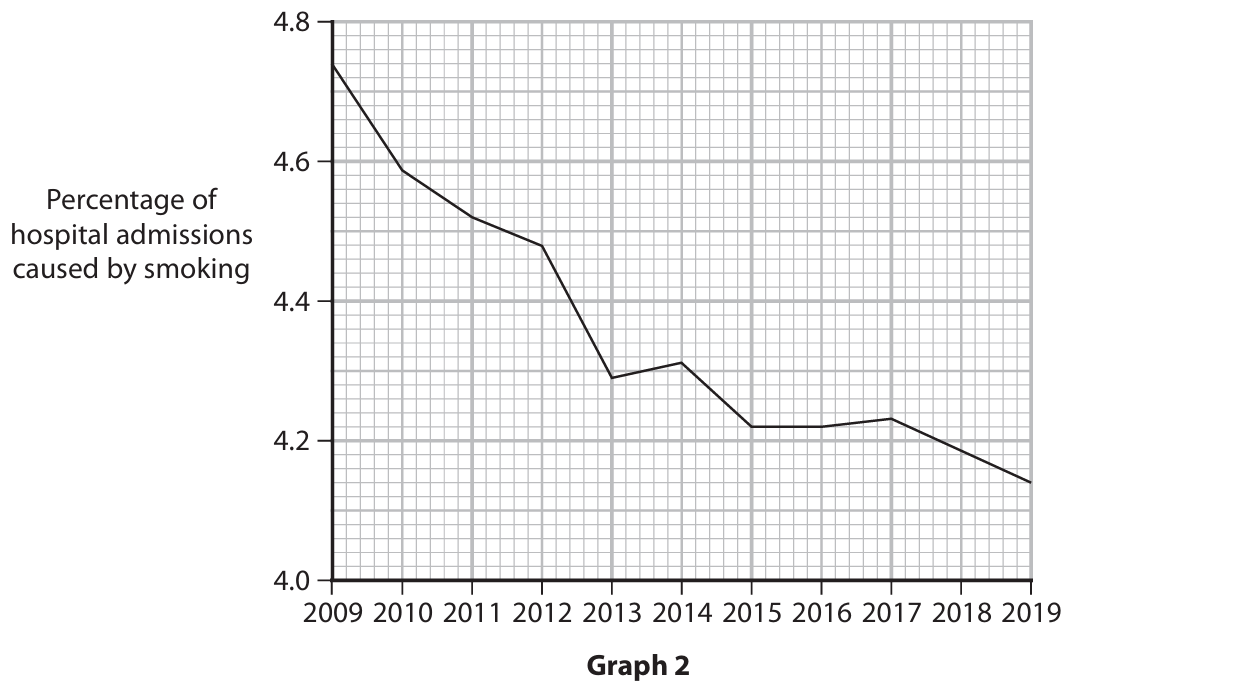
(b) Graph 2 shows the percentage of all hospital admissions that were due to conditions caused by smoking each year from 2009 to 2019.

Comment on the changes in the number of hospital admissions caused by smoking and the percentage of all hospital admissions that were caused by smoking.
Use data from graph 1 and graph 2 in your answer.
(c) Smoking causes harmful effects on the lungs.
Describe the consequences of smoking cigarettes for the functioning of the lungs.
Most-appropriate topic codes (Edexcel IGCSE Biology):
• 2(h): Transport — part (c)
• 4(d): Human influences on the environment — implicit in smoking as pollution
• Appendix 4: Mathematical skills — parts (a) and (b) (data interpretation, percentage calculation)
▶️ Answer/Explanation
(a)
Percentage increase ≈ 9.52%
Explanation:
To calculate the percentage increase, we first need the number of admissions for the start year (2009) and the end year (2019) from Graph 1.
From the graph, the number in 2009 is approximately 462 (thousand). The number in 2019 is approximately 506 (thousand).
The actual increase is calculated as: 506 – 462 = 44 (thousand).
The percentage increase is calculated using the formula:
\[ \text{Percentage Increase} = \left( \frac{\text{Change}}{\text{Original}} \right) \times 100 = \left( \frac{44}{462} \right) \times 100 \]
Performing the calculation: (44 ÷ 462) ≈ 0.095238. Multiplying by 100 gives approximately 9.52%.
Therefore, the percentage increase in hospital admissions caused by smoking from 2009 to 2019 was about 9.52%.
(b)
Comment:
Explanation:
Analyzing the data from both graphs reveals important trends. Graph 1 shows that the absolute number of hospital admissions due to smoking generally increased from 2009 (≈462,000) to 2019 (≈506,000), with a noticeable dip or plateau around 2012-2013 where numbers were at their lowest.
However, Graph 2 tells a different story about the proportion of total admissions. It shows that the percentage of all hospital admissions that were caused by smoking declined over the same period, reaching its lowest point in 2019.
This apparent contradiction can be explained by factors such as an increase in the total number of hospital admissions from all causes (e.g., due to a growing or aging population, or an increase in other illnesses), meaning smoking-related admissions make up a smaller share of a larger total. It could also suggest that while the number of people suffering smoking-related illnesses is high, fewer people are starting to smoke or more people are quitting, leading to a slower growth rate of smoking-related admissions compared to admissions from other causes.
(c)
Consequences for Lung Function:
Explanation:
Smoking severely damages the lungs and impairs their function through several mechanisms:
- Damage to Cilia: The trachea and bronchi are lined with cilia (tiny hair-like structures) that sweep mucus and trapped particles out of the airways. Smoke paralyzes and destroys these cilia. This is a primary and early consequence.
- Mucus Buildup: With the cilia unable to function, mucus builds up in the airways. This buildup cannot be cleared effectively, creating a stagnant environment.
- Increased Infection Risk: The accumulated mucus becomes a breeding ground for bacteria, leading to frequent bacterial infections, bronchitis, and pneumonia.
- Alveoli Destruction: The toxins in smoke damage the walls of the alveoli (air sacs where gas exchange occurs). This causes the alveoli to break down and merge, a condition called emphysema. This drastically reduces the surface area available for oxygen and carbon dioxide exchange.
- Inflammation and Narrowing: Smoke causes chronic inflammation and swelling of the bronchioles. The muscles around these airways can also tighten, causing them to narrow. This makes it physically harder to move air in and out, leading to breathlessness, a characteristic of chronic bronchitis.
- Cancer: The carcinogens in tobacco smoke can cause mutations in lung cells, leading to uncontrolled cell growth and lung cancer.
Collectively, the destruction of alveoli (emphysema) and the inflamed, narrowed airways (chronic bronchitis) are often grouped under the term Chronic Obstructive Pulmonary Disease (COPD), a major long-term consequence of smoking.
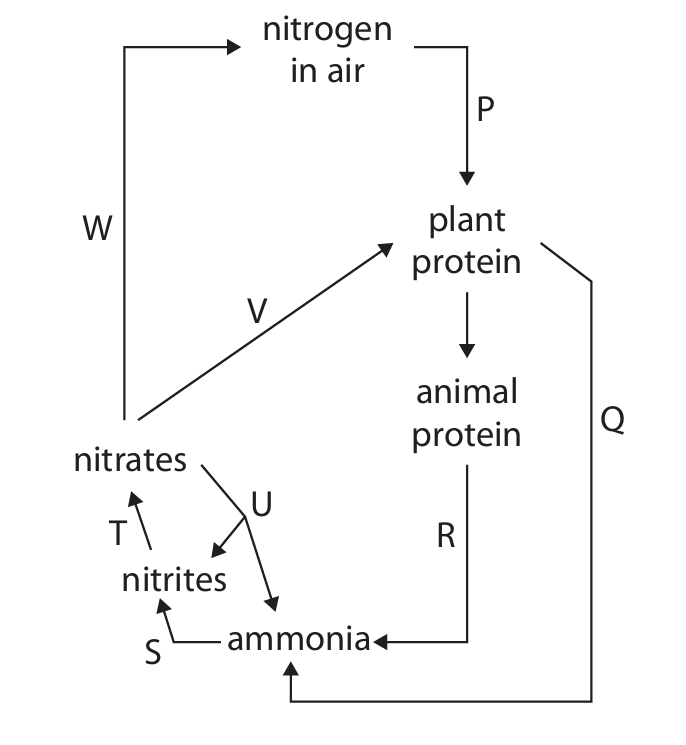
The diagram shows the nitrogen cycle. Some of the stages have been labelled.

(a) (i) Which stage shows nitrogen fixation?
- A. P
- B. Q
- C. T
- D. V
(a) (ii) Which stage shows nitrification?
- A. Q
- B. U
- C. T
- D. W
(a) (iii) Which stage shows denitrification?
- A. P
- B. T
- C. V
- D. W
(b) Farmers sometimes add chemical fertiliser to the soil.
(i) Describe how pollution by fertiliser can affect aquatic ecosystems.
(ii) Give an alternative to chemical fertiliser that a farmer could use.
Most-appropriate topic codes (Edexcel IGCSE Biology):
• 4(d): Human influences on the environment — parts (b)(i), (b)(ii)
▶️ Answer/Explanation
(a)(i) Answer: A (P)
Explanation: Nitrogen fixation is the process where atmospheric nitrogen (N₂) is converted into ammonia (NH₃) or related compounds by nitrogen-fixing bacteria. In the diagram, this process is represented by stage P, where nitrogen from the air enters the soil ecosystem.
(a)(ii) Answer: C (T)
Explanation: Nitrification is the biological oxidation of ammonia to nitrite (NO₂⁻) followed by the oxidation of nitrite to nitrate (NO₃⁻). This process is carried out by specific nitrifying bacteria. In the diagram, stage T represents this conversion process within the nitrogen cycle.
(a)(iii) Answer: D (W)
Explanation: Denitrification is the microbial process where nitrate (NO₃⁻) is reduced to nitrogen gases (N₂ or N₂O), which are then released back into the atmosphere. This completes the nitrogen cycle. In the diagram, stage W shows this return of nitrogen to the atmosphere.
(b)(i) Answer: Fertilizer pollution can severely impact aquatic ecosystems through a process called eutrophication.
Explanation: When excess fertilizer containing nitrates and phosphates is washed into water bodies from agricultural fields, it acts as a nutrient source for algae and aquatic plants. This leads to rapid algal growth known as an algal bloom. The dense algal growth covers the water surface, blocking sunlight from reaching deeper aquatic plants. Without sufficient light, these plants cannot photosynthesize effectively and eventually die. As the algae and plants die, they sink to the bottom where they are decomposed by bacteria. These decomposing bacteria respire, consuming large amounts of oxygen in the process. This leads to oxygen depletion in the water, creating hypoxic (low oxygen) conditions. The lack of oxygen causes fish and other aquatic organisms to suffocate and die, disrupting the entire aquatic ecosystem.
(b)(ii) Answer: Animal manure / dung / faeces / animal waste
Explanation: Instead of chemical fertilizers, farmers could use organic alternatives like animal manure. Animal waste contains essential nutrients like nitrogen, phosphorus, and potassium that plants need for growth. When properly composted and applied, manure slowly releases these nutrients into the soil, improving soil structure and fertility while reducing the risk of water pollution compared to synthetic fertilizers. Other alternatives include compost, green manure (growing and plowing under plants specifically for soil improvement), and bone meal.
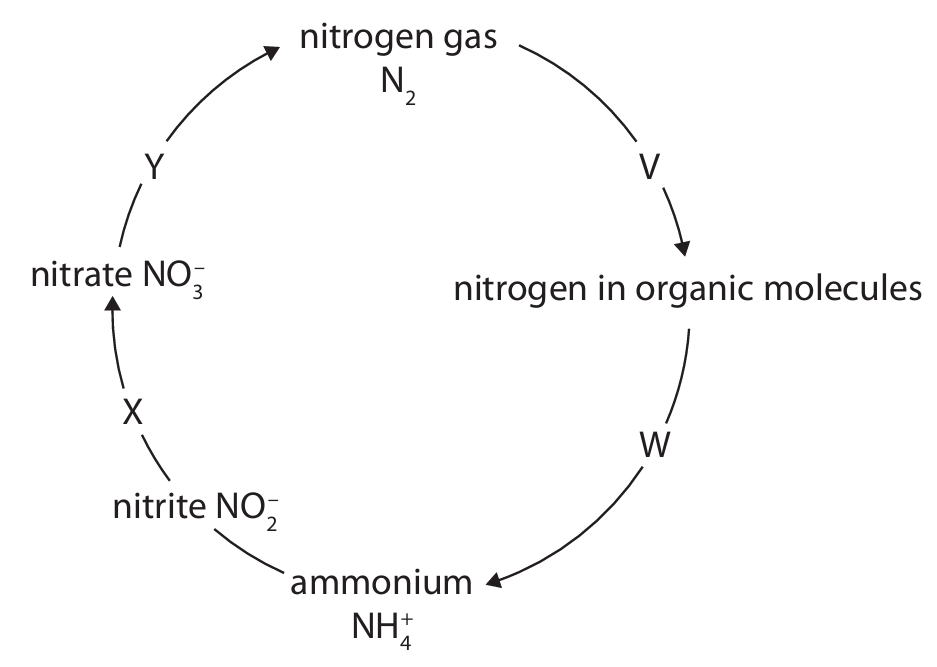
The diagram shows the nitrogen cycle with some processes labelled.

(a) (i) Explain why plants need nitrate ions.
(ii) Name the processes \( V \), \( X \) and \( Y \).
(b) Scientists measure the dissolved nitrate levels in a river that passes through farmland.
They also measure the nitrogen compounds being used on the farmland either as fertiliser or as manure from livestock.
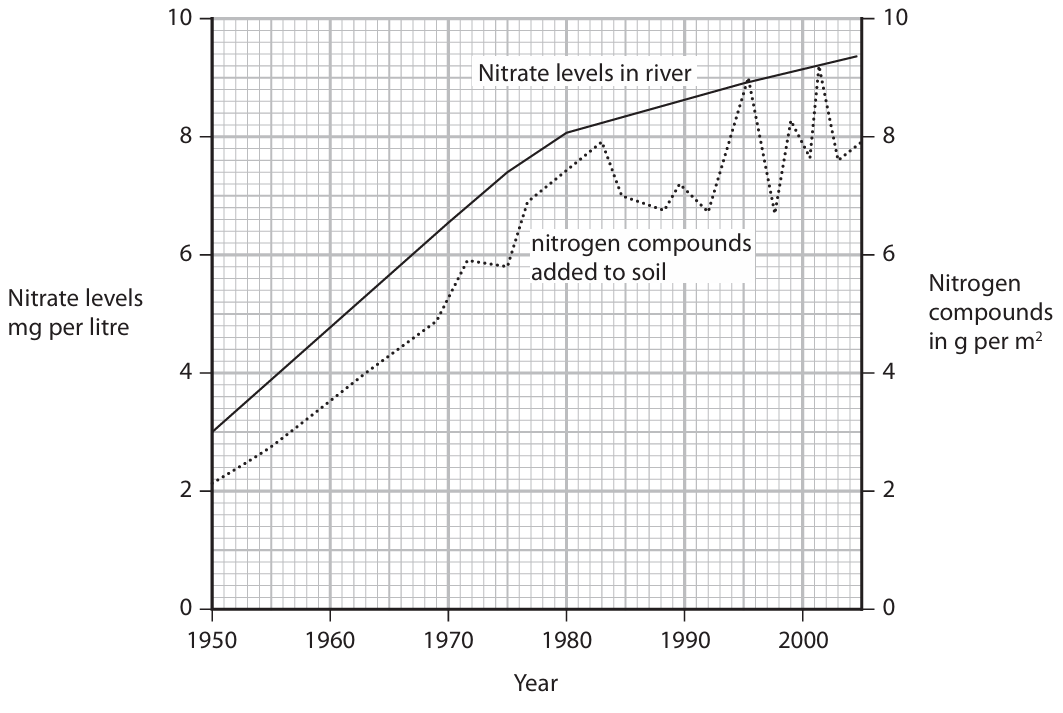
The graph shows how the nitrate levels in the river and the nitrogen compounds applied to the farmland changed from 1950 to 2005.

(i) Comment on the relationship between nitrate levels in the river and the nitrogen compounds applied to the farmland.
(ii) Describe the changes within the river that would have occurred between 1950 and 2000.
Most-appropriate topic codes (Edexcel IGCSE Biology):
• 5.11B: Describe the stages in the nitrogen cycle — part (a)(ii)
• 2.22: Understand that plants require mineral ions for growth — part (a)(i)
• 4(d): Human influences on the environment — parts (b)(i), (b)(ii)
• 5.17: Understand the biological consequences of eutrophication — part (b)(ii)
• 5.15: Understand how human activities contribute to greenhouse gases / pollution — part (b)(i)
▶️ Answer/Explanation
(a)(i)
Explanation: Plants need nitrate ions (\( NO_3^- \)) because:
1. Nitrates are a source of nitrogen, which is a key element needed to synthesize amino acids.
2. Amino acids are the building blocks for proteins, which are essential for plant growth, enzyme function, and cell structure.
Additional detail: Nitrogen is also required for making other important compounds like chlorophyll, DNA, and RNA.
(a)(ii)
Process Names:
• \( V \): Nitrogen fixation (carried out by nitrogen-fixing bacteria).
• \( X \): Nitrification (carried out by nitrifying bacteria, converting ammonium to nitrite then nitrate).
• \( Y \): Denitrification (carried out by denitrifying bacteria, converting nitrates back to nitrogen gas).
(b)(i)
Comment on the relationship:
1. There is a general positive correlation between the two variables from 1950 to 1970; as nitrogen application increased, river nitrate levels also increased.
2. From 1980 onwards, the relationship becomes less clear/more variable.
3. The amount of nitrogen applied to fields fluctuates more (shows greater variability) than the nitrate levels in the river, which remain relatively more stable.
4. This can be explained by factors such as:
– Leaching of excess nitrate from fields into the river.
– Variations in fertilizer application rates by farmers.
– The river receiving nitrates from other sources (e.g., sewage, natural decay).
(b)(ii)
Describe changes in the river (eutrophication process):
1. Increased nitrate levels led to excessive algal growth / algal blooms (eutrophication).
2. The increase in algae and later their death led to a rise in decomposer bacteria that break down the organic matter.
3. These decomposers respire, using up oxygen, leading to reduced oxygen levels (anoxia) in the water.
4. This resulted in increased turbidity (cloudiness) and reduced light penetration, harming aquatic plants.
5. Ultimately, there was a loss of biodiversity, including death of fish and other oxygen-dependent organisms.
Read the passage below. Use the information in the passage and your own knowledge to answer the questions that follow.
Plants to the rescue
Since the early 20th century, the concentration of carbon dioxide in the atmosphere has increased rapidly. This has further increased in recent years due to more cars and the increased demand for electricity for homes and industry.
Scientists have found that plants play a critical part in removing this excess carbon dioxide from the atmosphere. Using computer models, the scientists concluded that photosynthesis has increased by 30 per cent.
The scientists measured carbonyl sulfide found in ice cores and air samples. In addition to carbon dioxide, plants take in carbonyl sulfide gas during their natural carbon cycle, and this is frequently used as a measure of photosynthesis on a global scale. Terrestrial plants are removing about 29 per cent of carbon dioxide emissions that would otherwise contribute to an increase in the atmospheric carbon dioxide concentration.
A carbon sink is an ecosystem, such as a forest, that absorbs more carbon dioxide than it releases. The size of the carbon sink depends on the rate of photosynthesis but also on the levels of deforestation and respiration. The model the scientists used showed that the role of photosynthesis in producing a carbon sink in land plants is larger than estimated in most other models.
Other scientists are less confident about using carbonyl sulfide as a measure of photosynthesis. Plant absorption of carbonyl sulfide can vary depending upon the amount of light the plants receive. Therefore, the measure of global photosynthesis could be overestimated.
Regardless of the rate at which photosynthesis has increased, scientists agree that excess carbon dioxide is boosting the growth of plants. Trees are becoming leafier, and there is more wood. The wood is where most of the carbon is stored in the plant.
In experimental research, scientists exposed plants to double the normal concentration of carbon dioxide found in the atmosphere. Under these increased carbon dioxide conditions, the composition of the leaf tissues changed. This made the leaves tougher for herbivores to eat and made it harder for insect larvae to grow.
Scientists have also observed that when plants are exposed to increasing levels of carbon dioxide, the size of the stomatal pores on a leaf increases.
(a) Explain why more cars would result in an increase in atmospheric carbon dioxide. (Lines 1-3)
(b) Explain how increased carbon dioxide can cause climate change.
(c) Explain why increasing carbon dioxide concentration can increase photosynthesis in plants.
(d) Explain why the carbon sink depends upon respiration and deforestation as well as photosynthesis. (Lines 13 to 15)
(e) Light affects gas exchange in leaves. (Lines 19 and 20)
Describe an experiment that shows how the net gas exchange from a leaf varies with light intensity.
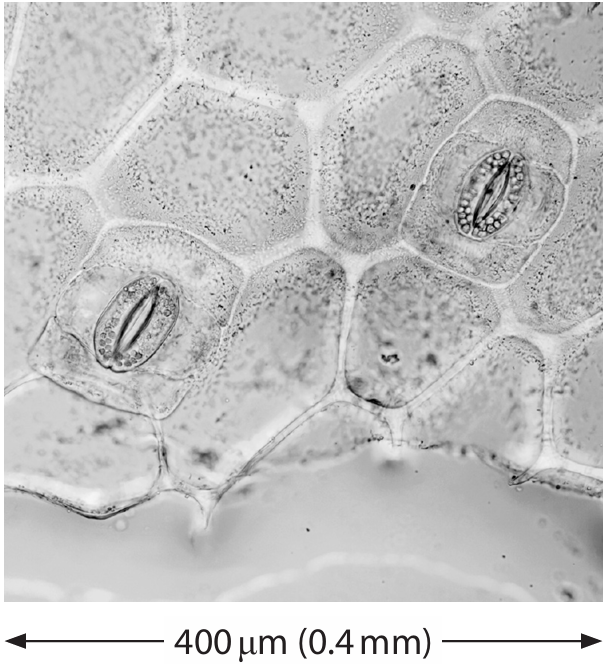
(f) The photograph shows stomata on a small square of the lower surface of a leaf.

The total area of the lower surface of the leaf is \(150 \text{ cm}^2\).
Using the photograph and the total lower surface area of the leaf, estimate the number of stomata on the lower surface of the leaf.
(g) Stomata also have a role in water transport in the plant. Explain the role of stomata in water transport.
Most-appropriate topic codes (Edexcel IGCSE Biology):
• 4(d): Human influences on the environment — parts (a), (b)
• 4(c): Cycles within ecosystems (Carbon cycle) — part (d)
• 2(g): Gas exchange — parts (e), (f), (g)
• 2(h): Transport in plants — part (g)
▶️ Answer/Explanation
(a)
An explanation that makes reference to:
• Burning / combustion of petrol / diesel / fuel in car engines. (1 mark)
• This combustion reaction releases carbon dioxide (\( \text{C} + \text{O}_2 \rightarrow \text{CO}_2 \)). (1 mark)
More cars mean more fuel burned, directly increasing \( \text{CO}_2 \) emissions.
(b)
An explanation that makes reference to two of the following:
• Carbon dioxide is a greenhouse gas. (1 mark)
• It traps / absorbs infrared (IR) radiation (heat) from the Earth, preventing its escape into space. (1 mark)
• This leads to an enhanced greenhouse effect, causing global warming / climate change. (1 mark)
(Maximum 2 marks)
(c)
An explanation that makes reference to:
• Carbon dioxide is a reactant / raw material needed for photosynthesis. (1 mark)
• At lower concentrations, \( \text{CO}_2 \) can be a limiting factor for photosynthesis; increasing its concentration can increase the rate up to a point. (1 mark)
The photosynthesis equation is: \( 6\text{CO}_2 + 6\text{H}_2\text{O} \xrightarrow{\text{light}} \text{C}_6\text{H}_{12}\text{O}_6 + 6\text{O}_2 \).
(d)
An explanation that makes reference to two of the following:
• A carbon sink absorbs more \( \text{CO}_2 \) than it releases. (1 mark)
• Respiration (by plants, animals, decomposers) releases \( \text{CO}_2 \) back into the atmosphere, reducing net absorption. (1 mark)
• Deforestation (cutting down trees) reduces the number of plants for photosynthesis and often involves burning/decay, releasing stored carbon as \( \text{CO}_2 \). (1 mark)
(Maximum 2 marks)
(e)
A description that makes reference to three of the following:
• Place leaves (or aquatic plants like pondweed) in test tubes containing hydrogen-carbonate indicator. (1 mark)
• Expose one setup to bright light and another to darkness (or vary light intensity using a lamp at different distances). (1 mark)
• In bright light, the indicator turns purple/dark red (due to net \( \text{CO}_2 \) uptake in photosynthesis). In darkness, it turns yellow (due to net \( \text{CO}_2 \) release from respiration). (1 mark)
• Control other variables: use leaves of the same species, size, age; same volume and concentration of indicator; same temperature; same time period. (1 mark)
(Maximum 3 marks)
(f)
Step-by-step calculation:
1. Area in photograph: side = \( 400 \mu\text{m} = 0.4 \text{ mm} = 0.04 \text{ cm} \).
2. Area of square = \( (0.04 \text{ cm})^2 = 0.0016 \text{ cm}^2 \).
3. Number of stomata in this area = 2.
4. Stomatal density = \( \frac{2}{0.0016} = 1250 \) stomata per \( \text{cm}^2 \).
5. Total number on leaf = \( 1250 \times 150 = 187500 \).
Answer: \( \mathbf{187500} \) stomata. (3 marks)
(g)
An explanation that makes reference to:
• Stomata allow water vapour to evaporate / be lost from the leaf in a process called transpiration. (1 mark)
• This transpiration pull creates a tension / negative pressure in the xylem, drawing a continuous column of water up from the roots, through the stem, and into the leaves. (1 mark)
This is known as the transpiration stream, and it relies on stomatal opening for water movement against gravity.
Fish farming is often used to produce protein rich food.
(a) Selective breeding is often used to produce fish that grow rapidly and do not waste much food.
Explain how selective breeding can be used to produce fish that grow rapidly.
(b) Fish farming systems can often release ammonia into the water. The ammonia is converted into nitrates.
Describe how ammonia is converted into nitrates.
(c) Multi-trophic level aquaculture is a method of fish farming that has been developed to reduce environmental pollution and increase profits.
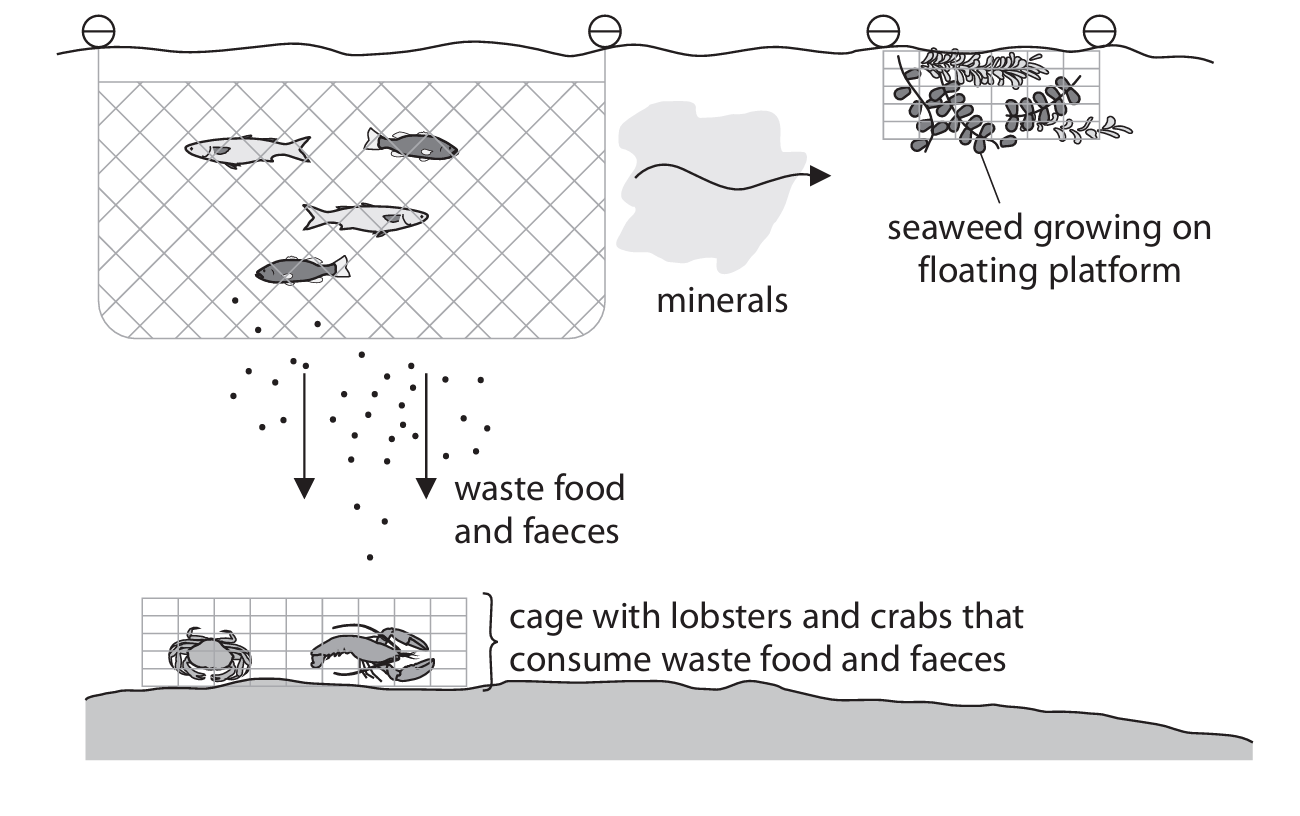
The diagram shows a multi-trophic level aquaculture system.

Explain how the multi-trophic level aquaculture system reduces environmental pollution, and increases the profits of fish farming.
Use information from the diagram and your own knowledge to support your answer.
Most-appropriate topic codes (Edexcel IGCSE Biology):
• 5(b): Selective breeding — part (a) (selective breeding in animals)
• 4(c): Cycles within ecosystems — part (b) (nitrogen cycle processes)
• 4(d): Human influences on the environment — part (c) (pollution reduction, sustainable practices)
▶️ Answer/Explanation
(a)
Explanation: Selective breeding involves a deliberate process to enhance desirable traits. To produce fish that grow rapidly, fish farmers would first identify and select parent fish that already exhibit fast growth rates. These selected fish are then bred together. From their offspring, the fastest-growing individuals are again selected to be the parents for the next generation. By repeating this process over many generations, the alleles (gene variants) responsible for rapid growth become more common in the population, leading to a stock of fish that consistently grows quickly.
(b)
Explanation: The conversion of ammonia to nitrates is a natural biological process called nitrification. This process is carried out by specific types of bacteria known as nitrifying bacteria. These bacteria are autotrophs that obtain energy by oxidizing nitrogen compounds. The process occurs in two main stages. First, bacteria such as Nitrosomonas convert ammonia (NH₃) into nitrites (NO₂⁻). Then, other bacteria, like Nitrobacter, convert these nitrites into nitrates (NO₃⁻). Nitrates are a form of nitrogen that can be more easily utilized by plants and algae.
(c)
Explanation: The multi-trophic level aquaculture system is designed to create a more balanced and efficient ecosystem, which directly addresses pollution and profitability.
Reducing Pollution:
- The system significantly reduces solid waste pollution because lobsters and crabs consume the waste food and faeces produced by the main fish stock. This means less organic matter accumulates on the seabed.
- With less waste material available, there is a reduction in the population of decomposing bacteria. This is beneficial because these bacteria consume large amounts of oxygen during respiration; therefore, lower bacterial numbers help to maintain higher oxygen levels in the water, preventing oxygen depletion that can kill aquatic life.
- Furthermore, the seaweed plays a crucial role in reducing dissolved nutrient pollution. It absorbs nitrates, phosphates, and other minerals from the water that would otherwise act as fertilizers, potentially causing excessive algal growth (algal blooms) and eutrophication. The seaweed also releases oxygen through photosynthesis, further improving water quality.
Increasing Profits:
- This system creates additional saleable products. The farmer can now harvest and sell not only the main fish but also the lobsters, crabs, and seaweed, diversifying their income streams.
- It also reduces costs. There is no need to purchase extra feed for the lobsters and crabs, as they consume the waste from the fish. Similarly, the seaweed obtains its minerals naturally from the water, eliminating the need for artificial fertilizers.
- Healthier fish, resulting from the improved water quality (higher oxygen, lower disease risk), are likely to grow better and have lower mortality rates, leading to higher yields and reduced losses.
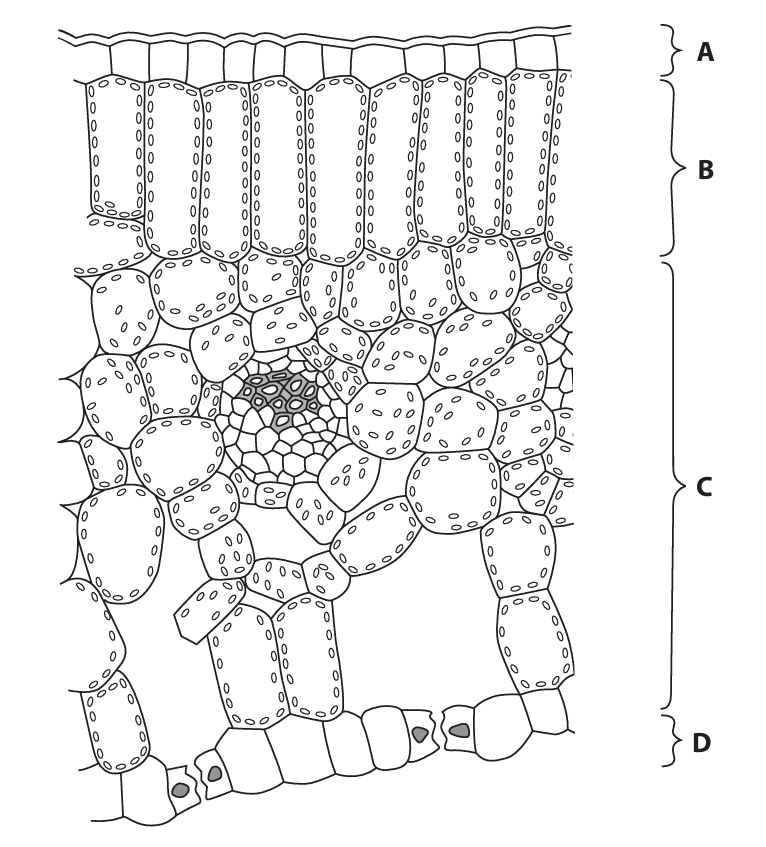
The diagram shows a cross-section through a leaf.

(a) (i) Which layer contains palisade mesophyll cells?
- A
- B
- C
- D
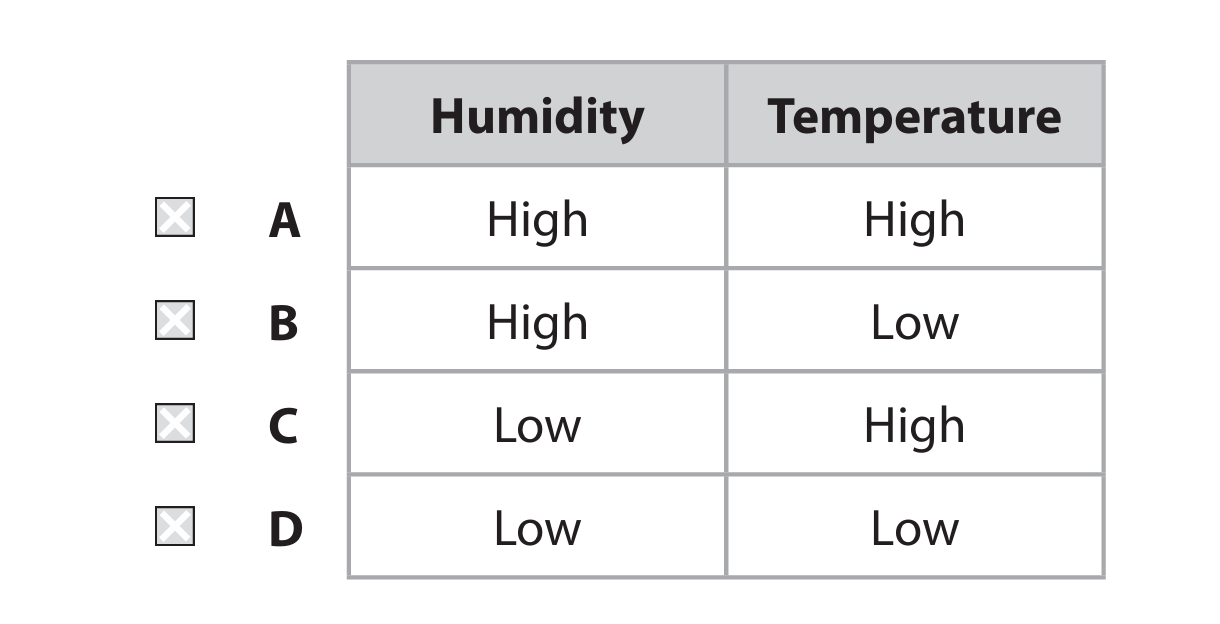
(ii) Which set of environmental conditions would produce the fastest rate of transpiration from this leaf?

(b) Scientists investigate the effect of changing carbon dioxide concentration on the density of stomata of wheat plants.
They grow wheat plants from seed in different concentrations of carbon dioxide.
After three weeks, they take a leaf from each plant and calculate the mean density of stomata.
(i) State the independent variable in this investigation.
(ii) Give two abiotic variables that the scientists could control.
(iii) To calculate the mean density of stomata, leaf sections are viewed with a microscope.
The number of stomata within six circular areas of the leaf are counted.
The results for one leaf are shown in the table.

The radius of each circular area is 0.40 mm.
area of circle = \(\pi r^2\)
\(\pi = 3.14\)
Calculate the mean density of stomata on the leaf surface.
(iv) The investigation shows that in increased carbon dioxide concentrations there is a lower mean density of stomata.
The scientist concludes that in hot dry areas, with increased carbon dioxide concentrations, it would be an advantage for wheat to have a lower mean density of stomata.
Discuss the scientist’s conclusion.
Most-appropriate topic codes (Edexcel IGCSE Biology):
• 2(h): Transport (Flowering plants) — part (a)(ii)
• 4(a): The organism in the environment — parts (b)(i), (b)(ii)
• Appendix 4: Mathematical skills — part (b)(iii)
• 4(d): Human influences on the environment — part (b)(iv)
▶️ Answer/Explanation
(a) (i) B
Explanation: The palisade mesophyll layer is typically found just below the upper epidermis in a leaf. It consists of tightly packed, columnar cells rich in chloroplasts, which are the main sites for photosynthesis. In a standard leaf cross-section diagram, this layer is labeled as B.
(a) (ii) Low humidity, High temperature
Explanation: Transpiration is the loss of water vapor from the leaves. Its rate is influenced by environmental factors. Low humidity creates a steeper concentration gradient for water vapor between the leaf’s interior and the outside air, favoring faster diffusion. High temperature increases the kinetic energy of water molecules, leading to more evaporation. Therefore, the combination of low humidity and high temperature provides the most favorable conditions for the fastest transpiration rate.
(b) (i) Concentration of carbon dioxide
Explanation: The independent variable is the factor that the scientist deliberately changes or manipulates in an experiment. Here, the scientists are growing plants in “different concentrations of carbon dioxide,” so that is the independent variable.
(b) (ii) Any two from: temperature, light, mineral ions/pH/soil, water/humidity
Explanation: Abiotic factors are the non-living chemical and physical parts of the environment. To ensure a fair test where only the independent variable (CO₂ concentration) affects the results, other abiotic factors that could influence plant growth or stomatal density must be kept constant. Examples include temperature, light intensity, water availability, humidity, and soil mineral content or pH.
(b) (iii) 140 stomata per mm²
Explanation:
First, calculate the total number of stomata counted: 68 + 72 + 66 + 75 + 76 + 63 = 420.
Next, find the mean number of stomata per circular area: 420 ÷ 6 = 70.
Then, calculate the area of one circular sampling region using the formula \(\pi r^2\). The radius \(r\) is 0.40 mm.
Area = 3.14 × (0.40)² = 3.14 × 0.16 = 0.5024 mm².
Finally, calculate the mean density: Mean number of stomata per area = 70 ÷ 0.5024 ≈ 139.3.
Rounded to a sensible figure, this gives a mean density of approximately 140 stomata per mm².
(b) (iv) Discussion points include:
- Carbon dioxide is essential for photosynthesis.
- Fewer stomata may reduce the uptake of CO₂, potentially limiting photosynthesis.
- However, with increased external CO₂ concentration, the diffusion gradient is steeper, so fewer stomata might still allow sufficient CO₂ intake.
- A major advantage of fewer stomata is a significant reduction in water loss through transpiration.
- In hot, dry areas, conserving water is crucial to prevent wilting and maintain turgor.
- Reduced transpiration can also mean less transport of minerals from roots to shoots and less evaporative cooling of the leaf, which could be a disadvantage.
- The conclusion is generally supported as water conservation is often the limiting factor for survival in such environments, making the trade-off beneficial.
Explanation: The scientist’s conclusion links high CO₂, low stomatal density, and an advantage in hot, dry climates. The core of the discussion revolves around the trade-off between gas exchange (for photosynthesis) and water conservation. In high CO₂ conditions, the plant’s demand for stomatal openings for CO₂ intake might be lower because the driving force for diffusion is stronger. This allows the plant to afford having fewer stomata. The primary benefit of fewer stomata is a substantial reduction in transpirational water loss, which is a critical survival advantage in arid environments where water is scarce. While there might be minor drawbacks like reduced mineral transport or slightly lower photosynthetic rates, the overwhelming benefit of water conservation in a hot, dry habitat makes the scientist’s conclusion reasonable. The data from the investigation directly supports the first part of this chain by showing that high CO₂ leads to lower stomatal density.
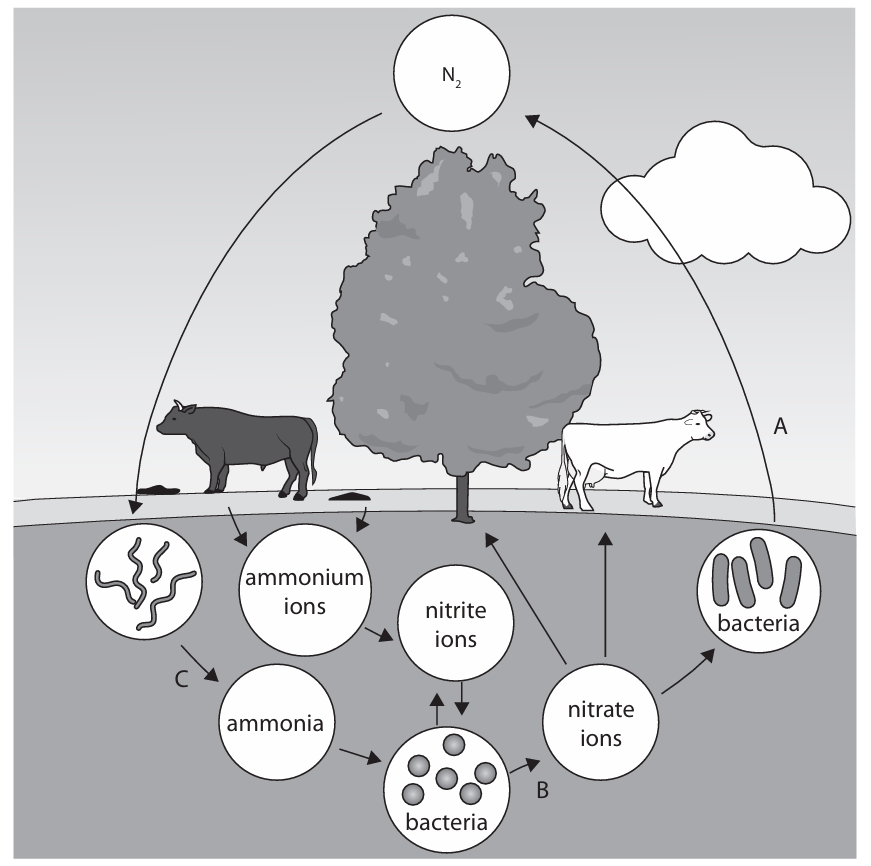
The diagram shows some parts of the nitrogen cycle.

(a) Name the processes labelled A, B and C.
(b) The mass of nitrogen that moves within the nitrogen cycle has been estimated and some of the masses are given in the table.

(i) Some of these processes remove nitrogen from the atmosphere. Calculate the total mass of nitrogen removed from the atmosphere by these processes. Give your answer in standard form.
(ii) Calculate the percentage of the nitrogen released into the atmosphere that comes from burning of biomass.
(iii) Explain how burning biomass returns nitrogen to the atmosphere.
(c) Explain the effect of nitrous oxide on global warming.
Most-appropriate topic codes (Edexcel IGCSE Biology):
• 4(c): Nitrogen cycle — part (a)
• 4(d): Human influences on the environment — parts (b)(iii), (c)
• Appendix 4: Mathematical skills — parts (b)(i), (b)(ii)
▶️ Answer/Explanation
(a)
A: Denitrification
B: Nitrification
C: Nitrogen Fixation
Explanation: In the nitrogen cycle, process A shows nitrogen gas returning to the atmosphere from nitrates, which is denitrification carried out by denitrifying bacteria. Process B shows the conversion of ammonium ions to nitrites and then to nitrates, which is nitrification performed by nitrifying bacteria. Process C shows atmospheric nitrogen being converted to ammonia/ammonium ions, which is nitrogen fixation by nitrogen-fixing bacteria.
(b)(i)
Mass = \(2.53 \times 10^{14}\) g
Explanation: To calculate the total nitrogen removed from the atmosphere, we add all the processes that remove nitrogen: fertilizer manufacture (120), nitrogen fixation (58), lightning (5), and deposition of nitrogen oxides (70). Adding these gives 120 + 58 + 5 + 70 = 253. Since the units are \(g \times 10^{12}\), we convert to standard form: \(253 \times 10^{12} = 2.53 \times 10^{14}\) g.
(b)(ii)
Percentage = 20% (or 19.5%)
Explanation: First, calculate the total nitrogen released into the atmosphere: burning biomass (40) + denitrification (100) + ammonia release (60) + nitrogen oxides release (5) = 205. The percentage from burning biomass is (40 ÷ 205) × 100 = 19.51%, which rounds to 20%.
(b)(iii)
Explanation: Burning biomass returns nitrogen to the atmosphere because biomass contains nitrogen compounds such as proteins, amino acids, and nucleic acids. When biomass burns, these nitrogen-containing compounds break down and release nitrogen in the form of nitrogen oxides (NOₓ) and other gases into the atmosphere.
(c)
Explanation: Nitrous oxide (N₂O) is a potent greenhouse gas that contributes significantly to global warming. It absorbs infrared radiation (heat) emitted by the Earth’s surface and prevents it from escaping into space, effectively trapping heat in the atmosphere. This enhanced greenhouse effect leads to an increase in global temperatures and climate change. Nitrous oxide is particularly concerning because it has a much greater warming potential per molecule than carbon dioxide.
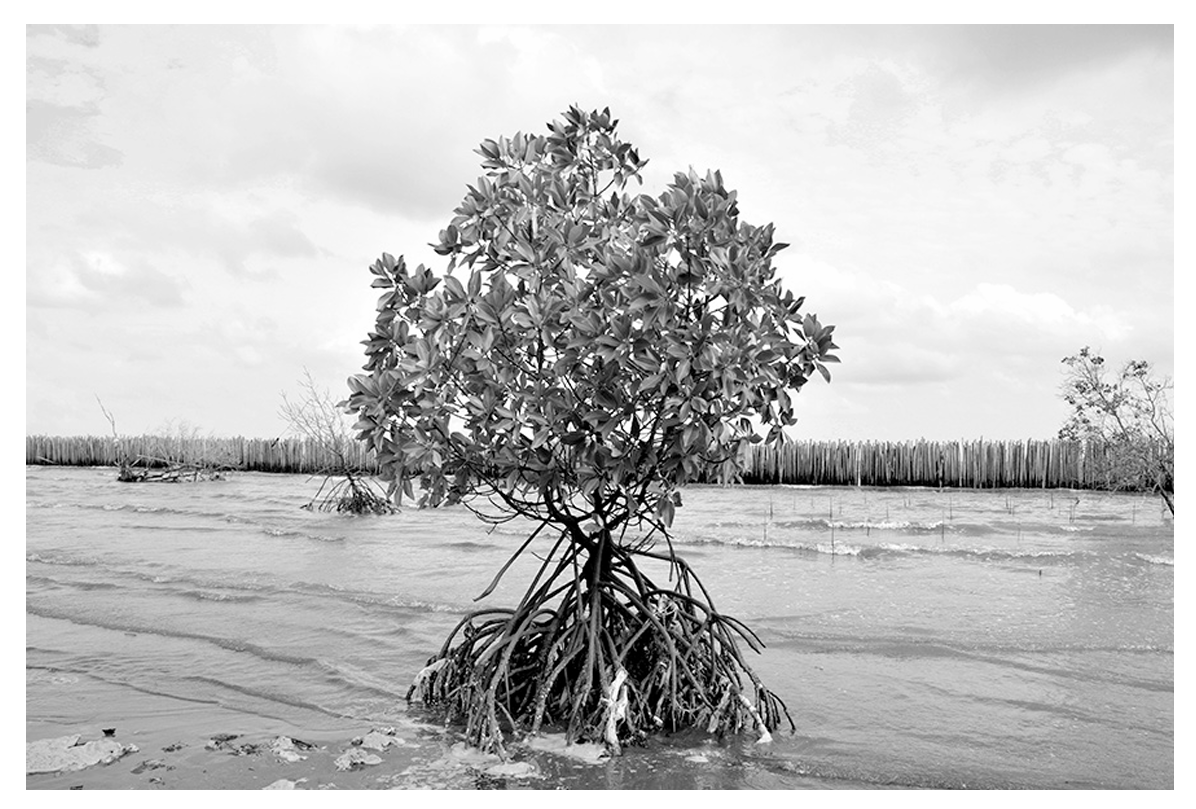
Read the passage below. Use the information in the passage and your own knowledge to answer the questions that follow.
Supercharging plants to reduce global warming
The proportion of carbon dioxide in the atmosphere has increased in the last 100 years. In 2020, a mass of 727 gigatonnes of carbon dioxide was released into the atmosphere from natural processes, along with a mass of 37 gigatonnes from human activities. Scientists have estimated that plants naturally remove a mass of 746 gigatonnes of carbon dioxide from the atmosphere every year. The difference between what is removed and what is released causes atmospheric carbon dioxide to rise every year. Carbon dioxide is a greenhouse gas, and a significant rise will cause global warming.
To help solve the problem of rising concentrations of atmospheric carbon dioxide, scientists are planning to produce transgenic, supercharged plants that can remove atmospheric carbon dioxide and store it in their roots. The scientists estimate that if these plants can be developed, the plants could remove a mass of carbon dioxide equivalent to 50% of the emissions from human activities.
Coastal plants that have their roots in seawater contain a substance called suberin in the cell walls of the outer layer of the roots. Suberin is a waterproof substance that contains a high proportion of carbon atoms. Suberin is decomposed very slowly so remains in the soil for a long time.
The photograph shows a coastal plant called a mangrove.

To produce the supercharged plants, scientists intend to take the gene that codes for high suberin production from a coastal plant and insert it into crop plants. The crop plants used are perennial plants. Perennial plants live for many years rather than dying each winter. The transgenic crops would take in large amounts of carbon dioxide and use the carbon atoms to make suberin. The carbon would then be locked up and stored as suberin in the roots. After successfully producing one plant, they will use micropropagation rather than pollination to produce others.
These supercharged crop plants may have other uses. Suberin in roots helps to make them tolerant to soil with a high salt concentration, helping to produce higher crop yields in areas that have difficult growing conditions.
(a) (i) Carbon dioxide is a greenhouse gas. State the name of another greenhouse gas (line 7).
(ii) Calculate the increase in mass, in kg, of atmospheric carbon dioxide in 2020 (lines 2 to 7).
Give your answer in standard form.
[1 gigatonne = 1 000 000 000 000 kg]
(iii) State two consequences of global warming for the environment.
(b) Explain why producing genetically engineered plants with additional suberin in their roots could reduce atmospheric carbon dioxide (lines 14 to 17 and lines 19 to 24).
(c) Which enzyme is used to remove a gene from a section of DNA?
- A. amylase
- B. ligase
- C. lipase
- D. restriction
(d) Explain why the additional suberin in the cell walls of the roots will make the transgenic plants tolerant to soil with a high salt concentration (lines 26 to 28).
(e) Give three reasons why the scientists use micropropagation to reproduce the transgenic crop plants (lines 24 to 25).
Most-appropriate topic codes (Edexcel IGCSE Biology):
• 4(c): Cycles within ecosystems — part (a)(ii), (b)
• 5(c): Genetic modification (genetic engineering) — part (c)
• 2(d): Movement of substances into and out of cells — part (d)
• 5(d): Cloning — part (e)
• Appendix 4: Mathematical skills — part (a)(ii)
▶️ Answer/Explanation
(a)(i) Methane / nitrous oxides / CFCs / water vapour
Explanation: Greenhouse gases are those that trap heat in the Earth’s atmosphere, contributing to the greenhouse effect. While carbon dioxide is the most commonly discussed, other significant greenhouse gases include methane (released from livestock and landfills), nitrous oxides (from agriculture and industrial processes), chlorofluorocarbons or CFCs (from refrigerants and aerosols, though now largely phased out), and water vapour. Carbon monoxide is not a significant greenhouse gas and is therefore rejected.
(a)(ii) \( 1.8 \times 10^{13} \) kg
Explanation: To find the net increase in atmospheric carbon dioxide, we calculate the total released minus the total removed. The total released is 727 (natural) + 37 (human) = 764 gigatonnes. The amount removed by plants is 746 gigatonnes. The net increase is therefore 764 – 746 = 18 gigatonnes. Since 1 gigatonne = \( 1 \times 10^{12} \) kg, we convert 18 gigatonnes to kg: 18 × \( 10^{12} \) kg = \( 1.8 \times 10^{1} \) × \( 10^{12} \) kg = \( 1.8 \times 10^{13} \) kg.
(a)(iii) Any two from: ice caps/glaciers melt, sea level rise/flooding, loss of habitat/desertification/droughts, extinctions/disrupted food chains, destruction of coral reefs/coral bleaching, spread of disease/pests, extreme weather/changes in weather patterns.
Explanation: Global warming, driven by an enhanced greenhouse effect, has wide-ranging environmental consequences. Two major effects are the melting of polar ice caps and glaciers, which contributes to rising sea levels and subsequent coastal flooding. Another significant impact is the disruption of ecosystems, leading to habitat loss, species extinction as animals and plants cannot adapt quickly enough, and phenomena like coral bleaching where warmer ocean temperatures cause corals to expel the algae living in their tissues, turning them white and threatening the entire reef ecosystem.
(b) An explanation that makes reference to four of the following points:
- Plants take in/absorb carbon dioxide.
- This is for the process of photosynthesis.
- The carbon (from CO₂) is converted into/stored as suberin/locked up in suberin.
- Suberin does not decay for long periods/decomposes slowly/remains for a long time.
- Perennial plants remain for long periods/don’t die off each year.
- Slower/less carbon dioxide is released from decomposition/decay.
Explanation: Genetically engineered plants with high suberin content act as enhanced carbon sinks. They absorb carbon dioxide from the atmosphere during photosynthesis. Instead of this carbon being used solely for immediate growth or being released back quickly, a significant portion is incorporated into suberin in their root cell walls. Suberin is a very stable, waterproof compound that decomposes extremely slowly, meaning the carbon is effectively “locked away” in the soil for a very long time. Furthermore, because these are perennial plants, they live for many years, continuously performing this carbon sequestration without the need for annual replanting, which could disturb the soil and release stored carbon. This long-term storage reduces the net amount of carbon dioxide in the atmosphere.
(c) D (restriction enzyme)
Explanation: In genetic engineering, specific enzymes are used to cut DNA at precise locations. Restriction enzymes (also called restriction endonucleases) are the enzymes responsible for cutting a gene out of a section of DNA. Amylase digests starch, ligase joins DNA fragments together, and lipase digests lipids (fats).
(d) An explanation that makes reference to two of the following points:
- Prevents water loss from the plant roots.
- Due to osmosis.
- Prevents plant cells from becoming flaccid/wilting; helps them stay turgid by preventing water from moving out to the higher salt concentration in the soil.
Explanation: Soil with a high salt concentration has a low water potential (a high solute concentration). Water naturally moves by osmosis from areas of high water potential (inside the root cells) to areas of low water potential (the salty soil). This can cause the plant to lose water and wilt. Suberin, being a waterproof substance in the cell walls of the roots, acts as a barrier. It reduces the movement of water out of the root cells into the salty soil, thereby helping the plant to retain water and maintain turgor pressure, which is essential for support and function.
(e) Any three from: produces large numbers/large scale, fast/quick process, all crops produce suberin/are genetically identical/clones, less risk of cross-pollinating with wild plants/spreading the transgene, can be done at any time of year/all year.
Explanation: Micropropagation (tissue culture) is used for several advantages over traditional pollination. Firstly, it allows for the rapid production of a very large number of plants from a single, successfully modified individual. Secondly, the process is much faster than waiting for seeds to develop and grow. Thirdly, all the plants produced are genetically identical clones, guaranteeing that every single plant will have the desired high-suberin trait. Fourthly, since micropropagation is asexual and doesn’t involve pollen, there is no risk of the transgene escaping via cross-pollination and spreading into wild plant populations. Finally, it is not season-dependent and can be carried out in a lab throughout the year.
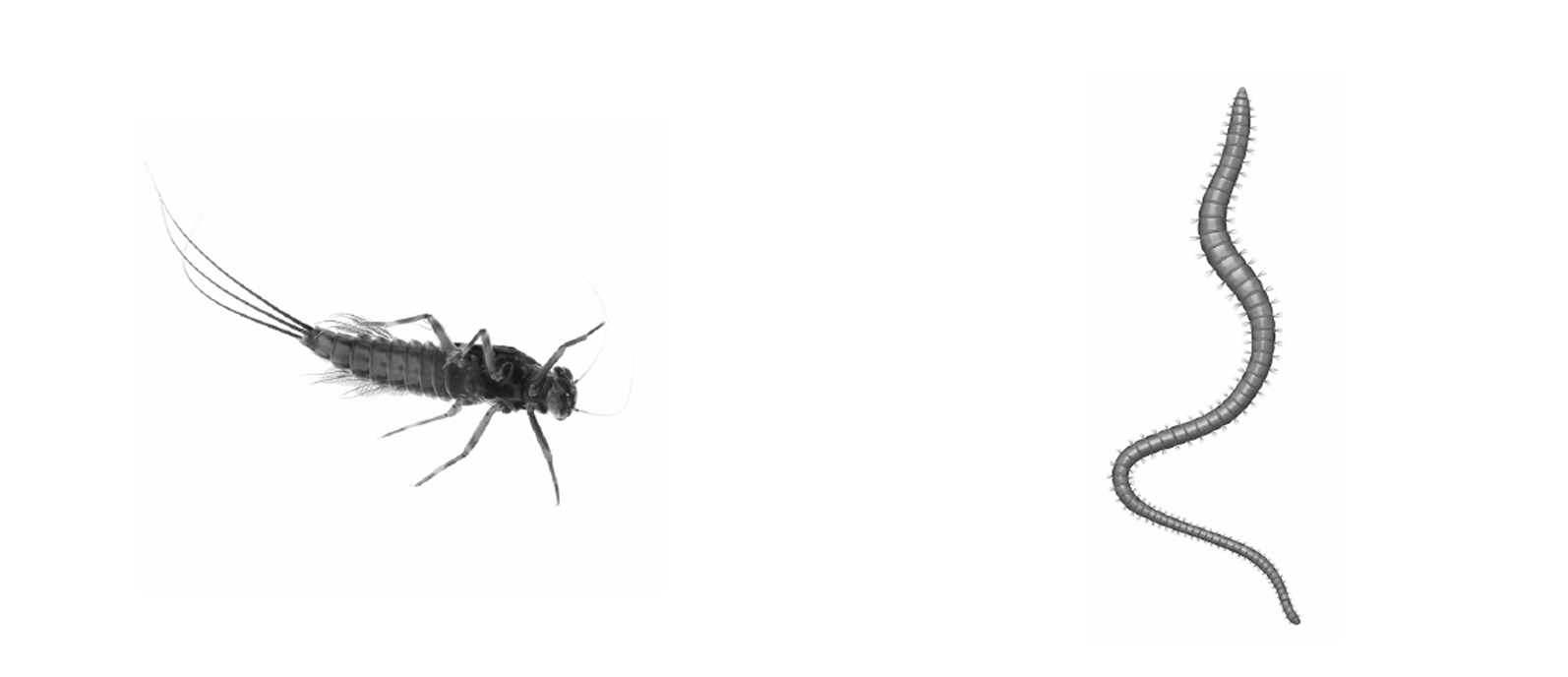
Sewage pollution affects the distribution of organisms in a river.
Scientists measured the oxygen level, the number of bacteria, the number of mayfly nymphs and the number of tubifex worms in the river.
The mayfly nymph is an immature form of an insect and the tubifex is a small worm usually growing to a length of about 10 cm.

The scientists recorded how these measurements changed at different distances from the sewage outlet.

(a) Comment on the changes in the measurements as the distance from the sewage outlet increases.
You should use information from the graphs and your own knowledge in your answer.
(b) Scientists often use information about the organisms present in a habitat as an indication of the level of pollution and as a measure of biodiversity.
(i) Explain what is meant by the term biodiversity.
(ii) Suggest how the number of mayfly nymphs and the number of tubifex worms can be used to indicate the level of pollution.
Most-appropriate topic codes (Edexcel IGCSE Biology):
• 4(a): The organism in the environment — part (a), part (b)(ii)
• 4.3B: Biodiversity — part (b)(i)
• 4.5: Abiotic and biotic factors — part (a)
▶️ Answer/Explanation
(a)
Explanation:
As the distance from the sewage outlet increases, several key changes occur in the river ecosystem, as shown by the graphs and understood through ecological principles.
Initially, right at the sewage outlet, the oxygen level in the water is low. This is because the sewage acts as a rich source of nutrients for bacteria. The bacterial population increases dramatically as they feed on this organic matter. These bacteria respire, consuming a large amount of the dissolved oxygen in the water, leading to oxygen depletion.
This low-oxygen environment has a direct impact on the larger organisms. Mayfly nymphs, which require high levels of dissolved oxygen to survive, cannot tolerate these conditions. Consequently, their numbers drop to zero near the outlet.
In contrast, tubifex worms are more tolerant of polluted conditions and can survive in water with very low oxygen levels. They thrive by feeding directly on the sewage and the bacteria, so their numbers are high near the outlet.
Further downstream, the concentration of sewage nutrients becomes diluted. With less food available, the bacterial population begins to decrease. As bacterial respiration reduces, the consumption of oxygen decreases, allowing the oxygen levels in the water to gradually recover.
As the oxygen levels return to normal, the habitat becomes suitable again for mayfly nymphs, and their numbers start to increase. Conversely, the conditions become less ideal for tubifex worms, and their numbers begin to decline as the pollution level decreases.
(b)(i)
Explanation:
Biodiversity refers to the variety of life found in a particular ecosystem or habitat. It encompasses two main concepts. First, it refers to the number of different species present (species richness). Second, it considers the relative abundance of individuals within each of those species (species evenness). A habitat with high biodiversity has many different species, each with a healthy population size, indicating a stable and healthy ecosystem.
(b)(ii)
Explanation:
Mayfly nymphs and tubifex worms have different tolerances to pollution, making them excellent bio-indicators.
Mayfly nymphs are very sensitive to pollution and low oxygen levels. Therefore, a high number of mayfly nymphs indicates clean, well-oxygenated, and unpolluted water. If mayfly nymphs are absent or present in very low numbers, it is a strong indicator that the water is polluted.
Tubifex worms, on the other hand, are very tolerant of pollution and can survive in low-oxygen conditions that would kill other organisms. A high number of tubifex worms suggests that the water is polluted and oxygen-depleted. In clean water, their numbers would be very low or zero.
By surveying the relative populations of these two organisms, scientists can get a quick and reliable indication of the pollution level in a river. The presence of mayflies and absence of tubifex worms points to clean water, while the opposite indicates pollution.
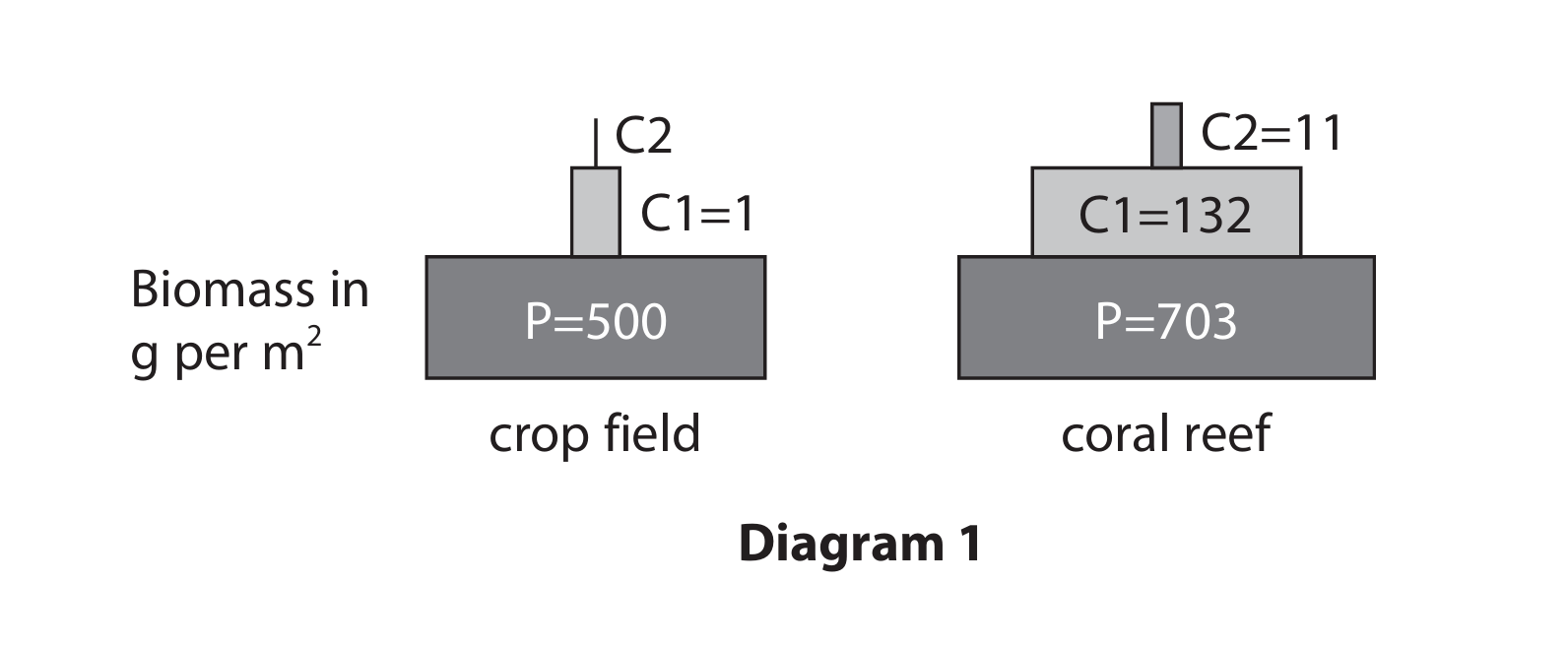
Read the passage below. Use the information in the passage and your own knowledge to answer the questions that follow.
Plastic pollution
A mass of 12.7 million tonnes of plastic is dumped into our oceans every year. This is equivalent to the mass of 1.8 million adult elephants. This plastic pollution is a concern because of its harmful effect on living organisms.
Turtles eat plastic bags, mistaking them for jellyfish, and sea birds have been found with stomachs full of plastic. Researchers have reported 800 kg of plastic found in the carcass of a stranded whale in France. The stomach of another whale in Australia contained six square metres of plastic sheeting and 30 plastic carrier bags. Plastic items can block the tubes leading from the mouth to the stomach and to the lungs in some animals. This can cause death because it affects digestion and gas exchange.
Whale sharks are the largest fish in the world, yet feed on microscopic plankton that photosynthesise. The plankton is also eaten by crustaceans, which are then eaten by fish. These fish are eaten by humans. Many whales are filter feeders. They swallow hundreds of cubic metres of water a day to capture plankton and may take in microplastics during the process. The microplastics are produced from the breakdown of larger pieces of plastic. Microplastics are similar in size and mass to many types of plankton. These microplastics are not biodegradable and build up in the bodies of organisms that occupy higher trophic levels in food chains. This is called bioaccumulation.
Plastic pollution may be responsible for putting filter feeding whale sharks and other filter feeders at risk of extinction. The whale shark, for example, is listed as being endangered.
Studies have found toxic chemicals associated with plastics in the bodies of large filter feeders. Scientists think these chemicals might reduce the population sizes of the large filter feeders. This is because the toxins might affect many biological processes involving hormones that regulate the body’s growth and development, metabolism, and reproduction.
Whale sharks feeding in the Sea of Cortez near Mexico, an important breeding ground, ingest 200 microplastic particles per day. Fin whales in the Mediterranean Sea ingest 2000 microplastic particles per day. Any reduction in the reproduction of these species will have consequences for biodiversity.
Attempts are being made to reduce the use of plastic. Coffee companies are being encouraged to use wooden spoons and straws rather than plastic ones. Also, shoppers are being given biodegradable plastic bags, or paper bags.
(a) (i) Which organism named in the passage is a producer?
- A. crustaceans
- B. microscopic plankton
- C. sea birds
- D. turtles
(a) (ii) Which organism named in the passage is a tertiary consumer?
- A. crustaceans
- B. fin whale
- C. human
- D. whale shark
(b) Explain how blocked tubes leading from the mouth can lead to death in some animals. (lines 8 to 10)
(c) Suggest why bioaccumulation of microplastics is a problem for humans. (lines 17–20)
(d) Calculate the difference between the number of plastic particles ingested in a year by a fin whale and a whale shark. (lines 29–31)
Give your answer in standard form.
(e) Explain the effects of reduced reproduction on biodiversity. (lines 31–32)
(f) Suggest a benefit of using biodegradable plastic bags. (line 35)
Most-appropriate topic codes (Edexcel IGCSE Biology):
• 4(a): The organism in the environment — part (e)
• 4(d): Human influences on the environment — parts (c), (f)
• Appendix 4: Mathematical skills — part (d)
▶️ Answer/Explanation
(a) (i) B microscopic plankton
Explanation: Producers are organisms that can make their own food, typically through photosynthesis. In the passage, microscopic plankton are described as organisms that photosynthesize, meaning they convert sunlight into chemical energy. This makes them the base producers in the marine food chain. Crustaceans, sea birds, and turtles are all consumers that rely on other organisms for food.
(a) (ii) C human
Explanation: Tertiary consumers are organisms that feed on secondary consumers. The passage describes a food chain where microscopic plankton (producers) are eaten by crustaceans (primary consumers), which are then eaten by fish (secondary consumers), and these fish are finally eaten by humans. This places humans at the tertiary consumer level in this specific food chain.
(b)
Explanation: When tubes leading from the mouth become blocked by plastic items, several critical bodily functions are severely disrupted, ultimately leading to death. Firstly, the blockage prevents food from reaching the stomach, leading to starvation as the animal cannot obtain nutrients. Secondly, digestion cannot occur properly without food intake, resulting in a lack of essential molecules like glucose and amino acids needed for energy and growth.
Furthermore, if the tubes leading to the lungs (such as the trachea) are blocked, gas exchange is impaired. The animal cannot take in sufficient oxygen or expel carbon dioxide effectively. This leads to reduced oxygen levels in the blood, causing suffocation. With less oxygen available, aerobic respiration – the process that generates energy (ATP) in cells – is hampered. The body may resort to less efficient anaerobic respiration, producing lactic acid and leading to fatigue and cell damage. The combined effects of starvation and suffocation due to blocked tubes result in energy depletion and organ failure, causing death.
(c)
Explanation: Bioaccumulation poses a significant problem for humans because microplastics and their associated toxins become more concentrated as they move up the food chain. Since humans often occupy a high trophic level, consuming fish that have themselves ingested microplastics, we end up ingesting these concentrated pollutants. This can lead to health issues as the toxins build up in our bodies. Additionally, if plastic pollution causes a decline in fish populations due to harm or death, it could lead to reduced food availability for human communities that rely on fishing.
(d)
Explanation: To find the annual difference in plastic particle ingestion, we first calculate the daily difference. A fin whale ingests 2000 particles/day, and a whale shark ingests 200 particles/day. The daily difference is \(2000 – 200 = 1800\) particles.
We then multiply this daily difference by the number of days in a year: \(1800 \times 365 = 657,000\) particles.
Finally, we convert this number into standard form. Standard form expresses a number as a value between 1 and 10 multiplied by a power of 10. Therefore, \(657,000\) is written as \(6.57 \times 10^5\).
Answer: \(6.57 \times 10^5\)
(e)
Explanation: Reduced reproduction in a species has direct negative consequences for biodiversity. Biodiversity refers to the variety of life in a particular habitat. When a species reproduces less, its population size decreases. If this continues, the species may eventually become extinct. The loss of a species reduces the total number of species in an ecosystem, thereby directly lowering biodiversity. This loss can also disrupt food chains and reduce the number of available niches, making the ecosystem less stable and resilient.
(f)
Explanation: Using biodegradable plastic bags offers key environmental benefits. The primary advantage is that they can be broken down by microorganisms like bacteria and fungi into natural substances. This process significantly reduces the long-term accumulation of plastic waste in the environment. As a result, fewer bags persist as litter that could be mistaken for food and eaten by animals, causing harm, suffocation, or death. By breaking down, they also help prevent the formation of microplastics and reduce the risk of toxins entering and moving up the food chain through bioaccumulation.
Pyramids of biomass and energy transfer are ways of representing what happens in an ecosystem.
(a) Diagram 1 shows pyramids of biomass for a crop field ecosystem and for a coral reef ecosystem.

(i) Use data from Diagram 1 to calculate the efficiency of the transfer of biomass from producers (P) to primary consumers (C1) in the coral reef.
(ii) The efficiency of the transfer of biomass from primary consumers (C1) to secondary consumers (C2) in the crop field is 1%.
Calculate the biomass of the secondary consumers in the crop field in g per m².
(iii) Suggest why the biomass transfer is different in the coral reef compared to the crop field.
(b) Diagram 2 shows pyramids of biomass for an ocean and a lake.

Explain the shape of the pyramid of biomass for the ocean.
(c) Suggest how scientists could estimate the energy of the producers in 1 m² of the crop field.
Most-appropriate topic codes (Edexcel IGCSE Biology):
• 4(b): Pyramids of biomass and energy transfer — parts (a), (b)
• 4(a): The organism in the environment — part (c)
• 4(d): Human influences on the environment — implied in crop field context (c)
▶️ Answer/Explanation
(a)(i) 18.8% (or approximately 19%)
Explanation: The efficiency of biomass transfer from producers (P) to primary consumers (C1) is calculated using the formula:
\[ \text{Efficiency} = \frac{\text{Biomass at C1}}{\text{Biomass at P}} \times 100\% \]
For the coral reef: P = 703 g/m², C1 = 132 g/m².
\[ \text{Efficiency} = \frac{132}{703} \times 100\% \approx 18.8\% \]
This means about 18.8% of the biomass produced by the coral reef’s producers is transferred to the primary consumers.
(a)(ii) 0.01 g per m²
Explanation: The efficiency from primary consumers (C1) to secondary consumers (C2) is given as 1%. For the crop field, C1 biomass is 1 g/m².
\[ \text{C2 Biomass} = 1\% \text{ of } 1 = 0.01 \times 1 = 0.01 \text{ g/m²} \]
So, the biomass of the secondary consumers is only 0.01 grams per square meter.
(a)(iii) The biomass transfer is more efficient in the coral reef because more of the producer biomass is consumed, and there is less energy loss due to factors like heat or movement in the aquatic environment.
Explanation: In aquatic ecosystems like coral reefs, organisms often have lower energy requirements for support and movement compared to terrestrial ecosystems. Additionally, a larger proportion of the primary producers (like algae and phytoplankton) are typically consumed by herbivores, leading to a more efficient transfer of biomass up the food chain.
(b) The pyramid of biomass for the ocean is inverted because the producers (phytoplankton) have a very high reproduction rate and are consumed rapidly, so their standing biomass at any one time is low, while the consumers (zooplankton and fish) accumulate more biomass over time.
Explanation: In the ocean, the base of the food chain consists of phytoplankton. These tiny organisms reproduce extremely quickly and are eaten almost as fast as they are produced. This means that although they have a high turnover rate (produce a lot of biomass over time), their actual biomass present at any single moment (standing crop) is low. The consumers that feed on them, like zooplankton and small fish, may have a larger total biomass because they live longer and are not consumed as rapidly. This results in an inverted pyramid of biomass, where the higher trophic levels appear to have more biomass than the producers below them.
(c) Scientists could estimate the energy by sampling the producers using quadrats, collecting the plant material, and then burning it in a calorimeter to measure the heat energy released.
Explanation: To estimate the energy content of the producers in a specific area like 1 m² of a crop field, scientists would first need to collect a representative sample of the plants. They might use a quadrat to randomly select several 1 m² areas within the field. All the plant material (producers) from within these quadrats would be harvested, dried to remove water content (as water doesn’t contain usable energy), and then weighed to get the dry biomass. This dry plant material would then be burned in a device called a bomb calorimeter. The calorimeter measures the heat released when the plant material is completely combusted. This heat energy, measured in joules or calories, gives a direct estimate of the chemical energy stored in the producers’ tissues for that square meter of land.
Read the passage below. Use the information in the passage and your own knowledge to answer the questions that follow.
Heart transplant
A heart transplant is an operation to replace a damaged or failing heart with a healthy heart from a donor who has recently died. In the United Kingdom, 200 heart transplants are carried out each year.
A heart transplant may be considered if you have severe heart failure and medical treatments are not helping. Conditions that may eventually require a heart transplant include coronary heart disease and cardiomyopathy, where the walls of the heart have become stretched, thickened or stiff. Some people born with an abnormal heart may also benefit from a heart transplant.
A heart transplant needs to be carried out as soon as possible after a donor heart becomes available. The procedure is performed under general anaesthetic where the patient is unconscious. During the operation, a heart-lung bypass machine is used to keep the patient alive.
A cut is made in the middle of the patient’s chest. The patient’s heart is removed, leaving behind a section of the right and left atria, the two upper chambers of the heart. The new heart is connected to the aorta, the pulmonary artery, and the remaining part of the atria. The new heart is stimulated to start beating and the patient is taken off the bypass machine.
The patient will need to stay in hospital for around two or three weeks after a heart transplant. The patient will also need to take medicines called immunosuppressants for the rest of their life. Without these medicines, the transplant will not be successful.
After going home, the patient is encouraged to take part in a cardiac rehabilitation programme. This involves following an exercise plan to help regain strength and mobility. They should avoid strenuous activities such as pushing, pulling or lifting anything heavy for 6 to 12 weeks. Most people can start returning to many of their normal activities within a few months.
The patient does not usually need to have a special diet after a heart transplant. A balanced diet can ensure they stay as healthy as possible. They should not smoke and should avoid drinking alcohol.
A balanced diet may also help reduce the risk of some of the side effects of the immunosuppressant drugs including weight gain, osteoporosis and diabetes. Immunosuppressants also make the patient more vulnerable to infections, including food poisoning.
Most people can return to their normal activities after a heart transplant and experience a significant improvement in their symptoms for many years. After a heart transplant, 75% of people will live at least five years.
(a) Suggest why cardiomyopathy can cause heart failure (lines 6 to 7).
(b) During the transplant procedure the patient’s heart is removed, leaving behind a section of the right and left atria. Describe the functions of the atria in the body.
(c) Describe how the blood in the pulmonary artery differs from the blood in the aorta.
(d) Explain the function of the heart-lung bypass machine (lines 11 to 12).
(e) Explain why the patient needs to be given immunosuppressants (lines 19 to 20).
(f) Explain why patients should not smoke after their heart transplant (lines 28 to 29).
(g) State what is meant by the term balanced diet.
(h) Calculate the number of patients in the United Kingdom who have a heart transplant in one year that are still alive five years later (lines 2 to 3 and lines 35 to 36).
(i) Suggest why patients are advised to avoid strenuous activities after their heart transplant (line 24).
(j) Suggest why patients are more likely to be at risk of food poisoning after their heart transplant (lines 32 to 33).
Most-appropriate topic codes (Edexcel IGCSE Biology):
• 2(j): Co-ordination and response — part (e)
• 2(e): Nutrition — part (g)
• 2(j): Homeostasis and hormones — part (e) – immune response
• Appendix 4: Mathematical skills — part (h)
• 4(d): Human influences on the environment — part (f) – smoking effects
• 2(e): Human nutrition — part (j) – infection risk
▶️ Answer/Explanation
(a) The walls of the heart are less able to contract/pump effectively.
Explanation: Cardiomyopathy causes the heart muscle to become abnormal – either stretched, thickened, or stiff. This structural change directly impairs the heart’s ability to contract forcefully and pump blood efficiently around the body. When the heart cannot pump enough blood to meet the body’s demands, it leads to heart failure.
(b) The atria receive blood and pump/push it into the ventricles. The right atrium receives deoxygenated blood from the body (via the vena cava), and the left atrium receives oxygenated blood from the lungs (via the pulmonary veins).
Explanation: The atria act as the receiving chambers and priming pumps for the heart. Their main function is to collect blood returning to the heart and then contract to push this blood into the more powerful ventricles below. This ensures the ventricles are adequately filled before they perform the major work of pumping blood out of the heart to the lungs and the rest of the body.
(c) The pulmonary artery carries deoxygenated blood, while the aorta carries oxygenated blood. The pulmonary artery carries blood away from the heart to the lungs, whereas the aorta carries blood away from the heart to the rest of the body.
Explanation: These two major arteries have completely different roles. The pulmonary artery is the only artery in the body that carries deoxygenated blood. It transports this blood from the right ventricle to the lungs to pick up oxygen. In contrast, the aorta is the body’s main artery, carrying freshly oxygenated blood from the left ventricle to supply all tissues and organs.
(d) The heart-lung bypass machine oxygenates the blood and removes carbon dioxide (acting like artificial lungs), and it pumps this oxygenated blood around the body (acting like an artificial heart). This allows the patient’s tissues and cells to continue respiring and provides the surgeon with a still, blood-free heart to operate on.
Explanation: During a heart transplant, the patient’s own heart and lungs are temporarily bypassed. This machine is crucial for life support. It takes over the function of the heart by pumping blood and the function of the lungs by adding oxygen to the blood and removing carbon dioxide. This maintains circulation and gas exchange, keeping the patient’s organs alive while the surgeon removes the old heart and attaches the new one.
(e) Immunosuppressants prevent rejection of the transplanted heart. They do this by reducing the immune response, stopping the immune system from recognizing the new heart as foreign and attacking it.
Explanation: The immune system is designed to identify and destroy foreign cells, like those from a donor organ, based on their different antigens. Immunosuppressant drugs are essential to dampen this immune response. Without them, the patient’s white blood cells would recognize the new heart as “non-self” and mount an attack, leading to transplant rejection and failure.
(f) Smoking reduces oxygen in the blood and damages artery walls. It can lead to narrowed arteries, increased risk of blood clots, and higher blood pressure, all of which are dangerous for a transplanted heart.
Explanation: Smoking is particularly harmful after a transplant. The carbon monoxide in smoke binds to haemoglobin, reducing the blood’s oxygen-carrying capacity. Chemicals in tobacco also damage the lining of arteries, promoting atherosclerosis (fatty deposits), which can narrow the coronary arteries supplying the new heart muscle. This increases the risk of heart attacks, strokes, and failure of the transplant.
(g) A diet that contains all the required nutrients/food groups in the correct proportions.
Explanation: A balanced diet isn’t about eating specific “health foods” but about consuming the right amounts and varieties from all the major food groups: carbohydrates, proteins, fats, vitamins, minerals, fibre, and water. This ensures the body gets all the essential nutrients it needs to function optimally, support the immune system, and maintain a healthy weight.
(h) number of patients = 150
Explanation: The passage states that 200 transplants are done each year and that 75% of patients live at least five years. To find the number, we calculate 75% of 200. This can be done as (75/100) × 200 = 0.75 × 200 = 150. Therefore, we can expect 150 of the 200 patients to be alive after five years.
(i) Strenuous activities put extra pressure on the heart, increasing heart rate and blood pressure, which could strain the new heart during the recovery period.
Explanation: After major surgery like a transplant, the body, and especially the new heart, needs time to heal and adapt. Strenuous activities like heavy lifting cause a sudden, significant increase in the heart’s workload. This could be too stressful for the recovering heart muscle and the surgical connections (sutures), potentially leading to complications like a heart attack or damage to the surgical site.
(j) Because their immune system is weakened by the immunosuppressant drugs, making them less able to fight off infections from pathogens in food.
Explanation: Immunosuppressants, while vital for preventing rejection, have the side effect of reducing the overall activity of the immune system. This means the body’s defences against bacteria, viruses, and other pathogens are lowered. Harmful bacteria like Salmonella or E. coli, which might be fought off by a healthy person, can more easily cause food poisoning in a transplant patient because their white blood cells are less effective at destroying the invaders.