Home / Edexcel iGCSE / Edexcel iGCSE Biology / Exam Style Questions

Edexcel iGCSE Biology 4BI1 - Paper 2B -Movement of substances into and out of cells- Exam Style Questions- New Syllabus

Question

Read the passage below. Use the information in the passage and your own knowledge to answer the questions that follow.

Rivers – the arteries of the world

Rivers are important supplies of water for drinking, farming, industry, and leisure activities. Like our circulatory system, rivers are essential for transport, and have a homeostatic effect on nature. The biodiversity in rivers is high as they are the habitat for many different species. In many countries rivers are under threat from human impact, particularly the release of untreated sewage.

Flooding can cause untreated sewage to run into rivers from pipelines. Scientists estimated that in England and Wales during 2022, sewage was released into rivers for a total time of 300 000 hours. This sewage came from 1200 different pipelines. Untreated sewage may contain fertilisers, pesticides, pathogenic bacteria, and pharmaceutical drugs.

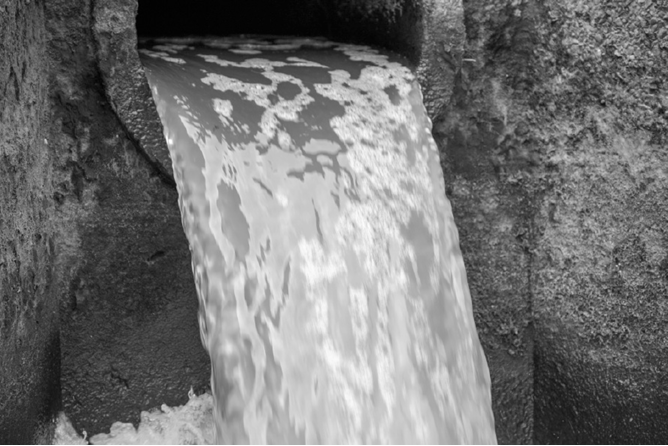
The photograph shows sewage being released into a river. The sewage causes the growth of something called ‘sewage fungus’. Sewage fungus looks like fungus but is a solid collection of several types of anaerobic bacteria. Sewage fungus is common in rivers that are polluted with untreated sewage or are near to cattle and intensive crop farms. If sewage fungus is found in a river it often indicates that the biodiversity of the river will be low.

Pesticides from agriculture are also released into rivers, and these are frequently transferred through natural food chains. Even pharmaceutical drugs, such as those containing the hormones oestrogen and progesterone, have been found in polluted rivers. These drugs must have been consumed by humans, excreted and then released into the sewage flowing into rivers.

Untreated sewage can also contain pathogenic species of bacteria that then enter rivers. If humans are infected with these bacteria, the large intestine absorbs less water, causing diarrhoea. Some of the bacteria found in sewage are resistant to antibiotics.

Scientists are looking for ways to prevent river pollution. One way is to reduce the risk of pollution from fertilisers and from cattle urine and faeces. Woodchip bioreactors are being trialled in agricultural fields that are near to rivers. These bioreactors are pits filled with woodchips and denitrifying bacteria. Water drains through these bioreactors, which helps to remove nitrates before they reach the rivers. In some countries, efforts are being made to replant forests in areas upstream of rivers to reduce river flooding and the risk of untreated sewage release.

(a) Rivers have a homeostatic effect on nature. This is similar to the role of homeostasis in humans.
State what is meant by the term homeostasis (lines 2 and 3).

(b) Calculate the mean number of hours that each pipeline released sewage into rivers in 2022 (lines 7 and 8).

(c)(i) Sewage fungus is not a fungus but is made from several different species of bacteria.
Which of these structures are present both in fungi and in bacteria?

A) cell wall and cytoplasm only
B) cell wall and nucleus only
C) cell wall, cytoplasm and nucleus
D) cytoplasm and nucleus only

(ii) Explain why rivers near to farms may have low biodiversity (lines 13 to 16).

(d) Oestrogen and progesterone in polluted water lower the levels of FSH and LH in mammals.

(i)State why lower levels of FSH can reduce fertility in mammals.
(ii) State why lower levels of LH can reduce fertility in mammals.

(e)(i) Pathogenic bacteria produce poisons that prevent the active transport of salt into the blood vessels surrounding the intestines.
Explain why preventing the transport of salt into the blood vessels will cause more water to be present in faeces (lines 22 to 24).

(ii) Explain why overuse of antibiotics has led to an increase in antibiotic-resistant bacteria (lines 24 and 25).

(f)(i) Explain how woodchip bioreactors reduce pollution in rivers (lines 27 to 31).
(ii) Explain why replanting forests in areas upstream of rivers will reduce flooding (lines 31 to 33).

Most-appropriate topic codes (Edexcel IGCSE Biology):

2(j): Co-ordination and response — part (a)
4(d): Human influences on the environment — parts (c)(ii), (e)(ii), (f)(i), (f)(ii)
1(b): Variety of living organisms — part (c)(i)
3(a): Reproduction — parts (d)(i), (d)(ii)
2(d): Movement of substances into and out of cells — part (e)(i)
3(b): Inheritance — part (e)(ii)
▶️ Answer/Explanation
Solution

(a) An answer that makes reference to one of the following points:
• maintenance of constant (internal) conditions in body / eq (1)
• control / regulating / maintaining internal conditions / eq (1)
• control / regulating / maintaining internal environment / eq (1)
• keeping conditions in body the same / within a (narrow) range / eq (1)

(b) • 250 (1)
Calculation: \( \frac{300000}{1200} = 250 \)

(c)(i) A (cell wall and cytoplasm only)
B is not the answer as bacteria do not have nuclei
C is not the answer as bacteria do not have nuclei
D is not the answer as bacteria do not have nuclei

(c)(ii) An explanation that makes reference to the following points:
1. fertilisers / animal waste / minerals / nitrates / phosphates (run off / leach) / eq (1)
2. algal growth / eutrophication / eq (1)
3. less light (penetrates) / competition for light / less photosynthesis / eq (1)
4. decomposition / decay (of dead algae / plants / organisms / organic waste / manure / faeces / sewage) eq (1)
5. less oxygen / only anaerobic species grow / eq (1)
6. bacteria respire / other species cannot respire / reduced respiration / eq (1)
7. pesticides kill organisms / eq (1)

(d)(i) An answer that makes reference to one of the following points:
• eggs / ova / follicles, do not mature / do not grow / eq (1)
• (FSH is required to) mature eggs / ova / follicles (1)
• (low FSH leads to) less oestrogen / (FSH) stimulates oestrogen release (1)

(d)(ii) An answer that makes reference to one of the following points:
• no ovulation occurs / egg not released / ova not released / eq (1)
• LH / it stimulates ovulation / LH / it stimulates egg release / eq (1)
• (lower LH leads to) less progesterone / LH / it stimulates progesterone (1)

(e)(i) An explanation that makes reference to two of the following points:
• less water absorbed / less water enters blood / less water enters capillaries / eq (1)
• (water moves by) osmosis (1)
• water potential in blood is high(er) / water potential in gut / faeces / lumen is low(er) / eq (1)

(e)(ii) An explanation that makes reference to three of the following points:
1. mutation (1)
2. (only resistant bacteria) survive / are not killed / non-resistant bacteria die / eq (1)
3. bacteria reproduce / multiply / eq (1)
4. pass on allele / gene / mutation / eq (1)

(f)(i) An explanation that makes reference to two of the following points:
• (denitrifying bacteria convert) nitrate into nitrogen (1)
• so less eutrophication / less algal growth / more oxygen in river / lower BOD / eq (1)
• wood chips have large surface area (for bacteria) / wood chips are biodegradable (so do not pollute) / eq (1)

(f)(ii) An explanation that makes reference to two of the following points:
1. trees / roots absorb water / trees intercept water / eq (1)
2. (more) transpiration (1)
3. less runoff / slows down water flow / more soil permeability / more infiltration / eq (1)
4. less soil erosion / roots hold onto soil / roots stabilise soil / eq (1)
5. rivers do not get blocked (with soil) / eq (1)
Question

Read the passage below. Use the information in the passage and your own knowledge to answer the questions that follow.

Extinctions

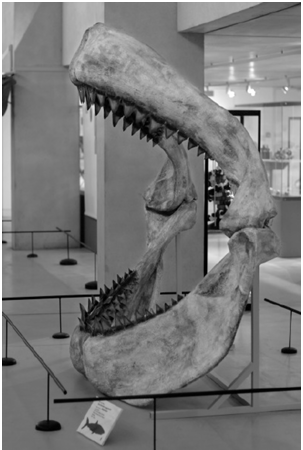
During the evolution of living organisms, most species have become extinct. Evolution by natural selection means that species constantly replace each other. The photograph shows the fossilised jaws of a shark called megalodon. Megalodon was a giant, predatory shark that became extinct 2.6 million years ago.

Some scientists think megalodon was replaced by giant, predatory toothed whales. These whales were the ancestors of modern orcas. Any sharks that remained evolved to become smaller. As well as the steady loss of species over time, there have been mass extinction events. Approximately 250 million years ago 90% of all animals and plants became extinct. The cause of this mass extinction is not known, but one theory is that it was due to the eruptions of volcanoes. The volcanoes released sulfur dioxide, carbon dioxide and dust into the atmosphere. This caused populations of producer species to fall, atmospheric carbon dioxide levels to rise, and oxygen levels to fall.

Human activity is now causing another mass extinction. Some scientists estimate that approximately one million animal and plant species are at risk. To prevent species loss, cryozoos are being developed. Cryozoos are storage tanks containing samples of body cells from animals and are kept at a temperature of -170 oC. The cells are put in a salt and sugar solution and then frozen. If a species becomes extinct, the frozen cells can be used to clone new animals. The banteng is an endangered breed of cattle. Banteng body cells have been stored in a cryozoo. These cells have been used with eggs from another species to successfully produce a living banteng.

In the future we may be able to bring back extinct species such as mammoths by making clones using the remains of frozen mammoths. Scientists need to consider the advantages and disadvantages of bringing back extinct animals. Currently, the biodiversity of the world is different from the time when mammoths were alive. Many natural predators of mammoths are now extinct. Mammoths may have helped to keep methane-releasing soil frozen, reducing the release of the methane. Mammoths were also an important part of the nitrogen cycle and increased the nutrient content of low-nutrient Arctic soil.

(a) Megalodon was an animal.

Which of these features does megalodon share with the fungus yeast?

  1. nuclei present in cells
  2. nervous coordination
  3. stores carbohydrate as glycogen

A) 1 and 2 only
B) 1 and 3 only
C) 2 and 3 only
D) 1, 2 and 3

(b) Scientists think that the giant, predatory toothed whales that replaced the extinct megalodon consumed the same sources of food. Explain how the evolution of giant, predatory toothed whales may have caused the extinction of megalodon. (lines 5 to 7)

(c) (i) Volcanoes release sulfur dioxide into the atmosphere. Describe the biological consequences of sulfur dioxide release. (lines 10 to 12)
(ii) The release of large amounts of dust into the atmosphere reduced light intensity. Explain why this would cause a loss of food chains. (lines 9 to 11)

(d) (i) Explain why the cells in cryozoos are put in salt and sugar solution rather than pure water. (lines 16 to 18)
(ii) Describe how scientists could clone a bantering. (lines 18 to 20)

(e) Explain why releasing cloned mammoths could have negative and positive effects on Arctic biodiversity. (lines 22 to 28)

Most-appropriate topic codes (Edexcel IGCSE Biology):

1(b): Variety of living organisms — part (a)
4(d): Human influences on the environment — part (c)(i)
4(a), 4(b): The organism in the environment, Feeding relationships — part (c)(ii)
2(d): Movement of substances into and out of cells — part (d)(i)
5(d): Cloning — part (d)(ii)
4(d), 5(d): Human influences on the environment, Cloning — part (e)
▶️ Answer/Explanation
Solution

(a) B (1 and 3 only)
A is incorrect as yeast has no nervous system
C is incorrect as yeast has no nervous system
D is incorrect as yeast has no nervous system

(b) An explanation that makes reference to three of the following:
• competition (between megalodon and whales) (1)
• whales ate more food / eq (1)
• whales better adapted / swam faster / better at feeding / better at hunting / eq (1)
• whales survived / eq (1)
• whales reproduced more / had more offspring / eq (1)
Accept less food left for megalodon / no food / megalodon starve. Accept megalodon less well adapted. Accept megalodon did not survive/died (out). Ignore extinct.

(c) (i) A description that makes reference to two of the following:
• acid rain (1)
• deforestation / death of trees / death of plants / eq (1)
• death of fish / death of animals in lakes / loss of species in lakes or rivers / eq (1)
Accept sulphuric acid. Accept damages plants/trees. Accept loss of food chains/biodiversity.

(ii) An explanation that makes reference to three of the following:
• (less) photosynthesis (1)
• so less glucose / sugar / starch / eq (1)
• fewer producers / fewer plants / less mass of producers / producers die / plants do not grow as much / eq (1)
• less food for consumers / less energy for consumers / eq (1)
Ignore ‘cannot produce food’ for mp2. Accept fewer consumers/herbivores/carnivores.

(d) (i) An answer that makes reference to two of the following:
• prevents osmosis / less osmosis (1)
• so water will not enter cells / eq (1)
• so cells do not burst / eq (1)
Accept osmosis would occur if in water. Accept cells burst if in water.

(ii) A description that makes reference to four of the following:
• place diploid nucleus into enucleated egg cell / place body cell nucleus into enucleated egg cell / eq (1)
• electric shock / eq (1)
• mitosis / cell division / eq (1)
• place embryo into uterus / womb (1)
• of surrogate (mother) (1)
Accept fuse body cell with enucleated egg. Accept empty egg cell for enucleated egg cell.

(e) A description that makes reference to three of the following:
Negative:
• mammoth population increases / over-population occurs / eq (1)
• mammoth eats too much food / less food for other species / eq (1)
Positive:
• less global warming / less greenhouse effect / eq (1)
• decomposition of faeces / decay of dead mammoths (1)
• more amino acid / protein / DNA / chlorophyll synthesis in plants / eq (1)
• (soil nutrients means) more plants / increased plant growth / eq (1)
Accept high mammoth reproduction rate. Accept overeats prey / prey could go extinct. Accept less greenhouse gas. Accept better plant growth.
Question

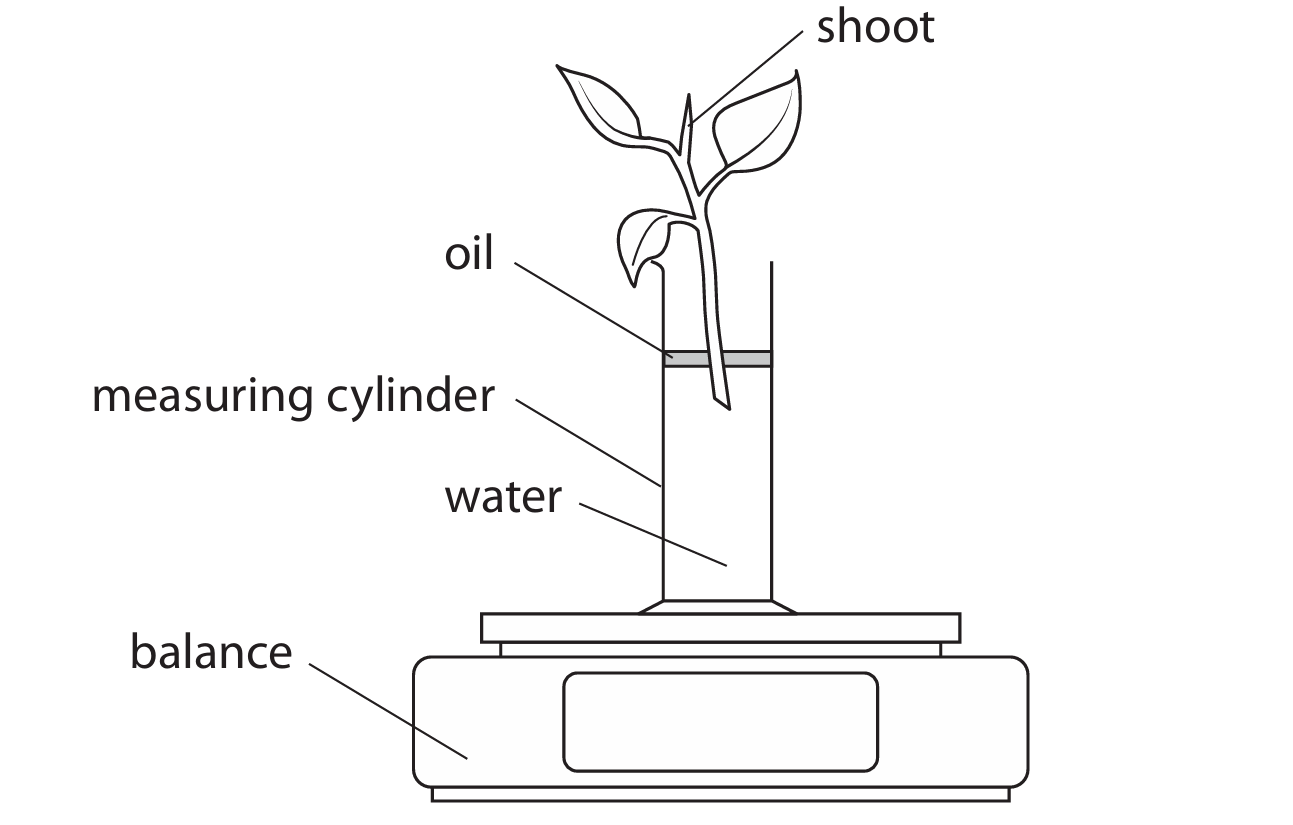
A student uses this method to investigate water uptake and water loss by a plant shoot.

  • pour 100 cm³ of water into a measuring cylinder
  • place a plant shoot into the measuring cylinder
  • cover the surface of the water with oil
  • place the measuring cylinder and plant shoot on a balance and record the total mass
  • shine light on the plant shoot using a lamp
  • record the volume of the water in the measuring cylinder after four days, and after eight days
  • record the total mass of the measuring cylinder and plant shoot after four days, and after eight days

The diagram shows the student’s apparatus.

(a) State the reason for using the oil.

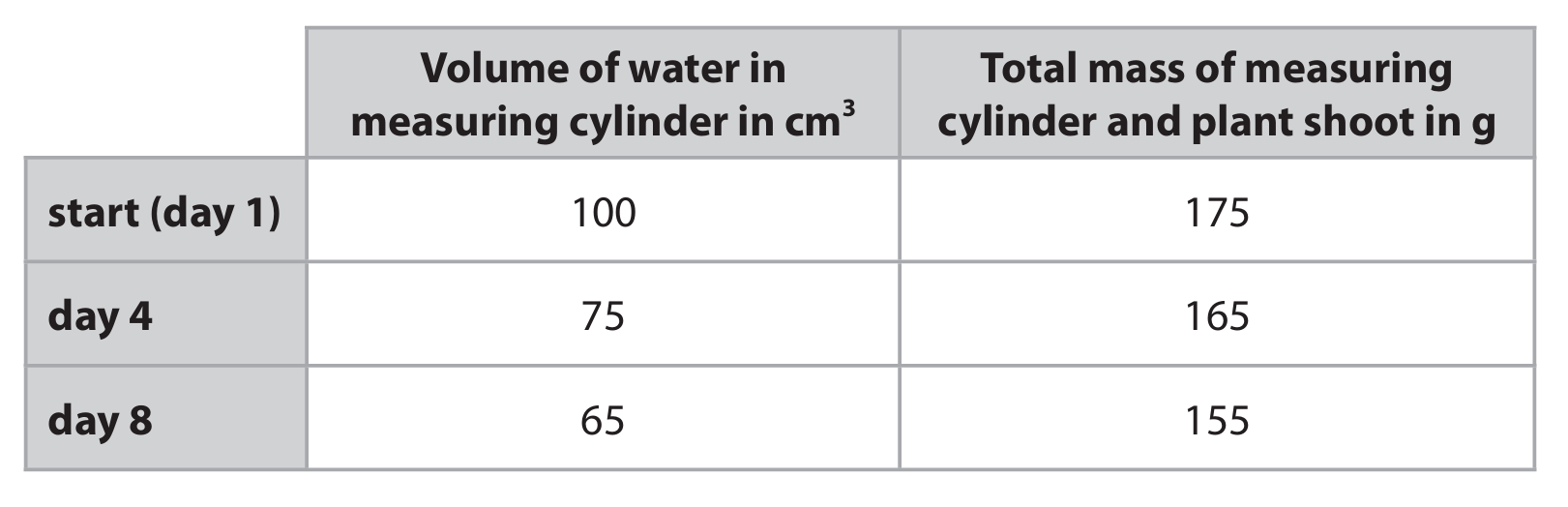
(b) The table shows the student’s results.

(i) The volume of water taken up by the plant shoot is equal to the change in volume of water in the measuring cylinder. This is called the water uptake.

Calculate, in cm³ per day, the mean rate of water uptake by the plant shoot during the eight days.

(ii) Comment on the changes in total mass of the measuring cylinder and plant shoot, compared with the changes in volume of water in the measuring cylinder.

[1 cm³ of water has a mass of 1 g]

(c) Explain why the rate of water loss would be different if a working fan is placed in front of the plant shoot.

Most-appropriate topic codes (Edexcel IGCSE Biology):

2(h): Transport in flowering plants — part (a), (b), (c)
2(d): Movement of substances into and out of cells — part (a)
2(e): Nutrition in flowering plants — part (b)(ii)
2(f): Respiration — part (b)(ii)
4(a): The organism in the environment — part (b)(ii)
▶️ Answer/Explanation
Solution

(a) To prevent evaporation from the surface of the water.

Explanation: The oil creates a physical barrier on top of the water surface. This prevents water molecules from evaporating into the air, ensuring that any changes in water volume in the measuring cylinder are due to water uptake by the plant shoot rather than evaporation. Without this oil layer, we wouldn’t be able to accurately measure how much water the plant is actually taking up.

(b)(i) Mean rate = 4.4 cm³ per day

Explanation: To calculate the mean rate of water uptake:
Total water uptake = Initial volume – Final volume = 100 cm³ – 65 cm³ = 35 cm³
Total time = 8 days
Mean rate = Total water uptake ÷ Total time = 35 cm³ ÷ 8 days = 4.375 cm³/day
Rounded to one decimal place, this gives us 4.4 cm³ per day.

(b)(ii) Both the volume of water and the total mass decrease over time, but the volume decreases more than the mass.

Explanation: Looking at the data, we can see that after 8 days, the water volume decreased by 35 cm³ (from 100 cm³ to 65 cm³), while the total mass decreased by only 20 g (from 175 g to 155 g). This difference occurs because not all water taken up by the plant is lost through transpiration – some is retained within the plant cells for maintaining turgor pressure, some is used in photosynthesis, and some is stored. The plant is essentially accumulating water while simultaneously losing it through transpiration. Between days 4 and 8, both water uptake and water loss occur at similar rates, as indicated by the parallel changes in volume and mass.

(c) The rate of water loss would increase with a fan.

Explanation: A working fan would increase the rate of transpiration (water loss) from the plant. This happens because the fan moves air across the leaf surface, which carries away water vapor that has evaporated through the stomata. This maintains a steeper concentration gradient between the moist air inside the leaf and the drier air outside, accelerating diffusion. Additionally, the fan disrupts the still, humid boundary layer of air that typically forms around leaves, replacing it with drier air that can accept more water vapor. All these factors combined would result in increased water loss from the plant shoot.
Question

A teacher carries out a demonstration to show the effect of different concentrations of salt solution on red blood cells.

This is the teacher’s method.

  • dilute a sample of blood using a salt solution that has the same concentration as blood plasma
  • place 1 cm\(^3\) of the diluted blood into each of three test tubes labelled A, B and C
  • add 10 cm\(^3\) of water to tube A
  • add 10 cm\(^3\) of 1% sodium chloride solution to tube B
  • add 10 cm\(^3\) of 5% sodium chloride solution to tube C
  • leave each tube for 5 minutes
  • compare the cloudiness of the solutions in the three test tubes
  • take a drop of liquid from each tube and put on separate microscope slides
  • observe each slide under a microscope

(a) State the independent variable in this investigation.

(b) Give one variable that the teacher controls in this investigation.

(c) After 5 minutes, these are the teacher’s observations.

  • tube A – a clear red solution
  • tube B – a cloudy red suspension
  • tube C – a cloudy red suspension

(i) Explain the differences in the teacher’s observations.

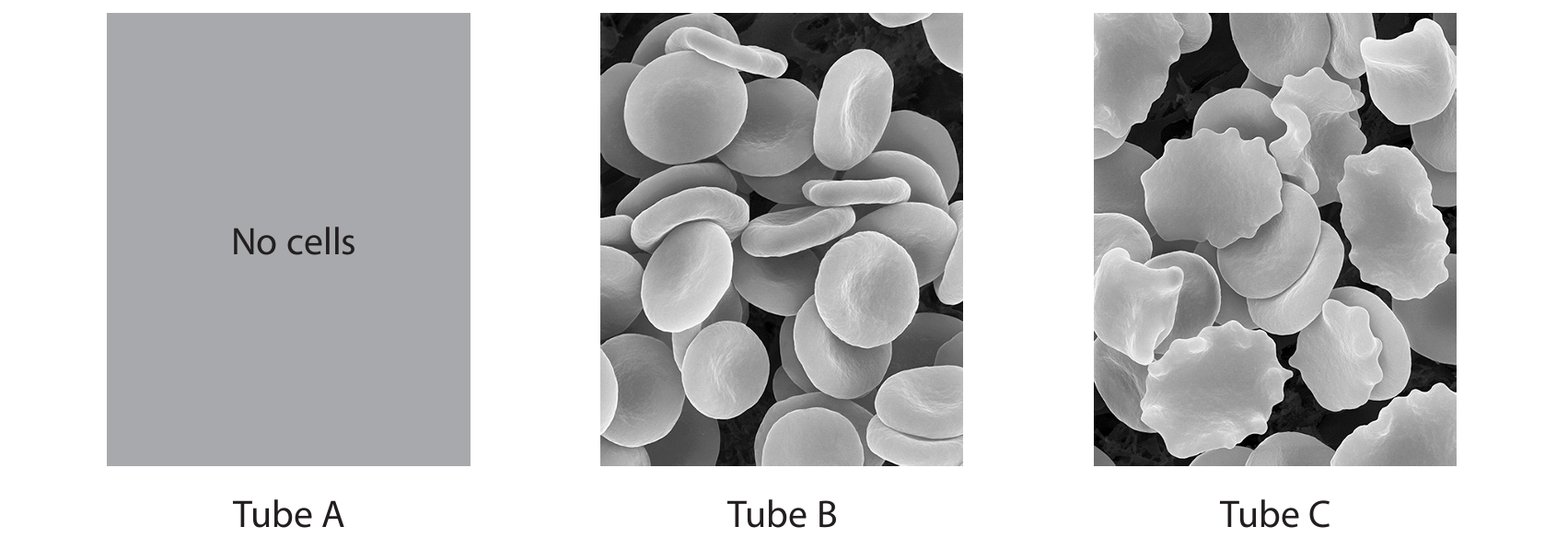
(ii) When the teacher looks down a microscope for cells on each slide, these are the teacher’s observations.

  • slide from tube A – no cells are seen
  • slide from tube B – normal biconcave red cells are seen
  • slide from tube C – red cells are seen but the cells have shrunken edges

The photographs show the teacher’s observations.

Explain the differences between the teacher’s observations of the slides from each tube. (2)

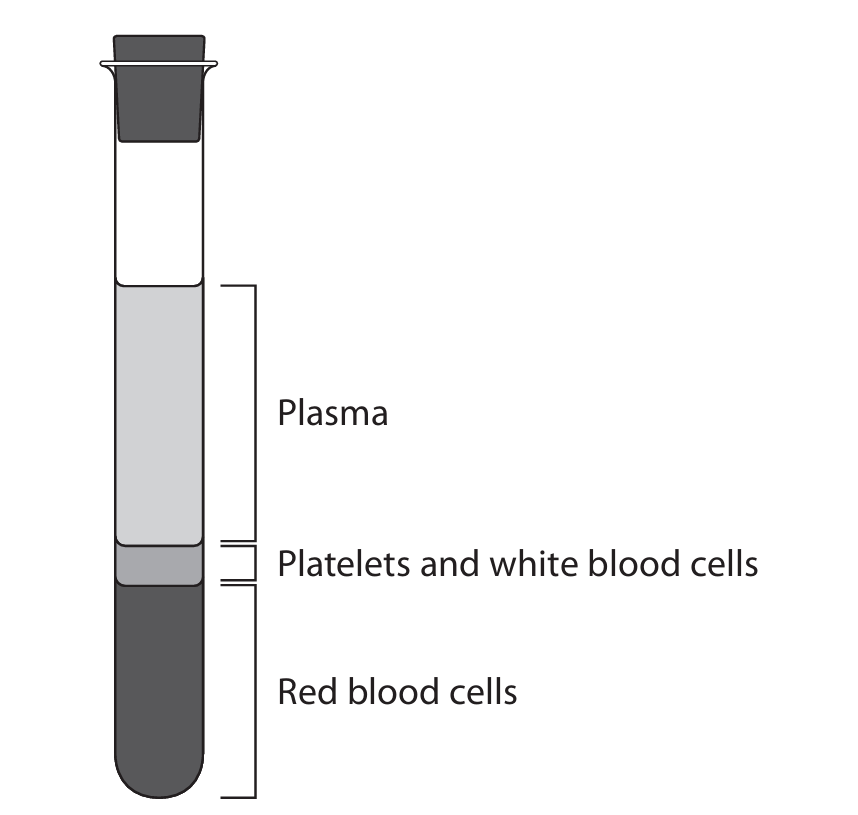
(d) Blood samples can be separated into different layers using a centrifuge.

This is a machine that spins blood at a high speed.
A new sample of blood is shown after it has been spun in a centrifuge.

Describe how the blood in tubes A, B and C from the teacher’s demonstration would look after they had been spun in a centrifuge.

Most-appropriate topic codes (Edexcel IGCSE Biology):

2(d): Movement of substances into and out of cells — parts (c)(i), (c)(ii), (d)
2(b): Cell structure — parts (a), (b), (c)(ii)
2(h): Transport — part (d)
3(a): Reproduction — indirect link to cell integrity
▶️ Answer/Explanation
Solution

(a) Salt concentration / concentration of salt solution / sodium chloride concentration / percentage sodium chloride / water potential of solution

Explanation: The independent variable is the factor that is deliberately changed by the investigator. In this experiment, the teacher is testing different concentrations of salt solution (water, 1%, and 5% sodium chloride) to see their effect on the red blood cells.

(b) Volume of (diluted) blood / volume of solution added / time solution left for / concentration of (diluted) blood sample

Explanation: A controlled variable is one that is kept constant to ensure a fair test. The teacher controls several factors, such as using the same volume of diluted blood in each tube (1 cm³), adding the same volume of different solutions (10 cm³), and leaving all tubes for the same duration (5 minutes).

(c)(i) In tube A (water), the cells burst (lyse) and release haemoglobin, creating a clear red solution. In tubes B and C (salt solutions), the cells remain mostly intact, creating a cloudy suspension.

Explanation: The cloudiness indicates the presence of intact cells scattering light. In tube A, distilled water is hypotonic relative to the red blood cells. Water enters the cells by osmosis, causing them to swell and burst (haemolysis), releasing haemoglobin into the solution and making it clear. In tubes B and C, the salt solutions are closer to isotonic (B) or hypertonic (C), so the cells do not burst and remain in suspension, making the solution cloudy.

(c)(ii) In tube A (water), water enters the red blood cells by osmosis, causing them to swell and burst, so no intact cells are seen. In tube B (1% salt), the solution is isotonic, so water enters and leaves at equal rates, and normal biconcave cells are seen. In tube C (5% salt), the solution is hypertonic, so water leaves the cells by osmosis, causing them to shrink and develop cremated (shrunken) edges.

Explanation: The differences are due to osmosis, the movement of water across the cell membrane from a region of higher water potential to a region of lower water potential. In tube A, the external water potential is higher than inside the cell, so water rushes in, bursting the cell. In tube B, the water potential is balanced, so the cell shape is maintained. In tube C, the external water potential is lower (due to high salt), so water leaves the cell, causing it to shrink.

(d) Tube A would show no red cell layer (the red color would be distributed throughout the tube). Tubes B and C would show normal layers, but the red cell layer in C might be slightly smaller.

Explanation: Centrifugation separates blood components based on density. In a normal blood sample, red blood cells form the bottom layer. In tube A, the cells have burst, so there are no intact cells to form a pellet; the haemoglobin is dissolved in the solution. In tubes B and C, the cells are intact (though shrunken in C) and will form a red cell layer at the bottom. The layer in C might be smaller if the cells have lost water and become denser.
Question

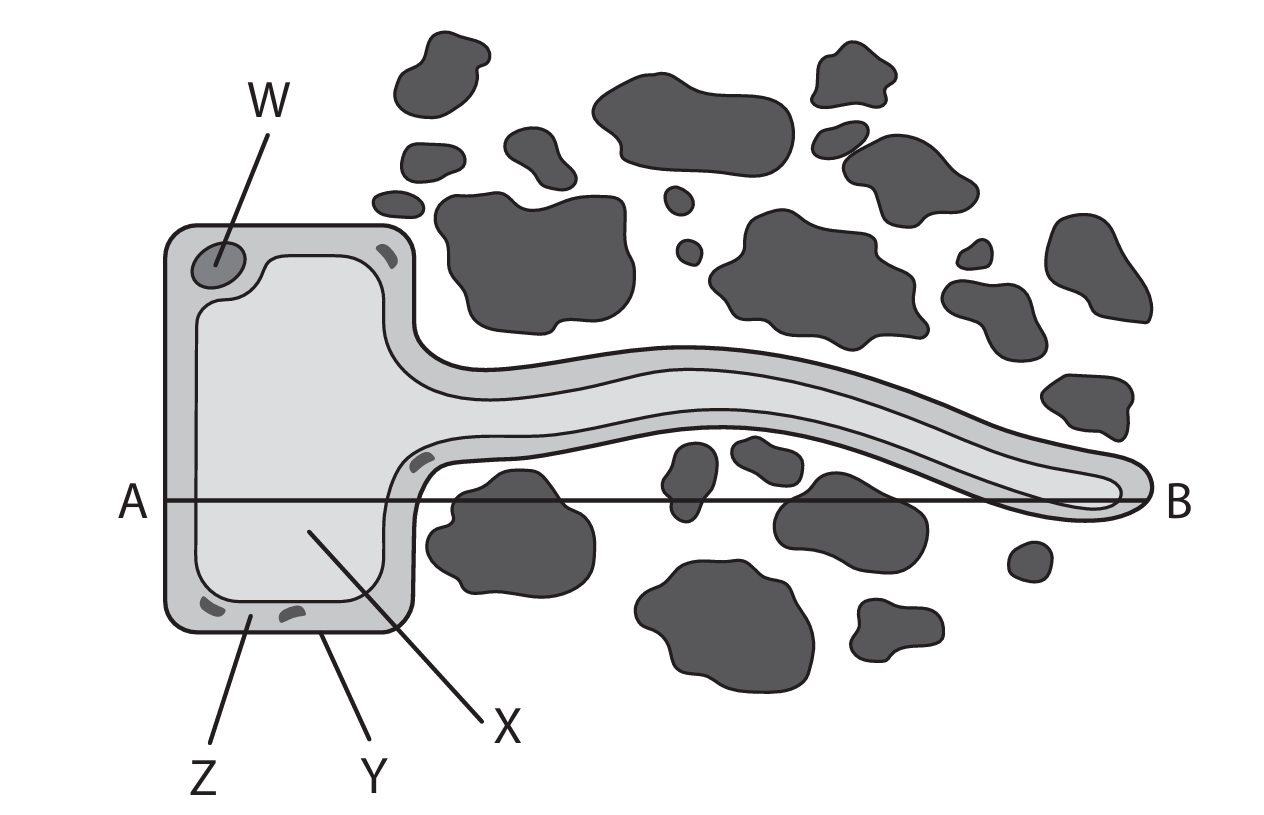
The diagram shows a magnified image of a root hair cell from a young plant.

(a) Give the names of structures labelled W, X, Y and Z.

(b) The actual length of the cell, along the line between A and B, is 1000 μm.

Calculate the magnification of this drawing.

(c) (i) Explain the role of the root hair cell in absorption of water from the soil. (3)

(ii) Sometimes gardeners give their plants too much water. The water fills up the air spaces in the soil around the plant roots.

Explain how this can lead to plants failing to grow properly. (3)

Most-appropriate topic codes (Edexcel IGCSE Biology):

2(b): Cell structure — part (a)
2(h): Transport — parts (c)(i), (c)(ii)
2(d): Movement of substances into and out of cells — part (c)(i)
2(f): Respiration — part (c)(ii)
Appendix 4: Mathematical skills — part (b)
▶️ Answer/Explanation
Solution

(a)

W: Nucleus

X: Vacuole (or cell sap)

Y: Cell Wall (specifically cellulose cell wall)

Z: Cytoplasm

Explanation: In a typical plant cell, the nucleus (W) contains the genetic material and controls cell activities. The vacuole (X) is a large, fluid-filled sac that stores water, nutrients, and waste, helping maintain turgor pressure. The cell wall (Y) is a rigid outer layer made of cellulose that provides structural support and protection. The cytoplasm (Z) is the gel-like substance inside the cell where most cellular activities occur.

(b)

magnification = 80 (accept values in the range 79-82)

Explanation: To calculate magnification, we use the formula:

\[ \text{Magnification} = \frac{\text{Size of Image}}{\text{Actual Size}} \]

First, measure the length between A and B in the drawing. Let’s assume this measures 80 mm (or 8.0 cm).

Convert this measurement to micrometers (μm) to match the units of the actual size. Since 1 mm = 1000 μm, 80 mm = 80,000 μm.

The actual size is given as 1000 μm.

Now, plug the values into the formula:

\[ \text{Magnification} = \frac{80,000 \ \mu m}{1,000 \ \mu m} = 80 \]

So, the drawing is magnified 80 times.

(c) (i)

Explanation: Root hair cells are specially adapted for absorbing water from the soil. Their long, hair-like projection significantly increases the surface area of the root, allowing it to absorb more water. Water enters the root hair cell from the soil via osmosis. This process occurs because the water potential inside the root hair cell is lower (meaning it has a higher concentration of solutes like minerals) than the water potential in the soil (which is generally higher, or more dilute). Water molecules naturally move from an area of high water potential (soil) to an area of low water potential (root hair cell) across the partially permeable cell membrane. This movement of water is often driven by a water potential gradient set up in the plant as water is lost through transpiration from the leaves. The absorbed water is essential for various plant functions, including photosynthesis and maintaining turgor pressure, which keeps the plant upright.

(c) (ii)

Explanation: When too much water is added to the soil, it fills the air spaces that normally contain oxygen. Plant roots, like all living cells, require oxygen for respiration to release energy. This energy is crucial for active transport, the process by which roots absorb essential mineral ions (like nitrates and magnesium) from the soil against a concentration gradient. If the soil becomes waterlogged and oxygen is depleted, root respiration is severely reduced. Consequently, active transport cannot occur effectively, leading to a decreased uptake of vital minerals. Without sufficient nitrates, the plant cannot synthesize amino acids and proteins properly, and without magnesium, it cannot produce chlorophyll, which is essential for photosynthesis. This overall lack of energy and essential nutrients causes the plant to fail to grow properly, leading to stunted growth, yellowing leaves, and potentially plant death.
Question

Read the passage below. Use the information in the passage and your own knowledge to answer the questions that follow.

Supercharging plants to reduce global warming

The proportion of carbon dioxide in the atmosphere has increased in the last 100 years. In 2020, a mass of 727 gigatonnes of carbon dioxide was released into the atmosphere from natural processes, along with a mass of 37 gigatonnes from human activities. Scientists have estimated that plants naturally remove a mass of 746 gigatonnes of carbon dioxide from the atmosphere every year. The difference between what is removed and what is released causes atmospheric carbon dioxide to rise every year. Carbon dioxide is a greenhouse gas, and a significant rise will cause global warming.

To help solve the problem of rising concentrations of atmospheric carbon dioxide, scientists are planning to produce transgenic, supercharged plants that can remove atmospheric carbon dioxide and store it in their roots. The scientists estimate that if these plants can be developed, the plants could remove a mass of carbon dioxide equivalent to 50% of the emissions from human activities.

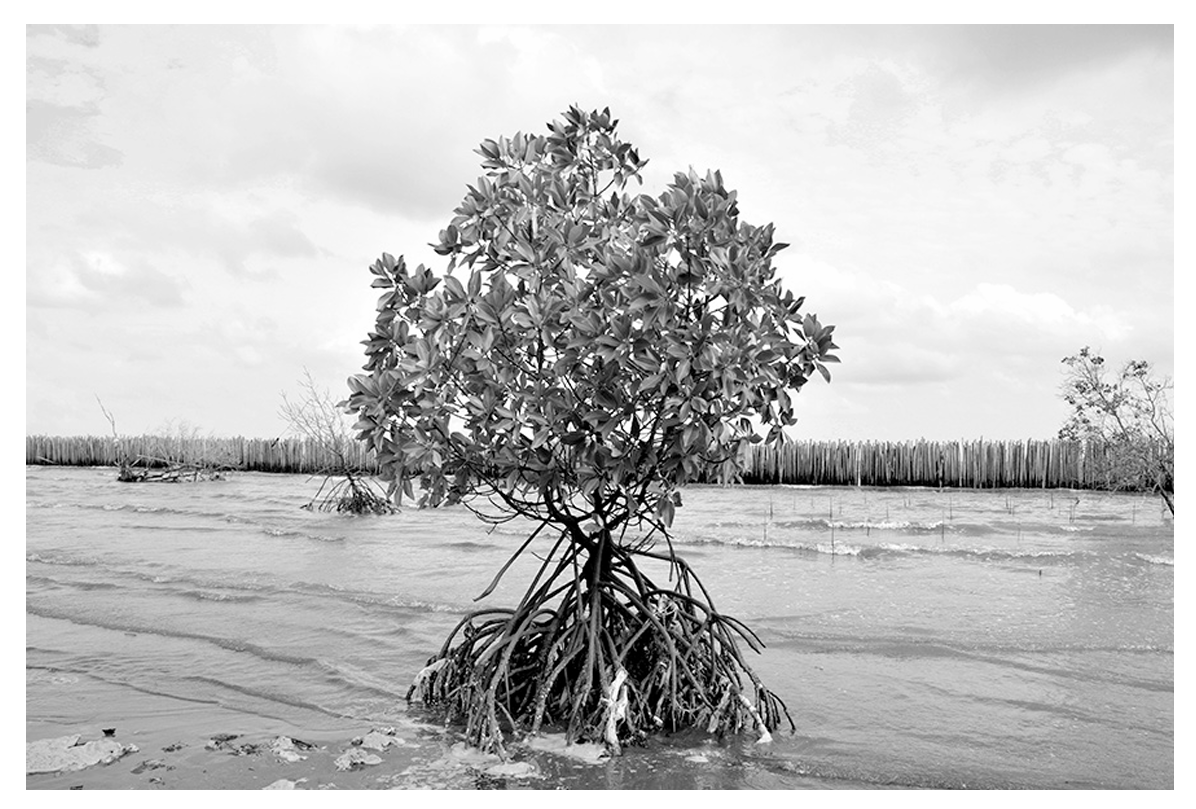
Coastal plants that have their roots in seawater contain a substance called suberin in the cell walls of the outer layer of the roots. Suberin is a waterproof substance that contains a high proportion of carbon atoms. Suberin is decomposed very slowly so remains in the soil for a long time.

The photograph shows a coastal plant called a mangrove.

To produce the supercharged plants, scientists intend to take the gene that codes for high suberin production from a coastal plant and insert it into crop plants. The crop plants used are perennial plants. Perennial plants live for many years rather than dying each winter. The transgenic crops would take in large amounts of carbon dioxide and use the carbon atoms to make suberin. The carbon would then be locked up and stored as suberin in the roots. After successfully producing one plant, they will use micropropagation rather than pollination to produce others.

These supercharged crop plants may have other uses. Suberin in roots helps to make them tolerant to soil with a high salt concentration, helping to produce higher crop yields in areas that have difficult growing conditions.

(a) (i) Carbon dioxide is a greenhouse gas. State the name of another greenhouse gas (line 7).

(ii) Calculate the increase in mass, in kg, of atmospheric carbon dioxide in 2020 (lines 2 to 7).
Give your answer in standard form.
[1 gigatonne = 1 000 000 000 000 kg]

(iii) State two consequences of global warming for the environment.

(b) Explain why producing genetically engineered plants with additional suberin in their roots could reduce atmospheric carbon dioxide (lines 14 to 17 and lines 19 to 24).

(c) Which enzyme is used to remove a gene from a section of DNA?

  • A. amylase
  • B. ligase
  • C. lipase
  • D. restriction

(d) Explain why the additional suberin in the cell walls of the roots will make the transgenic plants tolerant to soil with a high salt concentration (lines 26 to 28).

(e) Give three reasons why the scientists use micropropagation to reproduce the transgenic crop plants (lines 24 to 25).

Most-appropriate topic codes (Edexcel IGCSE Biology):

4(d): Human influences on the environment — part (a)(i), (a)(iii)
4(c): Cycles within ecosystems — part (a)(ii), (b)
5(c): Genetic modification (genetic engineering) — part (c)
2(d): Movement of substances into and out of cells — part (d)
5(d): Cloning — part (e)
Appendix 4: Mathematical skills — part (a)(ii)
▶️ Answer/Explanation
Solution

(a)(i) Methane / nitrous oxides / CFCs / water vapour

Explanation: Greenhouse gases are those that trap heat in the Earth’s atmosphere, contributing to the greenhouse effect. While carbon dioxide is the most commonly discussed, other significant greenhouse gases include methane (released from livestock and landfills), nitrous oxides (from agriculture and industrial processes), chlorofluorocarbons or CFCs (from refrigerants and aerosols, though now largely phased out), and water vapour. Carbon monoxide is not a significant greenhouse gas and is therefore rejected.

(a)(ii) \( 1.8 \times 10^{13} \) kg

Explanation: To find the net increase in atmospheric carbon dioxide, we calculate the total released minus the total removed. The total released is 727 (natural) + 37 (human) = 764 gigatonnes. The amount removed by plants is 746 gigatonnes. The net increase is therefore 764 – 746 = 18 gigatonnes. Since 1 gigatonne = \( 1 \times 10^{12} \) kg, we convert 18 gigatonnes to kg: 18 × \( 10^{12} \) kg = \( 1.8 \times 10^{1} \) × \( 10^{12} \) kg = \( 1.8 \times 10^{13} \) kg.

(a)(iii) Any two from: ice caps/glaciers melt, sea level rise/flooding, loss of habitat/desertification/droughts, extinctions/disrupted food chains, destruction of coral reefs/coral bleaching, spread of disease/pests, extreme weather/changes in weather patterns.

Explanation: Global warming, driven by an enhanced greenhouse effect, has wide-ranging environmental consequences. Two major effects are the melting of polar ice caps and glaciers, which contributes to rising sea levels and subsequent coastal flooding. Another significant impact is the disruption of ecosystems, leading to habitat loss, species extinction as animals and plants cannot adapt quickly enough, and phenomena like coral bleaching where warmer ocean temperatures cause corals to expel the algae living in their tissues, turning them white and threatening the entire reef ecosystem.

(b) An explanation that makes reference to four of the following points:

  • Plants take in/absorb carbon dioxide.
  • This is for the process of photosynthesis.
  • The carbon (from CO₂) is converted into/stored as suberin/locked up in suberin.
  • Suberin does not decay for long periods/decomposes slowly/remains for a long time.
  • Perennial plants remain for long periods/don’t die off each year.
  • Slower/less carbon dioxide is released from decomposition/decay.

Explanation: Genetically engineered plants with high suberin content act as enhanced carbon sinks. They absorb carbon dioxide from the atmosphere during photosynthesis. Instead of this carbon being used solely for immediate growth or being released back quickly, a significant portion is incorporated into suberin in their root cell walls. Suberin is a very stable, waterproof compound that decomposes extremely slowly, meaning the carbon is effectively “locked away” in the soil for a very long time. Furthermore, because these are perennial plants, they live for many years, continuously performing this carbon sequestration without the need for annual replanting, which could disturb the soil and release stored carbon. This long-term storage reduces the net amount of carbon dioxide in the atmosphere.

(c) D (restriction enzyme)

Explanation: In genetic engineering, specific enzymes are used to cut DNA at precise locations. Restriction enzymes (also called restriction endonucleases) are the enzymes responsible for cutting a gene out of a section of DNA. Amylase digests starch, ligase joins DNA fragments together, and lipase digests lipids (fats).

(d) An explanation that makes reference to two of the following points:

  • Prevents water loss from the plant roots.
  • Due to osmosis.
  • Prevents plant cells from becoming flaccid/wilting; helps them stay turgid by preventing water from moving out to the higher salt concentration in the soil.

Explanation: Soil with a high salt concentration has a low water potential (a high solute concentration). Water naturally moves by osmosis from areas of high water potential (inside the root cells) to areas of low water potential (the salty soil). This can cause the plant to lose water and wilt. Suberin, being a waterproof substance in the cell walls of the roots, acts as a barrier. It reduces the movement of water out of the root cells into the salty soil, thereby helping the plant to retain water and maintain turgor pressure, which is essential for support and function.

(e) Any three from: produces large numbers/large scale, fast/quick process, all crops produce suberin/are genetically identical/clones, less risk of cross-pollinating with wild plants/spreading the transgene, can be done at any time of year/all year.

Explanation: Micropropagation (tissue culture) is used for several advantages over traditional pollination. Firstly, it allows for the rapid production of a very large number of plants from a single, successfully modified individual. Secondly, the process is much faster than waiting for seeds to develop and grow. Thirdly, all the plants produced are genetically identical clones, guaranteeing that every single plant will have the desired high-suberin trait. Fourthly, since micropropagation is asexual and doesn’t involve pollen, there is no risk of the transgene escaping via cross-pollination and spreading into wild plant populations. Finally, it is not season-dependent and can be carried out in a lab throughout the year.
Question

Read the passage below. Use the information in the passage and your own knowledge to answer the questions that follow.

Human kidney disease

Human kidney disease can be caused by infection, high blood pressure, high blood cholesterol levels or diabetes. There is no cure for kidney disease, but suitable treatment can reduce the symptoms and stop the disease getting worse.

The treatments include lifestyle and dietary changes to help you remain as healthy as possible. Medicine is also used to control associated problems such as high blood pressure and high cholesterol levels. Other treatments need to be used for severe kidney disease when the kidneys stop working. These are dialysis and kidney transplants.

Dialysis carries out the excretory function of the kidney. There are two types of dialysis that are commonly used, haemodialysis and peritoneal dialysis. Haemodialysis involves diverting blood into an external machine, where it is filtered before being returned to the body. Peritoneal dialysis (PD) involves pumping dialysis fluid into a space inside your abdomen. Haemodialysis is usually done about three times a week, either at hospital or at home. PD is normally done at home, several times a day or overnight. If the patient does not have a kidney transplant, treatment with dialysis will usually need to continue for life.

PD became an alternative to haemodialysis a few years ago. Many patients prefer the independence PD lets them have. In PD, a soft tube called a catheter is used to fill the abdomen with a dialysis solution. The composition of the dialysis solution is water, glucose, and mineral ions at the same concentration that occurs naturally in the blood. The dialysis solution is prepared according to the individual patient’s needs to help regulate their ion balance and remove metabolic waste products.

Inside the abdominal cavity is a natural membrane lining called the peritoneum. This membrane is partially permeable. The waste products and extra fluid and salts pass from the blood through the peritoneum into the dialysis solution. They then leave the body when the dialysis solution is drained. This used solution is thrown away. The process of draining and filling is called an exchange and takes about 30 to 40 minutes. The period that the dialysis solution is in your abdomen is called the dwell time. A typical schedule is four exchanges a day, each separated by a dwell time of four hours.

One form of PD, continuous ambulatory peritoneal dialysis (CAPD), does not require a machine and it is possible to walk around with the dialysis solution in your abdomen. Another form of PD, automated peritoneal dialysis (APD), requires a machine to fill and drain your abdomen. Three to five exchanges are performed during the night while you sleep. The whole process lasts a total of nine hours each night.

(a) Give one way that a person can change their diet to lower their risk of developing high cholesterol (lines 4 to 6).

(b) One function of the kidney is excretion (line 9). Another function is osmoregulation. Explain what is meant by the term osmoregulation.

(c) Explain why a person with severe kidney disease will need dialysis to continue for life (lines 15 to 16).

(d) The peritoneum acts as a partially permeable membrane.
(i) Explain what is meant by a partially permeable membrane (lines 23 to 24).
(ii) Explain why the dialysis solution must contain purified water, glucose and mineral ions (lines 19 to 21).

(e) Explain how the composition of the dialysis solution results in the waste products being removed from the blood (lines 21 to 22).

(f) (i) A person is using APD. Calculate the percentage of their time used for treatment in a week (lines 33 to 35).
(ii) Suggest why people may prefer to use CAPD instead of haemodialysis (lines 31 to 32).

(g) Describe how the structures in a human kidney result in the correct substances being retained in the blood.

Most-appropriate topic codes (Edexcel IGCSE Biology):

2(e): Nutrition — part (a)
2(i): Excretion — parts (b), (c), (g)
2(d): Movement of substances into and out of cells — part (d)(i)
2(i): Kidney structure and function — parts (d)(ii), (e), (g)
Appendix 4: Mathematical skills — part (f)(i)
5(a): Use of biological resources / medical applications — part (f)(ii)
▶️ Answer/Explanation
Solution

(a) Eat a balanced diet / less lipid / fat / oil / eat fewer foods that contain cholesterol (e.g., eat fewer eggs).

Explanation: To lower the risk of high cholesterol, one should reduce the intake of foods high in saturated fats and cholesterol. This means eating less fatty or oily food and consuming fewer items like eggs, which are known to contain cholesterol. A balanced diet ensures that the body gets necessary nutrients without excess harmful fats.

(b) Osmoregulation is the control of water and salt levels (or water potential) in the body / body fluids / blood / plasma / cells.

Explanation: Osmoregulation is a vital process where the kidney maintains the balance of water and dissolved salts (like sodium and potassium) in the blood and body fluids. This ensures that cells function properly by preventing them from losing too much water (dehydration) or taking in too much water (swelling), thus maintaining a stable internal environment.

(c) The body produces urea / salt / toxins / water / metabolic waste that need to be excreted to prevent build-up / poisoning, and kidney disease is incurable / has no cure until a transplant.

Explanation: In severe kidney disease, the kidneys fail to remove waste products like urea and excess salts from the blood. These substances accumulate and can become toxic, leading to poisoning or other complications. Since the disease is chronic and incurable (unless a transplant is performed), dialysis must be continued for life to artificially perform the kidney’s excretory function and keep the patient alive.

(d)(i) A partially permeable membrane allows some molecules / substances / water to pass through but stops others / does not let large or charged molecules pass through.

Explanation: A partially permeable membrane, like the peritoneum, acts as a selective barrier. It lets small molecules such as water, ions, and waste products diffuse across it but blocks larger molecules like proteins and blood cells. This selective nature is crucial for processes like dialysis, where only specific substances need to be removed from the blood.

(d)(ii) The dialysis solution contains purified water, glucose, and mineral ions so that these substances do not leave the blood / can return to the blood by diffusion / down a concentration gradient, as cells require water for water balance, ions for water balance / metabolic reactions, and glucose for respiration / energy.

Explanation: The dialysis fluid is carefully formulated to match the natural concentration of useful substances in the blood. This prevents the loss of essential molecules like glucose and mineral ions from the blood into the dialysis fluid by diffusion. If the fluid lacked these, the body would lose vital nutrients. The presence of glucose provides energy, and the ions help maintain osmotic balance, ensuring that necessary substances are retained in the bloodstream.

(e) The dialysis fluid has a lower concentration of / no urea / salts / waste products compared to the blood, so these wastes diffuse from the blood (where they are in high concentration) into the dialysis solution (where they are in low concentration).

Explanation: Waste removal relies on the principle of diffusion. The dialysis fluid is designed with a low (or zero) concentration of waste products like urea and excess salts. Since blood from the patient has a high concentration of these wastes, they naturally move down their concentration gradient from the blood, across the partially permeable peritoneum, and into the dialysis fluid. This cleanses the blood of toxins.

(f)(i) \( 9 \div 24 = 0.375 \); \( 0.375 \times 100 = 37.5\% \) or \( 38\% \).

Explanation: For APD, the total treatment time per night is 9 hours. There are 24 hours in a day, so the fraction of a day used is \( \frac{9}{24} = 0.375 \). To find the percentage of time in a week, we multiply by 100: \( 0.375 \times 100 = 37.5\% \). This means roughly 37.5% of the patient’s week is dedicated to this treatment.

(f)(ii) You can walk around / can be done at home / when travelling / does not require a machine.

Explanation: CAPD offers greater independence and flexibility compared to haemodialysis. Patients are not tied to a machine for hours at a time and can perform exchanges themselves at home or even while traveling. This allows them to maintain a more normal daily routine and lifestyle.

(g)

  • Proteins / large molecules cannot leave the glomerulus / cannot go into Bowman’s capsule.
  • Reabsorption of glucose / amino acids into the blood by the proximal convoluted tubule.
  • Water is reabsorbed from the collecting duct.

Explanation: The kidney has specialized structures to retain essential substances. In the glomerulus, the filter is fine enough to prevent large proteins from leaving the blood and entering the filtrate. In the proximal convoluted tubule, useful substances like glucose and amino acids are actively reabsorbed back into the blood. Finally, in the collecting duct, water is reabsorbed depending on the body’s hydration needs, concentrating the urine and conserving water. This coordinated process ensures that vital nutrients and water are kept in the bloodstream while wastes are excreted.

Question

Plant root hair cells absorb water from the soil by osmosis.

(a) (i) Explain how the structure of a root hair cell is adapted to absorb water.

(ii) Give one difference between osmosis and diffusion.

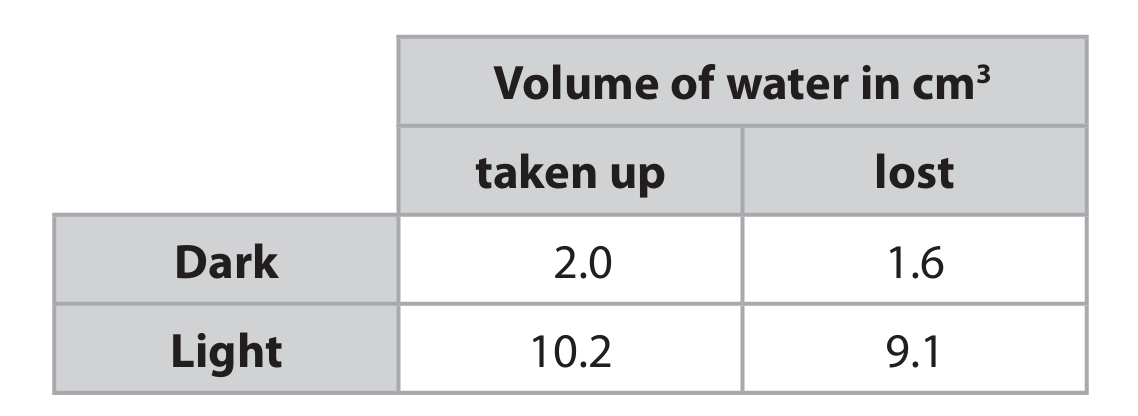
(b) A student investigates the effect of light on the volume of water taken up and lost by a plant shoot in one hour.
The table shows the student’s results.

(i) Explain these results.

(ii) Give two abiotic variables the student should control.

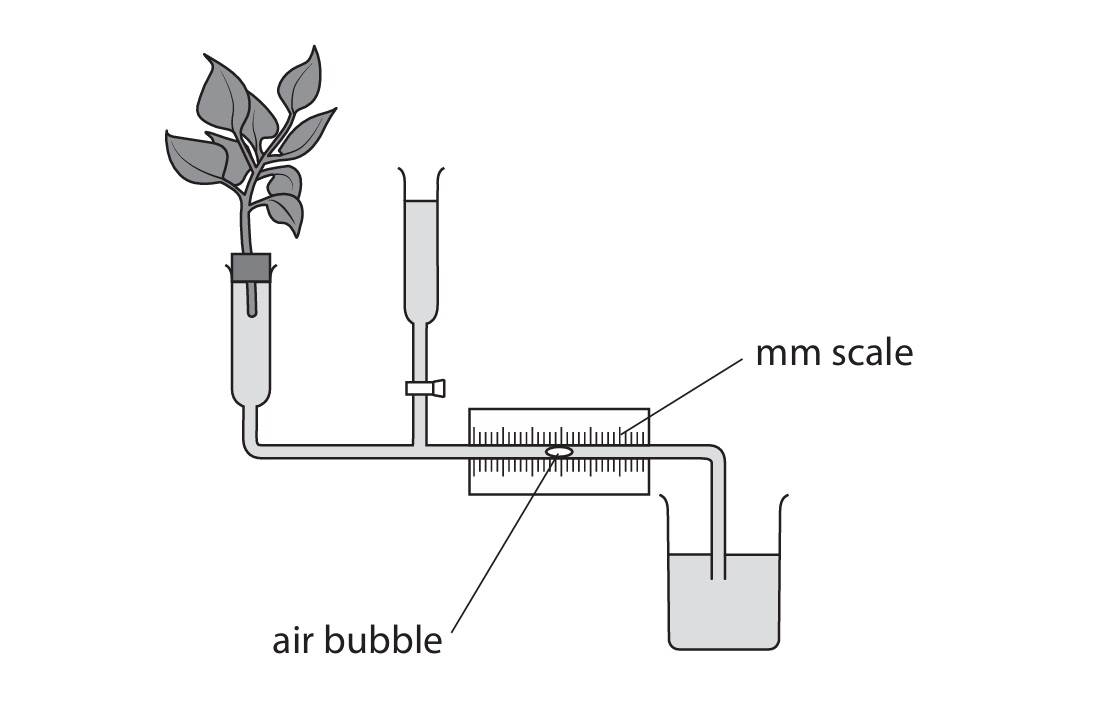
(c) Another student uses this apparatus and a stop clock to find the mean (average) rate of water taken up by a plant shoot.

(i) Name the apparatus used by the student.

(ii) Describe how the student could use this apparatus to find the mean rate of water taken up by the plant.

Most-appropriate topic codes (Edexcel IGCSE Biology):

2(d): Movement of substances into and out of cells — parts (a)(i), (a)(ii)
2(h): Transport in flowering plants — parts (a)(i), (b)(i), (c)(i), (c)(ii)
4(a): The organism in the environment — part (b)(ii)
2(c): Biological molecules — part (b)(i) [water transport linked to plant metabolism]
▶️ Answer/Explanation
Solution

(a)(i) The root hair cell has a long, thin extension (root hair) that increases its surface area, allowing for more efficient absorption of water from the soil.

Explanation: Root hair cells are specialized for absorption. Their elongated, hair-like projections significantly increase the surface area in contact with the soil water. This larger surface area maximizes the rate at which water can be absorbed via osmosis.

(a)(ii) Osmosis specifically involves the movement of water molecules, while diffusion can involve the movement of any type of molecule or ion.

Explanation: The key distinction is the substance being moved. Osmosis is a special case of diffusion that is exclusively concerned with the passive movement of water molecules across a partially permeable membrane from a region of higher water potential to a region of lower water potential. Diffusion, on the other hand, refers to the net movement of any particles (like oxygen, carbon dioxide, or ions) from a region of higher concentration to a region of lower concentration, and it may or may not involve a membrane.

(b)(i) In the light, both water uptake and water loss are much greater than in the dark. More water is taken up than is lost in both conditions.

Explanation: In the light, the plant’s stomata are open to allow gas exchange for photosynthesis. This opening also increases the rate of transpiration (water loss) from the leaves. The loss of water by transpiration creates a transpiration pull, which draws more water up through the xylem from the roots, leading to the higher uptake. The small difference between uptake and loss (e.g., 10.2 – 9.1 = 1.1 cm³ in light) represents water used for processes like photosynthesis and maintaining cell turgor. In the dark, stomata are mostly closed, drastically reducing both transpiration and, consequently, water uptake.

(b)(ii) 1. Temperature
2. Humidity

Explanation: To ensure a fair test and that the results are solely due to the change in light intensity, other abiotic (non-living) factors that affect transpiration and water uptake must be kept constant. Temperature influences the rate of evaporation. Humidity affects the concentration gradient for water vapor loss; lower humidity increases transpiration. Other valid answers include air movement (wind) and the time allowed for the experiment.

(c)(i) Potometer

Explanation: The apparatus shown in the diagram, designed to measure the rate of water uptake by a plant shoot, is called a potometer. It is important to note that it actually measures the rate of water uptake, which is assumed to be closely related to the rate of transpiration.

(c)(ii) The student should introduce an air bubble into the capillary tube and use the stop clock to measure the time taken for the bubble to move a certain distance along the scale. The distance moved is converted to a volume using the known cross-sectional area of the tube. The rate is calculated as volume divided by time, and the experiment is repeated to find a mean rate.

Detailed Description:
1. Set up the potometer with the plant shoot underwater to ensure no air enters the system.
2. Introduce a single air bubble into the capillary tube.
3. Start the stop clock as the bubble passes a starting point on the scale.
4. Stop the stop clock when the bubble passes a finishing point, and record the time taken.
5. Measure the distance the bubble traveled along the scale.
6. Since the capillary tube has a uniform diameter, the volume of water taken up is equal to the distance moved multiplied by the cross-sectional area of the tube (volume = πr² × distance, where r is the radius).
7. Calculate the rate of water uptake for that single run using: Rate = Volume / Time.
8. Reset the bubble using the reservoir (if available) and repeat the process several times.
9. Calculate the mean (average) rate of water uptake from all the repeat readings to improve reliability.
Question

Plant roots absorb water from soil.

This water is transported to the leaves and then moves into the air.

(a) Which of these processes is used to absorb water from the soil?

A) active transport
B) diffusion
C) evaporation
D) osmosis

(b) Name the tissue that transports water to the leaves.

(c) Name the process that moves water vapour into the air.

(d) Which of these reduces the movement of water from the leaves into the air?

A) high light intensity
B) low air humidity
C) low air temperature
D) windy conditions

(e) Give two uses of water in a plant.

Most-appropriate topic codes (Edexcel IGCSE Biology):

2(h): Transport — parts (a), (b), (c), (d), (e)
2(d): Movement of substances into and out of cells — part (a)
2(h): Transport – Flowering plants — parts (b), (c), (d), (e)
▶️ Answer/Explanation
Solution

(a) D osmosis
The only correct answer is D osmosis.
A is not correct as it is not how plants absorb water.
B is not correct as it is not how plants absorb water.
C is not correct as it is not how plants absorb water.

(b) xylem / xylem vessels

(c) transpiration / evaporation / diffusion / evapotranspiration

(d) C low air temperature
A is not correct as it does not reduce the movement of water from the leaves into the air.
B is not correct as it does not reduce the movement of water from the leaves into the air.
D is not correct as it does not reduce the movement of water from the leaves into the air.

(e) An answer that makes reference to two of the following points:
• support / turgor / eq (1)
• photosynthesis / eq (1)
• cooling (1)
• reactions / solvent / transport of mineral ions / named mineral ion / eq (1)

Question

Read the passage below. Use the information in the passage and your own knowledge to answer the questions that follow.

Toystory

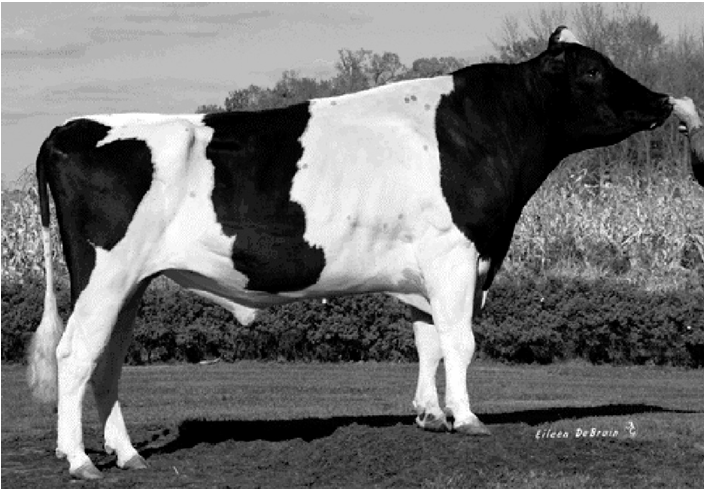
Toystory is a bull who was born in 2001. The photograph shows Toystory.

In the world of dairy farming Toystory is a famous bull. He fathered 500 000 offspring but did not mate with any cows. He was able to father so many offspring because his semen was collected and then used to fertilise cows using artificial insemination.

Toystory’s mother was a high milk producer and his father was a popular bull. He was sold for $4 000 by his owner to a specialist breeding company called Genex.

Genex started to collect semen from Toystory when he was four years old. The semen is carefully collected, using a teaser animal and an artificial rubber vagina.

The semen is divided into many separate samples. These samples are put in small straws and frozen in liquid nitrogen. The straws can then be sold and sent to dairy farmers around the world to inseminate their cows. A total of 2.4 million samples of semen from Toystory was sold in more than 50 countries around the world.

Toystory’s reputation grew as the offspring he fathered went on to be high milk producers. His semen straws sold for over $60 each. Bull semen can now be sold as sexed or unsexed samples, with sexed samples being more expensive to purchase.

Toystory was highly valued because his offspring produced large quantities of milk of a desired composition. His semen was effective at getting cows pregnant, his daughters gave birth easily and were strong. He had a rare mix of fertility, genetics and appearance.

One of his daughters sold for $300 000 in 2009. His record number of offspring is unlikely to be beaten. This is because bulls are often retired earlier as new genetic advances are discovered.

(a) Suggest why Genex waited until Toystory was four years old before beginning to collect his semen (line 9).

(b) Explain how the semen from the bull is used to fertilise cows using artificial insemination.

(c) (i) Suggest why the semen is stored in liquid nitrogen (line 13).
(ii) Sexed semen is guaranteed to produce offspring of one sex. Suggest why dairy farmers would prefer to used sexed semen (line 19).

(d) Determine the percentage success of Toystory’s semen samples in producing offspring (line 2 and line 15).

(e) Describe how scientists could investigate which of two bulls is the best to use as a father in dairy farming.

(f) Explain why the composition of milk is important to consumers (line 22).

(g) (i) Scientists are now using cloning to produce animals. Describe the stages that are required to clone a bull.
(ii) Give two advantages of using cloning rather than selective breeding to produce offspring.

Most-appropriate topic codes (Edexcel IGCSE Biology (Modular)):

3(a): Reproduction — parts (a), (b), (c)(ii)
5(a): Food production — parts (e), (f)
5(b): Selective breeding — part (e)
5(d): Cloning — parts (g)(i), (g)(ii)
2(d): Movement of substances into and out of cells / Practical application — part (c)(i)
Appendix 3: Mathematical skills — part (d)
▶️ Answer/Explanation
Solution

(a)
• so semen contained sperm / (bull is) (sexually) mature / sperm in semen / gone through puberty / fully developed.

(b)
An explanation that includes two of the following points:
• collect semen / sperm from penis of bull (1)
• insert straw into / inject semen (into cow) (1)
• put (it / semen / sperm) in vagina / uterus / womb / cervix (1)

(c)(i)
• preserve (sperm) / keep (sperm) alive / viable / prevent growth of microorganisms / slow down metabolism.

(c)(ii)
• provide females (produce milk) / will produce cows.

(d)
\( 500\,000 \div 2.4 \text{ million} = 0.2083 \)
Percentage = \( 0.2083 \times 100 = 20.83\% \) (allow 1 mark for ÷ 2.4 million).

(e)
A description that makes reference to three of the following points:
• use semen (from each bull) to fertilise (many / similar) cows (1)
• collect / measure milk yields (1)
• from each daughter / offspring of these cows / mother of bull (1)
• select bull with highest (average) milk yield (across all daughters) (1)

(f)
An explanation that makes reference to two of the following points:
• (milk that contains) (most) fat (1)
• (most) protein (1)
• (most) vitamins (1)
• (milk that contains) (most) calcium (1)

(g)(i)
A description that makes reference to four of the following points:
• nucleus from (body) cell of bull (1)
• insert this nucleus into enucleated egg cell (1)
• electric shock (1)
• mitosis / cell division (1)
• embryo into uterus / womb (1)
• surrogate mother (1)

(g)(ii)
An explanation that makes reference to two of the following points:
genetically identical / no genetic variation / same (combination of) alleles (1)
• quicker process (1)

Scroll to Top