Edexcel iGCSE Biology 4BI1 - Paper 2B -Nutrition- Exam Style Questions- New Syllabus
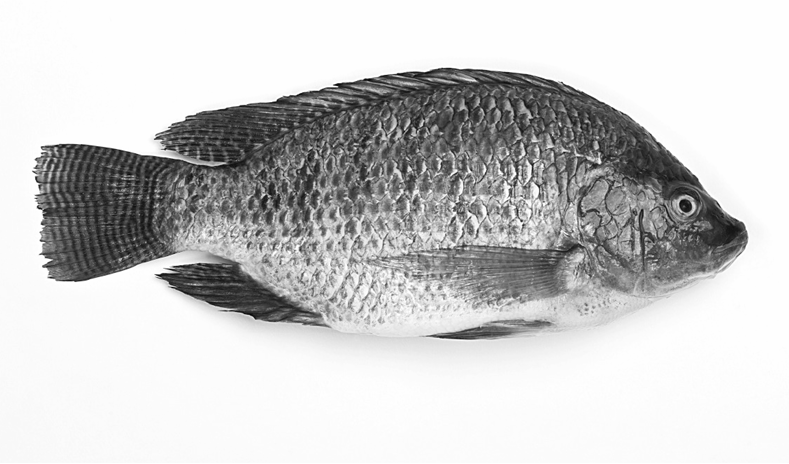
The photograph shows a fish called tilapia. This type of fish is often grown in fish farms.

(a) Tilapia are a good source of nutrients for humans.
The table shows the percentage of the daily requirements for humans of three nutrients provided by a portion of tilapia.
| Nutrient group | Percentage of daily requirement provided by a portion of tilapia |
|---|---|
| lipids | 16 |
| protein | 38 |
| carbohydrate | 16 |
(i) Use the table to determine the ratio of lipid to protein to carbohydrate.
Give your answer in the form \(1 : n : 1\)
(ii) Describe how to test a sample of tilapia to show the presence of lipid.
(iii) State one function of protein in the human body.
(b) Scientists have produced genetically modified (GM) tilapia that grow faster.
Scientists investigate the growth of these GM tilapia compared with non-genetically modified (non-GM) tilapia.
This is the scientists’ method.
- set up two equally sized tanks containing water
- put non-GM tilapia into one tank
- put an equal mass of GM tilapia into the second tank
- feed the fish in each tank the same mass of protein pellets
The mass of each type of fish was measured at the start of the investigation and after seven months.
A measure called the feed conversion index was also calculated for each type of fish.
The table shows the scientists’ results.
| Type of fish | Total starting mass of fish in g | Total mass of fish after seven months in g | Feed conversion index |
|---|---|---|---|
| non-GM | 1250 | 2830 | 1.9 |
| GM | 1250 | 3750 | 1.2 |
(i) The mean rate of increase in mass of the non-GM tilapia during the seven months is \(226 \, \text{g}\) per month.
Calculate the mean rate of increase in mass, in g per month, of the GM tilapia.
Give your answer to three significant figures.
(ii) The feed conversion index is a measure of the mass of protein pellets used compared with the increase in mass of tilapia.
It is calculated using this formula.
\(\text{feed conversion index} = \frac{\text{total mass of protein pellets used}}{\text{increase in mass of tilapia}}\)
Use the information in the table to calculate the mass of protein pellets given to the non-GM tilapia.
(iii) Suggest why the GM tilapia have a lower feed conversion index than the non-GM tilapia.
(iv) Both groups of fish were fed the same mass of pellets and placed into the same sized tanks of water.
Give one other abiotic factor that the scientists should keep constant.
(v) The scientists conclude that farming GM tilapia is better for the environment than farming non-GM tilapia. This is because the GM tilapia would result in less nitrate in the water and cause less spread of disease. Evaluate this conclusion.
Use the information in the table and your own knowledge in your answer.
Most-appropriate topic codes (Edexcel IGCSE Biology):
• 2(e): Nutrition — part (a)(i), (a)(iii)
• 5(a): Food production (Fish farming) — parts (b)(i), (b)(ii), (b)(iii), (b)(iv), (b)(v)
• 5(c): Genetic modification (genetic engineering) — parts (b)(i), (b)(iii), (b)(v)
• 4(a): The organism in the environment (Abiotic factors) — part (b)(iv)
▶️ Answer/Explanation
(a)(i) \(1 : 2.4 : 1\)
Accept \(1: 2.375: 1\)
(a)(ii) A description that makes reference to the following points:
• ethanol / alcohol and add water (1)
• goes white / cloudy / white emulsion forms / milky / eq (1)
OR
• add Sudan III (1)
• red colour (in top layer) (1)
Accept alternative method: rub on paper / eq (1); paper goes transparent / clear / eq (1)
(a)(iii) • growth / repair / enzymes / build muscle / antibodies / eq (1)
(b)(i) • \(357 \, \text{g per month}\) (2)
Correct answer gains both marks.
Accept one mark for:
\(2500\) (increase) or division by \(7\) or \((3750-1250)\) or \(357.14…\)
(b)(ii) • \(3002 / 3000 \, \text{g}\) (1)
(b)(iii) An answer that makes reference to two of the following points (1 mark each):
• (GM fish) grow more / bigger / faster / eq
• produce less faeces / can digest more efficiently / absorb more / eq
• less respiration / lower metabolic rate / eq
• move less / slower swimming / eq
• eat more food / less food wasted / eq
(b)(iv) • temperature / light (intensity) / oxygen / salinity / pH / eq (1)
(b)(v) An evaluation that makes reference to the following points (up to 5 marks):
1. GM fish grow bigger/faster/harvest sooner / eq (1)
2. less food wasted / more food eaten / eq (1)
3. less faeces / urea / excretion / ammonia / eq (1)
4. less decomposition / fewer decomposers / eq (1)
5. less nitrification / fewer nitrifying bacteria / eq (1)
6. less eutrophication / algal growth / plant growth / eq (1)
7. less oxygen loss / more oxygen in water / eq (1)
8. due to less (bacterial) respiration / (more oxygen for) respiration of animals / eq (1)
9. no information about disease spread / pathogen spread / eq (1)
10. GM fish are (genetically) similar so may be more likely to catch/spread disease / eq (1)
11. not repeated / need more experiments / no idea of sample size / eq (1)
12. (GM) fish that escape may harm food chains / outcompete wild fish / may breed with wild fish / eq (1)
13. did not measure nitrates / eq (1)
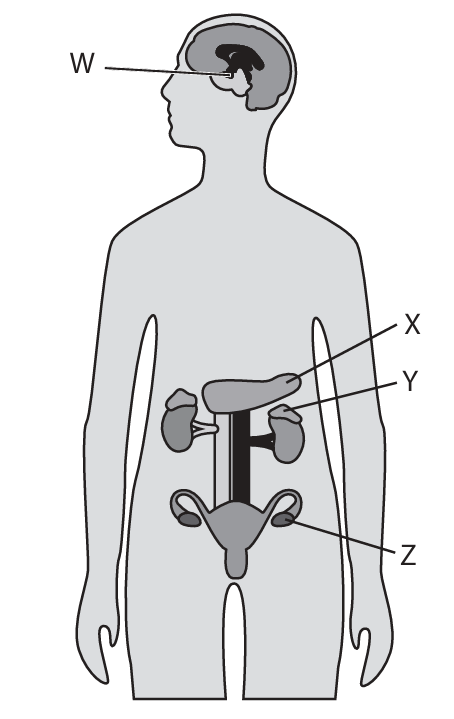
The diagram shows four glands in the human body labelled W, X, Y and Z.

(a) LH is a hormone involved in the menstrual cycle.
(i) Which labelled gland produces LH?
A) W
B) X
C) Y
D) Z
(ii) Describe the functions of LH during the menstrual cycle.
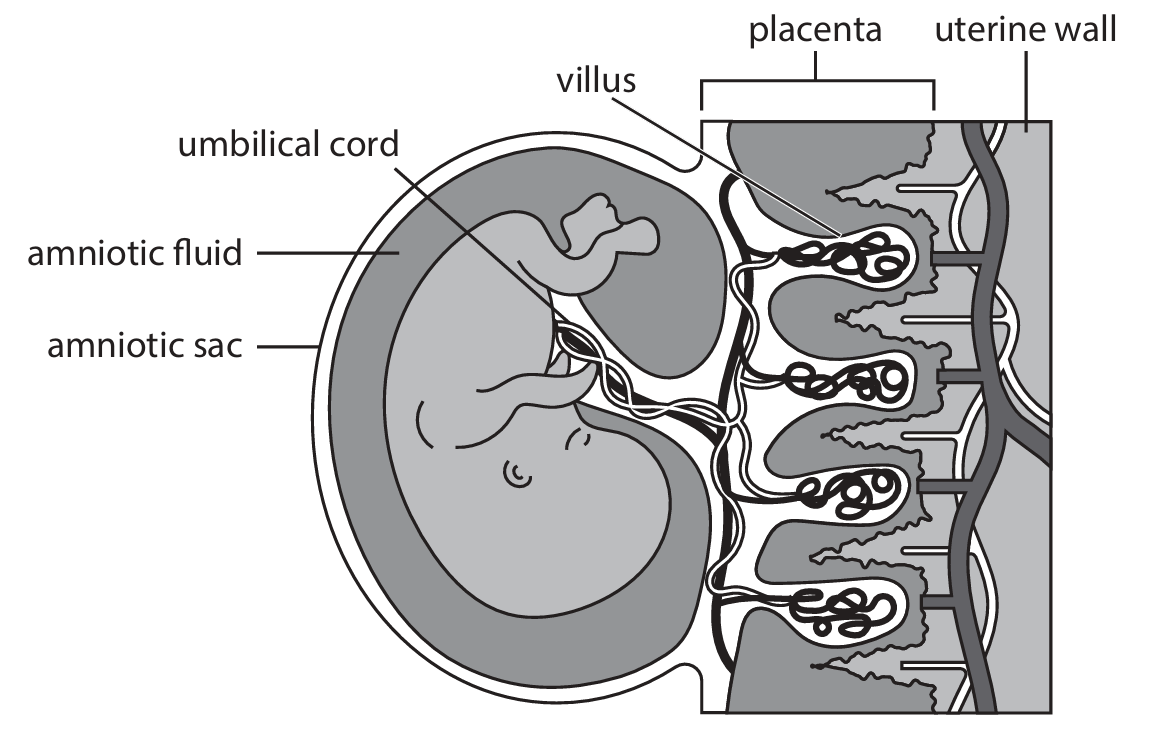
(b) The diagram shows a fetus developing in a uterus.

Explain how the amniotic fluid and placenta enable the safe growth of the fetus.
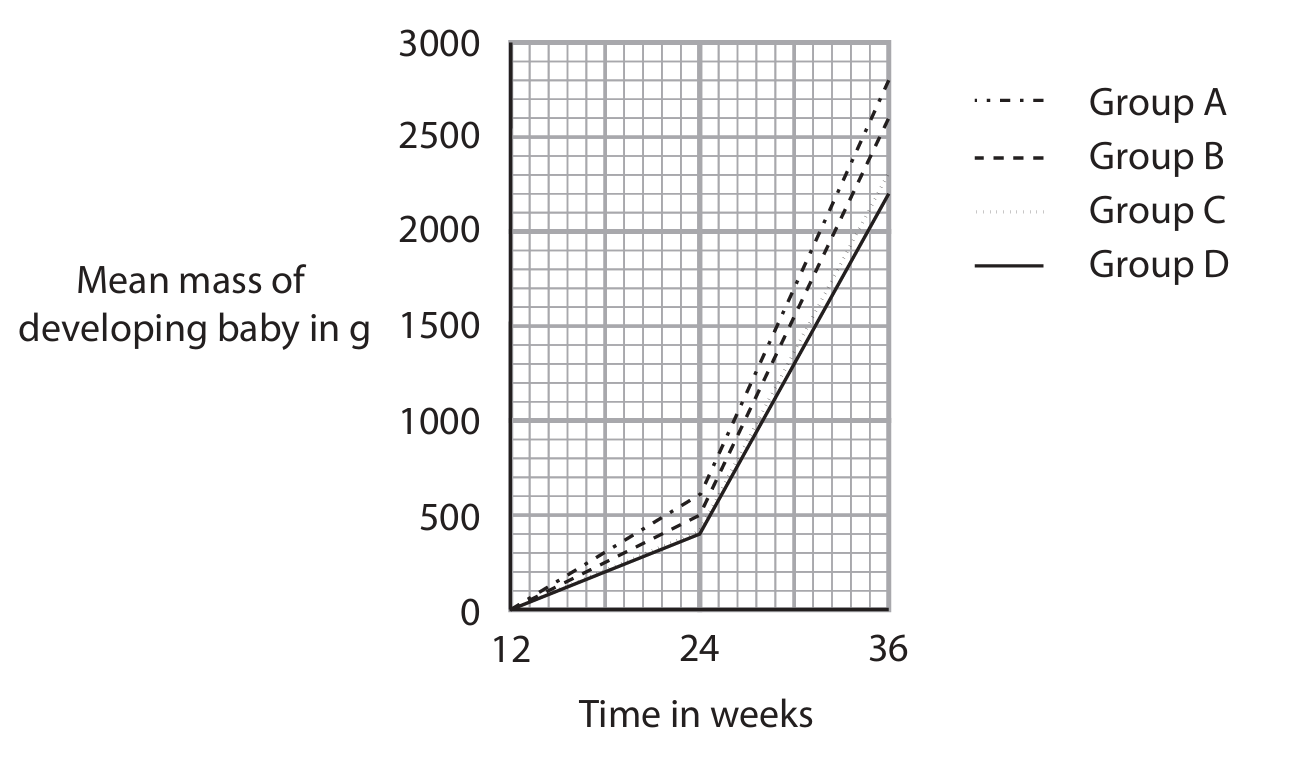
(c) Scientists investigated the effects of tobacco smoking and taking mineral ion supplements on the growth of developing babies during pregnancy.
The scientists looked at four groups of mothers.
- Group A non-smokers taking mineral ion supplements
- Group B non-smokers not taking mineral ion supplements
- Group C smokers taking mineral ion supplements
- Group D smokers not taking mineral ion supplements
The graph shows the mean masses of developing babies at 12 weeks of pregnancy, at 24 weeks of pregnancy and at birth (36 weeks).

(i) Calculate the percentage difference at 36 weeks of the mean mass of babies from mothers in group A compared with the mean mass of babies from mothers in group D.
Give your answer to the nearest whole number.
(ii) Comment on the effect of smoking and the effect of taking mineral ion supplements on the growth of babies. Use the graph and your own knowledge to help your answer.
Most-appropriate topic codes (Pearson Edexcel IGCSE Biology):
• 3(a): Reproduction (Humans) — part (b)
• 2(e): Nutrition (Humans) — part (c)(ii) – mineral function
• 2(g): Gas exchange (Humans) — part (c)(ii) – smoking effects
• Mathematical skills — part (c)(i)
▶️ Answer/Explanation
(a)(i) A (W) — the pituitary gland.
B is incorrect as X (the pancreas) does not release LH.
C is incorrect as Y (the adrenal) does not release LH.
D is incorrect as Z (the ovary) does not release LH.
(a)(ii) A description that makes reference to the following:
• ovulation / release of egg / oocyte (1)
• (stimulates) progesterone release (1)
Accept: stimulates oestrogen release.
(b) An explanation that makes reference to the following:
• (amniotic fluid) prevents physical damage / bumps / equalizes pressure / acts as a shock absorber / cushioning (1)
and two from:
• (placenta) allows diffusion / active transport (1)
• gives the fetus amino acids / glucose / oxygen / antibodies / vitamins / minerals (1)
• removes from the fetus urea / carbon dioxide (1)
• makes sure mother’s and baby’s blood do not mix (1)
(c)(i) • 27% (3 marks)
Working:
Mass difference = \(2800 – 2200 = 600\) g
Percentage difference = \(\frac{600}{2200} \times 100 = 27.27…\%\) ≈ 27% (nearest whole number)
One mark for (2800 – 2200) or 600; one mark for division by 2200; one mark for correct answer.
(c)(ii) An answer that makes reference to four of the following points (4 marks):
1. smoking results in slower growth / lower mass (1)
2. taking minerals results in faster growth / higher mass (1)
3. biggest increase in mass / fastest growth is non-smokers with minerals (Group A) (1)
4. smoking has a bigger (negative) impact than not taking mineral supplements (1)
5. carbon monoxide (in smoke) binds to haemoglobin / reduces oxygen transport (1)
6. less respiration / energy release for growth (1)
7. minerals (e.g., iron) are needed for haemoglobin / red blood cells (1)
8. minerals (e.g., calcium) are needed for bone growth (1)
Accept converse statements for points 1-3.
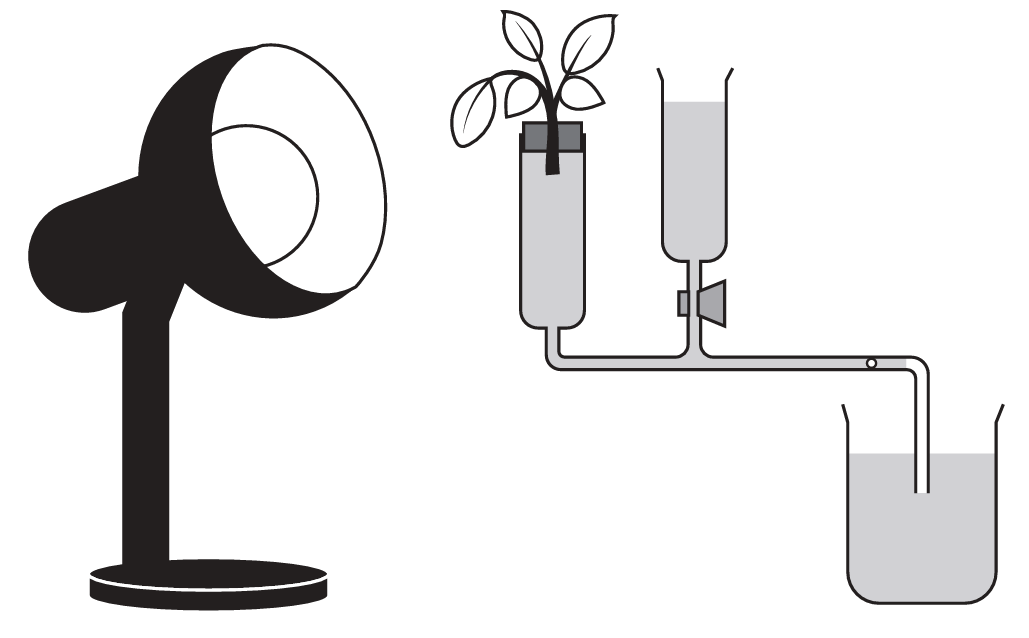
Transpiration (water loss) is affected by several environmental factors.
A student investigates the effect of light intensity on water loss from a plant shoot. The diagram shows some of the apparatus the student uses.

The student predicts that water loss from a plant shoot will increase as light intensity increases.
(a) (i) Describe how to set up and use the student’s apparatus to test this prediction.
(ii) State the dependent variable in this investigation.
(b) Another student uses the apparatus to collect and process the data. Table 1 shows their results.
| Light intensity in arbitrary units | Mean volume of water lost by shoot in 10 minutes in mm3 |
|---|---|
| 0 | 2 |
| 5 | 8 |
| 10 | 12 |
| 15 | 12 |
(i) Explain why light intensity changes the mean volume of water lost by the shoot.
(ii) The student repeats the experiment with a plant that is adapted to live in desert environments. Table 2 shows the results for this desert plant.
| Light intensity in arbitrary units | Mean volume of water lost by shoot in 10 minutes in mm3 |
|---|---|
| 0 | 6 |
| 5 | 4 |
| 10 | 0 |
| 15 | 0 |
The desert plant has adaptations to survive in desert environments where not much water is available.
Explain why the results for this desert plant, in table 2, are different from the results in table 1.
Most-appropriate topic codes (Edexcel IGCSE Biology):
• 2(g): Gas exchange in plants — parts (b)(i), (b)(ii) [link to stomatal behavior]
• 3(b): Structure and functions in living organisms: Part 1 (Nutrition in plants) — implicit link to water uptake
• 4(a): Ecology and the environment — part (b)(ii) [adaptations to environment]
▶️ Answer/Explanation
(a)(i) Mark Scheme Summary: A description that makes reference to four of the following points (1 mark each):
- Cut shoot underwater / cut shoot diagonally.
- Ensure apparatus is airtight (e.g., dry leaves, check seals, use petroleum jelly).
- Measure distance bubble moves / distance water moves in capillary tube.
- Measure this movement over a set time.
- Place lamp at different distances from the shoot (to vary light intensity).
- Control other variables (e.g., temperature, humidity).
- Repeat readings / use reservoir to reset bubble.
(a)(ii) Water loss / distance moved by bubble / volume of water taken up / time taken to move bubble / rate of bubble movement.
Accept: water uptake / transpiration speed.
(b)(i) An explanation that makes reference to two of the following (1 mark each):
- More water loss as light intensity increases (more transpiration/evaporation).
- Because (more) stomata open / stomata open wider.
- Until all stomata are open (completely) / until stomata are fully open.
(b)(ii) An explanation that makes reference to three of the following (1 mark each):
- Desert plant loses less water in total / retains/conserves water.
- Water is lost in low light / water is not lost in high light (water loss decreases as light intensity increases for desert plant).
- Stomata close in light/day / stomata open in dark/night (reverse of normal plants).
- Desert plants have fewer stomata.
- This adaptation reduces wilting / stops plant going flaccid.
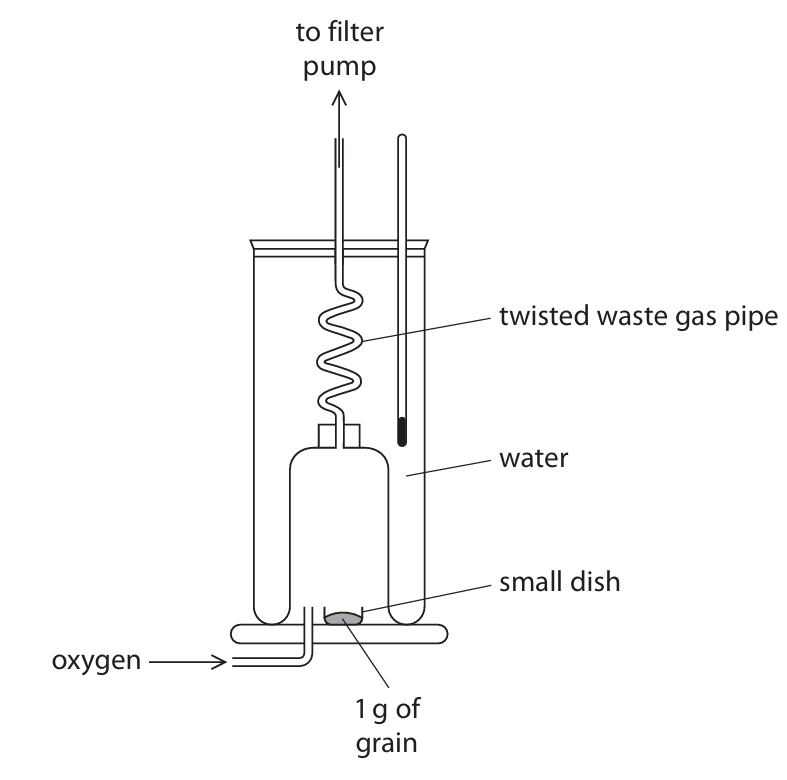
Scientists use a calorimeter to compare the energy content of different types of grain.

This is the scientists’ method:
- put 20 cm³ of water into the calorimeter
- measure the initial temperature of the water
- place 1 g of a grain type in the small dish
- place the small dish in the calorimeter
- light the grain in the small dish
- allow the grain to completely burn
- measure the final temperature of the water
They repeat this method with different types of grain.
(a) Explain how the scientists could use these measurements to calculate the energy released by 1 g of the grain.
(b) State how the scientists can make sure that their results are reliable.
(c) (i) This calorimeter has a twisted waste gas pipe passing through the water. Explain how the twisted waste gas pipe improves the accuracy of the scientists’ results compared with a straight pipe.
(ii) This calorimeter burns the grain in oxygen. Give a reason why this improves the accuracy of the scientists’ results.
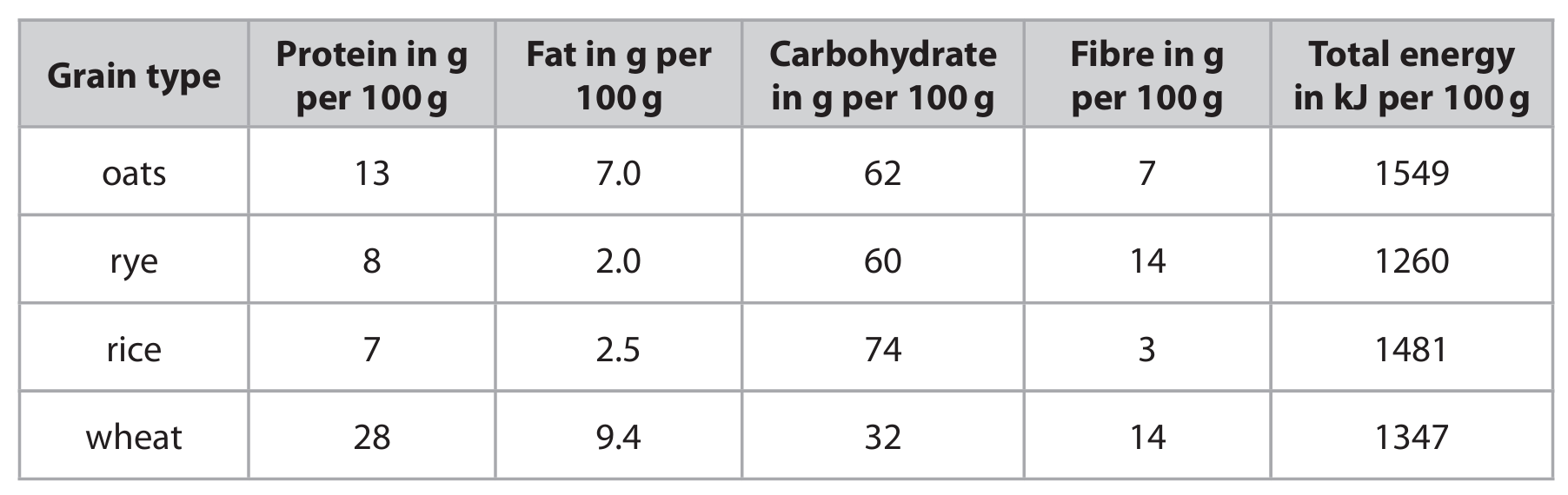
(d) The scientists also collected data on the protein, fat, carbohydrate and fibre content of the grains.
The table shows some of the scientists’ results.

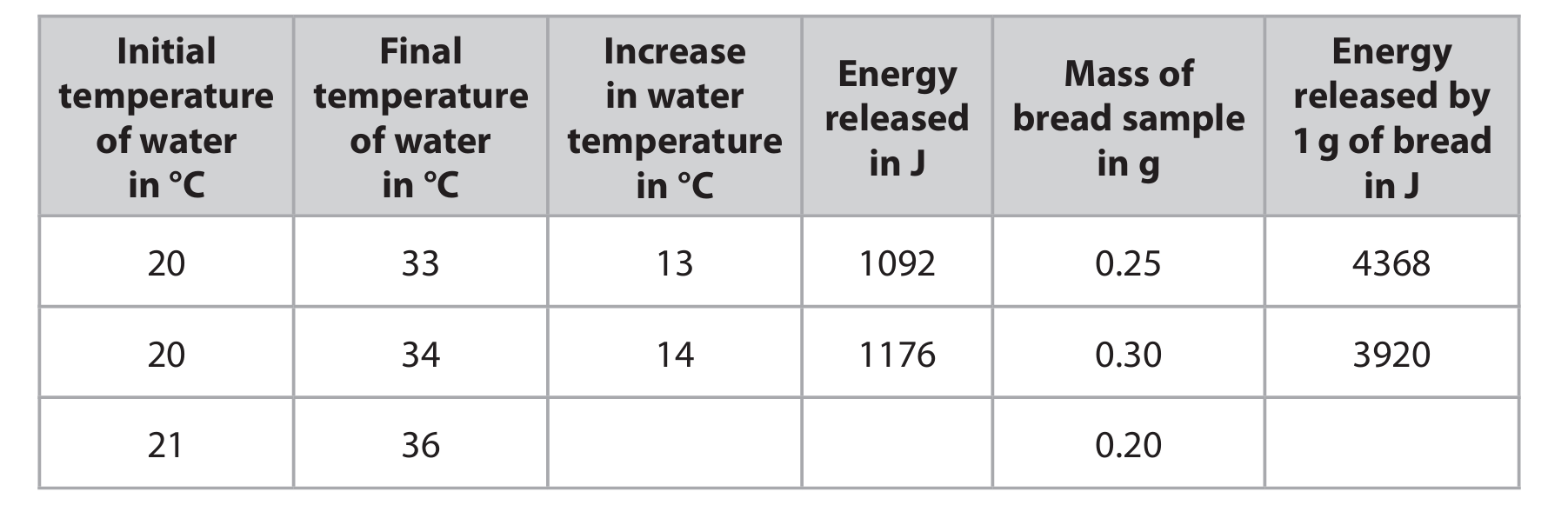
(i) Calculate the mass of protein in 65 g of rice.
(ii) A long-distance athlete wants to choose a grain to add to their diet. Comment on the suitability of each grain type for the diet of a long-distance athlete.
Most-appropriate topic codes (Edexcel IGCSE Biology):
• 2(e): Nutrition — balanced diet, energy requirements, and food composition
• 2(e): Humans — energy requirements, diet components, and nutritional analysis
• Appendix 6: Suggested practical investigations — investigating energy content in a food sample (2.33B)
▶️ Answer/Explanation
(a) The scientists can calculate the energy released by 1 g of grain using the formula: Energy = mass of water × specific heat capacity of water × temperature change.
Explanation: First, they need to calculate the temperature change (ΔT) by subtracting the initial temperature from the final temperature. Then, they multiply this temperature change by the mass of water (20 g, since 20 cm³ of water has a mass of 20 g) and by the specific heat capacity of water (4.2 J/g°C). This gives the energy in joules. To find the energy per gram of grain, they would divide this value by 1 (since they used 1 g of grain). The formula can be written as: E = m × c × ΔT, where m = 20 g, c = 4.2 J/g°C, and ΔT = final temperature – initial temperature.
(b) Repeat the experiment multiple times and calculate the mean.
Explanation: To ensure reliability, scientists should repeat the experiment several times for each type of grain. By calculating the average (mean) of these repeated measurements, they can reduce the effect of random errors and obtain a more reliable result that better represents the true value.
(c)(i) The twisted pipe has a larger surface area, allowing more heat to be transferred to the water.
Explanation: A twisted waste gas pipe increases the surface area that comes into contact with the water compared to a straight pipe. This enhanced surface area allows for more efficient heat transfer from the hot waste gases to the water, ensuring that more of the energy released from burning the grain is captured and measured. This results in a more accurate measurement of the energy content.
(c)(ii) Oxygen ensures complete combustion of the grain.
Explanation: Burning the grain in pure oxygen rather than air ensures that the grain undergoes complete combustion. In air, which contains only about 21% oxygen, incomplete combustion might occur, leading to soot formation and the release of less energy. Pure oxygen guarantees that all the combustible material in the grain is fully oxidized, releasing the maximum possible amount of energy, which provides a more accurate measurement of the grain’s energy content.
(d)(i) Mass = 4.55 g
Explanation: According to the table, rice contains 7 g of protein per 100 g. To find the mass of protein in 65 g of rice, we set up a proportion: (7 g protein / 100 g rice) = (x g protein / 65 g rice). Solving for x: x = (7 × 65) / 100 = 455 / 100 = 4.55 g. Therefore, 65 g of rice contains 4.55 g of protein.
(d)(ii)
Oats: Oats are highly suitable because they have high carbohydrate (62 g/100 g) and fat (7 g/100 g) content, providing sustained energy release for endurance activities. They also contain a moderate amount of protein (13 g/100 g) for muscle repair. However, the relatively high fat content might be a concern if consumed in large quantities over time.
Rye: Rye has moderate carbohydrates (60 g/100 g) but low fat (2 g/100 g) and protein (8 g/100 g), making it less ideal as a primary energy source. Its high fiber content (14 g/100 g) is beneficial for digestive health but might cause gastrointestinal discomfort during intense exercise if consumed in large amounts shortly before running.
Rice: Rice is excellent for quick energy due to its very high carbohydrate content (74 g/100 g) and low fiber (3 g/100 g), which allows for easy digestion. However, it has low protein (7 g/100 g) and fat (2.5 g/100 g), so it should be complemented with other protein sources for muscle recovery.
Wheat: Wheat has the highest protein content (28 g/100 g), which is beneficial for muscle repair and growth. However, its relatively low carbohydrate content (32 g/100 g) makes it less optimal as a primary energy source for endurance activities compared to oats or rice. The high fiber content (14 g/100 g) is good for general health but might not be ideal immediately before exercise.
Overall: For a long-distance athlete who needs sustained energy, oats would be the best choice due to their balanced macronutrient profile with high carbohydrates and moderate fat and protein. Rice could be good for quick energy before a race. Wheat is valuable for muscle repair but lower in energy, and rye is the least suitable due to its lower energy density.
Scientists have genetically modified soya plants so that the soya beans they produce contain less saturated fat.
The scientists produced one transgenic soya plant. Micropropagation was then used to make multiple copies of this transgenic soya plant.
(a) Explain why micropropagation was used to produce copies of the transgenic soya plant.
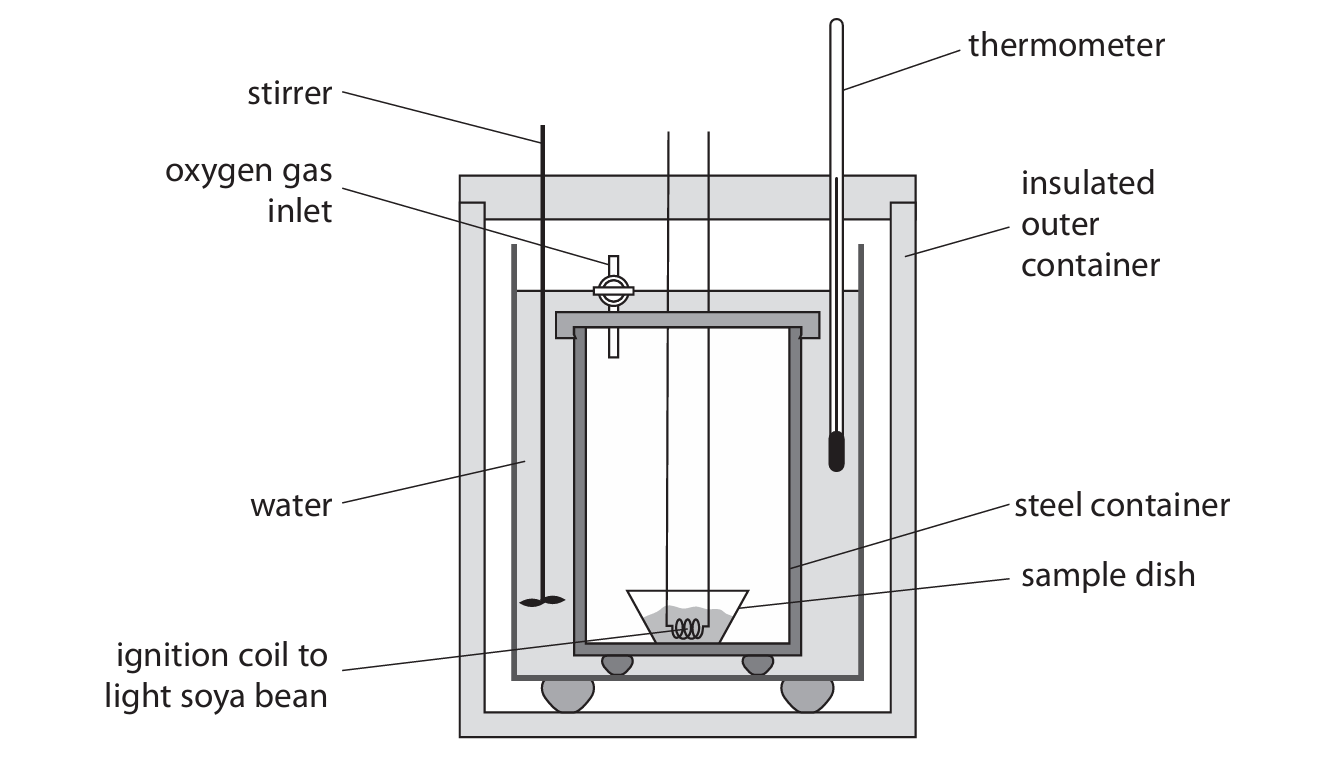
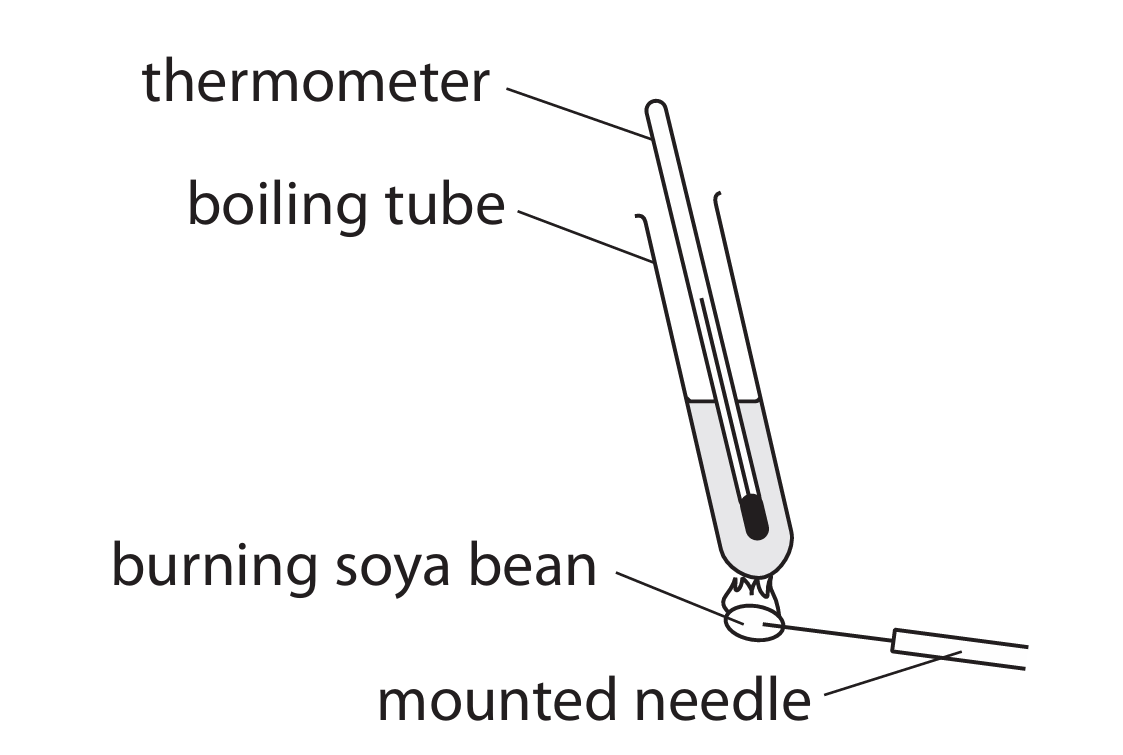
(b) A student uses this equipment to compare the energy content of transgenic soya beans with the energy content of non-transgenic soya beans.

(i) Describe how the student could use the equipment to make a valid comparison of the energy content of the two types of soya bean.
(ii) Give one safety precaution that the student should take when using the apparatus.
(iii) The diagram shows a different type of apparatus that can be used for the investigation.

Explain two reasons why this apparatus will give a more accurate energy value than the apparatus used by the student.
Most-appropriate topic codes (Edexcel IGCSE Biology):
• 5(d): Cloning — part (a)
• 2(e): Nutrition — part (b)(i), (b)(iii)
• Appendix 6: Suggested practical investigations — part (b)(i), (b)(iii)
• 2.33B practical: investigate the energy content in a food sample — part (b)
▶️ Answer/Explanation
(a) Micropropagation was used because it produces genetically identical plants (clones) that all contain the modified gene for reduced saturated fat. This ensures consistency in the desired trait without the need to repeat the complex genetic modification process. Additionally, since only one transgenic plant was initially created, micropropagation provides a rapid method to produce many copies regardless of season, avoiding the limitations of traditional breeding.
(b)(i) To make a valid comparison, the student should:
- Use the same mass of each type of soya bean (or calculate energy per gram)
- Use the same volume (or mass) of water in the boiling tube
- Ignite each bean completely and hold it at a consistent distance under the boiling tube to heat the water
- Measure the temperature change of the water (initial and highest temperature)
- Repeat the experiment multiple times to calculate average values and ensure reliability
(b)(ii) One important safety precaution is to wear eye protection to prevent injury from potential splashes or flying fragments when heating the beans.
(b)(iii) This advanced apparatus provides more accurate results because:
- Oxygen supply: The oxygen gas inlet ensures complete combustion of the soya bean, preventing incomplete burning that would yield inaccurate energy measurements.
- Insulation: The insulated outer container minimizes heat loss to the surroundings, ensuring that more of the generated heat is transferred to the water and measured.
- Stirring mechanism: The stirrer distributes heat evenly throughout the water, preventing hot spots and ensuring a more accurate temperature measurement.
- Contained ignition: The internal ignition coil allows the bean to burn completely within the apparatus without needing to be moved, reducing heat loss during transfer.
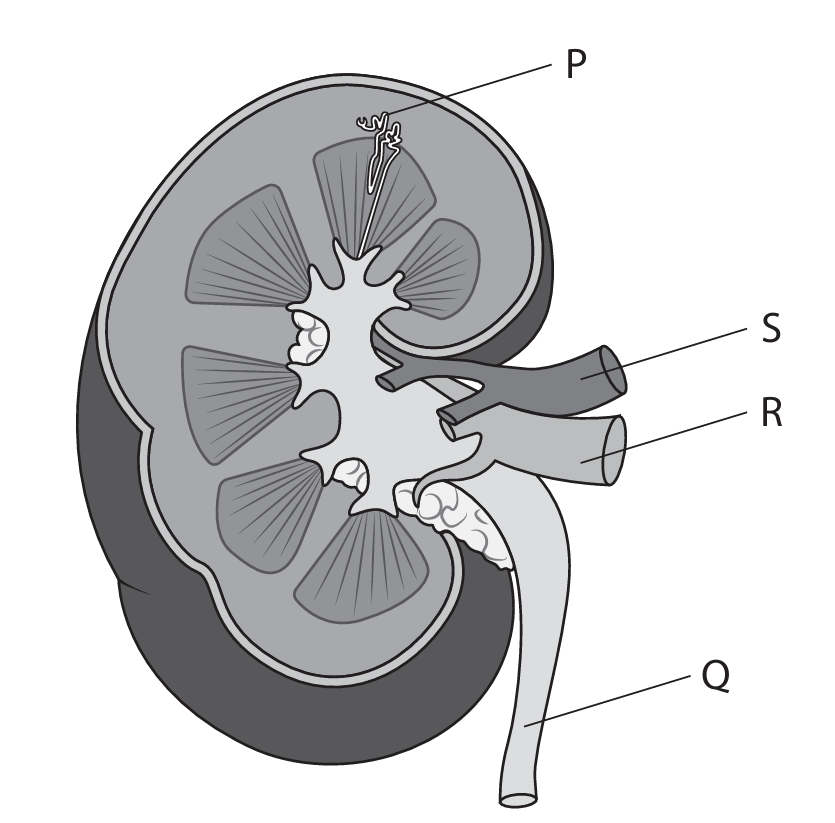
The diagram shows a section through a human kidney with some structures labelled.

(a) (i) Which structure is labelled P in the diagram?
A. bladder
B. nephron
C. ureter
D. urethra
(a) (ii) Which fluid is carried in tube S?
A. bile
B. blood
C. filtrate
D. urine
(a) (iii) Which tube is labelled Q in the diagram?
A. renal artery
B. renal vein
C. ureter
D. urethra
(b) Analysis of the composition of urine can be used in the diagnosis of problems with kidney function.
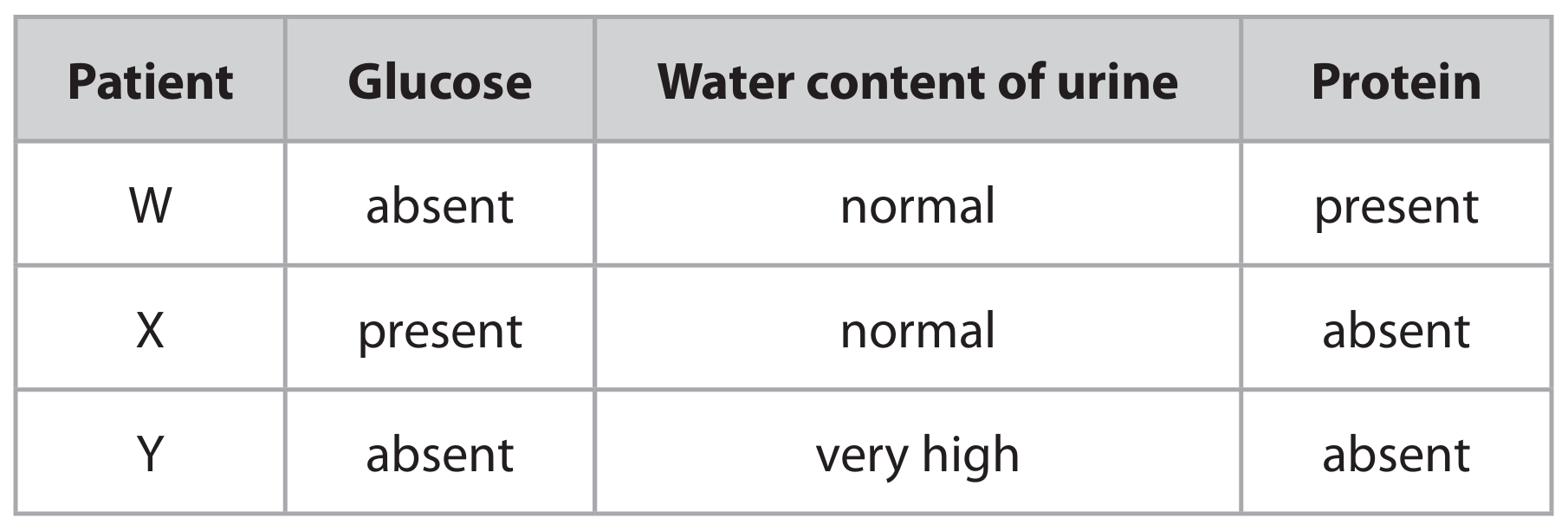
Urine samples are taken from three patients and the results are shown in the table.

(b) (i) Discuss which processes in the kidney may be affected to produce the results shown.
Include in your answer where in the nephron the processes occur.
(b) (ii) Describe how to test for glucose in a sample of urine.
Most-appropriate topic codes (Edexcel IGCSE Biology):
• 2(b): Cell structure — part (a)(i) (nephron as functional unit)
• 2(h): Transport — part (a)(ii) (blood vessels)
• 2(e): Nutrition — part (b)(ii) (testing for glucose)
• Appendix 6: Suggested practical investigations — part (b)(ii) (practical testing method)
▶️ Answer/Explanation
(a)(i) B (nephron)
Explanation: Structure P represents the functional unit of the kidney, which is the nephron.
(a)(ii) B (blood)
Explanation: Tube S carries blood to or from the kidney, specifically it is likely the renal artery or vein.
(a)(iii) C (ureter)
Explanation: Tube Q is the ureter, which transports urine from the kidney to the bladder.
(b)(i) An explanation that makes reference to:
• Patient W: Presence of protein indicates failure of ultrafiltration in the glomerulus/Bowman’s capsule.
• Patient X: Presence of glucose indicates failure of selective reabsorption in the proximal convoluted tubule.
• Patient Y: High water content indicates reduced water reabsorption in the collecting duct, possibly due to low ADH.
(b)(ii) A description that includes:
• Use Benedict’s reagent
• Heat in a water bath
• Observe colour change (green → red indicates glucose)
• Alternatively, use a glucose test strip and compare colour to a chart.
Read the passage below. Use the information in the passage and your own knowledge to answer the questions that follow.
Antitranspirants
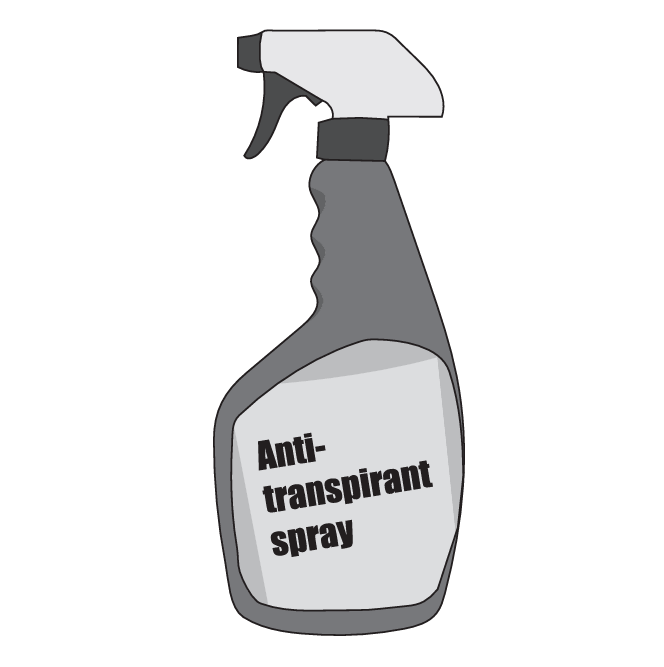
Antitranspirants are substances applied to plants to reduce water loss. There are three types of antitranspirant, film-forming compounds, stomatal regulators and reflective compounds.
The first type of antitranspirant contains film-forming compounds. These compounds are oils or waxes that are mixed with water to form an emulsion. This emulsion is then sprayed onto the leaves of plants. The emulsion forms a physical barrier that covers the stomata. The film is designed to prevent water loss but allow gas exchange. Scientists have found that that the film-forming antitranspirant is effective in increasing yield and increasing photosynthesis in drought conditions. The increased leaf turgor in plants sprayed with film, compared to control plants, shows that the film decreases water loss and maintains turgor in drought conditions.
Film-forming antitranspirants are used in horticulture to reduce water stress. This can occur during storage, transport and planting of container grown plants. Application of the antitranspirant before transplanting, helps the plant survive until the root system is established. The film-forming compounds are used to reduce drying out in rolled turf and in transporting flowering plants and trees with root balls.
The second type of antitranspirants are stomatal regulators that reduce the size of the stomatal pore. Stomatal pores affect diffusion as well as transpiration. Therefore, photosynthesis and growth may change when stomatal regulators are applied to leaf surfaces. If the stomatal pores close completely this will stop photosynthesis. However, if stomatal openings are only reduced in size, transpiration will be reduced but some photosynthesis will continue.
The third type of antitranspirants are reflective compounds. These work by adding a white coating to leaves. This changes the amount of light that is reflected by the leaf surface. The coating is only applied to the upper surface of leaves so does not block the stomatal pores. Coating a leaf with a reflective chemical can reduce leaf temperature, transpiration rate and also increase the efficiency of water use. Experiments show that transpiration rate can be reduced by up to 30% and leaf temperature reduced from 40°C to 30°C after a coating of reflective compound is applied to leaf surfaces.
Crops depend on photosynthesis for growth and final yield. Therefore, it is unlikely that currently available antitranspirants would increase the yield of a crop unless the crop suffers from a low water supply or very high rates of evaporation. Spraying film-forming or stomata regulating antitranspirants on a field-grown cereal crop under drought conditions, produced a grain yield increase of 17%. Experiments also show that any effect that antitranspirants have on the minerals supplied to the leaves has little effect on plant growth.
(a) Explain why plants that have been dug up and transported are at most risk of drying out.
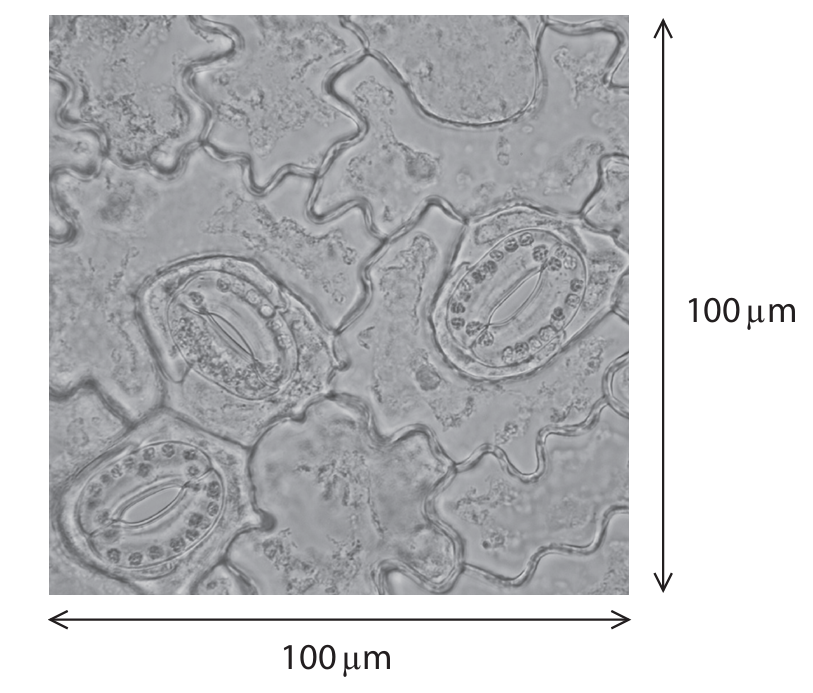
(b) The photograph shows some stomata on a leaf surface.

Use the photograph to determine the number of stomata per mm² on this leaf surface. [1 mm = 1000 μm]
(c) Explain why stomatal regulators reduce photosynthesis.
(d) (i) Explain why reflective compounds should only be applied to the upper surface of a leaf.
(ii) Explain why reducing leaf temperature reduces transpiration rate.
(e) Describe the role of one named mineral ion in plant growth.
(f) Describe how water is transported from the soil to the leaves in plants.
Most-appropriate topic codes (Edexcel IGCSE Biology):
• 2(g): Gas exchange — Flowering plants — parts (c), (d)(i), (d)(ii)
• 2(h): Transport — Flowering plants — parts (a), (f)
• 4(a): The organism in the environment — part (b)
• 4(c): Cycles within ecosystems — part (e)
▶️ Answer/Explanation
(a) Plants that have been dug up and transported are at most risk of drying out because their roots (and root hair cells) are damaged or not in soil/exposed. This means water cannot be absorbed or taken up effectively. Additionally, water continues to be lost through transpiration or evaporation from the leaves, creating a water deficit that the damaged root system cannot replenish.
(b) number of stomata per mm² = 300
Explanation: The photograph shows an area of 100 μm × 100 μm, which contains 3 stomata. To find the number per mm²:
1 mm = 1000 μm, so 1 mm² = 1000 μm × 1000 μm = 1,000,000 μm².
The area of the photograph is 100 μm × 100 μm = 10,000 μm².
So, the number of stomata per mm² = (number in photo ÷ area of photo) × area of 1 mm² = (3 ÷ 10,000) × 1,000,000 = 300.
(c) Stomatal regulators reduce photosynthesis because they cause the stomatal pores to close or become smaller. This reduces the amount of carbon dioxide that can diffuse into the leaf. Since carbon dioxide is a key reactant in photosynthesis, a reduced supply limits the rate at which photosynthesis can occur.
(d)(i) Reflective compounds should only be applied to the upper surface of a leaf because the stomata are mainly or only located on the lower surface in most plants. Applying the coating only to the upper surface ensures the stomatal pores are not blocked, allowing gas exchange (carbon dioxide absorption and oxygen release) to continue uninterrupted. Additionally, the upper surface receives the most direct sunlight, so applying the reflective coating there is most effective at reducing heat absorption.
(d)(ii) Reducing leaf temperature reduces the transpiration rate because lower temperatures decrease the kinetic energy of water molecules. With less energy, water molecules move more slowly and are less likely to evaporate from the leaf surface (especially from the stomata). This reduces the rate of diffusion of water vapor out of the leaf, thereby lowering the transpiration rate.
(e) Nitrate ions (NO₃⁻) play a crucial role in plant growth. They are absorbed from the soil and are used by the plant to synthesize amino acids. These amino acids are then built up into proteins, which are essential for growth (e.g., enzymes for metabolic reactions, structural proteins for cell walls) and development.
Alternatively, magnesium ions (Mg²⁺) are a key component of chlorophyll, the pigment that absorbs light energy for photosynthesis. Without sufficient magnesium, chlorophyll production is impaired, leading to reduced photosynthesis and stunted growth.
(f) Water is transported from the soil to the leaves through the following process:
1. Water is absorbed from the soil by root hair cells through osmosis. Root hairs increase the surface area for absorption.
2. Osmosis occurs because the soil water is a dilute solution (higher water potential) compared to the concentrated cell sap inside the root hair cells (lower water potential).
3. Once inside the root, water moves across the cortex and into the xylem vessels.
4. Water is then transported upwards through the xylem to the leaves due to transpiration pull. This is a suction force created by the evaporation of water from the surfaces of mesophyll cells in the leaves and its subsequent diffusion out of the stomata.
5. The cohesion (water molecules sticking together) and adhesion (water molecules sticking to the xylem walls) properties of water help maintain a continuous column of water from the roots to the leaves.
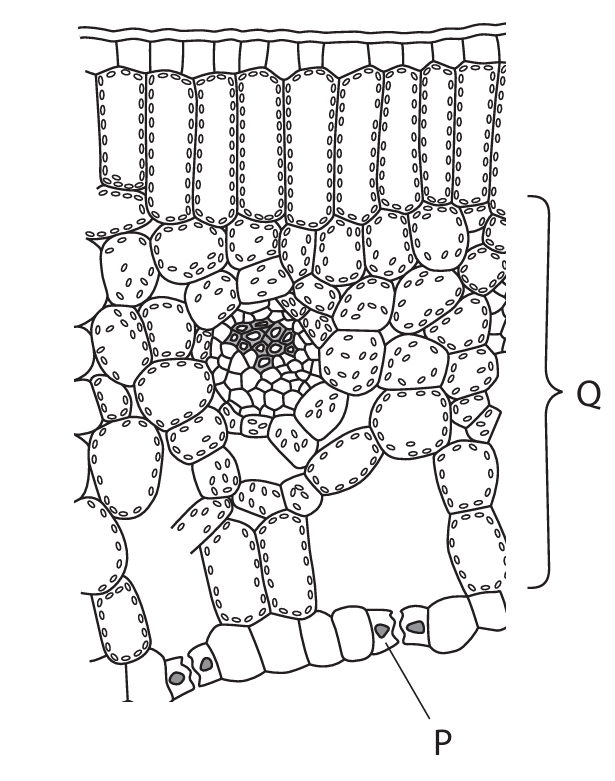
(a) The diagram shows a cross-section through part of a plant leaf.

(i) What is the name of the cell labelled P?
- A. cuticle
- B. guard
- C. palisade
- D. stoma
(ii) Explain how part Q is adapted for photosynthesis in the leaf.
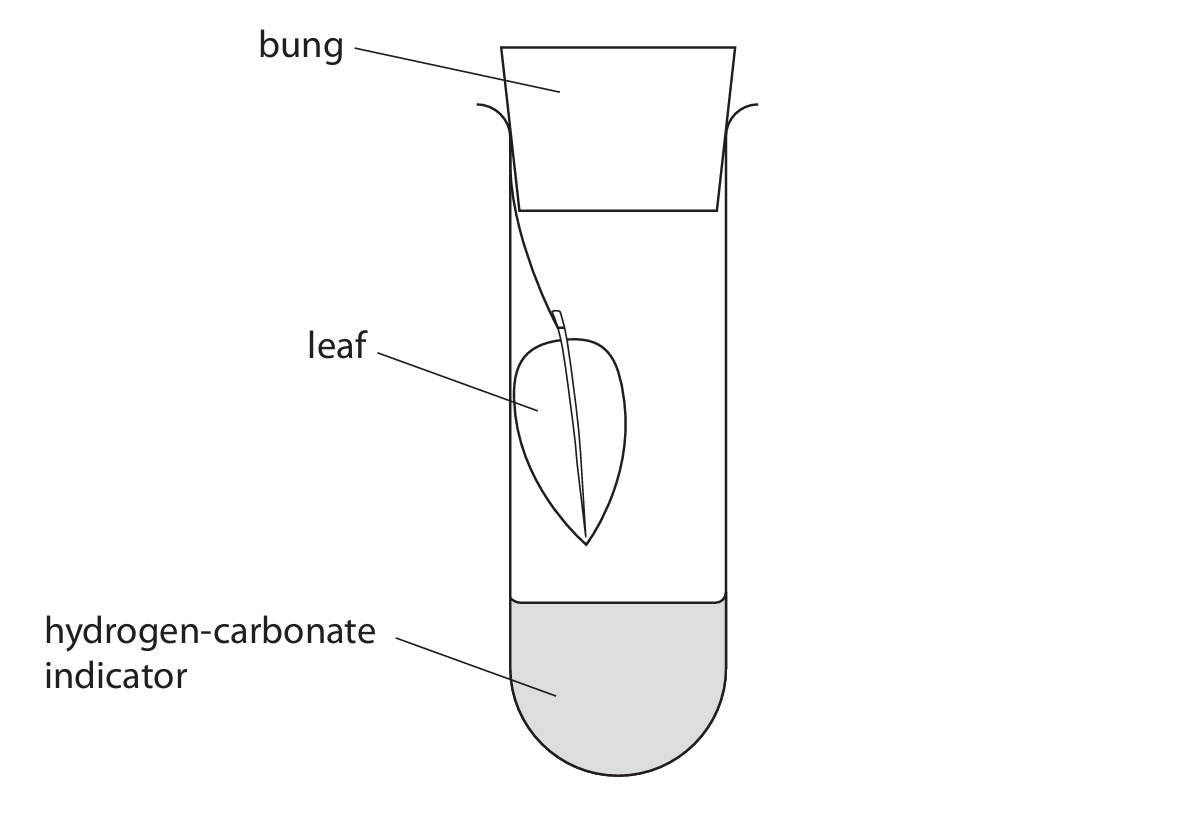
(b) A student uses this method to investigate the effect of temperature on the rate of gas exchange in leaves.
- pour 10 cm³ of hydrogen-carbonate indicator into each of six test tubes
- hang a leaf in five of the test tubes
- place a bung in each test tube
- place the five tubes with leaves into separate water baths at temperatures of 15°C, 20°C, 25°C, 30°C, 35°C, and 40°C
- place the tube with no leaf in a water bath at 25°C
- place all tubes in bright sunlight
- record the time taken for each of the hydrogen-carbonate indicator solutions to change from orange to red
The student repeats the experiment two more times.
The diagram shows one of the tubes with a leaf.

(i) State the independent variable.
(ii) The species and size of leaf were the same in each tube.
Give a reason for controlling one other named factor.
(iii) State the function of the tube with no leaf.
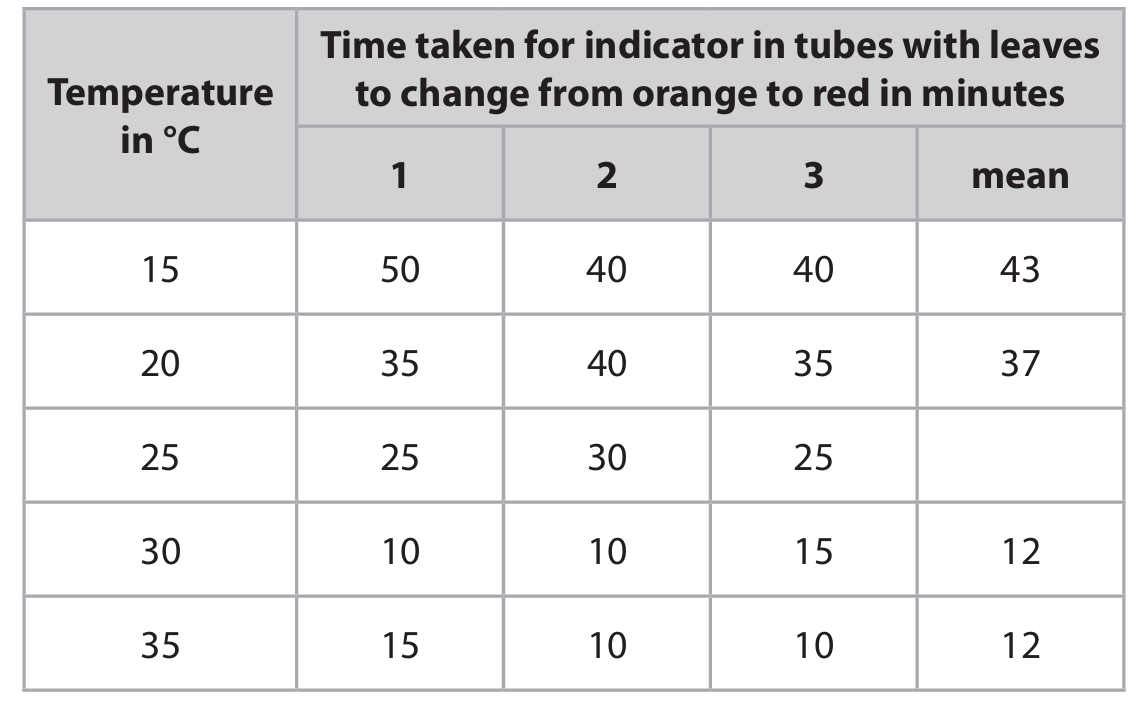
(c) The table shows the student’s results.

(i) Calculate the mean time taken for the indicator to change from orange to red at 25°C.
Give your answer to two significant figures.
(ii) Explain the effect of increasing the temperature on the mean time taken for the indicator to change from orange to red.
(d) In another experiment, the student places a test tube containing a leaf and hydrogen-carbonate indicator in a 25°C water bath.
The student then places all this apparatus in the dark for one hour.
Explain why the indicator solution changes from orange to yellow.
Most-appropriate topic codes (Edexcel IGCSE Biology):
• 2(g): Gas exchange (Flowering plants) — parts (a)(ii), (b), (c)(ii), (d)
• 2(b): Cell structure — part (a)(i)
• Appendix 4: Mathematical skills — part (c)(i)
• 2(f): Respiration — part (d)
• Assessment information: Experimental skills — parts (b)(i), (b)(ii), (b)(iii), (c)(ii)
▶️ Answer/Explanation
(a)(i) Answer: B (guard)
Explanation: The cell labelled P is a guard cell. Guard cells are specialized cells that surround the stomata (pores) in the leaf epidermis. They control the opening and closing of the stomata, which regulates gas exchange (carbon dioxide in, oxygen out) and water loss through transpiration.
(a)(ii) Answer: Part Q is the spongy mesophyll layer.
Explanation: The spongy mesophyll layer is highly adapted for photosynthesis in several ways. Firstly, it contains numerous air spaces between the cells, which creates a large surface area for the efficient diffusion of gases. Carbon dioxide, which is needed for photosynthesis, can diffuse easily from the stomata through these air spaces to reach the palisade mesophyll cells where most photosynthesis occurs. Similarly, oxygen produced as a byproduct of photosynthesis can diffuse out. Secondly, the cells in the spongy mesophyll contain chloroplasts, although fewer than in the palisade layer, and thus can also carry out photosynthesis. The loose arrangement of cells maximizes the exposure to these gases and facilitates their movement throughout the leaf.
(b)(i) Answer: Temperature (of the water bath)
Explanation: The independent variable is the factor that is deliberately changed or manipulated by the investigator. In this experiment, the student places the tubes into water baths at different temperatures (15°C, 20°C, 25°C, 30°C, 35°C, 40°C). Therefore, temperature is the independent variable.
(b)(ii) Answer: Example factor: Light intensity
Reason: To ensure that light intensity is not a limiting factor for photosynthesis, which would affect the rate of gas exchange and thus the time for the indicator to change color. By keeping it constant and bright, any changes in the rate are due to the temperature and not variations in light.
OR
Answer: Example factor: Volume/concentration of hydrogen-carbonate indicator
Reason: Different volumes or concentrations would absorb or release different amounts of carbon dioxide, which would directly affect the time it takes for the color to change, making comparisons between temperatures invalid.
(b)(iii) Answer: It acts as a control.
Explanation: The tube with no leaf serves as a control experiment. Its purpose is to show that any observed color change in the indicator in the other tubes is due to the presence and activity of the leaf (specifically, its effect on carbon dioxide levels through photosynthesis and respiration) and not due to some other factor, such as the temperature affecting the indicator solution itself.
(c)(i) Answer: 27 minutes
Explanation: To calculate the mean time at 25°C, add the three recorded times together and divide by 3: (25 + 30 + 25) / 3 = 80 / 3 = 26.666… minutes. Rounding this to two significant figures gives 27 minutes.
(c)(ii) Explanation: As the temperature increases from 15°C to 30°C, the mean time taken for the indicator to change color decreases. This indicates that the rate of the process causing the color change (removal of carbon dioxide by photosynthesis) is increasing. This is because temperature increases the kinetic energy of molecules, leading to more frequent collisions between enzymes and substrates involved in photosynthesis, thus speeding up the reaction. However, between 30°C and 35°C, the mean time stops decreasing and remains at 12 minutes. This suggests that the rate of photosynthesis is no longer increasing with temperature, likely because another factor (such as enzyme denaturation or the availability of another substrate like carbon dioxide or light) has become the limiting factor.
(d) Explanation: In the dark, photosynthesis cannot occur as it requires light. However, respiration continues in the leaf cells. Respiration consumes oxygen and produces carbon dioxide. The increase in carbon dioxide concentration in the test tube causes the hydrogen-carbonate indicator to change from orange (at atmospheric CO₂ levels) to yellow (which indicates a high concentration of CO₂). This shows that in the absence of light, the net gas exchange is dominated by the release of carbon dioxide from respiration.
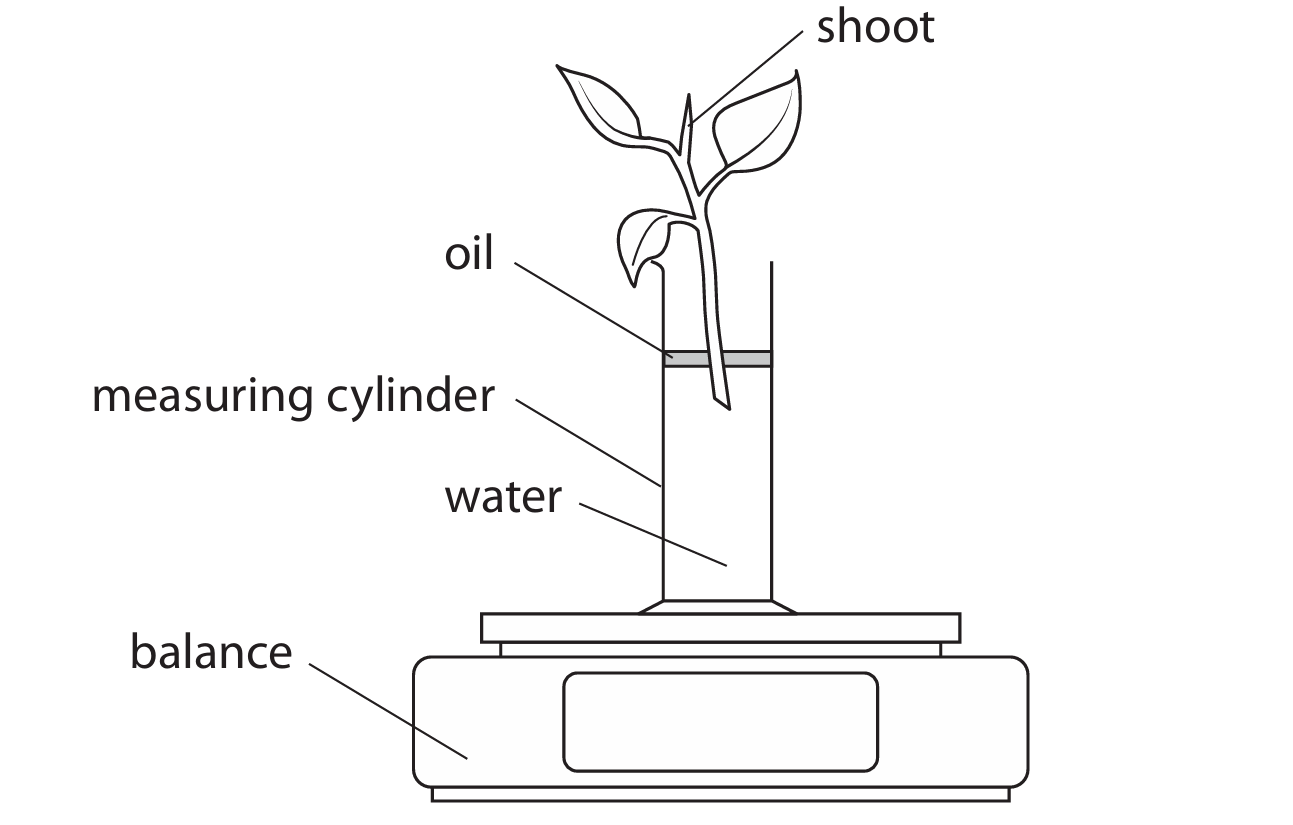
A student uses this method to investigate water uptake and water loss by a plant shoot.
- pour 100 cm³ of water into a measuring cylinder
- place a plant shoot into the measuring cylinder
- cover the surface of the water with oil
- place the measuring cylinder and plant shoot on a balance and record the total mass
- shine light on the plant shoot using a lamp
- record the volume of the water in the measuring cylinder after four days, and after eight days
- record the total mass of the measuring cylinder and plant shoot after four days, and after eight days
The diagram shows the student’s apparatus.

(a) State the reason for using the oil.
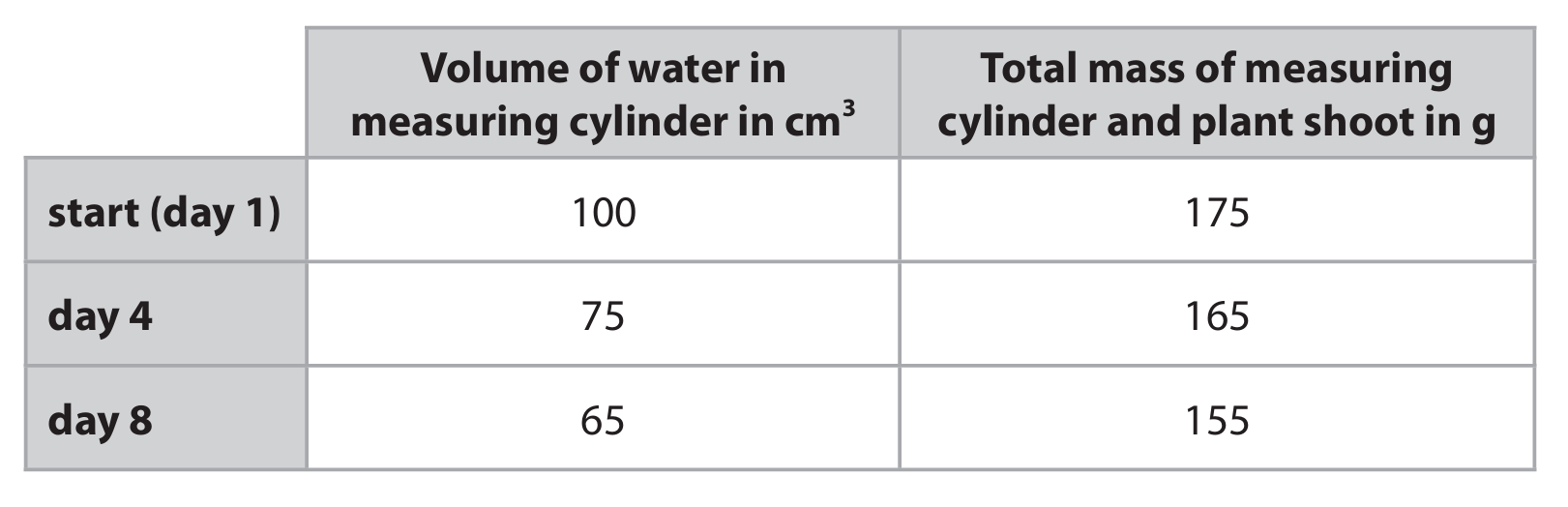
(b) The table shows the student’s results.

(i) The volume of water taken up by the plant shoot is equal to the change in volume of water in the measuring cylinder. This is called the water uptake.
Calculate, in cm³ per day, the mean rate of water uptake by the plant shoot during the eight days.
(ii) Comment on the changes in total mass of the measuring cylinder and plant shoot, compared with the changes in volume of water in the measuring cylinder.
[1 cm³ of water has a mass of 1 g]
(c) Explain why the rate of water loss would be different if a working fan is placed in front of the plant shoot.
Most-appropriate topic codes (Edexcel IGCSE Biology):
• 2(d): Movement of substances into and out of cells — part (a)
• 2(e): Nutrition in flowering plants — part (b)(ii)
• 2(f): Respiration — part (b)(ii)
• 4(a): The organism in the environment — part (b)(ii)
▶️ Answer/Explanation
(a) To prevent evaporation from the surface of the water.
Explanation: The oil creates a physical barrier on top of the water surface. This prevents water molecules from evaporating into the air, ensuring that any changes in water volume in the measuring cylinder are due to water uptake by the plant shoot rather than evaporation. Without this oil layer, we wouldn’t be able to accurately measure how much water the plant is actually taking up.
(b)(i) Mean rate = 4.4 cm³ per day
Explanation: To calculate the mean rate of water uptake:
Total water uptake = Initial volume – Final volume = 100 cm³ – 65 cm³ = 35 cm³
Total time = 8 days
Mean rate = Total water uptake ÷ Total time = 35 cm³ ÷ 8 days = 4.375 cm³/day
Rounded to one decimal place, this gives us 4.4 cm³ per day.
(b)(ii) Both the volume of water and the total mass decrease over time, but the volume decreases more than the mass.
Explanation: Looking at the data, we can see that after 8 days, the water volume decreased by 35 cm³ (from 100 cm³ to 65 cm³), while the total mass decreased by only 20 g (from 175 g to 155 g). This difference occurs because not all water taken up by the plant is lost through transpiration – some is retained within the plant cells for maintaining turgor pressure, some is used in photosynthesis, and some is stored. The plant is essentially accumulating water while simultaneously losing it through transpiration. Between days 4 and 8, both water uptake and water loss occur at similar rates, as indicated by the parallel changes in volume and mass.
(c) The rate of water loss would increase with a fan.
Explanation: A working fan would increase the rate of transpiration (water loss) from the plant. This happens because the fan moves air across the leaf surface, which carries away water vapor that has evaporated through the stomata. This maintains a steeper concentration gradient between the moist air inside the leaf and the drier air outside, accelerating diffusion. Additionally, the fan disrupts the still, humid boundary layer of air that typically forms around leaves, replacing it with drier air that can accept more water vapor. All these factors combined would result in increased water loss from the plant shoot.
Read the passage below. Use the information in the passage and your own knowledge to answer the questions that follow.
When the Oceans Glow
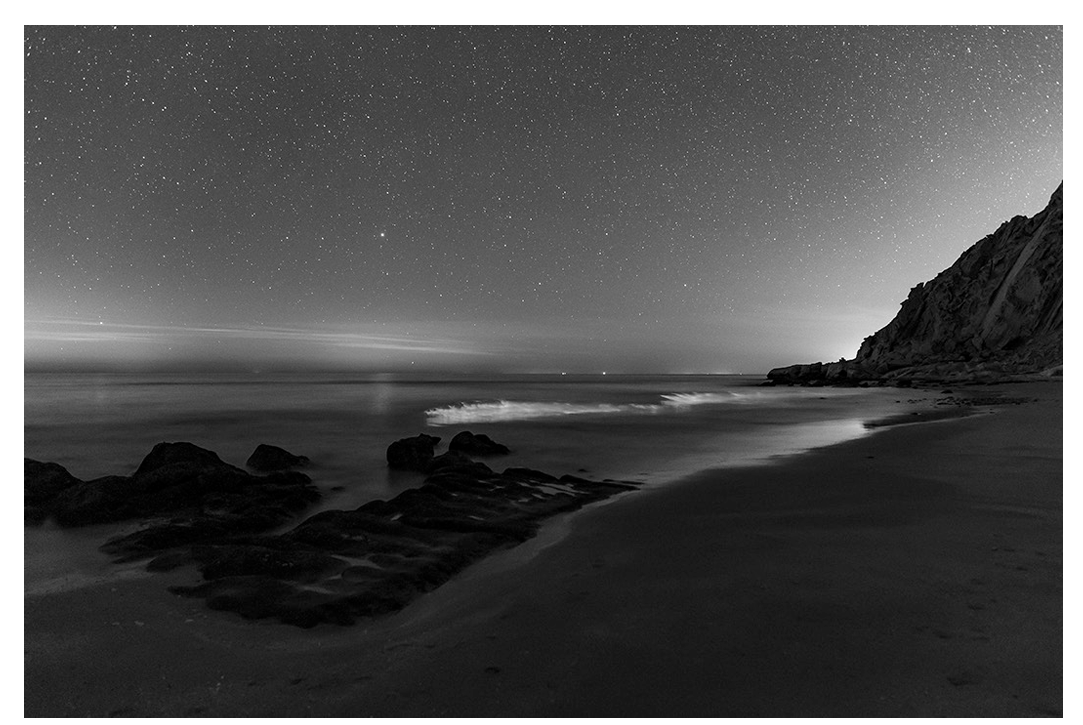
In some areas of the world the oceans around the coast sometimes glow with a blue light. The photograph shows an area of coast that is glowing. This blue light is produced by the presence of thousands of microscopic, living organisms called dinoflagellates. These dinoflagellates are protocysts. The production of light by living organisms is called bioluminescence, a process that has evolved many times in different species of organism.

To generate light, dinoflagellates use special proteins and the ATP produced within their cells. Many species of dinoflagellate contain chlorophyll and are able to photosynthesize. The appearance of glowing dinoflagellates in the sea used to be a rare event but this now occurs much more frequently. Many of the events occur in the sea around river estuaries and scientists think that intensive farming and deforestation could be to blame. Due to overpopulation of dinoflagellates in these areas, other species of animal are often harmed. After a series of glowing events, large numbers of dinoflagellates die causing oxygen levels in the water to decrease.
People have often wondered why dinoflagellates glow. They only glow in areas where the water moves around, such as when waves hit a beach. Scientists now think that the production of light is a type of warning to stop predators eating the dinoflagellates. If an animal eats dinoflagellates, the dinoflagellates in the area glow making the animal obvious to its own predators. To test this, scientists placed dinoflagellates into a tank along with 15 copepods, which are predators of dinoflagellates. When the dinoflagellates glowed, the copepods ate 1200 dinoflagellates in two hours. When the dinoflagellates did not glow, the copepods ate 2100 dinoflagellates in two hours.
Some scientists think that we could make use of the dinoflagellates to provide sustainable street lighting. Tanks of dinoflagellates could be placed on top of lamp posts. The dinoflagellates would photosynthesize during the day when it is light. A stirrer powered by a small battery would then move them at night so that they would glow. These sustainable lamps could be carbon neutral and help to reduce pollution.
(a) Which of these processes produces ATP? (line 6)
- A. active transport
- B. diffusion
- C. respiration
- D. transpiration
(b) (i) Explain why intensive farming and deforestation would cause an increase in populations of dinoflagellates. (lines 9 to 11)
(ii) Explain why oxygen levels decrease after a series of glowing events. (lines 10 to 13)
(c) Which type of bacteria converts ammonia into nitrates?
- A. decomposer
- B. denitrifying
- C. nitrifying
- D. nitrogen fixing
(d) (i) Each of the 15 copepods ate glowing dinoflagellates at a mean rate of 40 dinoflagellates per hour. Calculate the mean rate at which each copepod ate dinoflagellates that were not glowing. (lines 18 to 21)
(ii) Explain how natural selection could have resulted in the evolution of dinoflagellates that glow. (lines 15 to 18)
(e) Explain why using dinoflagellates for street lighting would help to reduce pollution. (lines 22 to 26)
Most-appropriate topic codes (Edexcel IGCSE Biology):
• 2(f): Respiration — part (a) ATP production
• 2(e): Nutrition (Photosynthesis) — reference to chlorophyll and photosynthesis in dinoflagellates
• 4(d): Human influences on the environment — parts (b)(i), (e) pollution, eutrophication, deforestation
• 4(c): Cycles within ecosystems (Nitrogen cycle) — part (c) role of bacteria
• 3(b): Inheritance and evolution — part (d)(ii) natural selection
• 2(e): Nutrition (Diet and energy) — part (d)(i) calculation of feeding rate
• 5(a): Use of biological resources (Food production) — part (e) sustainable use of organisms
▶️ Answer/Explanation
(a) C (respiration)
Explanation: Respiration is the metabolic process that breaks down glucose to release energy, which is stored in ATP molecules. Active transport uses ATP but does not produce it. Diffusion is a passive process and does not require or produce ATP. Transpiration is the loss of water vapor from plants and is not directly involved in ATP production.
(b)(i)
Explanation: Intensive farming often involves the heavy use of fertilizers. Deforestation removes trees whose roots help bind the soil. The combination of these factors leads to soil erosion. When it rains, eroded soil and excess fertilizers (rich in minerals like nitrates and phosphates) are washed into rivers and eventually into estuaries and the sea. These minerals act as nutrients for dinoflagellates, allowing their populations to grow rapidly, a process known as eutrophication.
(b)(ii)
Explanation: After the glowing events, large numbers of dinoflagellates die. Their bodies are decomposed by bacteria and other microorganisms. These decomposers respire as they break down the organic matter, a process that consumes oxygen. The large algal bloom may also block light, reducing photosynthesis and oxygen production by other organisms. The high rate of oxygen consumption by decomposers leads to a decrease in dissolved oxygen levels.
(c) C (nitrifying)
Explanation: Nitrifying bacteria are specifically responsible for converting ammonia into nitrites and then into nitrates in the nitrogen cycle. Decomposer bacteria break down organic matter into ammonia. Denitrifying bacteria convert nitrates back into nitrogen gas. Nitrogen-fixing bacteria convert atmospheric nitrogen gas into ammonia.
(d)(i) 70 dinoflagellates per hour
Explanation: The total number of non-glowing dinoflagellates eaten in 2 hours was 2100. The total eaten per hour is \( 2100 \div 2 = 1050 \) dinoflagellates per hour. This is the rate for all 15 copepods. The mean rate per copepod is \( 1050 \div 15 = 70 \) dinoflagellates per hour per copepod.
(d)(ii)
Explanation: A random mutation gave some dinoflagellates the allele to glow. This created variation. When predators were present, dinoflagellates that glowed were less likely to be eaten (as the glow attracted the predators’ own predators). These dinoflagellates had a higher survival rate and were more likely to reproduce, passing the advantageous allele for glowing to their offspring. Over many generations, the frequency of the glowing allele increased in the population, leading to the evolution of this trait.
(e)
Explanation: It would reduce reliance on electricity generated from burning fossil fuels. The dinoflagellates photosynthesize during the day, taking in carbon dioxide (\(CO_2\)) from the atmosphere. At night, they produce light through bioluminescence without burning fuels. Therefore, this method produces no direct air pollutants and contributes less to the greenhouse effect, making it a more sustainable and carbon-neutral alternative.
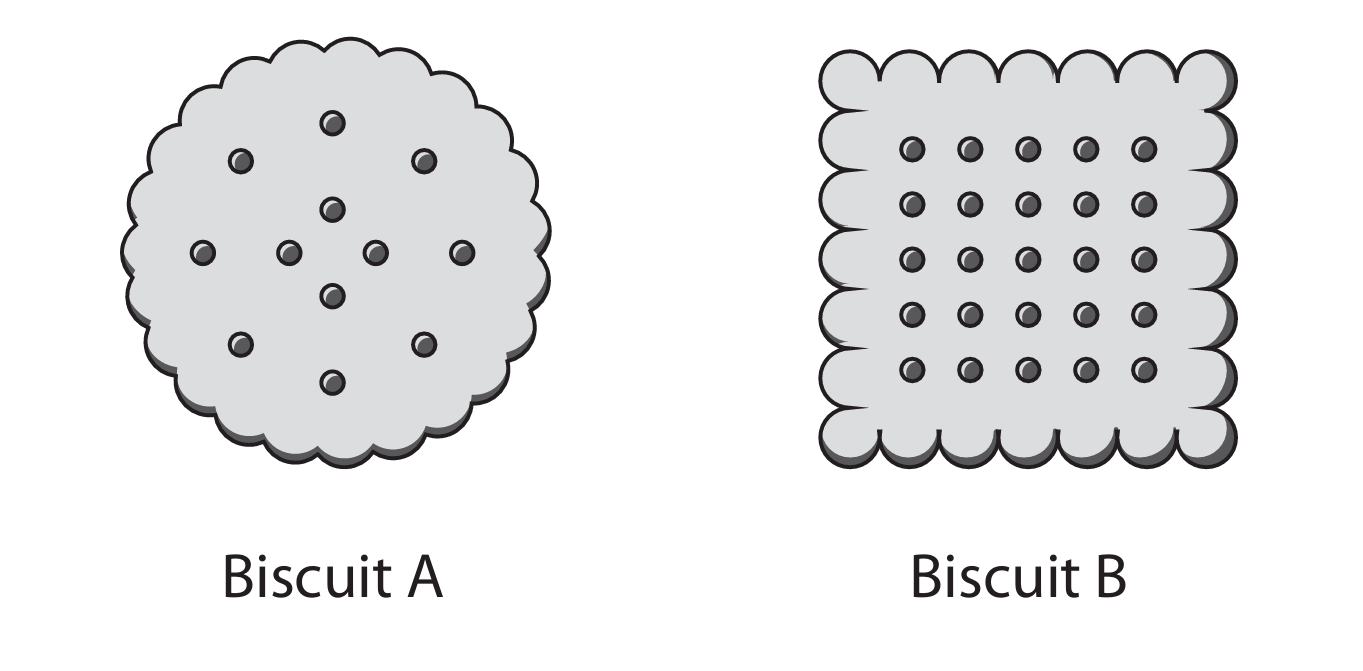
The picture shows two biscuits, A and B.

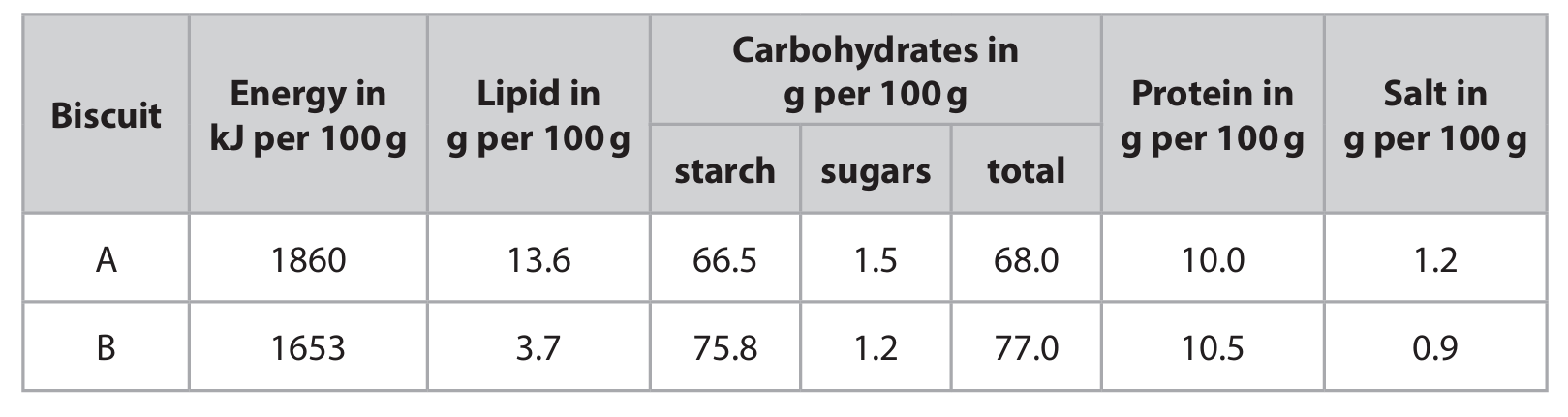
The table shows some nutritional information supplied by the manufacturers of the two biscuits.

(a) Calculate the percentage of the total carbohydrate in biscuit A that is starch.
(b) A doctor has advised a person to lose weight.
Comment on which biscuit, A or B, would be most suitable for the person to maintain a healthy diet and to lose weight.
Use the information in the table and your own knowledge in your answer.
(c) A teacher tells some students to carry out an experiment to compare the energy values of biscuit A and biscuit B.
(i) Describe a suitable method the students could use for their experiment.
(ii) The energy values the students determined for the biscuits were much lower than the energy values supplied by the manufacturers.
Give two reasons why this is the case.
Most-appropriate topic codes (Edexcel IGCSE Biology):
• 2(e): Balanced diet and dietary components — part (b)
• 2(e): Food tests and energy content — parts (c)(i), (c)(ii)
• Appendix 4: Mathematical skills — part (a)
▶️ Answer/Explanation
(a) 98%
Explanation: To calculate the percentage of starch in the total carbohydrates for biscuit A, use:
\[ \text{Percentage} = \left( \frac{66.5}{68.0} \right) \times 100 = 97.79\% \]
This rounds to 98% to the nearest whole number.
(b) Biscuit B would be more suitable for weight loss.
Explanation: Biscuit B has lower energy (1653 kJ vs. 1860 kJ), less lipid (3.7 g vs. 13.6 g), less sugar (1.2 g vs. 1.5 g), and less salt (0.9 g vs. 1.2 g). It also has more starch (75.8 g) and protein (10.5 g), supporting sustained energy and muscle maintenance.
(c)(i) Suitable method:
- Measure a fixed volume of water into a boiling tube.
- Weigh equal masses of each biscuit.
- Record initial water temperature.
- Ignite biscuit under tube; let it burn completely.
- Stir water and record highest temperature.
- Repeat for other biscuit.
- Calculate energy using: \[ \text{Energy} = \text{mass of water} \times \Delta T \times 4.2 \]
(c)(ii) Reasons for lower experimental values:
- Energy loss to surroundings: Heat is lost via radiation, convection, and incomplete transfer.
- Incomplete combustion: School experiments often have incomplete burning compared to bomb calorimeters used by manufacturers.
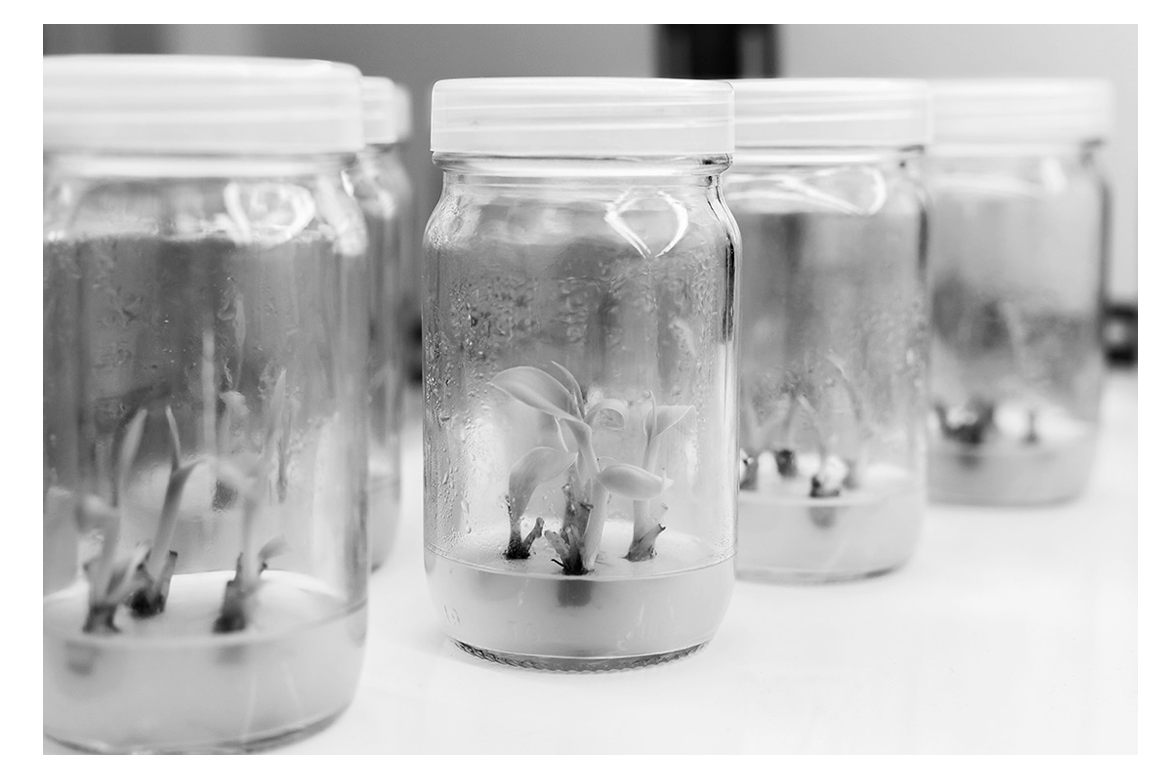
Read the passage below. Use the information in the passage and your own knowledge to answer the questions that follow.
Tissue culture and plants
In micropropagation, plant tissues are grown in vitro on plant tissue culture media, under aseptic conditions in a controlled environment. This technique is possible because plant cells can differentiate and become specialised cells. This allows them to change their metabolism, growth and development to form a whole plant.

Plant tissue culture media contain substances to support the normal growth and development of plants. The media are mainly composed of minerals, vitamins, and plant hormones. The pH of the media is kept constant.
Plant hormones play an essential role in determining how cells and tissues develop in culture media. Plant cells can differentiate into different tissues and cell types. The concentration of hormones can determine the tissue that develops. Auxins and cytokinins are the most widely used. A balance of both auxin and cytokinin leads to the development of a mass of undifferentiated cells known as a callus.
In vitro cell culture offers an alternative method for conserving endangered species and varieties. Tissue culture can be used when the plant species produce seeds that do not germinate or have seeds that cannot be stored for a long period of time. These can be successfully preserved using in vitro techniques for the maintenance of gene banks.
Embryo culture is a type of plant tissue culture that is used to grow embryos from seeds in nutrient media. In embryo culture, the plant develops directly from the embryo or indirectly through the formation of a callus and then subsequent formation of shoots and roots. The technique has been developed to break dormancy in seeds, and to reproduce rare species and haploid plants.
Scientists are also using cell suspension culture systems from which products can be extracted. A suspension culture is developed by transferring a portion of the callus into liquid media. The media are maintained under suitable conditions of agitation, light and temperature. This system can provide a continuous, reliable source of natural products independent of climate and soil conditions. The first commercial application of large-scale suspension cultivation of plant cells was carried out to produce shikonin. Shikonin is used in traditional Chinese medicine and is a potential anti-cancer treatment.
(a) State what is meant by the term in vitro. (line 1)
(b) Explain how plant cells differ from human cells in their ability to differentiate and specialise. (lines 2 and 3)
(c) Give the function of two named minerals included in the culture media. (line 6)
(d) Explain why the pH of the media needs to be kept constant. (line 7)
(e) Auxin also controls the response of plants to light. Describe a simple experiment you could do to show the phototropic response of plant stems to light.
(f) Explain why scientists want to conserve endangered plant species and varieties. (lines 13 and 14)
(g) Explain why plant cell suspension culture media are maintained under suitable conditions of agitation, light and temperature. (lines 24 and 25)
Most-appropriate topic codes (Edexcel IGCSE Biology):
• 2(b): Cell structure — part (b)
• 2(e): Nutrition — part (c)
• 2(c): Biological molecules — part (d)
• 2(j): Co-ordination and response — part (e)
• 4(a): The organism in the environment — part (f)
▶️ Answer/Explanation
(a) In a test tube / culture dish / jar / glass / petri dish / container / in culture solution / in a lab / outside a living organism.
Explanation: The term “in vitro” literally means “in glass” in Latin, referring to biological processes that are conducted outside of a living organism in an artificial laboratory environment, such as in test tubes or petri dishes. This contrasts with “in vivo” experiments which are conducted within living organisms.
(b) Plant cells can differentiate into all/different types of tissues or specialized cells throughout the plant’s life and can form/regenerate a whole new plant.
Explanation: Plant cells exhibit totipotency, meaning that even mature, differentiated plant cells retain the ability to dedifferentiate and then redifferentiate into any cell type needed to regenerate an entire plant. This is why you can grow a new plant from a cutting. In contrast, human cells have much more limited differentiation capabilities. While stem cells can differentiate into various cell types, most human cells become permanently specialized during development and cannot revert back or form entirely new organisms.
(c)
1. Nitrate – for making amino acids/proteins/DNA/nucleic acids
2. Magnesium – for making chlorophyll/chloroplasts/photosynthesis
Explanation: Plant tissue culture media must contain essential minerals that support plant growth and development. Nitrate is crucial as it provides nitrogen, which is a fundamental component of amino acids, proteins, and nucleic acids (DNA and RNA). Without adequate nitrogen, plants cannot synthesize these essential biomolecules. Magnesium is a central component of the chlorophyll molecule, which is vital for photosynthesis as it captures light energy. Without magnesium, plants cannot produce chlorophyll effectively, leading to chlorosis (yellowing of leaves) and impaired photosynthesis.
(d) Enzymes are affected by pH/ work best at optimum pH. If pH changes, the shape of the active site can change/be denatured so substrates can no longer bind.
Explanation: Maintaining a constant pH is critical because enzymes, which catalyze all biochemical reactions in plant cells, are highly sensitive to pH changes. Each enzyme has an optimal pH range where it functions most efficiently. If the pH deviates from this range, the enzyme’s three-dimensional structure can be altered, changing the shape of its active site. This prevents substrates from binding properly, effectively denaturing the enzyme and halting the metabolic reactions it catalyzes. This would severely disrupt plant growth and development in the culture media.
(e) Place a shoot in light from one side/unidirectional light and another shoot in darkness/light all around. Leave both for a stated time/use shoots of same type/same temperature/other control variable. Observe/measure bending or growing towards light.
Explanation: To demonstrate phototropism (growth response to light), you would set up two identical young plant shoots. One would be placed in a location with light coming from only one direction (e.g., near a window), while the control would be placed in either complete darkness or with light evenly distributed from all sides. Both plants should be kept under the same temperature and watering conditions to ensure any differences are due to light direction only. After a few days, you would observe that the shoot exposed to unilateral light has bent toward the light source. This bending occurs because auxin hormone accumulates on the shaded side of the stem, promoting more cell elongation on that side and causing the stem to curve toward the light.
(f) To maintain biodiversity/reduce damage to ecosystems and to prevent extinction/keep species for future generations/for medicinal properties.
Explanation: Conserving endangered plant species is crucial for several reasons. Firstly, it maintains biodiversity, which ensures ecosystem stability and resilience. Each plant species plays a unique role in its ecosystem, and losing one can disrupt food webs and ecological balance. Secondly, it prevents extinction, preserving genetic diversity that might be valuable for future breeding programs, especially as climate changes. Many plants contain compounds with medicinal properties; for example, aspirin originated from willow bark. By conserving endangered species, we preserve potential future medicines and genetic resources that could be vital for human well-being.
(g) Agitation mixes contents/mixes oxygen/with plant cells. Light is for photosynthesis. Suitable temperature is for enzyme action.
Explanation: Suspension cultures require specific conditions to mimic optimal natural environments. Agitation (shaking or stirring) ensures that cells and nutrients are evenly distributed throughout the liquid media, preventing sedimentation. It also promotes gas exchange, ensuring oxygen (needed for respiration) is available and carbon dioxide (a product of respiration) is removed. Light is essential for photosynthetic plant cells to produce their own energy through photosynthesis. Maintaining a suitable temperature is critical because temperature affects enzyme activity; most plant enzymes function optimally around 25-30°C. Temperatures that are too high can denature enzymes, while temperatures that are too low can slow down metabolic processes to inadequate levels.
Read the passage below. Use the information in the passage and your own knowledge to answer the questions that follow.
Plants to the rescue
Since the early 20th century, the concentration of carbon dioxide in the atmosphere has increased rapidly. This has further increased in recent years due to more cars and the increased demand for electricity for homes and industry.
Scientists have found that plants play a critical part in removing this excess carbon dioxide from the atmosphere. Using computer models, the scientists concluded that photosynthesis has increased by 30 per cent.
The scientists measured carbonyl sulfide found in ice cores and air samples. In addition to carbon dioxide, plants take in carbonyl sulfide gas during their natural carbon cycle, and this is frequently used as a measure of photosynthesis on a global scale. Terrestrial plants are removing about 29 per cent of carbon dioxide emissions that would otherwise contribute to an increase in the atmospheric carbon dioxide concentration.
A carbon sink is an ecosystem, such as a forest, that absorbs more carbon dioxide than it releases. The size of the carbon sink depends on the rate of photosynthesis but also on the levels of deforestation and respiration. The model the scientists used showed that the role of photosynthesis in producing a carbon sink in land plants is larger than estimated in most other models.
Other scientists are less confident about using carbonyl sulfide as a measure of photosynthesis. Plant absorption of carbonyl sulfide can vary depending upon the amount of light the plants receive. Therefore, the measure of global photosynthesis could be overestimated.
Regardless of the rate at which photosynthesis has increased, scientists agree that excess carbon dioxide is boosting the growth of plants. Trees are becoming leafier, and there is more wood. The wood is where most of the carbon is stored in the plant.
In experimental research, scientists exposed plants to double the normal concentration of carbon dioxide found in the atmosphere. Under these increased carbon dioxide conditions, the composition of the leaf tissues changed. This made the leaves tougher for herbivores to eat and made it harder for insect larvae to grow.
Scientists have also observed that when plants are exposed to increasing levels of carbon dioxide, the size of the stomatal pores on a leaf increases.
(a) Explain why more cars would result in an increase in atmospheric carbon dioxide. (Lines 1-3)
(b) Explain how increased carbon dioxide can cause climate change.
(c) Explain why increasing carbon dioxide concentration can increase photosynthesis in plants.
(d) Explain why the carbon sink depends upon respiration and deforestation as well as photosynthesis. (Lines 13 to 15)
(e) Light affects gas exchange in leaves. (Lines 19 and 20)
Describe an experiment that shows how the net gas exchange from a leaf varies with light intensity.
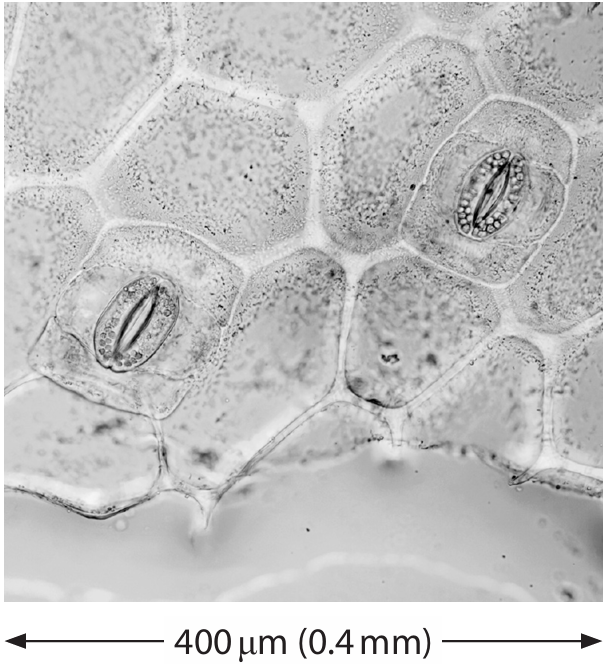
(f) The photograph shows stomata on a small square of the lower surface of a leaf.

The total area of the lower surface of the leaf is \(150 \text{ cm}^2\).
Using the photograph and the total lower surface area of the leaf, estimate the number of stomata on the lower surface of the leaf.
(g) Stomata also have a role in water transport in the plant. Explain the role of stomata in water transport.
Most-appropriate topic codes (Edexcel IGCSE Biology):
• 4(d): Human influences on the environment — parts (a), (b)
• 4(c): Cycles within ecosystems (Carbon cycle) — part (d)
• 2(g): Gas exchange — parts (e), (f), (g)
• 2(h): Transport in plants — part (g)
▶️ Answer/Explanation
(a)
An explanation that makes reference to:
• Burning / combustion of petrol / diesel / fuel in car engines. (1 mark)
• This combustion reaction releases carbon dioxide (\( \text{C} + \text{O}_2 \rightarrow \text{CO}_2 \)). (1 mark)
More cars mean more fuel burned, directly increasing \( \text{CO}_2 \) emissions.
(b)
An explanation that makes reference to two of the following:
• Carbon dioxide is a greenhouse gas. (1 mark)
• It traps / absorbs infrared (IR) radiation (heat) from the Earth, preventing its escape into space. (1 mark)
• This leads to an enhanced greenhouse effect, causing global warming / climate change. (1 mark)
(Maximum 2 marks)
(c)
An explanation that makes reference to:
• Carbon dioxide is a reactant / raw material needed for photosynthesis. (1 mark)
• At lower concentrations, \( \text{CO}_2 \) can be a limiting factor for photosynthesis; increasing its concentration can increase the rate up to a point. (1 mark)
The photosynthesis equation is: \( 6\text{CO}_2 + 6\text{H}_2\text{O} \xrightarrow{\text{light}} \text{C}_6\text{H}_{12}\text{O}_6 + 6\text{O}_2 \).
(d)
An explanation that makes reference to two of the following:
• A carbon sink absorbs more \( \text{CO}_2 \) than it releases. (1 mark)
• Respiration (by plants, animals, decomposers) releases \( \text{CO}_2 \) back into the atmosphere, reducing net absorption. (1 mark)
• Deforestation (cutting down trees) reduces the number of plants for photosynthesis and often involves burning/decay, releasing stored carbon as \( \text{CO}_2 \). (1 mark)
(Maximum 2 marks)
(e)
A description that makes reference to three of the following:
• Place leaves (or aquatic plants like pondweed) in test tubes containing hydrogen-carbonate indicator. (1 mark)
• Expose one setup to bright light and another to darkness (or vary light intensity using a lamp at different distances). (1 mark)
• In bright light, the indicator turns purple/dark red (due to net \( \text{CO}_2 \) uptake in photosynthesis). In darkness, it turns yellow (due to net \( \text{CO}_2 \) release from respiration). (1 mark)
• Control other variables: use leaves of the same species, size, age; same volume and concentration of indicator; same temperature; same time period. (1 mark)
(Maximum 3 marks)
(f)
Step-by-step calculation:
1. Area in photograph: side = \( 400 \mu\text{m} = 0.4 \text{ mm} = 0.04 \text{ cm} \).
2. Area of square = \( (0.04 \text{ cm})^2 = 0.0016 \text{ cm}^2 \).
3. Number of stomata in this area = 2.
4. Stomatal density = \( \frac{2}{0.0016} = 1250 \) stomata per \( \text{cm}^2 \).
5. Total number on leaf = \( 1250 \times 150 = 187500 \).
Answer: \( \mathbf{187500} \) stomata. (3 marks)
(g)
An explanation that makes reference to:
• Stomata allow water vapour to evaporate / be lost from the leaf in a process called transpiration. (1 mark)
• This transpiration pull creates a tension / negative pressure in the xylem, drawing a continuous column of water up from the roots, through the stem, and into the leaves. (1 mark)
This is known as the transpiration stream, and it relies on stomatal opening for water movement against gravity.
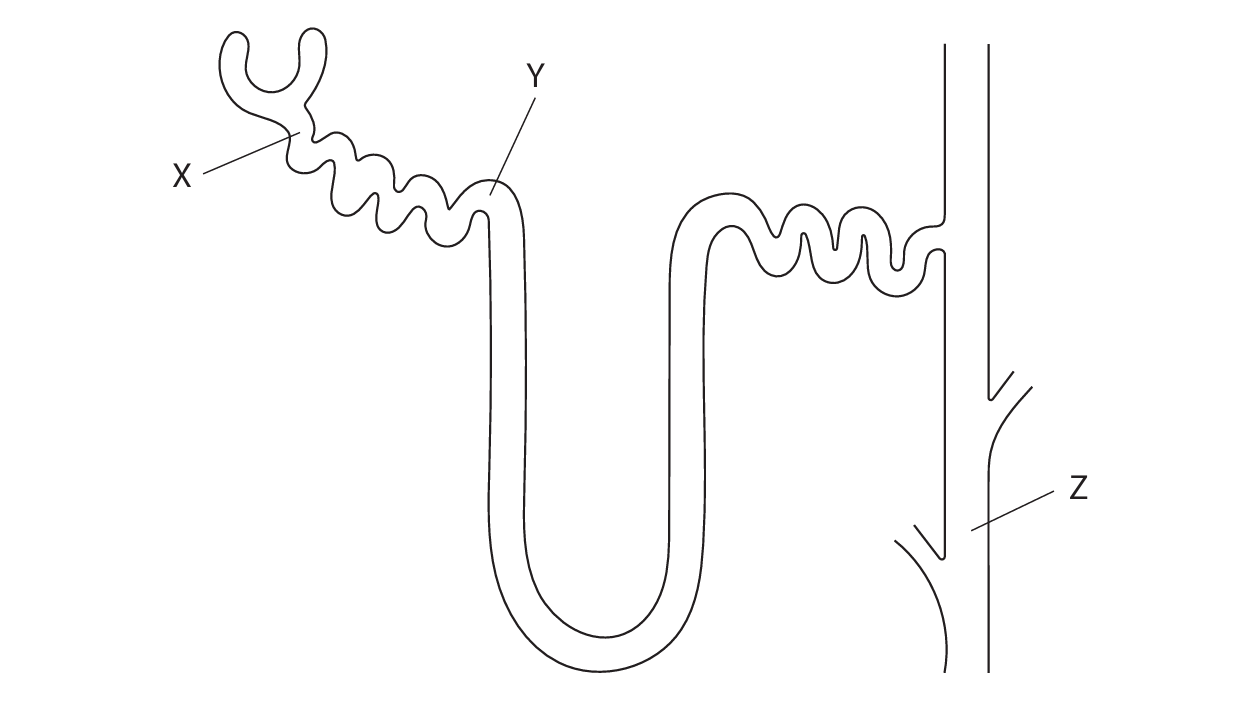
The diagram shows a nephron from a kidney with three different areas, X, Y and Z.

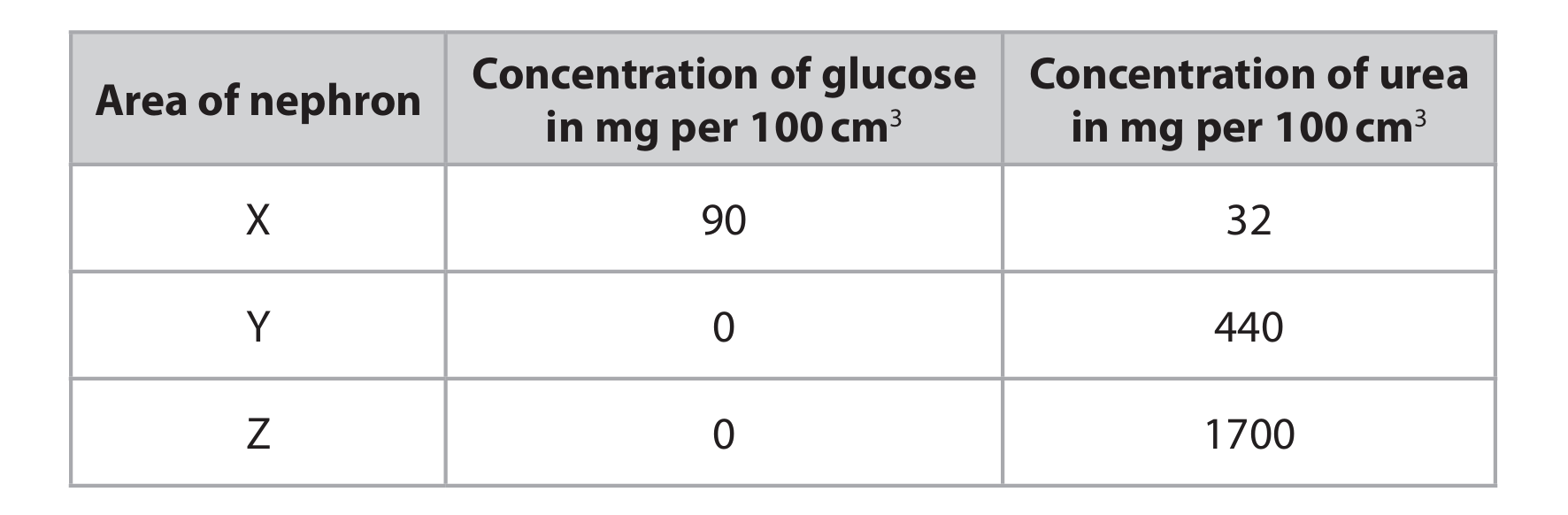
The table gives the concentration of glucose and urea at X, Y and Z.

(a) Explain the difference in concentration of glucose between X and Y.
(b) (i) Calculate how many times more concentrated the urea is in area Z compared to area Y.
Give your answer to two significant figures.
(ii) Explain the difference in urea concentration in the filtrate found in Y and Z.
(c) High blood pressure during pregnancy can result in the production of urine that contains protein.
(i) Describe how a sample of urine could be tested to see if it contains protein.
(ii) Protein is not normally found in urine. Suggest why high blood pressure could cause protein to be present in urine.
Most-appropriate topic codes (Edexcel IGCSE Biology):
• 2(i): Kidney function and osmoregulation — parts (a), (b)(ii), (c)(ii)
• Appendix 4: Mathematical skills — part (b)(i)
• 2(e): Nutrition (human diet and digestion) — part (c)(i)
▶️ Answer/Explanation
(a)
Explanation: The difference in glucose concentration between area X and area Y occurs due to selective reabsorption in the nephron. Area X represents the filtrate in the Bowman’s capsule, which contains glucose at the same concentration as blood plasma. As the filtrate moves through the proximal convoluted tubule (area Y), all glucose is actively reabsorbed back into the blood. This process requires energy (ATP) and specific carrier proteins to transport glucose against its concentration gradient. Since glucose is a valuable nutrient that the body needs to conserve, it is completely removed from the filtrate in the proximal convoluted tubule, resulting in zero glucose concentration in area Y.
(b)(i) 3.9
Explanation: To calculate how many times more concentrated urea is in area Z compared to area Y, we divide the concentration in Z by the concentration in Y: 1700 ÷ 440 = 3.8636… Rounded to two significant figures, this gives 3.9. This means urea is approximately 3.9 times more concentrated in area Z than in area Y.
(b)(ii)
Explanation: The difference in urea concentration between area Y and area Z occurs primarily due to water reabsorption. As the filtrate moves through the distal convoluted tubule and collecting duct (area Z), water is reabsorbed back into the blood by osmosis. This process is regulated by the hormone ADH (antidiuretic hormone). While urea itself is not actively reabsorbed in significant amounts, the removal of water from the filtrate causes the remaining substances, including urea, to become more concentrated. Therefore, the urea concentration increases significantly from area Y to area Z as water is removed from the filtrate.
(c)(i)
Explanation: To test for protein in urine, a common method is to use urine test strips (dipsticks) that contain a chemical indicator. The strip is dipped into the urine sample for a specified time, then removed. The test pad on the strip will change color if protein is present – typically turning green or blue depending on the concentration. Alternatively, a chemical test can be performed using reagents like Biuret solution, which would change from blue to purple in the presence of protein. The intensity of the color change corresponds to the amount of protein present in the sample.
(c)(ii)
Explanation: High blood pressure during pregnancy can cause protein to appear in urine because the increased pressure can damage the filtration barrier in the glomerulus. Normally, the glomerular filter prevents large molecules like proteins from passing through into the filtrate. However, when blood pressure is excessively high, it creates increased mechanical stress on the glomerular capillaries and basement membrane. This can cause the filtration pores to enlarge or the membrane to become more permeable, allowing proteins (which are large molecules) to be forced through into the filtrate. Once in the filtrate, proteins are too large to be reabsorbed effectively by the nephron, so they remain and are excreted in the urine.
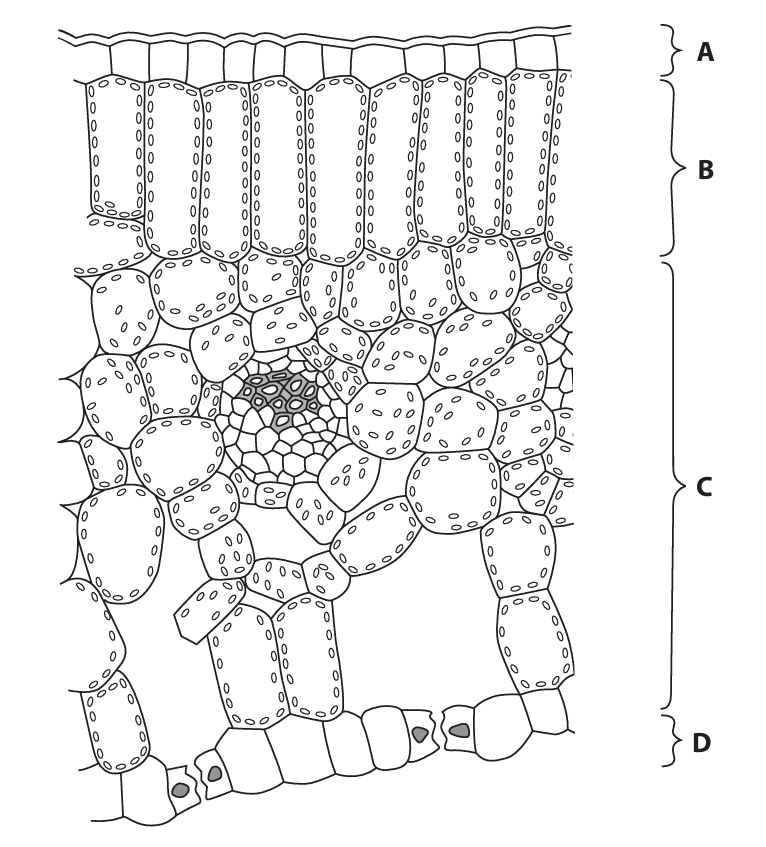
The diagram shows a cross-section through a leaf.

(a) (i) Which layer contains palisade mesophyll cells?
- A
- B
- C
- D
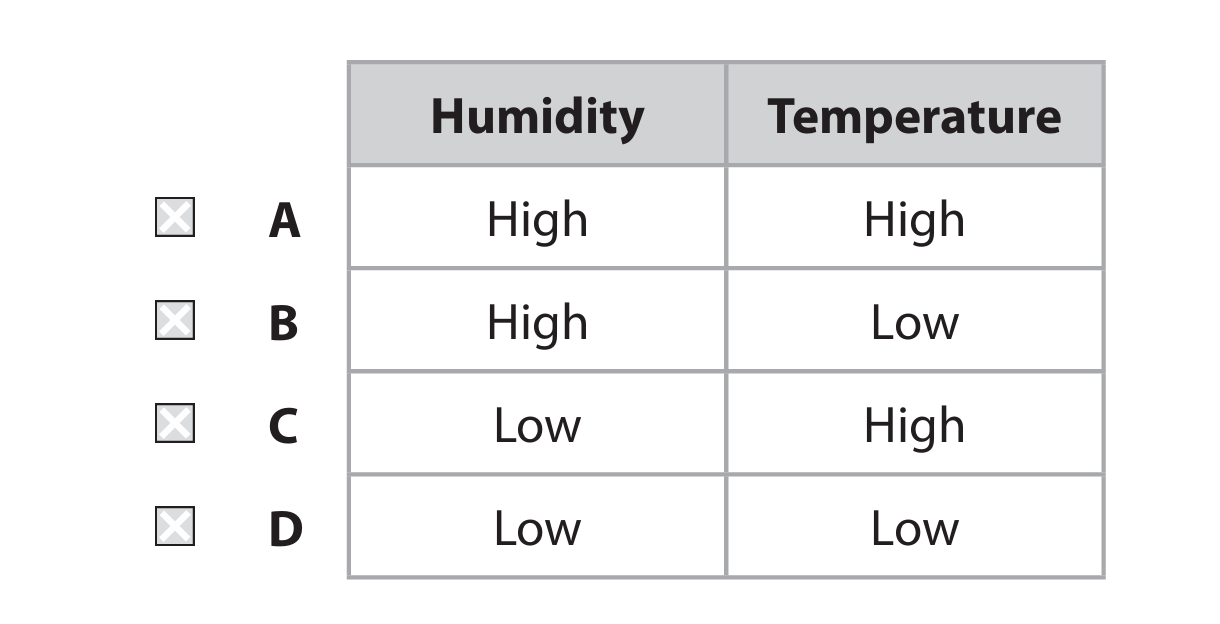
(ii) Which set of environmental conditions would produce the fastest rate of transpiration from this leaf?

(b) Scientists investigate the effect of changing carbon dioxide concentration on the density of stomata of wheat plants.
They grow wheat plants from seed in different concentrations of carbon dioxide.
After three weeks, they take a leaf from each plant and calculate the mean density of stomata.
(i) State the independent variable in this investigation.
(ii) Give two abiotic variables that the scientists could control.
(iii) To calculate the mean density of stomata, leaf sections are viewed with a microscope.
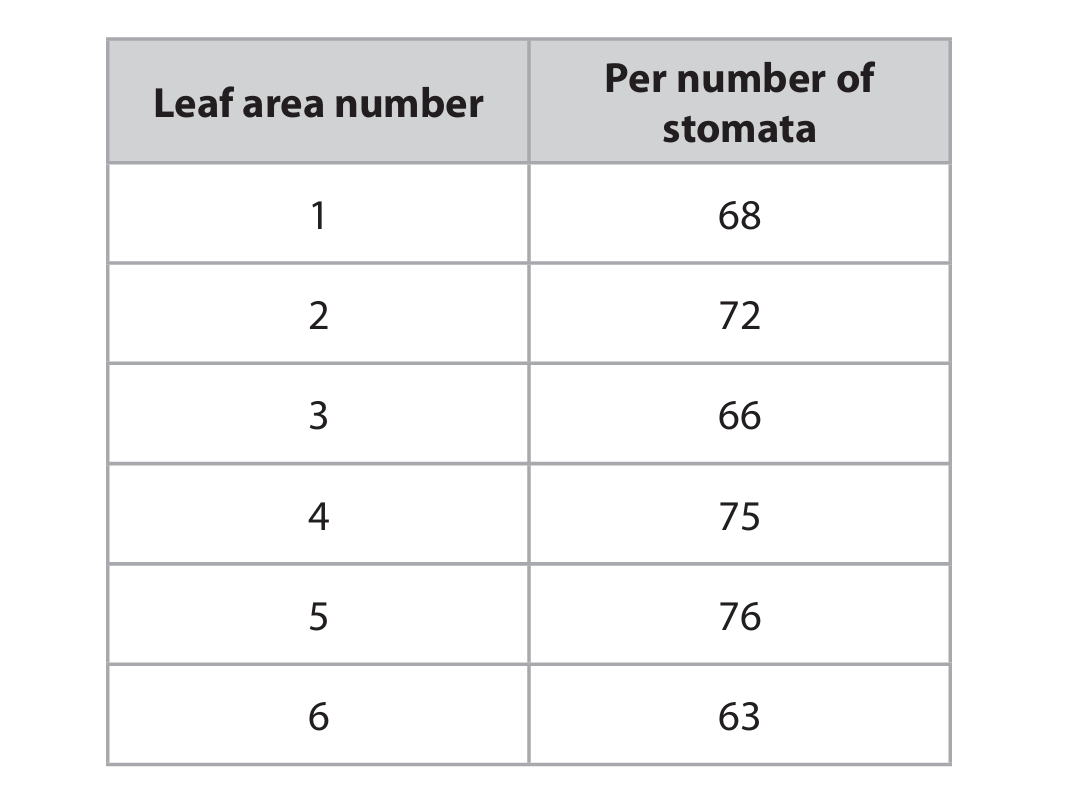
The number of stomata within six circular areas of the leaf are counted.
The results for one leaf are shown in the table.

The radius of each circular area is 0.40 mm.
area of circle = \(\pi r^2\)
\(\pi = 3.14\)
Calculate the mean density of stomata on the leaf surface.
(iv) The investigation shows that in increased carbon dioxide concentrations there is a lower mean density of stomata.
The scientist concludes that in hot dry areas, with increased carbon dioxide concentrations, it would be an advantage for wheat to have a lower mean density of stomata.
Discuss the scientist’s conclusion.
Most-appropriate topic codes (Edexcel IGCSE Biology):
• 2(h): Transport (Flowering plants) — part (a)(ii)
• 4(a): The organism in the environment — parts (b)(i), (b)(ii)
• Appendix 4: Mathematical skills — part (b)(iii)
• 4(d): Human influences on the environment — part (b)(iv)
▶️ Answer/Explanation
(a) (i) B
Explanation: The palisade mesophyll layer is typically found just below the upper epidermis in a leaf. It consists of tightly packed, columnar cells rich in chloroplasts, which are the main sites for photosynthesis. In a standard leaf cross-section diagram, this layer is labeled as B.
(a) (ii) Low humidity, High temperature
Explanation: Transpiration is the loss of water vapor from the leaves. Its rate is influenced by environmental factors. Low humidity creates a steeper concentration gradient for water vapor between the leaf’s interior and the outside air, favoring faster diffusion. High temperature increases the kinetic energy of water molecules, leading to more evaporation. Therefore, the combination of low humidity and high temperature provides the most favorable conditions for the fastest transpiration rate.
(b) (i) Concentration of carbon dioxide
Explanation: The independent variable is the factor that the scientist deliberately changes or manipulates in an experiment. Here, the scientists are growing plants in “different concentrations of carbon dioxide,” so that is the independent variable.
(b) (ii) Any two from: temperature, light, mineral ions/pH/soil, water/humidity
Explanation: Abiotic factors are the non-living chemical and physical parts of the environment. To ensure a fair test where only the independent variable (CO₂ concentration) affects the results, other abiotic factors that could influence plant growth or stomatal density must be kept constant. Examples include temperature, light intensity, water availability, humidity, and soil mineral content or pH.
(b) (iii) 140 stomata per mm²
Explanation:
First, calculate the total number of stomata counted: 68 + 72 + 66 + 75 + 76 + 63 = 420.
Next, find the mean number of stomata per circular area: 420 ÷ 6 = 70.
Then, calculate the area of one circular sampling region using the formula \(\pi r^2\). The radius \(r\) is 0.40 mm.
Area = 3.14 × (0.40)² = 3.14 × 0.16 = 0.5024 mm².
Finally, calculate the mean density: Mean number of stomata per area = 70 ÷ 0.5024 ≈ 139.3.
Rounded to a sensible figure, this gives a mean density of approximately 140 stomata per mm².
(b) (iv) Discussion points include:
- Carbon dioxide is essential for photosynthesis.
- Fewer stomata may reduce the uptake of CO₂, potentially limiting photosynthesis.
- However, with increased external CO₂ concentration, the diffusion gradient is steeper, so fewer stomata might still allow sufficient CO₂ intake.
- A major advantage of fewer stomata is a significant reduction in water loss through transpiration.
- In hot, dry areas, conserving water is crucial to prevent wilting and maintain turgor.
- Reduced transpiration can also mean less transport of minerals from roots to shoots and less evaporative cooling of the leaf, which could be a disadvantage.
- The conclusion is generally supported as water conservation is often the limiting factor for survival in such environments, making the trade-off beneficial.
Explanation: The scientist’s conclusion links high CO₂, low stomatal density, and an advantage in hot, dry climates. The core of the discussion revolves around the trade-off between gas exchange (for photosynthesis) and water conservation. In high CO₂ conditions, the plant’s demand for stomatal openings for CO₂ intake might be lower because the driving force for diffusion is stronger. This allows the plant to afford having fewer stomata. The primary benefit of fewer stomata is a substantial reduction in transpirational water loss, which is a critical survival advantage in arid environments where water is scarce. While there might be minor drawbacks like reduced mineral transport or slightly lower photosynthetic rates, the overwhelming benefit of water conservation in a hot, dry habitat makes the scientist’s conclusion reasonable. The data from the investigation directly supports the first part of this chain by showing that high CO₂ leads to lower stomatal density.
Read the passage below. Use the information in the passage and your own knowledge to answer the questions that follow.
Moving plants
Flowering plants reproduce using different methods to transfer the pollen from plant to plant. This cross-pollination enables plants to produce offspring that show genetic variation. The transfer can be done by animals such as insects or by wind.
The reliance on animals and wind for reproduction does not end with pollination. Flowering plants also need a mechanism to disperse their fruits or the seeds they contain. This seed dispersal means that seeds producing new young plants will germinate away from the parent plant.

The simplest method of seed dispersal uses gravity. The seeds are within heavy fruit, which fall from the tree when they are ripe. Although some of the fruit may roll away from the parent plant, most remain close to the parent plant.
Animal dispersal is when plants rely on animals to transport their seeds to a different area. This may be because the seeds are surrounded by a brightly-coloured and sweet-tasting fruit. Examples of this are soft fruits such as raspberry and hard fruits such as apple.
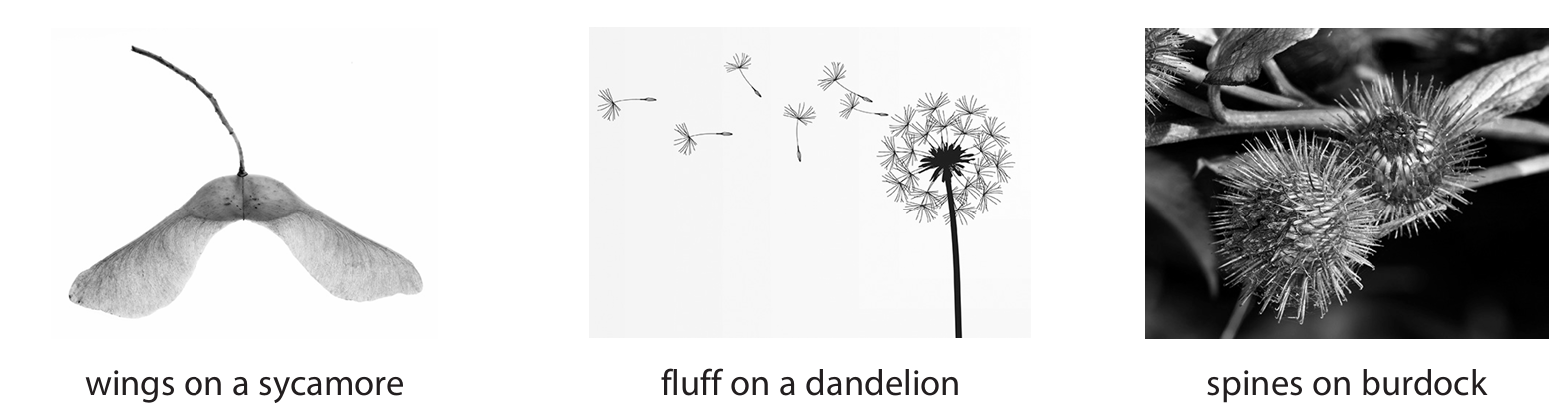
Animals may also carry seeds in a different way. Many plants produce fruits or individual seeds covered in hooks or spines that attach the seeds to the animals’ fur. The seeds are then carried away from the parent plant. Eventually, the seeds may fall off, or be rubbed off by the animal. Examples of plants using this form of dispersal are burdock and sea holly.
Some plants provide seed pods with a mechanism that ejects the seeds from the pod by force. All of these rely on the effect of evaporation of water in the seed pod, so this method of seed dispersal usually takes place in sunlight. Examples of plants using this form of dispersal are gorse bushes and lupins.
Wind is one of the main methods of seed dispersal. Some tall trees produce seed pods that have wings, which allow the seeds to travel long distances. Some seed pods have two wings such as the sycamore while others have one wing such as the ash.
There are also lightweight adaptations that help seeds to be blown by the wind. These include various sorts of fluff that increase the surface area of the seed, so that it can be picked up by the slightest breeze. Examples of plants using this form of dispersal are thistle and dandelion.
The last method uses water. Trees found on tropical beaches often have their seeds carried away by the sea. The seeds have woody, waterproof coverings enabling them to float in the water for long periods. Coconuts are a well-known example.
(a) Explain how cross-pollination can lead to an increase in genetic variation. (2)
(b) (i) Explain the advantages of the seeds germinating away from the parent plant. (3)
(ii) Give one advantage of a seed germinating close to the parent plant. (1)
(c) Explain the conditions needed for seed germination. (3)
(d) Explain why some seeds are surrounded by a brightly-coloured and sweet-tasting fruit. (2)
(e) Large numbers of tomato plants are often found growing along the sides of drains and settling beds on sewage farms. Suggest a reason for this observation. (1)
(f) Give the reason why sunlight is required for lupin seeds to be dispersed. (1)
(g) Describe an experiment you could carry out to investigate how the presence of fluff on dandelion seeds affects how fast they fall. (3)
Most-appropriate topic codes (Edexcel IGCSE Biology):
• 3(b): Inheritance — part (a)
• 2(e): Nutrition (Flowering plants) — part (c)
• Appendix 6: Suggested practical investigations — part (g)
▶️ Answer/Explanation
(a) Cross-pollination involves the transfer of pollen from one plant to the stigma of another plant of the same species. This leads to increased genetic variation because the gametes (sex cells) come from two different parent plants, each with their own unique set of genes and alleles. When these gametes fuse during fertilization, the resulting offspring inherits a combination of genetic material from both parents, creating new genetic combinations that weren’t present in either parent alone.
(b)(i) Seeds germinating away from the parent plant have several advantages. First, there’s less competition for essential resources like light, as young plants won’t be shaded by the larger parent plant. Second, they face less competition for water and minerals from the soil, since the parent plant’s extensive root system isn’t drawing from the same immediate area. Third, being dispersed reduces the chance of all offspring being affected by local diseases, pests, or unfavorable conditions that might wipe out plants concentrated in one area.
(b)(ii) One advantage of a seed germinating close to the parent plant is that the location has already proven to be suitable for that species’ growth. The parent plant successfully grew there, indicating the soil conditions, light availability, and other environmental factors are appropriate.
(c) Seeds require three main conditions for germination. Water is essential to activate enzymes that break down stored food reserves and to soften the seed coat. Oxygen is necessary for aerobic respiration to provide energy for growth. A suitable temperature (warmth) is needed to optimize enzyme activity for the metabolic processes involved in germination.
(d) Seeds are surrounded by brightly-colored and sweet-tasting fruit to attract animals. The bright colors make the fruits easily visible, while the sweet taste (due to sugars like glucose) makes them appealing to eat. Animals consume the fruits and later excrete the seeds at different locations, effectively dispersing them.
(e) Tomato plants grow along sewage farm drains because humans eat tomatoes but don’t digest the seeds. The seeds pass through the digestive system and are egested in feces, which end up in sewage systems. When this sewage is processed, the undigested seeds can germinate in the nutrient-rich environment.
(f) Sunlight is required for lupin seed dispersal because it provides heat that causes water in the seed pods to evaporate. This evaporation builds up pressure inside the pods until they suddenly split open, forcefully ejecting the seeds away from the parent plant.
(g) To investigate how fluff affects dandelion seed fall rate: First, obtain dandelion seeds with fluff and carefully remove the fluff from some seeds to create two groups (with fluff and without fluff). Second, drop seeds from both groups from the same height (e.g., 2 meters) and use a stopwatch to time how long each takes to reach the ground. Third, repeat this process multiple times with different seeds from each group to calculate average fall times, ensuring you use seeds of the same mass/species for fair comparison.
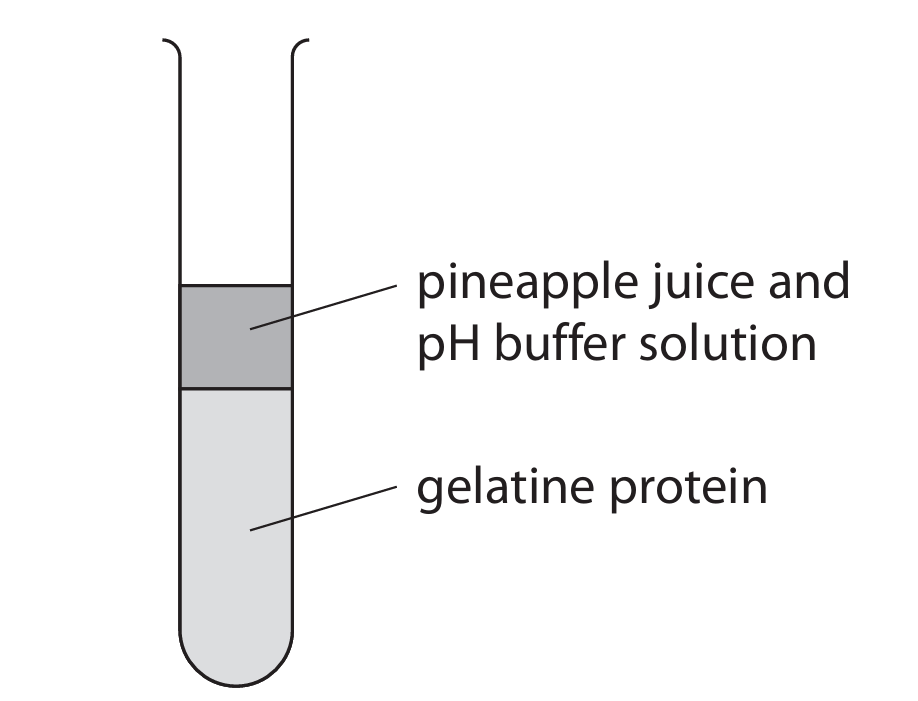
Pineapple juice contains a protease called bromelain.
A student uses this method to investigate the digestion of solid gelatine protein by bromelain.
- place solid gelatine protein into a test tube up to a height of 5 cm
- mix 5 cm3 pineapple juice with 1 cm3 of pH 4 buffer
- place 1 cm3 of the pineapple juice and buffer solution on top of the gelatine
- leave for one hour in a water bath set to 37°C
- measure the height of the solid gelatine and use it to calculate the volume of gelatine that has been digested
Repeat the method three more times.
The diagram shows part of the student’s method.

(a) The table shows the student’s results for the volumes of gelatine digested at pH 4.

(i) Calculate the mean volume of gelatine digested in cm3.
Give your answer to two decimal places.
(ii) State what substances are produced when the gelatine protein is digested.
(b) The student repeats the investigation with different pH buffers.
The table shows their results.

(i) Give two variables the student should control.
(ii) Explain the effect of changing the pH on the mean volume of gelatine digested.
(c) Describe how to test for the presence of protein.
Most-appropriate topic codes (Edexcel IGCSE Biology):
• 2(e): Nutrition — part (a)(ii)
• Appendix 4: Mathematical skills — part (a)(i)
• 2.10, 2.11, 2.13: Enzymes as biological catalysts; effect of temperature and pH — part (b)(ii)
• 2.14B: Practical: investigate how enzyme activity can be affected by changes in pH — part (b)
▶️ Answer/Explanation
(a)(i) Mean volume = 0.57 cm³
Explanation: To calculate the mean volume of gelatine digested, we first need to identify and exclude any anomalous results. Looking at the data, tube 2 shows a value of 1.89 cm³, which is significantly higher than the other three values (0.55, 0.54, 0.61). This suggests it might be an anomaly, possibly due to experimental error. Therefore, we calculate the mean using the three consistent results:
Sum of volumes = 0.55 + 0.54 + 0.61 = 1.70 cm³
Number of tubes = 3
Mean volume = 1.70 ÷ 3 = 0.5666… cm³
Rounded to two decimal places, this gives us 0.57 cm³.
(a)(ii) Amino acids and peptides
Explanation: Gelatine is a protein. During digestion, proteases like bromelain break down proteins through hydrolysis. The initial breakdown produces smaller polypeptide chains called peptides. Further digestion breaks these peptides down into their monomer units, which are amino acids. Therefore, the end products of protein digestion are primarily amino acids, though some intermediate peptides may also be present.
(b)(i) Two controlled variables:
1. Temperature – The investigation should be conducted at a constant temperature, ideally 37°C as used initially, because enzyme activity is highly dependent on temperature.
2. Volume/Concentration of enzyme (bromelain/pineapple juice) – The same volume and concentration of pineapple juice should be used in each test to ensure the same amount of enzyme is present, making the comparison of pH effects valid.
Other acceptable answers include: volume/mass/concentration of gelatine, volume of buffer, time left in the water bath, or surface area of gelatine.
(b)(ii) Effect of pH:
Explanation: The data shows that the mean volume of gelatine digested increases as the pH moves from 3 to 5, reaching a maximum at pH 5 (0.98 cm³). Beyond pH 5, the volume digested decreases sharply, with very little digestion occurring at pH 11 (0.01 cm³). This pattern is characteristic of enzyme activity. Enzymes have an optimal pH at which they function most efficiently. For bromelain, this appears to be around pH 5. At pH values significantly above or below this optimum, the enzyme’s active site becomes denatured. Denaturation means the shape of the active site changes, so the substrate (gelatine protein) can no longer bind effectively. Consequently, the rate of reaction (digestion) decreases, leading to a smaller volume of gelatine being digested.
(c) Testing for Protein:
Explanation: The standard test for proteins is the Biuret test. Here is a step-by-step description of how to perform it:
- Place the sample to be tested in a test tube. If the sample is solid, it should first be crushed and mixed with water to create a liquid suspension.
- Add an equal volume of sodium hydroxide solution (Biuret reagent A) to the test tube. Shake gently to mix.
- Then, add a few drops of very dilute copper(II) sulfate solution (Biuret reagent B). Do not shake the tube vigorously.
- Observe the colour change. A positive result for protein is indicated by a colour change from blue to lilac, purple, or violet. If the solution remains blue, no protein is present.
The principle behind this test is that the copper ions in the reagent form a complex with the peptide bonds in the proteins, producing the characteristic purple colour.
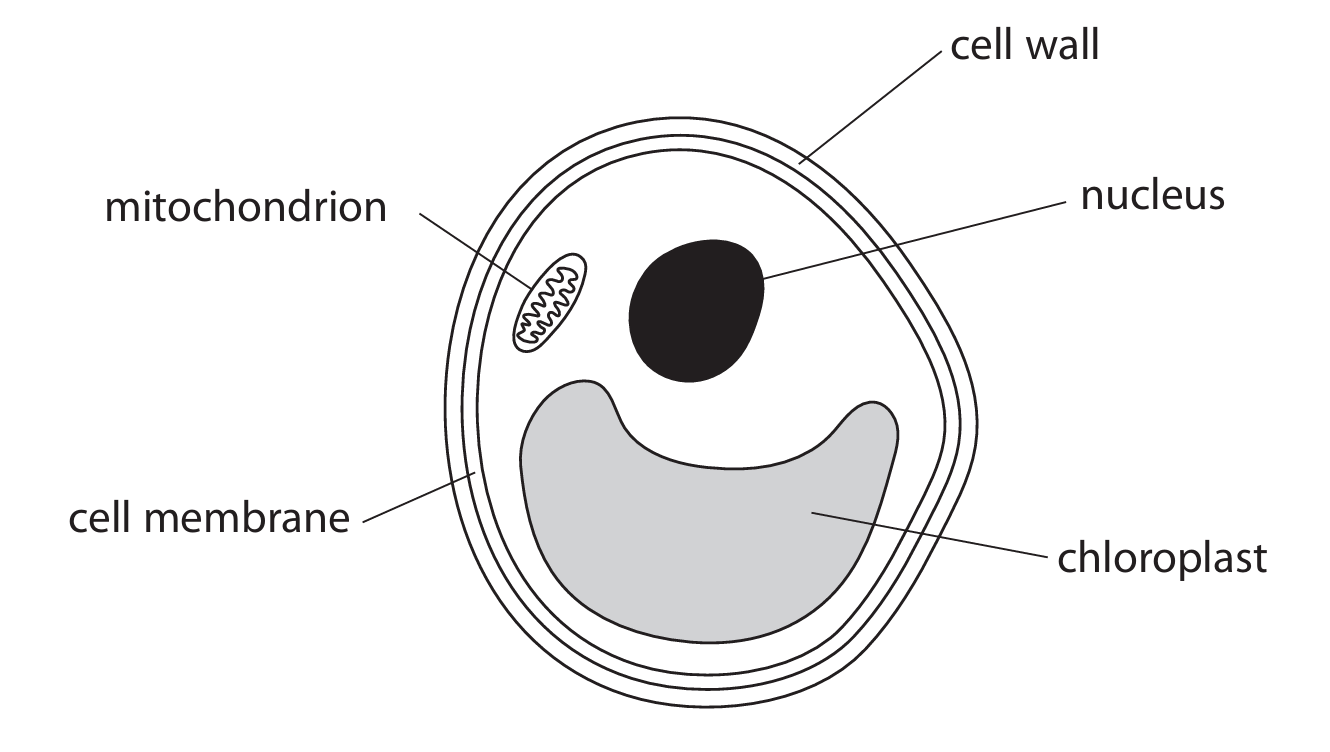
The diagram shows a single-celled organism called Chlorella that lives in fresh water.
Chlorella has a chloroplast and can photosynthesise.

(a) (i) Which of these groups of organisms contains Chlorella?
- A. animals
- B. bacteria
- C. plants
- D. protoctists
(ii) Which of these labelled structures would also be present in an animal cell?
- A. cell membrane and chloroplast
- B. cell membrane and mitochondrion
- C. cell wall and chloroplast
- D. cell wall and mitochondrion
(b) Complete the balanced chemical symbol equation for photosynthesis.
__________ + __________ → C6H12O6 + 6O2
(c) The graph shows the effect of light intensity on gas exchange by Chlorella.

(i) Explain why Chlorella takes in oxygen at light intensities below 10 arbitrary units.
(ii) Explain the changes in the volume of oxygen released as the light intensity increases from 10 arbitrary units.
(iii) The volume of oxygen released by Chlorella is the difference between the oxygen produced by photosynthesis and the oxygen taken in.
Use the graph to calculate the volume of oxygen produced in five minutes by photosynthesis at a light intensity of 50 arbitrary units.
(d) Describe how hydrogen-carbonate indicator could be used to investigate the effect of light intensity on carbon dioxide exchange by Chlorella.
Most-appropriate topic codes (Edexcel IGCSE Biology):
• 2(b): Cell structure — part (a)(ii)
• 2(e): Nutrition (photosynthesis) — parts (b), (c), (d)
• 2(f): Respiration — parts (c)(i), (c)(ii), (c)(iii)
• 2(g): Gas exchange — part (d)
▶️ Answer/Explanation
(a) (i) D (protoctists)
Explanation: Chlorella is a single-celled, photosynthetic organism with a nucleus and chloroplasts. It is not an animal (A) because it has chloroplasts and a cell wall. It is not a bacterium (B) because it has a true nucleus and membrane-bound organelles like chloroplasts and mitochondria. It is not a plant (C) because it is unicellular, whereas plants are multicellular. Therefore, it belongs to the kingdom Protoctista (D), which contains various unicellular and simple multicellular eukaryotes, including algae.
(a) (ii) B (cell membrane and mitochondrion)
Explanation: Animal cells have a cell membrane and mitochondria. They do not have chloroplasts (so A and C are incorrect) and they do not have a cell wall (so D is incorrect). Both animal cells and Chlorella require mitochondria for respiration to release energy.
(b) 6CO2 + 6H2O → C6H12O6 + 6O2
Explanation: The balanced equation for photosynthesis shows that six molecules of carbon dioxide (6CO2) and six molecules of water (6H2O), in the presence of light energy and chlorophyll, react to produce one molecule of glucose (C6H12O6) and six molecules of oxygen (6O2). The reactants must be placed on the left-hand side of the arrow.
(c) (i)
Explanation: At low light intensities (below 10 arbitrary units), the rate of photosynthesis is very low because there is insufficient light energy. However, respiration continues at all times to release energy for cell processes. Therefore, the oxygen produced by photosynthesis is less than the oxygen consumed by respiration. This results in a net uptake of oxygen from the surroundings, which is why the graph shows a negative value for oxygen exchange (indicating net intake).
(c) (ii)
Explanation: As light intensity increases from 10 arbitrary units, the rate of photosynthesis also increases because light is a key factor for the light-dependent reactions. At 10 arbitrary units, the compensation point is reached where the rate of photosynthesis equals the rate of respiration, so there is no net gas exchange. Above this point, the rate of photosynthesis becomes greater than the rate of respiration. This means more oxygen is produced by photosynthesis than is consumed by respiration, leading to a net release of oxygen, which is shown by the positive values on the graph. The curve eventually levels off because another factor, such as carbon dioxide concentration or temperature, becomes limiting and prevents the rate of photosynthesis from increasing further, even with more light.
(c) (iii) 48 mm3
Explanation: The graph shows the net oxygen released, which is the oxygen from photosynthesis minus the oxygen used in respiration. At 50 arbitrary units, the net oxygen released is approximately 38 mm³. We are told that the oxygen taken in (used in respiration) is 10 mm³ (this value is consistent across light intensities as respiration rate is relatively constant). To find the gross oxygen produced by photosynthesis, we add the oxygen used in respiration to the net oxygen released: 38 mm³ + 10 mm³ = 48 mm³.
(d)
Explanation: To investigate the effect of light intensity on carbon dioxide exchange, you could set up the following experiment. Place equal volumes or masses of Chlorella in several test tubes containing the same volume of hydrogen-carbonate indicator solution. Seal the tubes. Hydrogen-carbonate indicator changes color with carbon dioxide concentration: it turns yellow when carbon dioxide levels are high, red at atmospheric levels, and purple when carbon dioxide levels are low. You would then place the tubes at different distances from a light source to create different light intensities (e.g., 10 cm, 20 cm, 30 cm away). A control tube with no Chlorella should be set up to show that any color change is due to the organism. You would also need to control other variables, such as temperature and the initial concentration of the algae and indicator. After leaving the tubes for a set period, you would observe and record the final color of the indicator in each tube. In high light, photosynthesis would be high, so carbon dioxide would be absorbed, and the indicator would turn purple. In low light or darkness, respiration would dominate, releasing carbon dioxide, and the indicator would turn yellow.
A student uses this method to investigate the nitrogen cycle.
- take two samples of soil, each of mass 100 g
- sterilise one sample of soil by heating at 100 °C for one hour
- place the sterilised and unsterilised samples into separate filter funnels
- pour 25 cm³ of water through each soil sample and collect the filtrate in a test tube
- test each filtrate for nitrates
- pour water through each soil sample for 5 minutes
- pour another 25 cm³ of water through each soil sample and collect the filtrate in a test tube
- test each filtrate for nitrates
- add 1 cm³ of a solution of ammonium salts to each soil and leave for three days
- pour 25 cm³ of water through each soil sample again and collect the filtrate in a test tube
- test each filtrate for nitrates
The diagram shows the student’s apparatus.

The table shows the student’s results.

(a) Give the independent variable in the investigation.
(b) (i) Suggest why the student poured water through the soil samples for five minutes before adding the ammonium salts.
(ii) Comment on the results of the nitrate tests on the two soil samples three days after adding ammonium salts.
Most-appropriate topic codes (Edexcel IGCSE Biology):
• 4(a): The organism in the environment — experimental design, variables
• 1(b): Variety of living organisms — role of bacteria (nitrifying bacteria)
• 2(e): Nutrition — plant mineral requirements (nitrate ions)
▶️ Answer/Explanation
(a) Whether the soil sample was sterilised or unsterilised / The presence or absence of bacteria.
Explanation: The independent variable is the factor that the investigator deliberately changes. In this experiment, the student intentionally sterilized one soil sample (by heating it) while leaving the other unsterilized. This manipulation directly alters the presence of living microorganisms, particularly bacteria, in the soil, which is the key factor being tested for its effect on the nitrogen cycle (specifically, the conversion of ammonium to nitrate).
(b)(i) To remove or wash away any nitrates that were initially present in the soil. This ensures that any nitrate detected after adding the ammonium salts must have been produced from the ammonium during the investigation, making the test fair and valid.
Explanation: The initial tests showed that nitrate was present in both soil samples at the start. By thoroughly rinsing the soil with water for five minutes, the student aimed to leach out these pre-existing nitrates. This step is crucial for the validity of the experiment. If nitrates were not removed, it would be impossible to tell if nitrates found later came from the original soil or were newly produced from the added ammonium salts. This washing step creates a “clean slate,” ensuring that any nitrate detected after the ammonium addition is indeed a product of the processes being studied.
(b)(ii)
- Nitrates are present in the unsterilised soil but absent in the sterilised soil three days after adding ammonium salts.
- This shows that nitrates were produced in the unsterilised soil from the added ammonium salts.
- The conversion of ammonium to nitrate is called nitrification and is carried out by nitrifying bacteria.
- The sterilised soil, which was heated, had its bacteria killed, so no nitrification could occur, and thus no nitrates were produced.
Explanation: The contrasting results for the two soil samples three days after adding ammonium salts are very revealing. The unsterilised soil tested positive for nitrates, indicating that the ammonium ions \( (NH_4^+) \) were converted into nitrate ions \( (NO_3^-) \). This biological process, known as nitrification, is performed by specific types of bacteria called nitrifying bacteria (e.g., Nitrosomonas and Nitrobacter). In contrast, the sterilised soil, which was heated to 100°C, tested negative for nitrates. The heating process killed all living bacteria. The absence of nitrate production in this sample provides strong evidence that living bacteria are essential for the nitrification process to occur. The experiment effectively demonstrates the role of microorganisms in this crucial stage of the nitrogen cycle.
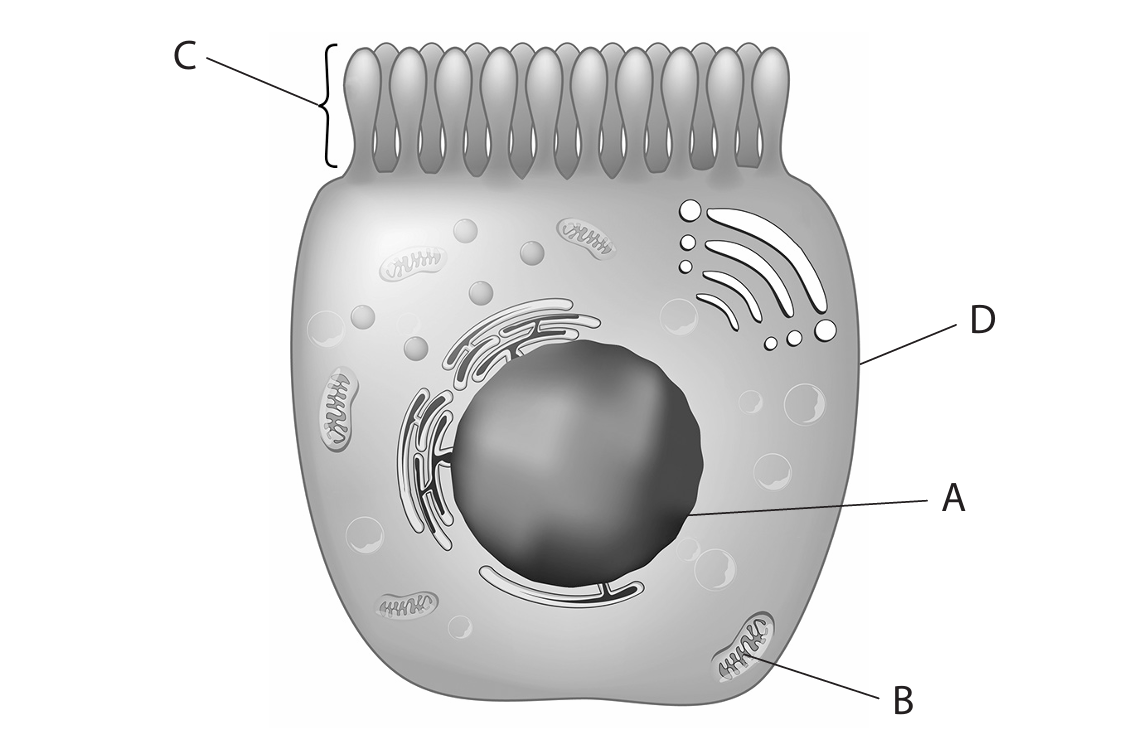
The diagram shows a cell found in the lining of the human small intestine.

(a) (i) Which of the labelled structures is a microvillus?
- A
- B
- C
- D
(ii) Which of the labelled structures produces ATP?
- A
- B
- C
- D
(b) These cells form the lining of the small intestine.
Explain how the structure of the small intestine is adapted for absorption.
(c) Cells in the human placenta also have microvilli.
Describe the role of the human placenta.
Most-appropriate topic codes (Edexcel IGCSE Biology):
• 2(f): Respiration — part (a)(ii)
• 2(e): Nutrition (Humans) — part (b)
• 3(a): Reproduction (Humans) — part (c)
▶️ Answer/Explanation
(a) (i) C
Explanation: Microvilli are tiny, finger-like projections on the surface of some cells, especially those involved in absorption, like the cells lining the small intestine. They greatly increase the surface area of the cell membrane, which allows for more efficient absorption of nutrients. In the diagram, structure C is correctly identified as the microvillus.
(a) (ii) B
Explanation: ATP (Adenosine Triphosphate) is the main energy currency of the cell, produced during cellular respiration. The organelles responsible for this process are the mitochondria. In the diagram, structure B represents a mitochondrion, which is often described as the “powerhouse” of the cell because it generates most of the cell’s supply of ATP.
(b) The small intestine has several structural adaptations for efficient absorption:
- It is very long, providing a large surface area over which absorption can occur.
- The inner lining is folded, and these folds are covered in tiny finger-like projections called villi. The cells on the surface of the villi themselves have microvilli, forming a “brush border”. Both villi and microvilli massively increase the surface area for absorption.
- Each villus contains a network of blood capillaries that absorb and transport products of digestion like glucose and amino acids. Good blood flow in these capillaries helps maintain a steep concentration gradient for rapid diffusion.
- Each villus also contains a lacteal, which is a lymphatic vessel that absorbs fatty acids and glycerol.
- The walls of the villi are only one cell thick, creating a very short diffusion distance for nutrients to pass from the gut into the blood.
(c) The human placenta is a vital organ that forms during pregnancy and has several key roles:
- It allows for the exchange of materials between the mother’s blood and the foetus’s blood without the two blood supplies mixing. Oxygen and digested food nutrients (like glucose, amino acids, and minerals) diffuse from the mother’s blood into the foetal blood.
- It removes waste products from the foetus, such as carbon dioxide and urea, which then pass into the mother’s blood for her to excrete.
- The placenta acts as a barrier against some harmful substances, like certain bacteria, although some viruses and drugs can cross it.
- It produces important hormones, such as progesterone, which helps to maintain the pregnancy.
- Towards the end of pregnancy, the placenta passes antibodies from the mother to the foetus, providing the baby with passive immunity for the first few months after birth.
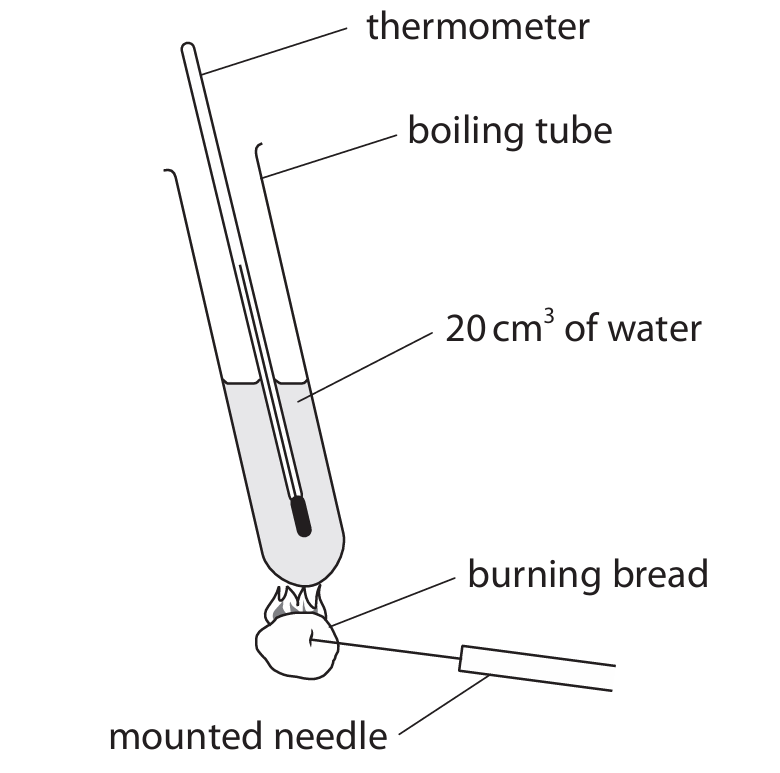
A student uses this method to measure the energy value of a sample of bread.
- measure the mass of a sample of bread
- put 20 cm³ of water in a boiling tube
- place a thermometer in the boiling tube and record the initial temperature of the water
- place the sample of bread on a mounted needle
- light the bread sample in a Bunsen flame
- quickly move the burning bread sample and place it directly under the boiling tube
- if the bread stops burning, relight the bread in the Bunsen flame
- place it back under the boiling tube
- repeat until the bread does not burn
- record the final temperature of the water in the boiling tube

The student repeats the experiment 3 times.
The table shows some of the student’s results.

(a) To calculate the energy released from the burning bread the student uses this formula.
energy (in J) = mass of water (in g) × 4.2 × increase in temperature (in °C)
They then calculate the energy in joules released by 1 g of bread.
(i) Calculate the increase in water temperature for the third sample of bread.
(ii) Calculate the energy released in joules by the third sample of bread.
[1 cm³ of water has a mass of 1 g]
(iii) Calculate the energy released in joules by 1g of bread for the third sample of bread.
(b) The energy value given on the packaging of the bread is 10 400 J for 1 g of bread.
Comment on why the student’s method gives a different value.
(c) Give two ways that the student could modify this apparatus to achieve an answer nearer to the energy value given on the packaging of the bread.
Most-appropriate topic codes (Edexcel IGCSE Biology):
• Appendix 4: Mathematical skills — arithmetic and numerical computation (parts a(i)–a(iii))
• 3: Assessment information — Experimental skills — planning investigations, evaluating methods (parts b, c)
▶️ Answer/Explanation
(a)(i) temperature increase = 15 °C
Explanation: The increase in temperature is calculated by subtracting the initial temperature from the final temperature. For the third sample, initial temperature is 21°C and final temperature is 36°C, so the increase is 36 – 21 = 15°C.
(a)(ii) energy released = 1260 J
Explanation: Using the formula: energy = mass of water × 4.2 × temperature increase. The mass of water is 20g (since 20 cm³ = 20g), and temperature increase is 15°C. So, energy = 20 × 4.2 × 15 = 1260 J.
(a)(iii) energy released by 1 g = 6300 J
Explanation: To find the energy per gram, divide the total energy released by the mass of the bread sample. Energy released is 1260 J, mass is 0.20 g, so energy per gram = 1260 ÷ 0.20 = 6300 J/g.
(b) The student’s calculated value (6300 J/g) is much lower than the published value (10,400 J/g) because:
- Not all energy from the burning bread is transferred to the water; some is lost to the surroundings as heat.
- The bread may not burn completely, meaning not all its energy is released.
- Energy is lost as light from the flame.
- Heat is lost to the atmosphere when moving the burning bread between the Bunsen burner and the boiling tube.
- The water may not be heated evenly (e.g., not stirred), leading to inaccurate temperature measurements.
(c) Two modifications to improve accuracy:
- Fix the position of the bread sample to ensure consistent distance from the boiling tube, reducing heat loss during movement.
- Use a lid or insulation around the boiling tube to minimize heat loss to the surroundings.
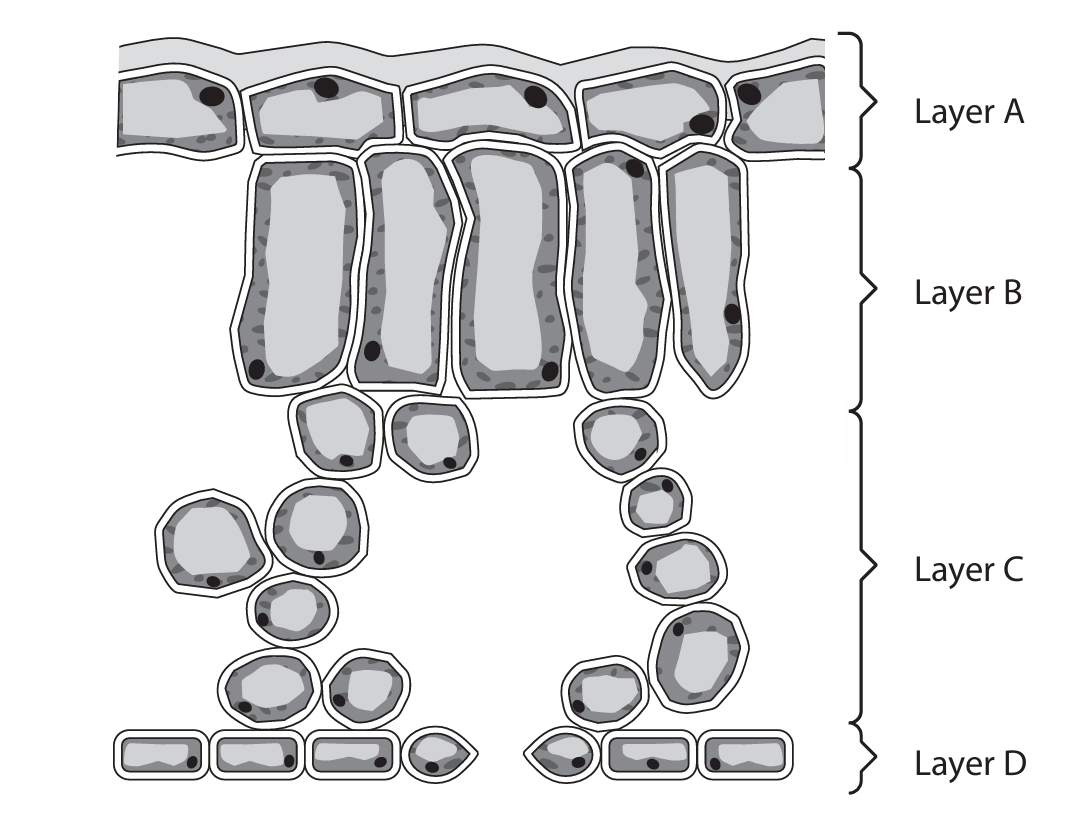
Read the passage below. Use the information in the passage and your own knowledge to answer the questions that follow.
Human kidney disease
Human kidney disease can be caused by infection, high blood pressure, high blood cholesterol levels or diabetes. There is no cure for kidney disease, but suitable treatment can reduce the symptoms and stop the disease getting worse.
The treatments include lifestyle and dietary changes to help you remain as healthy as possible. Medicine is also used to control associated problems such as high blood pressure and high cholesterol levels. Other treatments need to be used for severe kidney disease when the kidneys stop working. These are dialysis and kidney transplants.
Dialysis carries out the excretory function of the kidney. There are two types of dialysis that are commonly used, haemodialysis and peritoneal dialysis. Haemodialysis involves diverting blood into an external machine, where it is filtered before being returned to the body. Peritoneal dialysis (PD) involves pumping dialysis fluid into a space inside your abdomen. Haemodialysis is usually done about three times a week, either at hospital or at home. PD is normally done at home, several times a day or overnight. If the patient does not have a kidney transplant, treatment with dialysis will usually need to continue for life.
PD became an alternative to haemodialysis a few years ago. Many patients prefer the independence PD lets them have. In PD, a soft tube called a catheter is used to fill the abdomen with a dialysis solution. The composition of the dialysis solution is water, glucose, and mineral ions at the same concentration that occurs naturally in the blood. The dialysis solution is prepared according to the individual patient’s needs to help regulate their ion balance and remove metabolic waste products.
Inside the abdominal cavity is a natural membrane lining called the peritoneum. This membrane is partially permeable. The waste products and extra fluid and salts pass from the blood through the peritoneum into the dialysis solution. They then leave the body when the dialysis solution is drained. This used solution is thrown away. The process of draining and filling is called an exchange and takes about 30 to 40 minutes. The period that the dialysis solution is in your abdomen is called the dwell time. A typical schedule is four exchanges a day, each separated by a dwell time of four hours.
One form of PD, continuous ambulatory peritoneal dialysis (CAPD), does not require a machine and it is possible to walk around with the dialysis solution in your abdomen. Another form of PD, automated peritoneal dialysis (APD), requires a machine to fill and drain your abdomen. Three to five exchanges are performed during the night while you sleep. The whole process lasts a total of nine hours each night.
(a) Give one way that a person can change their diet to lower their risk of developing high cholesterol (lines 4 to 6).
(b) One function of the kidney is excretion (line 9). Another function is osmoregulation. Explain what is meant by the term osmoregulation.
(c) Explain why a person with severe kidney disease will need dialysis to continue for life (lines 15 to 16).
(d) The peritoneum acts as a partially permeable membrane.
(i) Explain what is meant by a partially permeable membrane (lines 23 to 24).
(ii) Explain why the dialysis solution must contain purified water, glucose and mineral ions (lines 19 to 21).
(e) Explain how the composition of the dialysis solution results in the waste products being removed from the blood (lines 21 to 22).
(f) (i) A person is using APD. Calculate the percentage of their time used for treatment in a week (lines 33 to 35).
(ii) Suggest why people may prefer to use CAPD instead of haemodialysis (lines 31 to 32).
(g) Describe how the structures in a human kidney result in the correct substances being retained in the blood.
Most-appropriate topic codes (Edexcel IGCSE Biology):
• 2(i): Excretion — parts (b), (c), (g)
• 2(d): Movement of substances into and out of cells — part (d)(i)
• 2(i): Kidney structure and function — parts (d)(ii), (e), (g)
• Appendix 4: Mathematical skills — part (f)(i)
• 5(a): Use of biological resources / medical applications — part (f)(ii)
▶️ Answer/Explanation
(a) Eat a balanced diet / less lipid / fat / oil / eat fewer foods that contain cholesterol (e.g., eat fewer eggs).
Explanation: To lower the risk of high cholesterol, one should reduce the intake of foods high in saturated fats and cholesterol. This means eating less fatty or oily food and consuming fewer items like eggs, which are known to contain cholesterol. A balanced diet ensures that the body gets necessary nutrients without excess harmful fats.
(b) Osmoregulation is the control of water and salt levels (or water potential) in the body / body fluids / blood / plasma / cells.
Explanation: Osmoregulation is a vital process where the kidney maintains the balance of water and dissolved salts (like sodium and potassium) in the blood and body fluids. This ensures that cells function properly by preventing them from losing too much water (dehydration) or taking in too much water (swelling), thus maintaining a stable internal environment.
(c) The body produces urea / salt / toxins / water / metabolic waste that need to be excreted to prevent build-up / poisoning, and kidney disease is incurable / has no cure until a transplant.
Explanation: In severe kidney disease, the kidneys fail to remove waste products like urea and excess salts from the blood. These substances accumulate and can become toxic, leading to poisoning or other complications. Since the disease is chronic and incurable (unless a transplant is performed), dialysis must be continued for life to artificially perform the kidney’s excretory function and keep the patient alive.
(d)(i) A partially permeable membrane allows some molecules / substances / water to pass through but stops others / does not let large or charged molecules pass through.
Explanation: A partially permeable membrane, like the peritoneum, acts as a selective barrier. It lets small molecules such as water, ions, and waste products diffuse across it but blocks larger molecules like proteins and blood cells. This selective nature is crucial for processes like dialysis, where only specific substances need to be removed from the blood.
(d)(ii) The dialysis solution contains purified water, glucose, and mineral ions so that these substances do not leave the blood / can return to the blood by diffusion / down a concentration gradient, as cells require water for water balance, ions for water balance / metabolic reactions, and glucose for respiration / energy.
Explanation: The dialysis fluid is carefully formulated to match the natural concentration of useful substances in the blood. This prevents the loss of essential molecules like glucose and mineral ions from the blood into the dialysis fluid by diffusion. If the fluid lacked these, the body would lose vital nutrients. The presence of glucose provides energy, and the ions help maintain osmotic balance, ensuring that necessary substances are retained in the bloodstream.
(e) The dialysis fluid has a lower concentration of / no urea / salts / waste products compared to the blood, so these wastes diffuse from the blood (where they are in high concentration) into the dialysis solution (where they are in low concentration).
Explanation: Waste removal relies on the principle of diffusion. The dialysis fluid is designed with a low (or zero) concentration of waste products like urea and excess salts. Since blood from the patient has a high concentration of these wastes, they naturally move down their concentration gradient from the blood, across the partially permeable peritoneum, and into the dialysis fluid. This cleanses the blood of toxins.
(f)(i) \( 9 \div 24 = 0.375 \); \( 0.375 \times 100 = 37.5\% \) or \( 38\% \).
Explanation: For APD, the total treatment time per night is 9 hours. There are 24 hours in a day, so the fraction of a day used is \( \frac{9}{24} = 0.375 \). To find the percentage of time in a week, we multiply by 100: \( 0.375 \times 100 = 37.5\% \). This means roughly 37.5% of the patient’s week is dedicated to this treatment.
(f)(ii) You can walk around / can be done at home / when travelling / does not require a machine.
Explanation: CAPD offers greater independence and flexibility compared to haemodialysis. Patients are not tied to a machine for hours at a time and can perform exchanges themselves at home or even while traveling. This allows them to maintain a more normal daily routine and lifestyle.
(g)
- Proteins / large molecules cannot leave the glomerulus / cannot go into Bowman’s capsule.
- Reabsorption of glucose / amino acids into the blood by the proximal convoluted tubule.
- Water is reabsorbed from the collecting duct.
Explanation: The kidney has specialized structures to retain essential substances. In the glomerulus, the filter is fine enough to prevent large proteins from leaving the blood and entering the filtrate. In the proximal convoluted tubule, useful substances like glucose and amino acids are actively reabsorbed back into the blood. Finally, in the collecting duct, water is reabsorbed depending on the body’s hydration needs, concentrating the urine and conserving water. This coordinated process ensures that vital nutrients and water are kept in the bloodstream while wastes are excreted.
The diagram shows a transverse section through a leaf.

(a) Explain how layer A is adapted for its role.
(b) Explain how layers B and C are adapted for photosynthesis and gas exchange.
(c) State the role of guard cells.
(d) Gardeners sometimes apply a spray called an anti-transpirant to plant leaves.

The spray is impermeable to water vapour but allows other gases to pass through. Discuss whether an anti-transpirant spray will promote plant growth.
Most-appropriate topic codes (Edexcel IGCSE Biology):
• 2(g): Gas exchange in flowering plants — parts (b), (c)
• 2(h): Transport in flowering plants — part (d)
• 2(j): Co-ordination and response in flowering plants — part (c)
▶️ Answer/Explanation
(a) Explain how layer A is adapted for its role.
Answer: Layer A (the waxy cuticle/epidermis) is adapted by being transparent to allow light through, having a waxy coating to reduce water loss, and having few chloroplasts as it is not photosynthetic.
Detailed Explanation:
Layer A represents the upper epidermis and its waxy cuticle. This layer has several key adaptations for its protective role. First, it is transparent, allowing sunlight to pass through to the underlying palisade mesophyll cells where most photosynthesis occurs. Second, it secretes a waxy, waterproof substance called the cuticle that forms a protective barrier. This cuticle significantly reduces water loss through evaporation from the leaf surface, which is crucial for preventing the plant from wilting, especially in dry conditions. Additionally, the cells of the epidermis typically contain few or no chloroplasts since their primary function is protection rather than photosynthesis. This combination of transparency and waterproofing makes the epidermis highly efficient at protecting inner tissues while still enabling the essential process of photosynthesis to occur.
(b) Explain how layers B and C are adapted for photosynthesis and gas exchange.
Answer: Layer B (palisade mesophyll) is adapted with many chloroplasts and tightly packed cells for efficient light absorption. Layer C (spongy mesophyll) has air spaces and loosely packed cells to facilitate gas exchange.
Detailed Explanation:
Layer B is the palisade mesophyll layer, which is perfectly adapted for its role as the main photosynthetic tissue. The cells are elongated and arranged vertically in a tightly packed formation, positioned close to the upper epidermis where light intensity is highest. This arrangement maximizes light capture. Furthermore, these cells contain a high density of chloroplasts – the organelles where photosynthesis actually occurs – making them extremely efficient at converting light energy into chemical energy.
Layer C is the spongy mesophyll layer, which is specialized for gas exchange. Unlike the tightly packed palisade cells, the spongy mesophyll cells are irregularly shaped and loosely arranged, creating numerous interconnected air spaces between them. These air spaces create a large surface area for the diffusion of gases. Carbon dioxide (\(CO_2\)), which is needed for photosynthesis, can diffuse freely from the stomata through these air spaces to reach the photosynthetic cells. Simultaneously, oxygen (\(O_2\)), produced as a byproduct of photosynthesis, can diffuse out of the cells into these air spaces and eventually exit the leaf. The loose arrangement and abundant air spaces thus create an optimal environment for the efficient exchange of these vital gases.
(c) State the role of guard cells.
Answer: Guard cells control the opening and closing of stomata to regulate gas exchange and water loss.
Detailed Explanation:
Guard cells are highly specialized cells that surround each stoma (plural: stomata), which are tiny pores on the leaf surface. Their primary role is to regulate the opening and closing of these stomatal pores. When guard cells are turgid (swollen with water), they bend and create an opening between them, allowing the stoma to open. This opening enables carbon dioxide (\(CO_2\)) to enter the leaf for photosynthesis during daylight hours. Conversely, when guard cells lose water and become flaccid, they relax and close the stoma. This closure helps to conserve water by reducing transpiration (water vapor loss), particularly during hot, dry conditions or at night when photosynthesis isn’t occurring. Therefore, guard cells perform the crucial balancing act of allowing sufficient \(CO_2\) intake for photosynthesis while minimizing excessive water loss.
(d) Discuss whether an anti-transpirant spray will promote plant growth.
Answer: Anti-transpirant sprays may not consistently promote plant growth because while they reduce water loss, they may also limit carbon dioxide intake and mineral transport.
Detailed Explanation:
The effect of anti-transpirant sprays on plant growth involves a complex trade-off. On one hand, these sprays can be beneficial because they form a waterproof coating that reduces transpiration (water loss from the leaves). By conserving water, they help prevent wilting and water stress, especially during drought conditions or in windy environments. This water conservation could potentially support growth by maintaining turgor pressure and physiological processes.
However, there are significant drawbacks that may hinder growth. Although the spray allows other gases like carbon dioxide (\(CO_2\)) to pass through, it might still create an additional barrier that slightly reduces the rate of \(CO_2\) diffusion into the leaf. Since \(CO_2\) is essential for photosynthesis, any reduction in its uptake could limit the plant’s ability to produce glucose and other carbohydrates, ultimately slowing growth. Additionally, the transpiration stream plays a vital role in transporting mineral ions from the roots to the shoots. By reducing transpiration, the spray might also reduce the upward movement of these essential nutrients, potentially causing nutrient deficiencies that impair growth. Furthermore, transpiration provides a cooling effect for leaves; reducing it might lead to overheating in bright sunlight, damaging plant tissues. Therefore, whether an anti-transpirant promotes growth depends on the specific environmental conditions – it might be helpful in water-scarce situations but detrimental when water is plentiful and maximum photosynthetic rate is desired.
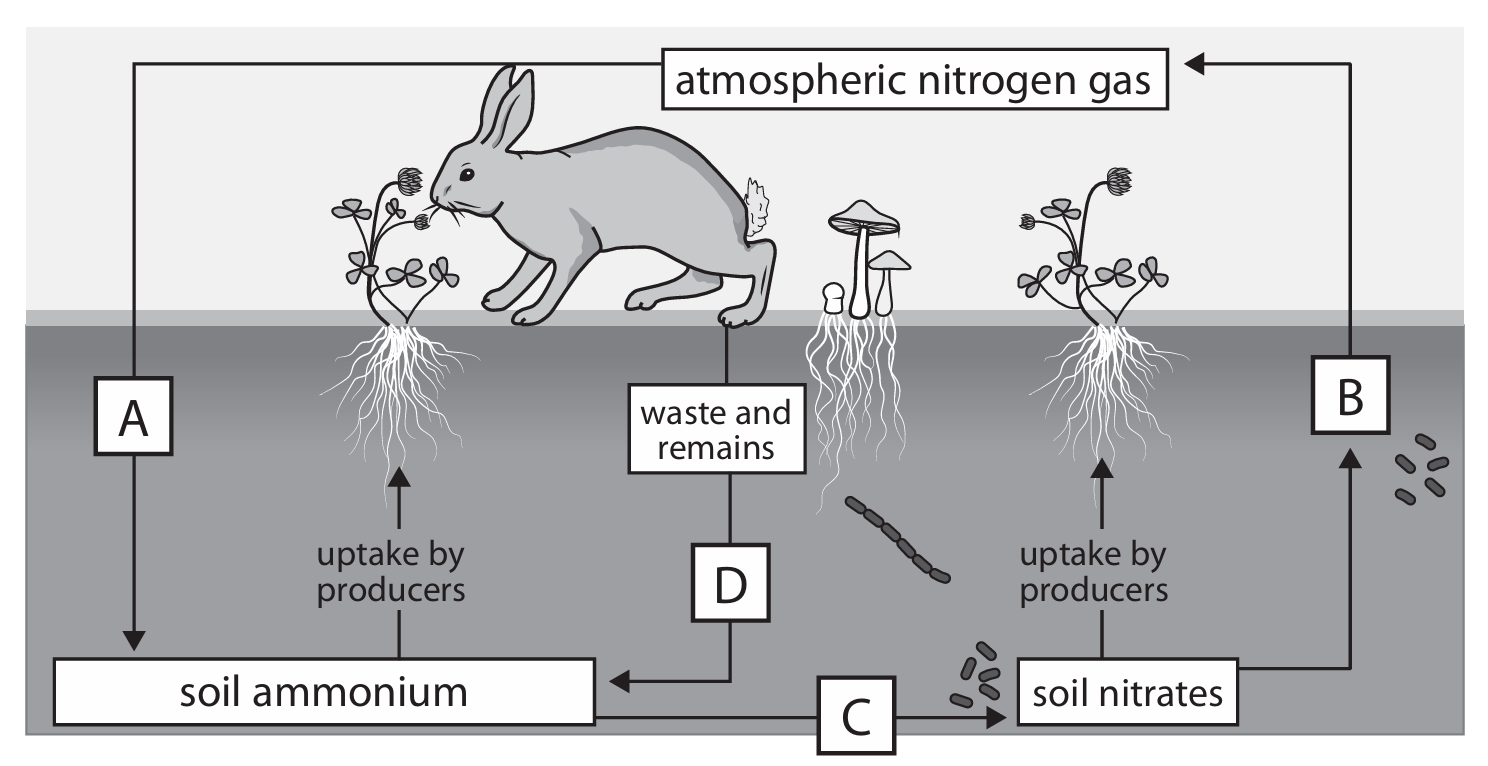
(a) The diagram shows the nitrogen cycle with four processes labelled A, B, C and D.

(i) Which process is nitrogen fixation?
- A
- B
- C
- D
(ii) Which process is decomposition?
- A
- B
- C
- D
(iii) Which process is nitrification?
- A
- B
- C
- D
(iv) Name a type of organism that carries out process C.
(b) A student does an investigation to determine if nitrate ions are required for plant growth.
He uses this method.
- Step 1: Use a measuring cylinder to add \(10 \, \text{cm}^3\) of the control solution containing all the minerals a plant requires to a test tube
- Step 2: Cover the top of the tube with foil
- Step 3: Make a small hole in the foil
- Step 4: Push the root of a germinated bean seedling through the hole so it is in the solution
- Step 5: Rinse the measuring cylinder with distilled water
- Step 6: Repeat Steps 1 to 4 using a test solution containing all the mineral a plant requires apart from nitrate ions
- Step 7: Wrap both tubes in black paper
- Step 8: Place both tubes in a test tube rack in bright sunlight
(i) Explain why the control solution contains all the mineral ions the plant requires but the test solution contains all the mineral ions the plant requires except nitrate.
(ii) State the purpose of Step 5.
(iii) Explain the purpose of Step 7.
(iv) Explain the measurements that the student could make to determine if nitrate ions are required for plant growth.
Most-appropriate topic codes (Edexcel IGCSE Biology):
• 2(e): Nutrition (Flowering plants) — parts (b)(i), (b)(iv)
• Appendix 6: Suggested practical investigations — parts (b)(ii), (b)(iii), (b)(iv)
▶️ Answer/Explanation
(a)(i) A
Explanation: Nitrogen fixation is the process where atmospheric nitrogen (\(N_2\)) is converted into ammonia (\(NH_3\)) or related compounds by certain bacteria. In the diagram, process A shows atmospheric nitrogen being converted into a form that can be used by plants, which matches the definition of nitrogen fixation.
(a)(ii) D
Explanation: Decomposition is the breakdown of organic matter, such as waste and dead organisms, into simpler substances like ammonium. Process D in the diagram shows the conversion of waste and remains into soil ammonium, which is the result of decomposition carried out by decomposers like bacteria and fungi.
(a)(iii) C
Explanation: Nitrification is the biological oxidation of ammonia (\(NH_3\)) or ammonium (\(NH_4^+\)) to nitrite (\(NO_2^-\)) and then to nitrate (\(NO_3^-\)). Process C shows the conversion of soil ammonium into soil nitrates, which is precisely what happens during nitrification, performed by nitrifying bacteria.
(a)(iv) (Nitrifying) bacteria
Explanation: Process C is nitrification, which is specifically carried out by nitrifying bacteria. These bacteria, such as those from the genera Nitrosomonas and Nitrobacter, convert ammonium into nitrites and then into nitrates, making nitrogen available in a form that plants can absorb and use.
(b)(i) The control solution shows normal growth with all minerals present, allowing comparison with the test solution (without nitrate) to see if nitrate is essential. If the control lacked other minerals, it wouldn’t show normal growth, making it impossible to isolate the effect of nitrate absence.
Explanation: In a scientific experiment, a control is used as a benchmark to compare the results of the test. The control solution contains all necessary minerals, including nitrate, so the plant in it should grow normally. The test solution is identical except it lacks nitrate. By comparing the growth in both solutions, any difference (like stunted growth in the test) can be attributed to the missing nitrate ions. If the control also missed other minerals, we wouldn’t know which missing mineral caused poor growth.
(b)(ii) To remove any residue of nitrate ions or other minerals from the measuring cylinder, preventing contamination of the test solution.
Explanation: Step 5 ensures that the measuring cylinder is clean and free from any traces of the control solution before it is used to measure the test solution. If nitrate ions from the control were left in the cylinder, they could contaminate the test solution, making it no longer “nitrate-free.” This would ruin the experiment because the test plant might get some nitrate, making the results unreliable.
(b)(iii) To block light from reaching the roots and the solution, preventing photosynthesis and algal growth.
Explanation: Wrapping the tubes in black paper (Step 7) serves two main purposes. First, it stops light from reaching the roots. Plant roots don’t perform photosynthesis, and exposure to light could be unnatural or stressful. More importantly, it prevents algae from growing in the nutrient solution. Algae need light for photosynthesis, and if they grow, they would compete with the bean seedling for minerals and carbon dioxide, confusing the results of the experiment.
(b)(iv) The student could measure the height/length, leaf area, or mass of the plants from both solutions using a ruler or balance, and compare the growth.
Explanation: To determine if nitrate is required, the student needs quantitative data on plant growth. After a set period, they could carefully remove the seedlings and measure their height or stem length with a ruler. They could also count the number of leaves and measure leaf area, or even better, find the dry mass by drying the plants in an oven and weighing them. By comparing these measurements between the plant grown in the complete control solution and the one grown in the nitrate-deficient test solution, a significant difference (e.g., the test plant being smaller and lighter) would indicate that nitrate ions are essential for healthy plant growth.
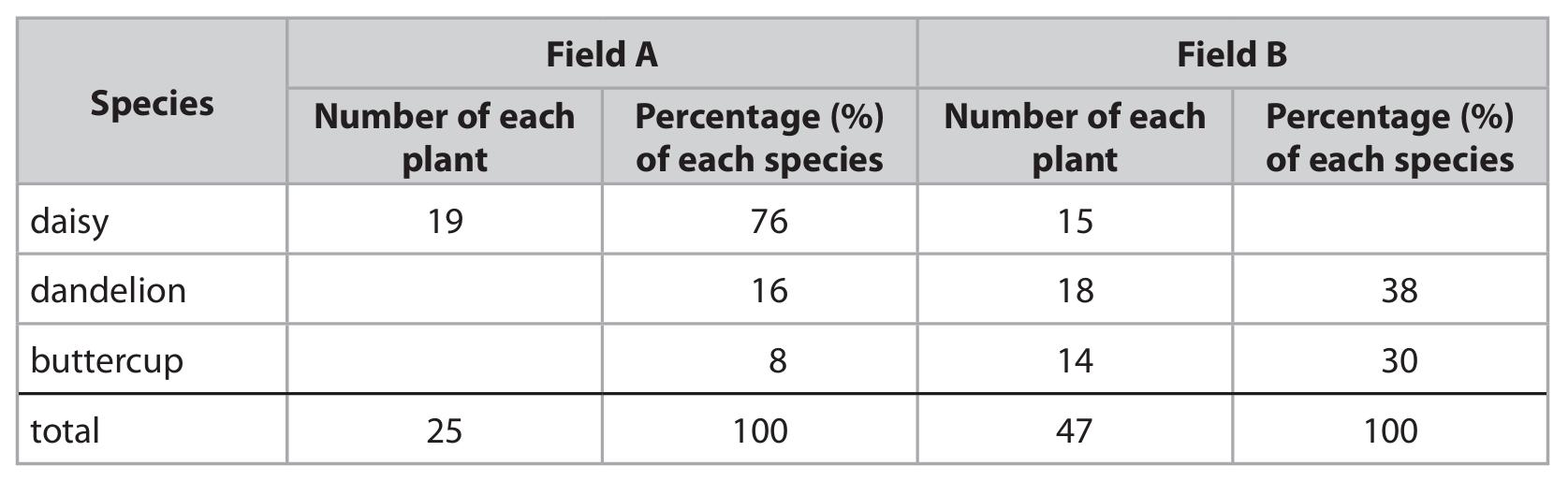
The biodiversity in an ecosystem can be determined by counting the number of different species present and the number of individuals of each species present.
(a) Give the term that describes the number of individuals of one species present in a habitat at one time.
(b) Students compared the biodiversity of two fields, A and B.
They determined the number of individual plants of three species in each field.
They also calculated the percentage of each species of plant compared to the total number of plants of all three species for each field.
The table shows the results.

(i) Complete the table by calculating the missing values.
(ii) Explain which field has the greater biodiversity.
(c) Explain how a shortage of one named mineral could affect the size of plants in the fields.
Most-appropriate topic codes (Edexcel IGCSE Biology):
• 4(a): Biodiversity — part (b)(ii)
• 4(b): Feeding relationships — part (b)(ii) – context of ecosystem health
• 2(e): Nutrition — part (c)
▶️ Answer/Explanation
(a) Population
Explanation: The term “population” refers specifically to the total number of individuals of a single species living in a particular habitat at a specific time. It is a fundamental concept in ecology used to measure the size of a species group within an ecosystem.
(b)(i)
The completed table is as follows:
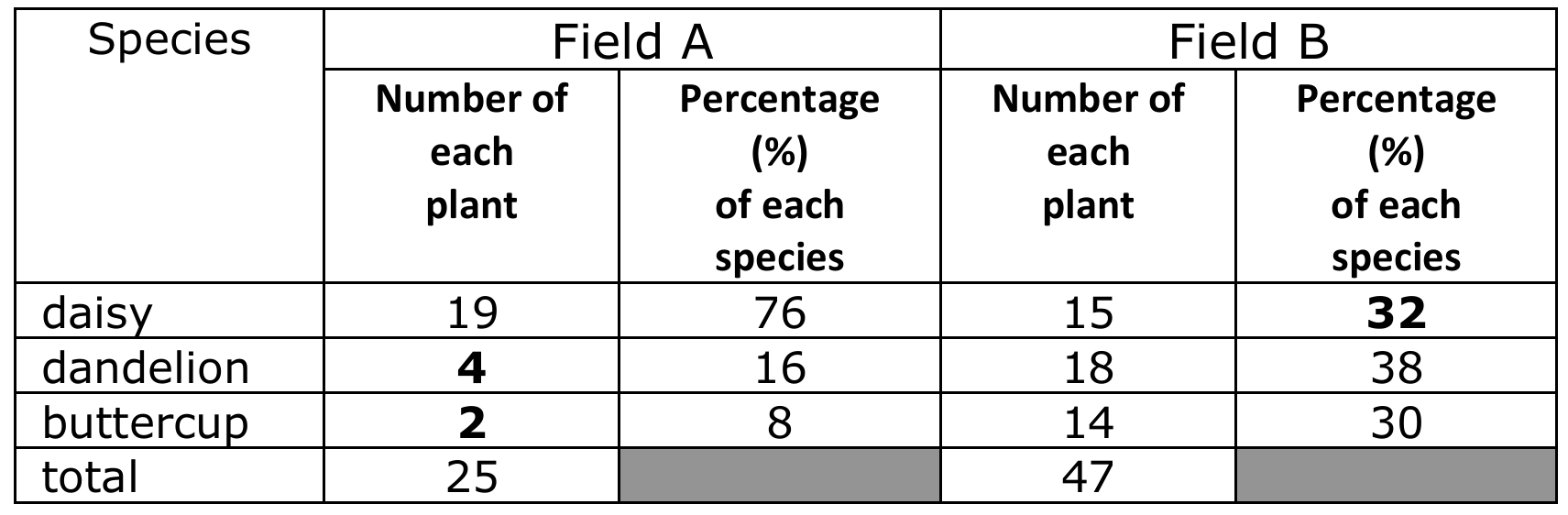
Explanation: For Field A, the number of dandelions is calculated as 16% of 25, which is 4 plants. The number of buttercups is 8% of 25, which is 2 plants. For Field B, the percentage for daisies is calculated as (15 / 47) × 100, which is approximately 32%.
(b)(ii) Field B has the greater biodiversity.
Explanation: Although both fields contain the same three species, biodiversity is not just about the number of different species (species richness) but also about how evenly the individuals are distributed among those species (species evenness). Field B has a more balanced distribution of individuals across the three species (32%, 38%, 30%) compared to Field A, which is heavily dominated by daisies (76%). A more even distribution indicates a healthier, more stable ecosystem with greater biodiversity.
(c) A shortage of nitrates could affect plant size.
Explanation: Nitrates are essential minerals absorbed by plant roots from the soil. They are a key component needed for the synthesis of amino acids, which are the building blocks of proteins. Proteins are crucial for many plant growth processes, including cell division and enlargement. A shortage of nitrates would limit protein production, thereby stunting plant growth and resulting in smaller plants with potentially yellowed leaves due to reduced chlorophyll production.
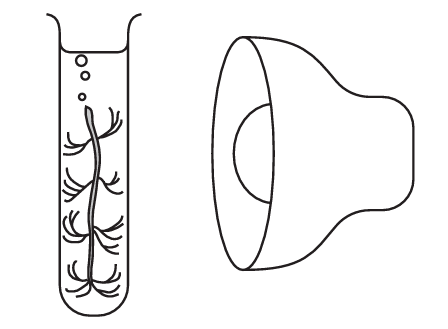
Obesity is caused when energy input is greater than energy output.
A student likes to eat potato crisps but is concerned about obesity.
The student has a choice of two different types of crisp to eat.
Describe an experiment the student could use to determine which type of crisp contains the least energy.
Most-appropriate topic codes (Edexcel IGCSE Biology):
• Appendix 6: Suggested practical investigations — investigating energy content in food
• 2.33B: Practical: investigate the energy content in a food sample — directly related experimental skill
▶️ Answer/Explanation
Detailed Experimental Description:
To determine which type of crisp contains the least energy, the student can perform a simple calorimetry experiment. This experiment measures the energy content by burning the crisp and using the heat released to warm a known volume of water.
Step-by-step method:
- Weigh the crisps: Start by weighing a crisp from each type to ensure you are comparing the same mass. Using the same mass is crucial for a fair comparison.
- Set up the apparatus: Take a boiling tube or a metal can and measure out a specific volume of water (e.g., 20 cm³) using a measuring cylinder. Record the initial temperature of this water with a thermometer.
- Ignite the crisp: Carefully impale one crisp on a mounted needle or place it in a crucible. Use a Bunsen burner or a match to light the crisp. It is important that the crisp burns completely and does not go out prematurely.
- Heat the water: Immediately place the burning crisp directly underneath the boiling tube or can containing the water. The flame should be as close as possible to the base of the tube to maximize heat transfer to the water.
- Measure the temperature change: Allow the crisp to burn completely. Once it has stopped burning and cannot be relit, gently stir the water with the thermometer and record the final temperature of the water.
- Calculate the energy released: Use the formula for calculating energy transferred to the water: \[ \text{Energy (J)} = \text{mass of water (g)} \times \text{specific heat capacity of water} \times \text{temperature change (°C)} \] Since the specific heat capacity of water is 4.2 J/g/°C, and 1 cm³ of water has a mass of 1 g, the calculation becomes: \[ \text{Energy (J)} = 4.2 \times \text{volume of water (cm³)} \times \text{temperature increase (°C)} \] To find the energy content per gram of crisp, divide the total energy calculated by the mass of the crisp used.
- Repeat for reliability: Perform the experiment at least three times for each type of crisp and calculate the mean energy content. This helps to identify any anomalies and ensures the results are reliable.
- Compare the results: The crisp type that gives the lower mean energy content per gram is the one that contains the least energy.
Important considerations to improve accuracy:
- Insulation: Wrapping the boiling tube in insulating material (like cotton wool) can reduce heat loss to the surroundings.
- Quick transfer: Moving the burning crisp quickly under the tube ensures minimal heat loss during setup.
- Control variables: Use the same volume of water, the same initial water temperature (e.g., room temperature), and the same apparatus for both crisp types.
By following this method, the student can obtain quantitative data to determine which crisp has the lower energy content, helping to make a more informed dietary choice concerning obesity.
Read the passage below. Use the information in the passage and your own knowledge to answer the questions that follow.
Heart transplant
A heart transplant is an operation to replace a damaged or failing heart with a healthy heart from a donor who has recently died. In the United Kingdom, 200 heart transplants are carried out each year.
A heart transplant may be considered if you have severe heart failure and medical treatments are not helping. Conditions that may eventually require a heart transplant include coronary heart disease and cardiomyopathy, where the walls of the heart have become stretched, thickened or stiff. Some people born with an abnormal heart may also benefit from a heart transplant.
A heart transplant needs to be carried out as soon as possible after a donor heart becomes available. The procedure is performed under general anaesthetic where the patient is unconscious. During the operation, a heart-lung bypass machine is used to keep the patient alive.
A cut is made in the middle of the patient’s chest. The patient’s heart is removed, leaving behind a section of the right and left atria, the two upper chambers of the heart. The new heart is connected to the aorta, the pulmonary artery, and the remaining part of the atria. The new heart is stimulated to start beating and the patient is taken off the bypass machine.
The patient will need to stay in hospital for around two or three weeks after a heart transplant. The patient will also need to take medicines called immunosuppressants for the rest of their life. Without these medicines, the transplant will not be successful.
After going home, the patient is encouraged to take part in a cardiac rehabilitation programme. This involves following an exercise plan to help regain strength and mobility. They should avoid strenuous activities such as pushing, pulling or lifting anything heavy for 6 to 12 weeks. Most people can start returning to many of their normal activities within a few months.
The patient does not usually need to have a special diet after a heart transplant. A balanced diet can ensure they stay as healthy as possible. They should not smoke and should avoid drinking alcohol.
A balanced diet may also help reduce the risk of some of the side effects of the immunosuppressant drugs including weight gain, osteoporosis and diabetes. Immunosuppressants also make the patient more vulnerable to infections, including food poisoning.
Most people can return to their normal activities after a heart transplant and experience a significant improvement in their symptoms for many years. After a heart transplant, 75% of people will live at least five years.
(a) Suggest why cardiomyopathy can cause heart failure (lines 6 to 7).
(b) During the transplant procedure the patient’s heart is removed, leaving behind a section of the right and left atria. Describe the functions of the atria in the body.
(c) Describe how the blood in the pulmonary artery differs from the blood in the aorta.
(d) Explain the function of the heart-lung bypass machine (lines 11 to 12).
(e) Explain why the patient needs to be given immunosuppressants (lines 19 to 20).
(f) Explain why patients should not smoke after their heart transplant (lines 28 to 29).
(g) State what is meant by the term balanced diet.
(h) Calculate the number of patients in the United Kingdom who have a heart transplant in one year that are still alive five years later (lines 2 to 3 and lines 35 to 36).
(i) Suggest why patients are advised to avoid strenuous activities after their heart transplant (line 24).
(j) Suggest why patients are more likely to be at risk of food poisoning after their heart transplant (lines 32 to 33).
Most-appropriate topic codes (Edexcel IGCSE Biology):
• 2(j): Co-ordination and response — part (e)
• 2(e): Nutrition — part (g)
• 2(j): Homeostasis and hormones — part (e) – immune response
• Appendix 4: Mathematical skills — part (h)
• 4(d): Human influences on the environment — part (f) – smoking effects
• 2(e): Human nutrition — part (j) – infection risk
▶️ Answer/Explanation
(a) The walls of the heart are less able to contract/pump effectively.
Explanation: Cardiomyopathy causes the heart muscle to become abnormal – either stretched, thickened, or stiff. This structural change directly impairs the heart’s ability to contract forcefully and pump blood efficiently around the body. When the heart cannot pump enough blood to meet the body’s demands, it leads to heart failure.
(b) The atria receive blood and pump/push it into the ventricles. The right atrium receives deoxygenated blood from the body (via the vena cava), and the left atrium receives oxygenated blood from the lungs (via the pulmonary veins).
Explanation: The atria act as the receiving chambers and priming pumps for the heart. Their main function is to collect blood returning to the heart and then contract to push this blood into the more powerful ventricles below. This ensures the ventricles are adequately filled before they perform the major work of pumping blood out of the heart to the lungs and the rest of the body.
(c) The pulmonary artery carries deoxygenated blood, while the aorta carries oxygenated blood. The pulmonary artery carries blood away from the heart to the lungs, whereas the aorta carries blood away from the heart to the rest of the body.
Explanation: These two major arteries have completely different roles. The pulmonary artery is the only artery in the body that carries deoxygenated blood. It transports this blood from the right ventricle to the lungs to pick up oxygen. In contrast, the aorta is the body’s main artery, carrying freshly oxygenated blood from the left ventricle to supply all tissues and organs.
(d) The heart-lung bypass machine oxygenates the blood and removes carbon dioxide (acting like artificial lungs), and it pumps this oxygenated blood around the body (acting like an artificial heart). This allows the patient’s tissues and cells to continue respiring and provides the surgeon with a still, blood-free heart to operate on.
Explanation: During a heart transplant, the patient’s own heart and lungs are temporarily bypassed. This machine is crucial for life support. It takes over the function of the heart by pumping blood and the function of the lungs by adding oxygen to the blood and removing carbon dioxide. This maintains circulation and gas exchange, keeping the patient’s organs alive while the surgeon removes the old heart and attaches the new one.
(e) Immunosuppressants prevent rejection of the transplanted heart. They do this by reducing the immune response, stopping the immune system from recognizing the new heart as foreign and attacking it.
Explanation: The immune system is designed to identify and destroy foreign cells, like those from a donor organ, based on their different antigens. Immunosuppressant drugs are essential to dampen this immune response. Without them, the patient’s white blood cells would recognize the new heart as “non-self” and mount an attack, leading to transplant rejection and failure.
(f) Smoking reduces oxygen in the blood and damages artery walls. It can lead to narrowed arteries, increased risk of blood clots, and higher blood pressure, all of which are dangerous for a transplanted heart.
Explanation: Smoking is particularly harmful after a transplant. The carbon monoxide in smoke binds to haemoglobin, reducing the blood’s oxygen-carrying capacity. Chemicals in tobacco also damage the lining of arteries, promoting atherosclerosis (fatty deposits), which can narrow the coronary arteries supplying the new heart muscle. This increases the risk of heart attacks, strokes, and failure of the transplant.
(g) A diet that contains all the required nutrients/food groups in the correct proportions.
Explanation: A balanced diet isn’t about eating specific “health foods” but about consuming the right amounts and varieties from all the major food groups: carbohydrates, proteins, fats, vitamins, minerals, fibre, and water. This ensures the body gets all the essential nutrients it needs to function optimally, support the immune system, and maintain a healthy weight.
(h) number of patients = 150
Explanation: The passage states that 200 transplants are done each year and that 75% of patients live at least five years. To find the number, we calculate 75% of 200. This can be done as (75/100) × 200 = 0.75 × 200 = 150. Therefore, we can expect 150 of the 200 patients to be alive after five years.
(i) Strenuous activities put extra pressure on the heart, increasing heart rate and blood pressure, which could strain the new heart during the recovery period.
Explanation: After major surgery like a transplant, the body, and especially the new heart, needs time to heal and adapt. Strenuous activities like heavy lifting cause a sudden, significant increase in the heart’s workload. This could be too stressful for the recovering heart muscle and the surgical connections (sutures), potentially leading to complications like a heart attack or damage to the surgical site.
(j) Because their immune system is weakened by the immunosuppressant drugs, making them less able to fight off infections from pathogens in food.
Explanation: Immunosuppressants, while vital for preventing rejection, have the side effect of reducing the overall activity of the immune system. This means the body’s defences against bacteria, viruses, and other pathogens are lowered. Harmful bacteria like Salmonella or E. coli, which might be fought off by a healthy person, can more easily cause food poisoning in a transplant patient because their white blood cells are less effective at destroying the invaders.
A student investigates the effect of different colours of light on the rate of photosynthesis in a water plant.
This is the student’s method.
- place a 1% sodium hydrogen carbonate solution in a boiling tube
- cut a 5 cm length of pondweed and place it in the tube
- place a lamp 10 cm from the tube containing the pondweed
- leave the pondweed for 10 minutes until it starts to produce bubbles from the cut end
- count the bubbles produced in one minute
- count the bubbles for two more one minute periods
The student repeats the experiment three more times using filters in front of the lamp that let through either red light, blue light or green light.

These are the student’s results.
| Colour of filter | Number of bubbles per minute | |||
|---|---|---|---|---|
| Test 1 | Test 2 | Test 3 | Mean | |
| no filter | 47 | 84 | 80 | |
| red | 48 | 48 | 42 | 46 |
| blue | 55 | 56 | 50 | 54 |
| green | 9 | 8 | 10 | 9 |
(a) Write the balanced symbol equation for photosynthesis.
(b)(i) Anomalous results are not included in the calculation of the mean. Calculate the mean number of bubbles per minute for the lamp with no filter.
(ii) Explain the student’s results.
(iii) Give two abiotic variables that the student should control in her experiment.
(c)(i) Explain why measuring the rate of photosynthesis by counting bubbles may not be an accurate method to use.
(ii) Suggest an alternative method that the student could use to measure the rate of photosynthesis in her experiment.
Most-appropriate topic codes (Edexcel IGCSE Biology):
• 2(g): Gas exchange in plants — part (c)(ii)
• 4 Assessment Information / Experimental Skills: — parts (b)(i), (b)(iii), (c)(i), (c)(ii)
• Appendix 3: Mathematical skills — part (b)(i)
▶️ Answer/Explanation
(a) 6CO2 + 6H2O → C6H12O6 + 6O2 (2)
(b)(i) 84 + 80 ÷ 2 = 82 (bubbles per minute) (2)
(b)(ii) An explanation that makes reference to four of the following points:
- no filter has highest rate of photosynthesis / bubbling / oxygen (1)
- (because) all light colours / wavelengths are present / has more light energy / most amount of light that can be absorbed (1)
- green has low(est) rate of photosynthesis, because green light is not absorbed (1)
- blue / red has a medium rate of photosynthesis because light is, absorbed / not reflected (1)
- chlorophyll / chloroplast absorbs red / blue light / does not absorb green light (1)
(b)(iii) An answer that makes reference to two of the following points:
- temperature (1)
- carbon dioxide (1) Allow volume / amount / concentration of hydrogen carbonate
- light intensity (1) Allow brightness of lamp / thickness of filter
(c)(i) An explanation that makes reference to two of the following points:
- bubbles are different volumes / sizes (1)
- O2 may dissolve in water (1)
- bubbles may be CO2 not oxygen / may not be due to photosynthesis / other gases may be present (1) Allow bubbles may be due to respiration
- easy to miscount / miss bubbles (1)
- bubbles get trapped / stuck (1)
(c)(ii) An answer that makes reference to two of the following points:
-
- use measuring cylinder / (gas) syringe / burette / graduated test tube (1)
- (to measure) volume (1)
OR
- use hydrogen carbonate indicator (1)
- change colour (of hydrogen carbonate indicator) (1)
Gas exchange in a flowering plant changes depending on conditions.
(a) Complete the passage by writing a suitable word or words in each blank space.
Plants carry out photosynthesis to produce ………………….. To enable this process to occur the leaf cells absorb carbon dioxide and release oxygen.
At the same time the cells in the leaves are respiring. This means that they are using …………………. and producing carbon dioxide. If the leaves are in bright sunlight, then the rate of photosynthesis will be …………………. than the rate of respiration. If the leaves are in dim light, then the rate of respiration will be greater than the rate of photosynthesis and there will be a net production of …………………..
In conditions when there is no net absorption or release of carbon dioxide the rate of photosynthesis and respiration are …………………. and the plant is at its compensation point.
(b) Describe how you could use hydrogen-carbonate indicator to investigate the effect of light intensity on net gas exchange in a leaf.
Most-appropriate topic codes (Edexcel IGCSE Biology):
• 2(g): Gas exchange (Flowering plants) — parts (a), (b)
• 2(f): Respiration — part (a)
• 2(g): Practical Investigation — part (b)
▶️ Answer/Explanation
(a) An answer that makes reference to the following points:
- carbohydrate / named carbohydrate (e.g., glucose, starch) (1)
- oxygen (1) allow carbohydrate / named carbohydrate
- higher / greater / more (1)
- carbon dioxide (1)
- equal / the same / balanced (1)
Completed passage: Plants carry out photosynthesis to produce carbohydrate (e.g., glucose). To enable this process to occur the leaf cells absorb carbon dioxide and release oxygen. At the same time the cells in the leaves are respiring. This means that they are using oxygen and producing carbon dioxide. If the leaves are in bright sunlight, then the rate of photosynthesis will be higher than the rate of respiration. If the leaves are in dim light, then the rate of respiration will be greater than the rate of photosynthesis and there will be a net production of carbon dioxide. In conditions when there is no net absorption or release of carbon dioxide the rate of photosynthesis and respiration are equal and the plant is at its compensation point.
(b) A description that makes reference to three of the following points:
- (how light intensity is varied) foil / muslin / move lamp / eq (1) allow light and dark
- leaf in test tube with bung / use flask with delivery tube / eq (1)
- (look for colour change after) same / stated time (1)
- same size / species / type / surface area / eq (1)
- same temperature / same volume of indicator (1)
- correct colour change so goes yellow with increased CO\(_2\) in dark / goes dark red/ red/ purple with reduced CO\(_2\) in light / eq (1)
Suggested answer: Place a leaf in a test tube containing a set volume of hydrogen-carbonate indicator and seal it. Repeat with another leaf in a second test tube. Cover one tube with foil to provide dark conditions (low light intensity) and leave the other in bright light. Keep all other variables (e.g., temperature, leaf size/species, time) the same. After a set time, observe the colour change. The indicator goes yellow if there is a net production of CO\(_2\) (respiration > photosynthesis in dim/dark) and purple/red if there is a net uptake of CO\(_2\) (photosynthesis > respiration in bright light).