Home / Edexcel iGCSE / Edexcel iGCSE Biology / Exam Style Questions

Edexcel iGCSE Biology 4BI1 - Paper 2B -Reproduction- Exam Style Questions- New Syllabus

Question

Read the passage below. Use the information in the passage and your own knowledge to answer the questions that follow.

Rivers – the arteries of the world

Rivers are important supplies of water for drinking, farming, industry, and leisure activities. Like our circulatory system, rivers are essential for transport, and have a homeostatic effect on nature. The biodiversity in rivers is high as they are the habitat for many different species. In many countries rivers are under threat from human impact, particularly the release of untreated sewage.

Flooding can cause untreated sewage to run into rivers from pipelines. Scientists estimated that in England and Wales during 2022, sewage was released into rivers for a total time of 300 000 hours. This sewage came from 1200 different pipelines. Untreated sewage may contain fertilisers, pesticides, pathogenic bacteria, and pharmaceutical drugs.

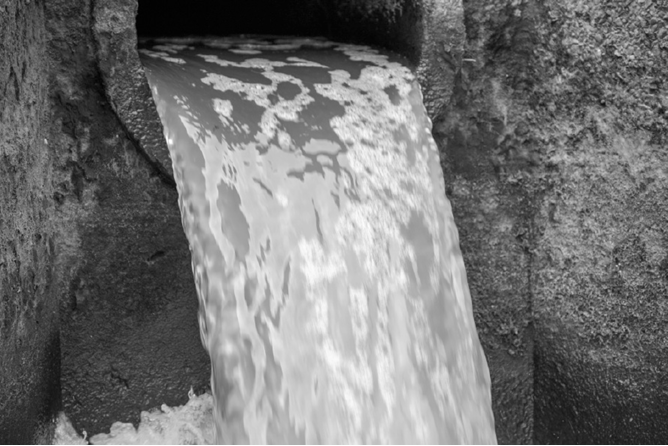
The photograph shows sewage being released into a river. The sewage causes the growth of something called ‘sewage fungus’. Sewage fungus looks like fungus but is a solid collection of several types of anaerobic bacteria. Sewage fungus is common in rivers that are polluted with untreated sewage or are near to cattle and intensive crop farms. If sewage fungus is found in a river it often indicates that the biodiversity of the river will be low.

Pesticides from agriculture are also released into rivers, and these are frequently transferred through natural food chains. Even pharmaceutical drugs, such as those containing the hormones oestrogen and progesterone, have been found in polluted rivers. These drugs must have been consumed by humans, excreted and then released into the sewage flowing into rivers.

Untreated sewage can also contain pathogenic species of bacteria that then enter rivers. If humans are infected with these bacteria, the large intestine absorbs less water, causing diarrhoea. Some of the bacteria found in sewage are resistant to antibiotics.

Scientists are looking for ways to prevent river pollution. One way is to reduce the risk of pollution from fertilisers and from cattle urine and faeces. Woodchip bioreactors are being trialled in agricultural fields that are near to rivers. These bioreactors are pits filled with woodchips and denitrifying bacteria. Water drains through these bioreactors, which helps to remove nitrates before they reach the rivers. In some countries, efforts are being made to replant forests in areas upstream of rivers to reduce river flooding and the risk of untreated sewage release.

(a) Rivers have a homeostatic effect on nature. This is similar to the role of homeostasis in humans.
State what is meant by the term homeostasis (lines 2 and 3).

(b) Calculate the mean number of hours that each pipeline released sewage into rivers in 2022 (lines 7 and 8).

(c)(i) Sewage fungus is not a fungus but is made from several different species of bacteria.
Which of these structures are present both in fungi and in bacteria?

A) cell wall and cytoplasm only
B) cell wall and nucleus only
C) cell wall, cytoplasm and nucleus
D) cytoplasm and nucleus only

(ii) Explain why rivers near to farms may have low biodiversity (lines 13 to 16).

(d) Oestrogen and progesterone in polluted water lower the levels of FSH and LH in mammals.

(i)State why lower levels of FSH can reduce fertility in mammals.
(ii) State why lower levels of LH can reduce fertility in mammals.

(e)(i) Pathogenic bacteria produce poisons that prevent the active transport of salt into the blood vessels surrounding the intestines.
Explain why preventing the transport of salt into the blood vessels will cause more water to be present in faeces (lines 22 to 24).

(ii) Explain why overuse of antibiotics has led to an increase in antibiotic-resistant bacteria (lines 24 and 25).

(f)(i) Explain how woodchip bioreactors reduce pollution in rivers (lines 27 to 31).
(ii) Explain why replanting forests in areas upstream of rivers will reduce flooding (lines 31 to 33).

Most-appropriate topic codes (Edexcel IGCSE Biology):

2(j): Co-ordination and response — part (a)
4(d): Human influences on the environment — parts (c)(ii), (e)(ii), (f)(i), (f)(ii)
1(b): Variety of living organisms — part (c)(i)
3(a): Reproduction — parts (d)(i), (d)(ii)
2(d): Movement of substances into and out of cells — part (e)(i)
3(b): Inheritance — part (e)(ii)
▶️ Answer/Explanation
Solution

(a) An answer that makes reference to one of the following points:
• maintenance of constant (internal) conditions in body / eq (1)
• control / regulating / maintaining internal conditions / eq (1)
• control / regulating / maintaining internal environment / eq (1)
• keeping conditions in body the same / within a (narrow) range / eq (1)

(b) • 250 (1)
Calculation: \( \frac{300000}{1200} = 250 \)

(c)(i) A (cell wall and cytoplasm only)
B is not the answer as bacteria do not have nuclei
C is not the answer as bacteria do not have nuclei
D is not the answer as bacteria do not have nuclei

(c)(ii) An explanation that makes reference to the following points:
1. fertilisers / animal waste / minerals / nitrates / phosphates (run off / leach) / eq (1)
2. algal growth / eutrophication / eq (1)
3. less light (penetrates) / competition for light / less photosynthesis / eq (1)
4. decomposition / decay (of dead algae / plants / organisms / organic waste / manure / faeces / sewage) eq (1)
5. less oxygen / only anaerobic species grow / eq (1)
6. bacteria respire / other species cannot respire / reduced respiration / eq (1)
7. pesticides kill organisms / eq (1)

(d)(i) An answer that makes reference to one of the following points:
• eggs / ova / follicles, do not mature / do not grow / eq (1)
• (FSH is required to) mature eggs / ova / follicles (1)
• (low FSH leads to) less oestrogen / (FSH) stimulates oestrogen release (1)

(d)(ii) An answer that makes reference to one of the following points:
• no ovulation occurs / egg not released / ova not released / eq (1)
• LH / it stimulates ovulation / LH / it stimulates egg release / eq (1)
• (lower LH leads to) less progesterone / LH / it stimulates progesterone (1)

(e)(i) An explanation that makes reference to two of the following points:
• less water absorbed / less water enters blood / less water enters capillaries / eq (1)
• (water moves by) osmosis (1)
• water potential in blood is high(er) / water potential in gut / faeces / lumen is low(er) / eq (1)

(e)(ii) An explanation that makes reference to three of the following points:
1. mutation (1)
2. (only resistant bacteria) survive / are not killed / non-resistant bacteria die / eq (1)
3. bacteria reproduce / multiply / eq (1)
4. pass on allele / gene / mutation / eq (1)

(f)(i) An explanation that makes reference to two of the following points:
• (denitrifying bacteria convert) nitrate into nitrogen (1)
• so less eutrophication / less algal growth / more oxygen in river / lower BOD / eq (1)
• wood chips have large surface area (for bacteria) / wood chips are biodegradable (so do not pollute) / eq (1)

(f)(ii) An explanation that makes reference to two of the following points:
1. trees / roots absorb water / trees intercept water / eq (1)
2. (more) transpiration (1)
3. less runoff / slows down water flow / more soil permeability / more infiltration / eq (1)
4. less soil erosion / roots hold onto soil / roots stabilise soil / eq (1)
5. rivers do not get blocked (with soil) / eq (1)
Question

Read the passage below. Use the information in the passage and your own knowledge to answer the questions that follow.

Pollination in fruit trees

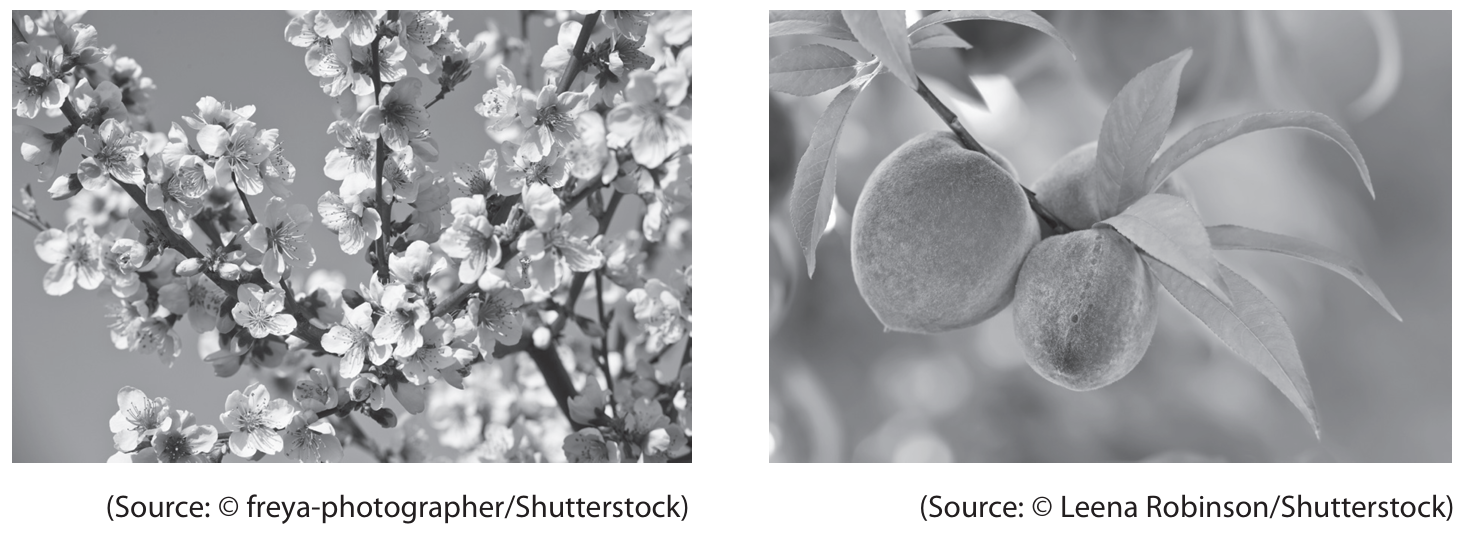
Plants need to be pollinated to produce fruits and seeds. Some plants are self-pollinated and others are cross-pollinated.

Self-pollination is usually the transfer of pollen from flowers on the same tree. In fruit trees, self-pollination also includes the transfer of pollen from another tree of the same cultivar. A cultivar is a genetically identical group of trees produced by selective breeding. Self-pollinating plants need bees or other insects to transfer pollen. Examples of self-pollinated fruit trees are plum, apricot and peach that have sweet-tasting, soft fruits.

Other fruit trees require cross-pollination and can only produce fruit by fertilisation from a different cultivar. Cross-pollination is the transfer of pollen from one cultivar to the flower of a different cultivar. Self-incompatibility prevents the same plant or cultivar from fertilising its own flowers. For example, the pollen from one cultivar of an apple tree will not fertilise trees of the same cultivar. Most hard fruit trees such as pear and apple require the presence of two different compatible cultivars for pollination to result in fruit production.

Pollen can be transferred by wind, insects or birds. Many fruit trees are pollinated by insects. Nut trees are usually pollinated by wind.

After pollination the pollen grain must germinate to lead to fertilisation. The success of pollination and fertilisation depends on favourable environmental conditions. It also requires the right pollen grain reaching the right flower, as pollen can only fertilise specific, compatible flowers. For example, pollen from a peach flower will not pollinate apple flowers.

Cross-pollinating fruit trees should be planted no more than 60 m apart. This will ensure that bees visit the trees often enough to ensure pollination. Nut trees need to be planted no more than 15 m apart.

A further complication is that a few apple and pear cultivars, known as triploids, produce sterile pollen. Triploid cultivars have three sets of chromosomes within their cells. A triploid cultivar will require another cultivar for pollination, and the trees must flower at the same time.

(a) Explain the differences between self-pollination and cross-pollination. (lines 3 to 5 and 9 to 11)

(b) Describe the sequence of events from pollen landing on a flower to fruit production.

(c) Fruit trees often produce sweet-tasting fruit containing sugars.

(i) Sugars are carbohydrates. Name the three elements in carbohydrates.
(ii) Suggest how production of sweet-tasting fruit may help spread the seeds of fruit trees. (lines 7 to 8)

(d) Explain how self-incompatibility prevents self-fertilisation. (lines 11 to 13)

(e) Describe how the structure of insect-pollinated flowers helps to achieve pollination. (line 16)

(f) Give a reason why nut trees need to be planted closer together than fruit trees. (lines 23 to 25)

(g) Explain why triploid cultivars produce sterile pollen. (lines 26 to 29)

Most-appropriate topic codes (Edexcel IGCSE Biology):

3(a): Reproduction — parts (a), (b), (c)(ii), (d), (e), (f), (g)
2(c): Biological molecules — part (c)(i)
3(b): Inheritance — part (g)
▶️ Answer/Explanation
Solution

(a) An explanation that makes reference to two of the following:

  • self-pollination within same plant / flower / cultivar / tree / uses one parent / eq (1)
  • cross-pollination from different plant / flower / cultivar / tree / uses two parents / eq (1)

(b) A description that makes reference to four of the following:

  1. germinates / eq (1)
  2. pollen tube grows down style / goes down style / eq (1)
  3. enters ovule (via micropyle) / eq (1)
  4. male nucleus / gamete travels down pollen tube / eq (1)
  5. fuses with ovum / fuses with female gamete / fertilises ovum / fertilises female gamete / eq (1)
  6. ovule becomes seed / eq (1)
  7. ovary becomes fruit / eq (1)

(c)(i) carbon hydrogen oxygen / C H O (1)

(c)(ii) An answer that makes reference to two of the following:

  • fruit eaten by animals / insects / birds / eq (1)
  • egested / lost in faeces / eq (1)
  • seeds dispersed / taken to new areas / eq (1)

(d) An explanation that makes reference to two of the following:

  • pollen from same plant / flower / cultivar eq (1)
  • cannot germinate / no pollen tube growth / eq (1)
  • no fusion / fertilisation / eq (1)

(e) A description that makes reference to the following:

  • flowers are large / petals are large (so seen by insects) / eq (1)
  • flowers / petals are coloured (so seen by insects) / eq (1)
  • flowers are scented / have scented petals / eq (1)
  • have nectary / produce nectar / eq (1)
  • anthers within flower / stigma within flower so insect brushes pollen / transfers pollen to stigma / eq (1)

(f) An answer that includes:

  • wind pollinated / no insects to carry pollen long distance / eq (1)

(g) An explanation that makes reference to two of the following:

  • triploid cells cannot divide by meiosis / cannot be divided by two / equally / eq (1)
  • cannot produce haploid (gametes) / produce one set / n chromosomes / eq (1)
  • fertilisation / fusion not possible / eq (1)
Question

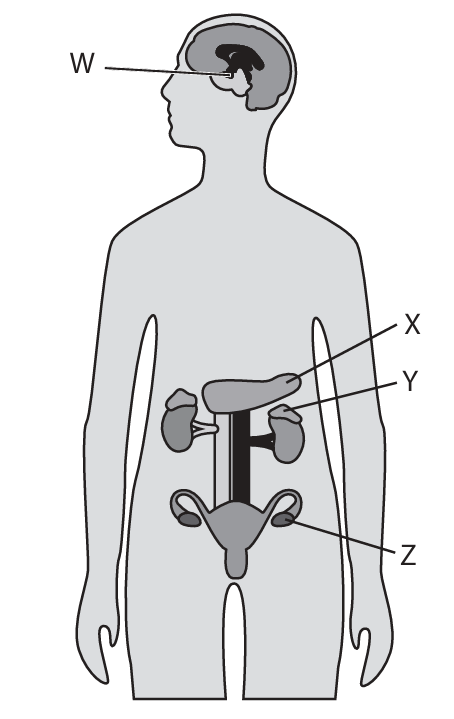
The diagram shows four glands in the human body labelled W, X, Y and Z.

(a) LH is a hormone involved in the menstrual cycle.

(i) Which labelled gland produces LH?

A) W
B) X
C) Y
D) Z

(ii) Describe the functions of LH during the menstrual cycle.

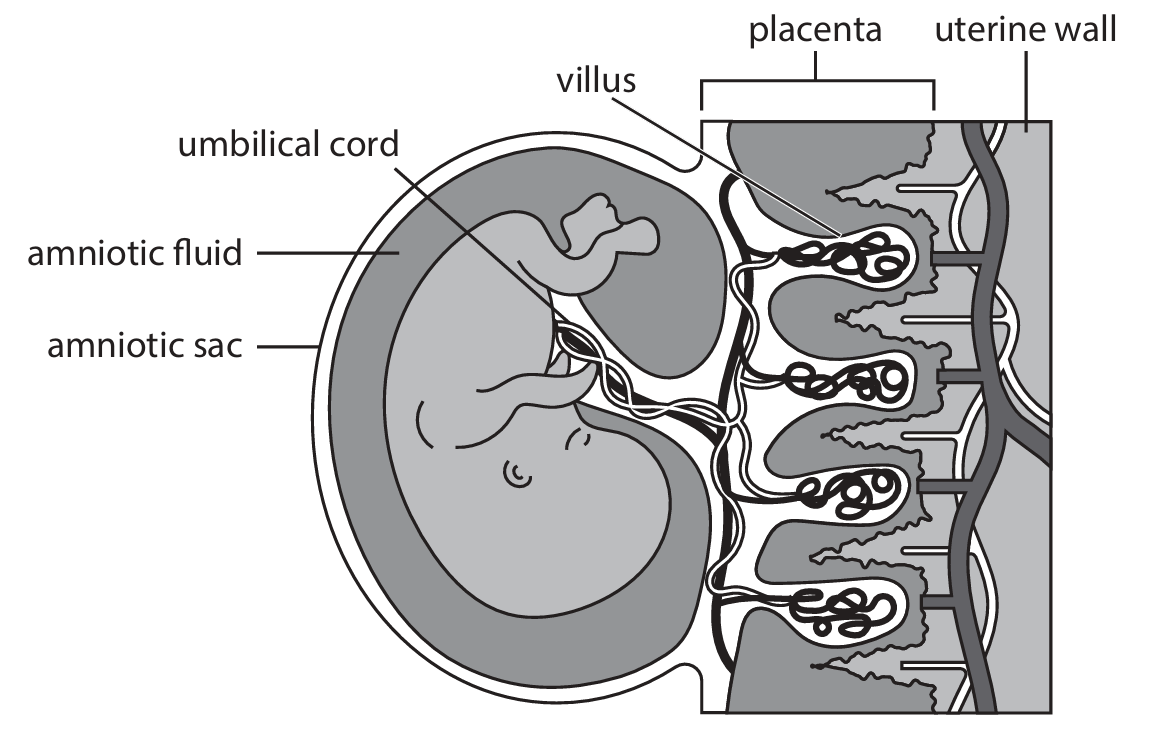
(b) The diagram shows a fetus developing in a uterus.

Explain how the amniotic fluid and placenta enable the safe growth of the fetus.

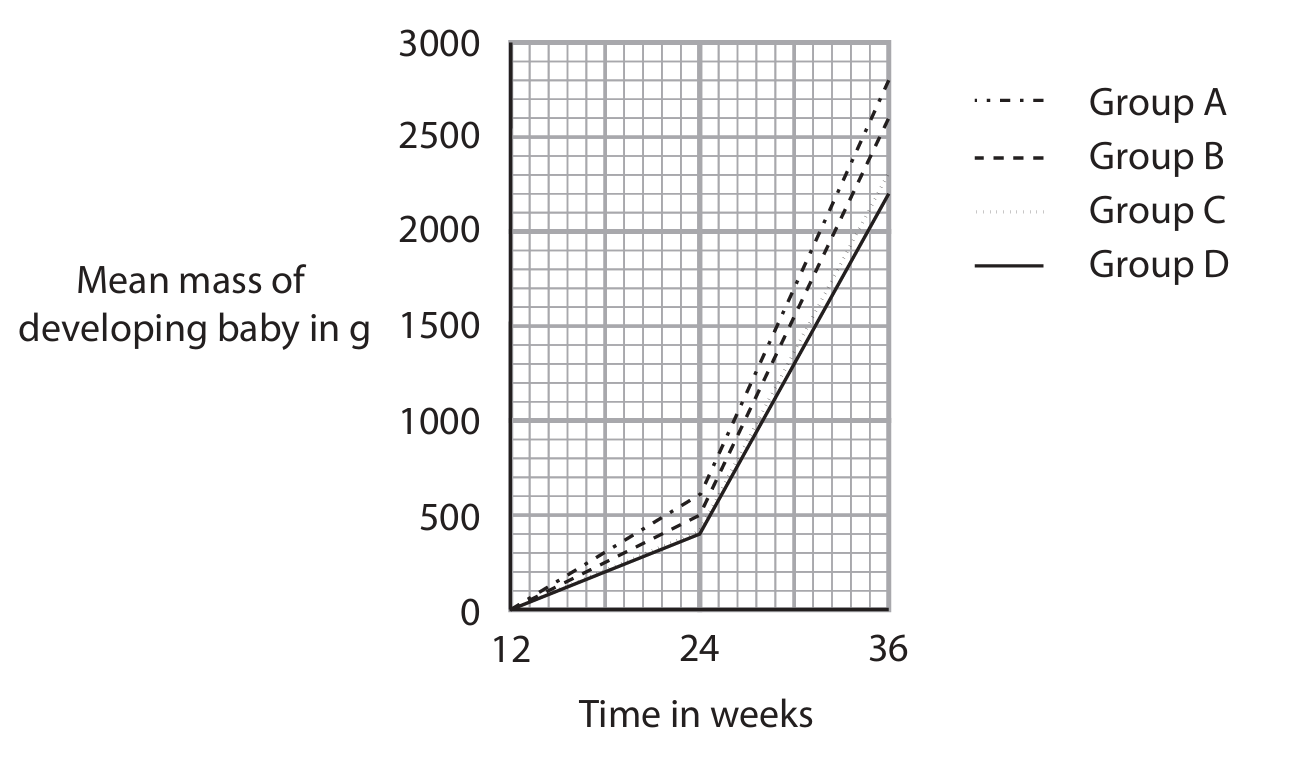
(c) Scientists investigated the effects of tobacco smoking and taking mineral ion supplements on the growth of developing babies during pregnancy.

The scientists looked at four groups of mothers.

  • Group A non-smokers taking mineral ion supplements
  • Group B non-smokers not taking mineral ion supplements
  • Group C smokers taking mineral ion supplements
  • Group D smokers not taking mineral ion supplements

The graph shows the mean masses of developing babies at 12 weeks of pregnancy, at 24 weeks of pregnancy and at birth (36 weeks).

(i) Calculate the percentage difference at 36 weeks of the mean mass of babies from mothers in group A compared with the mean mass of babies from mothers in group D.
Give your answer to the nearest whole number.

(ii) Comment on the effect of smoking and the effect of taking mineral ion supplements on the growth of babies. Use the graph and your own knowledge to help your answer.

Most-appropriate topic codes (Pearson Edexcel IGCSE Biology):

3(a): Reproduction (Humans) — parts (a)(i), (a)(ii)
3(a): Reproduction (Humans) — part (b)
2(e): Nutrition (Humans) — part (c)(ii) – mineral function
2(g): Gas exchange (Humans) — part (c)(ii) – smoking effects
Mathematical skills — part (c)(i)
▶️ Answer/Explanation
Solution

(a)(i) A (W) — the pituitary gland.
B is incorrect as X (the pancreas) does not release LH.
C is incorrect as Y (the adrenal) does not release LH.
D is incorrect as Z (the ovary) does not release LH.

(a)(ii) A description that makes reference to the following:
• ovulation / release of egg / oocyte (1)
• (stimulates) progesterone release (1)
Accept: stimulates oestrogen release.

(b) An explanation that makes reference to the following:
• (amniotic fluid) prevents physical damage / bumps / equalizes pressure / acts as a shock absorber / cushioning (1)
and two from:
• (placenta) allows diffusion / active transport (1)
• gives the fetus amino acids / glucose / oxygen / antibodies / vitamins / minerals (1)
• removes from the fetus urea / carbon dioxide (1)
• makes sure mother’s and baby’s blood do not mix (1)

(c)(i) • 27% (3 marks)
Working:
Mass difference = \(2800 – 2200 = 600\) g
Percentage difference = \(\frac{600}{2200} \times 100 = 27.27…\%\) ≈ 27% (nearest whole number)
One mark for (2800 – 2200) or 600; one mark for division by 2200; one mark for correct answer.

(c)(ii) An answer that makes reference to four of the following points (4 marks):
1. smoking results in slower growth / lower mass (1)
2. taking minerals results in faster growth / higher mass (1)
3. biggest increase in mass / fastest growth is non-smokers with minerals (Group A) (1)
4. smoking has a bigger (negative) impact than not taking mineral supplements (1)
5. carbon monoxide (in smoke) binds to haemoglobin / reduces oxygen transport (1)
6. less respiration / energy release for growth (1)
7. minerals (e.g., iron) are needed for haemoglobin / red blood cells (1)
8. minerals (e.g., calcium) are needed for bone growth (1)
Accept converse statements for points 1-3.
Question

Cells use genetic information when carrying out protein synthesis.

(a) Give the difference between a gene and a genome.

(b) Describe the process of transcription. 

(c) Explain why a change in the sequence of bases in the DNA does not always result in a change in enzyme function. 

(d) Some characteristics are determined only by the genes, and some are determined by a combination of the genes and the environment. Give an example of each type of characteristic in humans. 

  • determined only by the genes
  • determined by the genes and the environment

Most-appropriate topic codes (Edexcel IGCSE Biology):

3(b): Inheritance — parts (a), (c), (d) [genes, DNA, variation, mutations]
3(b): Protein synthesis — part (b) [transcription]
2(c): Biological molecules (Enzymes) — part (c) [effect on enzyme function]
3(a): Reproduction and inheritance — implicit link to genetic determination of characteristics
▶️ Answer/Explanation
Solution

(a) A gene is a section of DNA that codes for a single polypeptide/protein, whereas a genome includes all of the DNA/all of the genes in an organism. (Requires both parts for the mark.)

(b) A description that makes reference to four of the following points (1 mark each):

  1. DNA unzips/unwinds.
  2. Involves mRNA (messenger RNA).
  3. mRNA copies the code/sequence of the DNA strand (DNA acts as a template).
  4. Process occurs in the nucleus / mRNA leaves the nucleus.
  5. mRNA goes to a ribosome.

(c) An explanation that makes reference to three of the following points (1 mark each):

  1. Some different base sequences/codons may code for the same amino acid (degeneracy of genetic code).
  2. No change in the protein/enzyme is produced.
  3. The mutation may not affect the bonding/3D shape/active site of the enzyme.
  4. The allele may be recessive and therefore not expressed.
  5. The change may be in non-coding DNA.

(d) An answer that makes reference to the following (1 mark each):

  • Determined only by genes: Blood group, eye colour, iris colour. (Examples of single-gene traits.)
  • Determined by genes and environment: Mass, height, skin colour, body shape, hair colour, behavioural traits.
Question

The passage gives information about cloning.

Complete the passage by writing a suitable word in each blank space.

Animals such as sheep have been cloned.

Cloning involves taking the ______ out of a diploid body cell from the sheep that is to be cloned. This structure is then placed into an ______ cell that has had its ______ removed.

Electricity is used to help the cell to ______ by mitosis.

This then develops into an ______ which is then placed into the ______ of an unrelated female.

This female is known as the ______ mother.

Most-appropriate topic codes (Edexcel IGCSE Biology):

5(d): Cloning — full question
3(a): Reproduction — reference to embryo development and implantation
2(b): Cell structure — reference to nucleus and cell division (mitosis)
▶️ Answer/Explanation
Solution

Completed Passage:

Animals such as sheep have been cloned.

Cloning involves taking the nucleus out of a diploid body cell from the sheep that is to be cloned. This structure is then placed into an egg cell that has had its nucleus removed.

Electricity is used to help the cell to divide by mitosis.

This then develops into an embryo which is then placed into the uterus of an unrelated female.

This female is known as the surrogate mother.

Detailed Explanation:

The process described is somatic cell nuclear transfer (SCNT), a common method used in animal cloning, famously used to create Dolly the sheep.

  1. Nucleus: The nucleus is removed from a regular body (somatic) cell of the animal to be cloned. This nucleus contains the full set of genetic information (DNA).
  2. Egg: An unfertilized egg cell (oocyte) is taken from a female donor.
  3. Nucleus: The nucleus of this egg cell is carefully removed, effectively enucleating it. This empties the cell of its genetic material.
  4. Divide: The enucleated egg cell and the nucleus from the body cell are fused together, often using a small electric shock. This shock also stimulates the new cell to begin dividing by mitosis, the process of cell division.
  5. Embryo: After a few divisions, the dividing cell mass forms an early-stage embryo.
  6. Uterus: This developing embryo is then implanted into the uterus (womb) of a female animal.
  7. Surrogate: This female, who will carry the pregnancy to term and give birth, is called the surrogate mother. The resulting offspring will be a genetic copy (clone) of the animal that donated the original body cell nucleus, not the surrogate.
Question

The following passage contains information about using micropropagation to produce plants.

Complete the passage by writing a suitable word in each blank space. (6)

Micropropagation uses small fragments of plants which are regrown into whole plants. These fragments of plants are known as __.

The surface of each fragment is sterilised to prevent growth of __. The fragments are placed in a growth medium. The growth medium contains agar and a source of energy such as __.

This method is able to produce large quantities of genetically identical plants called __.

One advantage is that micropropagation is quicker than __ reproduction, which involves flower and seed production. Another advantage of micropropagation is that plants can be produced __ the year.

Most-appropriate topic codes (Edexcel IGCSE Biology):

5(d): Cloning — micropropagation, explants, cloning
3(a): Reproduction — sexual vs asexual reproduction
5(a): Food production — growth media, sterilisation
▶️ Answer/Explanation
Solution

Completed passage:

Micropropagation uses small fragments of plants which are regrown into whole plants. These fragments of plants are known as explants.

The surface of each fragment is sterilised to prevent growth of microorganisms. The fragments are placed in a growth medium. The growth medium contains agar and a source of energy such as sugar.

This method is able to produce large quantities of genetically identical plants called clones.

One advantage is that micropropagation is quicker than sexual reproduction, which involves flower and seed production. Another advantage of micropropagation is that plants can be produced throughout the year.

Detailed Explanation:

Explants are small pieces of plant tissue (such as shoot tips, leaves, or stem segments) that are used in micropropagation. These explants are sterilized to eliminate any microorganisms (like bacteria or fungi) that could contaminate the culture and hinder plant growth. The growth medium contains agar to provide a solid surface and sugar (usually sucrose) as an energy source since the explants may not be able to photosynthesize effectively initially.

Micropropagation produces clones, which are genetically identical plants. This ensures uniformity in characteristics like growth rate, flower color, or fruit quality. Compared to sexual reproduction (which involves pollination, seed formation, and germination), micropropagation is faster because it bypasses these stages and allows for rapid multiplication. Additionally, micropropagation can be done throughout the year under controlled laboratory conditions, independent of seasonal changes that affect traditional planting.

Question

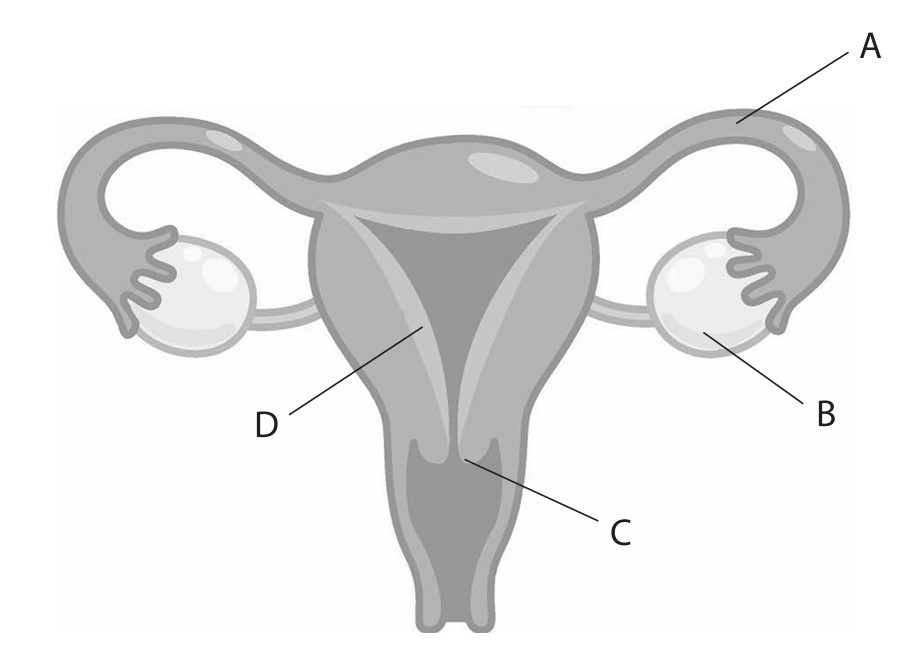
The diagram shows part of the female reproductive system with some structures labelled.

(a) Name the structures labelled A, B and C.

(b) Describe the role of structure D in reproduction.

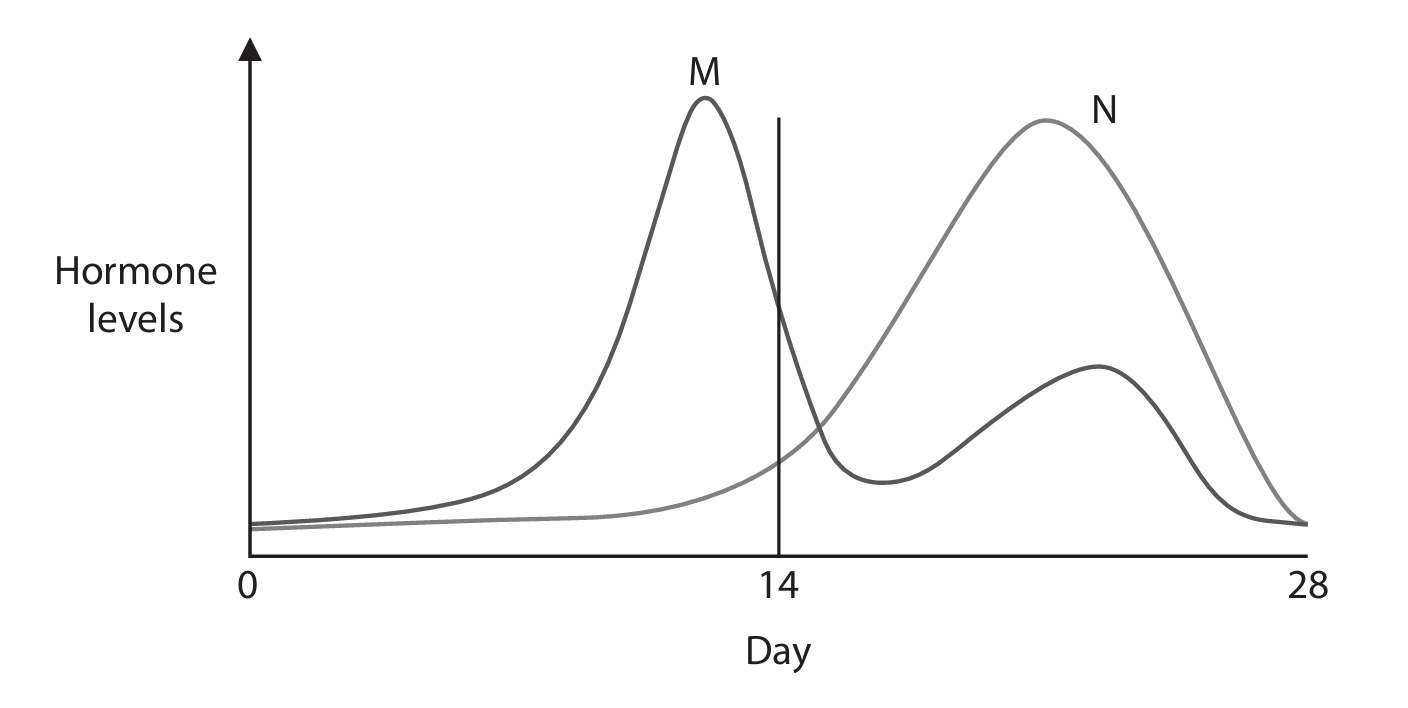
(c) The graph shows the changes in the levels of hormones released from structure B during one menstrual cycle.

(i) Explain the importance of the changes in hormone M and hormone N during the menstrual cycle.

(ii) Other hormones are involved in the menstrual cycle. Describe the role of one other named hormone in the menstrual cycle.

Most-appropriate topic codes (Edexcel IGCSE Biology):

3(a): Reproduction — parts (a), (b)
3(a): Human reproduction — parts (a), (b)
3(a): Menstrual cycle and hormones — parts (c)(i), (c)(ii)
2(j): Co-ordination and response — Hormonal control — part (c)(ii)
▶️ Answer/Explanation
Solution

(a)

A. Oviduct (or Fallopian tube) (1)

B. Ovary (1)

C. Cervix (1)

Explanation: The diagram shows key parts of the female reproductive system. Label A points to the tube connecting the ovary to the uterus, which is the oviduct (or Fallopian tube). Label B points to the organ that produces eggs, which is the ovary. Label C points to the narrow opening at the base of the uterus, which is the cervix.

(b) Structure D is the uterus (womb). Its roles include:

  • It is the site of implantation of the embryo. (1)
  • The placenta grows in the uterus, which provides nutrition to and removes waste from the developing embryo/foetus. (1)

Explanation: The uterus is a muscular organ. After an egg is fertilised, the resulting embryo travels to the uterus and implants into its thickened lining (endometrium). The uterus then supports the developing baby throughout pregnancy. The placenta, which forms on the uterine wall, is crucial for exchanging oxygen, nutrients, and waste between the mother’s blood and the baby’s blood.

(c)(i) From the typical patterns on the graph:

  • Hormone M is oestrogen. (1)
  • Hormone N is progesterone. (1)

The importance of their changes is:

  • Oestrogen (M) increases in the first half of the cycle (before day 14). It repairs and builds up the uterine lining (endometrium) after menstruation, preparing it for a potential pregnancy. It also stimulates the release of LH which triggers ovulation. (1)
  • Progesterone (N) increases significantly after ovulation (after day 14). Its main role is to maintain the thickened uterine lining, making it suitable for the implantation of a fertilised egg. It also inhibits further ovulation. If pregnancy does not occur, its level falls, leading to the breakdown of the lining and menstruation. (1)

Explanation: The menstrual cycle is precisely controlled by hormones. Oestrogen dominates the follicular phase (first half), preparing the body for ovulation and pregnancy. Progesterone dominates the luteal phase (second half), maintaining the conditions needed for a potential pregnancy. The drop in progesterone is the direct signal for the period to start if no embryo implants.

(c)(ii) Another hormone is FSH (Follicle-Stimulating Hormone). (1)

  • FSH is released by the pituitary gland. It stimulates the development of follicles (which contain eggs) in the ovary. It also stimulates the ovaries to produce oestrogen. (1)

OR Another hormone is LH (Luteinizing Hormone). (1)

  • LH is also released by the pituitary gland. A surge in LH around the middle of the cycle triggers ovulation – the release of a mature egg from the ovary. After ovulation, LH stimulates the remains of the follicle to develop into the corpus luteum, which produces progesterone. (1)

Explanation: FSH and LH are gonadotropins released from the brain that directly act on the ovaries. FSH kickstarts the cycle each month by causing a follicle to mature. The LH surge is the essential trigger for ovulation. These hormones work in concert with oestrogen and progesterone in a complex feedback system to regulate the cycle.
Question

Hormones control the menstrual cycle.

(a) (i) Name the gland that produces FSH.

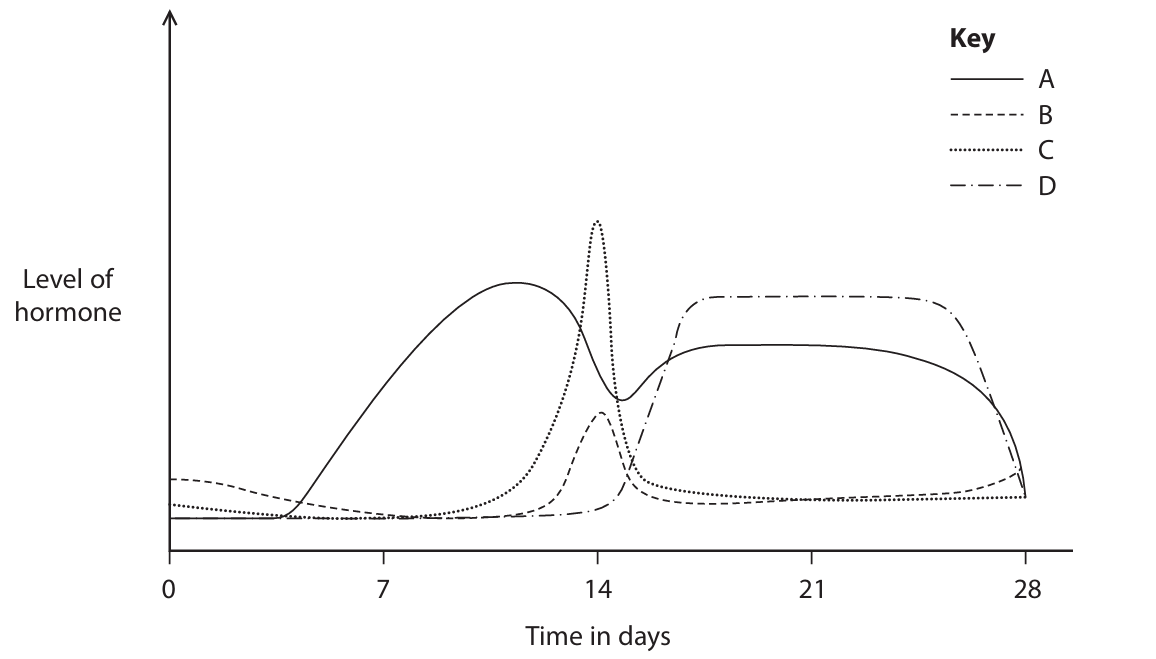
(a) (ii) The diagram shows the changes in four hormones during the human menstrual cycle.

Which line represents the hormone progesterone?

  • A
  • B
  • C
  • D

(a) (iii) Describe the roles of FSH and LH in the menstrual cycle.

(b) Reproductive hormones can be used as contraceptives to prevent pregnancy.

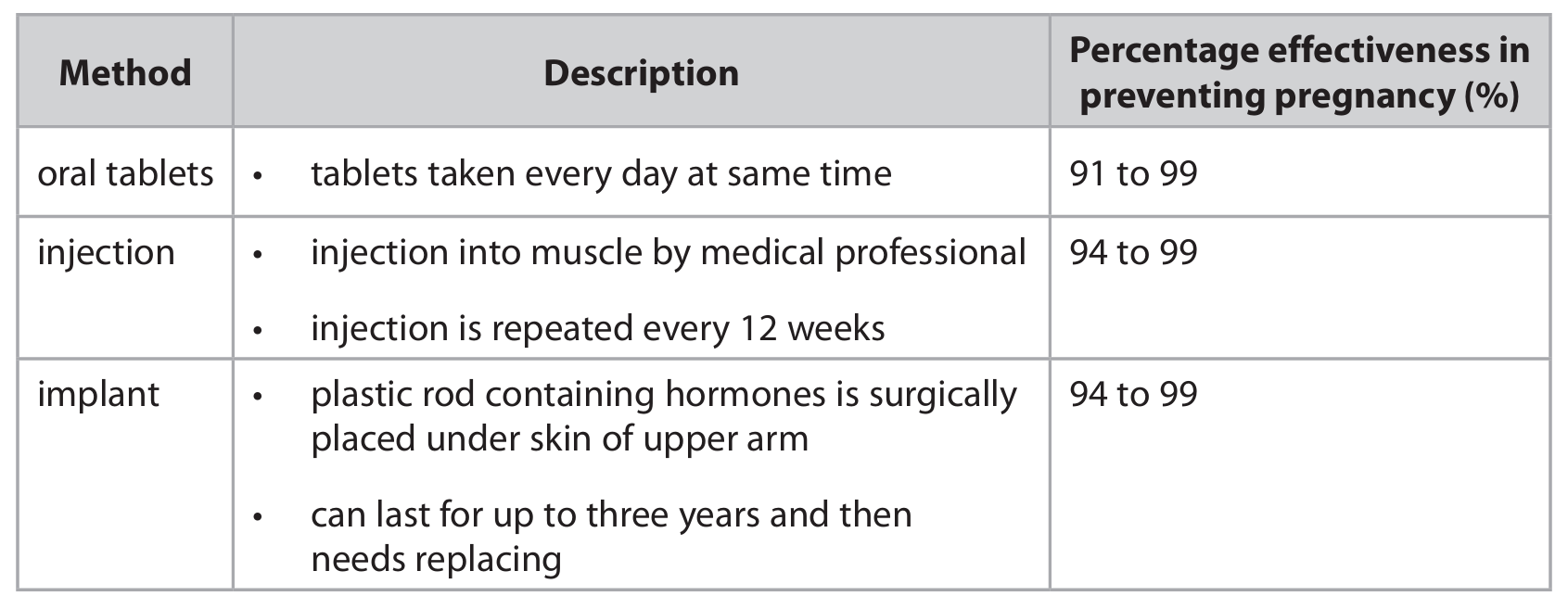
The table gives information about three different methods of hormonal contraception.

Discuss the advantages and disadvantages of the three methods of contraception shown in the table.

Most-appropriate topic codes (Edexcel IGCSE Biology):

3(a): Reproduction — parts (a)(i), (a)(ii), (a)(iii), (b)
2(j): Co-ordination and response (hormonal control) — parts (a)(i), (a)(ii), (a)(iii), (b)
▶️ Answer/Explanation
Solution

Solution

(a)(i) Pituitary (gland)

Explanation: Follicle-Stimulating Hormone (FSH) is produced and secreted by the pituitary gland, a small gland located at the base of the brain. The pituitary gland is often called the ‘master gland’ because it controls many other hormone glands in the body.

(a)(ii) D

Explanation: Progesterone is a hormone that is crucial in the second half of the menstrual cycle, after ovulation. Its main role is to prepare the lining of the uterus (endometrium) to receive and support a fertilized egg. If pregnancy does not occur, progesterone levels fall, leading to menstruation. On the graph, line D shows a hormone that peaks in the middle of the cycle and remains high for the second half before dropping sharply, which matches the pattern of progesterone. Line A represents oestrogen (peaks just before ovulation), line B represents LH (sharp mid-cycle peak triggering ovulation), and line C represents FSH (rises in the first half to stimulate follicle development).

(a)(iii)

FSH:

  • Stimulates the growth and development of egg-containing follicles in the ovaries.
  • Triggers the ovaries to produce and release the hormone oestrogen.

LH:

  • Triggers ovulation – the release of a mature egg from the ovary around the middle of the menstrual cycle.
  • Stimulates the remains of the follicle in the ovary (after the egg is released) to develop into the corpus luteum, which then produces progesterone.

Explanation: FSH (Follicle-Stimulating Hormone) and LH (Luteinizing Hormone) work in a coordinated way to regulate the menstrual cycle. FSH kickstarts the cycle by promoting the growth of follicles. As these follicles mature under the influence of FSH, they secrete increasing amounts of oestrogen. This rising oestrogen level eventually triggers a surge in LH. This LH surge is the direct cause of ovulation. After ovulation, LH stimulates the transformation of the ruptured follicle into the corpus luteum, which secretes progesterone to maintain the uterine lining.

(b)

Overall Comparison:

  • Oral tablets have a slightly wider range of effectiveness (91-99%) compared to injections and implants (94-99%), suggesting they might be slightly less reliable on average or more dependent on correct use.
  • A significant disadvantage common to all these hormonal methods is that they offer no protection against sexually transmitted infections (STIs), including HIV.
  • All methods can also potentially cause side effects, which vary from person to person.

Oral Tablets:

Advantages:

  • They are easy to use and do not require a medical procedure for each dose.
  • They are a good option for people who are afraid of needles.
  • It is relatively easy to stop taking them if someone changes their mind and wants to try to conceive, allowing the menstrual cycle to return to normal quickly.

Disadvantages:

  • They must be taken at the same time every day without fail; forgetting a pill can reduce its effectiveness significantly.
  • Their effectiveness can be reduced by vomiting, diarrhoea, or by taking certain other medications.

Injection:

Advantages:

  • It is long-lasting (effective for 12 weeks per dose), so you don’t need to remember to take a pill daily.
  • You cannot forget to take it once it has been administered.

Disadvantages:

  • It must be administered by a healthcare professional, requiring regular clinic visits.
  • The injection itself can be painful, and some people have a fear of needles.
  • After stopping the injections, it can take a longer time for fertility to return to normal compared to stopping the pill.

Implant:

Advantages:

  • It is the longest-lasting method (up to 3 years), requiring very little ongoing effort after insertion.
  • Like the injection, you cannot forget to use it.
  • It is highly effective and can be ideal for people who have limited access to healthcare facilities, as it only needs attention every three years.

Disadvantages:

  • Insertion and removal are minor surgical procedures that must be performed by a trained healthcare professional.
  • The procedure involves minor risks like infection, pain, or scarring at the implant site.
  • It can be less easy to reverse quickly if someone changes their mind about wanting to conceive, as it requires a removal procedure.

Explanation: The choice of contraceptive method is highly personal and depends on an individual’s lifestyle, ability to adhere to a schedule, access to healthcare, fear of medical procedures, and future family planning goals. Each method has a trade-off between convenience, duration of action, and the level of medical intervention required.
Question

A teacher carries out a demonstration to show the effect of different concentrations of salt solution on red blood cells.

This is the teacher’s method.

  • dilute a sample of blood using a salt solution that has the same concentration as blood plasma
  • place 1 cm\(^3\) of the diluted blood into each of three test tubes labelled A, B and C
  • add 10 cm\(^3\) of water to tube A
  • add 10 cm\(^3\) of 1% sodium chloride solution to tube B
  • add 10 cm\(^3\) of 5% sodium chloride solution to tube C
  • leave each tube for 5 minutes
  • compare the cloudiness of the solutions in the three test tubes
  • take a drop of liquid from each tube and put on separate microscope slides
  • observe each slide under a microscope

(a) State the independent variable in this investigation.

(b) Give one variable that the teacher controls in this investigation.

(c) After 5 minutes, these are the teacher’s observations.

  • tube A – a clear red solution
  • tube B – a cloudy red suspension
  • tube C – a cloudy red suspension

(i) Explain the differences in the teacher’s observations.

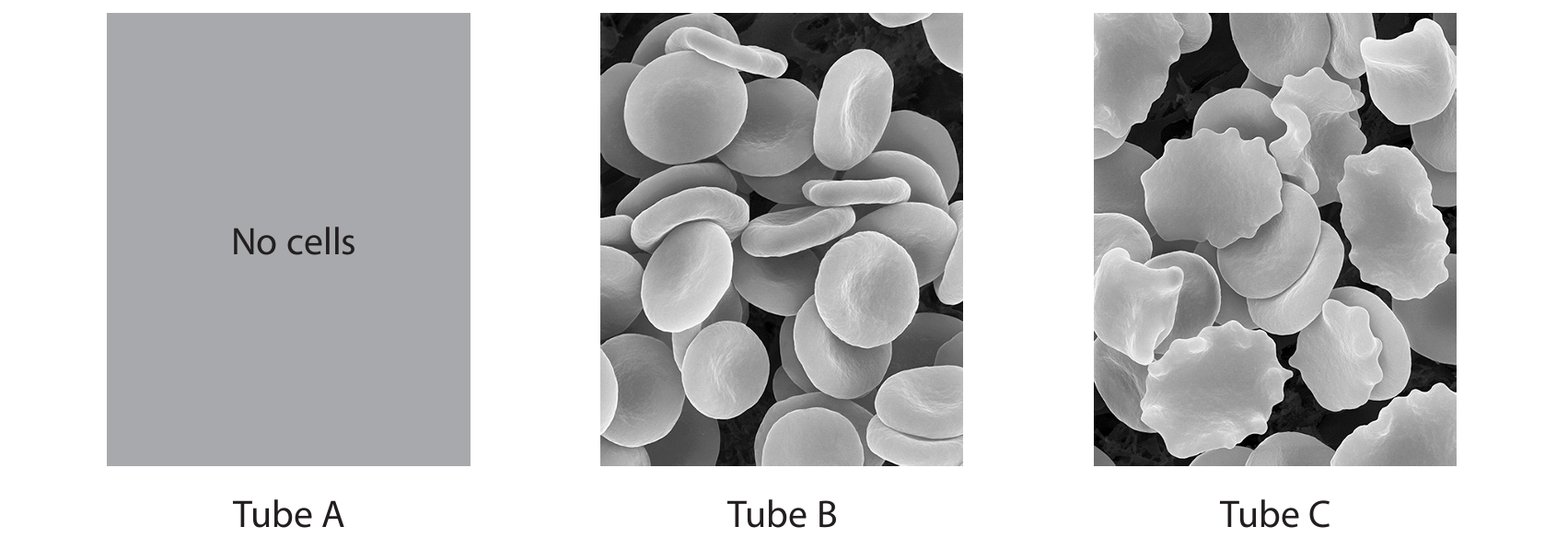
(ii) When the teacher looks down a microscope for cells on each slide, these are the teacher’s observations.

  • slide from tube A – no cells are seen
  • slide from tube B – normal biconcave red cells are seen
  • slide from tube C – red cells are seen but the cells have shrunken edges

The photographs show the teacher’s observations.

Explain the differences between the teacher’s observations of the slides from each tube. (2)

(d) Blood samples can be separated into different layers using a centrifuge.

This is a machine that spins blood at a high speed.
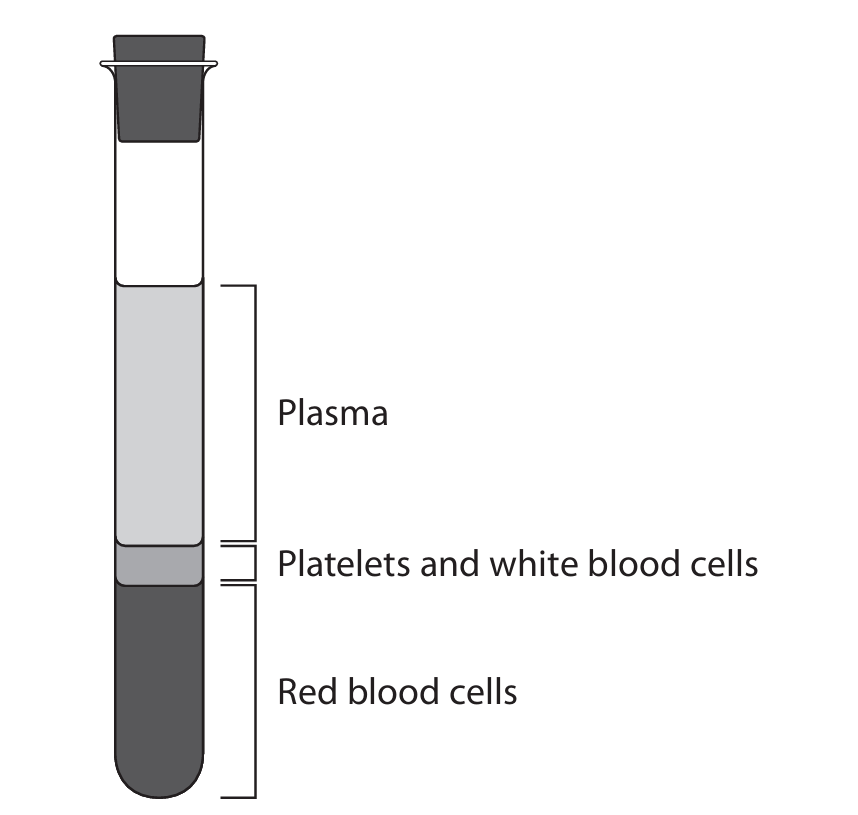
A new sample of blood is shown after it has been spun in a centrifuge.

Describe how the blood in tubes A, B and C from the teacher’s demonstration would look after they had been spun in a centrifuge.

Most-appropriate topic codes (Edexcel IGCSE Biology):

2(d): Movement of substances into and out of cells — parts (c)(i), (c)(ii), (d)
2(b): Cell structure — parts (a), (b), (c)(ii)
2(h): Transport — part (d)
3(a): Reproduction — indirect link to cell integrity
▶️ Answer/Explanation
Solution

(a) Salt concentration / concentration of salt solution / sodium chloride concentration / percentage sodium chloride / water potential of solution

Explanation: The independent variable is the factor that is deliberately changed by the investigator. In this experiment, the teacher is testing different concentrations of salt solution (water, 1%, and 5% sodium chloride) to see their effect on the red blood cells.

(b) Volume of (diluted) blood / volume of solution added / time solution left for / concentration of (diluted) blood sample

Explanation: A controlled variable is one that is kept constant to ensure a fair test. The teacher controls several factors, such as using the same volume of diluted blood in each tube (1 cm³), adding the same volume of different solutions (10 cm³), and leaving all tubes for the same duration (5 minutes).

(c)(i) In tube A (water), the cells burst (lyse) and release haemoglobin, creating a clear red solution. In tubes B and C (salt solutions), the cells remain mostly intact, creating a cloudy suspension.

Explanation: The cloudiness indicates the presence of intact cells scattering light. In tube A, distilled water is hypotonic relative to the red blood cells. Water enters the cells by osmosis, causing them to swell and burst (haemolysis), releasing haemoglobin into the solution and making it clear. In tubes B and C, the salt solutions are closer to isotonic (B) or hypertonic (C), so the cells do not burst and remain in suspension, making the solution cloudy.

(c)(ii) In tube A (water), water enters the red blood cells by osmosis, causing them to swell and burst, so no intact cells are seen. In tube B (1% salt), the solution is isotonic, so water enters and leaves at equal rates, and normal biconcave cells are seen. In tube C (5% salt), the solution is hypertonic, so water leaves the cells by osmosis, causing them to shrink and develop cremated (shrunken) edges.

Explanation: The differences are due to osmosis, the movement of water across the cell membrane from a region of higher water potential to a region of lower water potential. In tube A, the external water potential is higher than inside the cell, so water rushes in, bursting the cell. In tube B, the water potential is balanced, so the cell shape is maintained. In tube C, the external water potential is lower (due to high salt), so water leaves the cell, causing it to shrink.

(d) Tube A would show no red cell layer (the red color would be distributed throughout the tube). Tubes B and C would show normal layers, but the red cell layer in C might be slightly smaller.

Explanation: Centrifugation separates blood components based on density. In a normal blood sample, red blood cells form the bottom layer. In tube A, the cells have burst, so there are no intact cells to form a pellet; the haemoglobin is dissolved in the solution. In tubes B and C, the cells are intact (though shrunken in C) and will form a red cell layer at the bottom. The layer in C might be smaller if the cells have lost water and become denser.
Question

Read the passage below. Use the information in the passage and your own knowledge to answer the questions that follow.

Moving plants

Flowering plants reproduce using different methods to transfer the pollen from plant to plant. This cross-pollination enables plants to produce offspring that show genetic variation. The transfer can be done by animals such as insects or by wind.

The reliance on animals and wind for reproduction does not end with pollination. Flowering plants also need a mechanism to disperse their fruits or the seeds they contain. This seed dispersal means that seeds producing new young plants will germinate away from the parent plant.

The simplest method of seed dispersal uses gravity. The seeds are within heavy fruit, which fall from the tree when they are ripe. Although some of the fruit may roll away from the parent plant, most remain close to the parent plant.

Animal dispersal is when plants rely on animals to transport their seeds to a different area. This may be because the seeds are surrounded by a brightly-coloured and sweet-tasting fruit. Examples of this are soft fruits such as raspberry and hard fruits such as apple.

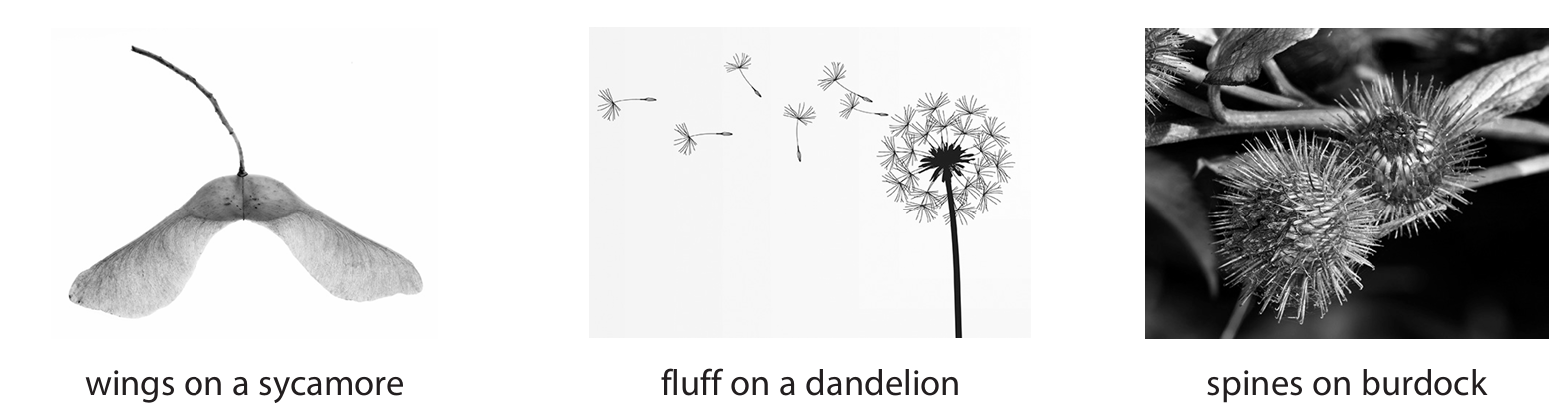
Animals may also carry seeds in a different way. Many plants produce fruits or individual seeds covered in hooks or spines that attach the seeds to the animals’ fur. The seeds are then carried away from the parent plant. Eventually, the seeds may fall off, or be rubbed off by the animal. Examples of plants using this form of dispersal are burdock and sea holly.

Some plants provide seed pods with a mechanism that ejects the seeds from the pod by force. All of these rely on the effect of evaporation of water in the seed pod, so this method of seed dispersal usually takes place in sunlight. Examples of plants using this form of dispersal are gorse bushes and lupins.

Wind is one of the main methods of seed dispersal. Some tall trees produce seed pods that have wings, which allow the seeds to travel long distances. Some seed pods have two wings such as the sycamore while others have one wing such as the ash.

There are also lightweight adaptations that help seeds to be blown by the wind. These include various sorts of fluff that increase the surface area of the seed, so that it can be picked up by the slightest breeze. Examples of plants using this form of dispersal are thistle and dandelion.

The last method uses water. Trees found on tropical beaches often have their seeds carried away by the sea. The seeds have woody, waterproof coverings enabling them to float in the water for long periods. Coconuts are a well-known example.

(a) Explain how cross-pollination can lead to an increase in genetic variation. (2)

(b) (i) Explain the advantages of the seeds germinating away from the parent plant. (3)

(ii) Give one advantage of a seed germinating close to the parent plant. (1)

(c) Explain the conditions needed for seed germination. (3)

(d) Explain why some seeds are surrounded by a brightly-coloured and sweet-tasting fruit. (2)

(e) Large numbers of tomato plants are often found growing along the sides of drains and settling beds on sewage farms. Suggest a reason for this observation. (1)

(f) Give the reason why sunlight is required for lupin seeds to be dispersed. (1)

(g) Describe an experiment you could carry out to investigate how the presence of fluff on dandelion seeds affects how fast they fall. (3)

Most-appropriate topic codes (Edexcel IGCSE Biology):

3(a): Reproduction — parts (a), (b)(i), (b)(ii), (d), (e), (f)
3(b): Inheritance — part (a)
2(e): Nutrition (Flowering plants) — part (c)
Appendix 6: Suggested practical investigations — part (g)
▶️ Answer/Explanation
Solution

(a) Cross-pollination involves the transfer of pollen from one plant to the stigma of another plant of the same species. This leads to increased genetic variation because the gametes (sex cells) come from two different parent plants, each with their own unique set of genes and alleles. When these gametes fuse during fertilization, the resulting offspring inherits a combination of genetic material from both parents, creating new genetic combinations that weren’t present in either parent alone.

(b)(i) Seeds germinating away from the parent plant have several advantages. First, there’s less competition for essential resources like light, as young plants won’t be shaded by the larger parent plant. Second, they face less competition for water and minerals from the soil, since the parent plant’s extensive root system isn’t drawing from the same immediate area. Third, being dispersed reduces the chance of all offspring being affected by local diseases, pests, or unfavorable conditions that might wipe out plants concentrated in one area.

(b)(ii) One advantage of a seed germinating close to the parent plant is that the location has already proven to be suitable for that species’ growth. The parent plant successfully grew there, indicating the soil conditions, light availability, and other environmental factors are appropriate.

(c) Seeds require three main conditions for germination. Water is essential to activate enzymes that break down stored food reserves and to soften the seed coat. Oxygen is necessary for aerobic respiration to provide energy for growth. A suitable temperature (warmth) is needed to optimize enzyme activity for the metabolic processes involved in germination.

(d) Seeds are surrounded by brightly-colored and sweet-tasting fruit to attract animals. The bright colors make the fruits easily visible, while the sweet taste (due to sugars like glucose) makes them appealing to eat. Animals consume the fruits and later excrete the seeds at different locations, effectively dispersing them.

(e) Tomato plants grow along sewage farm drains because humans eat tomatoes but don’t digest the seeds. The seeds pass through the digestive system and are egested in feces, which end up in sewage systems. When this sewage is processed, the undigested seeds can germinate in the nutrient-rich environment.

(f) Sunlight is required for lupin seed dispersal because it provides heat that causes water in the seed pods to evaporate. This evaporation builds up pressure inside the pods until they suddenly split open, forcefully ejecting the seeds away from the parent plant.

(g) To investigate how fluff affects dandelion seed fall rate: First, obtain dandelion seeds with fluff and carefully remove the fluff from some seeds to create two groups (with fluff and without fluff). Second, drop seeds from both groups from the same height (e.g., 2 meters) and use a stopwatch to time how long each takes to reach the ground. Third, repeat this process multiple times with different seeds from each group to calculate average fall times, ensuring you use seeds of the same mass/species for fair comparison.
Question

Scientists can now produce farm animals by cloning. Since Dolly the sheep was born in 1996 many different species have been cloned.

The form of cloning used is called somatic cell cloning.

The first ever clone of a champion racehorse was announced in 2005 in Italy.

The foal was cloned from Pieraz, a world champion in long-distance horse races.

(a) Describe the stages scientists could use to clone a male horse.

(b) Pieraz was castrated (had his testicles removed) at a young age.

Explain why this stopped him reproducing normally but did not stop him being used to produce a foal by cloning.

(c) Suggest why horseracing does not allow the use of non-natural methods of breeding, including cloning.

(d) State one difference between cloning an organism and genetically modifying an organism.

Most-appropriate topic codes (Edexcel IGCSE Biology):

5(d): Cloning — parts (a), (b), (c), (d)
5(c): Genetic modification (genetic engineering) — part (d)
3(a): Reproduction — part (b)
▶️ Answer/Explanation
Solution

(a)

Answer: The stages for cloning a male horse involve:

  1. Taking a nucleus from a body (somatic) cell of the male horse.
  2. Inserting this nucleus into an enucleated egg cell (an egg cell that has had its nucleus removed).
  3. Applying an electric shock to stimulate the egg to start dividing.
  4. Allowing the cell to undergo mitosis (cell division) to form an embryo.
  5. Implanting the developing embryo into the uterus (womb) of a surrogate mother horse.

Explanation: This process is known as somatic cell nuclear transfer (SCNT). The key idea is that the genetic material comes entirely from the body cell of the male horse to be cloned, not from the fusion of sperm and egg. The electric shock mimics the natural stimulus of fertilization, triggering the egg to begin development. The surrogate mother provides the environment for the embryo to grow into a foal, which will be a genetic clone of the original male horse.

(b)

Answer: Castration stopped normal reproduction because:

  • It prevented the production of sperm (gametes).
  • Therefore, natural fertilization and impregnation of a female horse could not occur.

However, cloning was still possible because:

  • Cloning uses a body (somatic) cell, which contains the full set of chromosomes (DNA). Since Pieraz’s body cells still contained all his genetic information, a nucleus from one of these cells could be used to create a clone.

Explanation: Normal sexual reproduction requires gametes (sperm and egg). Castration removes the testes, the organs that produce sperm, thus halting this process. Cloning, on the other hand, bypasses the need for gametes altogether. It relies on taking the nucleus from any diploid body cell (like a skin cell), which holds the complete genetic blueprint of the individual. This nucleus is then placed into an empty egg cell to create an embryo that is genetically identical to the original animal.

(c)

Answer: Possible reasons include:

  • To maintain the value and uniqueness of naturally bred stallions (sires).
  • To prevent inbreeding and maintain genetic diversity within the horse population, which helps prevent genetic diseases.
  • To ensure fair competition and prevent cheating.
  • Due to ethical concerns about the use of cloning technology.

Explanation: Horseracing authorities often have strict rules to preserve the integrity of the sport and the breed. If champion horses could be easily cloned, it could devalue the achievements of individual, naturally bred horses. Furthermore, a population with low genetic diversity is more vulnerable to diseases. Allowing cloning could lead to a situation where many racehorses are genetically identical, which is undesirable for the long-term health of the breed. There are also fairness concerns, as cloning could be seen as an unnatural advantage.

(d)

Answer: Cloning produces organisms that are genetically identical to the original, whereas genetic modification produces organisms with altered DNA (new genes are introduced).

Explanation: The fundamental difference lies in the genetic outcome. Cloning is a form of asexual reproduction that results in an exact genetic copy (a clone) of the parent organism. No new genetic material is added. In contrast, genetic modification (GM) involves deliberately altering the organism’s genome, often by inserting genes from another species, to give the organism a new trait (like disease resistance or faster growth). A clone has the same genotype as its parent, while a genetically modified organism (GMO) has a new, different genotype.

Question

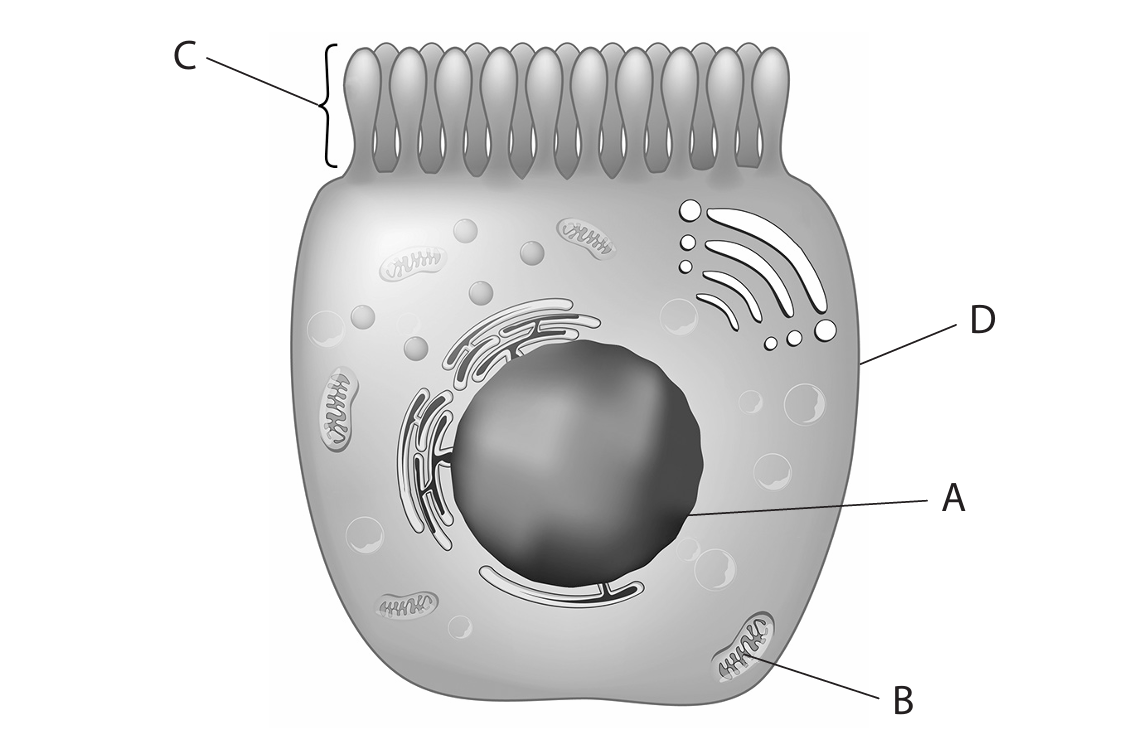
The diagram shows a cell found in the lining of the human small intestine.

(a) (i) Which of the labelled structures is a microvillus?

  • A
  • B
  • C
  • D

(ii) Which of the labelled structures produces ATP?

  • A
  • B
  • C
  • D

(b) These cells form the lining of the small intestine.
Explain how the structure of the small intestine is adapted for absorption.

(c) Cells in the human placenta also have microvilli.
Describe the role of the human placenta.

Most-appropriate topic codes (Edexcel IGCSE Biology):

2(b): Cell structure — parts (a)(i), (a)(ii)
2(f): Respiration — part (a)(ii)
2(e): Nutrition (Humans) — part (b)
3(a): Reproduction (Humans) — part (c)
▶️ Answer/Explanation
Solution

(a) (i) C

Explanation: Microvilli are tiny, finger-like projections on the surface of some cells, especially those involved in absorption, like the cells lining the small intestine. They greatly increase the surface area of the cell membrane, which allows for more efficient absorption of nutrients. In the diagram, structure C is correctly identified as the microvillus.

(a) (ii) B

Explanation: ATP (Adenosine Triphosphate) is the main energy currency of the cell, produced during cellular respiration. The organelles responsible for this process are the mitochondria. In the diagram, structure B represents a mitochondrion, which is often described as the “powerhouse” of the cell because it generates most of the cell’s supply of ATP.

(b) The small intestine has several structural adaptations for efficient absorption:

  • It is very long, providing a large surface area over which absorption can occur.
  • The inner lining is folded, and these folds are covered in tiny finger-like projections called villi. The cells on the surface of the villi themselves have microvilli, forming a “brush border”. Both villi and microvilli massively increase the surface area for absorption.
  • Each villus contains a network of blood capillaries that absorb and transport products of digestion like glucose and amino acids. Good blood flow in these capillaries helps maintain a steep concentration gradient for rapid diffusion.
  • Each villus also contains a lacteal, which is a lymphatic vessel that absorbs fatty acids and glycerol.
  • The walls of the villi are only one cell thick, creating a very short diffusion distance for nutrients to pass from the gut into the blood.

(c) The human placenta is a vital organ that forms during pregnancy and has several key roles:

  • It allows for the exchange of materials between the mother’s blood and the foetus’s blood without the two blood supplies mixing. Oxygen and digested food nutrients (like glucose, amino acids, and minerals) diffuse from the mother’s blood into the foetal blood.
  • It removes waste products from the foetus, such as carbon dioxide and urea, which then pass into the mother’s blood for her to excrete.
  • The placenta acts as a barrier against some harmful substances, like certain bacteria, although some viruses and drugs can cross it.
  • It produces important hormones, such as progesterone, which helps to maintain the pregnancy.
  • Towards the end of pregnancy, the placenta passes antibodies from the mother to the foetus, providing the baby with passive immunity for the first few months after birth.
Question

Many mammals have been cloned since Dolly the sheep was produced by cloning in 1996.

(a) It took 277 attempts at cloning to produce one sheep.

Calculate how many attempts would have been needed to produce 50 cloned sheep in 1996.

Assume the same number of attempts are needed to produce each sheep as were needed to produce Dolly.

(b) Describe the stages used to clone a male dog.

(c) Pet owners can now pay scientists to use cells from their pet to produce a clone.

The process costs $50 000 for a dog and $25 000 for a cat.

Cloning is not always successful and as with Dolly, many attempts may need to be made to produce one clone.

Many scientists disagree with this use of cloning.

Comment on whether cloning of pets is a good idea.

Use the information in this question and your own knowledge to support your answer.

Most-appropriate topic codes (Edexcel IGCSE Biology):

5(d): Cloning — parts (a), (b), (c)
Appendix 4: Mathematical skills — part (a)
2(b): Cell structure — part (b)
3(a): Reproduction — part (b)
▶️ Answer/Explanation
Solution

(a) 13 850

Explanation: The problem states that it took 277 attempts to produce one successful clone (Dolly the sheep). To calculate the number of attempts needed for 50 cloned sheep, we simply multiply the number of attempts per sheep by the total number of sheep desired. Therefore, the calculation is 277 attempts/sheep × 50 sheep = 13,850 total attempts. This assumes the same low success rate per clone as experienced with Dolly.

(b)

Explanation: The process of cloning a male dog, which is a mammal, follows the same somatic cell nuclear transfer (SCNT) technique used for Dolly the sheep. The stages are:

  1. A somatic (body) cell, which is a diploid cell, is taken from the male dog that is to be cloned. This cell contains the full set of genetic information from the donor.
  2. An egg cell (oocyte) is taken from a female dog. The nucleus of this egg cell is carefully removed, creating an “enucleated” egg cell, which is now empty of its own genetic material.
  3. The nucleus from the male dog’s somatic cell is inserted into the enucleated egg cell.
  4. An electric shock is applied to the combined cell. This shock serves two purposes: it fuses the donor nucleus with the empty egg cell, and it stimulates the cell to start dividing as if it were a fertilized egg, triggering mitosis.
  5. The newly formed embryo, which is a clone of the original male dog, is then implanted into the uterus (womb) of a surrogate mother dog.
  6. The surrogate mother carries the pregnancy to term, and if successful, gives birth to a puppy that is a genetic clone of the original male donor dog.

(c)

Explanation: The issue of pet cloning is complex, with both potential benefits and significant drawbacks.

Arguments in favor of pet cloning:

  • It can produce a genetically identical pet. For an owner grieving the loss of a beloved animal, the prospect of having a new pet with the same genetic makeup can be very appealing. The clone may share a very similar physical appearance and some behavioral traits with the original pet.
  • Cells can be collected and stored from a pet while it is still alive or shortly after its death, allowing for the possibility of cloning even after the original pet is gone, which might provide emotional comfort to the owner.

Arguments against pet cloning:

  • It is extremely expensive, as indicated by the costs of $50,000 for a dog and $25,000 for a cat, making it inaccessible to most people.
  • The process is very inefficient and raises ethical concerns about animal welfare. As seen with Dolly, hundreds of attempts may be needed to produce one live clone. This involves using many egg donor and surrogate mother animals, and many embryos may fail to develop or result in stillbirths or animals with health problems.
  • A clone is not an exact replica of the original pet in terms of personality or behavior. Personality is shaped significantly by environment, experiences, and training. The cloned pet will likely behave differently.
  • Cloned animals have sometimes been observed to have shorter lifespans or health issues later in life, as was the case with Dolly who developed arthritis and died relatively young.
  • From a broader genetic perspective, cloning reduces genetic variation within a breed. Inbreeding and a lack of genetic diversity can make populations more susceptible to diseases and inherited disorders, which is detrimental to the overall health of the breed.

In conclusion, while the desire to recreate a beloved pet is understandable, the high cost, low success rate, animal welfare concerns, and the fact that personality cannot be cloned make it a controversial practice that many scientists and ethicists view as not being a good idea.

Question

The hormones FSH and LH are involved in the regulation of the menstrual cycle.

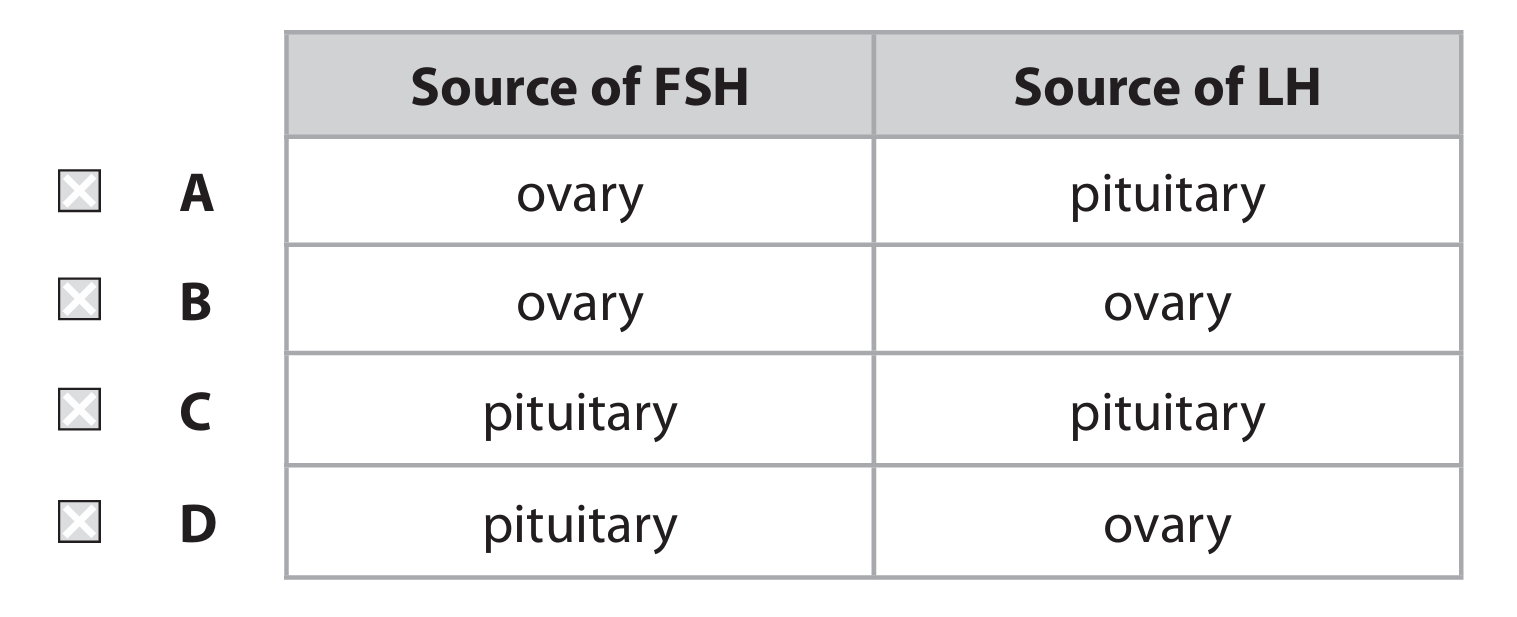
(a) Which row gives the correct source for each hormone?

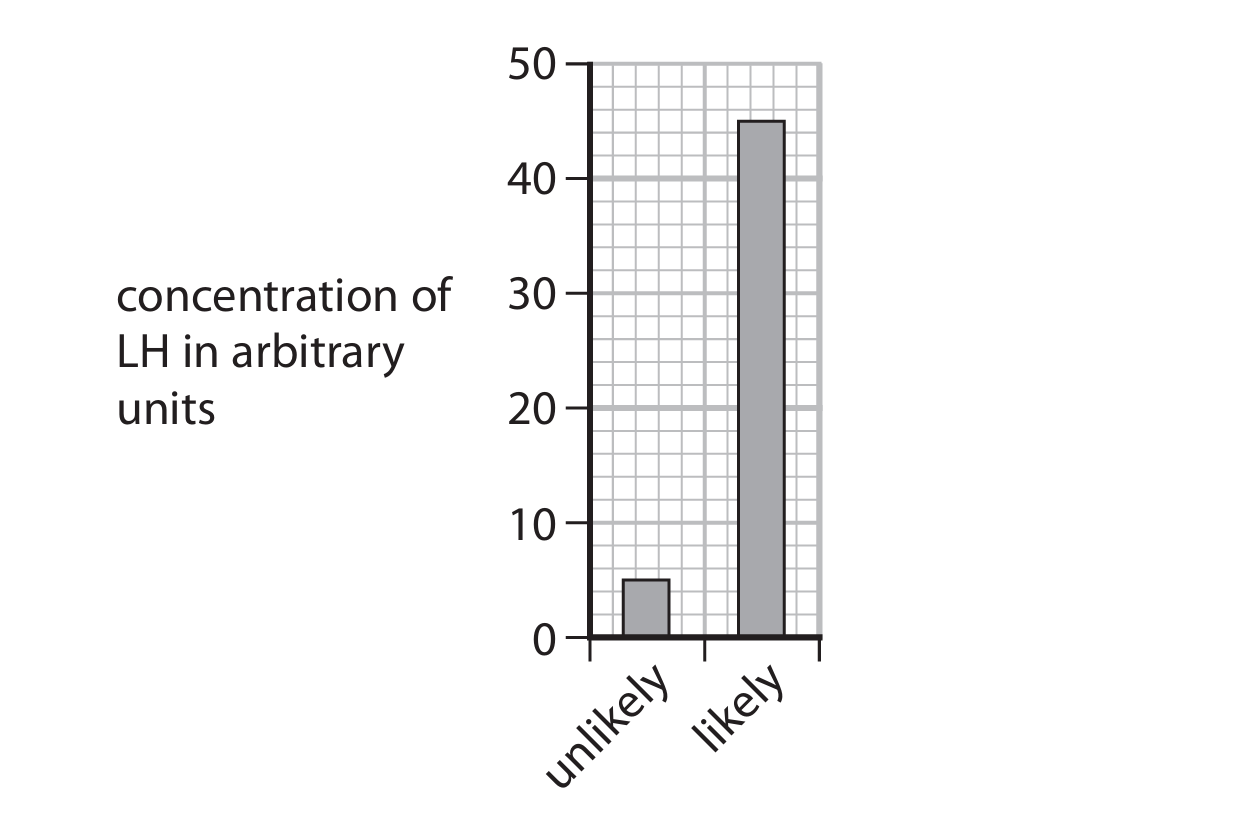
(b) The graph shows the concentration of LH in the blood of a woman when she is unlikely to become pregnant and when she is likely to become pregnant.

Calculate the percentage increase in concentration of LH in the blood from when the woman is unlikely to become pregnant to when the woman is likely to become pregnant.

(c) Describe the roles of the hormones FSH and LH.

Most-appropriate topic codes (Edexcel IGCSE Biology):

3(a): Reproduction — part (a), (c)
2(j): Co-ordination and response — part (a), (c)
Appendix 4: Mathematical skills — part (b)
2.94 / 2.95B: Hormone sources and roles — part (a), (c)
▶️ Answer/Explanation
Solution

(a) C

Explanation: Both Follicle-Stimulating Hormone (FSH) and Luteinizing Hormone (LH) are gonadotropins. They are not produced in the ovaries. Instead, they are both synthesized and released by the anterior pituitary gland in the brain. The pituitary gland acts as the control center, sending these hormones via the bloodstream to act on the ovaries. Therefore, the correct row is C, where both sources are listed as the pituitary.

(b) 800%

Explanation: To calculate the percentage increase, we first find the actual increase in concentration. The concentration increases from 5 arbitrary units (unlikely) to 45 arbitrary units (likely). The increase is therefore 45 – 5 = 40 units. The percentage increase is calculated by taking this increase, dividing it by the original value (when unlikely), and then multiplying by 100. So, the calculation is (40 / 5) × 100 = 8 × 100 = 800%.

(c)

FSH (Follicle-Stimulating Hormone):

  • Stimulates the growth and development of follicles in the ovary. Each follicle contains an immature egg cell (oocyte).
  • Stimulates the ovaries to produce and release the hormone oestrogen. As the follicles grow under the influence of FSH, the cells surrounding them produce increasing amounts of oestrogen.

LH (Luteinizing Hormone):

  • Triggers ovulation, which is the release of a mature egg from the ovary. There is a sharp surge in LH levels around the middle of the menstrual cycle, which causes the dominant follicle to rupture and release the egg.
  • Stimulates the remains of the follicle (after the egg has been released) to develop into a structure called the corpus luteum.
  • Stimulates the corpus luteum to produce and release the hormone progesterone, which is vital for preparing and maintaining the uterine lining for a potential pregnancy.

Explanation: FSH and LH work in a tightly coordinated cycle. FSH initiates the process by starting follicle development, which then leads to oestrogen production. The rising oestrogen levels eventually trigger the LH surge. This LH surge is the direct cause of ovulation. After ovulation, LH’s role shifts to maintaining the corpus luteum, which produces progesterone. In summary, FSH is primarily responsible for the first half of the cycle (follicular phase), while LH’s key actions are triggering ovulation and supporting the second half of the cycle (luteal phase).
Question

Read the passage below. Use the information in the passage and your own knowledge to answer the questions that follow.

Haemolytic disease

Haemolysis is the term used to describe the bursting of red blood cells. Haemolytic disease occurs when the red blood cells burst in the body of a foetus in a pregnant woman. The bursting of the red blood cells affects the development of the foetus into a baby.

The red blood cells burst when certain antibodies from the mother pass across the placenta. The antibodies attach to protein molecules called antigens. These antigens are on the surface of the foetal red blood cells. The protein antigen is called the rhesus factor and is made using the genetic code found on the dominant allele, D, during the production of red blood cells in bone marrow.

Homozygous dominant and heterozygous individuals have cells with the antigen. These individuals have the rhesus positive blood group. Homozygous recessive individuals have cells that do not have the antigen. These individuals have the rhesus negative blood group.

During the birth of a rhesus positive baby, some red blood cells may leak into the circulatory system of the mother. This happens as the placenta pulls away from the wall of the uterus. A rhesus negative mother will make antibodies that destroy rhesus positive red blood cells. This is not a problem for the child that has just been born. However, if the mother becomes pregnant again with another rhesus positive foetus, the antibodies will harm the foetus.

Haemolytic disease can be avoided by treating a rhesus negative woman at risk of having a second rhesus positive child. This treatment involves the mother having an injection during and after pregnancy. The injection destroys rhesus positive cells in the mother’s blood before the cells can cause an immune response.

If the foetus is rhesus positive, the pregnancy is carefully monitored for signs of haemolytic disease. Monitoring includes regular ultrasound scans of the foetus and measuring the amount of antibody in the mother’s blood. A change in the concentration of the antibody in the mother’s blood, due to her secondary immune response, can lead to dangerous haemolysis. If a foetal blood test confirms a low number of red blood cells, a blood transfusion can be done in utero to replace the burst foetal red blood cells.

(a) Explain why bursting of red blood cells affects the development of a foetus.

(b) The dominant allele codes for the production of the protein that will act as an antigen.
Describe how the dominant allele leads to the production of RNA during protein synthesis.

(c) Give the reason why proteins cannot be made by red blood cells.

(d) Give one piece of evidence from the passage that shows that antibodies are smaller than red blood cells.

(e) (i) A mother who is homozygous recessive for the rhesus factor has a child with a father who is heterozygous.
Give the genotypes of the mother, the father, their gametes and the possible genotypes of the child.

(ii) Give the probability that the child will be rhesus positive.

(f) Explain why the concentration of the rhesus antibody in the mother’s blood rises quickly to harmful levels if she has a second child who is Rhesus positive.

(g) Suggest what is meant by the term in utero.

(h) A foetus with haemolytic disease can be given a blood transfusion.
Suggest the blood group of the source of the cells used for this transfusion.

Most-appropriate topic codes (Edexcel IGCSE Biology):

2(h): Transport — parts (a), (h)
3(b): Inheritance — parts (b), (e)(i), (e)(ii)
2(b): Cell structure — part (c)
2(i): Excretion and osmoregulation — part (d)
2(j): Co-ordination and response — part (f)
3(a): Reproduction — part (g)

▶️ Answer/Explanation
Solution

(a) An explanation that makes reference to two of the following points:

  • less oxygen (1)
  • (less) respiration (1)
  • (less) energy / ATP (1)

Detailed Explanation: When red blood cells burst (haemolysis), they can no longer carry oxygen effectively. Oxygen is essential for cellular respiration, which releases energy in the form of ATP. Reduced oxygen leads to less respiration and less ATP. Since foetal development requires energy for growth and cell division, a lack of ATP directly hinders development.

(b) An explanation that makes reference to three of the following points:

  • DNA unzips / separates / one strand copied (1)
  • complementary / base pairing (1)
  • template (1)
  • mRNA produced (1)
  • transcription (1)

Detailed Explanation: Transcription occurs: the DNA double helix unwinds, one strand acts as a template, RNA nucleotides pair complementarily (A-U, C-G), and mRNA is formed by RNA polymerase, carrying the code from the gene to the ribosome.

(c) no nucleus / DNA / no ribosomes / mitochondria (1)

Detailed Explanation: Mature red blood cells lack a nucleus (and therefore DNA) and ribosomes. Protein synthesis requires DNA for instructions and ribosomes for assembly, so they cannot make proteins.

(d) can pass across placenta (1)

Detailed Explanation: The passage states antibodies pass across the placenta, a selective barrier. Red blood cells cannot cross normally, indicating antibodies are smaller.

(e)(i) An answer that makes reference to the following points:

  • parent genotype dd x Dd (1)
  • gamete d (and d) and D or d (1)
  • offspring genotype Dd and dd (1)

Detailed Explanation: Mother: dd, Father: Dd. Gametes: mother → d only; father → D or d. Possible offspring: Dd (Rhesus positive) or dd (Rhesus negative).

(e)(ii) 50% / 0.5 / half / 50:50 (1)

Detailed Explanation: From a Punnett square, 2 out of 4 possibilities are Dd (Rhesus positive), so probability = ½ or 50%.

(f) An explanation that makes reference to three of the following points:

  • memory cells (1)
  • remain in mother’s blood (1)
  • recognise / identify antigen / binds with antigen (1)
  • more antibodies produced / produced faster / sooner (1)
  • secondary immune response (1)

Detailed Explanation: During the first pregnancy, memory cells are made. In a second pregnancy, these memory cells quickly recognise the Rhesus antigen and trigger a rapid, strong secondary immune response, producing large amounts of antibody quickly.

(g) in the uterus / womb (1)

Detailed Explanation: “In utero” means inside the uterus (womb), referring to procedures performed on the foetus before birth.

(h) (adult) (rhesus) negative / negative (1)

Detailed Explanation: The foetus is being attacked by anti-Rhesus antibodies. Transfusing Rhesus negative blood (lacking the antigen) ensures the new cells are not attacked, allowing them to survive and carry oxygen.

Question

Read the passage below. Use the information in the passage and your own knowledge to answer the questions that follow.

Male contraception

Hormonal contraception has been used by women for many years to control their fertility. A recent study investigated a new contraceptive injection to be used by men.

The study was done in seven different countries: the United Kingdom, Australia, Germany, Italy, India, Indonesia and Chile. The researchers investigated a total of 320 healthy men aged between 18 and 45, all with female partners aged between 18 and 38.

All the men had normal sperm counts and produced sperm with no abnormalities in shape or movement. They had no sexually transmitted infections and no medical or mental health illnesses. Their female partners were healthy and did not intend to become pregnant within the next two years. They were willing to accept a low, but unknown, chance of becoming pregnant.

The study had two phases. These were the initial suppression phase lasting 26 weeks, followed by a contraceptive effectiveness testing phase lasting just over one year. In the suppression phase, the men were given injections of a drug called progestin and the hormone testosterone. This was repeated at 8, 16 and 24 weeks. Progestin inhibits sperm production and reduces the release of testosterone. Semen samples were collected every two weeks to monitor the sperm count. During this phase, couples had to use alternative barrier methods of contraception, such as condoms.

When a man had produced two consecutive semen samples with a sperm count of less than one million per cm3, they began the contraceptive effectiveness testing phase. During this phase, the men continued to receive regular injections every eight weeks for just over one year. Semen samples were taken at the same time as each injection to monitor the sperm count. If the sperm count went above one million per cm3, the injections were stopped. At this point the men left the trial and other methods of contraception were resumed.

The contraceptive injections prevented pregnancies in the partners of 98.4% of the men. However, a number of men reported side effects. For example, just under half of the men developed acne (skin infections and irritation) and one in five reported mood disorders. In approximately 5% of the men, their sperm count had not returned to normal one year after stopping the injections. Despite the side effects, more than three-quarters of the men, and their partners, said they would be happy to continue to use this new method of contraception.

The scientists concluded that this was a valuable early-stage trial that gave a good indication of the potential safety and effectiveness of the progestin and testosterone injections for male contraception.

(a) Suggest why the men in the study had to be able to produce sperm with no abnormalities in shape or movement (lines 8 and 9).

(b) (i) The contraceptive injection contained the drug progestin (lines 15 and 16). Progestin is similar in structure and function to progesterone. Describe the roles of progesterone in the human female body.

(ii) Suggest why the injections also contain the hormone testosterone (lines 15 and 16).

(iii) State where in the male body testosterone is produced.

(c) (i) Give the purpose of the initial suppression phase of the study (line 13).

(ii) State why the sperm count is monitored during the suppression phase (lines 18 and 19).

(iii) State why alternative contraception was used during the suppression phase (lines 19 and 20).

(d) Suggest why sperm count continues to be monitored during the testing phase (lines 25 and 26).

(e) Calculate the number of men whose partners became pregnant during the study (lines 6 and 28).

(f) Evaluate the use of progestin and testosterone injections as a method of contraception.

Most-appropriate topic codes (Edexcel IGCSE Biology):

3(a): Reproduction — humansparts (a), (b)(i), (b)(iii), (c)(i), (c)(ii), (c)(iii), (d), (e)
2(j): Co-ordination and response — hormonesparts (b)(i), (b)(ii), (b)(iii), (f)
3(a): Menstrual cyclepart (b)(i) – progesterone role
4: Mathematical skills (Appendix 4)part (e) – calculation
5: Use of biological resources — biotechnology in medicinepart (f) – evaluation of medical application
▶️ Answer/Explanation
Solution

(a) So that the sperm can swim effectively to reach the egg and so that they are capable of fertilizing the egg. This ensured that all men in the study were initially fertile, so any failure to conceive later could be attributed to the contraceptive treatment rather than pre-existing fertility issues.

(b)(i) Progesterone plays two key roles: it thickens and maintains the uterine lining (endometrium) to prepare it for a potential pregnancy, and it inhibits the production of FSH and LH, which prevents further eggs from maturing and prevents ovulation.

(b)(ii) The injections contain testosterone because the progestin in the injection reduces the body’s natural production of testosterone. The added testosterone helps to maintain normal male hormone levels and prevent side effects associated with low testosterone.

(b)(iii) Testosterone is produced in the testes, specifically in the Leydig cells located in the interstitial tissue between the seminiferous tubules.

(c)(i) The purpose of the initial suppression phase was to reduce sperm production to a very low level (below 1 million per cm³) before testing the contraceptive’s effectiveness.

(c)(ii) The sperm count is monitored during the suppression phase to measure if and when the sperm count falls below the required threshold (1 million per cm³), indicating that the treatment is successfully suppressing fertility.

(c)(iii) Alternative contraception was used during the suppression phase to prevent pregnancy because sperm production might not yet be fully suppressed, meaning the men could still be fertile during this initial period.

(d) Sperm count continues to be monitored during the testing phase to ensure that it remains below the effective threshold (1 million per cm³) and to confirm that the treatment continues to work reliably throughout the study.

(e) The number of men whose partners became pregnant is 5.

Calculation: The injection was 98.4% effective, meaning 1.6% of the men’s partners became pregnant. With 320 men in the study, the calculation is 1.6% of 320 = (1.6 / 100) × 320 = 5.12. Since we are counting men, we round to the nearest whole number, which is 5.

(f) Evaluation:

Advantages: The injections are highly effective (98.4% success rate), are reversible for most men, do not require daily remembering like a pill, and shift some of the responsibility for contraception to men.

Disadvantages: There are significant side effects like acne and mood disorders. It does not protect against sexually transmitted infections. The suppression phase is long (26 weeks), and for a small percentage of men (5%), fertility did not return to normal within a year after stopping, raising concerns about long-term reversibility.

Overall, while the method shows promise, the side effects and potential irreversibility for some are important considerations.

Question

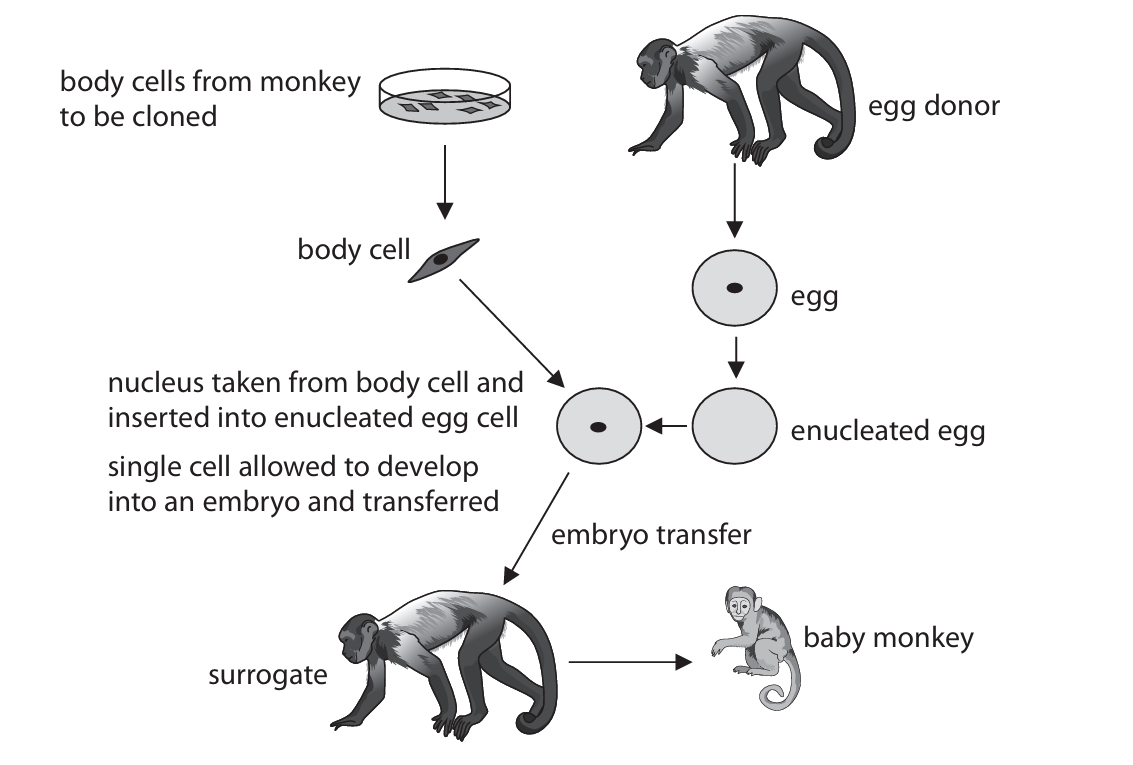
Scientists have produced cloned monkeys.

The diagram shows the procedure used to produce cloned monkeys.

(a) (i) State the meaning of the term enucleated.

(a) (ii) Describe how the single cell develops into an embryo.

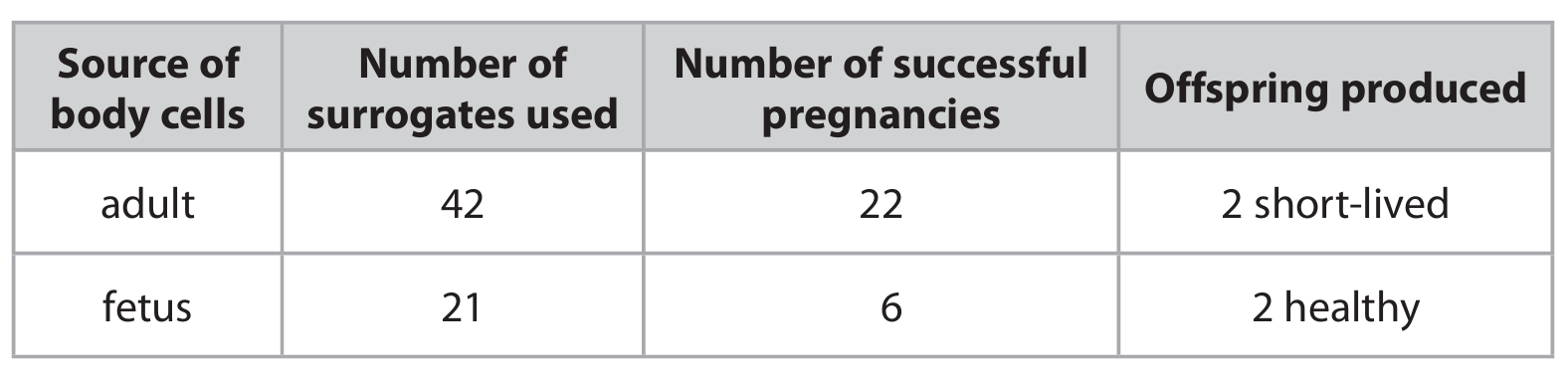
(b) Scientists can use adult body cells or fetal body cells to clone monkeys.

The table gives information about cloning using body cells from different sources.

Evaluate this data to decide which source of body cells is more successful in cloning monkeys.

Most-appropriate topic codes (Edexcel IGCSE Biology):

5(d): Cloning — all parts
3(a): Reproduction — part (a)(ii)
2(b): Cell structure — part (a)(i)
5(c): Genetic modification (genetic engineering) — context of cloning technology
▶️ Answer/Explanation
Solution

(a) (i) The nucleus is removed.

Explanation: In the context of cloning, “enucleated” specifically refers to an egg cell that has had its nucleus carefully removed. This is a crucial first step in the somatic cell nuclear transfer (SCNT) process, as it creates a vacant cellular environment ready to receive the nucleus from the donor body cell.

(a) (ii) The single cell divides many times by mitosis, producing a ball of cells, and then the cells differentiate.

Explanation: After the donor nucleus is inserted into the enucleated egg cell and stimulated, the newly formed single cell begins a process of rapid, successive divisions. This type of cell division is called mitosis, which produces genetically identical daughter cells. These divisions lead to the formation of a solid ball of cells. Following this, the process of differentiation begins, where the initially identical cells start to specialize, taking on different structures and functions to form the various tissues that will make up the embryo.

(b) Fetal body cells are more successful.

Explanation: When evaluating the data, we need to look at both the efficiency of the process and the health of the resulting offspring.

Looking at the success rates: For adult cells, 22 out of 42 surrogates resulted in a pregnancy, which is a success rate of approximately 52%. For fetal cells, 6 out of 21 surrogates resulted in a pregnancy, which is a lower success rate of about 29%. Based purely on the number of successful pregnancies, adult cells seem more efficient.

However, the critical factor is the outcome for the offspring. The two offspring produced from adult body cells were “short-lived,” indicating significant health problems. In contrast, the two offspring produced from fetal body cells were “healthy.”

Therefore, while using fetal cells led to fewer successful pregnancies, it resulted in viable, healthy clones. The ultimate goal of cloning is to produce a healthy organism, which makes fetal cells the more successful source in this investigation, despite the lower pregnancy rate.
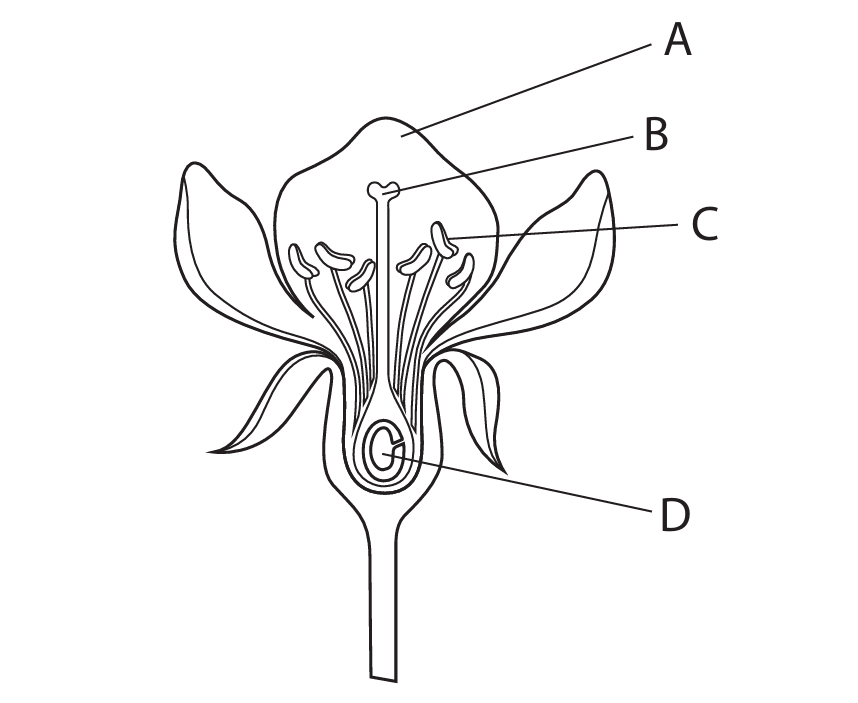
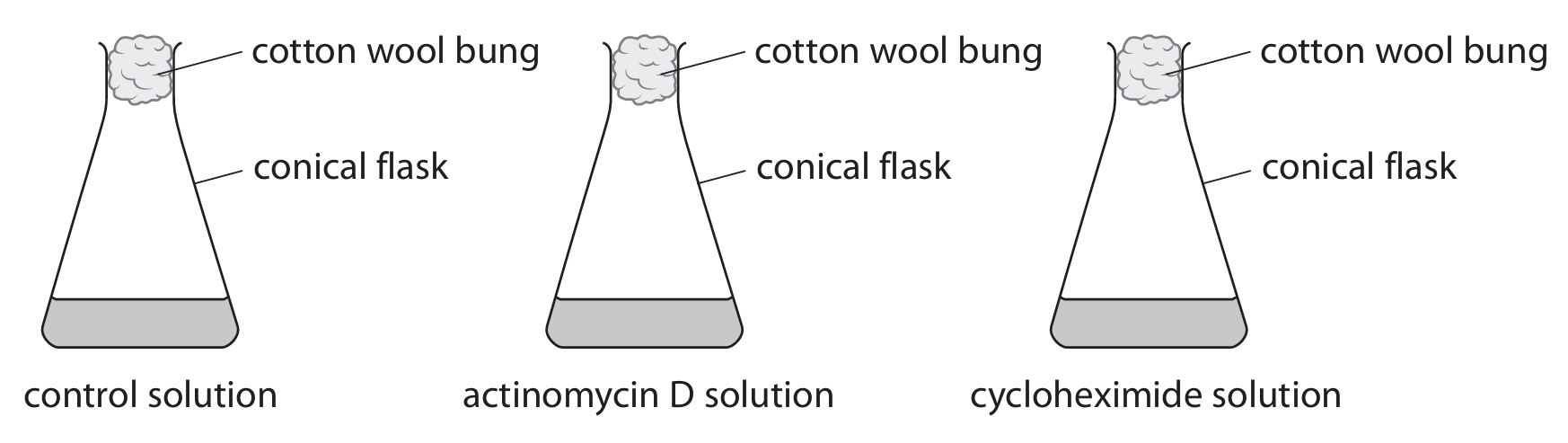
Question

Flowers are involved in plant reproduction.

The diagram shows a section through a flower with parts labelled A, B, C and D.

(a) (i) Which part of the flower makes pollen grains?

  • A
  • B
  • C
  • D

(ii) What part of the flower is the stigma?

  • A
  • B
  • C
  • D

(b) After a pollen grain lands on the stigma of a flower, a pollen tube grows.
Explain the role of the pollen tube.

(c) A scientist investigates the effect of three different solutions on the growth of pollen tubes using this apparatus.

This is the scientist’s method.
– place a different solution in three different flasks
– add pollen grains to the solution in each flask
– leave the grains in each solution for three hours
– take a sample of pollen grains from each solution
– measure the length of the pollen tubes in each sample

The graph shows the scientist’s results.

(i) Calculate the difference between the mean rate of pollen tube growth in the control solution and the mean rate of pollen tube growth in the actinomycin D solution.
Give your answer in µm per hour.

(ii) Actinomycin D prevents transcription and cycloheximide prevents translation.
Use this information and your own knowledge to explain the results of this investigation.

(d) Describe a method the scientist could use to observe pollen grains.

Most-appropriate topic codes (Edexcel IGCSE Biology):

3(a): Reproduction — flowering plants — parts (a)(i), (a)(ii), (b)
2(b): Cell structure — part (d)
3(b): Inheritance — protein synthesis — part (c)(ii)
Appendix 4: Mathematical skills — part (c)(i)
Appendix 6: Suggested practical investigations — microscopy — part (d)
▶️ Answer/Explanation
Solution

(a)(i) C

Explanation: The part labelled C is the anther, which is the male reproductive organ of the flower responsible for producing and releasing pollen grains.

(a)(ii) B

Explanation: The stigma is the sticky, receptive tip of the female reproductive structure (carpel) that captures pollen grains. In the diagram, this is represented by label B.

(b)

Explanation: The pollen tube plays a crucial role in plant fertilization. After a pollen grain lands on the stigma, it germinates and grows a pollen tube. This tube extends down through the style, which is the long stalk connecting the stigma to the ovary. The pollen tube acts as a conduit, transporting the male gametes (sperm cells) from the pollen grain to the ovary. Once the pollen tube reaches the ovary, it enters an ovule through a small opening called the micropyle. This allows the male gametes to fertilize the female gamete (egg cell) inside the ovule, leading to the formation of a seed.

(c)(i) 80 µm per hour

Explanation: To calculate the growth rates, we first determine the rate for each solution:
Control: 600 µm ÷ 3 hours = 200 µm/hour
Actinomycin D: 360 µm ÷ 3 hours = 120 µm/hour
Difference: 200 µm/hour – 120 µm/hour = 80 µm/hour
Alternatively: (600 µm – 360 µm) = 240 µm total difference over 3 hours, so 240 µm ÷ 3 hours = 80 µm/hour.

(c)(ii)

Explanation: Both chemicals inhibit pollen tube growth because they disrupt protein synthesis, which is essential for growth. Actinomycin D prevents transcription, the process where DNA is copied into mRNA. Without mRNA, the instructions for making proteins cannot reach the ribosomes. Cycloheximide prevents translation, where mRNA is read by ribosomes to assemble amino acids into proteins. Since both processes are blocked, protein synthesis decreases, slowing down pollen tube growth. The growth with actinomycin D is higher than with cycloheximide because some mRNA molecules might already be present in the pollen grain and can still be translated until they degrade, allowing limited protein production. With cycloheximide, translation is directly blocked, so even existing mRNA cannot be used, resulting in more severe growth inhibition.

(d)

Explanation: To observe pollen grains effectively, the scientist should use microscopy. First, place a pollen grain sample on a clean glass slide. Add a drop of water or a suitable stain (like methylene blue) to make the structures more visible. Carefully lower a cover slip over the sample to avoid air bubbles. Then, examine the slide under a light microscope, starting with low magnification to locate the pollen grains and switching to higher magnification to observe detailed structures such as the shape, size, and surface patterns of the pollen grains.
Question

(a) The table gives information about some hormones involved in the menstrual cycle.

Complete the table by giving the missing information.

HormoneName of structure that secretes hormoneFunctions of hormone
FSH……1 ……
2 stimulates oestrogen secretion
……pituitary1 ……
2 stimulates development of corpus luteum
……ovaries1 repairs lining of uterus
2 stimulates LH secretion
progesterone……1 maintains the lining of uterus
2 inhibits LH

(b) State what is meant by the term menstruation.

(c) A girl starts to ovulate at the age of 12 years and continues to ovulate until she reaches the age of 51 years.
[Assume her menstrual cycle is 28 days and she releases one egg per cycle.]
Estimate the maximum number of eggs she could release in her lifetime.
Give your answer to two significant figures.

(d) Give a reason why a female does not produce as many offspring as the number of eggs she releases.

Most-appropriate topic codes (Edexcel IGCSE Biology):

3(a): Reproduction — part (a), (b), (d)
4.10B: Roles of FSH and LH in the menstrual cycle — part (a)
4.9: Roles of oestrogen and progesterone in the menstrual cycle — part (a)
3.45B: Sources, roles and effects of hormones (ADH, FSH, LH) — part (a)
Appendix 3: Mathematical skills — part (c)
▶️ Answer/Explanation
Solution

(a) Completed table:

HormoneName of structure that secretes hormoneFunctions of hormone
FSHpituitary1. stimulate follicle growth / mature eggs / develop eggs
2. stimulates oestrogen secretion
LH / Lutenising hormonepituitary1. cause ovulation / egg / ovum release / stimulate progesterone release
2. stimulates development of corpus luteum
oestrogen / estrogenovaries1. repairs lining of uterus
2. stimulates LH secretion
progesteroneovaries / corpus luteum / placenta1. maintains the lining of uterus
2. inhibits LH

(b) An answer that makes reference to one of the following points:
• blood loss once a month / monthly period
• breakdown of uterus lining / breakdown of endometrium
(Allow: passing out / shedding / loss of uterus lining / endometrium)

(c) Estimation of maximum number of eggs:
• Ovulating years: \( 51 – 12 = 39 \) years
• Days ovulating: \( 39 \times 365 = 14,235 \) days (or \( 39 \times 365.25 = 14,244.75 \))
• Number of cycles: \( \frac{14,235}{28} \approx 508.4 \)
• To 2 significant figures: \( \mathbf{510} \)
(Alternative method: \( \frac{365}{28} \approx 13.04\) cycles/year; \( 13.04 \times 39 \approx 508.6\); to 2 s.f. = 510)

(d) An answer that makes reference to one of the following points:
• not all eggs fertilised
• no sexual intercourse
• contraception
• no implantation
• miscarriages
• some eggs not fertile
(Allow: eggs fertilised by abnormal sperm)

Question

Variation in a population can have different causes.

(a) Which of these will not lead to an increase in genetic variation in a population of plants?


(b) Explain how a change in the DNA of a microorganism can reduce its ability to digest a substance.

(c) Explain why a change in DNA may not affect the phenotype of an organism. 

Most-appropriate topic codes (Edexcel IGCSE Biology):

3(a): Reproduction — Sexual vs. asexual reproduction (part a)
3(b): Inheritance — Mutation, Protein synthesis (parts b, c)
2(c): Biological molecules — Enzymes (part b)
▶️ Answer/Explanation
Solution

(a) A (asexual reproduction)

  • B is not correct as it increases genetic variation
  • C is not correct as it increases genetic variation
  • D is not correct as it increases genetic variation

(b) An explanation that makes reference to five of the following points:

  1. Different (sequence of) bases in DNA / eq (1)
  2. Changes mRNA / codons (1)
  3. Transcription (1)
  4. Change tRNA / anticodons / (sequence of) amino acids (1)
  5. Translation (1)
  6. Changes structure / shape of protein / eq (1) (changes shape of active site = 2 marks)
  7. Changes active site (1)
  8. Enzyme not functional / no binding / no enzyme-substrate complex formed / eq (1)

(c) An explanation that makes reference to four of the following points:

  1. As some triplets / codons code for same amino acid / degenerative code / eq (1)
  2. No change in protein / polypeptide / enzyme produced (1)
  3. Active site not changed / affected (1)
  4. Mutation / allele may be recessive (1)
  5. So not expressed in phenotype / if heterozygous / dominant allele present / eq (1)
  6. Mutation may occur in a non-coding sequence of DNA / eq (1)
Question

Read the passage below. Use the information in the passage and your own knowledge to answer the questions that follow.

Toystory

Toystory is a bull who was born in 2001. The photograph shows Toystory.

In the world of dairy farming Toystory is a famous bull. He fathered 500 000 offspring but did not mate with any cows. He was able to father so many offspring because his semen was collected and then used to fertilise cows using artificial insemination.

Toystory’s mother was a high milk producer and his father was a popular bull. He was sold for $4 000 by his owner to a specialist breeding company called Genex.

Genex started to collect semen from Toystory when he was four years old. The semen is carefully collected, using a teaser animal and an artificial rubber vagina.

The semen is divided into many separate samples. These samples are put in small straws and frozen in liquid nitrogen. The straws can then be sold and sent to dairy farmers around the world to inseminate their cows. A total of 2.4 million samples of semen from Toystory was sold in more than 50 countries around the world.

Toystory’s reputation grew as the offspring he fathered went on to be high milk producers. His semen straws sold for over $60 each. Bull semen can now be sold as sexed or unsexed samples, with sexed samples being more expensive to purchase.

Toystory was highly valued because his offspring produced large quantities of milk of a desired composition. His semen was effective at getting cows pregnant, his daughters gave birth easily and were strong. He had a rare mix of fertility, genetics and appearance.

One of his daughters sold for $300 000 in 2009. His record number of offspring is unlikely to be beaten. This is because bulls are often retired earlier as new genetic advances are discovered.

(a) Suggest why Genex waited until Toystory was four years old before beginning to collect his semen (line 9).

(b) Explain how the semen from the bull is used to fertilise cows using artificial insemination.

(c) (i) Suggest why the semen is stored in liquid nitrogen (line 13).
(ii) Sexed semen is guaranteed to produce offspring of one sex. Suggest why dairy farmers would prefer to used sexed semen (line 19).

(d) Determine the percentage success of Toystory’s semen samples in producing offspring (line 2 and line 15).

(e) Describe how scientists could investigate which of two bulls is the best to use as a father in dairy farming.

(f) Explain why the composition of milk is important to consumers (line 22).

(g) (i) Scientists are now using cloning to produce animals. Describe the stages that are required to clone a bull.
(ii) Give two advantages of using cloning rather than selective breeding to produce offspring.

Most-appropriate topic codes (Edexcel IGCSE Biology (Modular)):

3(a): Reproduction — parts (a), (b), (c)(ii)
5(a): Food production — parts (e), (f)
5(b): Selective breeding — part (e)
5(d): Cloning — parts (g)(i), (g)(ii)
2(d): Movement of substances into and out of cells / Practical application — part (c)(i)
Appendix 3: Mathematical skills — part (d)
▶️ Answer/Explanation
Solution

(a)
• so semen contained sperm / (bull is) (sexually) mature / sperm in semen / gone through puberty / fully developed.

(b)
An explanation that includes two of the following points:
• collect semen / sperm from penis of bull (1)
• insert straw into / inject semen (into cow) (1)
• put (it / semen / sperm) in vagina / uterus / womb / cervix (1)

(c)(i)
• preserve (sperm) / keep (sperm) alive / viable / prevent growth of microorganisms / slow down metabolism.

(c)(ii)
• provide females (produce milk) / will produce cows.

(d)
\( 500\,000 \div 2.4 \text{ million} = 0.2083 \)
Percentage = \( 0.2083 \times 100 = 20.83\% \) (allow 1 mark for ÷ 2.4 million).

(e)
A description that makes reference to three of the following points:
• use semen (from each bull) to fertilise (many / similar) cows (1)
• collect / measure milk yields (1)
• from each daughter / offspring of these cows / mother of bull (1)
• select bull with highest (average) milk yield (across all daughters) (1)

(f)
An explanation that makes reference to two of the following points:
• (milk that contains) (most) fat (1)
• (most) protein (1)
• (most) vitamins (1)
• (milk that contains) (most) calcium (1)

(g)(i)
A description that makes reference to four of the following points:
• nucleus from (body) cell of bull (1)
• insert this nucleus into enucleated egg cell (1)
• electric shock (1)
• mitosis / cell division (1)
• embryo into uterus / womb (1)
• surrogate mother (1)

(g)(ii)
An explanation that makes reference to two of the following points:
genetically identical / no genetic variation / same (combination of) alleles (1)
• quicker process (1)

Scroll to Top