
▶️ Answer/Explanation
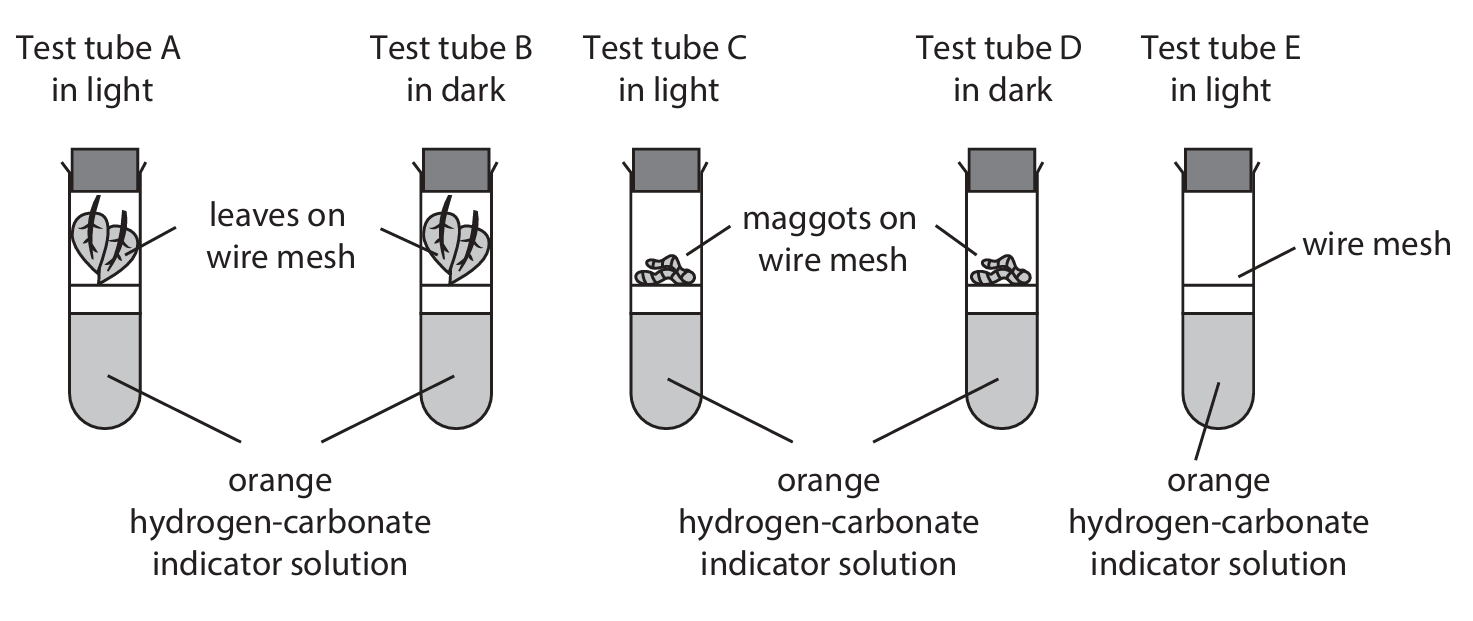
(a)(i) • colour of indicator / carbon dioxide concentration / eq (1)
(a)(ii) • stops leaves / maggots falling in indicator / hold organisms in place / separates organism from solution/ eq (1)
(a)(iii) • volume of indicator / volume of solution / time in tube / size of tube / eq (1)
(b) An explanation that makes reference to four of the following points:
1. tube C / tube D / maggots produce \(CO_{2}\) / \(CO_{2}\) increases (light and dark) / eq (1)
2. by respiration / eq (1)
3. tube B / leaves produce \(CO_{2}\) in dark / \(CO_{2}\) increases / eq (1)
4. tube A / leaves absorb \(CO_{2}\) in the light / \(CO_{2}\) decreases/ eq (1)
5. for photosynthesis /eq (1)
6. tube E no change in \(CO_{2}\) / no gain or loss of \(CO_{2}\) / eq (1)
(c) An explanation that makes reference to two of the following points:
1. carbon dioxide concentration is unchanged / \(CO_{2}\) released and \(CO_{2}\) absorbed / eq (1)
2. respiration and photosynthesis / eq (1)
3. reaction rate is reduced / \(CO_{2}\) increased / eq (1)
▶️ Answer/Explanation
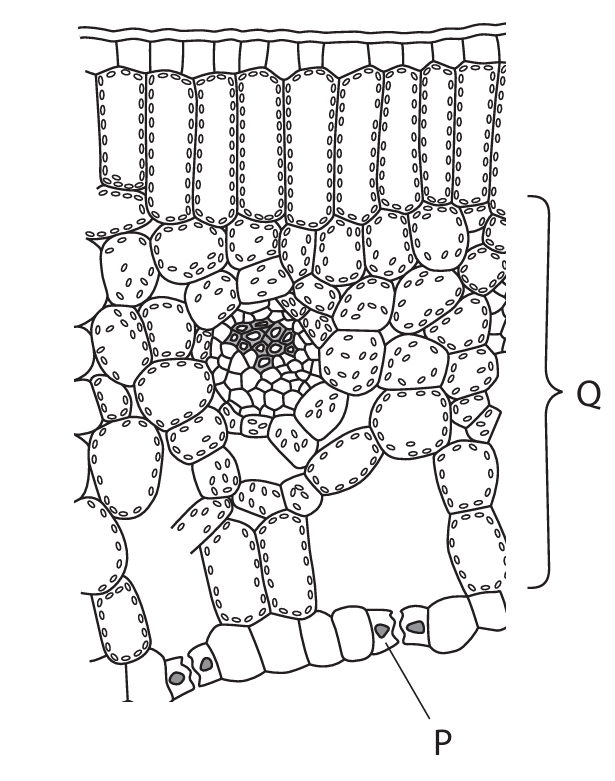
(a)(i) Answer: B (guard)
Explanation: The cell labelled P is a guard cell. Guard cells are specialized cells that surround the stomata (pores) in the leaf epidermis. They control the opening and closing of the stomata, which regulates gas exchange (carbon dioxide in, oxygen out) and water loss through transpiration.
(a)(ii) Answer: Part Q is the spongy mesophyll layer.
Explanation: The spongy mesophyll layer is highly adapted for photosynthesis in several ways. Firstly, it contains numerous air spaces between the cells, which creates a large surface area for the efficient diffusion of gases. Carbon dioxide, which is needed for photosynthesis, can diffuse easily from the stomata through these air spaces to reach the palisade mesophyll cells where most photosynthesis occurs. Similarly, oxygen produced as a byproduct of photosynthesis can diffuse out. Secondly, the cells in the spongy mesophyll contain chloroplasts, although fewer than in the palisade layer, and thus can also carry out photosynthesis. The loose arrangement of cells maximizes the exposure to these gases and facilitates their movement throughout the leaf.
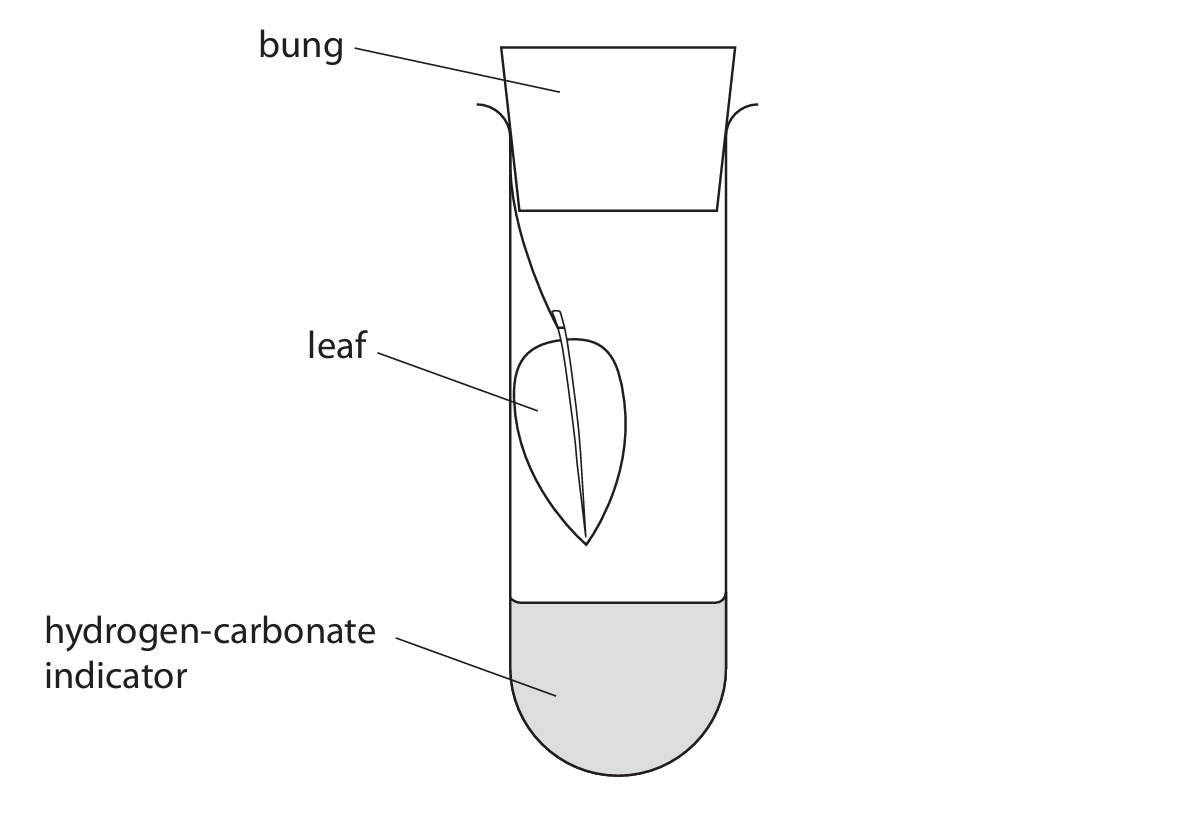
(b)(i) Answer: Temperature (of the water bath)
Explanation: The independent variable is the factor that is deliberately changed or manipulated by the investigator. In this experiment, the student places the tubes into water baths at different temperatures (15°C, 20°C, 25°C, 30°C, 35°C, 40°C). Therefore, temperature is the independent variable.
(b)(ii) Answer: Example factor: Light intensity
Reason: To ensure that light intensity is not a limiting factor for photosynthesis, which would affect the rate of gas exchange and thus the time for the indicator to change color. By keeping it constant and bright, any changes in the rate are due to the temperature and not variations in light.
OR
Answer: Example factor: Volume/concentration of hydrogen-carbonate indicator
Reason: Different volumes or concentrations would absorb or release different amounts of carbon dioxide, which would directly affect the time it takes for the color to change, making comparisons between temperatures invalid.
(b)(iii) Answer: It acts as a control.
Explanation: The tube with no leaf serves as a control experiment. Its purpose is to show that any observed color change in the indicator in the other tubes is due to the presence and activity of the leaf (specifically, its effect on carbon dioxide levels through photosynthesis and respiration) and not due to some other factor, such as the temperature affecting the indicator solution itself.
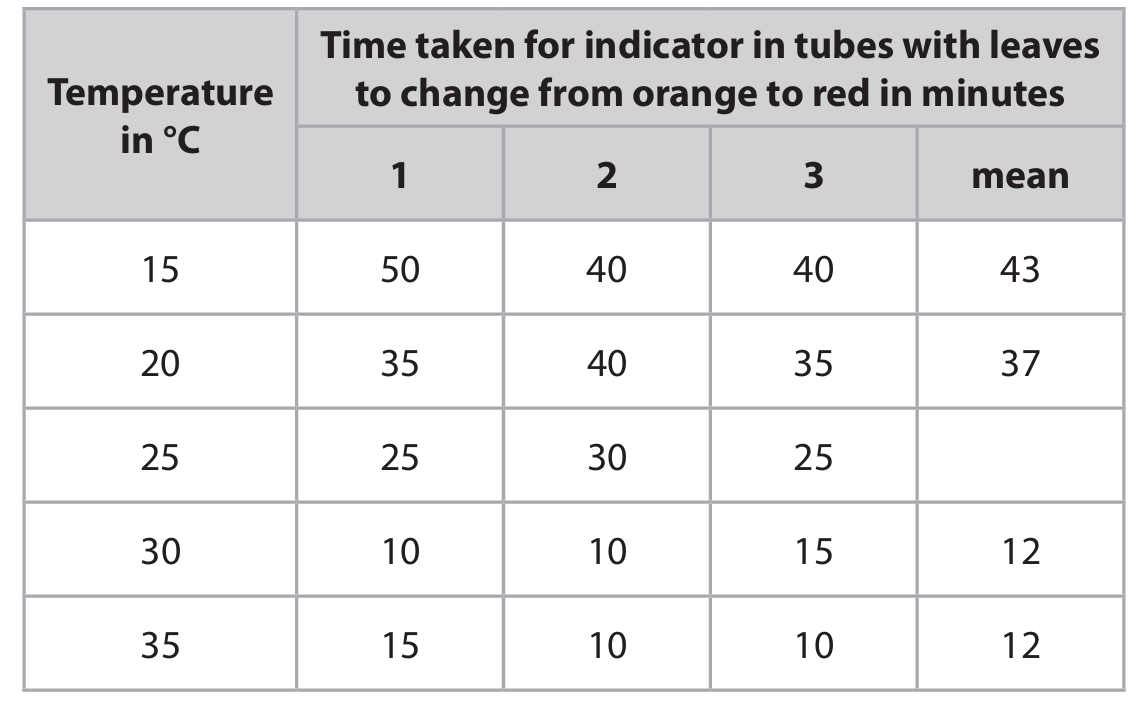
(c)(i) Answer: 27 minutes
Explanation: To calculate the mean time at 25°C, add the three recorded times together and divide by 3: (25 + 30 + 25) / 3 = 80 / 3 = 26.666… minutes. Rounding this to two significant figures gives 27 minutes.
(c)(ii) Explanation: As the temperature increases from 15°C to 30°C, the mean time taken for the indicator to change color decreases. This indicates that the rate of the process causing the color change (removal of carbon dioxide by photosynthesis) is increasing. This is because temperature increases the kinetic energy of molecules, leading to more frequent collisions between enzymes and substrates involved in photosynthesis, thus speeding up the reaction. However, between 30°C and 35°C, the mean time stops decreasing and remains at 12 minutes. This suggests that the rate of photosynthesis is no longer increasing with temperature, likely because another factor (such as enzyme denaturation or the availability of another substrate like carbon dioxide or light) has become the limiting factor.
(d) Explanation: In the dark, photosynthesis cannot occur as it requires light. However, respiration continues in the leaf cells. Respiration consumes oxygen and produces carbon dioxide. The increase in carbon dioxide concentration in the test tube causes the hydrogen-carbonate indicator to change from orange (at atmospheric CO₂ levels) to yellow (which indicates a high concentration of CO₂). This shows that in the absence of light, the net gas exchange is dominated by the release of carbon dioxide from respiration.
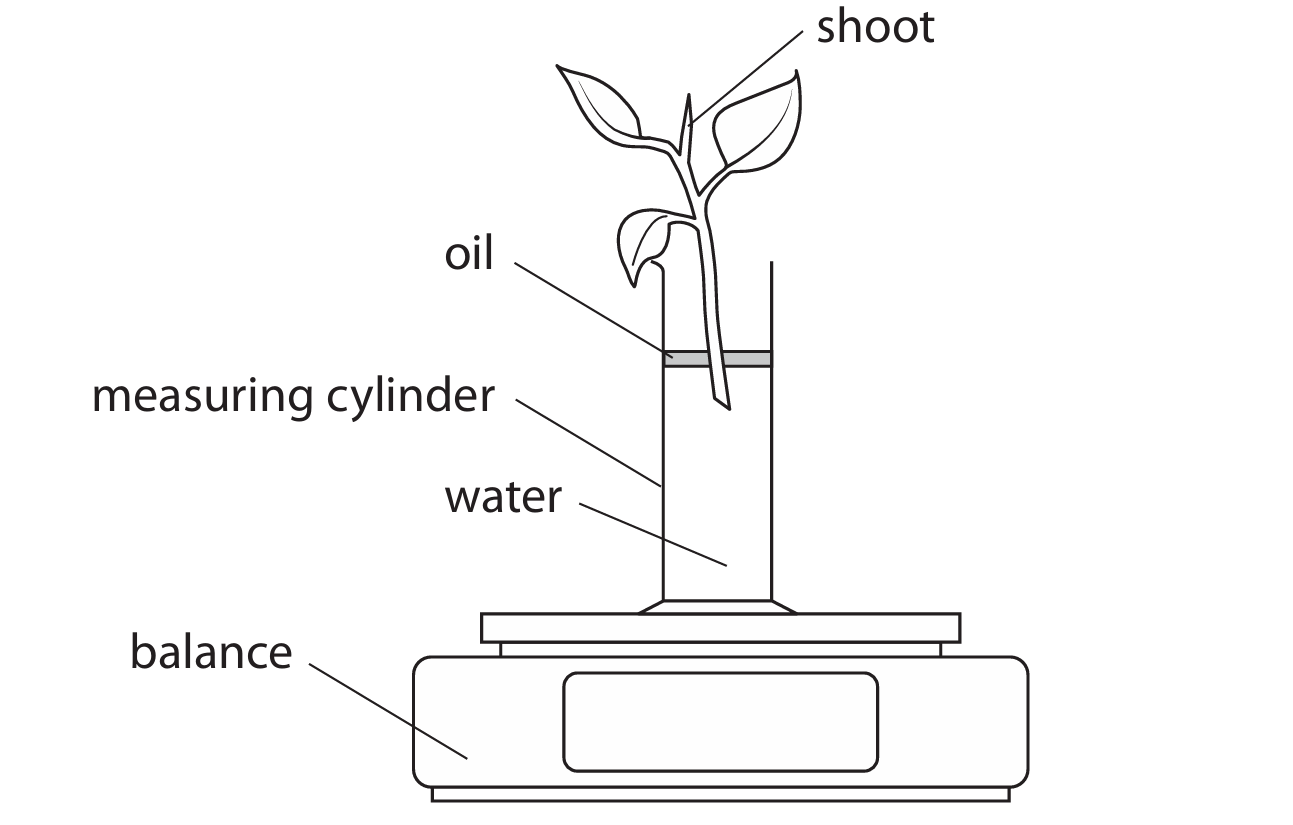
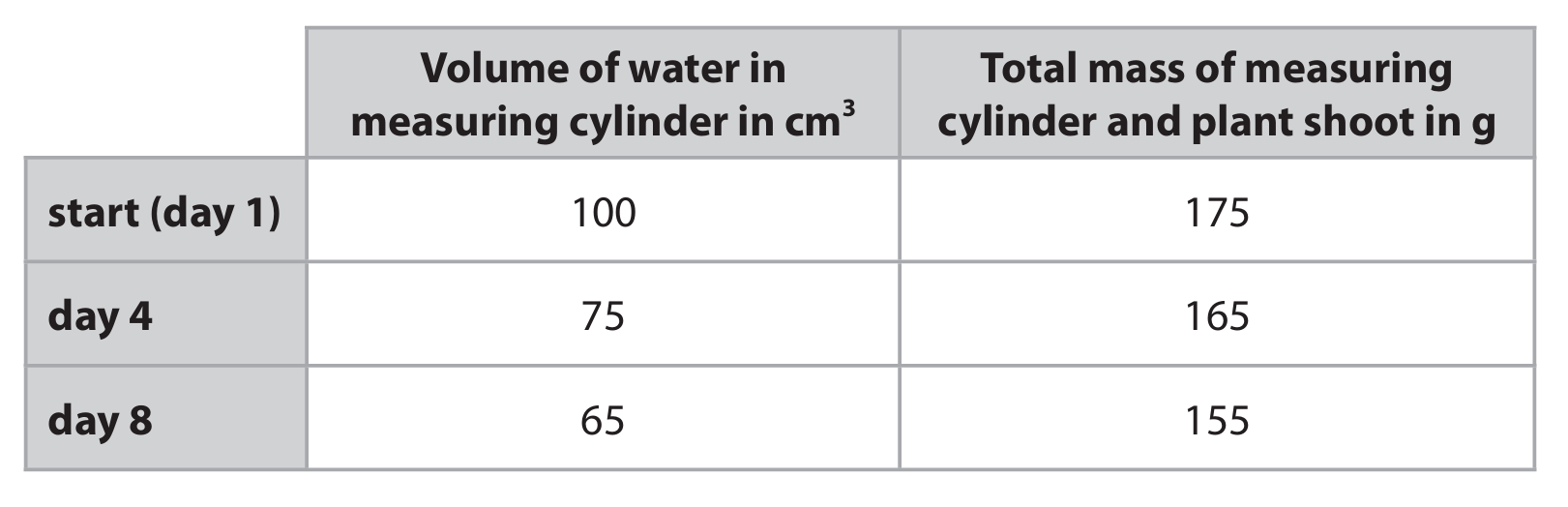
▶️ Answer/Explanation
(a) To prevent evaporation from the surface of the water.
Explanation: The oil creates a physical barrier on top of the water surface. This prevents water molecules from evaporating into the air, ensuring that any changes in water volume in the measuring cylinder are due to water uptake by the plant shoot rather than evaporation. Without this oil layer, we wouldn’t be able to accurately measure how much water the plant is actually taking up.
(b)(i) Mean rate = 4.4 cm³ per day
Explanation: To calculate the mean rate of water uptake:
Total water uptake = Initial volume – Final volume = 100 cm³ – 65 cm³ = 35 cm³
Total time = 8 days
Mean rate = Total water uptake ÷ Total time = 35 cm³ ÷ 8 days = 4.375 cm³/day
Rounded to one decimal place, this gives us 4.4 cm³ per day.
(b)(ii) Both the volume of water and the total mass decrease over time, but the volume decreases more than the mass.
Explanation: Looking at the data, we can see that after 8 days, the water volume decreased by 35 cm³ (from 100 cm³ to 65 cm³), while the total mass decreased by only 20 g (from 175 g to 155 g). This difference occurs because not all water taken up by the plant is lost through transpiration – some is retained within the plant cells for maintaining turgor pressure, some is used in photosynthesis, and some is stored. The plant is essentially accumulating water while simultaneously losing it through transpiration. Between days 4 and 8, both water uptake and water loss occur at similar rates, as indicated by the parallel changes in volume and mass.
(c) The rate of water loss would increase with a fan.
Explanation: A working fan would increase the rate of transpiration (water loss) from the plant. This happens because the fan moves air across the leaf surface, which carries away water vapor that has evaporated through the stomata. This maintains a steeper concentration gradient between the moist air inside the leaf and the drier air outside, accelerating diffusion. Additionally, the fan disrupts the still, humid boundary layer of air that typically forms around leaves, replacing it with drier air that can accept more water vapor. All these factors combined would result in increased water loss from the plant shoot.
▶️ Answer/Explanation
(a) C (respiration)
Explanation: Respiration is the metabolic process that breaks down glucose to release energy, which is stored in ATP molecules. Active transport uses ATP but does not produce it. Diffusion is a passive process and does not require or produce ATP. Transpiration is the loss of water vapor from plants and is not directly involved in ATP production.
(b)(i)
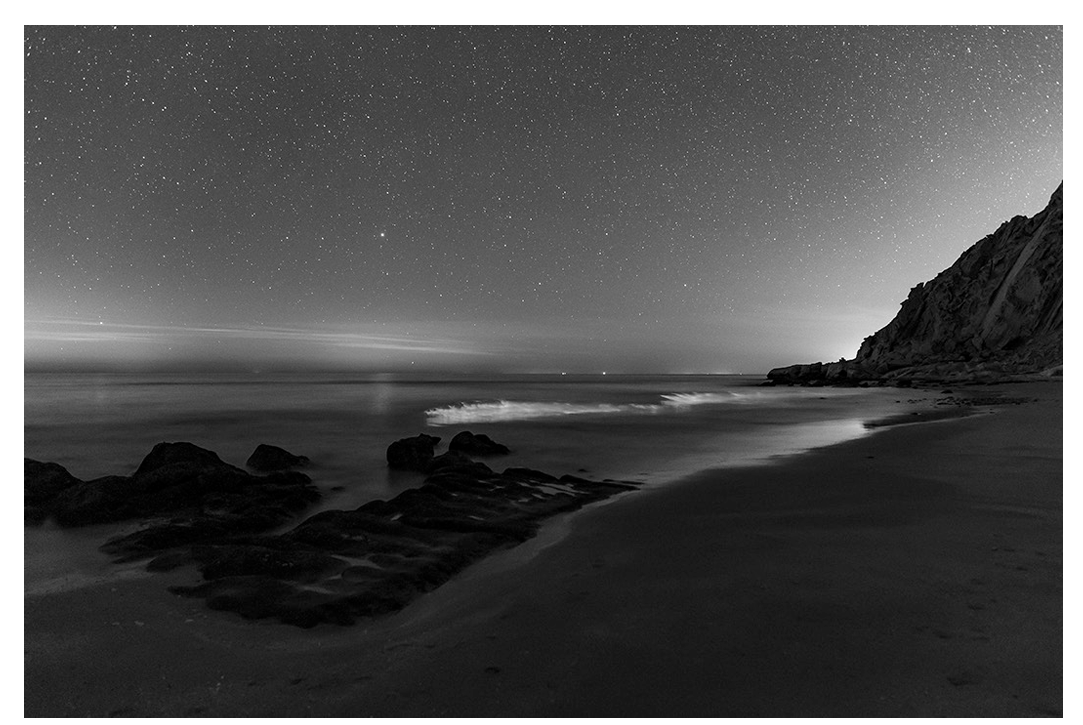
Explanation: Intensive farming often involves the heavy use of fertilizers. Deforestation removes trees whose roots help bind the soil. The combination of these factors leads to soil erosion. When it rains, eroded soil and excess fertilizers (rich in minerals like nitrates and phosphates) are washed into rivers and eventually into estuaries and the sea. These minerals act as nutrients for dinoflagellates, allowing their populations to grow rapidly, a process known as eutrophication.
(b)(ii)
Explanation: After the glowing events, large numbers of dinoflagellates die. Their bodies are decomposed by bacteria and other microorganisms. These decomposers respire as they break down the organic matter, a process that consumes oxygen. The large algal bloom may also block light, reducing photosynthesis and oxygen production by other organisms. The high rate of oxygen consumption by decomposers leads to a decrease in dissolved oxygen levels.
(c) C (nitrifying)
Explanation: Nitrifying bacteria are specifically responsible for converting ammonia into nitrites and then into nitrates in the nitrogen cycle. Decomposer bacteria break down organic matter into ammonia. Denitrifying bacteria convert nitrates back into nitrogen gas. Nitrogen-fixing bacteria convert atmospheric nitrogen gas into ammonia.
(d)(i) 70 dinoflagellates per hour
Explanation: The total number of non-glowing dinoflagellates eaten in 2 hours was 2100. The total eaten per hour is \( 2100 \div 2 = 1050 \) dinoflagellates per hour. This is the rate for all 15 copepods. The mean rate per copepod is \( 1050 \div 15 = 70 \) dinoflagellates per hour per copepod.
(d)(ii)
Explanation: A random mutation gave some dinoflagellates the allele to glow. This created variation. When predators were present, dinoflagellates that glowed were less likely to be eaten (as the glow attracted the predators’ own predators). These dinoflagellates had a higher survival rate and were more likely to reproduce, passing the advantageous allele for glowing to their offspring. Over many generations, the frequency of the glowing allele increased in the population, leading to the evolution of this trait.
(e)
Explanation: It would reduce reliance on electricity generated from burning fossil fuels. The dinoflagellates photosynthesize during the day, taking in carbon dioxide (\(CO_2\)) from the atmosphere. At night, they produce light through bioluminescence without burning fuels. Therefore, this method produces no direct air pollutants and contributes less to the greenhouse effect, making it a more sustainable and carbon-neutral alternative.
▶️ Answer/Explanation
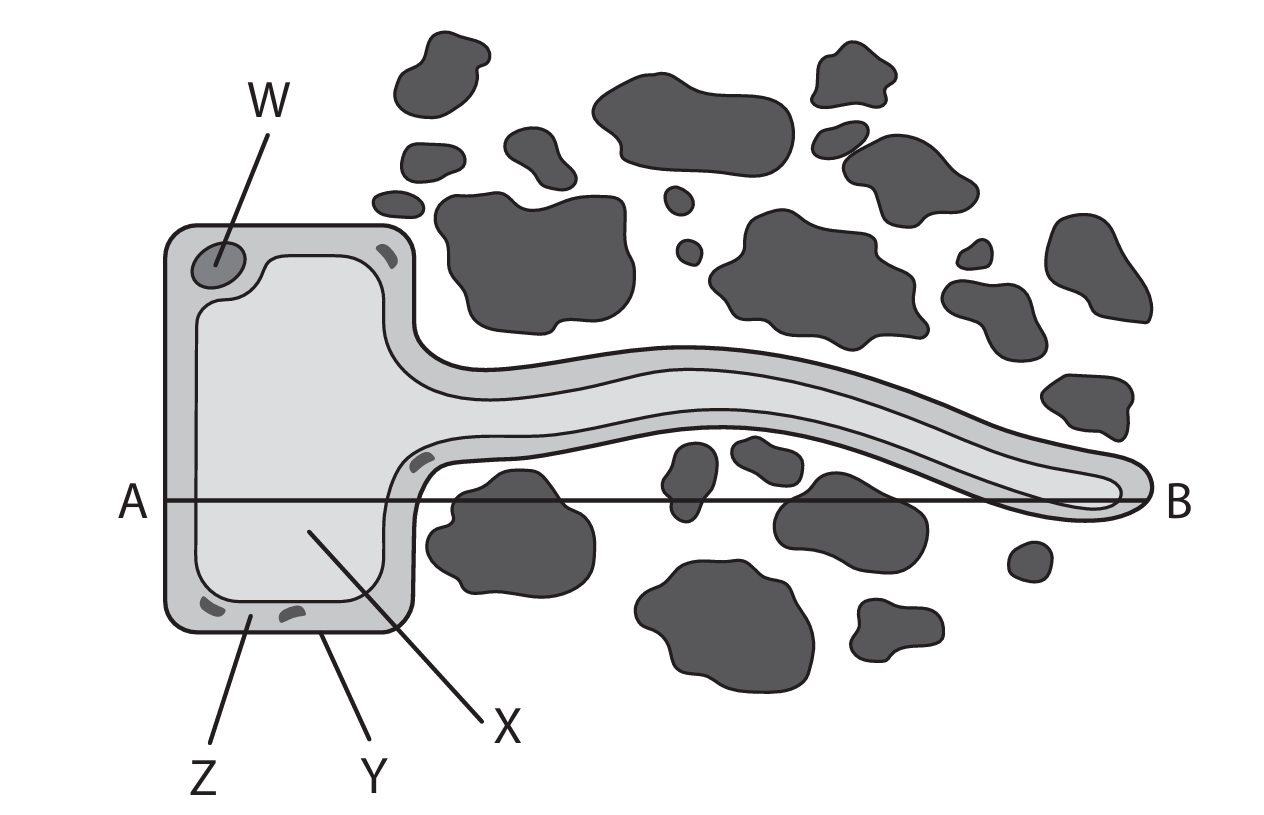
(a)
W: Nucleus
X: Vacuole (or cell sap)
Y: Cell Wall (specifically cellulose cell wall)
Z: Cytoplasm
Explanation: In a typical plant cell, the nucleus (W) contains the genetic material and controls cell activities. The vacuole (X) is a large, fluid-filled sac that stores water, nutrients, and waste, helping maintain turgor pressure. The cell wall (Y) is a rigid outer layer made of cellulose that provides structural support and protection. The cytoplasm (Z) is the gel-like substance inside the cell where most cellular activities occur.
(b)
magnification = 80 (accept values in the range 79-82)
Explanation: To calculate magnification, we use the formula:
\[ \text{Magnification} = \frac{\text{Size of Image}}{\text{Actual Size}} \]
First, measure the length between A and B in the drawing. Let’s assume this measures 80 mm (or 8.0 cm).
Convert this measurement to micrometers (μm) to match the units of the actual size. Since 1 mm = 1000 μm, 80 mm = 80,000 μm.
The actual size is given as 1000 μm.
Now, plug the values into the formula:
\[ \text{Magnification} = \frac{80,000 \ \mu m}{1,000 \ \mu m} = 80 \]
So, the drawing is magnified 80 times.
(c) (i)
Explanation: Root hair cells are specially adapted for absorbing water from the soil. Their long, hair-like projection significantly increases the surface area of the root, allowing it to absorb more water. Water enters the root hair cell from the soil via osmosis. This process occurs because the water potential inside the root hair cell is lower (meaning it has a higher concentration of solutes like minerals) than the water potential in the soil (which is generally higher, or more dilute). Water molecules naturally move from an area of high water potential (soil) to an area of low water potential (root hair cell) across the partially permeable cell membrane. This movement of water is often driven by a water potential gradient set up in the plant as water is lost through transpiration from the leaves. The absorbed water is essential for various plant functions, including photosynthesis and maintaining turgor pressure, which keeps the plant upright.
(c) (ii)
Explanation: When too much water is added to the soil, it fills the air spaces that normally contain oxygen. Plant roots, like all living cells, require oxygen for respiration to release energy. This energy is crucial for active transport, the process by which roots absorb essential mineral ions (like nitrates and magnesium) from the soil against a concentration gradient. If the soil becomes waterlogged and oxygen is depleted, root respiration is severely reduced. Consequently, active transport cannot occur effectively, leading to a decreased uptake of vital minerals. Without sufficient nitrates, the plant cannot synthesize amino acids and proteins properly, and without magnesium, it cannot produce chlorophyll, which is essential for photosynthesis. This overall lack of energy and essential nutrients causes the plant to fail to grow properly, leading to stunted growth, yellowing leaves, and potentially plant death.
▶️ Answer/Explanation
(a) (i) D (protoctists)
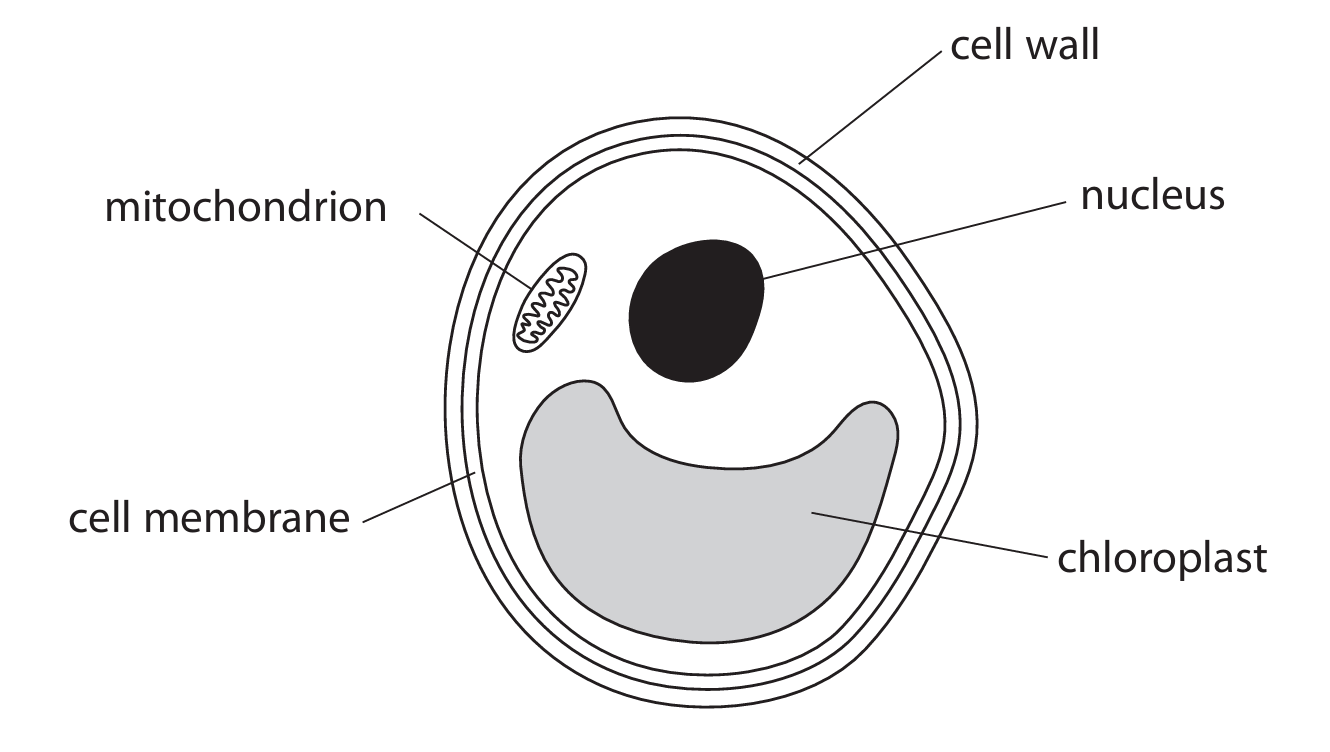
Explanation: Chlorella is a single-celled, photosynthetic organism with a nucleus and chloroplasts. It is not an animal (A) because it has chloroplasts and a cell wall. It is not a bacterium (B) because it has a true nucleus and membrane-bound organelles like chloroplasts and mitochondria. It is not a plant (C) because it is unicellular, whereas plants are multicellular. Therefore, it belongs to the kingdom Protoctista (D), which contains various unicellular and simple multicellular eukaryotes, including algae.
(a) (ii) B (cell membrane and mitochondrion)
Explanation: Animal cells have a cell membrane and mitochondria. They do not have chloroplasts (so A and C are incorrect) and they do not have a cell wall (so D is incorrect). Both animal cells and Chlorella require mitochondria for respiration to release energy.
(b) 6CO2 + 6H2O → C6H12O6 + 6O2
Explanation: The balanced equation for photosynthesis shows that six molecules of carbon dioxide (6CO2) and six molecules of water (6H2O), in the presence of light energy and chlorophyll, react to produce one molecule of glucose (C6H12O6) and six molecules of oxygen (6O2). The reactants must be placed on the left-hand side of the arrow.
(c) (i)
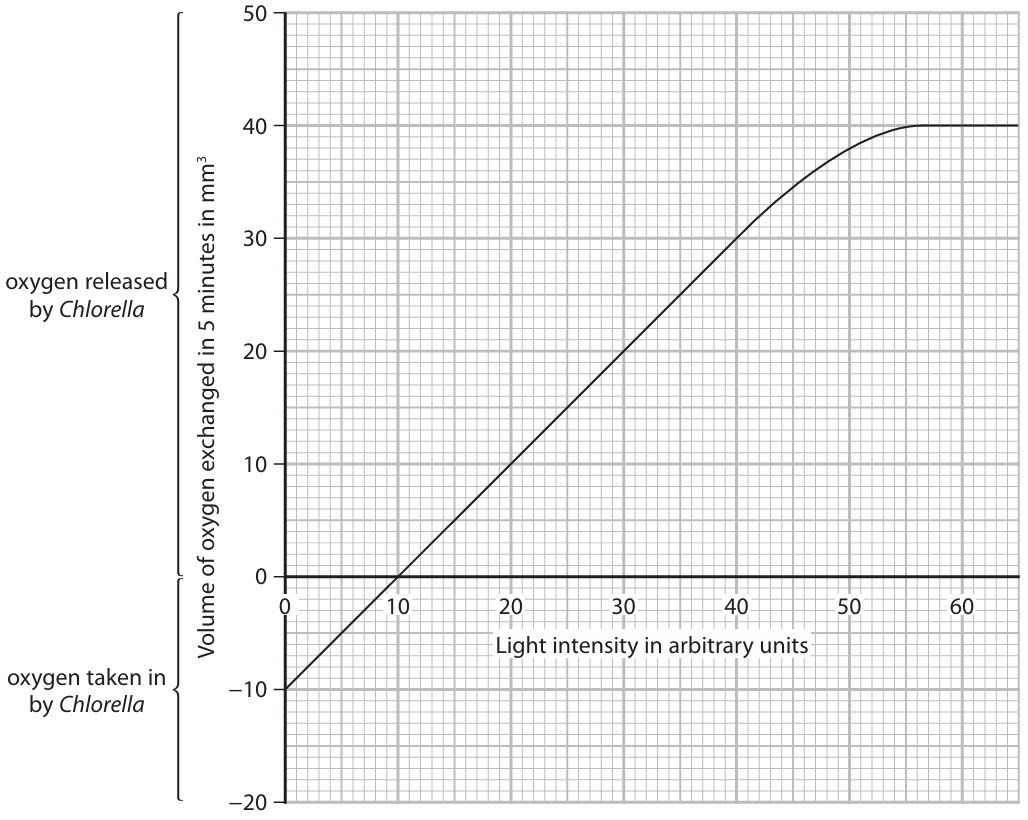
Explanation: At low light intensities (below 10 arbitrary units), the rate of photosynthesis is very low because there is insufficient light energy. However, respiration continues at all times to release energy for cell processes. Therefore, the oxygen produced by photosynthesis is less than the oxygen consumed by respiration. This results in a net uptake of oxygen from the surroundings, which is why the graph shows a negative value for oxygen exchange (indicating net intake).
(c) (ii)
Explanation: As light intensity increases from 10 arbitrary units, the rate of photosynthesis also increases because light is a key factor for the light-dependent reactions. At 10 arbitrary units, the compensation point is reached where the rate of photosynthesis equals the rate of respiration, so there is no net gas exchange. Above this point, the rate of photosynthesis becomes greater than the rate of respiration. This means more oxygen is produced by photosynthesis than is consumed by respiration, leading to a net release of oxygen, which is shown by the positive values on the graph. The curve eventually levels off because another factor, such as carbon dioxide concentration or temperature, becomes limiting and prevents the rate of photosynthesis from increasing further, even with more light.
(c) (iii) 48 mm3
Explanation: The graph shows the net oxygen released, which is the oxygen from photosynthesis minus the oxygen used in respiration. At 50 arbitrary units, the net oxygen released is approximately 38 mm³. We are told that the oxygen taken in (used in respiration) is 10 mm³ (this value is consistent across light intensities as respiration rate is relatively constant). To find the gross oxygen produced by photosynthesis, we add the oxygen used in respiration to the net oxygen released: 38 mm³ + 10 mm³ = 48 mm³.
(d)
Explanation: To investigate the effect of light intensity on carbon dioxide exchange, you could set up the following experiment. Place equal volumes or masses of Chlorella in several test tubes containing the same volume of hydrogen-carbonate indicator solution. Seal the tubes. Hydrogen-carbonate indicator changes color with carbon dioxide concentration: it turns yellow when carbon dioxide levels are high, red at atmospheric levels, and purple when carbon dioxide levels are low. You would then place the tubes at different distances from a light source to create different light intensities (e.g., 10 cm, 20 cm, 30 cm away). A control tube with no Chlorella should be set up to show that any color change is due to the organism. You would also need to control other variables, such as temperature and the initial concentration of the algae and indicator. After leaving the tubes for a set period, you would observe and record the final color of the indicator in each tube. In high light, photosynthesis would be high, so carbon dioxide would be absorbed, and the indicator would turn purple. In low light or darkness, respiration would dominate, releasing carbon dioxide, and the indicator would turn yellow.
▶️ Answer/Explanation
(a) (i) C
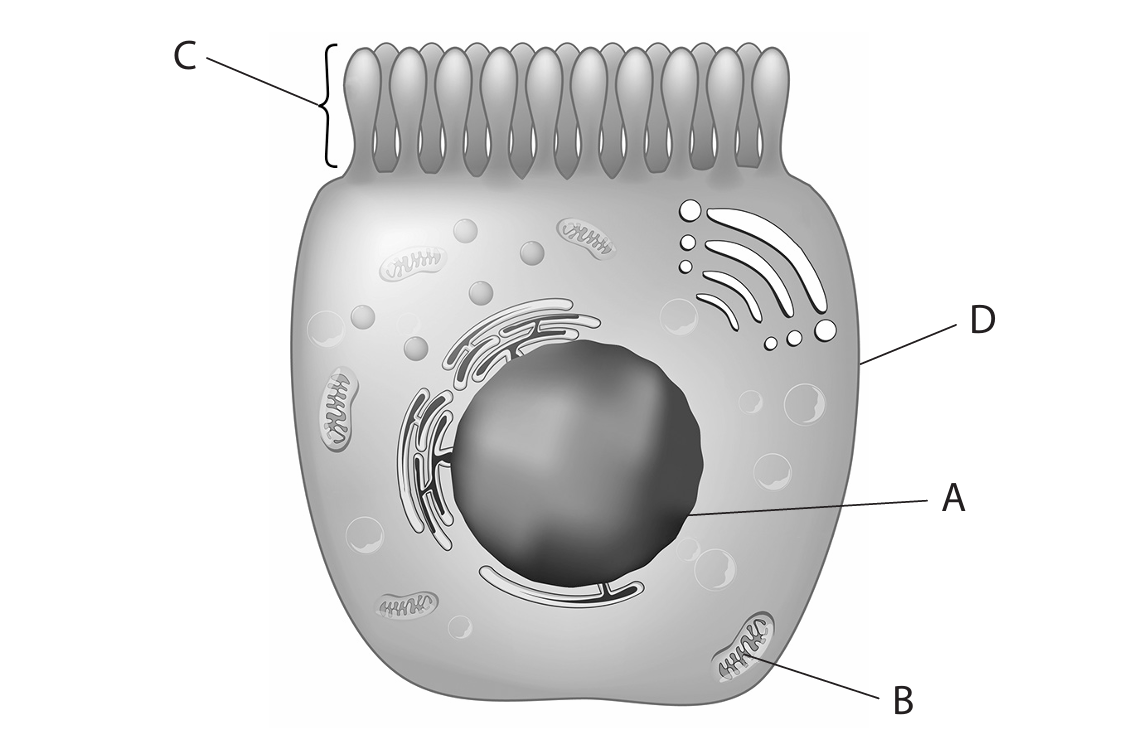
Explanation: Microvilli are tiny, finger-like projections on the surface of some cells, especially those involved in absorption, like the cells lining the small intestine. They greatly increase the surface area of the cell membrane, which allows for more efficient absorption of nutrients. In the diagram, structure C is correctly identified as the microvillus.
(a) (ii) B
Explanation: ATP (Adenosine Triphosphate) is the main energy currency of the cell, produced during cellular respiration. The organelles responsible for this process are the mitochondria. In the diagram, structure B represents a mitochondrion, which is often described as the “powerhouse” of the cell because it generates most of the cell’s supply of ATP.
(b) The small intestine has several structural adaptations for efficient absorption:
- It is very long, providing a large surface area over which absorption can occur.
- The inner lining is folded, and these folds are covered in tiny finger-like projections called villi. The cells on the surface of the villi themselves have microvilli, forming a “brush border”. Both villi and microvilli massively increase the surface area for absorption.
- Each villus contains a network of blood capillaries that absorb and transport products of digestion like glucose and amino acids. Good blood flow in these capillaries helps maintain a steep concentration gradient for rapid diffusion.
- Each villus also contains a lacteal, which is a lymphatic vessel that absorbs fatty acids and glycerol.
- The walls of the villi are only one cell thick, creating a very short diffusion distance for nutrients to pass from the gut into the blood.
(c) The human placenta is a vital organ that forms during pregnancy and has several key roles:
- It allows for the exchange of materials between the mother’s blood and the foetus’s blood without the two blood supplies mixing. Oxygen and digested food nutrients (like glucose, amino acids, and minerals) diffuse from the mother’s blood into the foetal blood.
- It removes waste products from the foetus, such as carbon dioxide and urea, which then pass into the mother’s blood for her to excrete.
- The placenta acts as a barrier against some harmful substances, like certain bacteria, although some viruses and drugs can cross it.
- It produces important hormones, such as progesterone, which helps to maintain the pregnancy.
- Towards the end of pregnancy, the placenta passes antibodies from the mother to the foetus, providing the baby with passive immunity for the first few months after birth.