
Understand the Biological Consequences of Pollution of Water by Sewage
📝 Introduction
- Sewage is wastewater produced from homes, hospitals, industries and other human activities.
- It contains human waste, food waste, detergents, chemicals and large numbers of microorganisms.
- If untreated sewage is released into rivers, lakes or seas, it causes water pollution.
- Sewage pollution affects the quality of water and harms aquatic organisms.
- It also increases the spread of disease and disturbs the balance of aquatic ecosystems.
What is Sewage?
Definition: Sewage is wastewater containing human waste, household waste and other organic materials that must be treated before being released into the environment.
What Happens When Sewage Enters Water?
- When untreated sewage enters a river or lake:
- It adds a large amount of organic matter to the water.
- Bacteria and other decomposers begin breaking down this organic matter.
- During decomposition, these microorganisms use oxygen for aerobic respiration.
- As more oxygen is used, the amount of dissolved oxygen in the water decreases.
- This is the main reason why sewage pollution is harmful to aquatic life.
Stage 1: Increase in Decomposer Activity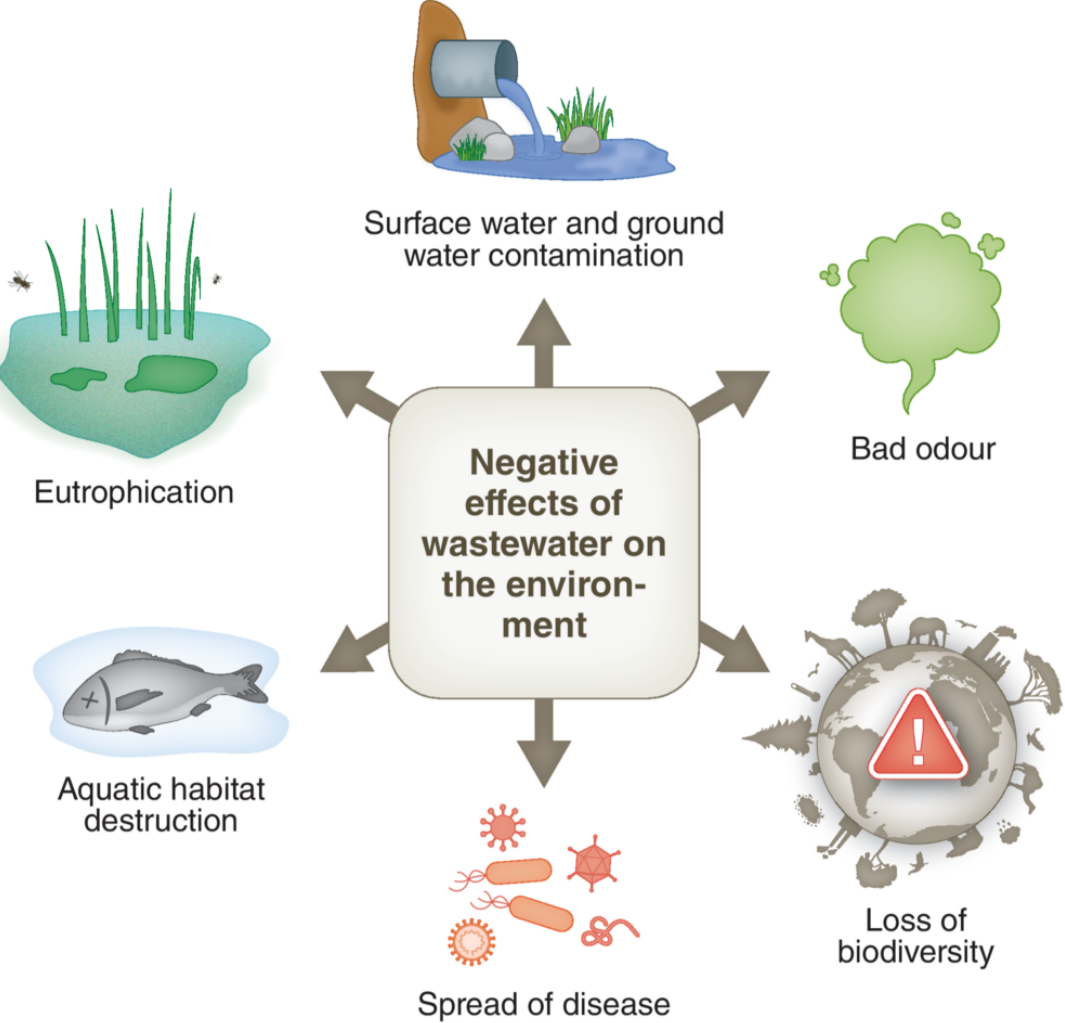
- Sewage contains large amounts of biodegradable organic waste.
- Decomposer bacteria feed on this waste.
- Their population increases rapidly because plenty of food is available.
- More bacteria means more respiration takes place.
Stage 2: Dissolved Oxygen Decreases
- As bacteria respire:
- They remove oxygen dissolved in the water.
- Oxygen levels continue to fall.
- The water may no longer contain enough oxygen for aquatic animals.
- This is called oxygen depletion.
Stage 3: Aquatic Animals Are Affected
- Most aquatic animals, such as fish, insect larvae, crabs and freshwater shrimps, need dissolved oxygen for respiration.
- When oxygen levels become very low:
- Fish find it difficult to breathe.
- Their activity decreases.
- Growth and reproduction are affected.
- Many organisms may die due to lack of oxygen.
Stage 4: Death of Aquatic Organisms
- If oxygen levels continue to decrease:
- Large numbers of fish and other aquatic animals may die.
- Sensitive species disappear first.
- Only organisms that can survive in low-oxygen conditions remain.
- This changes the balance of the ecosystem.
Stage 5: Growth of Harmful Microorganisms
- Untreated sewage may contain disease-causing microorganisms such as bacteria, viruses and protozoa.
- These pathogens can:
- Contaminate drinking water.
- Spread diseases to humans.
- Infect animals that depend on polluted water.
Stage 6: Damage to Aquatic Ecosystems
- Continuous sewage pollution can:
- Reduce water quality.
- Destroy habitats.
- Kill aquatic plants and animals.
- Disrupt food chains.
- Reduce biodiversity.
- Over time, the ecosystem becomes less stable.
⚠️ Biological Consequences of Sewage Pollution
1. Reduction in Dissolved Oxygen
- Decomposer bacteria use oxygen during respiration.
- Oxygen levels in water decrease.
- Less oxygen is available for aquatic organisms.
2. Death of Fish and Other Aquatic Animals
- Fish cannot obtain enough oxygen.
- Large numbers may die if oxygen levels become too low.
- Populations of aquatic animals decrease.
3. Increase in Disease
- Pathogens present in sewage can spread diseases through contaminated water.
- This affects humans, domestic animals and wildlife.
4. Reduced Biodiversity
- Sensitive species disappear.
- Only tolerant species survive.
- Biodiversity decreases.
5. Disruption of Food Chains
- Loss of organisms affects predators and prey.
- Population balance is disturbed.
6. Poor Water Quality
- Water becomes less clean.
- Less suitable for aquatic life.
- Unsafe for drinking unless treated.
🌍 Why Should Sewage Be Treated?
- Remove harmful microorganisms.
- Reduce organic waste.
- Prevent oxygen depletion.
- Protect aquatic organisms.
- Improve water quality.
- Reduce spread of disease.
- Maintain healthy aquatic ecosystems.
📊 Biological Consequences of Sewage Pollution
| Consequence | Explanation |
|---|---|
| Increase in decomposers | Bacteria feed on organic waste and multiply rapidly. |
| Oxygen depletion | Bacteria use dissolved oxygen during respiration. |
| Death of aquatic animals | Fish and other organisms cannot obtain enough oxygen. |
| Spread of disease | Pathogens in sewage infect humans and animals. |
| Reduced biodiversity | Sensitive species die, leaving fewer organisms. |
| Disrupted food chains | Loss of organisms affects ecosystem balance. |
| Poor water quality | Water becomes unsafe for aquatic life and humans. |
🌱 Sequence of Events in Sewage Pollution
| Step | What Happens? |
|---|---|
| 1 | Untreated sewage enters a river or lake. |
| 2 | Decomposer bacteria feed on organic waste. |
| 3 | Bacteria respire and use dissolved oxygen. |
| 4 | Oxygen levels in water decrease. |
| 5 | Aquatic organisms struggle to respire. |
| 6 | Many organisms die, reducing biodiversity and disrupting the ecosystem. |
📘 Quick Recap
Sewage = organic waste + bacteria + nutrients
Bacteria decompose waste → oxygen drops → fish die
Anaerobic decay → foul gases
Nutrients → algal bloom → eutrophication
Pathogens → waterborne diseases
Overall → death of life + polluted, smelly water
🧠 Mnemonic: “SODAP” → Sewage → Oxygen drop → Death → Algae → Pathogens
Understand the Biological Consequences of Eutrophication Caused by Leached Minerals from Fertilisers
📝 Introduction
- Fertilisers are added to soil to increase crop growth by providing minerals like nitrates and phosphates.
- Sometimes, rain washes (leaches) these minerals from soil into nearby rivers and lakes.
- This leads to an excessive growth of algae in water bodies.
- The process of nutrient enrichment followed by oxygen depletion is called eutrophication.
- It mainly affects aquatic ecosystems and can kill many organisms living there.
What is Eutrophication?
Definition
- Eutrophication is the process in which water bodies become rich in nutrients, causing excessive growth of algae and a drop in oxygen levels.
- It usually starts when fertiliser minerals (nitrates/phosphates) enter water systems through runoff or leaching.
⚙️ Step-by-Step Process of Eutrophication
1. Fertiliser Run-off or Leaching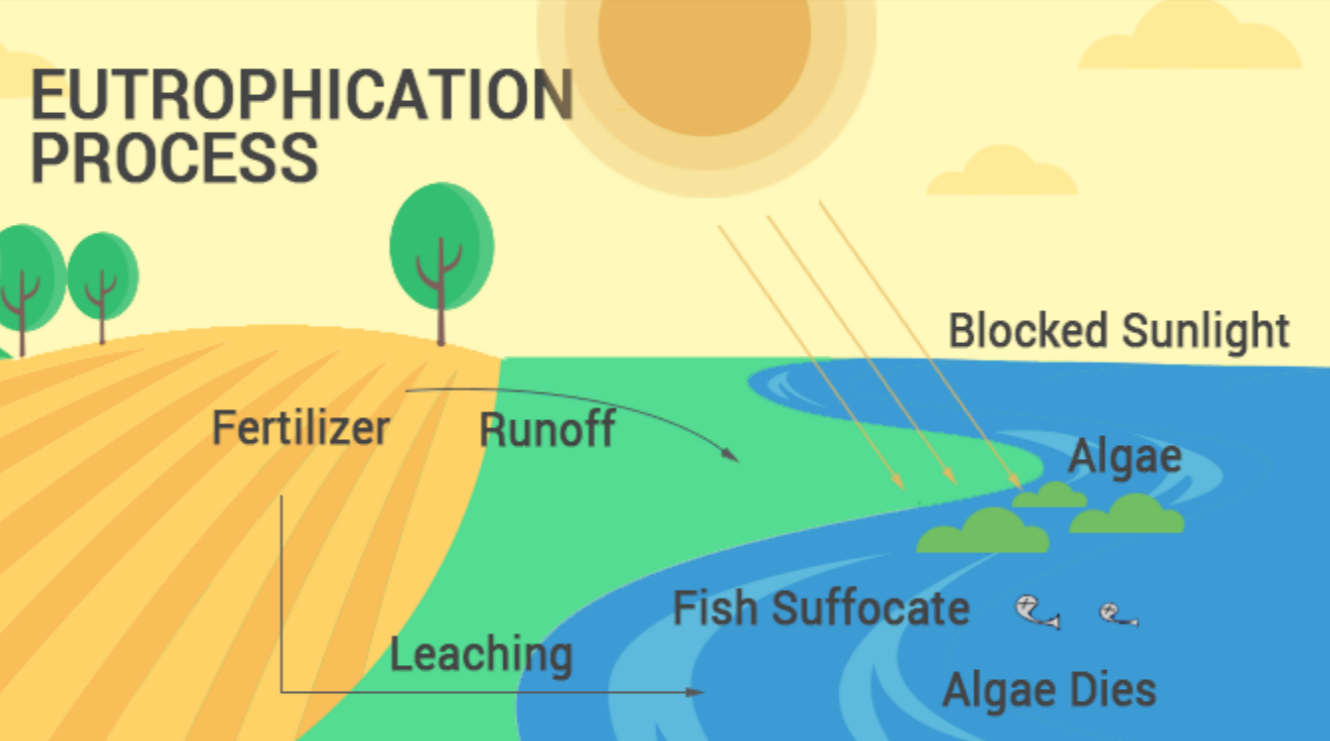
- Farmers use fertilisers to improve crop yield.
- Rainwater washes nitrates and phosphates from the soil.
- These minerals enter rivers, ponds, and lakes.
2. Algal Bloom Formation
- Extra nutrients in water act like food for algae.
- Algae multiply rapidly on the surface.
- This forms a thick layer called an algal bloom.
3. Blocking of Sunlight
- The algal bloom covers the water surface.
- Sunlight cannot reach deeper water plants.
- Submerged plants cannot photosynthesise properly.
4. Death of Aquatic Plants
- Lack of light stops photosynthesis.
- Plants die due to lack of food production.
- This increases dead organic matter in the water.
5. Increase in Decomposers
- Bacteria and fungi begin breaking down dead plants.
- Decomposers multiply rapidly.
- They use oxygen for respiration.
6. Oxygen Depletion
- Decomposers consume large amounts of dissolved oxygen.
- Oxygen levels in water drop sharply.
- This leads to low oxygen (hypoxic) conditions.
7. Death of Aquatic Animals
- Fish and other aquatic animals need oxygen for respiration.
- Low oxygen levels cause suffocation.
- Many organisms die, especially fish and invertebrates.
8. Final Ecosystem Collapse
- Most aquatic life is destroyed.
- Water becomes foul-smelling and lifeless.
- Biodiversity in the water body decreases significantly.
🧬 Biological Consequences of Eutrophication
1. Oxygen depletion
- Dissolved oxygen in water decreases.
- Aquatic animals cannot carry out aerobic respiration.
- Leads to mass fish deaths.
2. Loss of biodiversity
- Sensitive species die due to lack of oxygen.
- Only a few tolerant organisms may survive.
- Overall species variety decreases.
3. Disruption of food chains
- Death of producers (plants) affects herbivores.
- Loss of herbivores affects carnivores.
- Entire aquatic food web becomes unstable.
4. Death of aquatic plants
- No light for photosynthesis.
- Plants die and increase decomposition.
- Further worsens oxygen shortage.
5. Increase in decomposers
- Bacteria population increases.
- More oxygen is used in decomposition.
- This speeds up oxygen depletion.
6. Poor water quality
- Water becomes cloudy, green, and foul-smelling.
- It becomes unsuitable for drinking or farming use.
📊 Eutrophication Summary Flow
| Stage | What Happens |
|---|---|
| Fertiliser runoff | Nitrates and phosphates enter water |
| Algal bloom | Rapid growth of algae on surface |
| Light blocked | Submerged plants cannot photosynthesise |
| Plant death | Aquatic plants die |
| Decomposition | Bacteria break down dead matter |
| Oxygen drop | Oxygen used up in respiration |
| Animal death | Fish and aquatic organisms die |
🌍 Why Eutrophication is Harmful
- It destroys aquatic ecosystems.
- It reduces oxygen levels in water.
- It kills fish and other organisms.
- It disrupts natural food chains.
- It reduces biodiversity in freshwater habitats.
- It makes water unsuitable for human use.
📝 Key Points
- Eutrophication is caused by leached fertiliser minerals (nitrates and phosphates) entering water bodies.
- These nutrients cause rapid algal growth (algal bloom).
- Algae block sunlight, leading to death of aquatic plants.
- Decomposers break down dead plants and use up oxygen.
- Oxygen levels fall, causing death of fish and other aquatic animals.
- The result is a low-oxygen, lifeless aquatic ecosystem with reduced biodiversity.
🌎 Prevention & Control
- Use organic fertilisers (slow nutrient release).
- Buffer strips of grass between farms and rivers.
- Avoid overuse of chemical fertilisers.
- Treat farm wastewater before release.
- Educate farmers on sustainable agriculture.
📘 Quick Recap
Cause: Fertiliser minerals (nitrates & phosphates) leach into water.
Effect: Algal bloom → blocks sunlight → plants die → bacteria use oxygen → fish die.
Result: Low oxygen, foul water, loss of biodiversity.
Keyword: Eutrophication = “Too many nutrients → Too little life.”
Mnemonic: “Leach → Bloom → Breathe → Boom”
(Leaching → Algal bloom → Oxygen loss → Life collapse)