
Biodiversity
📝 Introduction
- Biodiversity refers to the variety of living organisms found in an area.
- It includes all kinds of plants, animals, fungi and microorganisms.
- Areas with many different species are said to have high biodiversity.
- Biodiversity is important because all organisms depend on one another and on their environment.
- Healthy ecosystems usually have a high level of biodiversity.
What is Biodiversity?
Definition
- Biodiversity is the variety of different species of living organisms in a particular area or on Earth as a whole.
In simple words, biodiversity means how many different kinds of living things are present in an area.
What Does Biodiversity Include?
Biodiversity includes all forms of life, such as:
- Plants
- Animals
- Fungi
- Bacteria
- Protists
The greater the variety of these organisms, the higher the biodiversity.
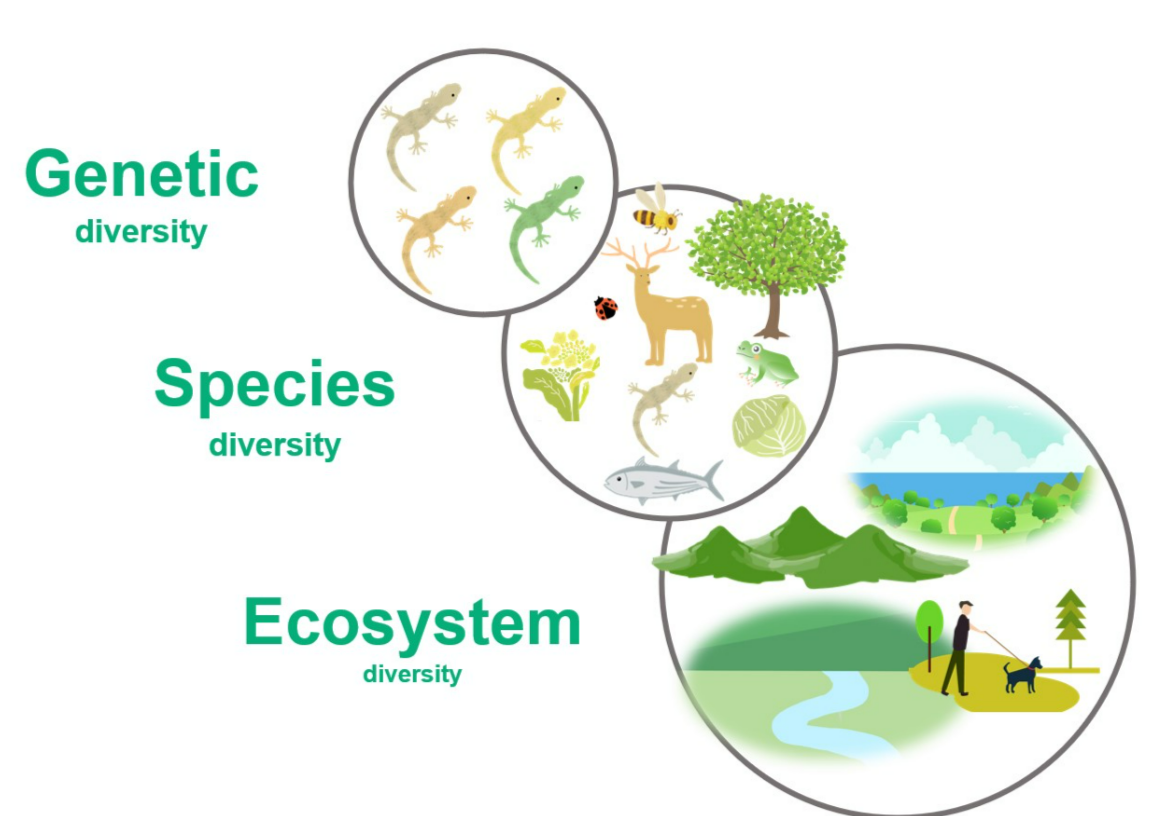
High Biodiversity
An area has high biodiversity when:
- Many different species live there.
- Organisms interact in many food chains and food webs.
- There is a wide variety of habitats.
- The ecosystem is usually healthy and stable.
Examples
- Tropical rainforests
- Coral reefs
- Mangrove forests
These habitats support thousands of different species.
Low Biodiversity
An area has low biodiversity when:
- Only a few species are present.
- There are fewer habitats.
- Food chains are simpler.
- The ecosystem is generally less stable.
Examples
- Deserts
- Polar regions
- Areas heavily affected by pollution or deforestation
🌍 Why is Biodiversity Important?
1. Maintains Stable Ecosystems
- Different species depend on each other for food and survival.
- If one species decreases, others may also be affected.
- High biodiversity helps ecosystems remain balanced.
2. Provides Food
Many living organisms are sources of food.
Examples include:
- Crops such as wheat and rice.
- Fruits and vegetables.
- Fish and livestock.
Greater biodiversity provides a wider variety of food sources.
3. Source of Medicines
Many medicines come from living organisms.
Examples:
- Plants are used to make herbal medicines.
- Some fungi and bacteria produce antibiotics.
Protecting biodiversity helps preserve these valuable resources.
4. Supports Pollination
Many insects, birds and other animals pollinate flowering plants.
Pollination is essential for:
- Fruit production.
- Seed formation.
- Crop yields.
Without pollinators, many food crops would produce fewer fruits and seeds.
5. Helps Nutrient Recycling
Organisms such as bacteria and fungi break down dead plants and animals.
This process:
- Returns minerals to the soil.
- Maintains soil fertility.
- Supports healthy plant growth.
6. Protects Against Environmental Changes
Ecosystems with high biodiversity are usually more able to recover from:
- Diseases.
- Climate changes.
- Natural disasters.
Different species respond differently to environmental changes, making the ecosystem more resilient.
🌱 Factors That Affect Biodiversity
Biodiversity can increase or decrease depending on environmental conditions.
Some factors that reduce biodiversity include:
- Deforestation.
- Pollution.
- Climate change.
- Habitat destruction.
- Overhunting and overfishing.
- Introduction of invasive species.
These factors can reduce the number of species living in an area.
🌍 Examples of Biodiversity
| Habitat | Biodiversity |
|---|---|
| Tropical rainforest | Very high biodiversity |
| Coral reef | Very high biodiversity |
| Grassland | Moderate biodiversity |
| Desert | Low biodiversity |
| Polar region | Low biodiversity |
🌿 Biodiversity and Ecosystems
| Ecosystem with High Biodiversity | Ecosystem with Low Biodiversity |
|---|---|
| Many different species | Few species |
| Complex food webs | Simple food chains |
| More stable ecosystem | Less stable ecosystem |
| Better able to recover from changes | More easily affected by disturbances |
📝 Quick Recap
Biodiversity = variety of life (species + genes + ecosystems).
Essential for resources, stability, adaptation, and survival.
Threatened by human activities (deforestation, pollution, climate change).