
Resultant Force Along a Line
When two or more forces act on an object along the same straight line, they can be combined to find a single force called the resultant force.
The resultant force determines how the object moves.
What Is Resultant Force?
The resultant force is the single force that has the same effect as all the forces acting together.
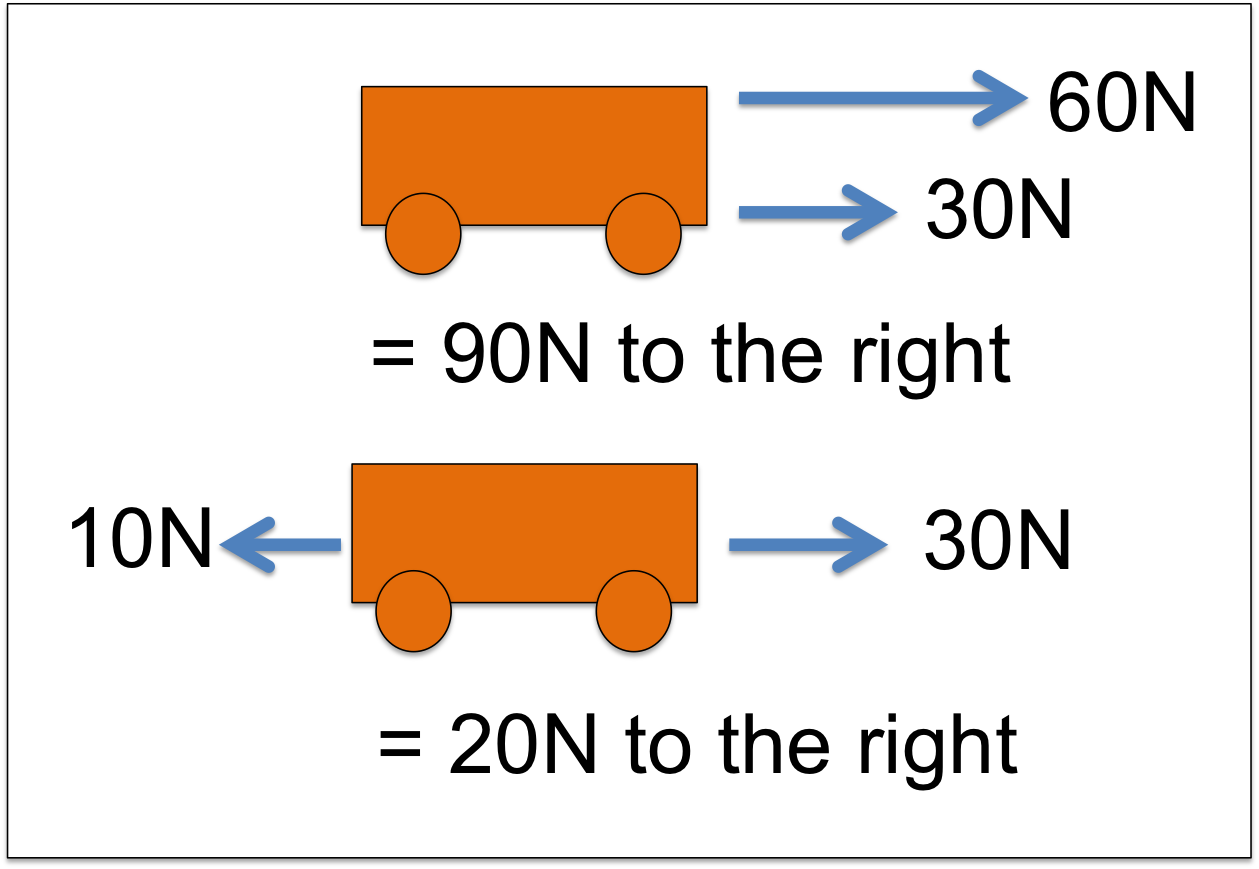
- If the resultant force is not zero, the object will accelerate.
- If the resultant force is zero, the object is in equilibrium.
Forces Acting in the Same Direction
When forces act in the same direction along a line, they are added together.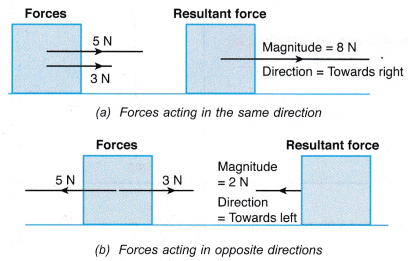
\( \mathrm{Resultant\ force = F_1 + F_2 + F_3 + \dots} \)
- The resultant force acts in the same direction.
- The magnitude increases.
Forces Acting in Opposite Directions
When forces act in opposite directions along a line, they are subtracted.
\( \mathrm{Resultant\ force = larger\ force – smaller\ force} \)
- The resultant force acts in the direction of the larger force.
- If forces are equal, the resultant force is zero.
Choosing a Direction
To avoid confusion:
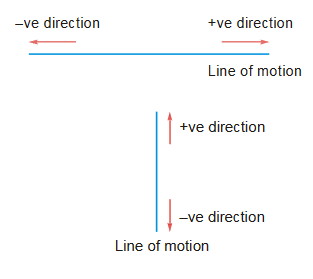
- Choose one direction as positive (e.g. right or upwards).
- Forces in the opposite direction are negative.
- Add the forces algebraically.
Key Idea
- Only forces acting along the same line can be added directly.
- Direction is always important.
- The resultant force determines acceleration.
Important Points to Remember
- Always include direction with your answer.
- Forces are measured in newtons (N).
- A zero resultant force does not mean no forces are acting.
Example
Two forces act on a box in the same direction: \( \mathrm{6\ N} \) and \( \mathrm{4\ N} \). Calculate the resultant force.
▶️ Answer / Explanation
The forces act in the same direction, so they are added.
\( \mathrm{Resultant\ force = 6 + 4 = 10\ N} \)
The resultant force acts in the same direction.
Example
Two forces act on a trolley along a straight line: \( \mathrm{12\ N} \) to the right and \( \mathrm{7\ N} \) to the left. Calculate the resultant force.
▶️ Answer / Explanation
The forces act in opposite directions, so they are subtracted.
\( \mathrm{Resultant\ force = 12 – 7 = 5\ N} \)
The resultant force is \( \mathrm{5\ N} \) to the right.