
Generation of Electricity by Electromagnetic Induction
Electricity can be generated when there is a change in magnetic field through a conductor. This can be achieved either by rotating a magnet inside a coil or by rotating a coil inside a magnetic field. This process is known as electromagnetic induction and is the basis of electric generators.
Key Principle
Statement: A voltage is induced when a conductor or coil experiences a changing magnetic field.
Key idea: It is the change in magnetic field, not the presence of a magnetic field alone, that produces electricity.
Rotating a Magnet Inside a Coil
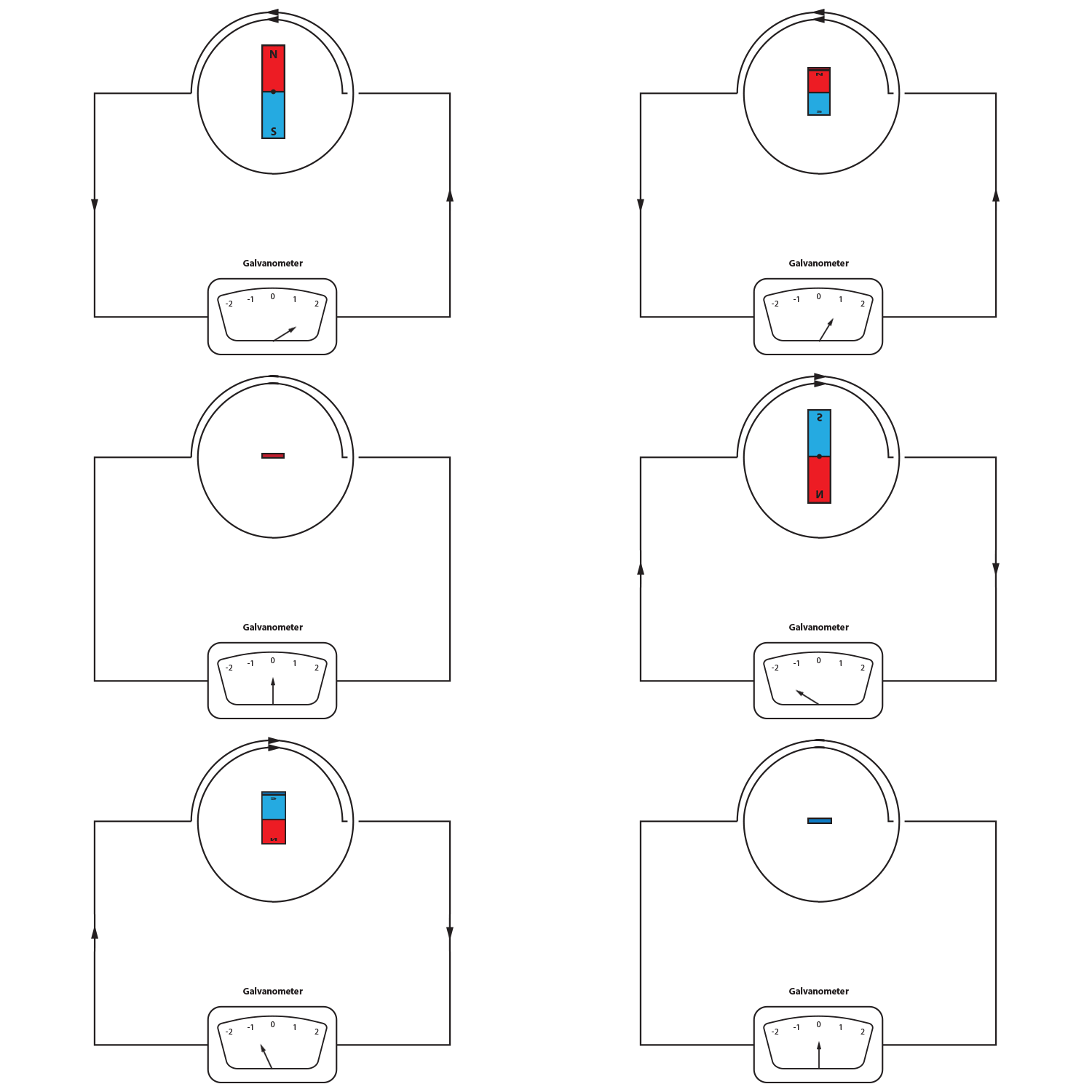
Description:
- A coil of wire is connected to an external circuit.
- A magnet is rotated inside the coil.
- The magnetic field through the coil continuously changes.
- This change induces a voltage across the coil.
- An alternating voltage is produced.
Reason: Rotation causes the magnetic field linking the coil to increase and decrease repeatedly.
Rotating a Coil Inside a Magnetic Field
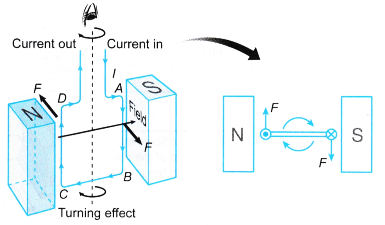
Description:
- A rectangular coil is placed between magnetic poles.
- The coil is rotated mechanically.
- The sides of the coil cut magnetic field lines.
- A voltage is induced in the coil.
- The induced voltage alternates as the coil rotates.
Key idea: The changing angle between the coil and the magnetic field causes continuous induction.
Why the Voltage Is Alternating
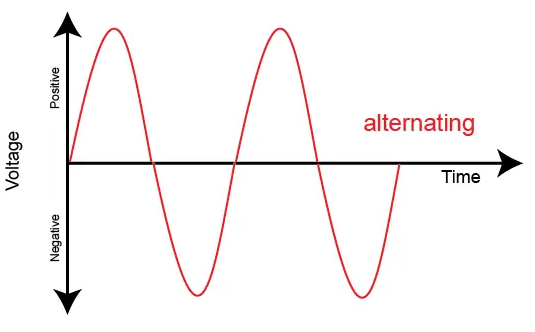
- Each half-turn reverses the direction of motion of the coil sides.
- This reverses the direction of the induced voltage.
- The output is alternating current (a.c.).
Factors Affecting the Size of the Induced Voltage
The size of the induced voltage depends on the rate of change of magnetic field.
- Speed of rotation: Faster rotation → larger induced voltage.
- Magnetic field strength: Stronger field → larger induced voltage.
- Number of turns in the coil: More turns → larger induced voltage.
- Area of the coil: Larger area → larger induced voltage.
Key idea: Anything that increases how quickly field lines are cut increases the induced voltage.
Example
A generator consists of a coil rotating between the poles of a magnet. The rotation speed is doubled. Describe and explain the effect on the induced voltage.
▶️ Answer / Explanation
- Doubling the speed increases the rate of change of magnetic field.
- The coil cuts magnetic field lines more quickly.
- A larger voltage is induced.
- The peak voltage increases.
Example
Two generators are identical except that one has twice the number of turns in its coil. Both rotate at the same speed in the same magnetic field. Explain which generator produces the larger induced voltage.
▶️ Answer / Explanation
- Each turn contributes to the induced voltage.
- More turns increase total field linkage change.
- The generator with twice the turns produces a larger voltage.
- The rotation speed and field strength are unchanged.