
Structure of the Universe
The universe has a clear large-scale structure. Astronomers describe this structure by grouping objects from the largest scale to the smallest.
Key Statements
- The universe is a large collection of billions of galaxies.
- A galaxy is a large collection of billions of stars.
- Our solar system is in the Milky Way galaxy.
The Universe

Description:
- The universe contains all matter and energy.
- It is made up of billions of galaxies.
- Each galaxy is separated by vast distances.
Key idea: The universe is the largest structure studied in astrophysics.
Galaxies
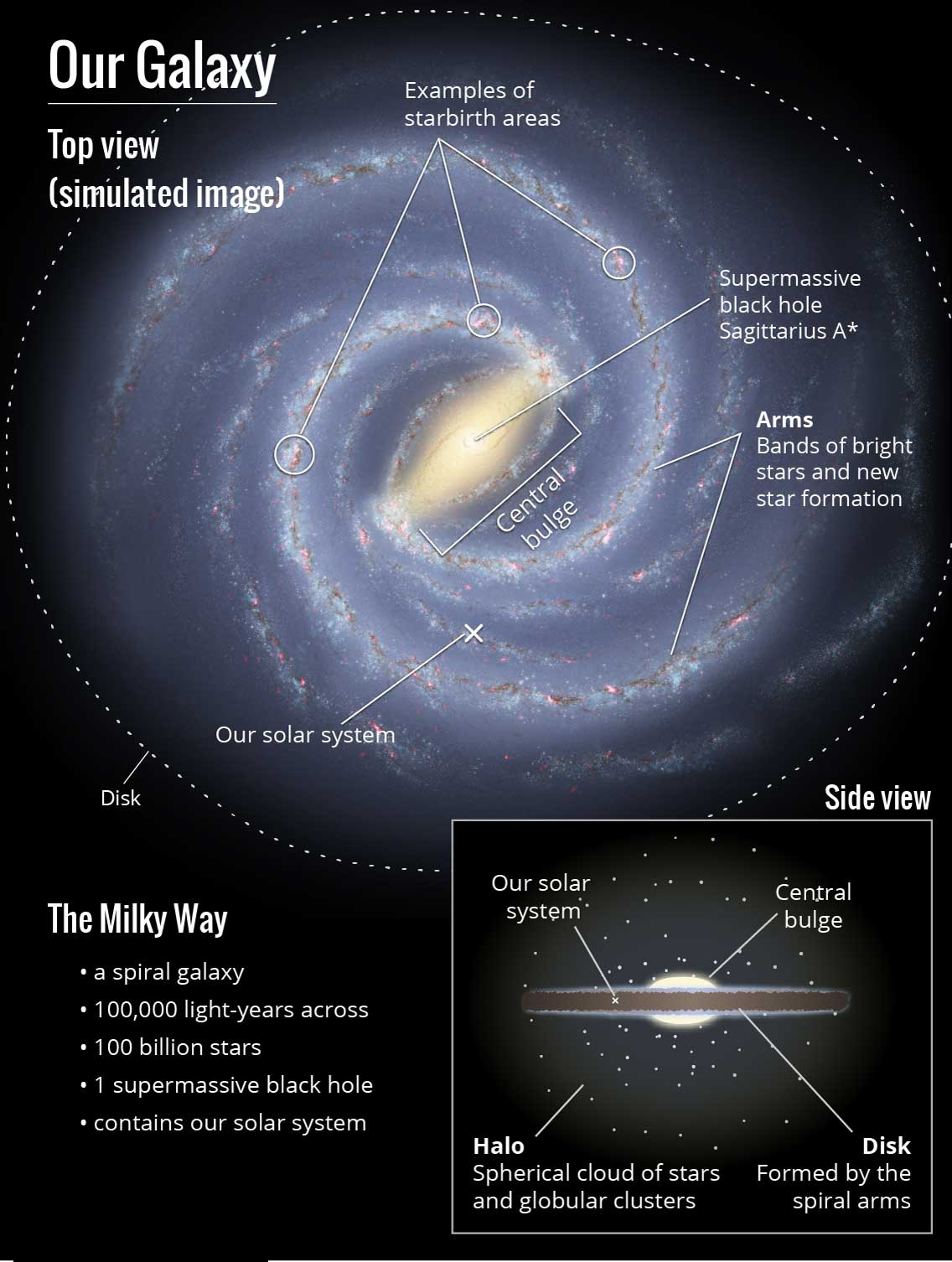
Description:
- A galaxy is a huge collection of stars.
- Galaxies also contain planets, gas, and dust.
- They are held together by gravity.
Important: A single galaxy can contain billions of stars.
The Milky Way and Our Solar System
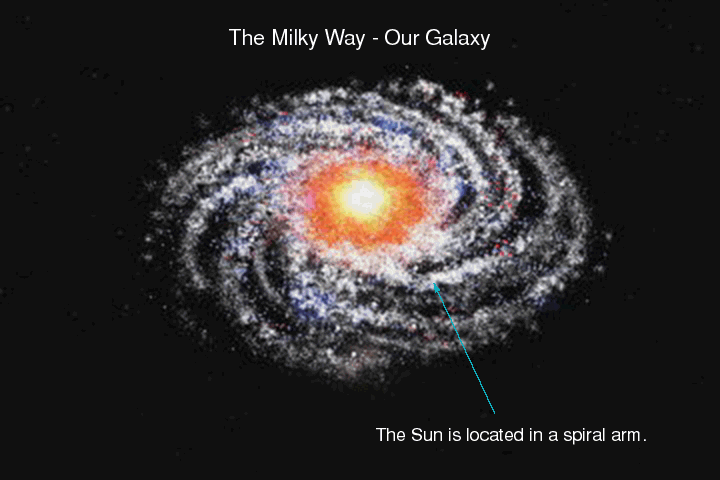
Description:
- The Milky Way is our home galaxy.
- It contains billions of stars.
- The Sun is one of these stars.
- The solar system orbits the centre of the Milky Way.
Key idea: Earth is part of the solar system, which is part of the Milky Way galaxy.
Hierarchy of Structures (Largest → Smallest)
- Universe
- Galaxies
- Stars
- Solar systems
- Planets
Exam tip: Always state this order clearly in written answers.
Example
State the relationship between the universe, galaxies, and stars.
▶️ Answer / Explanation
- The universe contains many galaxies.
- Each galaxy contains many stars.
- Stars can have planetary systems.
Example
Explain where our solar system is located within the universe.
▶️ Answer / Explanation
- Our solar system is part of the Milky Way galaxy.
- The Milky Way is one of billions of galaxies.
- These galaxies together make up the universe.