
Plant-Derived Substances with Antimicrobial & Therapeutic Properties
🌱 Introduction
Plants produce a variety of chemical compounds to protect themselves from pathogens such as bacteria, fungi, and insects.
Many of these natural compounds also show antimicrobial and healing properties in humans.
These substances form the foundation of many modern medicines derived from plants.
🧪 Why Plants Produce These Substances
- Act as natural defenses against microbes and herbivores.
- Help seal wounds or prevent infection in damaged tissue.
- Some produce bitter-tasting or toxic compounds to deter predators.
🌿 Major Types of Bioactive Plant Substances
| Type | Source Example | Main Function / Effect |
|---|---|---|
| Alkaloids | Morphine (from opium poppy) | Pain relief (analgesic). Acts on the nervous system. |
| Phenols & Tannins | Tea leaves, oak bark | Antimicrobial – damage bacterial cell membranes, denature proteins. |
| Terpenoids | Mint oil, eucalyptus oil | Antifungal and antiseptic – disrupt microbial membranes. |
| Glycosides | Foxglove (Digitalis) | Affect heart rhythm – used in cardiac drugs. |
| Flavonoids | Citrus fruits, onions | Antioxidant and anti-inflammatory properties. |
| Essential Oils | Clove oil, thyme, oregano | Strong antibacterial and antifungal activity. |
🧫 Examples of Antimicrobial Action
| Plant Substance | Target Microbe | Mode of Action |
|---|---|---|
| Tea tree oil | Bacteria & fungi | Disrupts cell membrane integrity. |
| Garlic (allicin) | Broad-spectrum | Blocks enzymes in microbial metabolism. |
| Clove oil (eugenol) | Gram-positive bacteria | Denatures proteins in the cell wall. |
| Neem extract | Fungi, bacteria | Interferes with cell wall synthesis. |
💊 Therapeutic Uses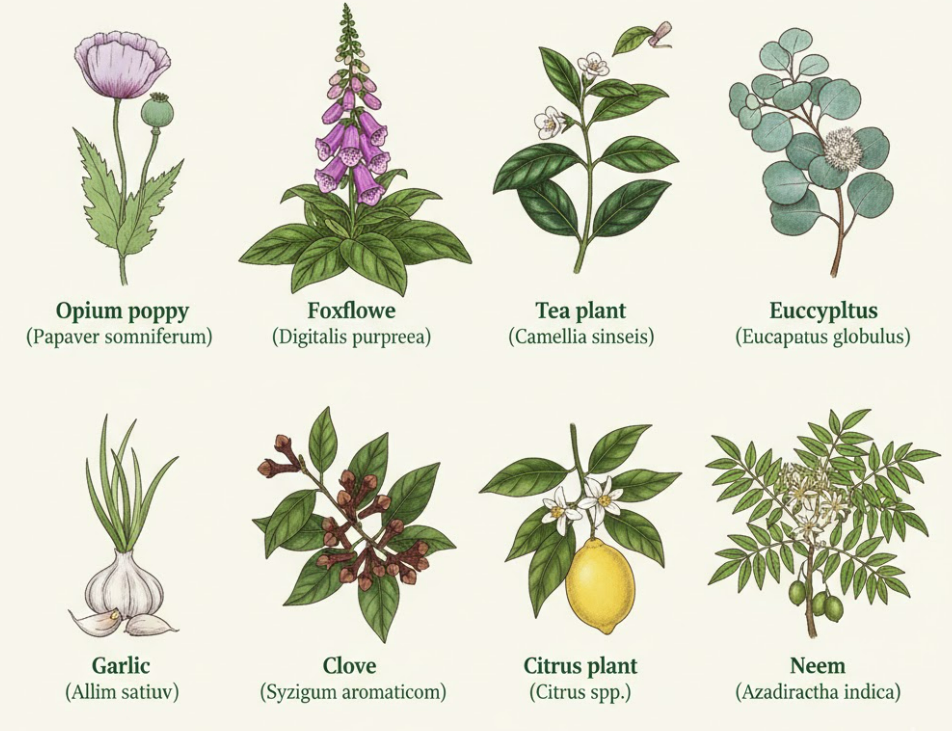
- Pain relief: Morphine, codeine
- Heart medication: Digitalis (from foxglove)
- Antimalarial: Quinine (from cinchona bark)
- Anticancer: Taxol (from yew tree)
- Antiseptic creams / mouthwashes: Contain plant oils like eucalyptus or thymol
⚖️ Importance for Humans
- Provide natural alternatives to synthetic drugs.
- Act as a source of new medicines through research.
- Encourage sustainable and traditional medicine practices.
- Help combat antibiotic resistance by discovering new antimicrobials.
🧩 Summary Table
| Property | Example Plant / Compound | Function |
|---|---|---|
| Antimicrobial | Tea tree, garlic, clove | Kill or inhibit microbes |
| Antiviral | Eucalyptus, neem | Stop viral replication |
| Anti-inflammatory | Aloe vera, turmeric | Reduce swelling, promote healing |
| Analgesic | Opium poppy | Relieve pain |
| Cardiac stimulant | Foxglove | Strengthen heartbeat |
📦 Quick Recap
| Key Idea | Hint / Trick |
|---|---|
| Plants make chemicals for defense, humans use them for medicine | “Nature’s pharmacy” – most modern drugs trace back to plants |
| GARLIC mnemonic | “Germs Are Really Less Intense Creatures” |