
Structure & Function of Starch and Cellulose
📌 Introduction:
Polysaccharides are large carbohydrate molecules made by joining many monosaccharides (like glucose) through glycosidic bonds.
Two of the most important polysaccharides in plants are:
- Starch → Energy storage molecule
- Cellulose → Structural support molecule
Both are made from glucose, but the type of glucose (α or β) and the bonding pattern change their structure and function completely.
🍯 Structure & Function of Starch
Composition:
Polymer of α-glucose made up of two components: Amylose and Amylopectin.
| Component | Structure | Bonds | Function |
|---|---|---|---|
| Amylose | Long, unbranched chain of α-glucose | 1,4-glycosidic bonds | Forms a coiled helix → compact for storage |
| Amylopectin | Branched polymer of α-glucose | 1,4 and 1,6-glycosidic bonds | Branches allow quick release of glucose when needed |
Key Features: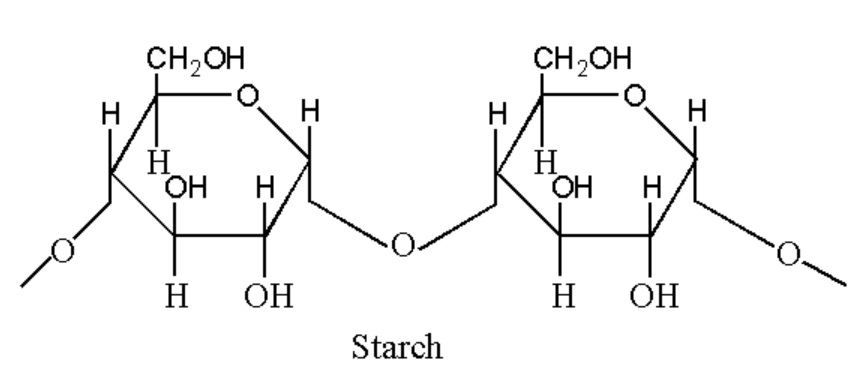
- Insoluble → doesn’t affect osmotic balance in cells
- Compact → fits many glucose units in small space
- Easily hydrolysed → enzymes can break it down for respiration
- Stored in amyloplasts (especially in seeds, tubers, roots)
🧠 Mnemonic: “Amylose coils, Amylopectin spreads”
🌿 Structure & Function of Cellulose
Composition: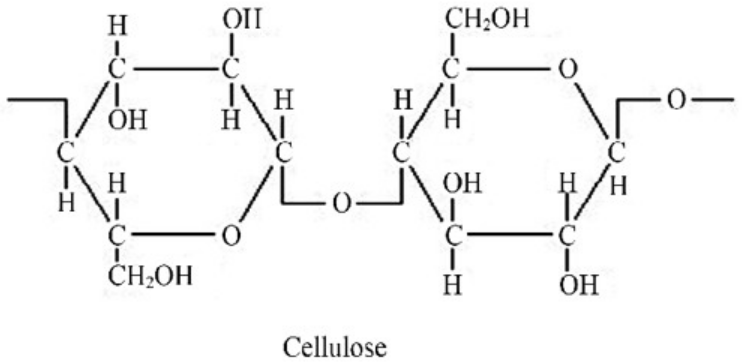
Polymer of β-glucose. Each β-glucose is rotated 180° compared to the next one, forming straight, unbranched chains with 1,4-glycosidic bonds.
Hydrogen Bonding:
Adjacent cellulose chains run parallel and form hydrogen bonds between -OH groups. Many chains held together form microfibrils, which bundle further into fibres → giving high tensile strength.
Structure hierarchy: β-glucose → cellulose chain → microfibril → fibre → cell wall
| Function | Explanation |
|---|---|
| Support & Rigidity | Microfibrils resist stretching → maintain cell shape |
| Permeability | Cell wall allows water and solutes to pass freely |
| Protection | Prevents cell bursting when water enters |
| Fiber Strength | Hydrogen bonds (though weak individually) are strong collectively |
💡 Note: Each cellulose molecule forms hundreds of hydrogen bonds, making it strong yet lightweight.
🔬 Comparison: Starch vs Cellulose
| Feature | Starch | Cellulose |
|---|---|---|
| Monomer | α-glucose | β-glucose |
| Bond type | 1,4 (and 1,6 in amylopectin) | 1,4 only |
| Chain structure | Coiled / branched | Straight, unbranched |
| Hydrogen bonds | Within molecule (coiling) | Between molecules (microfibrils) |
| Function | Energy storage | Structural strength |
| Location | Amyloplasts, seeds, tubers | Plant cell wall |
| Digestible by humans? | Yes (amylase breaks it) | No (lack cellulase enzyme) |
🌾 Role of Hydrogen Bonds in Cellulose
Each β-glucose has -OH groups forming hydrogen bonds with neighboring chains.
Though individual bonds are weak, collectively they provide enormous tensile strength → making cellulose insoluble, rigid, and perfect for support.
💭 Think of hydrogen bonds as tiny threads – alone weak but woven together → unbreakable fabric.
📚 Summary Table
| Property | Starch | Cellulose |
|---|---|---|
| Monomer | α-glucose | β-glucose |
| Shape | Coiled (amylose) / Branched (amylopectin) | Straight chains |
| Bonds | 1,4 and 1,6 glycosidic | 1,4 glycosidic |
| Hydrogen Bonds | Within Chain | Between chains |
| Function | Energy storage | Structural support |
| Solubility | Insoluble | Insoluble |
| Found in | Storage tissues | Cell wall |
⚡ Quick Recap:
Starch = α-glucose → Coiled + Branched → Energy storage
Cellulose = β-glucose → Straight + Cross-linked → Structural strength
Hydrogen bonds → Connect cellulose chains → Form strong microfibrils
Microfibrils → Fibres → Cell wall = Strength + Rigidity
💡 Tip: Alpha-glucose bends (storage), Beta-glucose bonds (structure)
Arrangement of Cellulose Microfibrils & Secondary Thickening in Xylem & Sclerenchyma
🌱 Introduction:
Plant strength mainly comes from the cell wall, especially the arrangement of cellulose microfibrils and secondary thickening. These two factors determine how rigid, strong, and flexible plant tissues like xylem vessels and sclerenchyma fibres are which humans then exploit for fibres, ropes, paper, etc.
🧱 Structure of Plant Cell Wall
Primary cell wall: Thin, flexible, contains randomly arranged cellulose microfibrils.
Secondary cell wall: Thicker, forms after the cell stops growing, with organized microfibrils and lignin deposition for extra strength.
| Component | Function |
|---|---|
| Cellulose microfibrils | Provide tensile strength & flexibility |
| Lignin | Hard, waterproof polymer → makes wall rigid & prevents collapse |
| Hemicellulose & Pectin | Glue-like substances → bind microfibrils together |
🌿 Arrangement of Cellulose Microfibrils
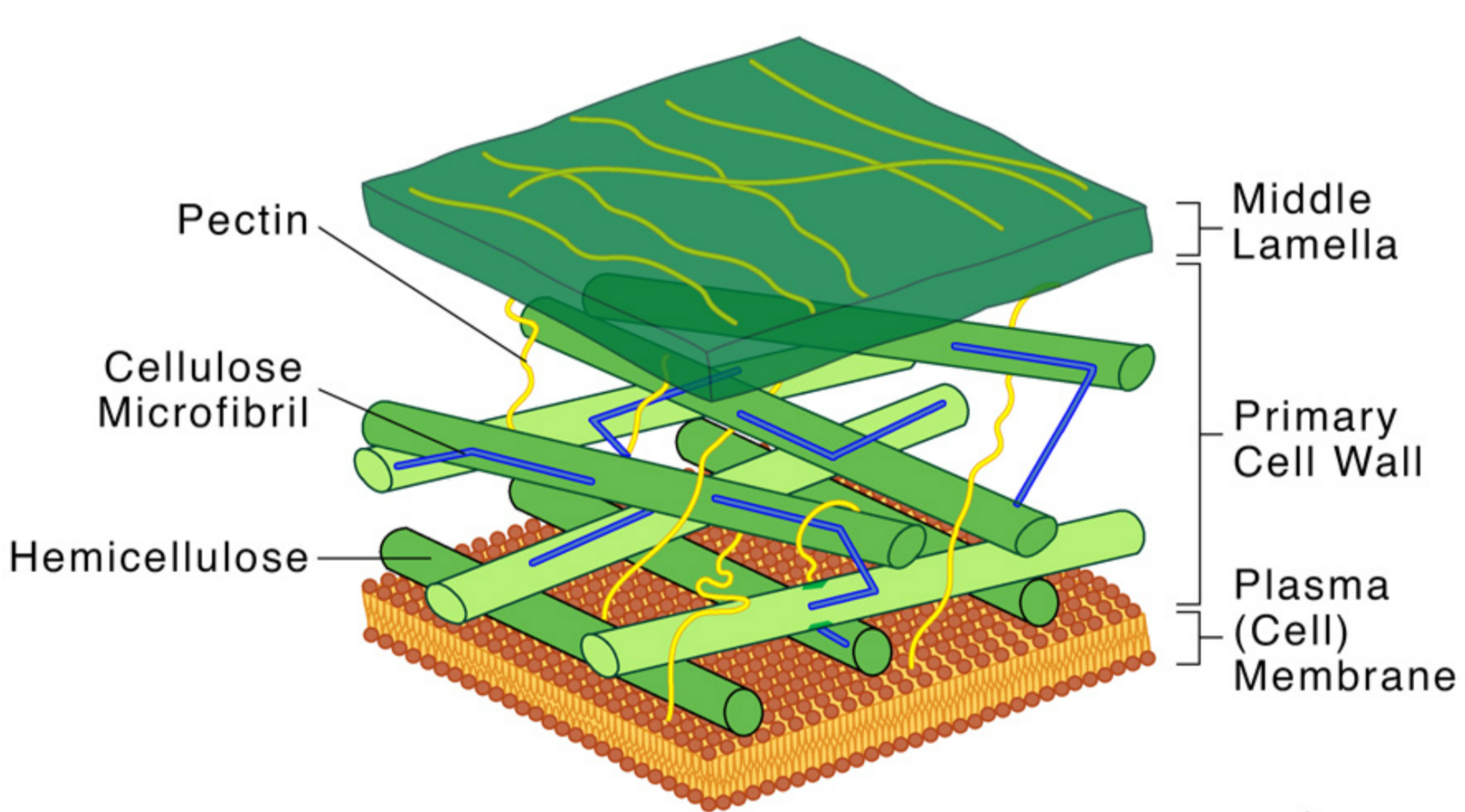
The angle and layering of cellulose microfibrils in cell walls control how the cell behaves mechanically.
Arrangement:
- Microfibrils are laid in layers, each with fibres running in different directions (helical or criss-cross pattern).
- This gives strength in multiple directions, resistance to stretching or bending, and support for upright growth.
📘 Example: In xylem vessels, microfibrils are often arranged spirally or helically, allowing the vessel to stretch slightly but not collapse under pressure.
🌳 Secondary Thickening
Definition: Secondary thickening = deposition of extra cellulose, lignin, and hemicellulose inside the primary wall after cell growth ends.
Purpose:
- Increases wall rigidity and thickness
- Provides mechanical strength and waterproofing
- Prevents collapse under tension (especially in xylem)
💧 Role in Xylem Vessels
| Feature | Description | Function |
|---|---|---|
| Thick lignified secondary walls | Lignin deposited in spiral, annular, or reticulate patterns | Prevents collapse during water transport |
| Helical / ring-like cellulose microfibril arrangement | Allows some flexibility | Enables xylem to withstand pressure changes |
| No cytoplasm or end walls | Continuous hollow tube | Efficient water conduction |
| Lignin waterproofing | Impermeable to water | Prevents leakage & decay |
Result: Xylem vessels become strong, hollow pipes perfect for transporting water under tension.
🧵 Role in Sclerenchyma Fibres
| Feature | Description | Function |
|---|---|---|
| Evenly thickened, lignified walls | Uniform cellulose & lignin layers | Gives rigidity and flexibility |
| Parallel cellulose microfibrils | Aligned along cell length | High tensile strength |
| Dead cells (no cytoplasm) | Only cell walls remain | Makes tissue lightweight yet strong |
Result: Sclerenchyma fibres are tough, elastic, and durable ideal for mechanical support in stems and commercial use as plant fibres.
🧺 Human Use of Plant Fibres
| Property | Reason (Structure) | Human Use |
|---|---|---|
| High tensile strength | Parallel cellulose microfibrils | Ropes, textiles (flax, jute, hemp) |
| Flexibility with toughness | Helical cellulose arrangement | Natural fabrics |
| Light but strong | Lignin + cellulose combo | Paper, mats, composites |
| Water resistance | Lignin waterproofs fibres | Flooring, furniture, crafts |
Mnemonic: “Cellulose gives strength, Lignin gives life” together they make xylem & sclerenchyma strong and useful.
🔬 Summary Table
| Feature | Xylem Vessel | Sclerenchyma Fibre |
|---|---|---|
| Cell type | Dead, hollow tube | Dead, elongated cell |
| Cell wall | Thick, lignified secondary wall | Thick, lignified wall |
| Cellulose arrangement | Spiral / annular microfibrils | Parallel microfibrils |
| Main role | Transport + support | Mechanical support |
| Flexibility | Some (due to spiral lignin) | Limited |
| Human use | Wood, building material | Rope, fabric, paper |
⚡ Quick Recap:
Cellulose microfibrils → Tensile strength & flexibility
Secondary thickening (lignin) → Rigidity & waterproofing
Xylem → Spiral thickening → strong yet flexible water pipes
Sclerenchyma → Parallel fibres → tough plant fibres
Humans exploit → jute, flax, hemp → ropes, textiles, paper
💡 Shortcut Tip: Spiral = Stretchy (Xylem) | Parallel = Strong (Sclerenchyma)