
Using Data to Predict Future Climate Change
🌱 Introduction
Scientists study climate patterns using data collected over years. From this data, they create predictions using a method called extrapolation and build climate models. These models help us understand future temperature rise, sea-level change and extreme weather but they are not perfect.
📊 1. Extrapolation for Climate Predictions
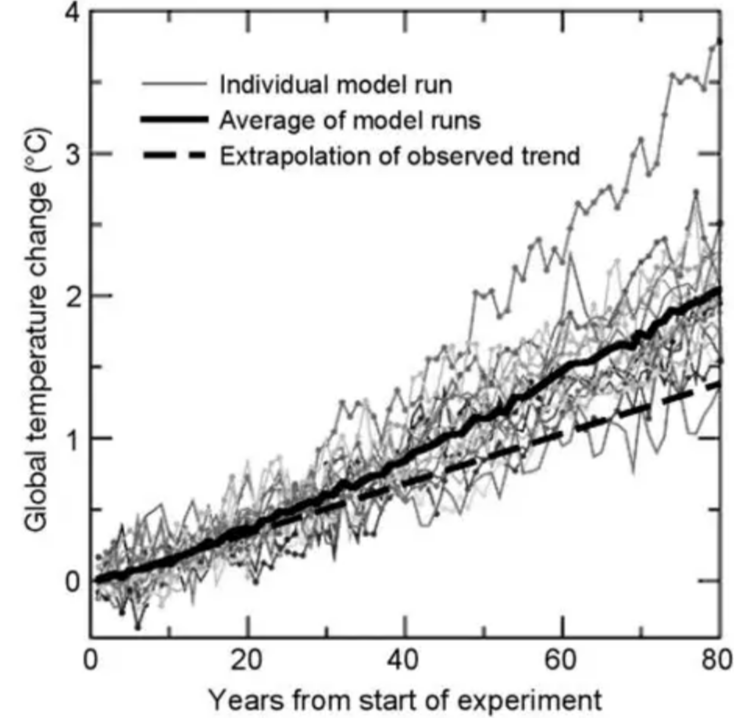
What is extrapolation?
- It means extending a trend into the future based on past data.
- If CO₂ levels or temperatures have been rising, scientists use that pattern to predict future values.
Why it works
- Many climate factors show steady trends over long periods.
- These trends help build mathematical predictions.
How it’s used in climate studies
- Predicting future global temperature rise.
- Forecasting sea-level changes.
- Estimating future CO₂ concentrations.
- Predicting changes in rainfall patterns, storms or drought risks.
Memory Trick
“Past pattern → future forecast”
🖥️ 2. Climate Models and Their Use
What are climate models?
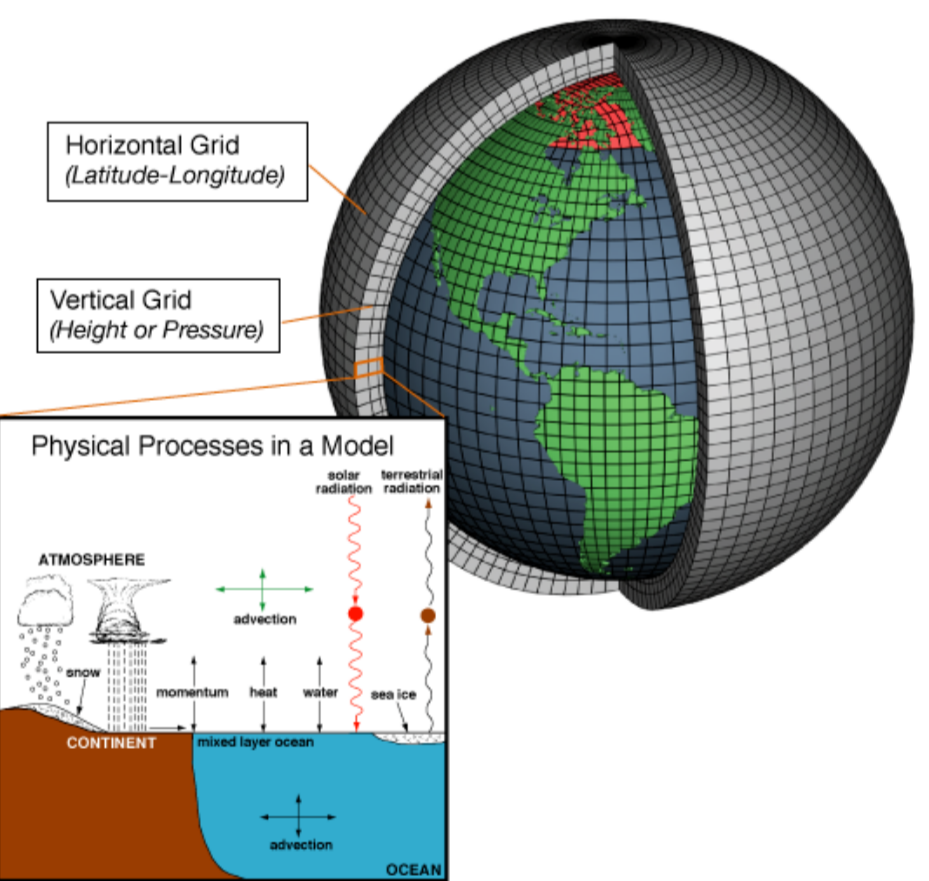
They are computer-based simulations that use real data (temperature, CO₂, ice cover, wind patterns etc.) to predict future climate conditions.
What they include
- Greenhouse gas levels
- Ocean currents
- Solar radiation
- Land and ice surface changes
- Atmosphere interactions
What they help us with
- Predicting warming rates
- Planning for extreme weather
- Understanding long-term climate consequences
- Helping governments make environmental policies
⚠️ 3. Limitations of Climate Models
Climate models are powerful, but not perfect. Here’s why:
1. Climate is extremely complex
- Too many interacting factors (oceans, atmosphere, clouds, ice).
- Even small errors can grow over time.
2. Incomplete or uncertain data
- Past climate records may be limited.
- Some regions have poor long-term data.
3. Future human behaviour is unpredictable
- Future emissions depend on future choices.
- Models must assume scenarios that may or may not happen.
4. Small-scale events are hard to model
- Local storms, cloud formation and volcanic eruptions are difficult to predict accurately.
Memory Trick
“Models guide, not guarantee”
📊 Summary Table
| Concept | Key Idea | Why Important |
|---|---|---|
| Extrapolation | Extending past trends into future predictions | Helps forecast temperature rise, CO₂ levels |
| Climate models | Computer simulations using climate data | Used for climate planning and risk analysis |
| Limitations | Incomplete data, complex systems, uncertain future emissions | Means predictions are estimates, not exact |
✔ Extrapolation uses past trends to predict future climate
✔ Climate models combine huge data sets to simulate future conditions
✔ Models help forecast warming, weather patterns and sea-level rise
✔ Limitations: complex climate, uncertain data, unpredictable human actions
✔ Remember: models suggest possibilities, not precise outcomes