
Effects of Climate Change on Plants and Animals
🌱 Introduction
Climate change is not just about rising temperatures. Two major changes that directly impact living organisms are:
- Altered rainfall patterns
- Shifted seasonal cycles
These changes affect where organisms can live, how they grow, when they reproduce, and how long their life cycles last.
🌦️ Changing Rainfall Patterns
What happens when rainfall becomes irregular?
- Some areas get too much rain, causing floods.
- Others face drought due to too little rain.
- Rainfall becomes unpredictable, disrupting ecosystems.
Effects on Plants
- Water shortage reduces growth, photosynthesis, and seed formation.
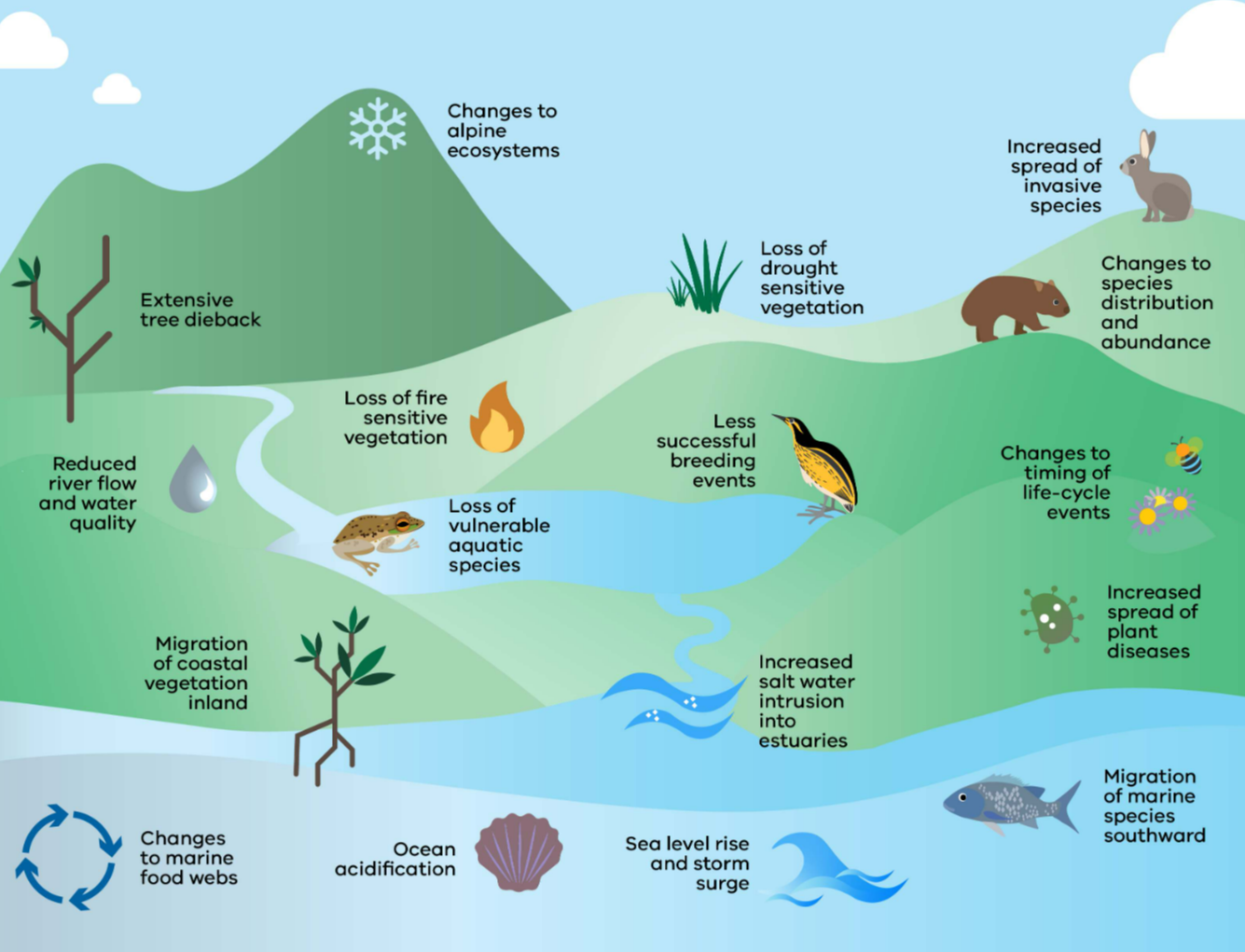 Overwatering or waterlogging can damage roots.
- Drought-tolerant species may outcompete others, changing plant distribution.
- Flowering and fruiting may shift or fail entirely.
Effects on Animals
- Herbivores migrate to find food if plants decline.
- Water-dependent animals struggle during droughts.
- Breeding success may drop due to lack of food or nesting areas.
- Moisture-loving species (frogs, insects) shrink in population.
🍁 Changes in Seasonal Cycles
(Also called phenological shifts – timing of seasons changes)
Effects on Plants
- Earlier springs cause early flowering and leafing.
- Delay or mismatch between flowering and pollinator availability harms reproduction.
- Some plants may start complete life cycles earlier, others may shorten theirs.
Effects on Animals
- Birds may migrate earlier or later than usual.
- Insects may hatch earlier, creating timing mismatches with predators or host plants.
- Breeding seasons shift, which may reduce survival of young ones.
- Hibernation/winter dormancy periods get disturbed.
🗺️ Impact on Distribution of Species
- Species move towards poles or higher altitudes where temperatures suit them.
- Local species decline if they cannot adapt quickly.
- New species may enter an ecosystem, altering food chains.
- Some sensitive species face local extinction due to unsuitable climate.
Impact on Development and Life Cycles
- Temperature and season changes alter growth speed.
- Some organisms complete life cycles faster (e.g., insects).
- Some delay reproduction due to stressful conditions.
- Food availability in early life stages may drop, reducing survival rates.
Memory Trick:
“Climate changes timing, timing changes survival” Helps remember that life cycles depend heavily on seasonal timing.
📊 Summary Table
| Factor | Effects on Plants | Effects on Animals |
|---|---|---|
| Irregular rainfall | Reduced growth, failed flowering, shift in distribution | Migration, lower breeding success, population decline |
| Shifted seasons | Early flowering, mismatch with pollinators | Early/late migration, altered breeding, hibernation disturbances |
| Overall species distribution | Plants shift to cooler areas | Animals move towards poles or higher altitudes |
| Life cycle changes | Altered germination and flowering periods | Faster/slower development, survival issues |
⚡ Quick Recap
Rainfall changes: droughts or floods affect plant growth and animal food availability
Season shifts: early springs cause mismatches in flowering, migration, breeding
Species distribution: many shift to poles or hills to survive
Life cycles: timing of growth, reproduction, and development gets disrupted
Rainfall changes: droughts or floods affect plant growth and animal food availability
Season shifts: early springs cause mismatches in flowering, migration, breeding
Species distribution: many shift to poles or hills to survive
Life cycles: timing of growth, reproduction, and development gets disrupted