
Bacteriostatic vs Bactericidal Antibiotics
🌱 Introduction
Antibiotics can control bacterial infections in two main ways. Some stop bacteria from growing, while others kill them directly. Understanding this difference helps explain why certain antibiotics are chosen for different infections.
Bacteriostatic Antibiotics
- These do not kill bacteria.
- They slow or stop bacterial growth and reproduction.
- This gives the immune system time to remove the bacteria.
Useful when:
- The infection is not immediately life-threatening.
- Host immunity is strong enough to clear the slowed-down bacteria.
Common mechanisms: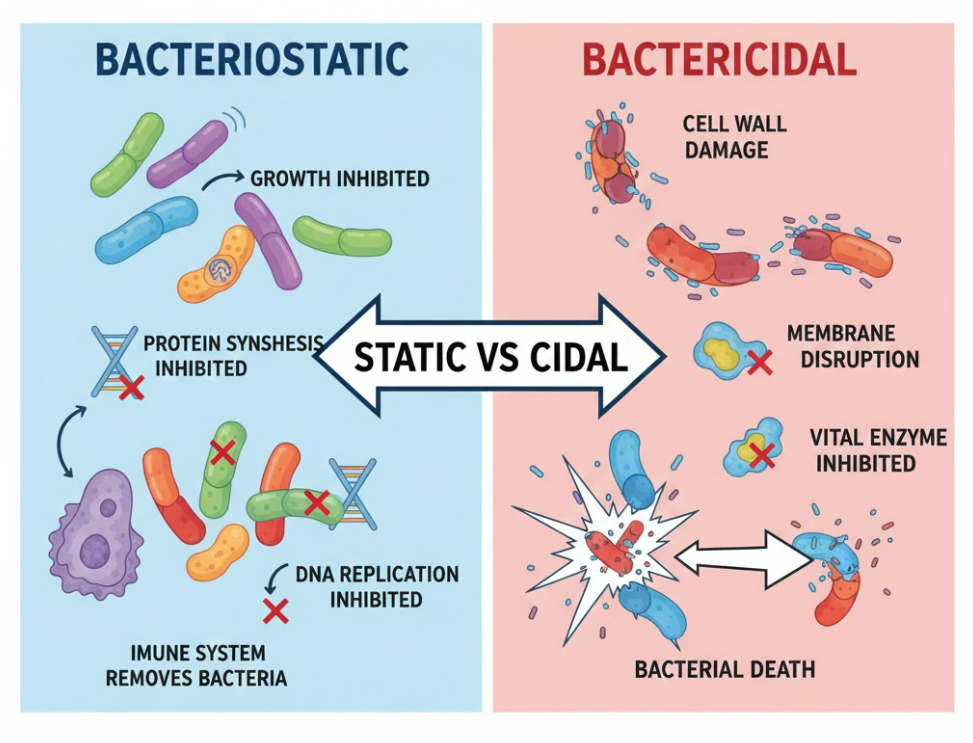
- Inhibit protein synthesis.
- Prevent DNA replication.
- Block metabolic pathways.
Examples:
- Tetracyclines
- Sulfonamides
- Chloramphenicol
Bactericidal Antibiotics
- These kill bacteria directly.
- They destroy the cell wall, cell membrane, or vital enzymes.
- Used for severe or dangerous infections where rapid removal is needed.
Common mechanisms:
- Damage bacterial cell wall.
- Disrupt membrane integrity.
- Inhibit essential enzymes needed for survival.
Examples:
- Penicillins
- Cephalosporins
- Aminoglycosides
📋 Key Differences Table
| Feature | Bacteriostatic | Bactericidal |
|---|---|---|
| Action | Inhibit growth and reproduction | Kill bacteria |
| Effect on bacteria | Bacteria remain alive but cannot divide | Bacteria are destroyed |
| Immune system | Must eliminate remaining bacteria | Less reliance on immune system |
| Usage | Mild to moderate infections | Severe, acute, or dangerous infections |
| Typical Mechanisms | Protein/DNA synthesis inhibition | Cell wall or membrane damage |
🧠 Quick Recap
Bacteriostatic: stop bacterial growth, rely on immune system, not lethal.
Bactericidal: kill bacteria directly, used in serious infections.
Mechanisms differ but both help control infection effectively.
Bacteriostatic: stop bacterial growth, rely on immune system, not lethal.
Bactericidal: kill bacteria directly, used in serious infections.
Mechanisms differ but both help control infection effectively.