
Pathogen Entry Routes and Body Barriers
🌱 Introduction
Pathogens (bacteria, viruses, fungi, parasites) can enter the body through several routes. The body uses both physical and chemical barriers to stop them before they cause disease. These notes cover the main entry points and how key barriers work.
🚪 Major Routes Through Which Pathogens Enter the Body
1. Respiratory Tract
- Inhalation of droplets or aerosols from infected people.
- Pathogens settle in the nose, throat, or lungs.
- Examples: flu virus, TB bacteria.
2. Breaks in the Skin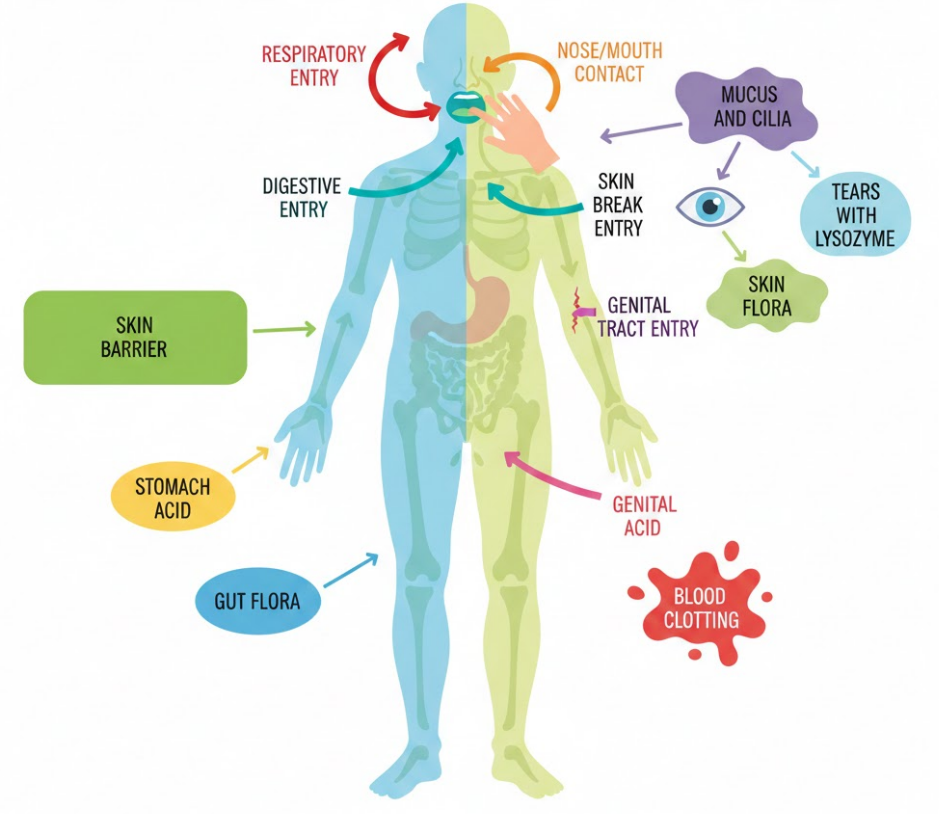
- Cuts, wounds, insect bites, injections.
- Allows direct entry to bloodstream or tissues.
- Example: HIV (via needles), tetanus bacteria.
3. Digestive Tract
- Ingested via contaminated food or water.
- Must survive stomach acid first.
- Examples: Salmonella, cholera.
4. Genital Tract (Sexual Transmission)
- Entry through mucous membranes.
- Example: HIV, chlamydia.
5. Eyes
- Entry via conjunctiva (thin membrane).
- Example: adenoviruses.
6. Nose/Mouth Contact
- Touching contaminated surfaces and then touching face.
- Common for cold and flu viruses.
🛡️ Barriers That Protect the Body From Infection
1. Skin
- Acts as a physical barrier: thick, tough outer layer of dead cells.
- Waterproof and covered with keratin.
- Produces sebum, an oily substance that inhibits bacterial growth.
- Only a problem when broken (cuts, burns).
2. Stomach Acid
- Very low pH (around 1–2).
- Destroys most ingested bacteria and viruses.
- Essential defence for the digestive system.
3. Gut Flora (Intestinal Microbiota)
- Large population of harmless, beneficial bacteria in the intestine.
- They compete with pathogens for space and nutrients.
- Produce chemicals that inhibit pathogen growth.
- Help maintain a healthy gut environment.
4. Skin Flora (Normal Skin Microorganisms)
- Non-harmful bacteria living on the surface of the skin.
- They occupy spaces so pathogenic bacteria cannot colonise easily.
- Produce substances that reduce pathogen growth.
- Outcompete invaders for nutrients.
5. Mucus and Cilia (Airways)
- Mucus traps dust and microbes.
- Cilia push mucus upwards towards the throat to be swallowed and destroyed by stomach acid.
6. Tears and Saliva
- Contain lysozyme, an enzyme that breaks down bacterial cell walls.
7. Blood Clotting
- When skin is broken, clotting quickly seals the wound and prevents microbial entry.
📋 Summary Table
| Route of Entry | Example Pathogens | Barrier Defence |
|---|---|---|
| Respiratory tract | Flu, TB | Mucus, cilia |
| Skin breaks | HIV (needles), tetanus | Skin, clotting |
| Digestive tract | Salmonella | Stomach acid |
| Genital tract | HIV, chlamydia | Mucus, natural flora |
| Eyes | Adenovirus | Tears (lysozyme) |
| Nose/mouth contact | Cold viruses | Skin flora, mucous membranes |
🧠 Quick Recap
Pathogens enter via lungs, wounds, food/water, genital tract, eyes, or contact with contaminated surfaces.
Barriers include skin, stomach acid, gut flora, skin flora, mucus and cilia, tears, and clotting.
Gut and skin flora protect by competition and chemical inhibition.
Stomach acid kills most microbes before they enter the bloodstream.
Pathogens enter via lungs, wounds, food/water, genital tract, eyes, or contact with contaminated surfaces.
Barriers include skin, stomach acid, gut flora, skin flora, mucus and cilia, tears, and clotting.
Gut and skin flora protect by competition and chemical inhibition.
Stomach acid kills most microbes before they enter the bloodstream.