
Homeostasis and Thermoregulation During Exercise
🌱 What Is Homeostasis
Homeostasis means keeping the internal environment stable even when conditions change. It maintains temperature, pH, water balance, CO₂ levels, and glucose concentration close to a set point using negative feedback.
🔁 Dynamic Equilibrium
The body does not stay perfectly constant. Instead, it stays within a safe range around the set point. These small continuous adjustments create dynamic equilibrium.
🏃 Why Homeostasis Is Important During Exercise
Exercise disturbs internal conditions:
- More heat from muscle contraction
- Higher CO₂ production
- Increased heart and breathing rate
- Water loss through sweating
- Rapid glucose use
Homeostasis prevents these changes from becoming harmful by keeping conditions within safe limits.
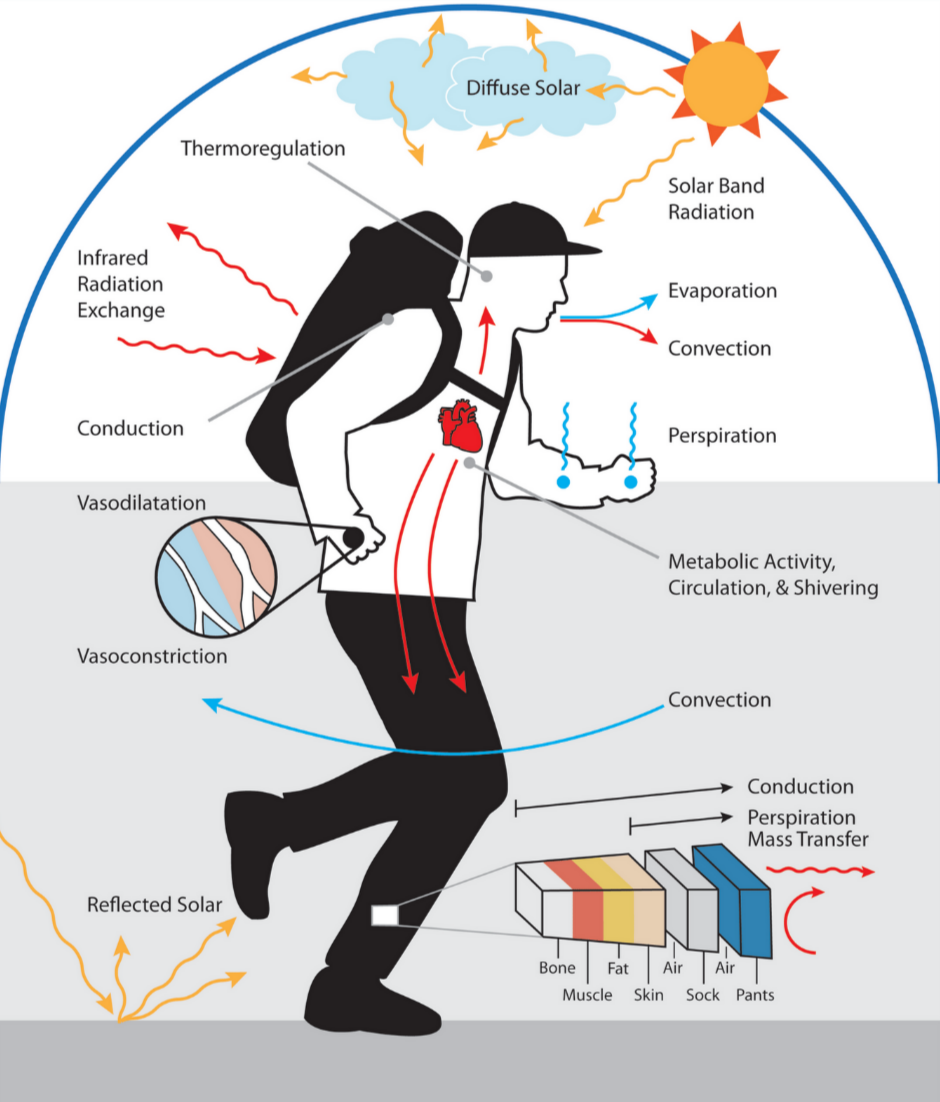
❄️ Thermoregulation During Exercise
Muscle contraction generates a lot of heat. If not removed, body temperature rises too high. The body cools itself using:
Sweating
- Evaporation of sweat removes heat from the skin surface.
Vasodilation
- Arterioles near the skin widen.
- More blood flows close to the surface, increasing heat loss.
Increased breathing
- Warm air is lost through the lungs.
- Faster ventilation increases heat removal.
These mechanisms prevent overheating during exercise.
🧠 Role of the Hypothalamus
The hypothalamus works like the body’s thermostat.
What it does:
- Contains receptors that detect core body temperature
- Receives signals from skin thermoreceptors
- Compares actual temperature to the set point
- Sends instructions to effectors such as sweat glands, muscles and blood vessels
During exercise:
If temperature rises above set point:
- Sweating increases
- Vasodilation occurs
- Heat production is reduced
If the body cools too much after exercise:
- Vasoconstriction
- Shivering (especially in cold environments)
These actions maintain body temperature within narrow limits.
📊 Summary Table
| Concept | Key Idea |
|---|---|
| Homeostasis | Maintaining stable internal conditions |
| Dynamic equilibrium | Small adjustments around a set point |
| Challenge during exercise | Heat production, CO₂ rise, water loss |
| Thermoregulation responses | Sweating, vasodilation, increased ventilation |
| Hypothalamus role | Detects temperature change and triggers corrections |
Homeostasis keeps internal conditions stable.
Dynamic equilibrium means small ongoing adjustments.
Exercise increases heat, CO₂, water loss, and glucose use.
Thermoregulation prevents overheating using sweating and vasodilation.
Hypothalamus compares temperature to the set point and triggers corrective actions.