
Lactate After Anaerobic Respiration
🌱 Introduction
During intense exercise, muscles may not receive enough oxygen. They switch to anaerobic respiration, producing lactate. Lactate cannot remain in muscle tissue for long because it lowers pH and contributes to fatigue. After exercise, the body must clear and process this lactate.
🟣 What Happens to Lactate After Exercise?
1. Transported to the Liver
- Lactate diffuses into the bloodstream.
- Carried to the liver for processing.
- This clears lactate from muscles and restores pH balance.
2. Converted Back to Pyruvate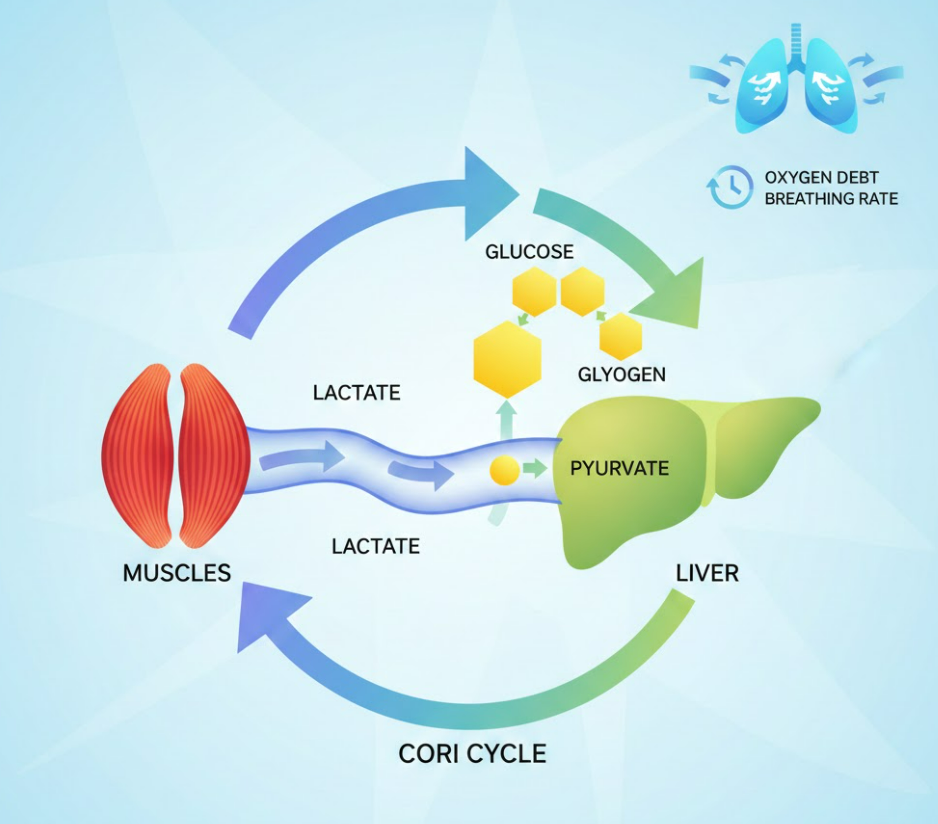
- In the liver, lactate is oxidised back into pyruvate when oxygen is available.
- Pyruvate may enter aerobic respiration for energy release.
- Or be used to build glycogen stores.
3. Re-synthesis of Glycogen (Cori Cycle)
- Pyruvate can be converted into glucose.
- Glucose is stored as glycogen in liver or muscle tissue.
- This process is part of the Cori cycle, restoring energy reserves.
4. Oxygen Debt
- The additional oxygen needed after exercise to oxidise lactate is called oxygen debt.
- Breathing rate remains elevated until lactate is fully processed.
- Oxygen debt also includes restoring ATP, phosphocreatine and muscle oxygen levels.
Why is Lactate Removal Important?
- Prevents acidosis caused by falling pH.
- Allows muscles to recover and function normally.
- Restores glucose reserves and balances energy levels.
📋 Summary Table
| Process | What Happens | Purpose |
|---|---|---|
| Transport to liver | Lactate moves via blood | Clears lactate from muscles |
| Oxidation to pyruvate | Requires oxygen | Allows aerobic metabolism |
| Conversion to glucose | Via Cori cycle | Rebuilds glycogen stores |
| Payment of oxygen debt | Increased breathing after exercise | Completes lactate removal |
🧠 Quick Recap
Lactate builds up during anaerobic respiration.
After exercise, it travels to the liver and becomes pyruvate.
Pyruvate enters aerobic respiration or converts to glucose/glycogen.
Extra oxygen is required – oxygen debt.
Removing lactate prevents fatigue and restores muscle efficiency.
Lactate builds up during anaerobic respiration.
After exercise, it travels to the liver and becomes pyruvate.
Pyruvate enters aerobic respiration or converts to glucose/glycogen.
Extra oxygen is required – oxygen debt.
Removing lactate prevents fatigue and restores muscle efficiency.