
Insertion of Recombinant DNA into Host Cells
🌱 Introduction
After creating recombinant DNA (rDNA), it must be introduced into a host cell so the host can replicate and/or express the gene. This process is key to producing proteins like insulin, vaccines, or growth hormones.
🌟 Methods of Introducing rDNA into Cells
1. Transformation (Bacteria)
- Bacteria take up plasmid DNA from their environment.
- Often made competent using chemicals (e.g., calcium chloride) or electric pulses (electroporation).
- Once inside, plasmid replicates and expresses the foreign gene.
2. Transfection (Eukaryotic Cells)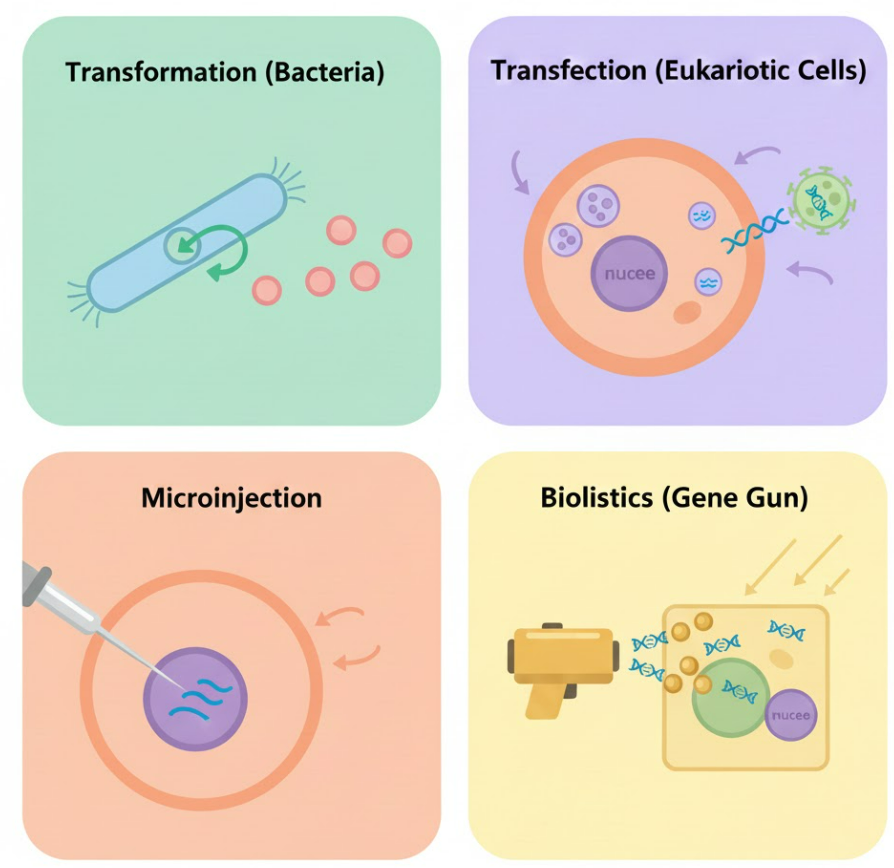
- DNA is introduced into animal or plant cells.
- Methods:
- Chemical transfection: DNA enters cells via liposomes.
- Electroporation: short electrical pulse opens pores in cell membrane.
- Viral vectors: harmless viruses carry DNA into host cells.
3. Microinjection
- rDNA is directly injected into the nucleus of a single cell using a fine glass needle.
- Used for creating transgenic animals or modifying embryos.
4. Biolistics (Gene Gun)
- DNA coated on tiny gold or tungsten particles.
- Particles shot into plant cells or tissues at high speed.
- DNA integrates into the genome → transgenic plants produced.
Key Points
- rDNA must enter nucleus in eukaryotes to be expressed.
- Selectable markers are often included in plasmids to identify cells that have taken up rDNA.
- The method depends on the type of host cell (bacterial, plant, or animal).
📦 Quick Recap
| Method | Host Type | How it Works | Use Example |
|---|---|---|---|
| Transformation | Bacteria | DNA taken up from environment | Insulin production in E. coli |
| Transfection | Eukaryotic cells | Chemical, electroporation, viral vectors | Human proteins in cultured cells |
| Microinjection | Animal/plant embryos | DNA injected directly into nucleus | Transgenic animals |
| Gene gun (biolistics) | Plant cells | DNA-coated particles shot into cells | GM crops |
Key idea:
rDNA → enters host → replicates and expresses → desired product
rDNA → enters host → replicates and expresses → desired product