Edexcel International A Level (IAL) Chemistry (YCH11) - Unit 2 - 8.1–8.2 Oxidation numbers and calculations-Study Notes - New Syllabus
Edexcel International A Level (IAL) Chemistry (YCH11) -Unit 2 – 8.1–8.2 Oxidation numbers and calculations- Study Notes- New syllabus
Edexcel International A Level (IAL) Chemistry (YCH11) -Unit 2 – 8.1–8.2 Oxidation numbers and calculations- Study Notes -International A Level (IAL) Chemistry (YCH11) – per latest Syllabus.
Key Concepts:
8.1 know what is meant by the term ‘oxidation number’ and understand the rules for assigning oxidation numbers
8.2 be able to calculate the oxidation number of elements in compounds and ions, including in peroxides and metal hydrides
Edexcel International A Level (IAL) Chemistry (YCH11) -Concise Summary Notes- All Topics
8.1 Oxidation Number
The oxidation number (oxidation state) is a way of keeping track of the electron distribution in compounds and ions. It helps identify oxidation and reduction processes.
Definition
The oxidation number of an element is the charge that an atom would have if all bonds were considered to be ionic.
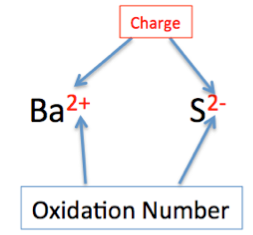
Key Idea
- It represents the number of electrons lost or gained.
- Used to track redox reactions.
Rules for Assigning Oxidation Numbers
1. Elements in their standard state = 0
- Example: \( \mathrm{O_2} \), \( \mathrm{H_2} \), \( \mathrm{Na} \) → 0
2. Group 1 metals = +1
- Example: \( \mathrm{Na^+} \) → +1
3. Group 2 metals = +2
- Example: \( \mathrm{Mg^{2+}} \) → +2
4. Hydrogen = +1 (usually)
- In compounds with non-metals
- Example: \( \mathrm{H_2O} \) → H = +1
- Exception: metal hydrides → H = −1 (e.g. \( \mathrm{NaH} \))
5. Oxygen = −2 (usually)
- Example: \( \mathrm{H_2O} \), \( \mathrm{CO_2} \)
- Exceptions:
- Peroxides (e.g. \( \mathrm{H_2O_2} \)) → −1
- In \( \mathrm{OF_2} \), oxygen is +2
6. Halogens = −1 (usually)
- Example: \( \mathrm{Cl^-} \), \( \mathrm{HCl} \)
- Exception: when bonded to oxygen or more electronegative halogens
7. Sum of oxidation numbers = overall charge
- Neutral compound → sum = 0
- Ion → sum = charge of ion
Example 1: \( \mathrm{H_2O} \)
- H = +1, O = −2
- \( 2(+1) + (−2) = 0 \) ✔
Example 2: \( \mathrm{SO_4^{2-}} \)
- O = −2 each → total = −8
- Let S = x
- \( x + (-8) = -2 \)
- \( x = +6 \)
Therefore, S = +6.
Example 3: \( \mathrm{NH_3} \)
- H = +1 each → total = +3
- Let N = x
- \( x + 3 = 0 \)
- \( x = -3 \)
Key Points
- Oxidation number helps track electron transfer.
- Based on a set of standard rules.
- Sum of oxidation numbers must match overall charge.
Therefore, oxidation numbers provide a systematic method to analyse redox processes.
Example 1:
Determine the oxidation number of nitrogen in \( \mathrm{NO_3^-} \).
▶️ Answer/Explanation
Oxygen = −2 each → total = −6
Let N = x
\( x + (-6) = -1 \)
\( x = +5 \)
Therefore, N = +5.
Example 2:
Determine the oxidation number of chromium in \( \mathrm{Cr_2O_7^{2-}} \).
▶️ Answer/Explanation
Oxygen = −2 each → total = −14
Let Cr = x
\( 2x + (-14) = -2 \)
\( 2x = +12 \)
\( x = +6 \)
Therefore, Cr = +6.
8.2 Calculating Oxidation Numbers (Including Peroxides and Metal Hydrides)
To calculate oxidation numbers, the standard rules are applied systematically, including special cases such as peroxides and metal hydrides.
General Method
- Assign known oxidation numbers using rules.
- Let unknown oxidation number = x.
- Use: sum of oxidation numbers = overall charge.
- Solve for x.
Standard Rules Reminder
- Oxygen = −2 (except peroxides).
- Hydrogen = +1 (except hydrides).
- Sum = 0 (neutral) or ion charge.
Special Case 1: Peroxides
In peroxides, oxygen has oxidation number −1 instead of −2.
Example: \( \mathrm{H_2O_2} \)
- H = +1 each → total = +2
- O = −1 each → total = −2
- Total = 0 ✔
Therefore, peroxide oxygen is −1 due to O–O single bond.
Special Case 2: Metal Hydrides
In metal hydrides, hydrogen has oxidation number −1 instead of +1.
Example: \( \mathrm{NaH} \)
- Na = +1
- H = −1
- Total = 0 ✔
Therefore, hydrogen acts as a hydride ion in metal hydrides.
Example 1: \( \mathrm{NO_2^-} \)
- O = −2 each → total = −4
- Let N = x
- \( x + (-4) = -1 \)
- \( x = +3 \)
Example 2: \( \mathrm{Cr_2O_7^{2-}} \)
- O = −2 each → total = −14
- Let Cr = x
- \( 2x + (-14) = -2 \)
- \( 2x = +12 \Rightarrow x = +6 \)
Example 3 (Peroxide): \( \mathrm{Na_2O_2} \)
- Na = +1 each → total = +2
- O = −1 each → total = −2
- Total = 0 ✔
Example 4 (Hydride): \( \mathrm{CaH_2} \)
- Ca = +2
- H = −1 each → total = −2
- Total = 0 ✔
Key Points
- Always apply rules carefully.
- Watch for exceptions (peroxides and hydrides).
- Use algebra to find unknown values.
Therefore, accurate calculation of oxidation numbers requires both rule application and recognition of special cases.
Example 1:
Determine the oxidation number of sulfur in \( \mathrm{S_2O_3^{2-}} \).
▶️ Answer/Explanation
O = −2 each → total = −6
Let total S = x
\( x + (-6) = -2 \Rightarrow x = +4 \)
Average oxidation state of S = +2
(Note: actual S atoms have different values).
Example 2 :
Determine the oxidation number of oxygen in \( \mathrm{OF_2} \) and explain why it differs from the usual value.
▶️ Answer/Explanation
Fluorine is −1 each → total = −2
Let O = x
\( x + (-2) = 0 \Rightarrow x = +2 \)
Oxygen is positive because fluorine is more electronegative.
