Home / IB DP Biology- D2.3 Water potential- IB Style Questions For HL Paper 1A

IB DP Biology- D2.3 Water potential- IB Style Questions For HL Paper 1A -New Syllabus

Question

The water potential of a plant cell is −0.24 kPa. If the pressure potential of the cell is 0.46 kPa, what is the solute potential of that cell?

\( \Psi_w = \Psi_s + \Psi_p \)

(A) 0.22 kPa
(B) −0.22 kPa
(C) 0.70 kPa
(D) −0.70 kPa
▶️ Answer/Explanation

Correct Answer: \( \boxed{\mathbf{D}} \)

Using the formula \( \Psi_w = \Psi_s + \Psi_p \), the solute potential is calculated as \( \Psi_s = -0.24 – 0.46 = -0.70 \text{ kPa} \). Therefore, the cell has a solute potential of −0.70 kPa.

Question

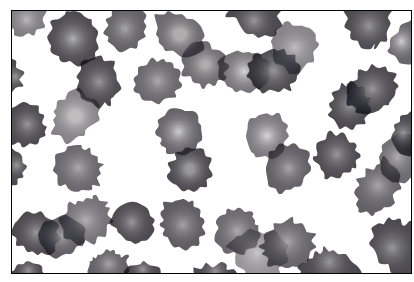
The diagram below shows human red blood cells placed in a particular solution.

Based on the appearance of the cells, what can be concluded about the type of solution they are in?

A. The solution is hypotonic as the cells are crenated.
B. The solution is hypotonic as the cells are turgid.
C. The solution is hypertonic as the cells are crenated.
D. The solution is hypertonic as the cells are turgid.

▶️ Answer/Explanation
The blood cells appear shriveled, indicating that water has moved out of the cells by osmosis.
This occurs when the surrounding solution has a higher solute concentration — a hypertonic environment — causing the cells to lose water and become crenated.
Answer: (C) The solution is hypertonic as the cells are crenated.
Scroll to Top