
Economic Methodology – The Role of Positive Economics
Positive economics deals with objective analysis of economic phenomena. It focuses on facts, cause-and-effect relationships, and testable statements, without involving value judgments.
It aims to explain how the economy works and to make predictions that can be tested against real-world data.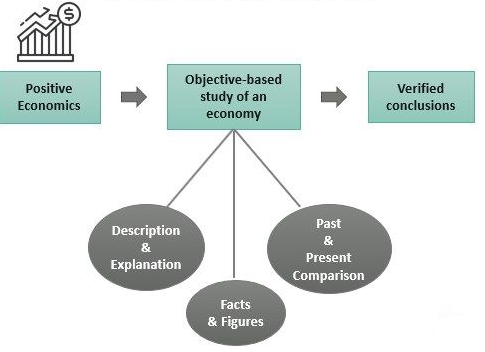
Positive economics = Objective analysis + Testable statements
Key Ideas:
- Based on facts and evidence, not opinions.
- Statements can be tested and verified.
- Used to build models and predict outcomes.
- Forms the foundation of economic analysis.
The Use of Logic
Economics uses logical reasoning to understand relationships between variables.
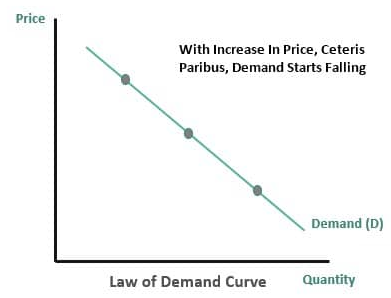
- Helps identify cause and effect relationships.
- Example: If price increases, demand is expected to fall.
- Ensures consistency in economic arguments.
The Use of Hypotheses, Models, and Theories
Economists develop hypotheses, which are tentative explanations that can be tested. These are used to build models and theories.
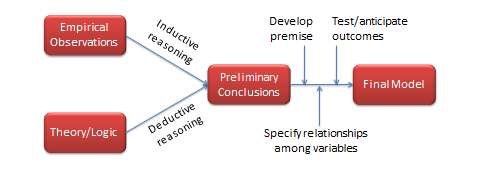
- Hypothesis — A testable statement or prediction.
- Model — A simplified representation of reality.
- Theory — A well-tested explanation of economic behaviour.
- Example: The law of demand is a theory based on observed patterns.
The Ceteris Paribus Assumption
Ceteris paribus means “all other things being equal”. It is used to isolate the effect of one variable by assuming that other relevant factors remain constant.
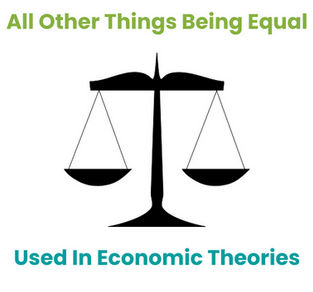
- Allows clearer analysis of relationships.
- Example: Studying the effect of price on demand while keeping income constant.
- Important for building economic models.
Ceteris paribus → Isolate one variable
Empirical Evidence
Empirical evidence refers to data collected from real-world observations and experiments.
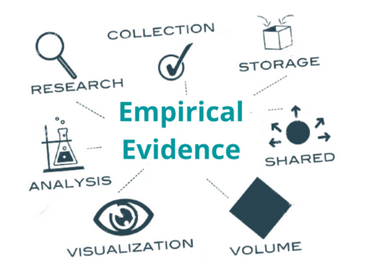
- Used to test economic theories and hypotheses.
- Includes statistics, surveys, and historical data.
- Helps determine whether a theory is valid.
Refutation
Refutation is the process of rejecting a hypothesis or theory if it does not match empirical evidence.
- Ensures that only accurate theories are accepted.
- Encourages continuous improvement of economic knowledge.
- New evidence may lead to modification or replacement of theories.
Example 1
Explain the role of the ceteris paribus assumption in economic analysis.
▶️ Answer / Explanation
The ceteris paribus assumption allows economists to isolate the relationship between two variables by holding other factors constant.
For example, when analysing the effect of price on demand, factors such as income and preferences are assumed to remain unchanged.
This helps clearly identify the impact of price changes on demand.
Without this assumption, it would be difficult to determine cause and effect.
Example 2
Using an example, explain how empirical evidence is used to test an economic theory.
▶️ Answer / Explanation
Empirical evidence involves collecting real-world data to test whether a theory is valid.
For example, the law of demand suggests that as price increases, quantity demanded decreases.
Economists can collect data on prices and sales of a product to see if this relationship holds.
If the data supports the theory, it is accepted; if not, it may be modified or rejected.
Economic Methodology –The Role of Normative Economics
Normative economics involves value judgments about what the economy should be like or what policies should be implemented. It is based on opinions, beliefs, and ethical considerations rather than purely objective facts.
Normative statements cannot be tested or proven true or false, as they depend on personal or societal values.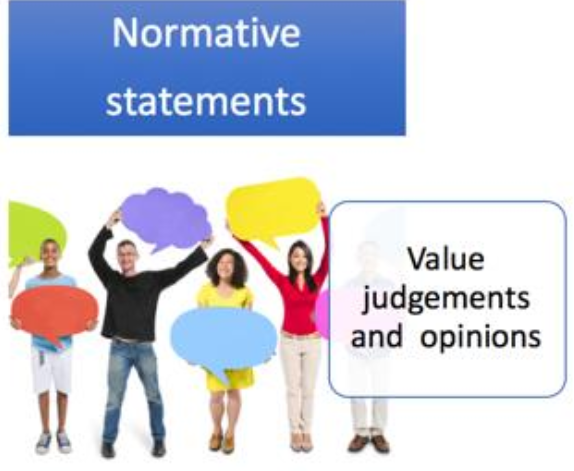
Normative economics = Value judgments + Opinions about what should be
Key Ideas:
- Focuses on policy recommendations.
- Based on ethical and social considerations.
- Cannot be tested using empirical evidence.
- Often used alongside positive economics in decision-making.
Value Judgments in Policy Making
Value judgments are opinions about what is desirable or fair in an economy. They play a crucial role in shaping government policies.

- Policies reflect societal priorities, such as reducing inequality or protecting the environment.
- Different individuals or governments may have different views on what is “best”.
- Examples include decisions on taxation, welfare, and public spending.
For example, deciding whether to increase taxes on high-income earners depends on beliefs about fairness and redistribution.
Equity and Equality
Equity and equality are important normative concepts used to evaluate fairness in economic outcomes.
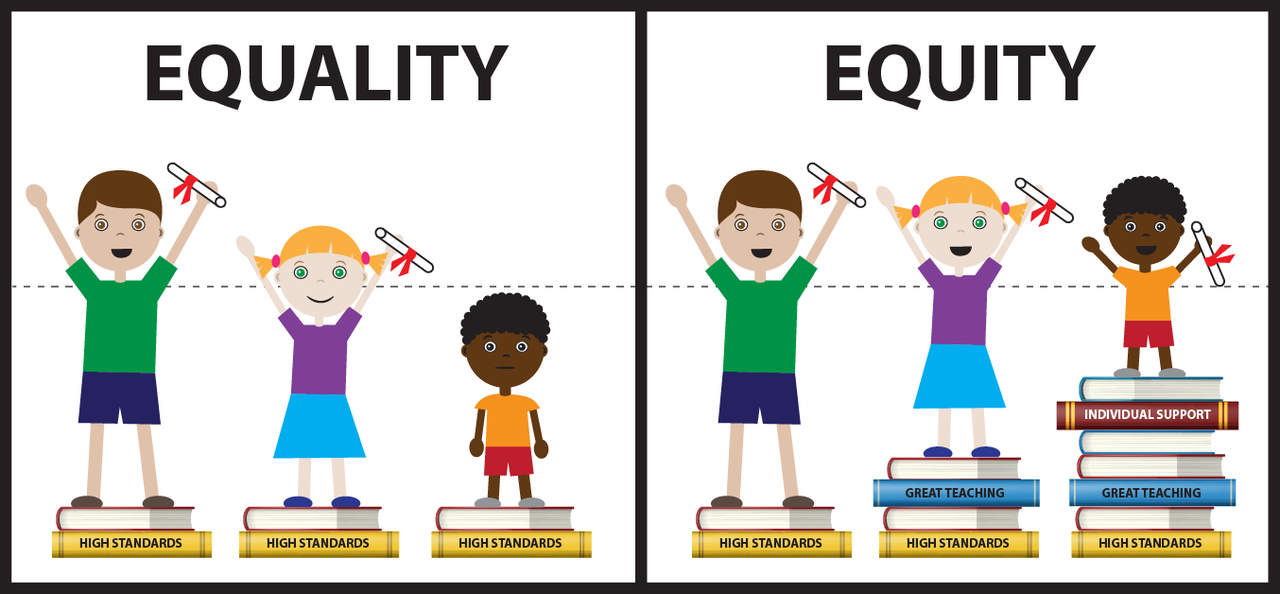
- Equity refers to fairness in distribution, which may involve treating people differently based on their needs or circumstances.
- Equality refers to uniform distribution, where everyone receives the same share regardless of differences.
Equity → Fairness | Equality → Sameness
Comparison Between Equity and Equality:
| Aspect | Equity | Equality |
|---|---|---|
| Meaning | Fair distribution based on needs | Equal distribution for everyone |
| Approach | May treat people differently | Treats everyone the same |
| Objective | Reduce inequality | Ensure uniformity |
| Example | Progressive taxation | Equal income for all |
Key Ideas:
- Normative economics is essential for policy evaluation.
- Different value judgments can lead to different policy choices.
- Equity and equality are often debated in economic discussions.
- There may be trade-offs between equity and efficiency.
Example 1
Explain why normative economics is important in policy making.
▶️ Answer / Explanation
Normative economics is important because it involves value judgments about what policies should be implemented.
Governments must decide how to allocate resources and address issues such as inequality and poverty.
These decisions depend on societal values and priorities, such as fairness and welfare.
Therefore, normative economics guides policy choices by considering what is desirable for society.
Example 2
Using an example, explain the difference between equity and equality.
▶️ Answer / Explanation
Equality means everyone receives the same amount, regardless of their situation.
For example, giving every citizen the same income reflects equality.
Equity, however, focuses on fairness and may involve unequal distribution to achieve a fair outcome.
For example, progressive taxation requires higher-income individuals to pay more taxes to support lower-income groups.
This shows that equity aims for fairness, while equality focuses on uniform distribution.