
The Problem of Choice
The problem of choice arises because resources are scarce while human wants are unlimited. As a result, individuals, firms, and governments must decide how to allocate limited resources among competing uses.
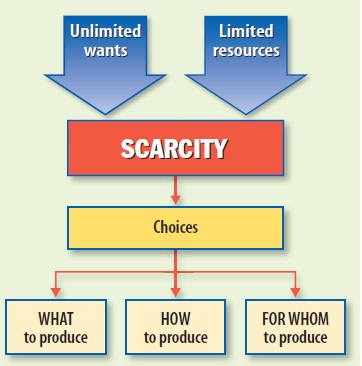
Every choice involves a trade-off, meaning that selecting one option requires giving up another. The value of the next best alternative forgone is known as opportunity cost.
This problem exists at all levels:
- Consumers — choosing how to spend limited income.
- Firms — deciding what and how much to produce.
- Governments — allocating budgets across sectors like healthcare, education, and defense.
Choice → Trade-off → Opportunity Cost
Key Ideas:
- Choice is a direct consequence of scarcity.
- All economic decisions involve opportunity cost.
- Rational decision-making aims to maximize benefit (utility or profit).
- The problem of choice leads to the basic economic questions:
- What to produce?
- How to produce?
- For whom to produce?
Opportunity Cost in Different Contexts:
| Decision Maker | Choice Made | Opportunity Cost |
|---|---|---|
| Consumer | Buying a phone instead of a laptop | Laptop forgone |
| Firm | Producing cars instead of bikes | Bikes not produced |
| Government | Spending on defense instead of healthcare | Healthcare improvements forgone |
Factors of Production
The factors of production are the resources used to produce goods and services in an economy. They are limited in supply, which contributes to the problem of choice.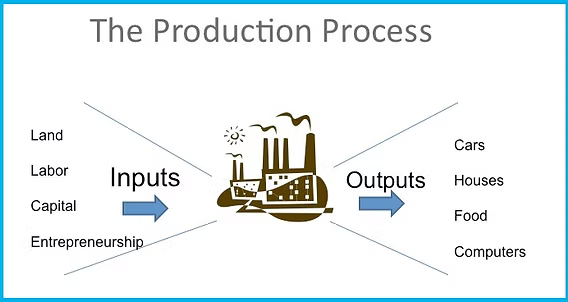
The four factors of production are:
- Land
- Labour
- Capital
- Entrepreneurship
Land
Land refers to all natural resources used in production, including soil, water, minerals, forests, and climate.
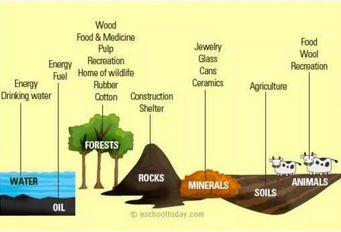
- Supply is fixed in the short run.
- Includes both renewable and non-renewable resources.
- Earns income in the form of rent.
Labour
Labour refers to the human effort used in production, both physical and mental.
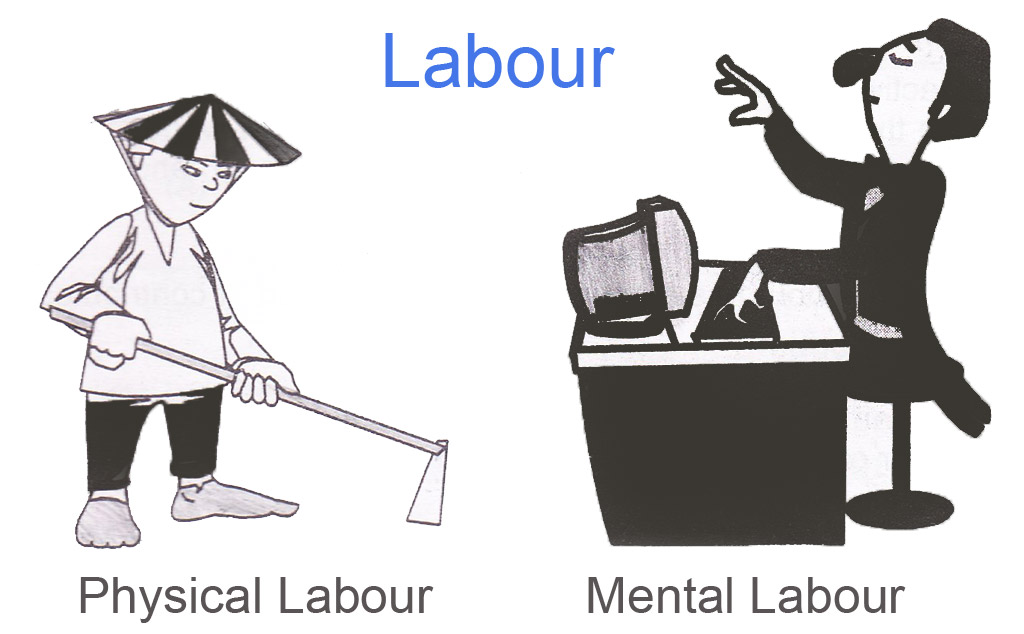
- Includes skills, education, and training (human capital).
- Productivity depends on health, education, and working conditions.
- Earns income in the form of wages.
Capital
Capital refers to man-made resources used in production, such as machinery, tools, buildings, and technology.
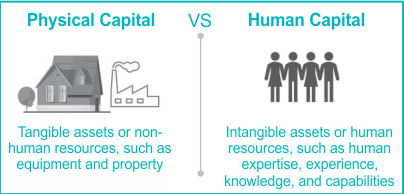
- Used to increase efficiency and productivity.
- Includes physical capital and sometimes financial capital.
- Earns income in the form of interest.
Entrepreneurship
Entrepreneurship is the ability to organize and combine the other factors of production to produce goods and services.

- Involves risk-taking and decision-making.
- Drives innovation and economic growth.
- Earns income in the form of profit.
Summary of Factors of Production:
| Factor | Description | Reward |
|---|---|---|
| Land | Natural resources | Rent |
| Labour | Human effort | Wages |
| Capital | Man-made resources | Interest |
| Entrepreneurship | Organizes production and takes risks | Profit |
Example 1
Explain how the problem of choice leads to opportunity cost for a firm.
▶️ Answer / Explanation
A firm faces limited resources such as labour and capital. Due to scarcity, it must choose what goods to produce.
If the firm decides to produce smartphones instead of laptops, it must give up the production of laptops.
The opportunity cost is the profit that could have been earned from producing laptops.
This shows that the problem of choice leads to opportunity cost in production decisions.
Example 2
Using an example, explain how the factors of production are used together in the production process.
▶️ Answer / Explanation
All four factors of production are required to produce goods and services.
For example, in car manufacturing:
- Land provides raw materials such as metal.
- Labour involves workers assembling the car.
- Capital includes machinery and factories.
- Entrepreneurship organizes production and takes business risks.
This demonstrates how the factors of production work together to create output in an economy.
Scarcity
Scarcity refers to the fundamental economic problem that arises because human needs and wants are unlimited while the resources available to satisfy them are limited. This imbalance forces individuals, firms, and governments to make choices about how to allocate resources.
Since it is impossible to satisfy all wants, scarcity exists in all economies regardless of their level of development.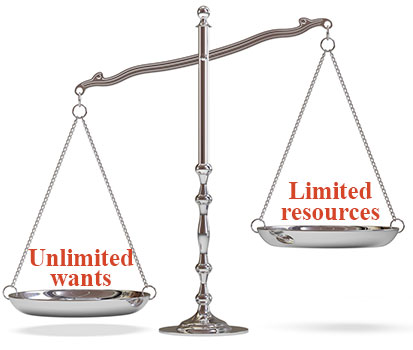
This includes:
- Unlimited wants — Human desires for goods and services are continuously growing.
- Limited resources — Factors of production (land, labour, capital, entrepreneurship) are finite.
- Need for allocation — Resources must be distributed efficiently among competing uses.
Scarcity = Unlimited wants + Limited resources
Key Ideas:
- Scarcity is the basic economic problem.
- It leads to choice and opportunity cost.
- It applies to individuals, firms, and governments.
- Even wealthy economies face scarcity due to unlimited wants.
Scarcity and Sustainability
Sustainability is closely linked to scarcity and refers to using resources in a way that meets present needs without compromising the ability of future generations to meet their own needs.
Since many resources are limited, especially non-renewable resources, overuse can worsen scarcity over time. Sustainable practices aim to manage resources carefully to ensure long-term availability.
This relationship includes: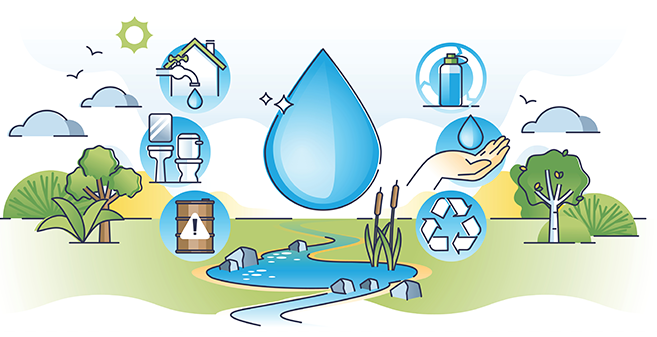
- Resource depletion — Overuse of resources increases future scarcity.
- Renewable vs non-renewable resources — Some resources can regenerate, others cannot.
- Long-term perspective — Economic decisions must consider future impacts.
- Role of policy — Governments may intervene to promote sustainability.
Scarcity + Time → Need for Sustainability
Key Ideas:
- Unsustainable use of resources increases future scarcity.
- Economic growth must be balanced with environmental protection.
- Sustainability involves trade-offs between present and future consumption.
- Linked to concepts like intervention and interdependence.
Types of Resources and Scarcity:
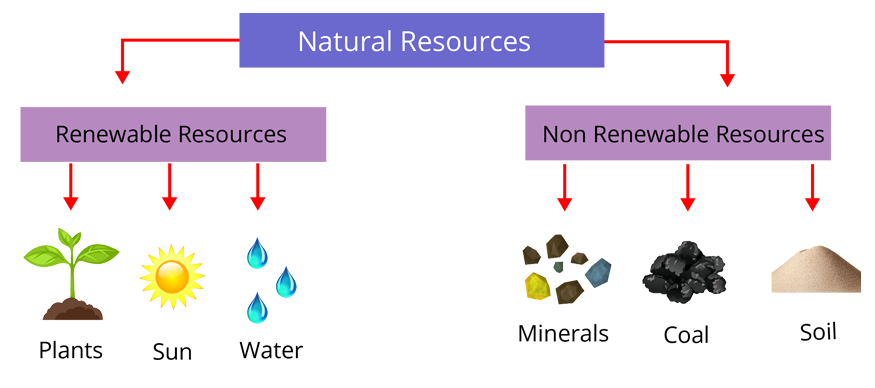
| Resource Type | Description | Scarcity Implication |
|---|---|---|
| Renewable | Can regenerate over time (e.g., forests, solar energy) | Less severe if managed properly |
| Non-renewable | Finite and cannot be replaced (e.g., oil, coal) | High long-term scarcity |
Example 1
Explain why scarcity exists even in developed economies.
▶️ Answer / Explanation
Scarcity exists because human wants are unlimited while resources are limited.
In developed economies, although resources and income levels are high, people’s wants continue to grow, such as demand for better healthcare, technology, and luxury goods.
Since resources cannot satisfy all these wants, choices must still be made, meaning scarcity continues to exist.
Thus, scarcity is a universal problem affecting all economies.
Example 2
Using an example, explain the relationship between scarcity and sustainability.
▶️ Answer / Explanation
Scarcity arises because resources are limited, and sustainability focuses on managing these resources over time.
For example, excessive use of fossil fuels such as oil reduces their availability for future generations.
This increases scarcity in the future and may lead to higher prices and reduced economic stability.
To address this, governments may promote renewable energy sources like solar power.
This shows that sustainability is necessary to manage scarcity over the long term.