
Concept of Elasticity (Demand)
Elasticity refers to the degree of responsiveness of quantity demanded to a change in another variable, most commonly price. It explains how sensitive consumers are when conditions in the market change.
Elasticity = Responsiveness of demand
This concept is important because not all goods respond in the same way to changes in price or other factors.
Relatively Elastic Demand
Demand is said to be relatively elastic when a small change in price leads to a large change in quantity demanded.
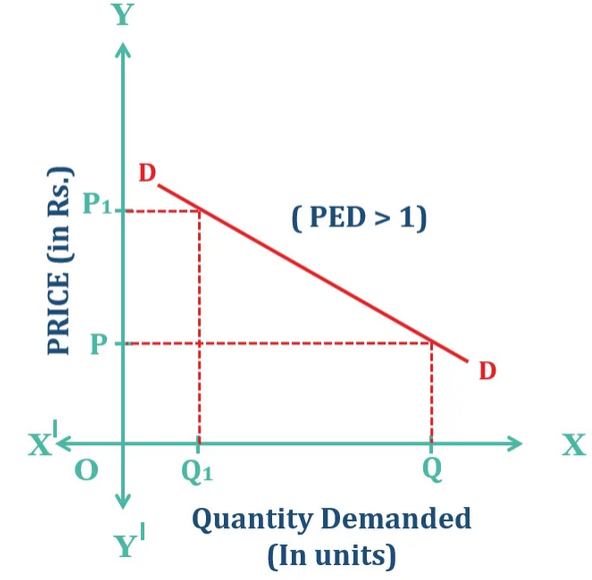
- Consumers are highly responsive to price changes.
- Even a small increase in price causes a large fall in demand.
- Demand curve is relatively flat.
Reasons:
- Availability of close substitutes
- Goods are luxuries
- Consumers have more time to adjust
Relatively Inelastic Demand
Demand is said to be relatively inelastic when a change in price leads to a small change in quantity demanded.
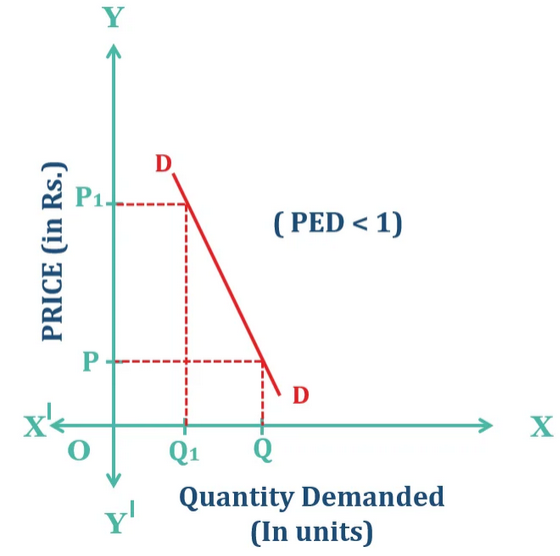
- Consumers are less responsive to price changes.
- Even large price changes lead to small changes in demand.
- Demand curve is relatively steep.
Reasons:
- Few or no substitutes
- Goods are necessities
- Consumers cannot easily change behaviour
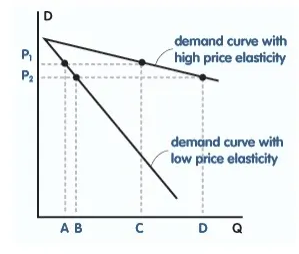
Diagram: Relatively Elastic vs Inelastic Demand
- Elastic demand curve — flatter slope, large response in quantity.
- Inelastic demand curve — steeper slope, small response in quantity.
Key Ideas:
- Elasticity focuses on degree of responsiveness, not direction.
- Different goods have different elasticity depending on their nature.
- The shape of the demand curve reflects elasticity.
- This concept is foundational for deeper analysis (like PED next topic).
Example 1
Explain why demand for airline tickets is relatively elastic.
▶️ Answer / Explanation
Airline tickets often have close substitutes such as trains or buses.
If ticket prices rise, consumers can switch to these alternatives.
This leads to a large decrease in quantity demanded.
Therefore, demand is relatively elastic.
Example 2
Evaluate why demand for insulin is relatively inelastic.
▶️ Answer / Explanation
Insulin is a necessity for people with diabetes.
There are very few substitutes available.
Even if prices increase, consumers must continue purchasing it.
This results in a small change in quantity demanded.
Thus, demand is relatively inelastic.