
Demand and Supply Curves Forming Market Equilibrium
Market equilibrium occurs where the demand curve and supply curve intersect. At this point, the quantity demanded equals the quantity supplied.
Equilibrium → Qd = Qs
Equilibrium Price and Quantity
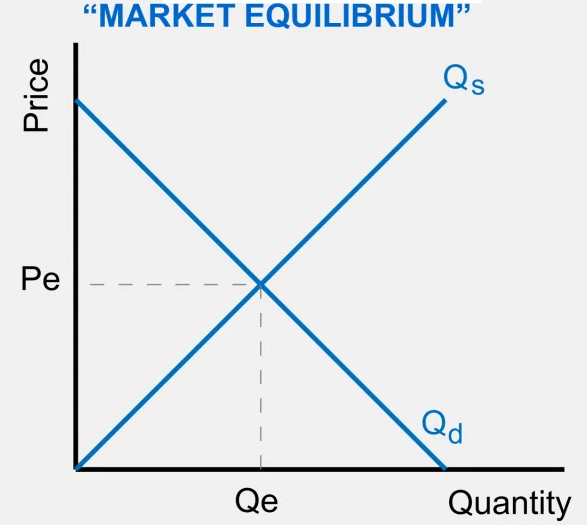
- The equilibrium price (Pe) is the price at which demand equals supply.
- The equilibrium quantity (Qe) is the quantity bought and sold at that price.
- There is no tendency for price to change at equilibrium.
How Equilibrium is Reached
The market naturally moves toward equilibrium through the forces of excess demand and excess supply.
If price is above equilibrium:
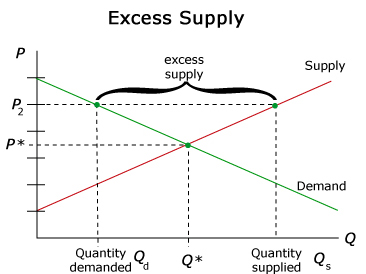
- Quantity supplied > Quantity demanded
- This creates a surplus (excess supply)
- Firms lower prices to sell excess goods
- Price falls toward equilibrium
If price is below equilibrium:
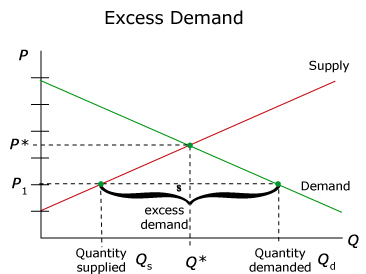
- Quantity demanded > Quantity supplied
- This creates a shortage (excess demand)
- Consumers compete, pushing prices up
- Price rises toward equilibrium
Surplus → Price falls 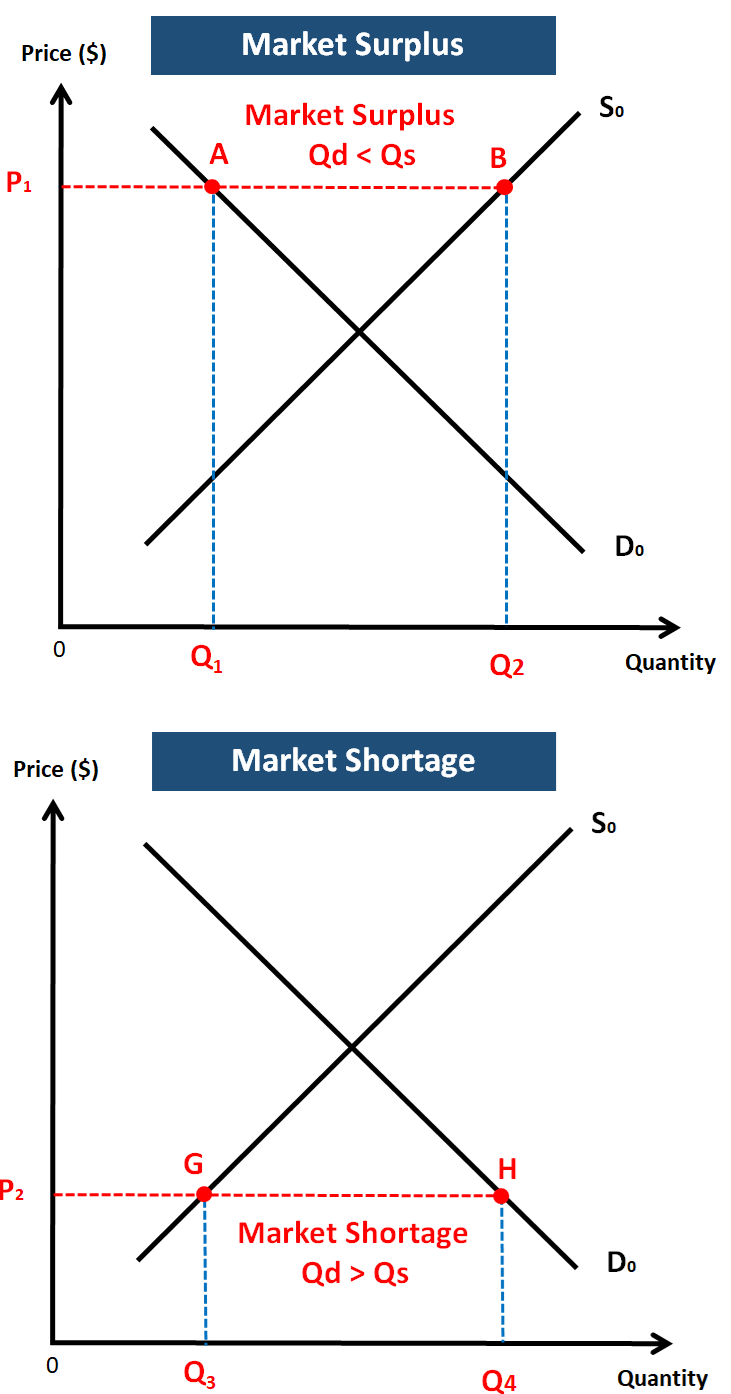
Shortage → Price rises
Disequilibrium Situations
1. Excess Supply (Surplus)
- Occurs when price is above equilibrium.
- Producers supply more than consumers demand.
- Leads to unsold goods.
- Firms reduce prices.
2. Excess Demand (Shortage)
- Occurs when price is below equilibrium.
- Consumers demand more than firms supply.
- Leads to competition among buyers.
- Prices increase.
Key Ideas:
- Equilibrium is determined by interaction of demand and supply.
- Markets tend to move toward equilibrium automatically.
- Price acts as a signal and incentive.
- Disequilibrium creates forces that restore balance.
Summary Table
| Situation | Condition | Result |
|---|---|---|
| Equilibrium | Qd = Qs | Stable price |
| Surplus | Qs > Qd | Price falls |
| Shortage | Qd > Qs | Price rises |
Example 1
Explain how a market reaches equilibrium when there is excess supply.
▶️ Answer / Explanation
When price is above equilibrium, quantity supplied exceeds quantity demanded.
This creates a surplus of goods in the market.
Firms lower prices to clear excess stock.
As price falls, quantity demanded increases and quantity supplied decreases.
The market moves toward equilibrium.
Example 2
Evaluate the role of price in achieving market equilibrium.
▶️ Answer / Explanation
Price acts as a signal to both consumers and producers.
If there is excess demand, prices rise, encouraging more supply and reducing demand.
If there is excess supply, prices fall, encouraging more demand and reducing supply.
Thus, price helps allocate resources efficiently.
However, in real markets, factors like government intervention may prevent equilibrium.