
Relationship Between Individual Demand and Market Demand
In economics, demand can be analyzed at two levels: individual demand and market demand. Understanding the relationship between them is essential for explaining how prices are determined in real markets.
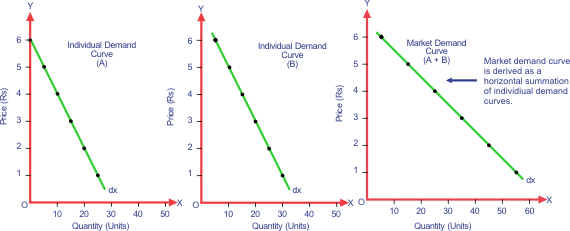
Market Demand = Sum of Individual Demands (at each price)
Individual Demand
Individual demand refers to the quantity of a good or service that a single consumer is willing and able to purchase at different price levels over a given period of time.
- It is based on the consumer’s income, preferences, tastes, and expectations.
- It follows the law of demand, showing an inverse relationship between price and quantity demanded.
- Represented by an individual demand curve, which is downward sloping.
- Each consumer has a different demand curve depending on their circumstances.
Further Explanation:
- An individual consumer makes decisions based on utility maximization, choosing combinations of goods that give the highest satisfaction.
- The quantity demanded depends on the consumer’s budget constraint and relative prices.
- A change in price causes a movement along the demand curve, not a shift.
- A change in factors like income or preferences causes a shift in individual demand.
- Individual demand is affected by psychological factors, habits, and personal expectations.
Key Idea:
- Individual demand reflects personal decision-making and behaviour at the micro level.
Market Demand
Market demand refers to the total quantity of a good or service that all consumers in a market are willing and able to purchase at different price levels over a given period of time.
- It is the aggregate (sum) of all individual demands.
- Also follows the law of demand.
- Represented by a market demand curve.
- Influenced by factors affecting all consumers, such as population and income distribution.
Further Explanation:
- Market demand is derived through horizontal summation of all individual demand curves.
- At each price level, quantities demanded by all consumers are added to get total demand.
- The market demand curve is typically flatter than individual demand curves due to aggregation.
- Changes in the number of consumers (entry or exit) cause the market demand curve to shift.
- Market demand reflects overall consumer trends, not individual behaviour.
Key Idea:
- Market demand reflects collective behaviour and overall market conditions.
Deriving Market Demand (Horizontal Summation)
The market demand curve is obtained by horizontally adding the quantities demanded by all individuals at each price level.
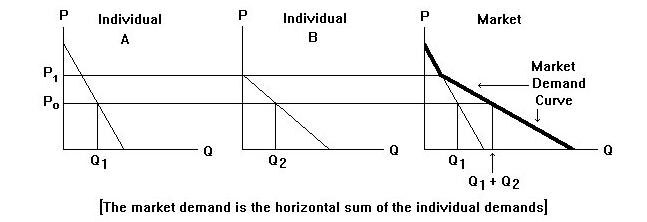
- At a given price, add quantities demanded by each consumer.
- This gives the total quantity demanded in the market.
- Repeat this process for all price levels.
- The resulting curve lies to the right of individual demand curves.
Relationship Between Individual and Market Demand
- Market demand is the sum of individual demands.
- A change in one consumer’s demand affects overall market demand.
- If many consumers change behaviour, the market demand curve shifts.
- The shape of the market demand curve depends on the combined behaviour of individuals.
Factors Affecting Market Demand
Market demand can change due to factors that affect individual consumers collectively:
- Number of consumers — More buyers increase market demand.
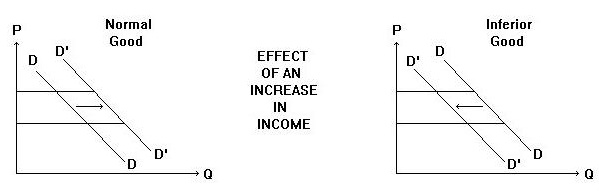
- Income levels — Higher income increases demand for normal goods.
- Tastes and preferences — Changes in trends affect demand.
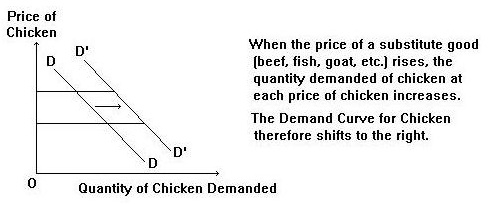
- Prices of related goods — Substitutes and complements influence demand.
- Expectations — Future price expectations affect current demand.
Comparison: Individual vs Market Demand
| Aspect | Individual Demand | Market Demand |
|---|---|---|
| Definition | Demand of one consumer | Total demand of all consumers |
| Basis | Personal preferences and income | Aggregate of all consumers |
| Curve | Individual demand curve | Horizontal sum of all curves |
| Impact | Limited effect on market | Determines market outcomes |
Key Ideas:
- Market demand is derived from individual behaviour.
- Understanding this relationship is crucial for analysing price determination.
- Changes at the individual level can scale up to affect the entire market.
- Important for firms when making production and pricing decisions.
Example 1
Explain how individual demand contributes to market demand.
▶️ Answer / Explanation
Individual demand shows how much a single consumer is willing to buy at different prices.
Market demand is calculated by adding the quantities demanded by all consumers.
For example, if three consumers demand 2, 3, and 5 units at a given price, total market demand is 10 units.
Thus, market demand is the aggregation of individual demands.
Example 2
Using an example, explain how a change in individual demand affects market demand.
▶️ Answer / Explanation
If an individual’s income increases, they may demand more of a normal good.
If many consumers experience similar income increases, total market demand will rise.
This shifts the market demand curve to the right.
Thus, changes in individual demand can lead to changes in market demand.