
Non-Price Determinants of Demand
Non-price determinants of demand are factors other than the price of the good itself that cause the demand curve to shift. These factors influence how much consumers are willing and able to buy at all price levels.
Change in non-price factor → Shift of demand curve
Income
Income is one of the most important determinants of demand, as it affects consumers’ purchasing power.
- For normal goods:
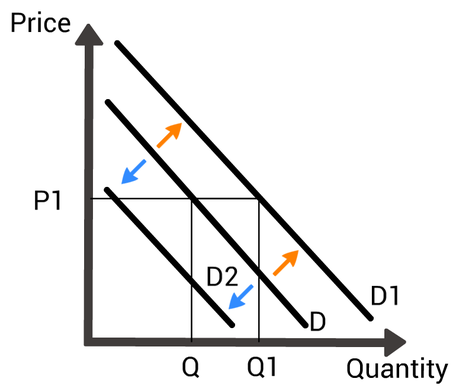
- An increase in income leads to an increase in demand.
- A decrease in income leads to a decrease in demand.
- For inferior goods:
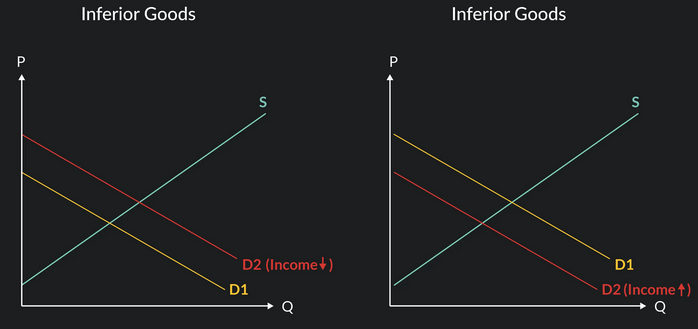
- An increase in income leads to a decrease in demand.
- A decrease in income leads to an increase in demand.
Explanation:
- Higher income allows consumers to buy more goods.
- Consumers may switch from inferior to superior goods as income rises.
Income ↑ → Demand ↑ (normal goods)
Tastes and Preferences
Changes in consumer tastes, fashion, trends, and preferences directly affect demand.
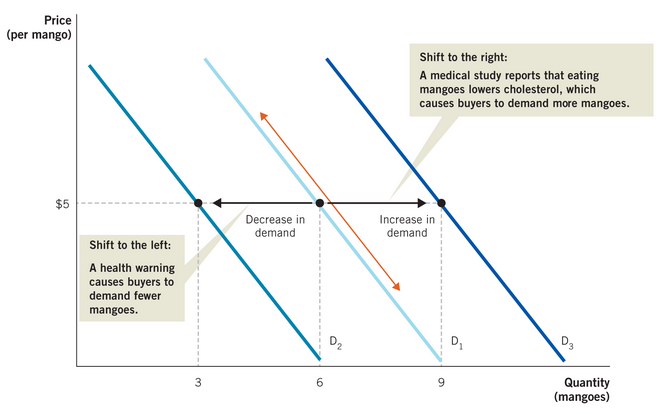
- Positive changes (e.g. trends, advertising) increase demand.
- Negative changes (e.g. bad reviews, health concerns) decrease demand.
- Strongly influenced by advertising, social media, and cultural factors.
Explanation:
- If a product becomes fashionable, more consumers want it.
- If preferences shift away, demand falls even if price remains unchanged.
Better preferences → Demand increases
Future Price Expectations
Consumer expectations about future prices can influence current demand.
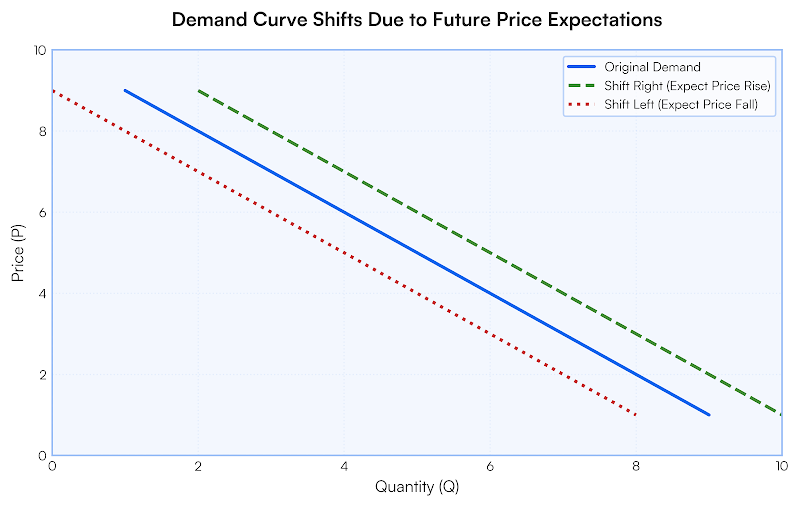
- If prices are expected to rise in the future, demand increases now.
- If prices are expected to fall, consumers delay purchases, reducing current demand.
Explanation:
- Consumers try to avoid higher future prices by buying earlier.
- Expectations create temporary shifts in demand.
Expected price ↑ → Current demand ↑
Price of Related Goods
The demand for a good depends on the prices of substitutes and complements.
Substitutes:
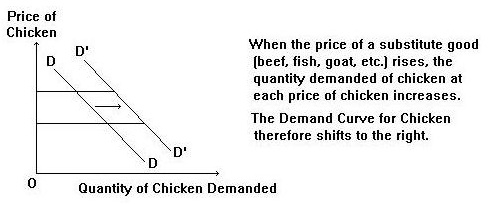
- Goods that can replace each other (e.g. tea and coffee).
- If price of a substitute increases, demand for the good increases.
- If price of a substitute decreases, demand for the good decreases.
Complements:
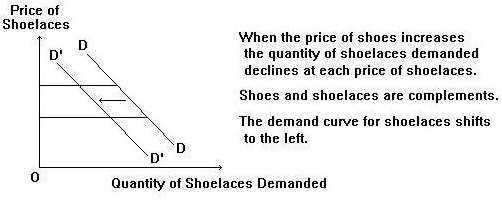
- Goods used together (e.g. cars and fuel).
- If price of a complement increases, demand for the good decreases.
- If price of a complement decreases, demand for the good increases.
Substitute price ↑ → Demand ↑
Complement price ↑ → Demand ↓
Number of Consumers
The size of the market affects total demand.
- An increase in population increases demand.
- A decrease in population reduces demand.
- Includes factors like migration, demographics, and market expansion.
Explanation:

- More consumers mean higher total demand at every price level.
- New markets increase overall demand.
More consumers → Demand increases
Summary of Non-Price Determinants:
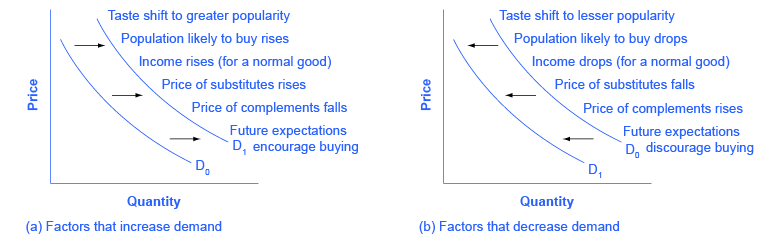
| Determinant | Effect on Demand |
|---|---|
| Income | ↑ income → ↑ demand (normal goods) |
| Tastes & Preferences | Favourable changes → ↑ demand |
| Future Expectations | Expected price ↑ → ↑ current demand |
| Related Goods | Depends on substitutes/complements |
| Number of Consumers | More consumers → ↑ demand |
Example 1
Explain how an increase in income affects demand for normal and inferior goods.
▶️ Answer / Explanation
For normal goods, an increase in income increases demand because consumers can afford to buy more.
For inferior goods, an increase in income reduces demand as consumers switch to better alternatives.
This shows that income affects different goods differently.
Example 2
Using an example, explain how the price of related goods affects demand.
▶️ Answer / Explanation
If the price of coffee increases, consumers may switch to tea, increasing demand for tea.
This shows the effect of substitutes.
If the price of petrol increases, demand for cars may decrease because they are used together.
This shows the effect of complements.