
Alternative Measures of Well-Being
Although GDP and GNI are widely used to measure economic activity, they do not fully capture economic well-being or quality of life. As a result, economists and international organizations use alternative indicators that include social, environmental, and psychological factors.
These measures recognize that well-being depends on more than just income and output.
Well-being includes income, health, happiness, sustainability, and quality of life
Why Alternative Measures Are Needed
GDP and GNI have several limitations when used to measure well-being.
- They do not measure income inequality.
- They ignore environmental sustainability.
- They exclude non-market activities.
- They do not directly measure happiness or life satisfaction.
- Higher income does not always guarantee better quality of life.
OECD Better Life Index
The OECD Better Life Index (BLI) is a measure developed by the Organisation for Economic Co-operation and Development (OECD) to evaluate quality of life across countries.
It measures well-being using a wide range of social and economic indicators.
Main Areas Included: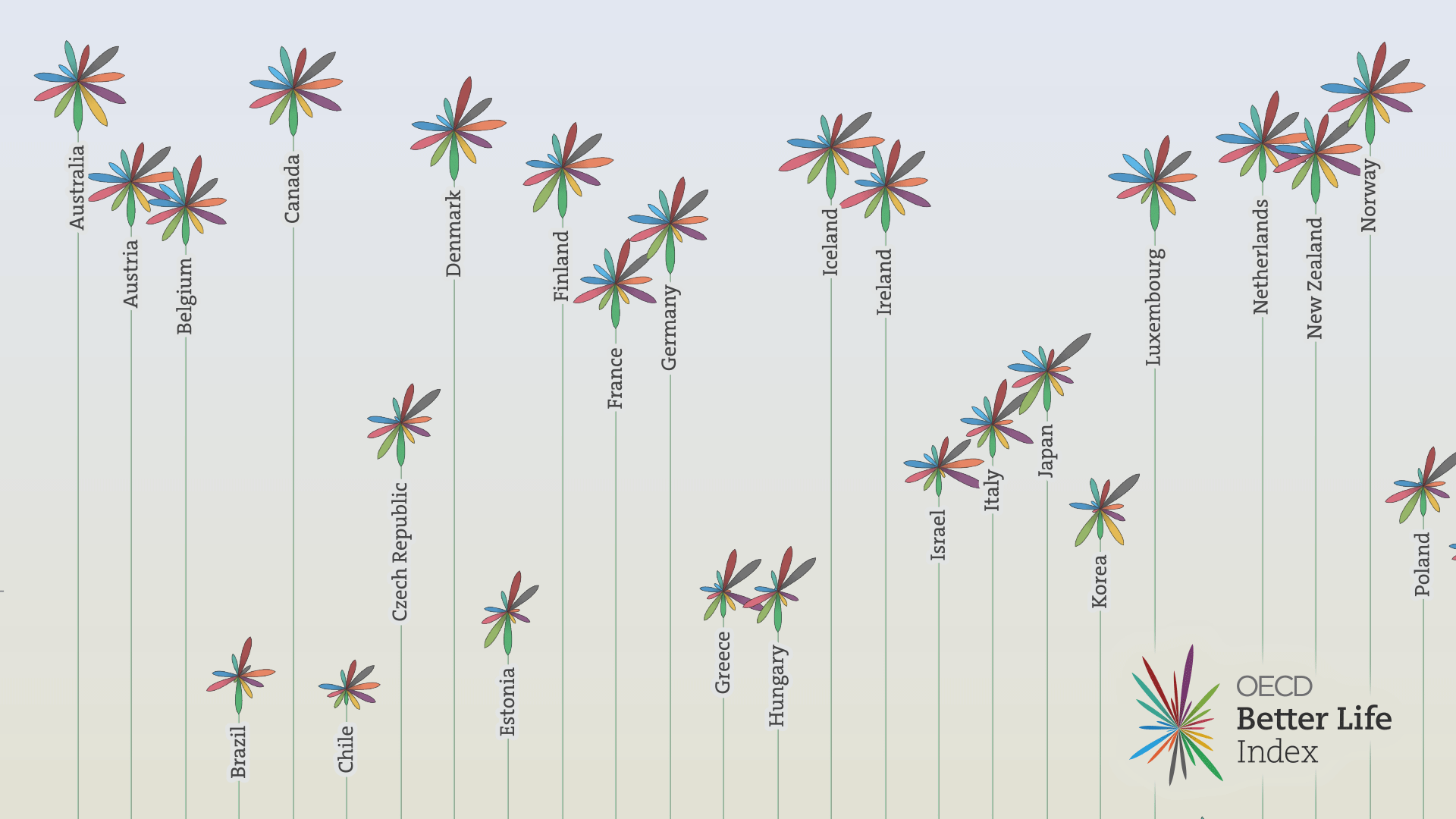
- Income and wealth
- Employment and job quality
- Housing
- Health
- Education
- Environment
- Work-life balance
- Safety
- Community relationships
- Life satisfaction
Features of the OECD Better Life Index:
- Uses multiple dimensions of well-being.
- Allows users to assign different weights to categories.
- Recognizes that quality of life depends on many factors beyond income.
Advantages:
- Comprehensive measure of living standards.
- Includes social and environmental indicators.
- Useful for comparing countries.
Limitations:
- Some indicators are subjective.
- Difficult to compare priorities across cultures.
- Weighting of categories may vary between individuals.
Happiness Index
The Happiness Index measures subjective well-being and life satisfaction.
It is based on surveys in which people evaluate their own happiness and quality of life.
Factors Often Included:
- Income levels
- Social support
- Freedom of choice
- Health and life expectancy
- Trust in government
- Work-life balance
- Mental well-being
Key Idea:
- Well-being includes emotional and psychological satisfaction, not only material wealth.
Advantages:
- Focuses directly on human happiness.
- Recognizes non-economic aspects of life.
- Useful for evaluating social policies.
Limitations:
- Highly subjective.
- Responses may differ across cultures.
- Difficult to measure consistently.
Happy Planet Index (HPI)
The Happy Planet Index (HPI) measures sustainable well-being by combining human well-being with environmental sustainability.
It evaluates how efficiently countries convert environmental resources into long and happy lives.
Main Components: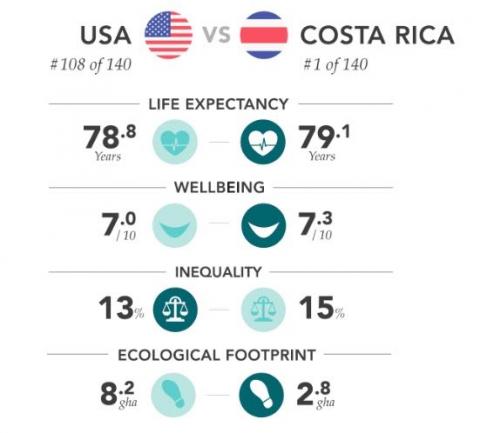
- Life expectancy
- Well-being and happiness
- Ecological footprint
- Inequality of outcomes
Key Idea:
- High well-being should be achieved sustainably, without excessive environmental damage.
Advantages:
- Includes environmental sustainability.
- Recognizes importance of resource efficiency.
- Links well-being with long-term sustainability.
Limitations:
- Complex methodology.
- Difficult to measure ecological impacts accurately.
- Subjective happiness measures remain included.
Comparison of Alternative Measures
| Measure | Main Focus | Key Features |
|---|---|---|
| OECD Better Life Index | Quality of life | Income, health, education, environment |
| Happiness Index | Subjective happiness | Life satisfaction and well-being |
| Happy Planet Index | Sustainable well-being | Happiness + environmental sustainability |
Importance of Alternative Measures
- Provide broader understanding of well-being.
- Recognize social and environmental factors.
- Help governments design policies focused on quality of life.
- Improve understanding of sustainable development.
Example 1
Explain one advantage of the OECD Better Life Index compared to GDP.
▶️ Answer / Explanation
GDP measures only economic output, while the OECD Better Life Index includes factors such as health, education, and environment.
This provides a broader measure of quality of life and well-being.
Therefore, it gives a more complete picture of living standards.
Example 2
Using an example, explain why the Happy Planet Index may be considered a sustainable measure of well-being.
▶️ Answer / Explanation
The Happy Planet Index includes ecological footprint along with happiness and life expectancy.
A country with high income but severe environmental damage may not score highly.
This shows that sustainable use of resources is important for long-term well-being.
Therefore, the HPI measures both quality of life and environmental sustainability.