
Goals of Supply-Side Policies
Supply-side policies are government policies aimed at increasing the economy’s productive capacity and improving the efficiency of markets.
Supply-side policies → Higher productivity → Long-term growth
1. Long-Term Growth by Increasing the Economy’s Productive Capacity
A major goal of supply-side policies is to achieve long-term economic growth by increasing the economy’s ability to produce goods and services.
Higher productive capacity → Higher potential output → Economic growth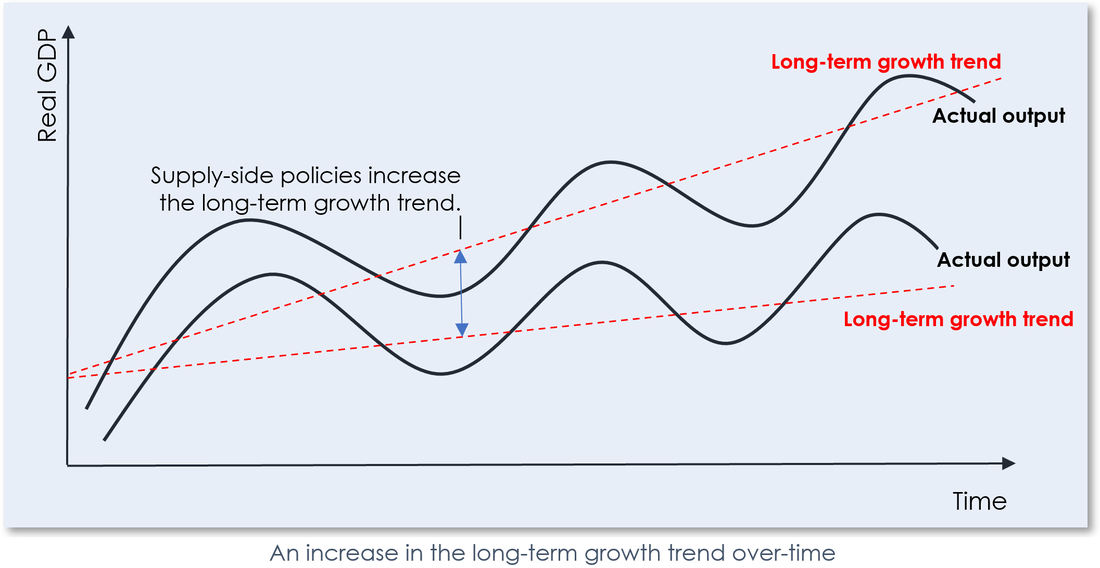
Explanation:
- Governments improve the quality and quantity of factors of production.
- Policies may focus on:
- Education and training
- Infrastructure development
- Technology and innovation
- This shifts the long-run aggregate supply (LRAS) curve to the right.
Economic Significance:
- Increases potential GDP.
- Raises living standards over time.
- Supports sustainable economic growth.
Evaluation:
- Supply-side policies often take a long time to show results.
- Large investments may increase government spending.
- Effectiveness depends on policy quality and implementation.
2. Improving Competition and Efficiency
Supply-side policies aim to improve competition and market efficiency in the economy.
More competition → Greater efficiency → Lower costs and prices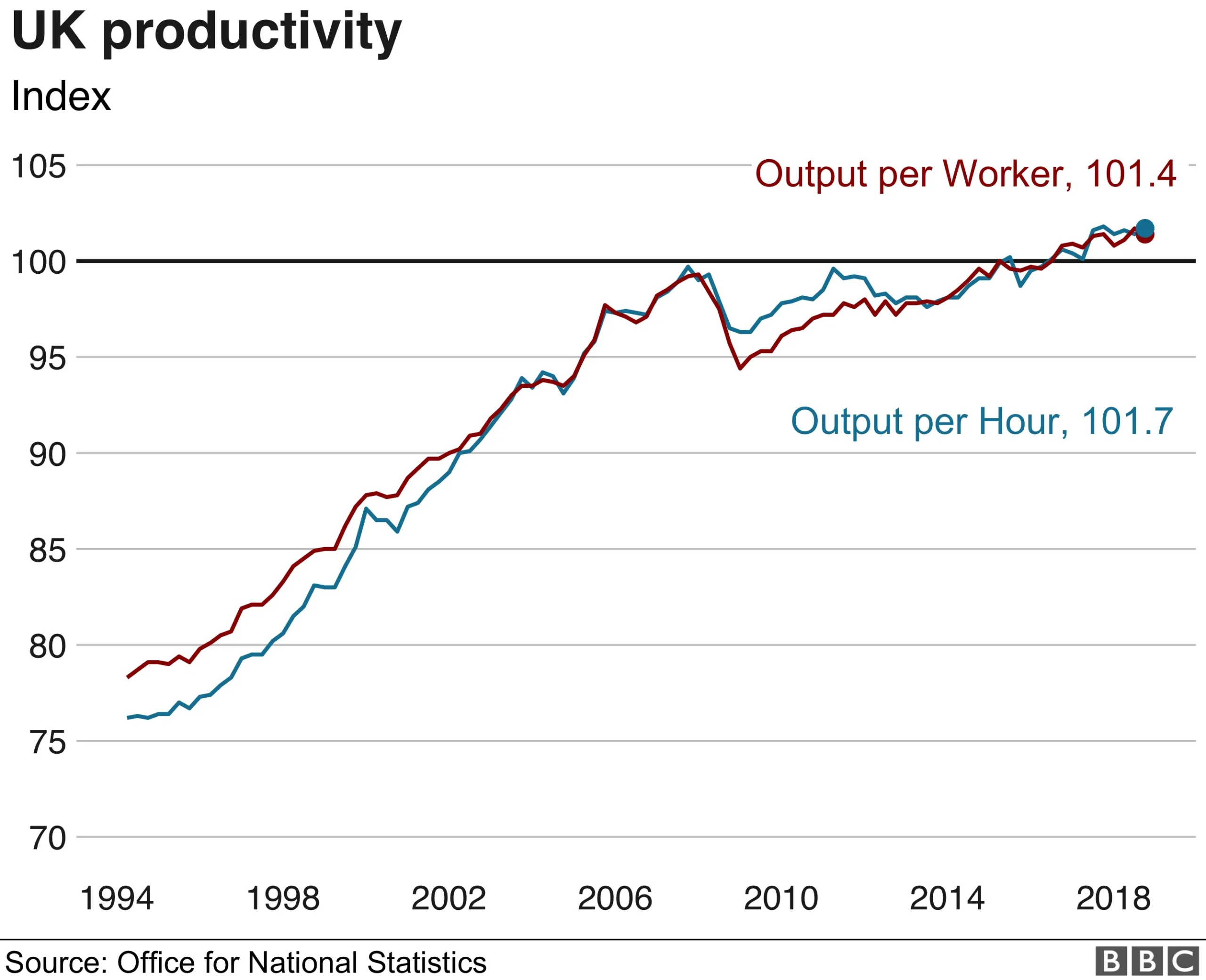
Explanation:
- Governments may reduce barriers to entry.
- They may deregulate markets and privatize state-owned enterprises.
- Greater competition pressures firms to become more efficient.
Economic Significance:
- Encourages productive and allocative efficiency.
- May lower prices for consumers.
- Improves product quality and innovation.
Evaluation:
- Too much competition may cause instability in some industries.
- Deregulation may reduce worker protection.
- Privatization may increase inequality in access to services.
3. Reducing Labour Costs and Unemployment Through Labour Market Flexibility
Supply-side policies aim to reduce unemployment and improve labour market efficiency through greater labour market flexibility.
Flexible labour market → Lower labour costs → Higher employment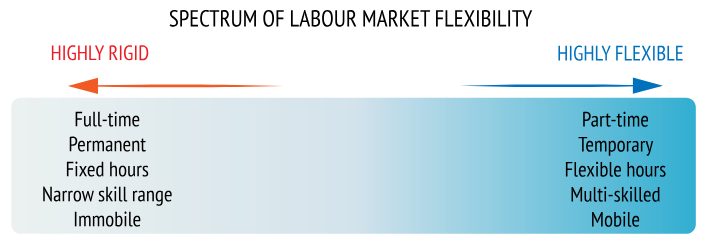
Explanation:
- Labour market flexibility allows wages and working conditions to adjust more easily.
- Governments may:
- Reduce minimum wage regulations
- Limit trade union power
- Increase worker mobility and training
- Lower labour costs encourage firms to hire more workers.
Economic Significance:
- Reduces structural unemployment.
- Improves efficiency of labour allocation.
- Increases competitiveness of firms.
Evaluation:
- Lower labour protection may reduce job security.
- Wages may fall for low-income workers.
- Greater flexibility may increase income inequality.
Example 1
Explain how supply-side policies promote long-term economic growth.
▶️ Answer / Explanation
Supply-side policies improve productivity and productive capacity.
Investment in education and infrastructure increases potential output.
This shifts LRAS to the right and promotes growth.
Example 2
Evaluate whether labour market flexibility reduces unemployment.
▶️ Answer / Explanation
Flexible labour markets reduce labour costs and encourage hiring.
This may reduce structural unemployment.
However, workers may face lower wages and less job security.
Thus, flexibility improves efficiency but may reduce worker protection.
4. Reducing Inflation to Improve International Competitiveness
A goal of supply-side policies is to reduce inflation and improve the country’s international competitiveness.
Lower costs → Lower inflation → More competitive exports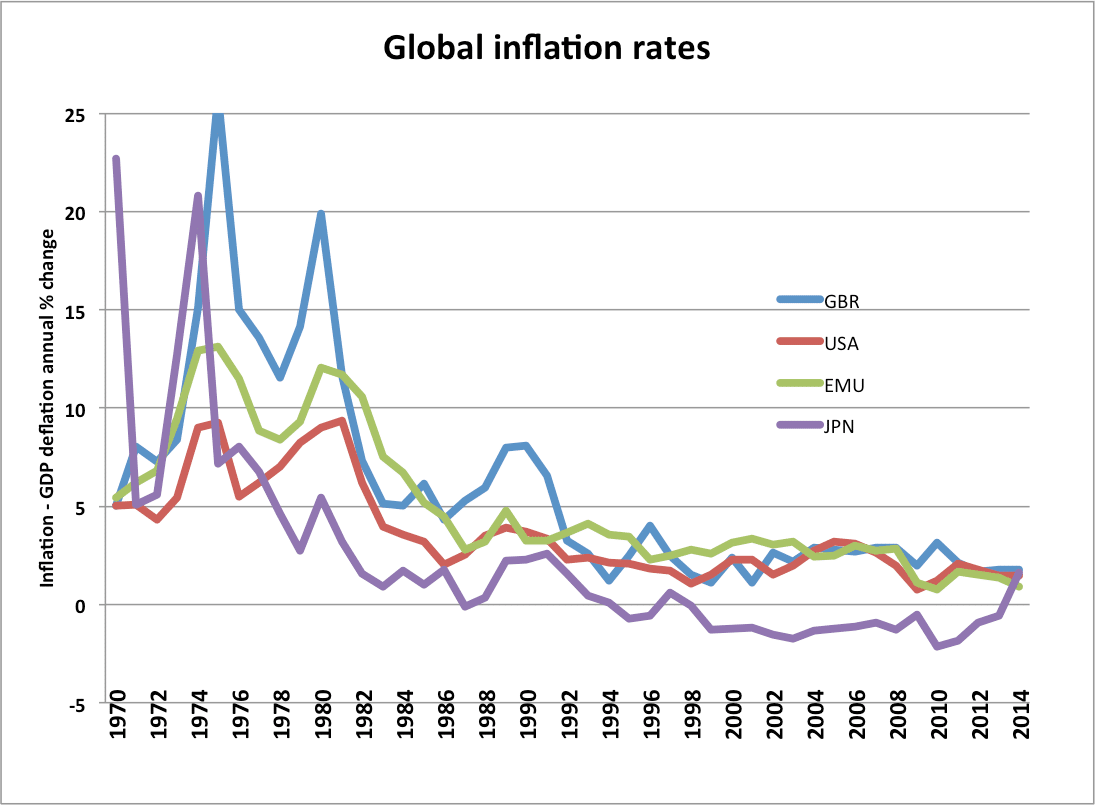
Explanation:
- Supply-side policies increase productivity and efficiency.
- Lower production costs reduce inflationary pressure.
- Domestic firms become more competitive in international markets.
Methods Used:
- Improving labour productivity
- Increasing competition
- Reducing business costs
- Investment in technology and infrastructure
Economic Significance:
- Exports become relatively cheaper.
- Improves the balance of trade.
- Supports long-term economic growth.
Evaluation:
- Effects may take a long time to occur.
- International competitiveness also depends on exchange rates and global demand.
- Some policies may reduce worker protection.
5. Increasing Firms’ Incentives to Invest in Innovation by Reducing Costs
Supply-side policies aim to encourage firms to invest in innovation and research & development (R&D) by reducing business costs.
Lower costs → Higher profit incentives → More innovation
Explanation:
- Governments may reduce:
- Corporate taxes
- Regulations
- Labour costs
- Governments may also provide:
- Subsidies for R&D
- Investment incentives
- Lower costs increase expected profitability of innovation.
Economic Significance:
- Encourages technological progress.
- Improves productivity and efficiency.
- Promotes long-term economic growth.
Evaluation:
- Tax reductions may reduce government revenue.
- Firms may not always invest additional profits into innovation.
- Benefits may mainly go to large firms.
Example 1
Explain how supply-side policies improve international competitiveness.
▶️ Answer / Explanation
Supply-side policies improve productivity and reduce production costs.
This lowers inflation and makes exports more competitive.
As a result, firms can compete more effectively internationally.
Example 2
Evaluate whether reducing business costs always increases innovation.
▶️ Answer / Explanation
Lower costs increase profits and may encourage investment in R&D.
This can improve productivity and growth.
However, firms may choose not to invest in innovation.
Thus, lower costs encourage but do not guarantee innovation.