
The Impact of Income and Wealth Inequality
Income inequality refers to unequal distribution of earnings among individuals or households.
Wealth inequality refers to unequal ownership of assets such as property, savings, and investments.
High levels of inequality can have important economic and social effects.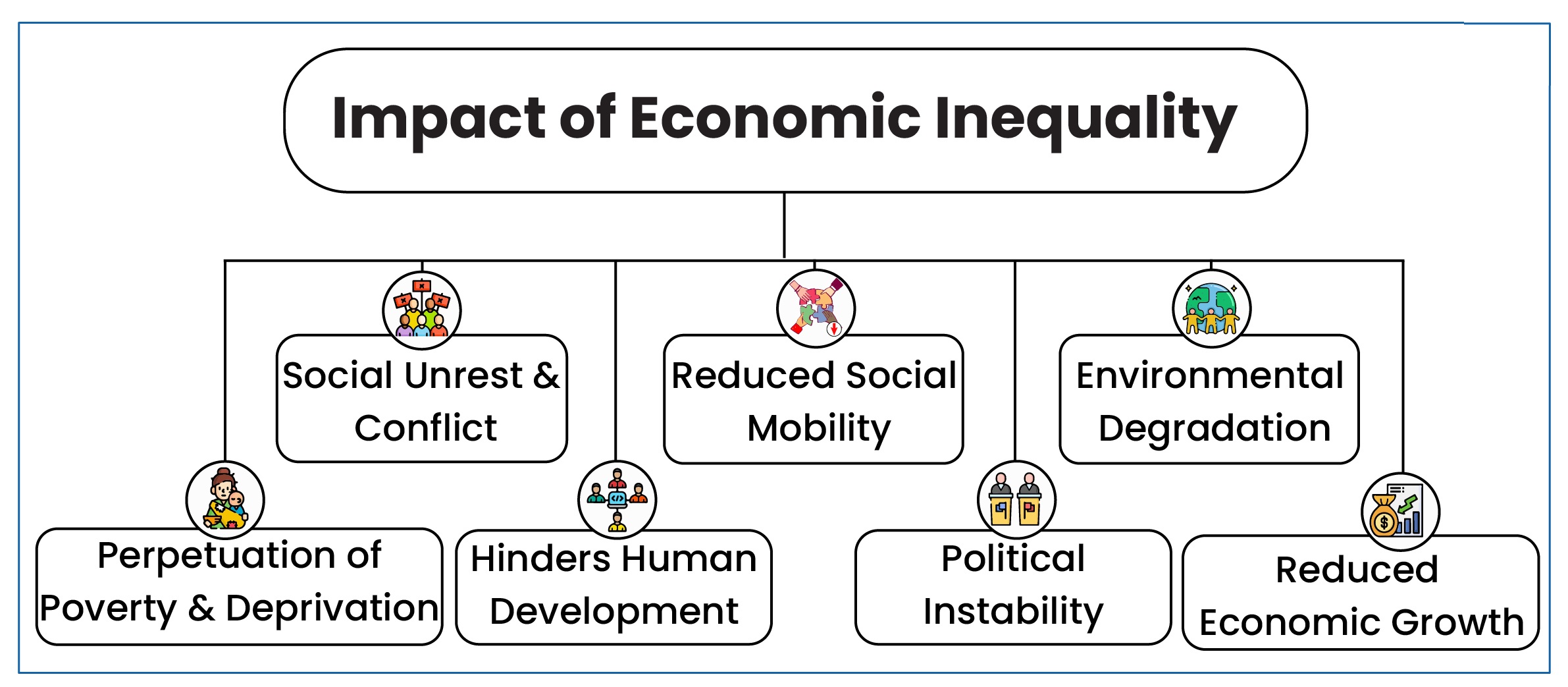
Inequality may affect:
- Economic growth
- Standards of living
- Social stability
The impact of inequality may be both positive and negative depending on the level of inequality and economic conditions.
1. Impact on Economic Growth
Economic inequality can influence economic growth in several ways.
Possible Positive Effects on Economic Growth
Some economists argue that moderate inequality may encourage:
- Hard work
- Innovation
- Entrepreneurship
- Investment
Higher incomes and profits may provide incentives for individuals and firms to:
- Take risks
- Start businesses
- Develop new technologies
Result:
- Economic growth may increase.
Example of a Positive Effect
Entrepreneurs may invest and innovate because successful businesses can generate high profits and wealth.
Negative Effects on Economic Growth
Very high inequality may reduce long-term economic growth.
Reduced Access to Education and Healthcare
Low-income households may not afford:
- Quality education
- Healthcare
- Training opportunities
This reduces human capital development.
Result:
- Worker productivity may remain low.
- Economic growth potential may decrease.
Lower Consumer Spending
Low-income households usually spend a larger proportion of their income.
If income becomes concentrated among wealthy groups:
- Overall consumption demand may weaken.
This may reduce aggregate demand and economic growth.
Poverty Traps
High inequality may create persistent poverty.
Poor households may remain trapped in low-income conditions because they cannot invest in education, health, or businesses.
This limits economic development.
Political and Economic Instability
Very high inequality may create uncertainty and instability.
Reduced investment confidence may negatively affect growth.
2. Impact on Standards of Living
Standards of living refer to the level of material well-being experienced by individuals or households.
This includes:
- Income
- Housing
- Healthcare
- Education
- Nutrition
- Access to goods and services
How Inequality Affects Standards of Living
High inequality creates large differences in living conditions between groups.
Effects on Low-Income Groups
People with low income or little wealth may experience:
- Poor housing
- Limited healthcare access
- Lower educational opportunities
- Poor nutrition
- Lower life expectancy
Social Exclusion
High inequality may reduce the ability of poor households to participate fully in society.
Examples:
- Limited access to transportation
- Limited digital access
- Reduced social participation
Differences in Opportunities
Wealthier households often have greater access to:
- High-quality education
- Private healthcare
- Financial opportunities
This widens differences in living standards over time.
Psychological Effects
High inequality may increase:
- Stress
- Anxiety
- Feelings of social exclusion
This may reduce overall well-being.
Possible Positive Effects
Some inequality may encourage individuals to improve skills and productivity in order to achieve higher living standards.
3. Impact on Social Stability
Social stability refers to peaceful and orderly social conditions within a country.
High levels of inequality may weaken social stability.
Social Tensions
Large income and wealth differences may create resentment between groups.
People may perceive the economic system as unfair.
Higher Crime Rates
Persistent poverty and inequality may increase:
- Crime
- Theft
- Violence
particularly when economic opportunities are limited.
Political Instability
Extreme inequality may lead to:
- Political protests
- Social unrest
- Political polarization
This may reduce investor confidence and economic performance.
Reduced Social Cohesion
High inequality may weaken trust and cooperation within society.
Different groups may become increasingly divided economically and socially.
Intergenerational Inequality
Inequality may persist across generations if poor households cannot access opportunities for advancement.
This may increase frustration and reduce social mobility.
Possible Positive Effects of Some Inequality
Moderate inequality may motivate individuals to work harder and pursue economic success.
However, excessive inequality is more likely to create instability.
Overall Impact of Inequality
| Area | Possible Impacts of High Inequality |
|---|---|
| Economic Growth | Lower human capital, weaker demand, instability |
| Standards of Living | Large differences in healthcare, education, and living conditions |
| Social Stability | Crime, unrest, political instability, reduced social cohesion |
Government Policies to Reduce Negative Effects
Governments may attempt to reduce inequality through:
- Progressive taxation
- Transfer payments
- Public education and healthcare
- Employment programs
- Minimum wage laws
Key Ideas:
- Moderate inequality may encourage innovation and investment.
- Very high inequality may reduce economic growth and human capital development.
- Inequality creates large differences in standards of living.
- High inequality may weaken social stability and increase social tensions.
Example 1
Explain how high income inequality may reduce economic growth.
▶️ Answer / Explanation
Low-income households may not afford quality education and healthcare.
This reduces human capital and worker productivity.
As a result, long-term economic growth potential may decrease.
Example 2
Using an example, explain how inequality may affect social stability.
▶️ Answer / Explanation
If wealth and income become concentrated among a small group while many people remain poor, social tensions may increase.
People may feel excluded from economic opportunities and may lose trust in institutions.
This may lead to protests, crime, or political instability.