
Measuring Poverty
Economists and governments use different methods to measure poverty.
Measuring poverty helps policymakers:
- Identify disadvantaged groups
- Design anti-poverty policies
- Compare poverty levels between countries
- Monitor changes in living standards over time
Poverty can be measured using:
- Single indicators
- Composite indicators
Single Indicators of Poverty
Single indicators measure poverty using one main variable or criterion.
The two important single indicators are:
- International poverty lines
- Minimum income standards
International Poverty Lines
An international poverty line is a fixed minimum income level used to identify people living in extreme poverty.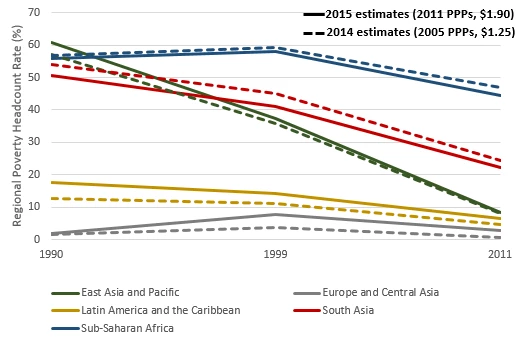
It estimates the minimum income needed to meet basic human needs.
Purpose of International Poverty Lines
- Allows comparison of poverty between countries.
- Measures extreme absolute poverty.
- Helps international organizations monitor global poverty.
World Bank Poverty Line
The World Bank commonly uses an international poverty line based on purchasing power parity (PPP).
This poverty line represents the minimum daily income required to meet essential needs.
Meaning of Purchasing Power Parity (PPP)
PPP adjusts income values to reflect differences in price levels between countries.
This allows more accurate international comparisons of living standards.
Example of International Poverty Line
If a person earns less than the international poverty threshold per day, they may be classified as living in extreme poverty.
Advantages of International Poverty Lines
- Simple and easy to use.
- Useful for international comparisons.
- Focuses on severe poverty.
Limitations of International Poverty Lines
- Focuses mainly on income.
- Does not fully capture quality of life.
- May not reflect differences in local living costs accurately.
- Ignores non-income aspects of poverty.
Minimum Income Standards
Minimum income standards estimate the minimum income needed for an acceptable standard of living within a specific society.
Unlike international poverty lines, minimum income standards depend on social and economic conditions within a country.
What Minimum Income Standards Include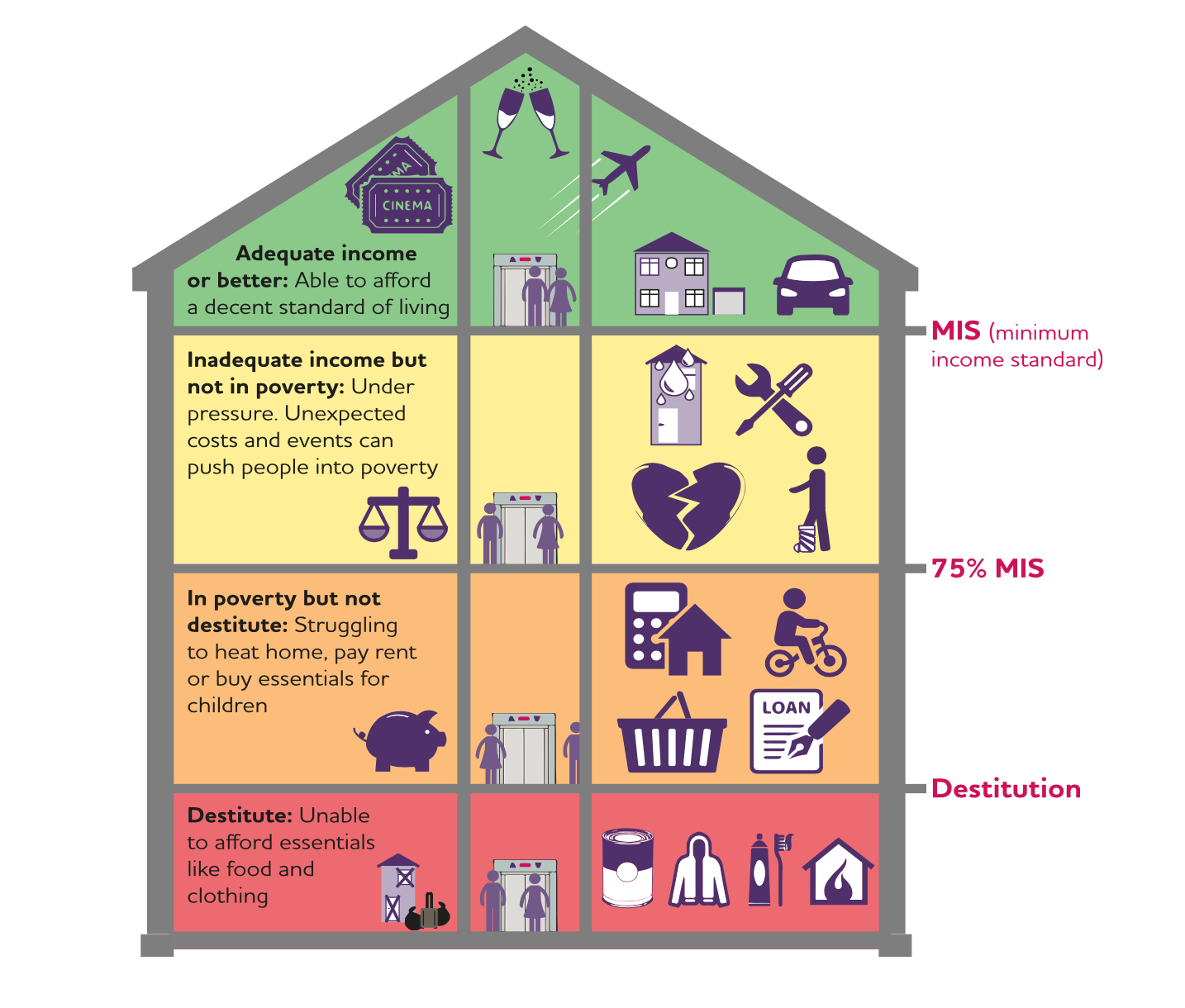
- Food and nutrition
- Housing
- Transportation
- Healthcare
- Education
- Participation in normal social activities
Purpose of Minimum Income Standards
- Measures relative poverty more effectively.
- Reflects societal expectations and living standards.
- Helps governments design welfare policies.
Example of Minimum Income Standards
A household may earn enough to survive physically but still not have enough income to participate fully in society.
Such a household may fall below the minimum income standard.
Advantages of Minimum Income Standards
- Reflects actual living conditions.
- Includes social participation.
- More realistic for developed countries.
Limitations of Minimum Income Standards
- Difficult to define acceptable living standards.
- Standards vary between countries and cultures.
- May involve subjective judgments.
Composite Indicators of Poverty
Composite indicators measure poverty using multiple dimensions rather than income alone.
These indicators recognize that poverty involves more than low income.
The Multidimensional Poverty Index (MPI)
The Multidimensional Poverty Index (MPI) is a composite measure of poverty developed by the United Nations Development Programme (UNDP) and the Oxford Poverty and Human Development Initiative.
The MPI measures multiple forms of deprivation experienced by households.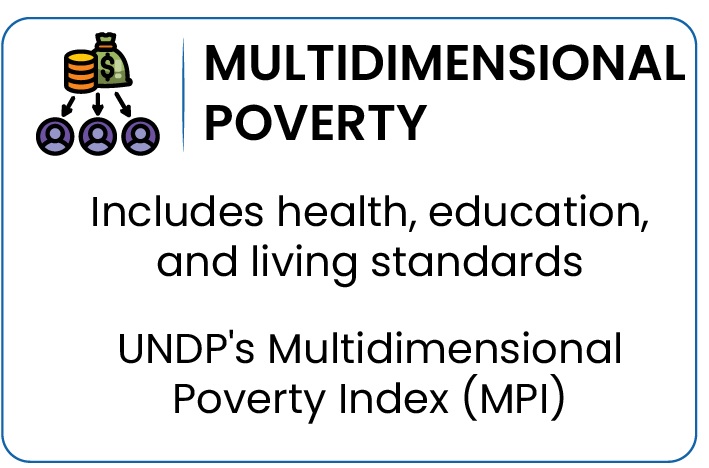
Main Dimensions of the MPI
The MPI measures deprivation in three main dimensions:
- Health
- Education
- Living standards
Examples of MPI Indicators
| Dimension | Examples of Indicators |
|---|---|
| Health | Nutrition, child mortality |
| Education | Years of schooling, school attendance |
| Living Standards | Electricity, sanitation, housing, clean water |
How the MPI Works
A household is considered multidimensionally poor if it experiences deprivation in several indicators simultaneously.
The MPI therefore captures the intensity and nature of poverty.
Advantages of the MPI
- Provides a broader understanding of poverty.
- Includes non-income aspects of well-being.
- Identifies specific areas of deprivation.
- Useful for targeted policy design.
Limitations of the MPI
- Complex to calculate.
- Requires large amounts of data.
- Choice of indicators and weights may be subjective.
Difference Between Single and Composite Indicators
| Aspect | Single Indicators | Composite Indicators |
|---|---|---|
| Measurement Basis | One variable | Multiple variables |
| Main Focus | Usually income | Multiple dimensions of poverty |
| Complexity | Simpler | More complex |
| Example | International poverty line | MPI |
Importance of Measuring Poverty Accurately
Accurate poverty measurement helps governments:
- Reduce inequality
- Improve living standards
- Target social welfare programs
- Monitor economic development
Key Ideas:
- Single indicators measure poverty using one main factor such as income.
- International poverty lines focus on extreme absolute poverty.
- Minimum income standards reflect acceptable living standards within society.
- The MPI measures multiple dimensions of deprivation.
- Composite indicators provide a broader understanding of poverty.
Example 1
Explain why the Multidimensional Poverty Index may provide a better measure of poverty than an international poverty line.
▶️ Answer / Explanation
The international poverty line mainly measures income deprivation.
However, poverty also includes lack of healthcare, education, sanitation, and housing.
The MPI includes multiple dimensions of deprivation and therefore provides a broader and more realistic measure of poverty.
Example 2
Using an example, explain the difference between an international poverty line and a minimum income standard.
▶️ Answer / Explanation
An international poverty line measures the minimum income needed for basic survival.
A minimum income standard measures the income needed for an acceptable standard of living within a society.
For example, a household may earn above the international poverty line but still lack enough income to participate fully in normal social activities, meaning it may fall below the minimum income standard.