
Potential Conflict Between Macroeconomic Objectives: Low Unemployment and Low Inflation
Governments aim to achieve several macroeconomic objectives, including: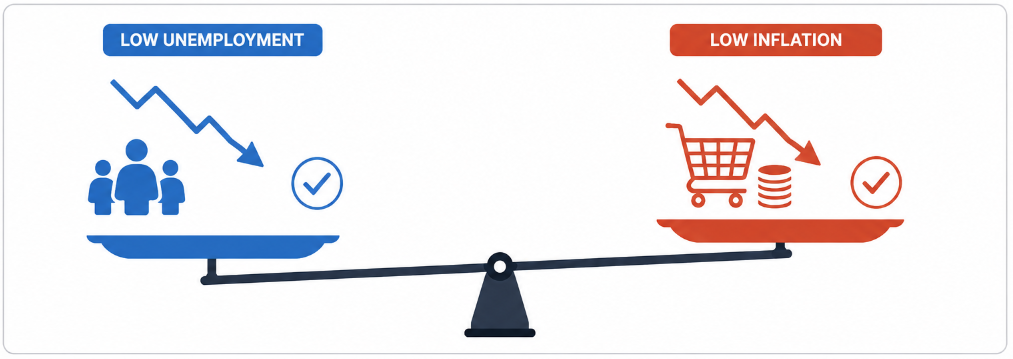
- Low unemployment
- Low and stable inflation
- Economic growth
- External stability
However, these objectives may sometimes conflict with each other.
One important conflict occurs between low unemployment and low inflation.
Why Reducing Unemployment May Increase Inflation
To reduce unemployment, governments may use: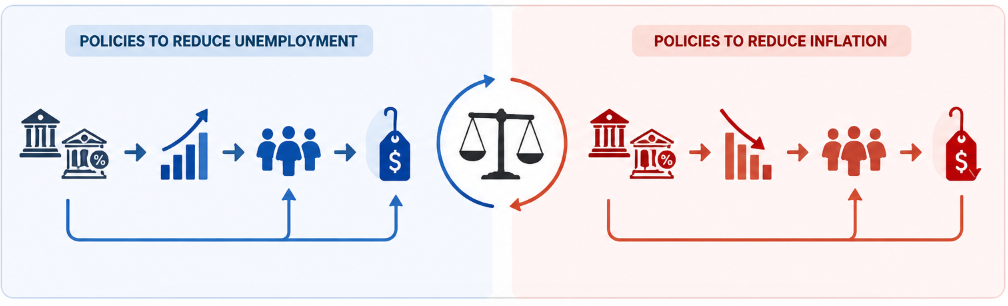
- Expansionary fiscal policy
- Expansionary monetary policy
These policies increase aggregate demand (AD).
Higher AD → Higher output → Higher employment
As firms increase production, they hire more workers.
This reduces cyclical unemployment.
Inflationary Pressure
If aggregate demand rises rapidly: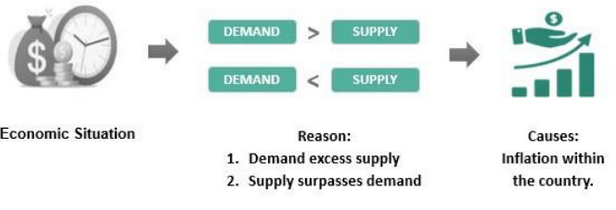
- Consumer spending increases.
- Demand for goods and services rises.
- Firms may increase prices.
- Wages and production costs may also rise.
Result:
Inflationary pressure increases.
Lower unemployment → Higher inflationary pressure
Example
Suppose the government increases infrastructure spending during a recession.
Possible Effects:
- Construction firms hire more workers.
- Household incomes increase.
- Consumer spending rises.
- Aggregate demand increases.
However, if demand rises too quickly, firms may raise prices, causing inflation.
Why Reducing Inflation May Increase Unemployment
To reduce inflation, governments may use: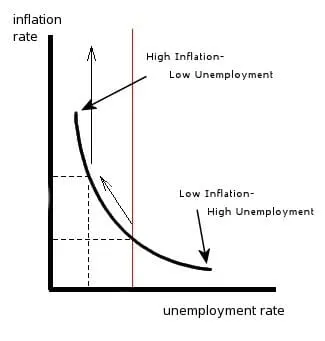
- Contractionary fiscal policy
- Contractionary monetary policy
Examples:
- Higher taxes
- Lower government spending
- Higher interest rates
These policies reduce aggregate demand.
Lower AD → Lower output → Lower inflationary pressure
Effects on Employment
When aggregate demand falls:
- Firms reduce production.
- Businesses may hire fewer workers.
- Some workers may lose jobs.
Result:
Unemployment may increase.
Lower inflation → Higher unemployment
Why the Conflict Exists
The conflict exists because:
- Policies increasing aggregate demand reduce unemployment but may increase inflation.
- Policies reducing aggregate demand lower inflation but may reduce employment and growth.
Governments therefore need to balance the two objectives carefully.
Role of Supply-Side Policies
Supply-side policies may help reduce the conflict between low unemployment and low inflation.
Examples: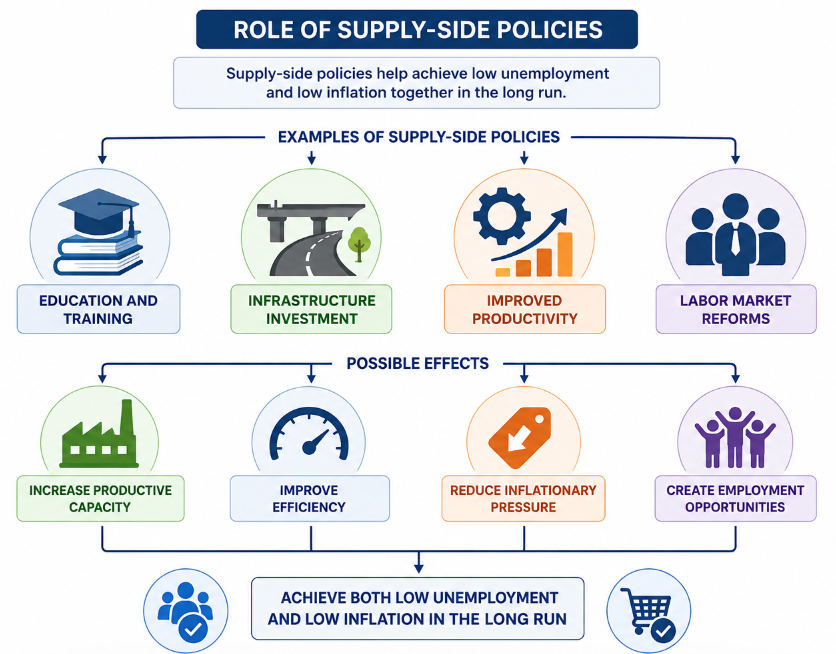
- Education and training
- Infrastructure investment
- Improved productivity
- Labor market reforms
Possible Effects:
- Increase productive capacity.
- Improve efficiency.
- Reduce inflationary pressure.
- Create employment opportunities.
These policies may help achieve both objectives together in the long run.
Comparison of Expansionary and Contractionary Policies:
| Policy Type | Effect on Unemployment | Effect on Inflation |
|---|---|---|
| Expansionary Policy | Unemployment decreases | Inflation may increase |
| Contractionary Policy | Unemployment may increase | Inflation decreases |
Evaluation
- Expansionary policies may successfully reduce unemployment during recessions.
- However, excessive aggregate demand may create inflationary pressure.
- Policies used to reduce inflation may slow economic growth and increase unemployment.
- The seriousness of the conflict depends on economic conditions and the level of spare capacity in the economy.
- Supply-side policies may help reduce the trade-off in the long run.
Example 1
Explain why policies used to reduce unemployment may increase inflation.
▶️ Answer / Explanation
Governments may use expansionary fiscal or monetary policy to reduce unemployment.
These policies increase aggregate demand in the economy.
Higher aggregate demand increases output and employment.
However, stronger demand may also cause firms to raise prices.
Wages and production costs may increase as labor demand rises.
As a result, inflationary pressure may increase while unemployment falls.
Example 2
Using an example, explain how policies used to reduce inflation may increase unemployment.
▶️ Answer / Explanation
Suppose inflation in an economy is rising rapidly.
The central bank increases interest rates to reduce aggregate demand.
Higher interest rates reduce borrowing and consumer spending.
Firms experience lower demand and may reduce production.
Some businesses may lay off workers, increasing unemployment.
Therefore, policies used to reduce inflation may create higher unemployment.
Trade-Off Between Unemployment and Inflation (HL only)
The trade-off between unemployment and inflation refers to the relationship where attempts to reduce unemployment may lead to higher inflation, while attempts to reduce inflation may increase unemployment.
This relationship is explained using the Phillips curve.
The Phillips curve shows the relationship between:
- The rate of unemployment
- The rate of inflation
The Short-Run Phillips Curve (SRPC)
The short-run Phillips curve shows an inverse relationship between unemployment and inflation in the short run.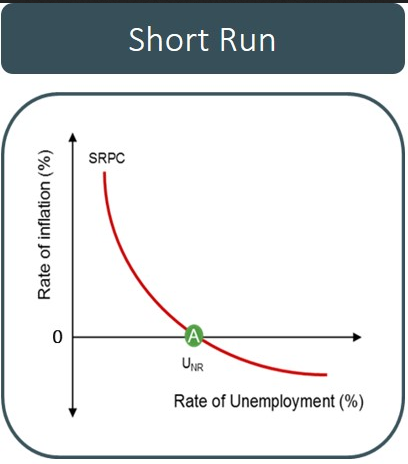
Meaning:
- Lower unemployment is associated with higher inflation.
- Higher unemployment is associated with lower inflation.
The curve is downward sloping.
Why the Trade-Off Exists in the Short Run
When aggregate demand increases:
- Firms increase production.
- More workers are hired.
- Unemployment falls.
As labor demand increases:
- Wages begin to rise.
- Production costs increase.
- Prices rise.
Result:
Lower unemployment → Higher inflation
AD/AS Explanation of the Short-Run Trade-Off
The trade-off can also be explained using the AD/AS model.
When aggregate demand shifts right:
- Real output increases.
- Employment increases.
- Unemployment falls.
- The price level rises.
This creates demand-pull inflation while reducing cyclical unemployment.
Diagram (HL only):
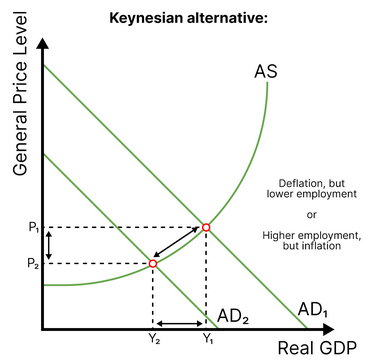
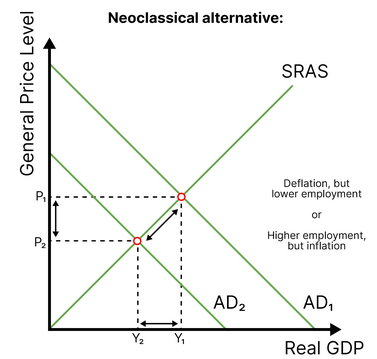
AD/AS diagram showing a rightward shift of AD causing higher price level and higher real output.
The Long-Run Phillips Curve (LRPC)
The long-run Phillips curve shows that in the long run there is no permanent trade-off between unemployment and inflation. 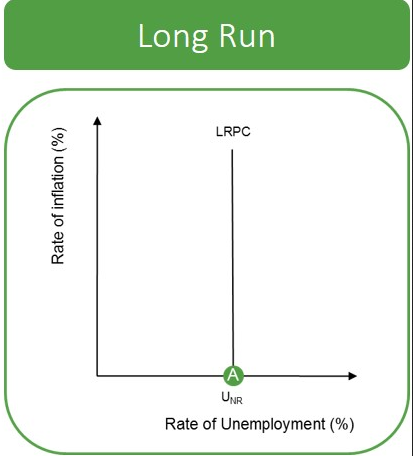
The curve is vertical at the natural rate of unemployment.
Natural Rate of Unemployment
The natural rate of unemployment is the unemployment rate that exists when the economy is operating at full employment.
It includes:
- Frictional unemployment
- Structural unemployment
It does not include cyclical unemployment.
Why the Trade-Off Disappears in the Long Run
In the long run, workers and firms adjust their inflation expectations.
Explanation:
- Suppose expansionary policies reduce unemployment below the natural rate.
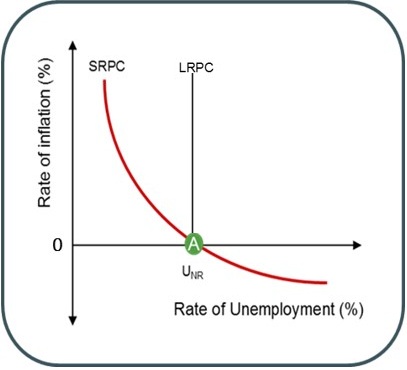
- Inflation rises.
- Workers begin expecting higher inflation.
- Workers demand higher wages.
- Production costs rise further.
Result:
- The short-run Phillips curve shifts upward.
- Unemployment returns to the natural rate.
- Inflation remains higher.
Therefore, attempts to keep unemployment below the natural rate only create higher inflation in the long run.
Shift of the Short-Run Phillips Curve
The SRPC may shift because of changes in:
- Inflation expectations
- Supply shocks
- Commodity prices
- Labor productivity
Supply Shock Example
A rise in oil prices increases production costs.
Effects:
- Inflation increases.
- Unemployment also increases.
This causes the short-run Phillips curve to shift upward/right.
Stagflation
Stagflation occurs when:
- Inflation is high
- Unemployment is high
- Economic growth is low
Stagflation challenges the simple short-run Phillips curve relationship.
Role of Supply-Side Policies
Supply-side policies may reduce the natural rate of unemployment.
Examples:
- Education and training
- Labor market reforms
- Improved labor mobility
Effects:
- Natural rate of unemployment falls.
- Long-run Phillips curve shifts left.
- The economy may achieve lower unemployment without higher inflation.
Comparison Between the Short-Run and Long-Run Phillips Curve:
| Feature | Short-Run Phillips Curve | Long-Run Phillips Curve |
|---|---|---|
| Relationship | Inverse relationship between inflation and unemployment | No permanent trade-off |
| Shape | Downward sloping | Vertical |
| Time Period | Short run | Long run |
| Main Cause | Changes in aggregate demand | Inflation expectations adjust |
| Policy Implication | Possible temporary trade-off | Unemployment returns to natural rate |
Evaluation
- The short-run Phillips curve suggests policymakers face a temporary trade-off between unemployment and inflation.
- The long-run Phillips curve suggests that this trade-off disappears over time.
- Inflation expectations are important in determining long-run outcomes.
- Supply shocks and stagflation show that inflation and unemployment may rise together.
- Supply-side policies may reduce the natural rate of unemployment without increasing inflation.
Example 1
Explain why there may be a trade-off between unemployment and inflation in the short run.
▶️ Answer / Explanation
Expansionary policies increase aggregate demand in the economy.
Higher aggregate demand increases production and employment.
As unemployment falls, demand for labor rises and wages may increase.
Higher wages and stronger demand increase inflationary pressure.
Therefore, lower unemployment may be associated with higher inflation in the short run.
Example 2
Using an example, explain why the long-run Phillips curve is vertical.
▶️ Answer / Explanation
Suppose the government uses expansionary policy to reduce unemployment below the natural rate.
Initially, unemployment falls and inflation rises.
Over time, workers expect higher inflation and demand higher wages.
Production costs rise and firms reduce employment back toward the natural rate of unemployment.
Inflation remains high, but unemployment returns to its natural rate.
Therefore, there is no permanent long-run trade-off between inflation and unemployment, causing the long-run Phillips curve to be vertical.