
Relative Costs of Unemployment versus Inflation
Governments and central banks often face a trade-off between reducing unemployment and controlling inflation.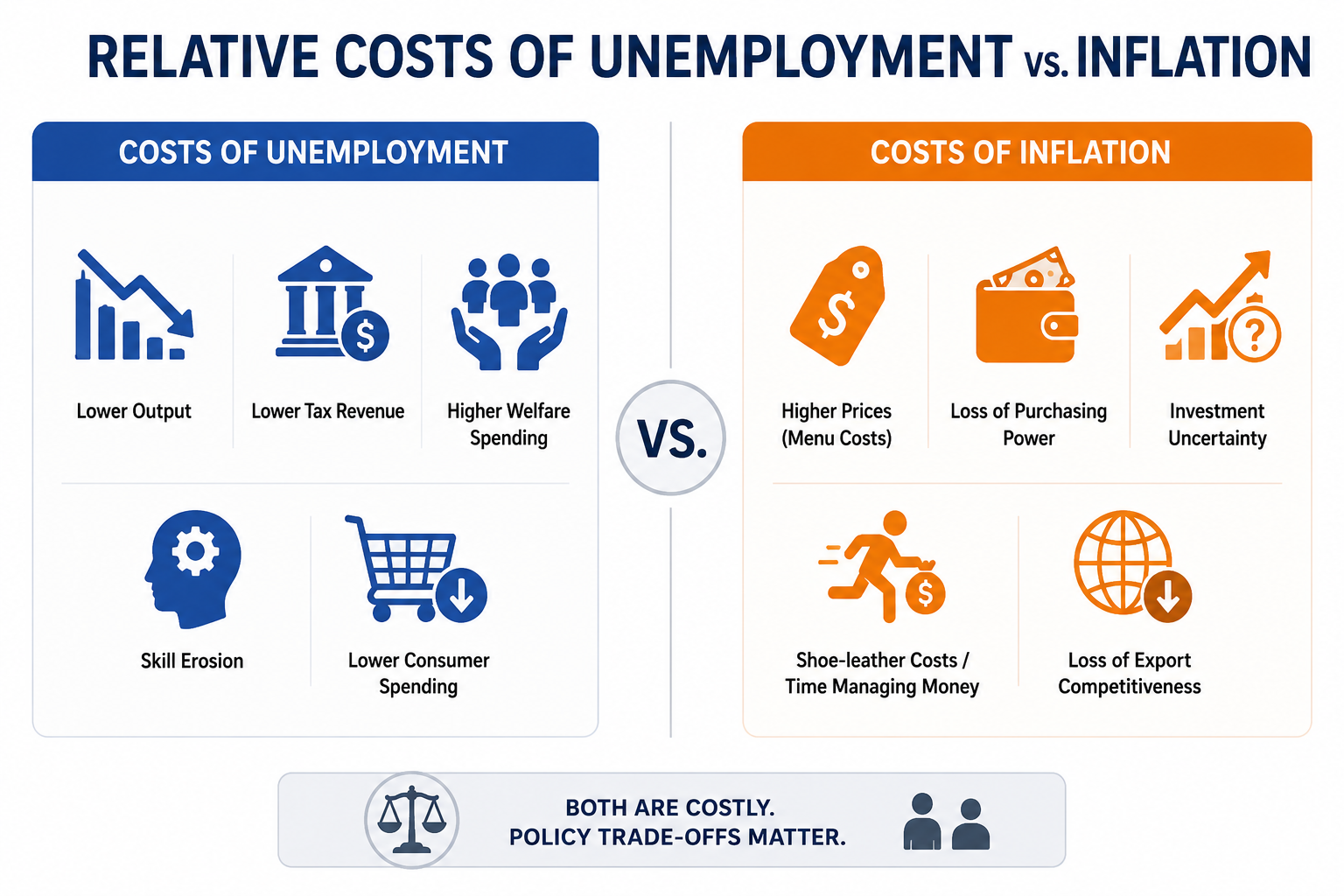
Both unemployment and inflation create significant economic and social costs.
Economists debate which problem creates greater harm and which should receive higher policy priority.
Why a Trade-Off May Exist
In the short run, attempts to reduce unemployment may increase inflation, while policies to reduce inflation may increase unemployment.
Example:
- Expansionary policies increase aggregate demand and reduce cyclical unemployment.
- However, higher aggregate demand may create inflationary pressure.
AD ↑ → Unemployment ↓ but Inflation ↑
Relative Costs of Unemployment
Unemployment creates personal, social, and economic costs.
1. Loss of Output
- Unemployed workers do not contribute to production.
- The economy operates below potential output.
- Real GDP decreases.
2. Lower Living Standards
- Unemployed individuals lose income.
- Consumption and quality of life decrease.
3. Psychological and Social Problems
- Stress, depression, and reduced self-esteem may increase.
- Crime and social instability may rise.
4. Government Budget Problems
- Tax revenue decreases.
- Government spending on welfare increases.
- Budget deficits may grow.
5. Long-Term Damage
- Long-term unemployment may reduce skills and employability.
- Economic growth potential may decrease.
Relative Costs of Inflation
Inflation also creates important economic and social costs.
1. Loss of Purchasing Power
- Higher prices reduce the real value of money.
- Consumers can buy fewer goods and services.
2. Uncertainty
- Firms and households may find future prices difficult to predict.
- Investment and saving decisions become more difficult.
3. Redistributive Effects
- People on fixed incomes lose purchasing power.
- Borrowers may gain while lenders lose.
4. Damage to International Competitiveness
- Domestic goods become relatively more expensive.
- Exports may decrease.
5. Reduced Saving and Investment
- High inflation reduces the real value of savings.
- Economic confidence may weaken.
Comparison of Relative Severity
The relative importance of unemployment and inflation depends on:
- The severity of each problem
- The type of inflation or unemployment
- Economic conditions
- Government priorities
When Unemployment May Be More Harmful
- During deep recessions
- When cyclical unemployment is very high
- When poverty and social instability increase
- When long-term unemployment damages human capital
Key Insight:
- High unemployment often creates severe personal and social suffering.
When Inflation May Be More Harmful
- During periods of very high or hyperinflation
- When inflation becomes unstable and unpredictable
- When inflation severely damages savings and investment
Key Insight:
- Very high inflation can destabilize the entire economy.
Low Inflation versus High Inflation
Most economists consider:
- Low and stable inflation relatively manageable
- High and unstable inflation more dangerous
Many governments therefore aim for:
- Low unemployment
- Low and stable inflation simultaneously
Policy Trade-Offs
Governments may face difficult policy choices.
Example:
- Expansionary fiscal policy may reduce unemployment but increase inflation.
- Contractionary policy may reduce inflation but increase unemployment.
This creates a macroeconomic policy trade-off.
Short-Run Phillips Curve Perspective
The short-run Phillips curve suggests an inverse relationship between unemployment and inflation in the short run.
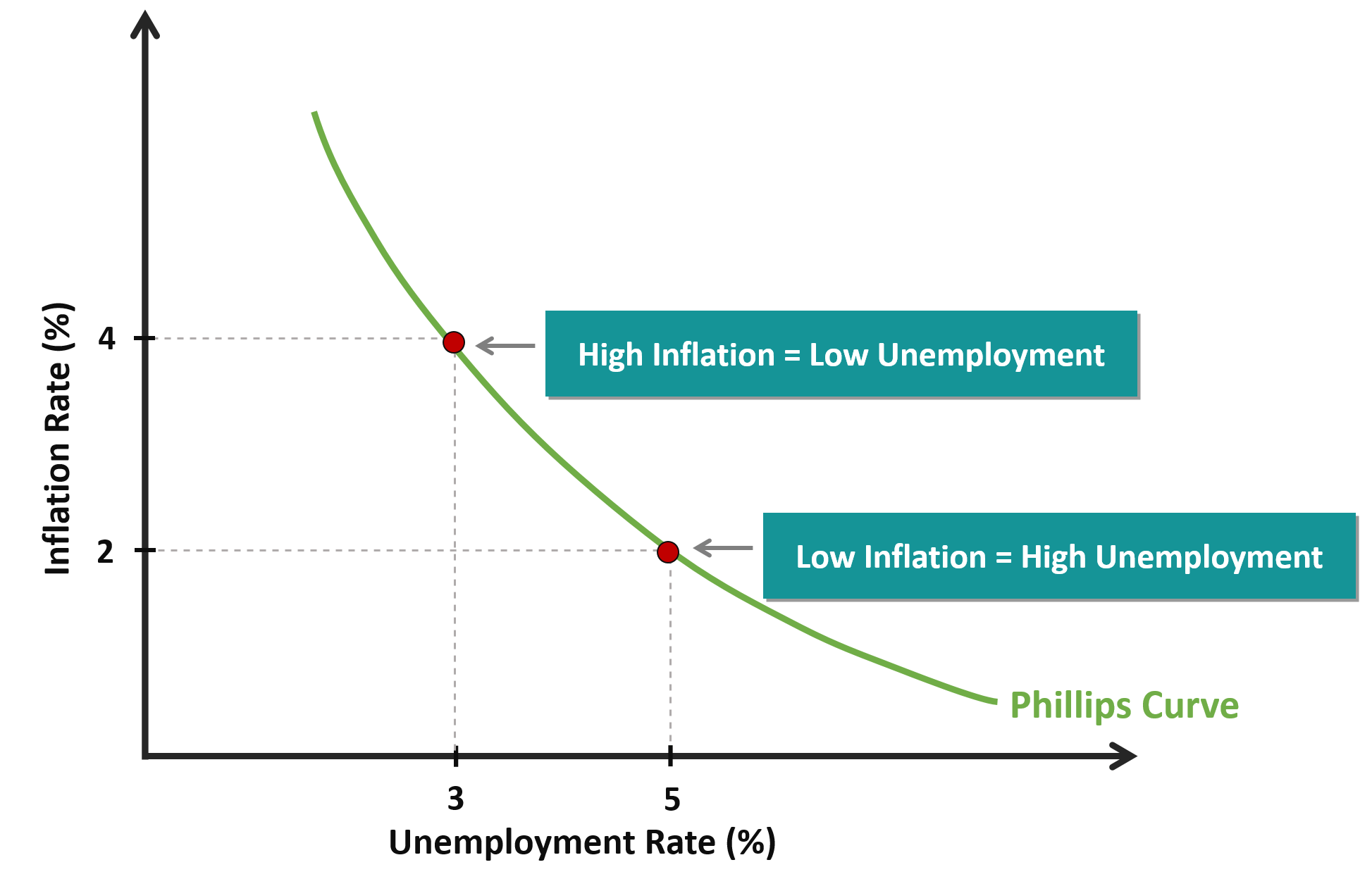
Unemployment ↓ → Inflation ↑
Inflation ↓ → Unemployment ↑
However, this trade-off may not exist in the long run.
Different Economic Views
Keynesian View
- Reducing unemployment is often prioritized during recessions.
- Governments should increase aggregate demand to support employment.
Monetarist/New Classical View
- Controlling inflation is more important for long-term stability.
- Attempts to reduce unemployment below the natural rate mainly create inflation.
Comparison Between Costs of Unemployment and Inflation
| Aspect | Unemployment | Inflation |
|---|---|---|
| Main Effect | Idle labour resources | Falling purchasing power |
| Personal Impact | Income loss and stress | Reduced real income |
| Economic Impact | Lower GDP | Economic uncertainty |
| Government Impact | Higher welfare spending | Difficult policy management |
| Extreme Case | Mass unemployment | Hyperinflation |
Balanced Macroeconomic Objective
Most governments aim to achieve:
- Low unemployment
- Low and stable inflation
- Sustainable economic growth
Achieving balance between these objectives is a major challenge in macroeconomic policy.
Key Ideas:
- Both unemployment and inflation create major economic and social costs.
- High unemployment causes loss of output and severe social problems.
- High inflation creates uncertainty and reduces purchasing power.
- Governments often face trade-offs between reducing inflation and reducing unemployment.
Example 1
Explain why high unemployment may be considered more harmful than low inflation.
▶️ Answer / Explanation
High unemployment causes income loss, poverty, and psychological stress.
The economy also loses output because labour resources remain unused.
In contrast, low and stable inflation may still allow economic growth and stable planning.
Therefore, severe unemployment may create greater social and economic harm.
Example 2
Using an example, explain why very high inflation may become more harmful than unemployment.
▶️ Answer / Explanation
During hyperinflation, prices may rise extremely rapidly.
Money loses value quickly and consumers may lose confidence in the currency.
Savings become almost worthless and firms find planning difficult.
This can destabilize the entire economy and reduce economic growth significantly.