
The Meaning of Economic Inequality
Economic inequality refers to differences in the distribution of income and wealth among individuals or groups within an economy.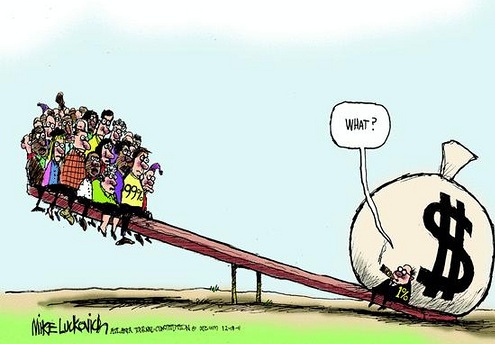
It shows that some people possess significantly more economic resources than others.
Economic inequality exists in nearly all economies, although the degree of inequality varies between countries.
Main Forms of Economic Inequality
The two major forms of economic inequality are:
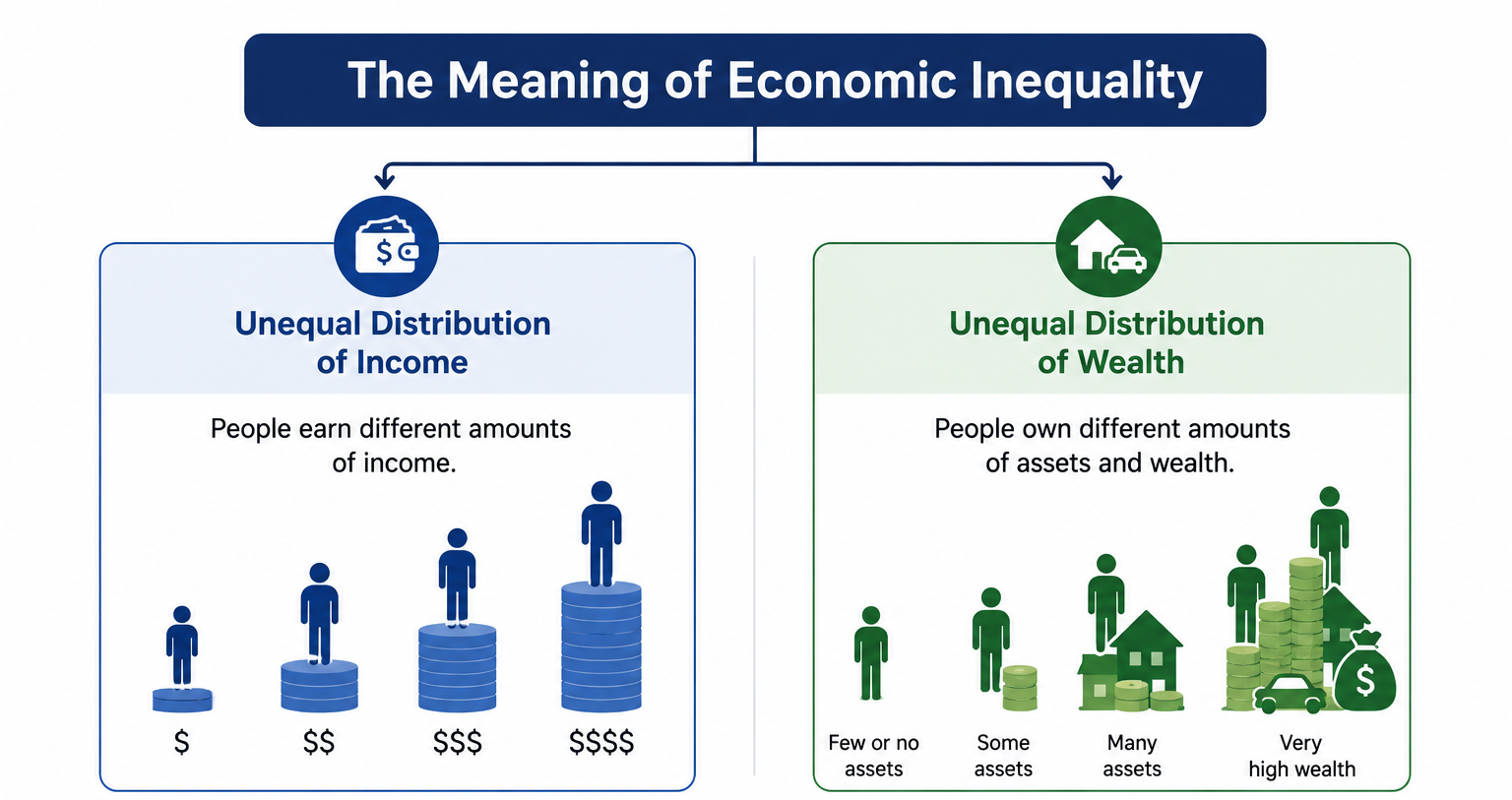
Unequal Distribution of Income
Income inequality refers to differences in the amount of income earned by individuals or households.
Income is the flow of earnings received over a period of time.
Sources of income include:
- Wages and salaries
- Rent
- Interest
- Profits
- Dividends
- Transfer payments
Meaning of Unequal Income Distribution
Income inequality exists when:
- Some individuals or households earn much higher incomes than others.
- Income is unevenly shared across the population.
Examples of Income Inequality
- Highly skilled workers earning much higher wages than low-skilled workers.
- Business owners receiving large profits while some workers earn minimum wages.
Causes of Income Inequality
- Differences in education and skills
- Differences in occupation
- Unequal access to opportunities
- Discrimination
- Differences in ownership of assets
- Globalization and technological change
Effects of Income Inequality
- Differences in living standards
- Differences in access to healthcare and education
- Higher poverty levels for some groups
- Potential social tensions
Unequal Distribution of Wealth
Wealth inequality refers to differences in the ownership of assets among individuals or households.
Wealth is the stock of assets owned at a point in time.
Examples of wealth include:
- Property and land
- Savings
- Shares and financial investments
- Businesses
- Valuable possessions
Meaning of Unequal Wealth Distribution
Wealth inequality exists when:
- Some individuals own significantly more assets than others.
- Wealth is concentrated among a small part of the population.
Why Wealth Inequality Is Often Greater Than Income Inequality
- Wealth accumulates over time.
- Assets generate additional income.
- Wealth may be inherited across generations.
Wealth → Generates income → More wealth accumulation
Examples of Wealth Inequality
- A small group owning most land or property in a country.
- Wealthy households owning large investment portfolios while others have little or no savings.
Causes of Wealth Inequality
- Inheritance
- Differences in savings and investment
- Unequal property ownership
- Capital gains
- Access to financial markets
Effects of Wealth Inequality
- Concentration of economic power
- Differences in opportunities and living standards
- Intergenerational inequality
- Potential political and social instability
Difference Between Income and Wealth
| Aspect | Income | Wealth |
|---|---|---|
| Meaning | Flow of earnings over time | Stock of assets at a point in time |
| Examples | Wages, profits, rent | Property, savings, investments |
| Time Dimension | Measured per period | Measured at one moment |
| Relationship | Income may increase wealth | Wealth may generate income |
Economic Inequality and Living Standards
Economic inequality affects people’s:
- Access to education
- Healthcare
- Housing
- Nutrition
- Employment opportunities
High inequality may reduce equality of opportunity.
Possible Advantages of Some Inequality
Some economists argue that moderate inequality may:
- Encourage innovation and entrepreneurship
- Create incentives to work and invest
- Reward skills and productivity
Possible Problems of High Inequality
- Higher poverty levels
- Social instability
- Reduced social mobility
- Unequal opportunities
- Political tensions
Government Policies to Reduce Economic Inequality
- Progressive taxation
- Transfer payments
- Public healthcare and education
- Minimum wage laws
- Social welfare programs
Key Ideas:
- Economic inequality refers to unequal distribution of income and wealth.
- Income is a flow of earnings, while wealth is a stock of assets.
- Wealth inequality is often greater than income inequality.
- High inequality may create social and economic problems.
Example 1
Explain the difference between income inequality and wealth inequality.
▶️ Answer / Explanation
Income inequality refers to unequal earnings received over time, such as wages and profits.
Wealth inequality refers to unequal ownership of assets such as property, savings, and investments.
Income is a flow, while wealth is a stock of assets.
Example 2
Using an example, explain why wealth inequality may increase over time.
▶️ Answer / Explanation
Wealthy individuals may own property and financial investments that generate additional income.
This income can be reinvested to acquire even more assets.
Over time, wealth accumulates and inequality may increase further.