
Administrative Barriers: Standards and Regulations
Administrative barriers are non-tariff trade barriers that restrict international trade through rules, procedures, standards, and regulations imposed by governments. Instead of directly taxing or limiting imports, governments use administrative measures to make it more difficult, costly, or time-consuming for foreign goods to enter domestic markets.
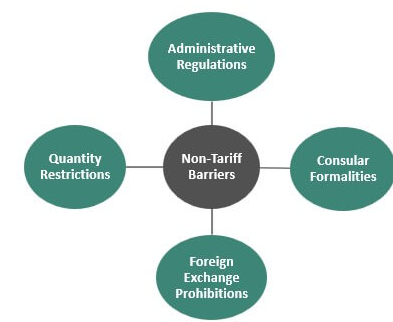
Standards and regulations are common forms of administrative barriers. They are often justified on the grounds of protecting consumer safety, health, the environment, and product quality.
However, they may also be used to protect domestic industries from foreign competition.
Main Objectives of Standards and Regulations:
- Protect consumer health and safety.
- Maintain product quality standards.
- Protect the environment.
- Protect domestic industries from imports.
Administrative barriers = Rules and procedures that restrict trade
Standards
Standards are requirements that products must meet before they can be sold in a market.
- May include safety standards, health standards, or environmental standards.
- Imported goods must satisfy domestic requirements.
- Compliance may increase production and certification costs.
For example, food imports may need to meet strict health and labeling requirements.
Regulations
Regulations are legal rules and procedures governing the import and sale of goods.
- May involve inspections, testing, and licensing.
- Can delay imports and increase administrative costs.
- Foreign firms may find compliance difficult or expensive.
Complex regulations can reduce the competitiveness of imported goods.
Effects on Markets
Administrative barriers affect consumers, domestic producers, foreign firms, and market efficiency.
Effect on Consumers
- Consumers may receive safer and higher-quality goods.
- Imported goods may become more expensive.
- Consumer choice may decrease.
- Prices may rise due to reduced competition.
Therefore, consumers experience both benefits and costs.
Effect on Domestic Producers
- Domestic firms face less foreign competition.
- Sales and market share may increase.
- Domestic industries gain protection.
- Reduced competition may reduce efficiency incentives.
Domestic producers generally benefit from administrative barriers.
Effect on Foreign Producers
- Compliance costs increase.
- Market access becomes more difficult.
- Exports may decrease.
- Firms may need to modify products to meet regulations.
Foreign producers may lose competitiveness in protected markets.
Effect on Market Efficiency
- Competition decreases.
- Domestic prices may rise.
- Allocative efficiency may decrease.
- Deadweight welfare loss may occur.
Although standards may improve quality and safety, excessive regulation may distort trade and reduce efficiency.
Advantages and Disadvantages of Administrative Barriers:
| Advantages | Disadvantages |
|---|---|
| Protect consumer safety and health | Higher prices for consumers |
| Protect domestic industries | Reduced competition |
| Improve product quality | Lower allocative efficiency |
| Protect environment | Possible trade disputes |
Example 1
Explain how standards and regulations can act as barriers to international trade.
▶️ Answer / Explanation
Standards and regulations require imported goods to meet specific safety, quality, or environmental requirements.
Foreign firms may need to spend more on testing, certification, and product modification to satisfy these requirements.
This increases production costs and reduces competitiveness in foreign markets.
As a result, standards and regulations can reduce imports and protect domestic industries.
Example 2
Using an example, explain why administrative barriers may protect consumers but reduce efficiency.
▶️ Answer / Explanation
A country may require imported food products to meet strict health and safety standards.
This protects consumers by ensuring safer and higher-quality products.
However, foreign firms face higher compliance costs, reducing competition in the domestic market.
Domestic producers may then charge higher prices due to reduced foreign competition.
Therefore, administrative barriers may improve consumer safety while reducing market efficiency and increasing prices.