
Implications of a Persistent Current Account Deficit (HL only)
A persistent current account deficit occurs when a country continuously spends more on imports and external payments than it earns from exports and inflows over a long period of time.
A current account deficit is not always harmful, especially if it is financed through productive investment inflows. However, persistent and large deficits may create economic problems and increase external vulnerability.
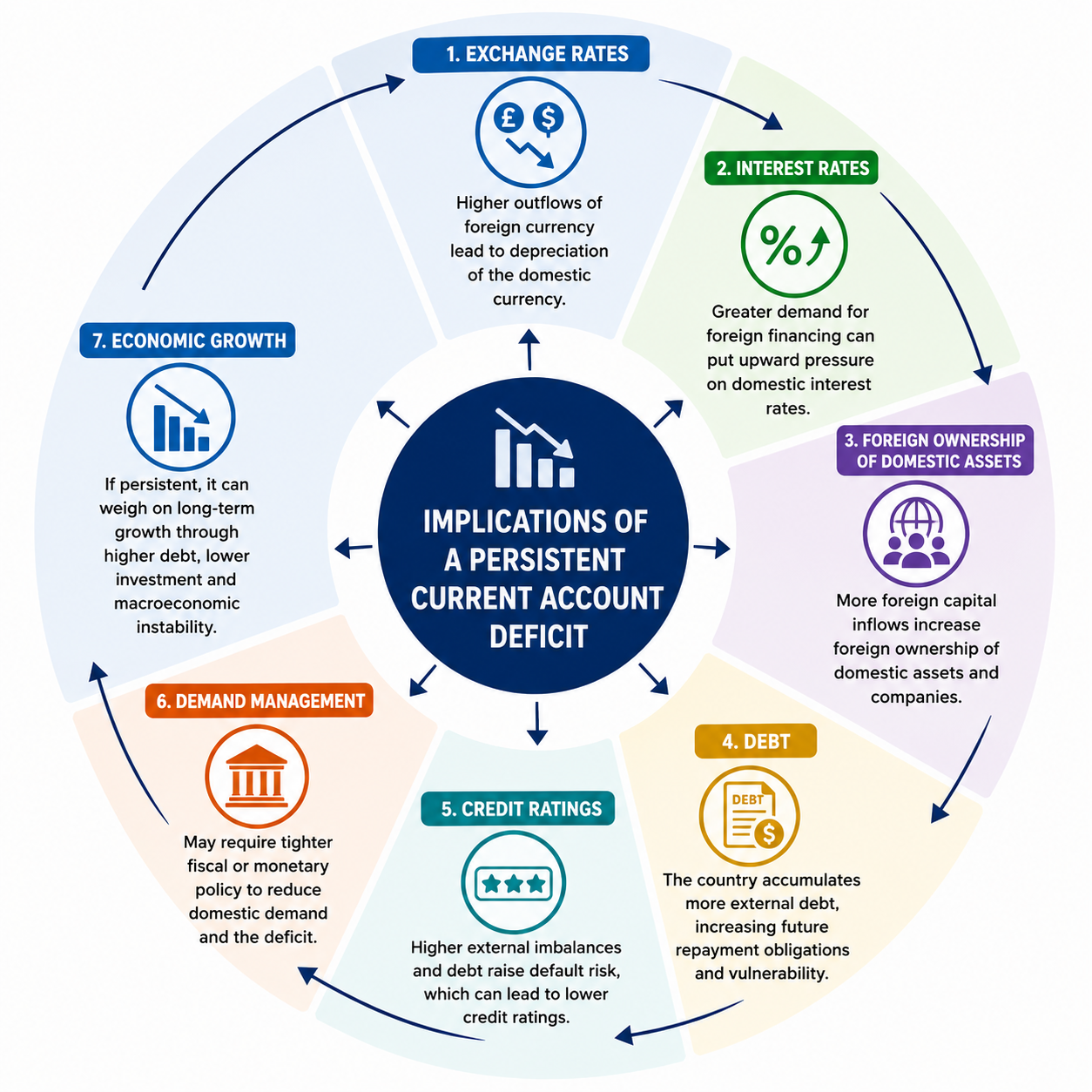
- Persistent deficits require financing through borrowing or financial inflows.
- Long-term deficits may weaken confidence in the economy.
- Exchange rates, debt levels, and economic growth may be affected.
- The impact depends on how the deficit is financed.
Effects on Exchange Rates
A persistent current account deficit increases demand for foreign currencies because imports and external payments exceed export earnings.
How It Happens: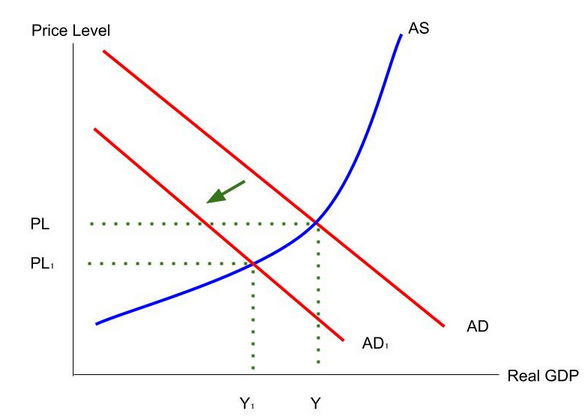
- Residents sell domestic currency to buy imports.
- Supply of the domestic currency increases in foreign exchange markets.
- Demand for foreign currency rises.
Possible Result:
The domestic currency may depreciate.
Persistent current account deficit → Currency depreciation pressure
Possible Consequences:
- Imports become more expensive.
- Inflationary pressure may increase.
- Export competitiveness may improve.
Effects on Interest Rates
Countries with persistent current account deficits may need to attract foreign capital inflows to finance the deficit.
How It Happens:
- Central banks may raise interest rates to attract foreign investors.
- Higher interest rates encourage portfolio investment inflows.
Possible Consequences:
- Borrowing costs for households and firms increase.
- Consumption and investment may decrease.
- Economic growth may slow.
Persistent deficit → Higher interest rates → Slower domestic demand
Foreign Ownership of Domestic Assets
Persistent deficits are often financed through foreign investment.
Examples:
- Foreign direct investment (FDI).
- Foreign purchases of shares, bonds, or businesses.
Possible Consequences:
- Foreign ownership of domestic firms and assets increases.
- Future profits and dividends may flow abroad.
- National control over strategic industries may decrease.
However, foreign investment may also bring technology, employment, and productivity gains.
Effects on Debt
A current account deficit may be financed through borrowing from abroad.
Possible Consequences:
- External debt increases.
- Interest repayments to foreign lenders rise.
- Debt-servicing burdens may become unsustainable.
If debt becomes excessive, financial instability may occur.
Persistent deficit → More borrowing → Higher external debt
Effects on Credit Ratings
Credit rating agencies evaluate a country’s ability to repay debt.
Persistent current account deficits may reduce confidence among investors and lenders.
Possible Consequences:
- Credit ratings may fall.
- Borrowing costs may increase.
- Capital inflows may decrease.
A lower credit rating may therefore worsen financial problems.
Effects on Demand Management
Governments and central banks may use demand-management policies to reduce persistent deficits.
Possible Policies:
- Higher interest rates.
- Reduced government spending.
- Higher taxes.
- Policies to reduce import demand.
Possible Consequences:
- Aggregate demand may decrease.
- Inflationary pressure may fall.
- Unemployment may rise.
- Economic growth may slow.
Demand-management policies may therefore improve the current account but create short-run economic costs.
Effects on Economic Growth
The effect of a persistent current account deficit on growth depends on how the deficit is financed.
Possible Positive Effects
If the deficit is financed through productive investment:
- Investment and productive capacity may increase.
- Technology transfer and infrastructure development may occur.
- Long-term growth may improve.
Example:
FDI financing infrastructure and manufacturing projects.
Possible Negative Effects
If the deficit is financed through excessive borrowing or consumption:
- Debt burdens may rise.
- Confidence in the economy may weaken.
- Currency depreciation and inflation may increase.
- Economic instability may occur.
Persistent unsustainable deficits may therefore reduce long-term growth.
Summary of Implications of a Persistent Current Account Deficit:
| Area | Possible Implication |
|---|---|
| Exchange Rates | Currency depreciation pressure |
| Interest Rates | Higher interest rates to attract capital inflows |
| Foreign Ownership | Increase in foreign ownership of domestic assets |
| Debt | Higher external borrowing and repayments |
| Credit Ratings | Possible downgrade and higher borrowing costs |
| Demand Management | Use of contractionary policies |
| Economic Growth | May support or weaken growth depending on financing |
Evaluation
- A persistent current account deficit is not always harmful if financed sustainably through productive investment.
- Large deficits financed through borrowing may create debt and financial instability.
- Exchange rate depreciation may improve export competitiveness over time.
- The significance of the deficit depends on investor confidence, debt levels, and economic structure.
- Developing countries may benefit from foreign investment inflows if they increase productive capacity.
Example 1
Explain why a persistent current account deficit may lead to currency depreciation.
▶️ Answer / Explanation
A persistent current account deficit means a country imports more goods and services than it exports.
Residents therefore sell domestic currency to buy foreign currencies for imports.
This increases the supply of the domestic currency in foreign exchange markets.
As supply rises relative to demand, the currency may depreciate.
Therefore, persistent current account deficits create downward pressure on the exchange rate.
Example 2
Using an example, explain how a persistent current account deficit may affect economic growth.
▶️ Answer / Explanation
If a current account deficit is financed through foreign direct investment, economic growth may increase.
For example, foreign firms may invest in factories, infrastructure, and technology.
This increases productive capacity, employment, and exports.
However, if the deficit is financed mainly through borrowing for consumption, external debt may rise.
Higher debt repayments and reduced investor confidence may slow economic growth in the long run.
Therefore, the impact of a persistent current account deficit on growth depends on how the deficit is financed.