
Poverty Traps / Poverty Cycles
A poverty trap or poverty cycle is a situation in which individuals, communities, or countries remain poor because low income and limited opportunities create conditions that continue poverty over time.
People trapped in poverty often lack access to education, healthcare, infrastructure, technology, and investment, making it difficult to improve productivity and living standards. Poverty traps are self-reinforcing because poverty itself creates barriers to economic development.
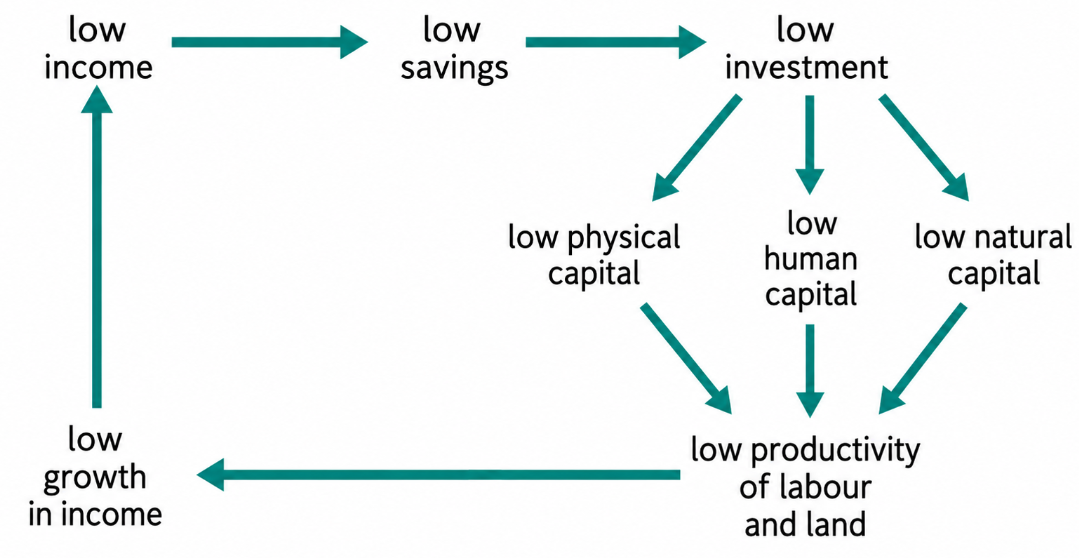
Poverty trap = Poverty creates conditions that keep people poor
- Low income leads to low savings and investment.
- Limited education and healthcare reduce productivity.
- Poor infrastructure and institutions discourage development.
- Poverty traps can affect both individuals and entire countries.
How Poverty Cycles Work
Poverty traps usually involve a chain of interconnected problems.
A typical poverty cycle may follow this pattern:
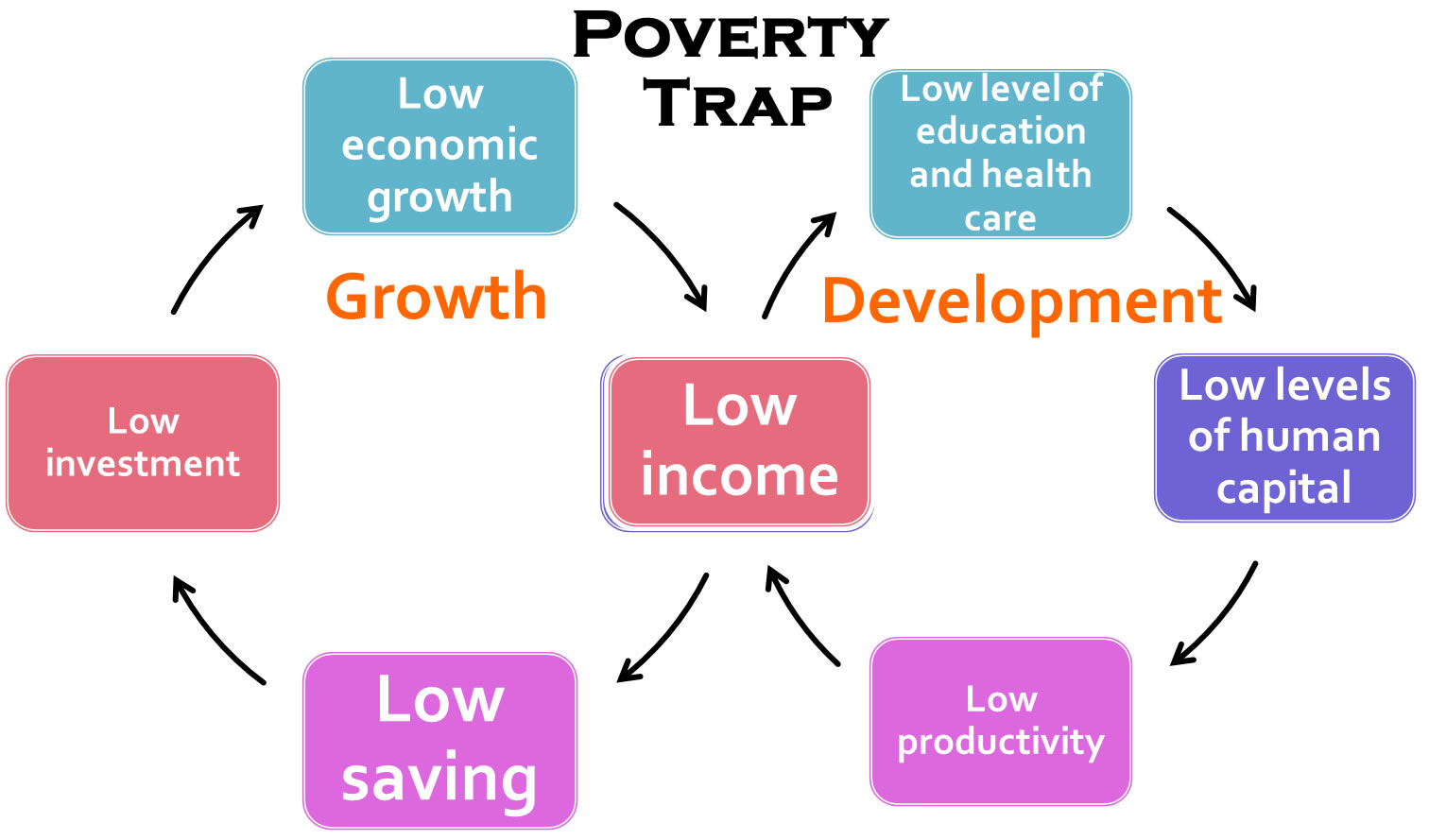
Because productivity and income remain low, households and economies struggle to escape poverty.
Main Causes of Poverty Traps
Low Income and Low Savings
People with low incomes often spend most of their earnings on basic necessities.
- Very little money is available for saving.
- Low savings reduce investment in businesses, education, or technology.
- Economic growth remains slow.
Low savings therefore limit future income growth.
Limited Access to Education
Poor households may not afford quality education.
- Human capital remains low.
- Workers may lack skills and qualifications.
- Productivity and wages remain low.
Low education therefore contributes to continued poverty.
Poor Healthcare and Nutrition
Poverty often limits access to healthcare and nutritious food.
- Workers may suffer from illness and poor health.
- Labor productivity decreases.
- Children may experience poor physical and cognitive development.
Poor health therefore weakens economic development.
Lack of Infrastructure
Many developing countries face poor infrastructure.
- Limited transport and communication systems.
- Unreliable electricity and water supply.
- Higher production and business costs.
Weak infrastructure discourages investment and trade.
Limited Access to Credit and Finance
Poor households and firms may struggle to obtain loans.
- Businesses cannot expand easily.
- Investment in technology remains low.
- Entrepreneurship is limited.
Limited financial access therefore slows development.
Rapid Population Growth
Rapid population growth may increase pressure on limited resources.
- Government spending on healthcare and education becomes difficult.
- Unemployment and underemployment may rise.
- Poverty reduction becomes more challenging.
High population growth may therefore reinforce poverty cycles.
Political Instability and Weak Institutions
Corruption, conflict, and weak governance may reduce development.
- Investment may decrease.
- Public services may remain poor.
- Economic uncertainty may increase.
Weak institutions therefore make poverty traps harder to escape.
Consequences of Poverty Traps
- Persistent low living standards.
- High unemployment and underemployment.
- Low productivity and economic growth.
- Poor health and education outcomes.
- Increased inequality and social instability.
Poverty traps therefore limit long-term economic development.
Policies to Break Poverty Traps
- Investment in education and healthcare.
- Improved infrastructure.
- Access to credit and financial services.
- Foreign aid and international support.
- Promotion of economic diversification and industrialization.
- Good governance and institutional reform.
Breaking poverty cycles usually requires long-term investment and development policies.
Summary of Poverty Traps:
| Cause | Main Effect |
|---|---|
| Low Income | Low savings and investment |
| Poor Education | Low human capital and productivity |
| Poor Healthcare | Weak labor productivity |
| Weak Infrastructure | Reduced investment and trade |
| Limited Access to Finance | Low business growth and entrepreneurship |
| Political Instability | Reduced confidence and development |
Evaluation
- Poverty traps are self-reinforcing and difficult to escape without external support or policy intervention.
- Investment in human capital and infrastructure is important for breaking poverty cycles.
- Good governance and political stability support long-term development.
- Different countries face different types of poverty traps depending on economic and social conditions.
Example 1
Explain how low levels of education may contribute to a poverty trap.
▶️ Answer / Explanation
Low-income households may not afford quality education.
As a result, workers may lack important skills and qualifications.
Low human capital reduces labor productivity and earning potential.
Because incomes remain low, future investment in education also remains limited.
Therefore, poor education may create a cycle of low productivity and continued poverty.
Example 2
Using an example, explain how improved infrastructure may help break a poverty cycle.
▶️ Answer / Explanation
Improved infrastructure such as roads, electricity, and communication systems reduces business costs and increases productivity.
For example, better transport networks allow farmers to access markets more easily and reduce transportation costs.
This may increase incomes, investment, and employment opportunities.
Higher incomes can then support better healthcare, education, and savings.
Therefore, infrastructure investment may help break poverty traps and promote economic development.