
Relationship Between Sustainability and Poverty (HL Only)
Sustainability and poverty are closely connected because environmental, economic, and social conditions strongly affect living standards and long-term development. Poverty can make sustainable development more difficult, while environmental degradation and unsustainable economic activity can worsen poverty.
Sustainable development aims to improve living standards and reduce poverty without damaging the ability of future generations to meet their needs.
Poverty and sustainability are interdependent: unsustainable development may increase poverty, while poverty may worsen environmental degradation.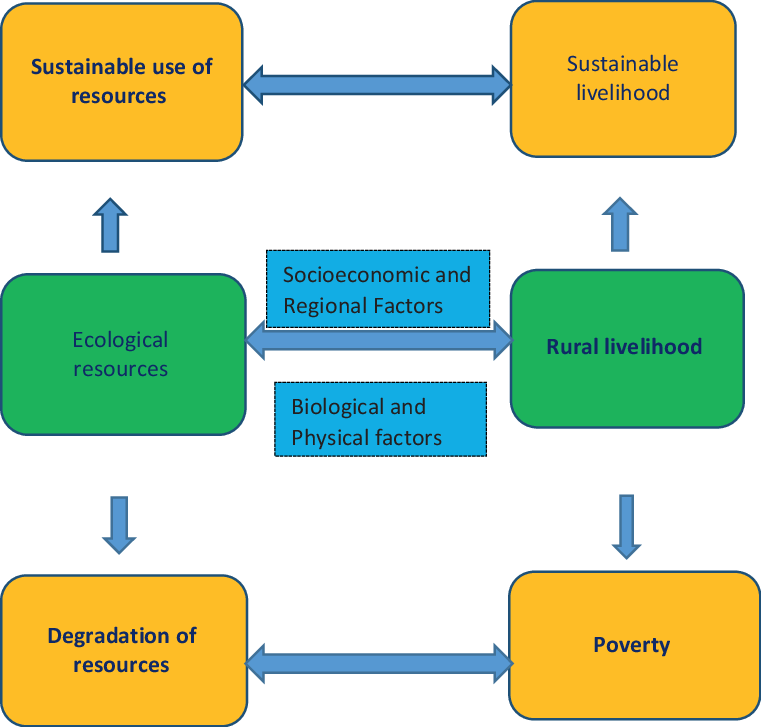
Key Point:
- Poverty may force people to overuse natural resources.
- Environmental damage may reduce living standards and increase poverty.
- Sustainable development aims to balance economic growth, social equity, and environmental protection.
- Reducing poverty is important for achieving sustainability.
How Poverty Affects Sustainability
Overuse of Natural Resources
People living in poverty may depend heavily on natural resources for survival.
- Forests may be cut down for fuel or farming.
- Overfishing and soil depletion may occur.
- Unsustainable farming methods may damage land quality.
Poverty may therefore contribute to environmental degradation.
Lack of Access to Clean Technology
Poor households and developing countries may lack access to environmentally sustainable technologies.
- Dependence on polluting fuels such as coal or wood may increase.
- Limited investment in renewable energy and infrastructure.
- Waste management and sanitation systems may be inadequate.
This may increase pollution and environmental damage.
Population Growth and Resource Pressure
Many low-income countries experience rapid population growth.
- Demand for food, water, and energy increases.
- Pressure on land and natural resources grows.
- Environmental sustainability becomes harder to achieve.
Resource scarcity may worsen poverty further.
How Unsustainability Affects Poverty
Environmental Degradation Reduces Living Standards
Environmental damage can reduce access to essential resources such as clean water, fertile land, and food.
- Agricultural productivity may decrease.
- Food insecurity may increase.
- Health problems related to pollution may rise.
Poor households are often most vulnerable to environmental damage.
Climate Change and Poverty
Climate change creates serious risks for low-income populations.
- Droughts and floods may destroy crops and homes.
- Extreme weather may reduce incomes and employment.
- Rising food prices may worsen poverty.
Developing countries often have fewer resources to adapt to climate change.
Unequal Access to Resources
Unsustainable economic growth may increase inequality.
- Benefits of growth may not be shared equally.
- Poor communities may face pollution and environmental risks.
- Limited access to education and healthcare may continue poverty cycles.
Social sustainability therefore becomes more difficult to achieve.
Role of Sustainable Development in Reducing Poverty
Sustainable development aims to improve economic opportunities while protecting the environment.
- Investment in education and healthcare improves human capital.
- Renewable energy and clean technology improve living standards.
- Sustainable agriculture supports long-term food security.
- Inclusive economic growth may reduce inequality and poverty.
Sustainable policies therefore help support long-term poverty reduction.
Policies That Promote Sustainability and Reduce Poverty
- Investment in renewable energy.
- Access to clean water and sanitation.
- Sustainable farming and forestry practices.
- Education and healthcare programs.
- Environmental regulations and climate policies.
- International aid and development programs.
Governments and international organizations play important roles in promoting sustainable development.
Summary of the Relationship Between Sustainability and Poverty:
| Relationship | Main Effect |
|---|---|
| Poverty → Environmental Damage | Overuse of natural resources |
| Environmental Damage → Poverty | Lower living standards and productivity |
| Climate Change → Poverty | Food insecurity and economic instability |
| Sustainable Development → Poverty Reduction | Improved long-term living standards |
Evaluation
- Poverty reduction and sustainability are closely connected goals.
- Environmental protection may involve short-term economic costs but long-term benefits.
- Developing countries may face greater challenges due to limited resources and rapid population growth.
- International cooperation is important for achieving both sustainability and poverty reduction.
Example 1
Explain how poverty may contribute to environmental degradation.
▶️ Answer / Explanation
People living in poverty may depend directly on natural resources for survival.
For example, forests may be cut down for firewood or farming because households lack access to alternative energy sources.
Overuse of land and resources may lead to deforestation, soil erosion, and loss of biodiversity.
This damages the environment and reduces long-term sustainability.
Therefore, poverty may contribute to environmental degradation through unsustainable resource use.
Example 2
Using an example, explain how sustainable development may help reduce poverty.
▶️ Answer / Explanation
Sustainable development promotes long-term economic growth while protecting environmental resources.
For example, investment in sustainable agriculture may improve crop productivity without damaging soil quality.
This increases food security and farmers’ incomes over time.
At the same time, environmental protection ensures resources remain available for future generations.
Therefore, sustainable development can reduce poverty while supporting long-term economic and environmental stability.