
The Meaning of Sustainable Development
Sustainable development refers to economic development that meets the needs of the present generation without reducing the ability of future generations to meet their own needs. It involves balancing economic growth, environmental protection, and social well-being to ensure long-term improvements in quality of life.
Sustainable development recognizes that economic activity uses limited natural resources and may create environmental damage if growth is not carefully managed.
Sustainable development = Development that meets present needs without harming future generations
The Three Dimensions of Sustainable Development
Economic Sustainability
Economic sustainability means maintaining long-term economic growth and stable living standards.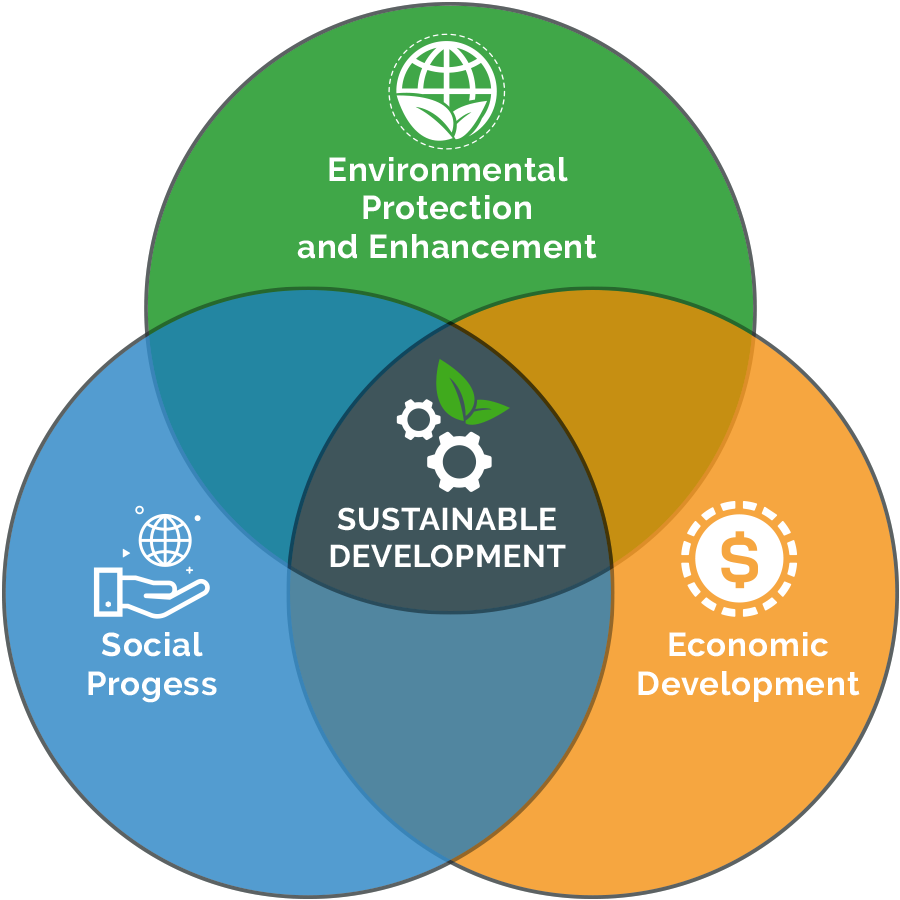
- Efficient use of resources.
- Stable employment and income growth.
- Investment in infrastructure and technology.
- Long-term economic stability.
Economic growth should occur without causing severe environmental or social damage.
Environmental Sustainability
Environmental sustainability involves protecting natural resources and ecosystems for the future.
- Reducing pollution and waste.
- Conserving natural resources.
- Protecting biodiversity and ecosystems.
- Using renewable resources responsibly.
Environmental protection is essential for long-term human well-being.
Social Sustainability
Social sustainability focuses on improving quality of life, fairness, and social stability.
- Reducing poverty and inequality.
- Improving healthcare and education.
- Protecting human rights and working conditions.
- Ensuring social inclusion and equity.
Development should benefit society broadly rather than only a small group.
Why Sustainable Development Is Important

- Natural resources are limited.
- Environmental degradation may reduce future living standards.
- Climate change creates long-term economic and social risks.
- Unsustainable growth may increase inequality and poverty.
Sustainable development aims to achieve long-term economic and social progress while protecting the environment.
Examples of Sustainable Development Policies
- Investment in renewable energy.
- Recycling and waste reduction programs.
- Sustainable agriculture and forestry.
- Public transportation systems.
- Environmental regulations and carbon taxes.
Governments, firms, and individuals all play a role in sustainable development.
Challenges to Sustainable Development
- Conflict between short-term growth and environmental protection.
- High costs of sustainable technologies.
- Rapid population growth and resource demand.
- International disagreements over environmental policies.
Balancing economic, environmental, and social goals can therefore be difficult.
Summary of Sustainable Development:
| Dimension | Main Focus |
|---|---|
| Economic Sustainability | Long-term economic growth and stability |
| Environmental Sustainability | Protection of natural resources and ecosystems |
| Social Sustainability | Equity, quality of life, and social well-being |
Evaluation
- Sustainable development aims to balance economic growth with environmental and social goals.
- Policies promoting sustainability may involve short-term costs but long-term benefits.
- International cooperation is often necessary to address global environmental challenges.
- Sustainable development is increasingly important due to climate change and resource scarcity.
Example 1
Explain why sustainable development is important for future generations.
▶️ Answer / Explanation
Natural resources such as forests, fossil fuels, and clean water are limited.
If current generations overuse these resources or create severe pollution, future generations may experience lower living standards.
Sustainable development encourages responsible resource use and environmental protection.
This helps ensure that future generations can continue meeting their economic and social needs.
Therefore, sustainable development promotes long-term economic and environmental stability.
Example 2
Using an example, explain how renewable energy supports sustainable development.
▶️ Answer / Explanation
Renewable energy sources such as solar and wind power generate electricity without using limited fossil fuels.
They also produce less pollution and greenhouse gas emissions.
For example, investment in solar energy may reduce dependence on coal and lower carbon emissions.
This protects the environment while still supporting economic activity and energy production.
Therefore, renewable energy contributes to sustainable development by balancing economic and environmental goals.