
The World Trade Organization (WTO)
The (WTO) is an international organization that promotes and regulates global trade between countries. It was established in 1995 and replaced the General Agreement on Tariffs and Trade (GATT). The WTO provides a framework of international trade rules designed to encourage freer and fairer trade between member countries.
The organization also helps resolve trade disputes and promotes international economic cooperation.
Key Point:
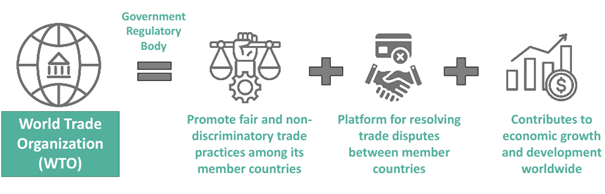
- The WTO promotes freer international trade.
- It aims to reduce trade barriers such as tariffs and quotas.
- The WTO establishes rules for global trade.
- It provides a system for resolving trade disputes.
Objectives of the WTO
Promote Free Trade
The WTO encourages countries to reduce trade barriers and support freer international trade.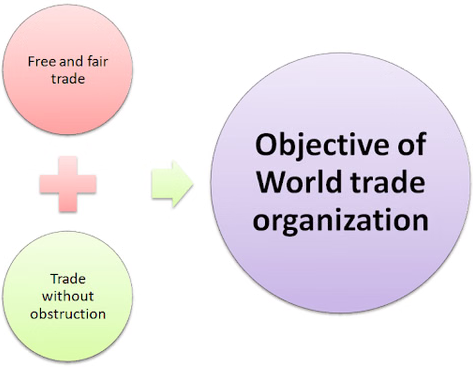
- Encourages lower tariffs and quotas.
- Promotes market access between countries.
- Supports international specialization and efficiency.
The goal is to increase global trade and economic growth.
Promote Fair Trade
The WTO aims to ensure that international trade occurs under fair and transparent rules.
- Discourages unfair trade practices such as dumping.
- Promotes non-discrimination between trading partners.
- Encourages equal treatment of member countries.
This helps create a more stable and predictable trading system.
Increase Economic Growth and Development
By promoting international trade, the WTO aims to improve economic welfare and living standards.
- Encourages efficient resource allocation.
- Supports employment and income growth.
- Promotes development in lower-income countries.
Trade expansion is viewed as a driver of long-term economic growth.
Support Developing Countries
The WTO recognizes that developing countries may require special support and flexibility.
- Provides technical assistance and training.
- Allows longer adjustment periods for some agreements.
- Encourages participation of developing economies in global trade.
The aim is to improve integration of developing countries into the world economy.
Functions of the WTO
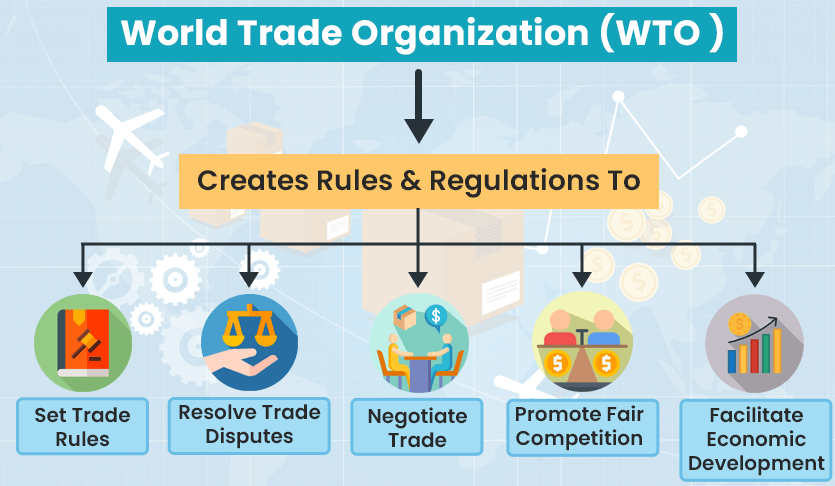
Administering Trade Agreements
The WTO manages and oversees international trade agreements between member countries.
- Provides a legal framework for global trade.
- Ensures countries follow agreed trade rules.
- Monitors implementation of agreements.
This creates greater stability and predictability in international trade.
Providing a Forum for Trade Negotiations
The WTO provides a platform where countries negotiate trade agreements and discuss trade issues.
- Encourages reduction of trade barriers.
- Promotes cooperation between countries.
- Supports multilateral trade negotiations.
Negotiations help expand international trade opportunities.
Resolving Trade Disputes
The WTO operates a dispute settlement system to resolve conflicts between member countries.
- Countries can challenge unfair trade practices.
- Provides legal procedures for dispute resolution.
- Helps prevent trade conflicts from escalating.
This promotes stability and fairness in global trade relations.
Monitoring National Trade Policies
The WTO reviews and monitors trade policies of member countries.
- Improves transparency in trade policy.
- Encourages compliance with WTO agreements.
- Helps identify protectionist measures.
Monitoring increases confidence in the international trading system.
Providing Technical Assistance and Training
The WTO supports developing countries through technical assistance and training programs.
- Helps countries understand trade agreements.
- Supports trade policy development.
- Improves participation in international trade.
This helps developing economies integrate into global markets.
Summary of WTO Objectives and Functions:
| Area | Main Purpose |
|---|---|
| Promote Free Trade | Reduce trade barriers |
| Promote Fair Trade | Prevent unfair trade practices |
| Trade Negotiations | Provide forum for agreements |
| Dispute Settlement | Resolve trade conflicts |
| Policy Monitoring | Increase transparency and compliance |
| Support for Developing Countries | Technical assistance and integration |
Evaluation
- The WTO has contributed to expansion of international trade and economic integration.
- Trade negotiations can be slow and complex because many countries are involved.
- Some critics argue that developing countries have weaker bargaining power.
- The WTO remains important for maintaining stability in the global trading system.
Example 1
Explain how the WTO promotes freer international trade.
▶️ Answer / Explanation
The WTO encourages countries to reduce trade barriers such as tariffs and quotas.
It provides a forum where countries negotiate trade agreements and discuss ways to improve market access.
By promoting lower trade restrictions, the WTO encourages specialization, competition, and greater international trade.
This may increase efficiency and economic growth globally.
Therefore, the WTO plays an important role in promoting freer international trade.
Example 2
Using an example, explain the importance of the WTO dispute settlement system.
▶️ Answer / Explanation
If one country believes another country is using unfair trade practices, it may bring the issue before the WTO dispute settlement system.
For example, a country may challenge tariffs imposed by another country that violate WTO rules.
The WTO investigates the dispute and provides a legal process for resolution.
This helps prevent trade conflicts from escalating into trade wars.
Therefore, the WTO dispute settlement system promotes fairness and stability in international trade.
Factors Affecting the Influence of the WTO
The (WTO) plays an important role in promoting freer and fairer international trade. However, its ability to influence global trade policies and achieve agreements is affected by several challenges.
Because the WTO involves many countries with different economic interests, levels of development, and political priorities, reaching agreements can be difficult.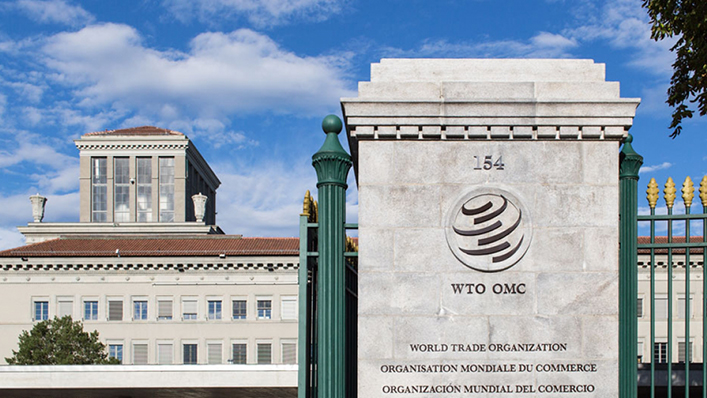
Key Ideas:
- The WTO must balance the interests of many member countries.
- Differences between developed and developing countries may slow negotiations.
- Powerful economies often have greater influence in negotiations.
- Complex global trade issues make agreements difficult to achieve.
Difficulties of Reaching Agreement on Services and Primary Products
One major factor limiting the influence of the WTO is the difficulty of achieving agreements on trade in services and primary products.
Trade in Services
Services such as banking, insurance, education, healthcare, and telecommunications are often heavily regulated by governments.
- Countries may wish to protect domestic service industries.
- Different countries have different legal and regulatory systems.
- Services are often politically sensitive.
- Governments may fear loss of national control over key sectors.
This makes trade liberalization in services more difficult than trade in goods.
Trade in Primary Products
Primary products include agricultural goods and raw materials such as wheat, coffee, oil, and minerals.
- Many countries protect agriculture through subsidies and tariffs.
- Food security concerns make governments reluctant to reduce protection.
- Developing countries often depend heavily on primary product exports.
- Price volatility creates additional economic concerns.
As a result, agreements on agricultural trade are often difficult and controversial.
Effect on the WTO
- Negotiations may become slow and complex.
- Trade agreements may be delayed or weakened.
- Conflicts between developed and developing countries may increase.
- The WTO’s ability to promote freer trade becomes limited.
These disagreements reduce the effectiveness of multilateral trade negotiations.
Unequal Bargaining Power of Members
Another important factor affecting the WTO’s influence is the unequal bargaining power between member countries.
Developed countries generally have larger economies, more political influence, and greater negotiating resources than developing countries.
Reasons for Unequal Bargaining Power
- Developed countries have larger markets and stronger economies.
- They often possess greater legal and technical expertise.
- Developing countries may lack negotiating resources and influence.
- Powerful countries can exert political and economic pressure.
This creates imbalances during trade negotiations.
Effects of Unequal Bargaining Power
- Developed countries may shape agreements in their favor.
- Developing countries may struggle to protect domestic interests.
- Some countries may feel excluded from decision-making.
- Trust and cooperation within the WTO may weaken.
Critics argue that this limits fairness in the global trading system.
Examples of Conflict
- Disagreements over agricultural subsidies between developed and developing countries.
- Conflicts regarding intellectual property rights and pharmaceutical products.
- Pressure on developing countries to open markets more rapidly.
These issues often complicate WTO negotiations and agreements.
Factors Affecting WTO Influence:
| Factor | Main Impact on WTO |
|---|---|
| Difficulties in Services Agreements | Complex and politically sensitive negotiations |
| Difficulties in Primary Product Agreements | Conflicts over subsidies and food security |
| Unequal Bargaining Power | Developed countries have greater influence |
| Conflicting National Interests | Slower progress in multilateral agreements |
Evaluation
- The WTO remains important for maintaining global trade rules and dispute resolution.
- However, complex negotiations often slow decision-making.
- Developing countries may face disadvantages due to weaker bargaining power.
- The effectiveness of the WTO depends on cooperation and compromise between member countries.
Example 1
Explain why agreements on agricultural products are difficult within the WTO.
▶️ Answer / Explanation
Many countries protect agricultural industries through subsidies and tariffs because agriculture is linked to food security and employment.
Developed countries may wish to continue supporting domestic farmers, while developing countries often want better access to foreign agricultural markets.
These conflicting interests make negotiations difficult.
As a result, agreements on agricultural trade are often slow and controversial within the WTO.
Therefore, trade in primary products is a major challenge for the WTO.
Example 2
Using an example, explain how unequal bargaining power may affect WTO negotiations.
▶️ Answer / Explanation
Developed countries usually have larger economies and greater negotiating resources than developing countries.
For example, a large developed economy may pressure smaller developing countries to reduce trade barriers in order to gain access to their markets.
Developing countries may lack the legal expertise or political influence needed to negotiate equally.
This may result in trade agreements that favor stronger economies.
Therefore, unequal bargaining power can reduce fairness and cooperation within the WTO.