
2.1 – Sets, Elements and Set Notation
A set is a collection of distinct objects, numbers, or items that are grouped together according to a clearly defined rule.
The objects contained in a set are called elements or members of the set. A set is usually represented by a capital letter, and its elements are written inside curly brackets \(\{\}\).
Writing a Set
For example, the set of positive even numbers less than \(10\) can be written as: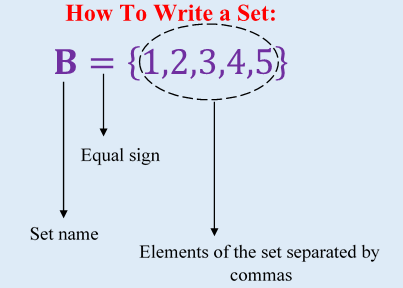
Here:
- \(E\) is the name of the set.
- \(2,4,6,8\) are the elements of the set.
- Each element is listed only once.
- The order of elements does not matter.
Important Rules for Sets
| Rule | Explanation | Example |
|---|---|---|
| No repeated elements | An element is written only once. | \(\{1,2,2,3\}=\{1,2,3\}\) |
| Order does not matter | Changing the order does not change the set. | \(\{2,4,6\}=\{6,2,4\}\) |
| Curly brackets | Elements of a set are enclosed in \(\{\}\). | \(A=\{3,5,7\}\) |
Element of a Set
The symbol \(\in\) means “is an element of” or “belongs to”.
The symbol \(\notin\) means “is not an element of”.
Number of Elements in a Set
The number of elements in a set \(A\) is written as \(n(A)\).
\(n(A)=5\)
Repeated elements are counted only once.
\(B=\{1,2,3,4\}\)
\(n(B)=4\)
Equal Sets
Two sets are equal if they contain exactly the same elements. The order in which the elements are written does not matter.
\(B=\{8,6,4,2\}\)
Therefore, \(A=B\)
Subsets
A set \(A\) is a subset of set \(B\) if every element of \(A\) is also an element of \(B\).
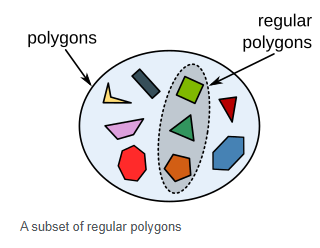
For example:
\(B=\{2,4,6,8\}\)
Therefore, \(A\subseteq B\)
Every element of \(A\) is found in \(B\), so \(A\) is a subset of \(B\).
∅ Empty Set
The empty set is a set containing no elements. It is written as: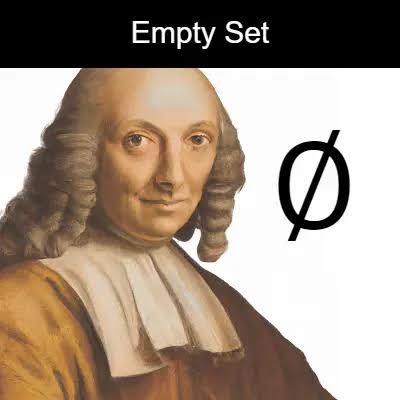
For example, the set of positive multiples of \(5\) that are less than \(5\) contains no elements:
The empty set is a subset of every set.
Common Mistakes
| Mistake | Correct Idea |
|---|---|
| Repeating an element | Each element is listed only once. |
| Thinking order matters | \(\{1,2,3\}=\{3,1,2\}\) |
| Confusing \(\in\) and \(\subseteq\) | \(\in\) compares an element with a set; \(\subseteq\) compares a set with another set. |
| Counting repeated values | Repeated values represent one element only. |
Example 1:
Let
\(B=\{10,6,2,8,4\}\)
\(C=\{2,4,4,6,8,8,10\}\)
a) State whether \(A=B\).
b) Find \(n(A)\) and \(n(C)\).
c) State whether \(6\in A\).
d) State whether \(12\notin A\).
▶️ Answer/Explanation
Answer
a) \(A\) and \(B\) contain exactly the same elements, so:
[B1] Correctly identifies that order does not affect equality.
b) \(A\) contains five elements:
Repeated elements in \(C\) are counted only once:
\(n(C)=5\)
[B1] Correctly counts distinct elements.
c) Since \(6\) is an element of \(A\):
d) Since \(12\) is not in \(A\):
Example 2:
Let
\(Q=\{3,6,9,12,15\}\)
\(R=\{7,14\}\)
a) Determine whether \(P\subseteq Q\).
b) Determine whether \(R\subseteq Q\).
c) State the number of elements in \(P\) and \(Q\).
d) Write the set of positive multiples of \(5\) less than \(5\).
e) State the name of this type of set.
▶️ Answer/Explanation
Answer
a) Every element of \(P\) is also in \(Q\):
[B1] Correctly checks every element of \(P\) against \(Q\).
b) \(7\) and \(14\) are not elements of \(Q\), so:
[B1] Correctly identifies that \(R\) is not a subset of \(Q\).
c)
\(n(Q)=5\)
[B1] Correctly counts the elements.
d) There are no positive multiples of \(5\) that are less than \(5\). Therefore:
[B1] Correctly identifies the empty set.
e) This is called the empty set.