
4.2 – Equations with Variables on Both Sides and Rational Coefficients
In the previous section, the variable appeared on only one side of the equation. In this section, the variable may appear on both sides, and the coefficients may be rational numbers, including fractions, integers, and terminating decimals.
The main goal remains the same: isolate the variable on one side while maintaining the balance of the equation.
The textbook emphasizes the same fundamental principle: when an unknown appears more than once, we perform a sequence of operations on both sides until the unknown is isolated. :contentReference[oaicite:0]{index=0}
What Are Rational Coefficients?
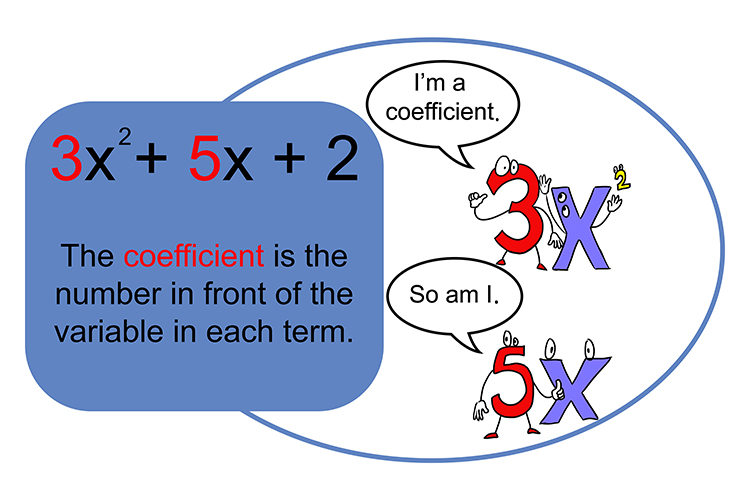
A coefficient is the number multiplying a variable.
A rational number can be written in the form \(\frac{a}{b}\), where \(a\) and \(b\) are integers and \(b\neq0\).
| Coefficient | Type | Example |
|---|---|---|
| \(5\) | Integer | \(5x\) |
| \(-3\) | Integer | \(-3x\) |
| \(\frac{2}{3}\) | Fraction | \(\frac{2}{3}x\) |
| \(-\frac{5}{4}\) | Fraction | \(-\frac{5}{4}x\) |
| \(0.6\) | Terminating decimal | \(0.6x\) |
The Main Strategy
For an equation of the form
\(ax+b=cx+d\)
we want to collect all the \(x\)-terms on one side and all constant terms on the other side.
⭐ Standard Procedure
- Expand brackets if necessary.
- Collect like terms on each side.
- Move all variable terms to one side.
- Move all constant terms to the other side.
- Divide by the coefficient of the variable.
- Check the solution in the original equation.
This follows the textbook’s general sequence: expand and collect like terms, remove the unknown from one side if necessary, and then use inverse operations to isolate it. :contentReference[oaicite:1]{index=1}
Variables on Both Sides
Example: Solve \(5x+7=2x+25\).
\(5x-2x+7=2x-2x+25\)
\(3x+7=25\)
\(3x=18\)
\(x=6\)
We chose to subtract \(2x\) from both sides so that the variable remained only on the left.
Choosing Which Variable Term to Move
Consider:
\(8x+3=5x+21\)
There are two valid approaches.
Method 1 — Move \(5x\) to the left:
\(3x+3=21\)
\(3x=18\)
\(x=6\)
Method 2 — Move \(8x\) to the right:
\(-18=-3x\)
\(x=6\)
Both methods produce the same solution.
Equations with Fractional Coefficients
Fractions can make equations look more complicated than they actually are. There are two main approaches:
- Method 1: Work directly with the fractions.
- Method 2: Multiply every term by the least common denominator (LCD) first.
Example: Solve
\(\dfrac{x}{3}+2=\frac{x}{6}+7\)
Method 1 — Work directly with fractions
\(\dfrac{x}{3}-\frac{x}{6}=7-2\)
\(\dfrac{2x}{6}-\frac{x}{6}=5\)
\(\dfrac{x}{6}=5\)
\(x=30\)
Method 2 — Clear the fractions first
The denominators are \(3\) and \(6\), so the LCD is \(6\).
\(2x+12=x+42\)
\(x+12=42\)
\(x=30\)
Multiplying every term on both sides by the LCD eliminates the fractions while preserving the equality.
Equations with Several Fractions
When an equation contains several fractional coefficients, clearing the denominators first is often the most efficient method.
Example: Solve
\(\dfrac{2x}{3}-\frac{1}{2}=\frac{x}{6}+5\)
The denominators are \(3\), \(2\), and \(6\), so the LCD is \(6\).
\(4x-3=x+30\)
\(3x=33\)
\(x=11\)
The important point is that the \(6\) must multiply every term, not just the fractions.
Decimal Coefficients
Terminating decimals can also be rational coefficients.
Example: Solve
\(0.8x+3=0.3x+13\)
\(0.5x=10\)
\(x=20\)
Alternatively, multiply the entire equation by \(10\):
\(5x=100\)
\(x=20\)
Equations with Brackets and Variables on Both Sides
If brackets are present, expand them before collecting the variable terms.
Example: Solve
\(3(x+2)=2x+14\)
\(3x-2x=14-6\)
\(x=8\)
For more complicated equations, the same sequence applies: expand → collect → move variable terms → isolate → check. The textbook uses this exact progression when solving equations involving repeated unknowns. :contentReference[oaicite:2]{index=2}
Three Possible Types of Solutions
An equation with variables on both sides does not necessarily have exactly one solution. It may have:
| Type | Result after simplifying | Meaning |
|---|---|---|
| One solution | \(x=a\) | Exactly one value works. |
| No solution | \(a=b\), where \(a\neq b\) | The equation is impossible. |
| Infinitely many solutions | \(a=a\) | Every value of \(x\) works. |
Example — No solution:
\(7=12\)
Since \(7=12\) is false, there is no solution.
Example — Infinitely many solutions:
\(3x+6=3x+6\)
Since the resulting statement is always true, there are infinitely many solutions.
If you get a true statement such as \(8=8\), there are infinitely many solutions.
If you get a false statement such as \(8=11\), there is no solution.
Checking Solutions
For equations with variables on both sides, substitution into the original equation is an excellent way to verify the result.
For example, for \(5x+7=2x+25\), we found \(x=6\).
RHS \(=2(6)+25=37\)
Therefore, LHS \(=\) RHS and \(x=6\) is verified.
Common Mistakes
- Moving a term to the other side without changing its sign.
- Combining unlike terms such as \(3x+5\) into \(8x\).
- Multiplying only some terms by the LCD.
- Forgetting that a negative coefficient must be included when dividing.
- Expanding brackets incorrectly.
- Failing to distinguish between no solution and infinitely many solutions.
- Not checking the final answer.
Example 1:
\(7x-5=3x+19\)
Give your answer in its simplest form.
▶️ Answer/Explanation
Solution
\(7x-3x=19+5\)
\(4x=24\)
\(x=6\)
Check:
RHS \(=3(6)+19=37\)
Therefore, \(\boxed{x=6}\).
Example 2:
\(\frac{3x}{4}+2=\frac{x}{2}+8\)
▶️ Answer/Explanation
Solution
The denominators are \(4\) and \(2\), so the LCD is \(4\).
\(3x+8=2x+32\)
\(3x-2x=32-8\)
\(x=24\)
Check:
RHS \(=\frac{24}{2}+8=12+8=20\)
Therefore, \(\boxed{x=24}\).
Example 3:
Determine whether each equation has one solution, no solution, or infinitely many solutions.
a) \(5x+9=5x+9\)
b) \(4x-7=4x+2\)
▶️ Answer/Explanation
a)
\(9=9\)
This is always true, so there are infinitely many solutions.
b)
\(-7=2\)
This is false, so there is no solution.