
4.5 – Word Problems with Linear Equations and Systems
Linear equations are not only used to find unknown numbers. They can also be used to represent and solve real-life situations.
A word problem gives information in words, and your task is to translate that information into a mathematical equation or system of equations.
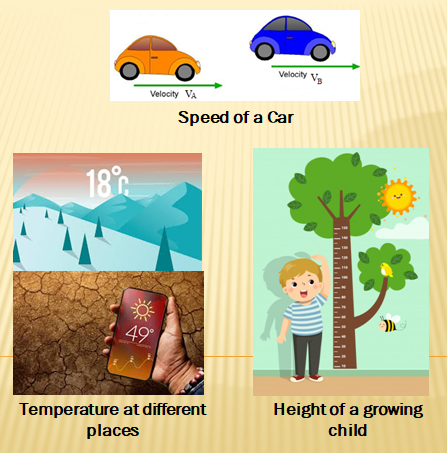
The most important skill is not just solving the equation. You must first understand what the variable represents and translate the information correctly. :contentReference[oaicite:0]{index=0}
The General Problem-Solving Process
⭐ Use the following 6-step strategy:
- Understand: Identify what information is given and what must be found.
- Define: Choose a variable to represent the unknown.
- Translate: Convert the words into an equation or equations.
- Solve: Solve the equation or system.
- Check: Substitute the answer back into the original information.
- Interpret: State what the answer means in the context of the problem.
This process is important because a mathematically correct value is not always a sensible answer to the real-life situation.
Step 1 — Define the Variable
The first step is to decide what the unknown represents.
For example:
“A number is \(7\) more than another number.”
Let the smaller number be \(x\).
\(\text{Larger number}=x+7\)
Clearly defining the variable makes the rest of the problem much easier.
Always write what your variable represents before creating the equation.
Translating Mathematical Words
Certain words and phrases commonly indicate particular mathematical operations.
| Words or Phrase | Mathematical Meaning |
|---|---|
| a number plus \(5\) | \(x+5\) |
| \(8\) less than a number | \(x-8\) |
| \(4\) more than a number | \(x+4\) |
| \(3\) times a number | \(3x\) |
| half of a number | \(\frac{x}{2}\) |
| a number divided by \(5\) | \(\frac{x}{5}\) |
| is / equals | \(=\) |
| total | Usually addition |
⚠️ Be careful with “less than”.
“5 less than \(x\)” means:
It does not mean \(5-x\).
Number Problems
Many number problems describe relationships between unknown numbers.
For example, if one number is \(4\) more than another:
\(\text{Second number}=x+4\)
If their sum is \(20\), then:
This becomes a linear equation that can be solved using the methods from Sections 4.1 and 4.2.
Age Problems
Age problems often involve relationships such as:
- one person is \(x\) years older than another;
- the sum of their ages is known;
- their ages in the future are related;
- their ages in the past are related.
If a person’s current age is \(x\):
| Time | Age |
|---|---|
| Now | \(x\) |
| \(5\) years from now | \(x+5\) |
| \(3\) years ago | \(x-3\) |
Choose a variable for the current age unless the wording makes another choice easier.
Money and Cost Problems
Cost problems often involve a fixed amount, a price per item, or two different types of items.
The basic relationship is:
For example, if \(x\) notebooks cost \$4 each:
If there is also a \$6 delivery fee:
This type of situation produces a linear equation.
Distance, Rate and Time Problems
Some problems involve distance, speed, and time.
Formula:
Therefore:
Always make sure that the units are consistent. For example, if speed is measured in kilometres per hour, time should be measured in hours.
Problems with Two Unknowns
If a word problem contains two unknown quantities, you will often need two variables and two equations.
For example, suppose a shop sells adult and student tickets.
Let:
\(s=\text{number of student tickets}\)
If \(30\) tickets are sold:
If adult tickets cost \$12 and student tickets cost \$8, with \$320 collected:
Together:
\(12a+8s=320\)
This is a simultaneous linear system, which can be solved using graphing, substitution, or elimination.
Organising Information in a Table
For more complicated word problems, a table can help organise the information before writing equations.
For example, for an adult/student ticket problem:
| Type | Number | Price Each | Total |
|---|---|---|---|
| Adult | \(a\) | \$12 | \(12a\) |
| Student | \(s\) | \$8 | \(8s\) |
This makes the two equations easier to identify:
\(12a+8s=\text{total money}\)
Checking Whether an Answer Makes Sense
A word-problem answer should satisfy both the mathematics and the real-life context.
Ask yourself:
- Does the answer satisfy the original equation?
- Does it satisfy all equations in a system?
- Are the units correct?
- Does the answer make sense in the situation?
- Should the answer be a whole number?
- Could the answer be negative?
For example, if \(x\) represents the number of students, an answer such as \(x=12.5\) would normally not make sense because the number of students must be a whole number.
The algebra may produce a numerical answer, but you must decide whether that answer is reasonable in the context.
Consecutive Integers
Consecutive integers are whole numbers that follow one another.
For example:
If the first integer is \(x\), consecutive integers can be represented as:
For consecutive even integers:
For consecutive odd integers, the same pattern can be used:
with \(x\) chosen to be odd.
One Equation vs Two Equations
| Situation | Usually Needed | Example |
|---|---|---|
| One unknown | One linear equation | \(3x+5=20\) |
| Two unknowns | Two independent equations | \(x+y=20,\ 3x+2y=50\) |
One unknown → usually one equation.
Two unknowns → usually two independent equations.
Common Mistakes in Word Problems
- Starting calculations before identifying the unknown.
- Defining a variable unclearly.
- Translating a phrase incorrectly.
- Forgetting a fixed cost or additional amount.
- Using inconsistent units.
- Using only one equation when two unknowns are present.
- Giving the algebraic value without explaining what it represents.
- Ignoring the context when the answer is impossible or unreasonable.
- Not checking the answer.
Quick Problem-Solving Checklist
| Step | Question to Ask |
|---|---|
| 1. Understand | What do I know? What do I need to find? |
| 2. Define | What does my variable represent? |
| 3. Translate | What equation or equations describe the situation? |
| 4. Solve | Which method should I use? |
| 5. Check | Does my answer satisfy the original information? |
| 6. Interpret | What does my answer mean in the real situation? |
Example 1:
The sum of two numbers is \(42\). The larger number is \(8\) more than the smaller number.
a) Let \(x\) represent the smaller number. Write an expression for the larger number.
b) Form a linear equation.
c) Solve the equation to find both numbers.
d) Check your answer.
e) A parent is \(8\) years older than their child. Their ages add to \(42\). Explain why the same equation can be used to find their ages.
▶️ Answer/Explanation
Answer
a) The smaller number is \(x\), so the larger number is:
b) Their sum is \(42\):
c) Solve:
\(2x+8=42\)
\(2x=34\)
\(x=17\)
The larger number is:
Therefore, the two numbers are:
d) Check:
\(25-17=8\) ✓
e) The same structure can represent the age problem because the child is \(x\) years old and the parent is \(x+8\) years old. Their ages also add to \(42\):
Therefore, their ages are also:
Example 2:
A school sells adult and student tickets for a performance.
A total of \(50\) tickets are sold. An adult ticket costs \$12 and a student ticket costs \$7. The total amount collected is \$470.
a) Define two variables.
b) Write two simultaneous linear equations.
c) Solve the system using elimination.
d) State the number of adult and student tickets sold.
e) Verify your answer using both conditions.
f) Explain why your answer is reasonable in the context.
▶️ Answer/Explanation
Answer
a) Let:
\(s=\text{number of student tickets}\)
b) The total number of tickets is \(50\):
The total cost is \$470:
Therefore, the system is:
\(12a+7s=470\)
c) Solve using elimination
Multiply the first equation by \(7\):
Subtract this equation from the second equation:
\(5a=120\)
\(a=24\)
Substitute \(a=24\) into \(a+s=50\):
\(s=26\)
d) Therefore:
e) Verify both conditions
Total number of tickets:
Total amount collected:
\(=288+182\)
\(=470\) ✓
f) The answer is reasonable because:
- both numbers are whole numbers;
- both numbers are positive;
- the total number of tickets is \(50\);
- the total cost is exactly \$470.
Therefore, the solution is valid in the context of the problem.